
ooooIYKYK, ISSUE #oo54, SUBSCRIBE TO THIS NEWSLETTER ON SUBSTACK.
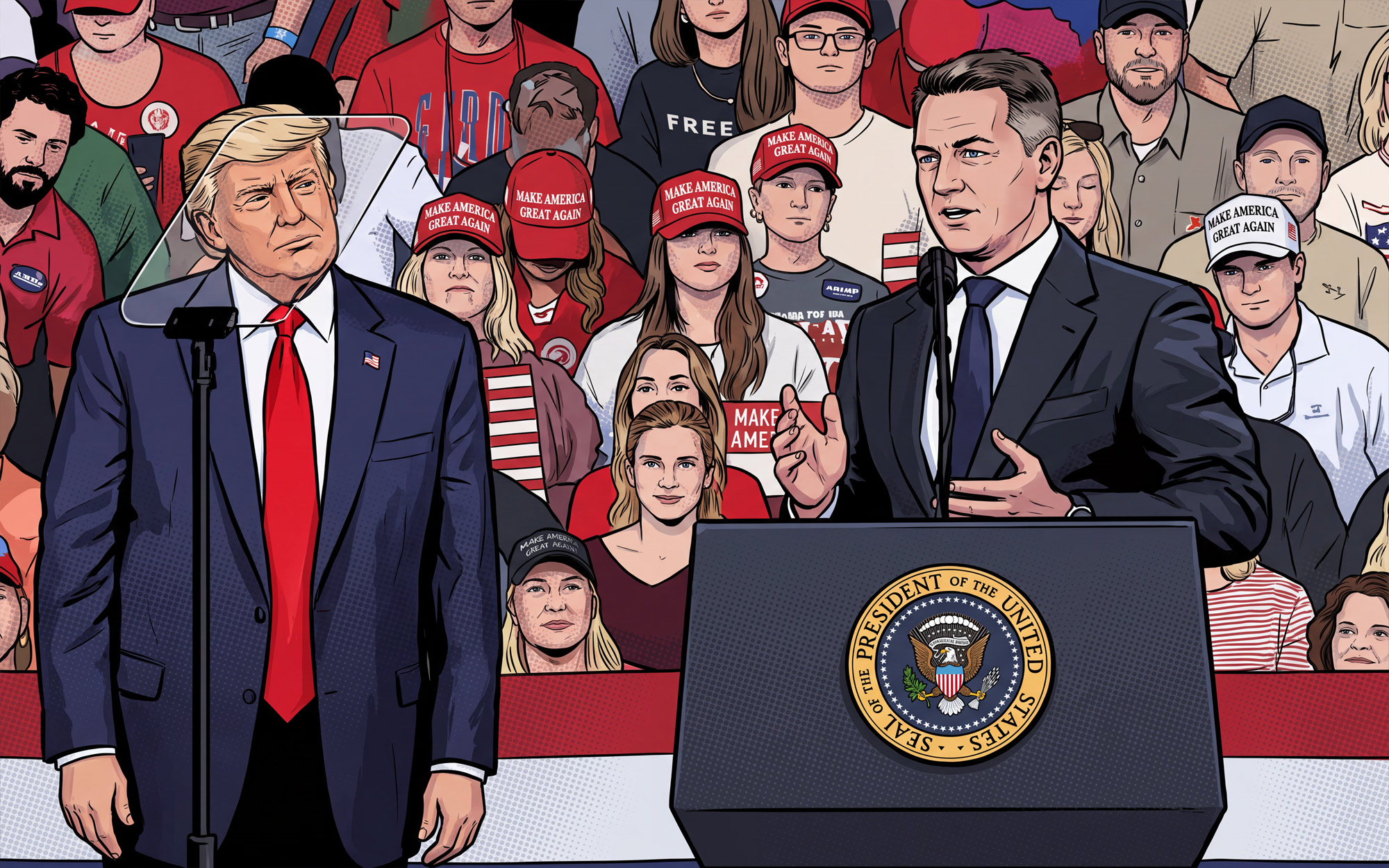
Audi caught the automotive world off guard over the weekend when, in a surprise Saturday evening move, it confirmed plans to build a new factory in Georgia—its first in the United States. Further, Audi CEO Gernot Döllner raised eyebrows and even some tempers by breaking that news on stage at a political rally hosted by American President Donald Trump in Perry, Georgia.
In the 36 hours or so since the news broke, we’ve managed to glean further information, including plans for the factory and the blowback from the controversial move of appearing at an American campaign rally. We wanted to publish a summary.
GEORGIA AUDI DETAILS
News of a rumored Georgia plant unofficially surfaced last Thursday, as reported by Germany’s Handelsblatt publication. Perry, Georgia, was mentioned by name, clearly suggesting this rumor was based on activities already set in motion last week, when a team from Audi arrived in the region. Not expecting an official announcement to be immediately forthcoming, we ran our own story theorizing about what could be built in such a factory. We know a bit more now.
Sources for this website have confirmed off the record that the plant is expected to build the Q7, Q9 and next-generation Q8. In the case of the Q8, we’re hearing a new design has been finalized and, unlike the Q7 and Q9, the new Q8 more closely resembles the design language seen on the Concept C and Nuvolari. We’re also hearing the plant will be an exclusively Audi facility, meaning our earlier theories on further PPC-based production beyond Audi products, such as the Porsche Cayenne, aren’t likely.
Construction of the facility is expected to begin in 2027, with production set to begin in the early 2030s. The plant is expected to generate 4,500 jobs and boast a production capacity of 200,000 vehicles.
SCOUT & THE HARDQORE SUV
Also mentioned in Handelsblatt was a more extreme off-road SUV based on the all-new body-on-frame architecture of the planned Scout brand and built in the same South Carolina plant as Scout. Hardqore wasn’t mentioned in the weekend’s flurry of activity, though sources place such a vehicle in a similar timeframe as any Audi crossovers built in Georgia.
TRUMP RALLY APPEARANCE TIMING CAUSES A STIR
America is currently heading into a hotly contested midterm election. High costs of living and energy, combined with the contentiousness that tends to surround the American President’s activities, have made most any subject surrounding the administration both widely reported and highly polarizing.
In the meantime, the American administration is similarly polarizing in Europe. Volkswagen Group’s need to slash costs and its announcements of factory closures are highly relevant here. While those are more recent reactionary moves made by the broader Volkswagen board, discussions about new factories don’t just materialize out of thin air. It is reasonable and even likely that this long-rumored Georgia plant project was far along before more extreme considerations of closures in places like Neckarsulm were placed on the table. Even so, the timing is unfortunate for those in danger of being directly affected by German closures. Add Germany’s own rise of a contentious far-right movement and demonstrations-turned-riots in France, Spain and Italy protesting the cost of living and energy prices, and we have a series of unfortunate events that create powder keg conditions.
Döllner’s presence on that stage, then, raises questions.
The weekend’s news was immediately and vocally criticized in the press by both Volkswagen works council chief Daniela Cavallo and Christiane Benner, president of Germany’s IG Metall union and deputy chair of the Volkswagen supervisory board. Both cited displeasure with the appearance as a show of support for the Trump administration and its policies. In Europe, Trump isn’t simply unpopular among his detractors. His decisions, including the tariff-driven trade war, and his indirect hand in skyrocketing diesel fuel prices via collateral damage from wars in Iran and Ukraine, have hit the German auto industry hard and at an inopportune time.
More relevant to the appearance, though, was the political nature of the rally. Audi has a policy about company representatives remaining neutral in political activities, specifically ahead of elections. Benner cited this in her comments about the appearance, and Auto Motor und Sport quoted Audi’s Booklet of Policies more specifically, translated here into English:
Neutrality in political contact
The employees of the political advocacy group pay particular attention to transparency, objectivity and sincerity in communication when dealing with officials and mandate holders. The expert exchange on relevant topics is clearly in the foreground of every contact. Our employees also pay attention to neutrality in dealing with parties and interest groups and maintain contact with democratic parties. In order to respect this principle, in the last three months before the election, there will be no more public appointments with parties/politicians to vote and no sponsorships of corresponding events.
AUDI RESPONDS WITH STATEMENT
In response, Audi put out a second statement on the appearance earlier today to clarify its position. This was another unexpected and uncommon move by the brand.
We’re going to quote it directly.
Audi statement on the current situation
Audi is planning its own production site in the United States to strengthen its long-term competitiveness. The public appearance with the U.S. President has raised questions. The company provides context on the decision and the approach taken.
„Last weekend, we announced that Audi is planning its first production site in the United States. Local production in the U.S. is of great strategic and economic importance for Audi.
The U.S. is the world’s second-largest premium automotive market. At the same time, our business there is currently not profitable. Many of our competitors have been producing locally for years. Our own local production will allow us to strengthen our competitiveness, reduce trade and currency risks, and better realize the market’s growth potential. A stronger U.S. business is therefore not a decision against Germany. Rather, it is an important step towards strengthening Audi’s global competitiveness and helping to secure the company’s long-term success.
The trip to Georgia and the public appearance with the President of the United States have raised questions and caused some concern. As a company, we would like to provide context.
An Audi delegation travelled to Georgia to move forward with discussions and negotiations regarding our planned production site. During these talks, we were asked to present our plans publicly together with the President of the United States.
We accepted this invitation solely with Audi’s best interests in mind.
At the same time, we acknowledge that the circumstances surrounding the announcement may have been perceived as a political signal. We take this very seriously.
We remain firmly committed to Audi’s values and principles. Equally, we have a responsibility to safeguard the company’s economic future. We believe these responsibilities go hand in hand and together guide our actions.”
VOLKSWAGEN CEO BLUME KNEW OF APPEARANCE
Though it was first believed Volkswagen Group CEO Oliver Blume hadn’t been informed of the appearance, German news publication WirtschaftsWoche is now reporting that Blume and Volkswagen Group’s chief lobbyist, Thomas Steg, had been informed about a possible appearance.
‘
THE THEORY
When we first heard Döllner had appeared on stage, we were a bit surprised. Even without the policy mentioned by critics of his taking that stage, it’s easy to see why a brand like Audi would want to stay away from any politics, much less contentious politics heading into the midterms of a market where it is making a major investment.
In research for this story, we pulled up the full rally and watched the portions that include the Audi CEO. We’re also embedding that here, with the Audi subject leading into Döllner’s appearance beginning at 50:35.
In our assessment, the appearance looks like a surprise. Likely there to formally finalize the deal, Döllner and his team would reasonably have been in town and even attended the rally to advocate for the Audi brand in person to the American President. Audi has been financially challenged in dealing with the ongoing tariffs, so his presence there makes sense.
Leading up to Döllner’s appearance on stage, Trump makes comments both on and off teleprompter, as he usually does when riffing without the teleprompter. That’s worth noting because you can observe the cadence of his speech and the direction of his eyes when he jumps from one to the other. He mentions the Audi plant, breaking that news, and doing so unexpectedly likely would have been the reason for the surprise release timing late on a Saturday. President Trump next invites Döllner and Audi of America President Vito Paladino up on stage by name. Only Döllner appears, thanking the President and showing grace before making a very short statement that appears to be unscripted and off teleprompter.
Döllner states:
First, I would like to thank Mr. President for your support and the great opportunity. It’s a fantastic opportunity for Audi, for the Audi team and for America. We are planning to bring our biggest and most premium SUVs and to produce them here in Macon, Georgia. This is a long-term investment because we believe in the American market. Thank you very much.
Why is this context important? I’m convinced the on-stage appearance wasn’t planned. Had it been planned, the script would have been less repetitive (ex: “for Audi, for the Audi team”) and probably slightly longer and more informative. Döllner appears to be managing the unexpected situation professionally before making an exit. If that’s the case, then he was likely doing the very quick math of which action was worse: going up on that stage despite policy, or refusing and insulting the President of the United States, who is no stranger to reacting strongly when slighted. My best guess is that Döllner made the best of a less than optimum situation, something he’s become quite good at in his role at Audi these last few years.
Whatever the case, the seemingly impromptu and unrehearsed delivery, the last-minute press release and Vito Paladino not coming on stage all seem to be ample evidence suggesting the on-stage appearance wasn’t planned.
There’s more evidence for this theory in this week’s news cycle, unrelated to Audi but seemingly on the same theme of the administration aggressively promoting itself going into the election. Last week, 12 Catholic bishops joined the American President in the White House Oval Office for a planned private meeting to discuss immigration issues. However, photos and footage of an accompanying prayer were apparently posted by the White House without prior authorization or agreement, according to Archbishop Jeffrey Grob of Milwaukee, who was in attendance. His assertion, posted within a public apology, was that the appearance was being used for political purposes just two weeks before the election.
Taken in that context, it seems entirely reasonable that the Audi CEO could have found himself intentionally in the building at that rally, yet on that stage entirely unexpectedly.
RELATED NEWS & FEATURES
This story is the basis of an issue of the ooooIYKYK Newsletter on Substack. If you’ve got too much going on in your life and don’t want to keep coming back to this website just to check in and see what I’m writing about, signing up to the ooooIYKYK Newsletter is an excellent way to get this content coming directly to you in your inbox. Subscribe at Substack via the link below, and consider becoming an optionally paying subscriber if you want to help support the viability of this title.Subscribe to the ooooIYKYK Newsletter on Substack HERE.