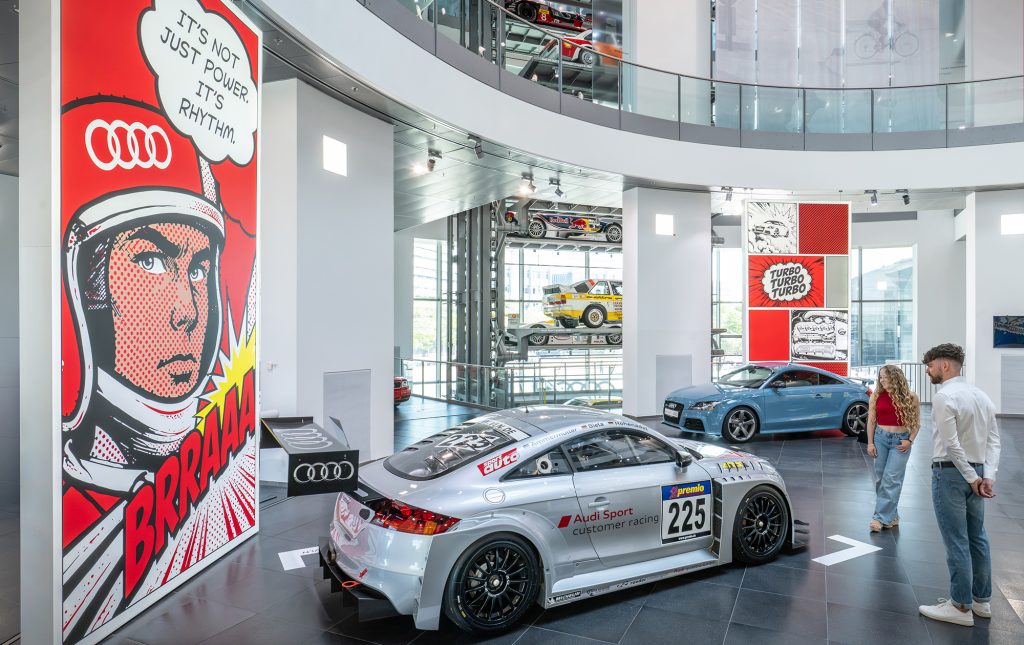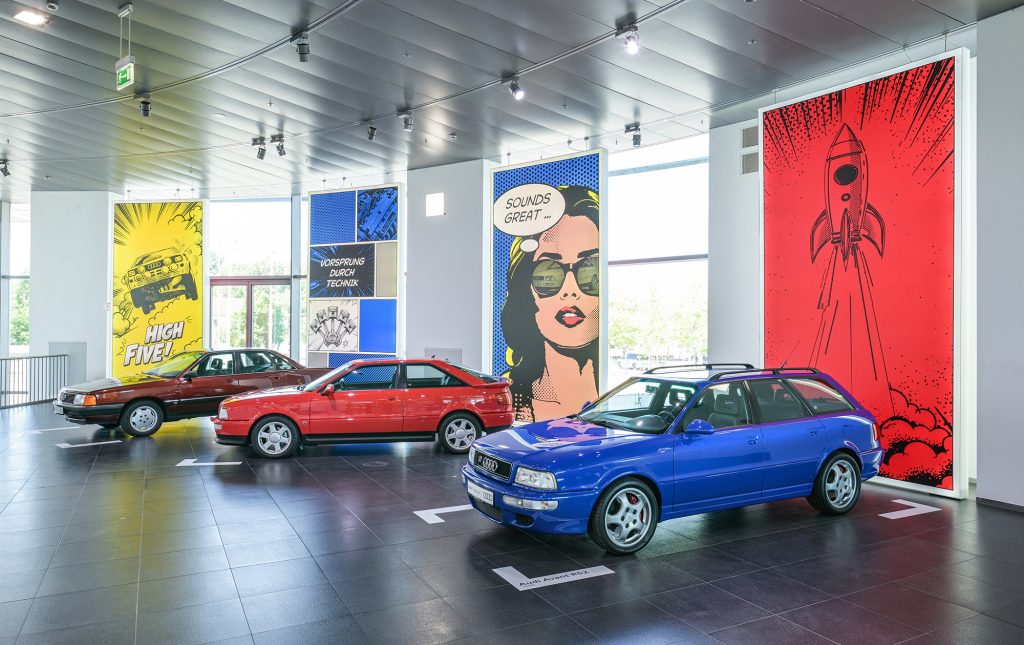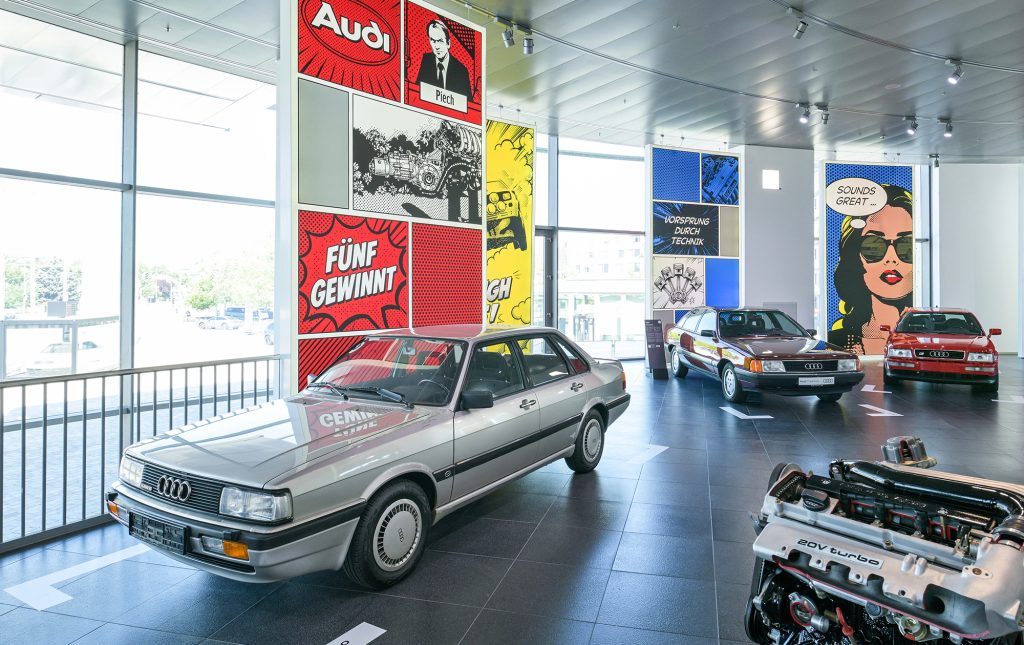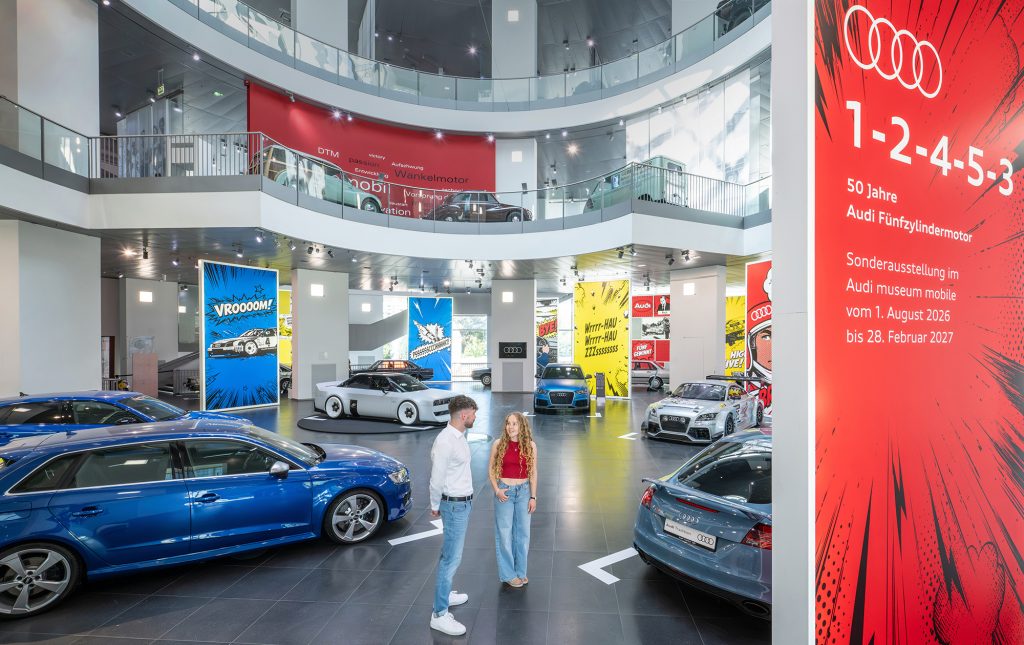

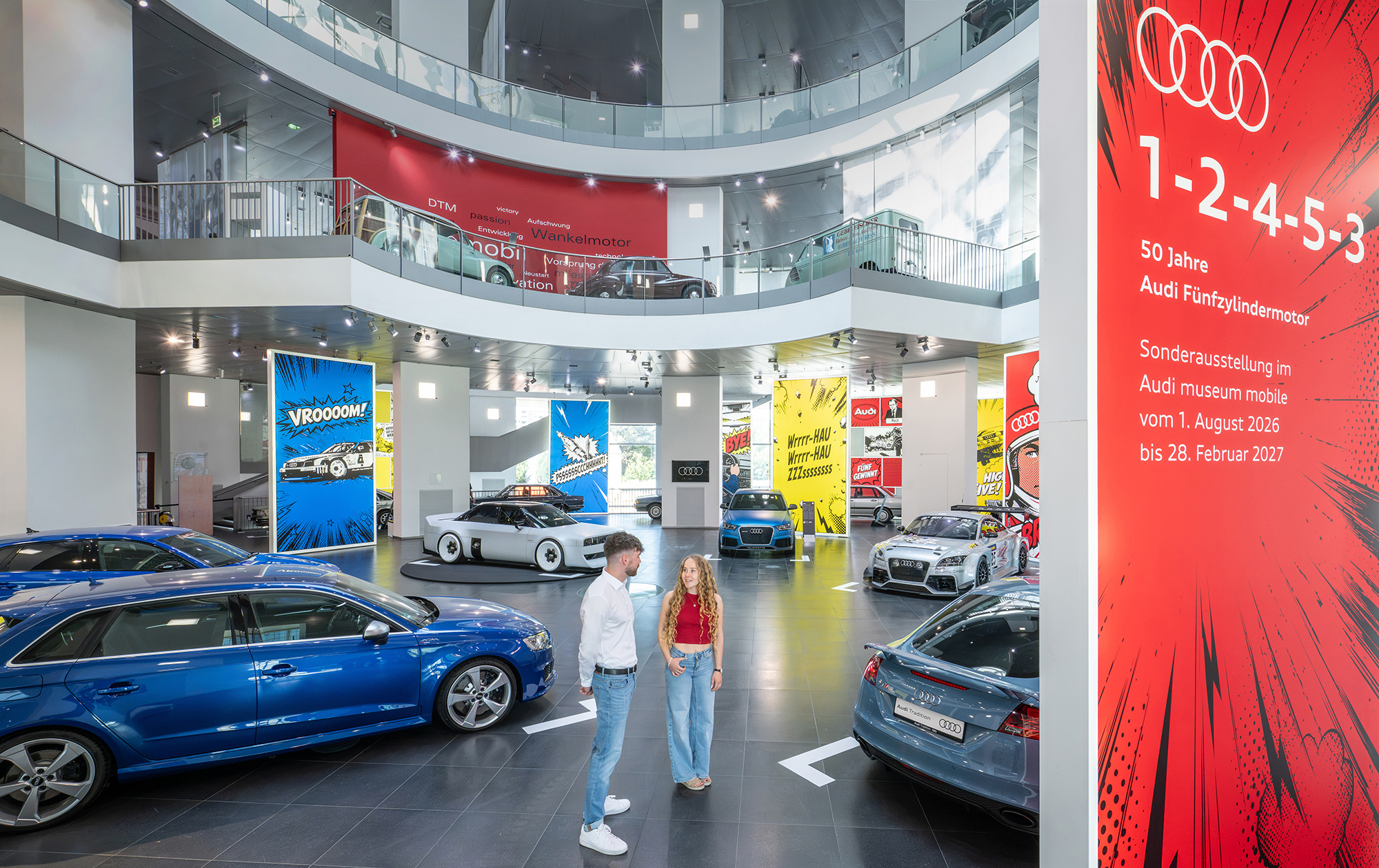

The five-cylinder engine is one of those key pieces of Audi engineering that has transcended its mechanical purpose to become part of the brand’s identity. Fifty years after the debut of the first production inline-five, Audi Tradition is marking the milestone with an exhibition at the Audi museum mobile in Ingolstadt, celebrating the engine that gave generations of Audi models—and enthusiasts—the soundtrack of firing order 1-2-4-5-3.
The anniversary is about more than nostalgia. The five-cylinder helped define Audi’s transformation from a conservative manufacturer into a technology leader, first appearing in the second-generation Audi 100 before evolving into the turbocharged engine that powered the original quattro to World Rally Championship glory. Along the way it found its way into everything from economical diesel sedans to the legendary RS2 Avant, IMSA GTO race cars and today’s RS 3, remaining one of the few production engines whose sound alone is instantly recognizable.
Audi Tradition’s exhibition, titled “1-2-4-5-3: 50 Years of Audi Five-Cylinder Engines,” opened on August 1 and runs through February 28, 2027. Curated by Stefan Felber, the display brings together seven engine exhibits and fourteen vehicles that trace the engine’s remarkable evolution across five decades.
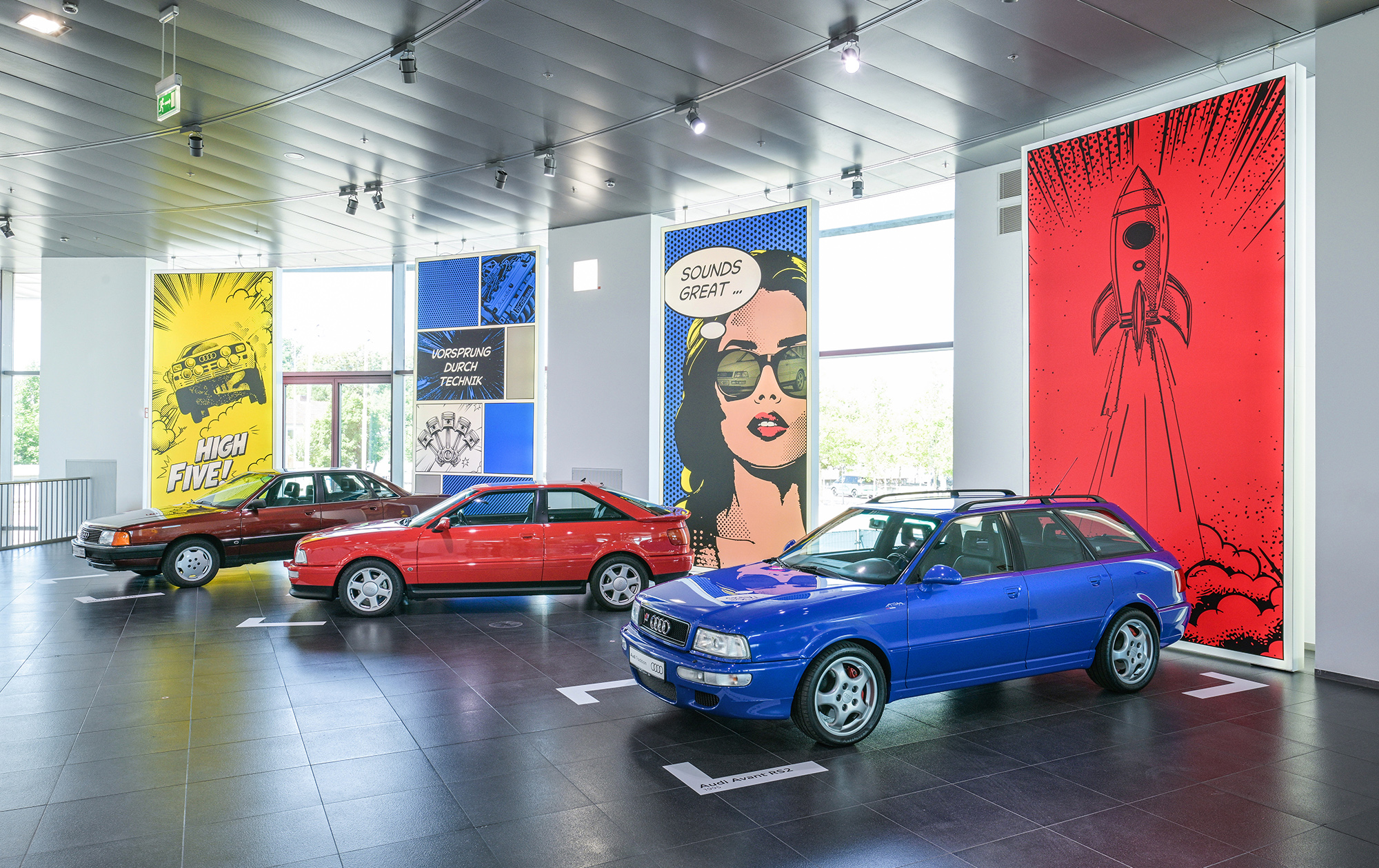
The lineup spans nearly every era of five-cylinder history. Early production models like the Audi 100 5E, Audi 100 5D and Audi 200 5T illustrate how the unconventional inline-five became Audi’s answer to the packaging challenges of fitting a more prestigious engine without the compromises of a larger six-cylinder. Later highlights include the Audi 90 quattro, S2 Coupé, Avant RS2 and Audi S6, before the story continues into the modern era with the TT RS, RS 3 and even the seldom-seen GT50 concept.
Audi also uses the exhibition to revisit the engineering behind the engine itself. Rather than adding another cylinder to its EA827 four-cylinder architecture, engineers created an entirely new powerplant while retaining much of the proven design. The result was an engine that combined smoothness, compact packaging and a distinctive exhaust note produced by its unusual firing order. That unique cadence would eventually become every bit as recognizable as quattro itself.
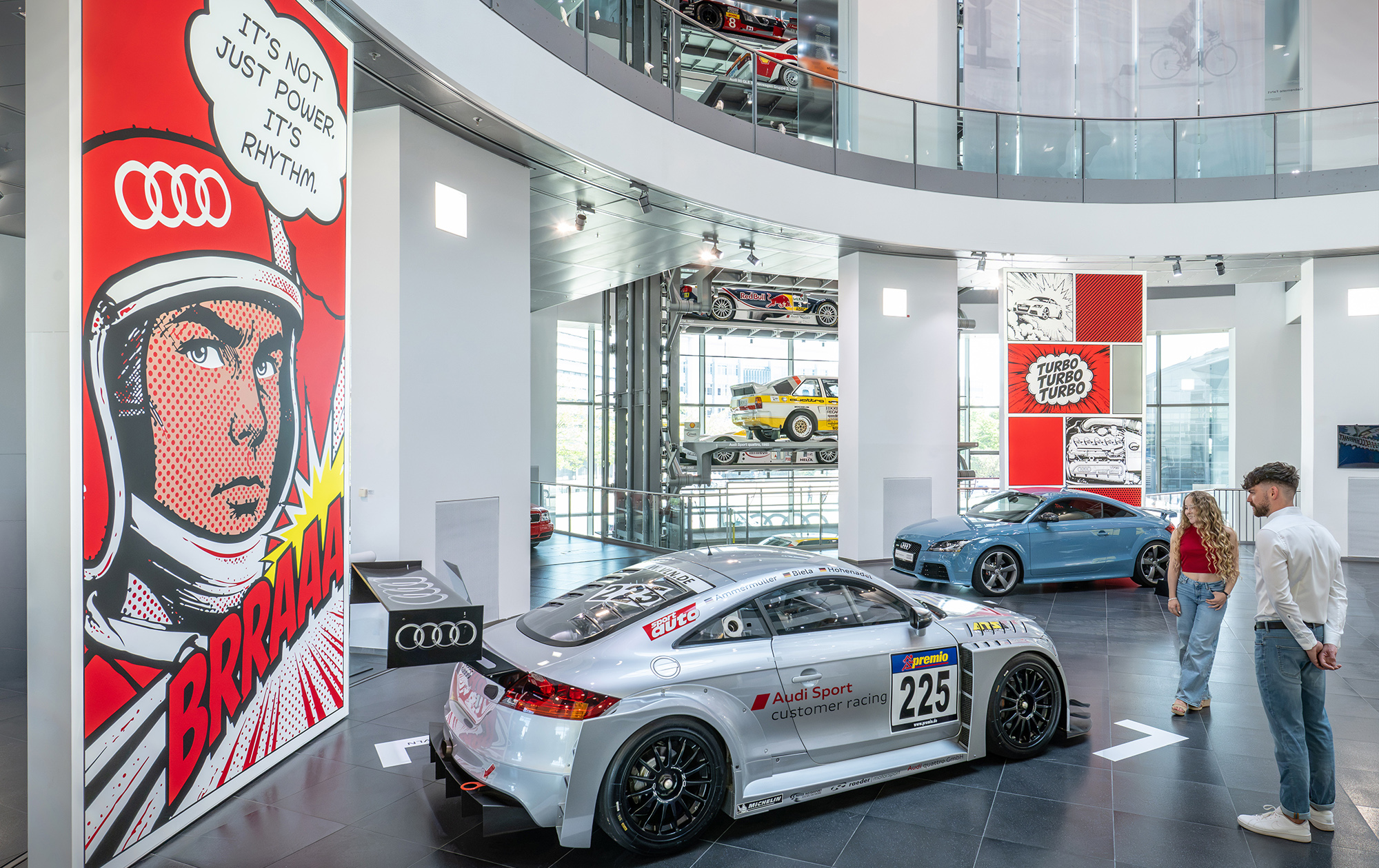
Performance followed. The original 2.1-liter fuel-injected five-cylinder produced 136 horsepower in the Audi 100 5E, but turbocharging unlocked the engine’s true potential. By 1979 the Audi 200 5T offered 170 horsepower, and a year later the original Audi quattro arrived with 200 horsepower and permanent all-wheel drive. Motorsport accelerated development even further, with Group B rally cars eventually exceeding 500 horsepower and the fearsome Audi IMSA GTO producing approximately 720 horsepower in American competition.
The five-cylinder’s road-going legacy continued long after its rally dominance faded. The 315-horsepower RS2 Avant not only became the world’s fastest production wagon in 1994 but also established Audi’s RS lineage. Although the original generation of five-cylinder engines disappeared by 1997, Audi revived the concept in spectacular fashion with the TT RS in 2009. The 2.5 TFSI quickly earned a reputation as one of the world’s great performance engines, collecting nine consecutive International Engine of the Year awards while powering successive generations of TT RS and RS 3 models.
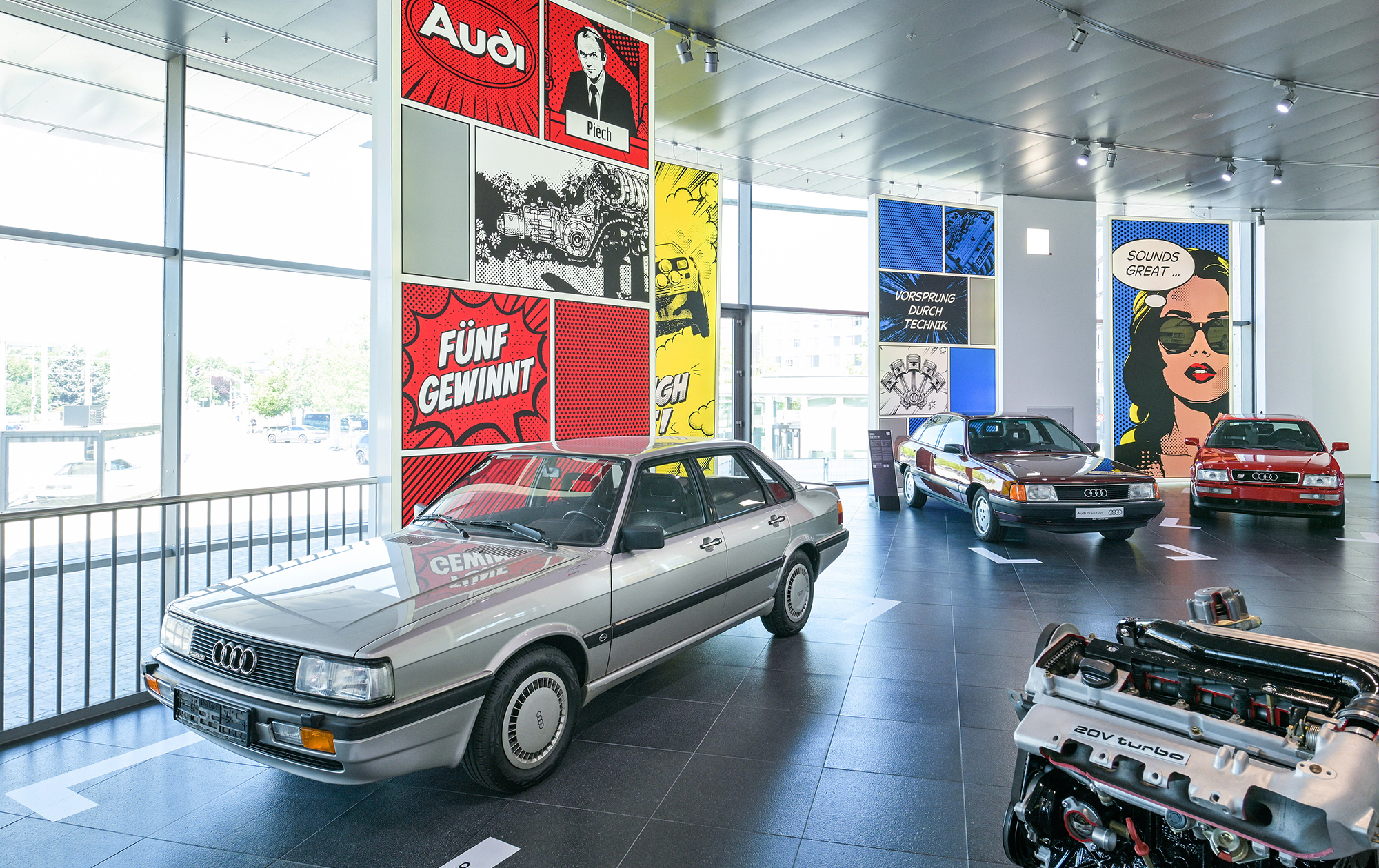
That continuity is what makes the inline-five so special. Few manufacturers have maintained such a clear thread between road cars, championship-winning race cars and modern performance models. From the original Audi 100 to today’s RS lineup, the five-cylinder has remained a mechanical signature that continues to define Audi in a way few engines ever define a brand.
Visitors to the Audi museum mobile can experience the exhibition through February 28, 2027, with additional multimedia content available through the Audi Tradition app, including audio guides, 360-degree views and detailed information about many of the vehicles on display.
PHOTO GALLERY