
March 18, 2014.
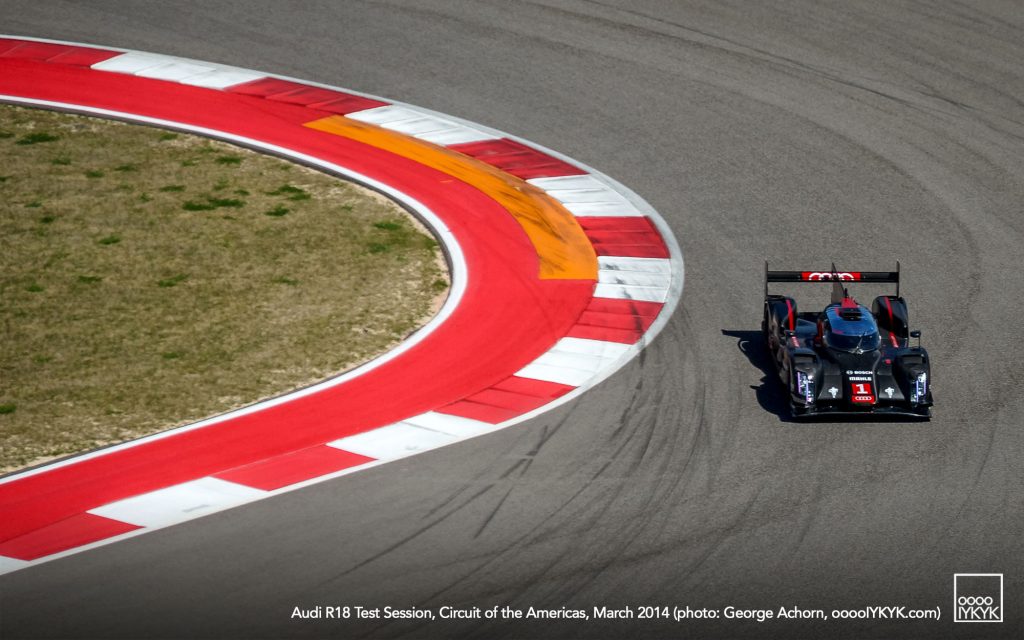
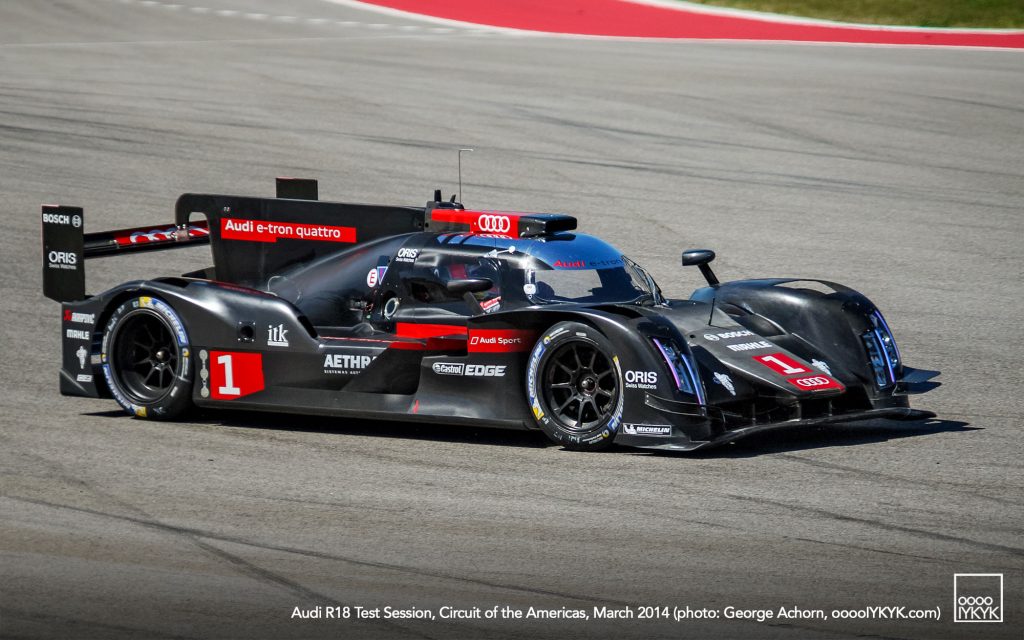
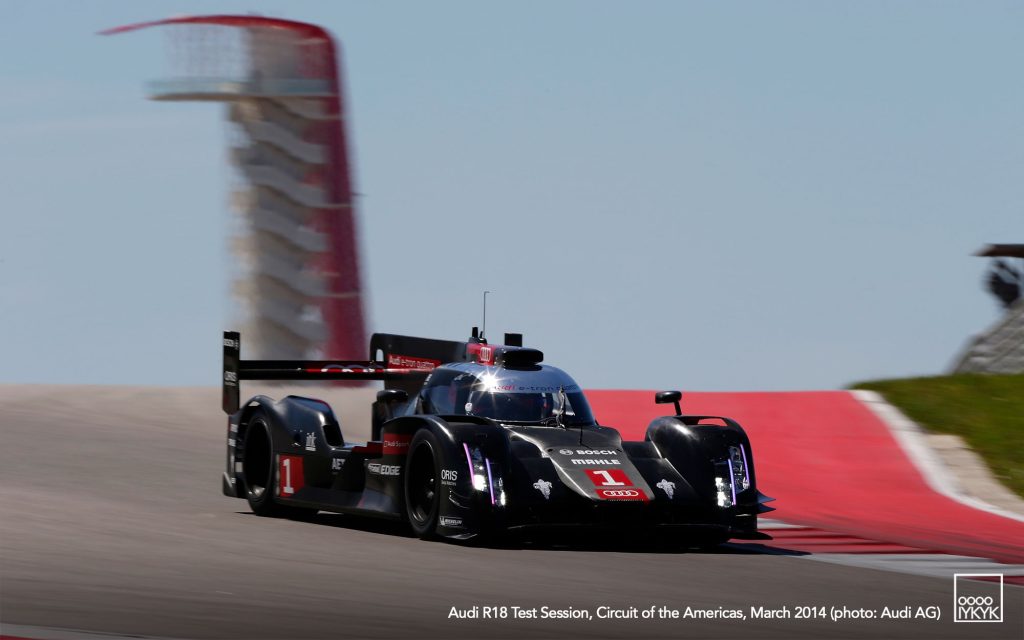
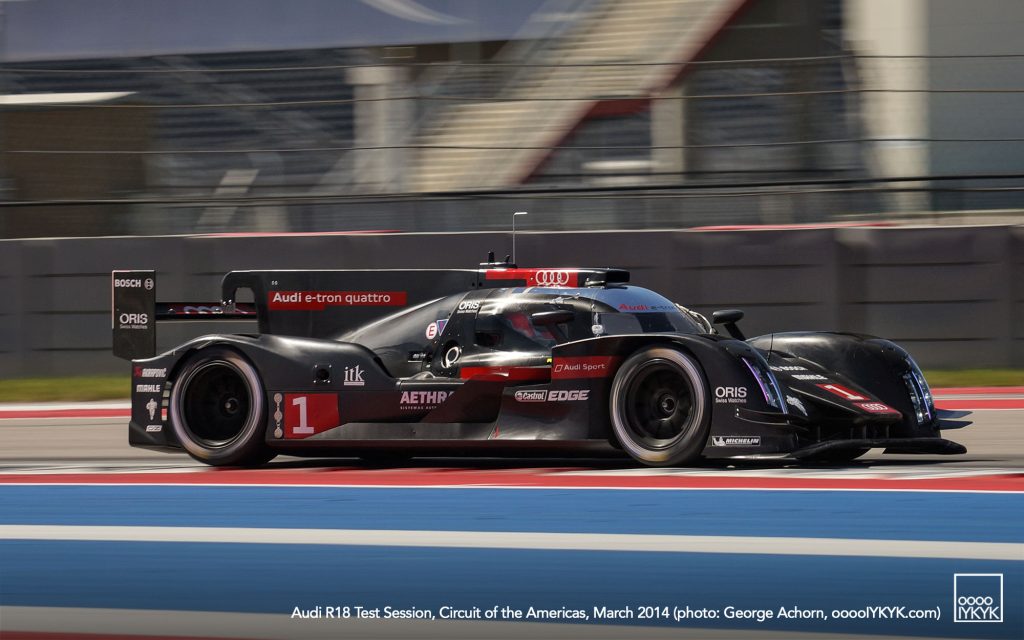
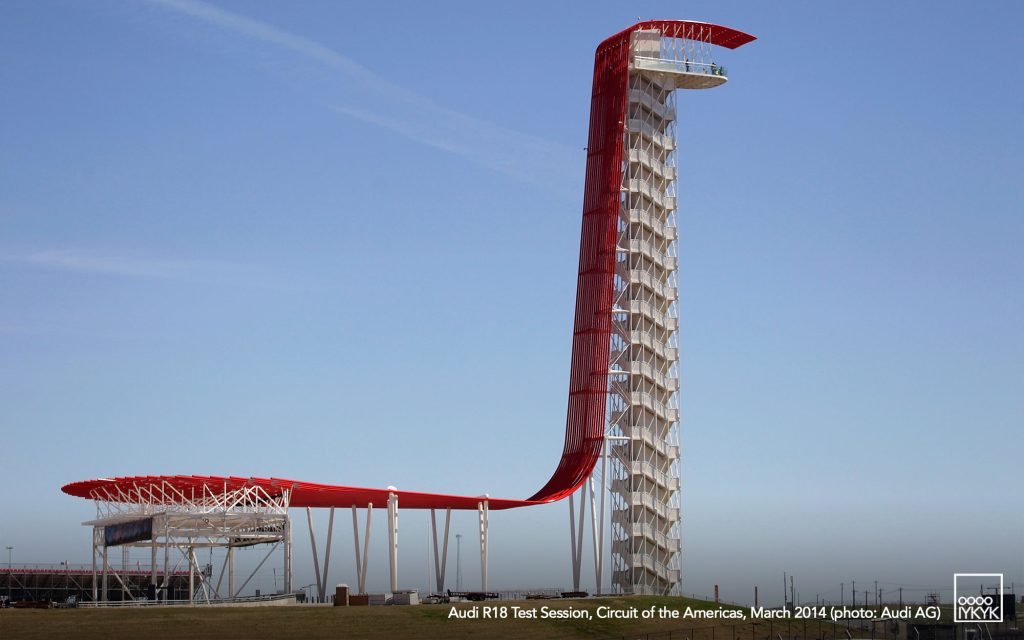
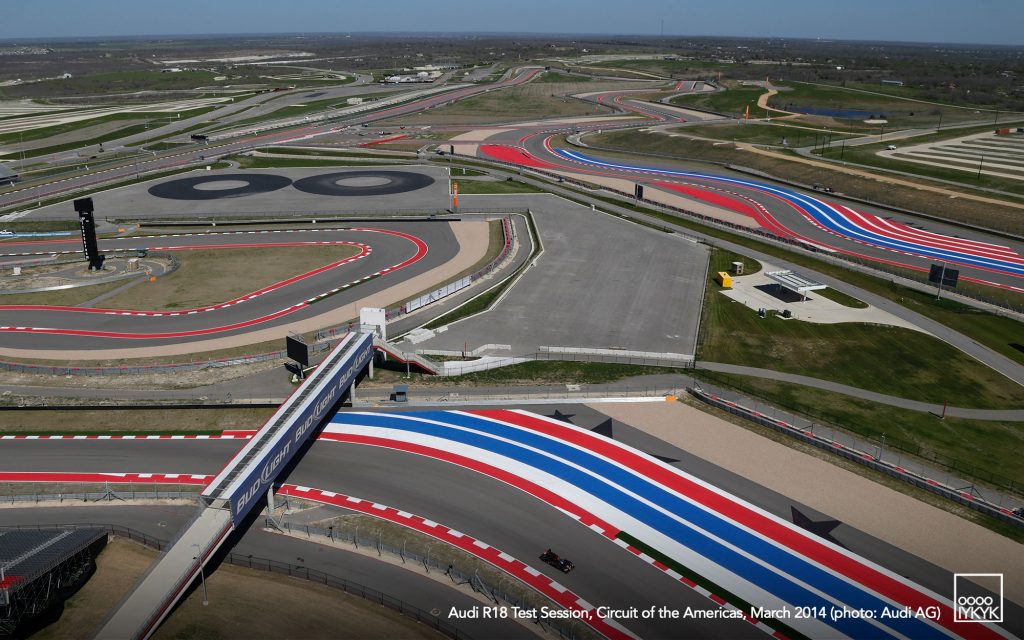
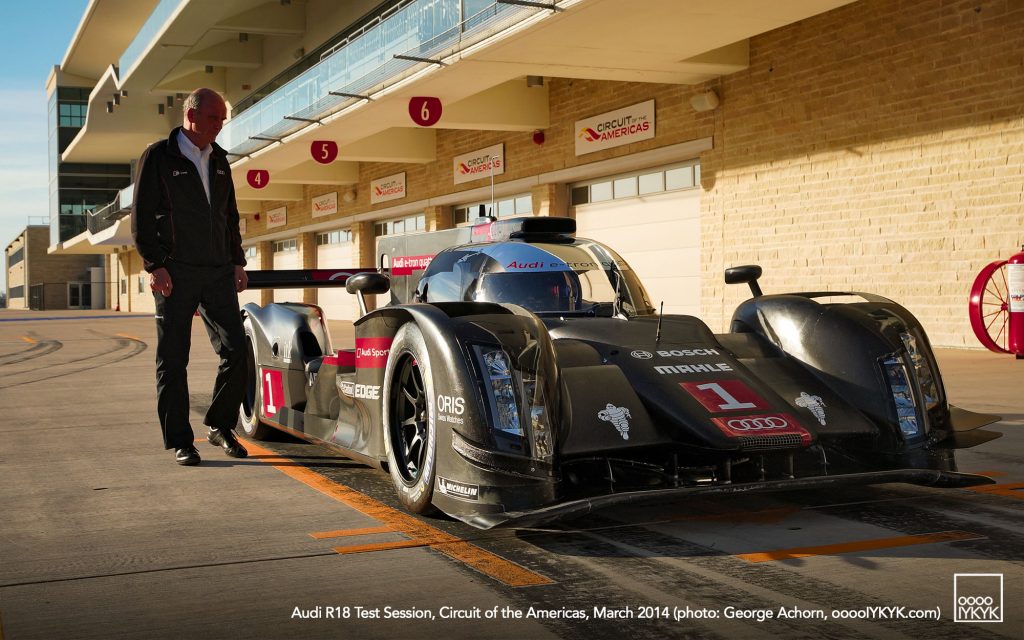
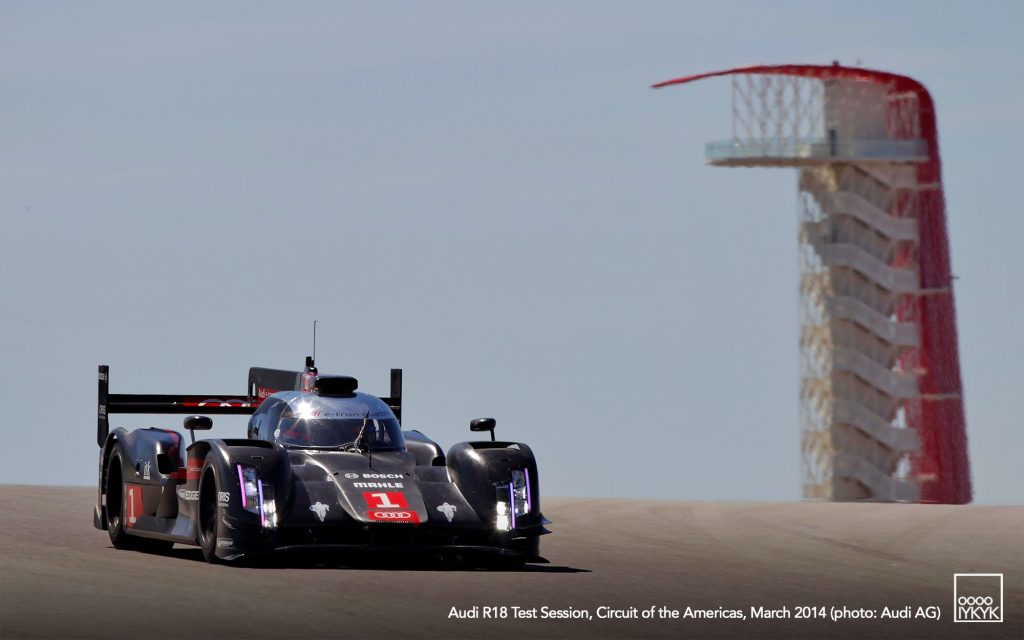
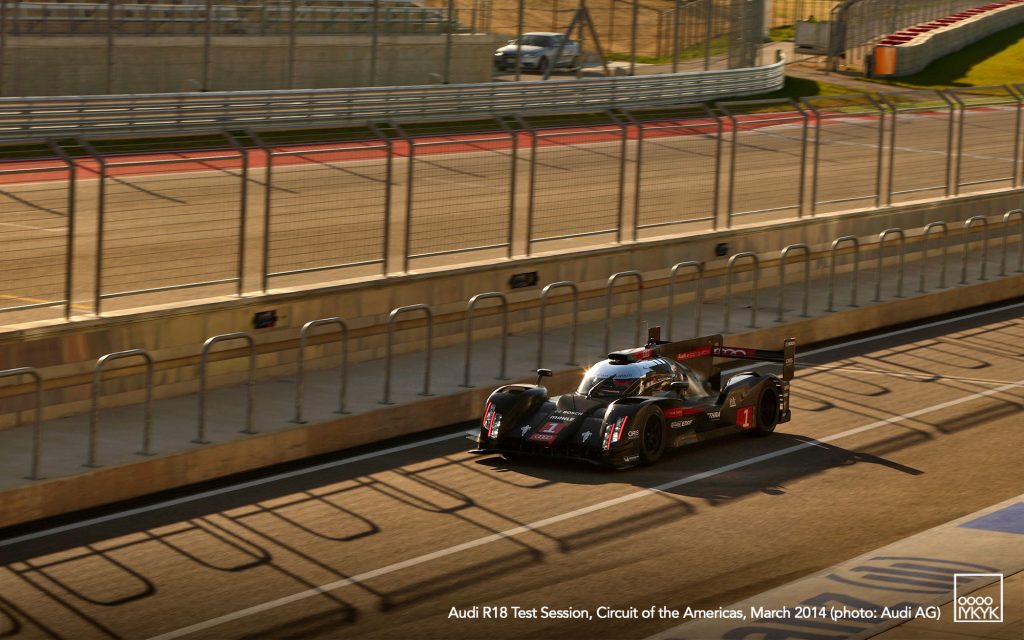
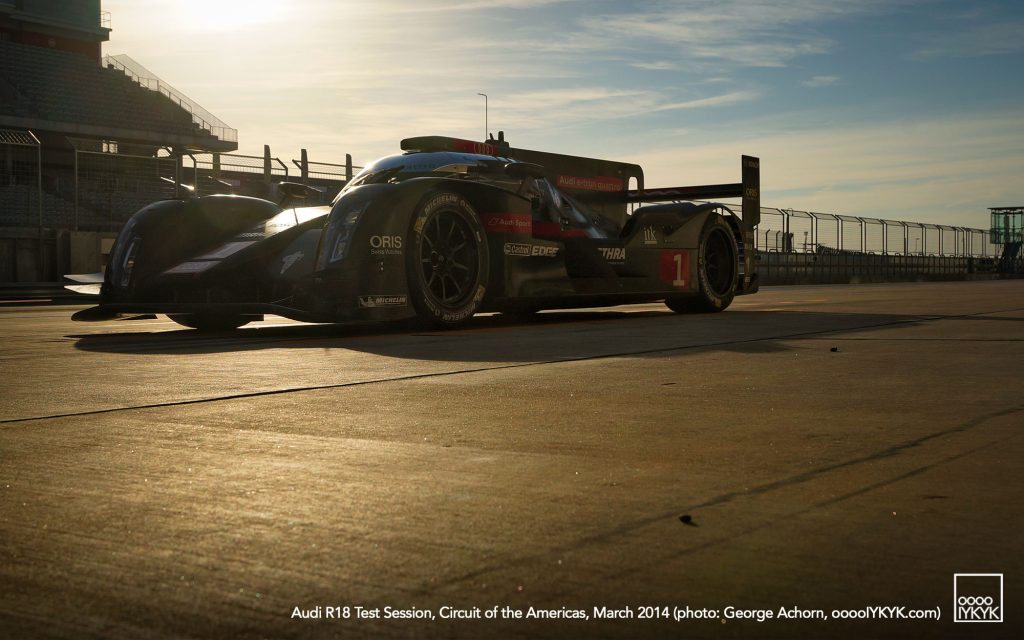
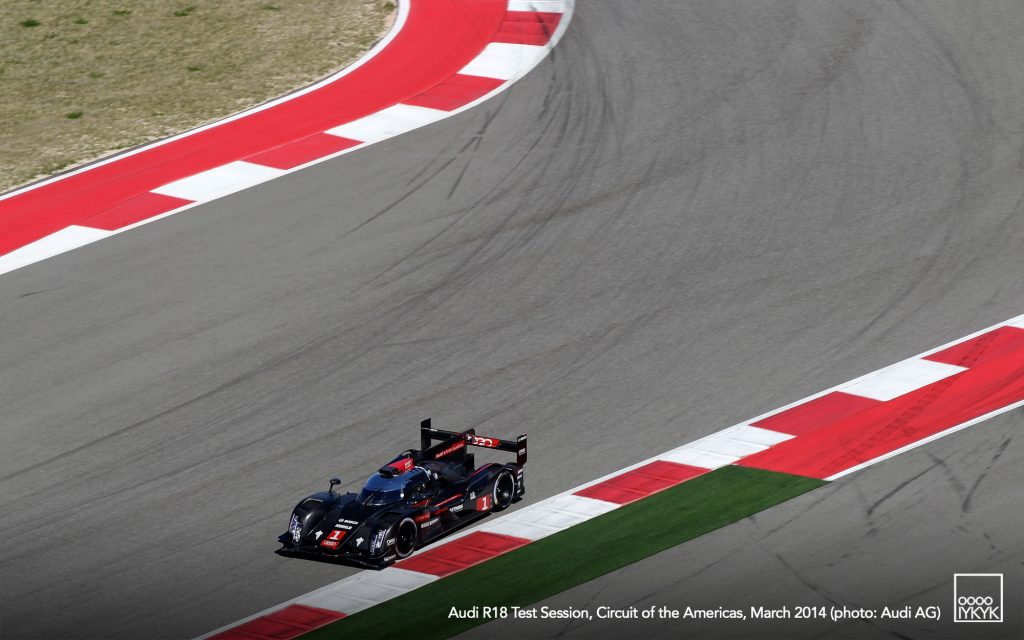
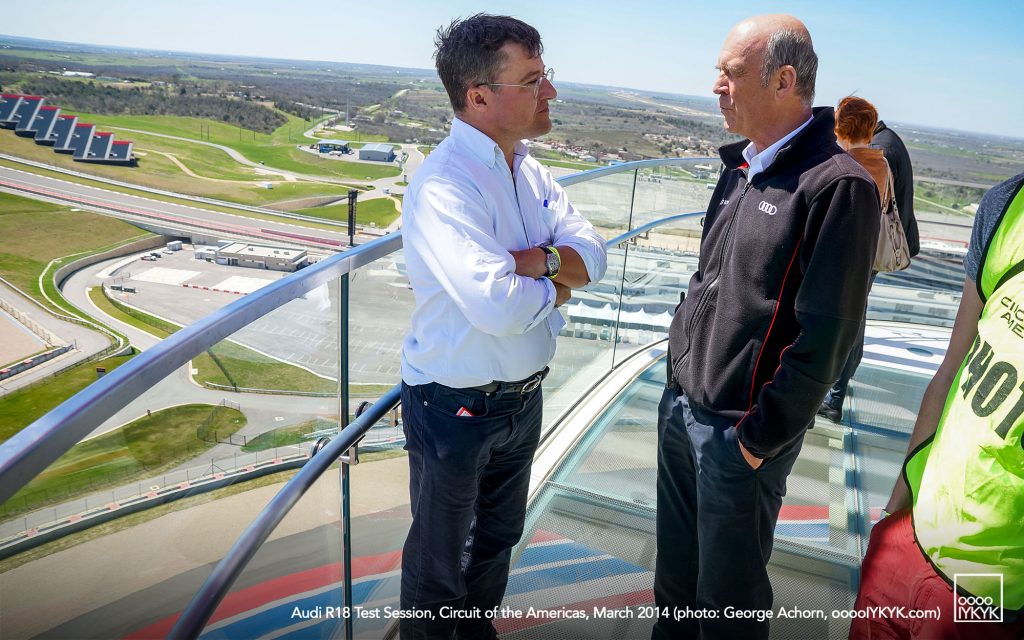
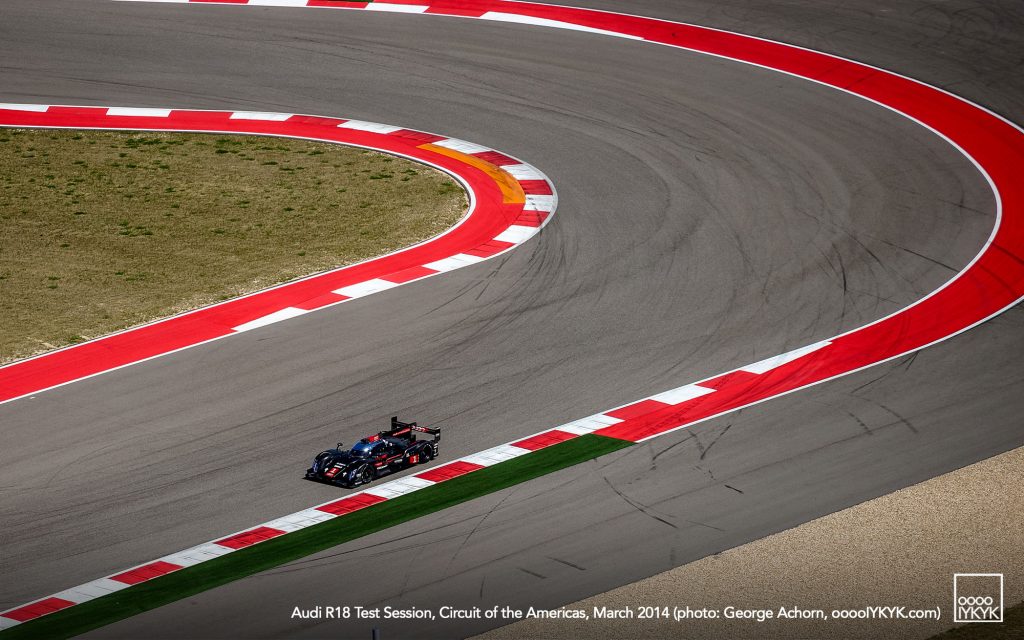
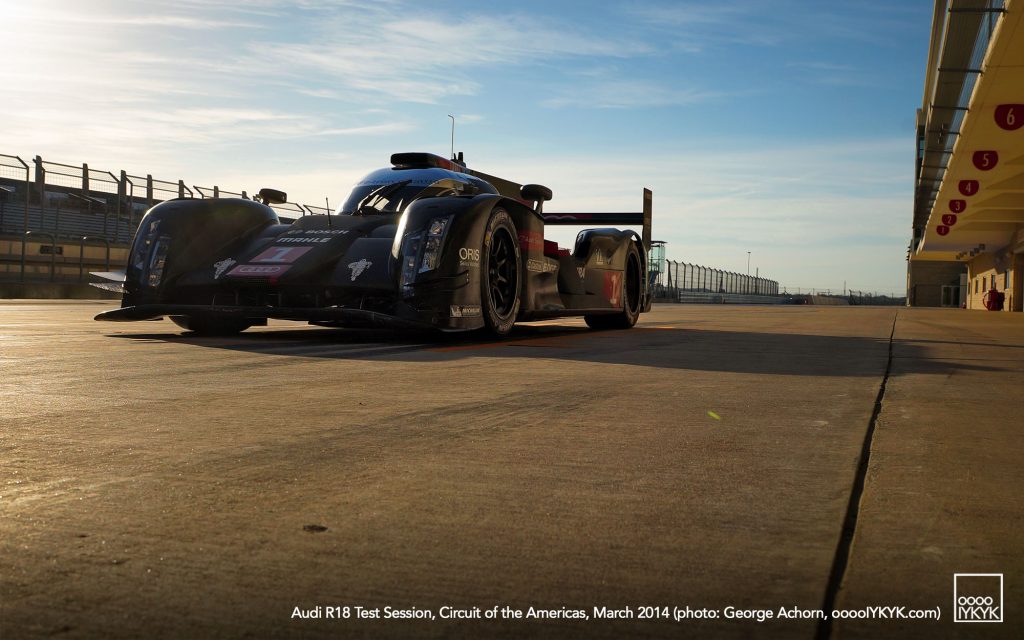
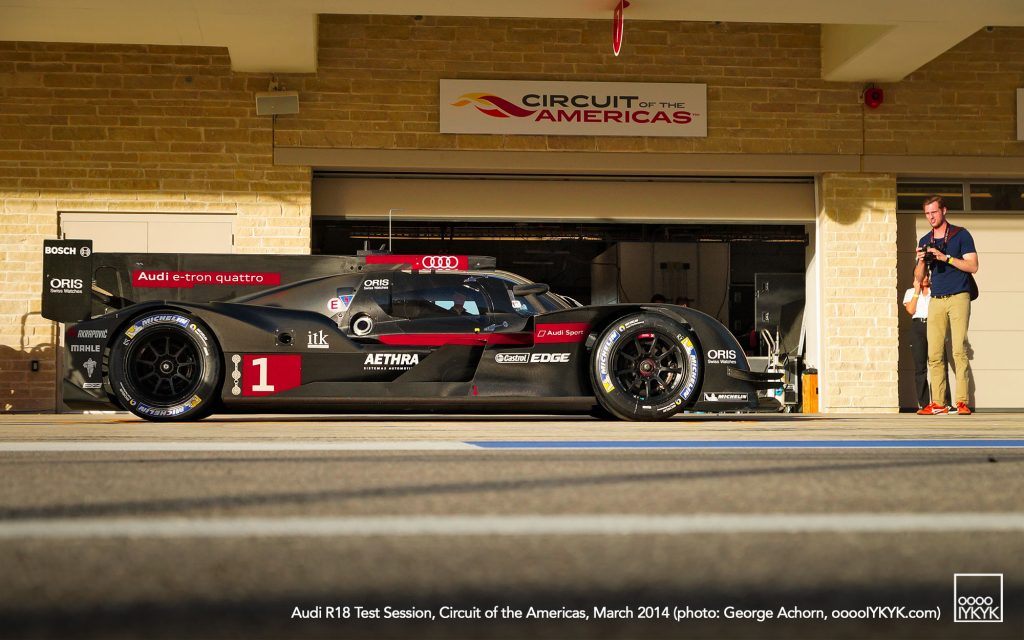
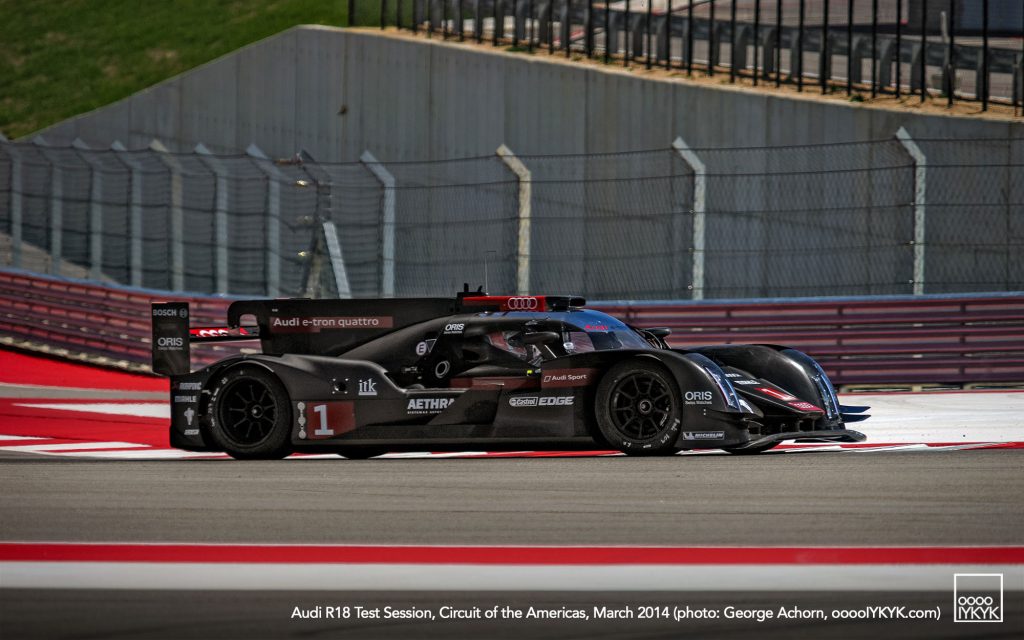
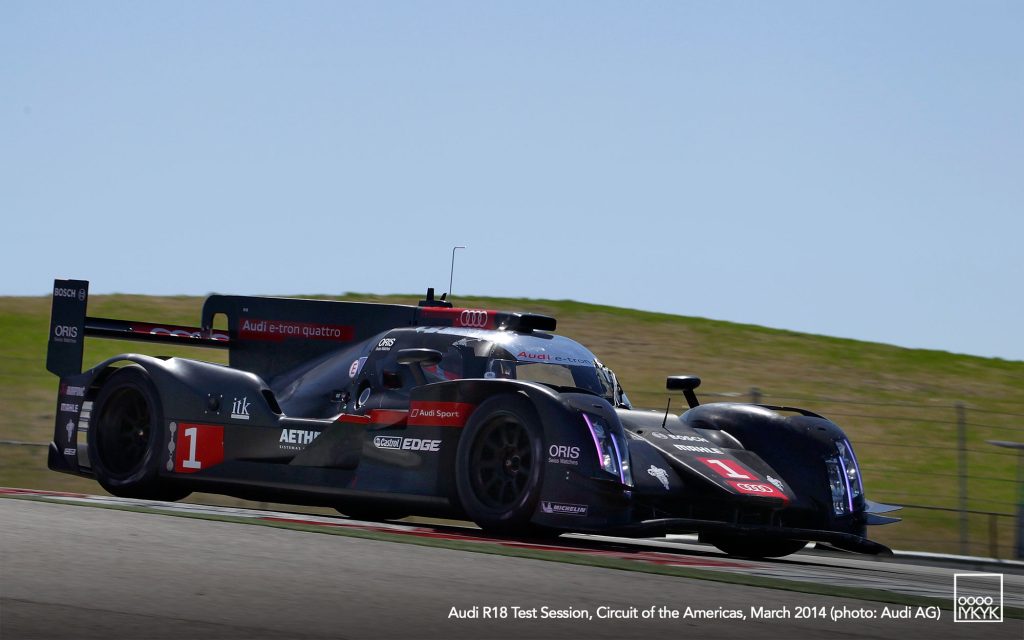
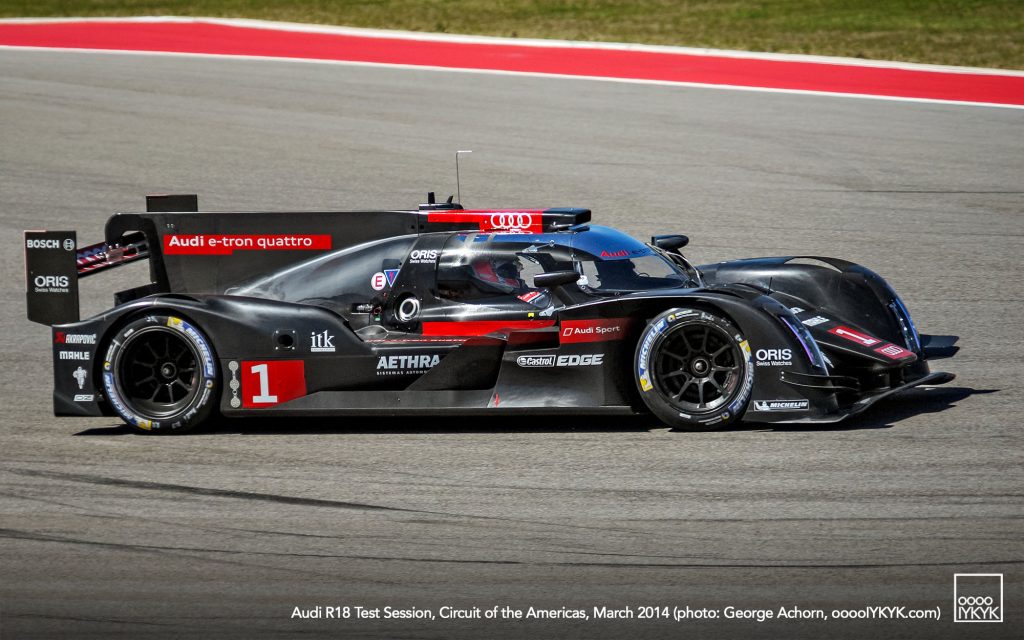
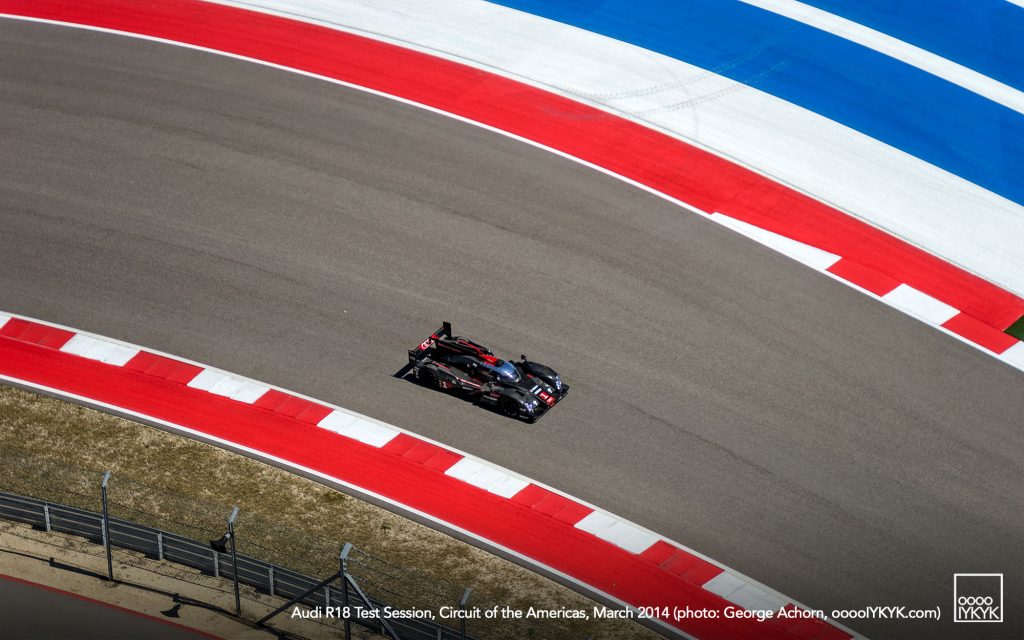
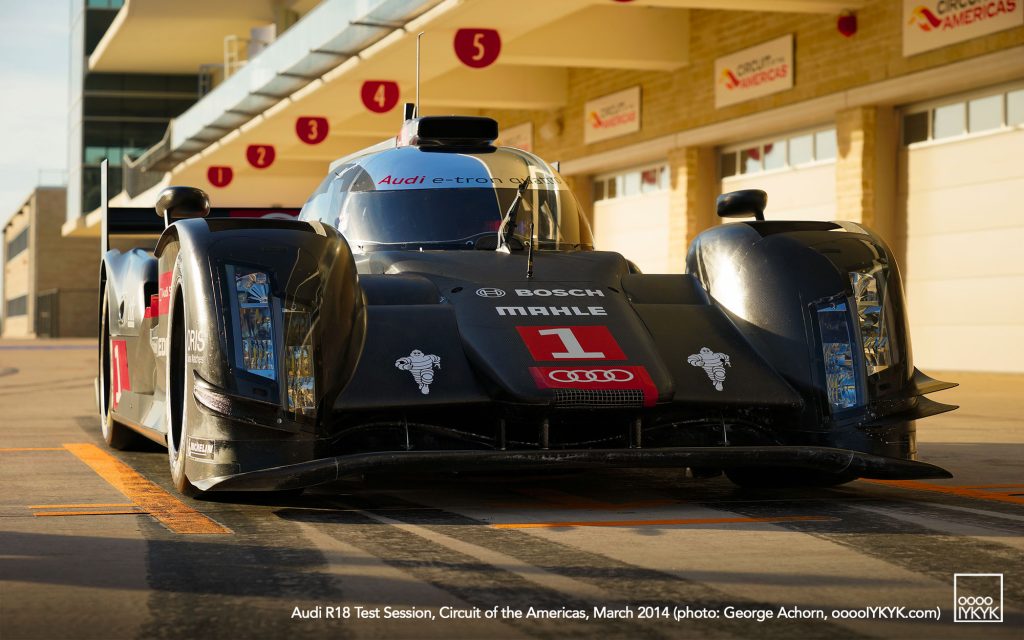
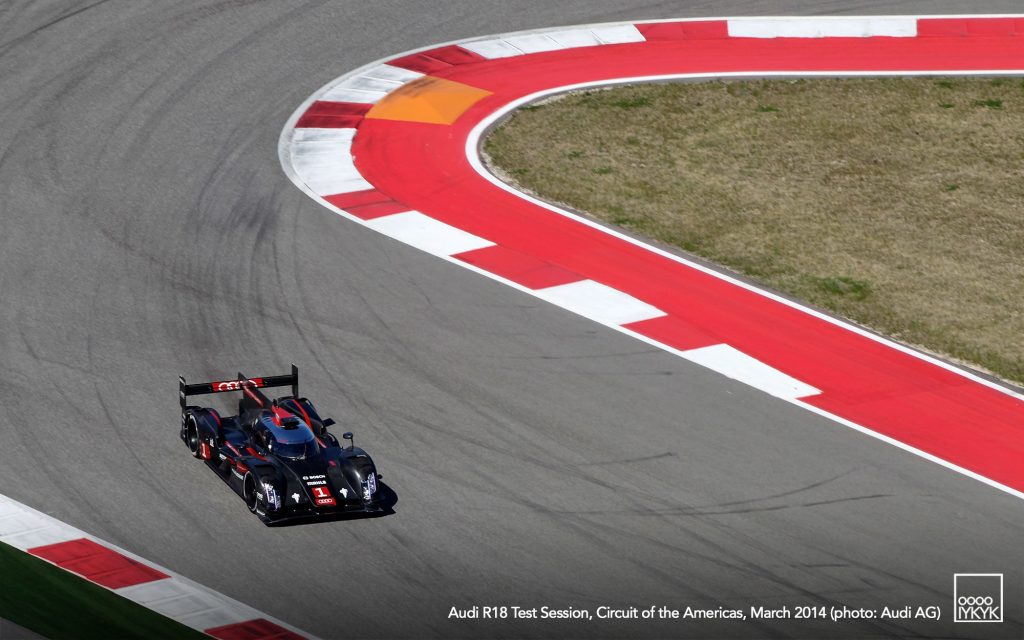
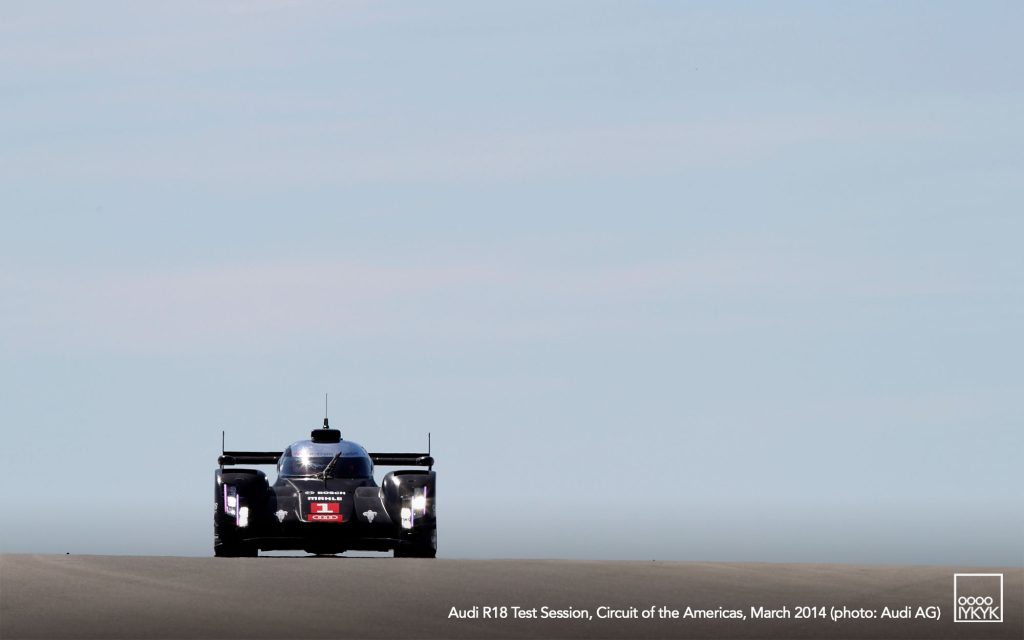
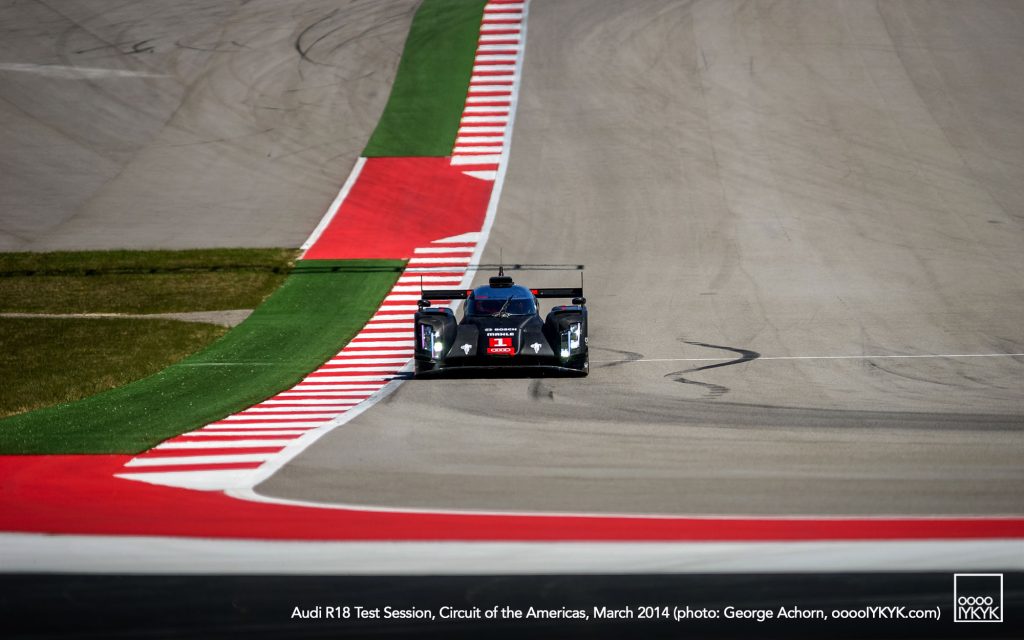
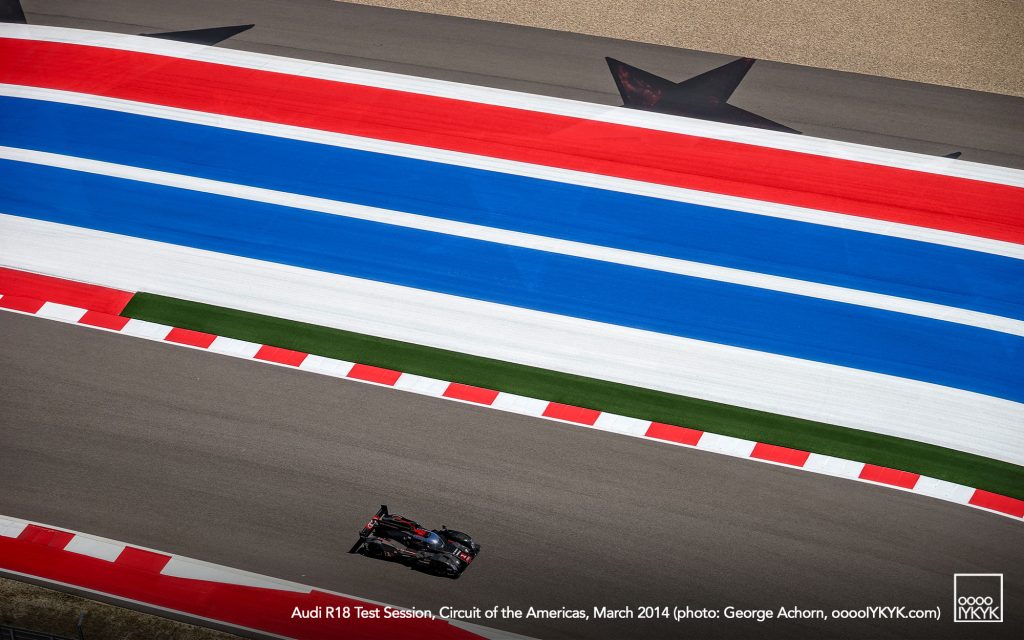
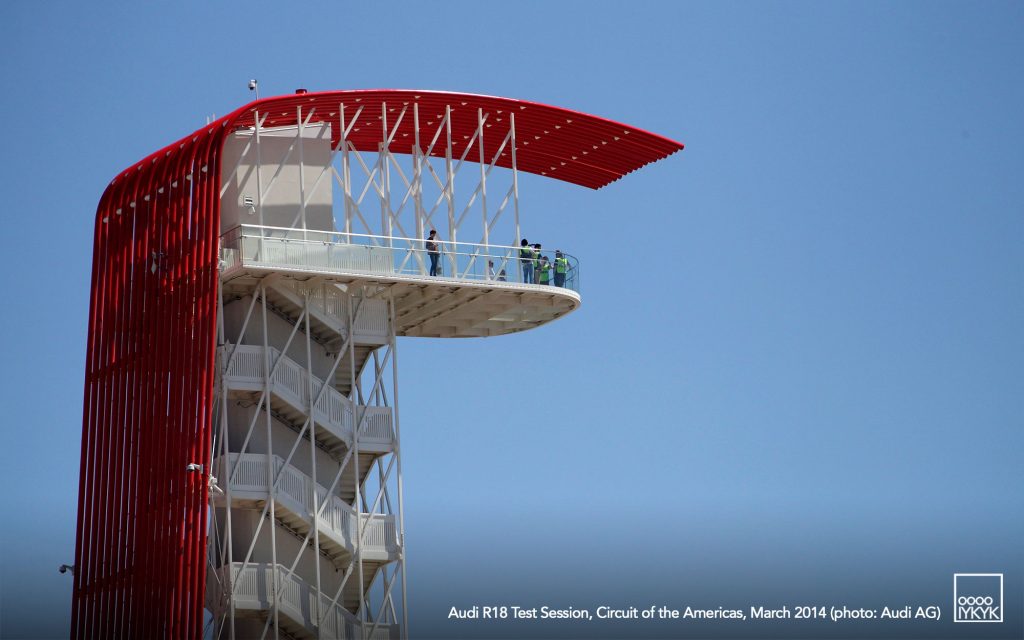
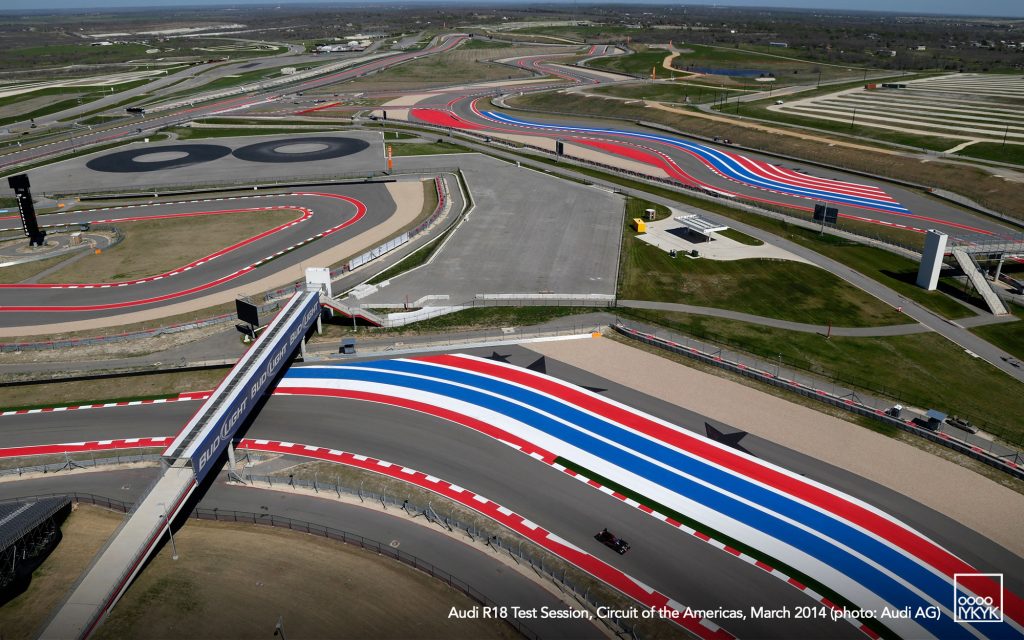
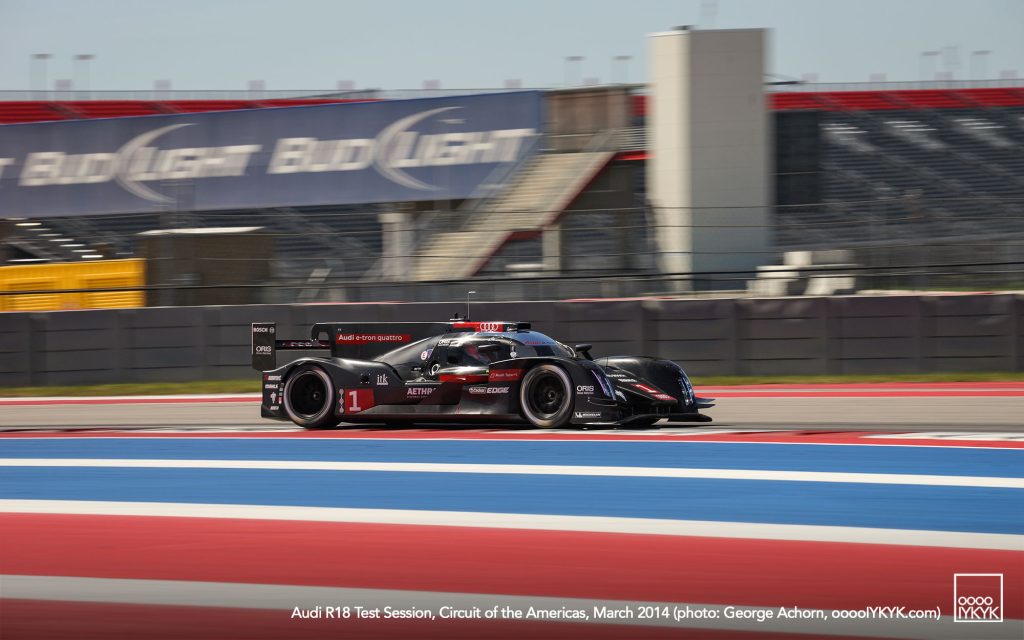
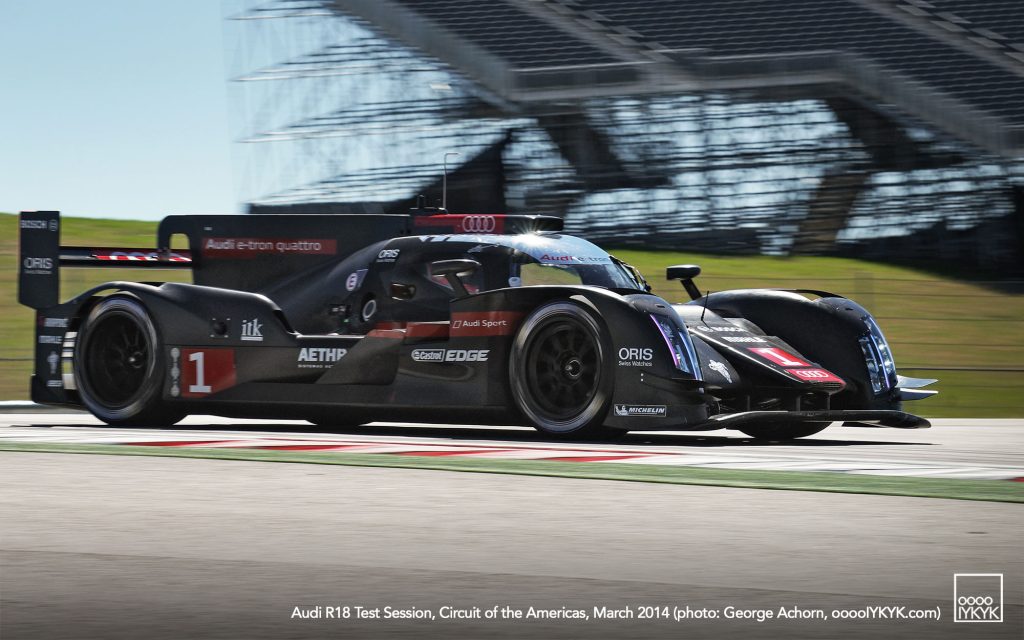
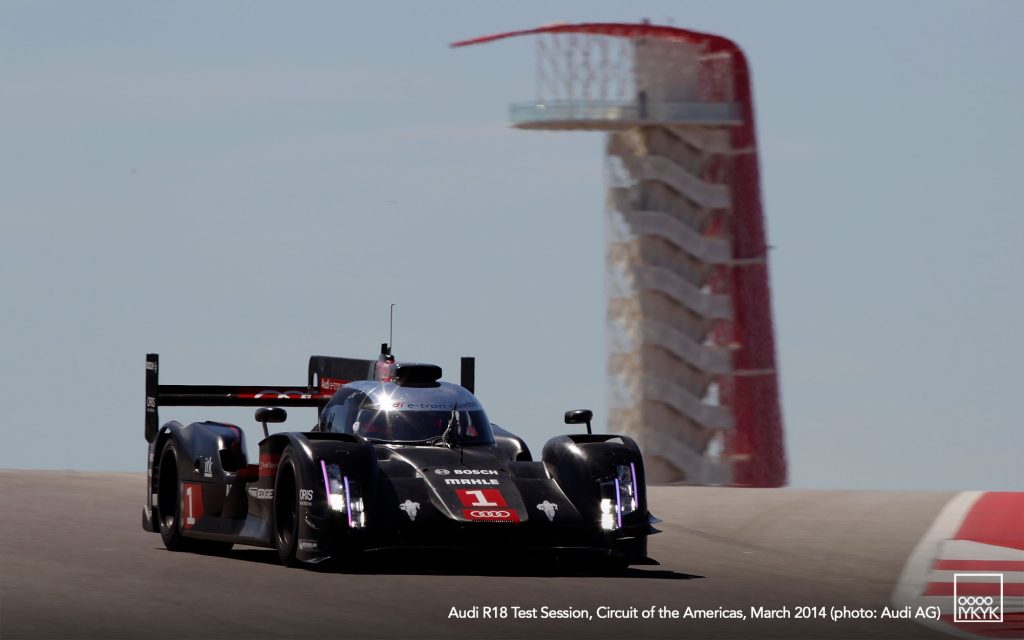
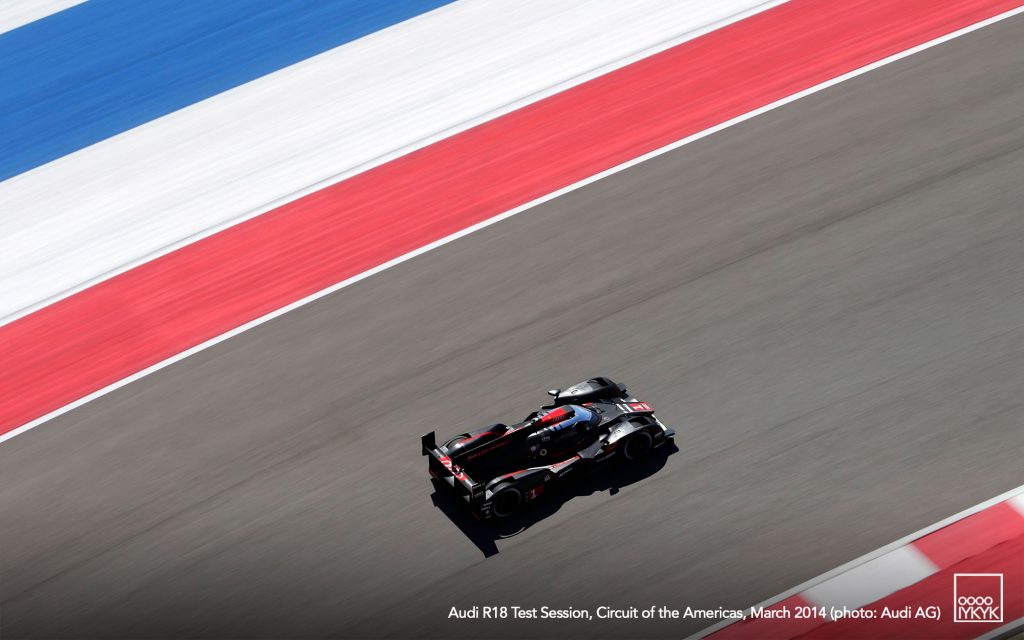
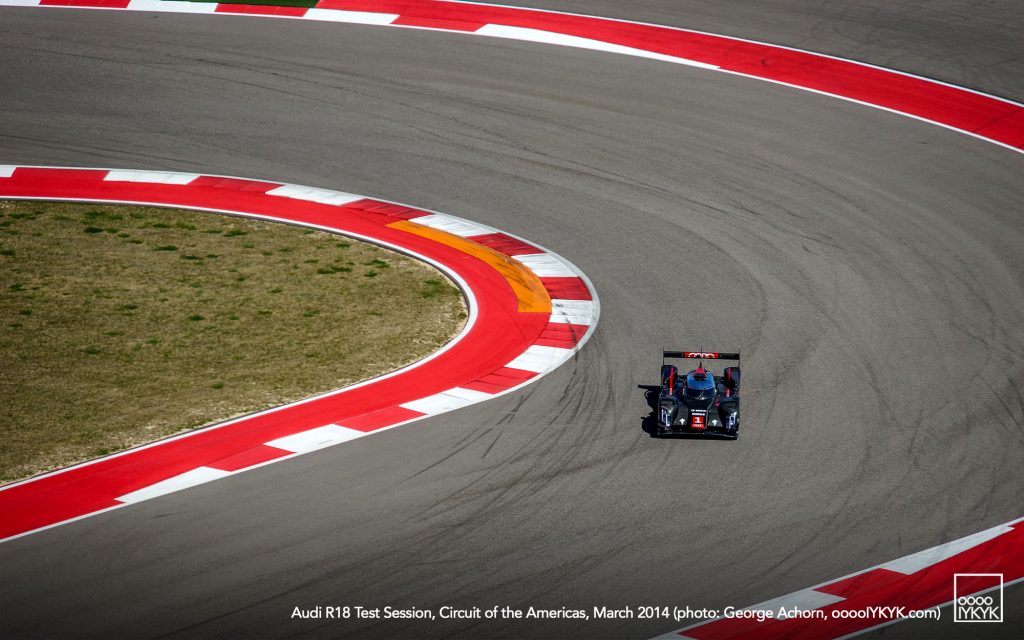
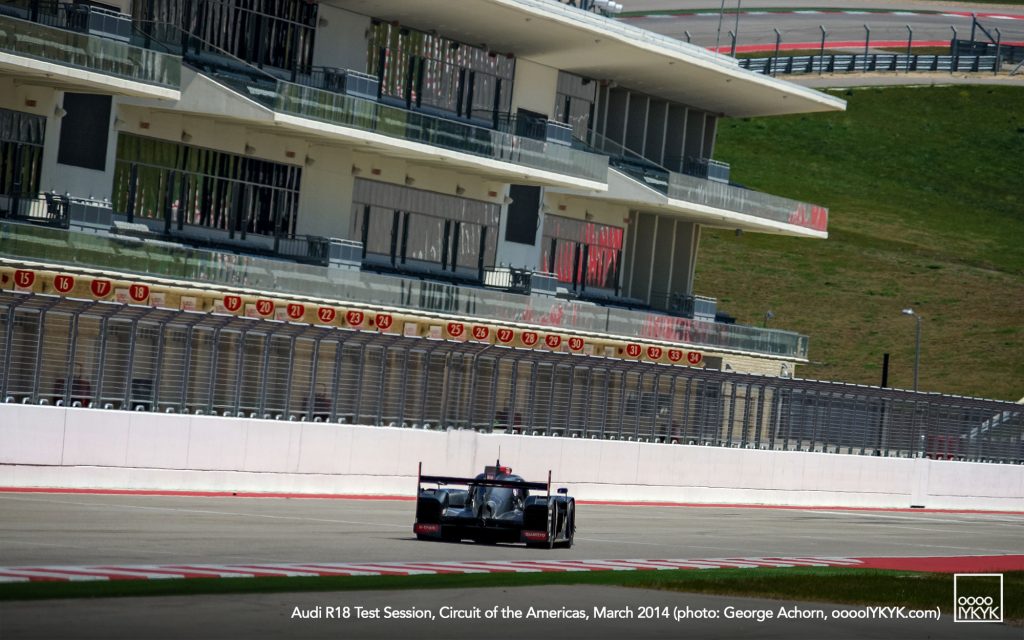
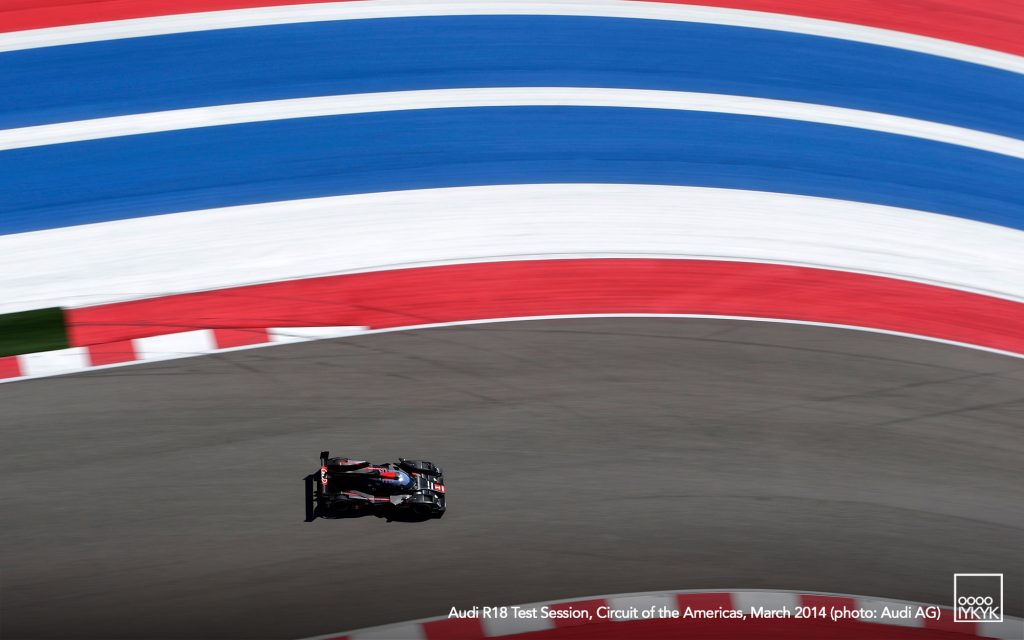
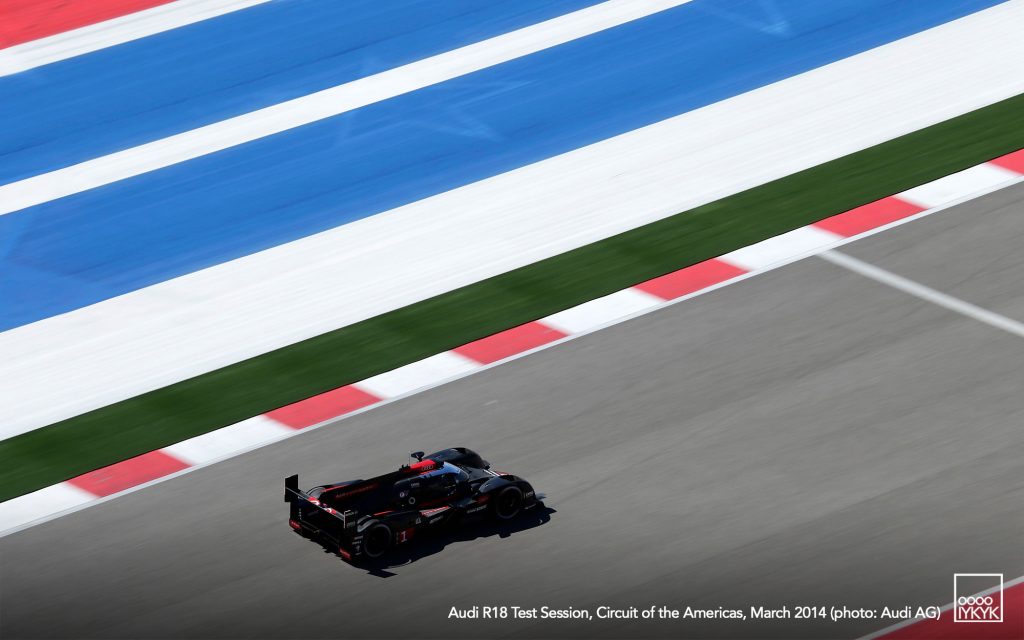
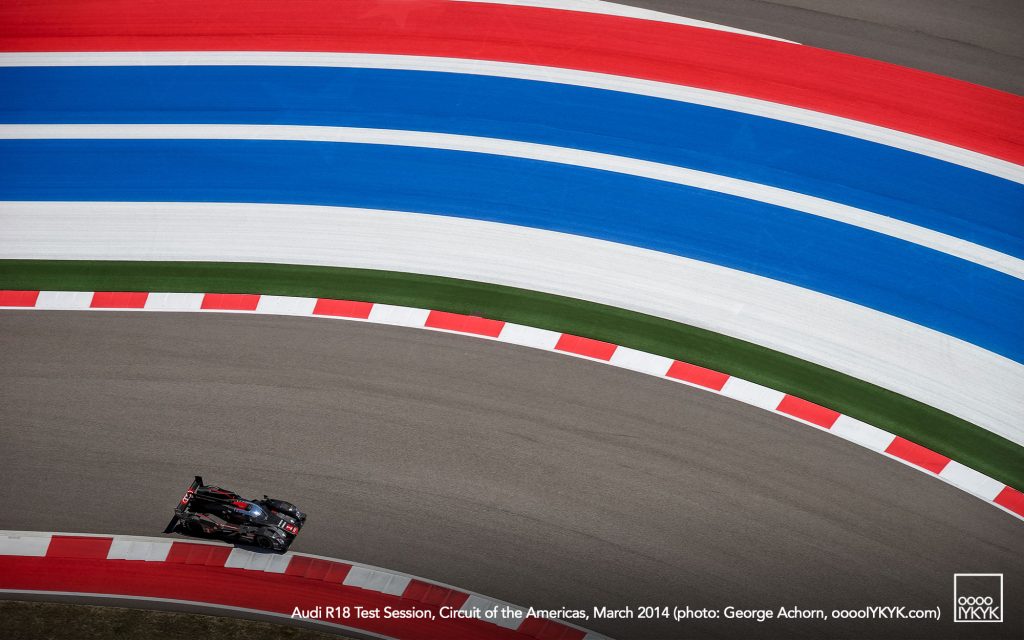
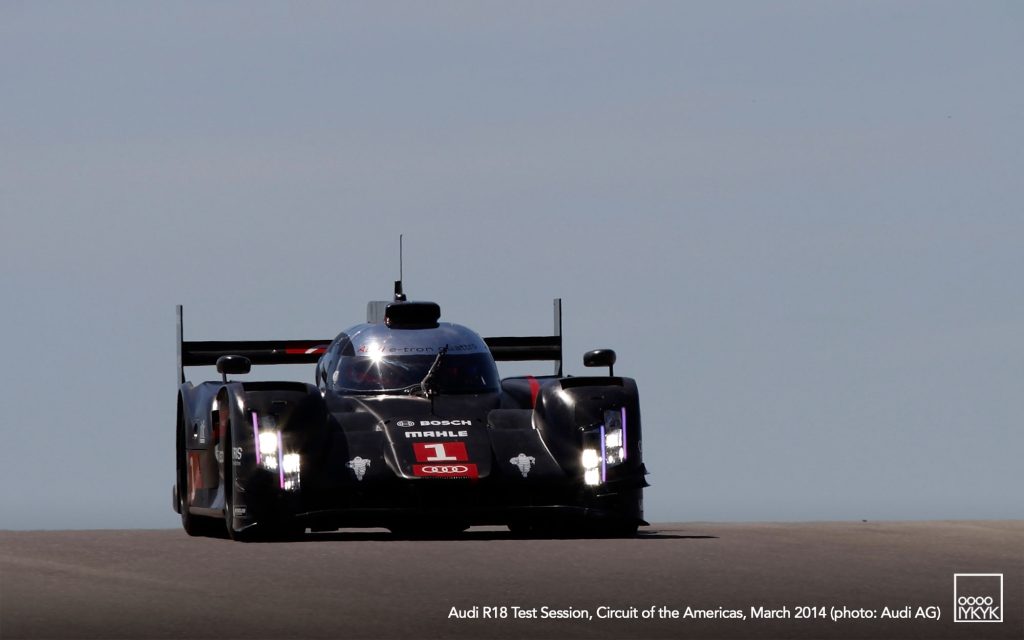
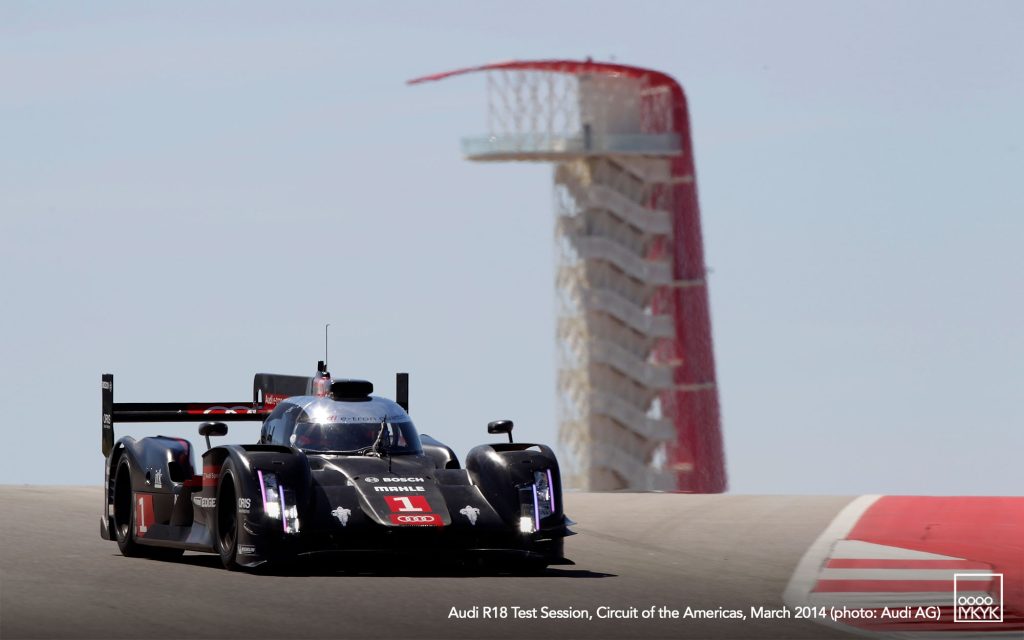
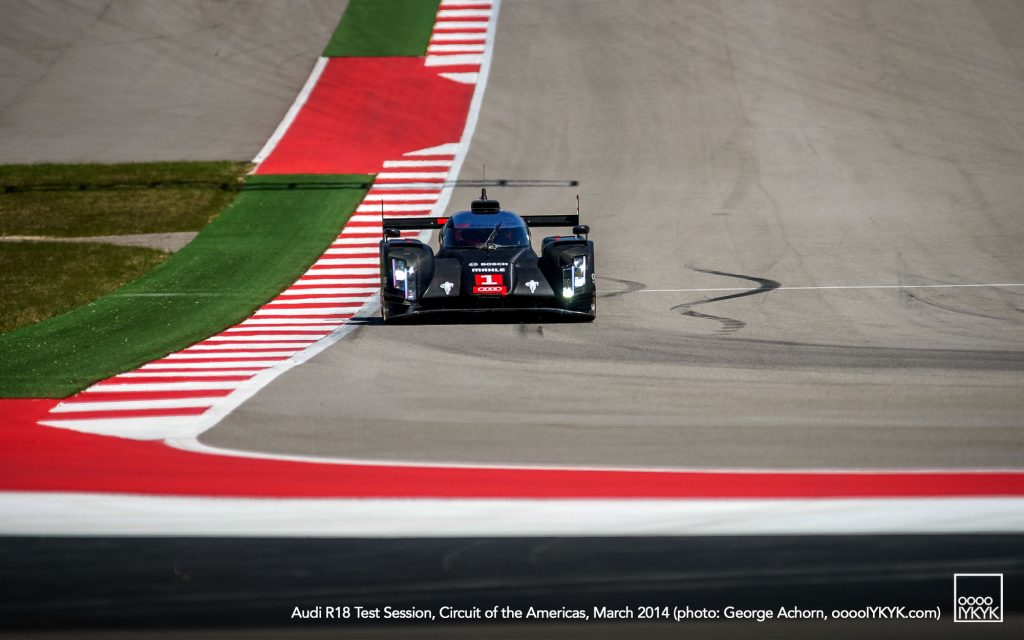
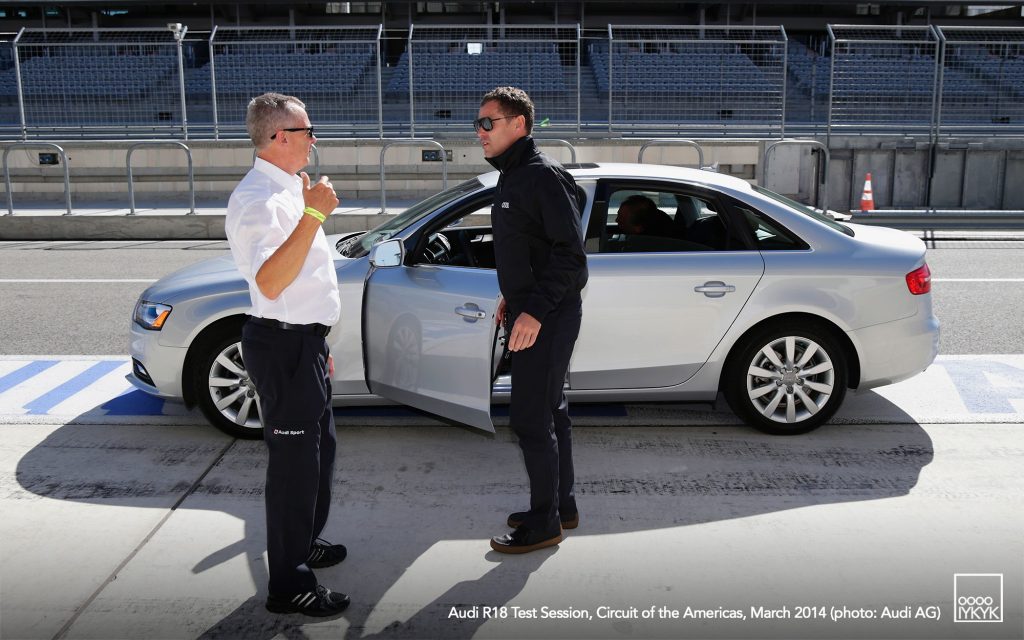
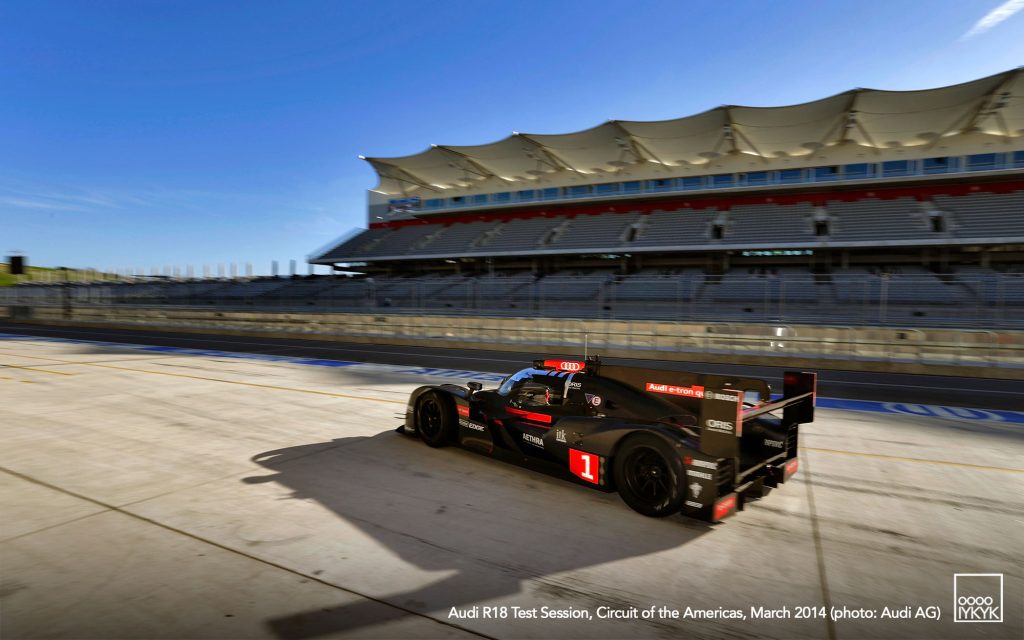
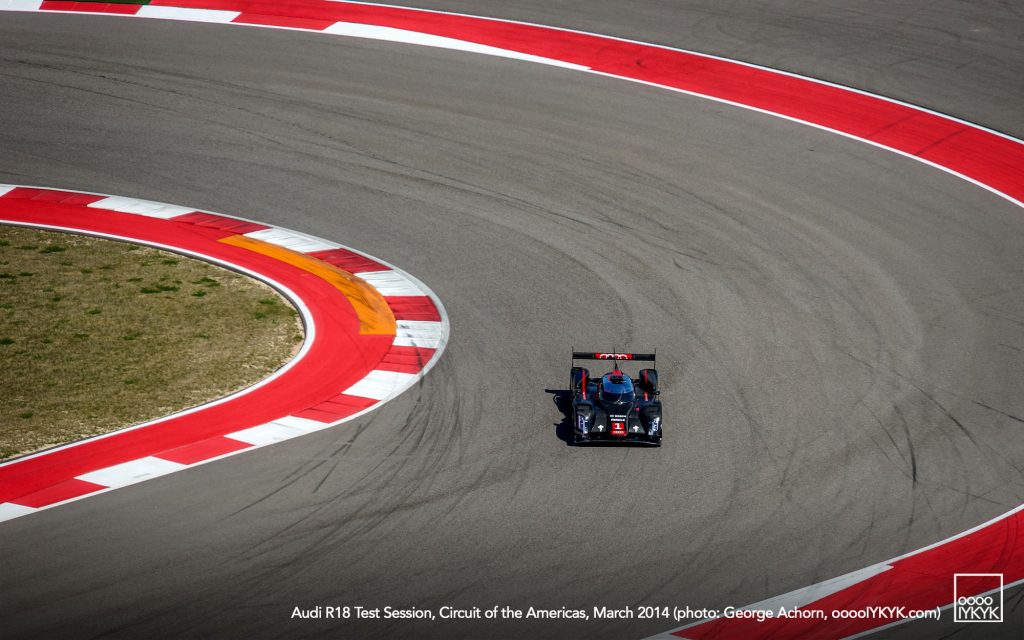
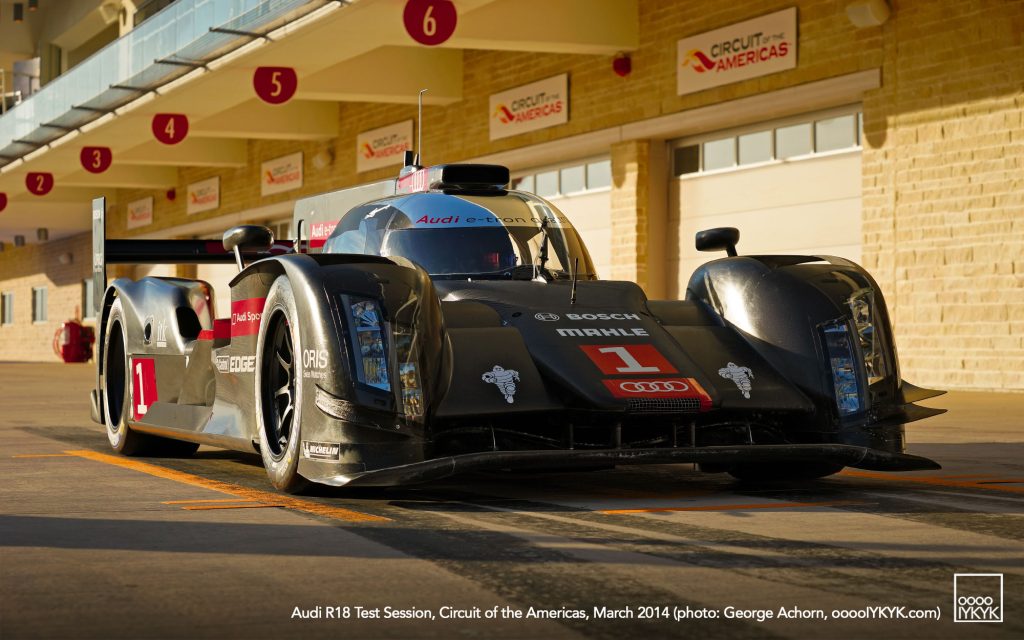
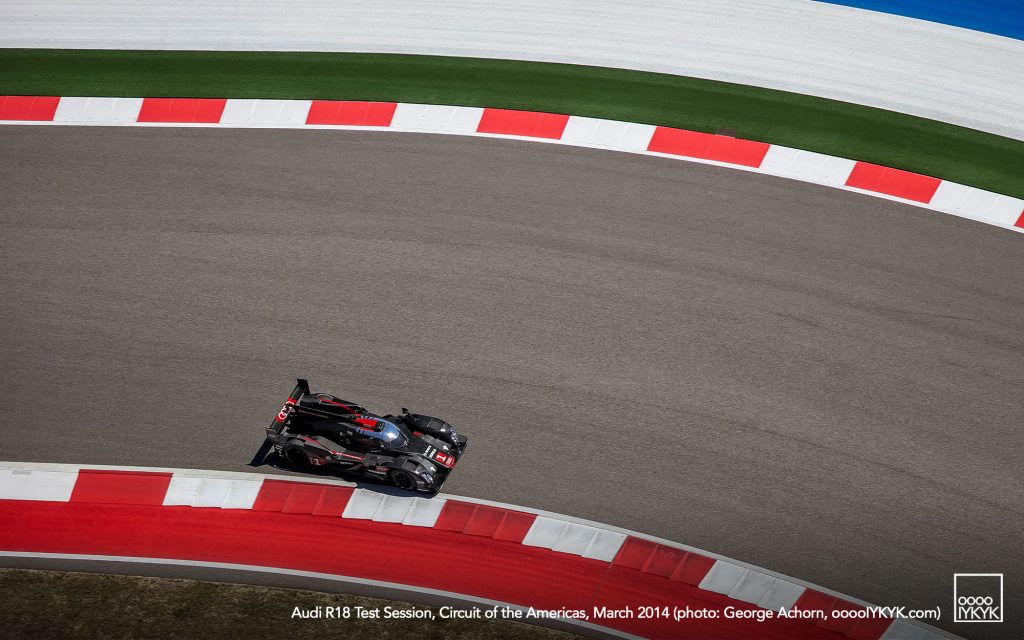
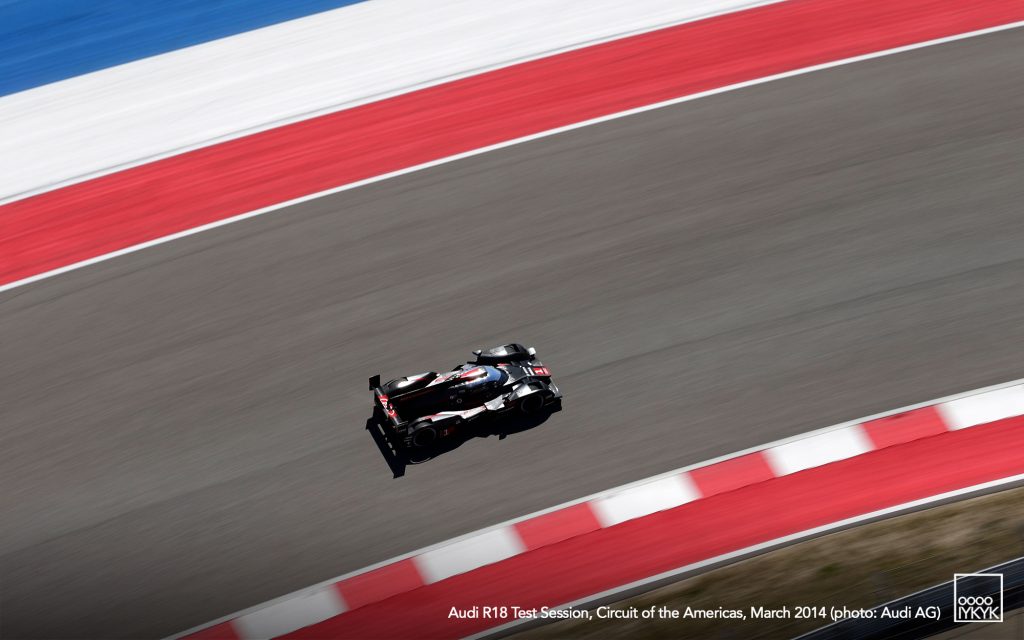
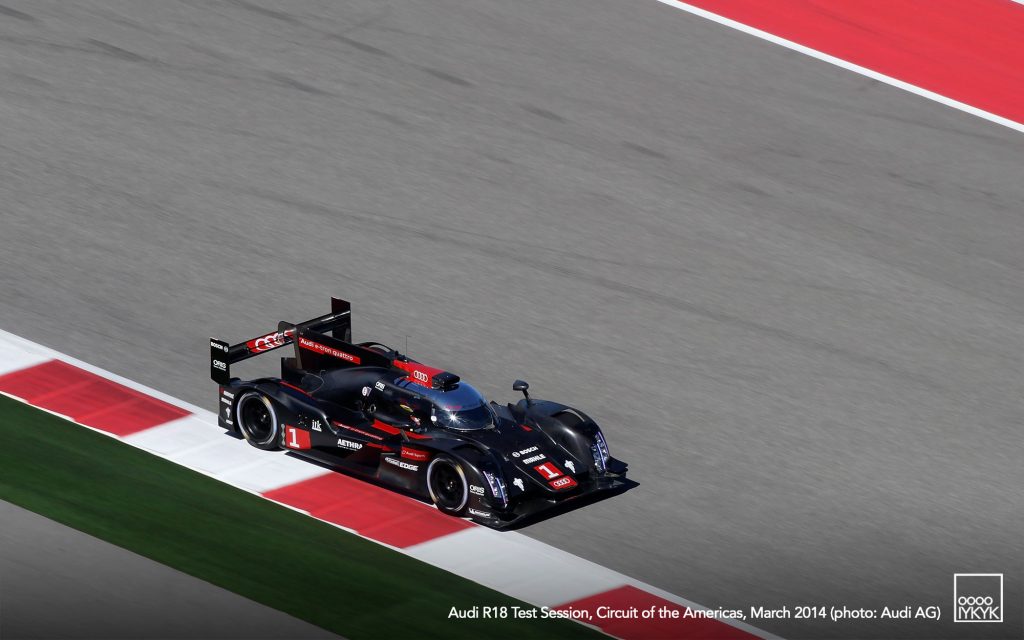
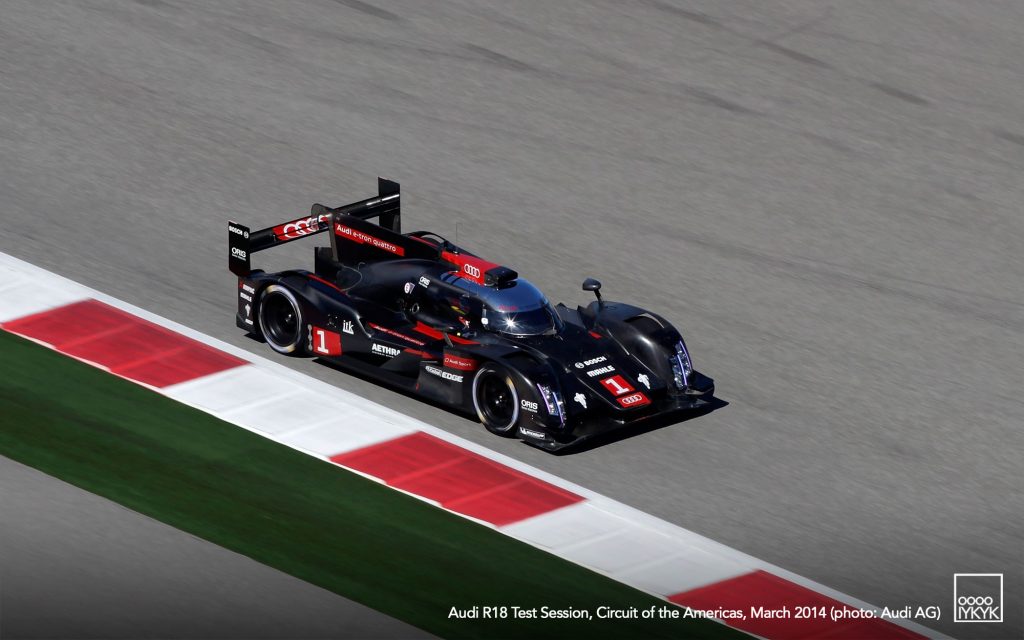
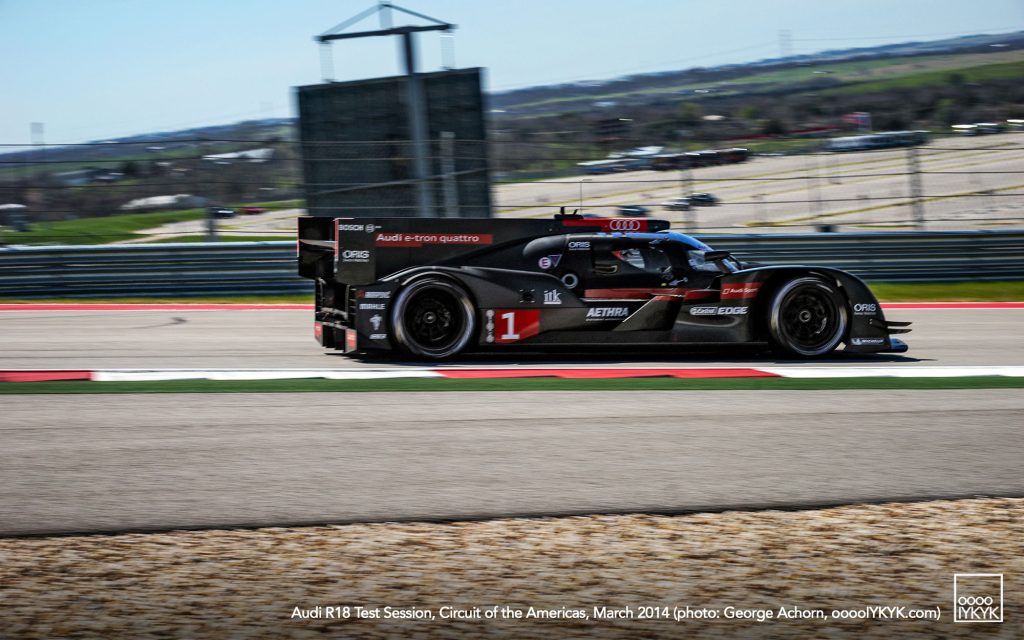
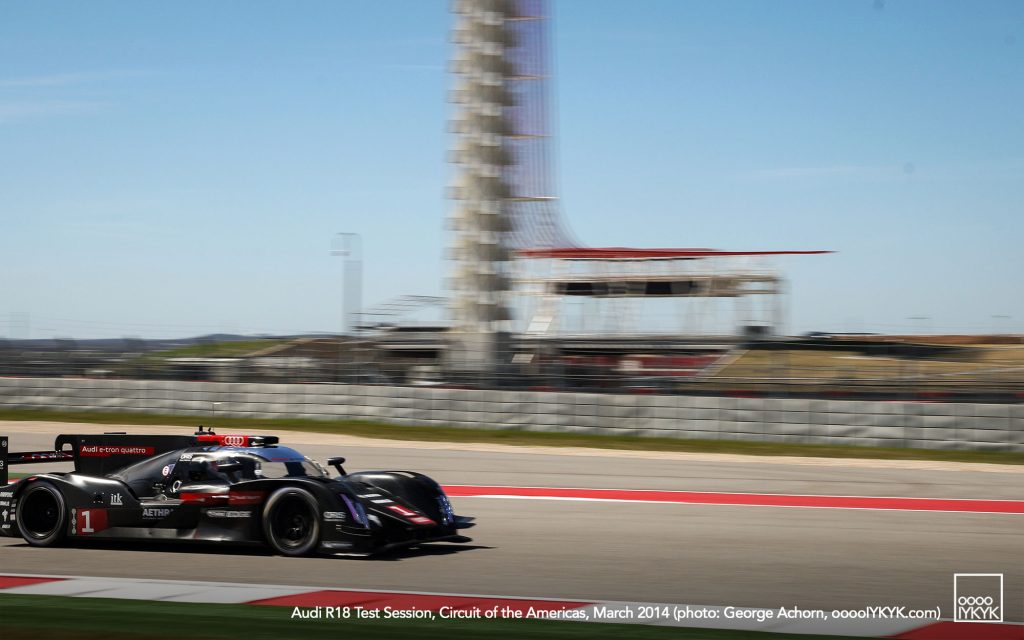
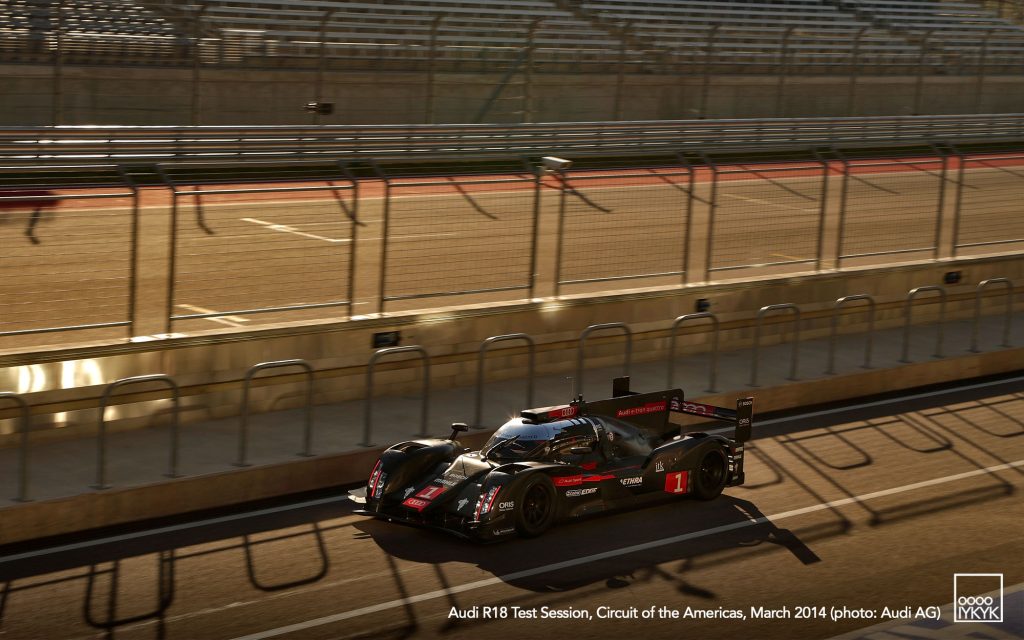
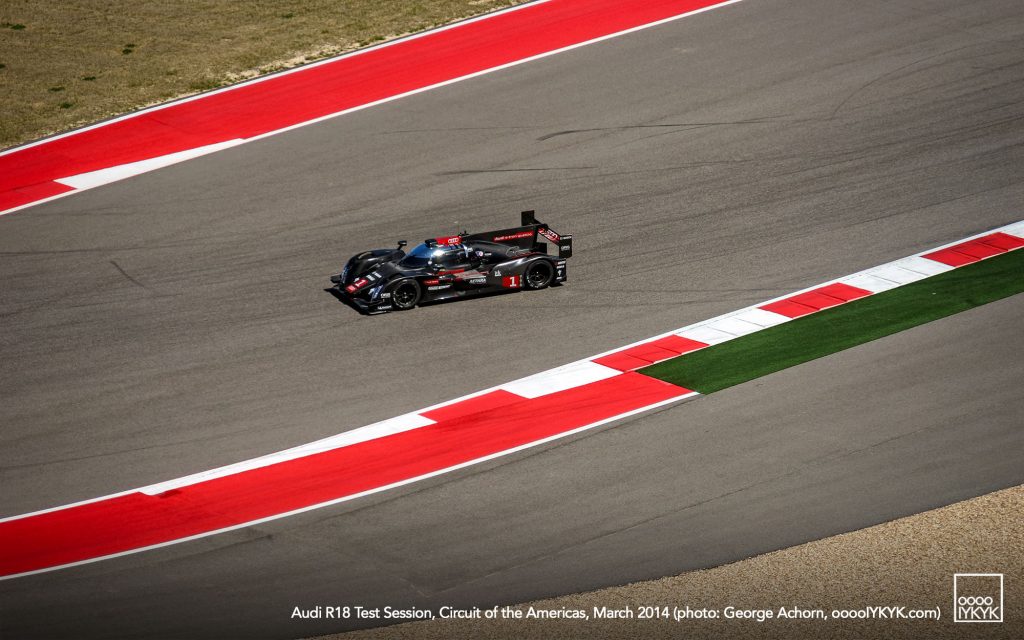
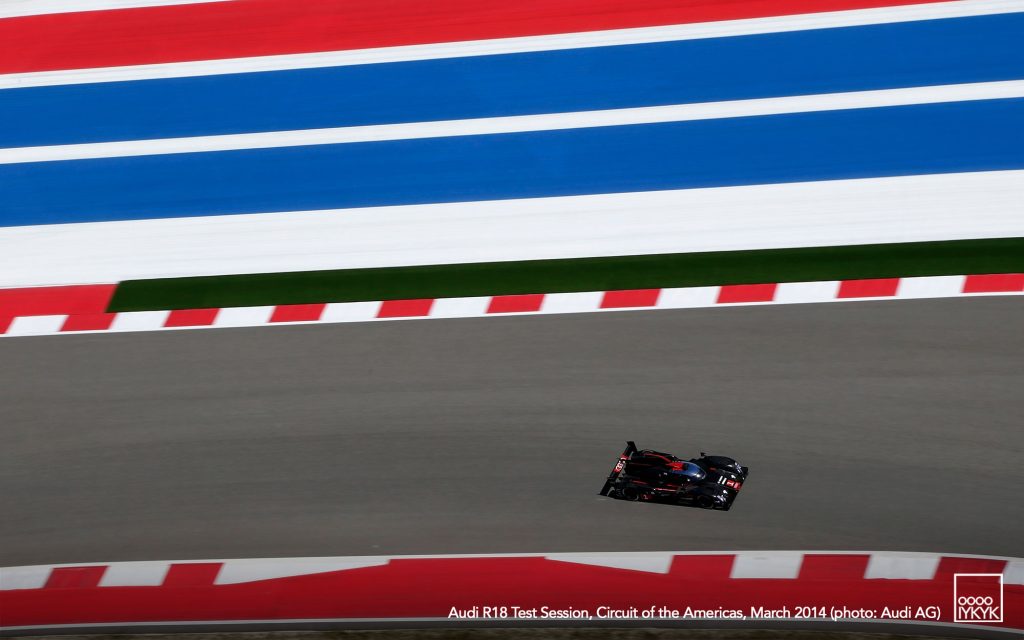
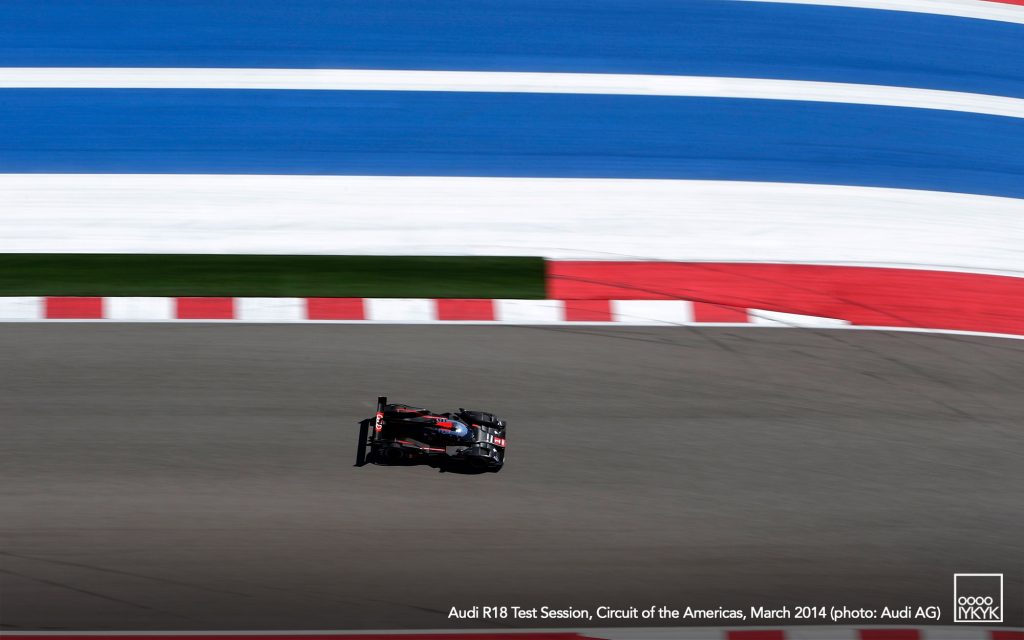
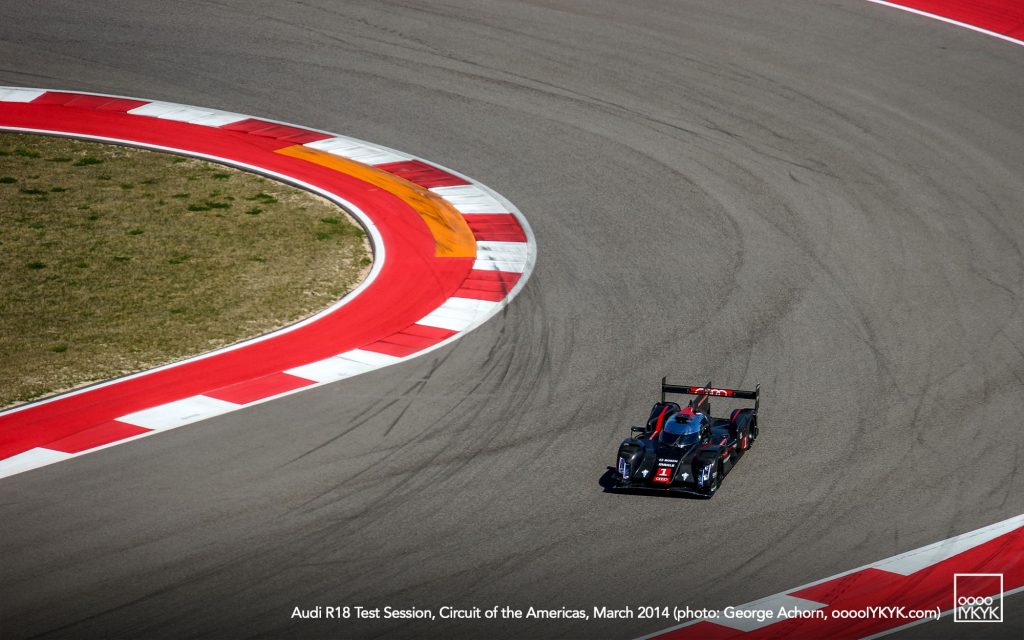
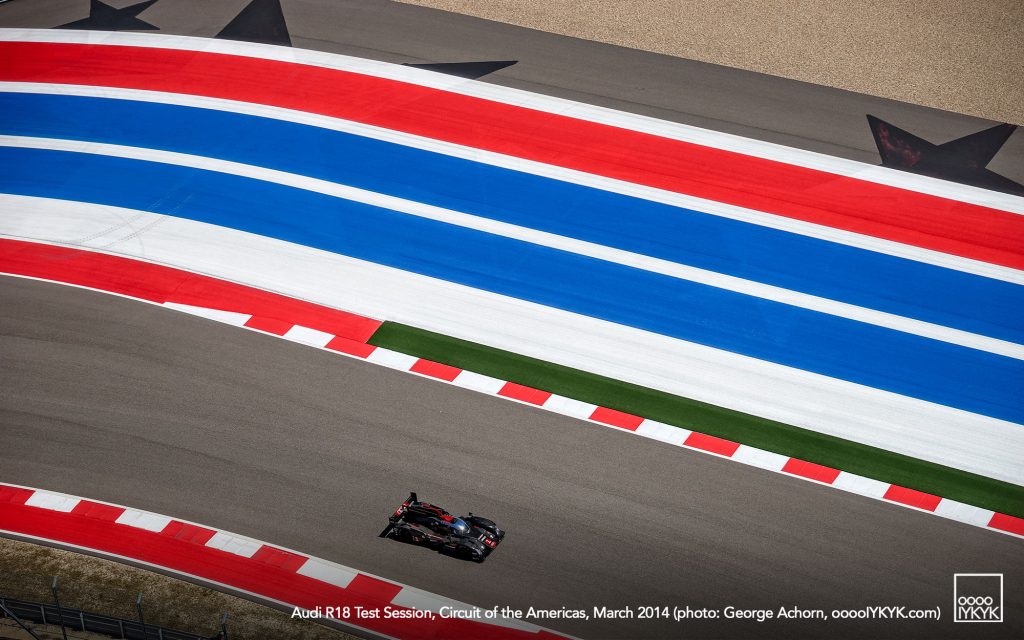
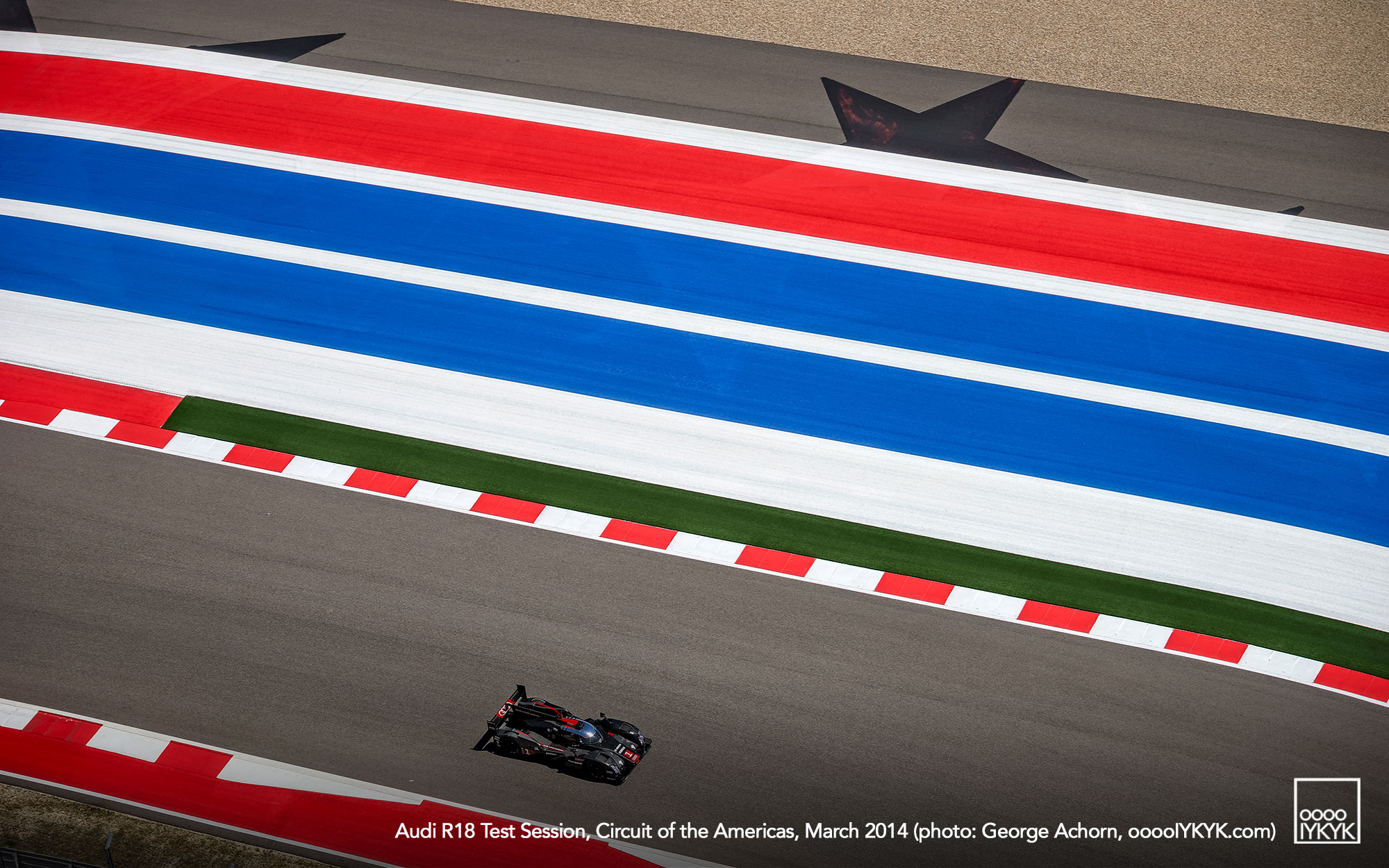
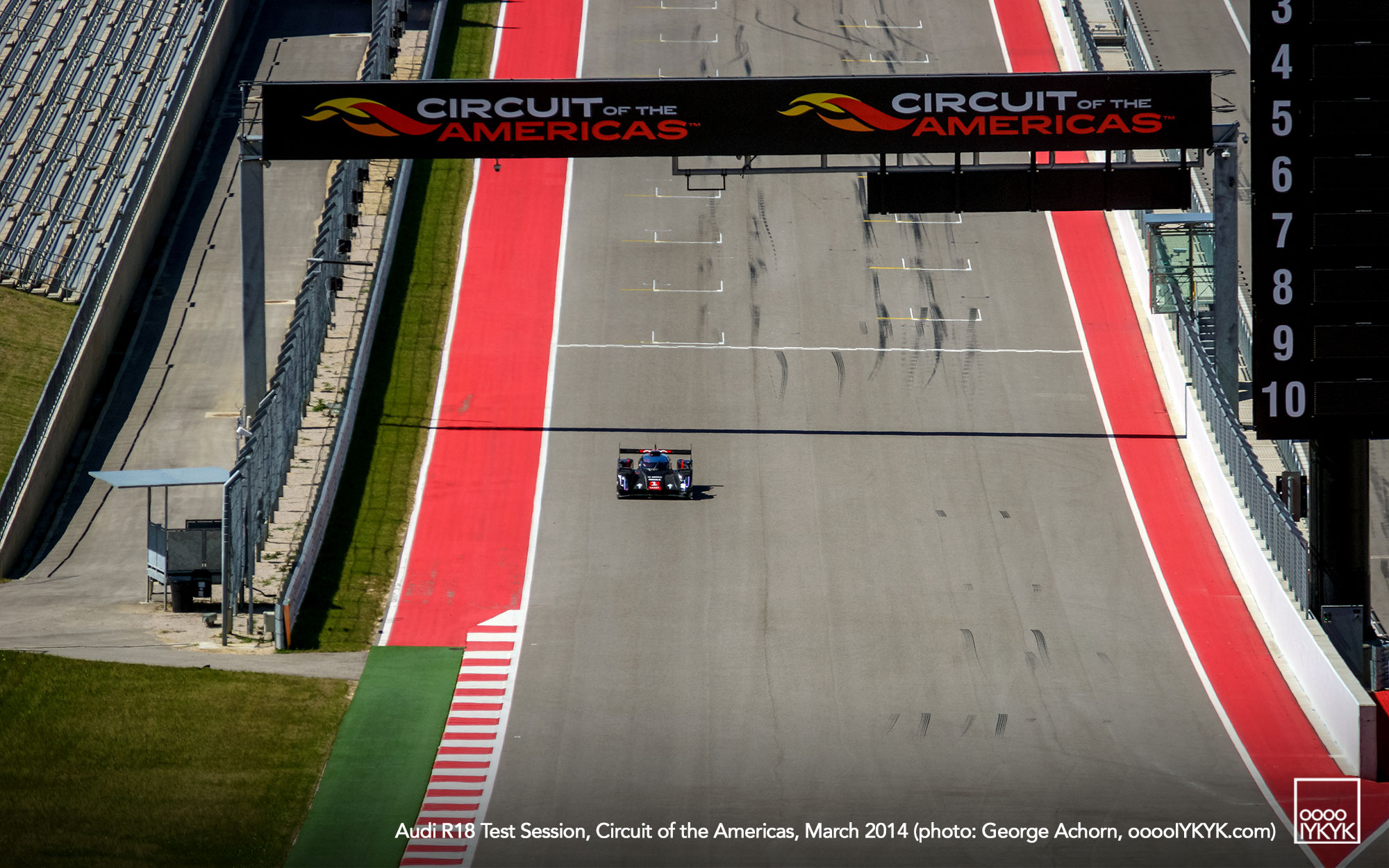
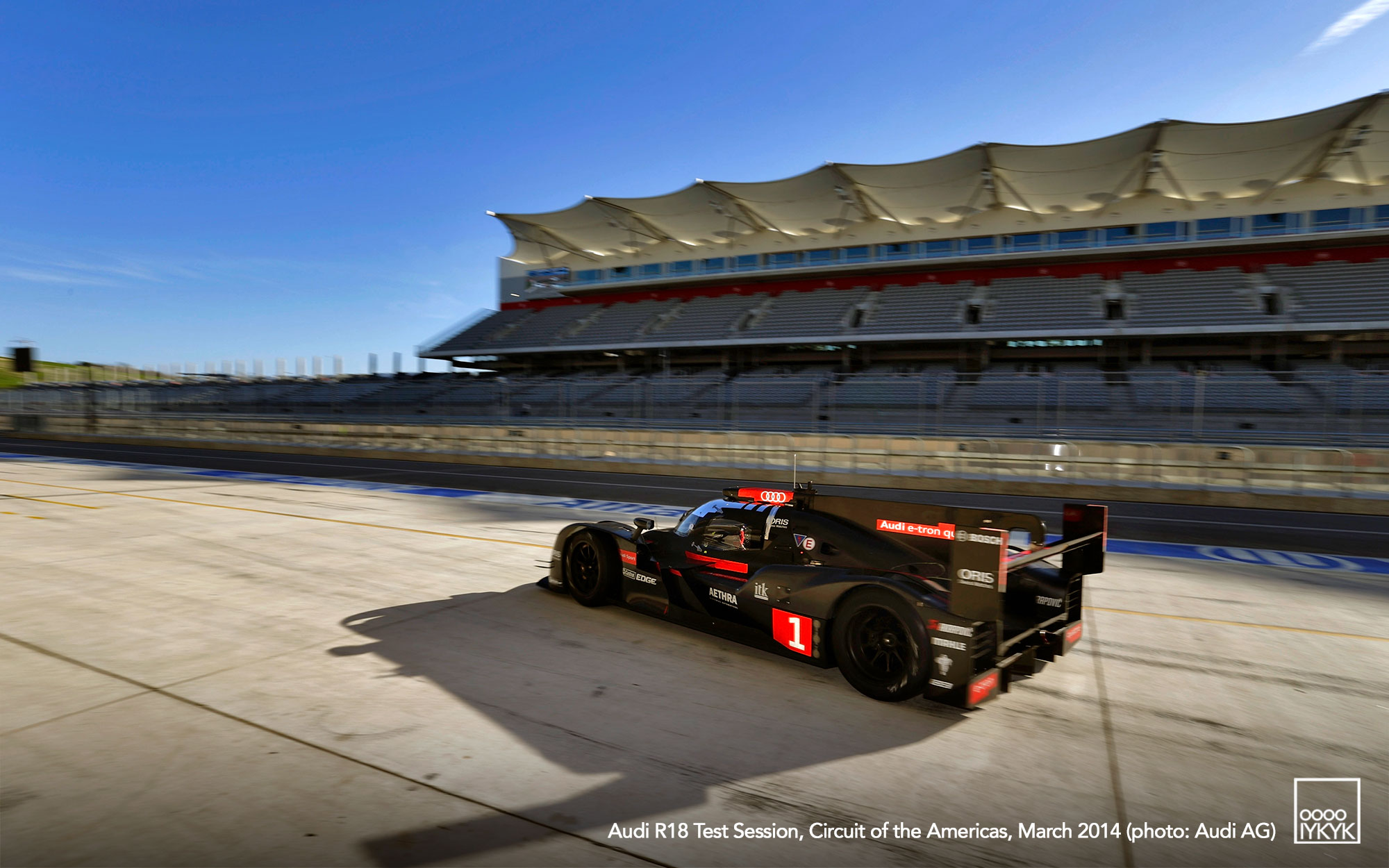
Circuit of the Americas, Austin, Texas — The view directly below my feet was a floor of of dimpled clear glass atop a red steel waterfall – a tower that posits like Mount Olympus over the sprawling Circuit of the Americas. I adjusted my adidas so as not to virtually step on the line Audi A4s parked far below – the distance in height from the cars to my sneakers making them appear so tiny… like insects. Just beyond that row of cars was the big sweeper that makes up turns 16, 17 and 18, ushered along by big swathes of red and white stripes. I could see what was left of the track’s trademark stars blacked out with paint atop a slightly more sun-bleached black tarmac. The rumor at the time had it that this not entirely successful erasure was Bernie Eccelstone’s doing, because maybe there was only so much room for other stars when his F1 travelling circus was in town. Circuit of the Americas, after all, was originally constructed to host F1. Even still, there was no evidence of F1 on that day in 2014. I was attending a to-that-point secret test of the then-new 2014 spec Audi R18 e-tron quattro (RP4). The notoriously secretive Audi Sport had invited a short list of journalists to shed some light on their latest program and their new R18.
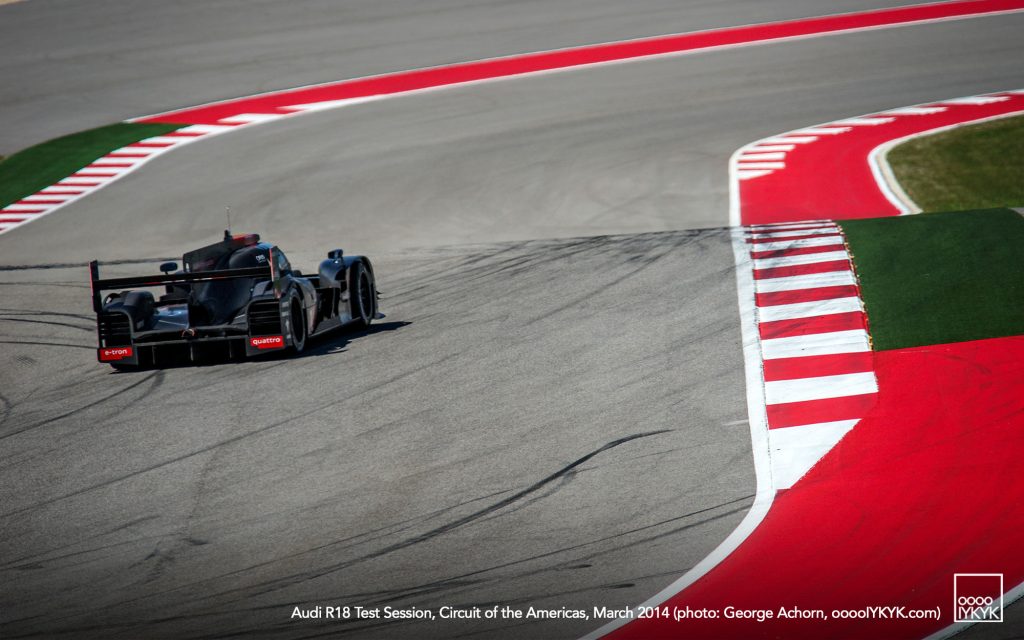
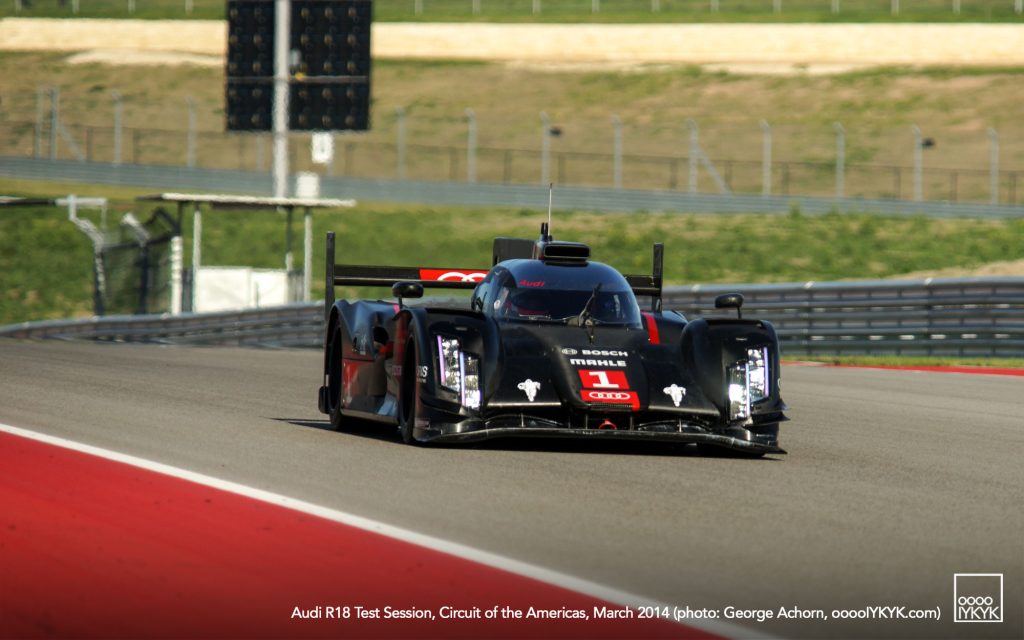
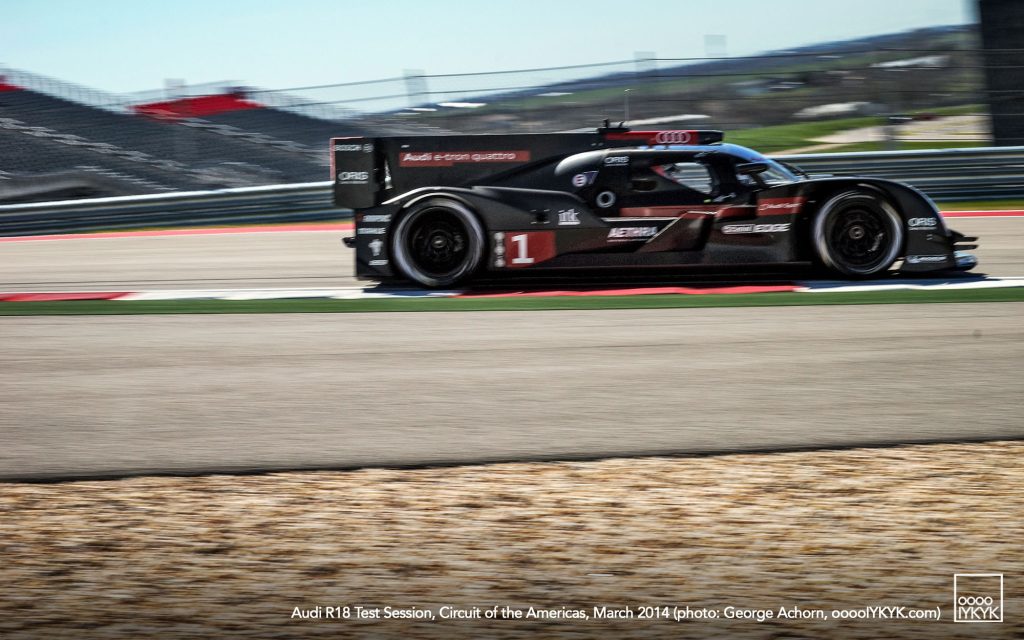
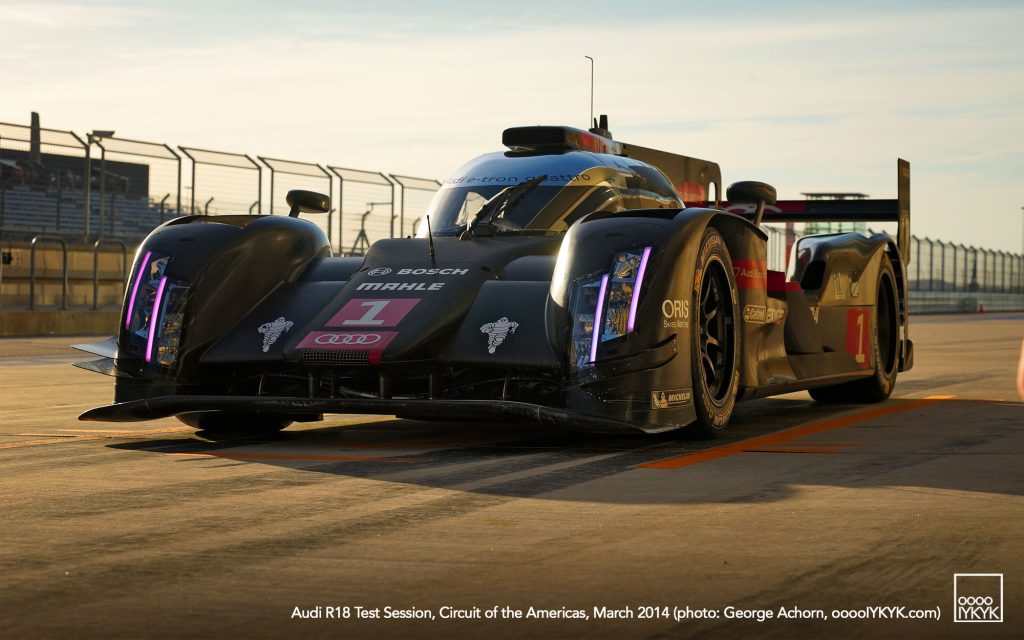
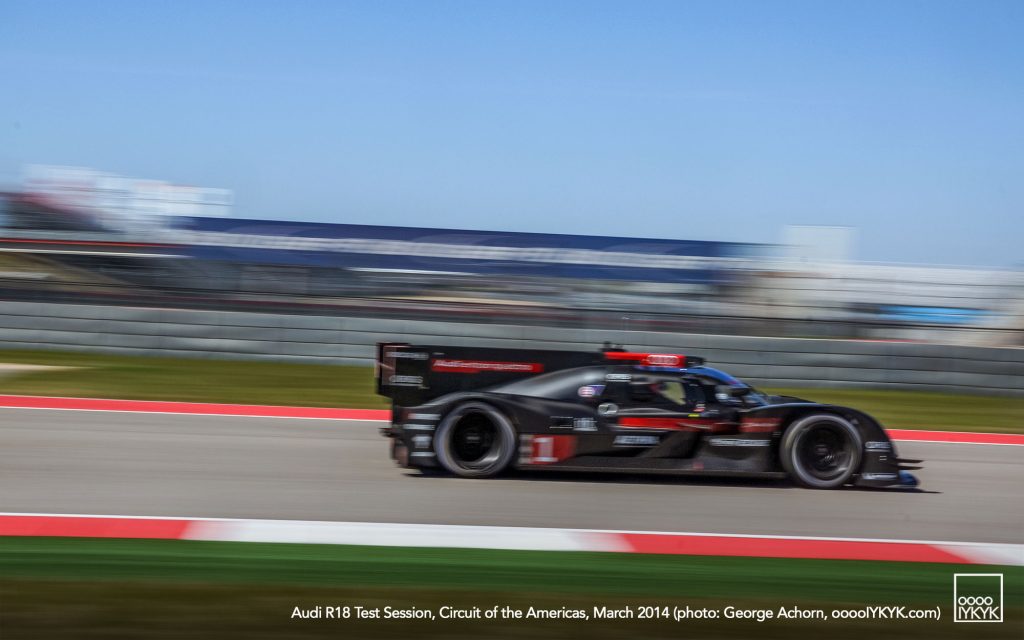
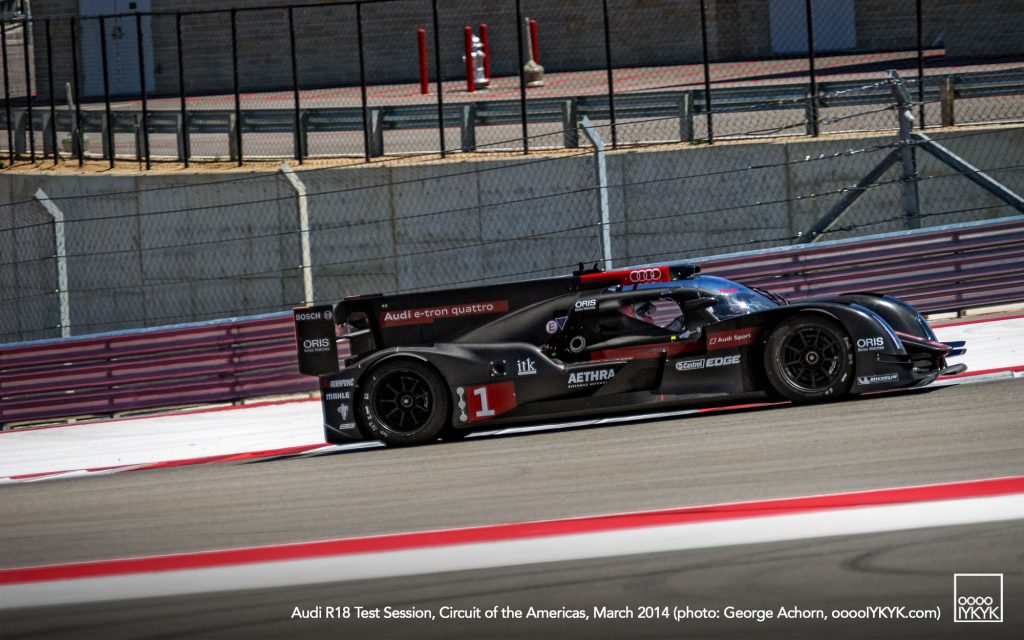
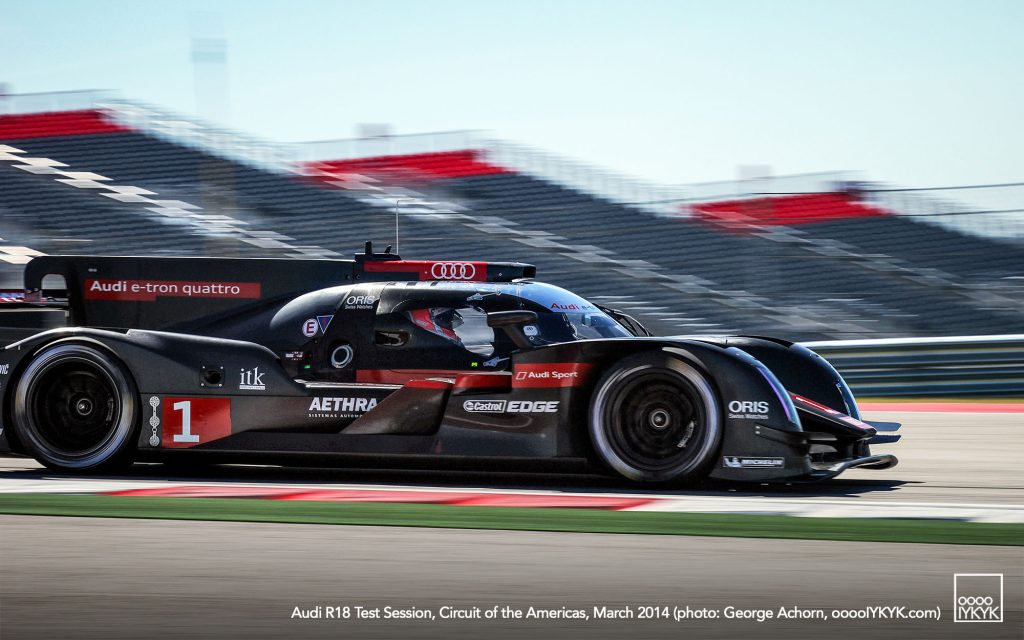
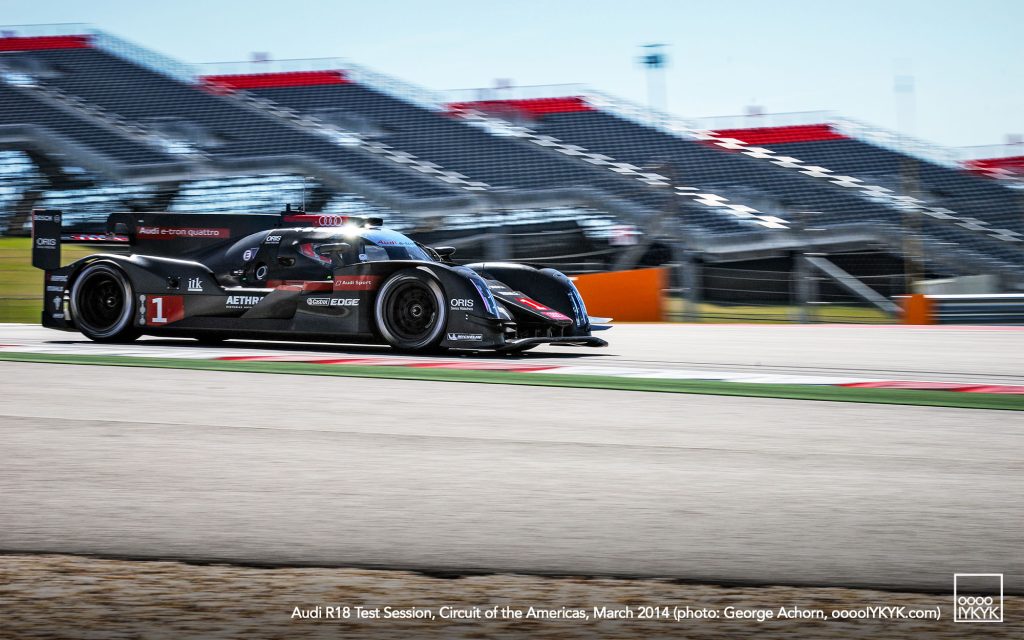
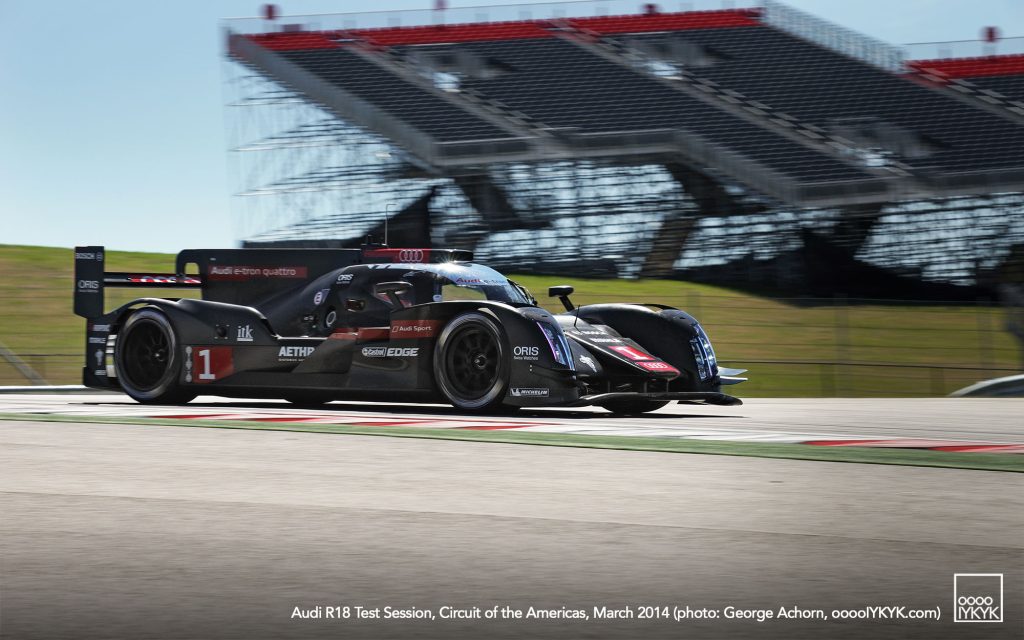
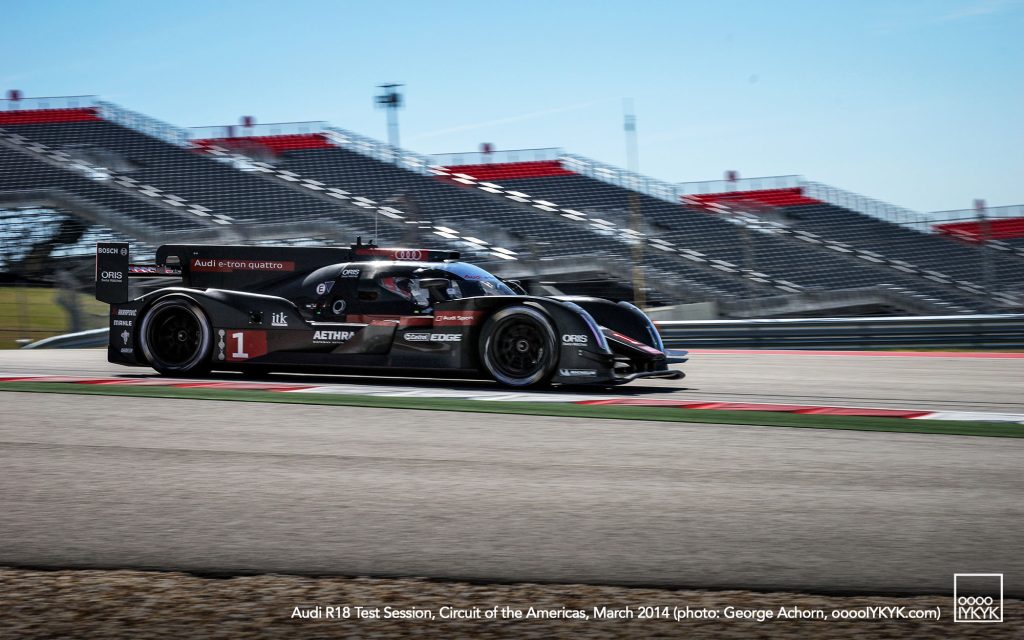
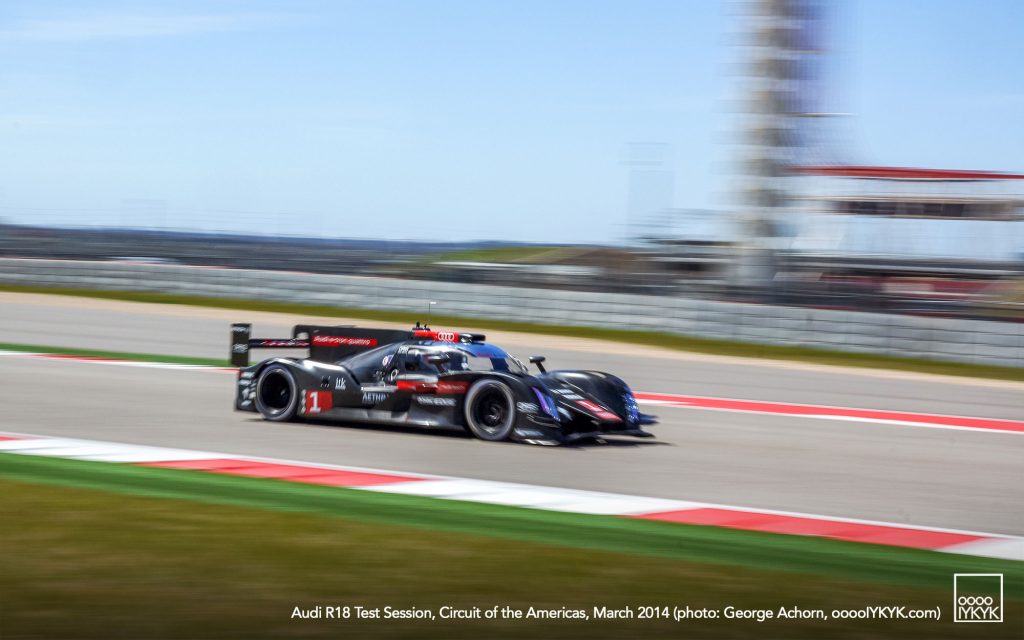
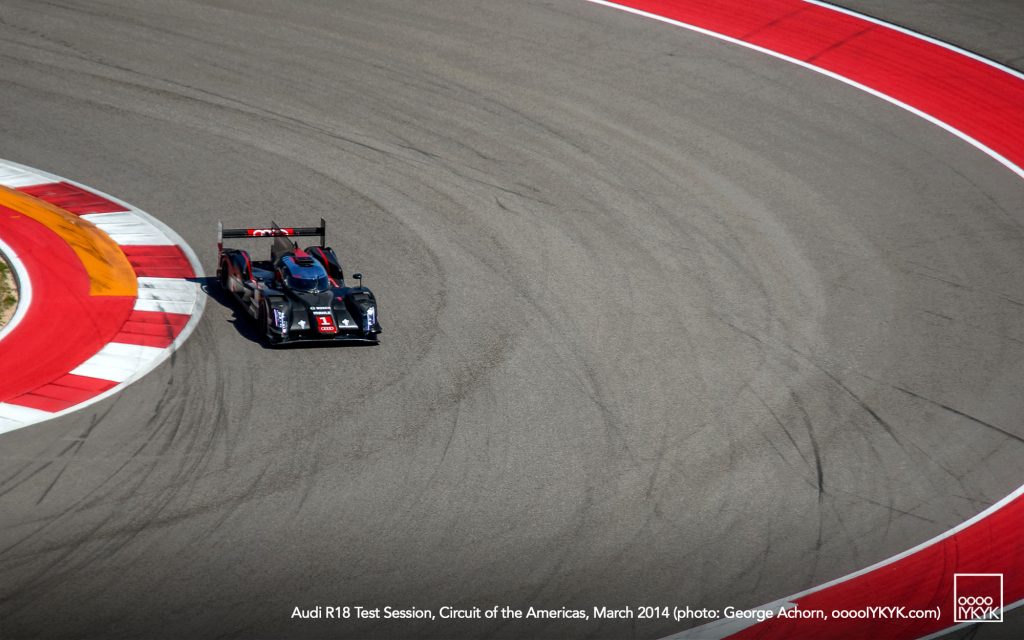
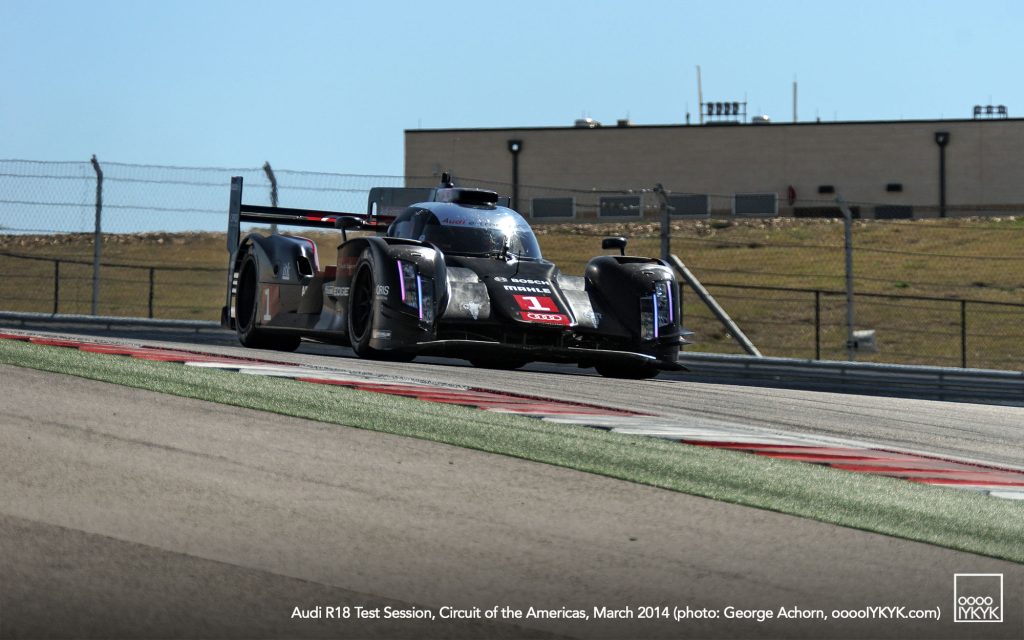
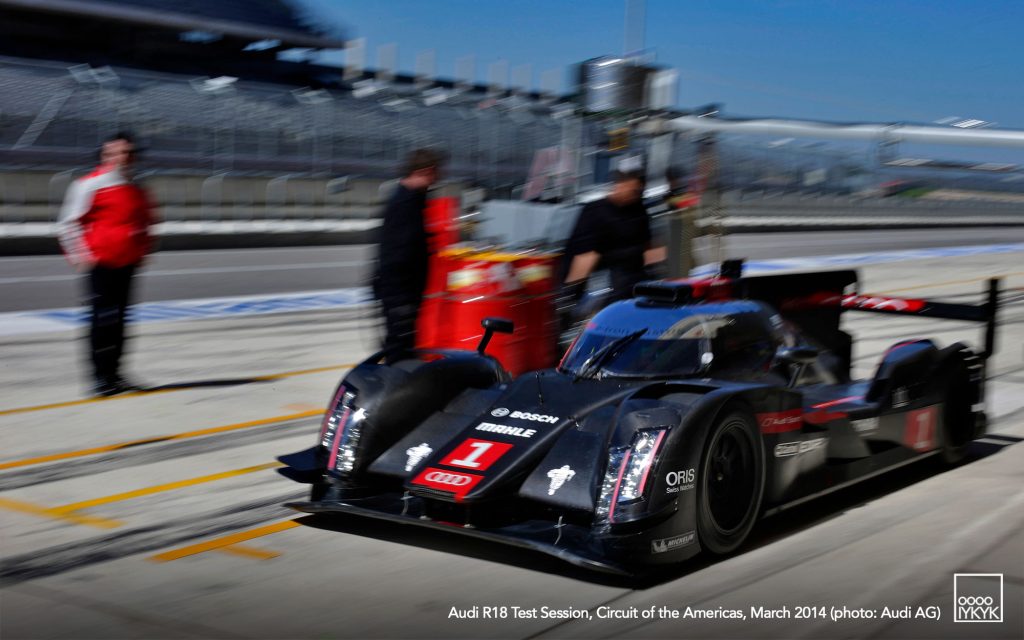
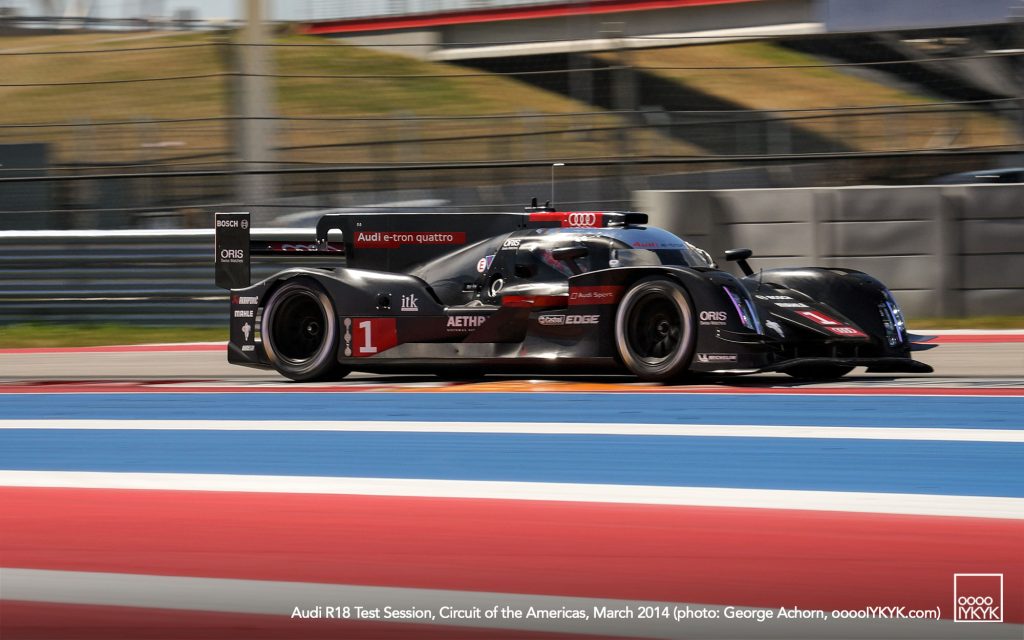
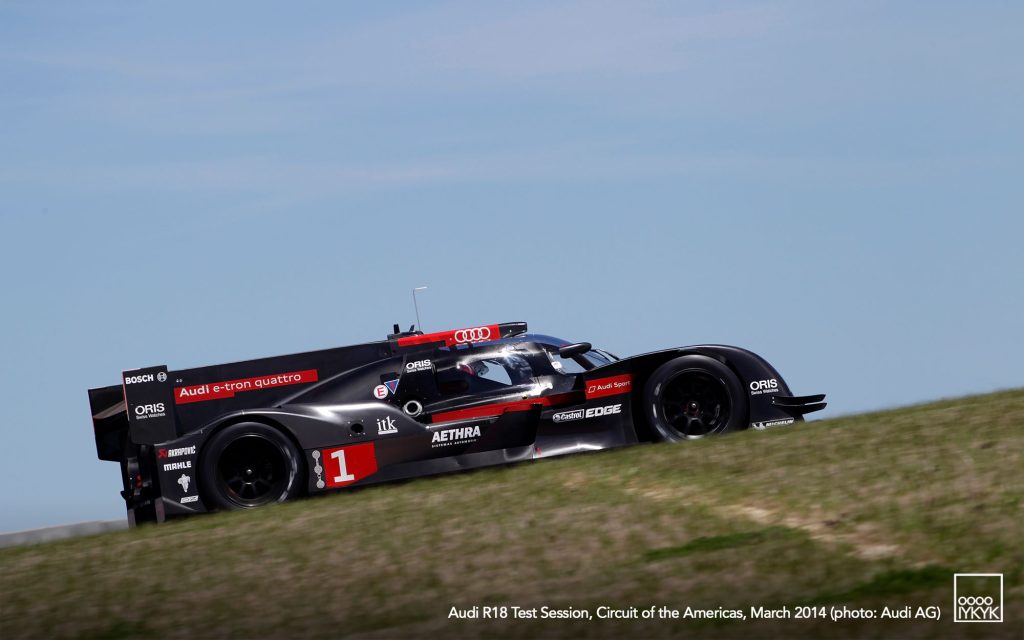
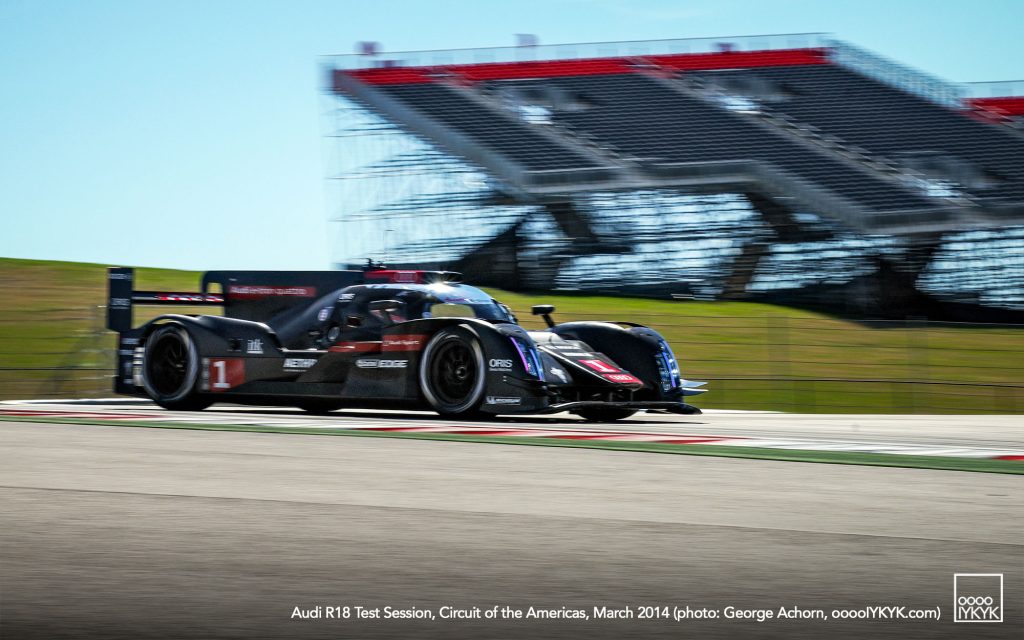
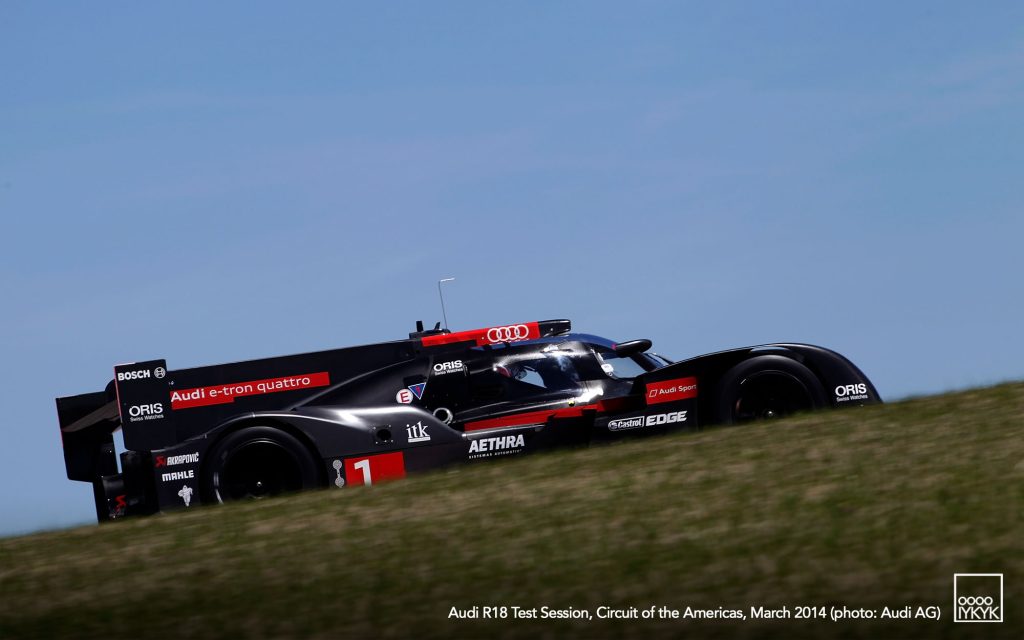
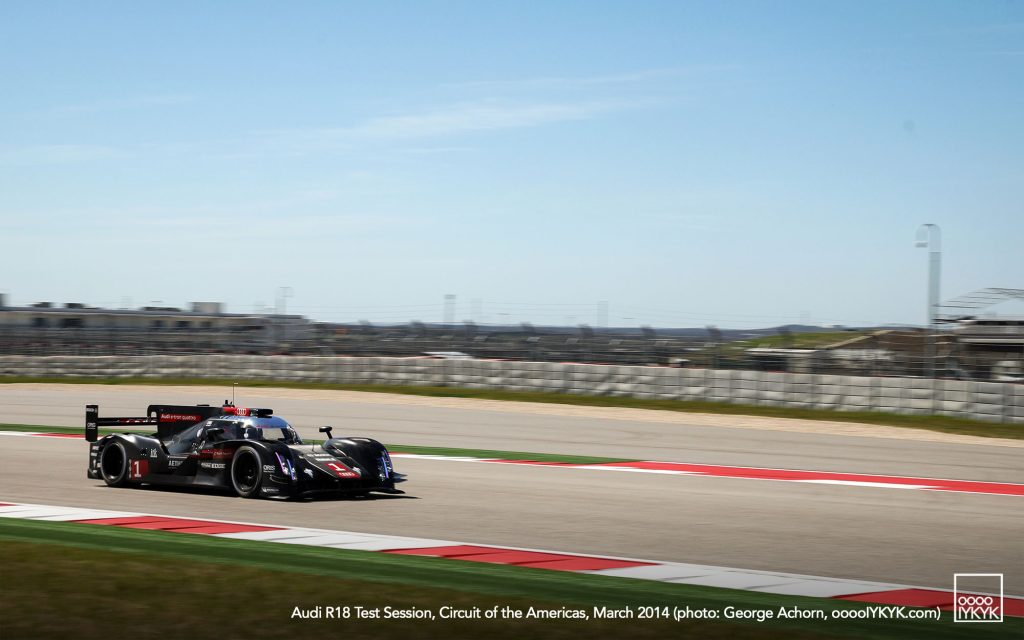
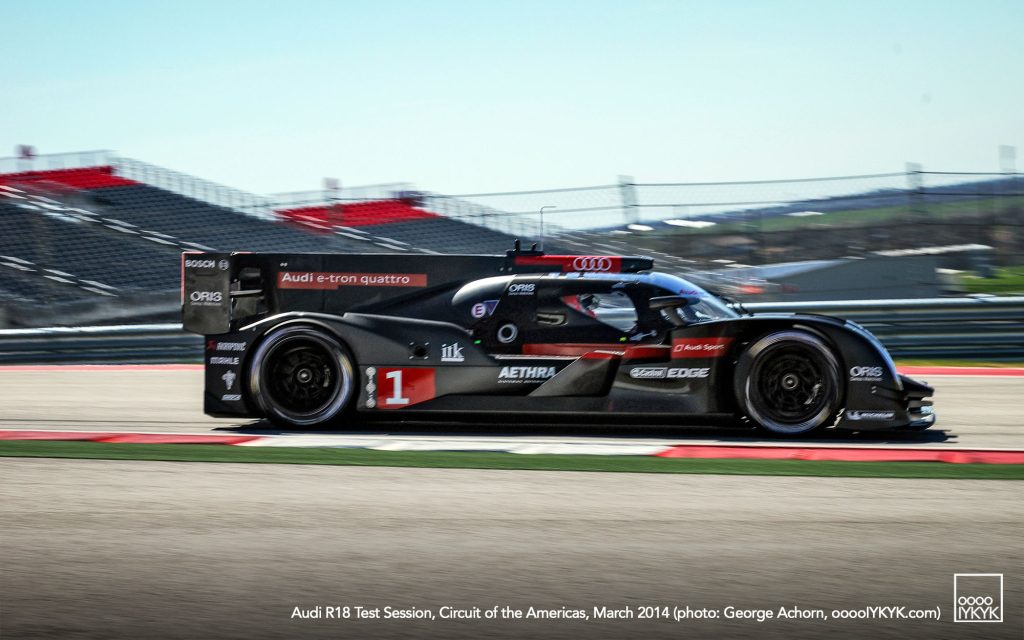
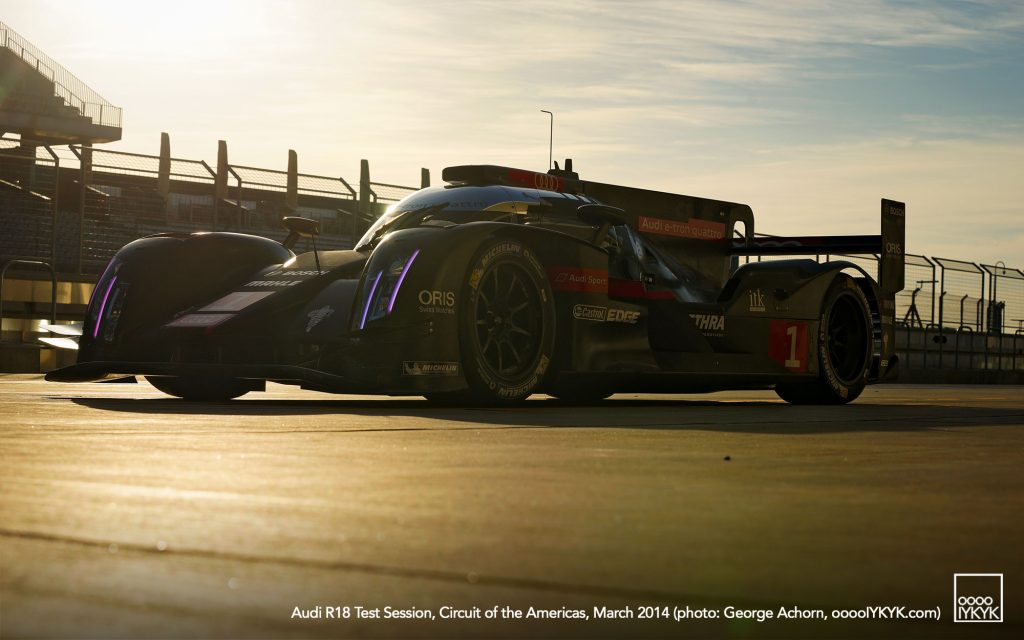
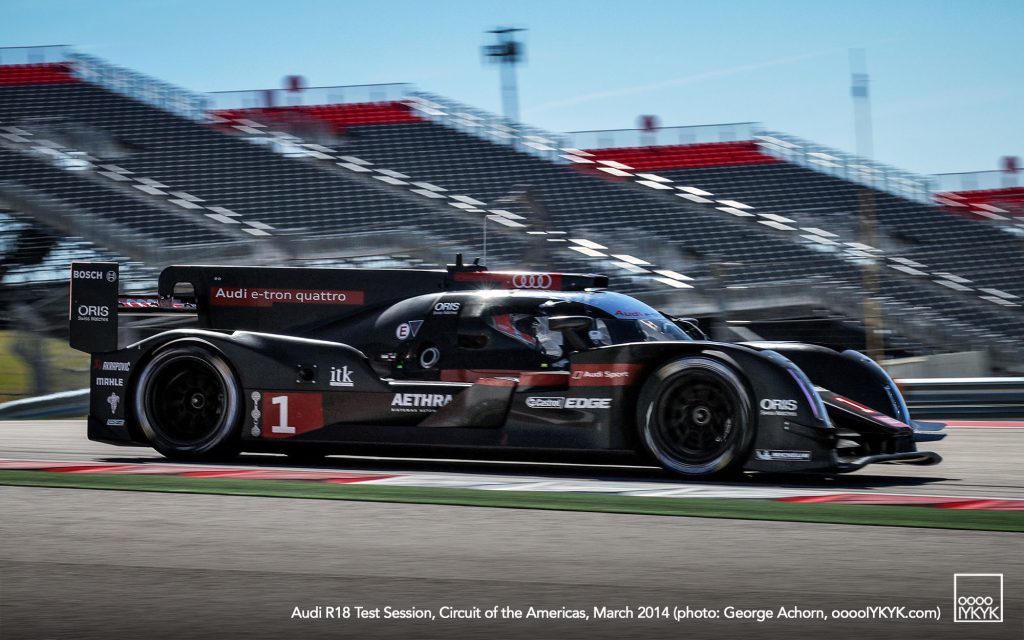
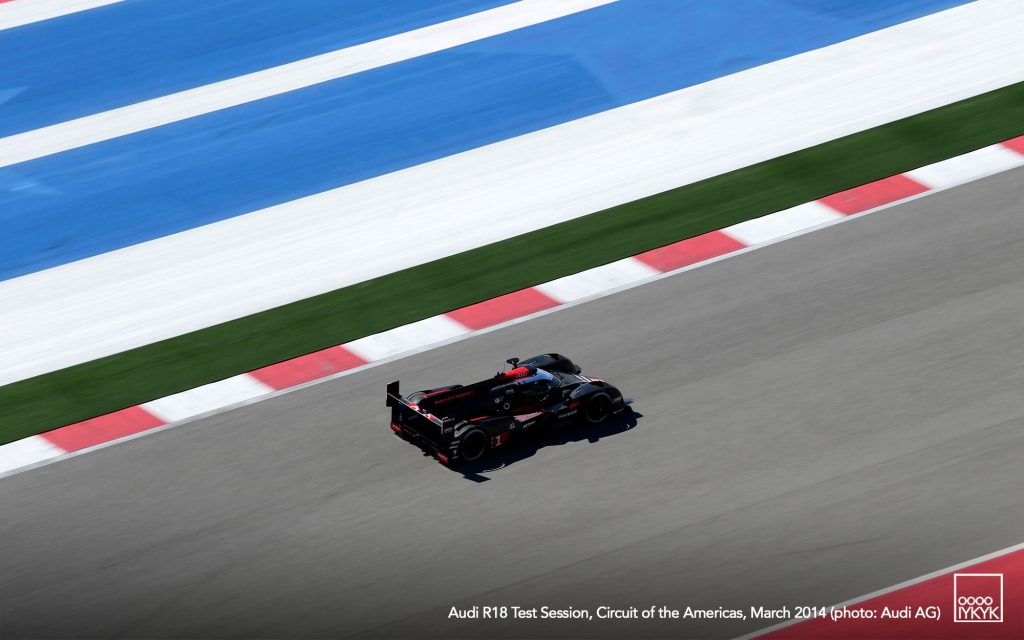
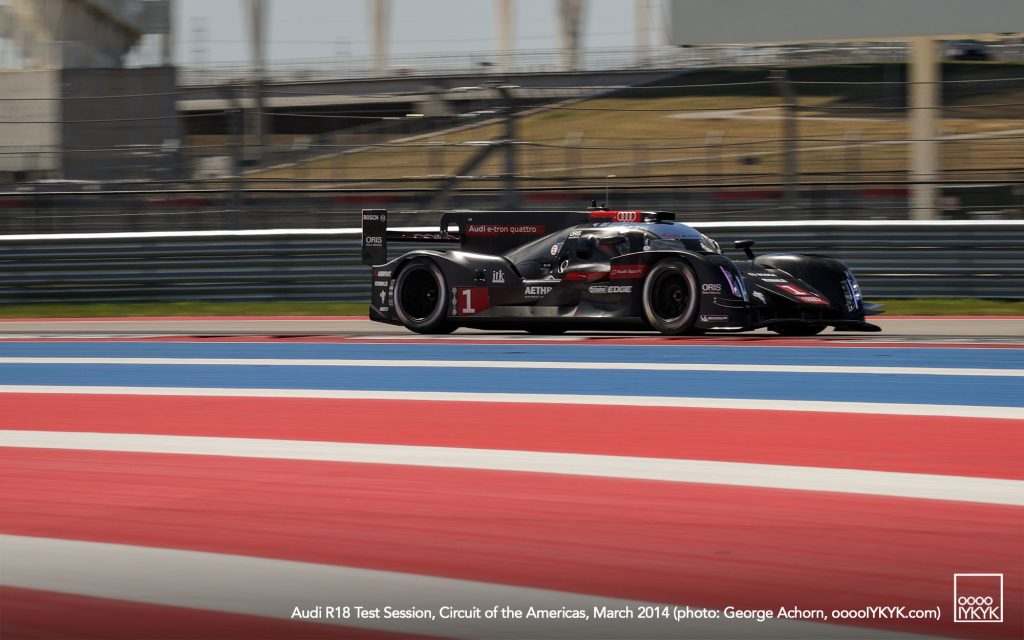
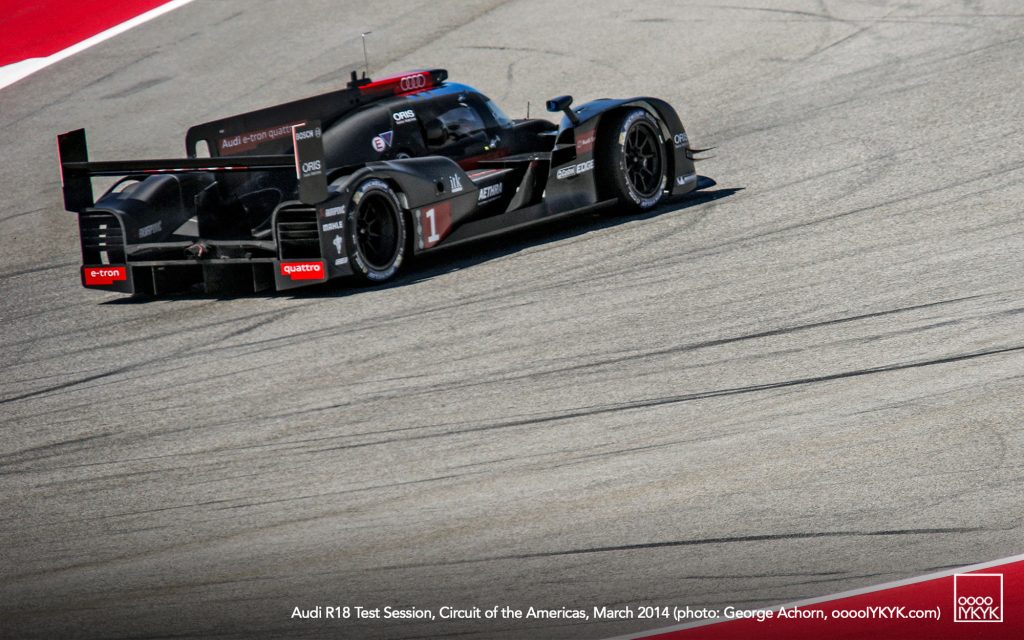
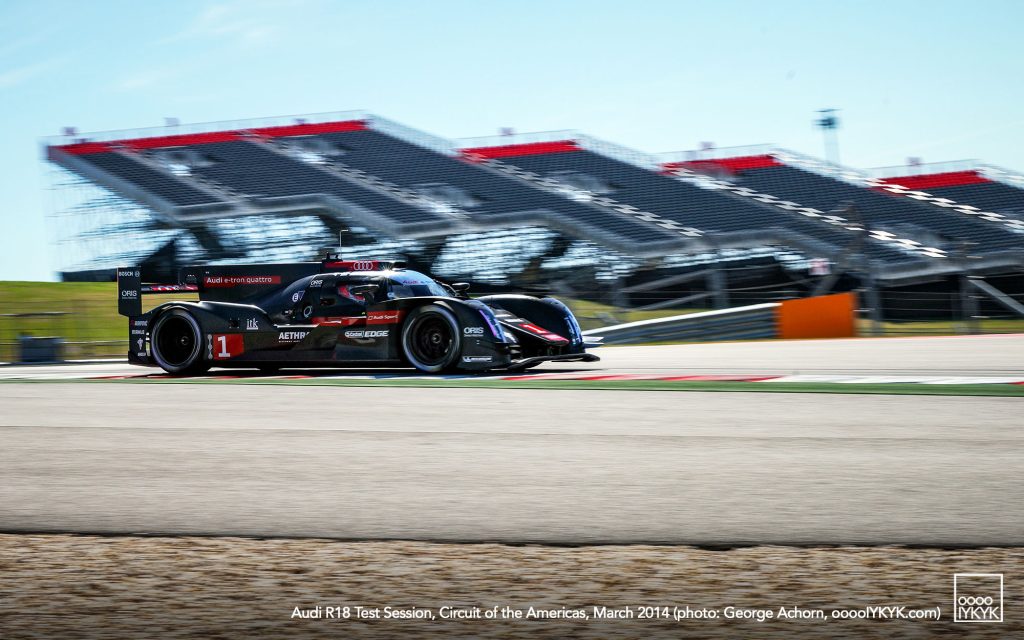
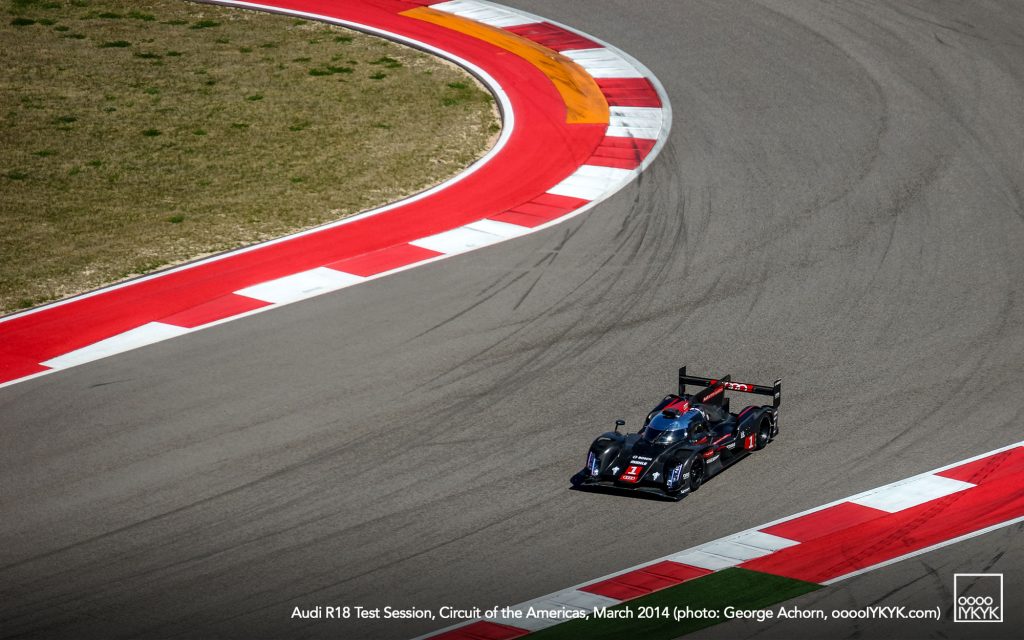
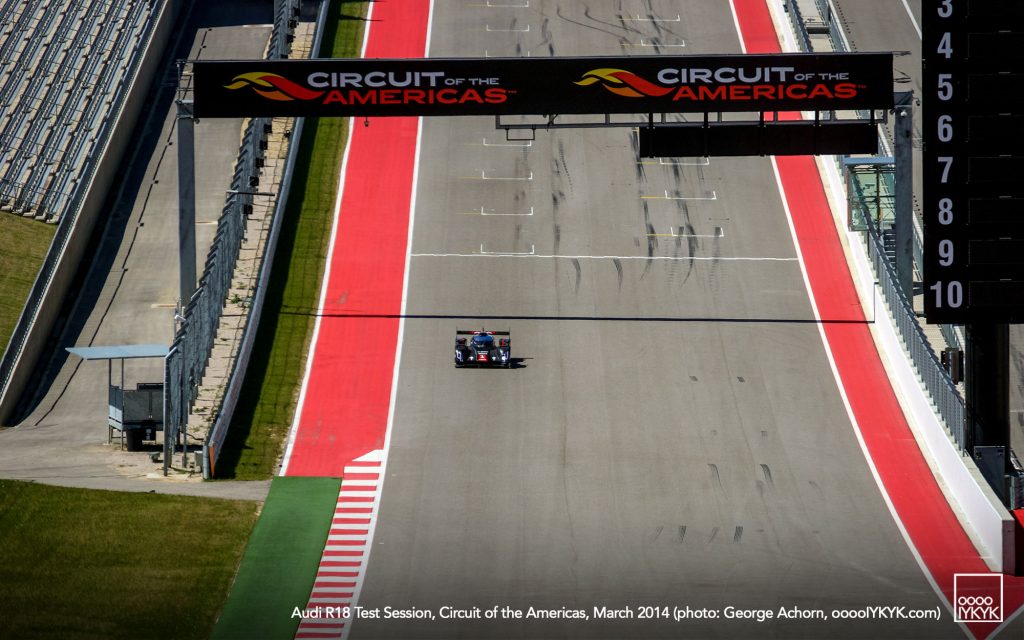
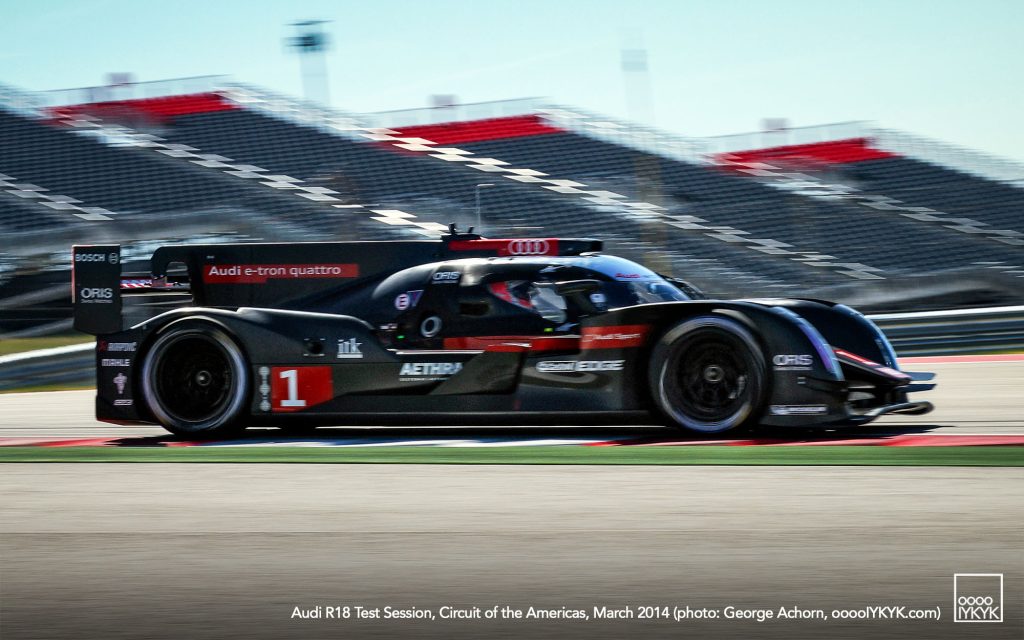
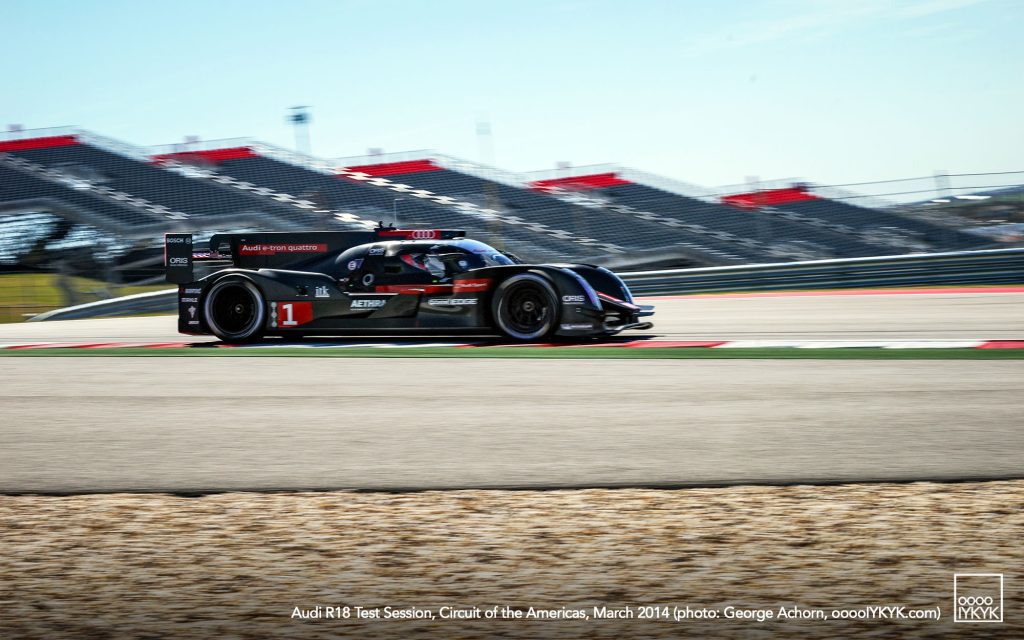
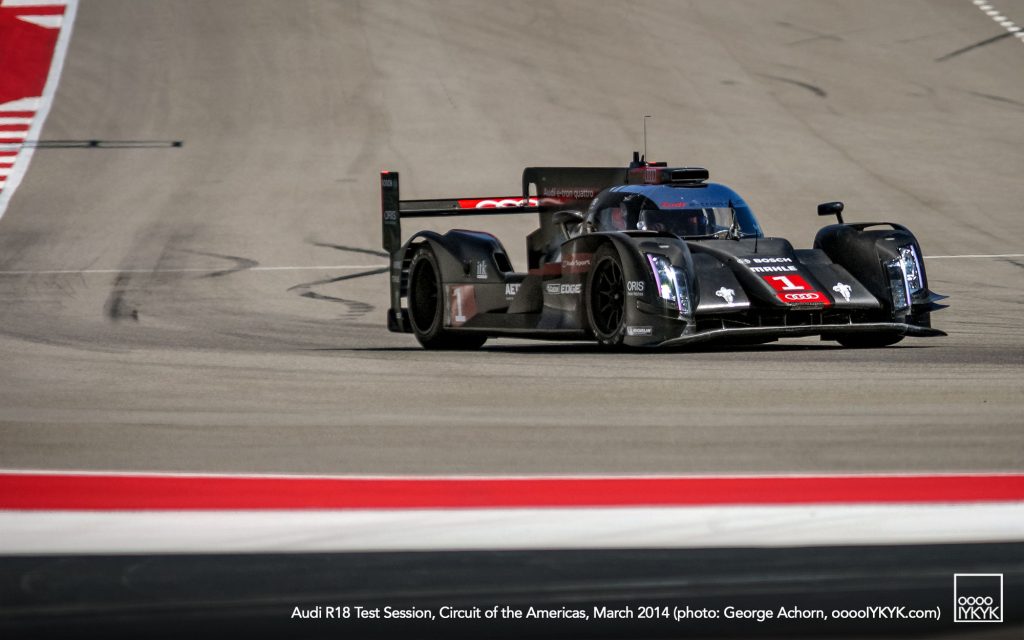
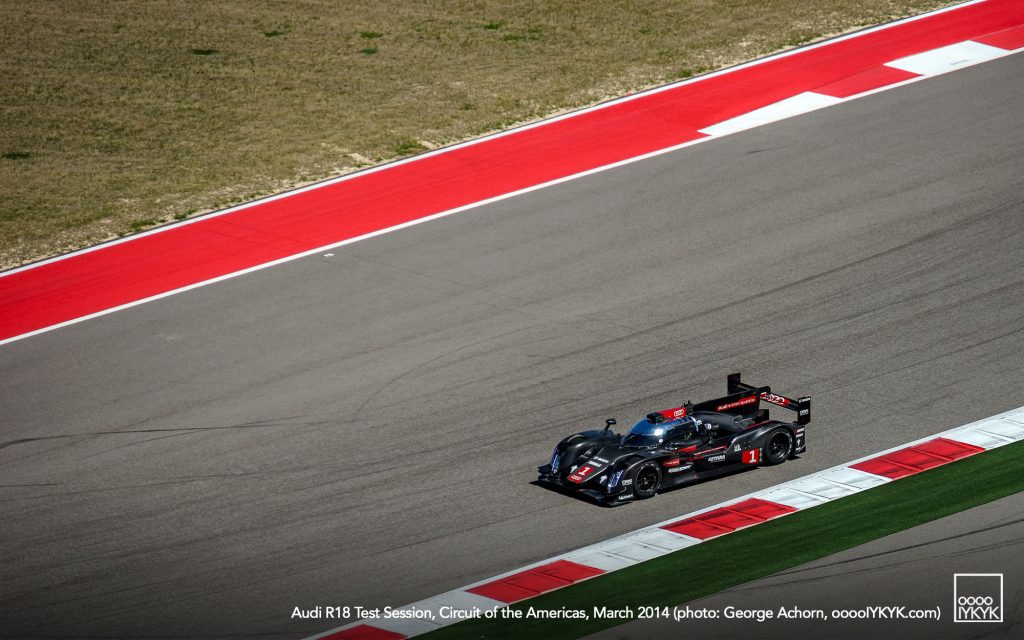
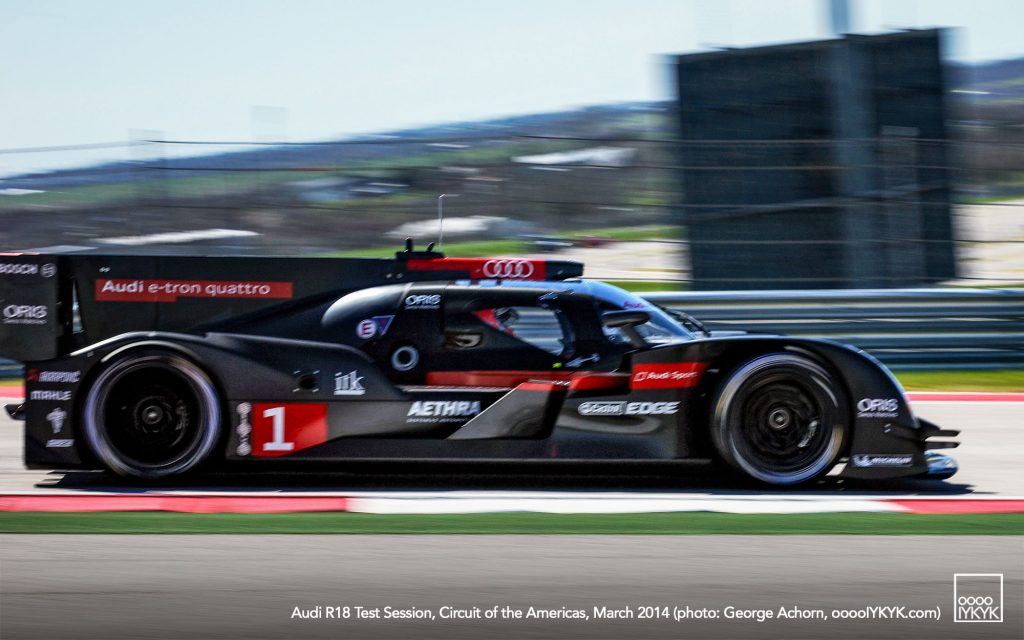
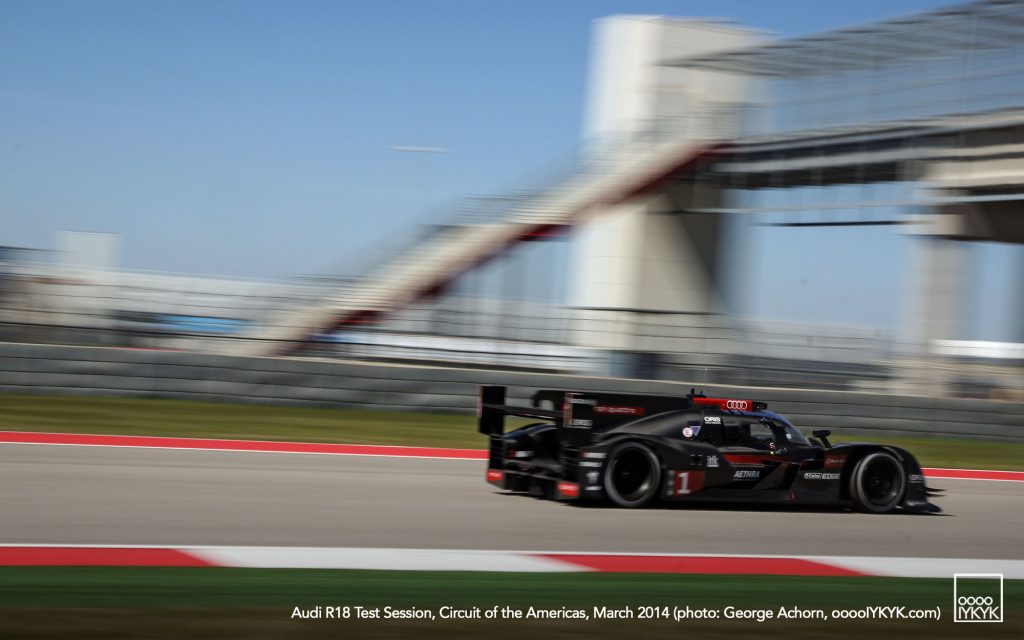
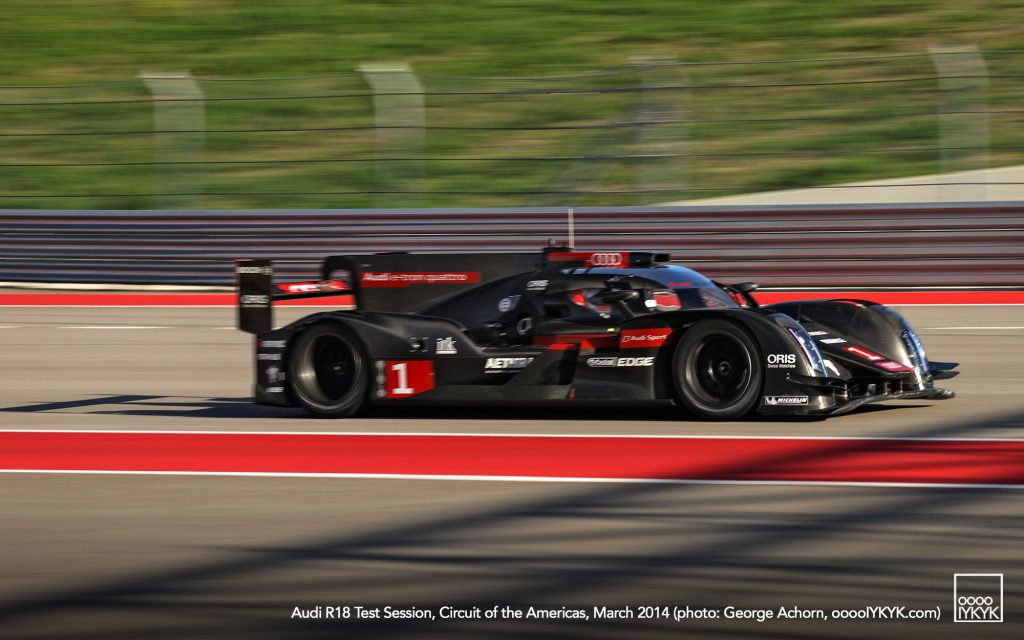
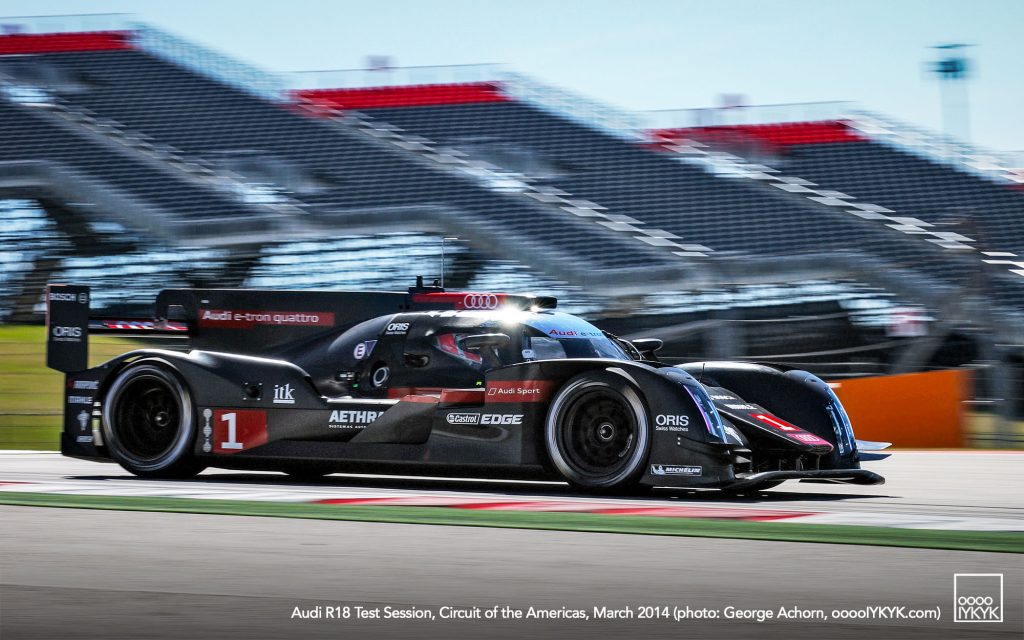
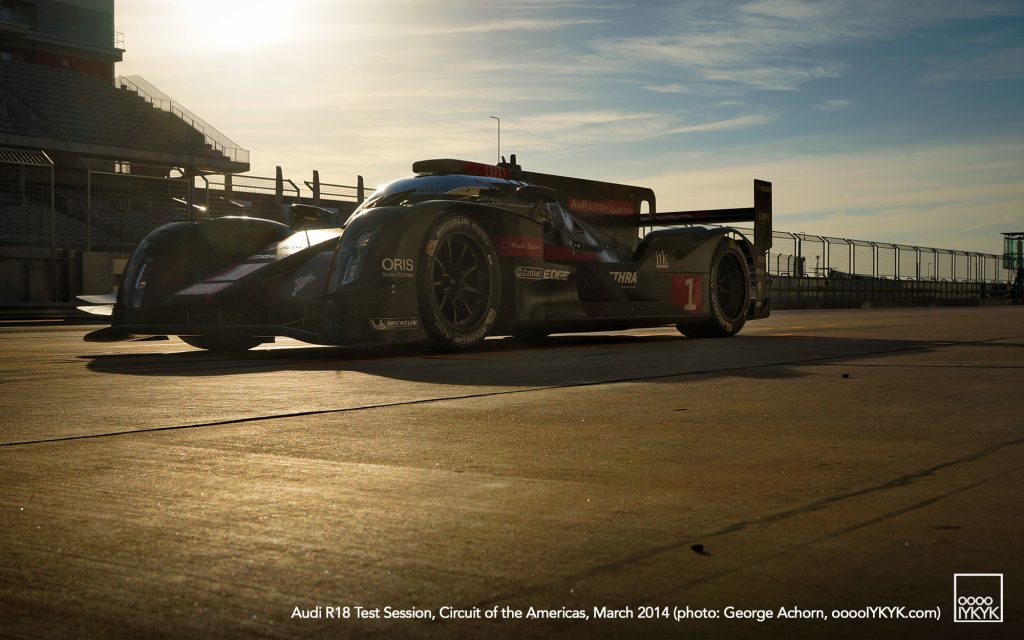
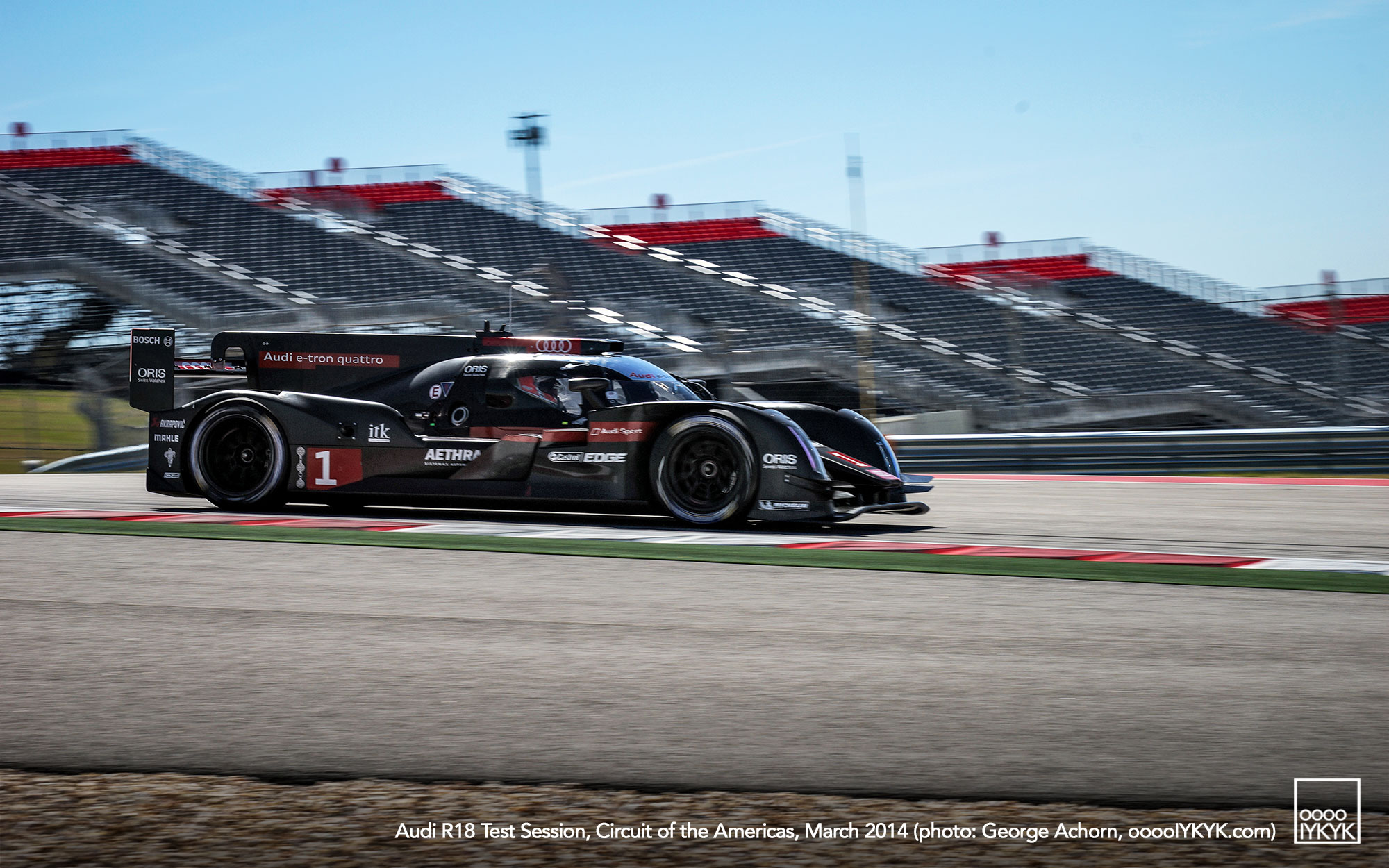
The theme of contrast wasn’t lost on me. Aside from the blisteringly bright Texas sun ricocheting off everything and leaving me in perma-squint, the carbon black Audi’s R18 test car rounding the track seemed well suited to sucking up those bright rays as it did sucking up mileage. In sportscar racing, the cars are as much the star as the drivers, and this one presented a unique opportunity. The light contrast wouldn’t make photography easy, even though those of us shooting had been told to have at it.
The Google satellite map on the screen of the Audi A4 rented from Audi’s then corporate owned rental business SilverCar had informed me that there were precisely 1,182 miles between Sebring International Raceway and Circuit of the Americas – something I’d entered out of curiosity. In road trip terms that’s just over 17 hours, though it might as well be an eternity… which begs more contrast. The two circuits couldn’t be further from each other in terms of layout and design or targeted audience for that matter. Sebring’s long straights of chewed up tarmac and grizzled campgrounds populated by swamp denizens and partying college kids bears a striking contrast to the über clean, modern and purpose-built F1 track affectionately known as COTA to Texas locals, but more familiar as a place for opulent corporate suites filled with the type of egos who like to paint over Texan stars for sport… literally and figuratively.
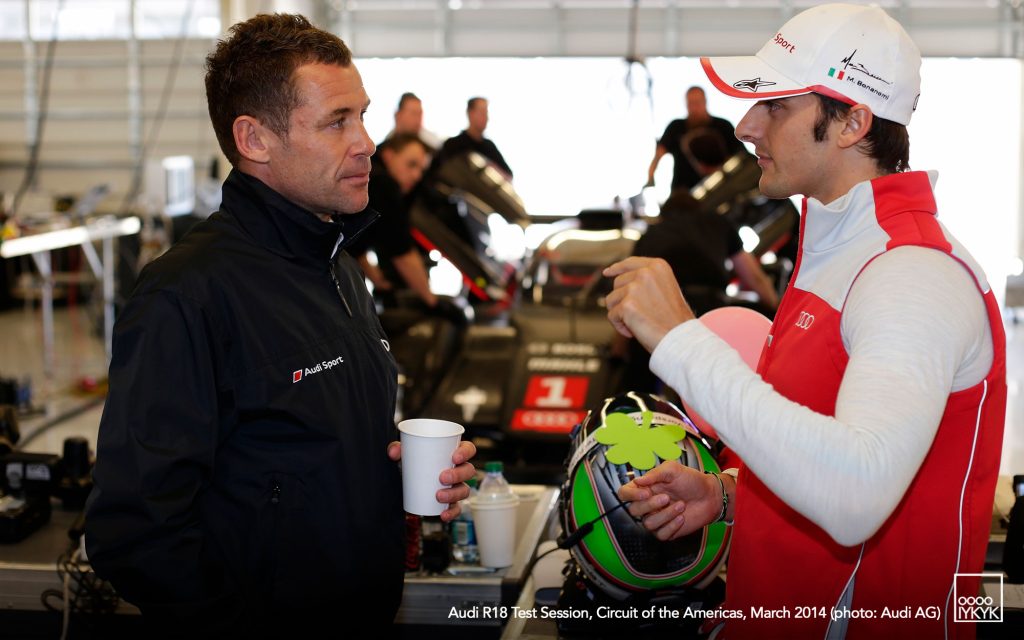
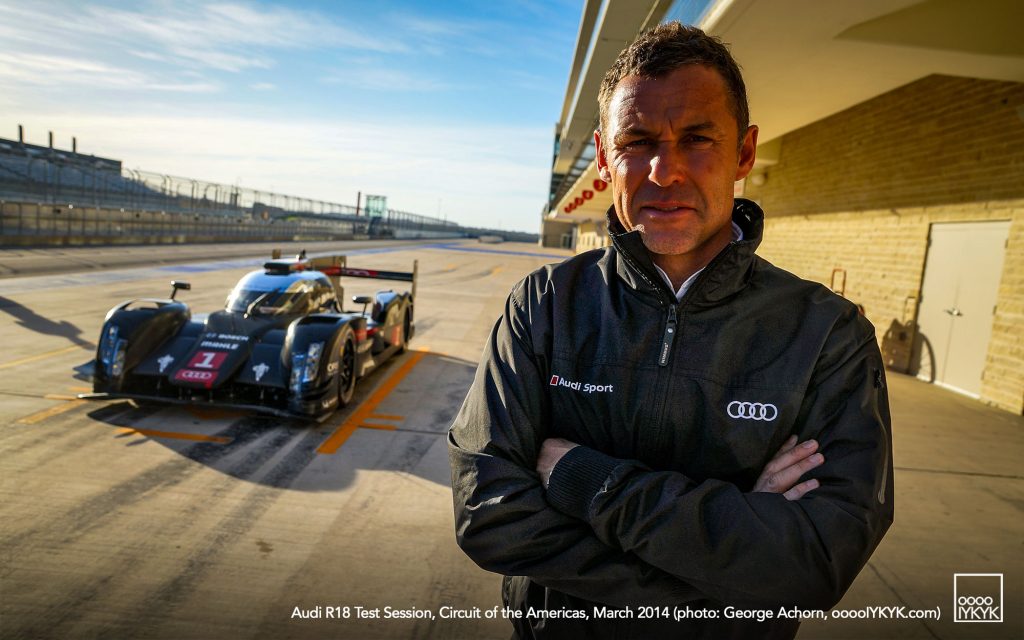
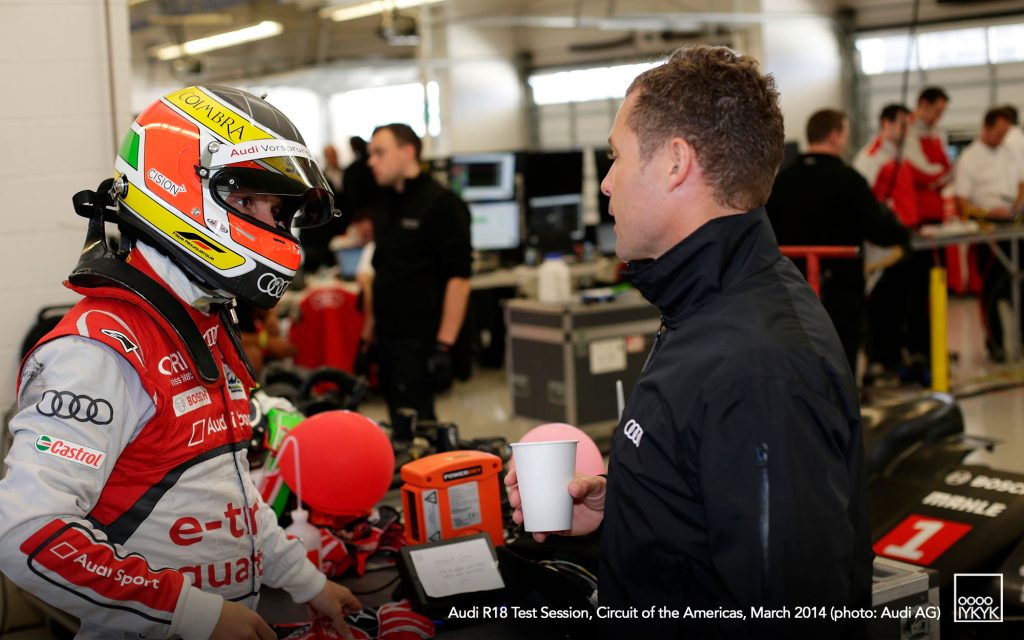
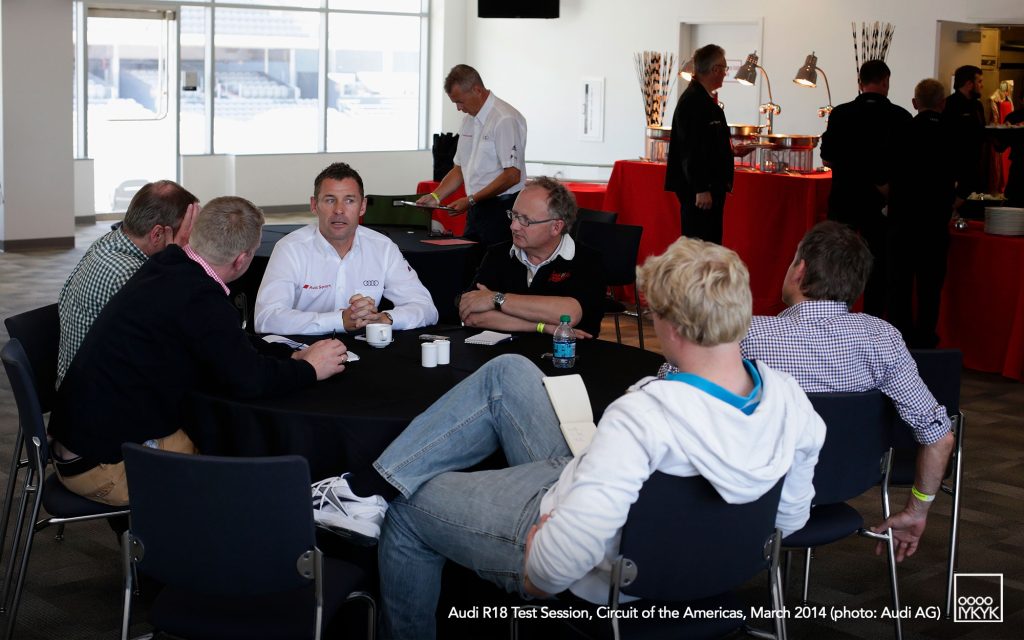
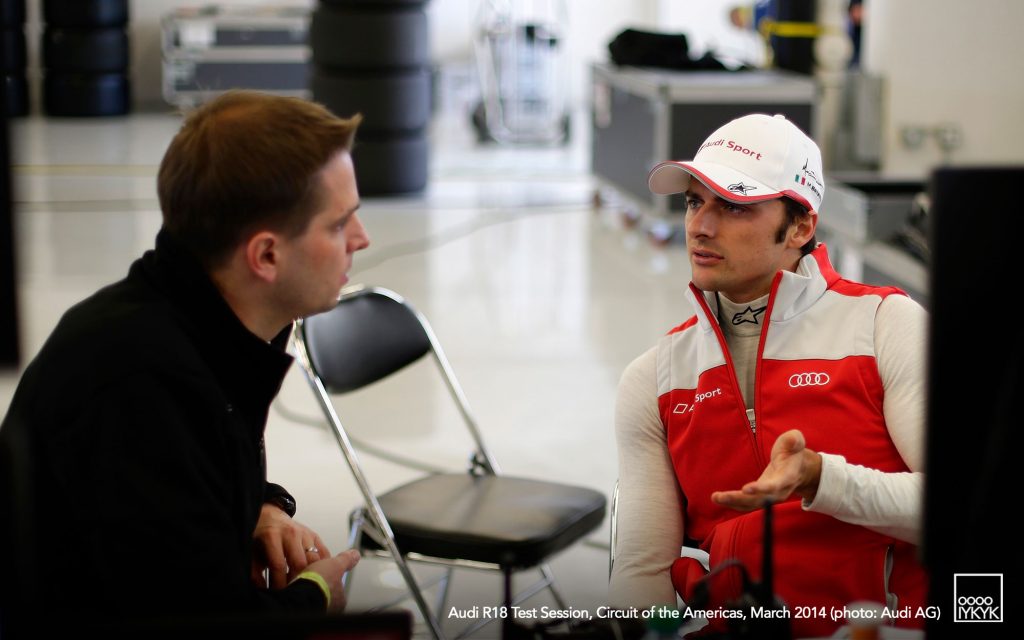
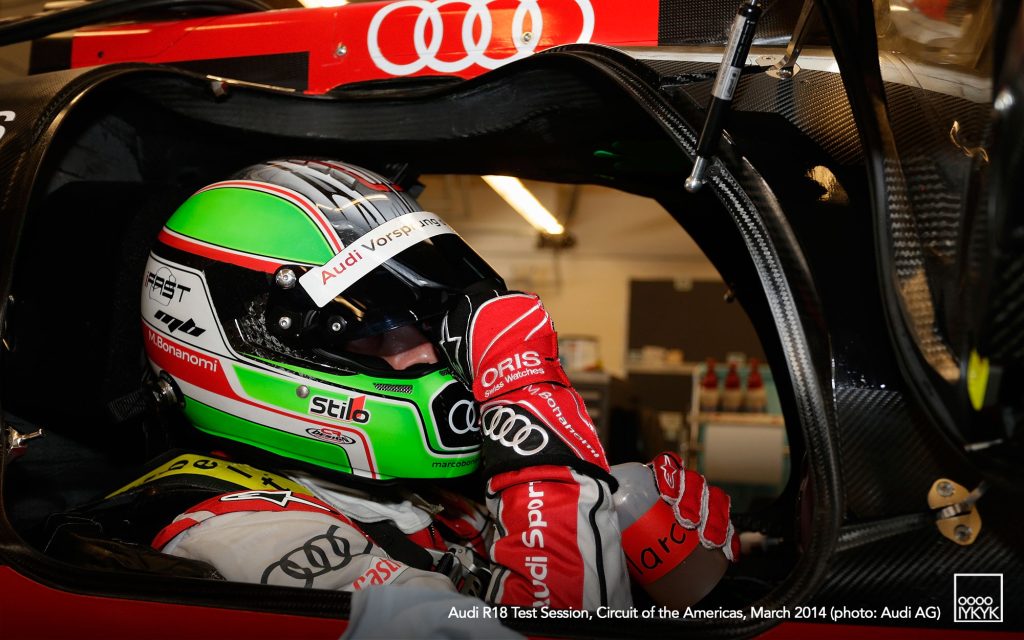
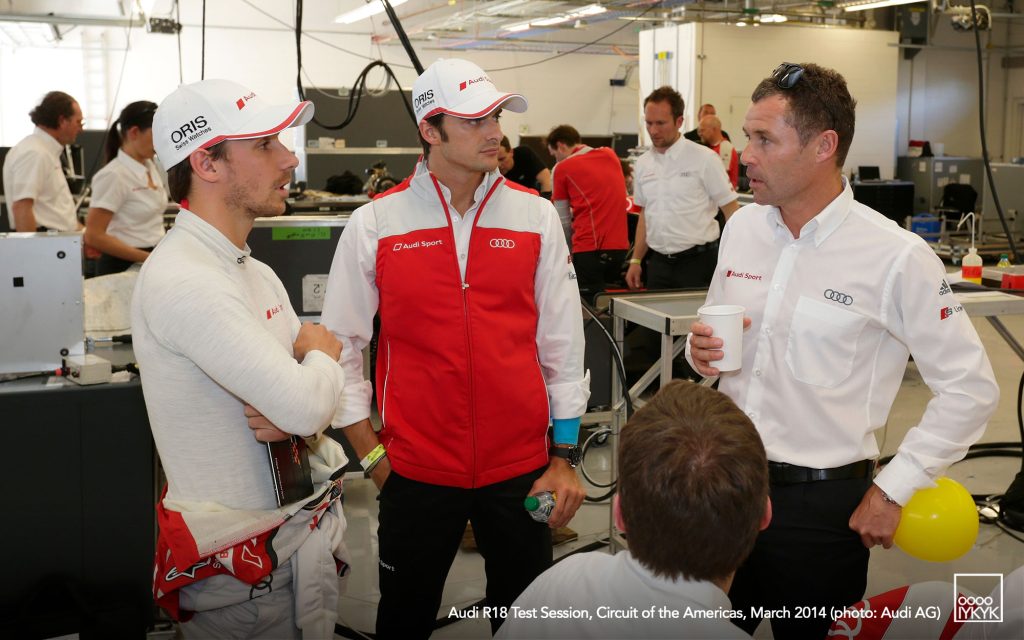
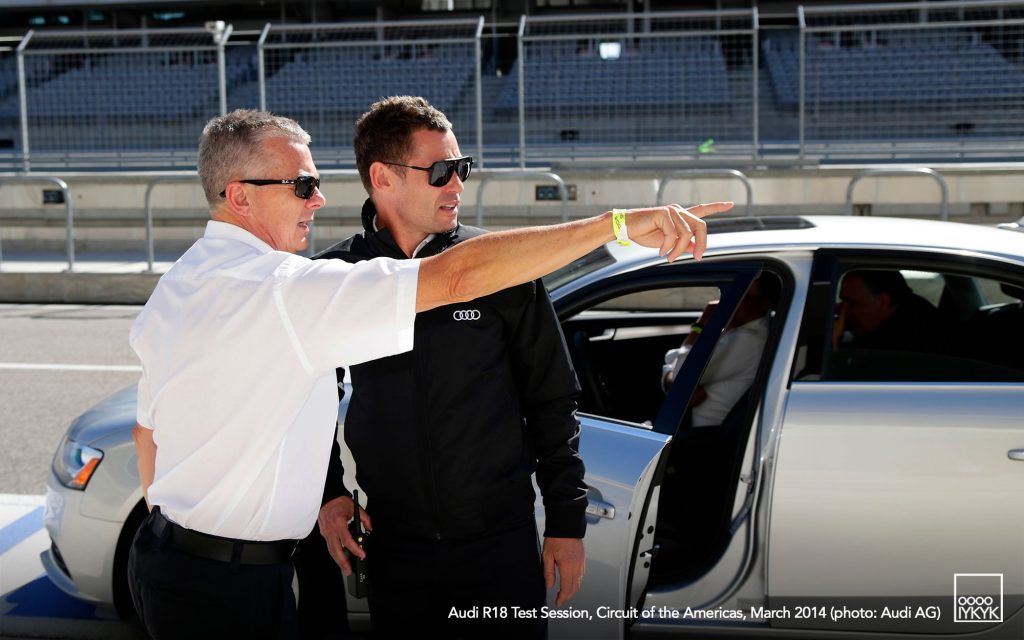
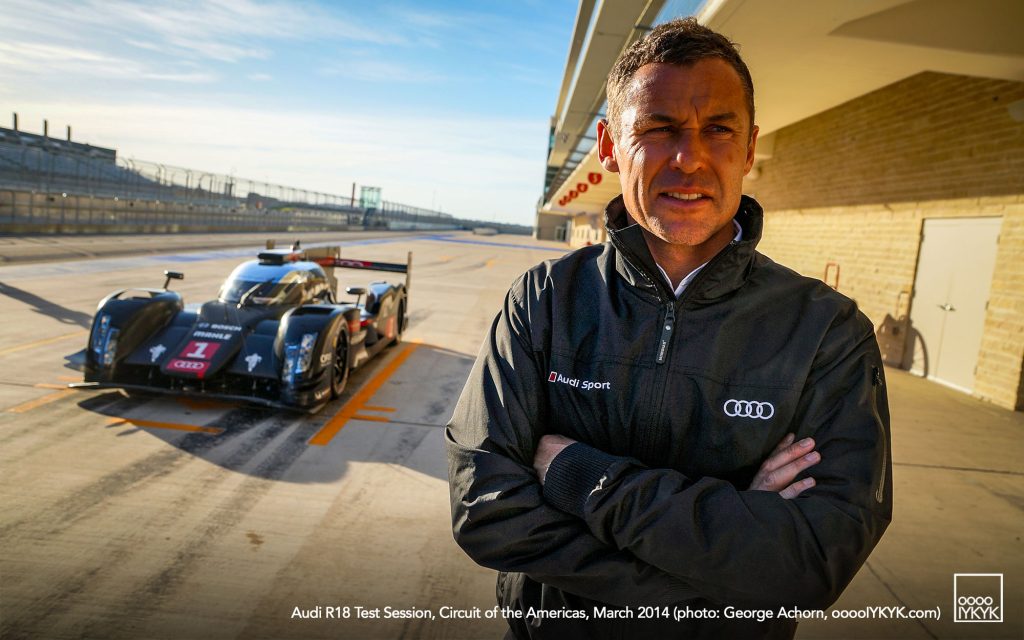
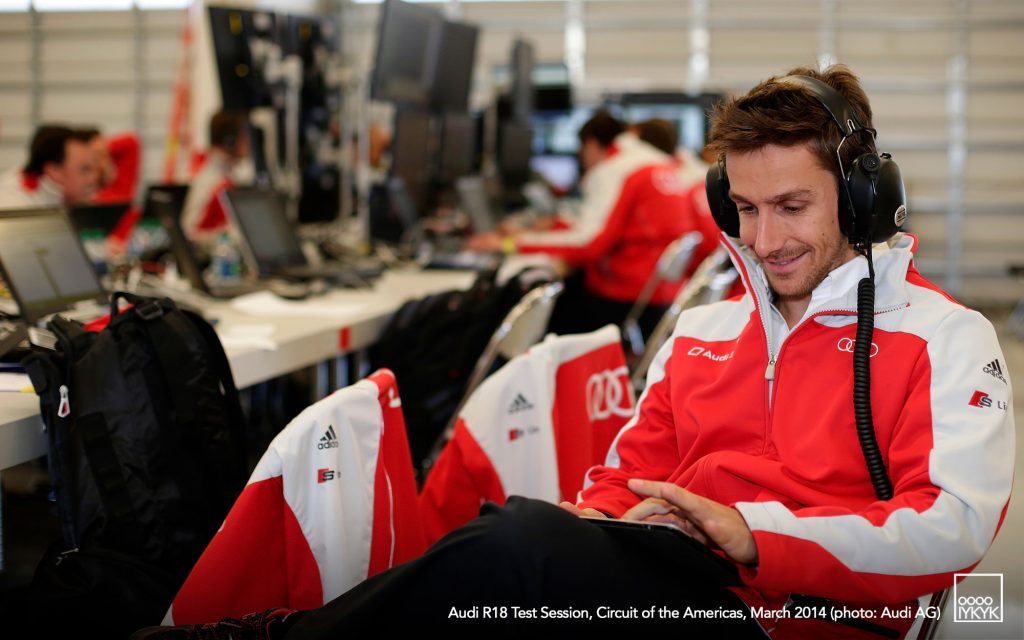
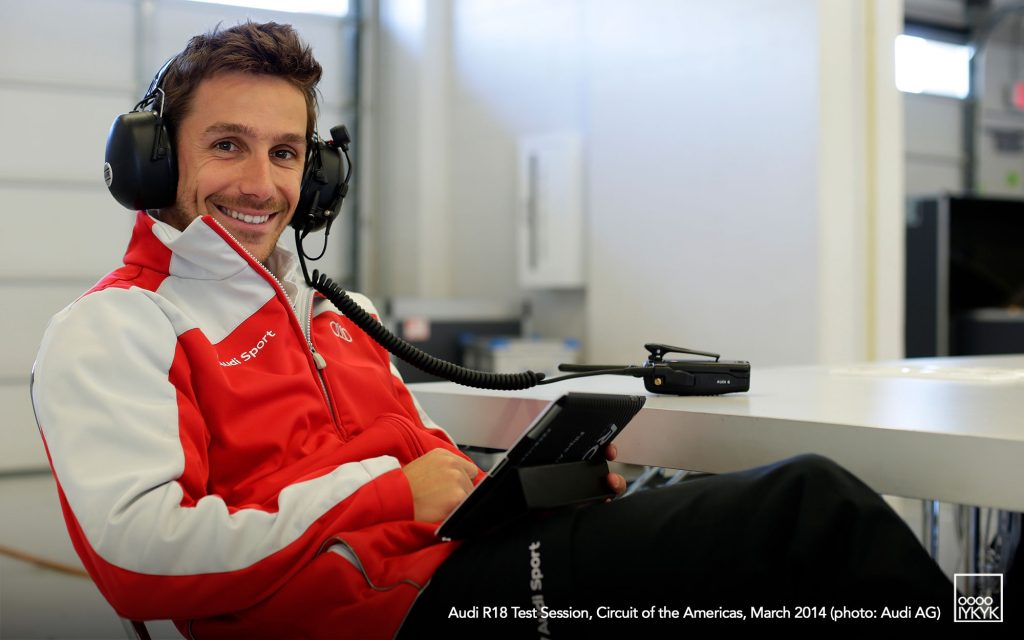
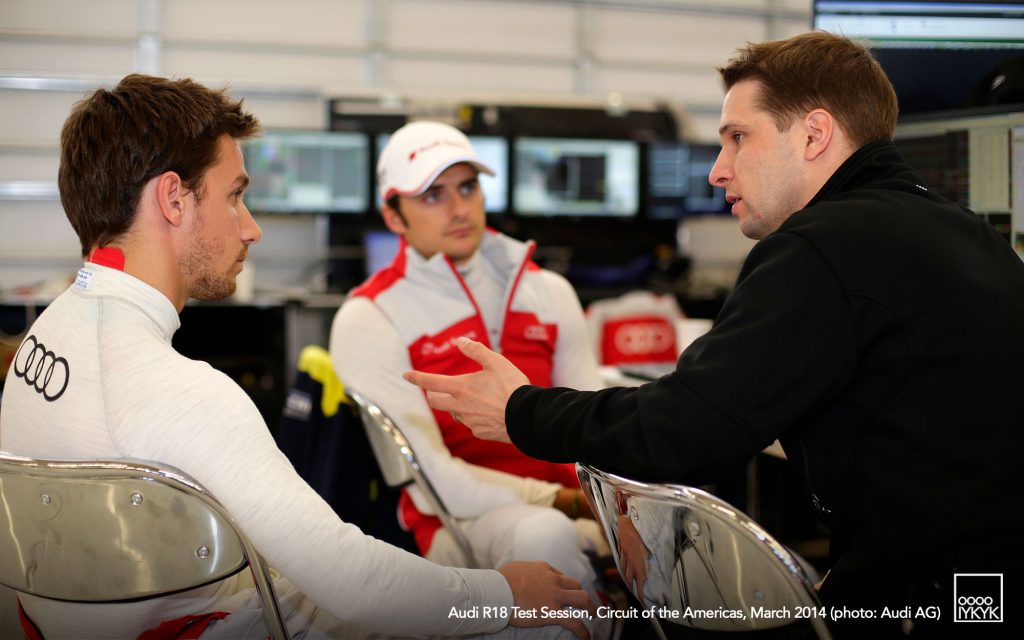
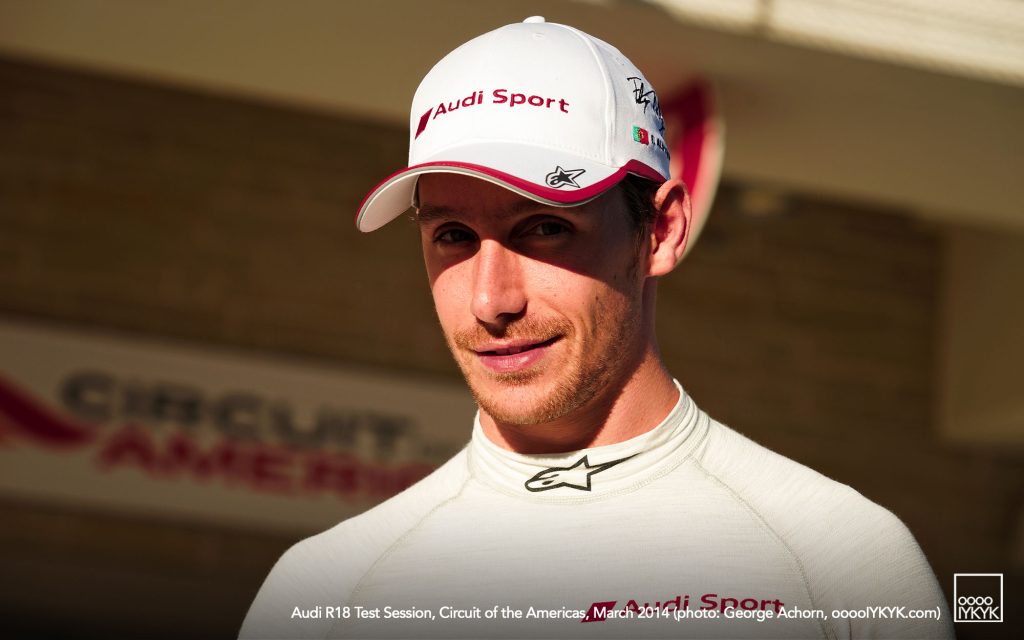
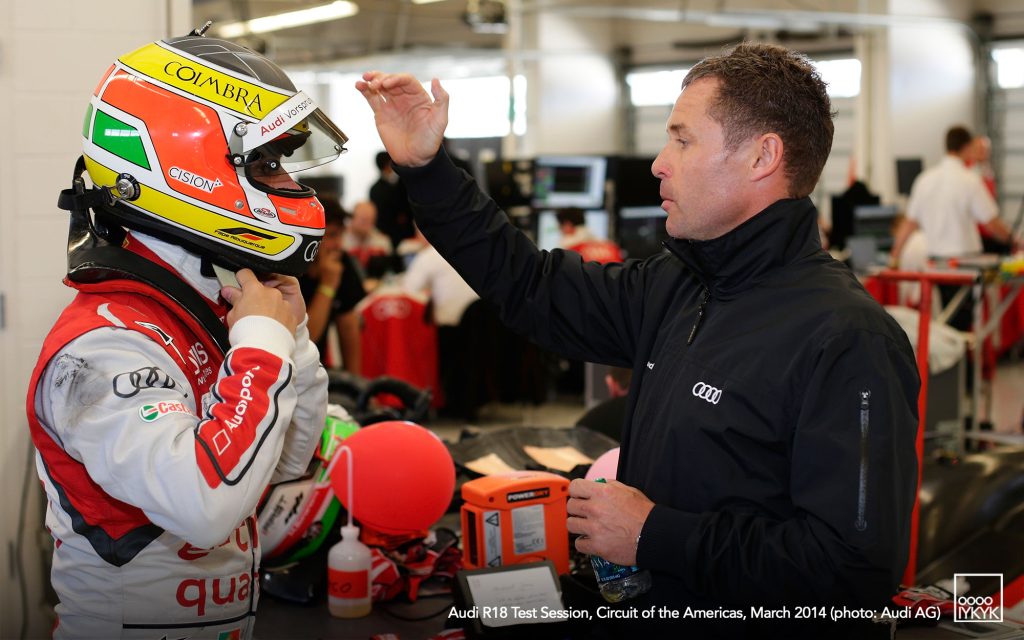
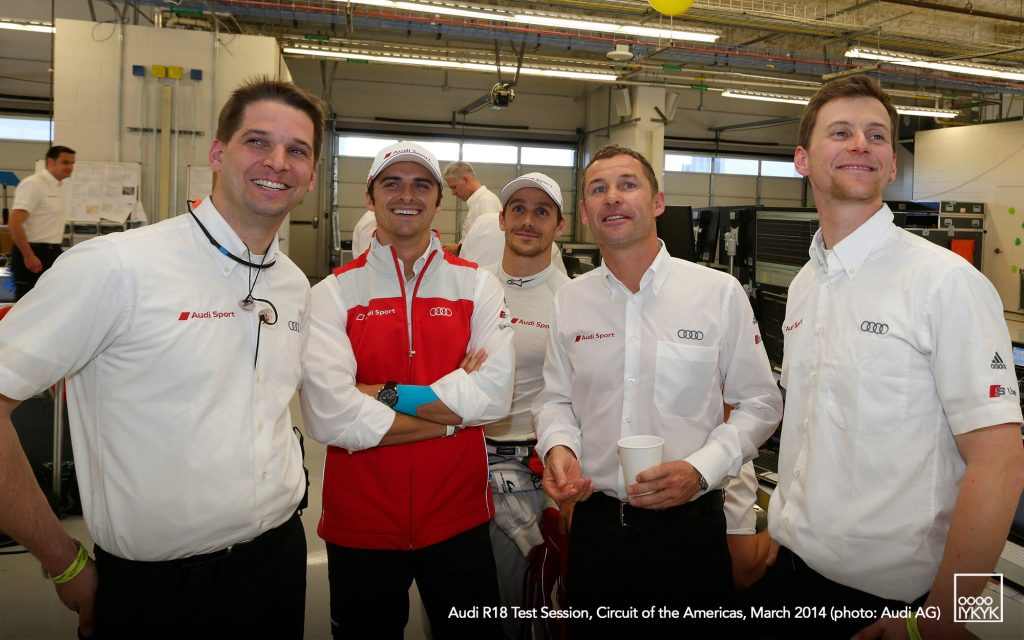
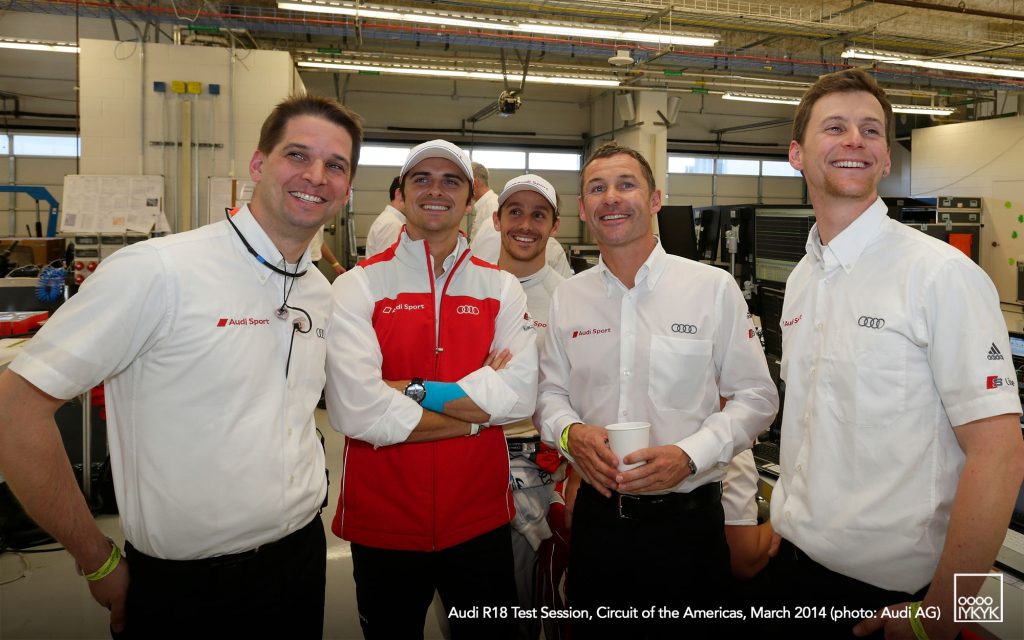
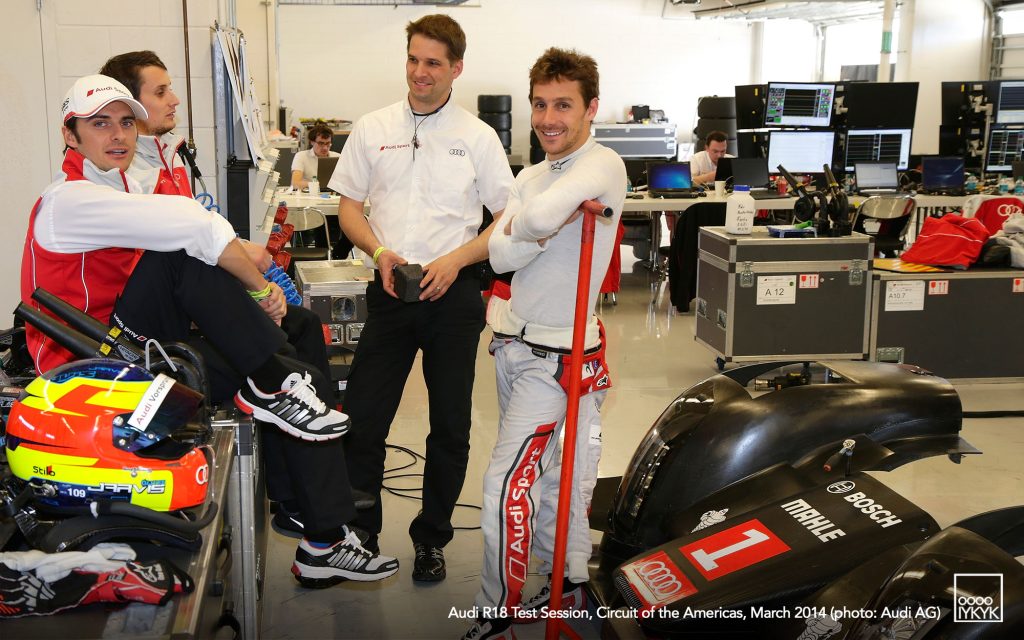
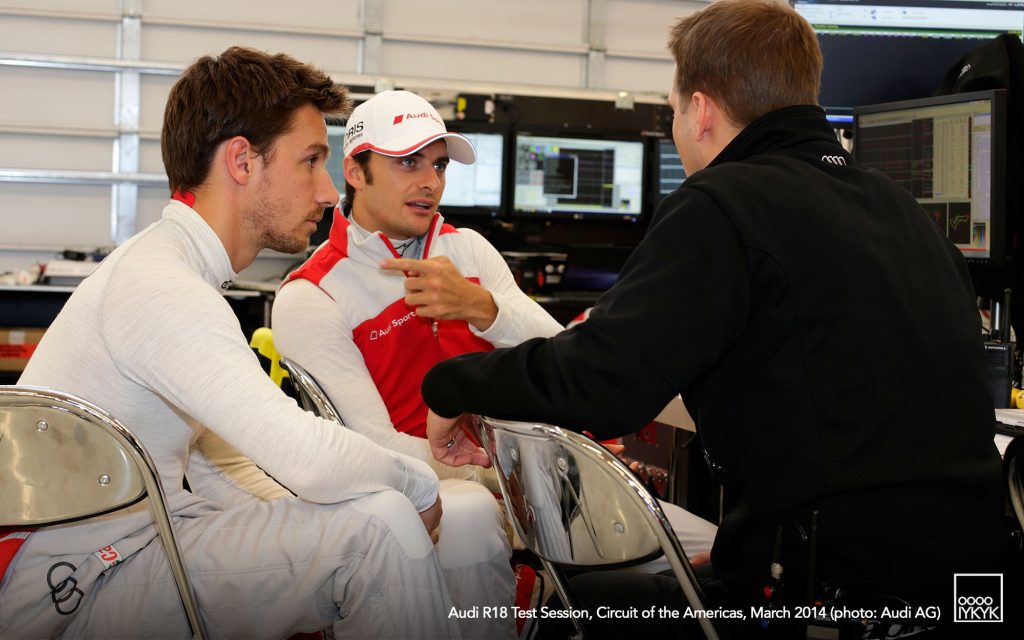
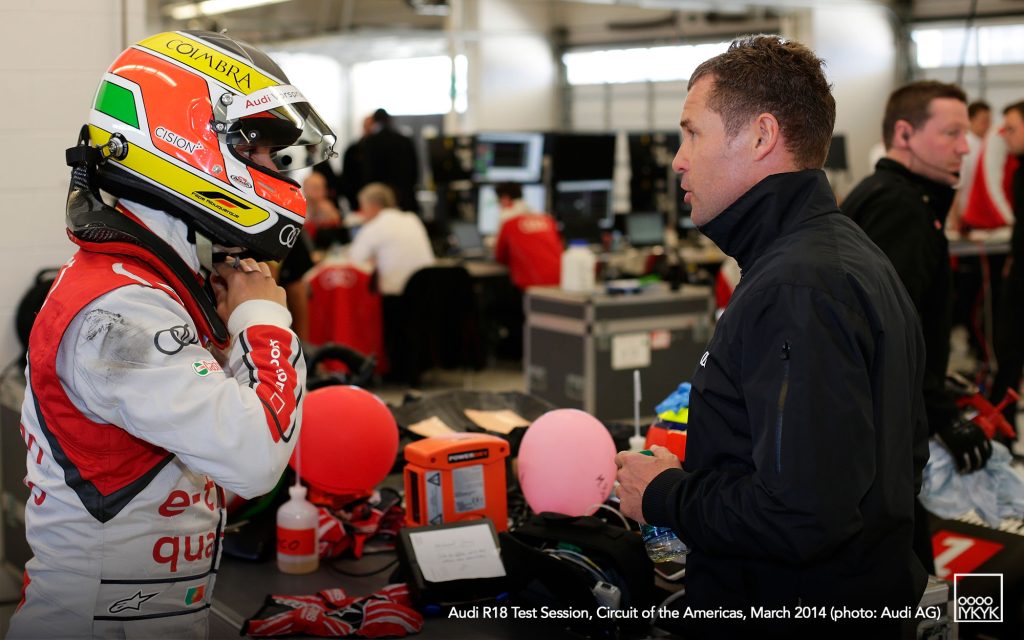
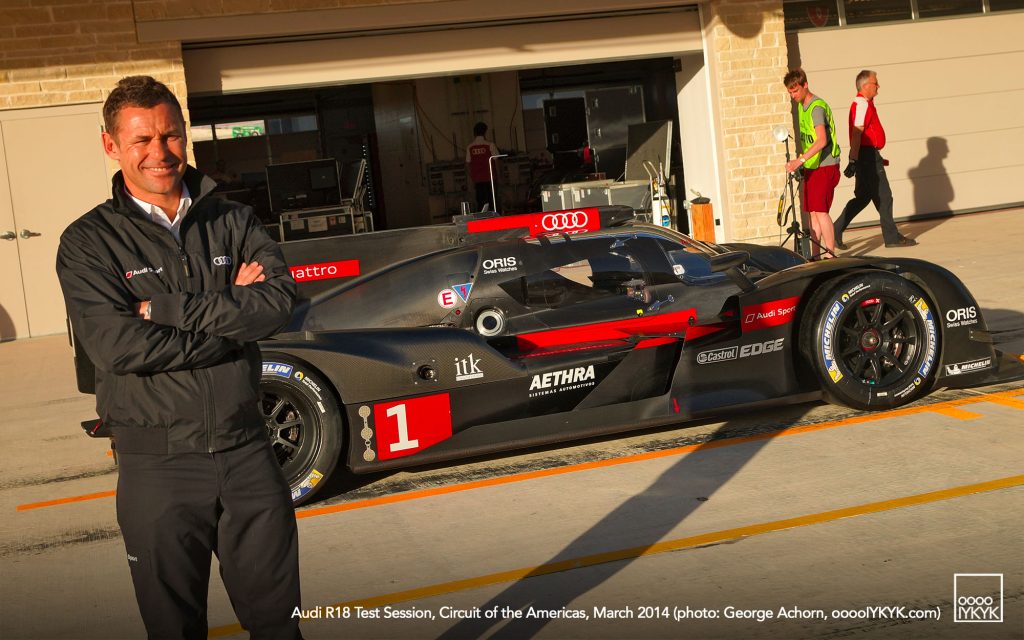
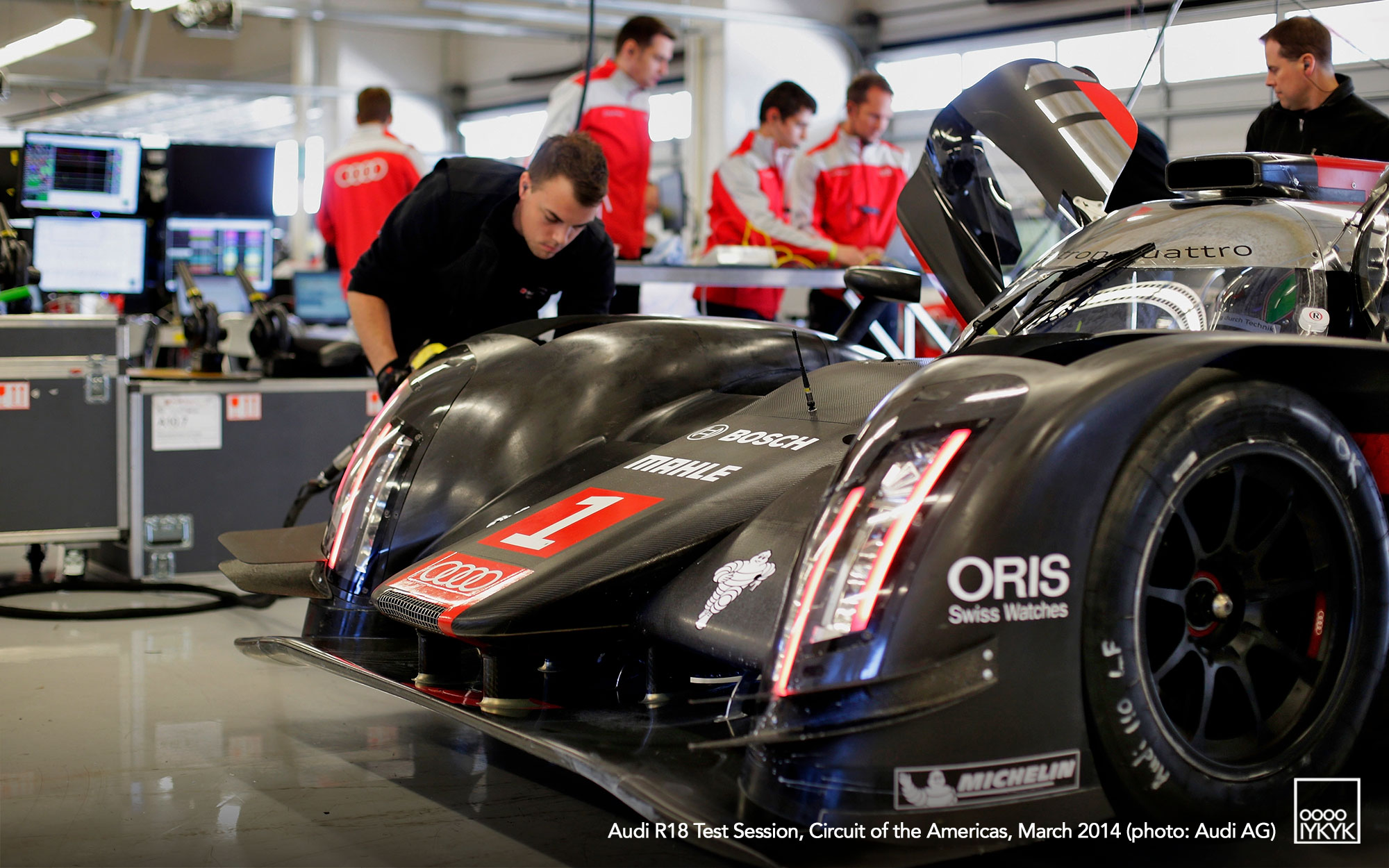
We were staging out of one of those suites, but that day it was configured more for support than opulent buffets. There were some dining tables being used for interviews and, of course, dining. Over in a corner was a curtain and a row of hanging uniforms for participating team members. The latter group included driver Tom Kristensen who’d just arrived. This day was reserved for the young guns. Oliver Jarvis, Marco Bonanomi and Filipe Albuquerque were in the building somewhere, or maybe in the car that is rocketing past up the hill and into turn 1.
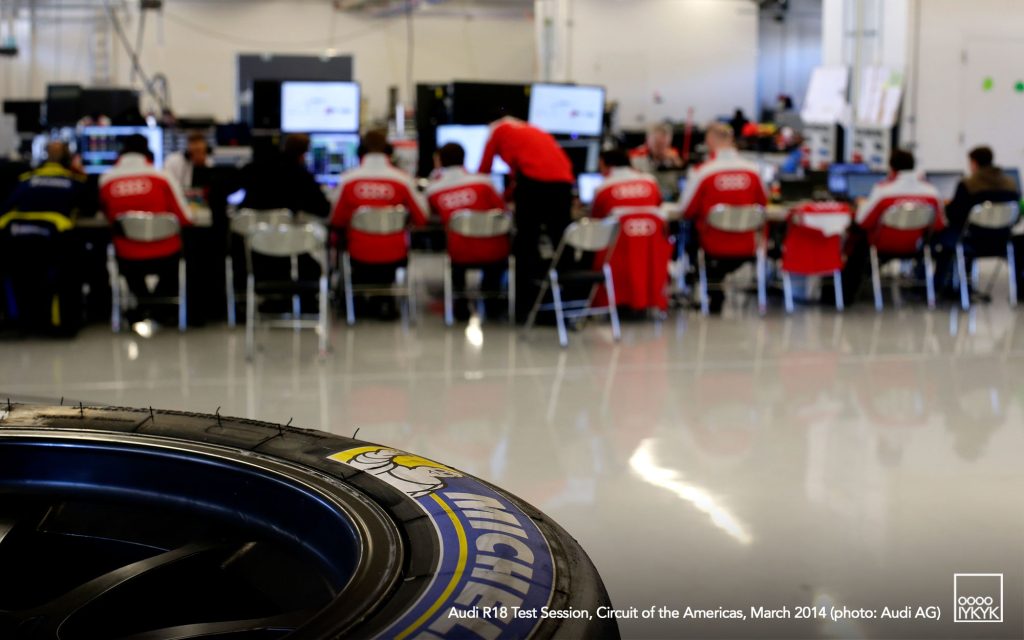
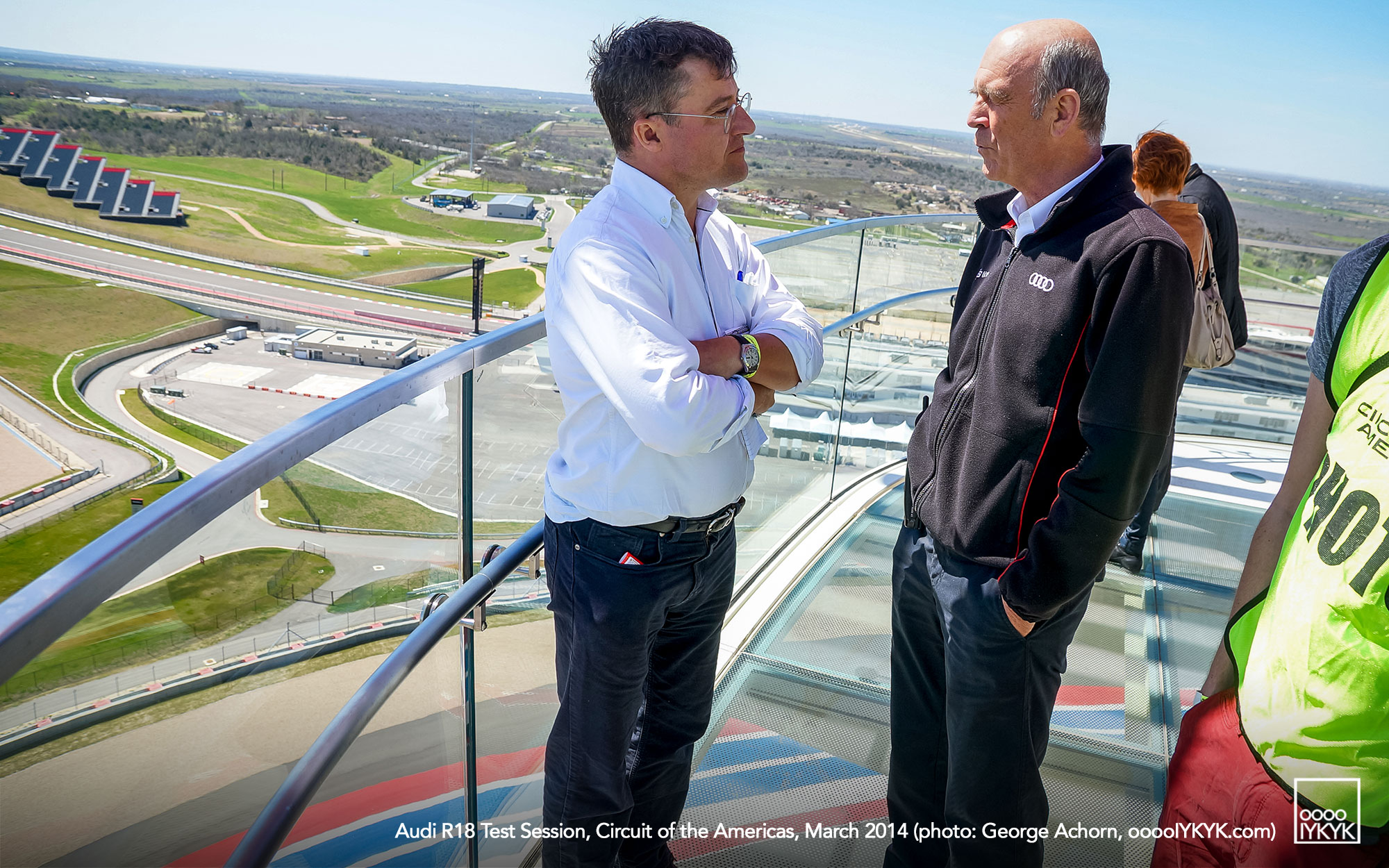
In those years, Audi Sport had made a tradition of testing at Sebring. In fact, the team had been there just two weeks prior alongside corporate sibling and that year’s chief rival, Porsche. Both brands tested their cars in Florida. Unlike the smooth tarmac of COTA, Sebring is a great simulation for the grueling conditions of Le Mans. So why had they come to Texas? I found myself putting the question to Audi Sport boss Dr. Wolfgang Ullrich on that day.
“We are here because we need to collect data on different race tracks and different layouts. This track has a very special layout and therefore it is very important that you have data from this race track taken into account for your development.”
Data may not sound very sexy, but it is key to any hybrid racecar manufacturer’s approach… even this year at COTA when Audi Revolut F1 and their hybridized R26 are fighting to work their way out of the mid-pack on the grid. In addition to that era’s historically significant competition from Porsche and Toyota, the rulebook had totally changed for that year. Totally.
Rather than going flat-out all the time, drivers and teams were learning to deal with very specific limits on the amount of energy that could be used during a single lap. Fail to use it and you lost it as the FIA WEC rules stipulated it did not accrue. Use too much and they had just two laps to make amends or they would be penalized. For Ullrich’s team of engineers and mechanics, in addition to his talented mix of drivers that year, this required a complete re-think.
What they had determined that season was that while testing endurance at Sebring was still important, logging data for different tracks and turns and then optimizing the support systems that define Audi’s efficiency was maybe even more critical.
According to Dr. Ullrich, re-setting the minds of his team around this new racing schema was of the highest priority. The team had been running every lap of every test as if under those energy constraints. They even began to simulate the consumption conditions late in the prior season in order to gain some experience under fire.
Dr. Ullrich explained,
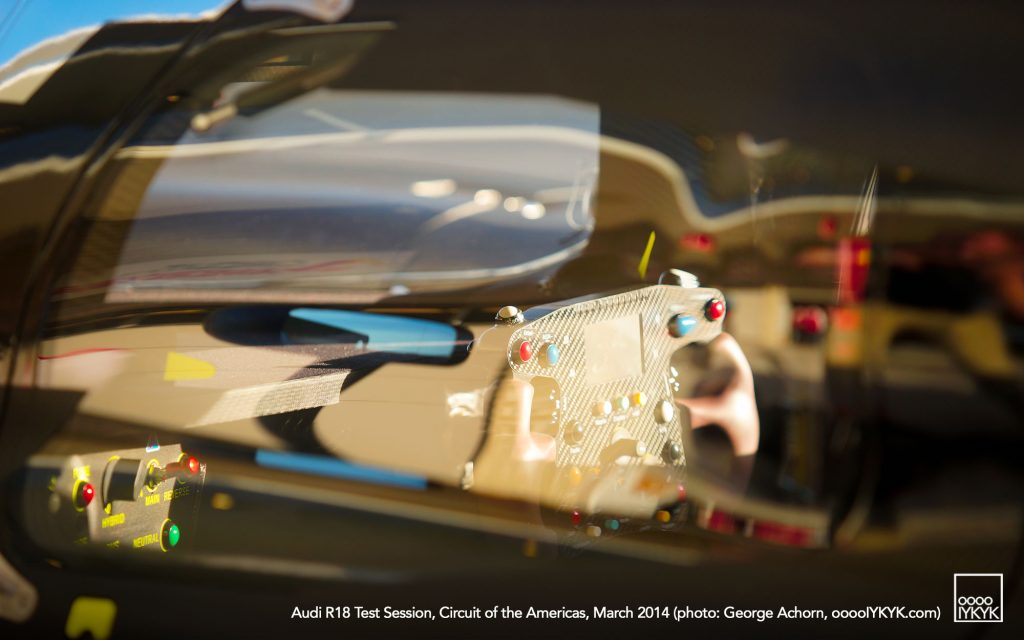
“It is not easy, but we try to develop the system that the driver gets clear information so he can adapt to the target he should achieve. For me, there is no solution to tell him what he should do via radio because that is too dangerous, and what do you do if the radio does not work. The car must have, with all the programs and interlink of all of the systems, its own intelligence that makes the driver clear so that he may have to change his driving style if he wants to stay within the limits. This is something we have worked on very intensely. It is a big part of the development work on this new era of racecars, because it is completely efficiency driven and not as much power driven.”
For the drivers, Ullrich wanted it to be simple… instinctual. The reality was that it was anything but. Dr. Ullrich continued.
“The energy that you have per lap is a given one and it is per lap. You can’t save anything for the next lap. So, the target is that you have to maintain 100%. If you use only 99%, you are giving 1% away. Maybe that’s a problem at the end.
If you are at 102%, then they give you two laps to recover from that. If you haven’t done it by then, then you get a penalty. It is important to work out strategies that allow you to do this and to give the driver intelligent indications of what he should do and when, without needing to think a lot about saving energy. He should concentrate on being fast. That’s racing.”
That may be racing, but it was a stark contrast from what the team, the drivers and even the fans knew to be racing up until that point. Le Mans had always enjoyed a bit of a science fair tone to its 24-hour race, but that year the theme was being turned up to an even greater level of display and it aimed to re-set the schema of racing and performance for everyone.
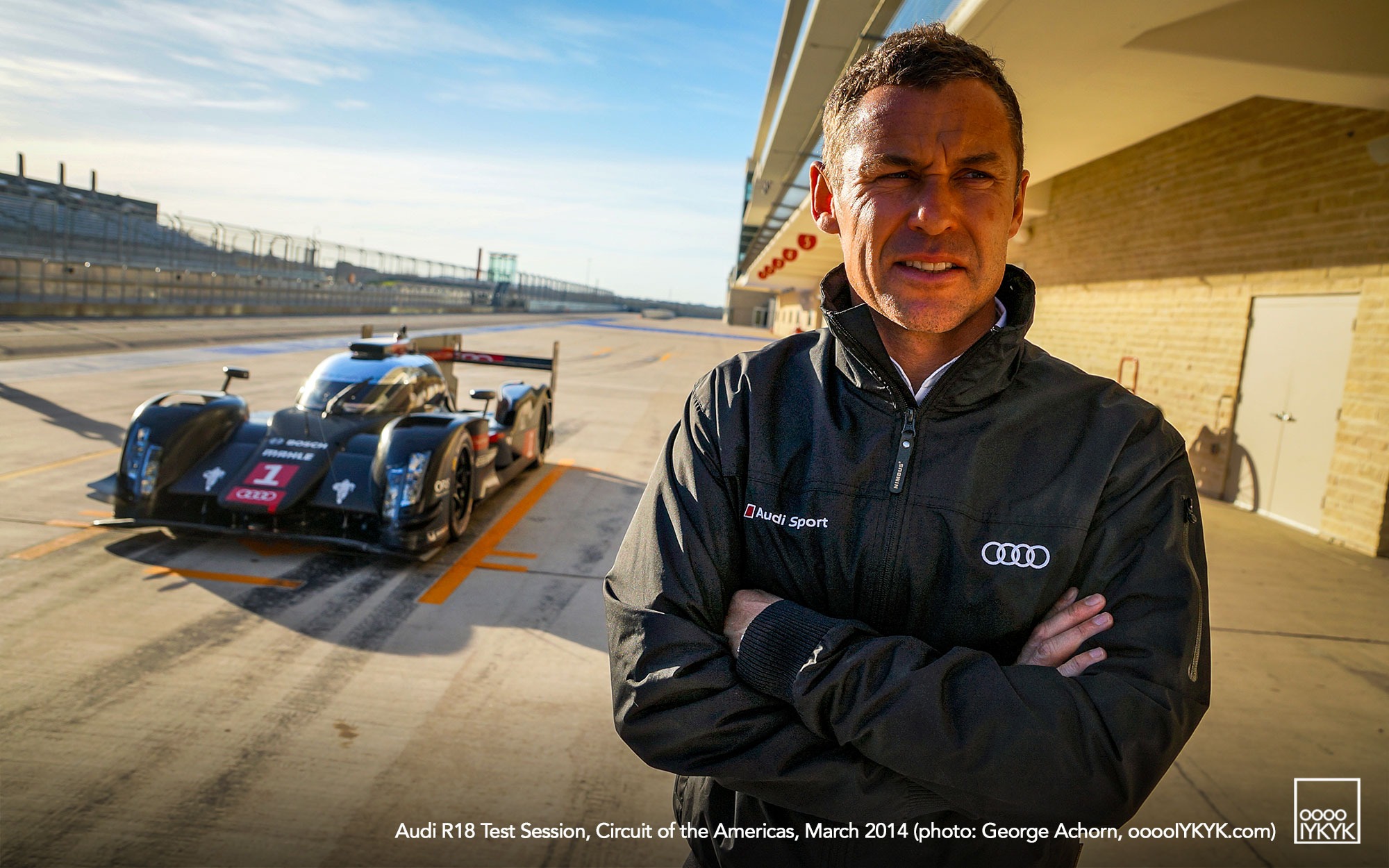
So how did this effect the driver? For that I’d asked 2013 World Champion and still the winningest driver ever in the history of Le Mans. Tom Kristensen’s presence at the test was hard to miss. The Dane was candid.
“You always have to adapt to the different circumstances. Now, whenever you try to be efficient or economic, it is not a help. It won’t take you any further because every lap you cash in and you start all over again. That is not logical compared to how we have done it before.
If you have been very smart, fast but been able to save a little bit each lap then you might be able to go another lap when the car you are charging has to go to the pit. When he comes out and you stop after him and you come out in front… it was things like that that I loved.
This will be different now for sure. Every lap you are not going any further. Every lap you know exactly how many laps you can do, because that is the energy level that you have. So, that aspect is taken out of it. But, there a lot of other things that make it very interesting. You have to adapt, and I think that’s what makes you successful. You have to be adaptable, alert and react to different circumstances.”
Did he find that more mentally taxing?
“At the moment it looks like it, but you’re talking about what I’m about to do. It will be a lot easier to speak about this after the season because it is a challenge for me like it would be a challenge for you to try to explain to your readers. The modernized view of racing… it has to be relevant to the road cars that are sold around the world and that relevance has got a big push in that direction for this year. It’s very much in line with that, with what everyone wants, from car manufacturers, from politicians, from the FIA and from the ACO in Le Mans.
The future looks fantastic for sportscar racing because the manufacturers are attracted to it. We know the three that will compete this year. We know that Nissan and that Ferrari are thinking in that direction. Combine short term and long term, and this kind of racing looks very, very interesting.
Complicated? Yes.”
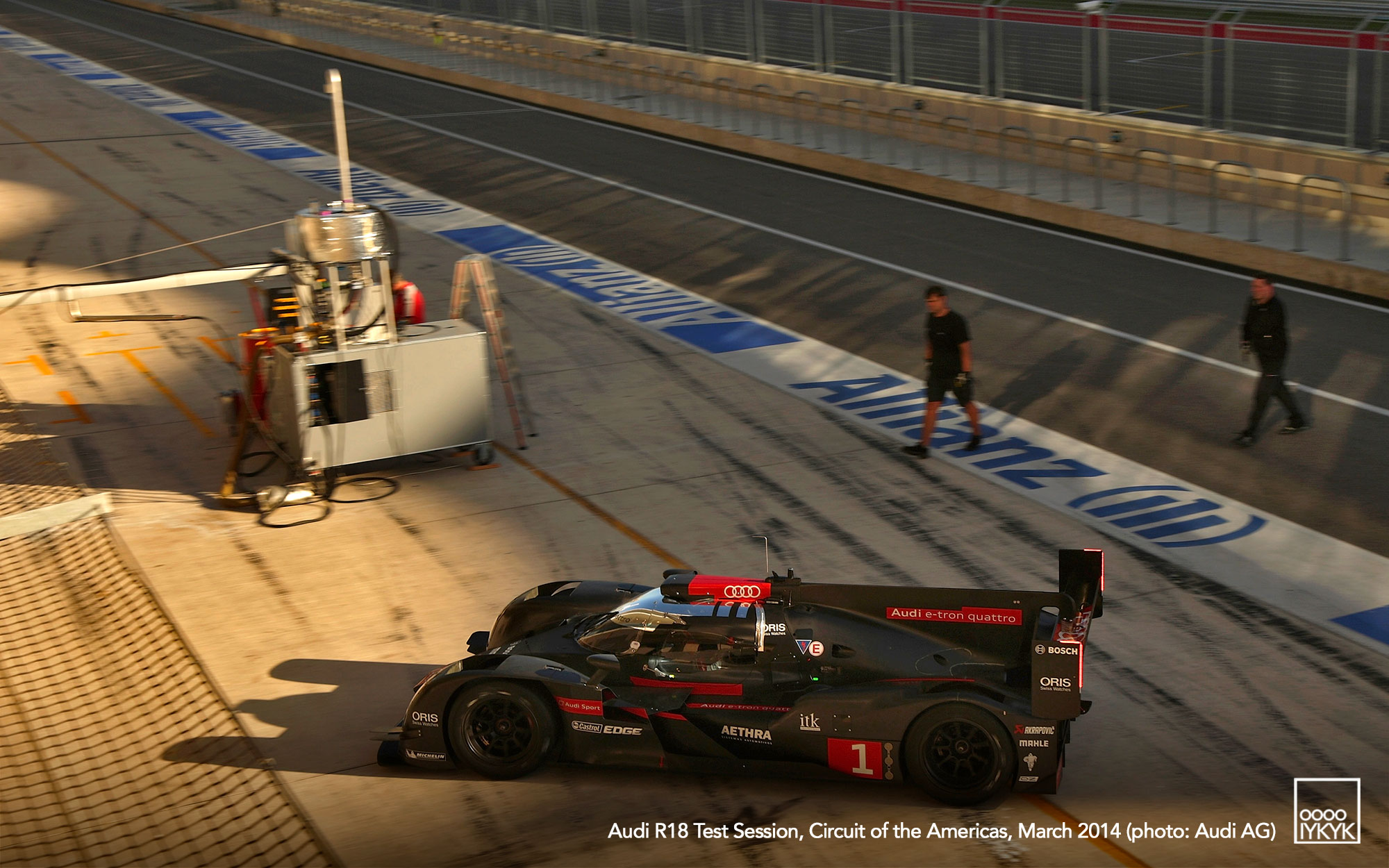
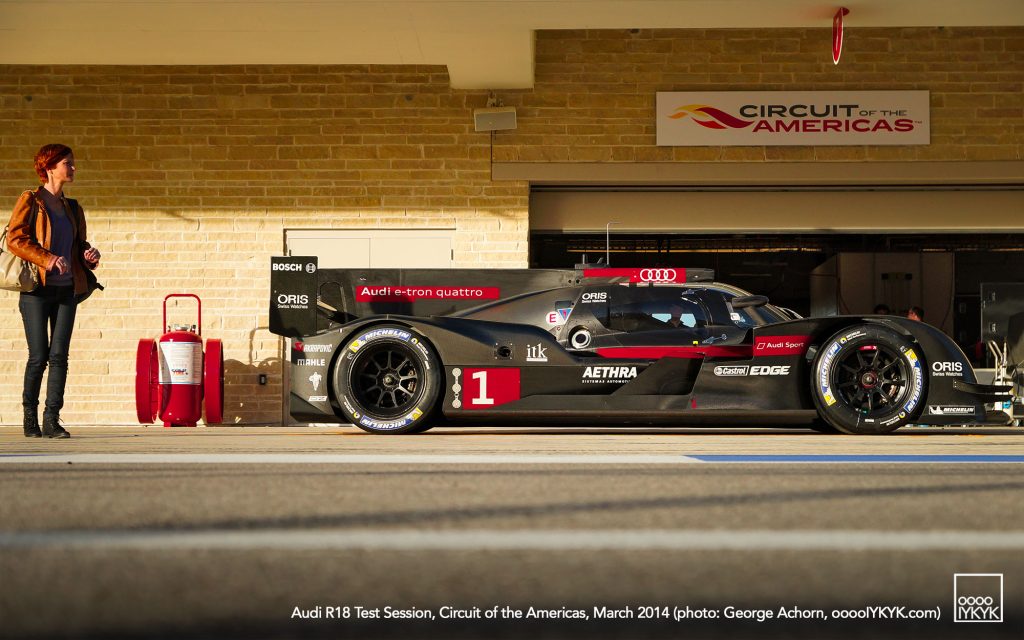
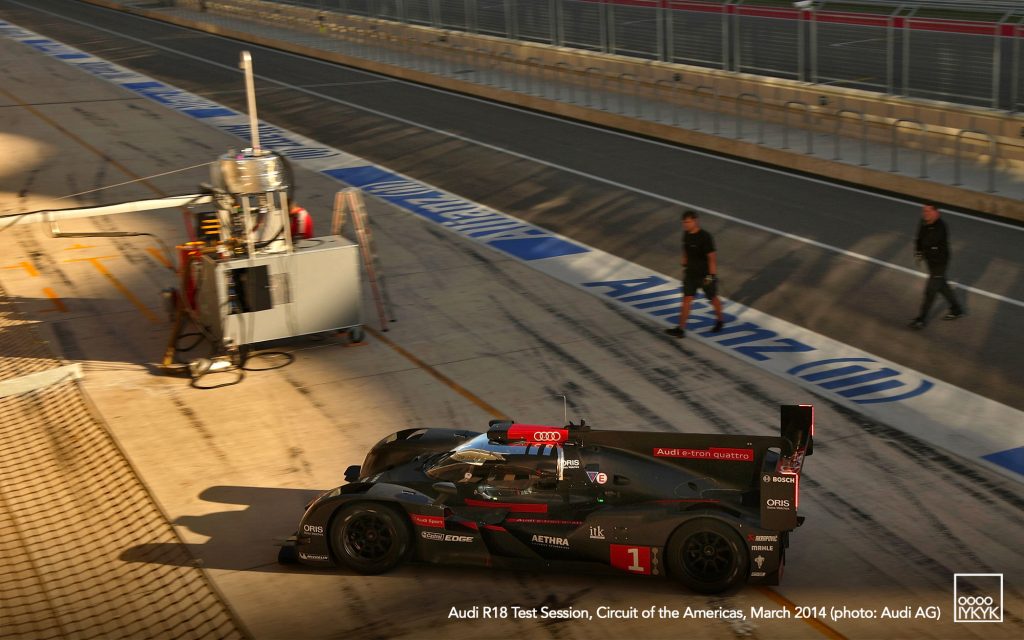
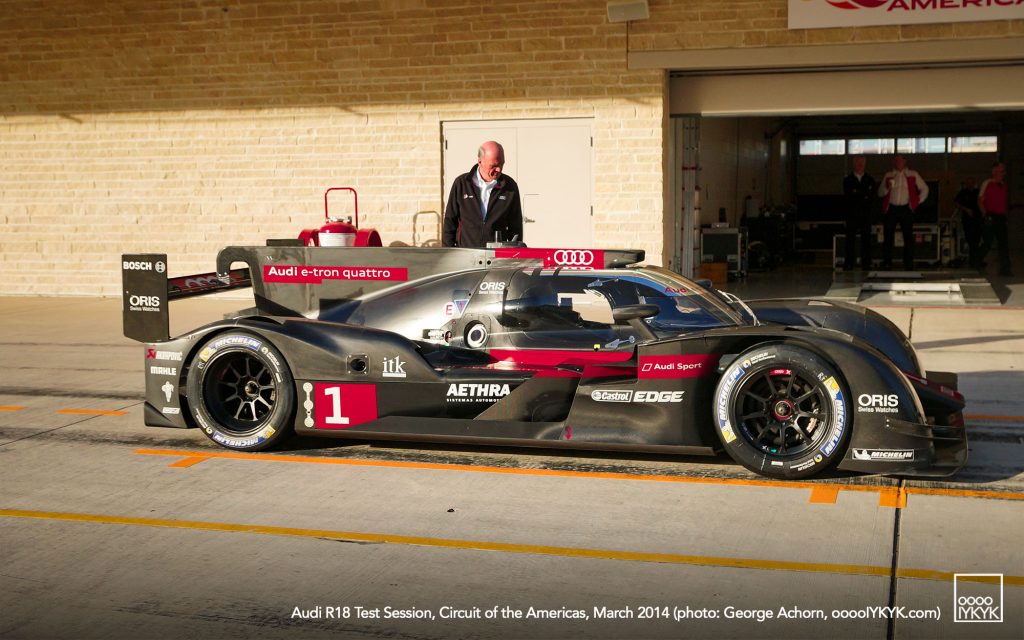
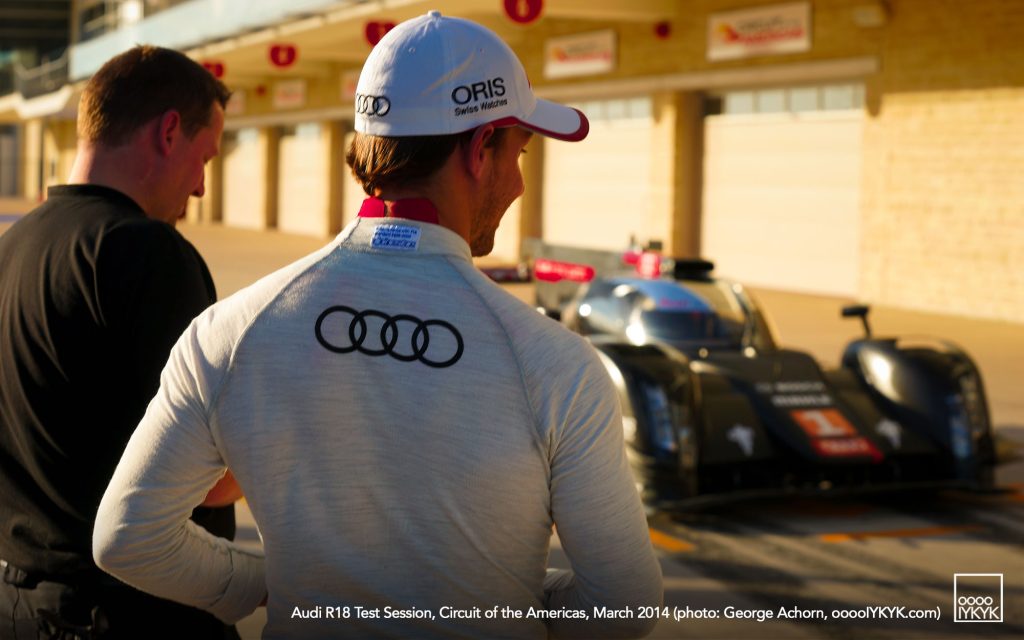
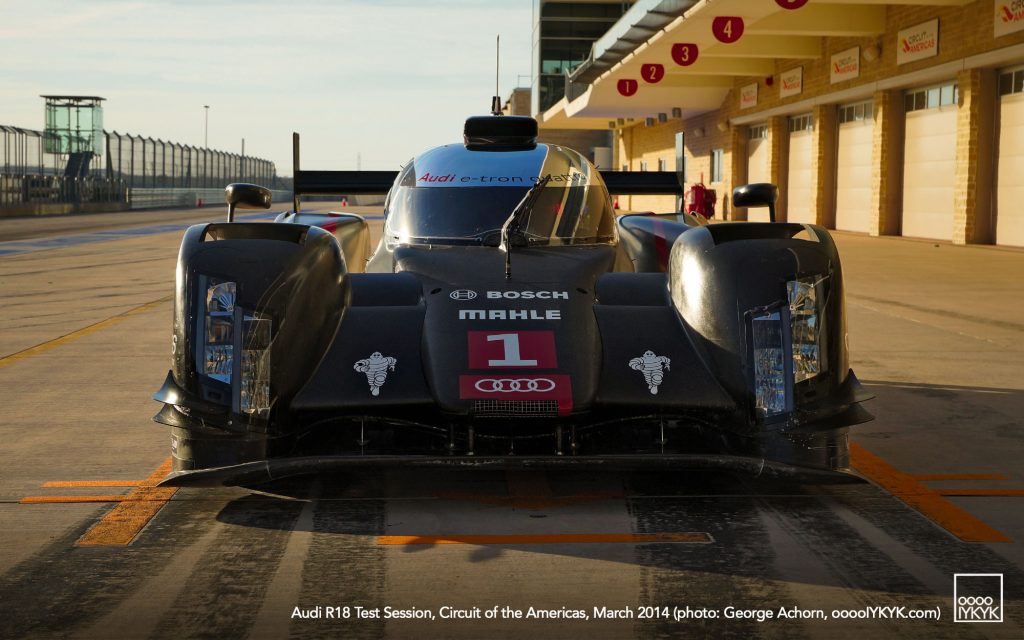
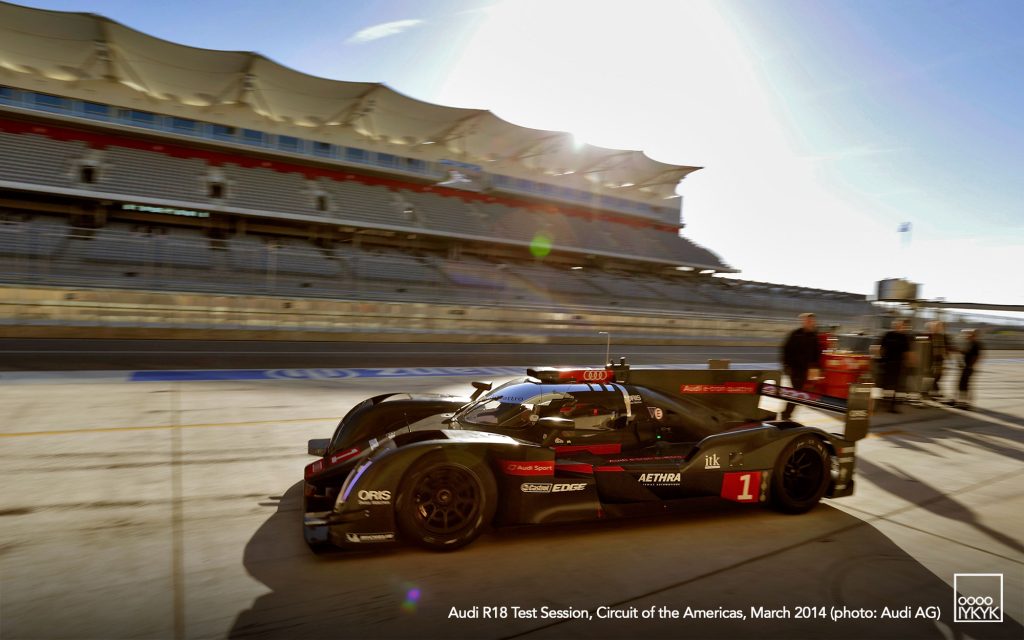
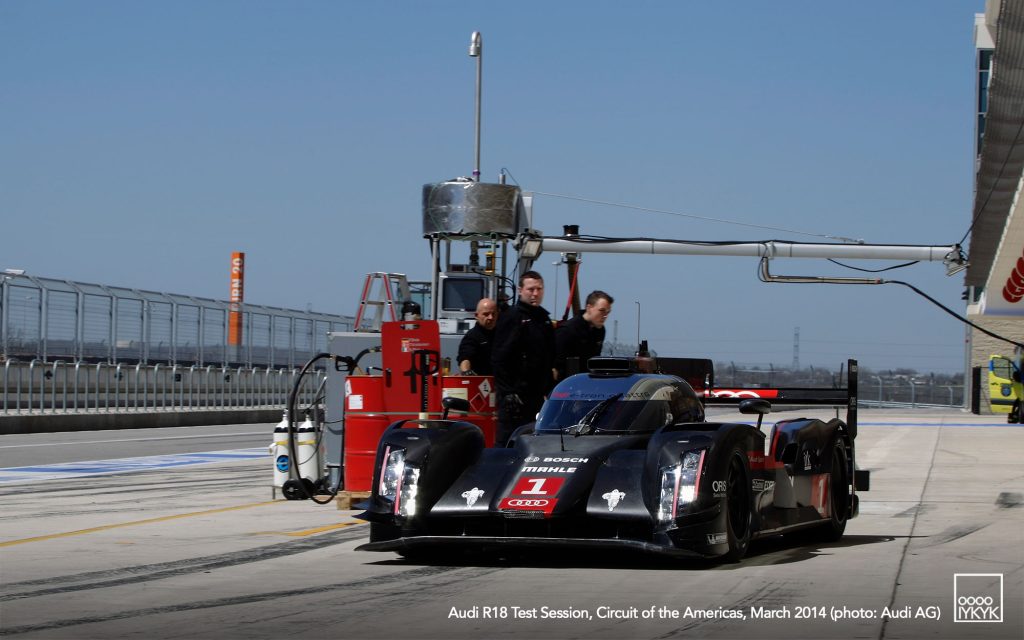
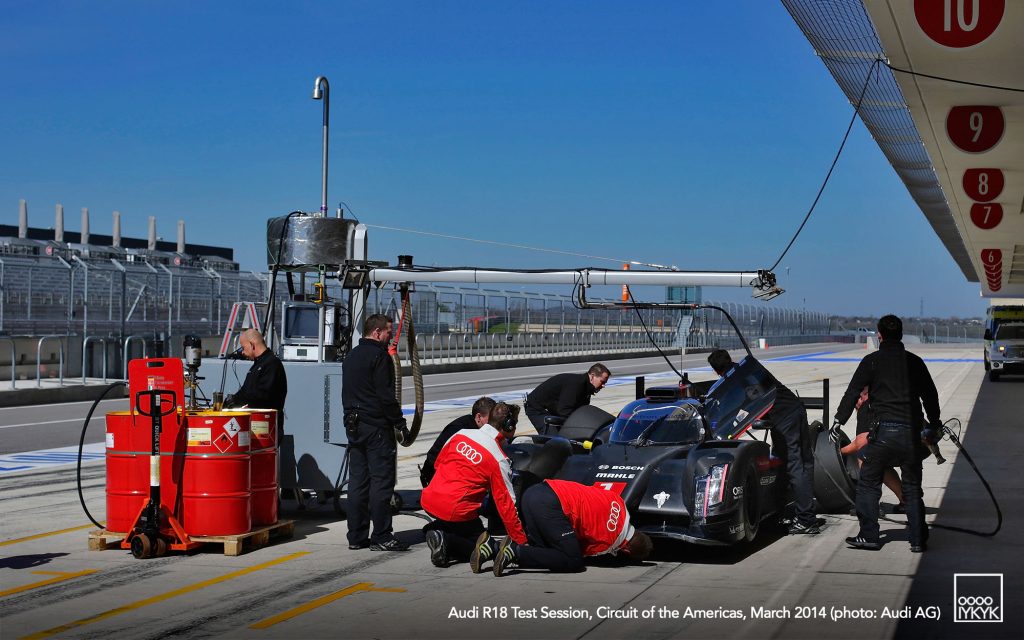
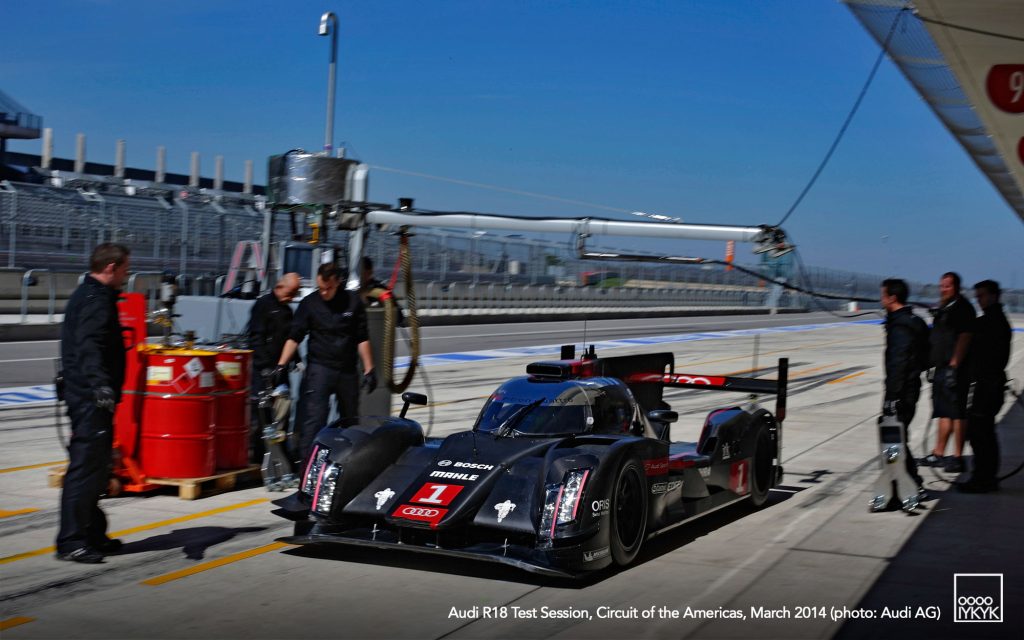
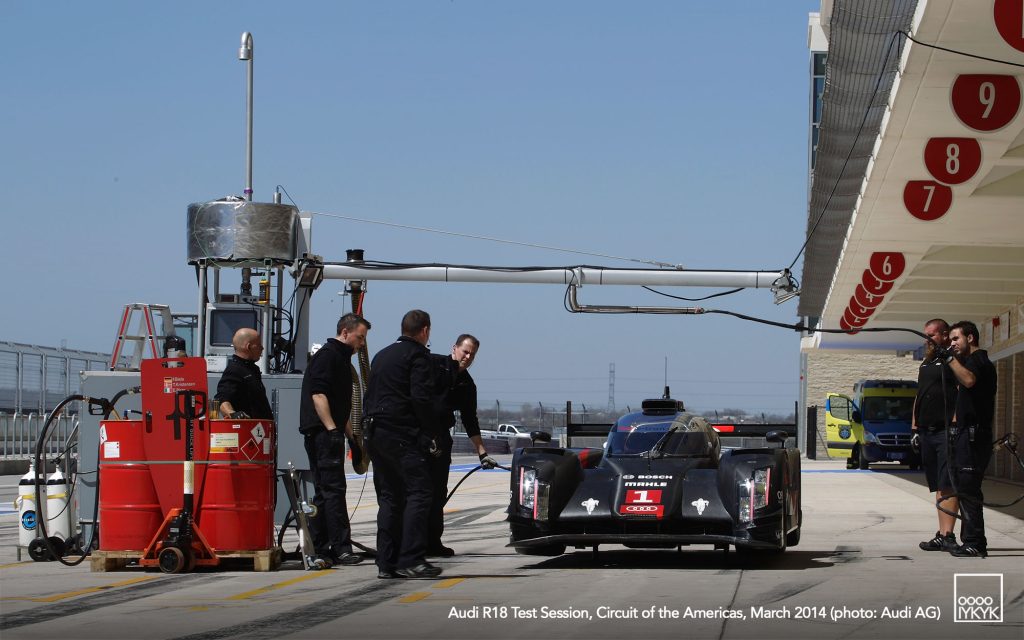
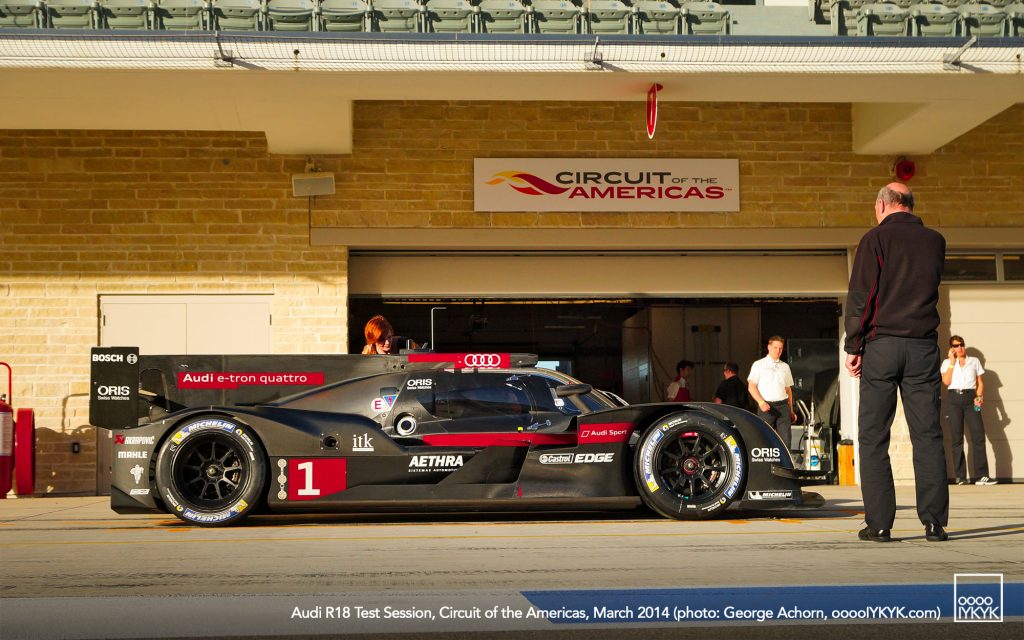
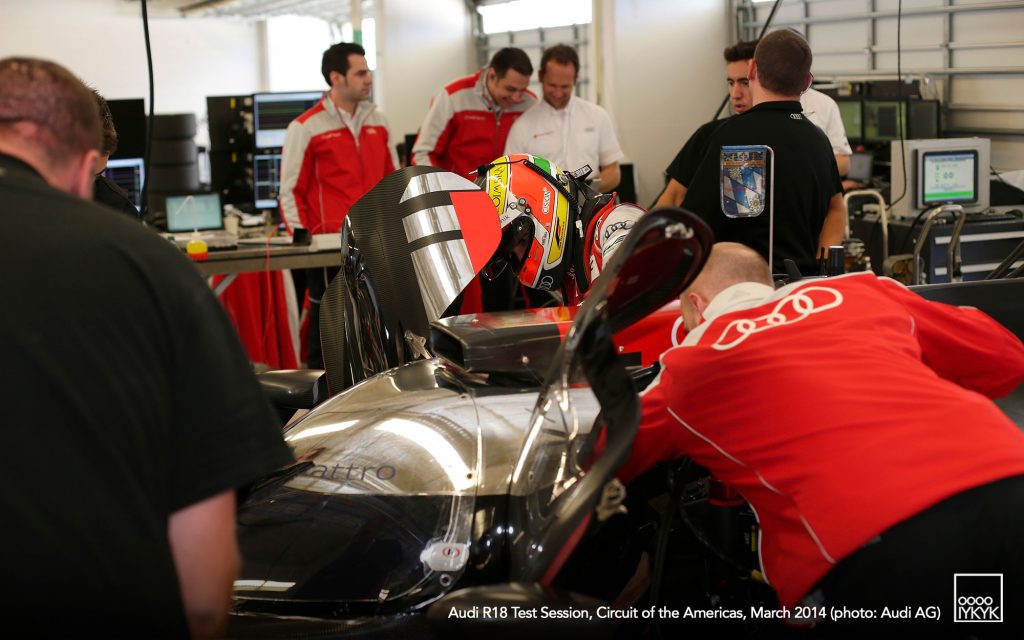
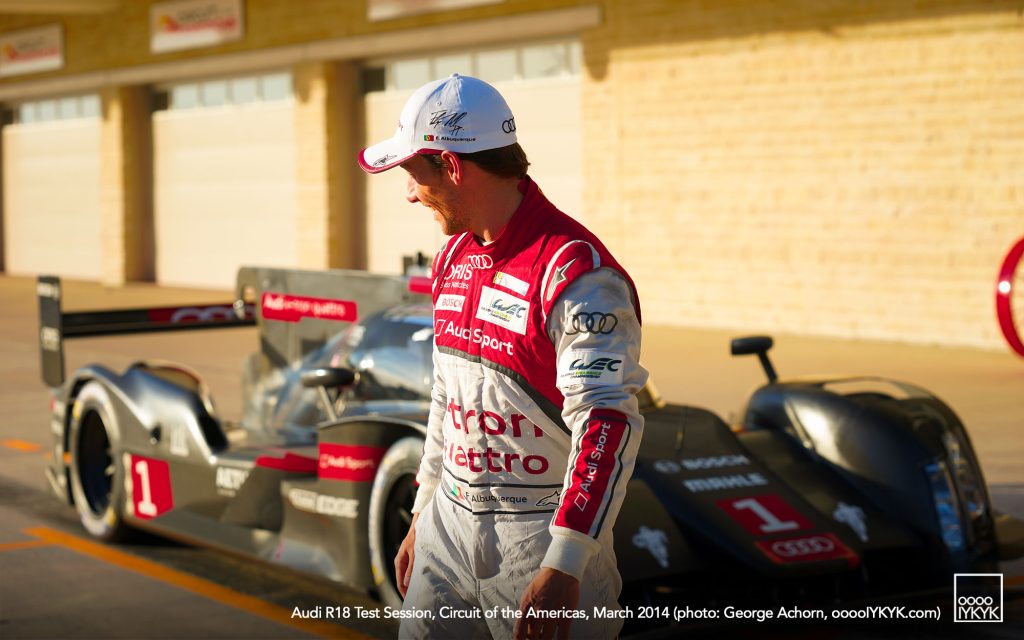
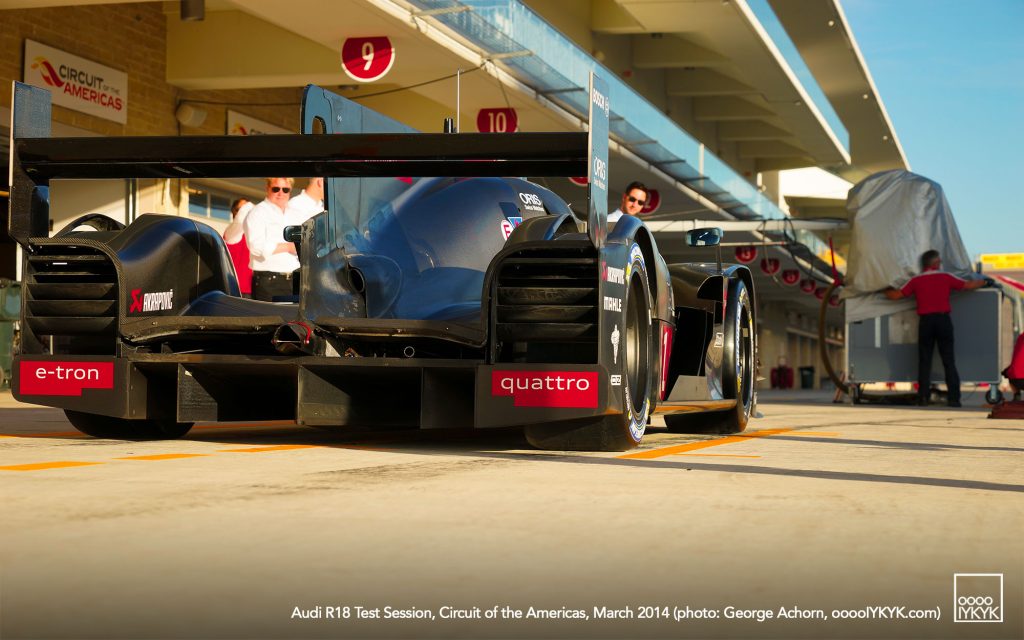
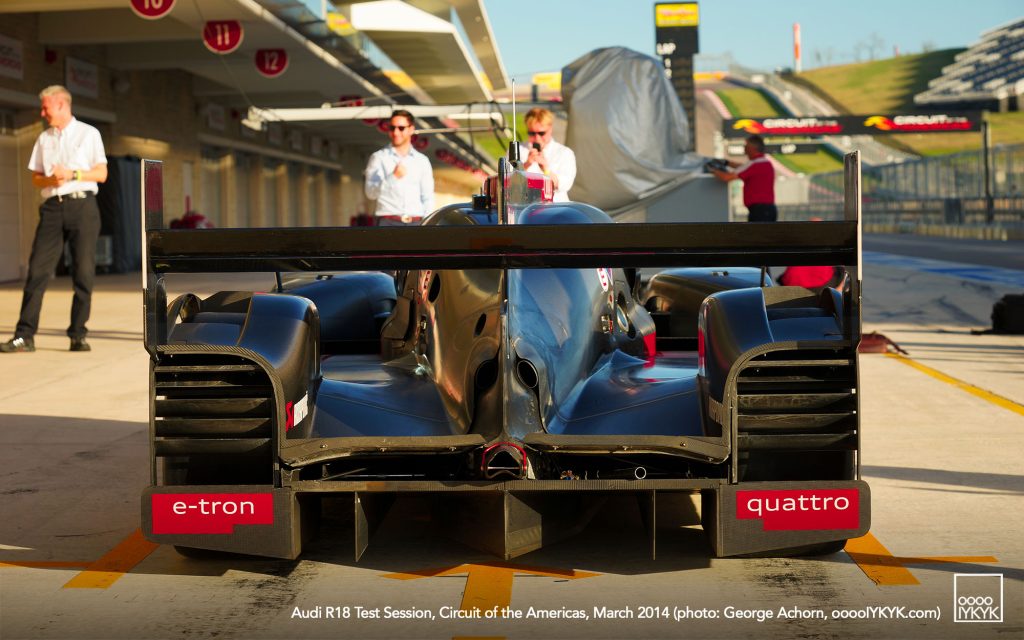
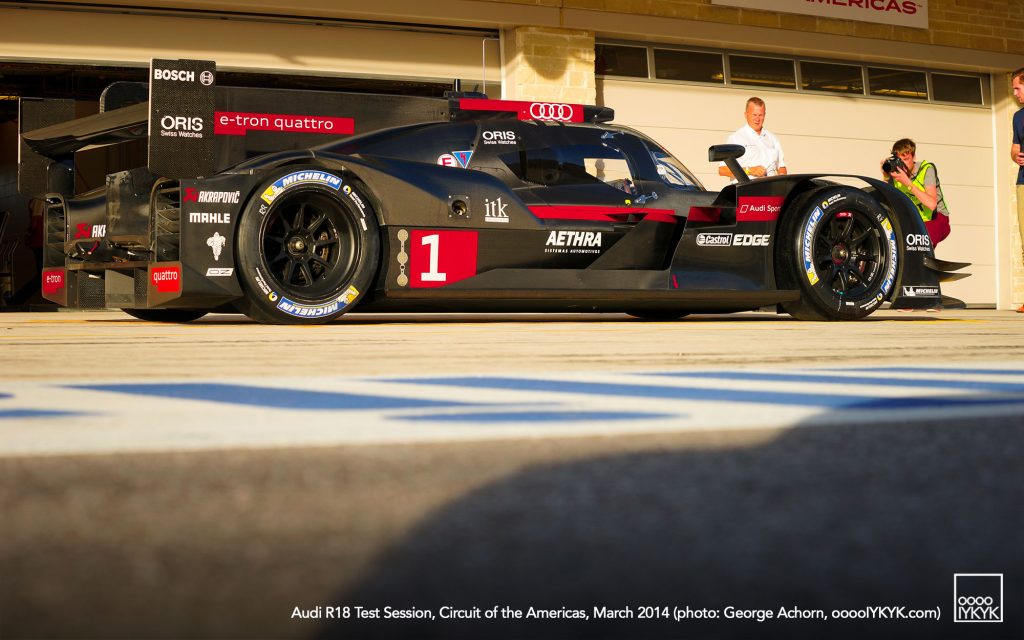
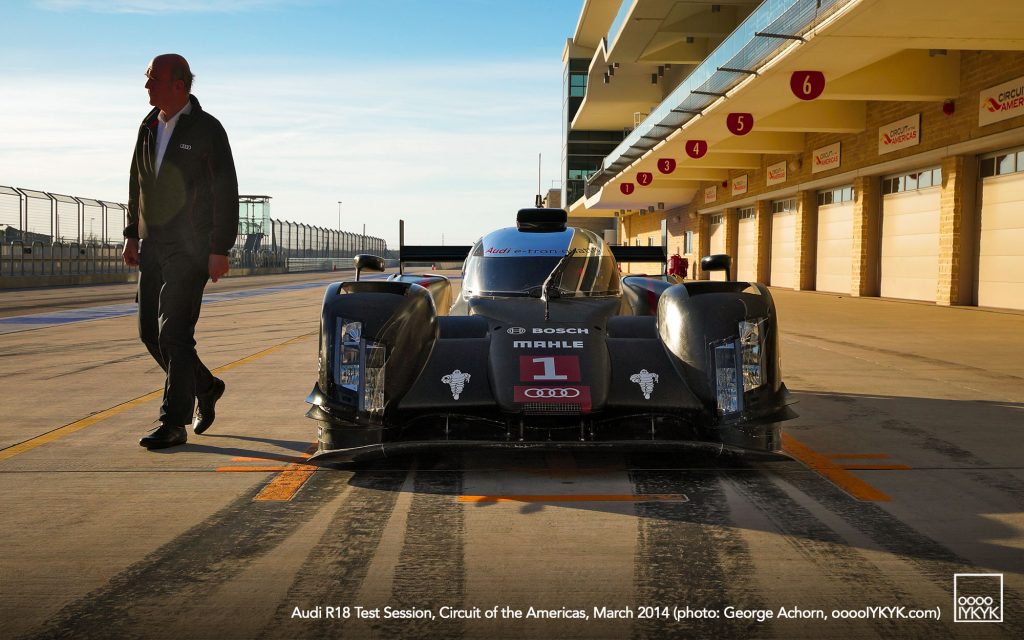
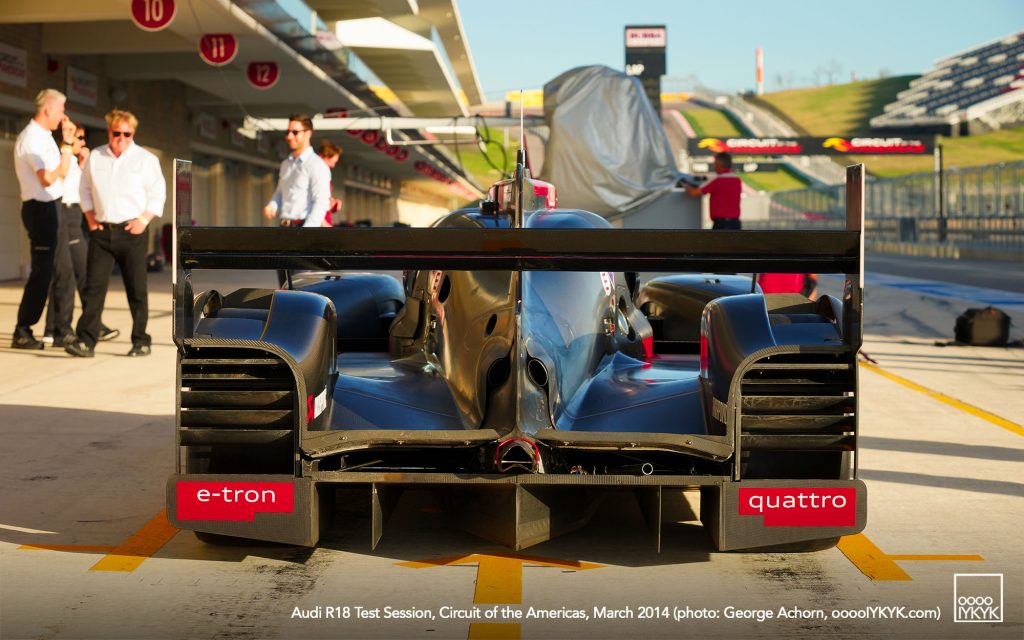
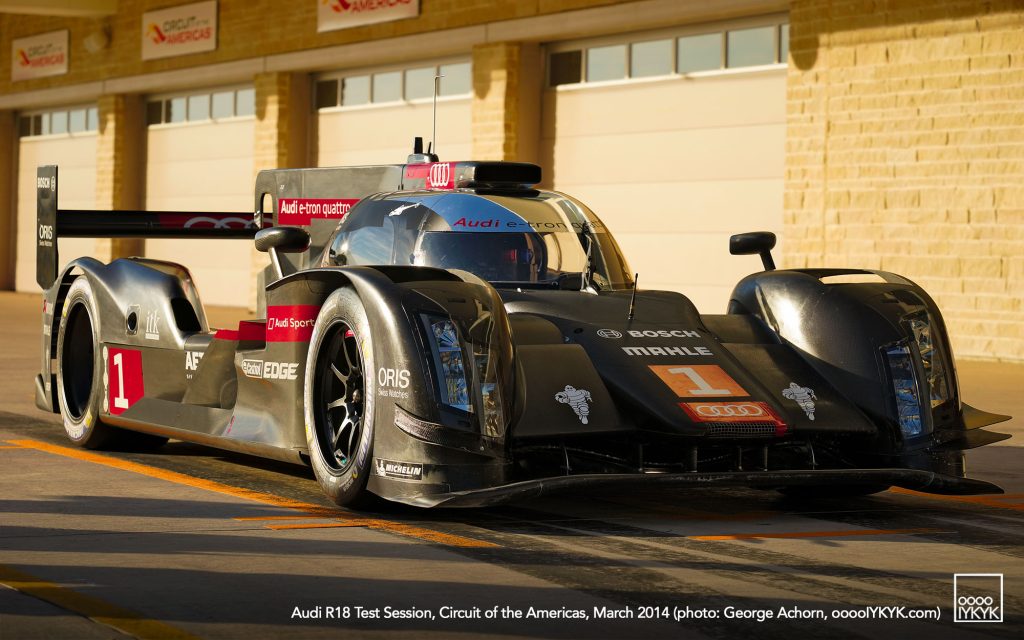
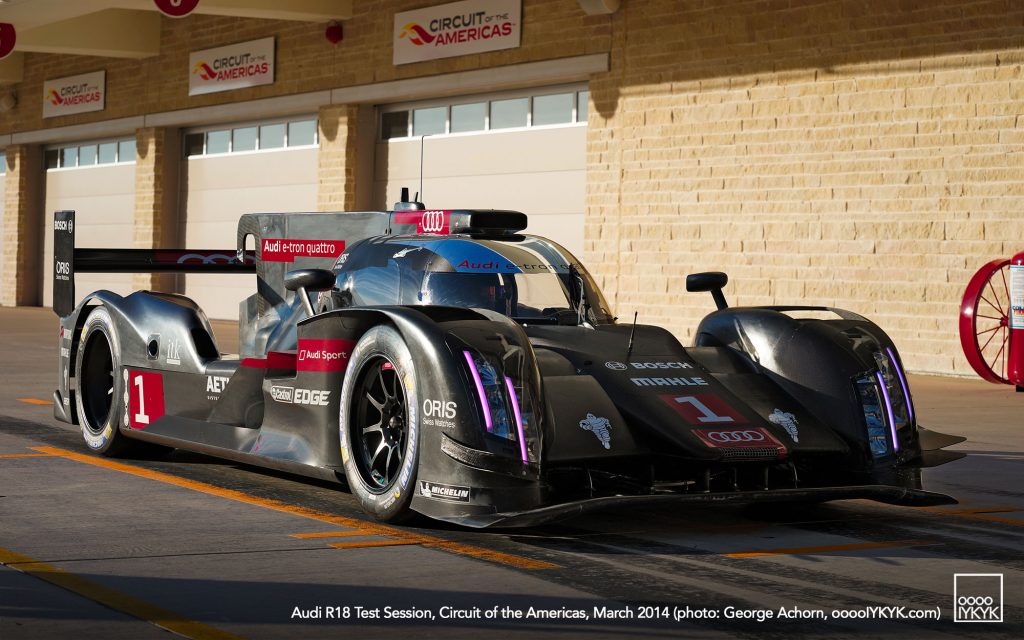
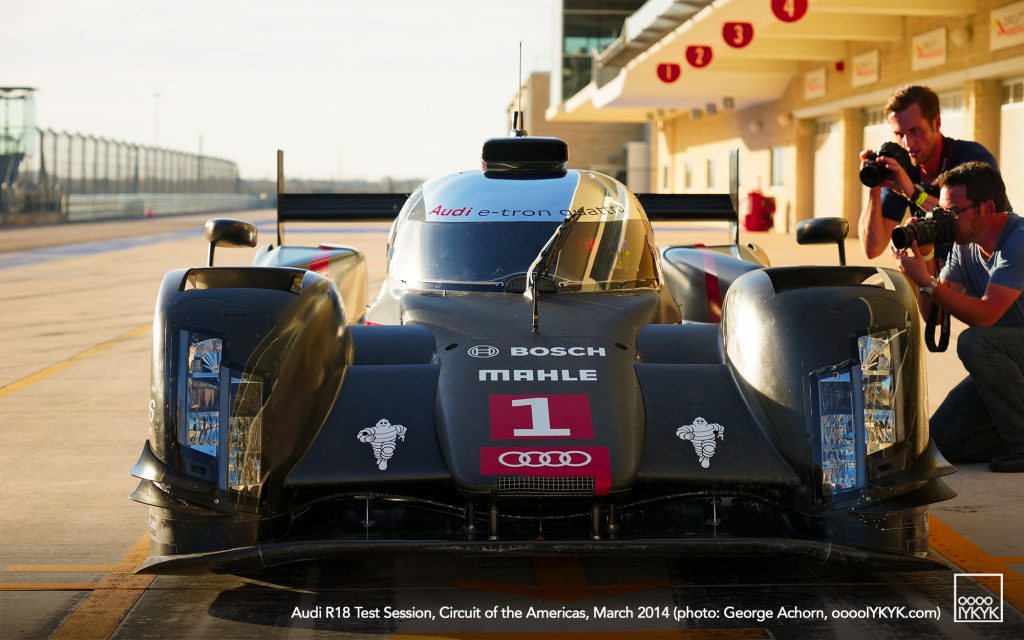
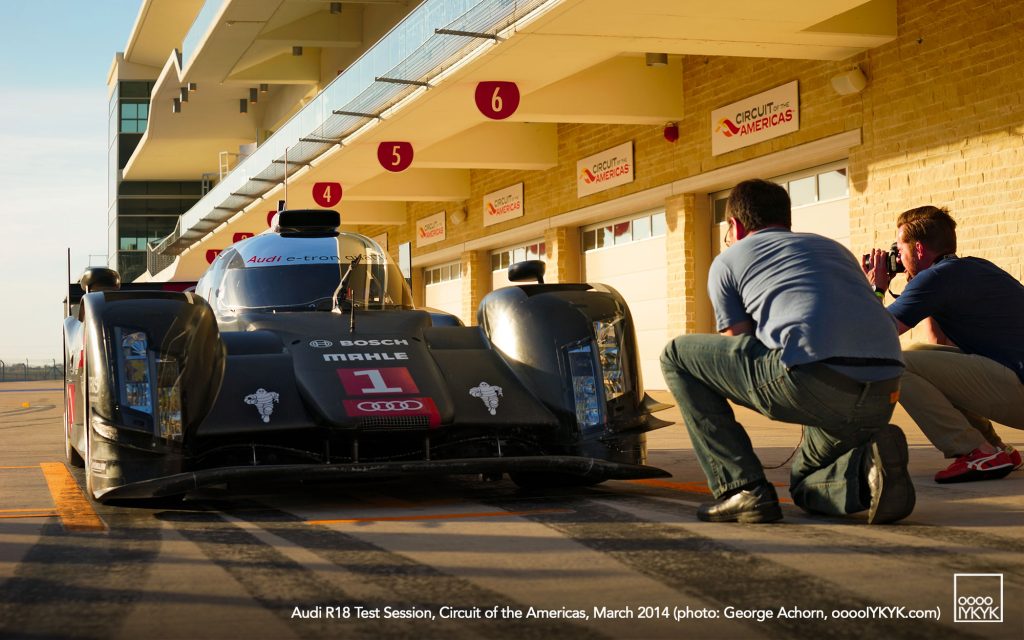
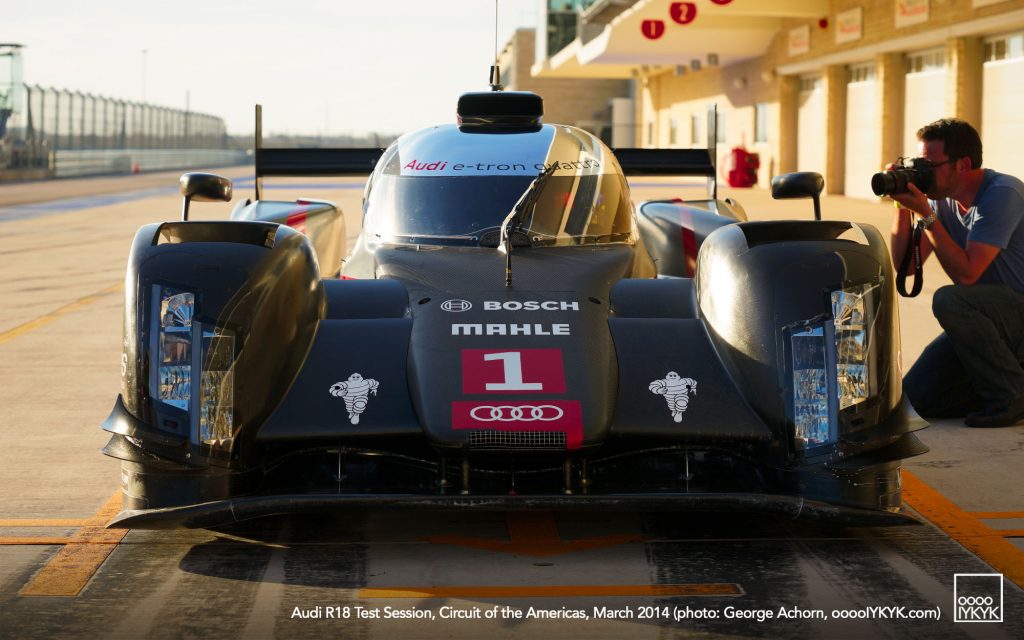
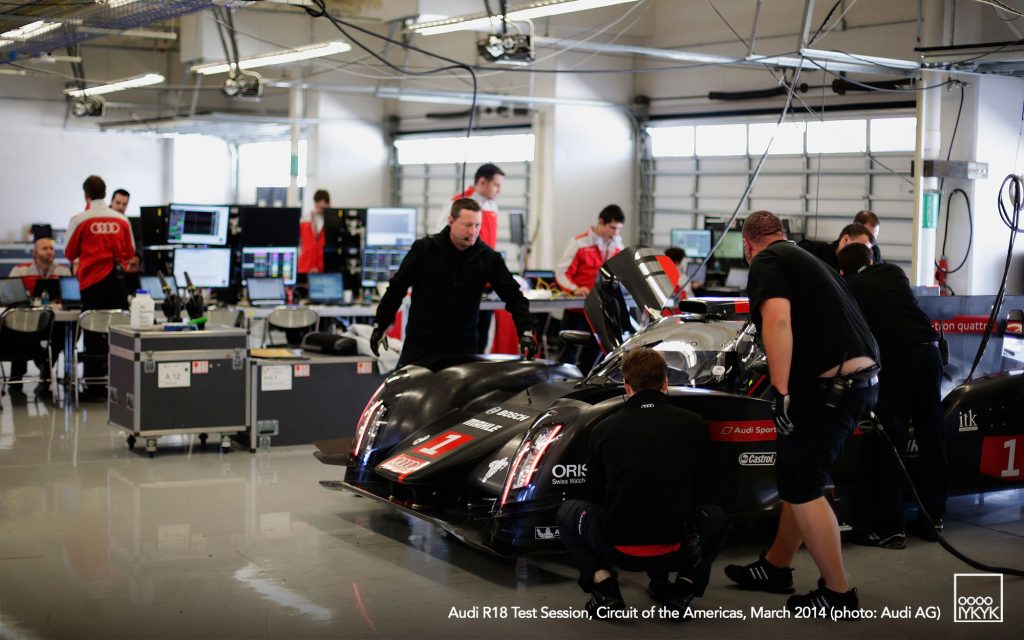
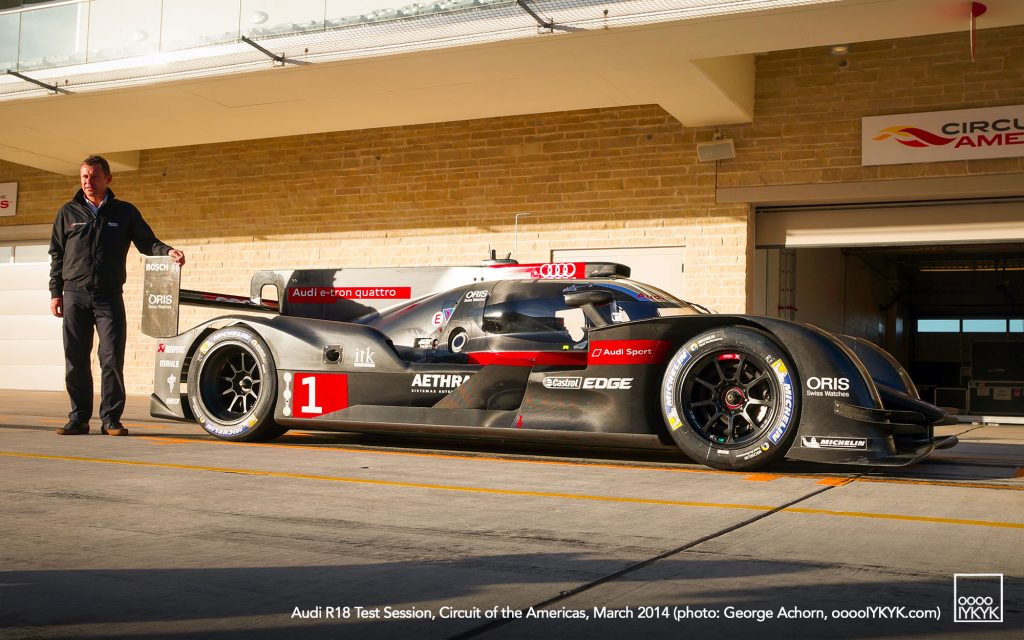
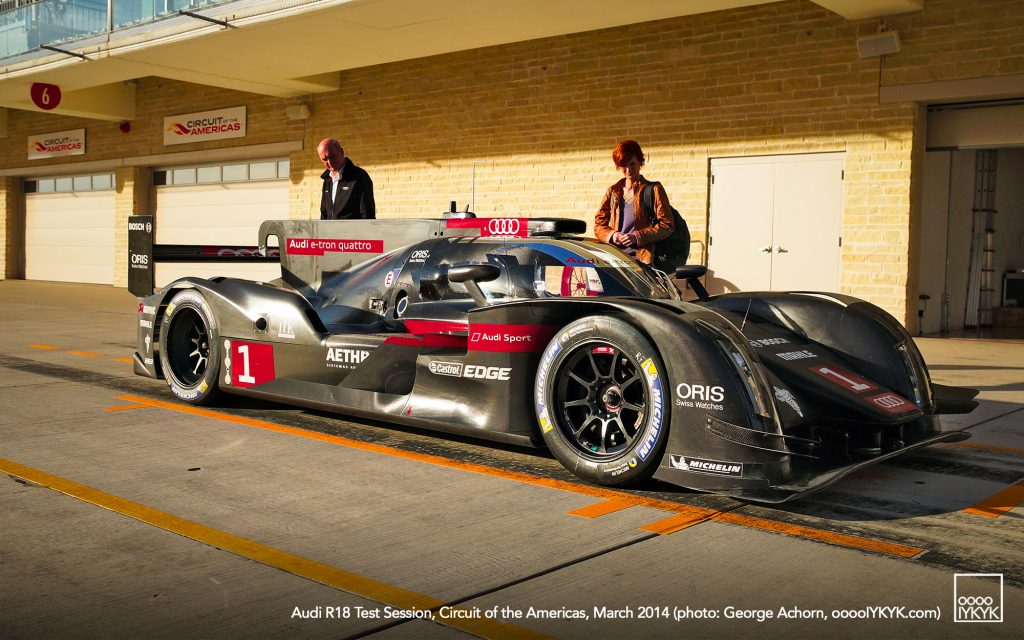
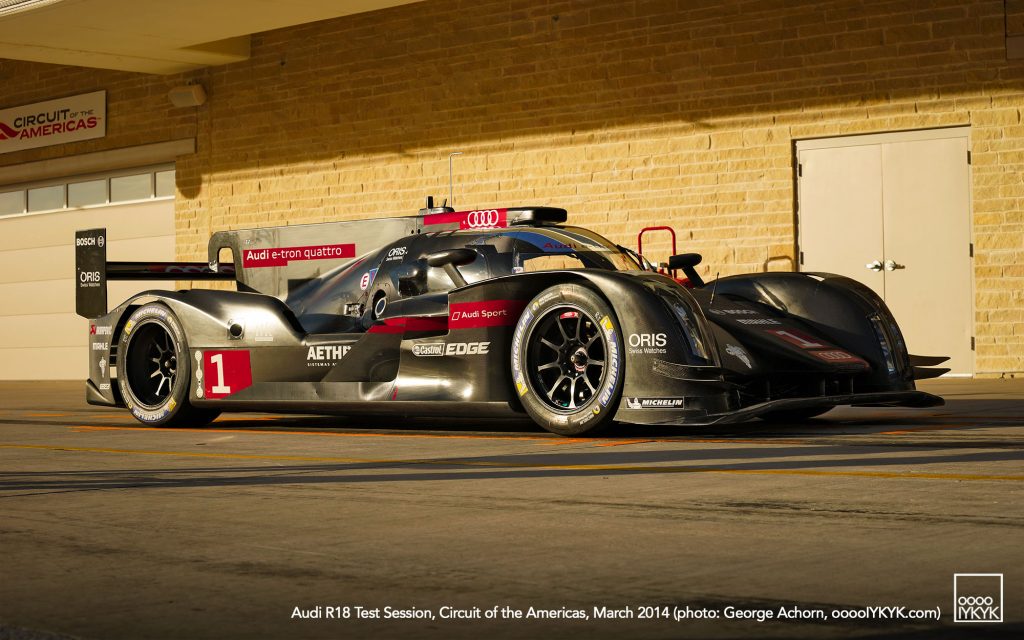
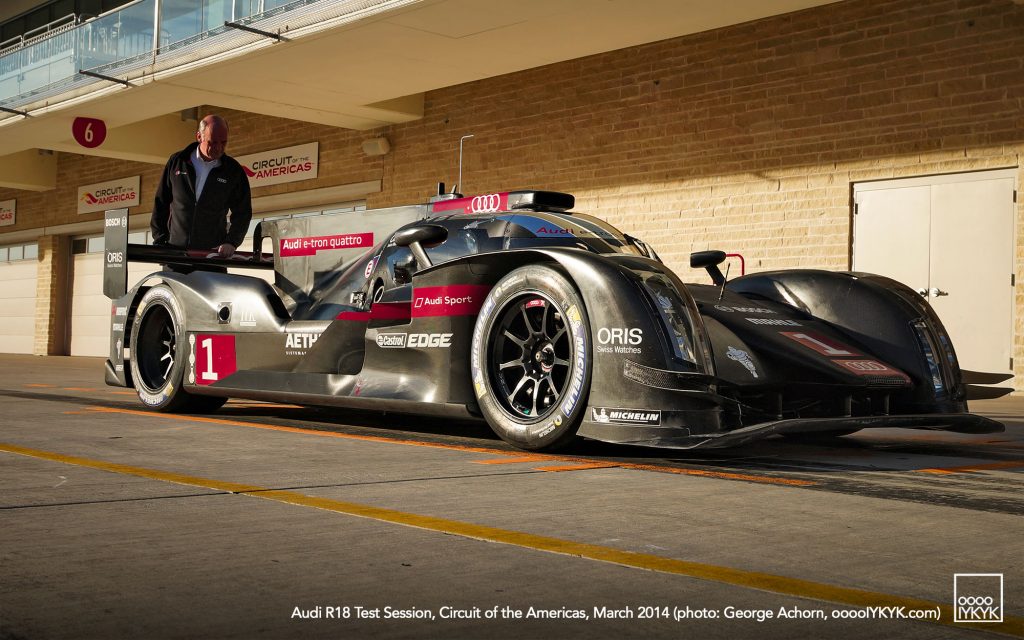
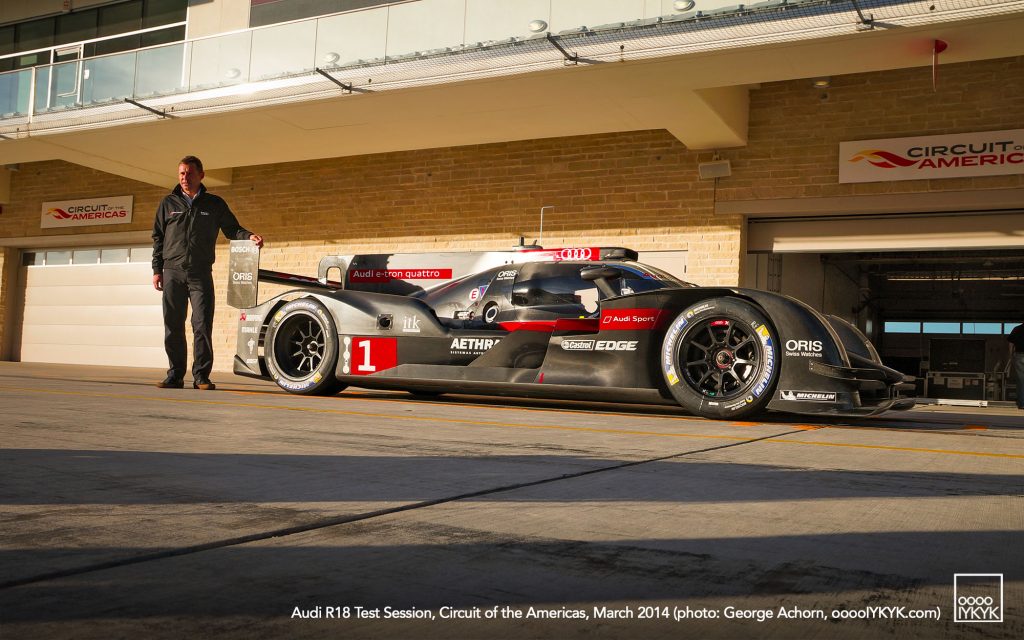
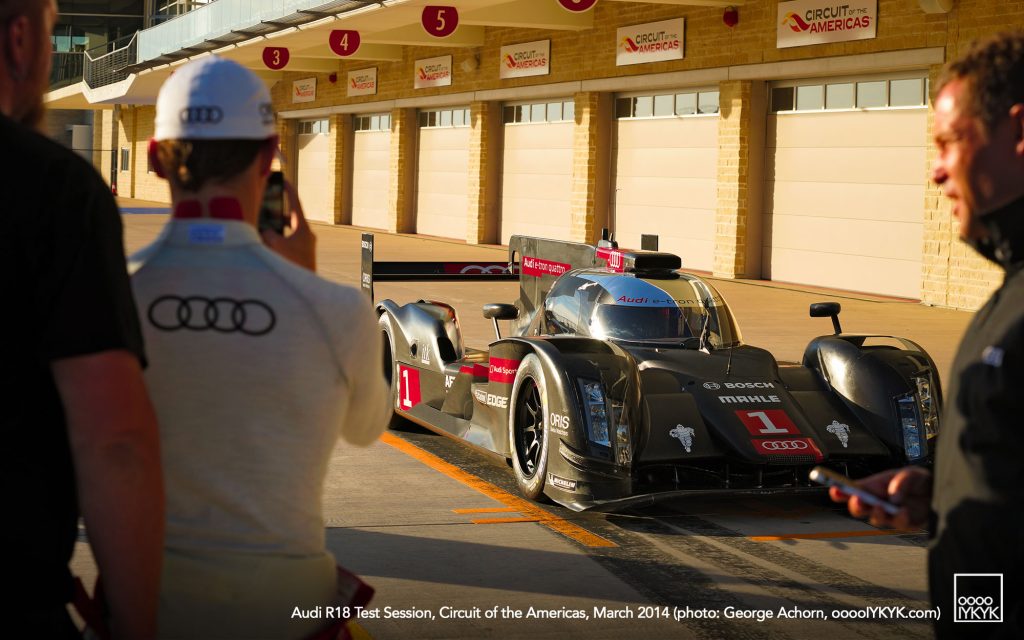
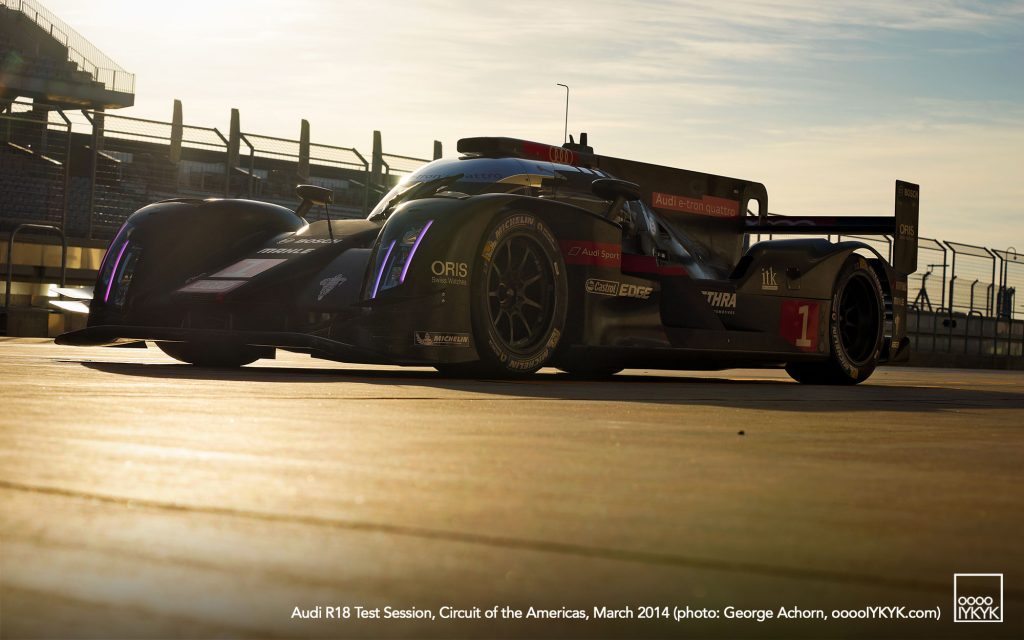
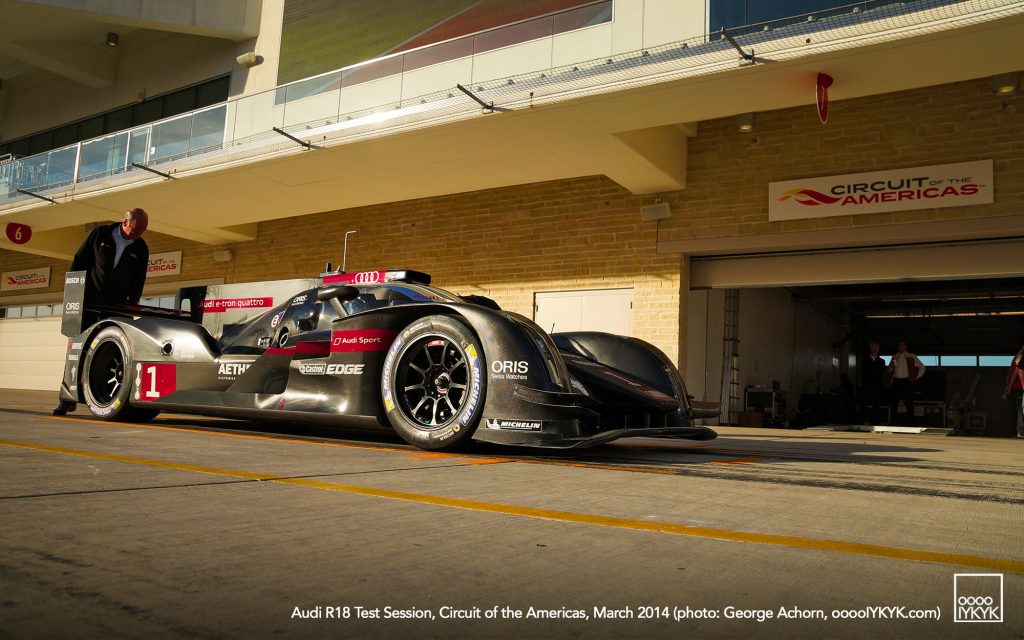
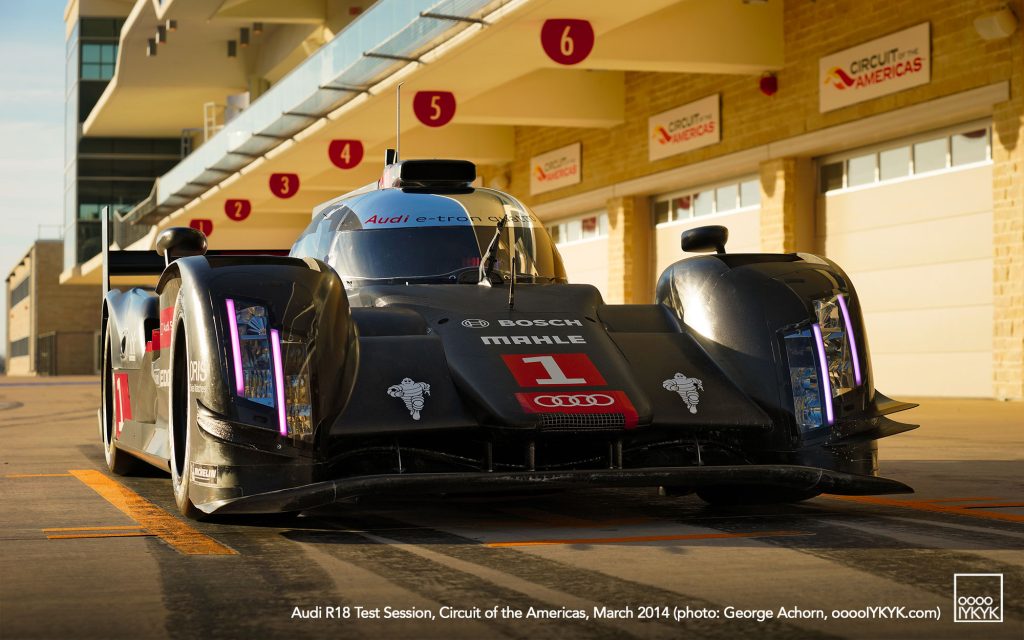
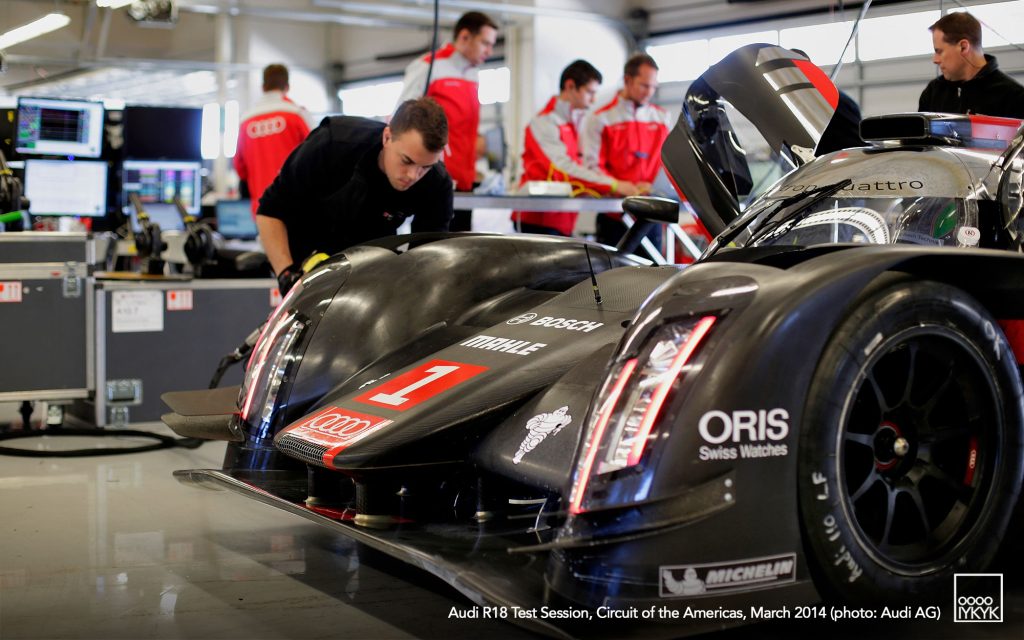
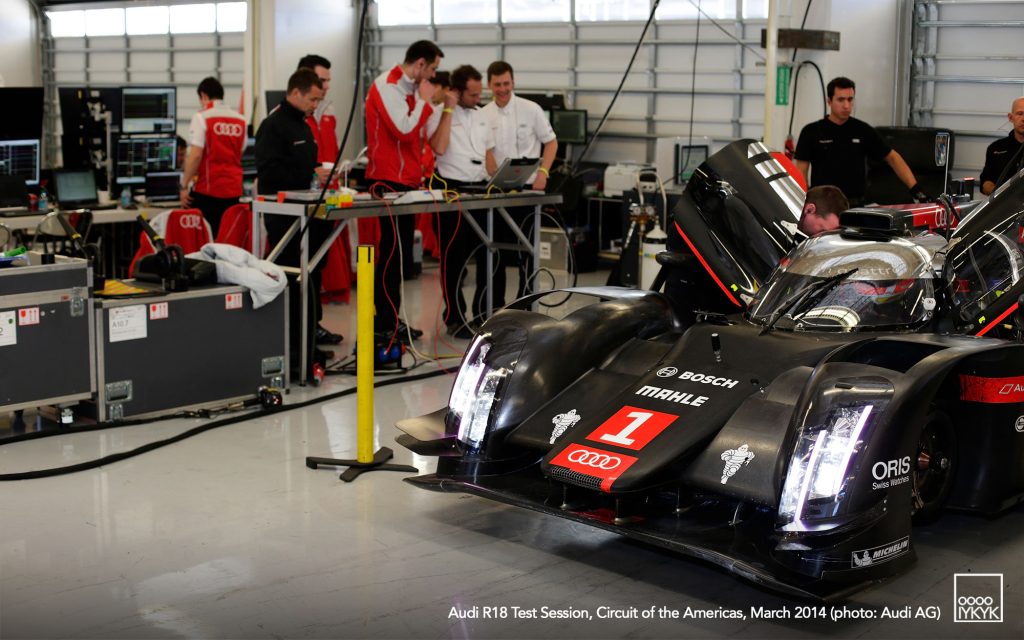
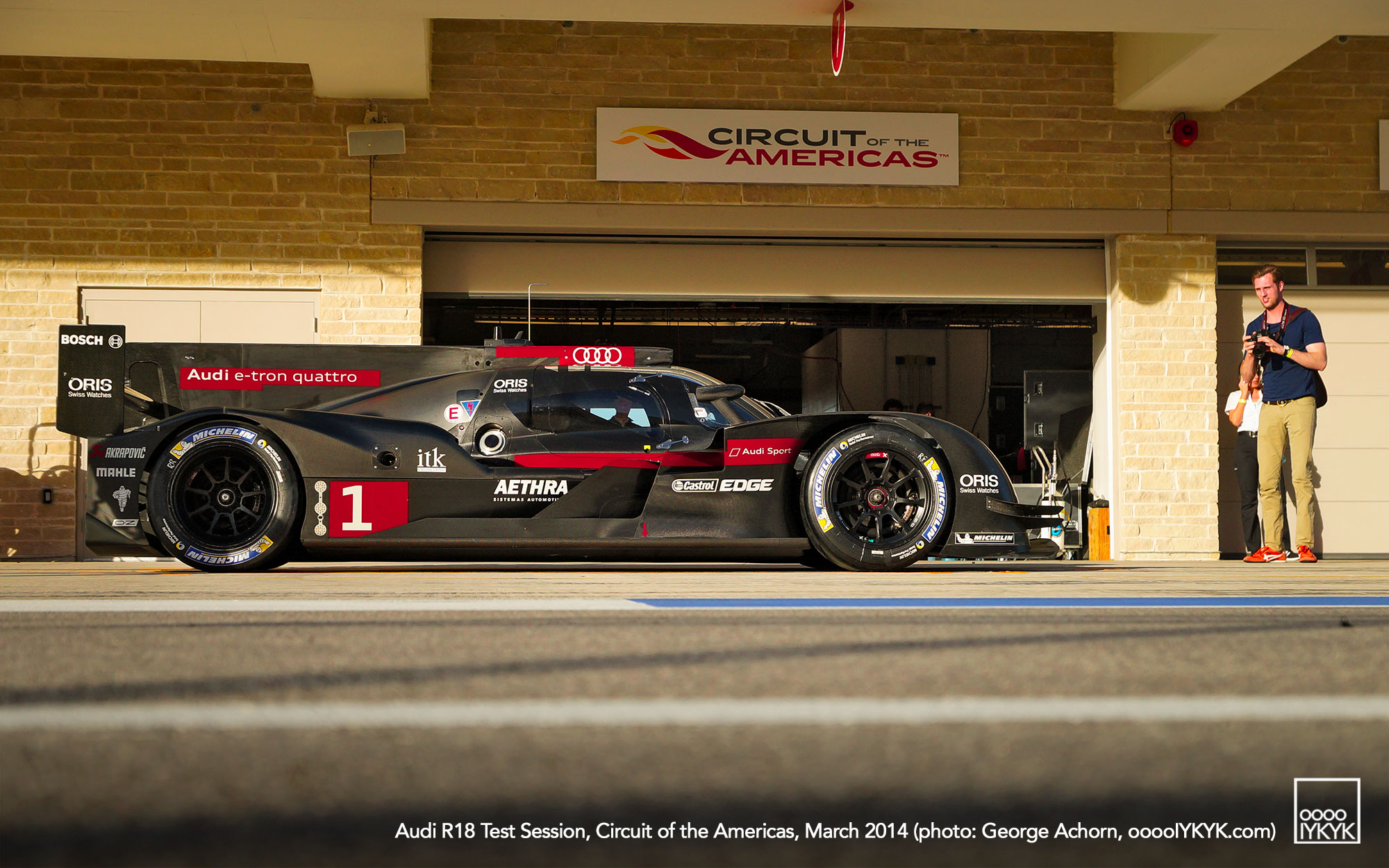
It was clear there was still work to do. As if on cue, the lone R18 test car lost power on an out lap and rolled to a stop by turn 3. It was towed back in to the pits by a course-owned pickup. About an hour went by and the car finally emerged for four quick laps before the end of the session. The team parked it outside the garage so those of us there could get in for a closer look. It seemed this was the first photo opportunity for everyone involved because mechanics, drivers and journalists alike all scrambled for their DSLR or mobile phones. Fresh out of the car, Filipe Albuquerque looked a bit confused then asked if it was okay to grab a few shots on his iPhone before catching some hell from a PR person about how he was as much of a journalist on Instagram as he was a racing driver.
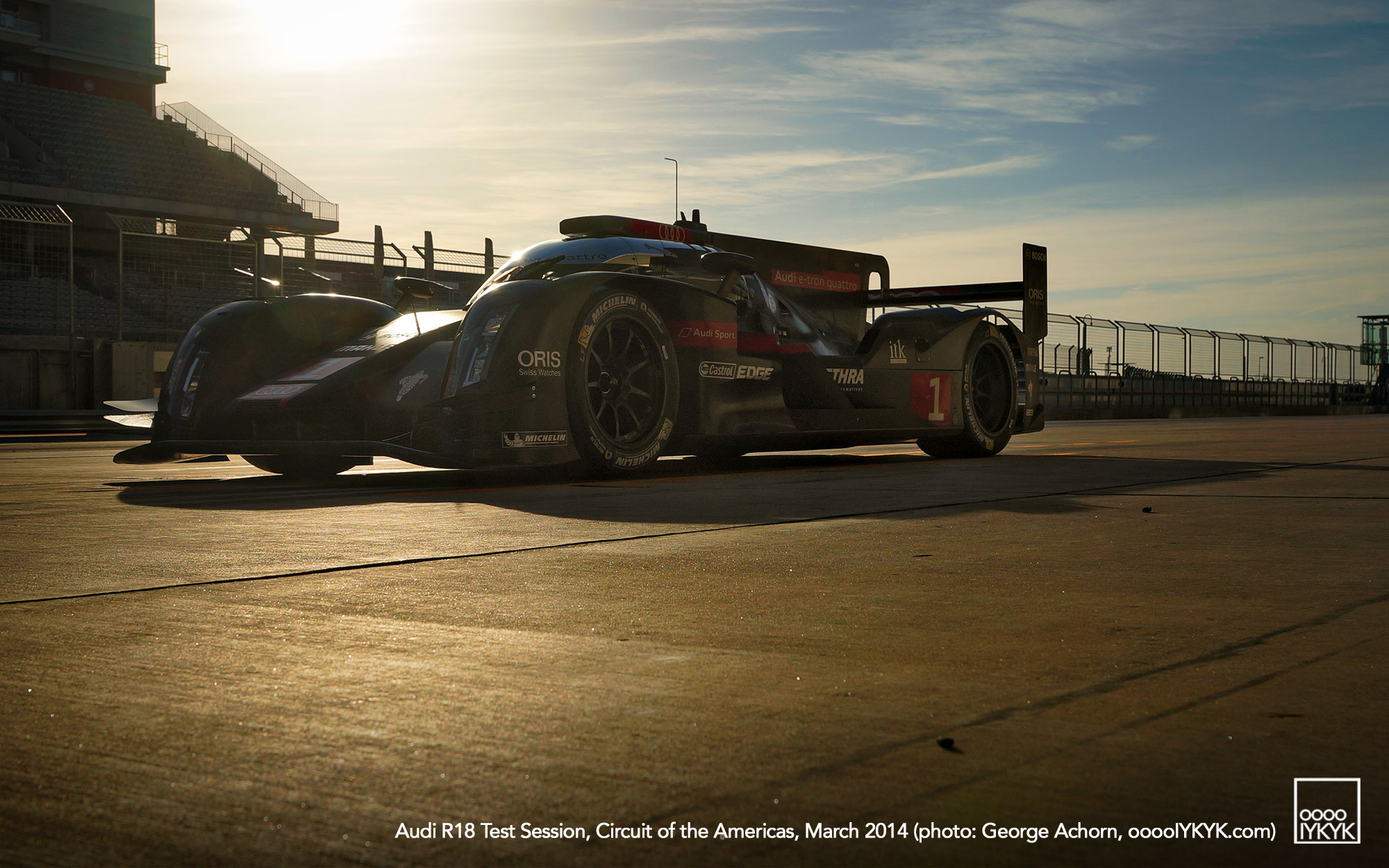
How times have changed – drivers, team members and even teams have now become content creators themselves. In that moment, Filipe just smiled and laughed. He wasn’t fazed and he grabbed a few shots including a gratuitous selfie.
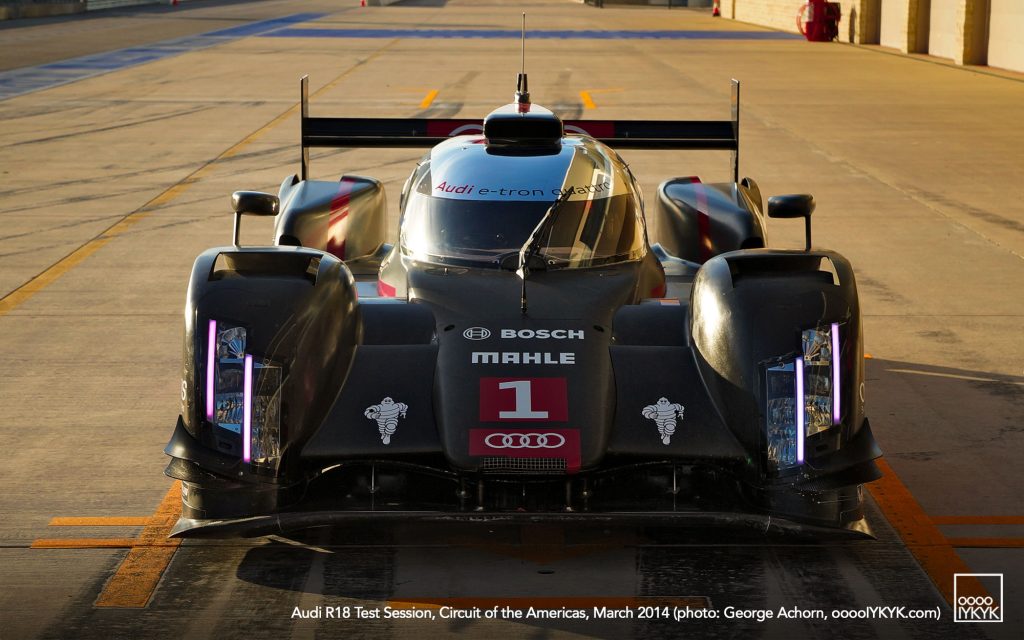
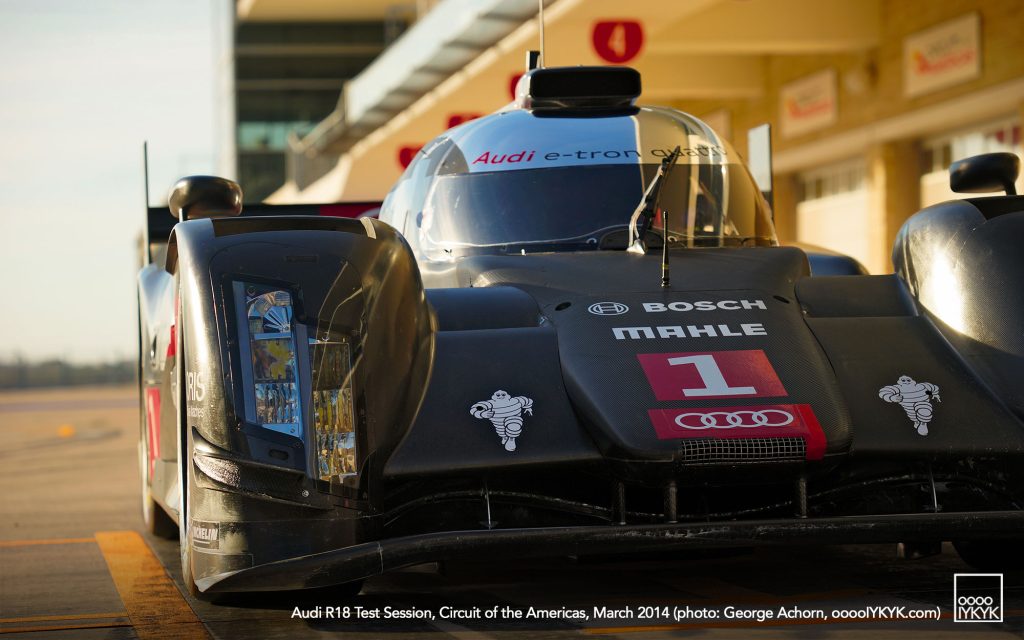
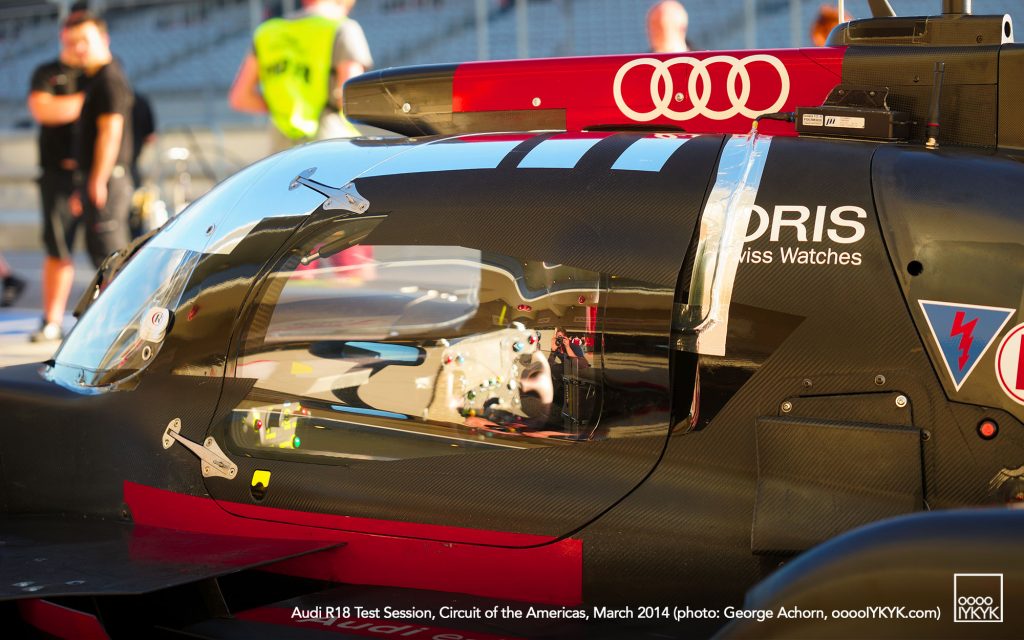
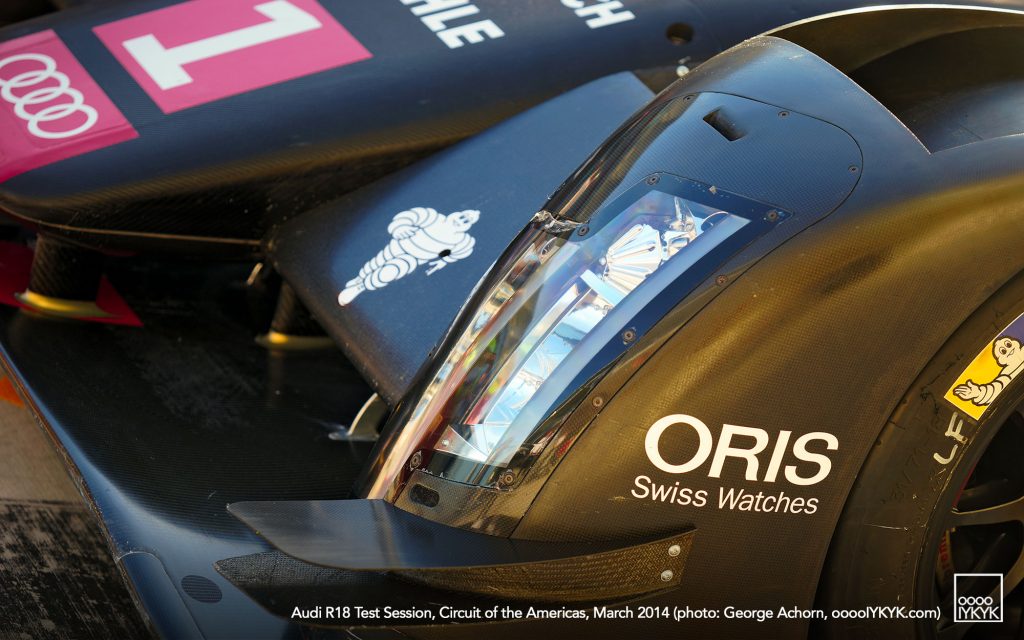
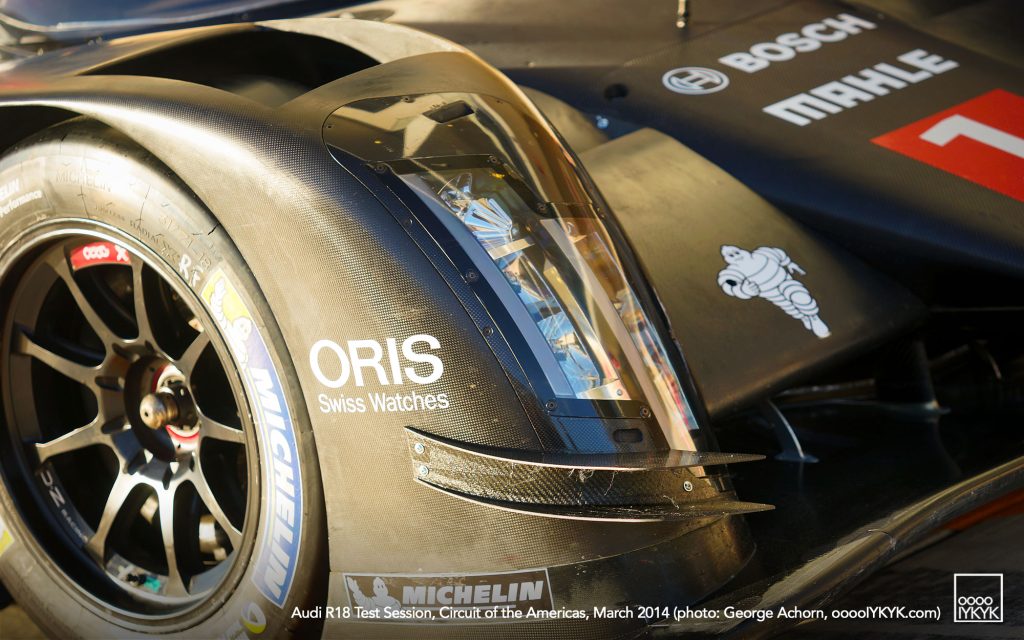
In the soft golden evening sun of Austin Texas, more unseen details of that menacing new R18 came into view just as the contrast between racing as we knew it prior and the future of motorsport were moving closer together. It seemed that Audi R18 e-tron quattro RP4 was quickly coming into focus in more ways than one.
Now, twelve years on and a decade since Audi would ultimately pull out of Le Mans, Audi is back at COTA again with a very different sort of hybrid. Today’s R26 F1 car is very different than that 2014-spec R18, but many of the lessons learned in that year are likely now seeds planted for harvesting in this Audi F1 era. Things come full circle, but who would have figured that circle would involve four rings and repainted stars in Texas?
PHOTO GALLERY