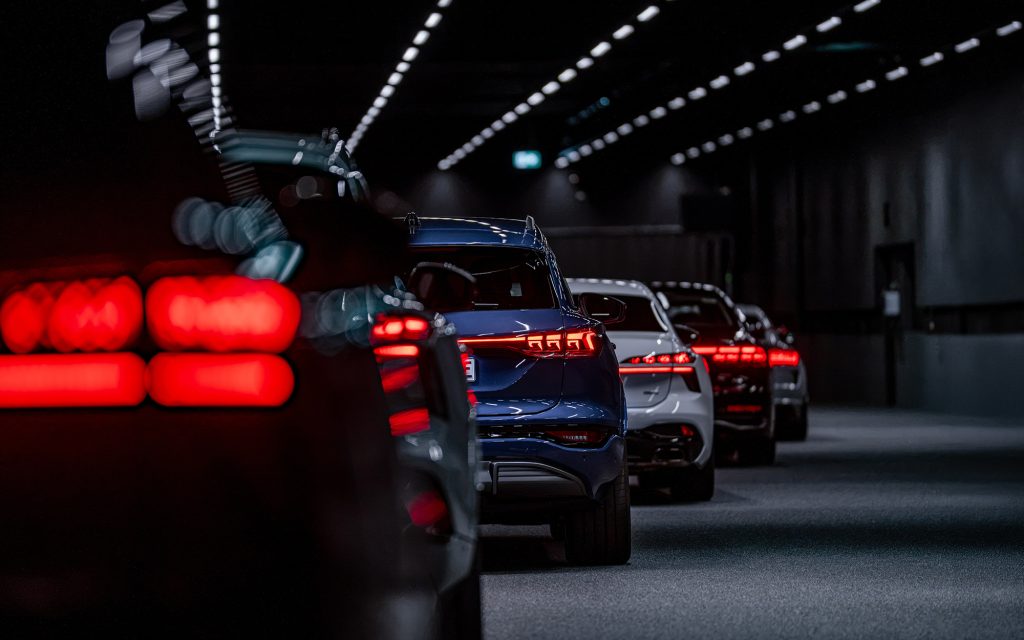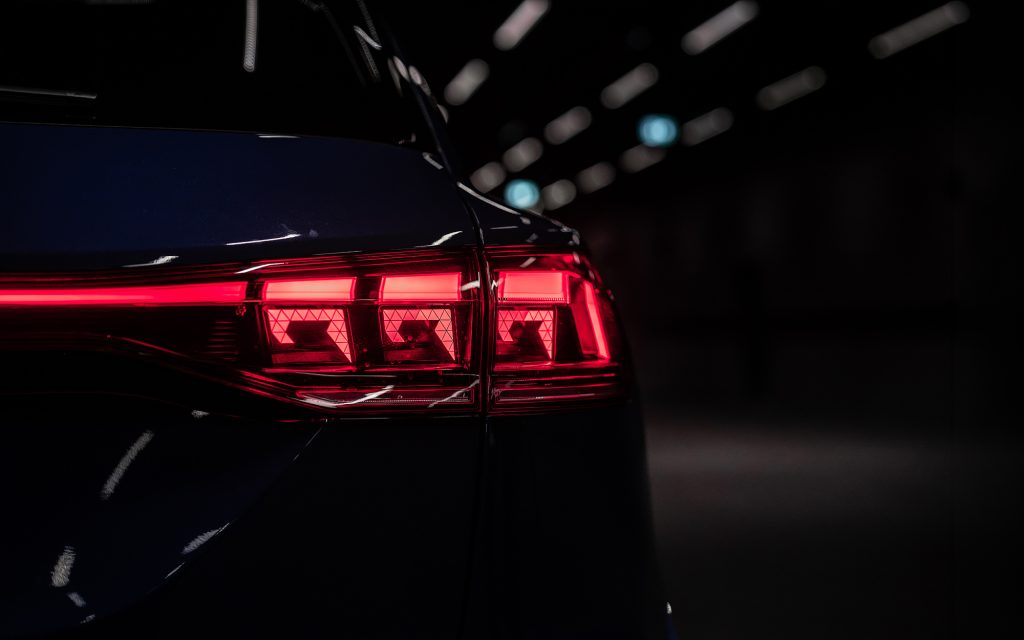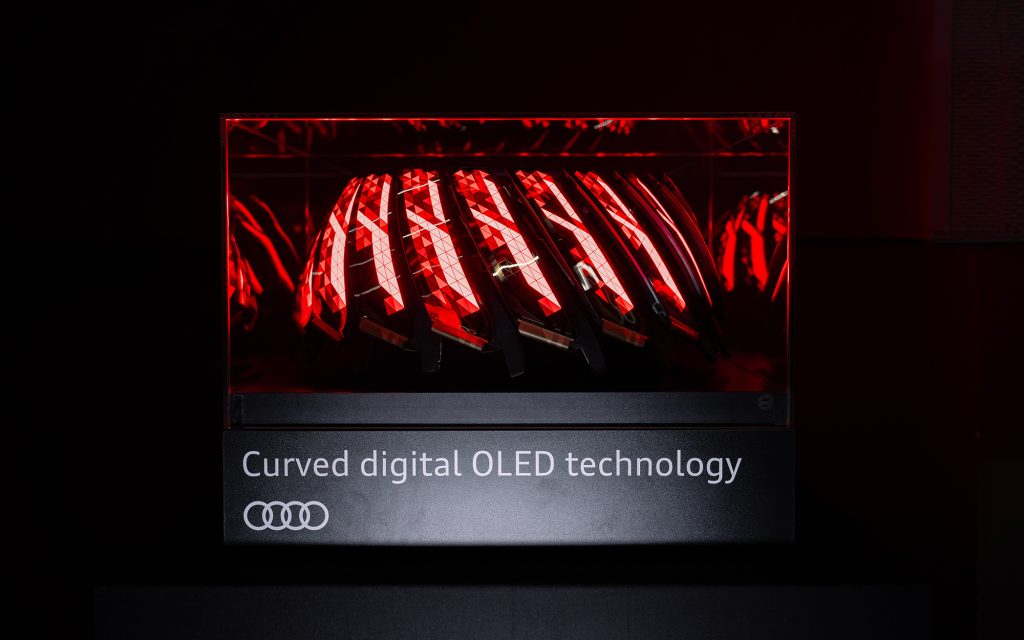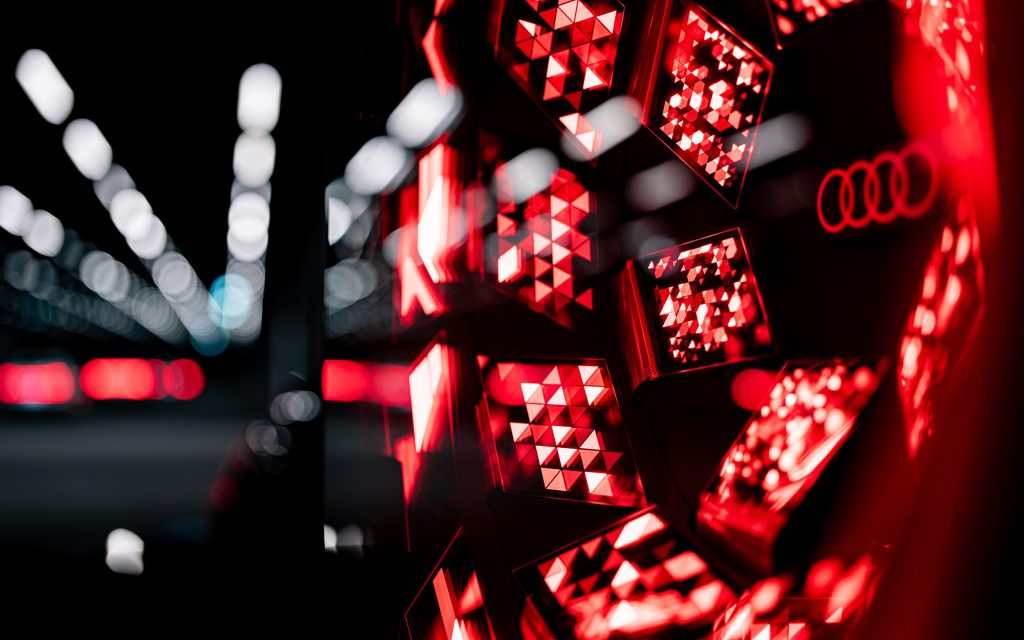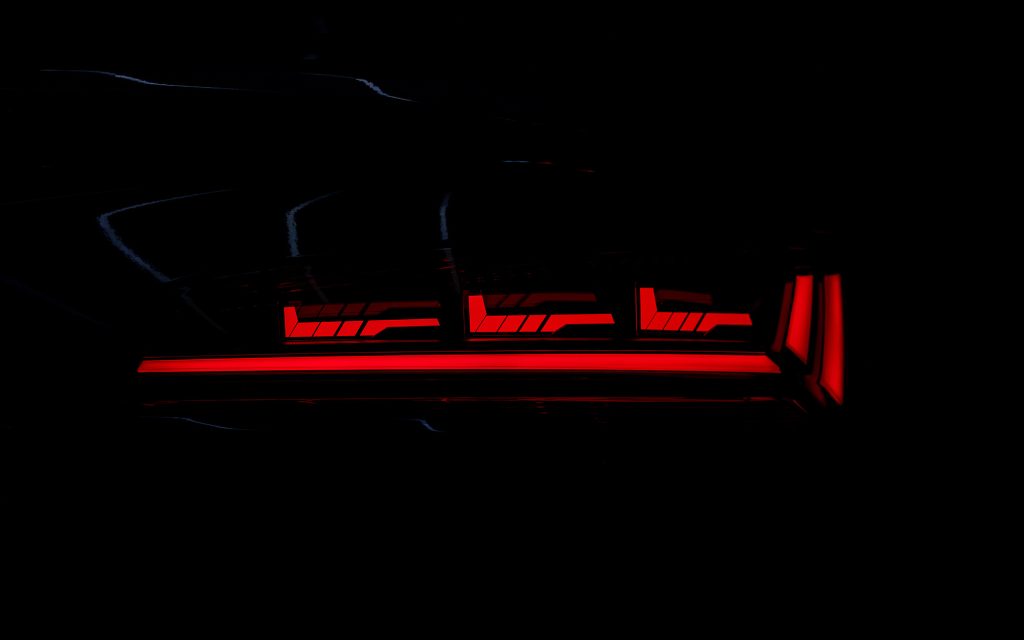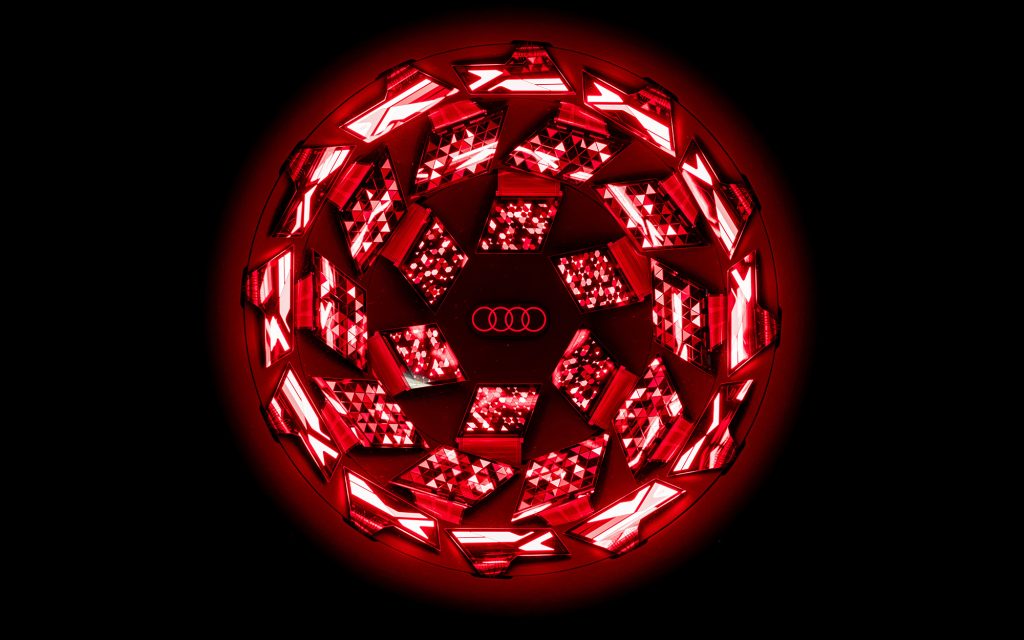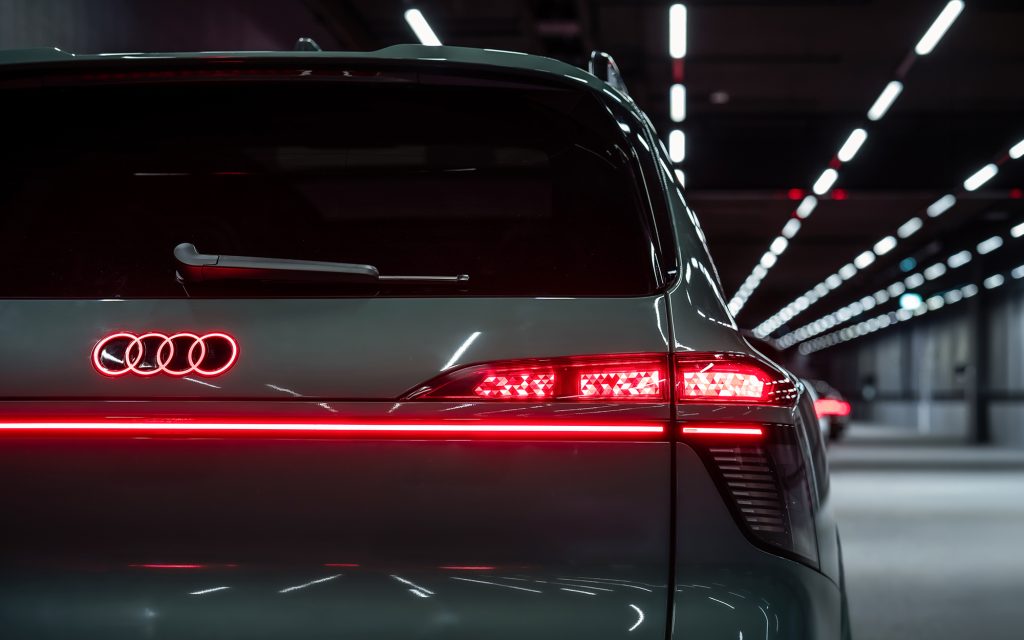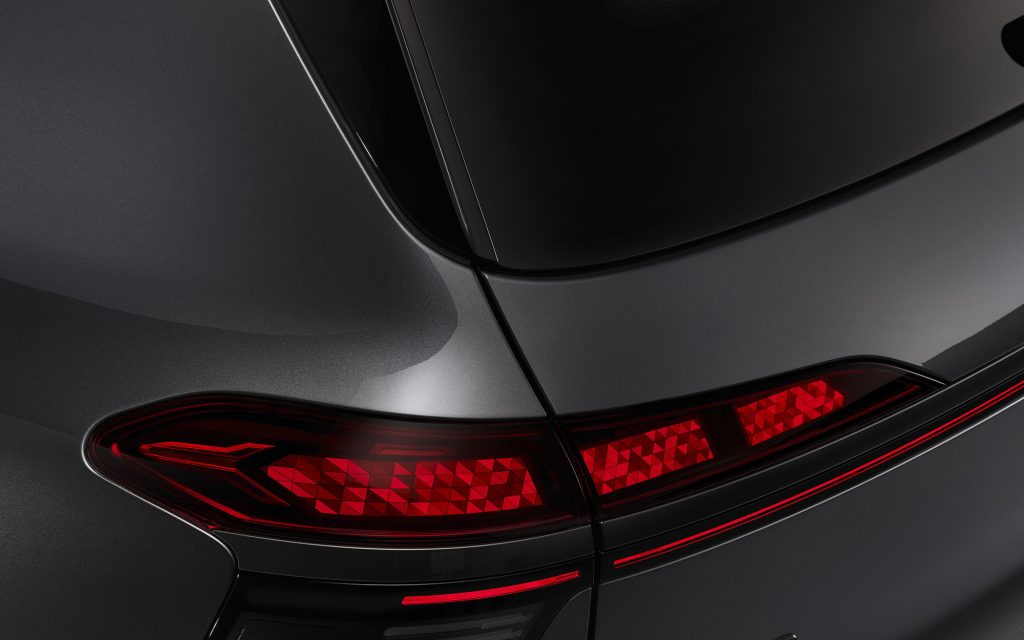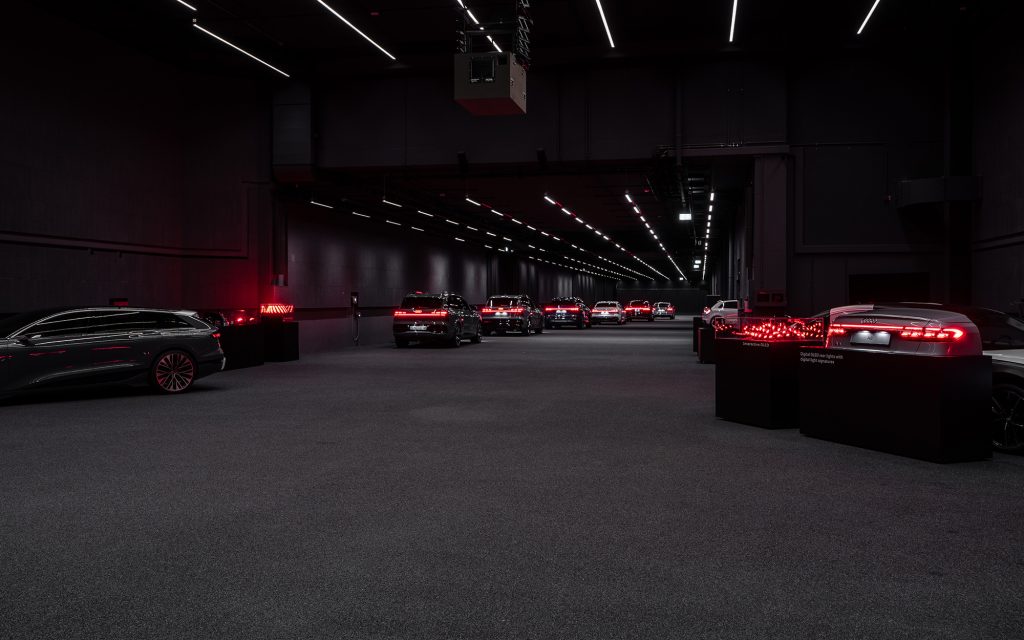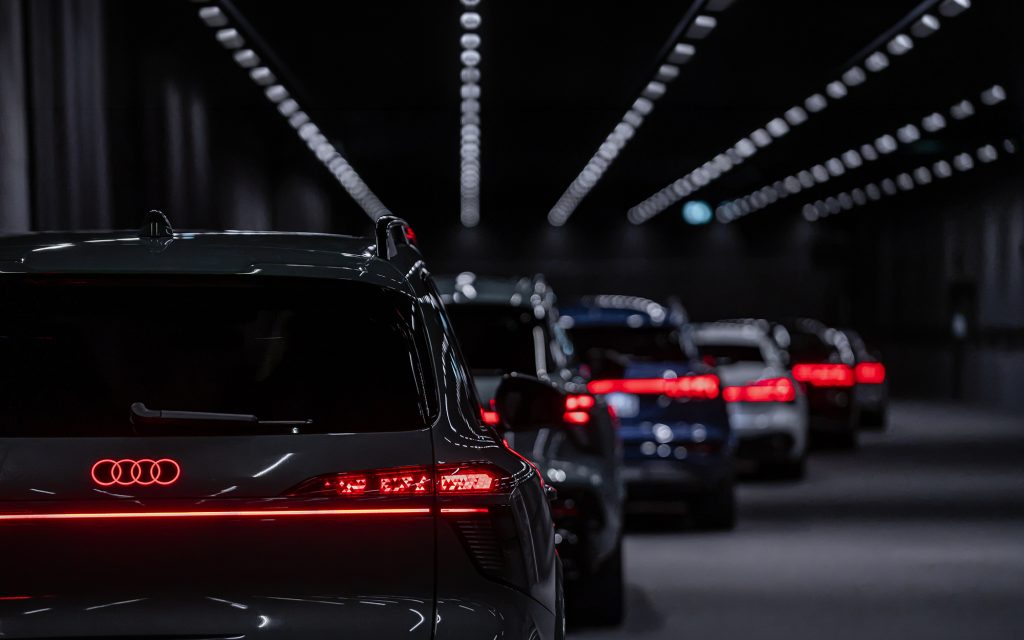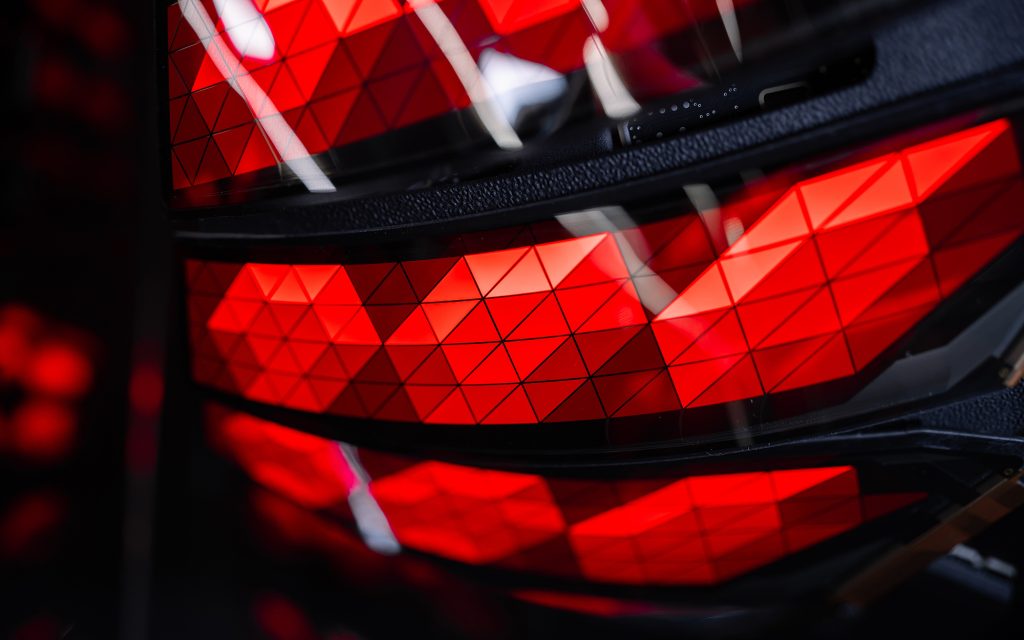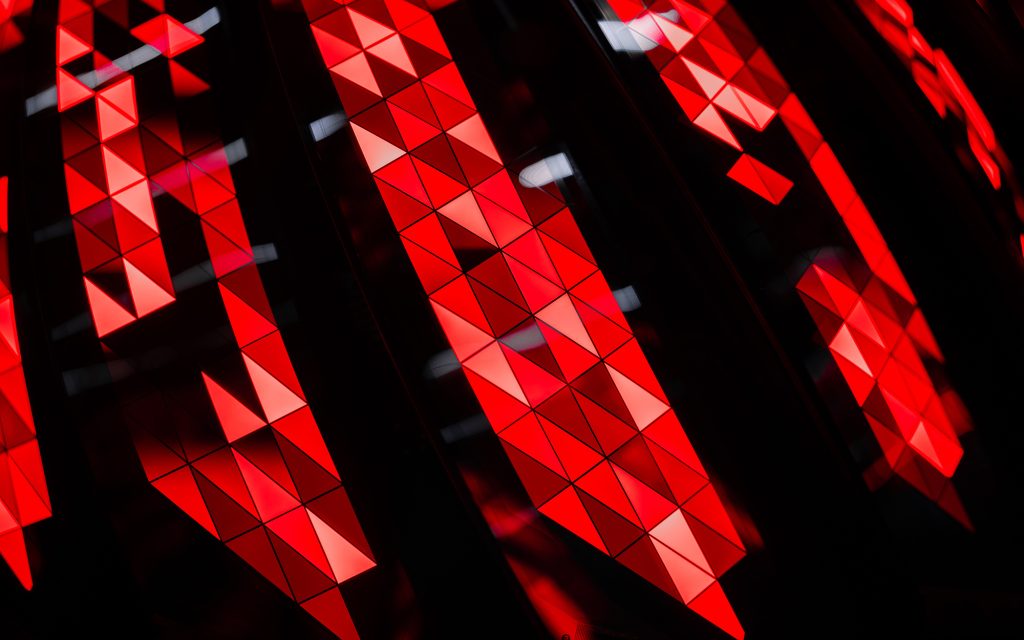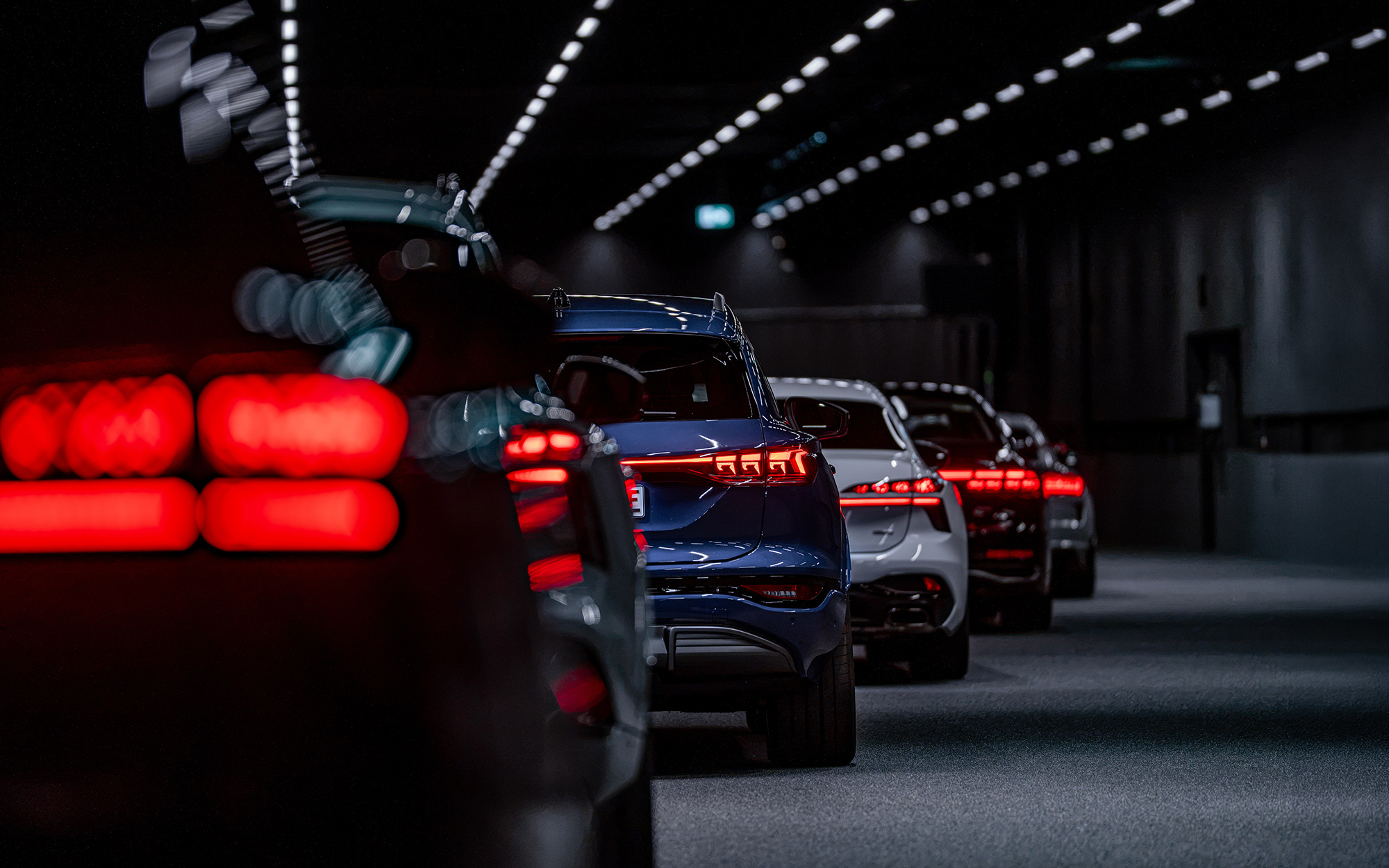

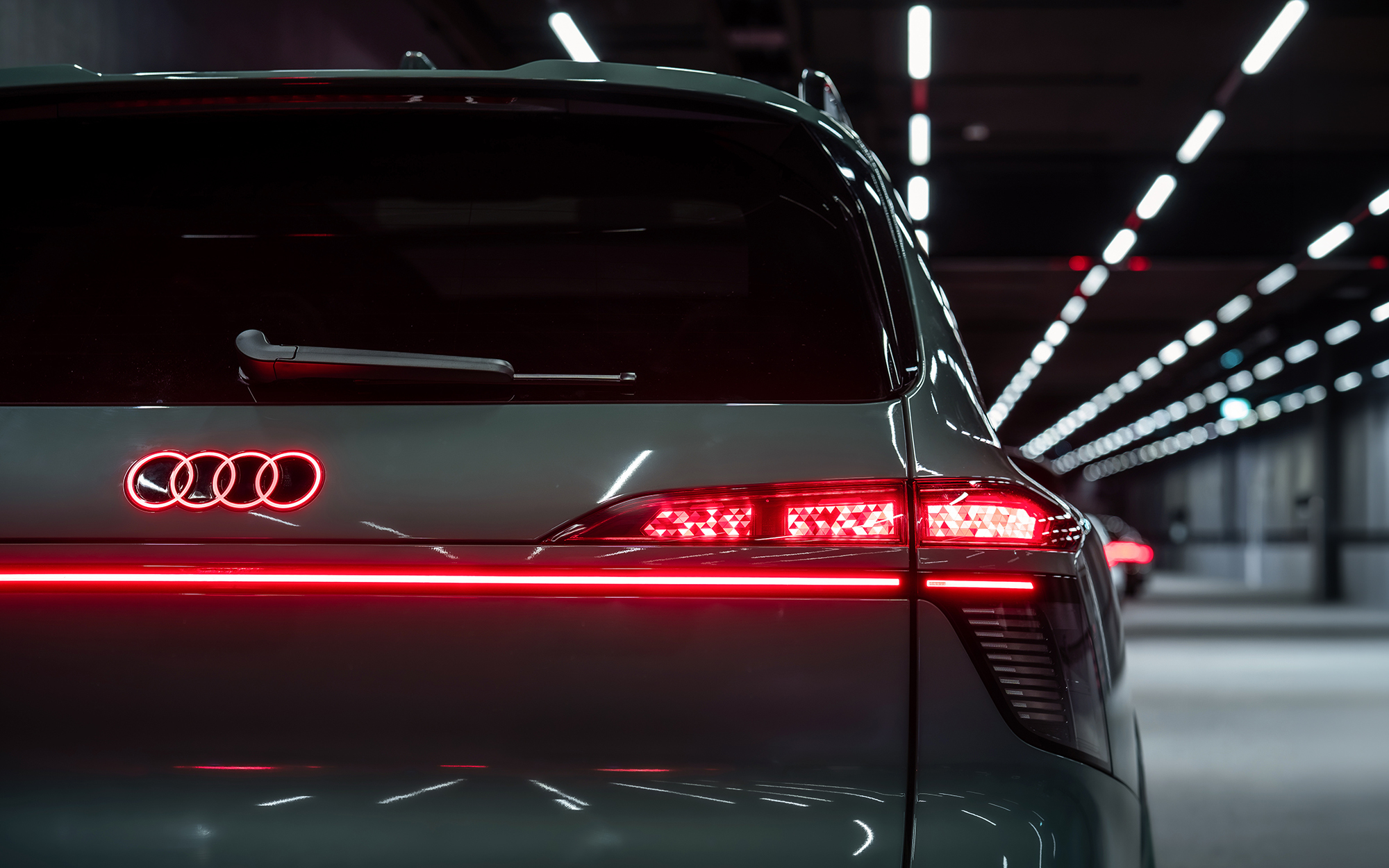
Audi’s new Q9 introduces what the company describes as an automotive production first: three-dimensionally curved digital OLED panels. The technology allows the illuminated surfaces themselves to follow the vehicle’s body contours, expanding the design possibilities for the rear lights while improving their visibility from the side.
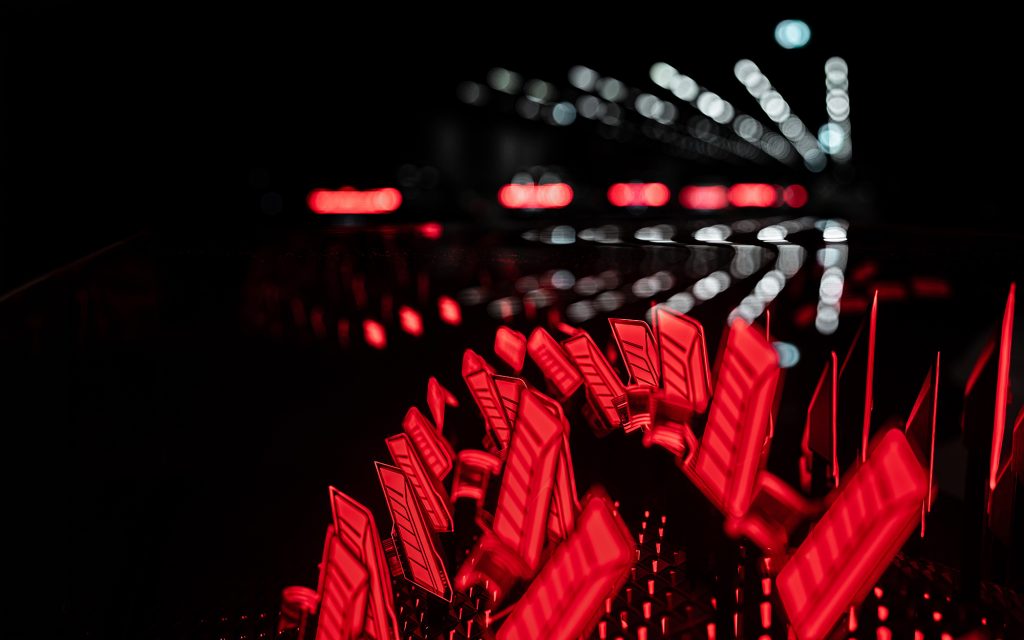
The curved panels arrive with Audi’s third generation of digital OLED rear lighting, which incorporates 512 individually controllable segments across six panels. Alongside configurable light signatures, the system can display warning symbols intended to communicate hazards to following traffic.
There is a separate development at the front, where digital Matrix LED headlights use tightly packed micro-LEDs to shape illumination and project guidance onto the road. Together, the systems show how Audi is developing exterior lighting into something that can convey more information than the familiar combination of position lights, brake lights and turn signals.
WHAT ACTUALLY CURVES?
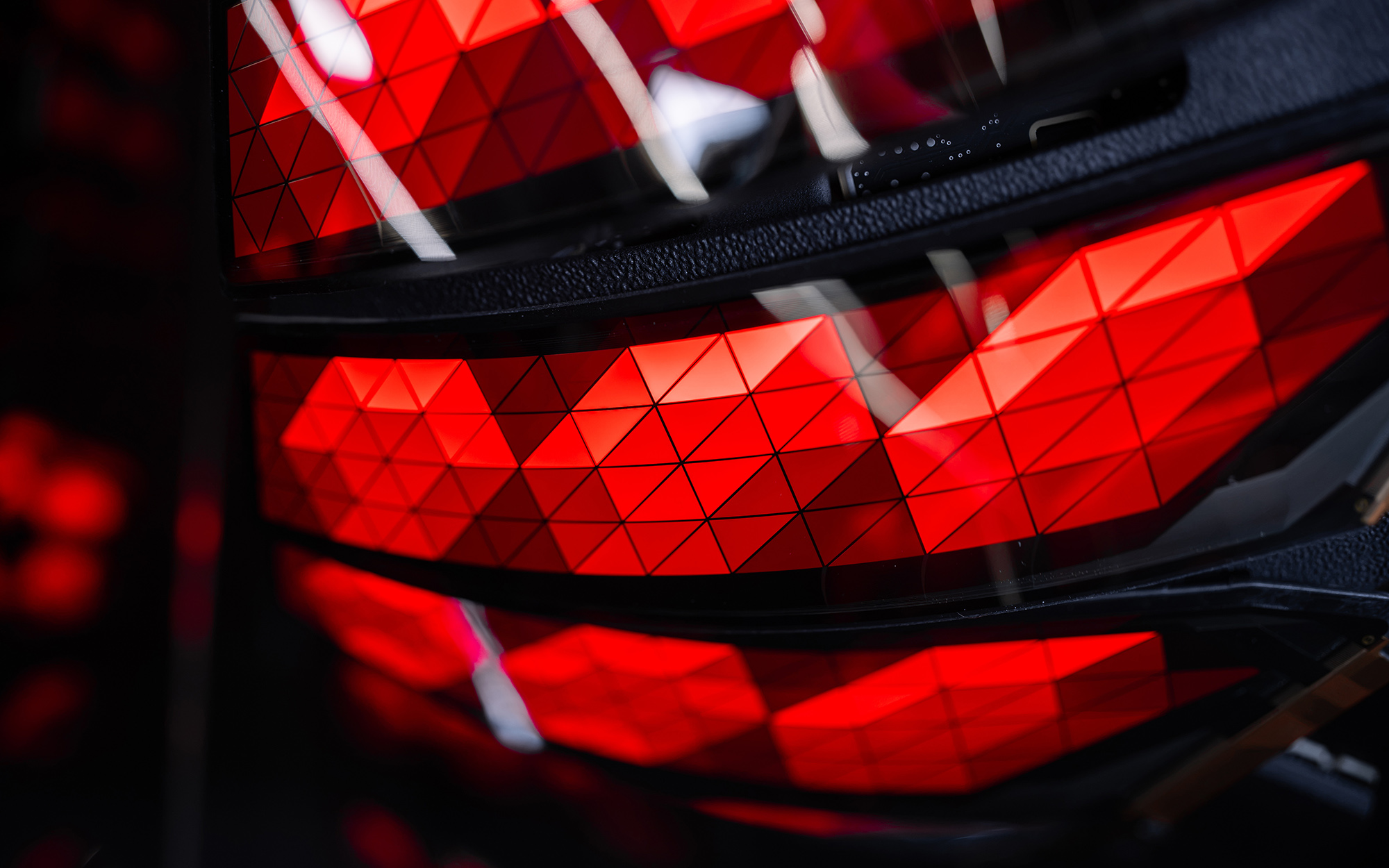
The significant change is the shape of the OLED light source. This goes beyond placing a flat lighting element behind a curved outer lens: Audi has developed a curved digital OLED panel that follows the contours of the vehicle.
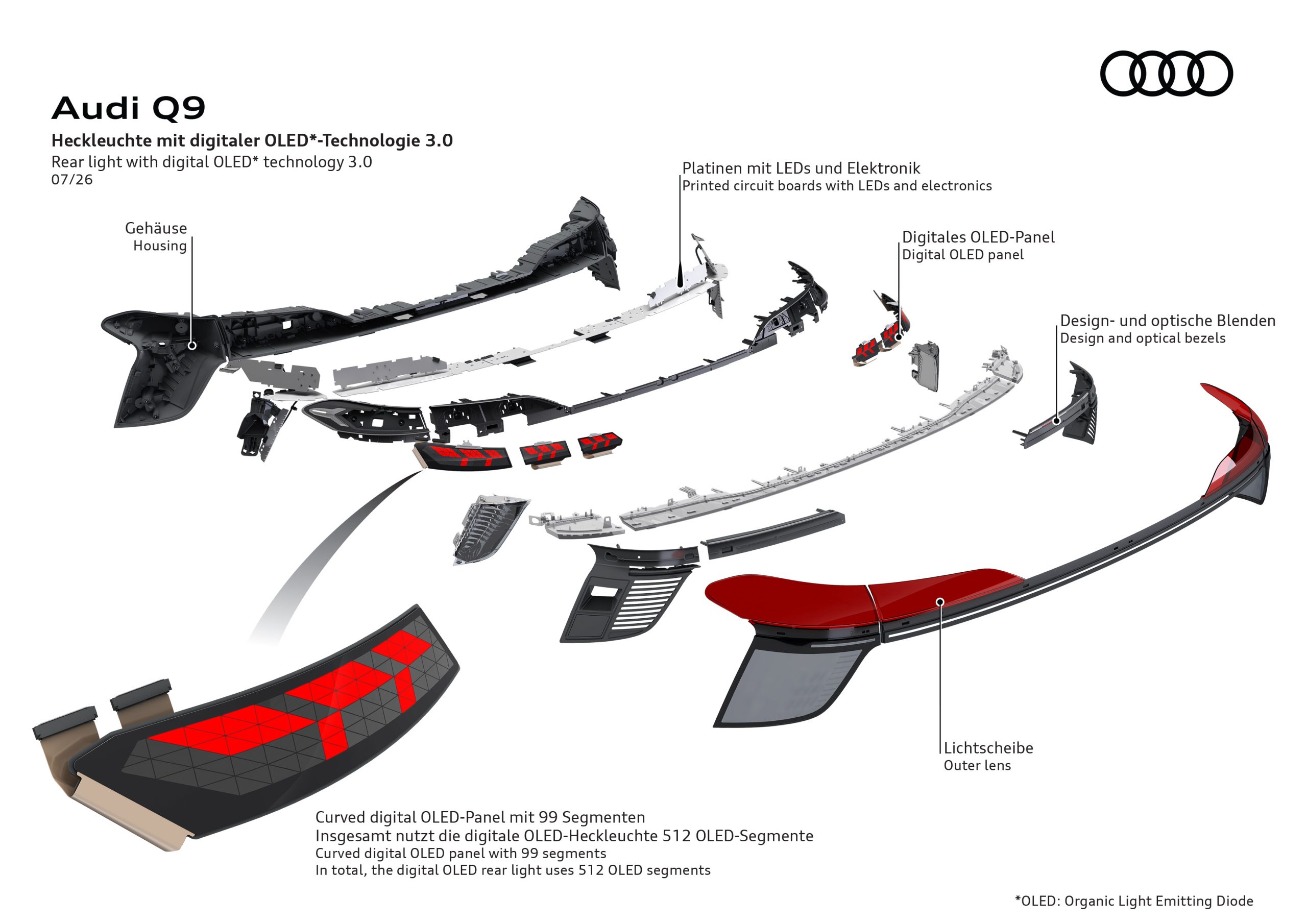
Making that possible is carrier glass measuring just 0.1 millimeters thick. Audi specifies a bend radius of 200 millimeters for the ultra-thin glass technology. That figure describes the curvature of the panel, rather than how far it moves; the release describes a formed lighting component, not a panel that changes shape during operation.
The distinction between the glass and the complete lighting element also matters. Audi describes its OLED light element as approximately one millimeter thick, while the 0.1-millimeter measurement applies specifically to the carrier glass.
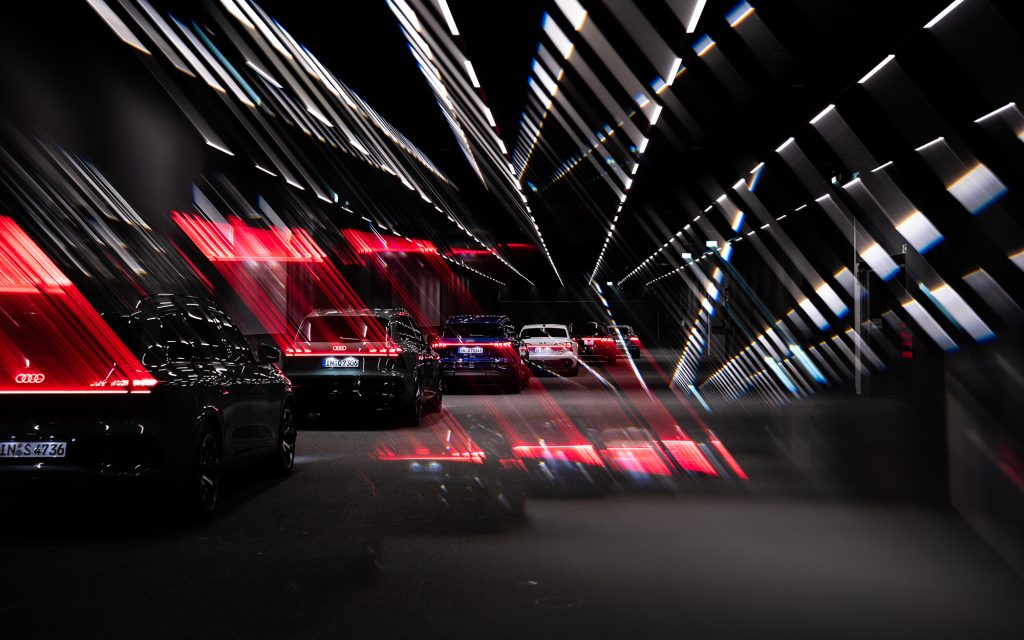
At the outer edges of the Q9’s rear lights, the curved panels bring the illuminated surface around the body. Audi says this improves visibility at wider lateral viewing angles. That gives the shape a functional purpose alongside its styling role: the light can be seen from positions farther to the side of the vehicle.
Audi says the panels have been designed and validated against automotive requirements for durability, uniformity and contrast. It does not provide the underlying test conditions or service-life figures in this announcement.
HOW OLED DIFFERS FROM A CONVENTIONAL LED
OLED stands for organic light-emitting diode. Like other LEDs, an OLED produces light through electroluminescence. Apply a voltage, and electrons and positively charged “holes” recombine within the material, releasing energy as light.
The difference lies in the light-emitting structure. Conventional LEDs use inorganic semiconductor materials, while OLEDs use stacked layers of organic molecules. In Audi’s rear-light application, those layers are designed to emit deep red light.
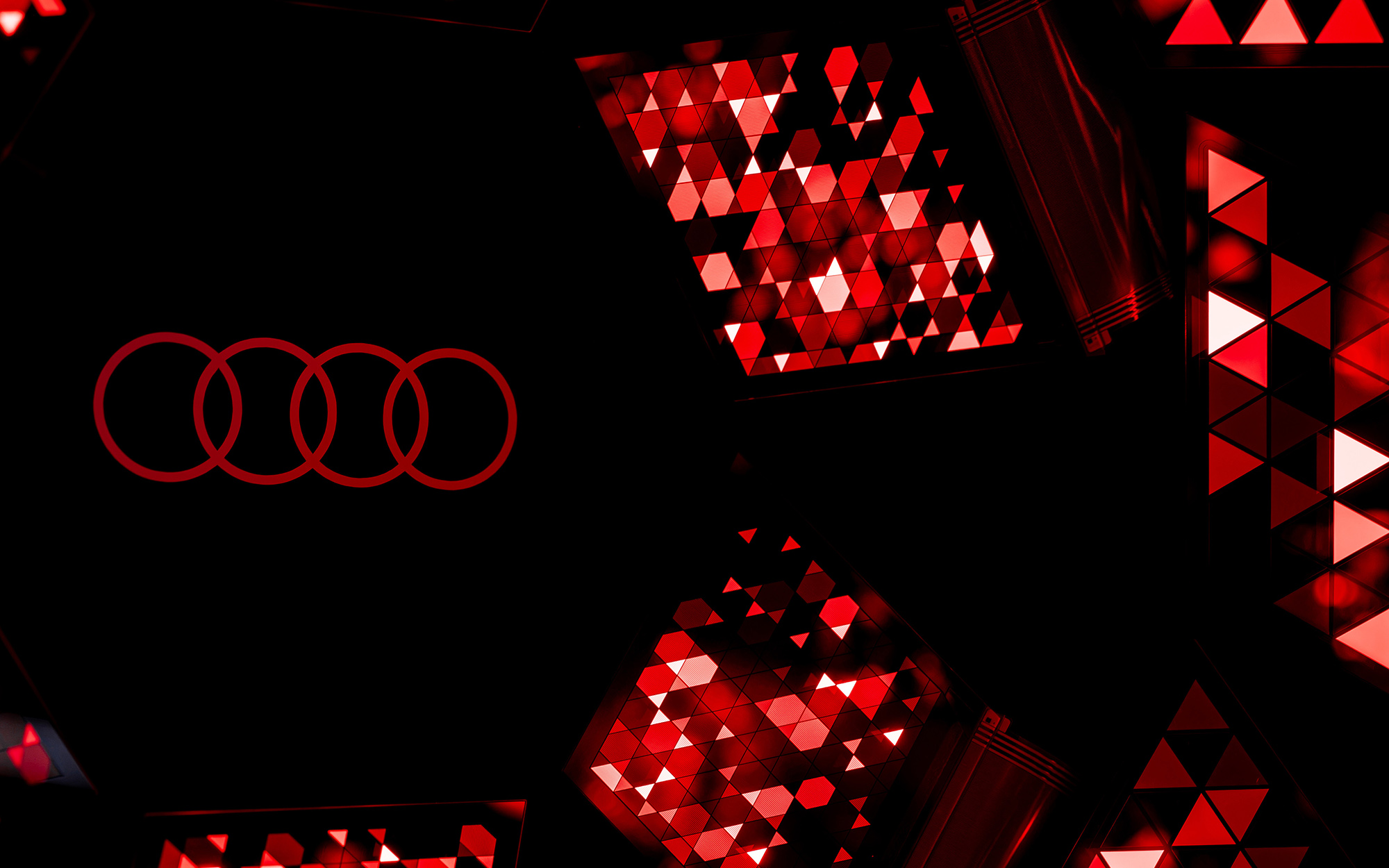
For a lighting designer, a defining advantage is that an OLED is a surface light source. The illuminated area can appear exceptionally uniform, with sharply defined boundaries between lit and unlit sections. That makes the technology useful for graphic signatures in which the shape and consistency of the illuminated surface are central to the design.
Curving that surface adds another degree of freedom. Instead of arranging only flat panels within the lamp, Audi can shape the emitting area to suit the surrounding bodywork.
WHAT MAKES THE SYSTEM “DIGITAL”?
The digital designation refers to the segmentation and control architecture, rather than simply the use of an OLED light source.
Audi’s early OLED rear lights used separate electrical connections for individual lighting functions. Its digital OLED systems connect to the vehicle’s electrical-system control unit through a bus system, allowing more extensive control of the illuminated segments.
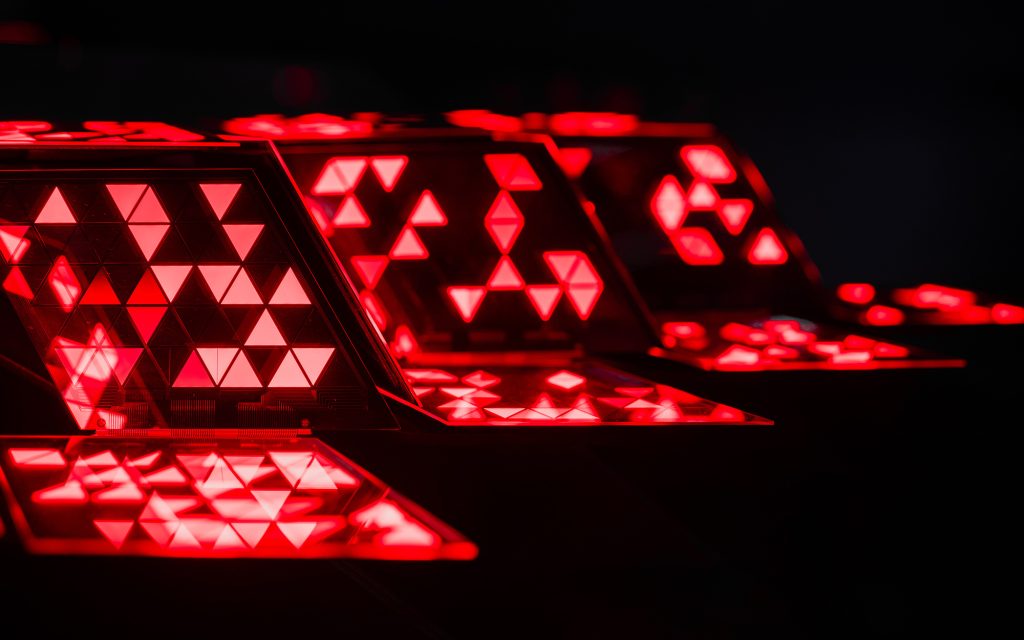
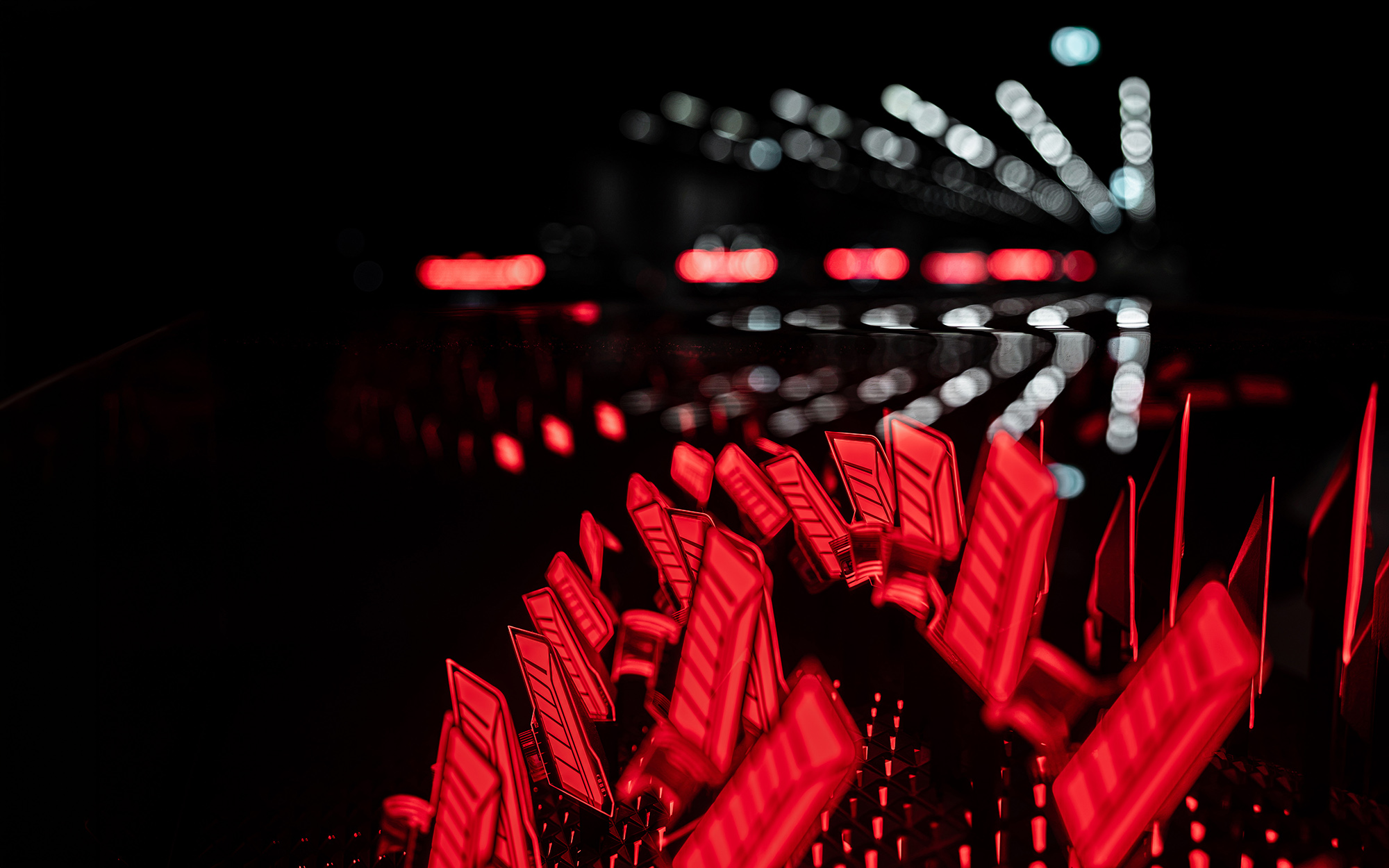
Each segment can be switched and dimmed individually. Increasing the number of segments gives designers more control over the pattern shown by the lamp, whether that is a selected rear-light signature, an animated effect or a warning graphic.
The Q9 uses six panels with 512 segments in total. Audi identifies three panel configurations: a curved outer panel with 99 segments, a middle panel with 84 and an inner panel with 73. Those counts total 256, consistent with the stated 512-segment arrangement across the two sides.
The curved 99-segment outer panel is also the largest OLED panel Audi has used in a production vehicle.
A TAILLIGHT IS STILL DIFFERENT FROM A SCREEN
Audi describes the rear lights as increasingly becoming intelligent exterior displays. There is a useful qualification to that description: these are purpose-built automotive lighting elements, with defined segment shapes and a red light output.
A smartphone OLED display uses a much denser array of pixels to reproduce full-color images. Audi’s rear-light panels instead prioritize the color, luminance and durability requirements of automotive lighting. According to the company, conventional OLED displays cannot deliver the brightness levels legally required for rear or brake lights.
The Q9’s system therefore offers greater freedom within a segmented lighting surface, rather than the unrestricted image reproduction associated with a consumer screen. Its graphics depend on the number, shape and arrangement of the available segments.
PERSONALIZATION AND WARNING SYMBOLS
The Q9 offers up to eight digital light signatures at the front and rear. Audi also introduces what it calls semi-active signatures, alongside static and fully active designs.
The release does not explain the precise operating behavior of every mode. It does, however, identify three-dimensional visual effects as a feature of the new signatures, particularly at night. The curved surfaces and individually controlled segments give designers more ways to create those effects.
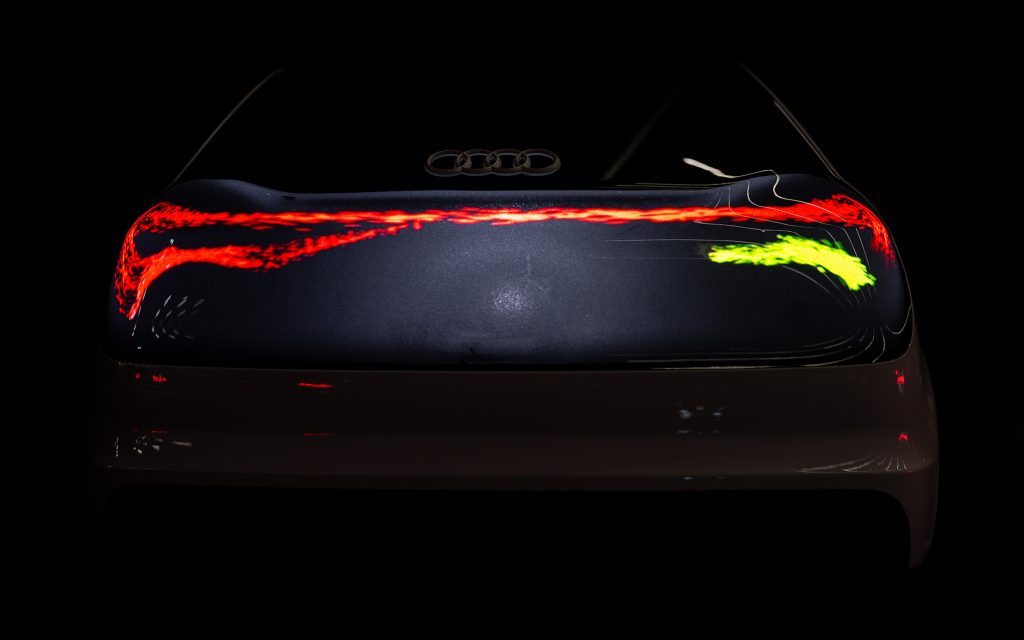
More practically, the communication-light function integrates warning symbols into the rear-light signature. Audi says these can provide additional visual warnings of accident and breakdown locations.
That is an extension of a role rear lights already perform: communicating information to other road users. The difference is the ability to add a recognizable graphic to the lamp’s existing signals.
Audi presents this as a safety benefit, although the release supplies no independent measurements of recognition time or accident reduction. The technical capability is clear; the effectiveness of a particular warning also depends on whether another road user sees and understands it.
MICRO-LEDS HANDLE THE ROAD AHEAD
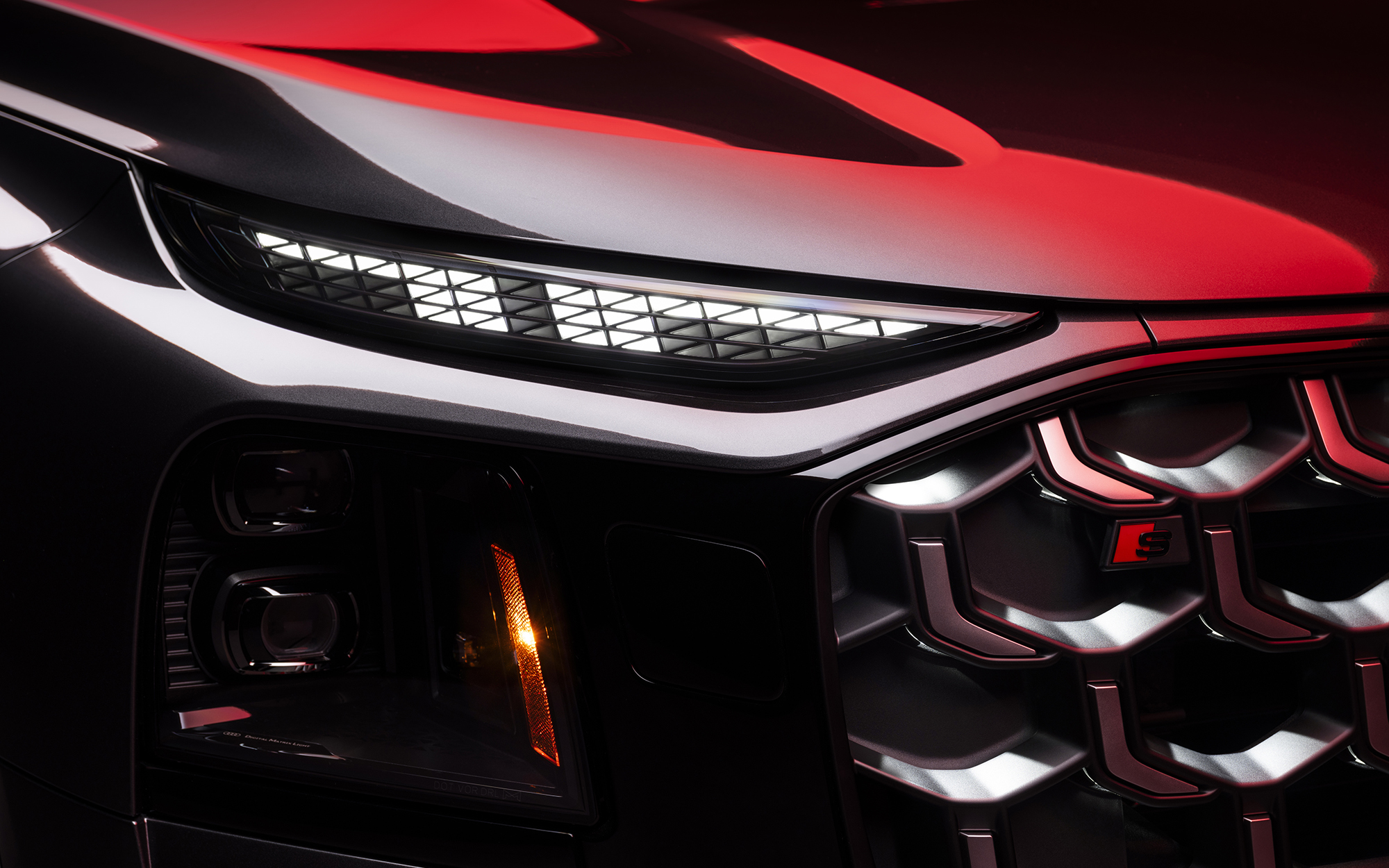
The Q9’s front lighting uses a different technology. Its digital Matrix LED headlight incorporates a micro-LED module with 25,600 individual micro-LEDs in a unit approximately 13 millimeters wide. Each micro-LED measures about 40 micrometers.
These small light sources allow precise control of the projected beam. Audi uses that capability both to adapt illumination and to place guidance patterns on the road.
Lane lighting adds illumination within the vehicle’s lane, while orientation-light paths help indicate its position within that lane. In narrow construction zones, the system can adjust the distribution and switch off lane lighting in favor of orientation lighting to help the driver judge placement.
An advanced turn-signal function, first introduced on the Q7, projects a stylized moving indicator onto the road at night when turning or changing lanes. It is intended to make the vehicle’s planned movement more apparent to pedestrians, cyclists and other traffic.
The front and rear systems serve complementary purposes. Micro-LED headlights shape light projected outward onto the road, while the OLED panels create directly visible illuminated surfaces on the vehicle.
TEN YEARS FROM THE TT RS TO THE Q9
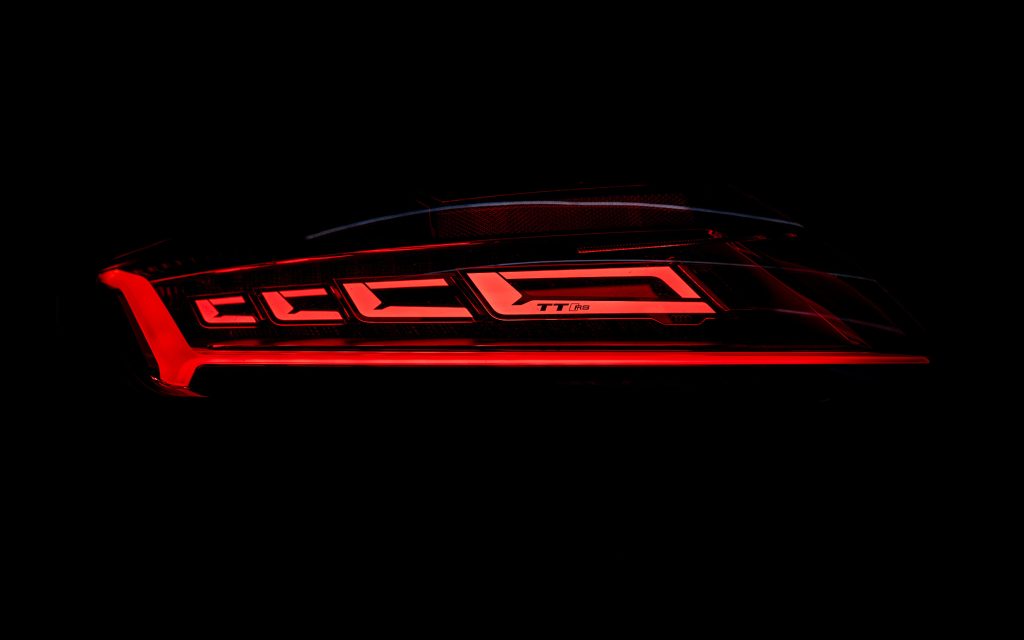
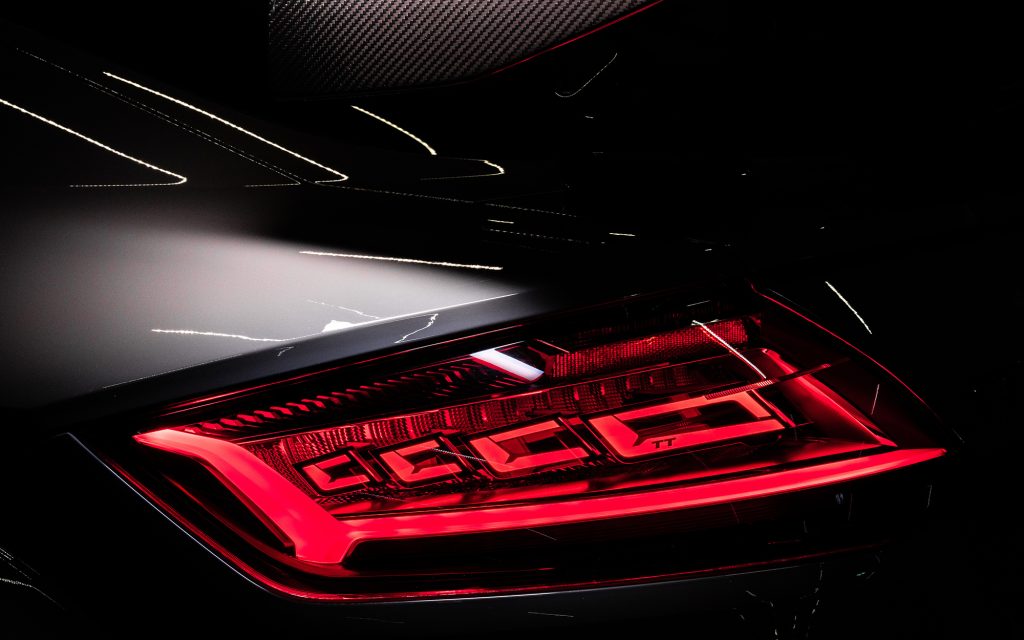
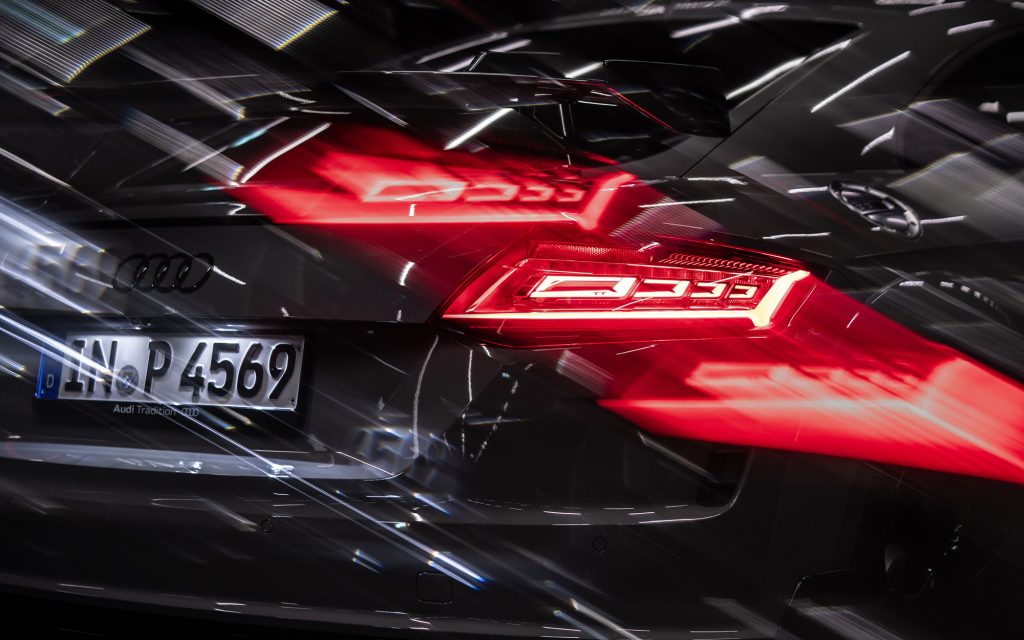
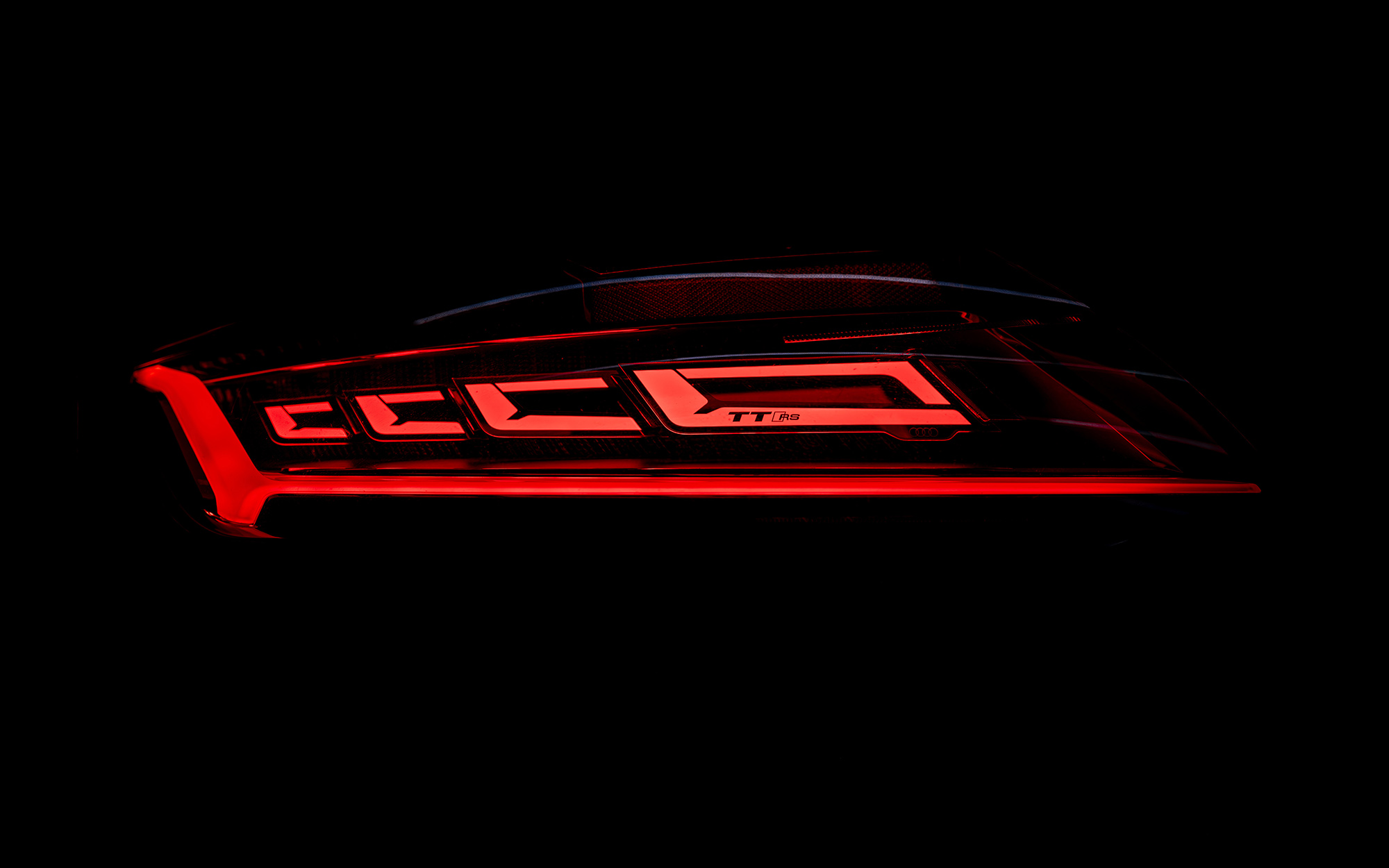
Audi’s production OLED history began with the TT RS in 2016. Those early rear lights established the technology’s characteristic uniform surfaces and high contrast.
Digital OLED technology followed on the updated Q5 in 2020, adding individually controlled segments and selectable rear-light signatures. The second generation arrived with the Q6 e-tron in 2024, substantially increasing segmentation and adding communication-light functions.
The Q9’s third-generation system advances that development through both control and physical form. More segments expand the available graphics, while curved panels let the light-emitting surface follow the body more closely.
The announcement does not specify US availability, option pricing or which projection and communication functions will be offered in each market. Those details will determine how much of the system reaches individual buyers. At the hardware level, the central advance is already identifiable: Audi has moved the OLED surface itself into a curved form, giving its rear-light designers a new tool for both visibility and visual identity.
PHOTO GALLERY