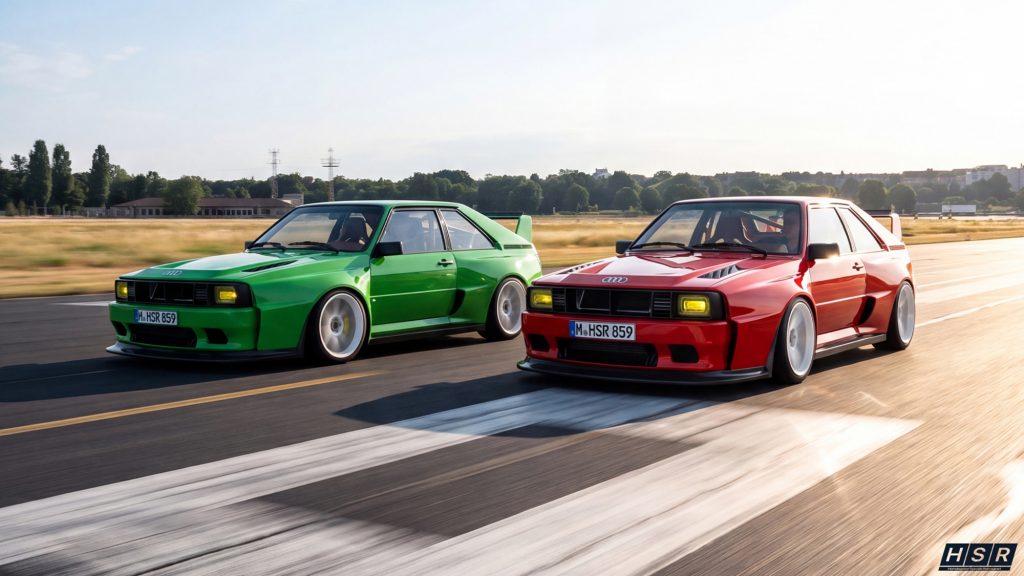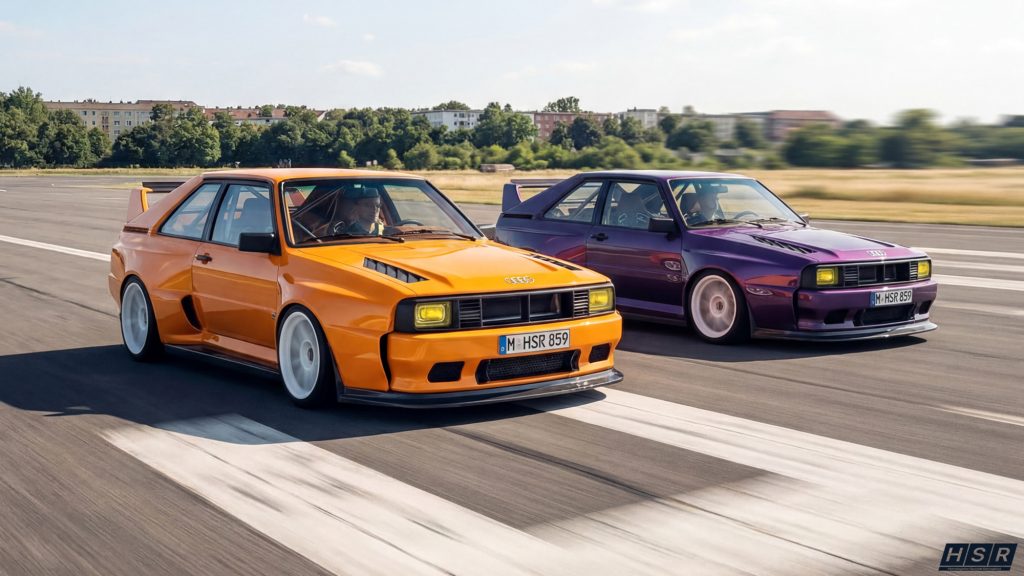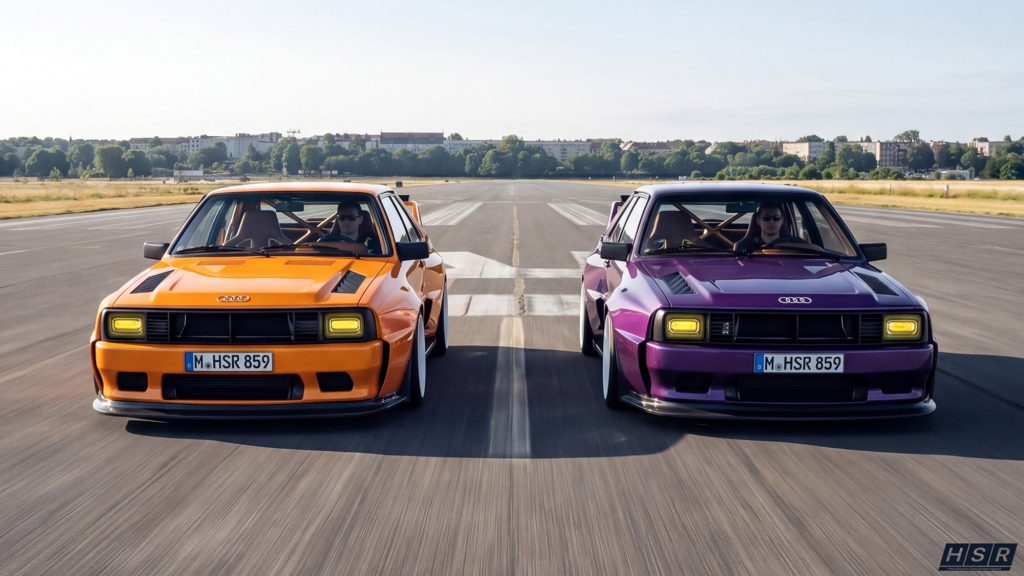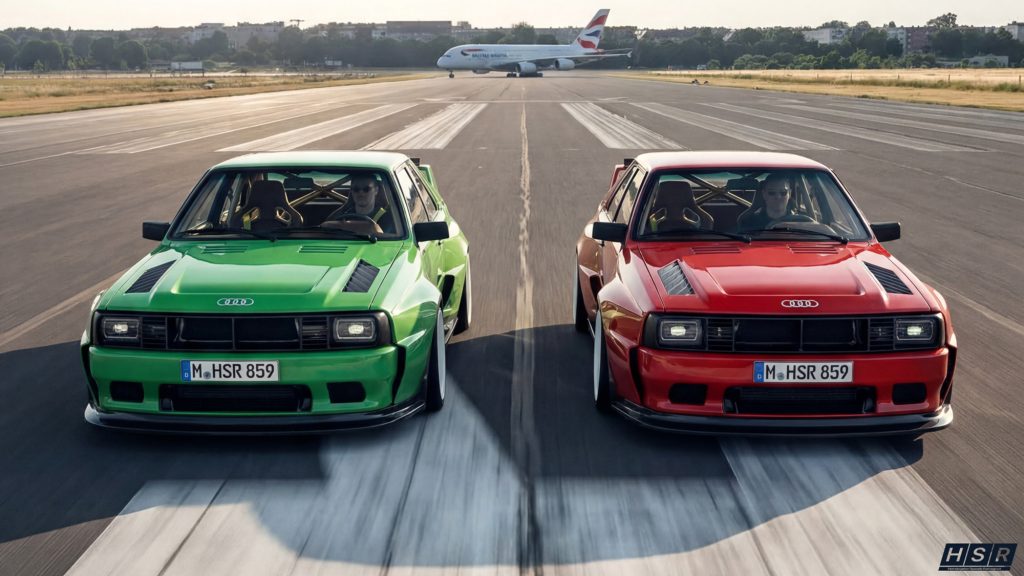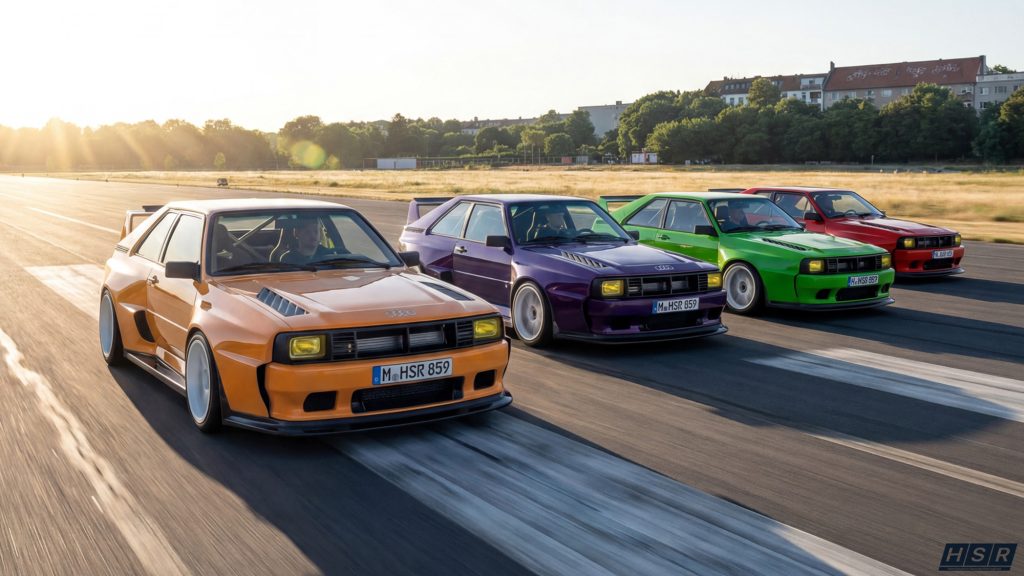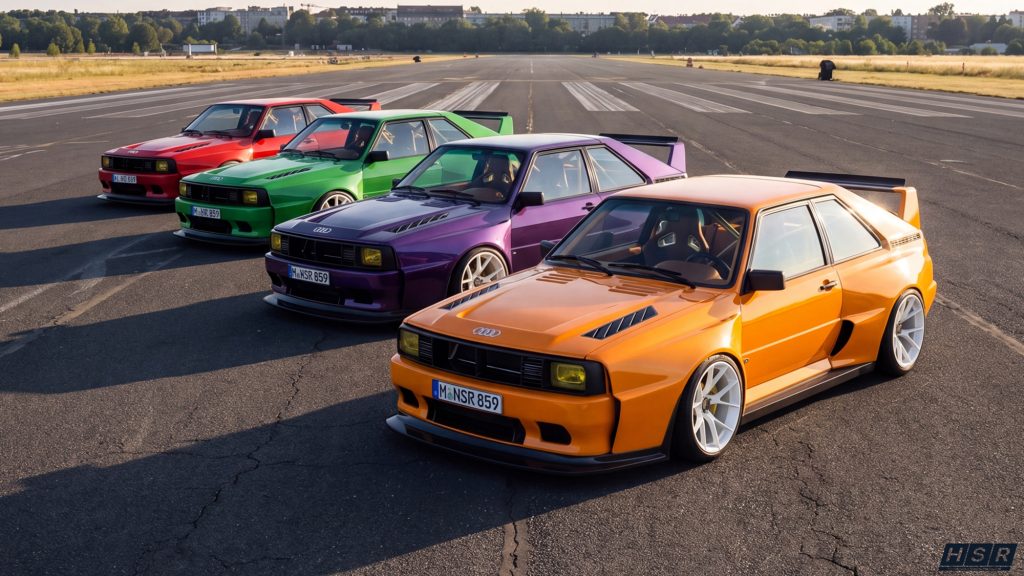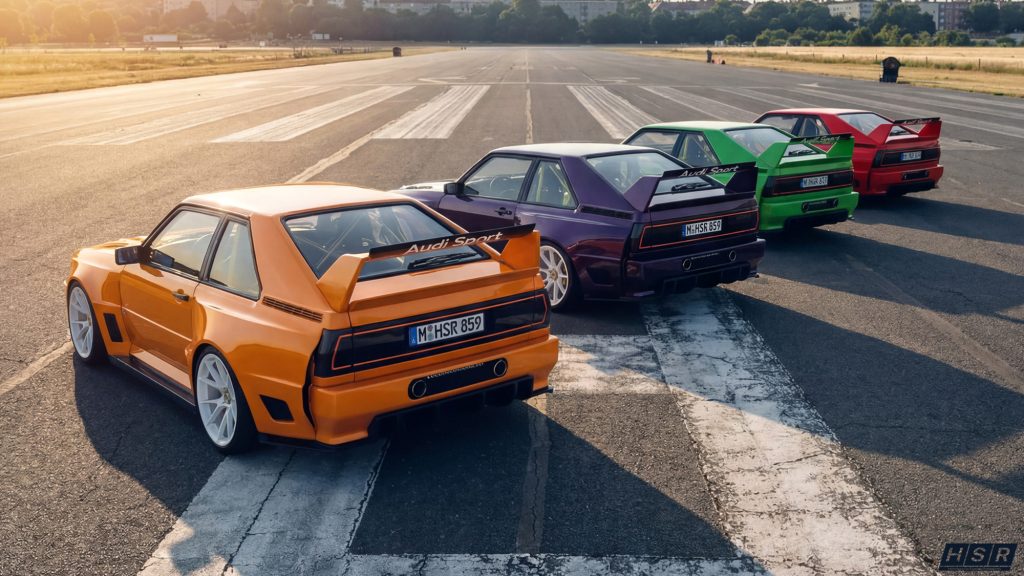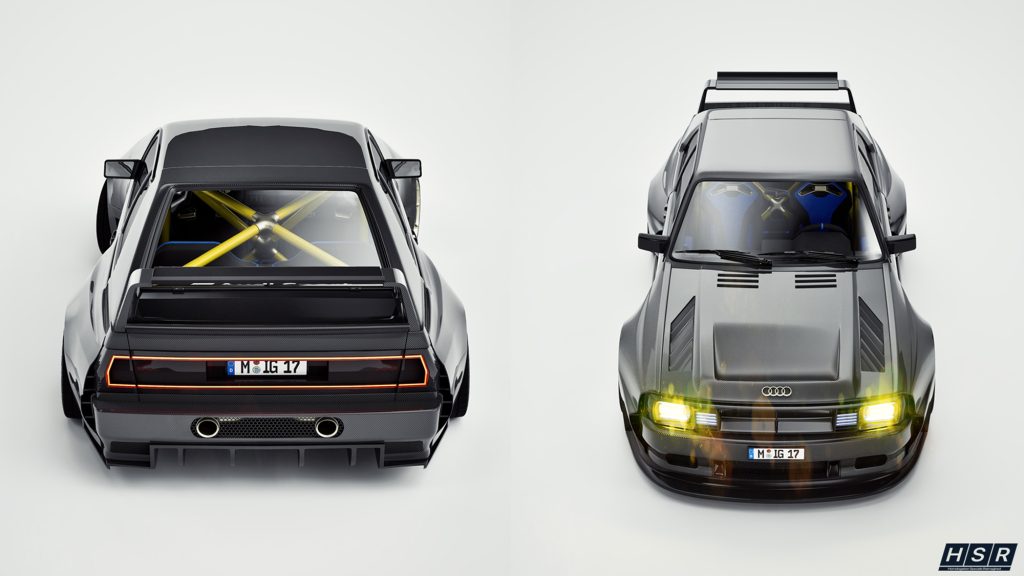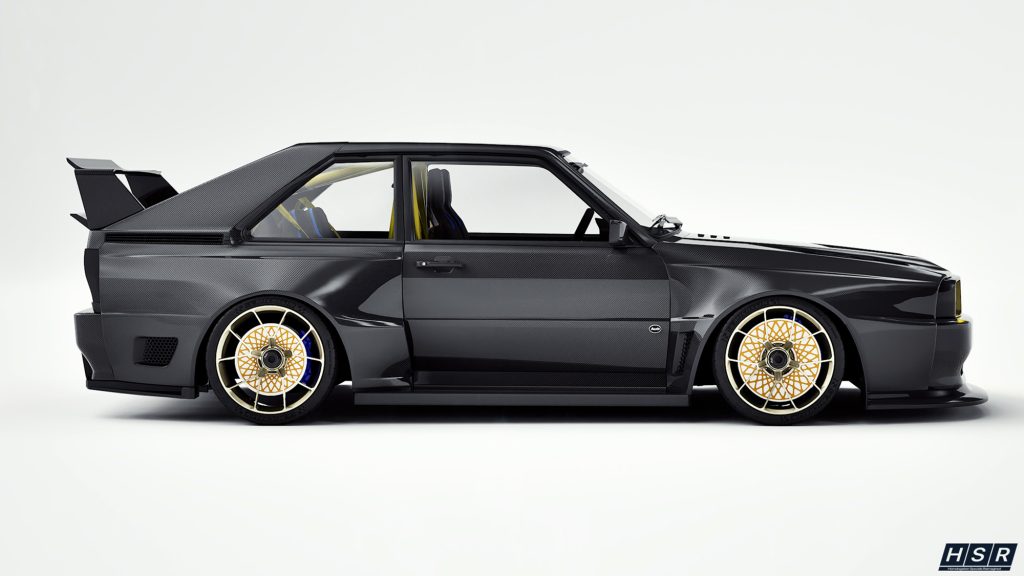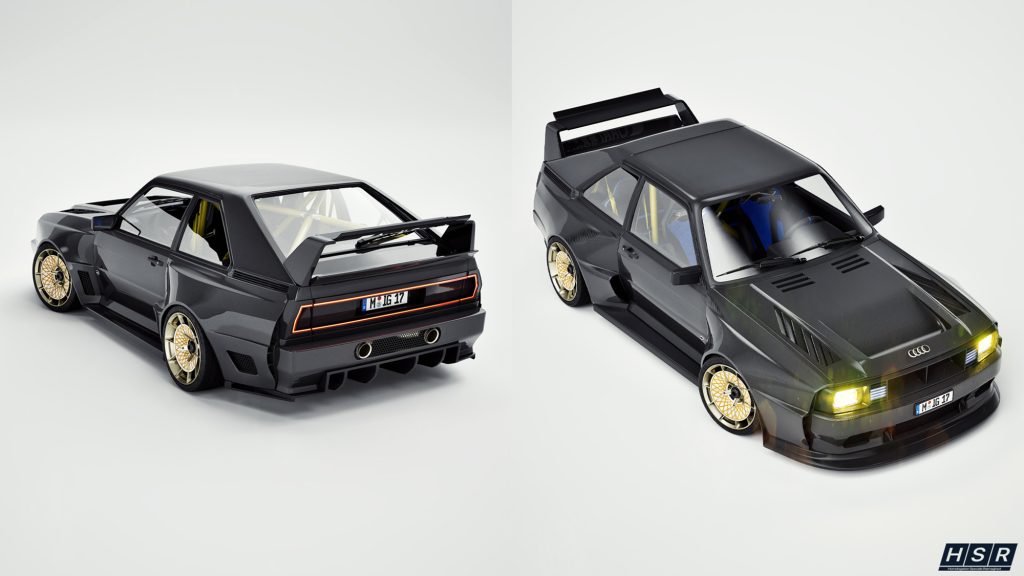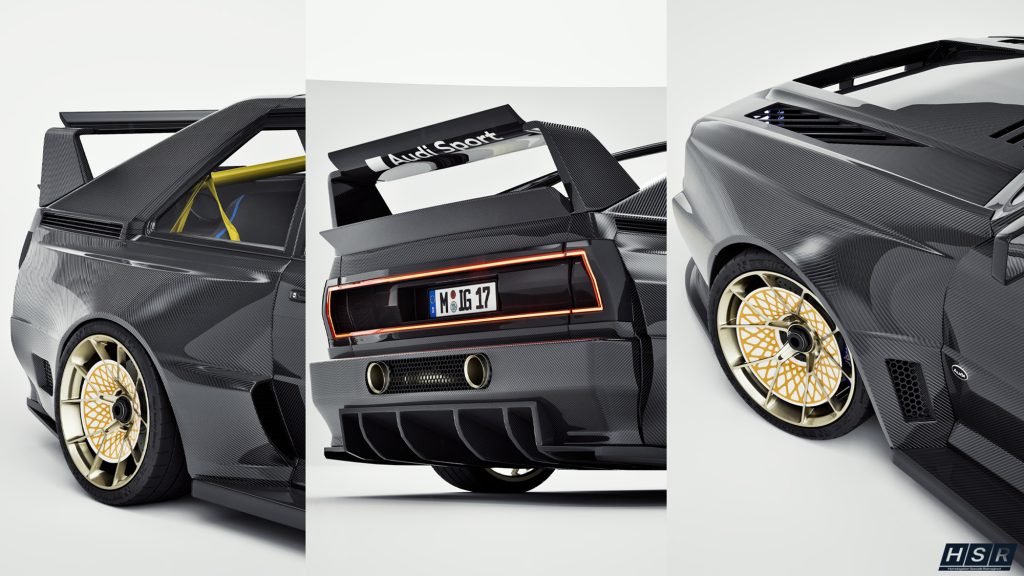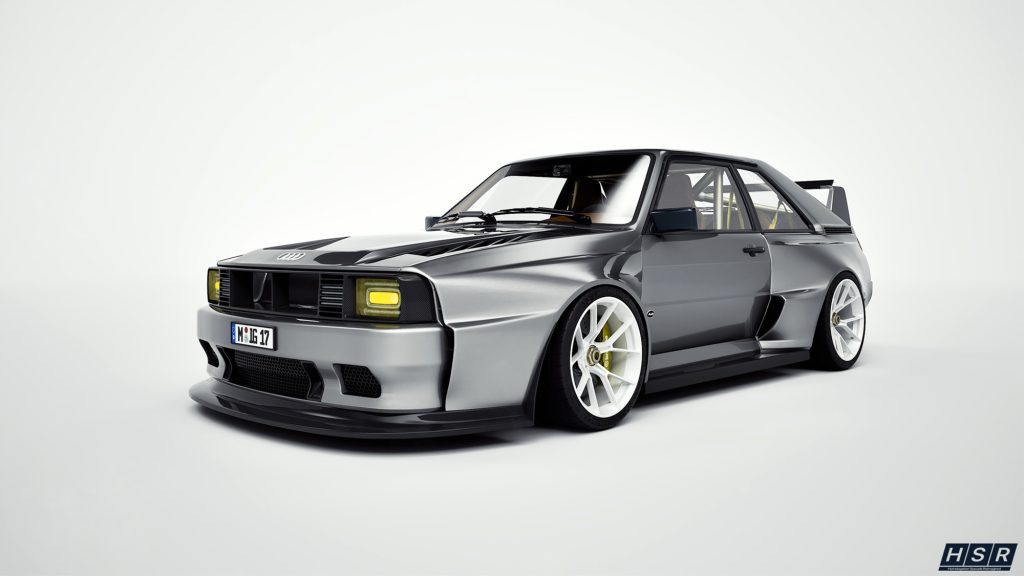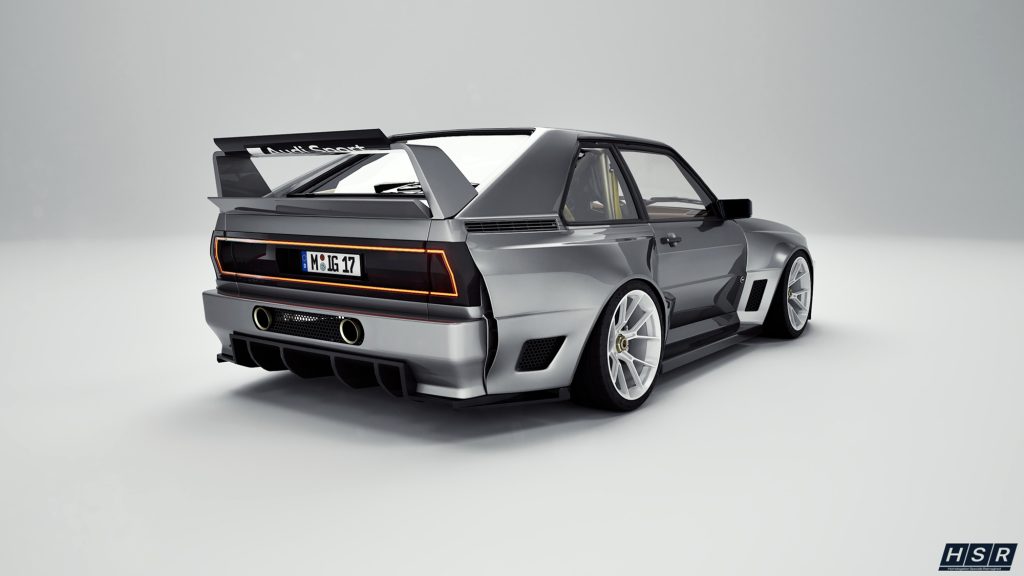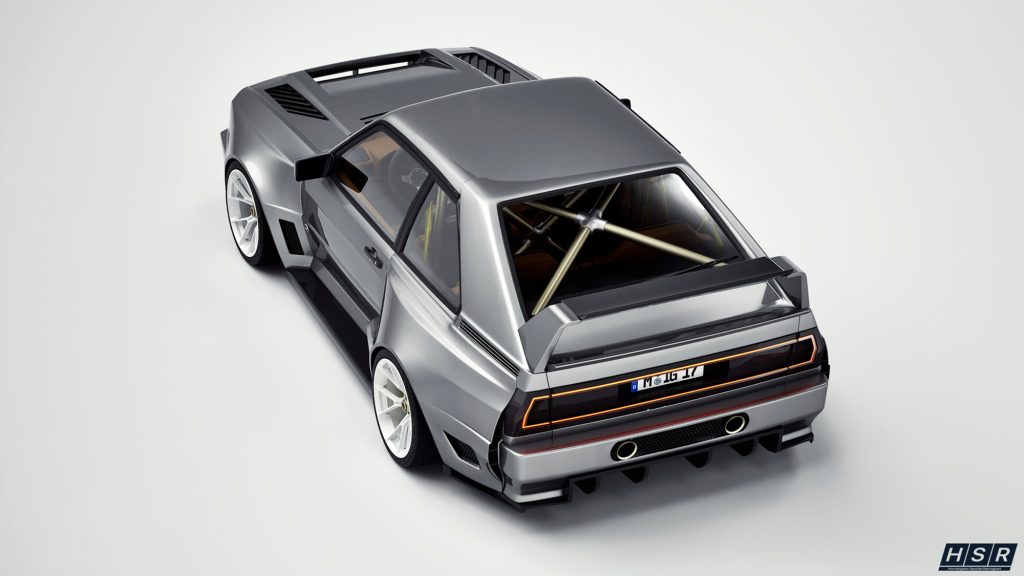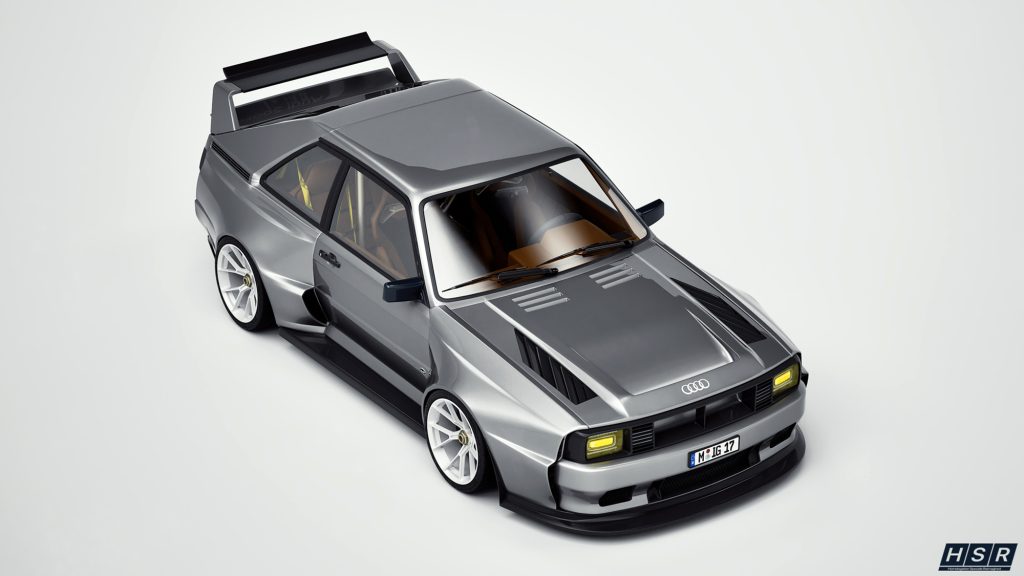

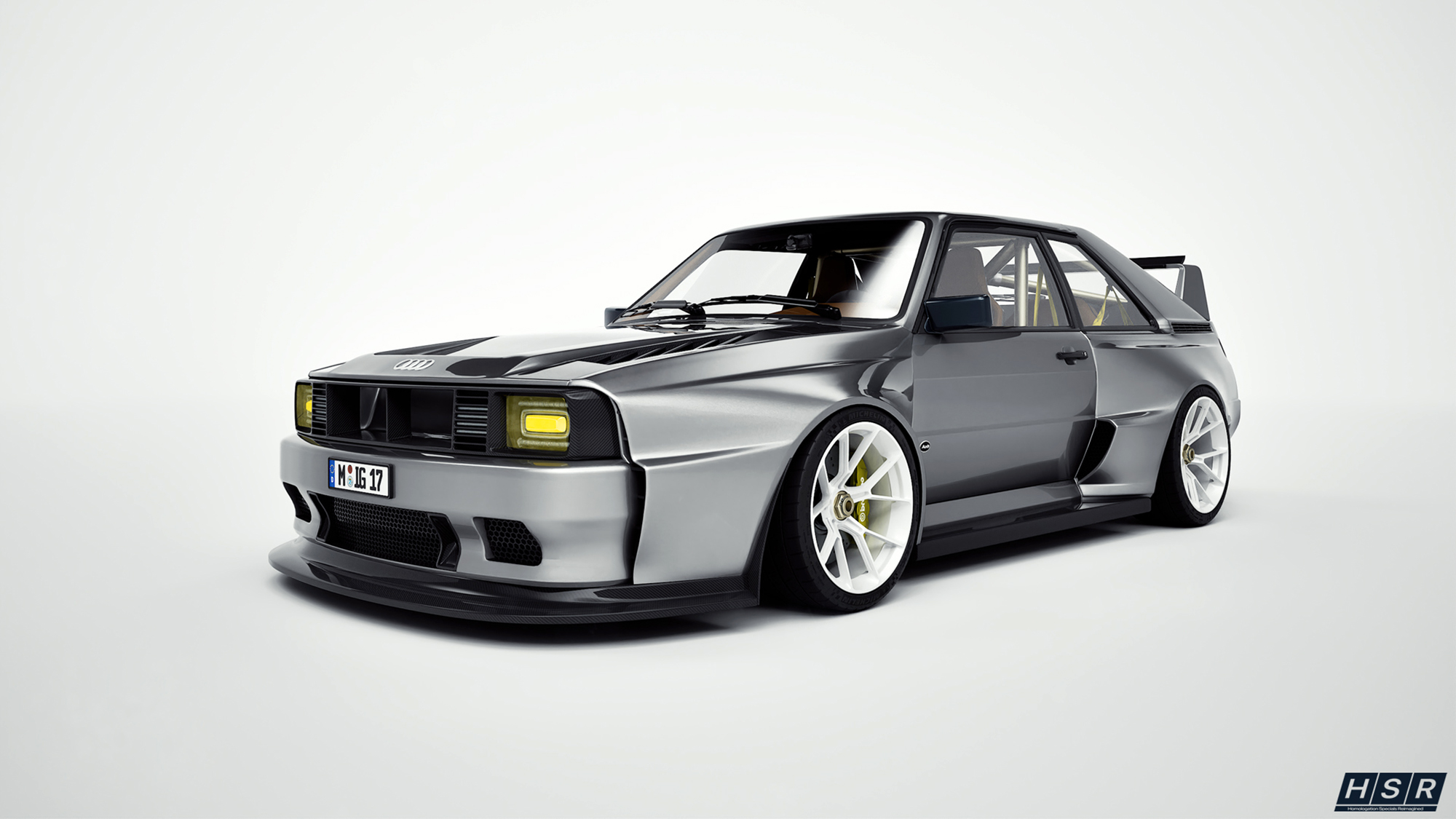

As the auto industry seems to move closer to applianceification, the state of the “remaster” cottage industry whereby motivated entrepreneurs hone formulas for reimagined icons, augmented tailored to the specification of discerning owners. It’s a booming space, with more and more entrants arriving by the week. It’s also smiling over more than ever into the Audi space, something we’re taking particular interest in monitoring. Take for instance the HSR Manufaktur and their Type 859 that harks the original Audi Sport quattro.
The story of the Sport quattro, of course, is legend. Conceived as a homologation special to satisfy Group B regulations, the short-wheelbase coupe became the road-going bridge between Audi’s revolutionary rally program and the production cars that cemented quattro as one of the industry’s defining technologies.
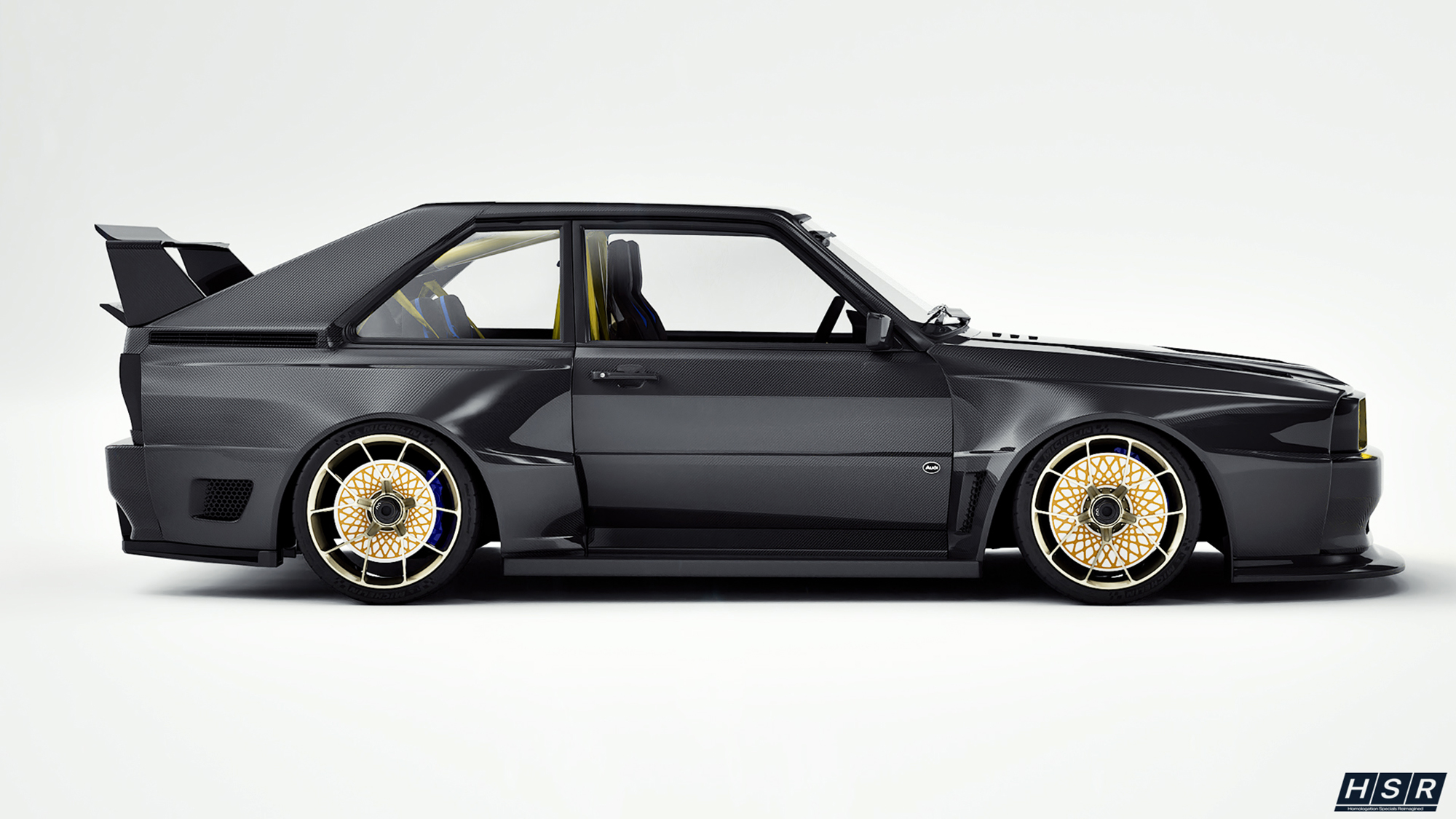
We first reported on this story back in December – an ambitious project then more clearly in the earliest design phases. Now, half a year later, Munich-based HSR Manufaktur is sharing further details of their extensively re-engineered homage to the Sport quattro that combines period-correct architecture with modern engineering. Rather than recreating the original car outright, HSR says its objective is to preserve the analog driving character and five-cylinder soundtrack while addressing many of the compromises inherent to a 1980s performance car.
The name of the car itself is an easter egg – a deep cut reference to that heritage. “Type 859” references the internal Audi designation for the original Sport quattro, while the production run of just 84 examples is another – paying tribute to the marque’s landmark 1984 WRC season of Group B. That year Audi captured both the Manufacturers’ and Drivers’ championships with Stig Blomqvist while the short-wheelbase Sport quattro made its competitive debut, forever linking the model with one of the most successful chapters in Audi Sport history.
HSR’s connection to the car is also personal. Founder Iván García says his fascination with the Sport quattro began as a child, growing up with a poster of the Sport quattro S1 E2 on his bedroom wall and the sound of Audi’s turbocharged five-cylinder etched into his brain. That enthusiasm ultimately became the foundation for HSR Manufaktur, whose name stands for “Homologation Specials Reimagined.” The company says the Type 859 is intended to be the first in a series of modern reinterpretations of iconic homologation specials from Group B, DTM and other historic racing categories.
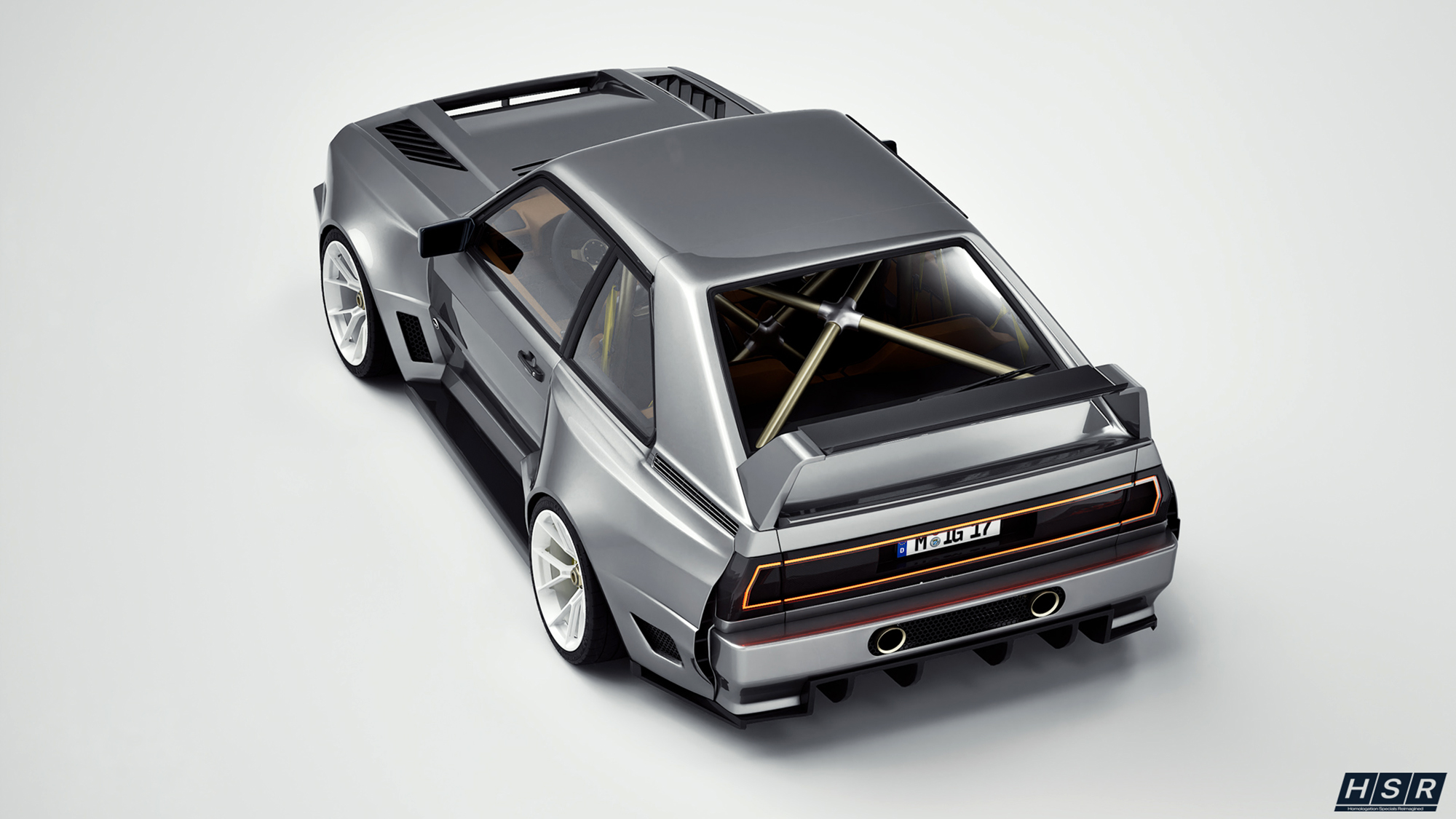
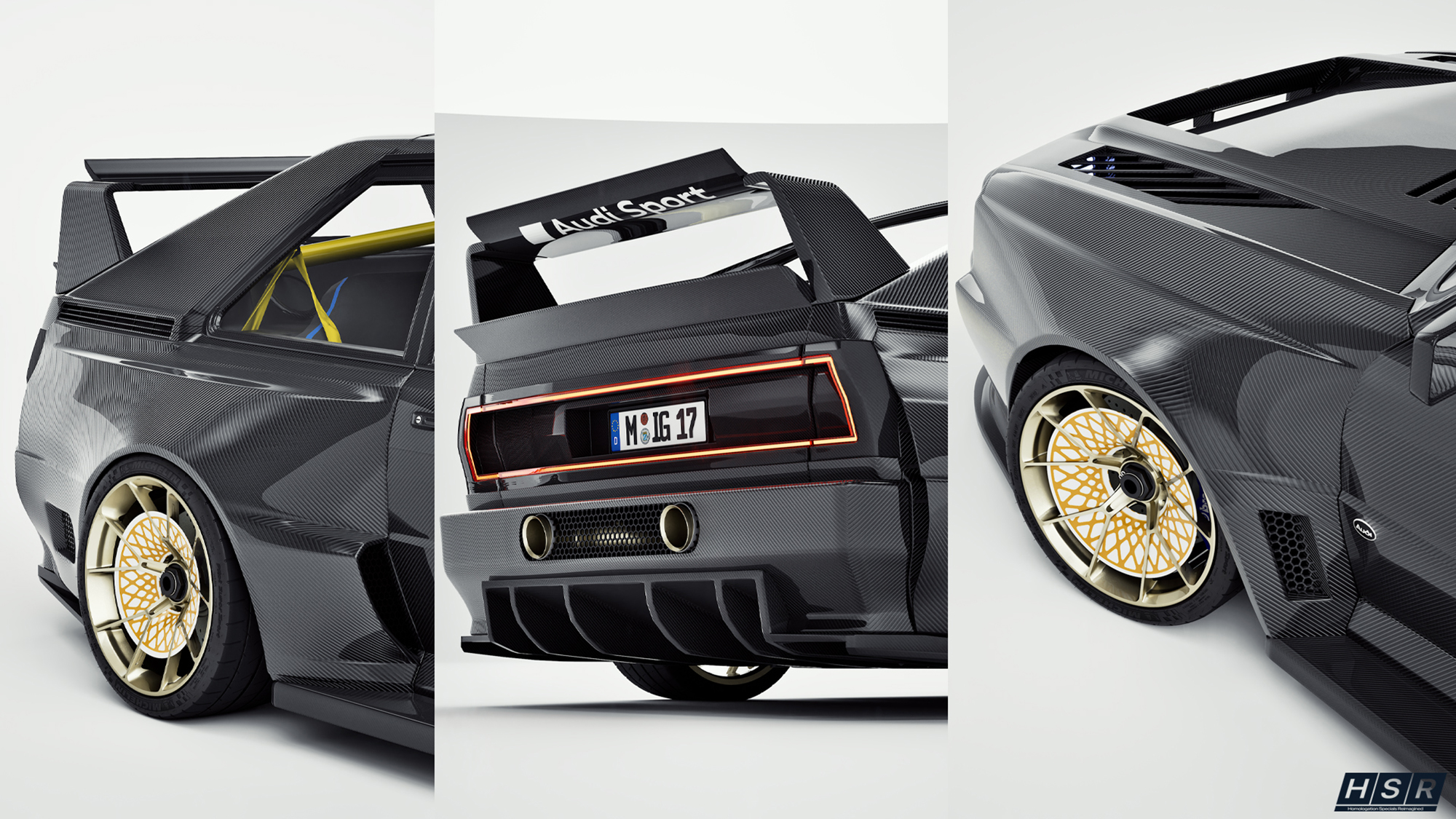
Unlike many remasters or restomods, the Type 859 begins with a genuine Audi Coupe B2 donor chassis. Each car is stripped to bare metal, digitally scanned and shortened by 320 millimeters to match the proportions of the original Sport quattro before being reinforced with new front and rear subframes and an integrated roll cage. Every visible exterior panel is then replaced with aerospace-grade carbon fiber bodywork, producing a target curb weight of under 1,200 kilograms while widening the stance by approximately 65 millimeters per side. Active aerodynamic elements—including an adjustable front splitter, hood louvers and rear spoiler—bring technology that simply wasn’t available when the Sport quattro debuted in the early 1980s.
One of the most significant engineering decision centers around the engine. Here, HSR chose Audi’s modern DAZA 2.5-liter turbocharged five-cylinder as the spiritual successor to the original I5, but the similarities end there. Rather than leaving it in its factory transverse configuration, the HSR team have converted the engine to a longitudinal layout more faithful to the original Sport quattro’s architecture. The extensively rebuilt engine features forged internals, bespoke turbocharger packaging and a dry-sump lubrication system, with selectable outputs ranging from 500 to 600 horsepower depending on driving mode. The familiar 1-2-4-5-3 firing order remains, accompanied by an active exhaust featuring both conventional rear outlets and dramatic side-exit pipes inspired by the legendary Sport quattro S1 Pikes Peak.
HSR’s emphasis throughout the project is a focus on mechanical engagement rather than outright technology. Power is sent through a reinforced six-speed manual gearbox sourced from the Audi S4 B8.5, complete with a short shifter and exposed gated mechanism. A permanent mechanical quattro system utilizing a Torsen T-3 center differential replaces more modern electronically controlled all-wheel-drive systems, while a rear limited-slip differential is intended to give drivers the ability to rotate the car on throttle much like Audi’s competition machinery of the 1980s. Launch control and automatic rev matching are available, but notably remain disabled by default, leaving the decision whether or not to use them entirely to the driver.
The suspension similarly balances old-school involvement with modern capability. Bespoke front and rear subframes support revised suspension geometry, multi-valve coilovers with remote reservoirs and electronically adjustable ride height. Four driving modes—Street, Sport, Track and Rally—alter damping, ride height and engine calibration while carbon-ceramic brakes with lightweight magnesium calipers provide stopping power appropriate for the substantial increase in performance.
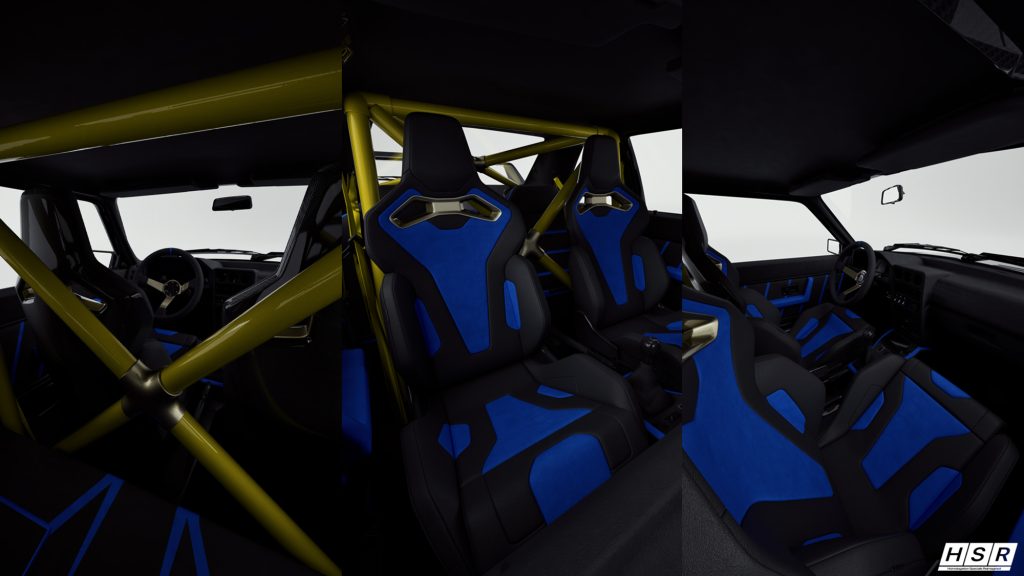
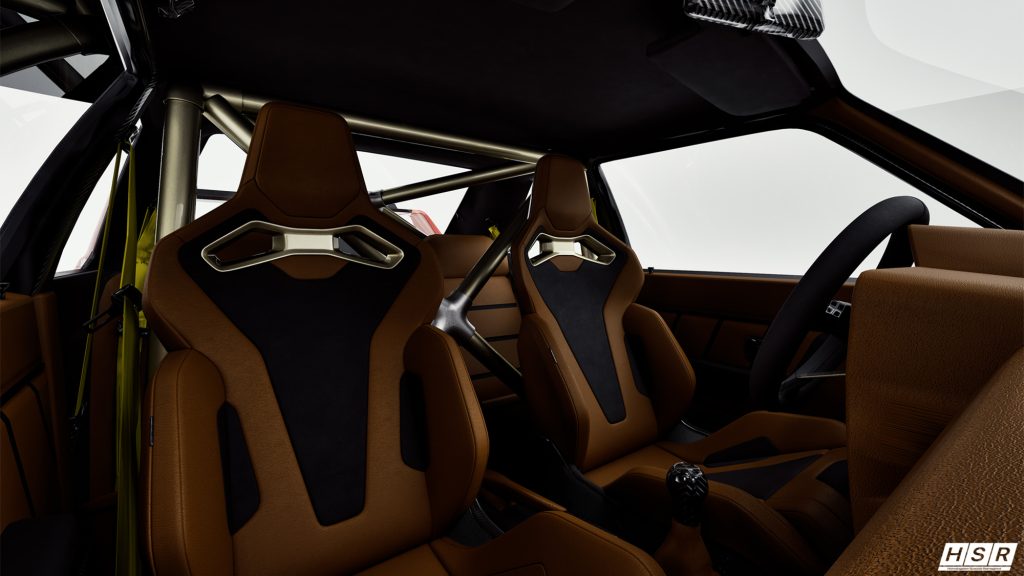
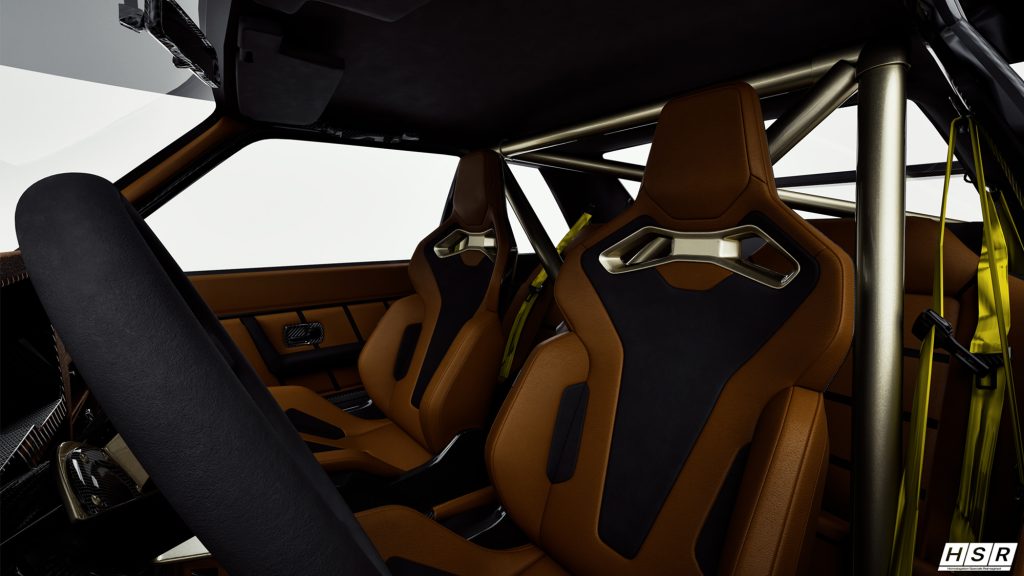
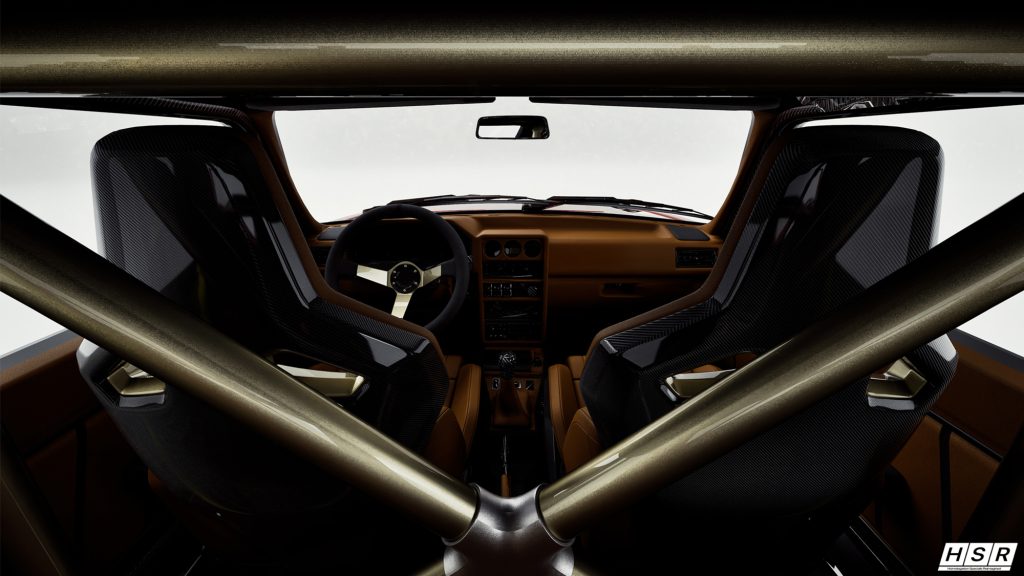
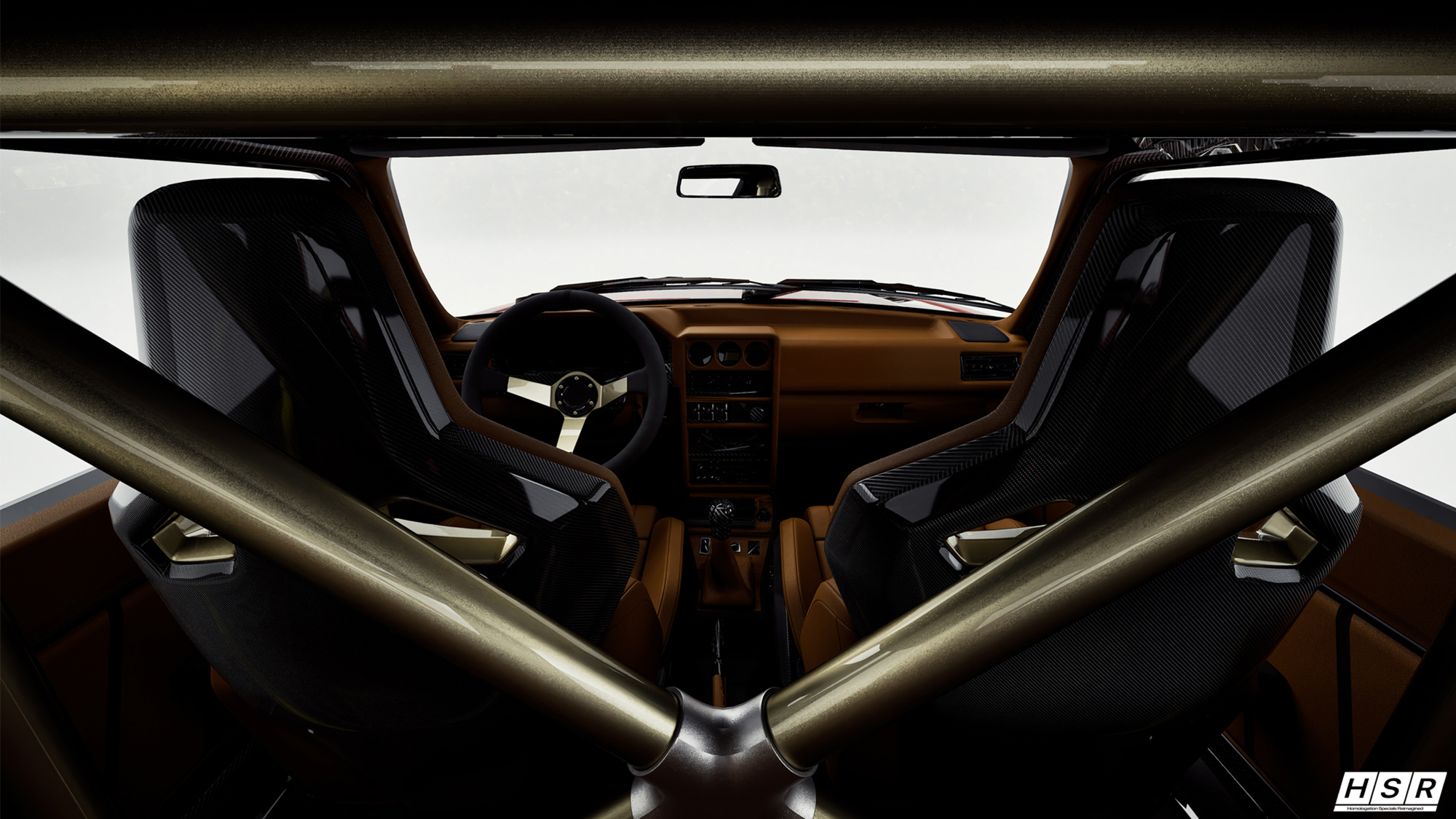
Inside, the philosophy remains firmly rooted in analog driving. Traditional gauges with machined aluminum faces take center stage, supplemented only by a compact information display for essential vehicle data. A rally-inspired steering wheel integrates controls for suspension, exhaust, ignition and driving modes, while wireless Apple CarPlay and Android Auto are discreetly incorporated for long-distance touring. Buyers can specify either road-oriented folding carbon bucket seats or fixed racing buckets, with the option of retaining rear seats or replacing them with a carbon-fiber storage area designed to carry helmets and a fire extinguisher. That’s an interesting move, because the back seat of the Sport quattro is so short that it seems practically unusable.
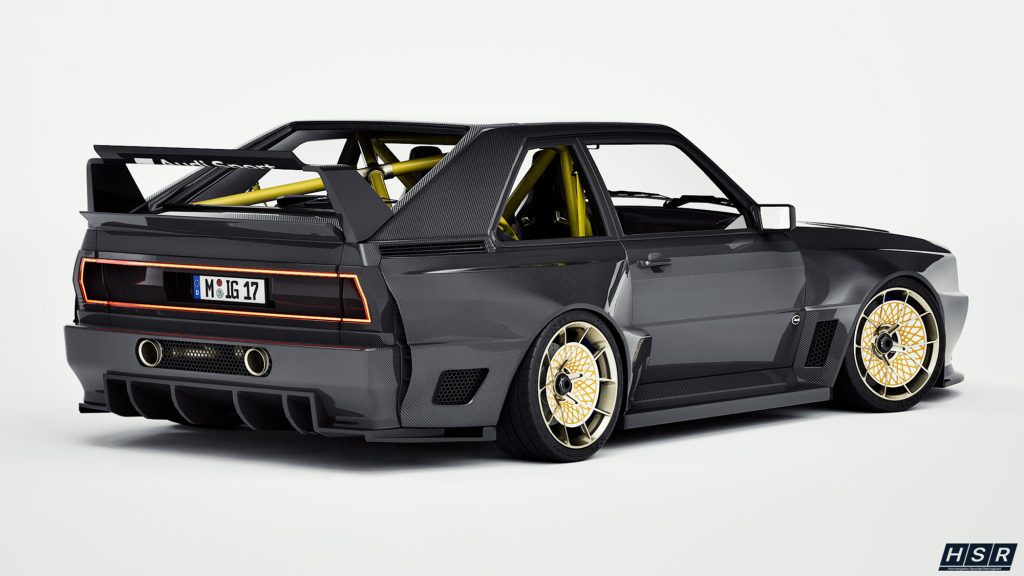
HSR says prototype development is now moving from engineering into physical construction at its facility in Maisach, Germany. The company has already secured Tier 1 engineering partners and says it has received letters of intent from prospective customers in multiple countries, with the strongest demand coming from the United States, Germany and Switzerland. Pricing is expected to begin at approximately €500,000, including the sourcing of a suitable Audi Coupe donor chassis, before customization.
HSR’s goal certainly seems a worthy one. At a time when modern automobiles are becoming less analog and also less engaging as manufacturers contend ironically with modern homologation regulations, well-sorted remasters seem to fit the bill. Even still, priced as it is around €500,000 it will find itself competing with some pretty heady alternatives – from Nuvolari to a real Sport quattro that both trade in practically the same rarified air.
MORE INFORMATION
PHOTO GALLERY