Audi has begun series production of the new A2 e-tron at its Ingolstadt headquarters, marking an important step not only for the brand’s new entry-level electric model but also for a broader effort to make Audi’s German manufacturing operations faster, less complex and more cost competitive.
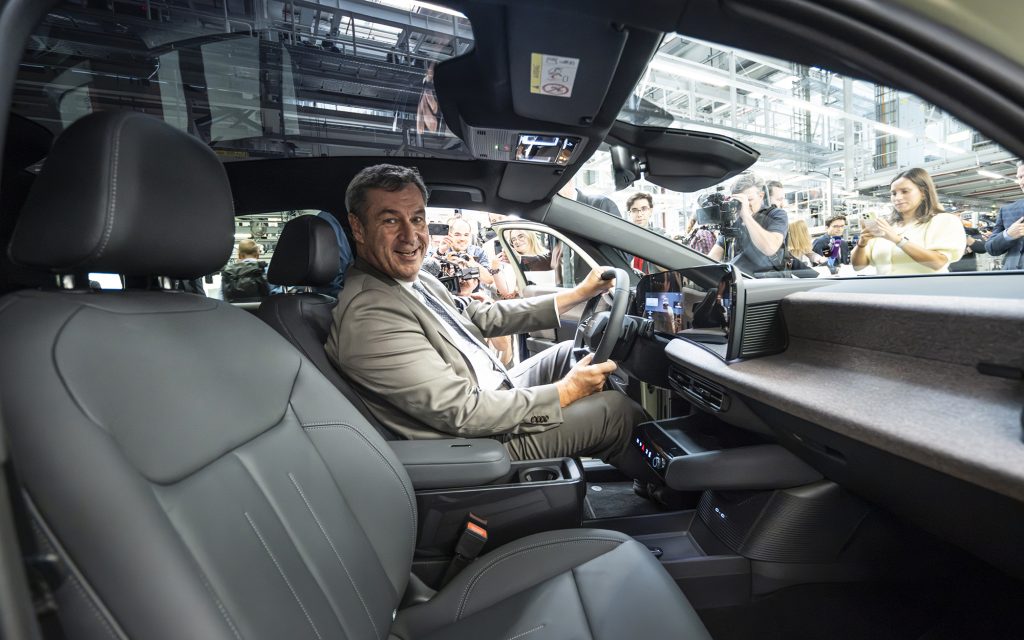
The first A2 e-tron production cars rolled off the line on September 10 in the presence of Bavarian Minister-President Markus Söder. Audi says the program reached production readiness 21 months faster than previous vehicle projects, while simultaneously reducing the number of production-specific parts and increasing automation.
That makes the A2 e-tron an interesting case study beyond the car itself. As Audi faces pressure to shorten product cycles and improve the economics of building cars in Germany, the A2 program appears to be serving as something of a blueprint for how the company intends to develop and manufacture its next generation of vehicles.

BUILT ALONGSIDE THE A3
Rather than creating an entirely new manufacturing operation for the A2 e-tron, Audi has integrated it into existing Ingolstadt infrastructure. A2 e-tron bodies are manufactured alongside those of the A3, with the plant’s flexible equipment allowing both models to share production resources.
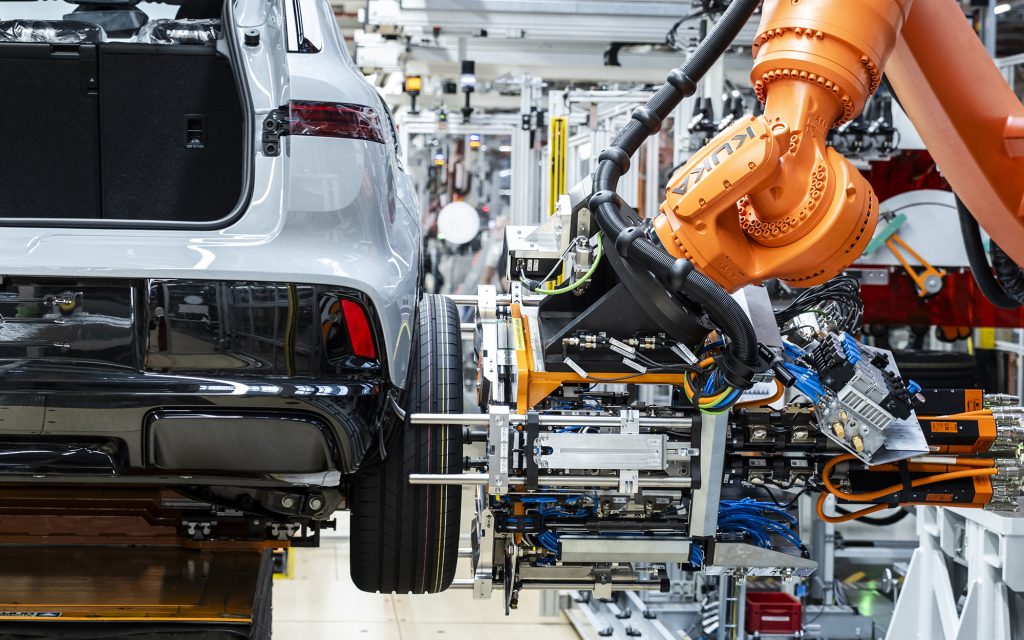
Audi says more than 1,200 existing production components have been reused or repurposed for the A2 program, including approximately 250 robots previously used to manufacture other Audi models.
That reuse is significant. The economics of smaller electric cars remain challenging, particularly when they’re manufactured in higher-cost European plants. Avoiding a wholesale replacement of existing equipment should help Audi limit the capital investment necessary to put the A2 e-tron into production.
Complexity has also been reduced through fewer production-relevant part numbers and fewer logistics “supermarkets” within the plant. Audi is introducing the “string-of-pearls” production principle to Ingolstadt, a system already used at Neckarsulm. Customer vehicle sequencing is fixed six days before assembly, allowing suppliers to manufacture and pack parts in the correct production order and reducing the need for intermediate storage and sequencing areas.

MORE AUTOMATION, FEWER INDUSTRIAL PCS
The A2 e-tron also introduces fully automated wheel installation at Ingolstadt. Robot stations replace the previous semi-automated bolting process used during front- and rear-axle preassembly.
In the body shop, Audi has implemented camera-guided “bin picking,” allowing robots to identify and retrieve small sheet-metal components from unordered containers before feeding them into the next production stage. Beyond improving automation, Audi says the process can reduce physically demanding work for employees.
Some of the larger changes are less visible. Audi’s Edge Cloud 4 Production system centrally controls functions including vehicle control-unit commissioning and operator guidance. Moving those systems to the industrial cloud eliminates the need for more than 450 individual industrial PCs in the assembly operation.
Audi is also deploying AI-based knowledge tools. A Supply Chain Chatbot allows employees to search technical knowledge, processes and documentation, while a maintenance assistant is intended to help technicians diagnose faults and identify solutions.

A2 AS AN AUDI PRODUCTION TEST CASE
The manufacturing changes arguably make the A2 e-tron more important to Audi than its position at the bottom of the model range might suggest.
Audi CEO Gernot Döllner describes the A2 e-tron as a model developed specifically for Europe and calls it the most efficient Audi the company has ever built. Production chief Gerd Walker goes further, arguing that the program demonstrates that Audi can still build cars profitably in Germany through flexible manufacturing, lower complexity, digitalization and automation.
That profitability claim will ultimately be tested by production volume and market demand, but the strategy behind it is clear. Rather than simply replacing combustion models with EVs on a one-for-one basis, Audi is using the A2 e-tron to rethink how a comparatively high-volume electric model can be developed and manufactured at its home plant.
The production start also adds another dimension to the revival of the A2 name. Like the original aluminum-bodied A2, the new car is being positioned around efficiency, though this time Audi is applying that philosophy as much to the factory producing it as to the vehicle itself.
PHOTO GALLERY