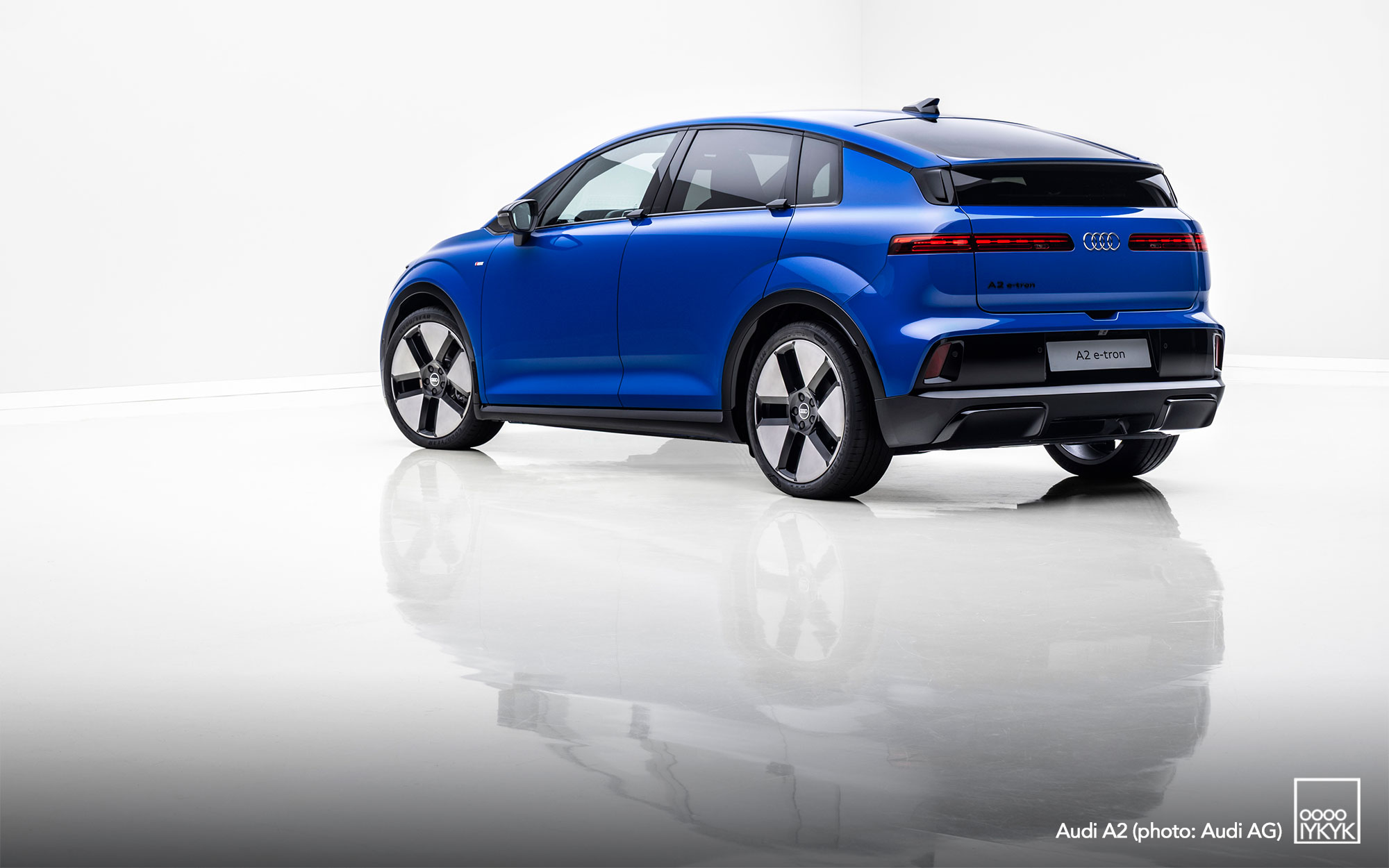

Audi’s lowest consumption figure for the new A2 e-tron comes from the 140 kW version with the optional efficiency package. At 12.8 kWh/100 km on the combined WLTP cycle, Audi calls it the most efficient model it has made. Aerodynamics and battery technology contribute to that result, but the rear drive unit offers a closer look at where the engineers found savings. They targeted the energy lost at each step between the battery and the wheels, from switching current in the inverter to stirring oil in the transmission.
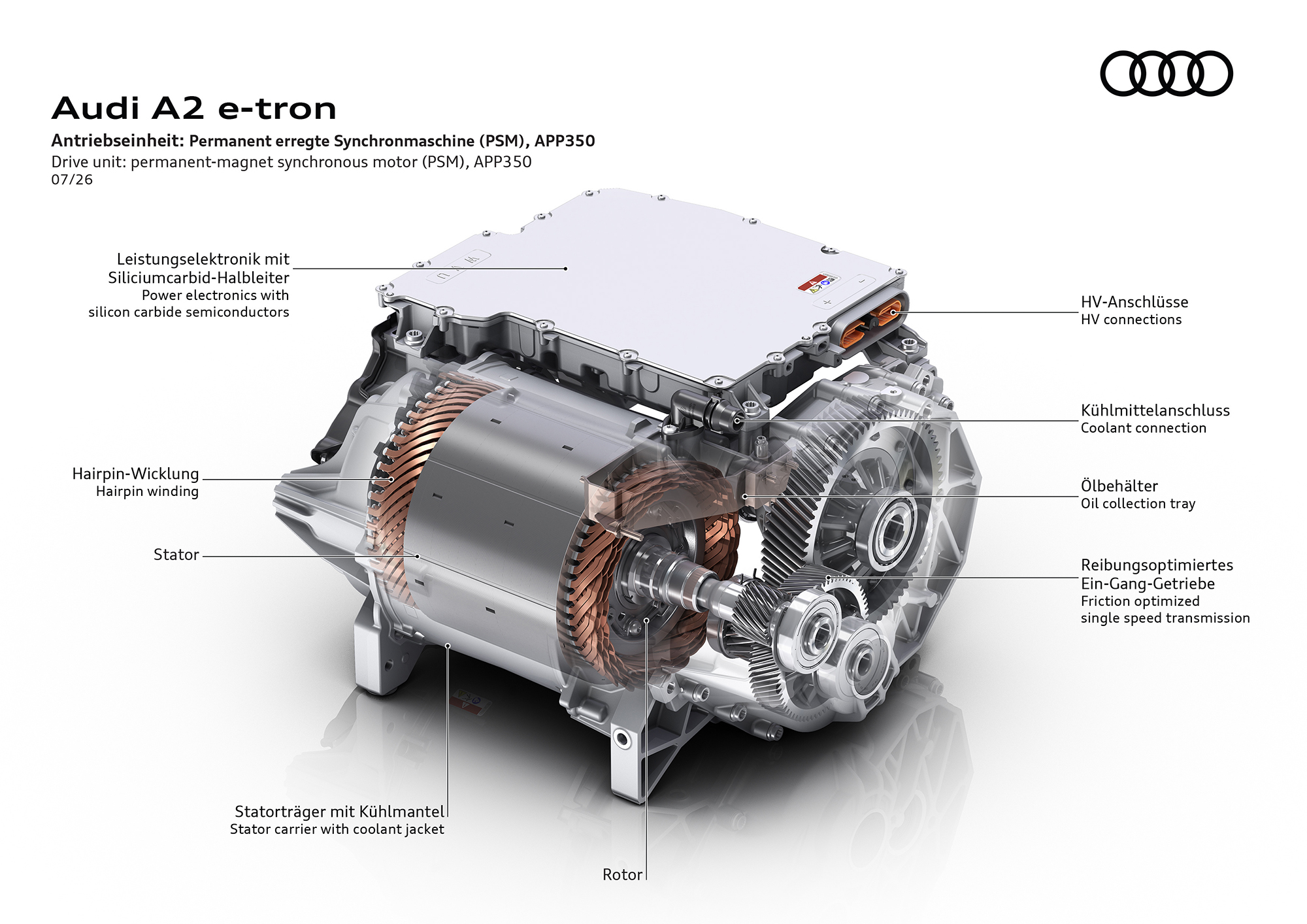
The drive unit is Volkswagen Group’s APP350, a 400-volt permanent-magnet synchronous motor mounted parallel to the rear axle and rated at up to 350 Nm. Audi’s development work focused on the operating conditions a driver encounters most often. An electric motor spends much of a trip producing a fraction of its rated output, so the way the system handles partial load can matter more to everyday consumption than how it performs at full throttle.
THE INVERTER SWITCHES LESS OFTEN
The inverter takes direct current from the battery and switches it electronically to produce the alternating current that drives the motor. Each switching event costs a small amount of energy. Audi’s new inverter uses silicon carbide MOSFETs in place of the silicon-based bipolar transistors used previously. The new devices reduce energy lost per switching event, and Audi reports inverter efficiency above 97 percent.
Software reduces the number of switching events as well. The inverter can vary its switching frequency with motor speed and load, dialing it back where the motor can run efficiently with fewer switching events. Audi singles out city traffic and rural roads as conditions where the strategy pays off. The ability to switch quickly gives the controller flexibility, while the savings come from switching less often when the operating point allows it.
THINNER STEEL AND A DIFFERENT WINDING
The APP350 also uses thinner steel laminations in the rotor. Audi puts the reduction in lamination thickness at more than 30 percent compared with the previous APP310. Stacking thinner sheets limits the eddy currents that can circulate in the steel as the magnetic field changes, reducing the energy dissipated as heat.
On the stationary side of the motor, Audi switched the stator windings from a star connection to a delta connection and reduced the number of parallel branches. Changing the winding layout changes how the motor uses voltage and current across its operating range. Audi says the revised configuration improves efficiency at partial load while preserving the torque and power the drive was designed to deliver.
TWO GEAR RATIOS AND LESS OIL DRAG
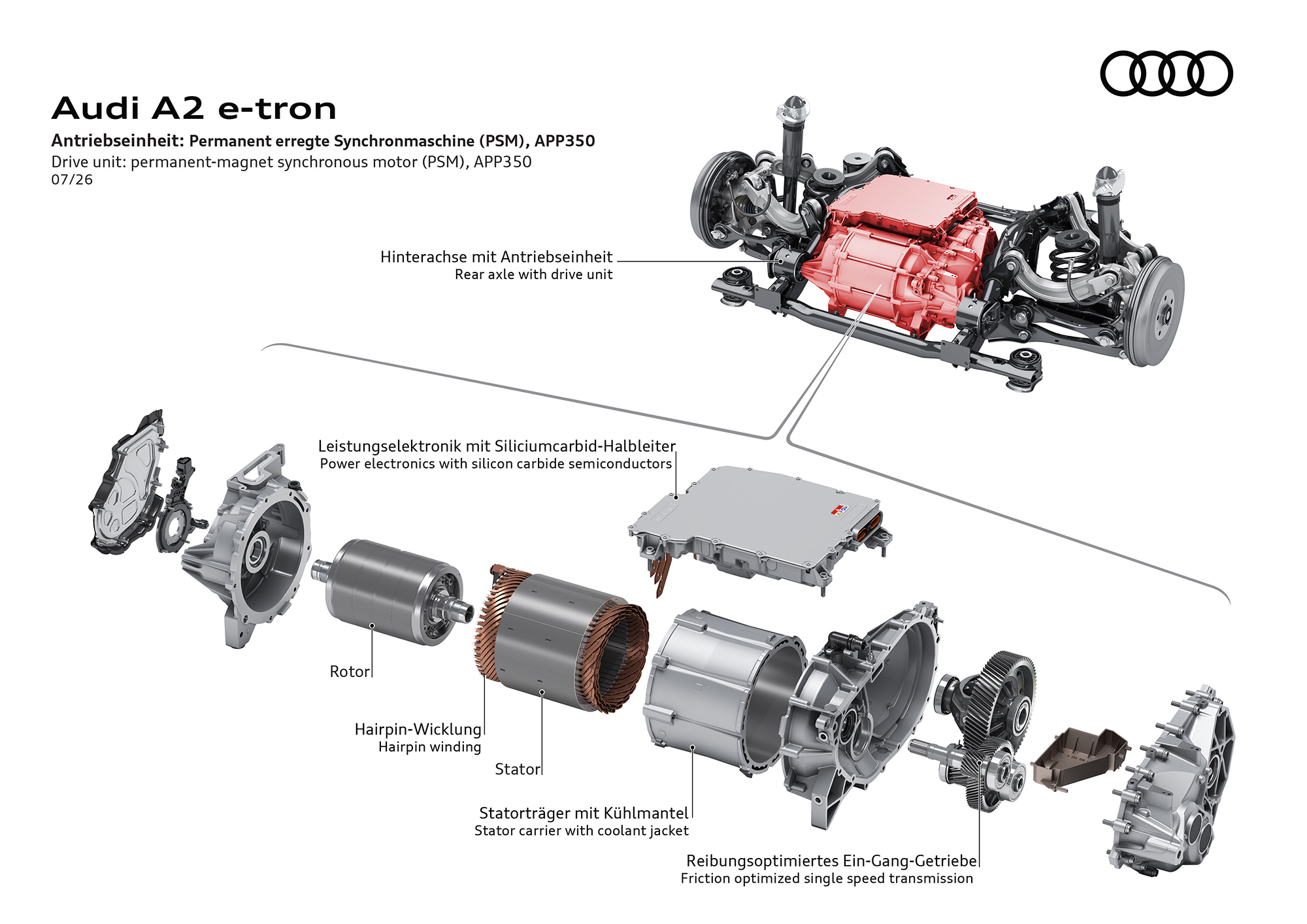
The A2 e-tron uses a fixed reduction gear, with the ratio matched to the motor’s output. The 125 kW and 140 kW versions use a 10.21:1 ratio, while the 170 kW version uses a shorter 11.53:1 ratio. At a given road speed, the taller gearing of the two lower-output versions lets the motor turn more slowly. Audi selected each ratio to keep its motor closer to the efficient areas of its operating map in everyday driving.
The gears themselves get a finer machined finish to reduce friction where the teeth mesh. The smoother surfaces also allow Audi to use a very low viscosity transmission oil. Together with revised oil routing, the thinner lubricant cuts the energy the gears spend churning oil as they turn.
QUIETER FROM A STANDSTILL
Audi used two measures to address motor noise. The first is mechanical. Staggering the rotor segments changes how electromagnetic forces act along the rotor, making them less likely to excite its primary twisting vibration. Audi says the change nearly eliminates some of the dominant tones heard when pulling away from a stop.
The second is in the inverter software. At certain speeds and loads, the controller adds selected high-frequency components to the motor current to counter the forces that produce unwanted tones. It tackles the noise at the motor itself, where a narrow band of sound can be particularly noticeable as the car pulls away.