

Audi has released the first technical details of the upcoming A2 e-tron ahead of its full debut this fall. The new compact electric model is rated at a preliminary 12.8 kWh per 100 kilometers under WLTP testing in its 140-kW configuration with the optional efficiency package, making it the most efficient Audi developed to date.
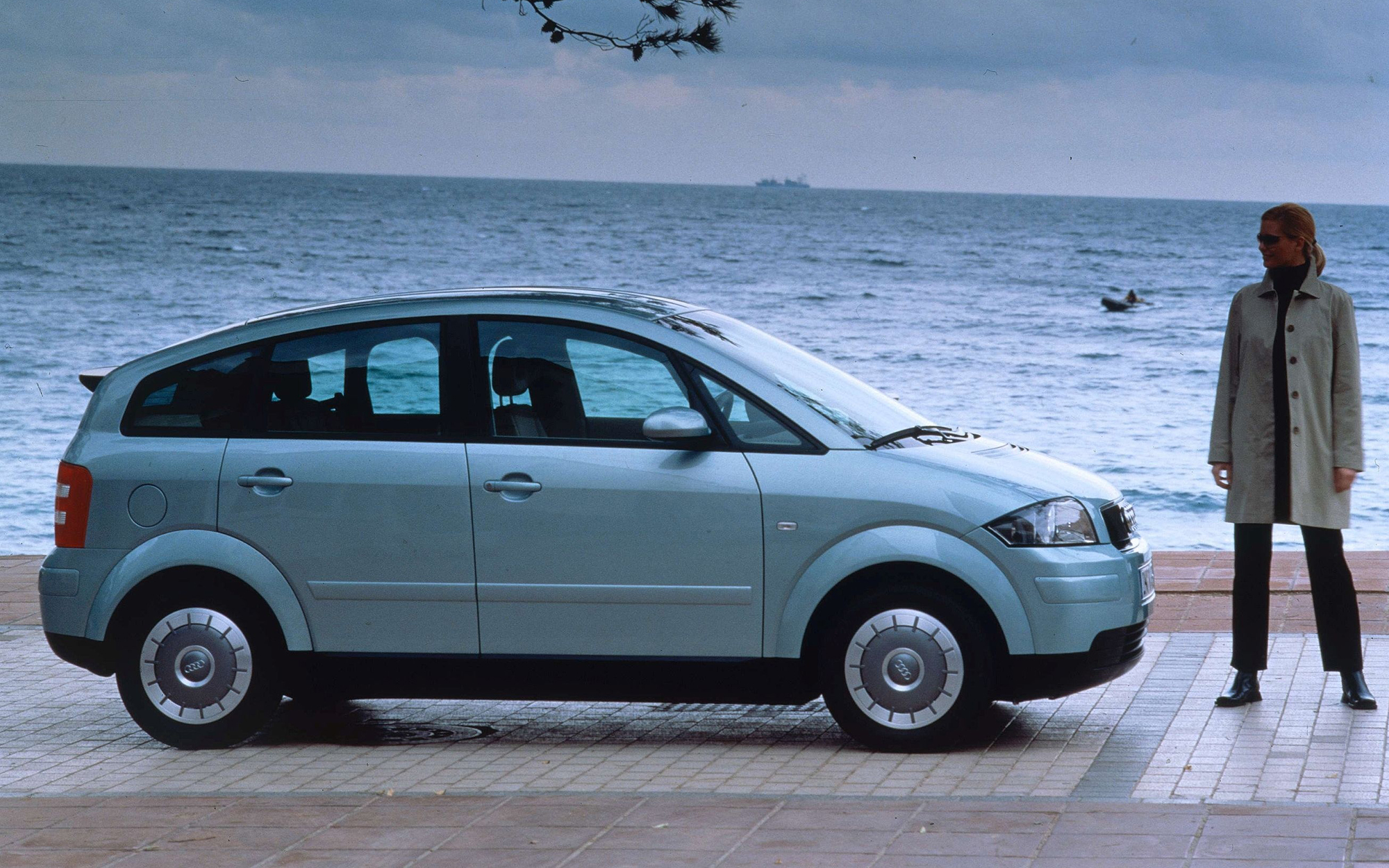
The A2 e-tron is also positioned as a direct continuation of the original A2’s efficiency-focused engineering philosophy. Introduced in 1999, the first-generation A2 used an aluminum body structure, compact packaging and low aerodynamic drag to reduce fuel consumption. Its 1.2 TDI variant was rated at approximately three liters per 100 kilometers under the NEDC test cycle.
‘
Audi CEO Gernot Döllner says that original model remained an important reference point during development of the new car.
“The Audi A2 has been a constant in my career ever since I joined the Volkswagen Group in the 1990s,” Döllner said. “Even then, its groundbreaking three-liter version made efficiency its hallmark. This is precisely the vision we are carrying forward with the new A2 e-tron.”
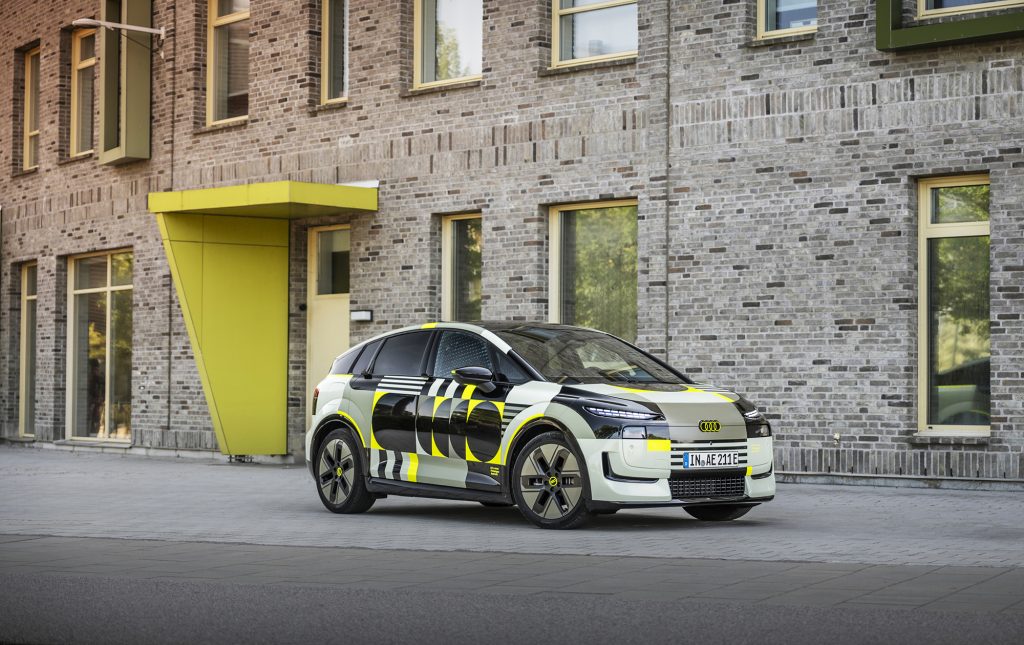
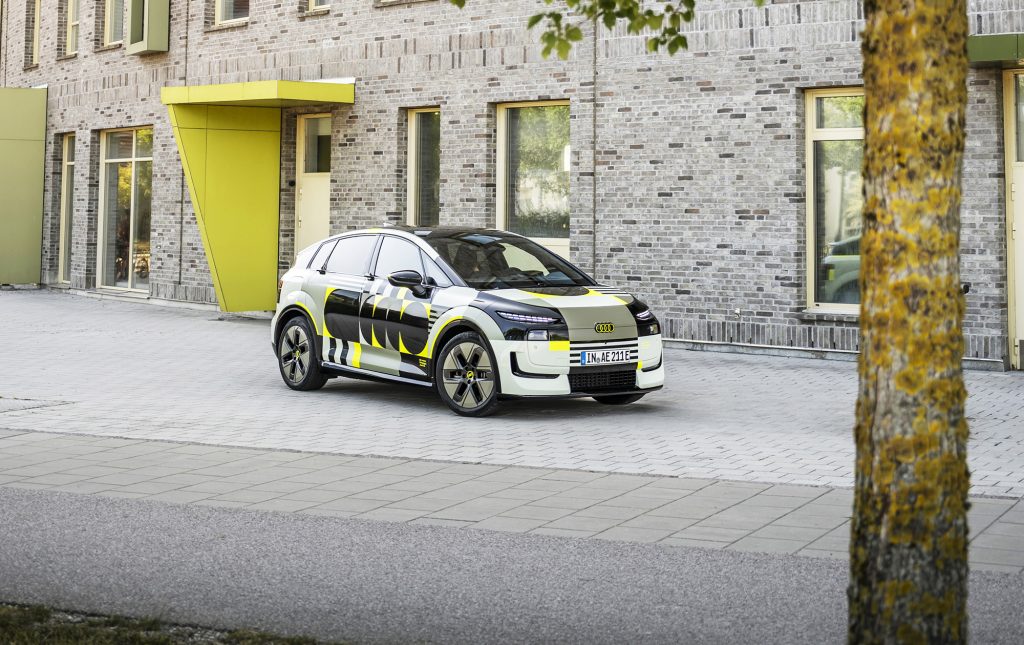
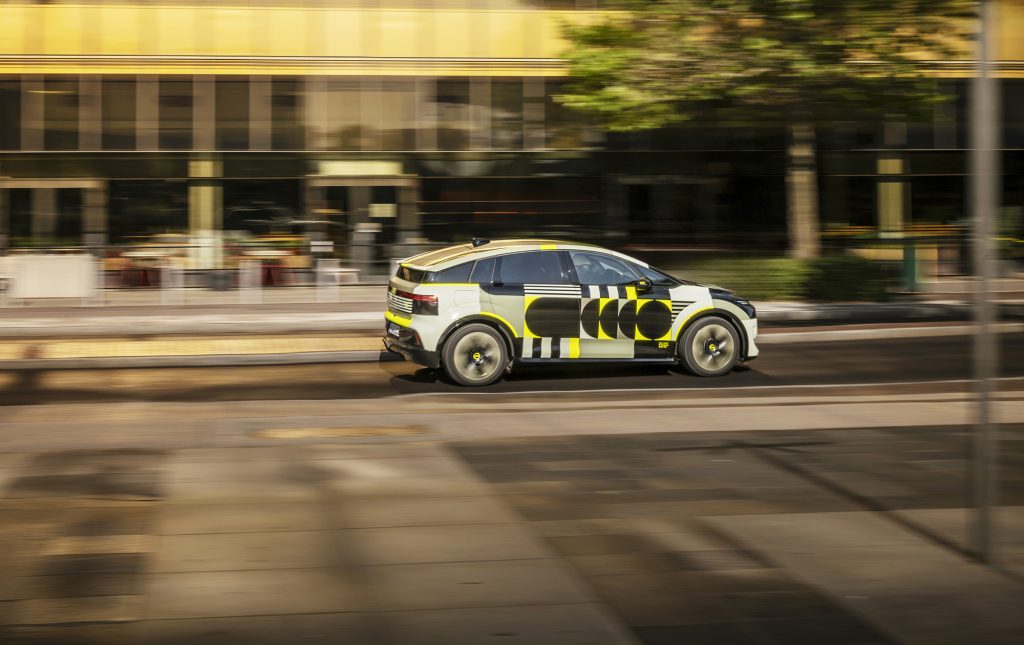
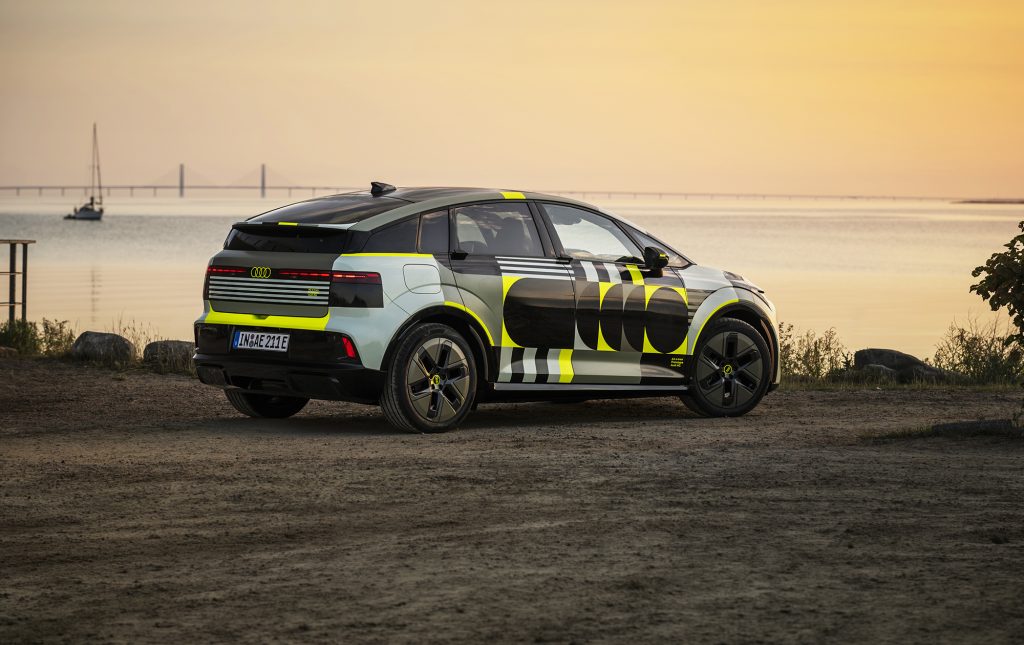
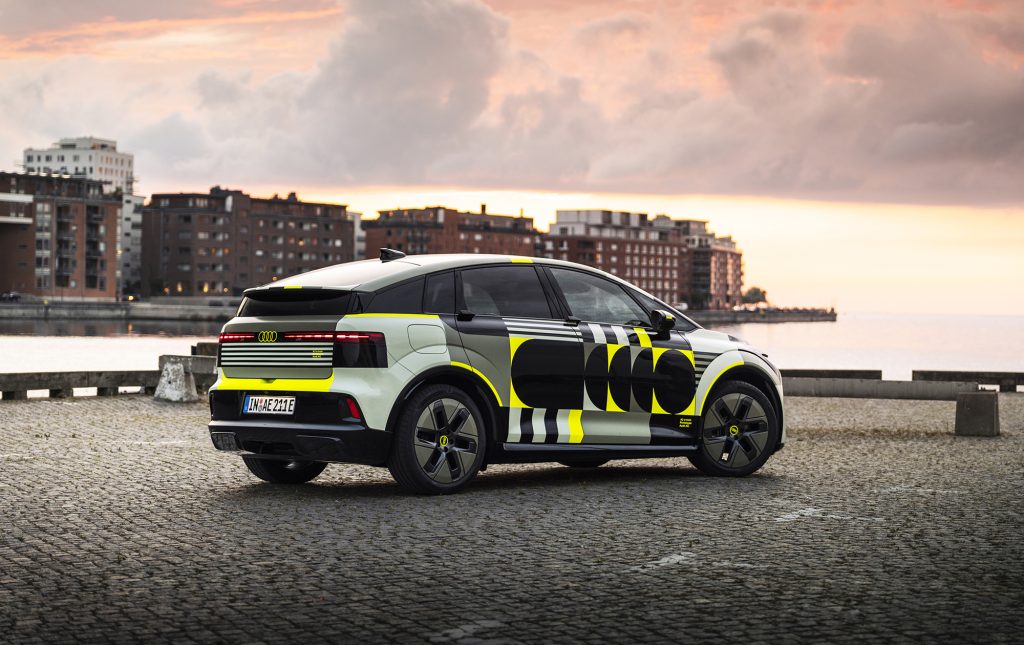
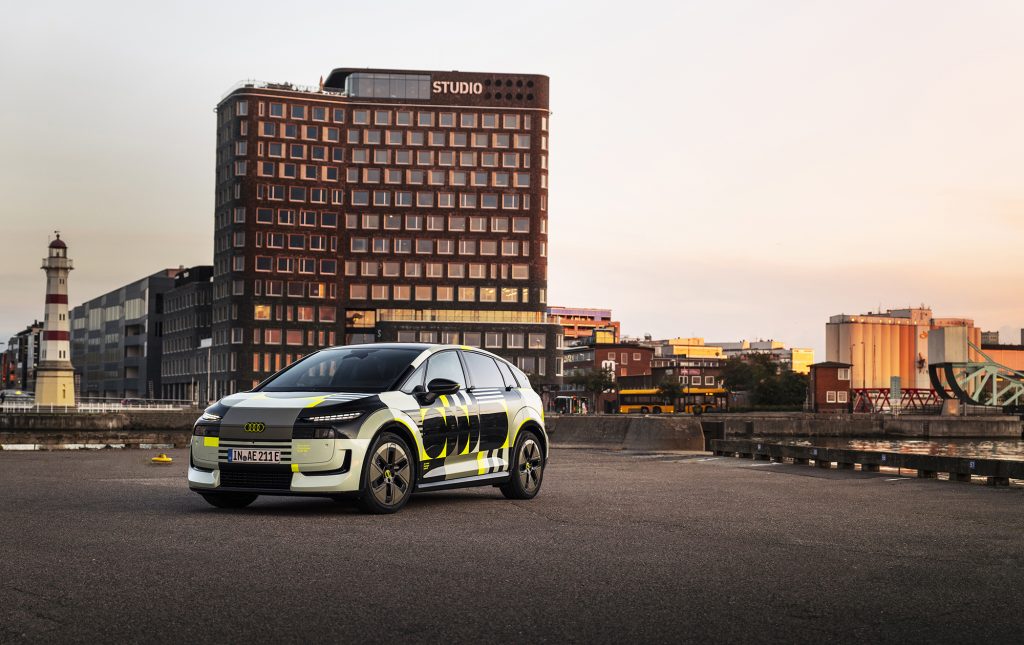
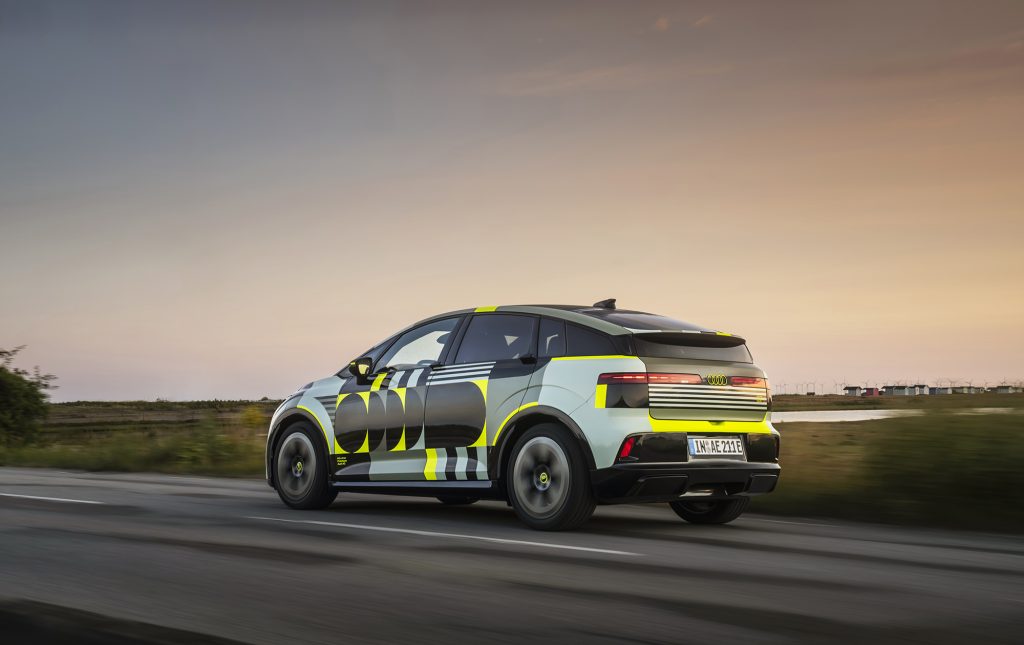
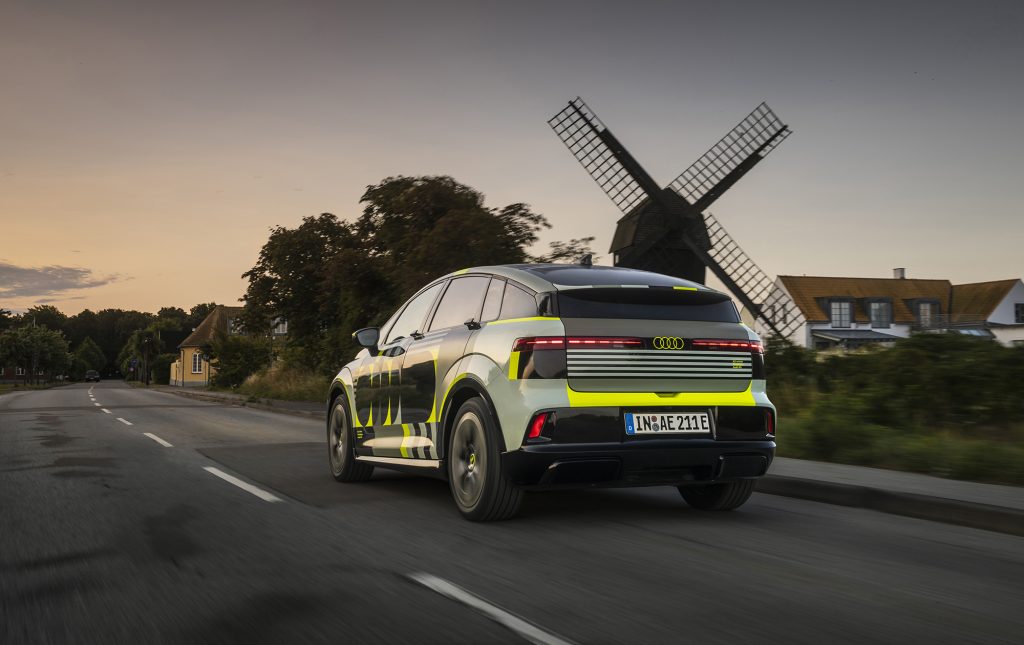
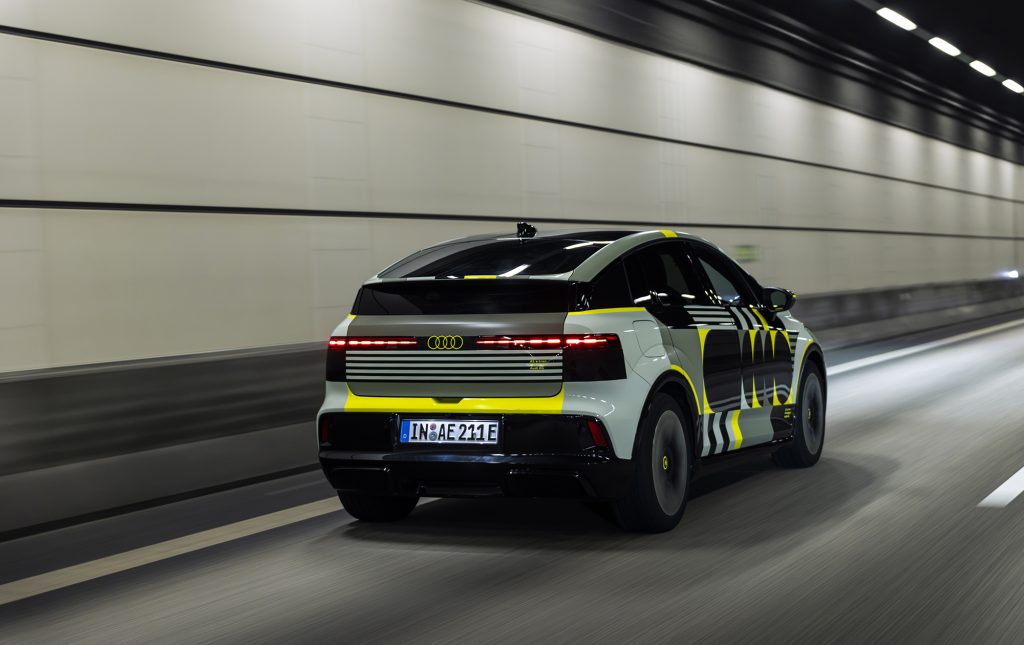
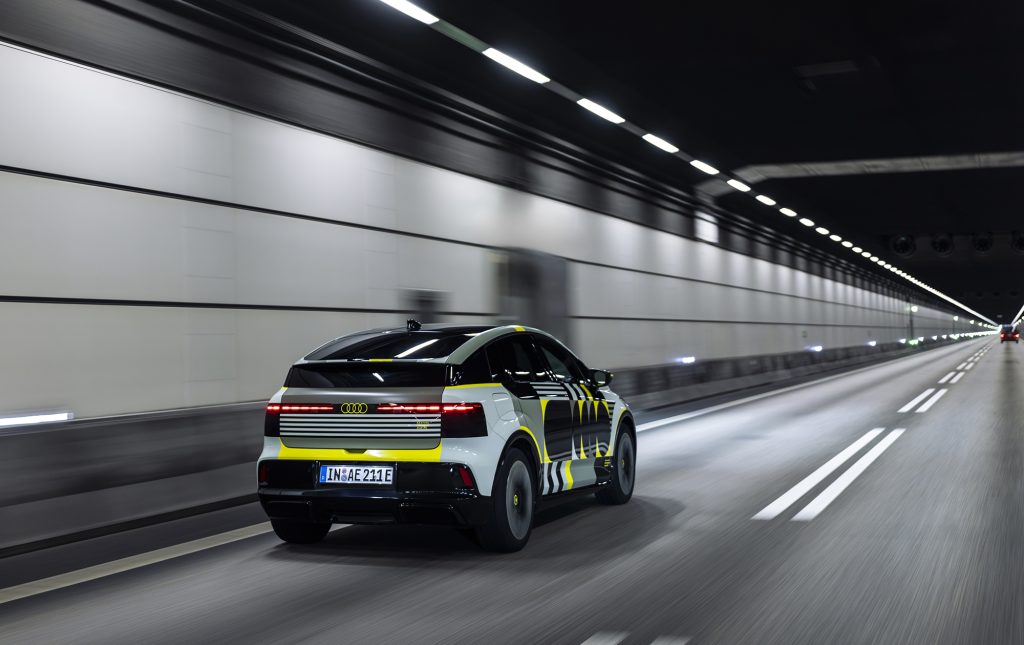
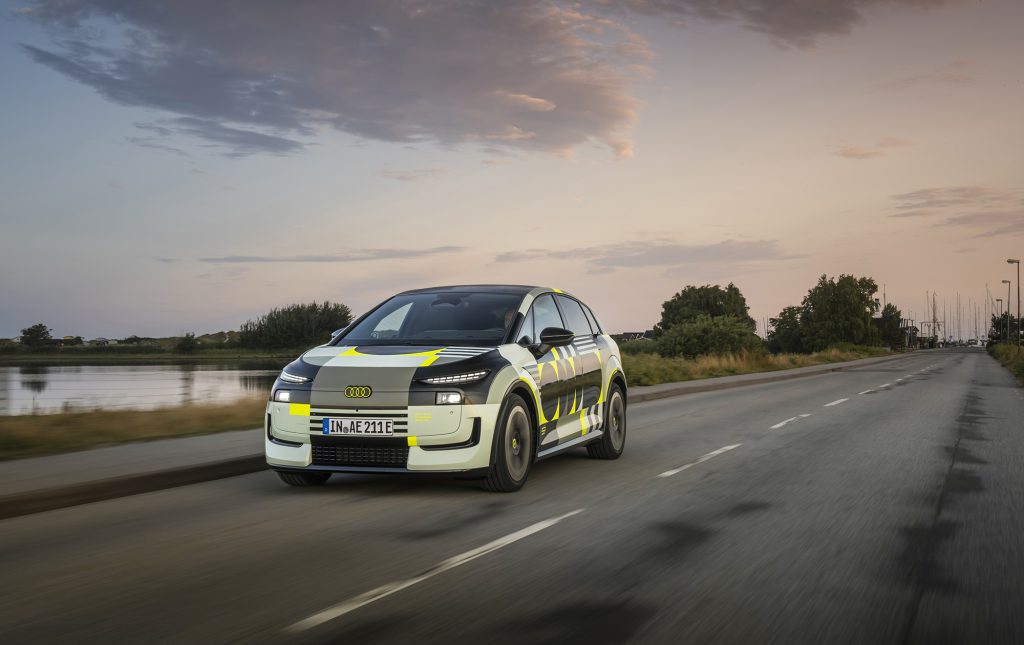
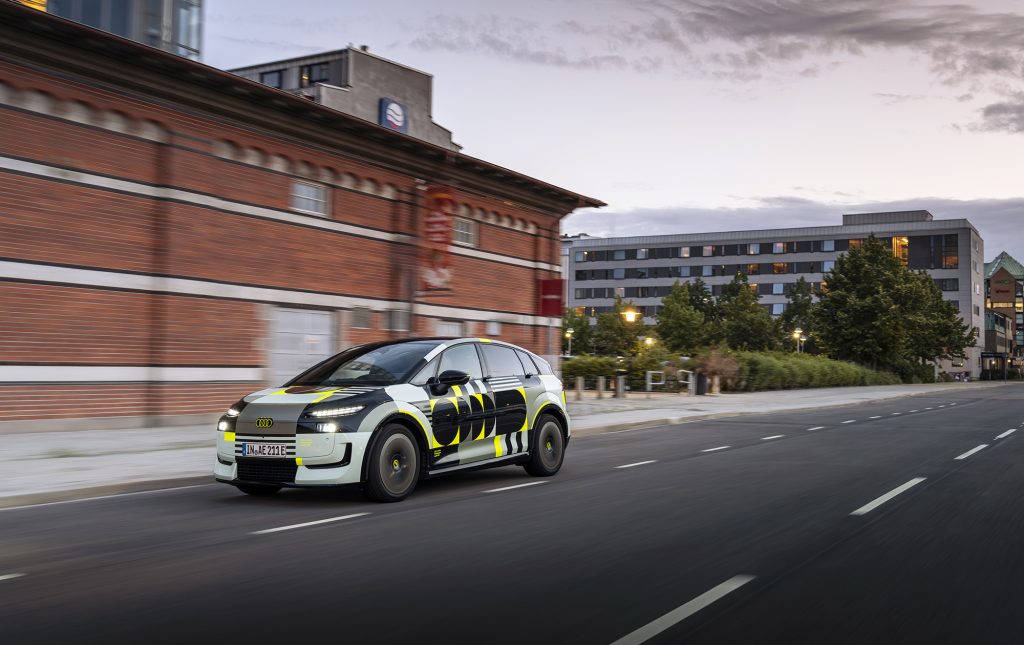
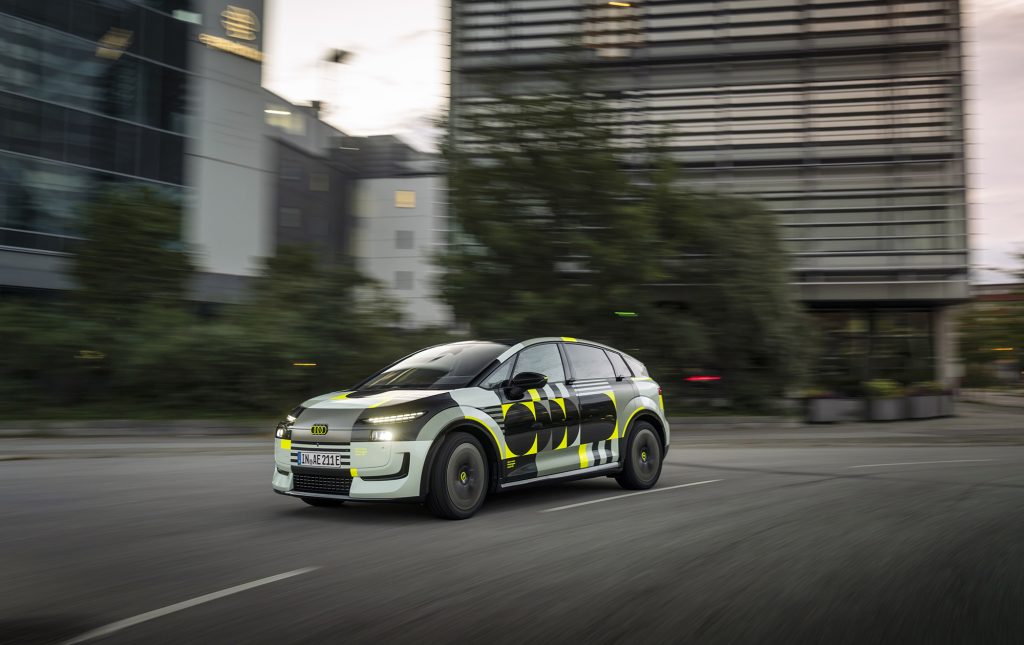
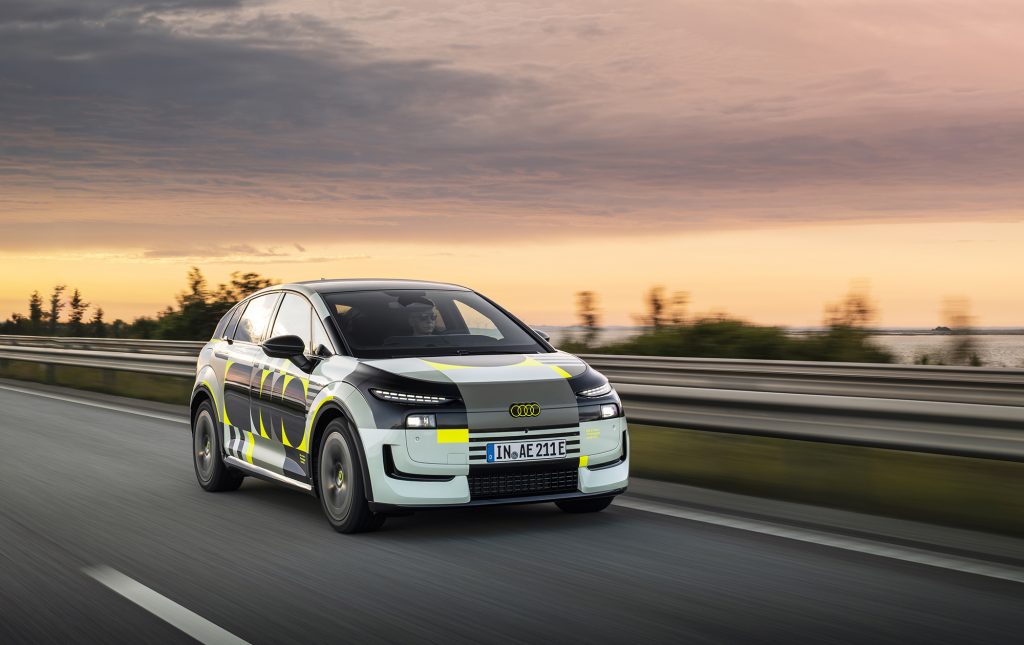
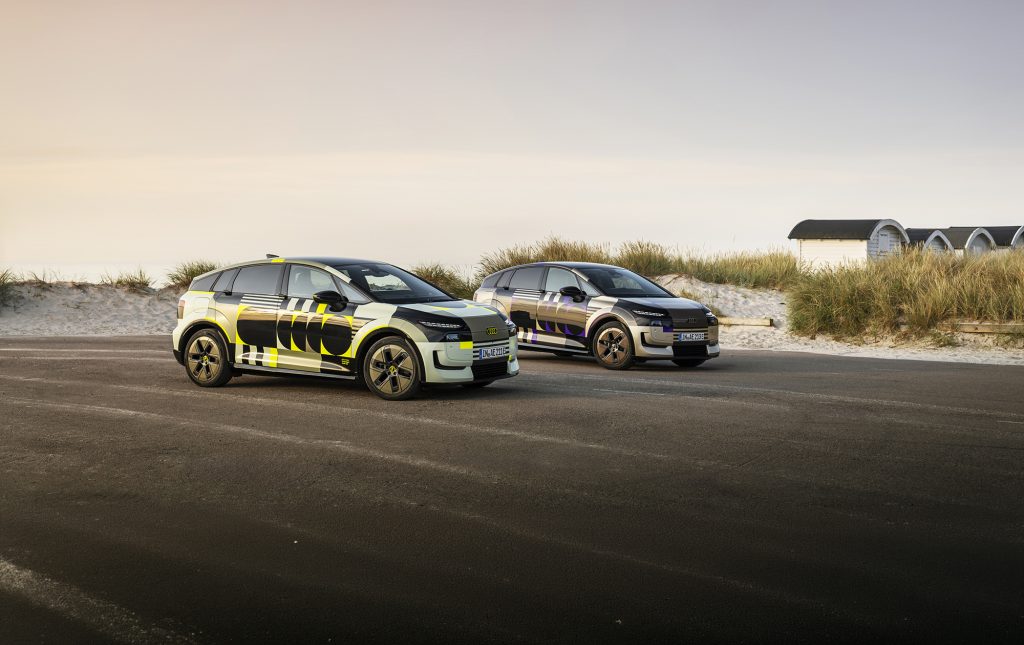
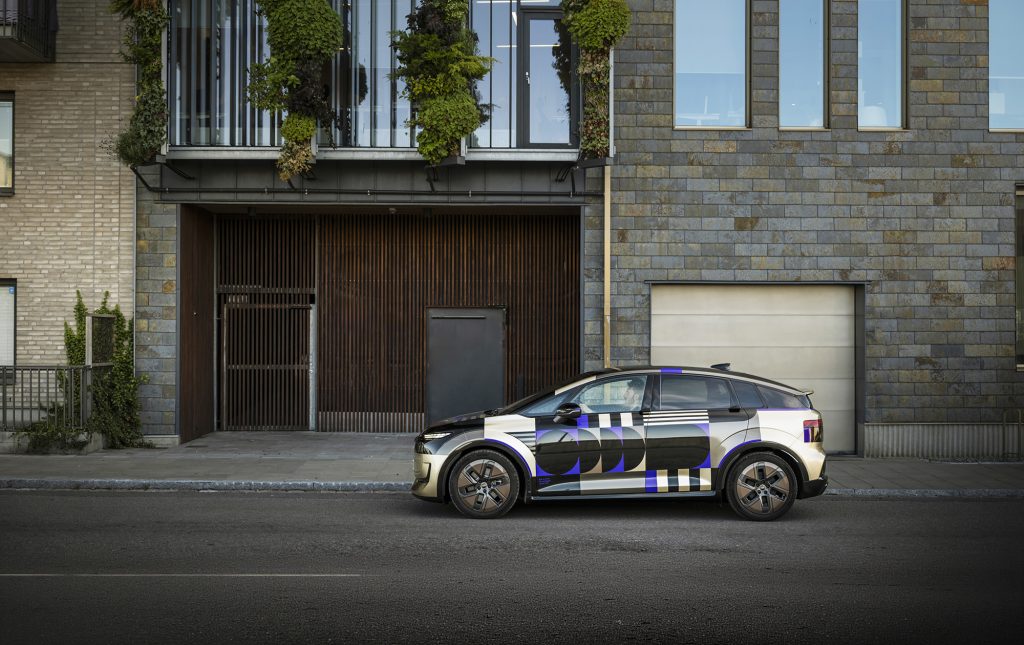
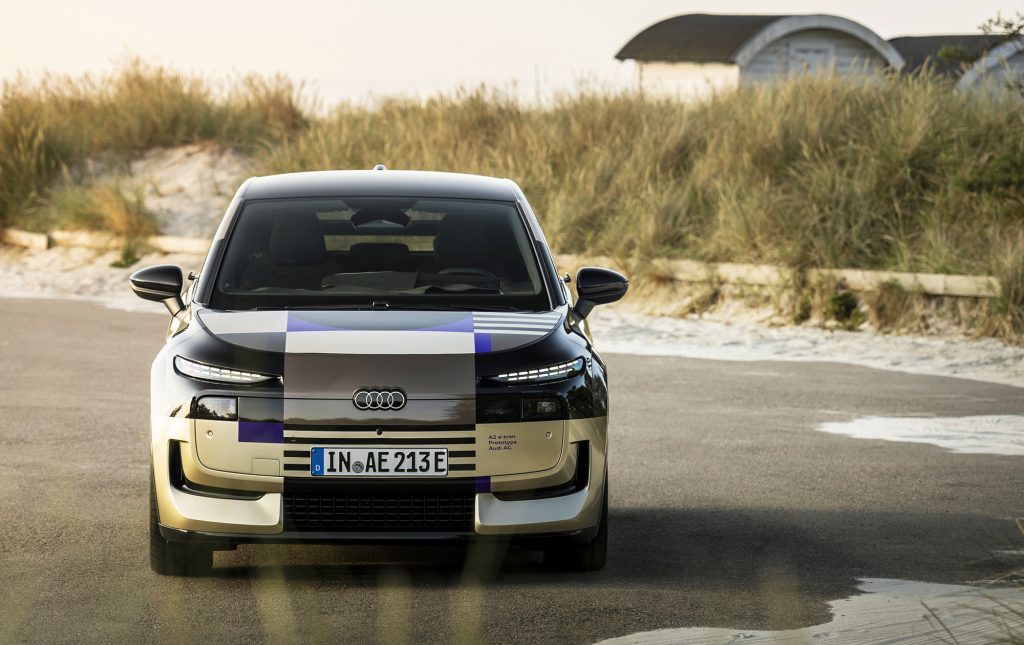
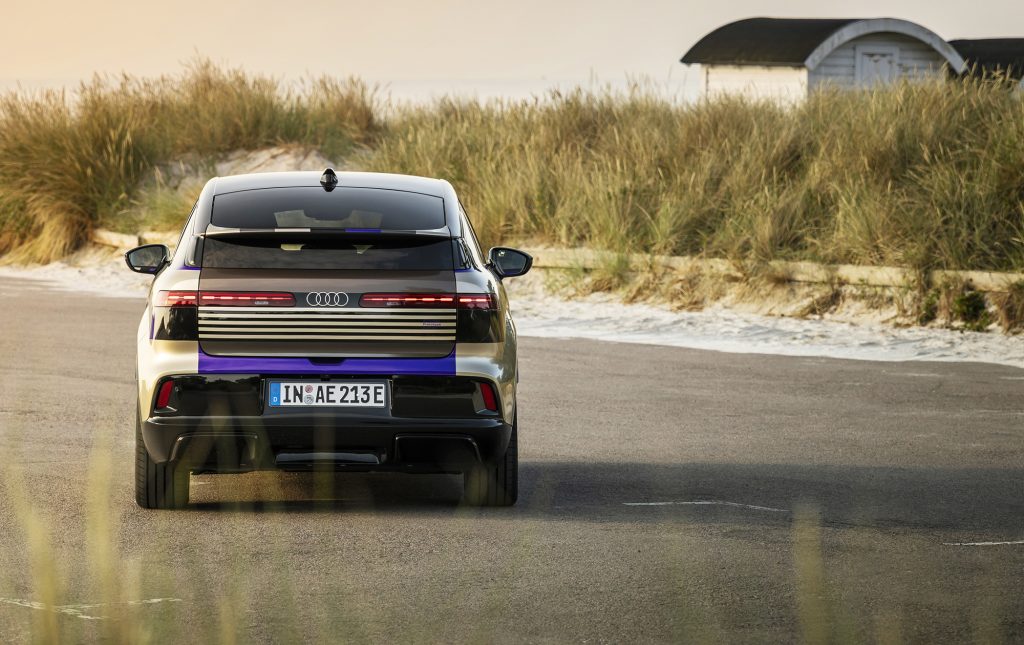
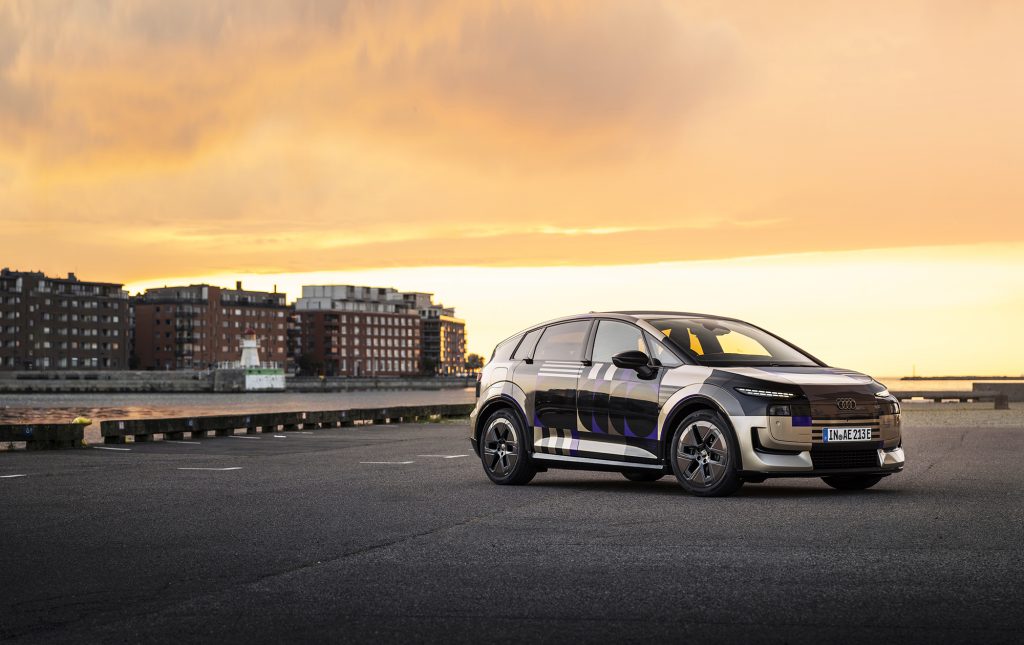
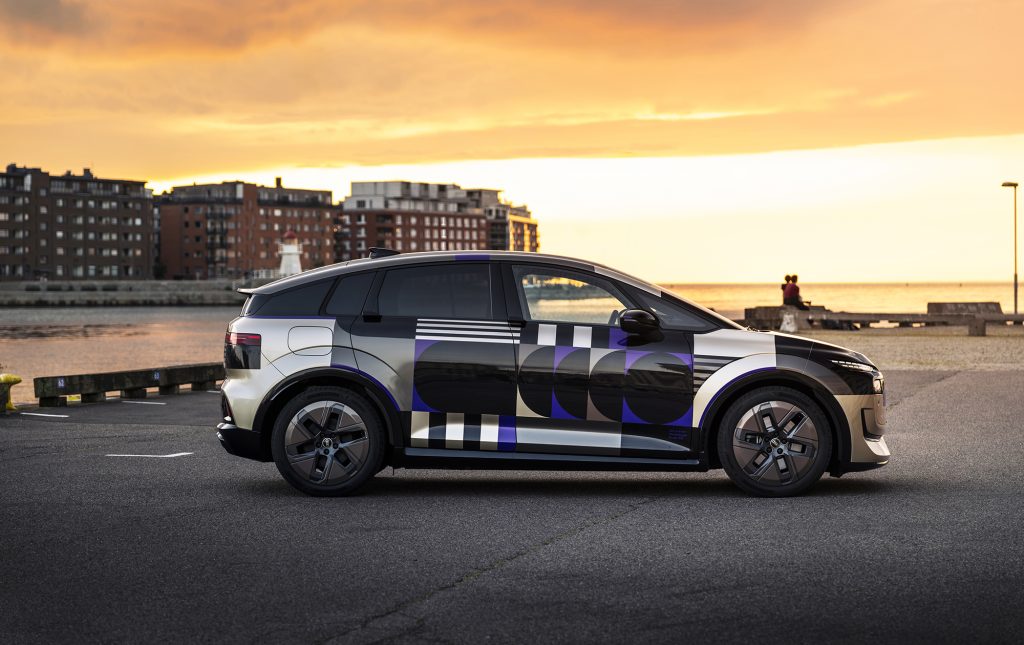
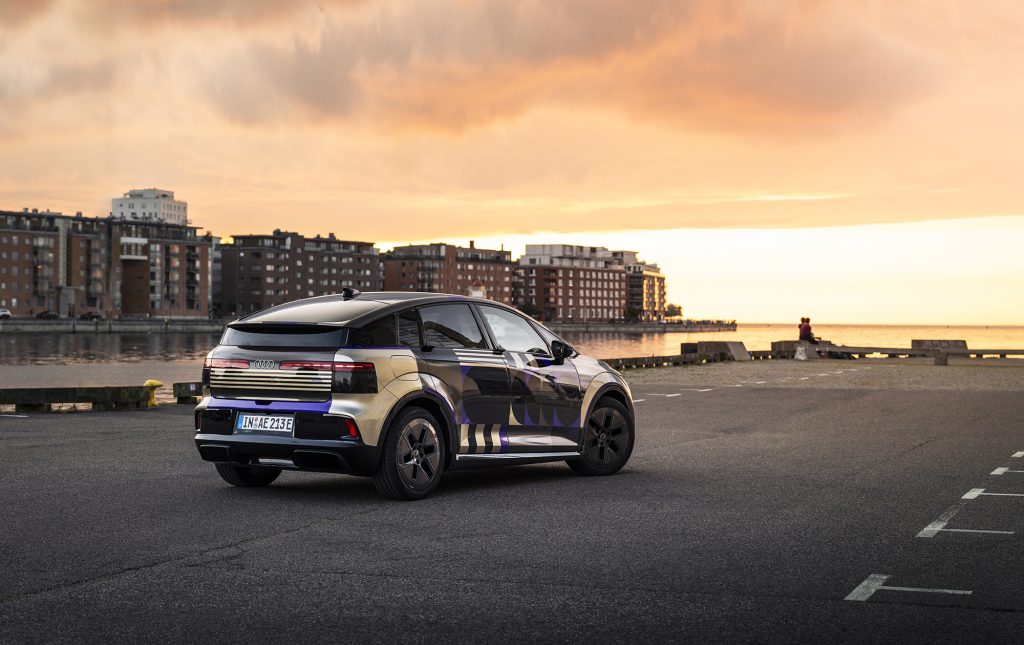
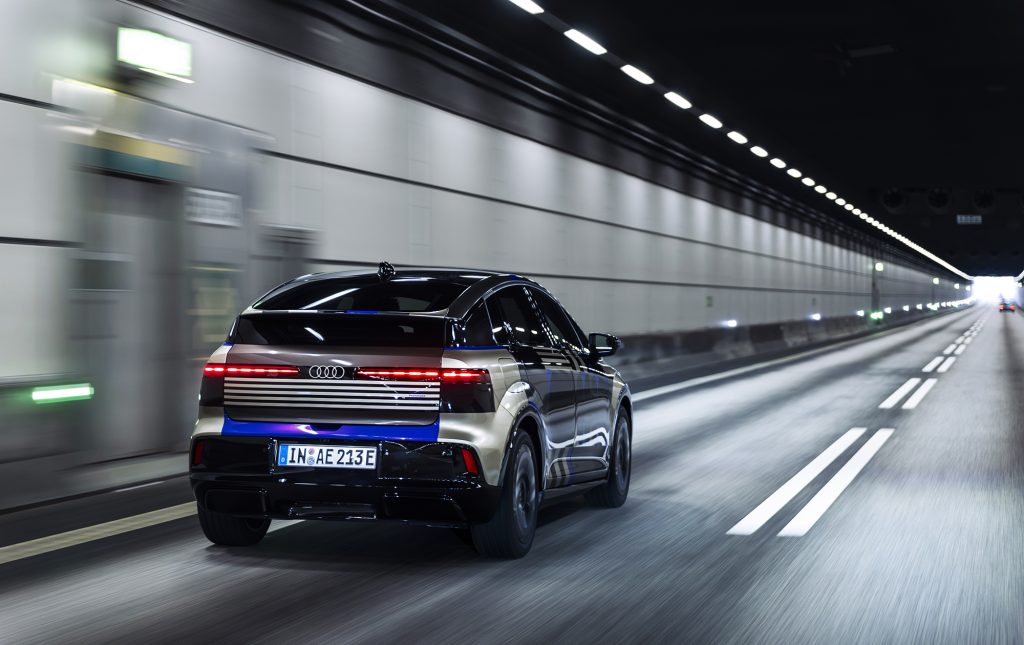
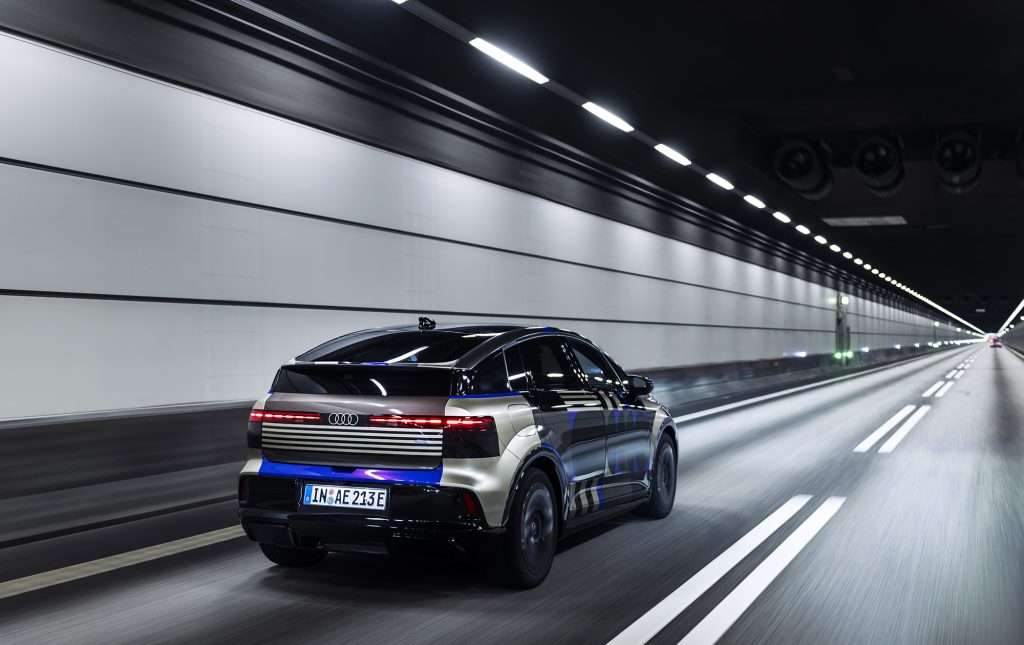
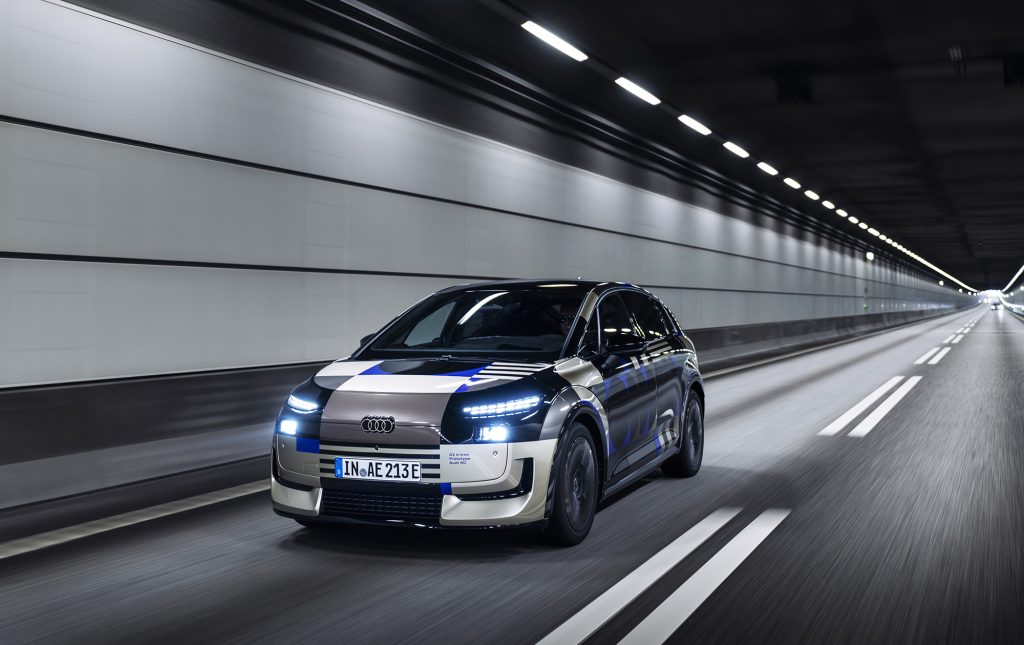
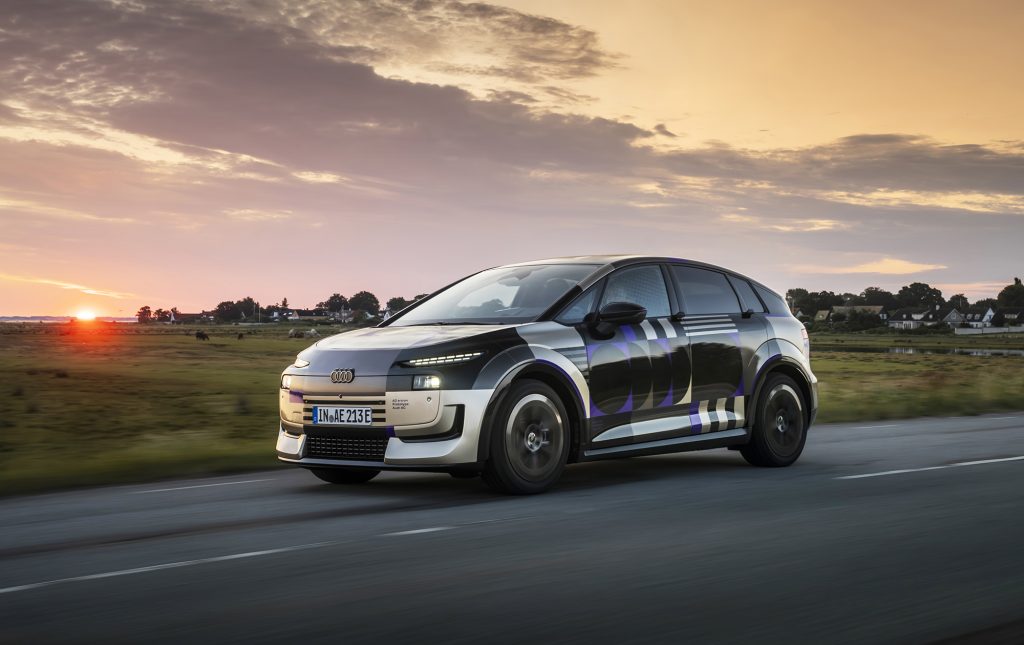
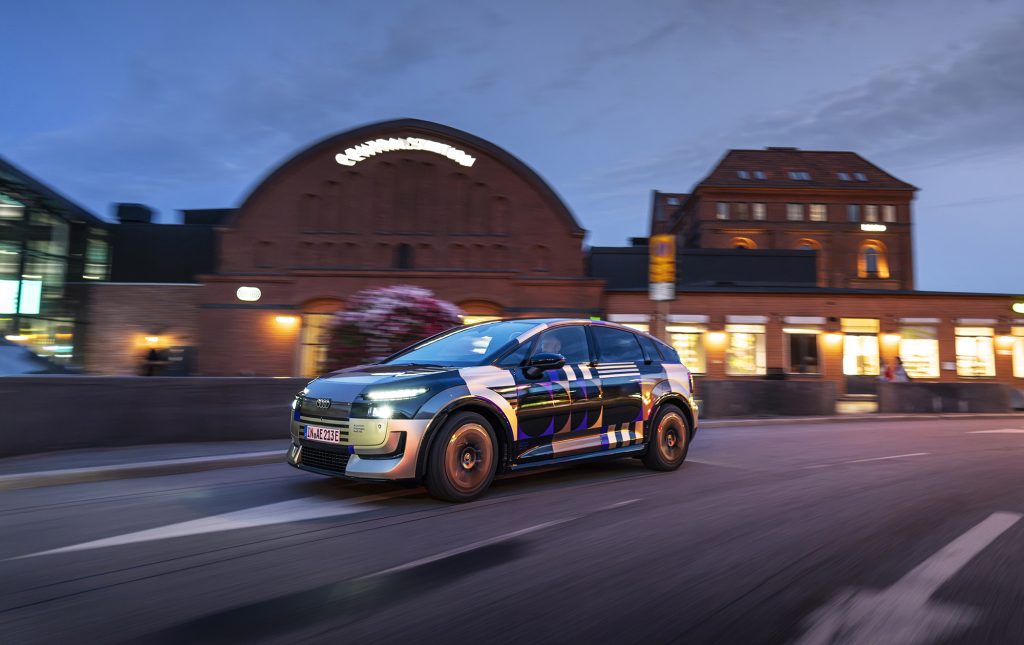
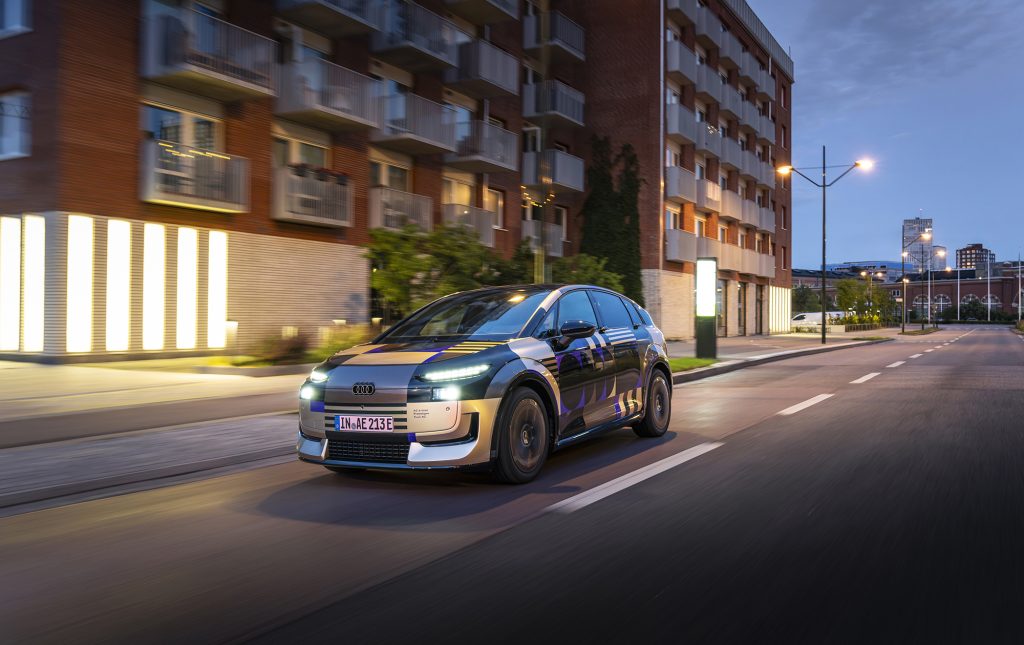
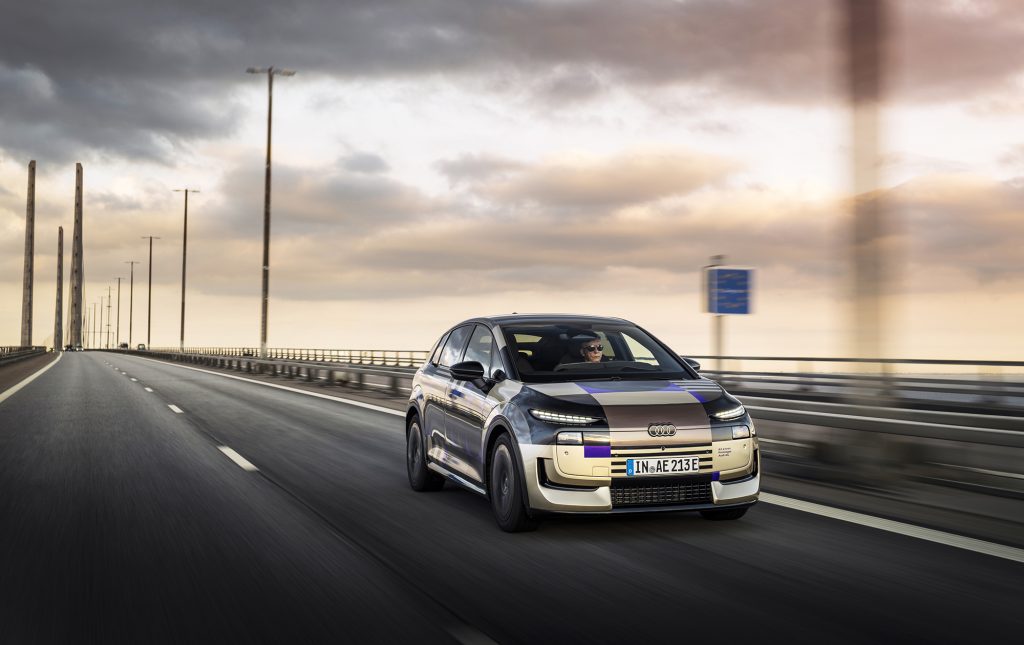
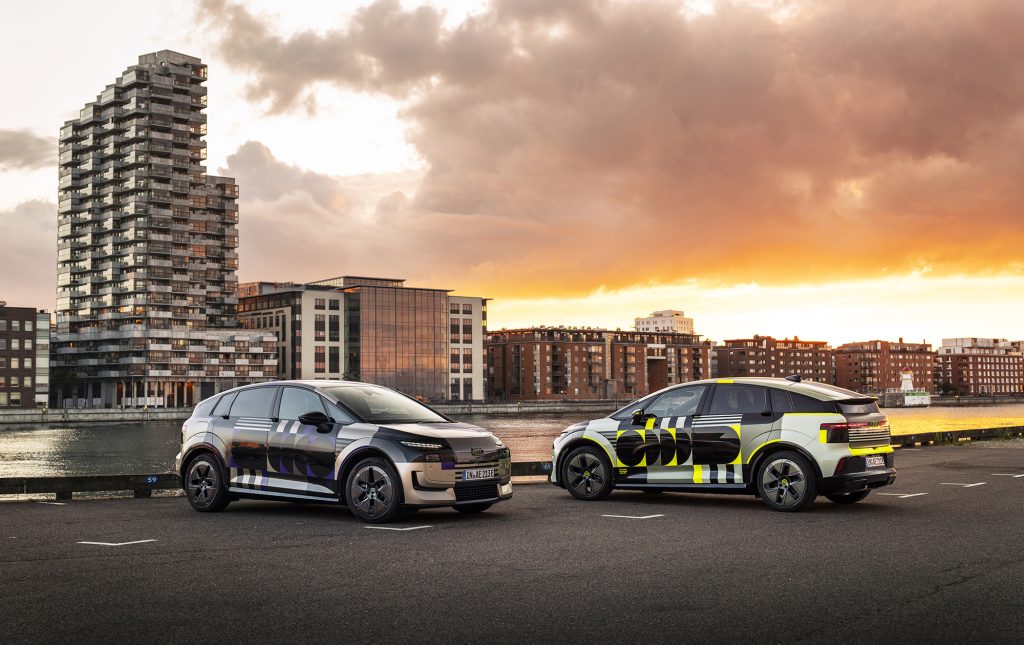
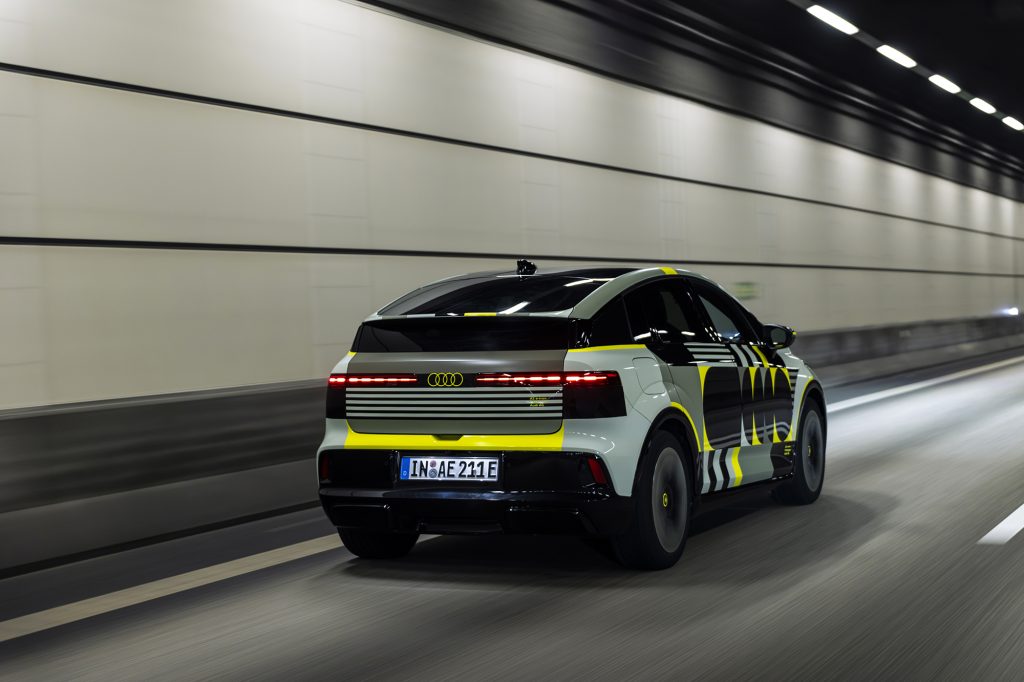
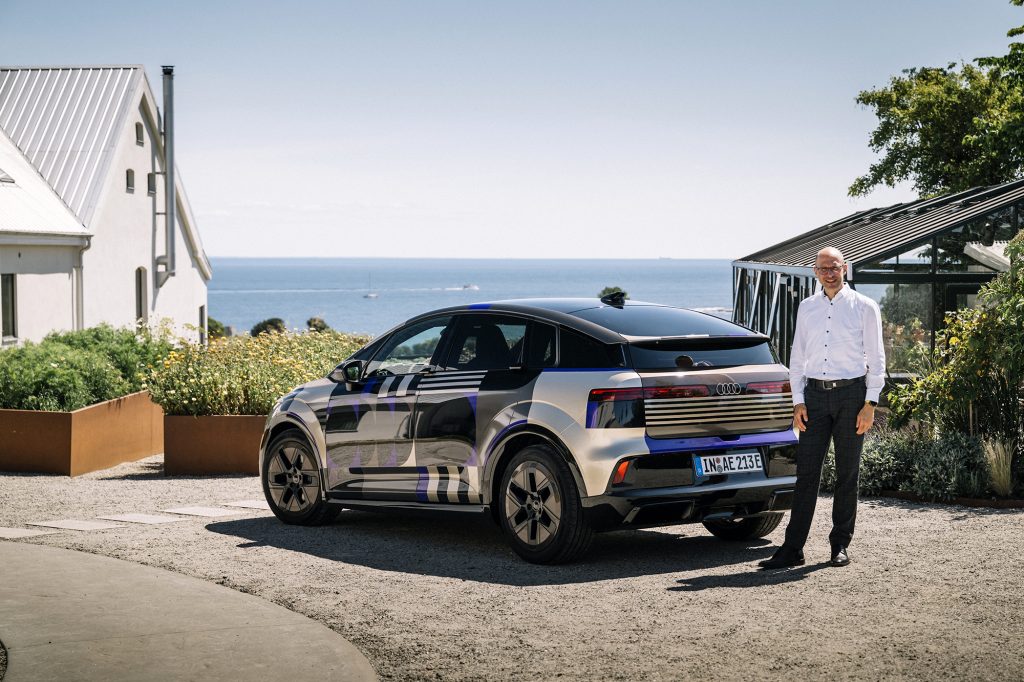
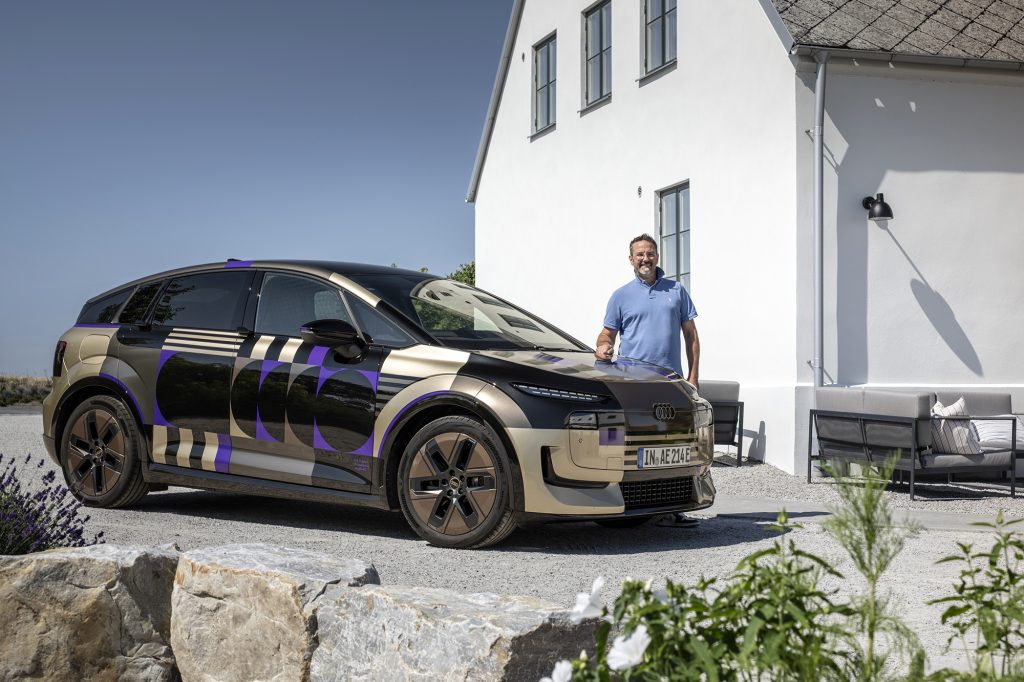
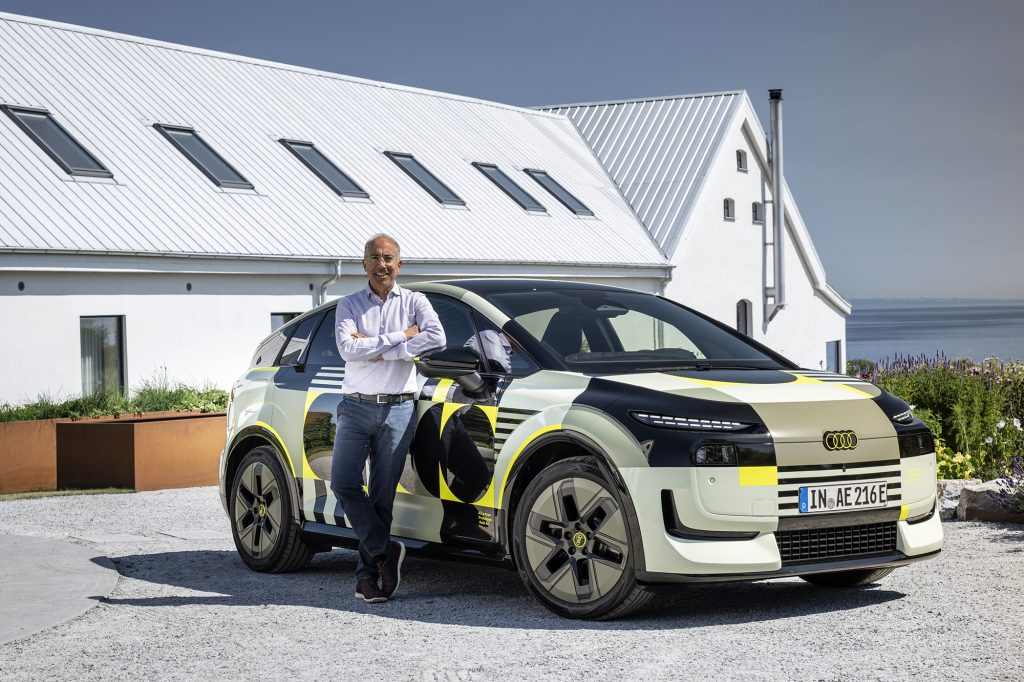
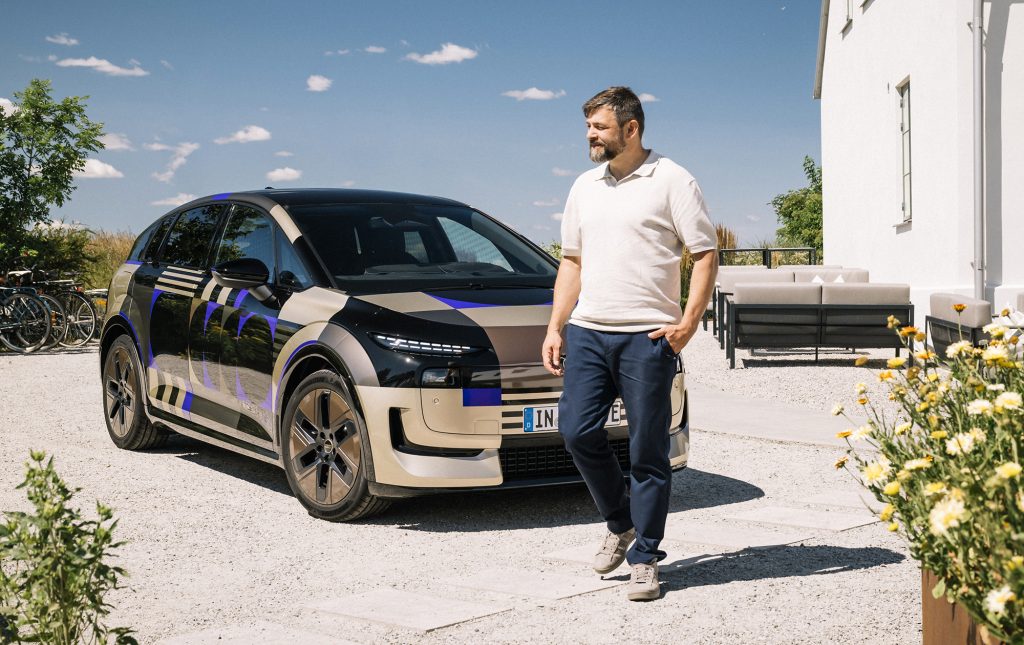
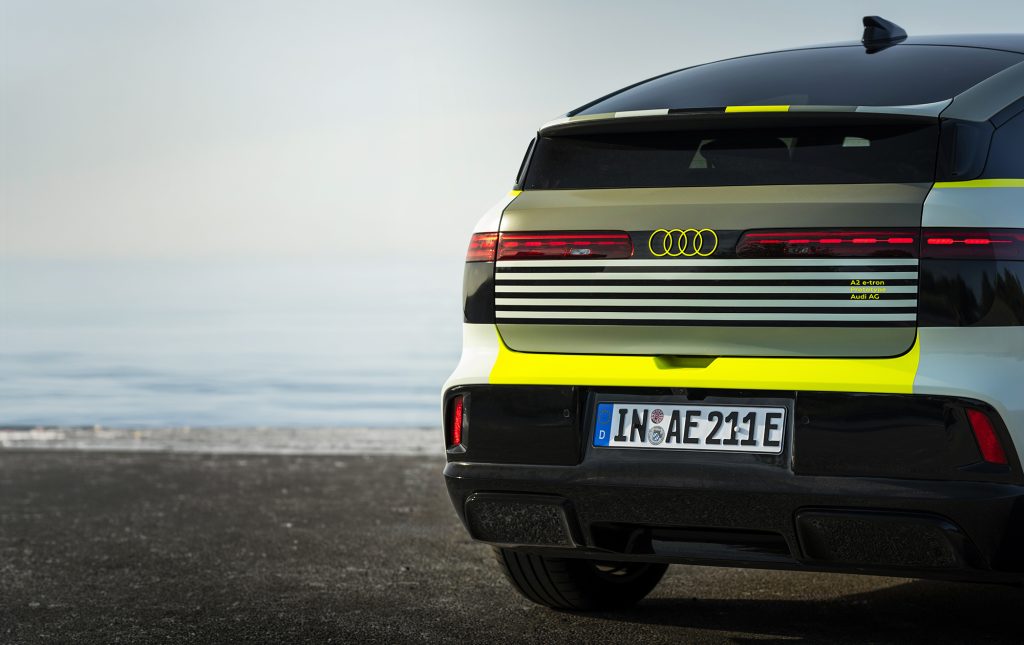
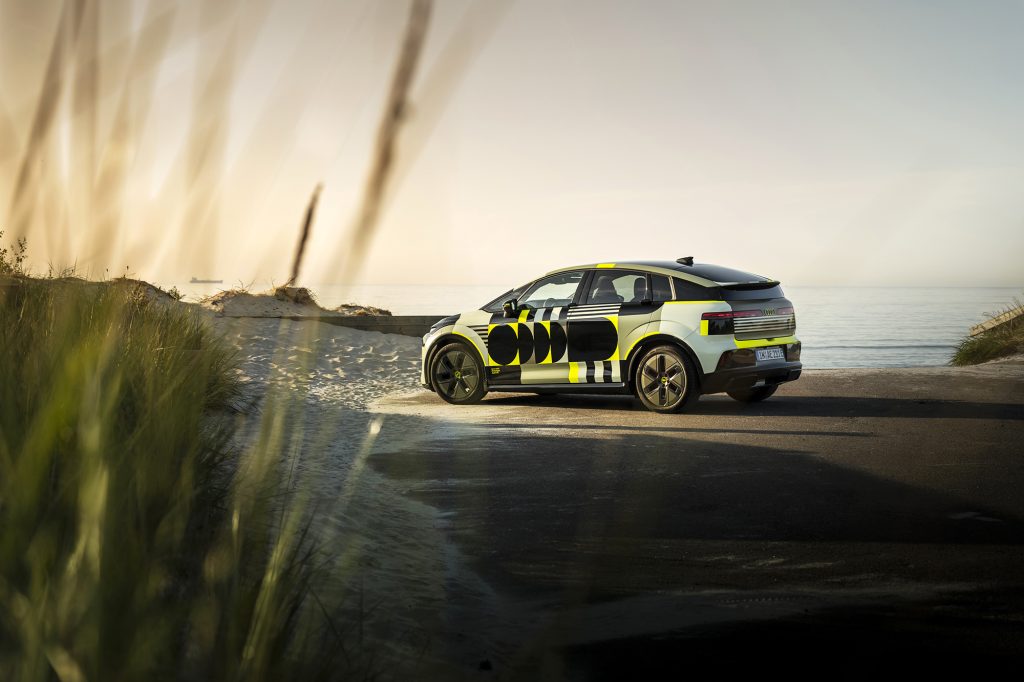
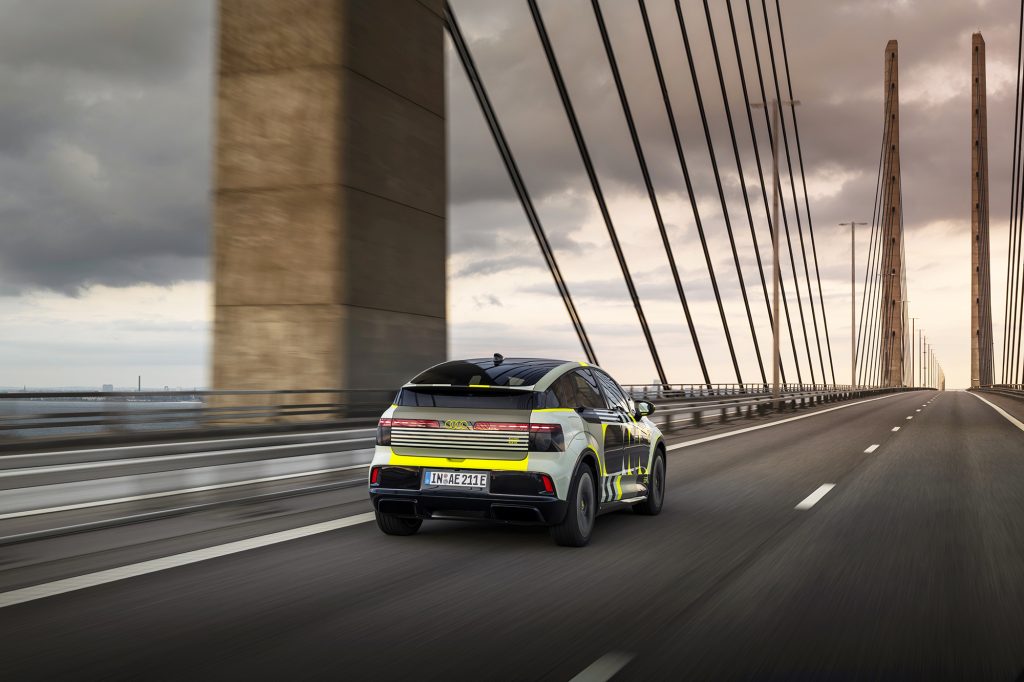
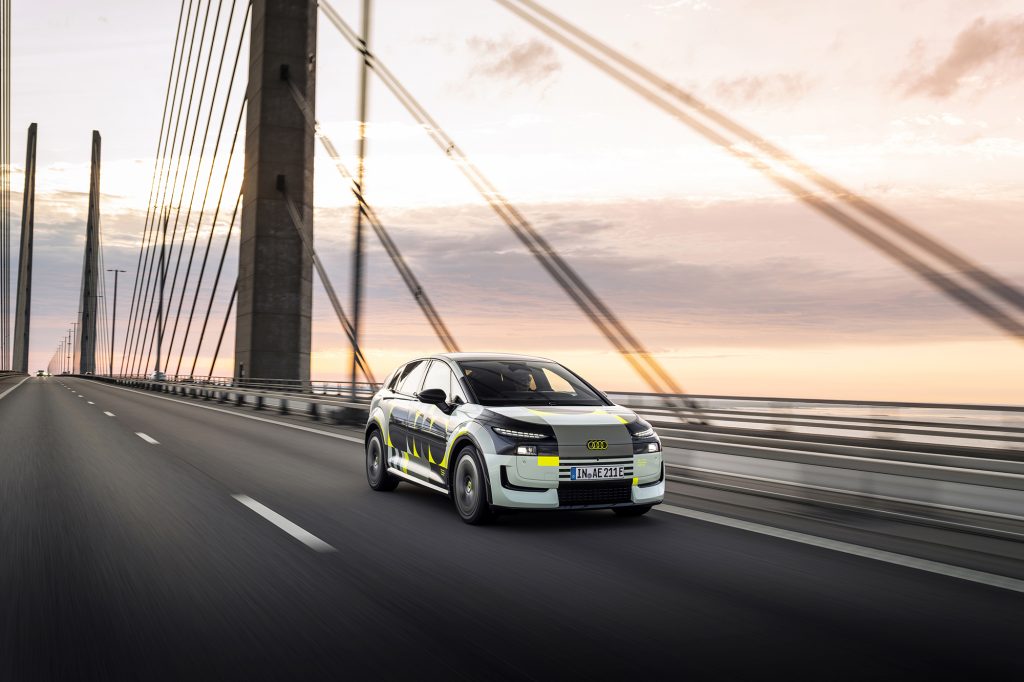
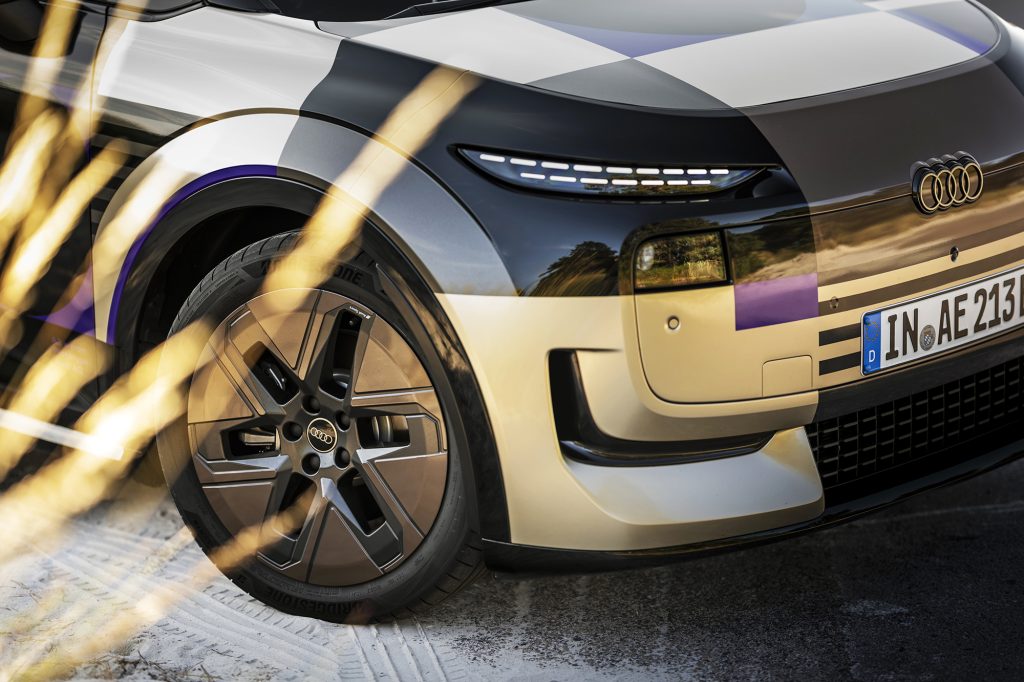
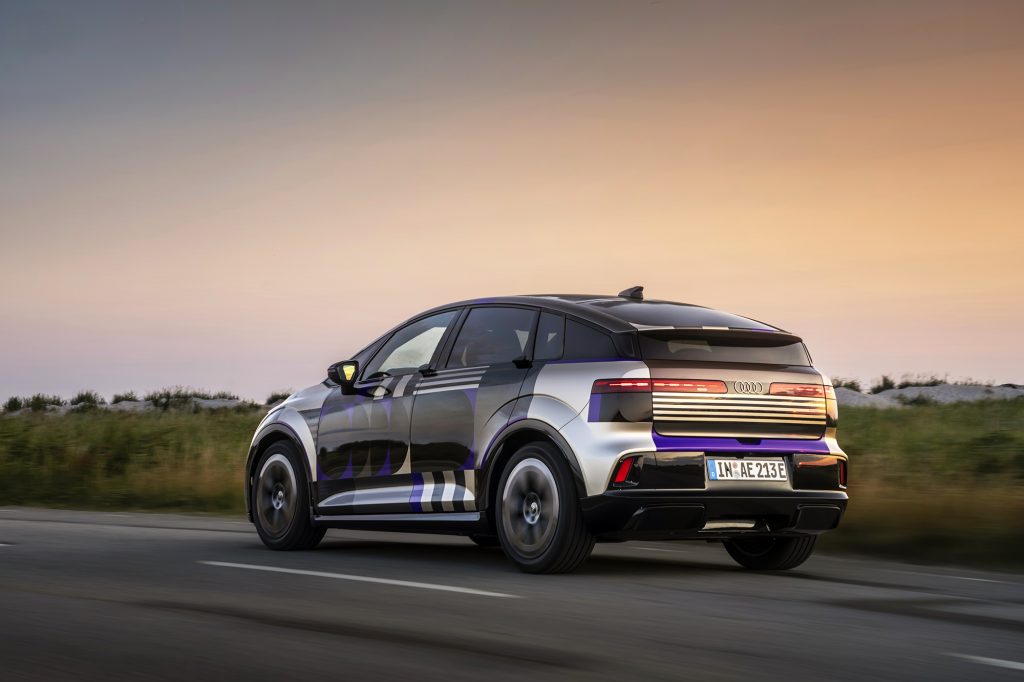
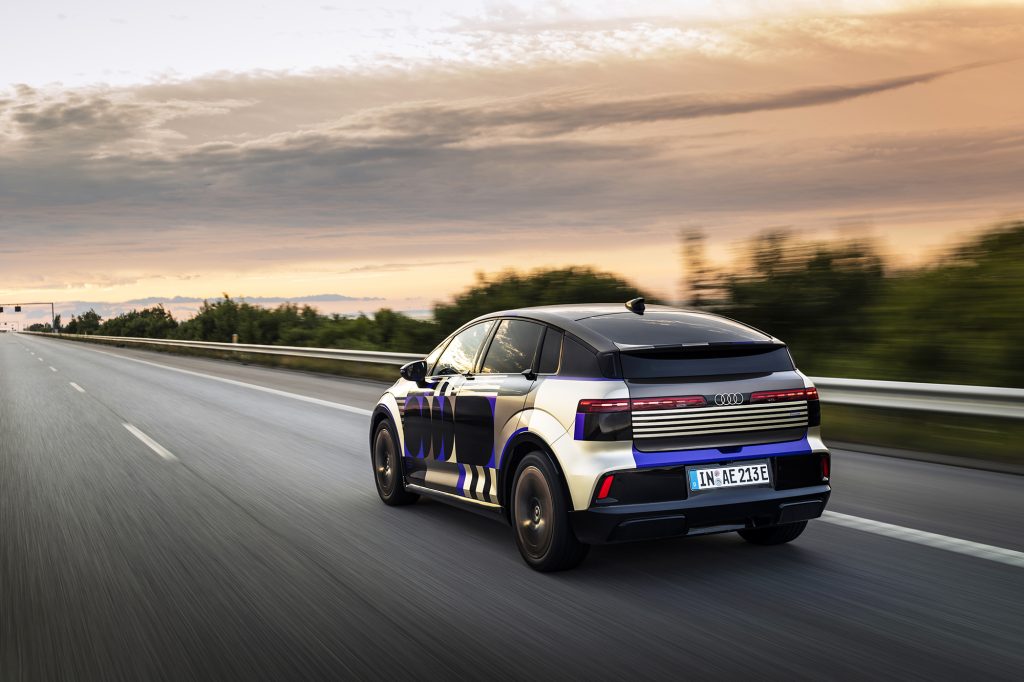
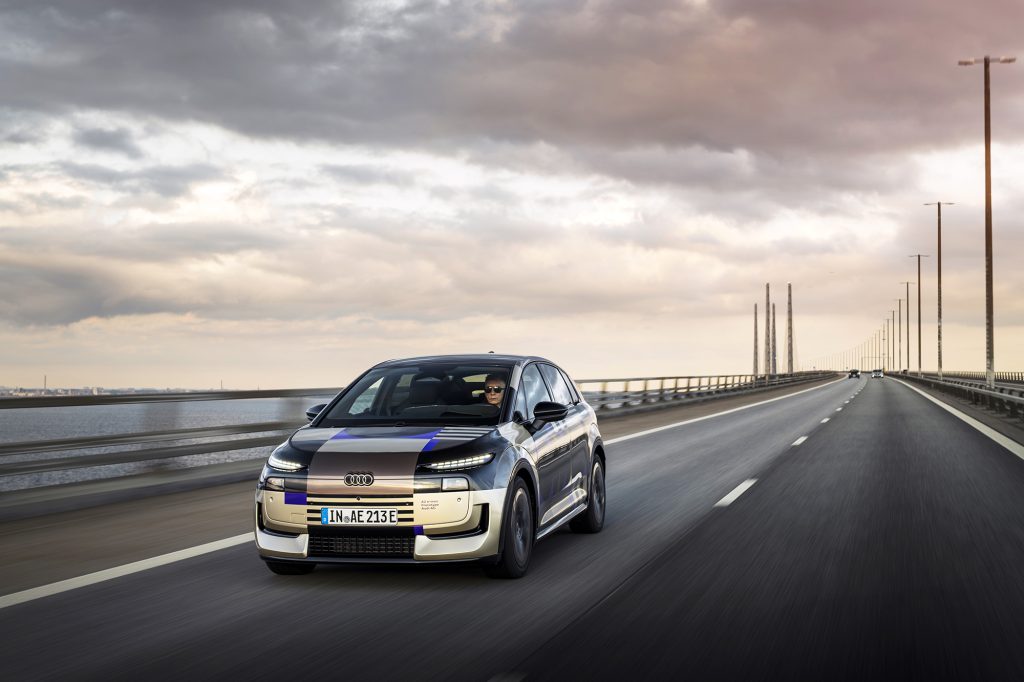
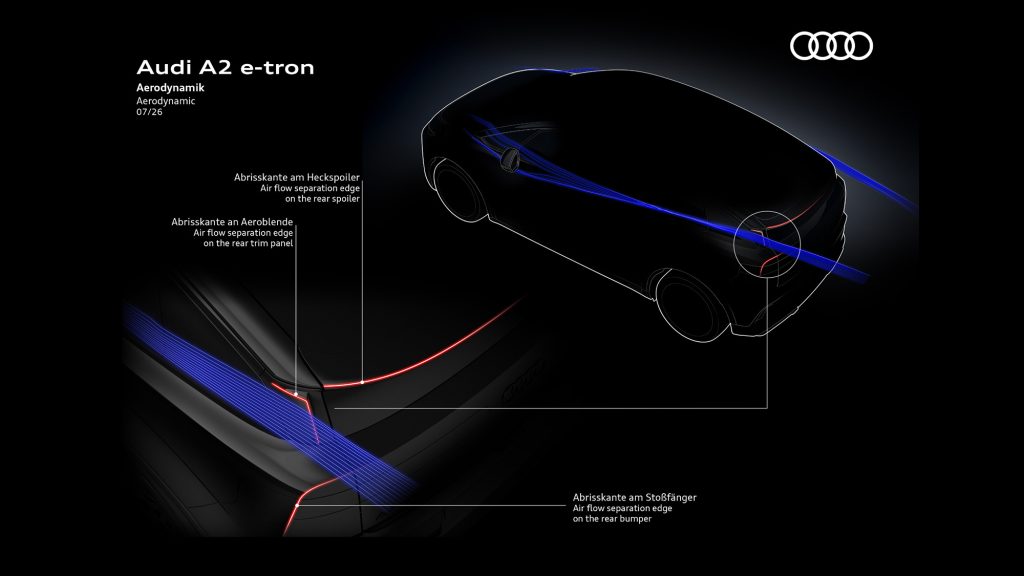
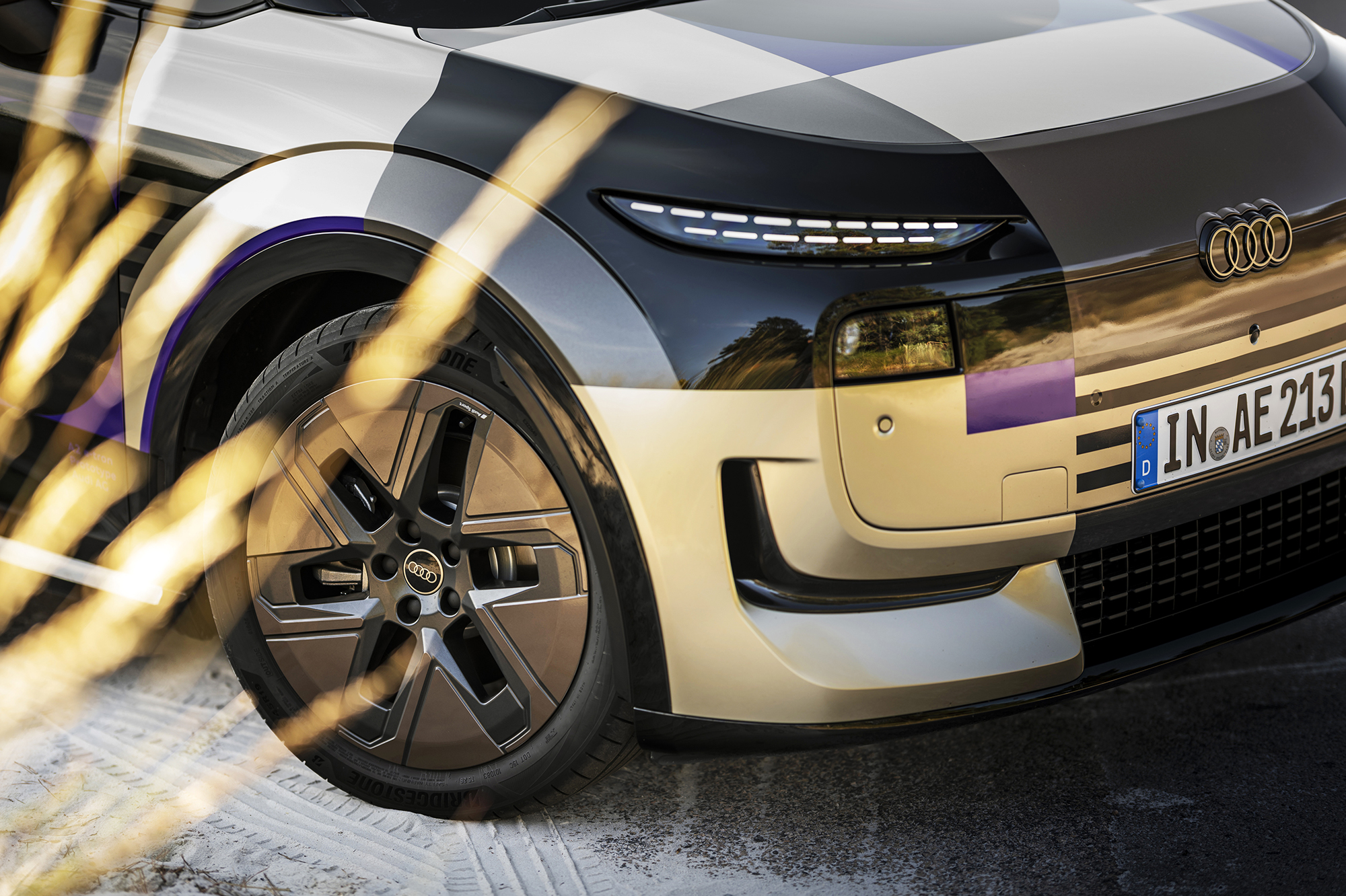
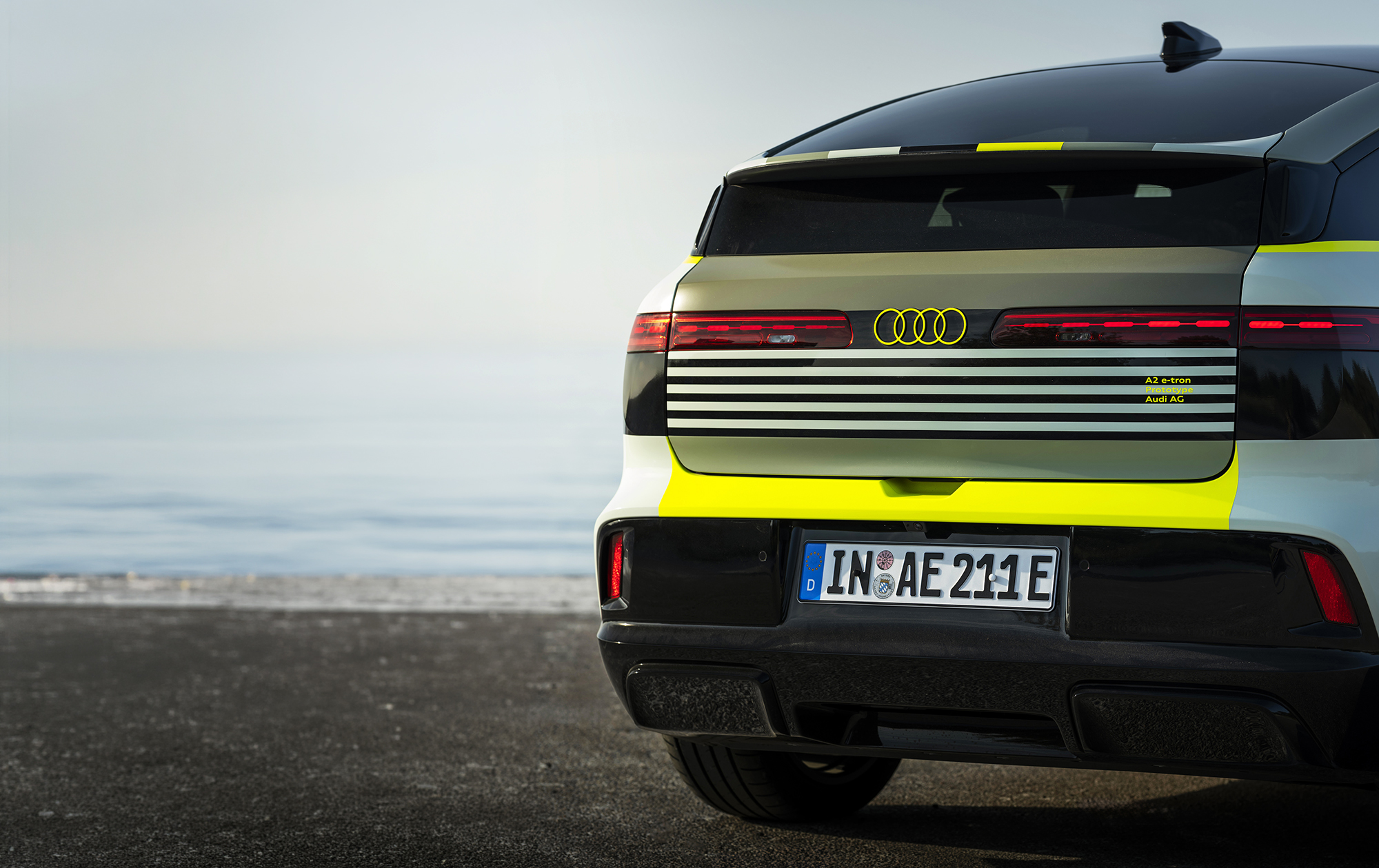
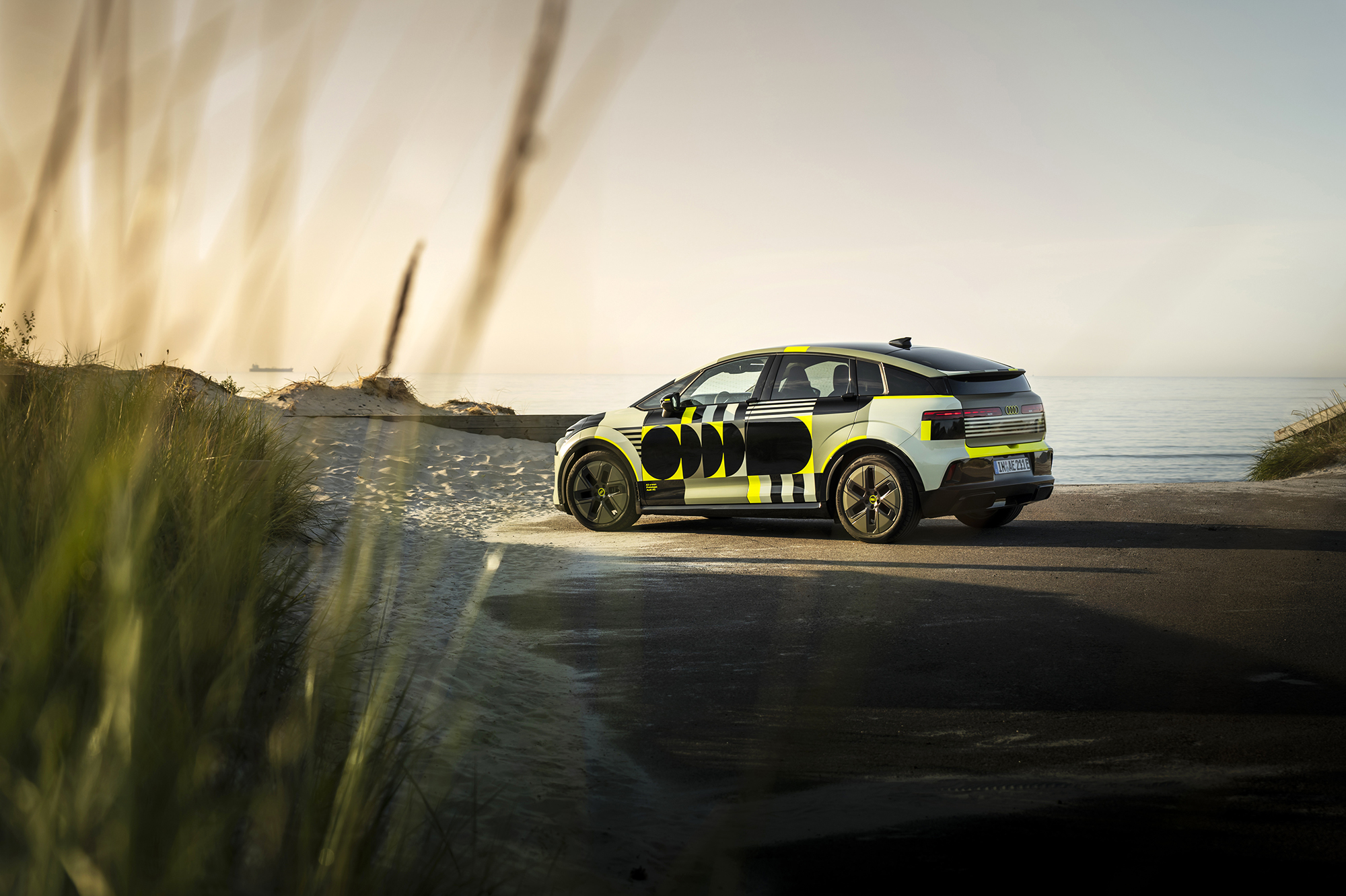
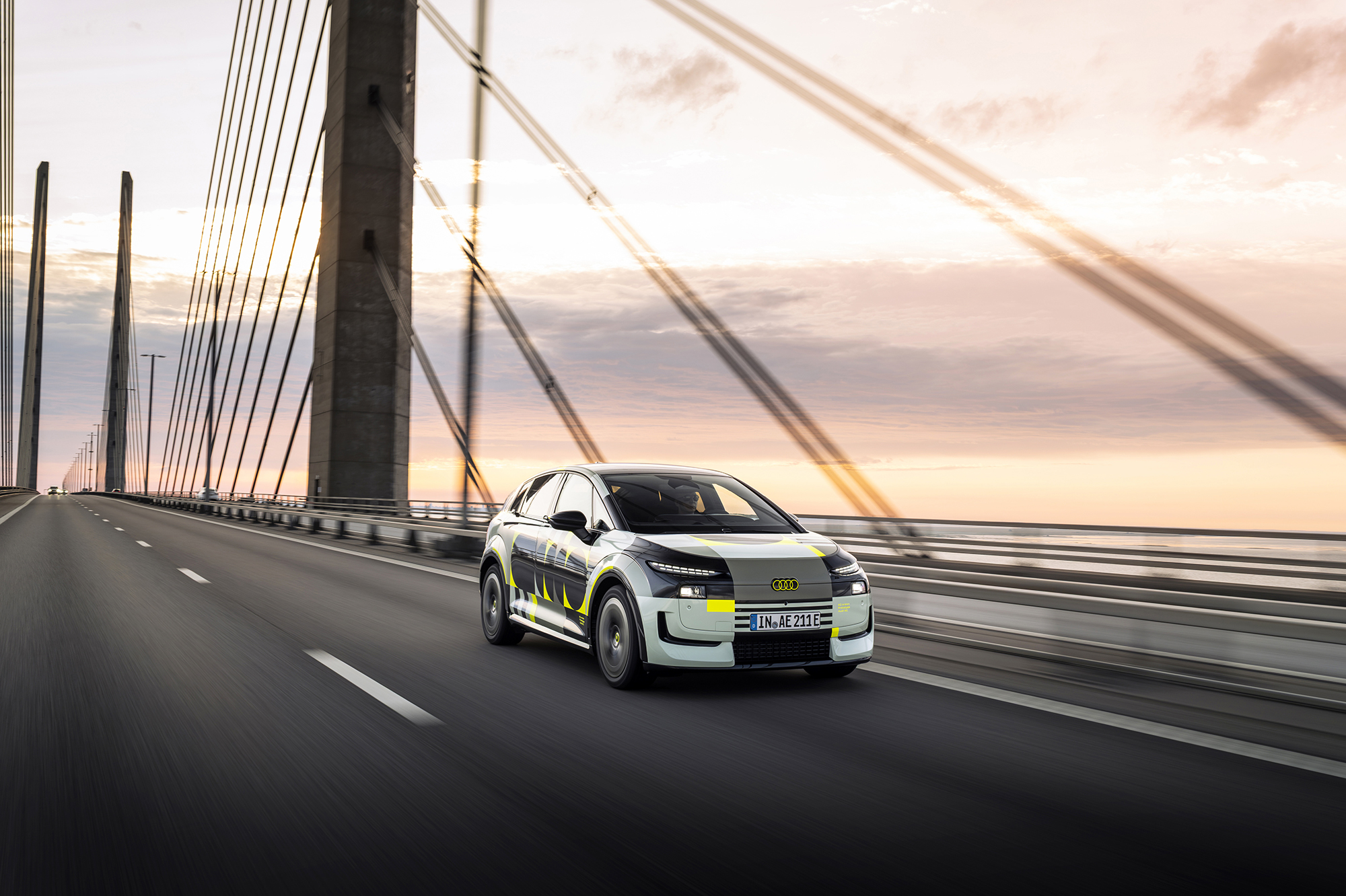
The production car shown in Audi’s initial photography remains partially concealed beneath a graphic design livery, although the bodywork itself appears complete. Audi describes the shape as having a rounded front end, a gently sloping roofline and a sharply defined rear designed to manage airflow separation.
AERODYNAMICS REDUCE CONSUMPTION
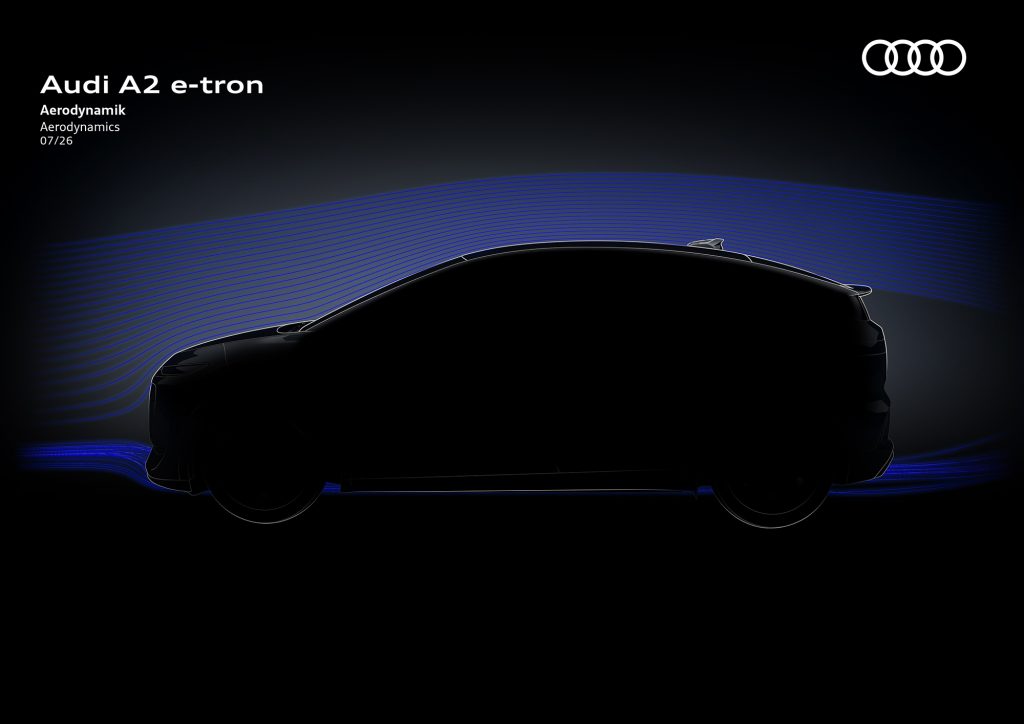
The A2 e-tron 140 kW with the efficiency package has a drag coefficient of 0.24, the lowest among Audi’s compact models. Audi says the aerodynamic measures reduce WLTP consumption by as much as 0.9 kWh per 100 kilometers compared with an otherwise identical vehicle without the package.
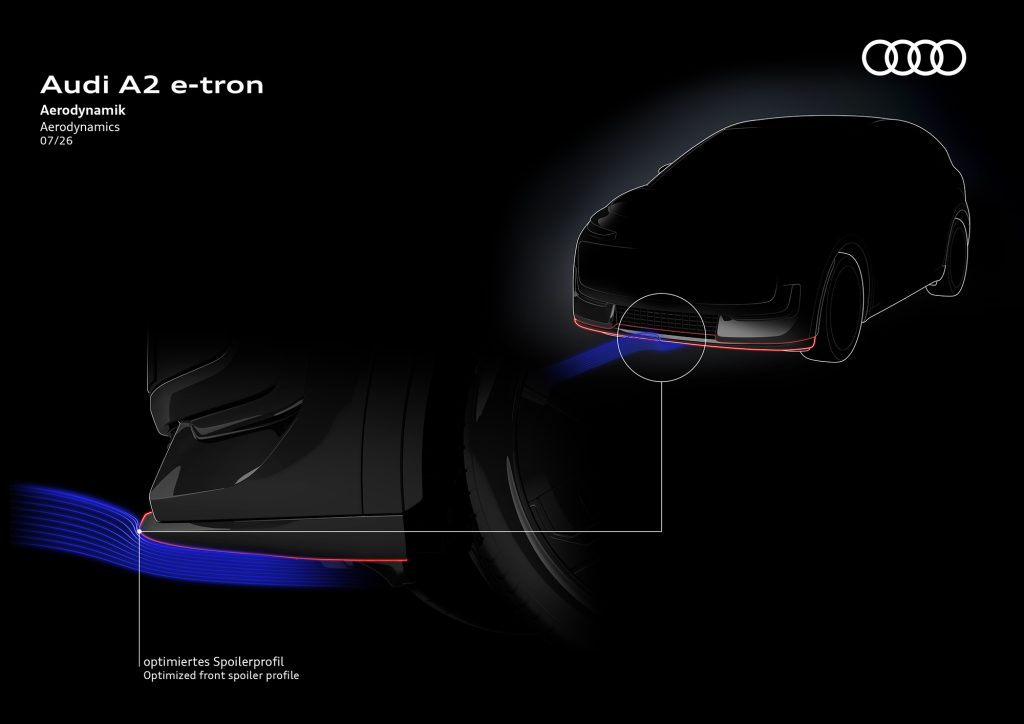
At speeds above approximately 100 km/h, aerodynamic drag accounts for more than half of a vehicle’s total energy demand. Audi therefore concentrated on both the basic shape of the car and smaller areas of turbulence around the body.
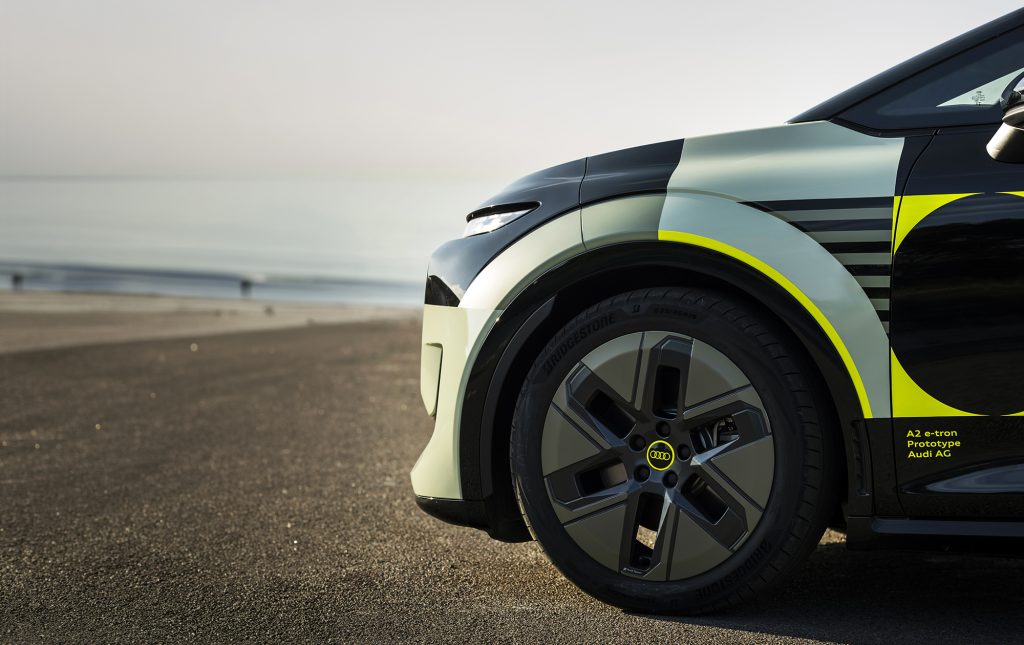
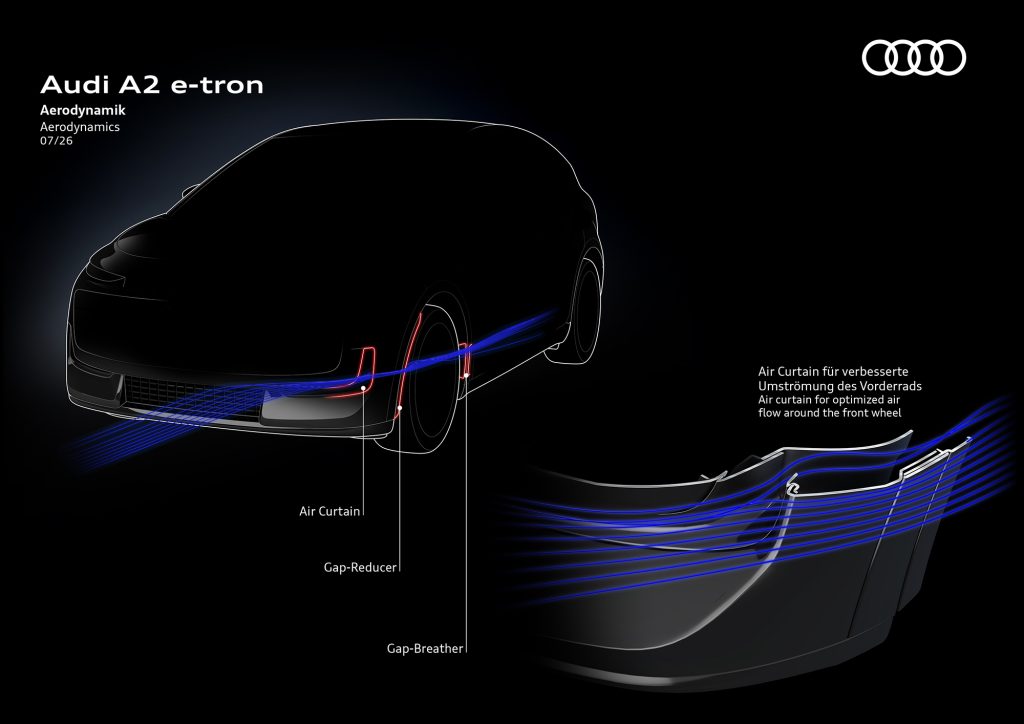
The front end uses air curtains to guide airflow around the front wheels. Additional elements identified as Gap Reducers narrow the space between the tires and wheel arches, while Gap Breathers allow air to exit the wheel housings in a more controlled manner.
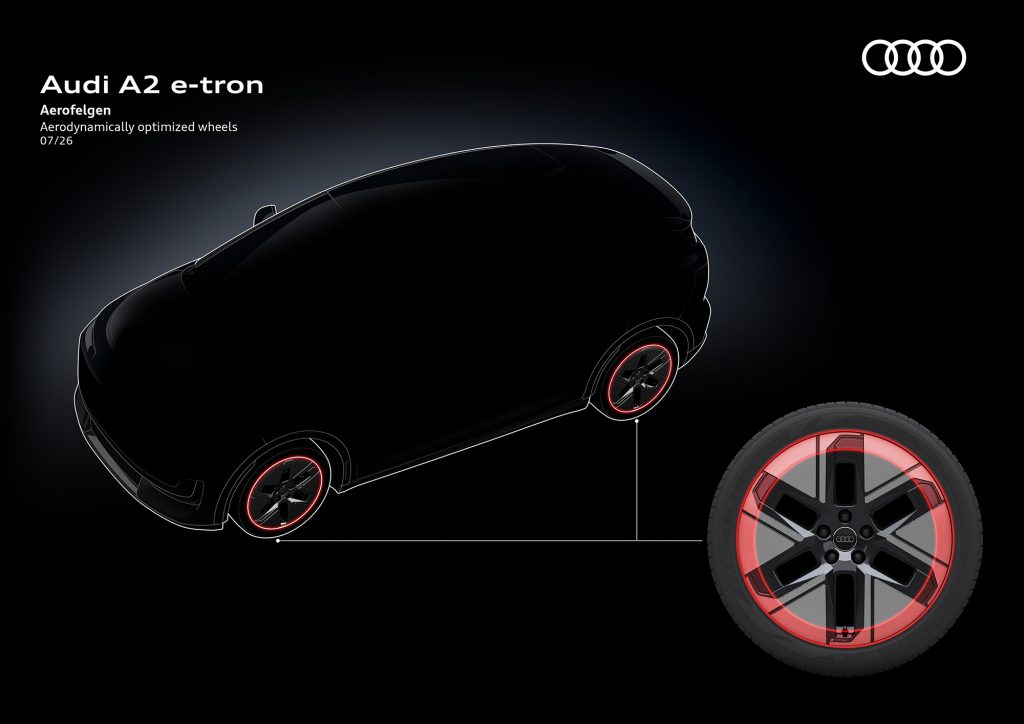
Selected wheel designs also use a higher proportion of closed surfaces to reduce turbulence. The transition between the wheel and tire has been optimized for the same purpose.
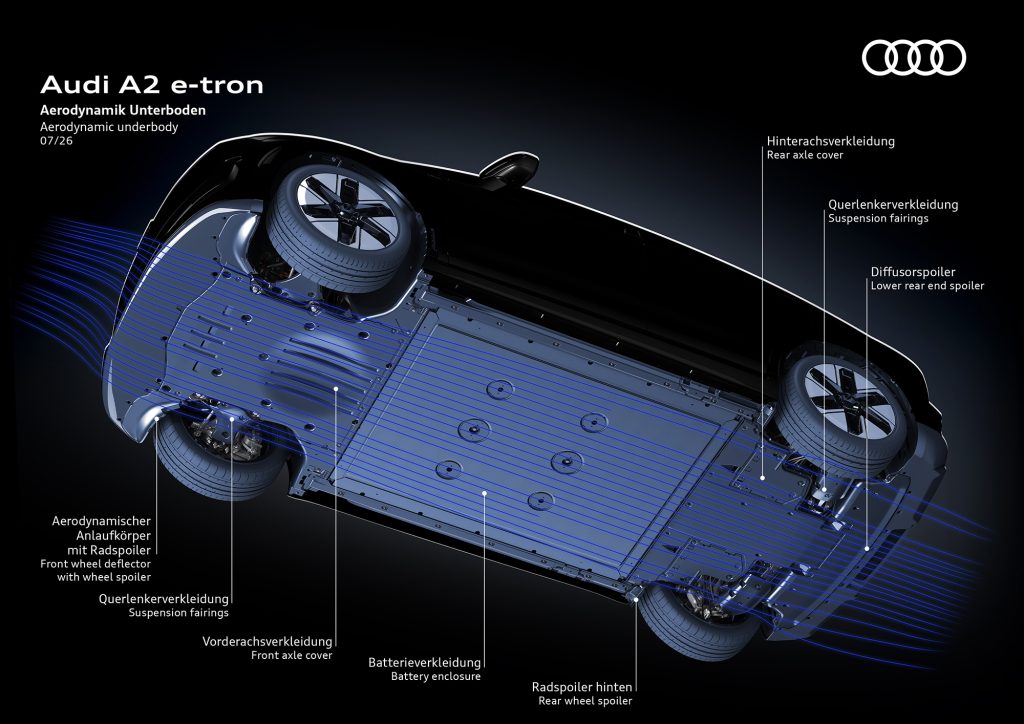
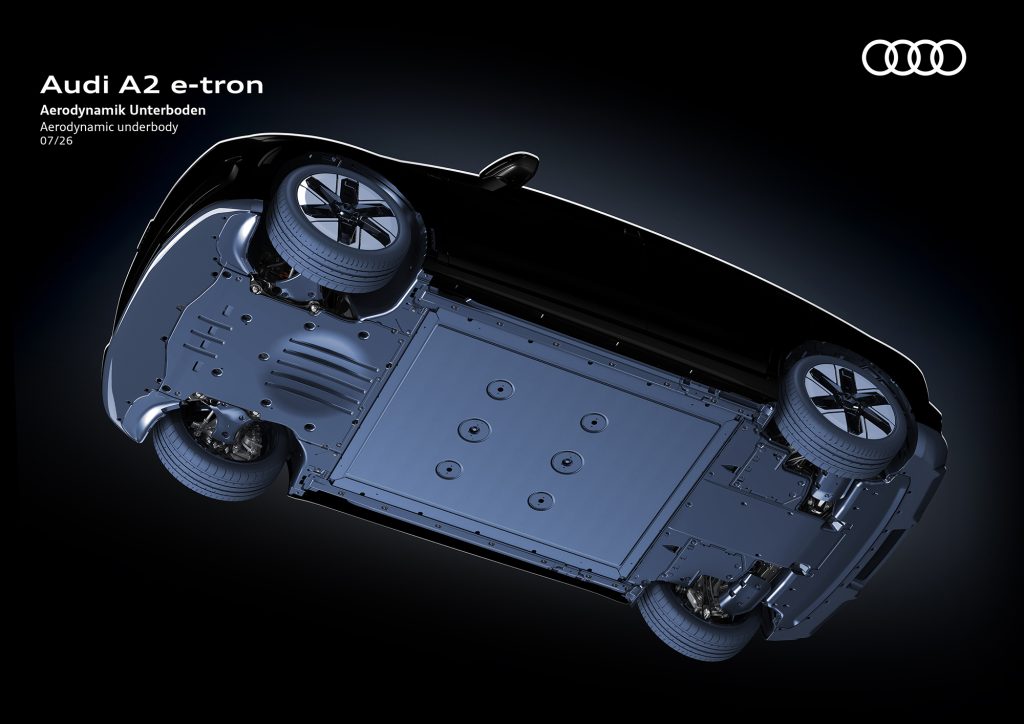
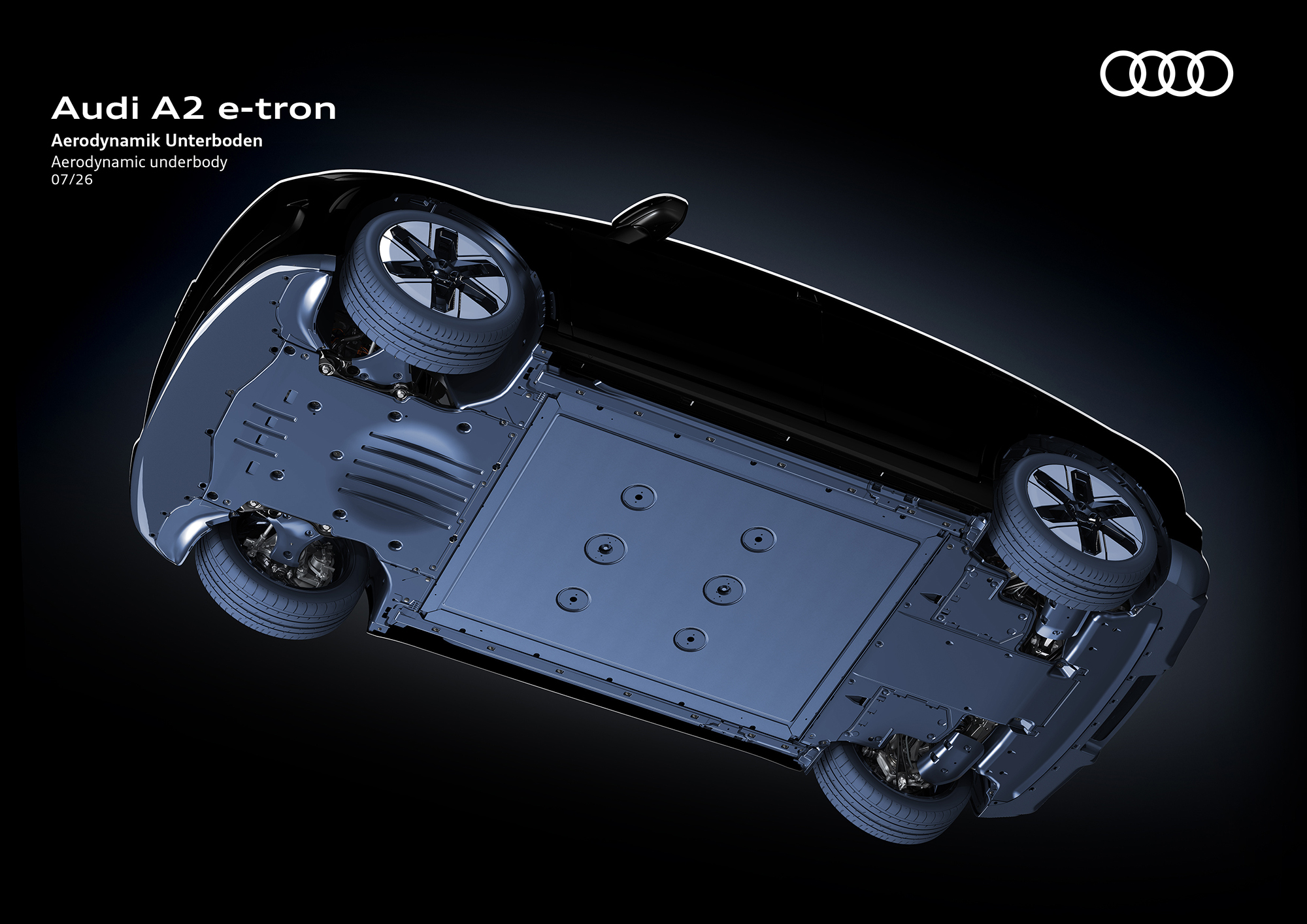
The underbody is largely enclosed, with smooth transitions from the front splitter to the battery housing and rear diffuser. At the rear, the roof spoiler, C-pillar and bumper edges are designed to provide a defined point for airflow separation.
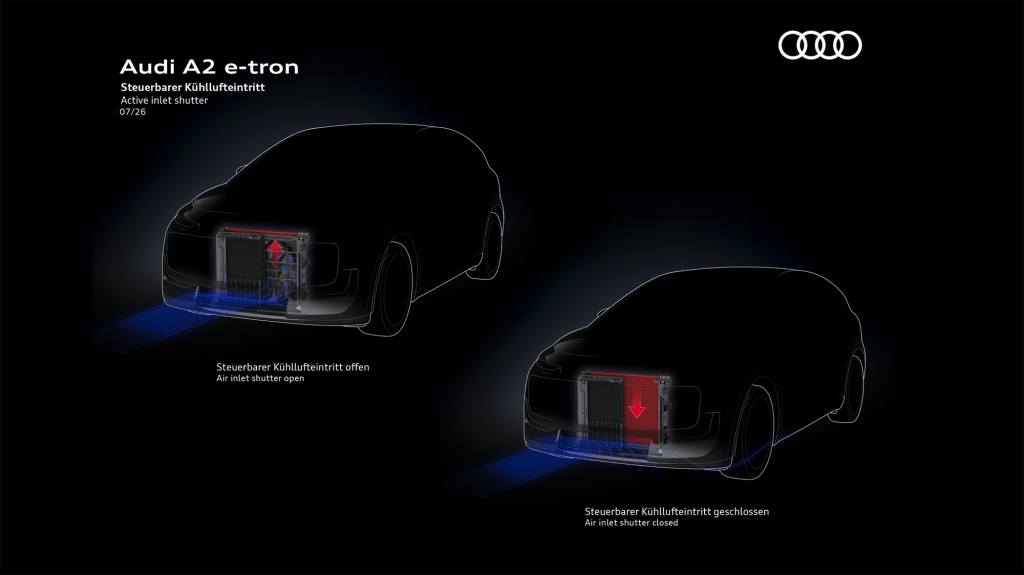
An active cooling-air intake remains closed during most driving conditions to reduce drag. It opens when additional cooling is required during charging, strong acceleration or high ambient temperatures.
REVISED REAR-MOUNTED DRIVE SYSTEM
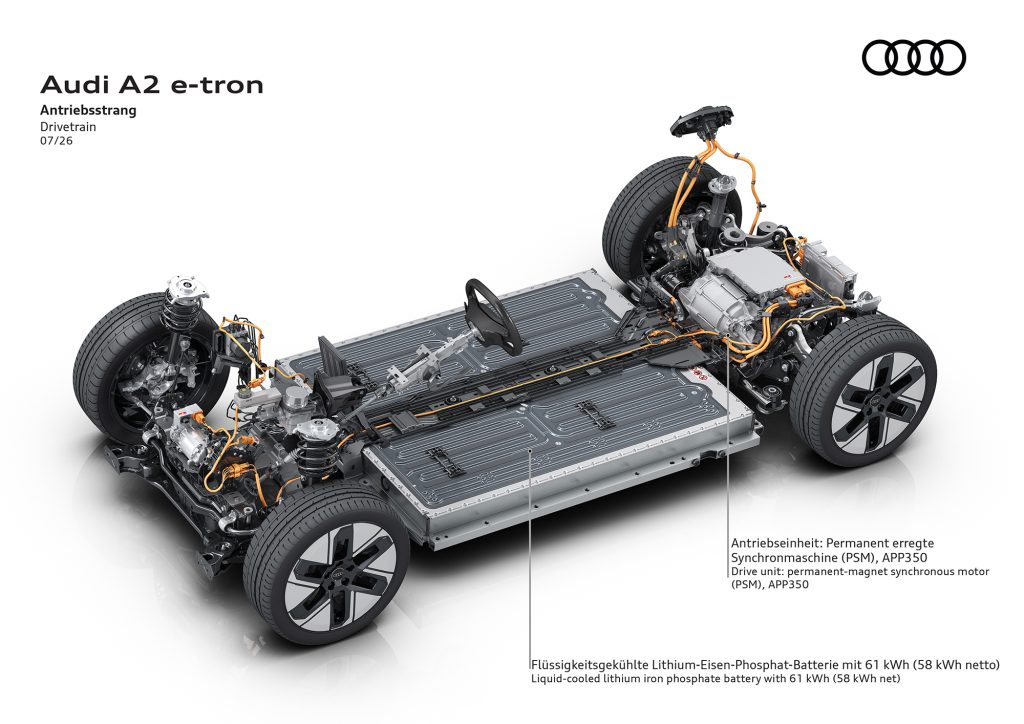
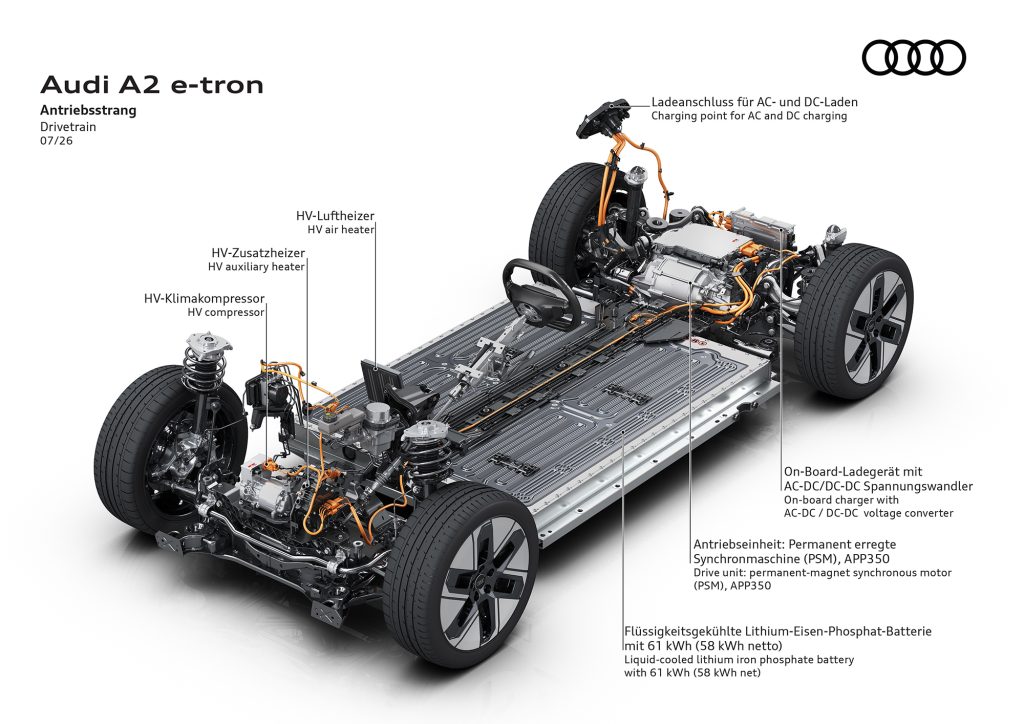
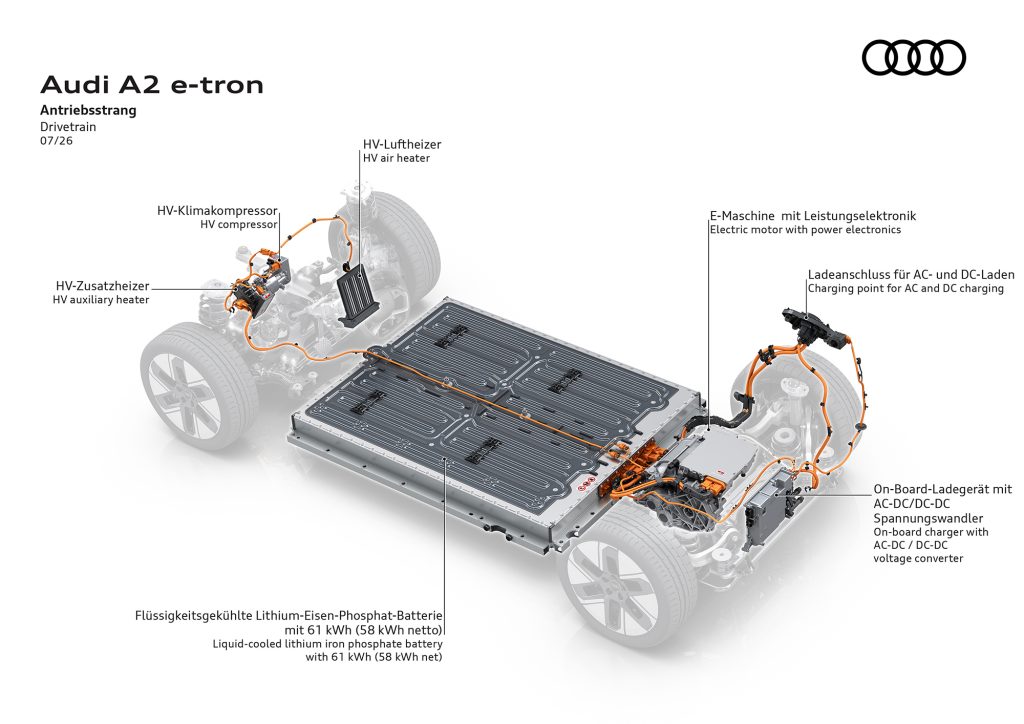
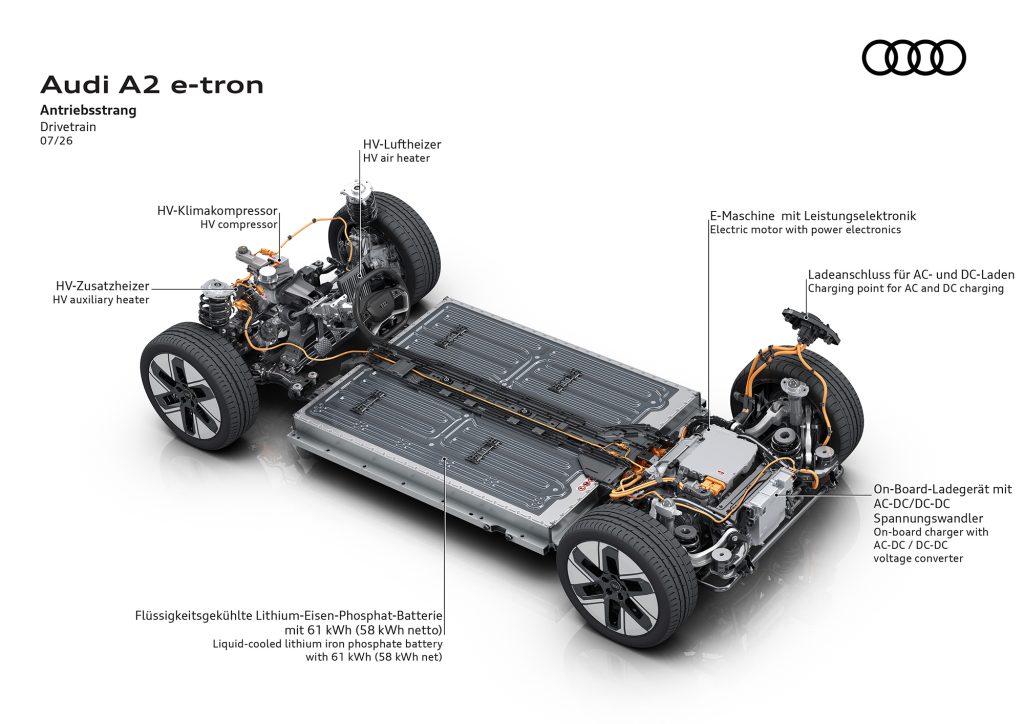
The A2 e-tron uses a rear-mounted permanent magnet synchronous motor. Audi says the drive system has been developed around efficiency and smooth operation in normal road use rather than peak performance alone.
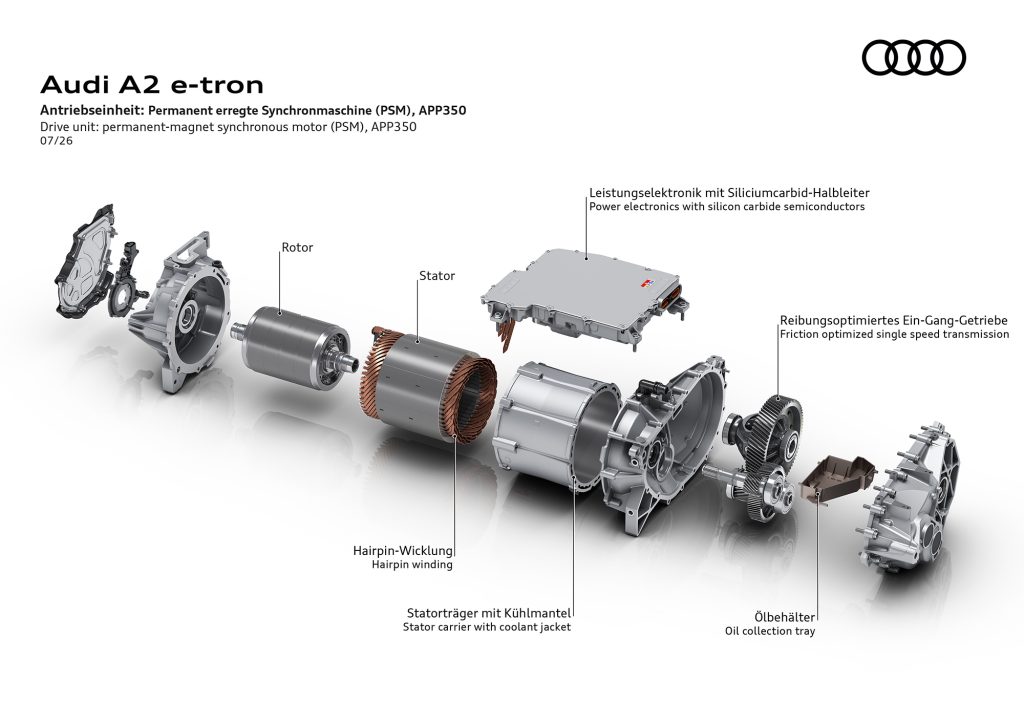
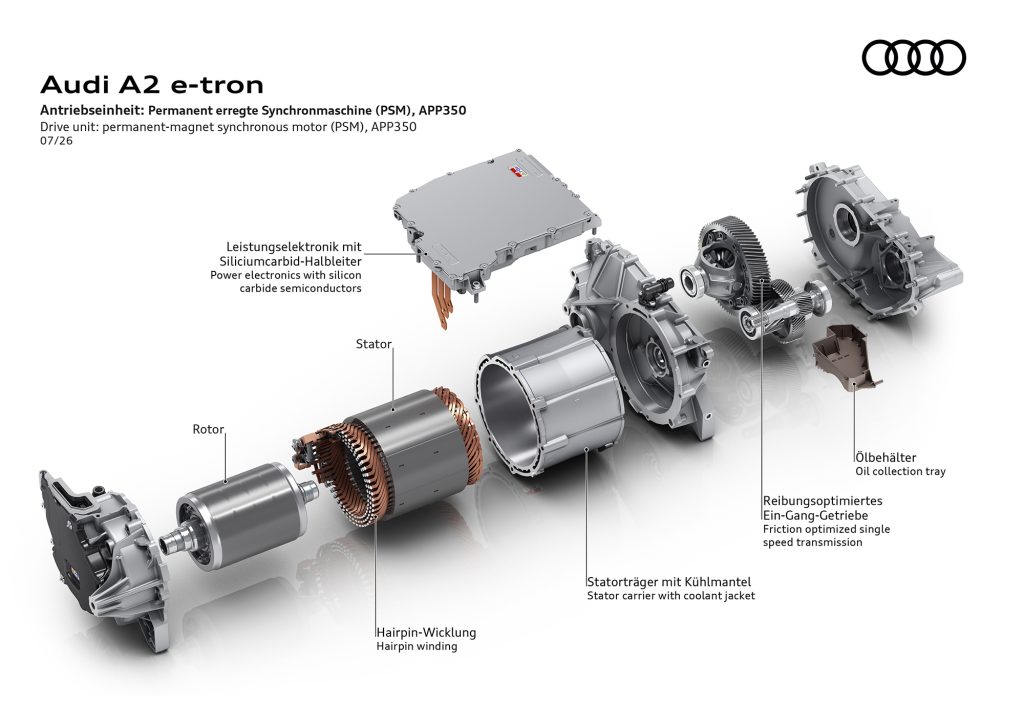
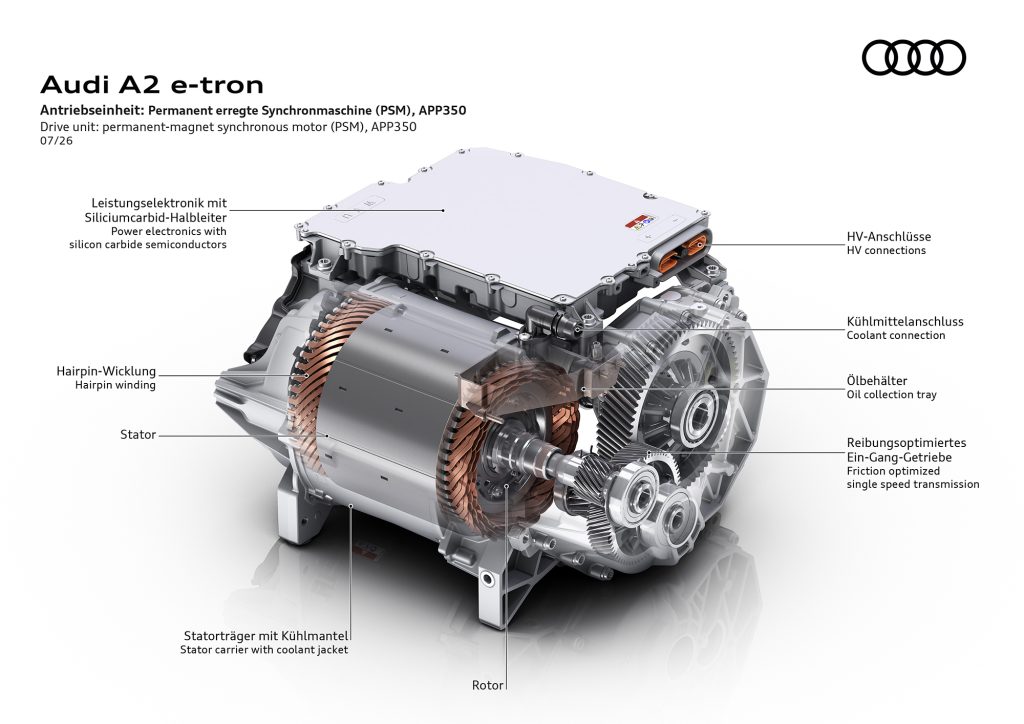
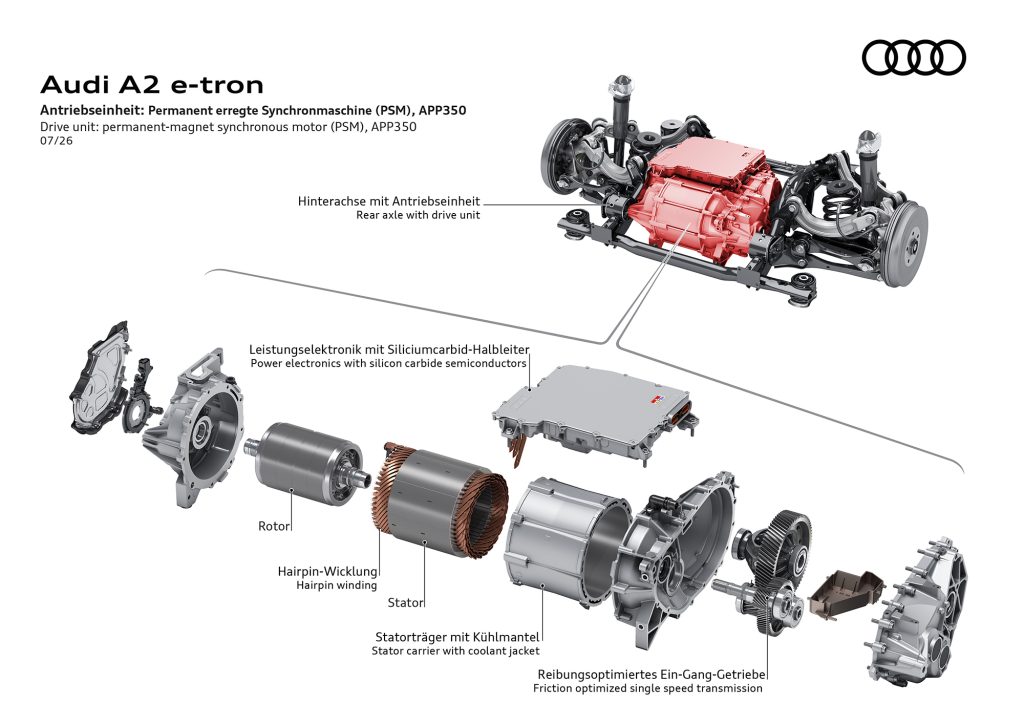
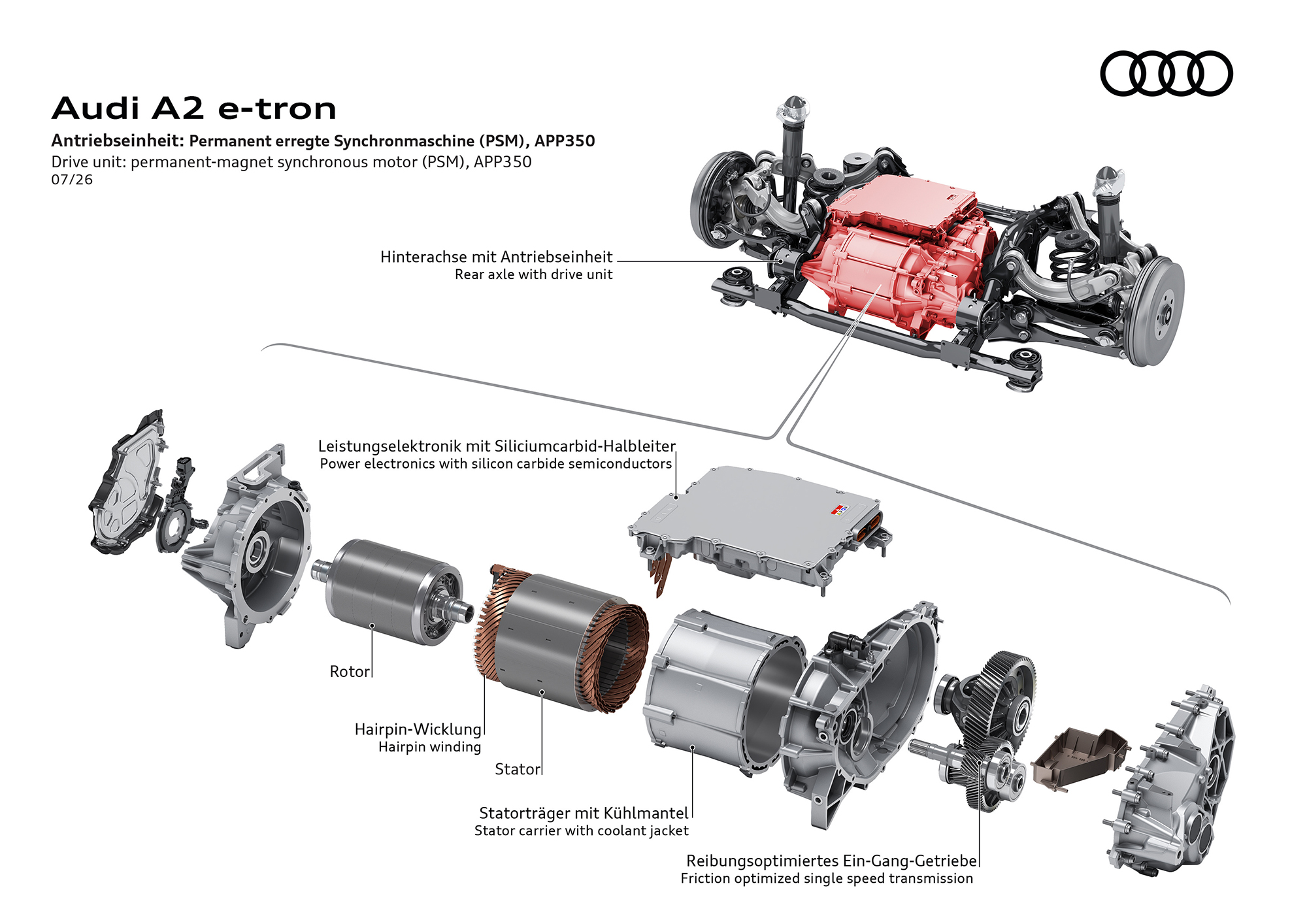
The 140-kW version uses the APP350 drive unit, which combines the electric motor, power electronics and transmission on the rear axle. Higher-output versions will use the APP550, with output of up to 240 kW and 545 Nm.
Audi identifies three primary areas of improvement within the APP350 system.
The power electronics use silicon carbide semiconductors in place of conventional silicon components. Variable switching frequencies and revised modulation strategies reduce switching losses, particularly under partial load.
Within the motor, the thickness of the electrical laminations has been reduced from 0.3 to 0.2 millimeters to lower iron losses. The stator winding has also been changed from a star to a delta configuration, moving more of the motor’s operation into efficient speed ranges.
The single-speed transmission uses a lower-friction oil and a 10.2:1 gear ratio. The taller gearing reduces motor speed at higher road speeds and contributes to lower energy consumption.
Audi says the upgraded drive system can be up to 10 percent more efficient than the previous design.
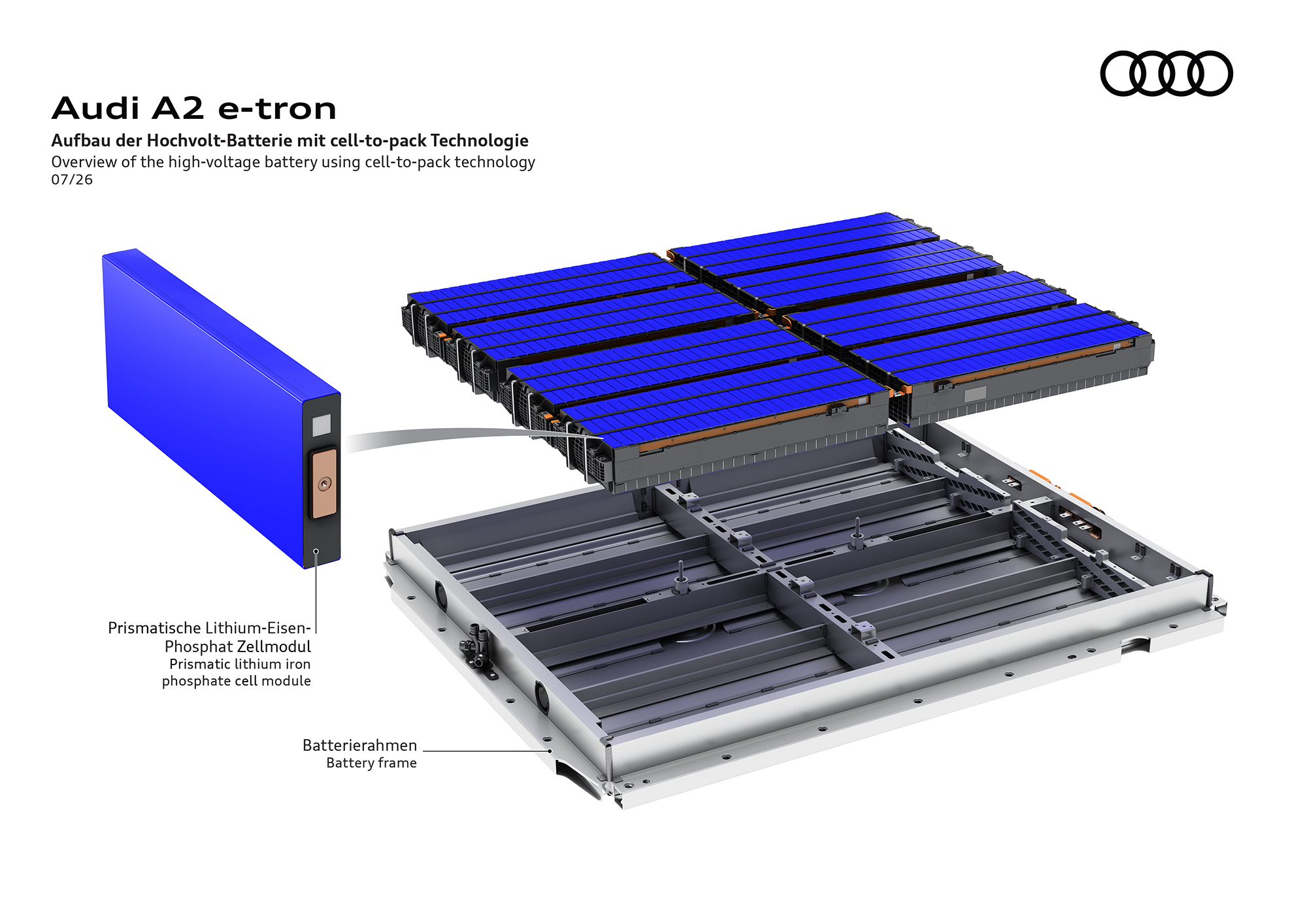
61-KWH LFP BATTERY
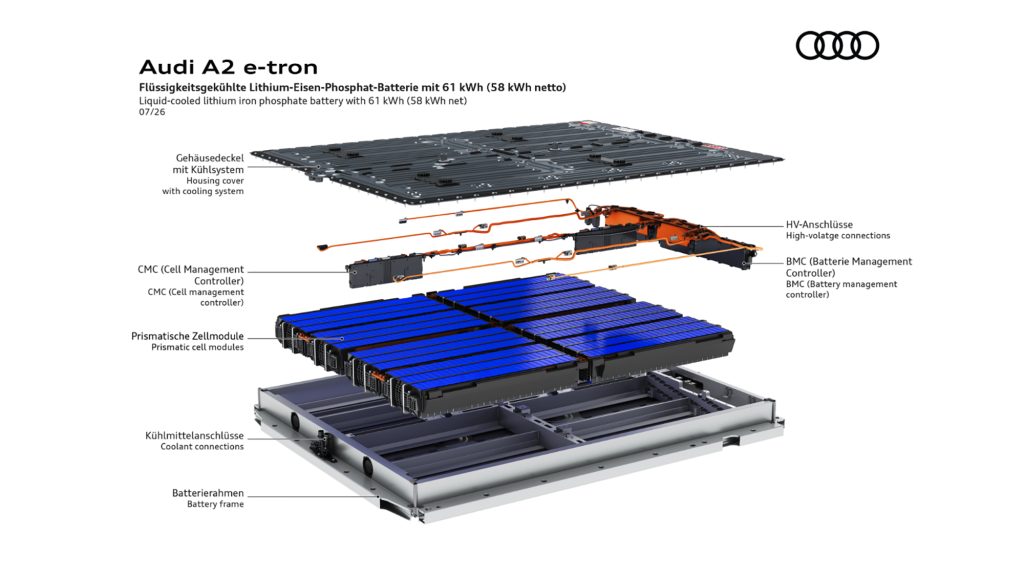
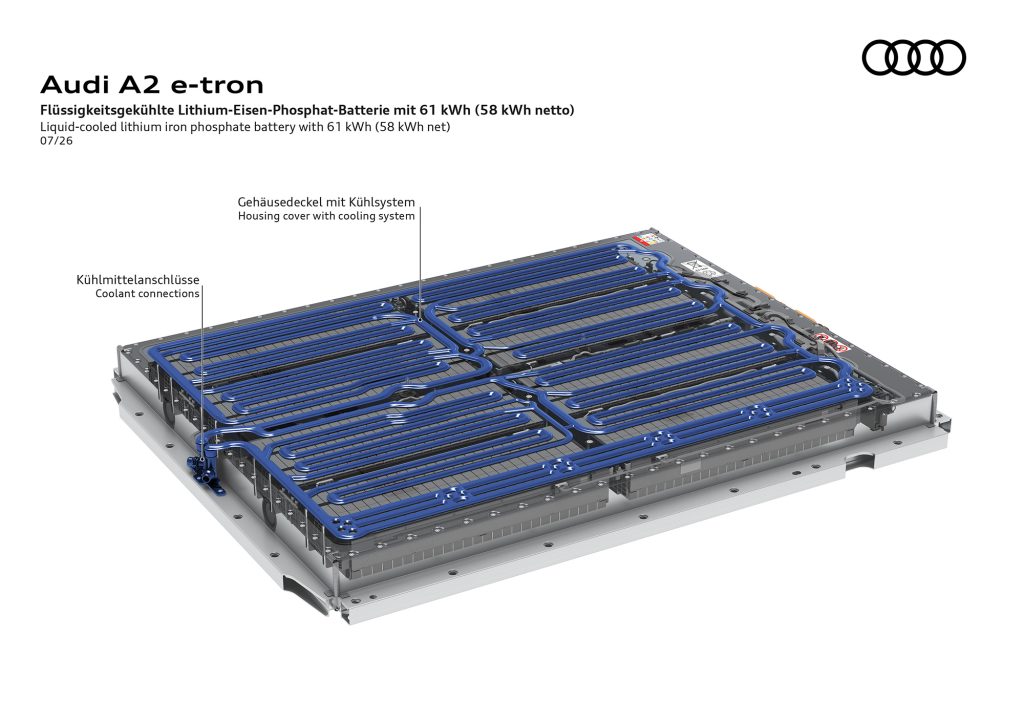
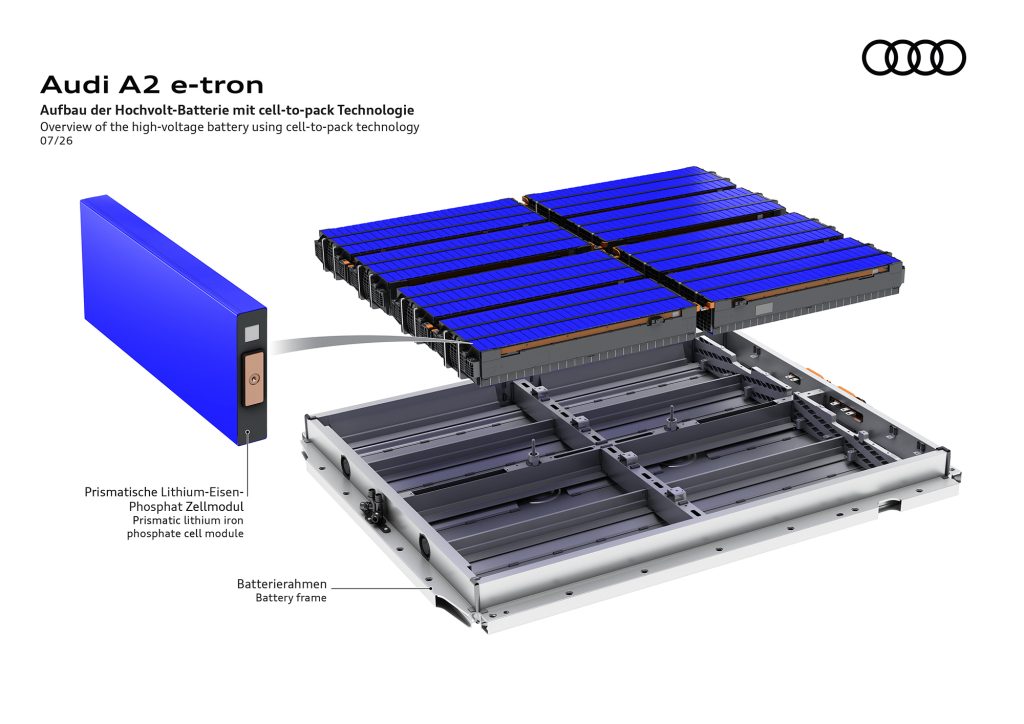
The 140-kW A2 e-tron uses a 61-kWh lithium iron phosphate battery. The cells are integrated directly into the battery housing using a cell-to-pack design rather than being grouped into separate modules.
This allows more of the available space to be used for active battery material. Audi says the reduced installation height also benefits interior legroom and seating position.
LFP chemistry does not require nickel, cobalt or rare earth elements and is generally less susceptible to degradation than several alternative lithium-ion chemistries. Audi says the battery can be charged to 100 percent regularly without the same long-term durability concerns associated with some nickel-based batteries.
The battery’s relatively flat voltage curve also allows it to maintain more consistent voltage as the state of charge decreases, resulting in more stable power output.
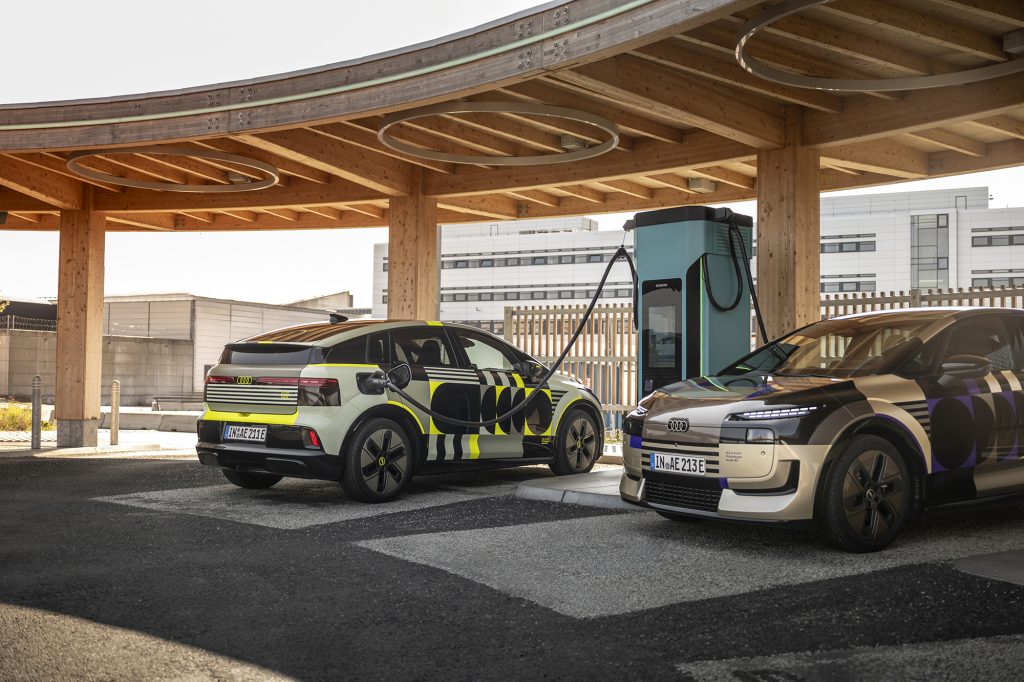
According to Audi, the battery can be charged from 10 to 80 percent in 26 minutes at a DC fast charger, with a maximum charging rate of 105 kW.
That peak rate is lower than the figures offered by Audi’s larger premium electric models, although the smaller battery and lower energy consumption reduce the amount of energy required during a typical charging stop.
CHARGING EFFICIENCY & THERMAL MANAGMENT
Audi also focused on reducing energy losses during AC charging.
An updated battery cooling strategy increases wallbox charging efficiency to 89.6 percent, an improvement of 1.3 percentage points. The system manages battery temperature, charging power and state of charge through software developed specifically for the characteristics of the LFP battery.
The battery management system also uses a dedicated algorithm to estimate state of charge and long-term battery health. This is particularly important with LFP chemistry because its flat voltage curve can make charge estimation more difficult than with other battery types.
Audi project manager Dr. Benedikt Hackl says overall battery efficiency depends on the coordination of the cells, thermal management, charging electronics and software rather than cell chemistry alone.
‘
BIDIRECTIONAL CHARGING
The A2 e-tron supports both Vehicle-to-Load and Vehicle-to-Home functions.
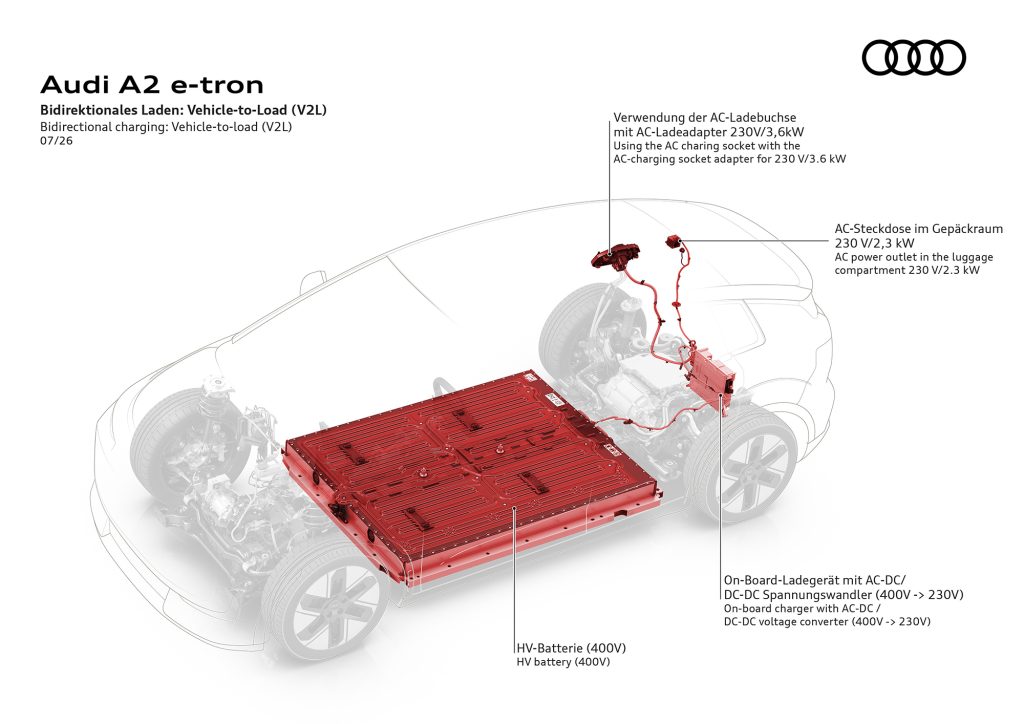
Vehicle-to-Load allows external equipment to draw power from the car through a luggage-compartment outlet or an adapter connected to the charging port. Audi cites tools, camping equipment and electric bicycles as possible uses.
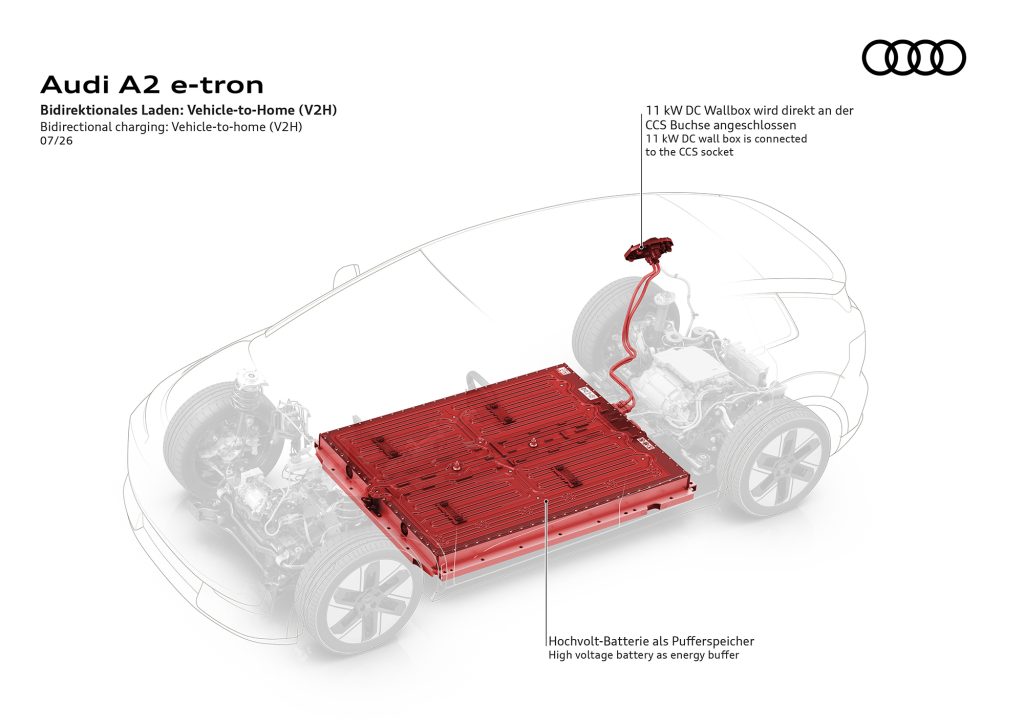
Vehicle-to-Home allows the vehicle battery to supply electricity to a home when used with an Audi-recommended charging system. The function will initially be available in Germany, Austria and Switzerland.
The system allows the car to operate as a stationary energy-storage unit, including the possibility of storing electricity generated by residential solar panels or supplying power during periods of higher household demand.
COMPARISON WITH ORIGINAL A2
Audi Technical Project Manager Michael Schurr says the goal was to transfer the efficiency priorities of the original A2 into a modern electric vehicle.
The A2 1.2 TDI introduced in 2001 consumed approximately three liters of diesel per 100 kilometers under the NEDC test standard. Audi calculates that the new A2 e-tron’s 12.8-kWh consumption is equivalent to approximately 1.3 liters of diesel per 100 kilometers when comparing the energy content of the two fuels.
On that basis, Audi says the electric model uses less than half the energy of the original A2 1.2 TDI despite being larger and offering substantially more power, equipment and safety technology.
The comparison is not direct because the vehicles were tested under different regulatory cycles and use different energy sources, but it illustrates the development target Audi set for the project.
ENTRY POINT TO ELECTRIC RANGE AT AUDI
The A2 e-tron will become Audi’s entry-level electric model and will compete in the compact segment. It will sit below the Q4 e-tron in the company’s EV range and is expected to use Volkswagen Group MEB architecture.
Audi has not yet released final dimensions, curb weight, range, pricing or complete equipment details. It has also not confirmed which specifications will be offered in individual markets.
The company has identified the 140-kW rear-wheel-drive model as the primary efficiency version, while the reference to the APP550 drive unit confirms that more powerful variants are also planned.
The optional efficiency package includes the aerodynamic and rolling-resistance measures required to achieve the 12.8-kWh WLTP figure. Audi has not yet detailed the package’s complete equipment list or whether every component will be offered separately.
FULL REVEAL SCHEDULED FOR FALL 2026
Audi plans to unveil the A2 e-tron in fall 2026. Ordering is expected to open at the same time, with the first customer deliveries scheduled to begin before the end of the year.
The technical information released so far places greater emphasis on consumption, charging losses, battery durability and aerodynamic development than on acceleration or maximum output.
That approach is aligned with the original A2. The first car was developed around lightweight construction, packaging and reduced fuel use. The new model applies the same priorities to an electric platform, with lower energy demand serving as the central measure of performance.
PHOTO GALLERY