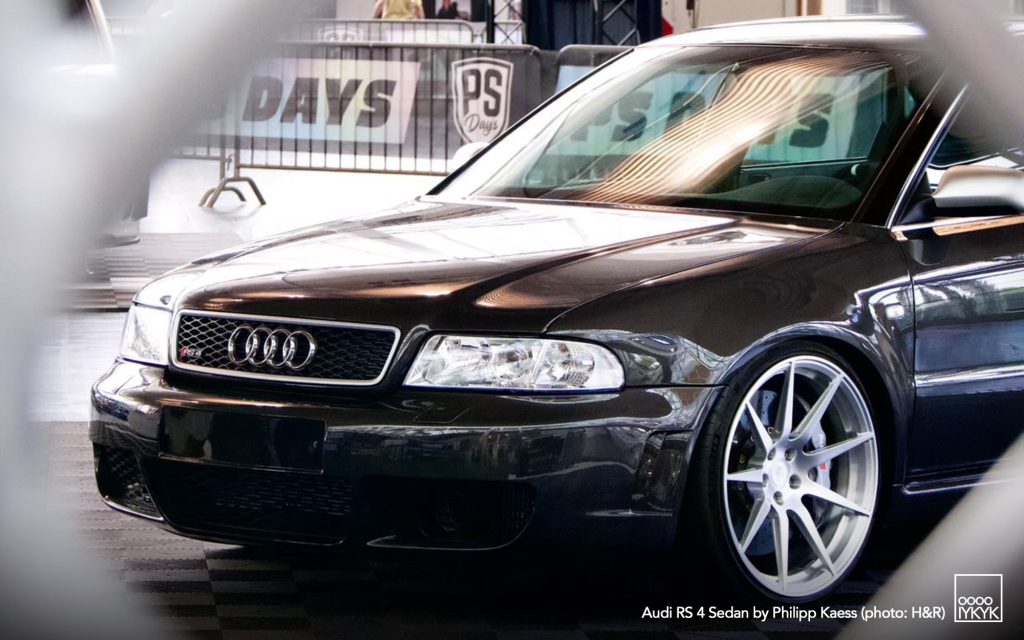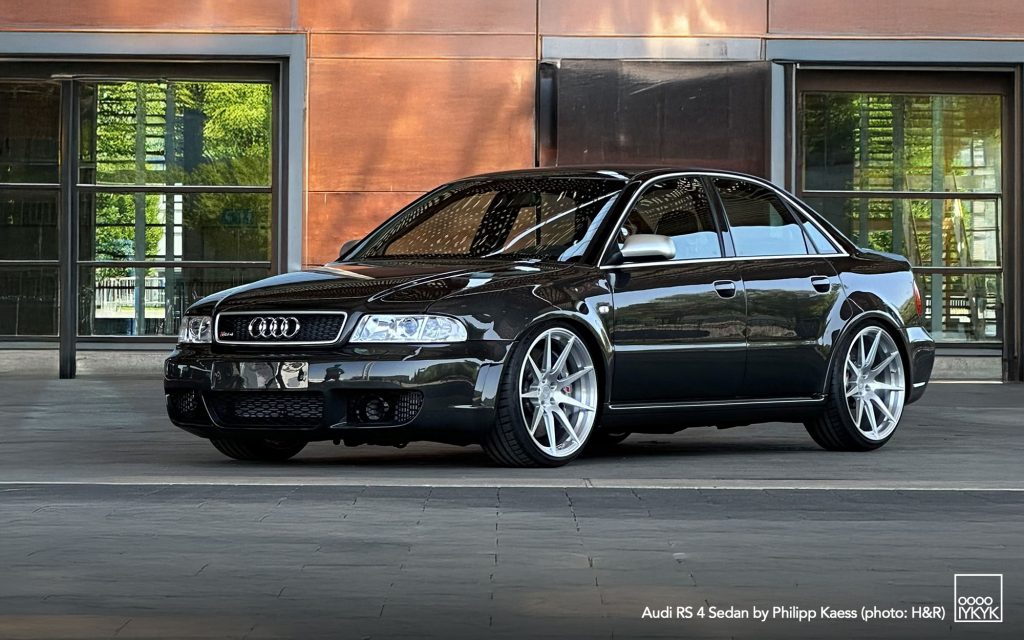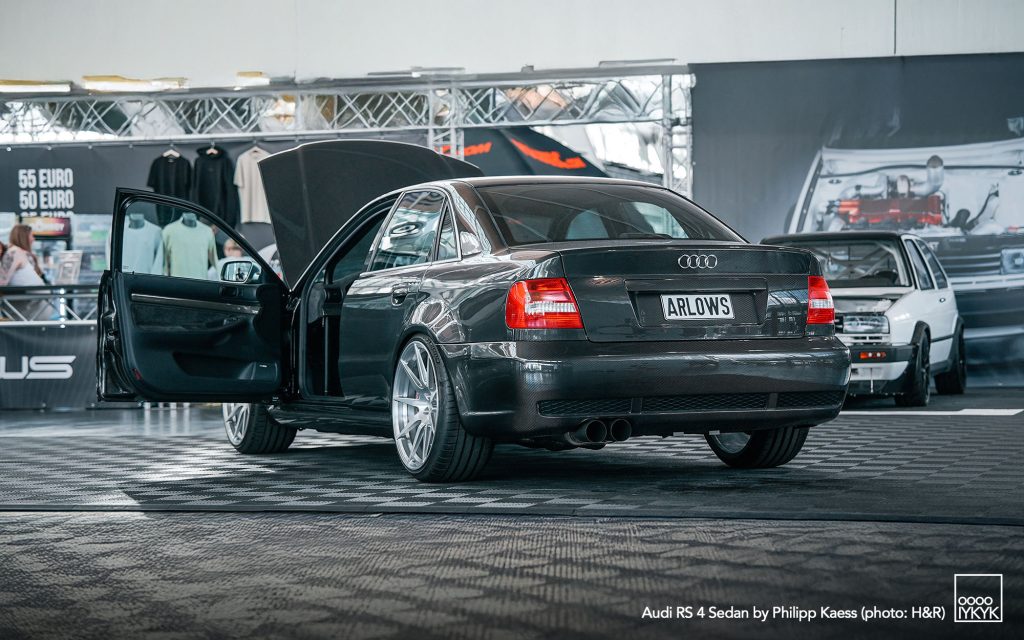

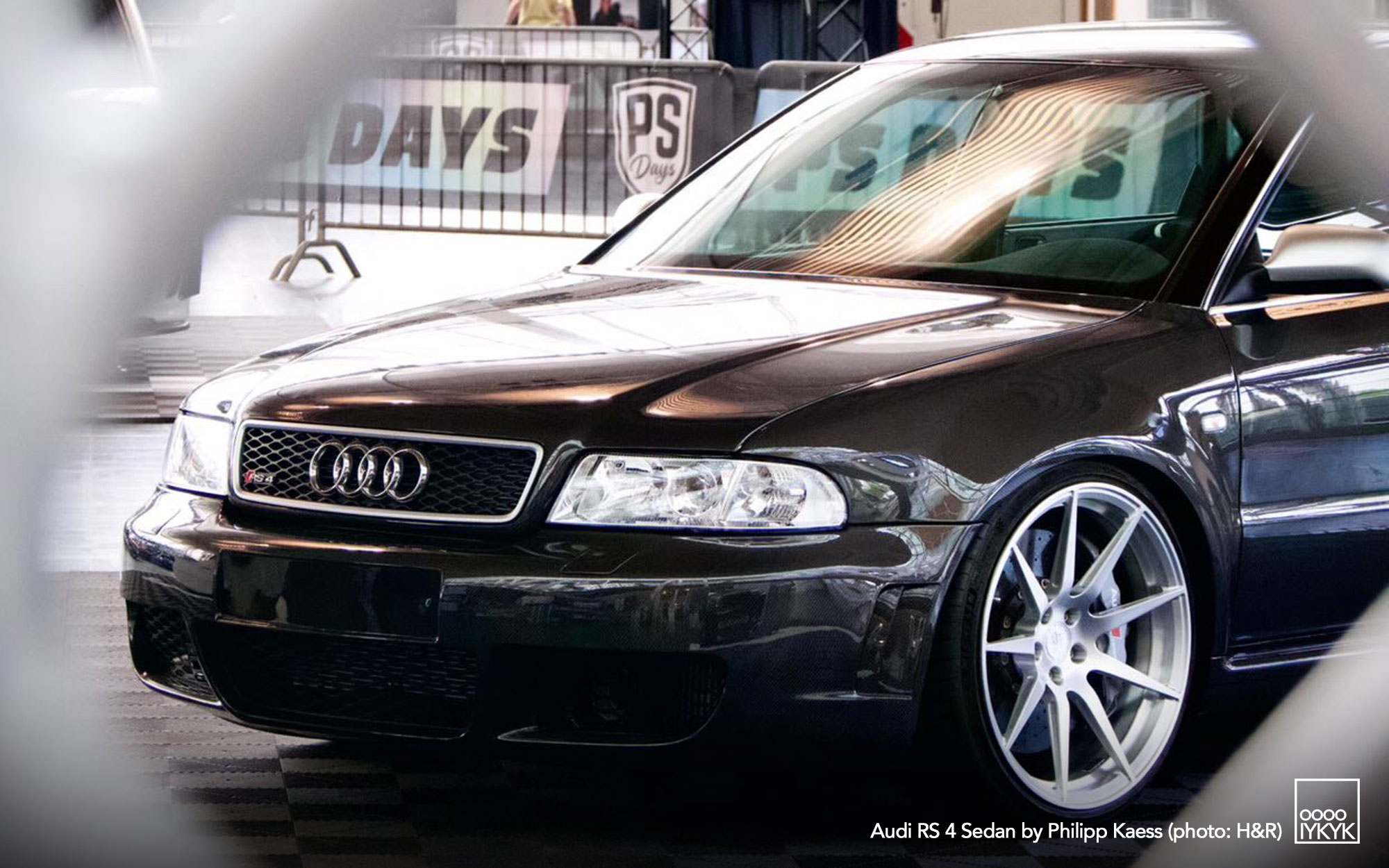

Even at a show as saturated as the Essen Motor Show, there are always a few cars that stand out, even from across the hall. This year, just such a car took its place on the H&R stand. It looked familiar at first glance, like a B5-generation Audi RS 4, but something was off. And while it may have looked subtle at first glance given it’s a largely black B5 sedan, closer inspection revealed it was so much more – an RS 4 sedan from Philipp Kaess.
Kaess has built his reputation creating fantastical automobiles. Every project he touches ends up lighter, faster, sharper, stronger. His latest, unveiled to the world in Essen, may be his most uncompromising to date even though it outwardly subtle and borderline sleeper by Essen Motor Show standards.
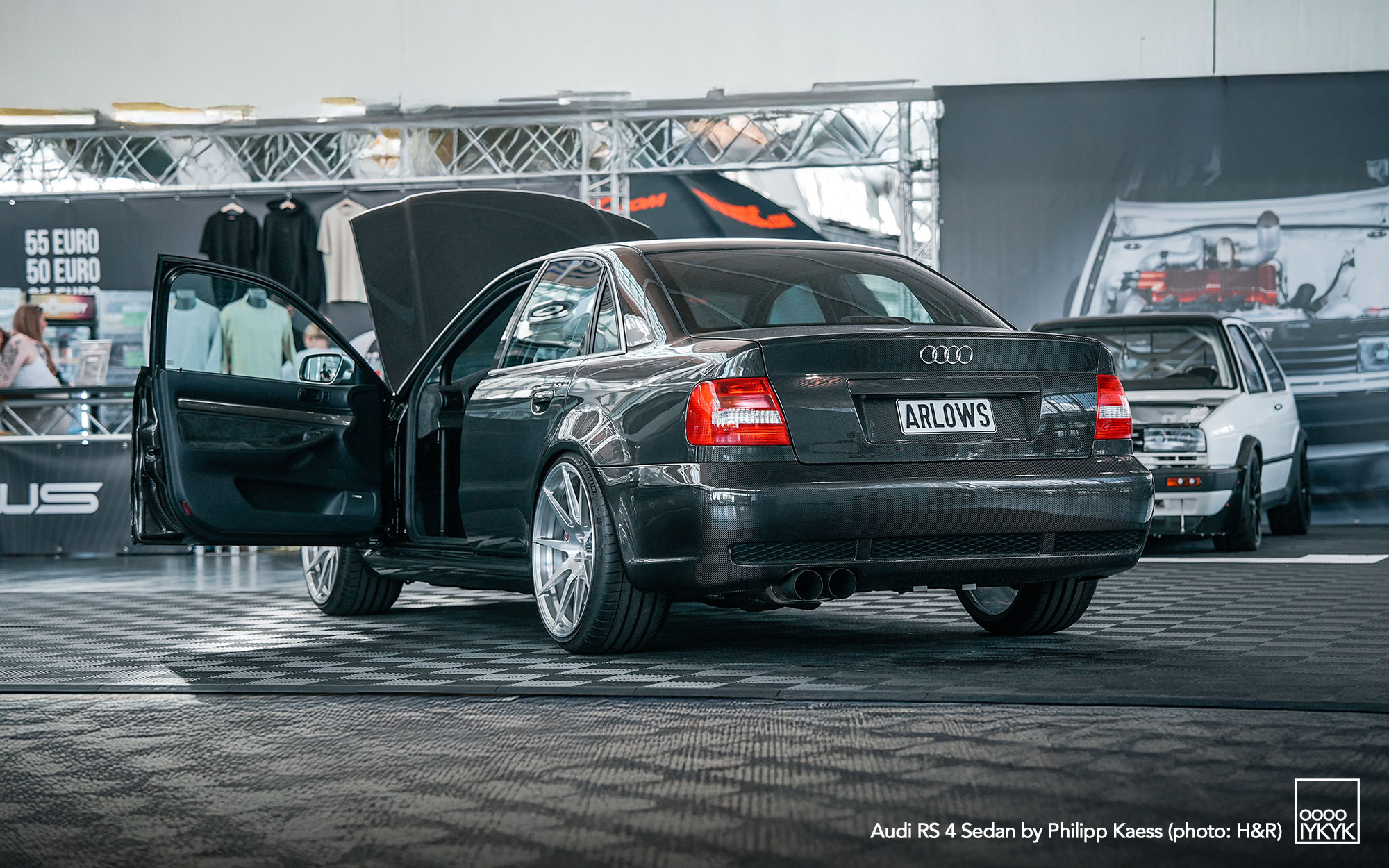
The idea began with a question that any number of builders have been known to ask: What if the RS 4 Avant (B5) had been born a sedan? Audi never built one. So Kaess did what others have done before in creating one, though definitely went his own route in order to make the car stand out amongst even this exclusive group. He sourced a clean 2000-model A4 sedan and began stripping it before reimagining it as an RS 4. What emerged is less a conversion and more a ground-up reinterpretation.
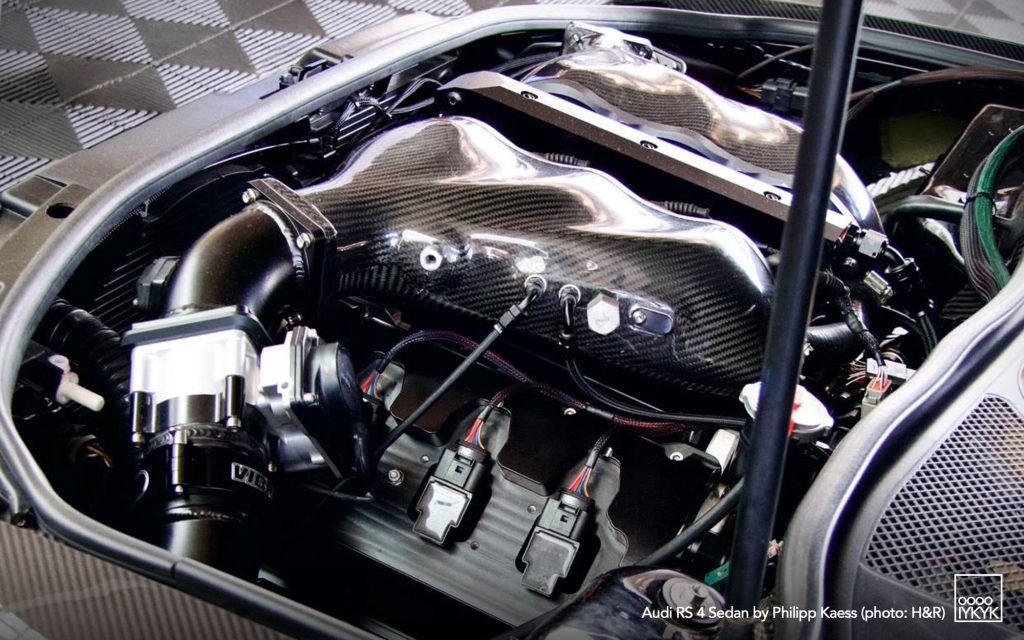
Under the hood, the engine is RS 4 in only the most genealogical sense. The original 2.7-liter biturbo V6 still forms the foundation, but everything above that has been rethought, and/or replaced. A modified crankshaft pushes displacement to 3.0 liters. Larger turbos feed through a Nissan GT-R intake manifold. A bespoke dry-sump system ensures lubrication under lateral load. A fully custom titanium exhaust handles the aftermath. Kaess won’t commit to a final power number, but the target was 1,300 hp-plus.
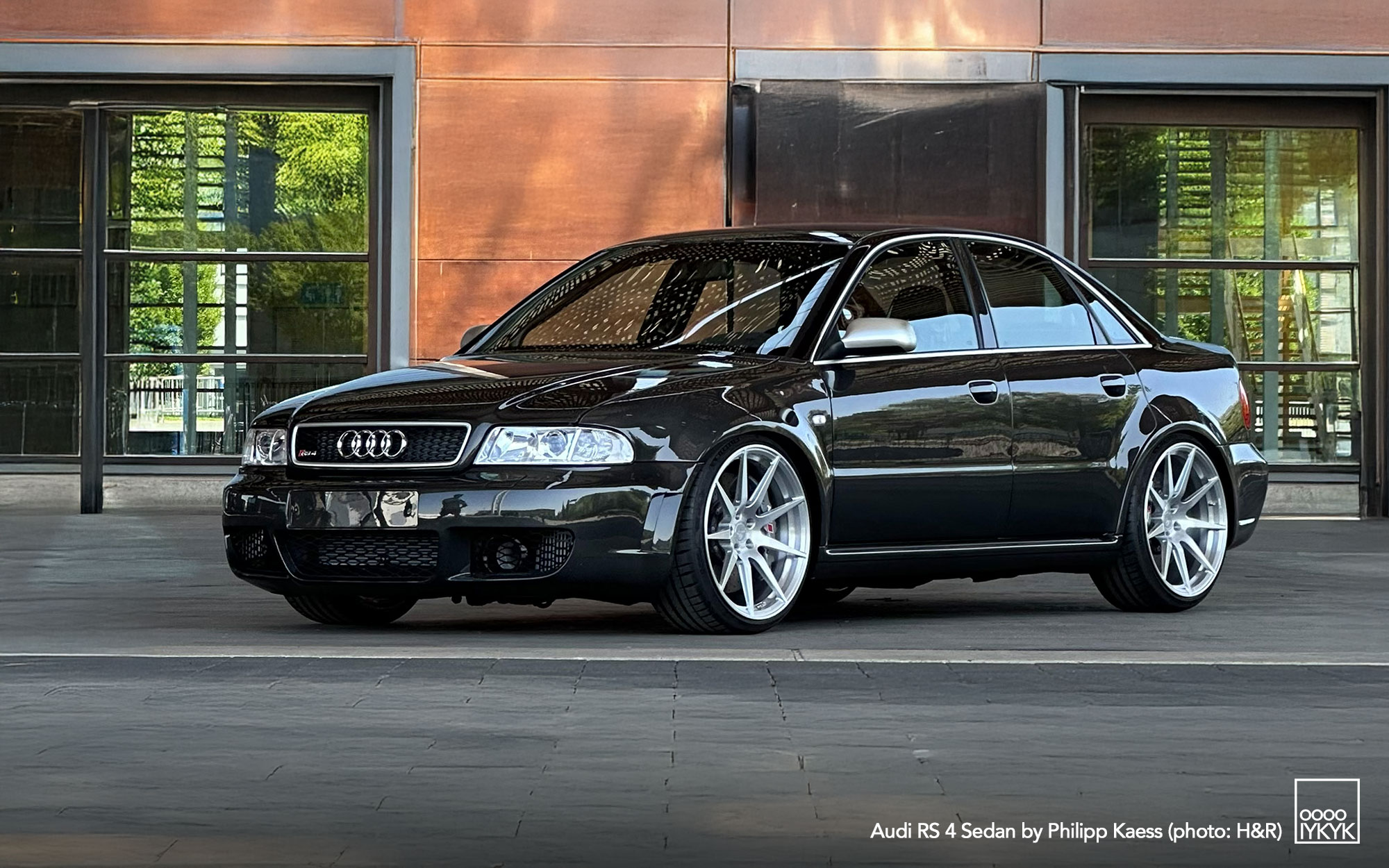
Raw output was only half of the mission with this RS 4. As with many of his builds, Kaess is obsessed with weight. Every gram that could be removed, was. Every gram that remained had to justify its existence. As a result, the entire body shell is carbon fiber, leaving the car with an uncanny factory appearance, though perhaps one run through the motorsport department. Beneath it, a differential milled from a solid block, motorsport-grade driveshafts, and a tubular roll cage contribute to both rigidity and power delivery. The wiring? Not carried over. Instead, a completely new in-house CAN bus electrical system powers the entire car and tailored specifically for it.
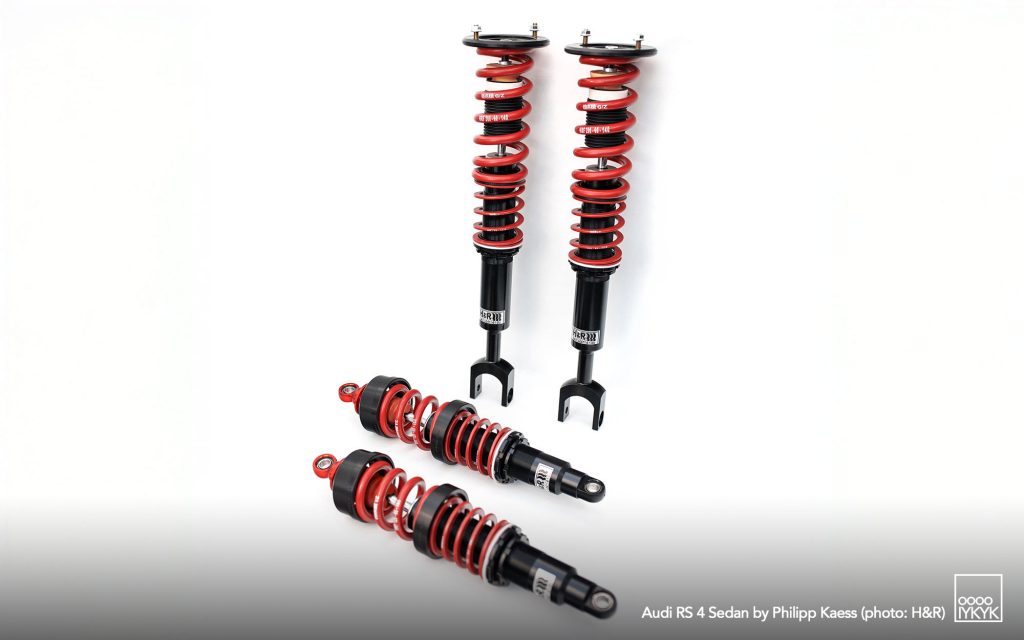
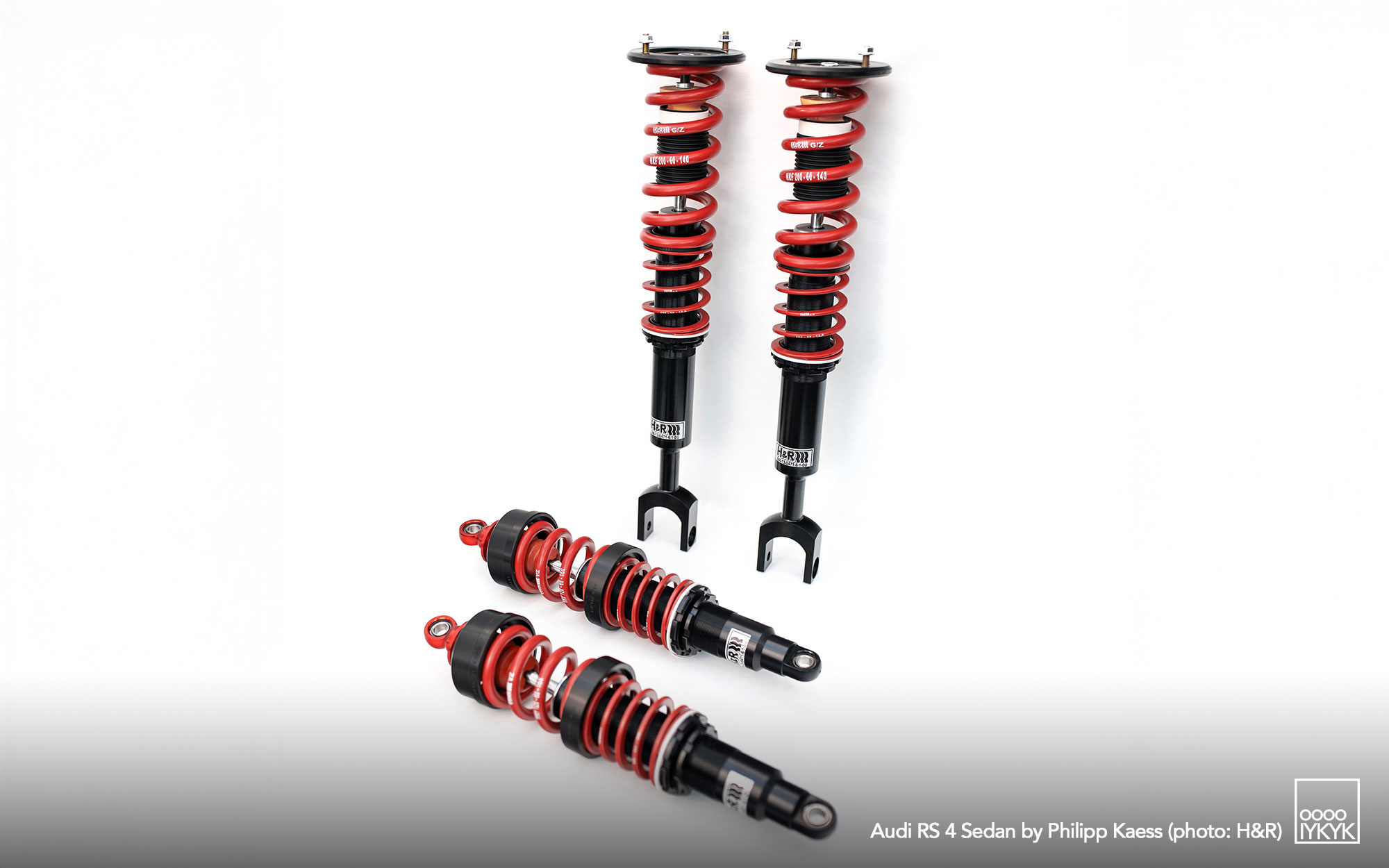
Supporting all of this is a suspension co-developed with H&R. The coilovers on this car aren’t modified off-the-shelf units—they were built specifically for it, with aluminum damper tubes and racing springs chosen for weight optimization and response.
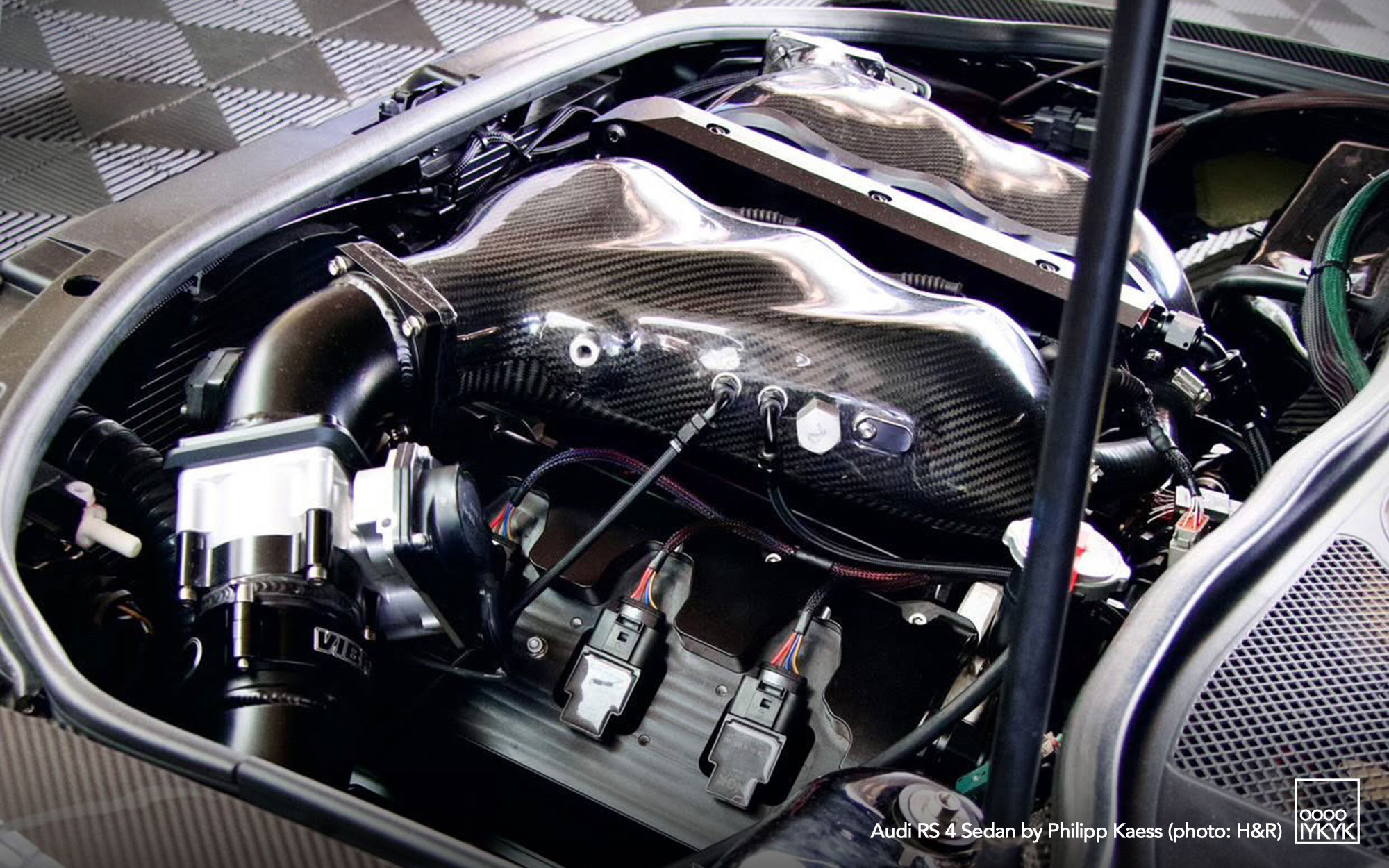
Add it all up and Kaess achieved his target: 1,200 kilograms ready to drive. That’s an extraordinary number for a B5, and when you combine it with allegedly four-figure horsepower, the power-to-weight ratio begins edging into territory reserved for hypercars—and occasionally for aircraft.
For Audi aficionados, the RS 4 answers a question the brand never asked but maybe should have. For car enthusiasts at Essen, it’s a reminder that the most interesting cars at shows like this one aren’t built to win trophies—they’re built to stretch imagination and display the best of what can be done. In that respect, this RS 4 “Sedan” is one of the more fascinating machines Philipp Kaess has created.
RELATED LINKS
PHOTO GALLERY