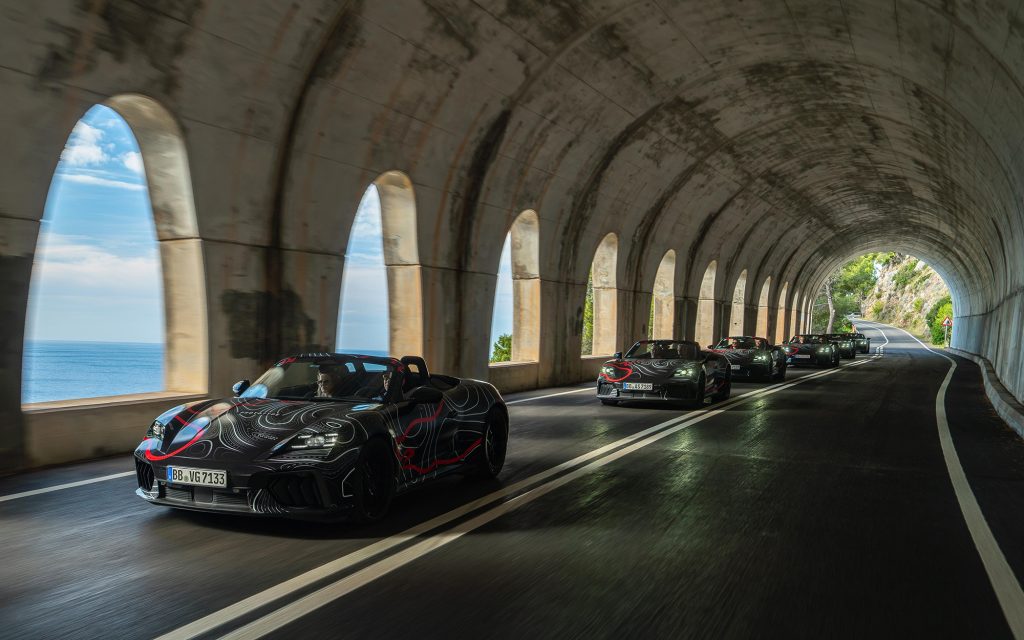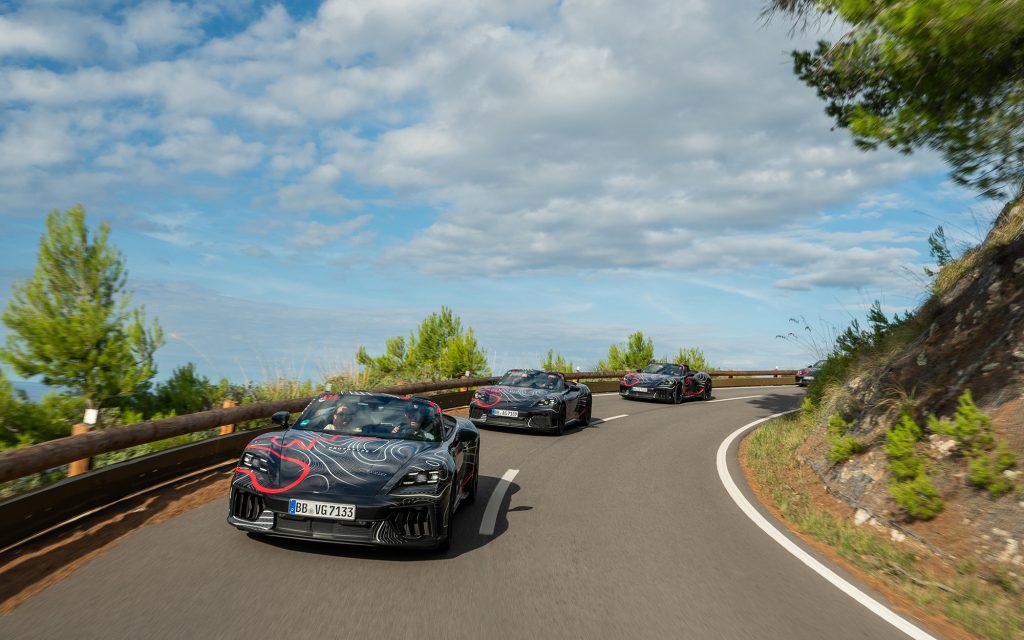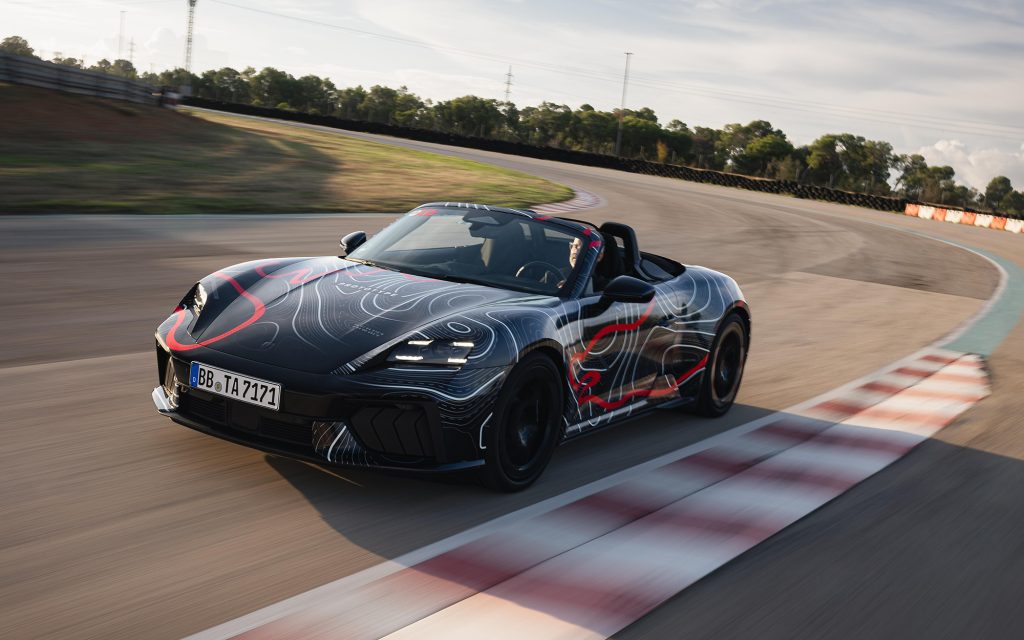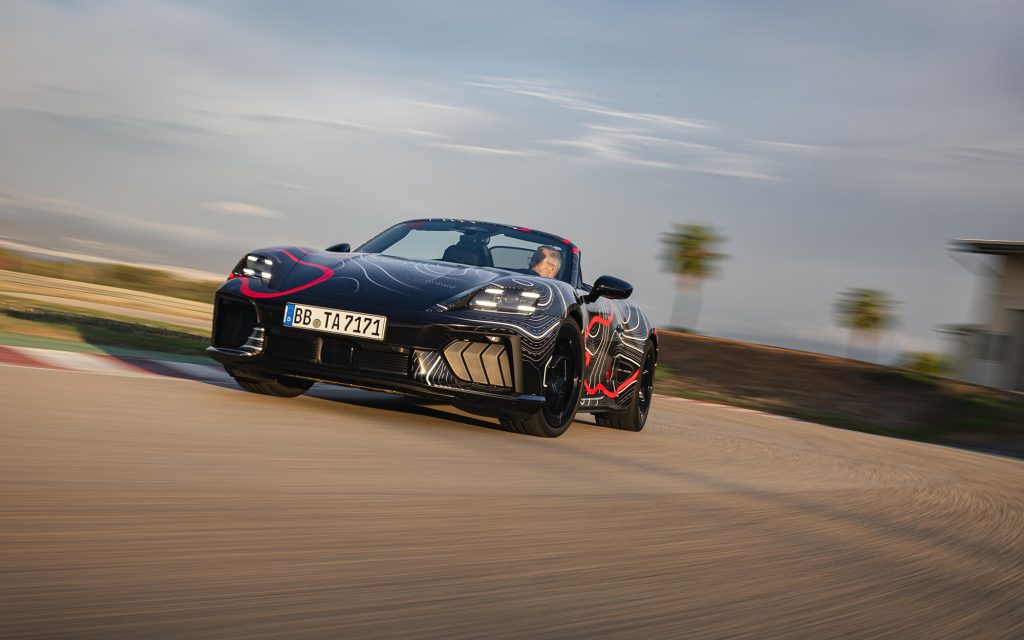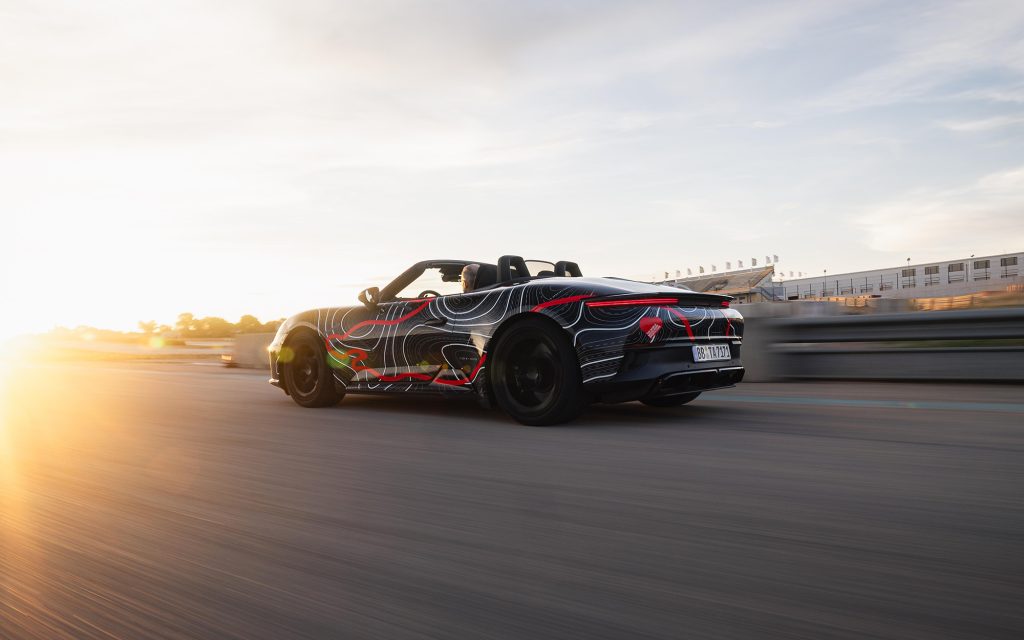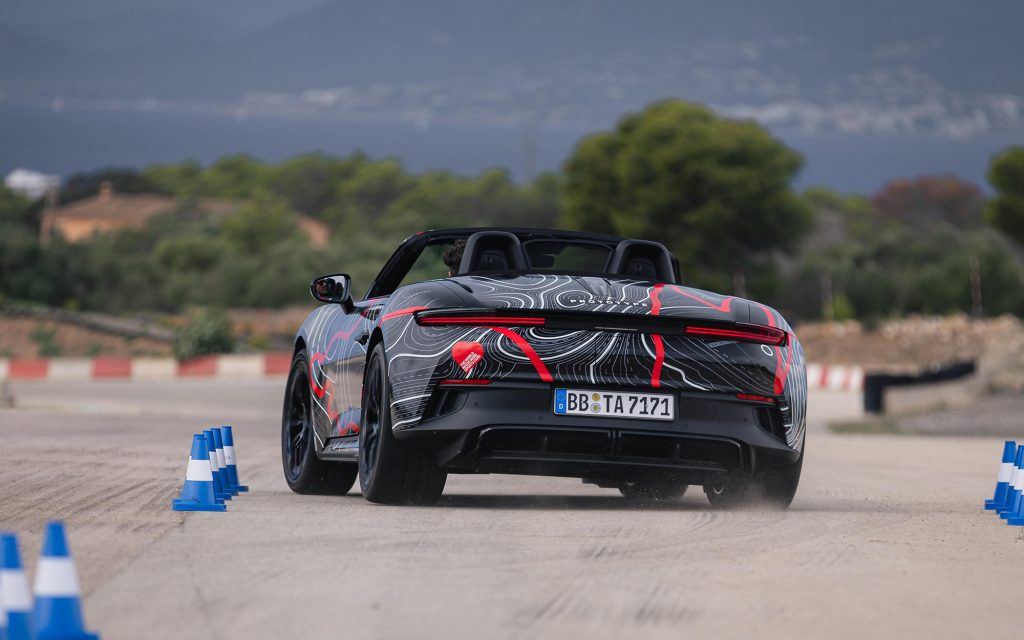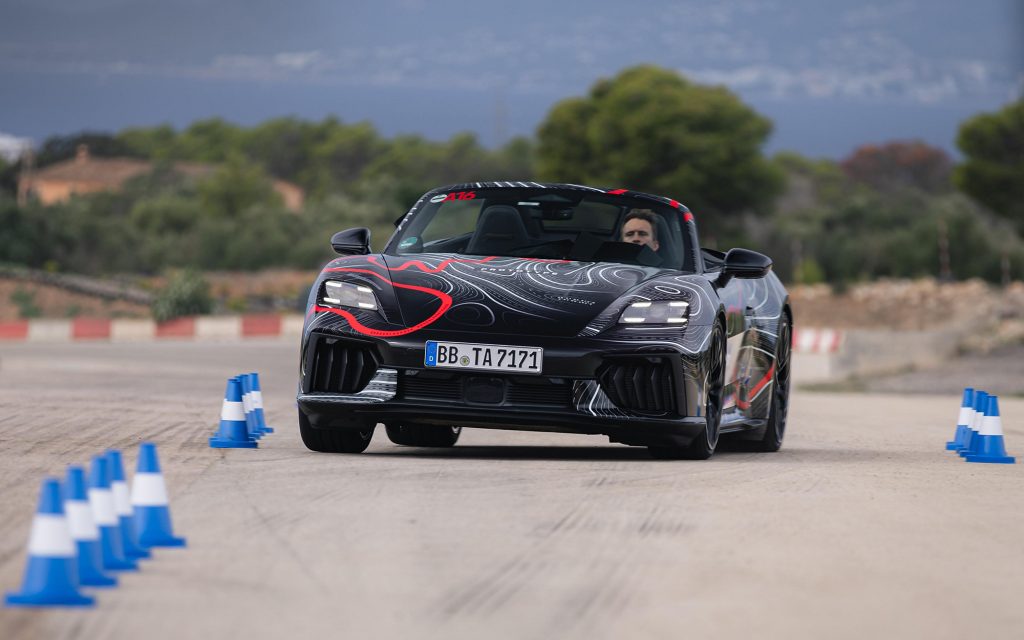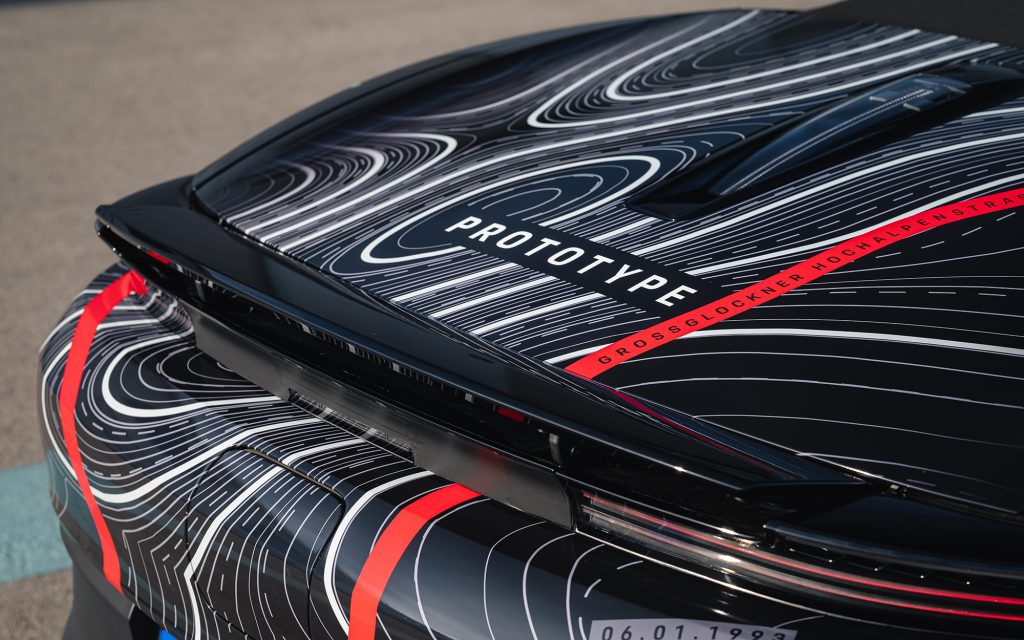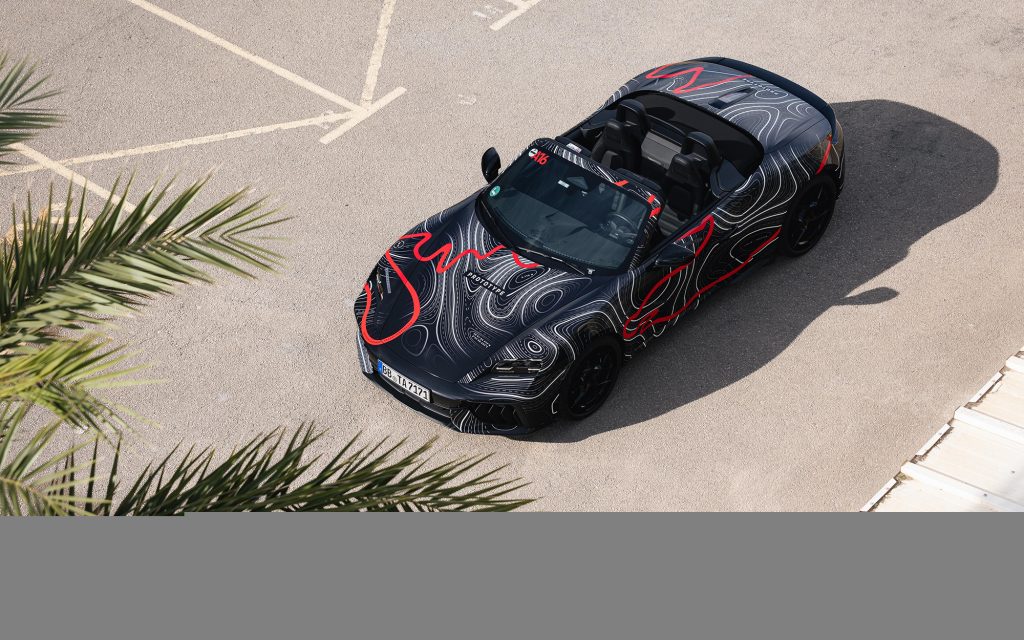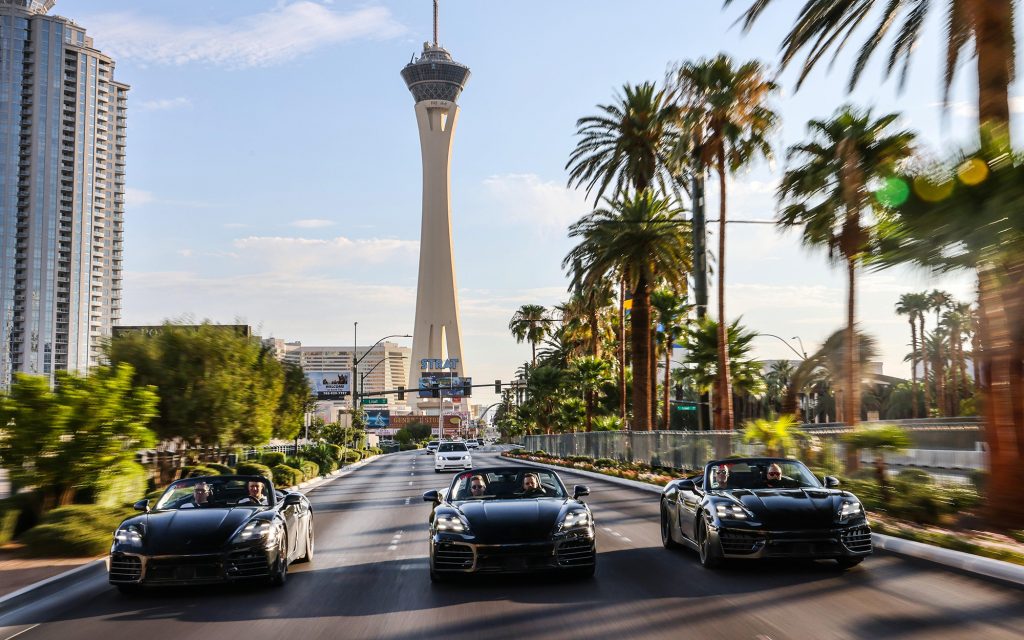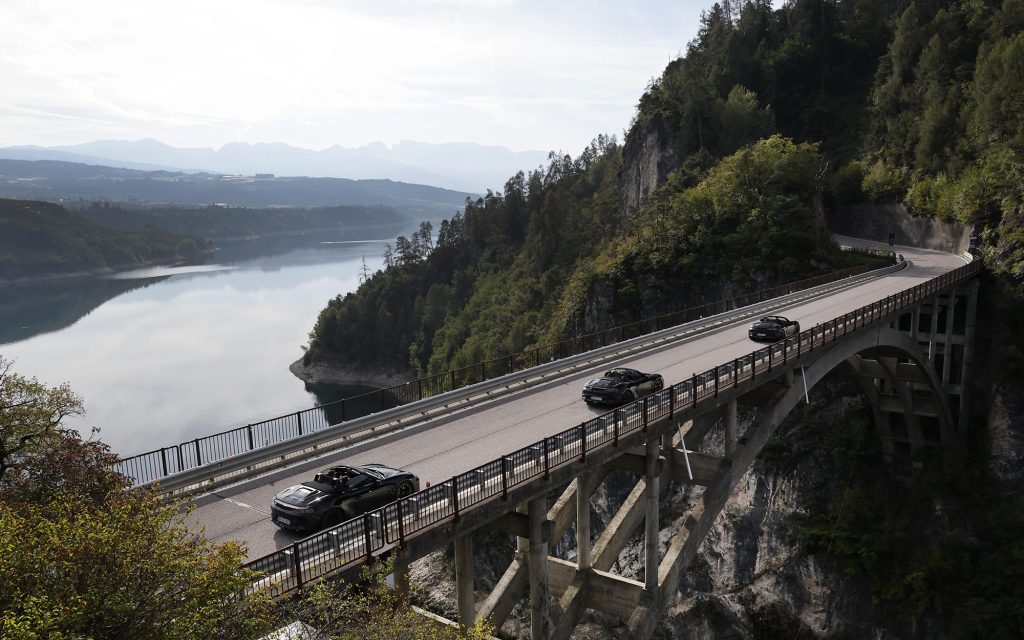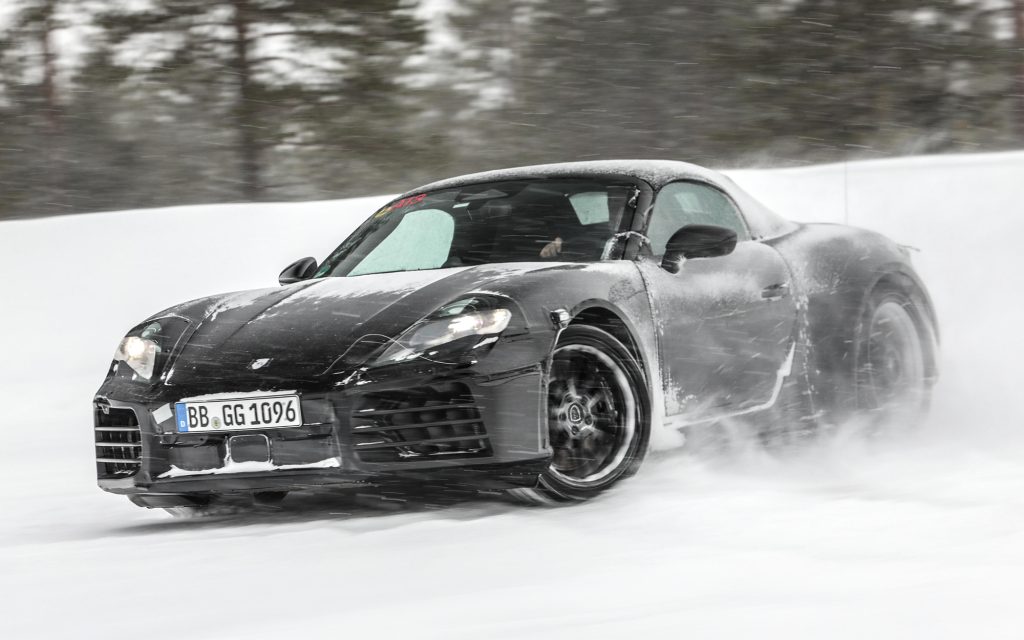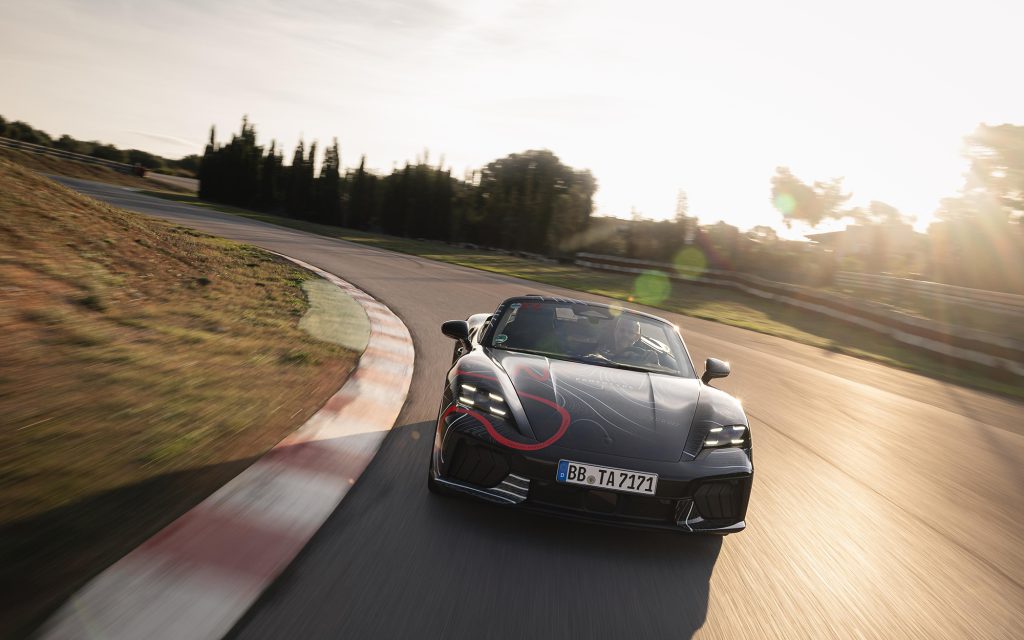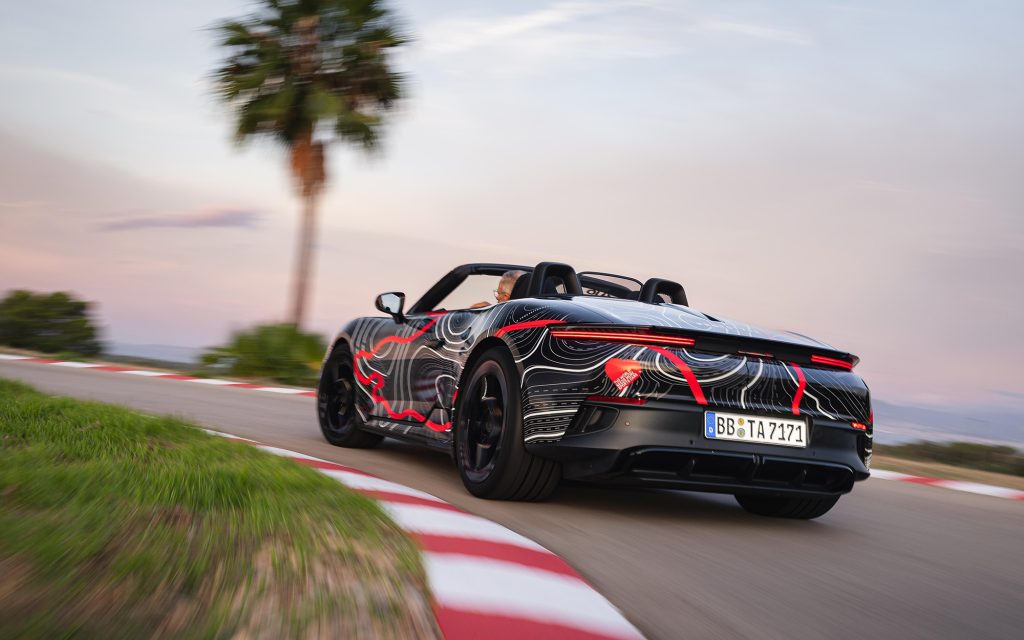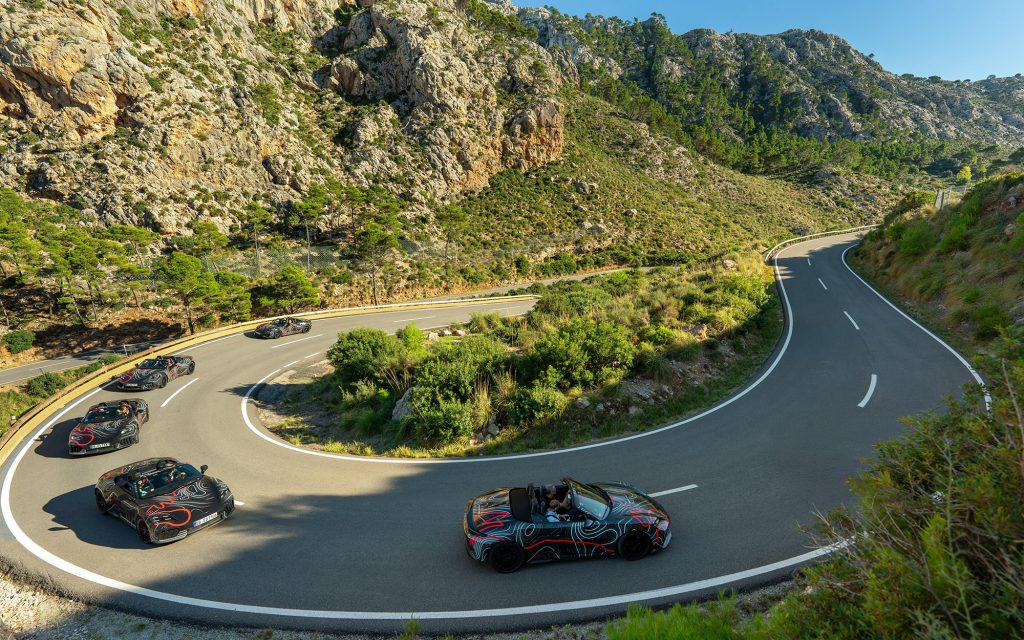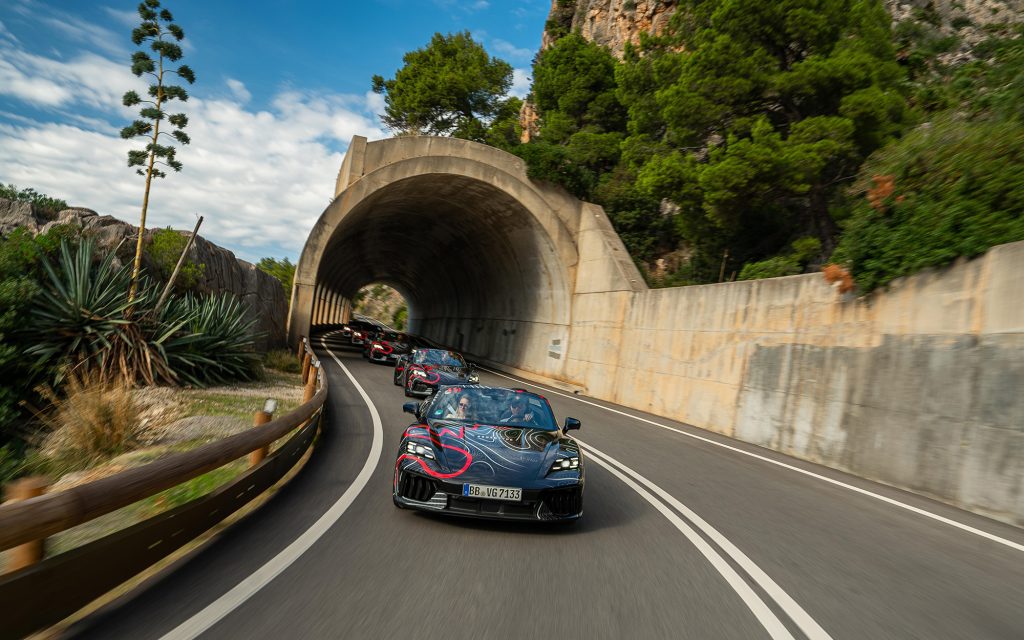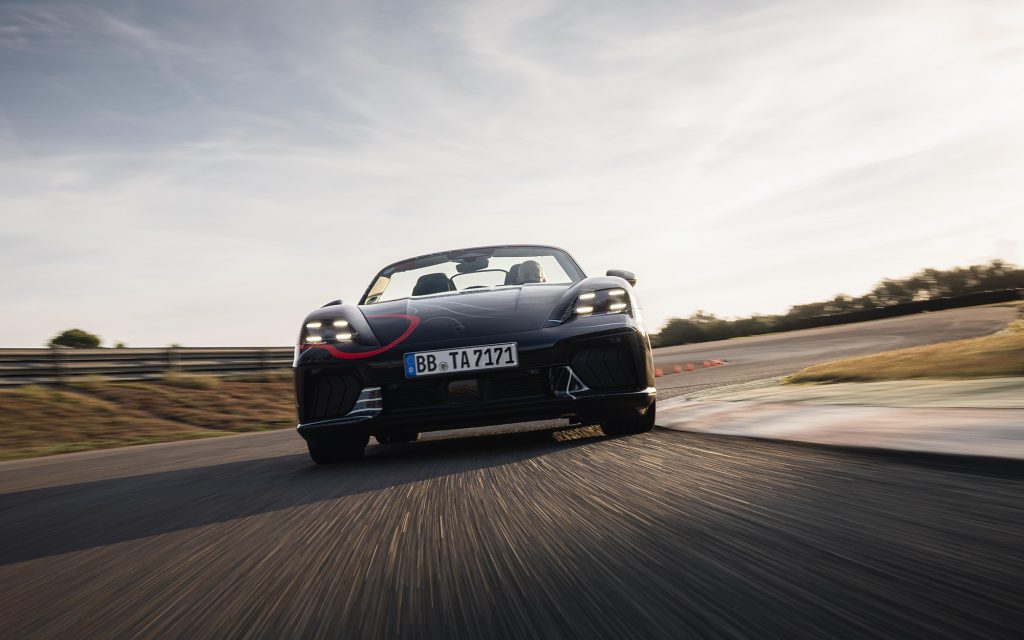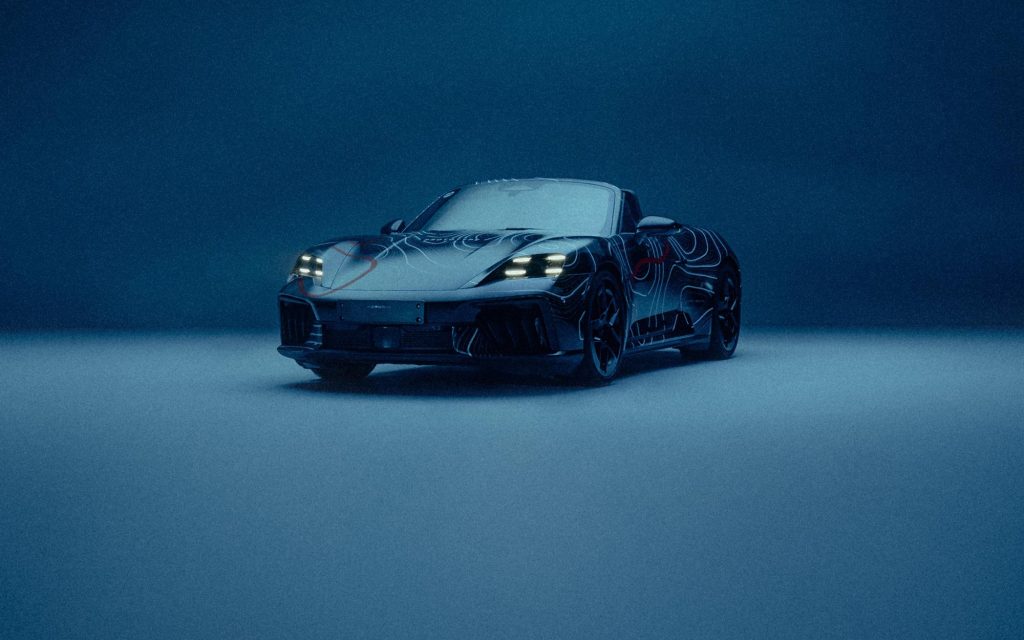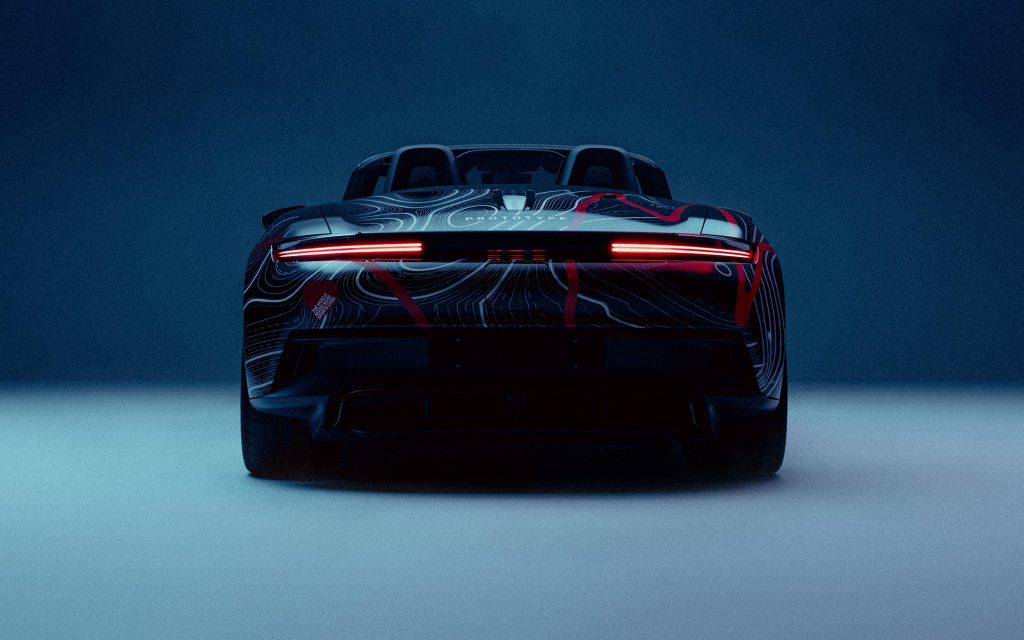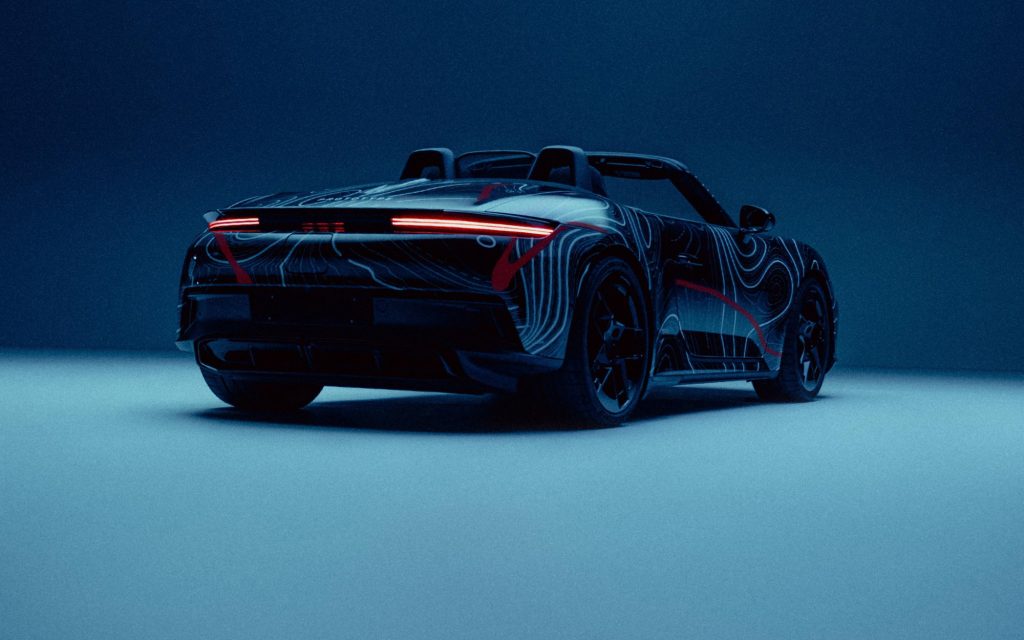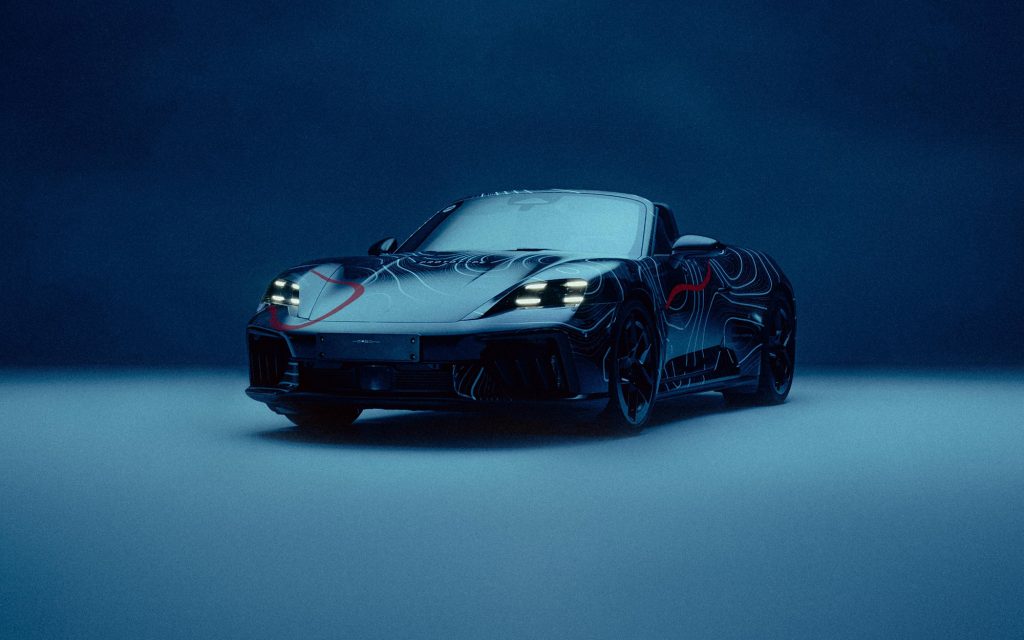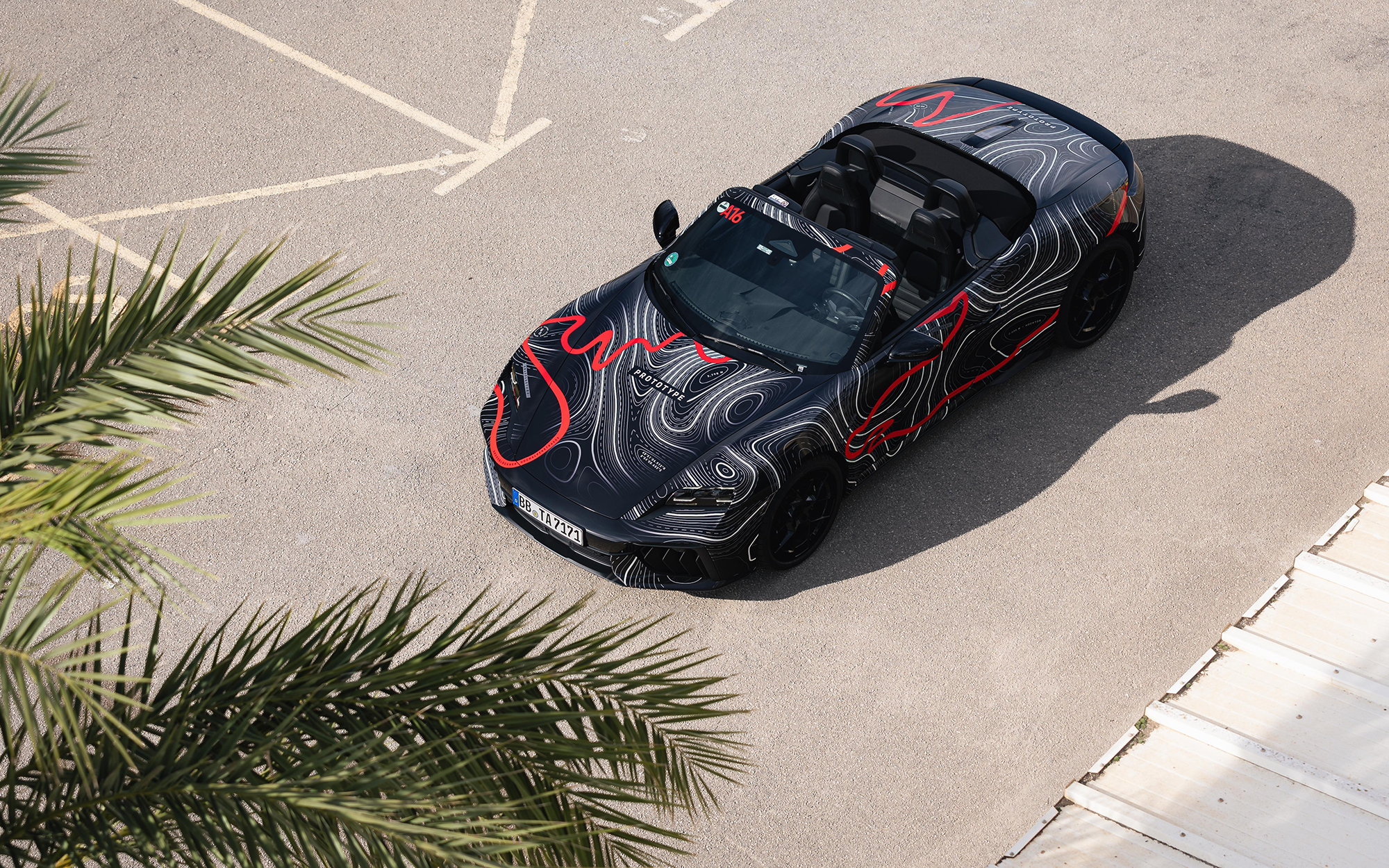

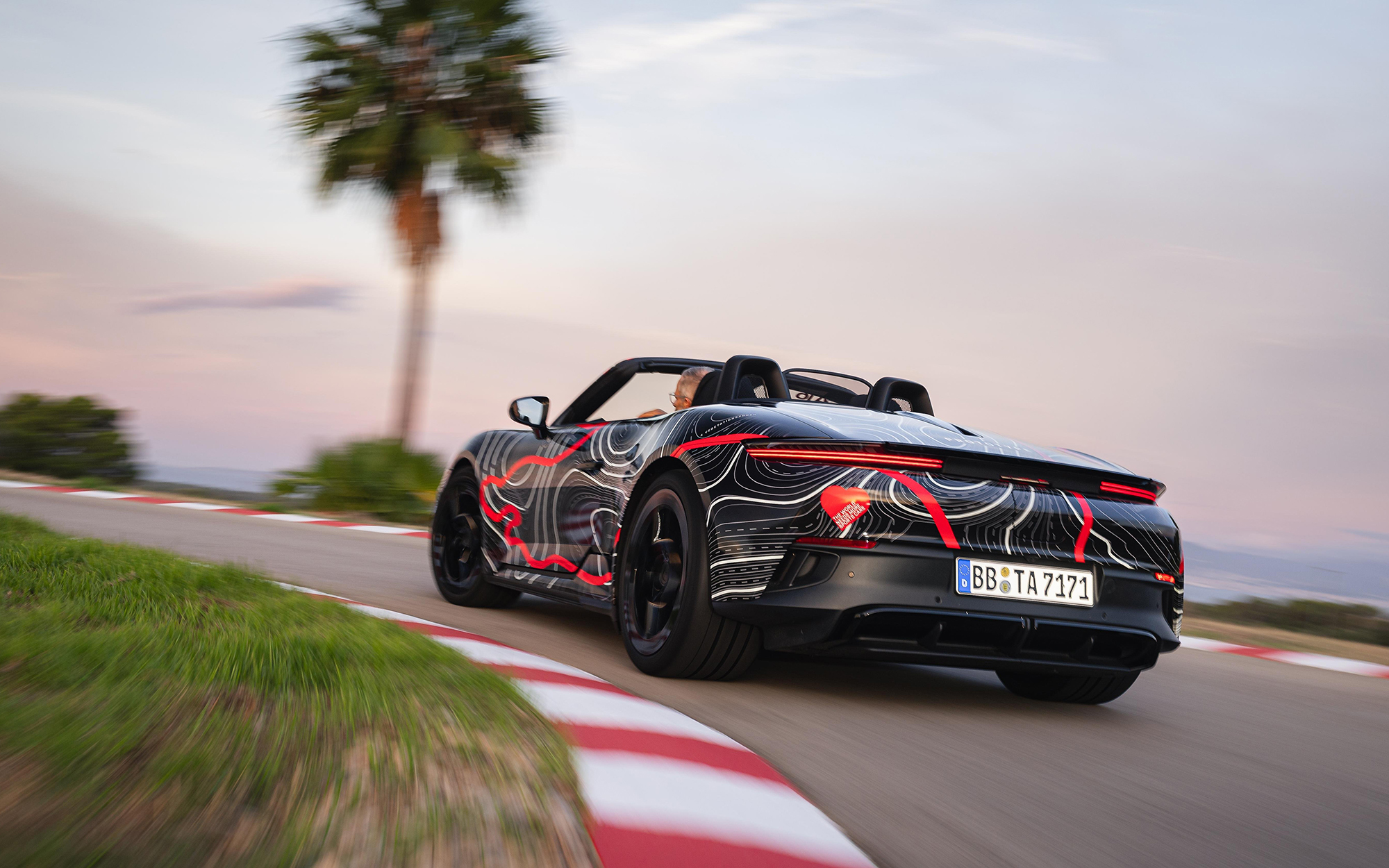
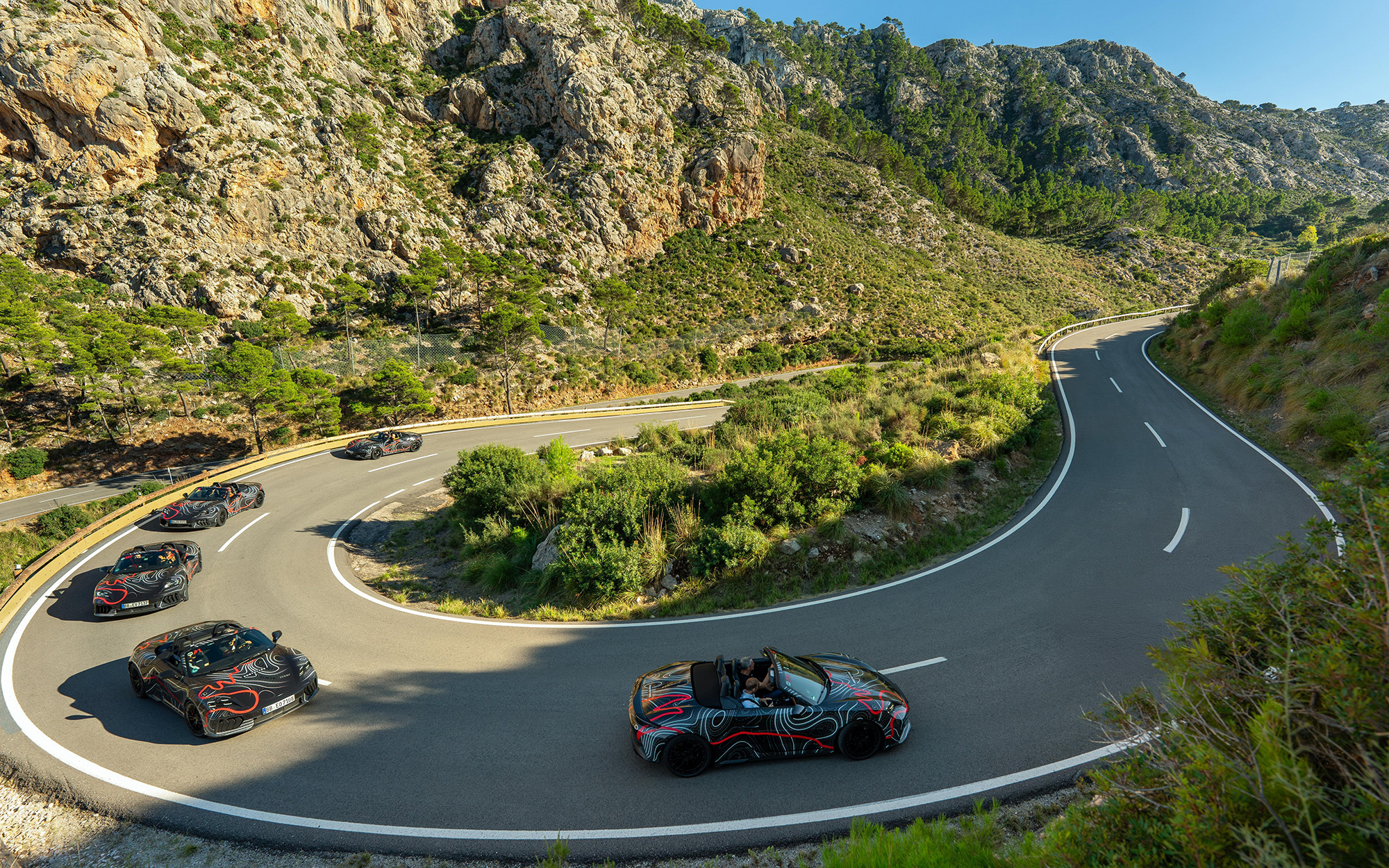
Porsche has allowed journalists behind the wheel of its electric 718 Boxster prototype ahead of a production-car reveal in the first quarter of 2027. For those watching the Audi Concept C as it transitions from concept car to production EV sportscar, the most interesting detail is what sits immediately behind the seats. This Porsche has put the 800-volt battery where the Boxster’s ICE engine used to be, and the as-of-yet-unnamed production car previewed by Concept C is being developed on the same Porsche platform. In as much, the 718 is our first detailed look at what that architecture, known internally as E-Core, can do in a running sports car.
THE BATTERY GOES WHERE THE ENGINE WAS
A broad underfloor battery works well in an EV with room to raise the floor. In a low two-seater, that extra height has to come from somewhere. Stack the seats above the pack and the occupants sit higher, which has consequences for the roofline and the view over the hood. E-Core puts the car’s battery behind the cabin, leaving the footwells and seating area free of a battery layer. Porsche can keep the driver low and retain the proportions of a mid-engine roadster.
It also concentrates a substantial share of the car’s mass close to the middle. Where that mass sits matters separately from what each axle carries. Bringing it closer to the center reduces its leverage as the car changes direction. The finished package is still rear-biased. Porsche quotes a 40:60 front-to-rear weight distribution, compared with roughly 45:55 for the outgoing combustion Boxster, according to Car and Driver. Porsche puts overall weight in the neighborhood of its current 911 T-Hybrid Cabriolets, with an exact curb weight still to come.
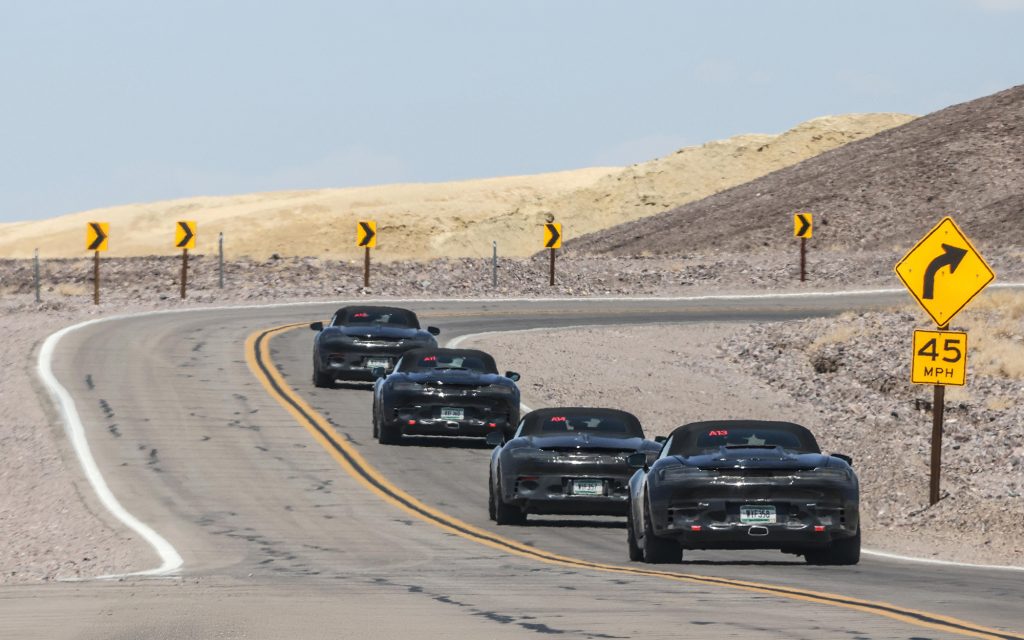
The 800-volt figure describes the electrical architecture. Porsche has yet to publish battery capacity, range or peak charging power. It has disclosed the scope of testing, though. Prototypes covered roughly four million kilometers (2.5 million miles) across more than 20 countries, with charging tested against five standards. Temperatures ranged from −30°C (−22°F) in Sweden to 51°C (124°F) in Death Valley. Car and Driver also reports that the prototype retains front and rear trunks and that its North American NACS port handles both AC and DC charging.
REAR DRIVE AND A CHASSIS DRAWING ON THE 911
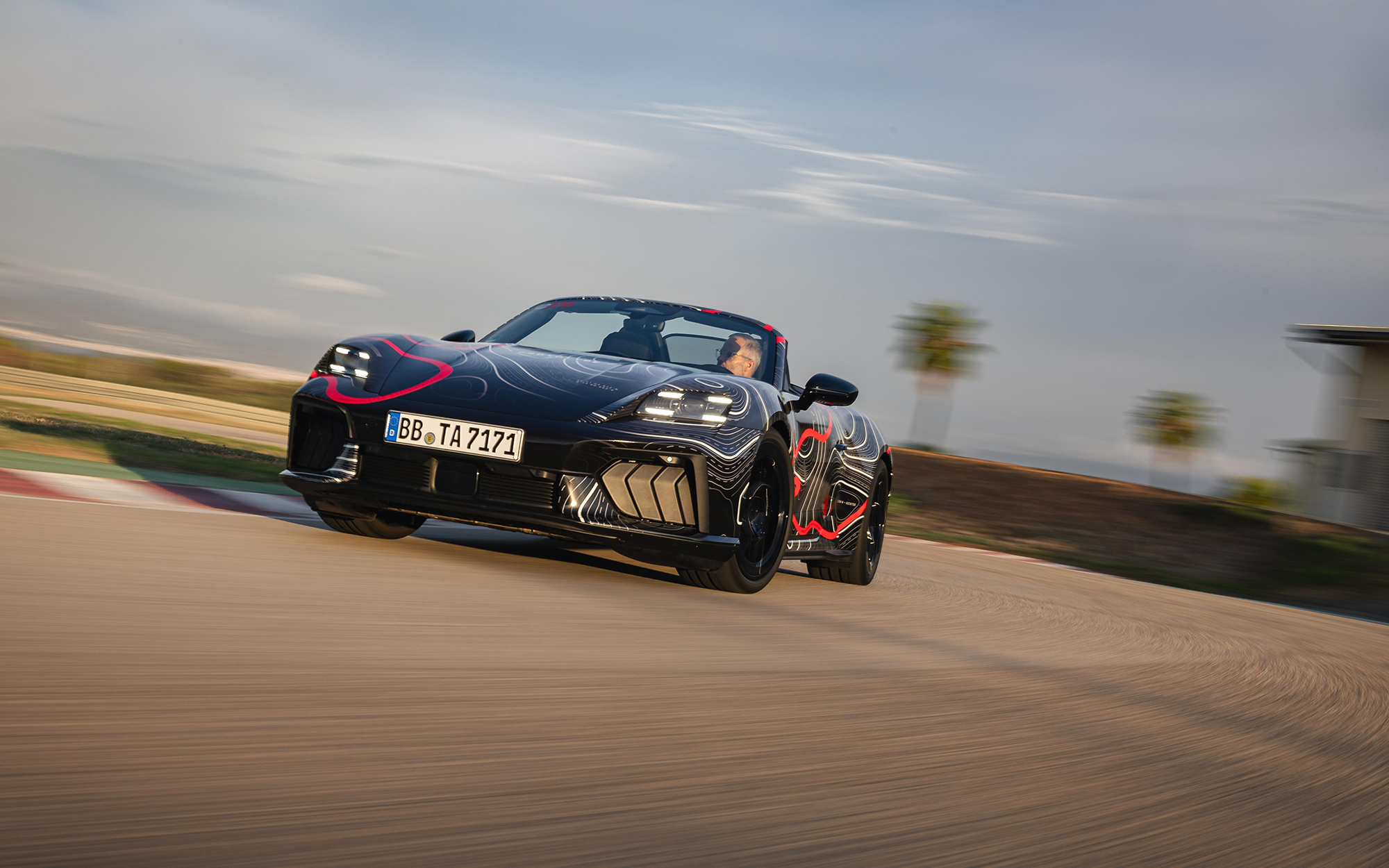
Every electric 718 Boxster will be rear-wheel drive according to Porsche. The brand says the top model will reach 100 km/h (62 mph) in under three seconds and exceed 250 km/h (155 mph). The prototype driven by Car and Driver used a single rear motor, with Porsche keeping its output under wraps. The publication reported sharp turn-in and a rear end that could be coaxed into rotating by lifting off the accelerator, a more telling first impression of the layout than another launch-control run.
Porsche based the steering on the 911 Carrera GTS and drew on the 911 for brake and wheel sizing and the electronically controlled PTV Plus rear limited-slip differential. Rear-axle steering will be available on a Boxster for the first time. The top prototype wore staggered-diameter wheels with 255/35 ZR20 front and 305/30 ZR21 rear Pirelli P Zero R Elect tires. That gives the driven axle considerably more tire width, while the steering, differential and tire choices all give Porsche ways to tune how the car turns in and puts power down.
SEVEN VIRTUAL GEARS AND A FAMILIAR FLAT-SIX
Porsche’s standard E-Shift system gives the driver two uses for the steering-wheel paddles. With E-Shift active, the software simulates a seven-speed PDK, with automatic or manual shifts and behavior that varies by drive mode. Porsche says it adds torque during the simulated shifts to preserve acceleration performance. Switch E-Shift off and the same paddles select among three levels of regenerative braking.
The soundtrack comes from a specific point in Boxster history. Porsche modeled it on the 981-generation Boxster GTS and its naturally aspirated 3.4-liter flat-six. The virtual gears give the driver a reason to reach for a paddle on the way into a corner or time an upshift on the way out. The sound gives those actions an audible cue. Both are choices Porsche made for the 718, and Audi has yet to say how its own car will use sound or paddles.
WALTER RÖHRL ON WHAT THE ELECTRIC BOXSTER TELLS THE DRIVER
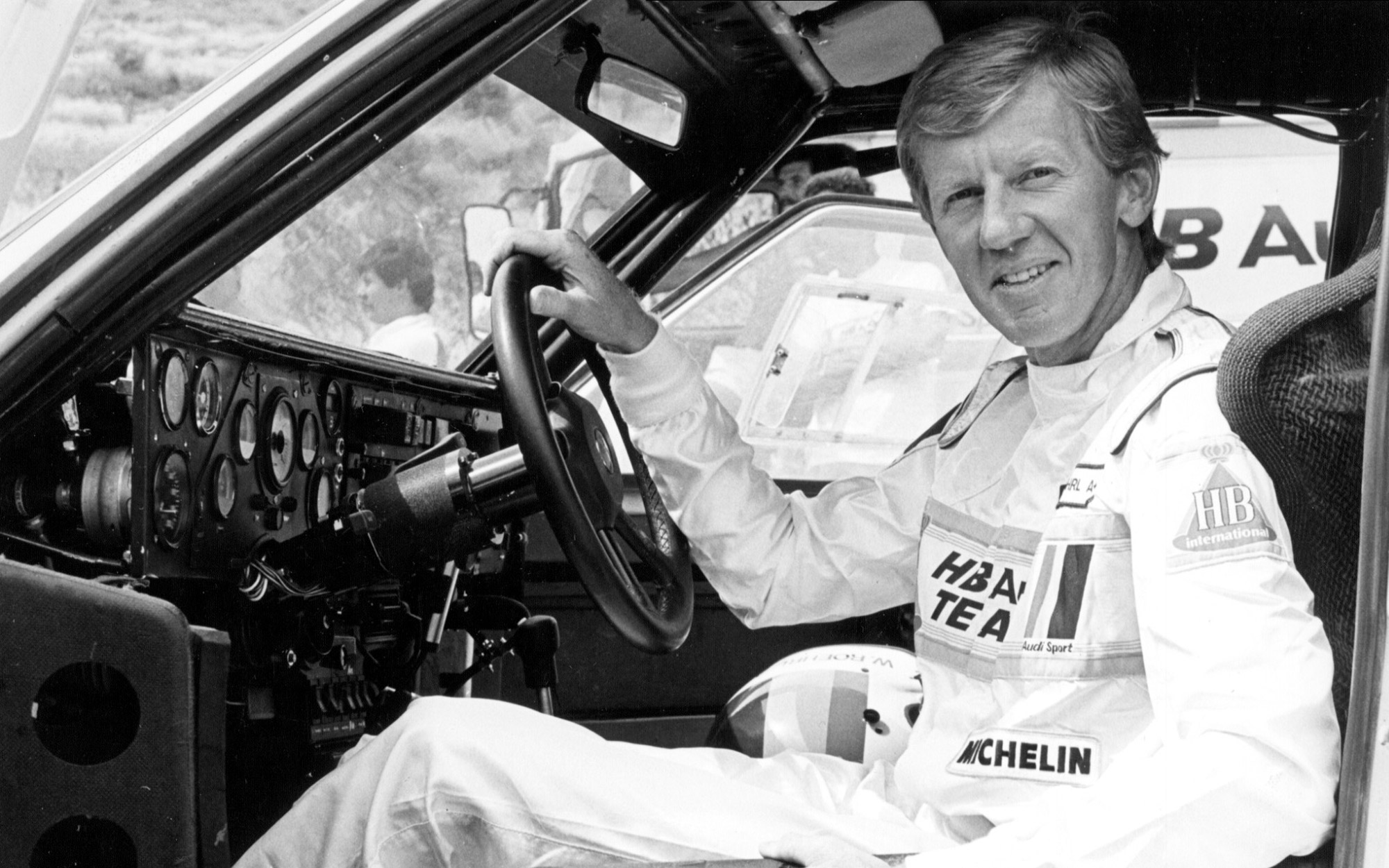
Two-time world rally champion and Audi Sport legend Walter Röhrl weighed in on the electric Boxster, stating it, “gives you more feedback than I’ve ever experienced with any other all-electric car.” He singled out the way power, braking and handling work together and said activating E-Shift added to his enjoyment.
Röhrl drove for Audi Sport in the Group B era and broke the 11-minute barrier at Pikes Peak in 1987 in the Sport quattro S1. He went on to share the winning Audi 90 quattro IMSA GTO with Hans-Joachim Stuck at Watkins Glen in 1989 and drove the Audi V8 quattro in the DTM. His comments here concern the Porsche prototype, but his career crossed several generations of Audi race cars whose behavior depended on how engineers managed the relationship between power delivery, traction and chassis response.
WHAT E-CORE TELLS US ABOUT THE PRODUCTION CONCEPT C
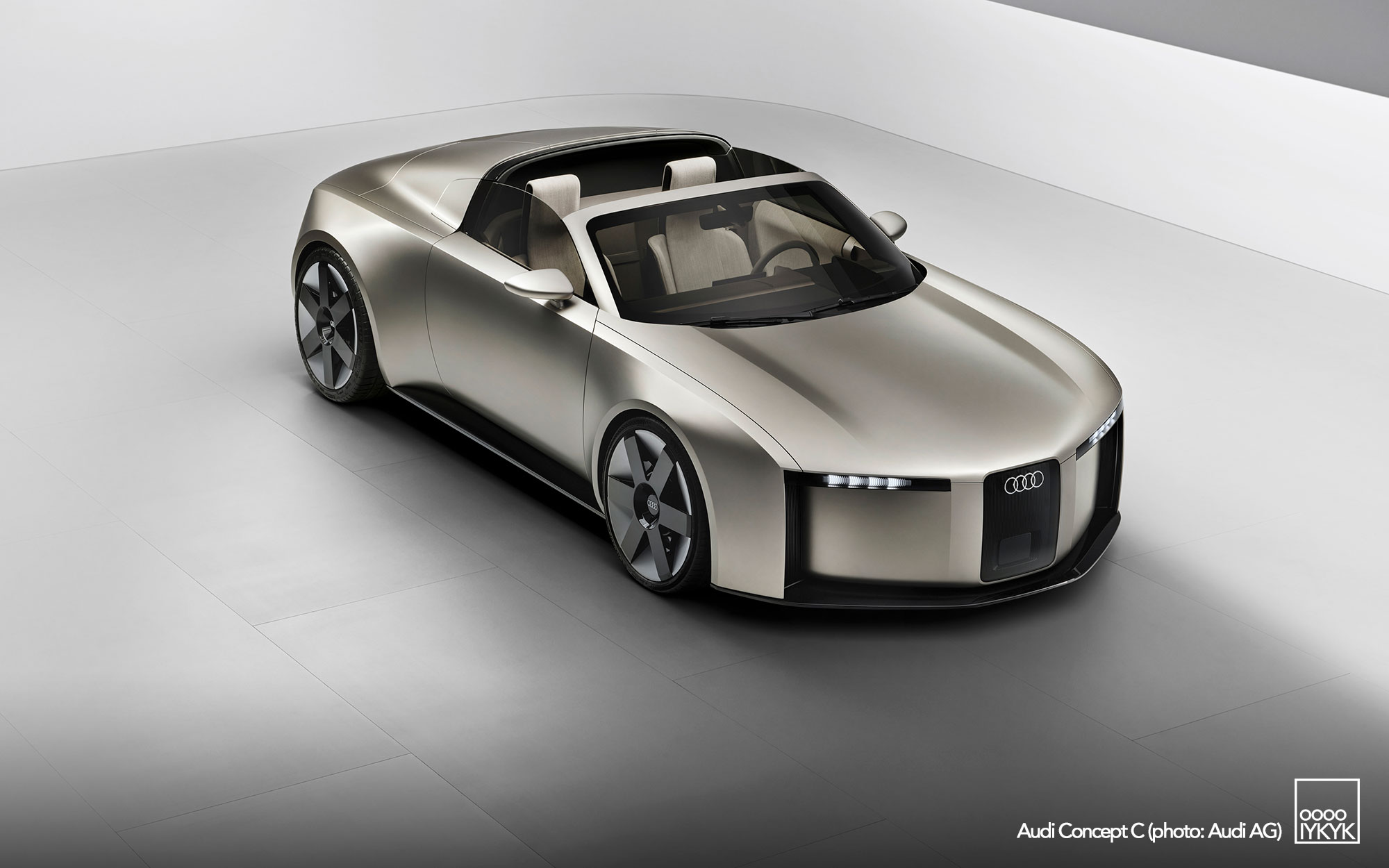
Audi’s Concept C already shows several of the same priorities. It is a low, rear-wheel-drive electric two-seater, and Audi gave the show car a two-piece retractable hardtop of its own that signals use of a mechanism similar to that of the Porsche 911 Targa. The electric Boxster is a roadster, though tells us more about what can fit underneath those proportions. A battery behind the seats can leave room for a low driving position, and the Porsche prototype shows how much performance E-Core can deliver through the rear axle alone.
The open questions are where Audi chooses to take it. Battery capacity, motor output, axle loads and chassis calibration will determine how closely the two cars drive. The tire package, steering and differential choices will matter, too. Porsche has shown how it used the shared architecture to preserve the seating position and rear-biased handling of a Boxster. Audi’s production reveal will show what it decided to do with that same freedom. And of course there’s also the question of all-wheel drive for the brand that invented quattro.
‘
Porsche will build the electric 718 Boxster in Stuttgart-Zuffenhausen. Its four-part development documentary begins November 24 on the Porsche YouTube channel in German.
PHOTO GALLERY