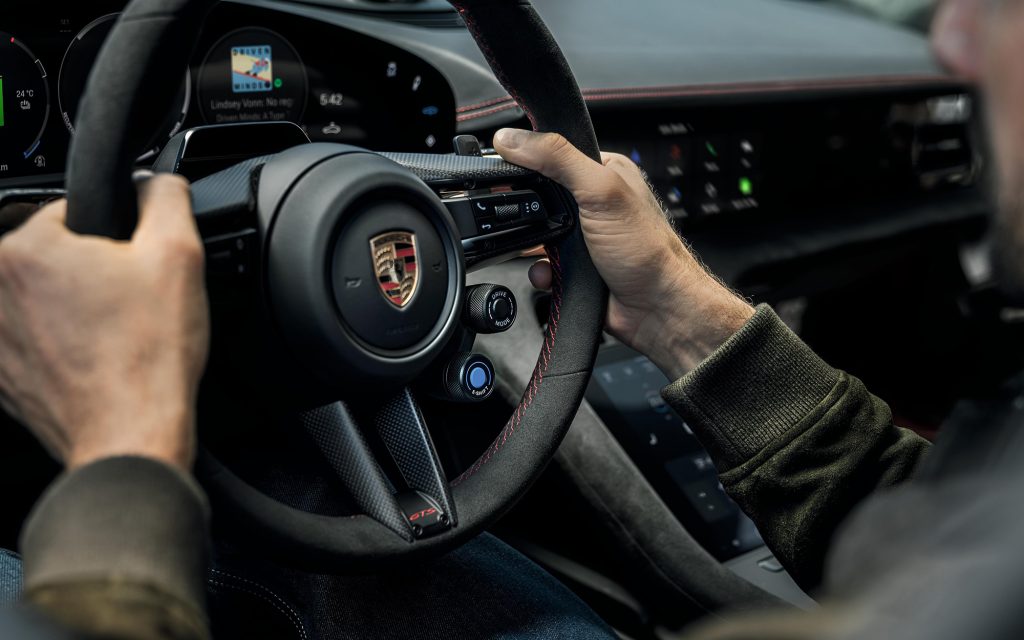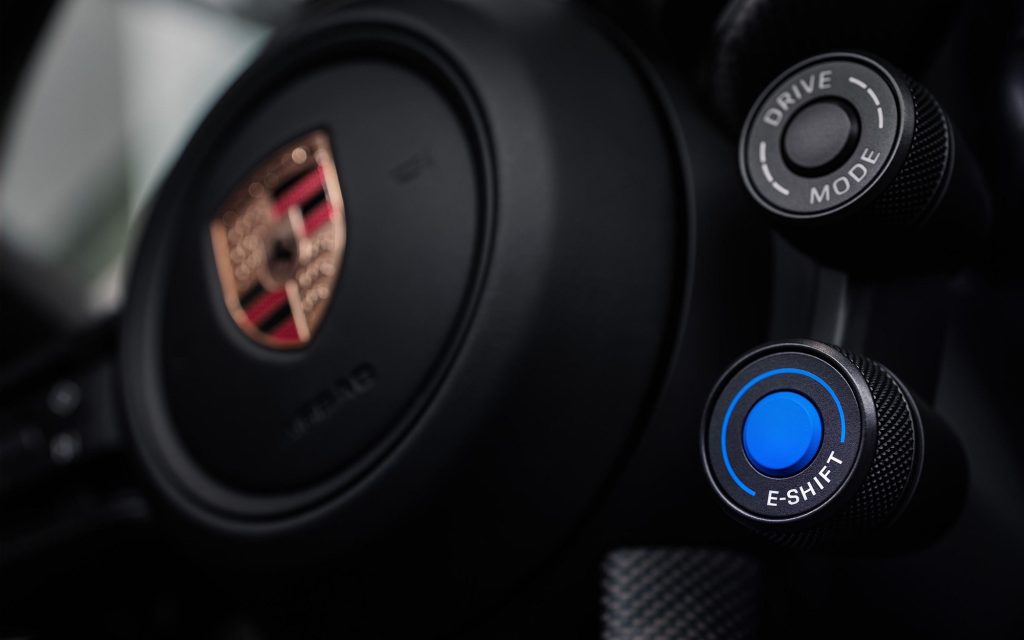


Porsche is adding an unusual new layer of driver interaction to the Taycan. Called E-Shift, the software-based system simulates an eight-speed PDK transmission, complete with paddle-operated gear changes, interruptions in torque, simulated engine speed, sound and tactile feedback.
For the EV curious and Audi-focused, the technology is worth watching closely. The Porsche Taycan and Audi e-tron GT share Volkswagen Group’s J1 electric architecture and significant underlying drivetrain technology. Porsche’s E-Shift implementation is specific to the Taycan, and Audi has announced no equivalent system, but the close technical relationship between the two cars makes it reasonable to wonder whether Audi Sport might eventually develop its own interpretation.
VIRTUAL GEARS, REAL SHIFT FEEDBACK
E-Shift isn’t intended to improve the Taycan’s performance. Instead, Porsche developed it specifically to add interaction to an electric drivetrain that otherwise delivers its acceleration almost seamlessly.
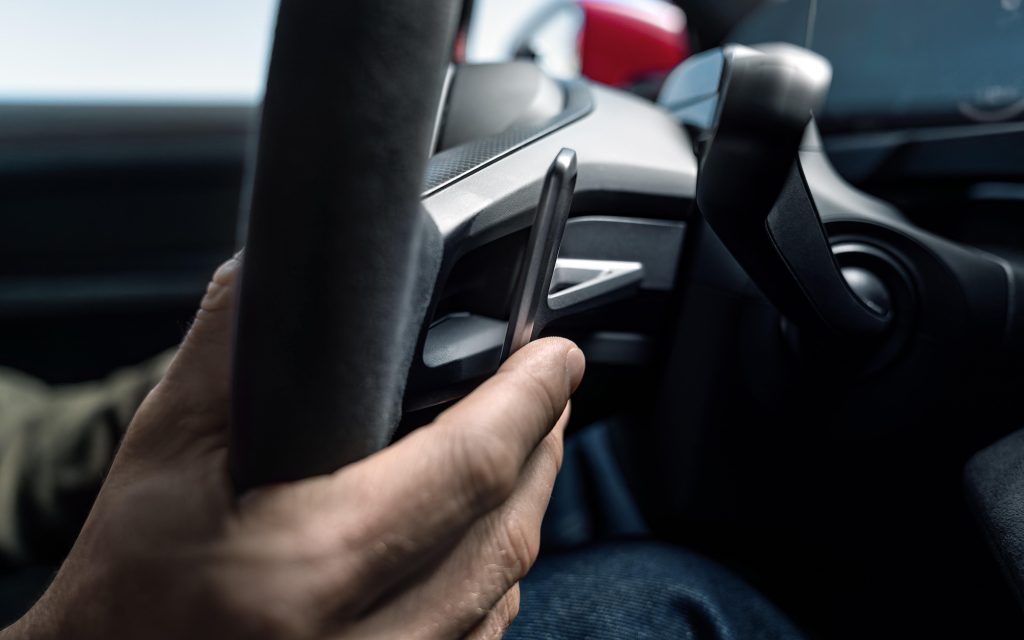
The software simulates an eight-speed Porsche Doppelkupplung transmission that can operate automatically or be shifted manually using the steering wheel paddles. Each shift produces a deliberate interruption in drive torque accompanied by tactile feedback, changing sound and a centrally positioned virtual tachometer climbing to 7,500 rpm.
According to Porsche, the software essentially adds seven virtual gear changes through the vehicle’s control systems. It also reproduces behaviors associated with a conventional transmission, including downshifts under braking and different shift strategies depending on how the car is being driven.
Unlike most EVs, the Taycan already uses a physical two-speed transmission on its rear axle. Porsche has synchronized the transition between E-Shift’s virtual second and third gears with that actual mechanical shift. The result combines seven software-created changes with the one the Taycan was already physically making.
Performance remains unchanged. During a simulated shift, the system briefly reduces drive torque before restoring it, creating the sensation of a gear change without altering the car’s overall acceleration capability.
Onboard-Sound: Taycan E-Shift
MORE THAN PADDLE SHIFTERS
Porsche has also tied E-Shift into the Taycan’s existing Electric Sport Sound system.
The revised soundscape responds to simulated engine speed, vehicle speed and drivetrain load, effectively giving the virtual transmission an acoustic component. Porsche has also created a new startup sound and says the system uses the Taycan’s existing interior and exterior speakers with a rear-biased sound signature.
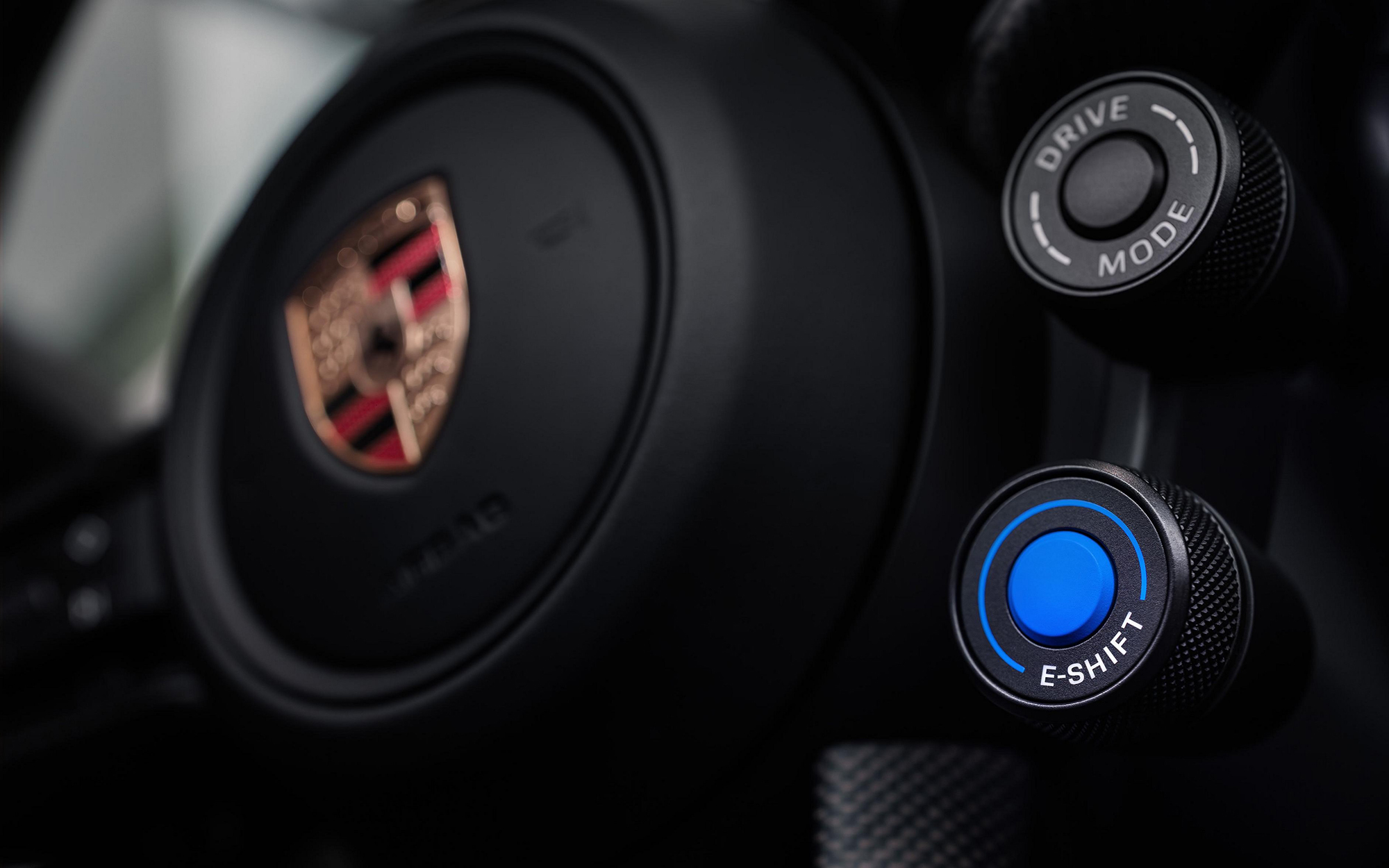
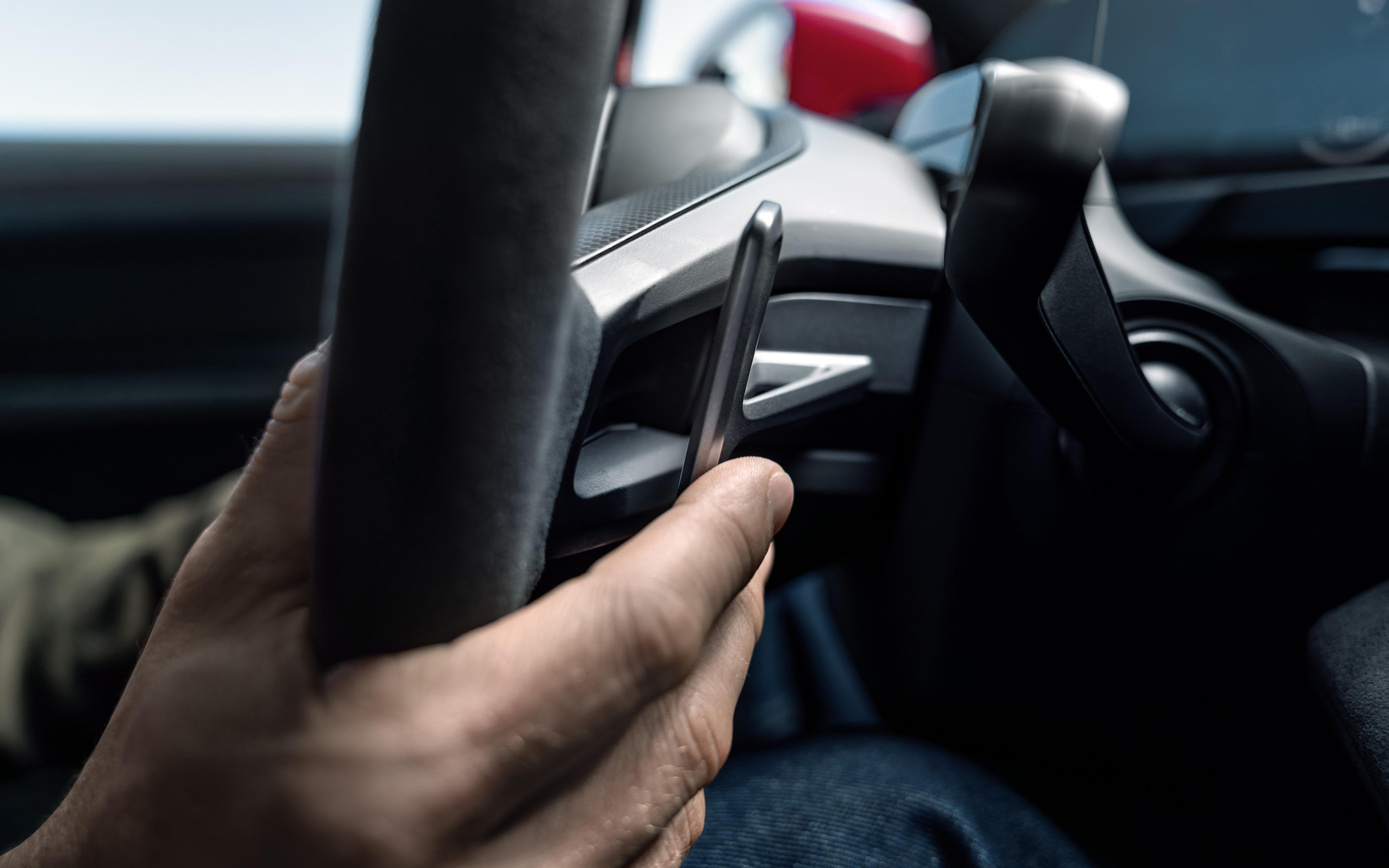
E-Shift is controlled through the GT sports steering wheel, where drivers can select automatic or manual operation. With E-Shift active, the steering-wheel paddles change virtual gears. With it switched off, those paddles return to controlling the Taycan’s two-stage recuperation system. Pulling both paddles simultaneously activates Push-to-Pass.
It’s an interesting solution to an increasingly familiar problem. Electric drivetrains have made cars extraordinarily responsive, but in removing gear changes, engine speed and much of the associated sound and vibration, they’ve also eliminated several of the cues drivers traditionally use to interact with a performance car.
Rather than accepting that as inherent to electrification, Porsche is using software to deliberately put some of that interaction back.
COULD AUDI DEVELOP ITS OWN VERSION?
The Taycan and e-tron GT were developed around the same J1 platform, with both using an 800-volt electrical architecture and a two-speed transmission on the rear axle. The current Audi S e-tron GT, RS e-tron GT and RS e-tron GT performance remain closely related technically to their Porsche counterparts even as each brand has increasingly differentiated the cars through chassis tuning, power delivery, design and software.
That doesn’t necessarily mean Porsche E-Shift can simply be switched on in an Audi. Porsche describes E-Shift as software-based, but its implementation is integrated into the Taycan’s drivetrain controls, steering-wheel interface, instrumentation, sound system and existing two-speed rear transmission. Audi would need to develop its own functionality, interface and character, assuming it wants such a feature at all.
There is currently no indication from Audi that such a system is planned for e-tron GT. Still, the existence of E-Shift demonstrates what’s technically possible within a closely related J1 application. And given Audi Sport’s own history of using transmission behavior, sound and driver interaction to distinguish its performance cars, an Audi-specific interpretation wouldn’t be difficult to imagine.
It might not mimic an eight-speed PDK. Audi could theoretically draw from its own performance history, creating shift behavior and acoustic feedback with a distinctly Audi character rather than simply reproducing Porsche’s solution.
For now, that’s speculation. What’s concrete is perhaps more significant: Porsche has demonstrated that the J1-era electric sports car doesn’t necessarily have to become less interactive as software takes on a larger role. Software can also be used to deliberately add interaction back in.
PHOTO GALLERY