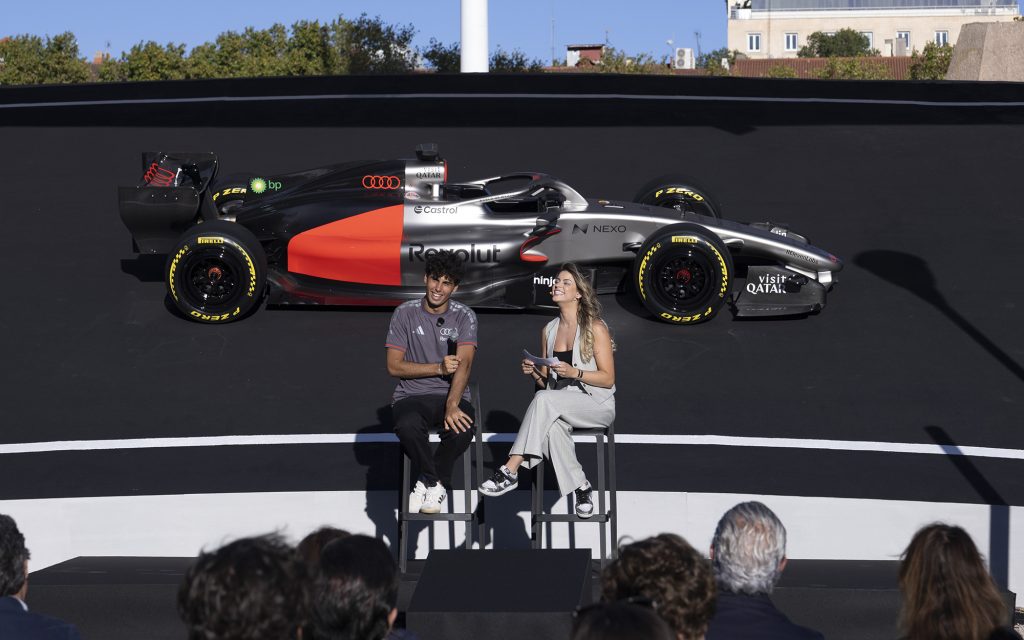
Ahead of Formula 1’s first Spanish Grand Prix at Madring, Audi Spain has taken over Madrid’s Plaza de Colón with a temporary exhibition connecting nearly nine decades of the company’s competition history to its new Formula 1 program. Running September 9–12, the display brings together four significant Audi and Auto Union competition cars alongside the Audi R26, while a large-scale recreation of Madring’s signature banked corner brings a piece of the new circuit into the center of the Spanish capital.
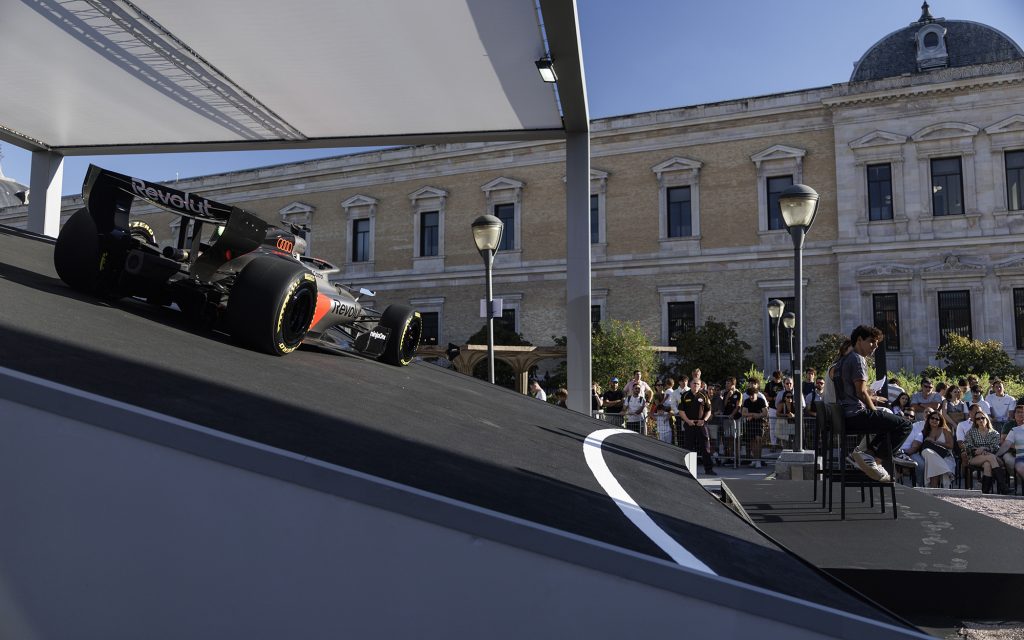
The centerpiece is what Audi calls the “Curva Monumental,” a large-scale replica of La Monumental, the most visually distinctive corner on the new Madring circuit. The real corner features banking of up to 24 percent, with Audi saying Formula 1 cars are expected to enter at more than 300 km/h (186 mph). Installed as the entrance to the Plaza de Colón exhibition, the recreation is intended to give visitors some sense of the scale and geometry of a corner that will remain largely theoretical until the cars finally attack it at speed this weekend.

FROM AUTO UNION TO F1
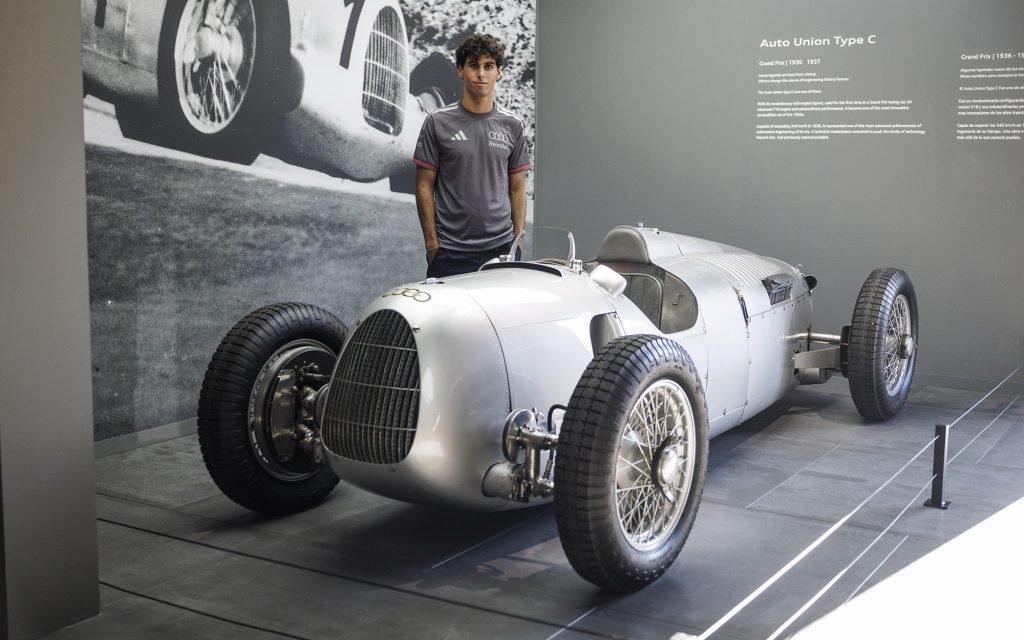
Beyond the Madring installation, Audi has assembled four cars representing very different periods of its competition history. The oldest is a 1936 Auto Union Type C, the Ferdinand Porsche-designed mid-engine Grand Prix car powered by a 6.0-liter V16 producing 382 kW (520 hp). Capable of more than 340 km/h (211 mph), the Type C represents the most direct historical connection to Audi’s Formula 1 arrival: the four rings are effectively returning to Grand Prix racing for the first time since the Auto Union era of the 1930s.

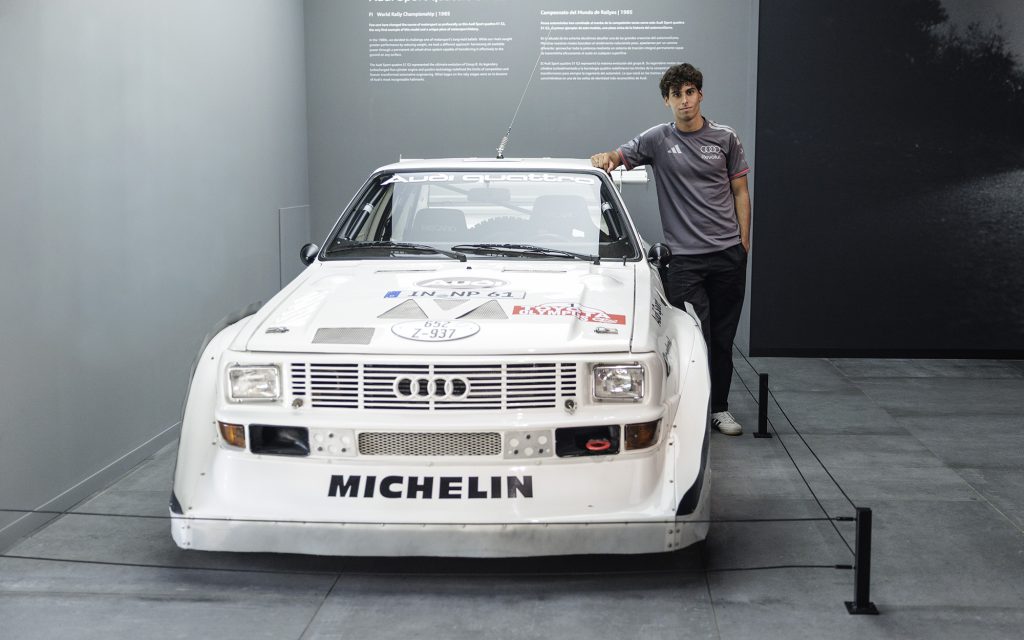
Next is a 1985 Audi Sport quattro S1 E2, representing the peak of the quattro-driven rally program that reshaped Audi’s modern performance identity. The 350-kW (476-hp) five-cylinder Group B machine displayed in Madrid has an interesting history of its own. According to Audi Spain, this particular white example served as the homologation vehicle used ahead of production of the remaining Sport quattro S1 E2 competition cars.

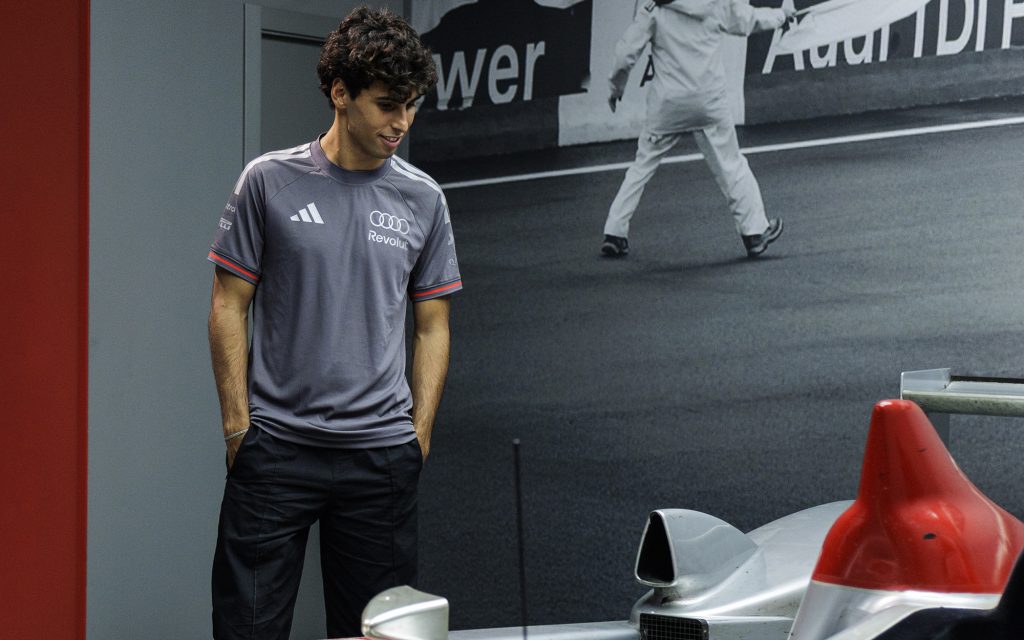
Audi’s enormously successful endurance-racing period is represented by an even more significant chassis. The R10 TDI displayed in Madrid is identified by Audi as the car that won the 2008 24 Hours of Le Mans. Powered by a 5.5-liter V12 TDI producing 478 kW (650 hp), the R10 program had already made history in 2006 by giving Audi and diesel power the first overall Le Mans victory for a diesel-powered prototype. The Madrid car represents the final R10 victory at Le Mans, scored by Tom Kristensen, Allan McNish and Dindo Capello in 2008.

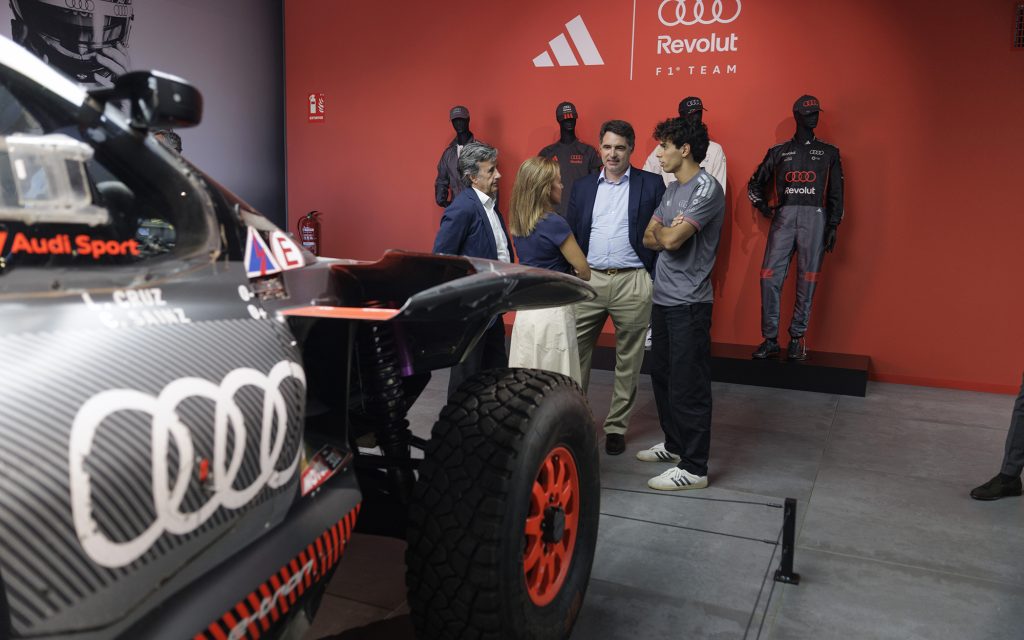
The fourth historical competition car is the Audi RS Q e-tron, representing a much more recent experiment in electrified motorsport. Its electric drive system combined a high-voltage battery with an onboard energy converter to tackle long-distance desert rallying without relying on a conventional mechanical connection between its combustion engine and the wheels. Carlos Sainz and Lucas Cruz ultimately delivered the program’s defining result by winning the 2024 Dakar Rally.

R26 FINISHES THE LINE
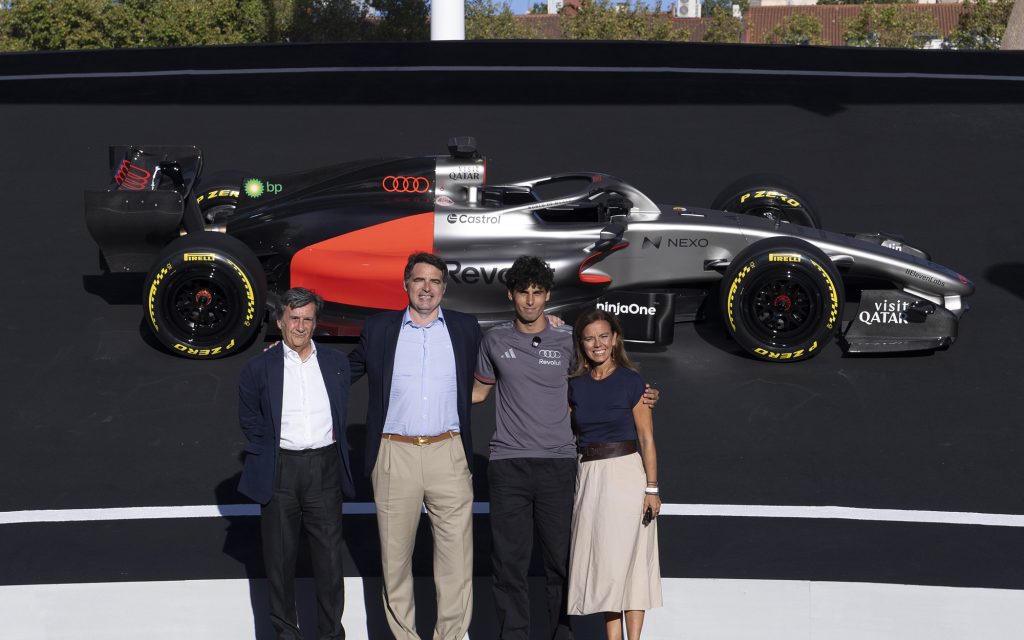
Sitting at the end of that progression is the Audi R26 Formula 1 car. The grouping makes Audi’s diverse racing heritage obivious: Grand Prix racing, quattro and Group B, diesel endurance racing, electrified Dakar competition and now Formula 1. These programs are separated by decades and very different technical regulations, but each arrived during periods when Audi was using motorsport to establish or demonstrate a particular engineering direction.
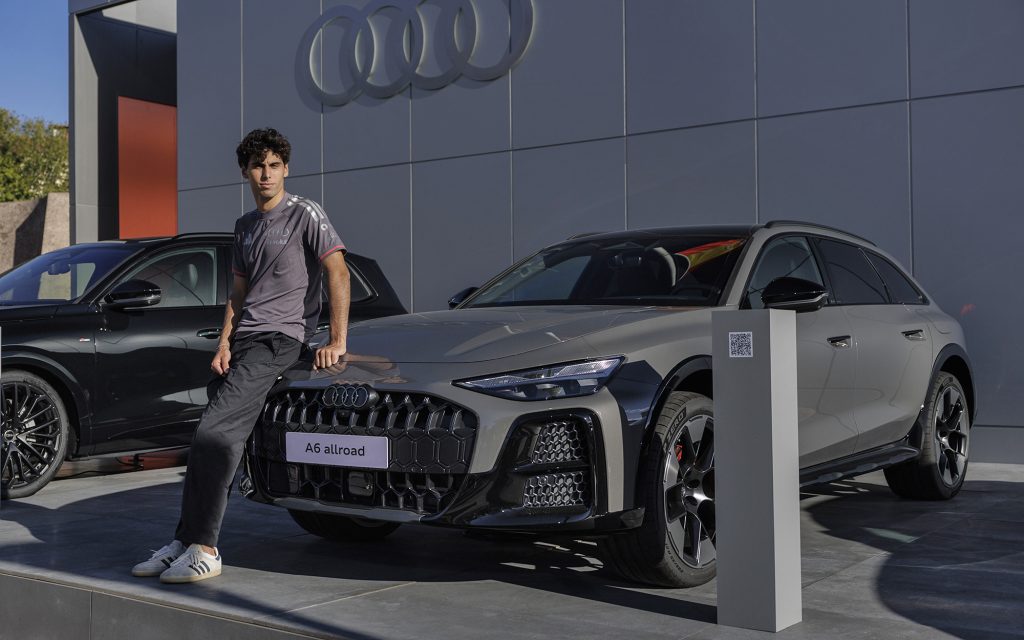
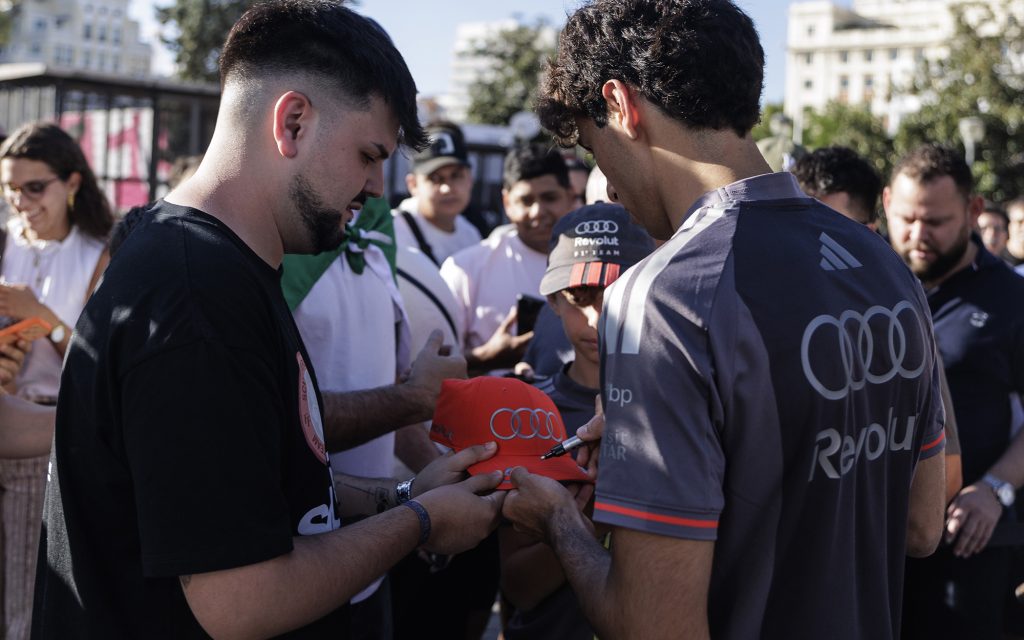
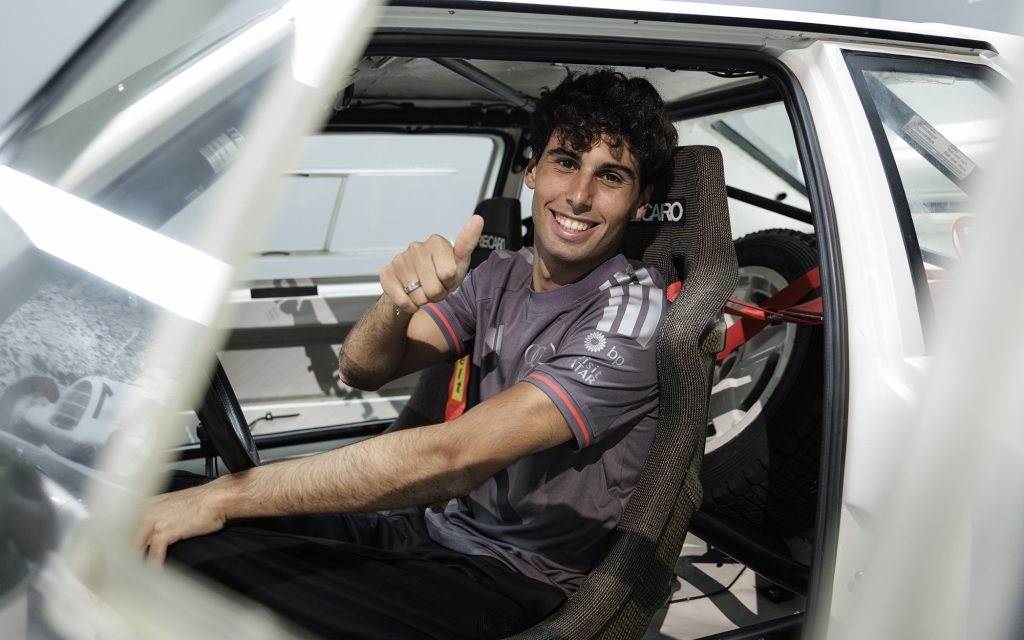
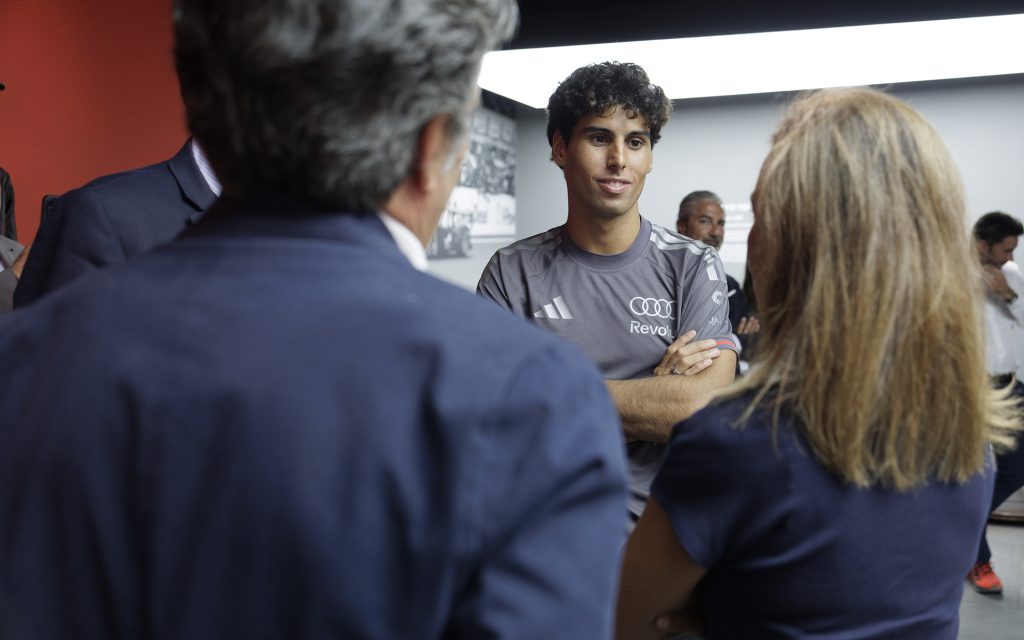
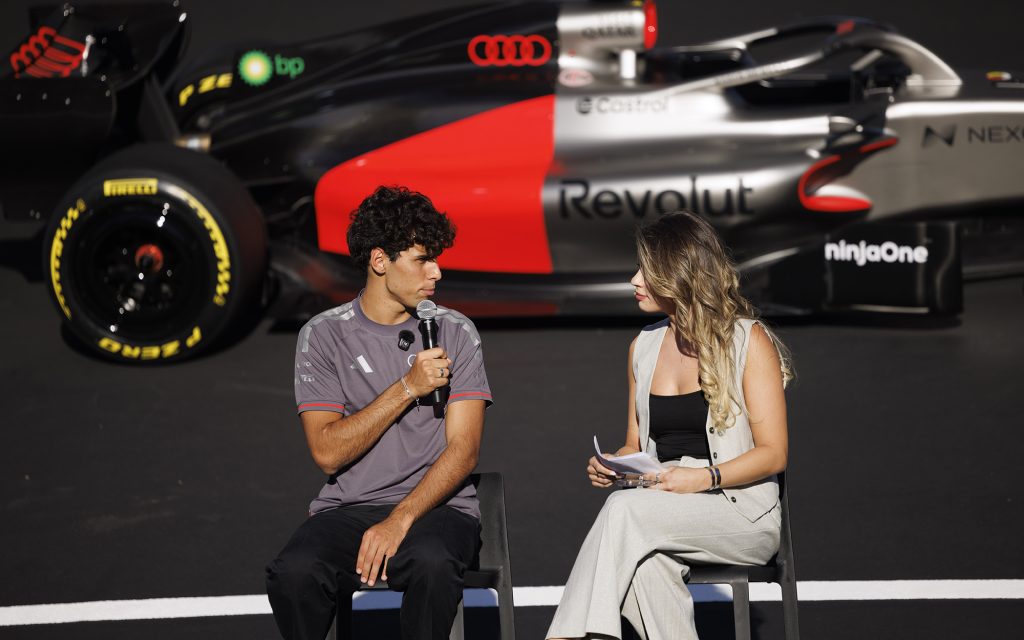
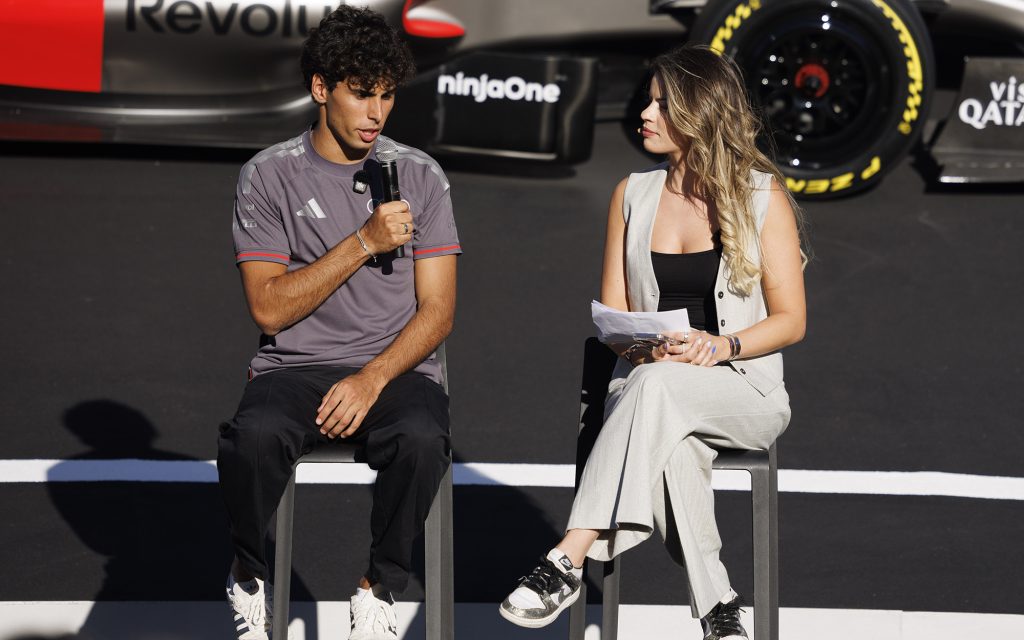
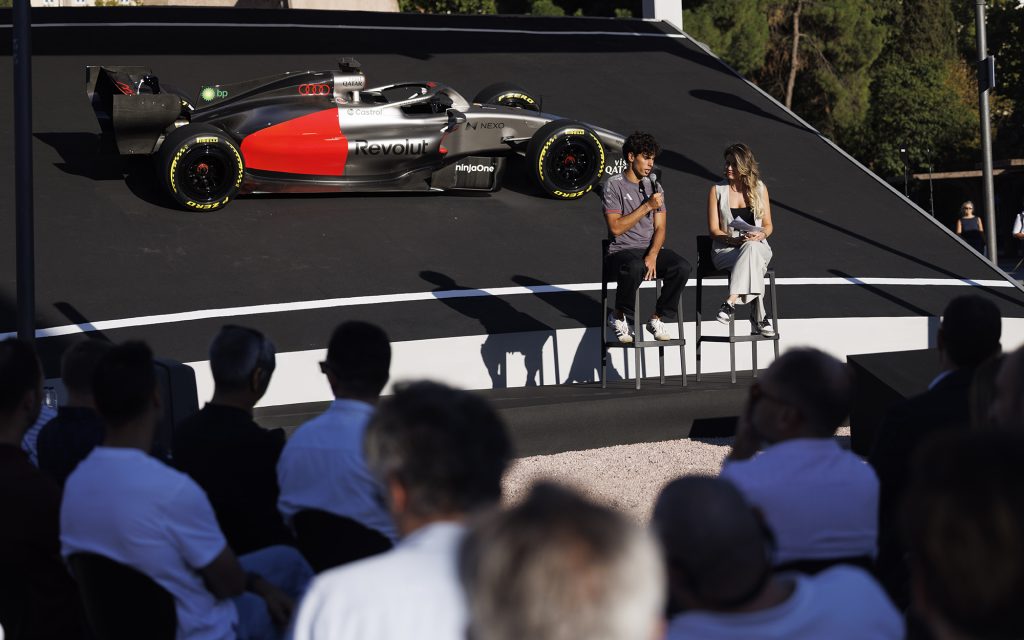
Audi opened the exhibition September 9 with an appearance by Gabriel Bortoleto, who joined journalist and racing driver Christine GZ for an interview and tour of the installation. On September 10, GZ and Formula 1 engineer and commentator Toni Cuquerella are also hosting guided evening tours. The exhibition is open from 11:00 a.m. to 9:00 p.m. through September 12, with admission organized through free, approximately 15-minute registered sessions.
The Plaza de Colón display effectively extends Audi’s Spanish Grand Prix presence well beyond Madring itself. While the R26 and the Audi Revolut F1 Team prepare for an entirely new circuit on Madrid’s outskirts, Audi Spain is using the center of the city to make the broader case for why Formula 1 fits within the company’s competition history. With a Type C at one end of the timeline and the R26 at the other, Madrid provides a particularly appropriate place to make that connection.
PHOTO GALLERY