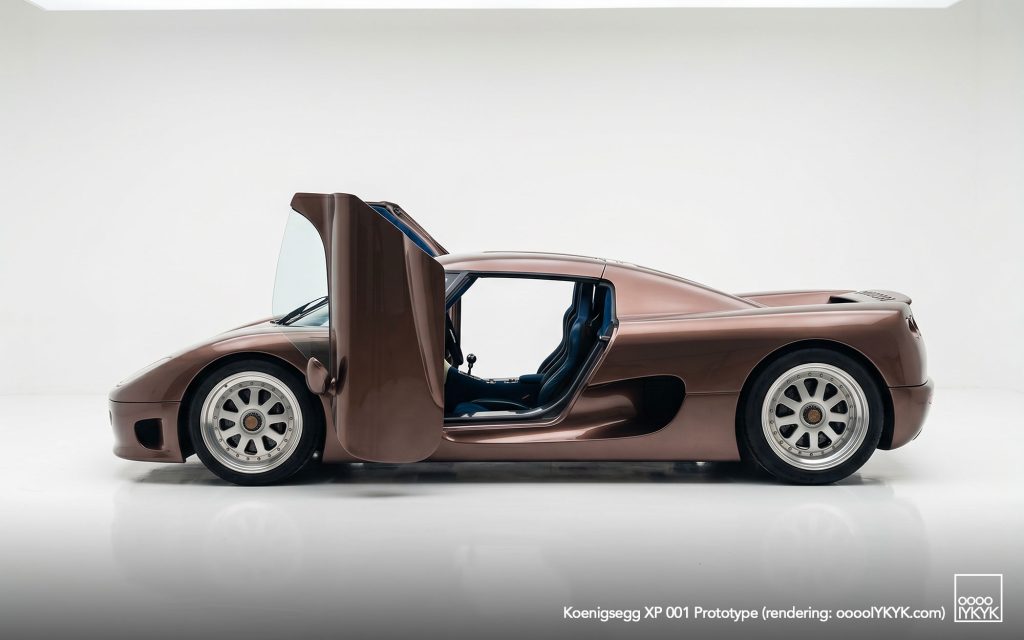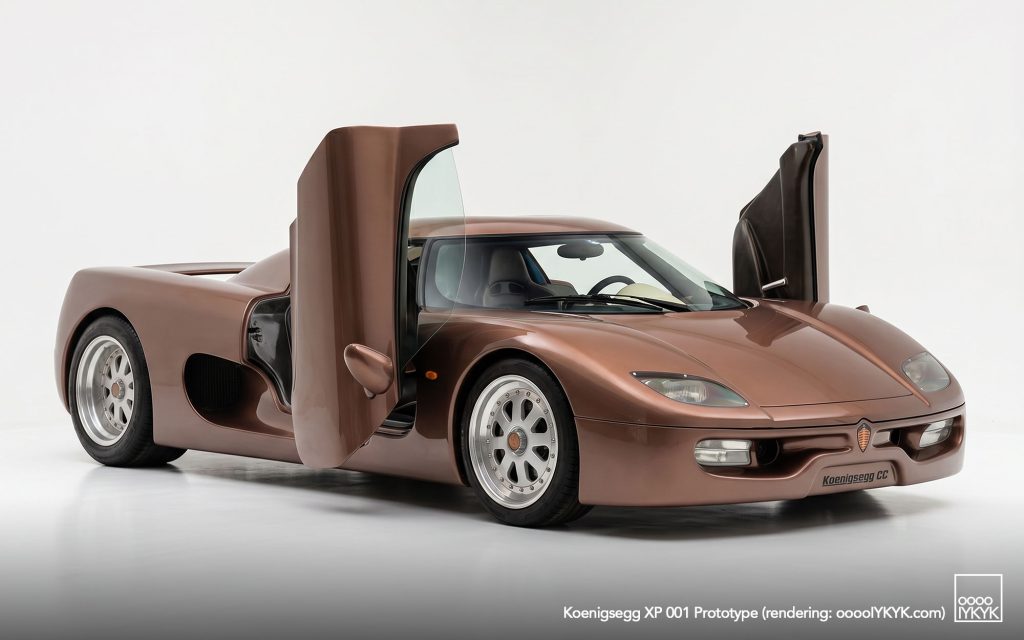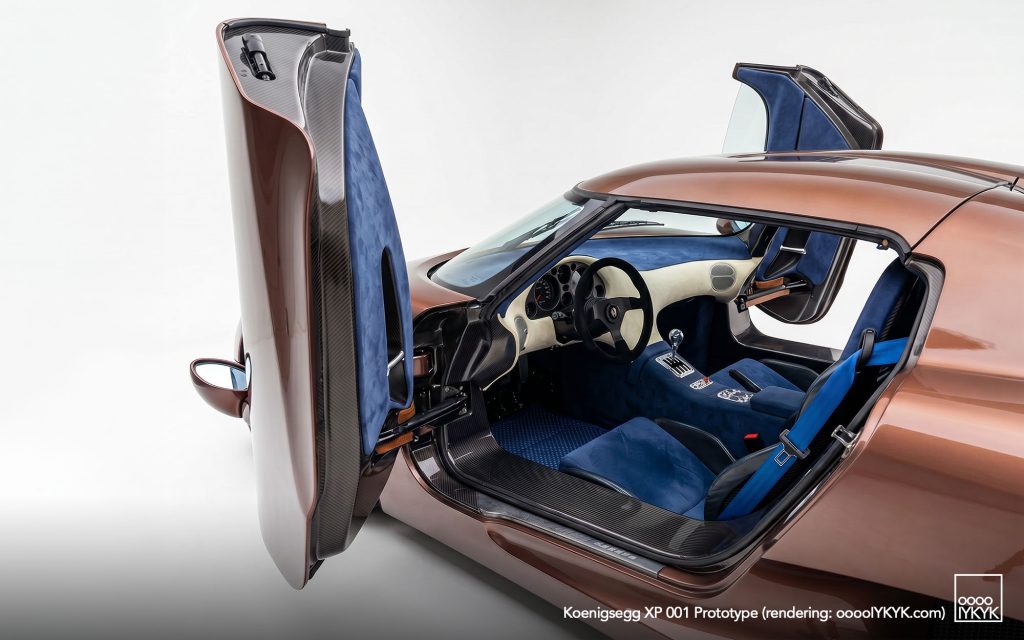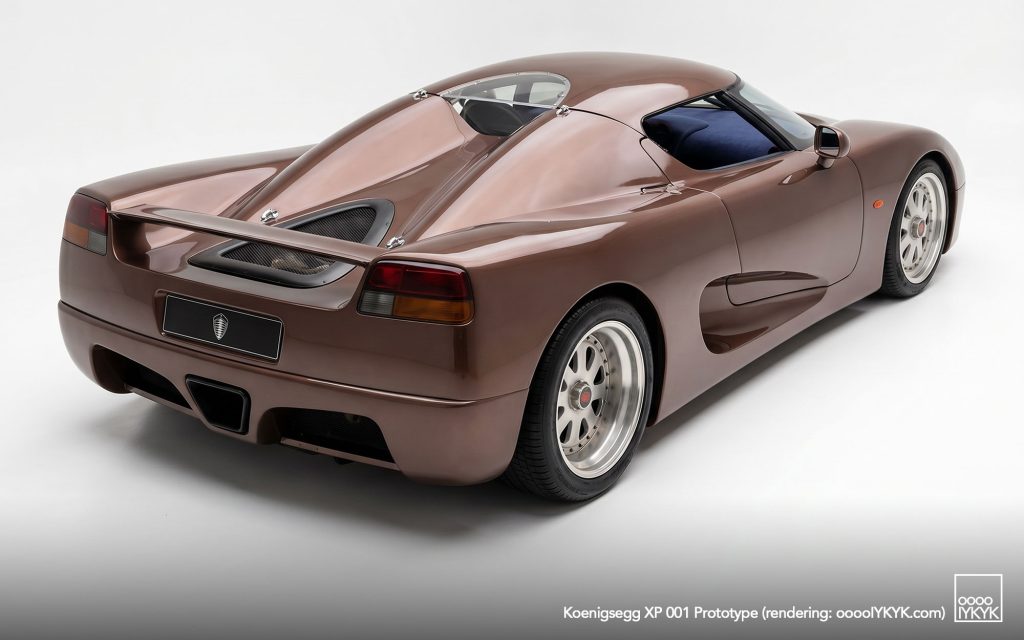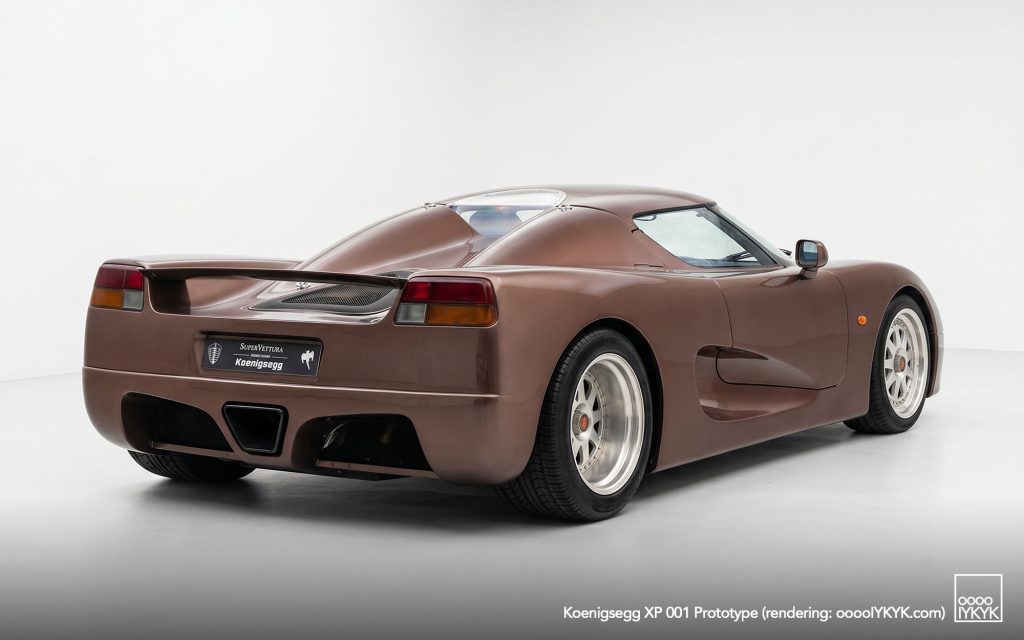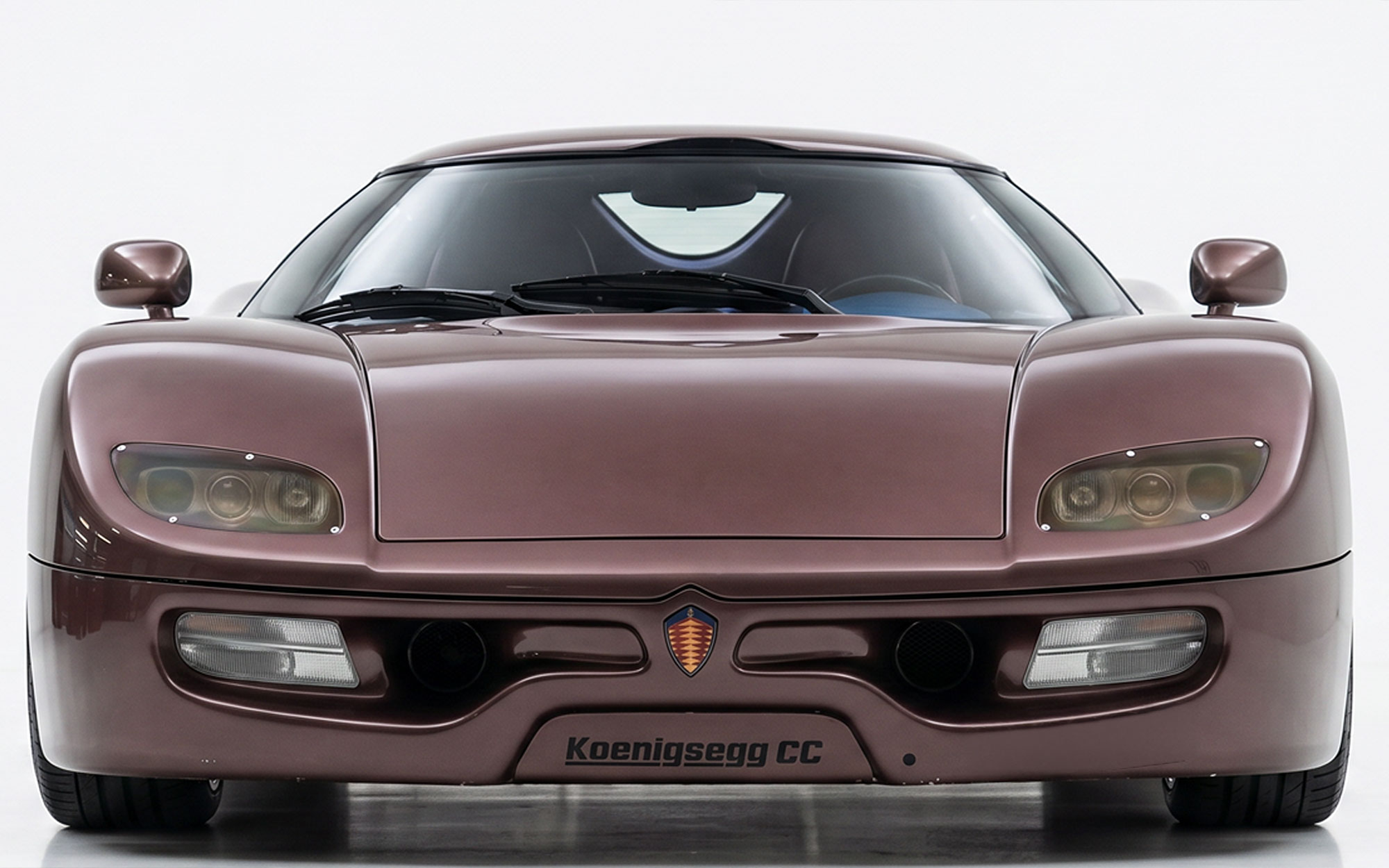

Most enthusiasts know Koenigsegg for its record-breaking hypercard, the Jesko, Regera and CC850. Few realize that the company’s very first running prototype—arguably the car that launched the entire brand—was powered by an Audi V8.
That prototype, known as XP-001 (also sometimes referred to as XX1), recently emerged for a rare public appearance at the SCD Secret Meet at Silverstone. Flown in from Dubai specifically for the event, it joined modern hypercars on track and in the paddock, giving enthusiasts an unusually close look at one of the most significant prototypes in modern automotive history.
For those more dialed into the four rings, however, XP-001 represents something more than the beginning of Koenigsegg. It offers a fascinating glimpse into an era when Ingolstadt’s engineering began to permeate the greater automotive industry, helping shape a generation of boutique sports car manufacturers.
THE FIRST KOENIGSEGG
Christian von Koenigsegg founded Koenigsegg Automotive AB in 1994 with an ambitious goal: build a Swedish supercar capable of competing with the world’s best.
That vision became reality two years later.
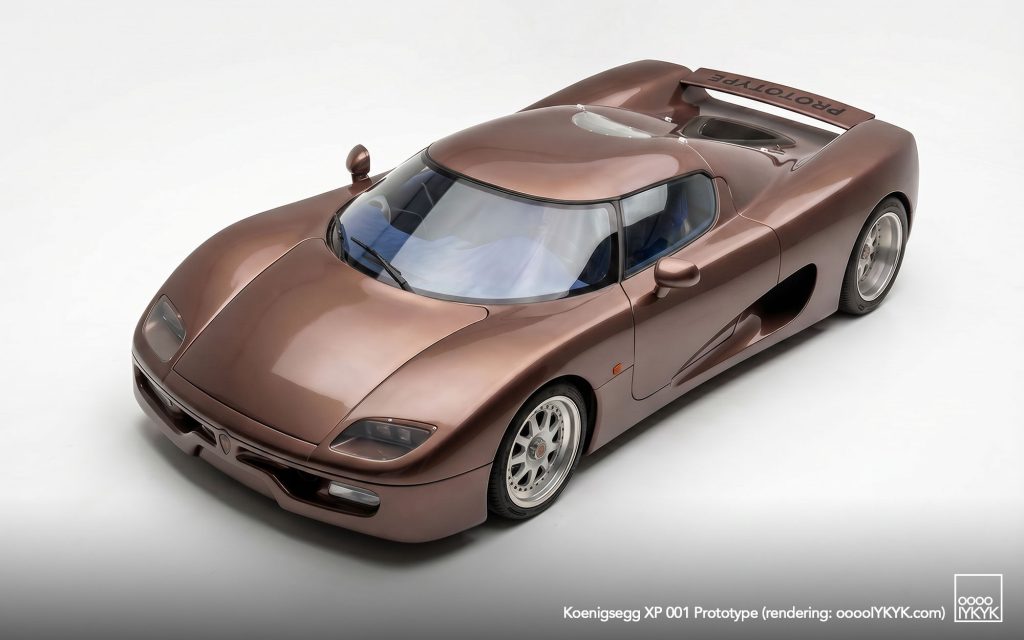
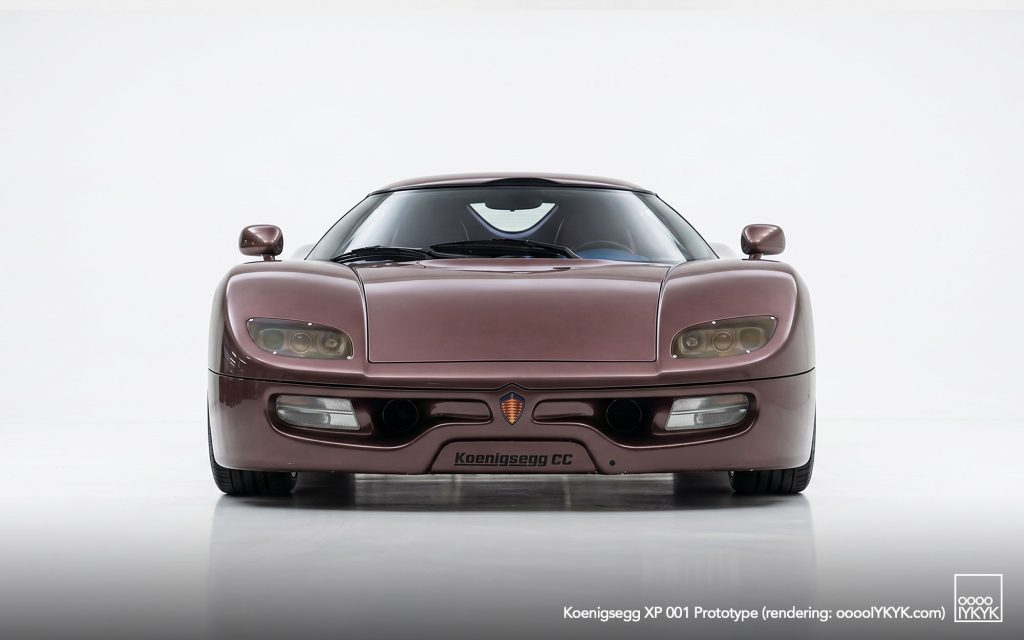
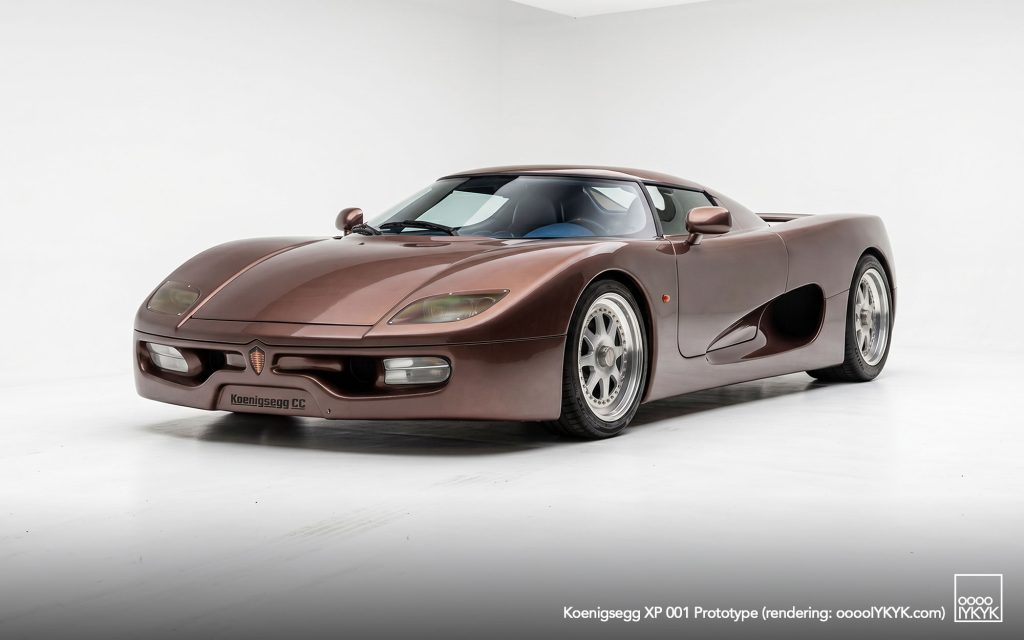
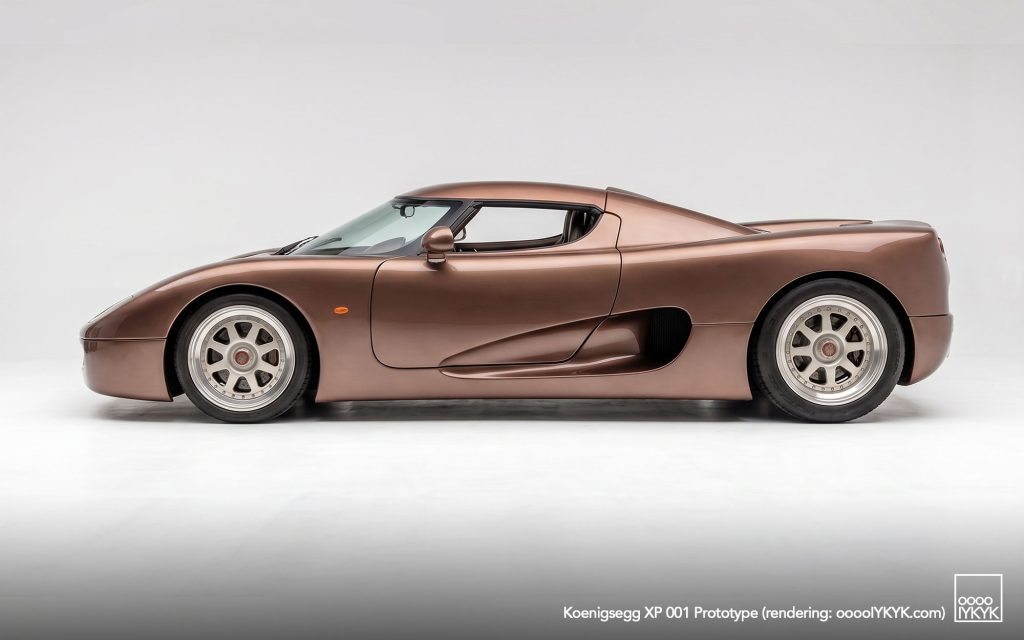
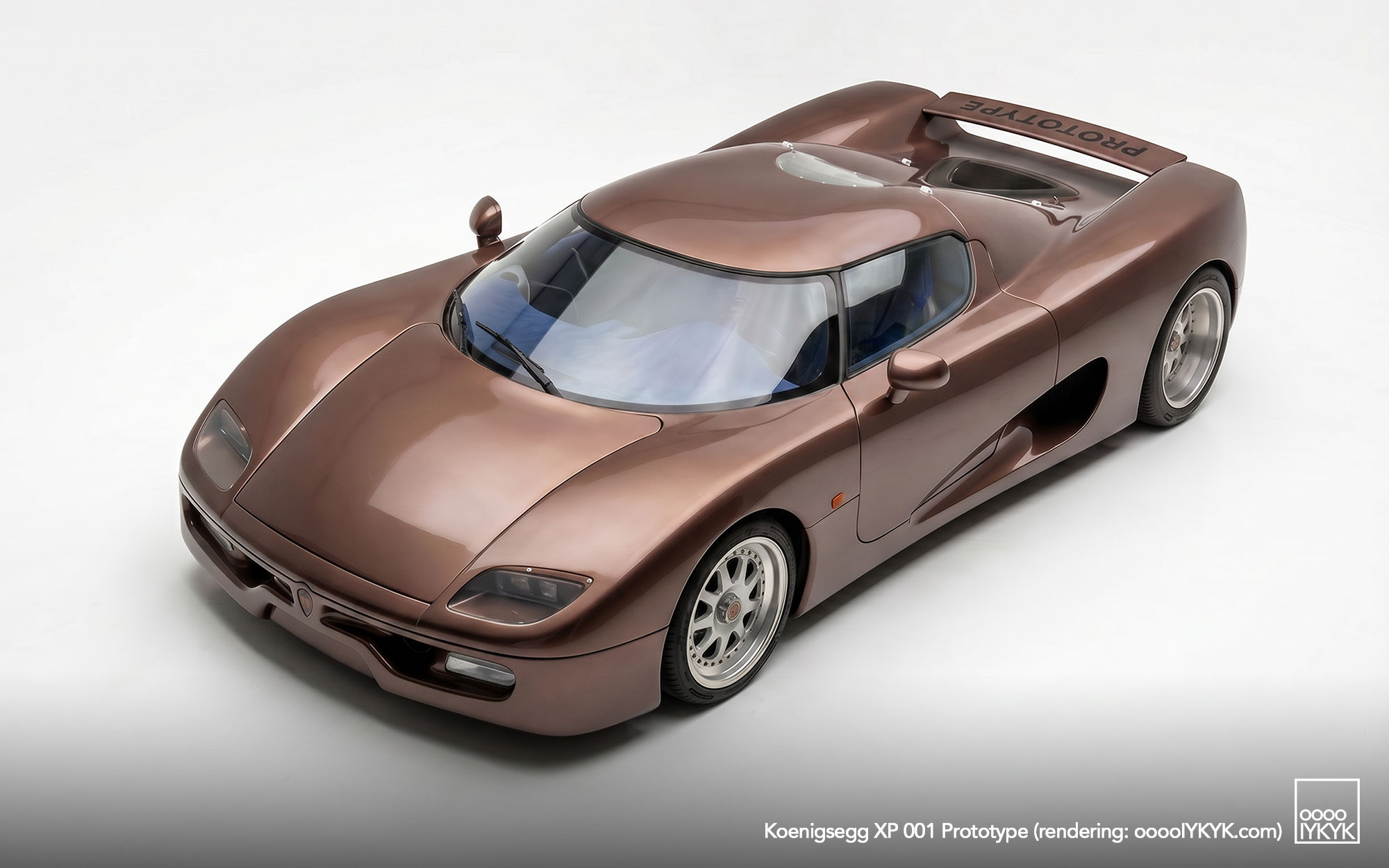
Completed in 1996 after approximately two years of development, XP-001 was the company’s first fully functional prototype. Built around a tubular spaceframe with composite bodywork at Koenigsegg’s original workshop in Olofström, Sweden, it established many of the principles that still define the company today, including a removable roof panel and a compact mid-engine layout.
The prototype made its public driving debut at Anderstorp Raceway in Sweden, where it was driven by touring car star Rickard Rydell. According to Koenigsegg, Rydell came away impressed with the prototype’s driving dynamics—an encouraging endorsement for a company that, at the time, had never sold a car.
THE AUDI CONNECTION
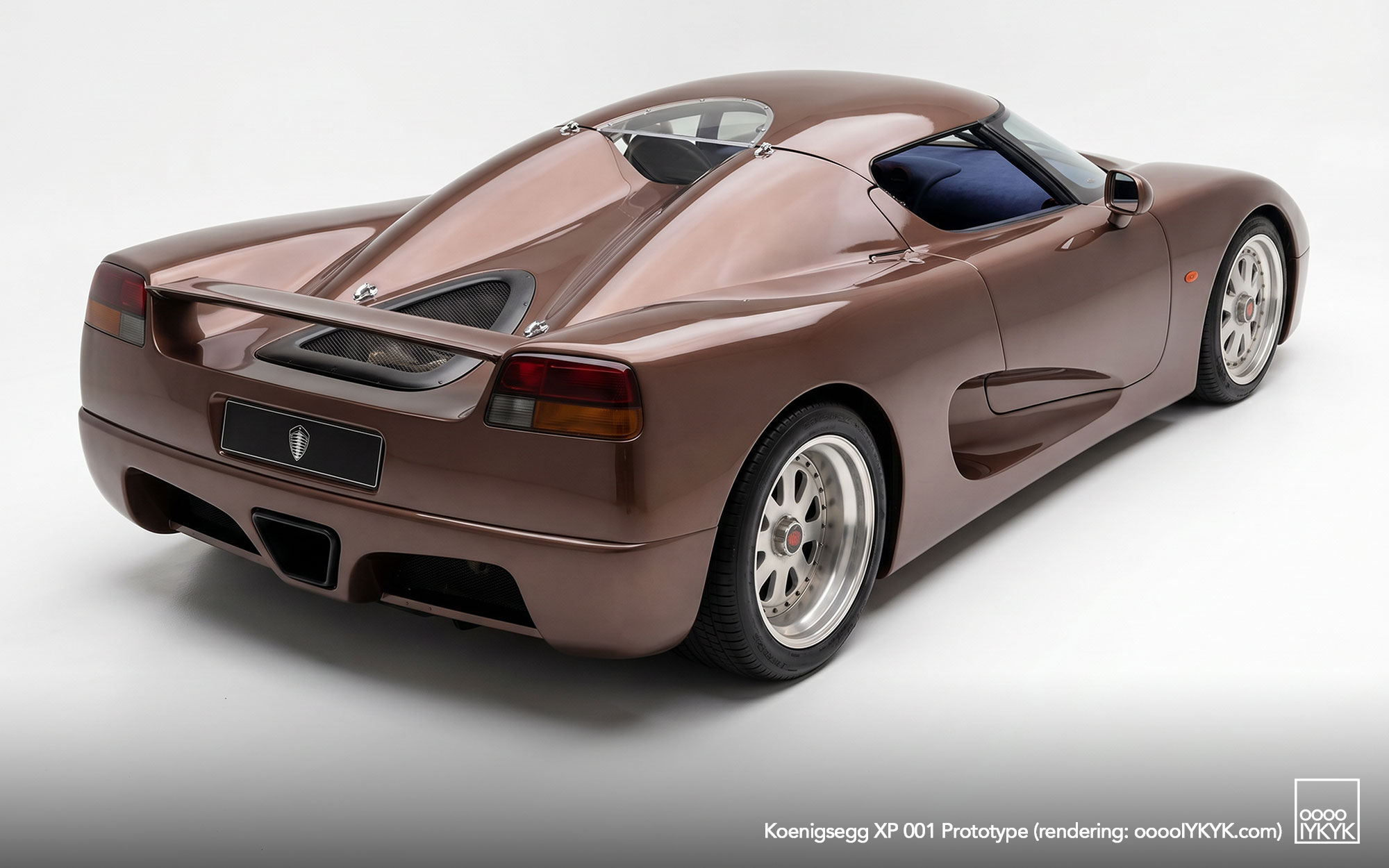
Sitting behind the cockpit was an engine that Audi aficionados would immediately recognize.
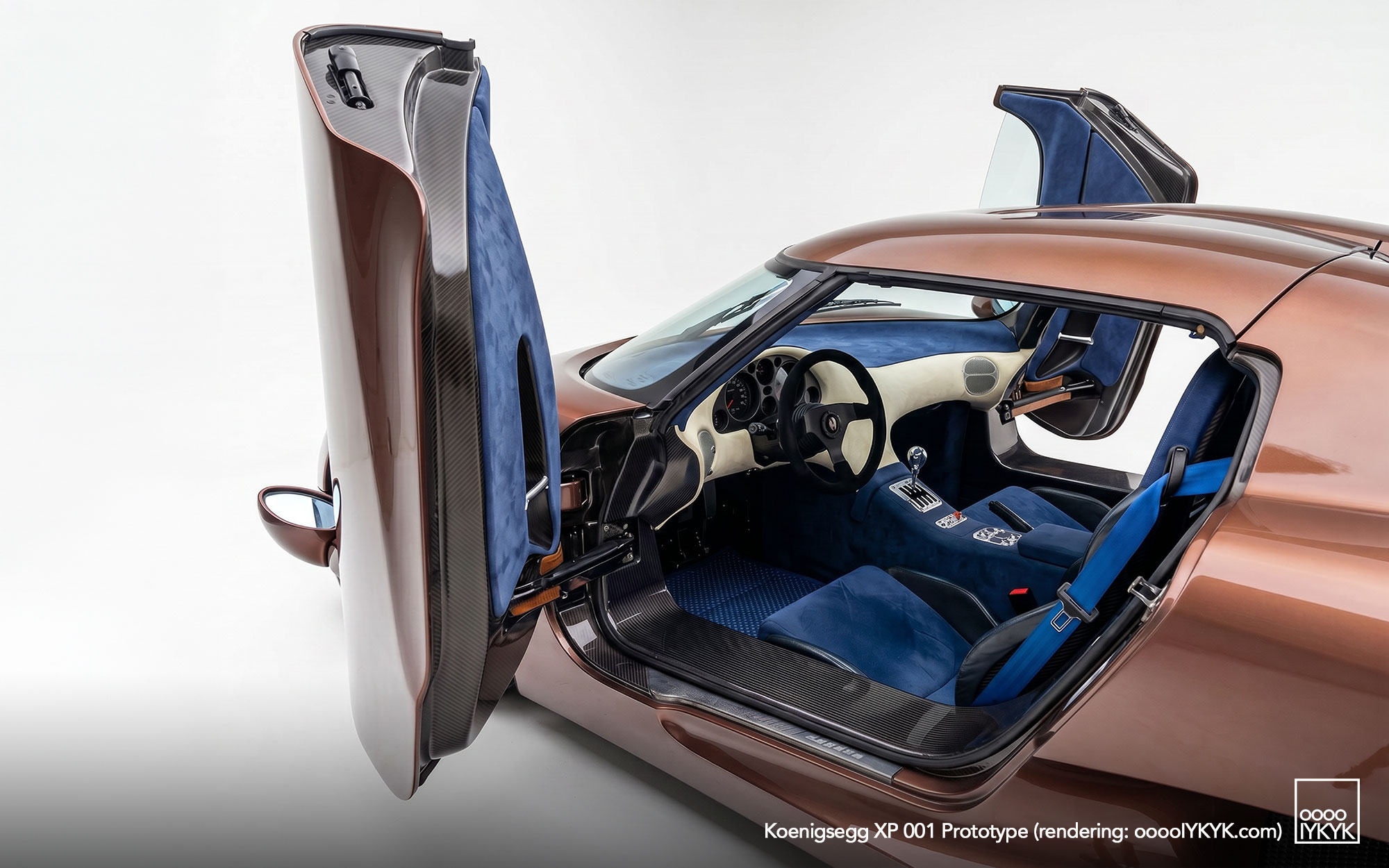
XP-001 used Audi’s 4.2-liter all-aluminum DOHC V8 paired with a six-speed manual transmission. Modified by Koenigsegg, the naturally aspirated engine reportedly produced around 420 horsepower in XP-001, while the second prototype, XP-002, received a more powerful evolution rated at approximately 450 horsepower.
At the time, Audi’s 4.2-liter V8 represented one of the industry’s most sophisticated production engines. Compact, lightweight and exceptionally robust, it offered an ideal starting point for a young manufacturer focused on proving its chassis, aerodynamics and overall engineering before taking on the enormous challenge of developing its own powertrain.
In 1996, this same engine family powered flagship models like the D2 A8. Few could have imagined that an Audi V8 would also be the heart for the very first Koenigsegg.
FROM SILVER TO BROWN
Like many development cars, XP-001 evolved as the company refined its ideas.
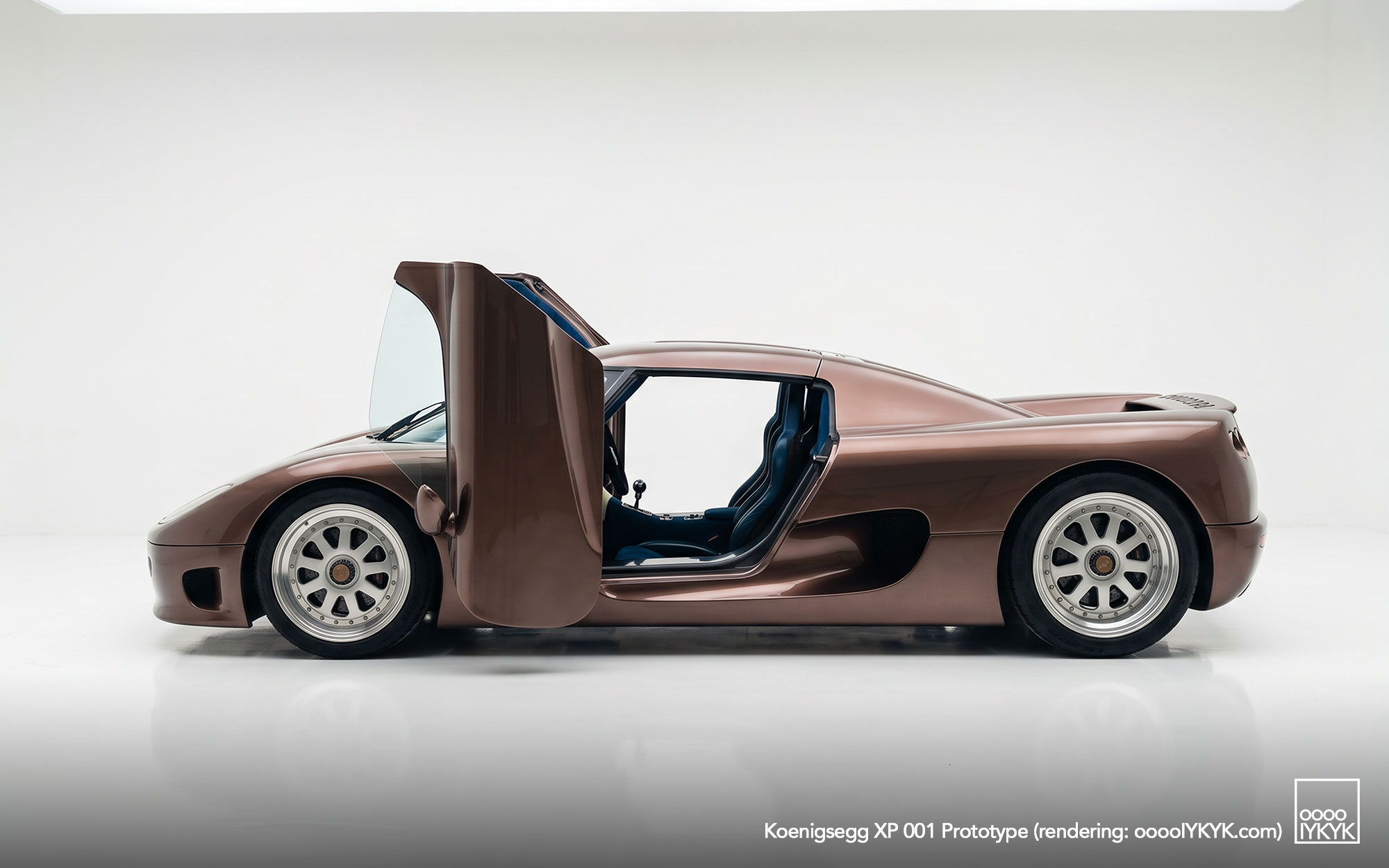
The prototype originally appeared finished in silver and featured conventional doors. As development progressed, Koenigsegg engineered what would become one of the company’s defining signatures: the dihedral synchro-helix door mechanism.
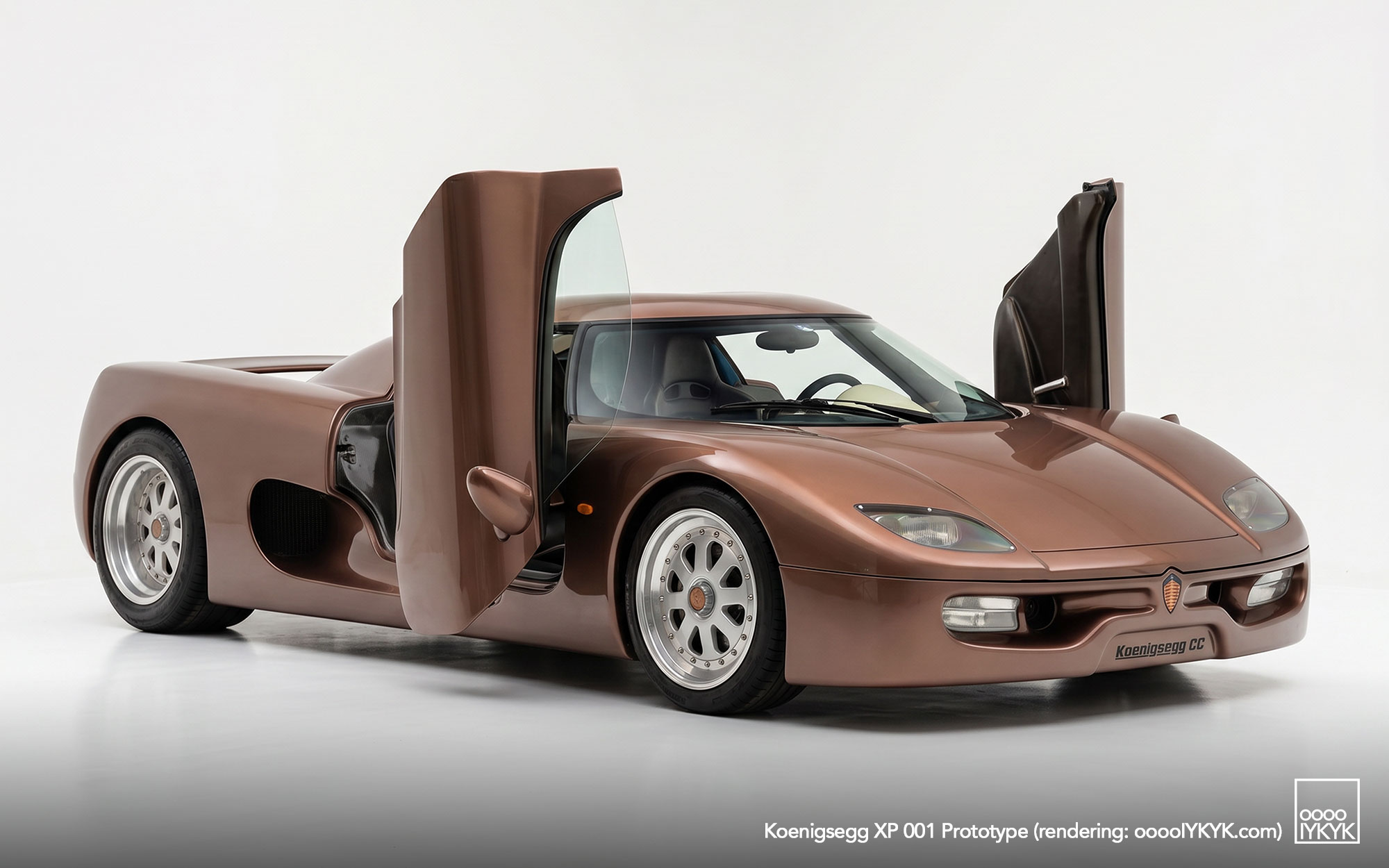
To accommodate the new doors, the prototype was extensively reworked and repainted black. That color proved difficult to maintain on a car that continued to see regular use, prompting another repaint. Christian von Koenigsegg has explained that the company intended to create a burnt-orange finish inspired by a contemporary Volvo color, but the painter interpreted the request differently, resulting in the metallic bronze-brown color the prototype still wears today.
Today, looking at XP-001, many design themes remain instantly recognizable. The low nose, wraparound windshield, detachable roof and dramatic door concept all foreshadowed the production CC8S and every Koenigsegg that followed.
A NECESSARY STEPPING STONE
The Audi engine was never intended to be permanent.
As Koenigsegg’s ambitions grew, the company sought greater freedom to modify the engine beyond what Audi was willing to support. According to Motor Authority (whose story includes an under hood shot of the Audi V8), Audi initially welcomed Koenigsegg’s use of the V8 before ending the arrangement as the startup pursued increasingly extensive modifications. That decision ultimately led Koenigsegg to adopt Ford’s Modular V8 architecture as the basis for the engine that debuted in the CC8S—an engine so extensively re-engineered it became uniquely Koenigsegg in character.
In hindsight, the Audi V8 accomplished exactly what it needed to do. It allowed Christian von Koenigsegg and his small engineering team to focus on creating an exceptional automobile before taking on the even greater challenge of developing their own engine philosophy.
PART OF A LARGER AUDI STORY
Although XP-001 may be the most surprising example, it wasn’t the only specialty sports car to rely on Audi engineering during this period.
Throughout the late 1990s and into the 2000s, Audi and the wider Volkswagen Group produced a succession of advanced production engines pushing cutting-edge tech that attracted considerable attention throughout the automotive world. Whether there was a formal factory program supporting low-volume manufacturers remains unclear. What is well documented, however, is that boutique manufacturers repeatedly turned to Audi powerplants because they combined modern engineering with proven durability.
Spyker built much of its C8 range around Audi’s 4.2-liter V8, while former Audi Sport boss of the rally era Roland Gumpert later chose the same engine architecture for his Apollo supercar. The lightweight YES! Roadster showcased Audi’s 1.8-liter five-valve turbocharged four-cylinder, Donkervoort forged a relationship spanning more than two decades around Audi turbocharged engines—including the legendary 2.5-liter inline-five—and KTM selected Audi’s 2.0 TFSI for the X-Bow. Artega likewise turned to the Volkswagen Group’s VR6 for its GT.
Collectively, these cars reveal an often-overlooked chapter of Audi history. During the Ferdinand Piëch era, Audi’s engine designs extended beyond their primary as powerplants for Ingolstadt’s own vehicles, moving beyond that to quietly helped power an entire generation of exotic sports cars from boutique marques.
XP-001 ROOTS
Three functional Koenigsegg prototypes were ultimately built before the production-ready CC8S prototype appeared in 2000. XP-001 remains the earliest running chapter of that story, capturing the moment when Christian von Koenigsegg’s ambitious idea first became a functioning automobile.
Its recent appearance at the SCD Secret Meet served as a reminder that every great manufacturer begins somewhere.
In Koenigsegg’s case, that journey began not with a bespoke twin-turbo V8 or revolutionary transmission, but with one of Audi’s finest naturally aspirated engines. It’s a little-known yet remarkable connection between two very different manufacturers—and one that deserves a place in Audi broader history just as it does in Koenigsegg’s.
PHOTO GALLERY