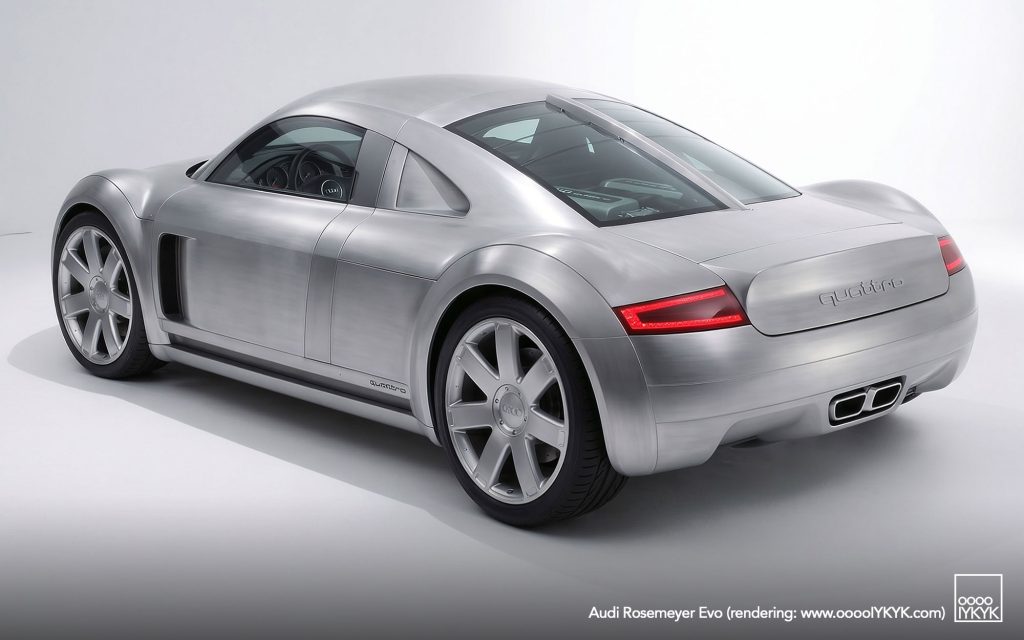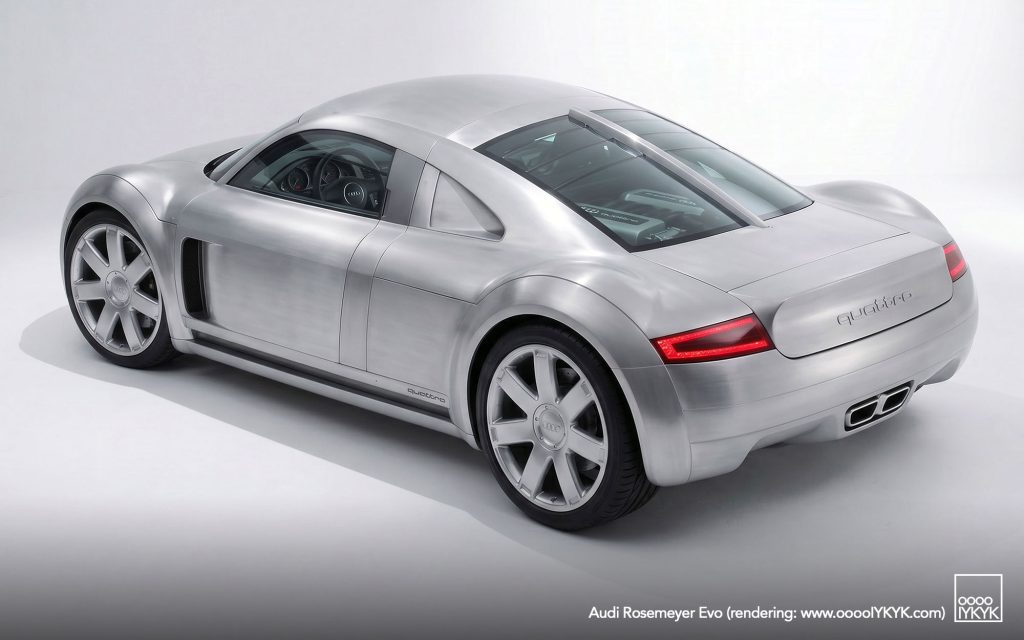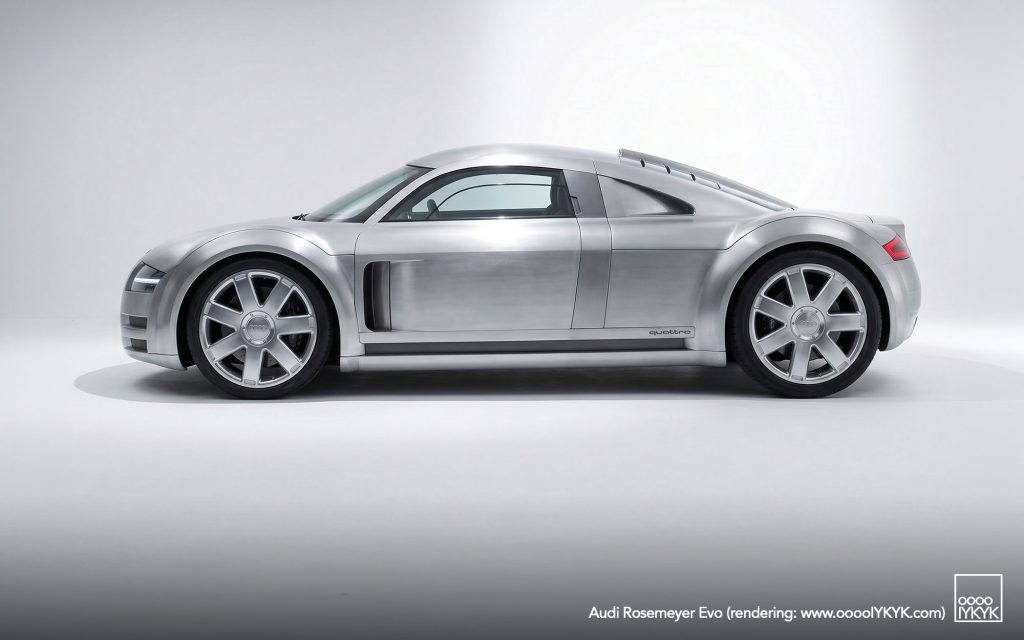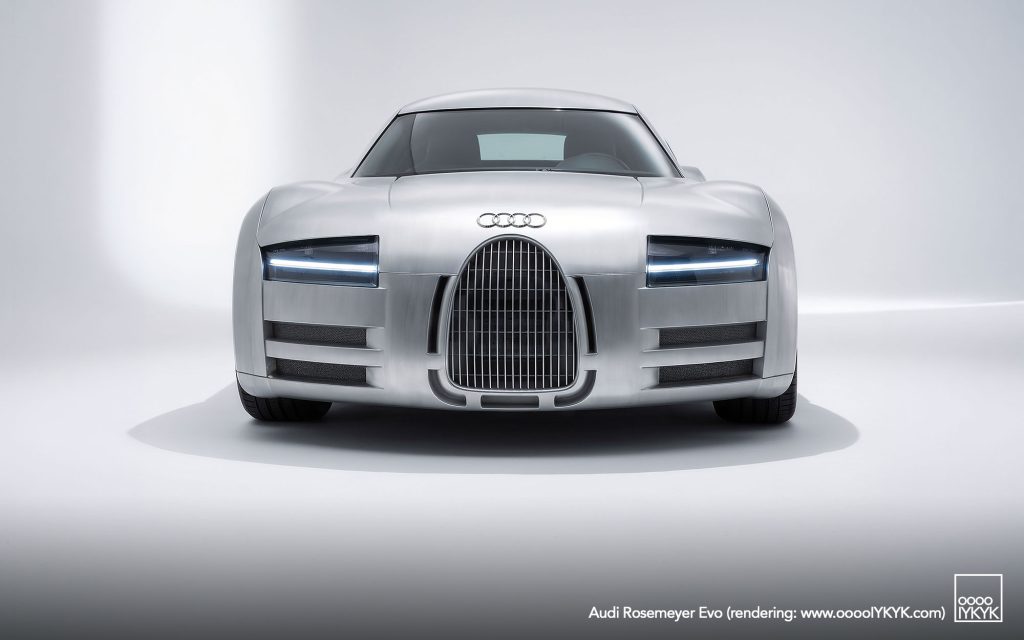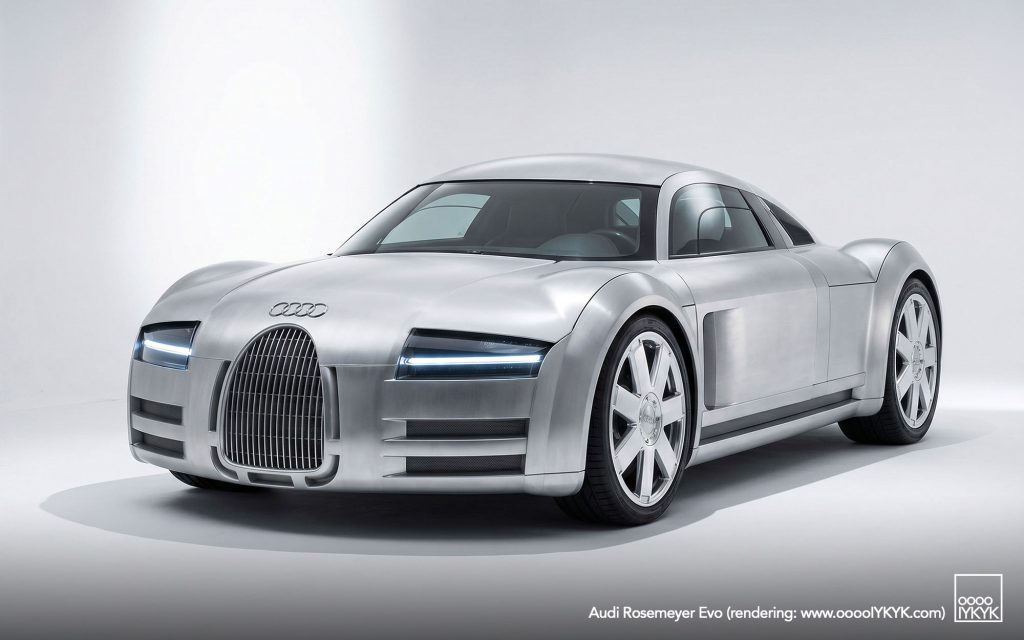


In the lexicon of Audi, the word “Evo” – short for “evolution” tends to be applied when you have a newer version of a spotlight car. Typically that’s in motorsport, most notably exemplified with the Audi Sport quattro S1 E2 Group B rally car, though here I’ve decided to use it in the evolution of a concept car.
Quietly debuting in 2000 at the Volkswagen Group’s then-new AutoStadt tourism facility in Wolfsburg, Germany, the Project Rosemeyer concept was a surprise encounter for those early guests to the Audi brand pavilion on that facility’s grounds.
The timing of Rosemeyer is interesting. It came nine years after the Audi Avus concept – Audi’s first modern example of trading on the legend of the pre-war Auto Union Silver Arrows. Its arrival was also a full five years after the first TT concept appeared and the design path between these cars is interesting to consider.
In 1991, Avus sent a message of where Audi was headed. Its polished aluminum skin wrapped over a cartoonishly mid-engined footprint housing the voluptuous curves of the pre-war Auto Union streamliners in, I’d argue, a far more modern supercar sort of way that didn’t feel retro at all. It seemed distinctly modern, and details such as grille shaping and exterior light fixtures seemed to preview where Audi was then headed. Think 100/A6 (C4), A8 (D2) or A4 (B5) and you’re spot on.
When TT came in concept form in 1995 and then production form in 1998, it signaled another evolution from Avus. Five years isn’t long, but with TT we began to see what’s referred to as Audi’s “Bauhaus” design era – simpler, more geometric and unlike anything else in the automotive market. And while the TT concept set a new paradigm for just how closely a series production car could follow a concept when it hit dealerships in 1998, its Bauhaus design bled into the entire range. Think A2 (A04), A6 (C5) and A4 (B6).
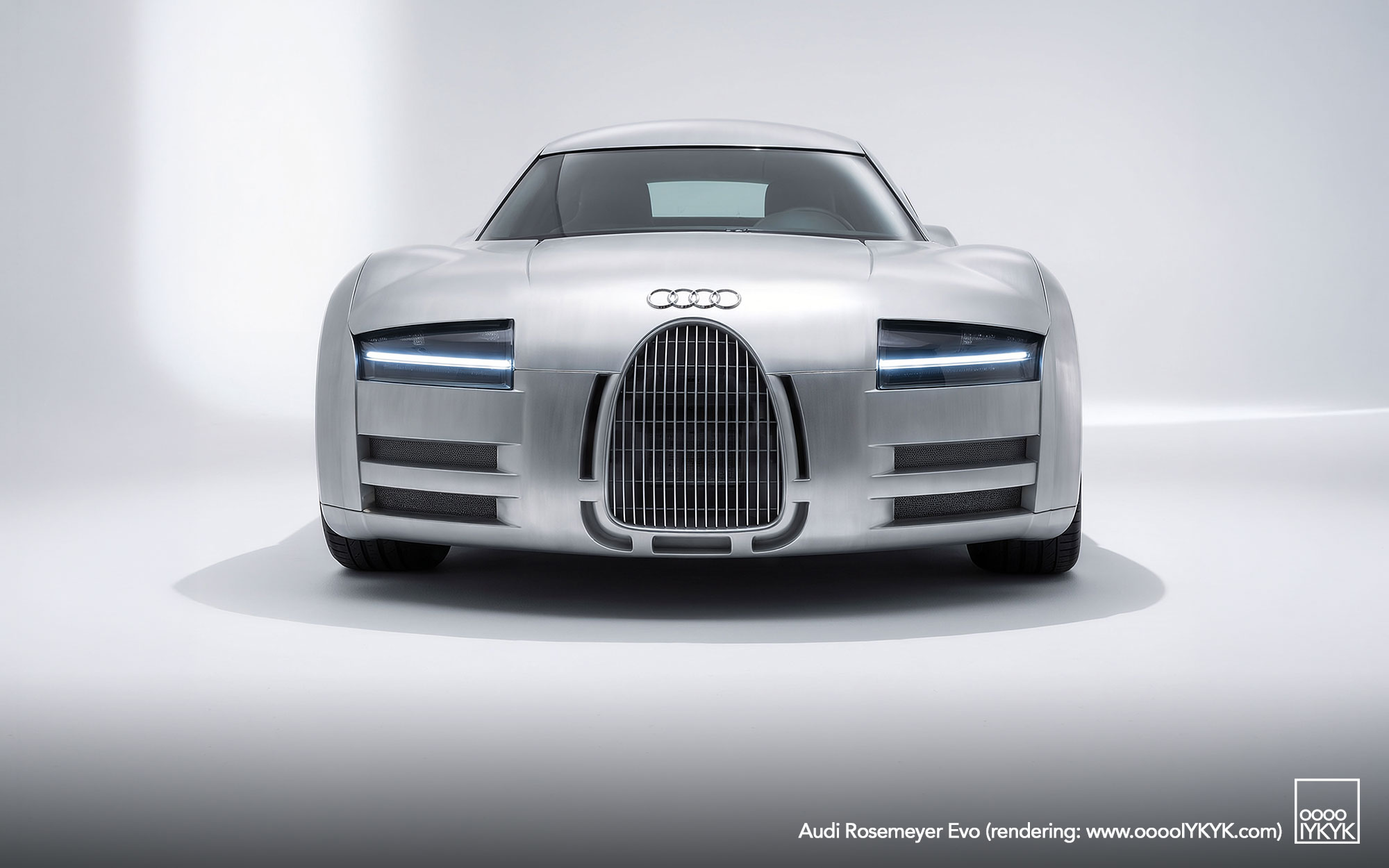
So, when Rosemeyer arrived in 2000, all of this had already been set in motion. Is distinctive polished finish again harked the same Silver Arrows era that Avus did, but it did so with design more aligned with TT than Avus. Compared to TT though, it was much more brutalist and extreme. TT’s pre-singleframe era grille seemed evolved from its showroom brethren whereas Rosemeyer’s was smaller and more aggressive. One might argue it was an early prototype of what would come to be known as the modern Audi singleframe except it was clearly more a literal reinterpretation of the almond-shaped pre-war Auto Union grille of the Silver Arrows race cars – unique as it was because Auto Union didn’t produce road cars badged as Auto Unions in that pre-war era.
That Rosemeyer skipped an auto show circuit debut is also significant here and may suggest where it fit in the greater Audi design lexicon. This was before guerrilla launches engineered to go viral because of their inaccessibility were a thing. In that Y2K era, the only influencers were journalists and in that context auto shows like Frankfurt, Paris, Geneva and Detroit were where any concept meant to make an impact landed because it was in those auto shows where it would be seen by the most influential eyeballs.
Rosemeyer’s absence then from auto shows is notable. Tucked away in the Audi Pavillion at AutoStadt for tourists to glimpse in a moment of flashed light, in those days, was surprising and seemed more like the fate of a concept not meant to inspire in the way other concepts might inspire.
Consider also the timing. Audi was evolving its design language every five years. Avus begat the B5 era in 1991. TT begat the B6 era in 1995. Rosemeyer drops in 2000 and nothing comes from it. From a design standpoint, the car was a dead end.
Part of the reason here might be that it was simply an experiment built on a whim in an era when such experiments were more common. Part of that too could be the arrival of Walter de Silva. de Silva had taken Ferdinand Piëch’s invitation to leave Alfa Romeo where he’d become nothing short of legend and migrated to to Volkswagen where he was oddly put in charge of VW’s ailing SEAT brand that seemed to have no design identity at all.
Without delving too deeply into that time period, we know that what comes next is de Silva’s arrival at Audi. Walter brought the wide-one-piece shield grille – the so-called singleframe as we know it today. It first appeared on the A8 (D3) facelift, then the A4 (B7). And, that singleframe was so successful that it set Audi on a course of slow and methodical evolution over the next two decades. It’s only now, 20 years on, that Audi seems poised to take on a more radical evolution as it had back in the 1990s or again with the singleframe.
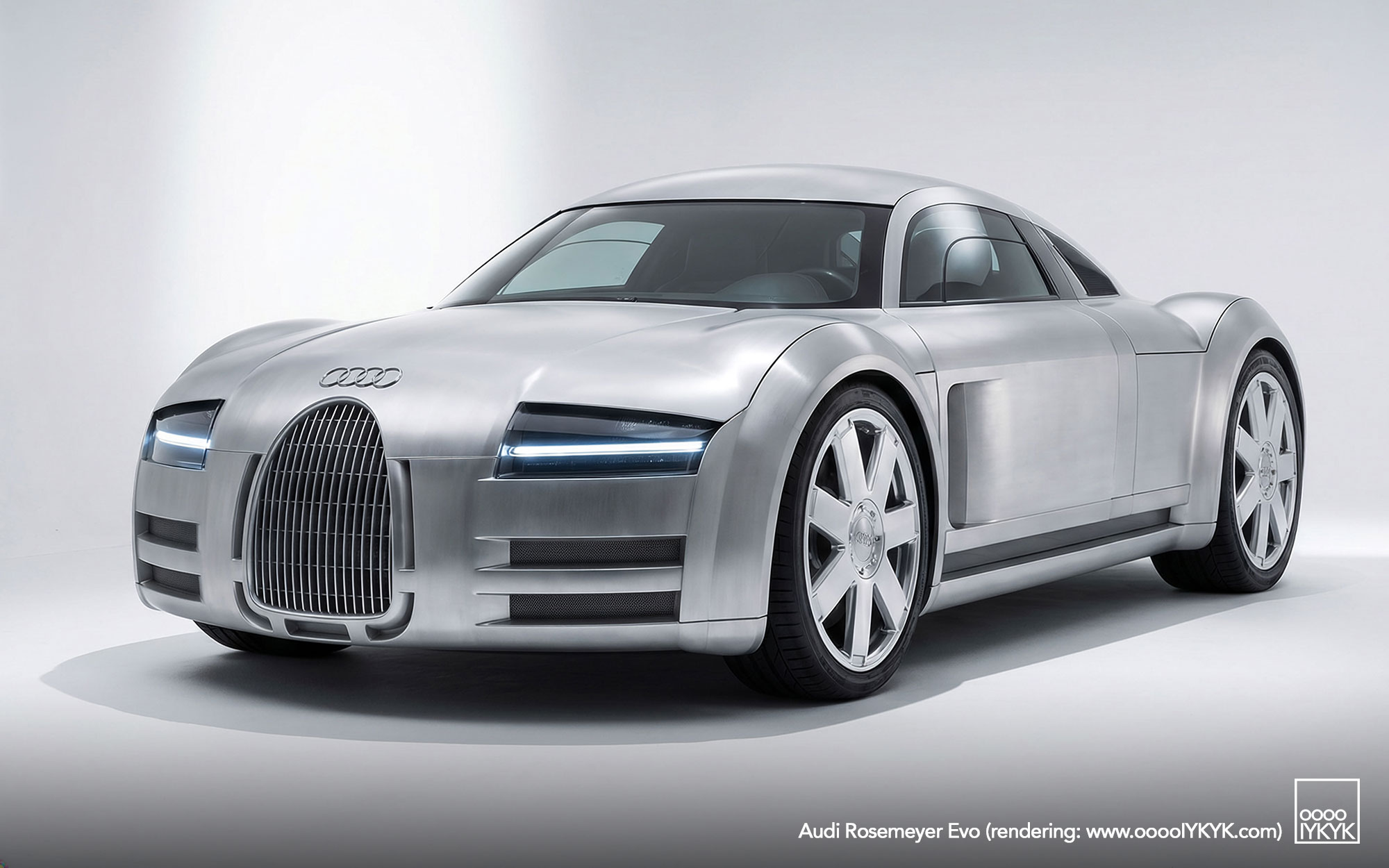
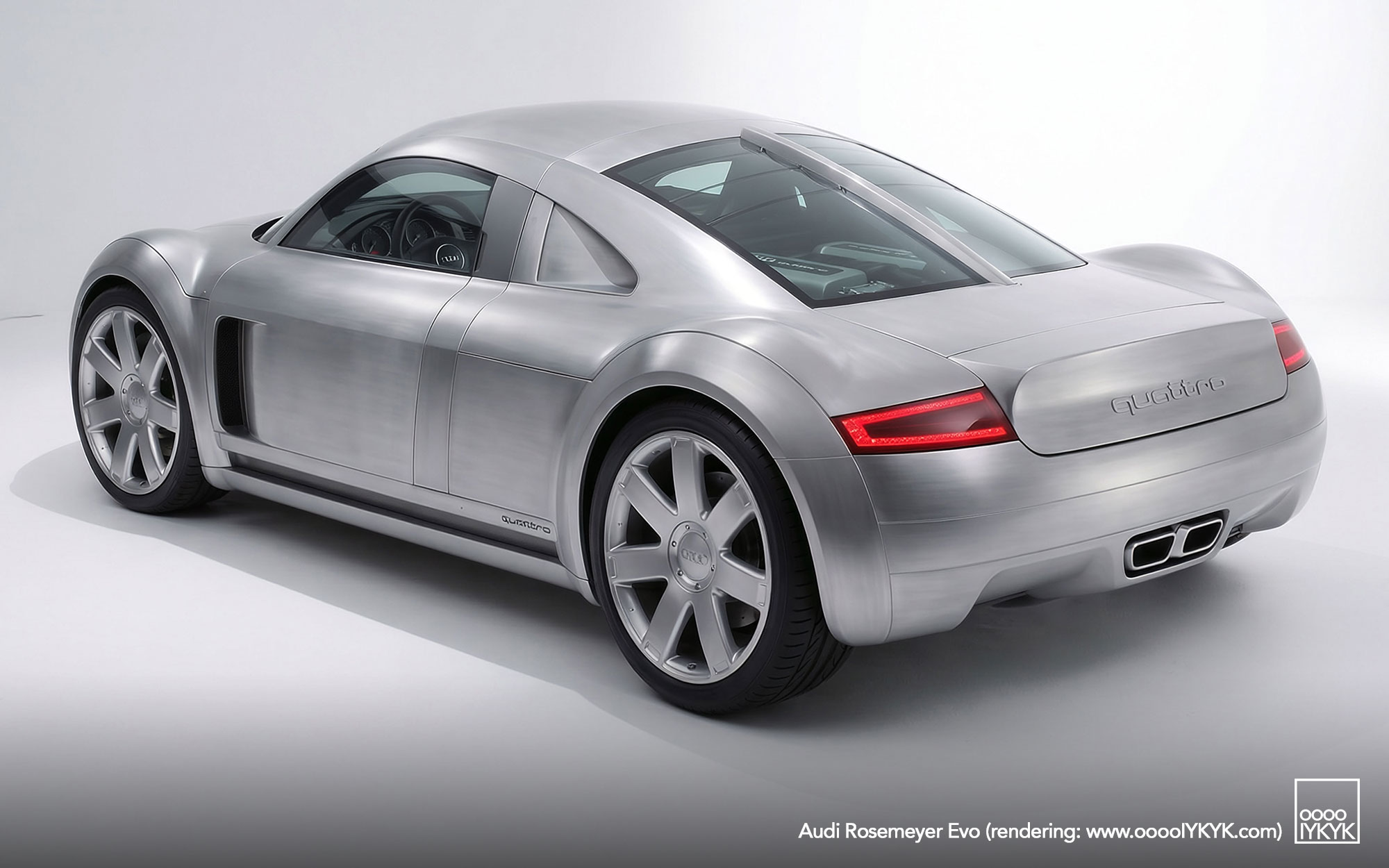
That’s a long lead-up, but history and context worth sharing when considering a return to the Rosemeyer. I began playing more with Rosemeyer as of late as Audi has itself been returning to geometric proportions and radical simplicity. For me, Rosemeyer’s brutalist form is interesting and yet a bit awkward in how literal it takes on the humpback form of the pre-war design language, or the busyness of its pre-LED multi-cylinder light assemblies or slide-on/slide-off headlight covers.
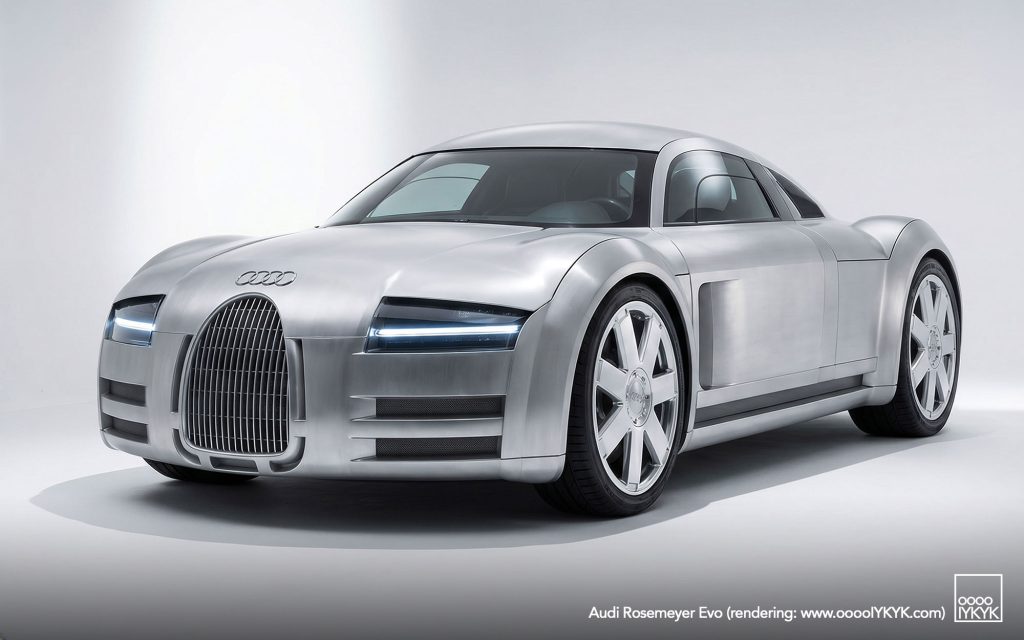
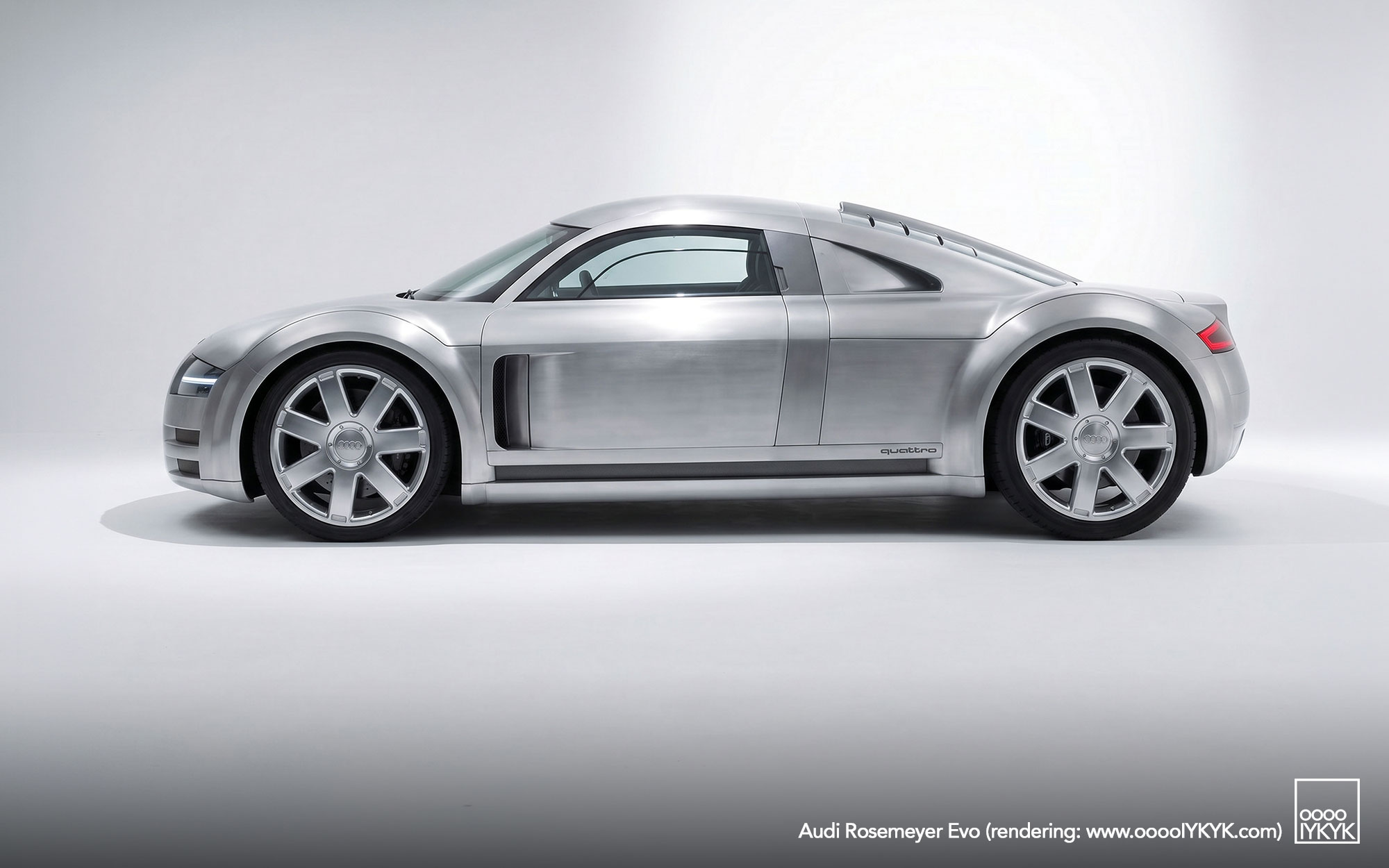
With this Rosemeyer Evo, I’ve made the car a little bit more livable. It’s got more R8-like proportions rather than the locomotive length of the Rosemeyer or Avus. It’s also got cleaner headlight designs. However, like Rosemyer and Evus, it also seems as if it’s honed out of a solid piece of aluminum.
I run a lot more designs on the @4Rings.AI Instagram channel. So many are run, most don’t make it here. I tend to reserve this series for my favorites, designs that tell a good story or what I see as the best of the best. I’ve got other Rosemeyer inspired designs that expand upon where Audi could have gone had Rosemeyer led the charge in Y2K+ designs. Most of them will go on that channel, but this Rosemeyer Evo needed sharing in a more graphic layout this website affords. I hope you enjoy them.
PHOTO GALLERY