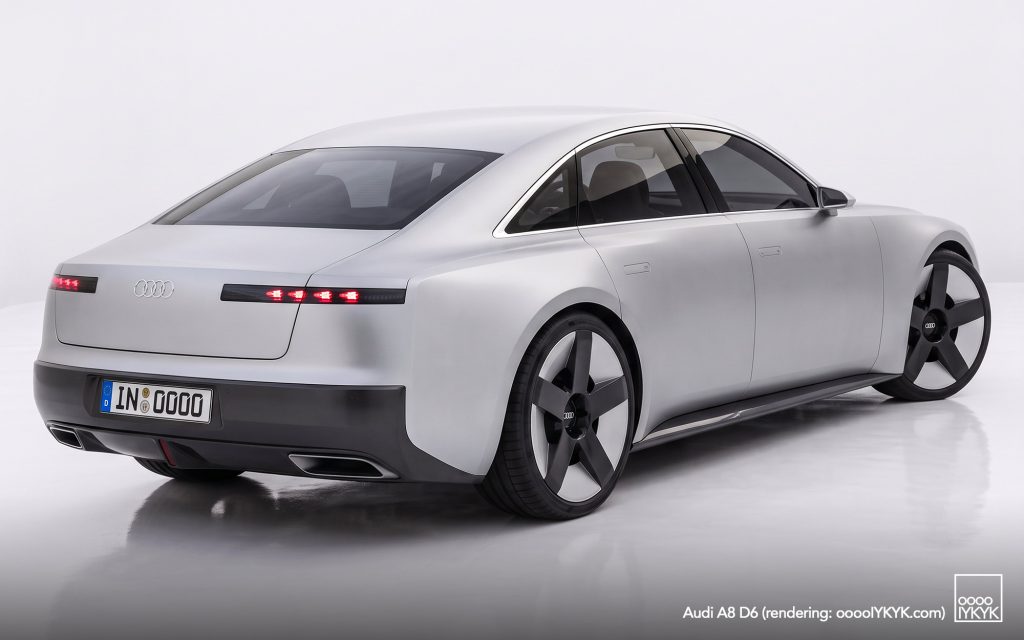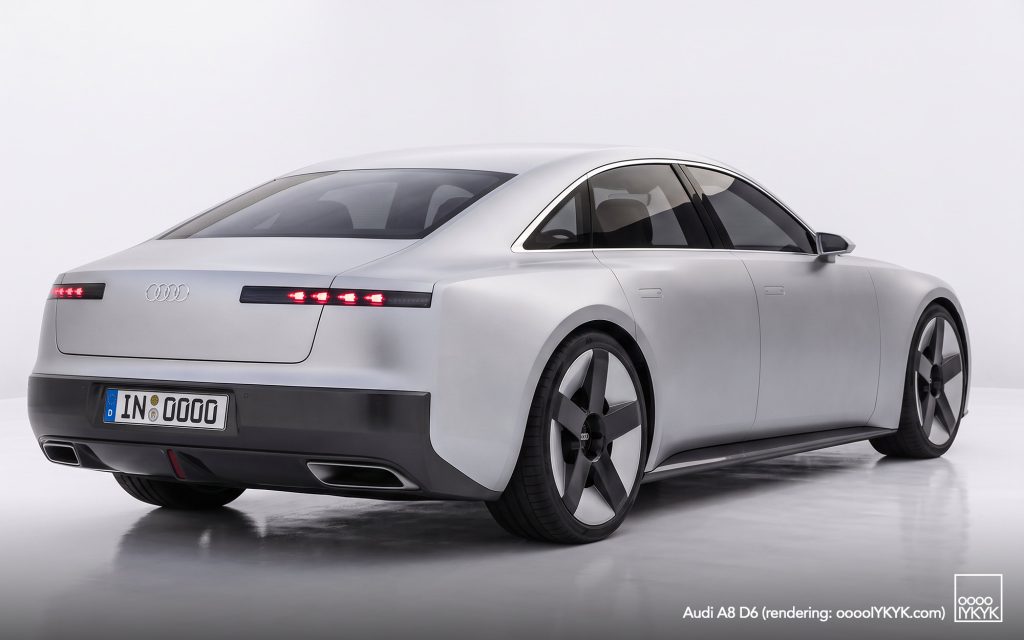

The next-generation Audi A8 could take a substantially different technical path, combining Porsche-derived architecture with production at Porsche’s Leipzig plant. A new report from Auto Motor und Sport places a possible introduction around 2030, with the successor to Audi’s flagship potentially built alongside the next Porsche Panamera.
Information obtained by ooooIYKYK points to a combustion-powered successor based on an evolution of the Porsche-developed MSB architecture, which underpins the Panamera and Bentley’s Continental GT and Flying Spur families. If that direction proceeds, it would represent a significant departure from the A8’s established combination of Audi architecture, ASF construction and Neckarsulm production.
LEIPZIG ENTERS THE PICTURE
Auto Motor und Sport reports that Porsche has confirmed discussions with Audi about possible production arrangements for an A8 successor. The publication identifies Leipzig as a potential location from around 2030, while noting that a final decision has not been made.
The report also places the discussions within the uncertainty surrounding Neckarsulm’s longer-term future. It says the plant has no confirmed follow-on production allocation beyond 2034, with Audi expected to present a competitiveness and cost-reduction plan by June 2027. That leaves the site’s future unresolved; it is not an announced plant closure.
Leipzig already produces the Panamera and Macan, with facilities capable of accommodating combustion, plug-in hybrid and electric vehicles on the same assembly line. An A8 built there could share development and manufacturing resources with Porsche’s flagship four-door, spreading the cost of technically complex vehicles across multiple brands.
FROM AUDI ARCHITECTURE TO MSB
The technical direction indicated by our own information is likely an evolution of MSB rather than an entirely unrelated platform. Porsche developed the architecture around longitudinal engines and a rear-drive-based layout, with flexibility for all-wheel drive implementation, different wheelbases and body derivatives. Its existing applications demonstrate how one underlying architecture can support a Porsche Panamera fastback, Bentley Continental GT coupe, GTC convertible, and a conventional Bentley Flying Spur sedan.
An updated MSB could incorporate substantial changes in electronics, hybrid systems, chassis technology and manufacturing while retaining its underlying architectural lineage. In that respect, the expected approach would be comparable in principle to the relationship between Audi’s current PPC and earlier MLB evo matrices.
For the A8, the more consequential change would be packaging. Traditional longitudinal-engine Audis have carried a substantial portion of their engine mass ahead of the front axle. MSB allows a more rearward relationship between the engine and front wheels, moving the layout toward the front mid-engine proportions associated with its Porsche and Bentley applications.
The resulting A8’s exact engine position remains unconfirmed, but the architecture would give Audi a different starting point for weight distribution, front overhang and hood proportions. Bentley’s transition to this layout illustrates the potential: the third-generation Continental GT moved its front wheels 135 millimeters forward relative to its predecessor, while Bentley credited the Flying Spur’s more forward front axle with improving weight distribution.
EXISTING CARS PROVIDE THE POWERTRAIN CONTEXT
There is already a useful reference point for the expected combustion and hybrid direction. The Panamera offers turbocharged V6 and V8 powertrains already familiar to Audi, including plug-in hybrids, while Bentley’s Continental GT and Flying Spur have adopted 4.0 twin-turbo V8 plug-in hybrid systems.
Porsche’s Panamera E-Hybrid combinations pair a 2.9-liter twin-turbo V6 with an electric motor integrated into the dual-clutch transmission. Bentley’s newer hybrid system combines a 4.0-liter twin-turbo V8 with an electric motor, also operating through an eight-speed dual-clutch transmission. These are established production solutions within the relevant architecture family.
Those vehicles provide a more concrete guide than speculation about an entirely new engine program. They do not establish which combinations Audi would offer, their outputs or how extensively the systems would be revised before an A8 launch. The expected timeframe leaves room for further development, with Audi-specific calibration and model positioning still to be determined.
WHAT HAPPENS TO ASF?
An MSB-based successor would also raise questions about one of the A8’s defining features: Audi Space Frame construction. The original A8 made its aluminum structure central to the model’s identity, establishing a lightweight technical distinction in the luxury sedan segment.
Today’s A8 retains the ASF designation, although its structure is no longer exclusively aluminum. Audi describes a body containing 58% aluminum, alongside hot-formed steel, a carbon-fiber rear panel and magnesium components.
A move to MSB would therefore change the structural lineage rather than simply replace an aluminum car with a steel one. Porsche’s architecture also employs lightweight mixed-material construction. Whether Audi would retain the ASF name or introduce its own structural adaptations has not been announced.
SEDAN, SPORTBACK OR SOMETHING BETWEEN?
The body style remains an open question. The A8 has consistently been a conventional four-door sedan, but MSB does not require Audi to preserve that format. The Panamera demonstrates a fastback with a rear hatch, while the Flying Spur shows that the same architecture family can accommodate a traditional sedan.
Audi’s 2021 grandsphere concept offers another possible reference. Its distinctive roofline and rear-quarter treatment suggested a large luxury car drawing on elements recognizable from the ur quattro and Avant, combining flagship proportions with a less conventional rear silhouette. Audi presented the sphere concepts as previews of design ideas and technologies intended to influence subsequent production vehicles.
That proposal came from the Marc Lichte design era. Audi is now moving toward the radical next introduced under Massimo Frascella, but the change in design leadership need not eliminate every useful packaging idea from grandsphere. Its roofline and C-pillar arrangement could plausibly be reinterpreted through cleaner surfaces and a more restrained design language. That is a design possibility, rather than evidence of the next A8’s final shape.
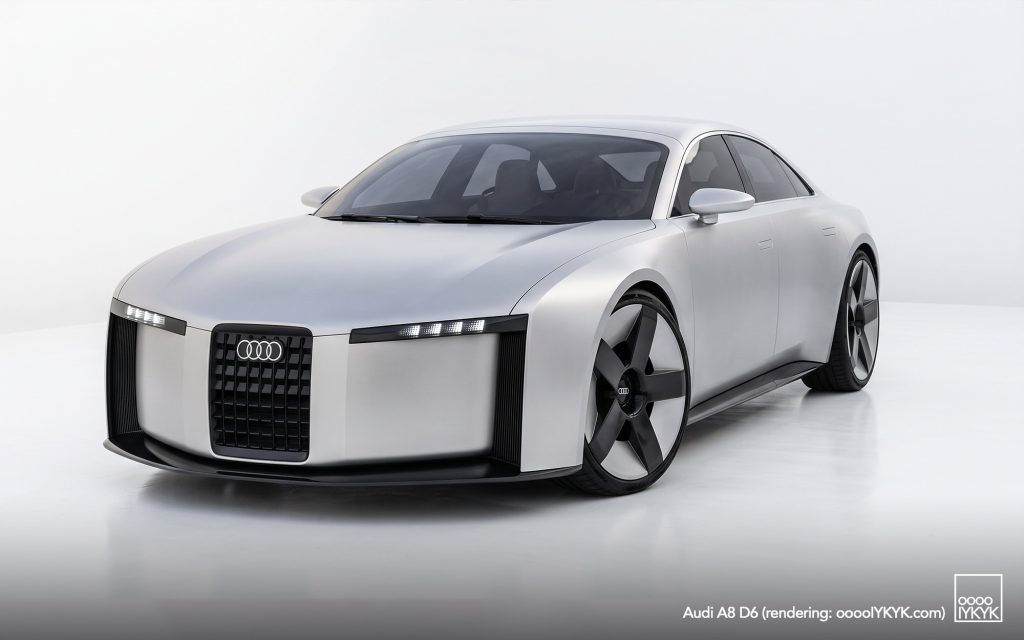
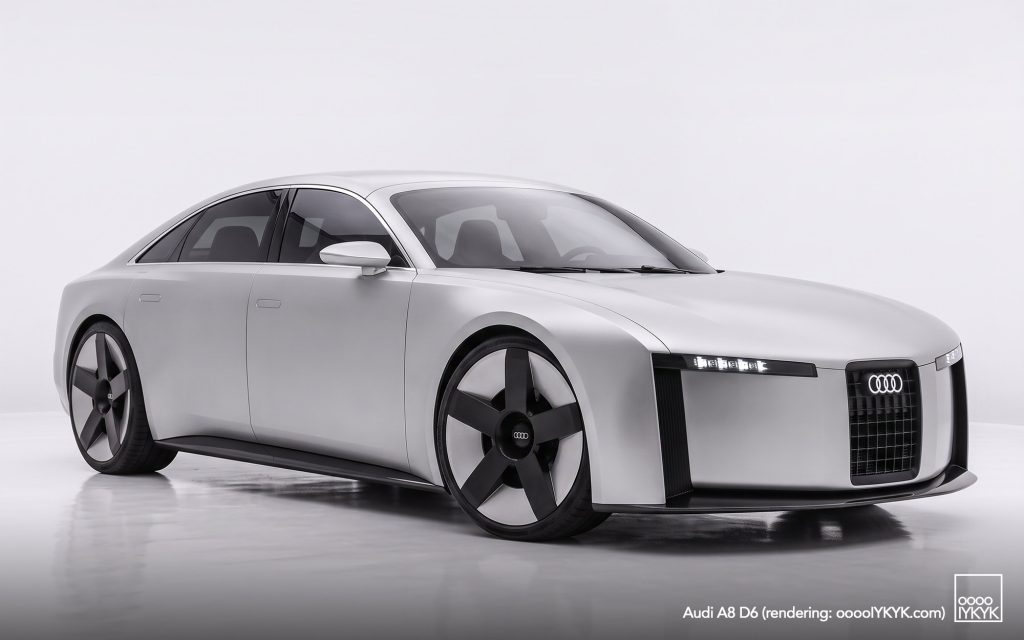
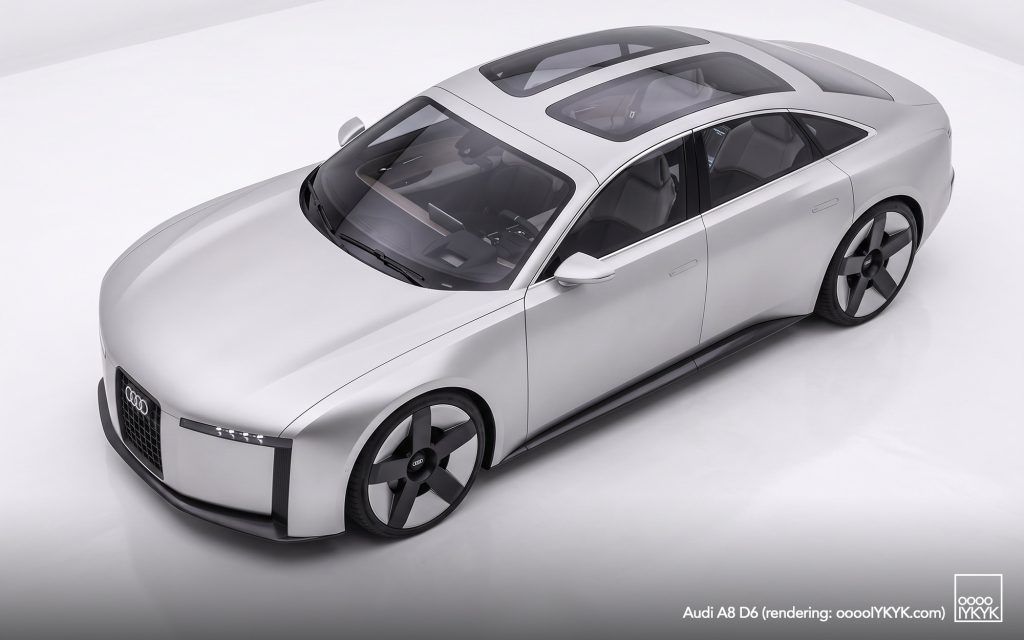
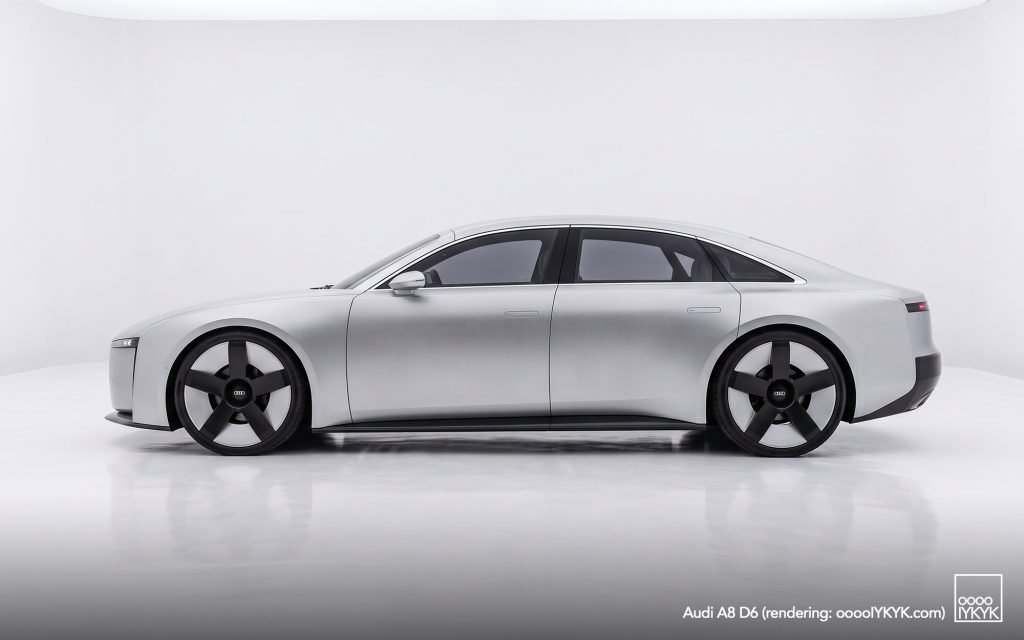
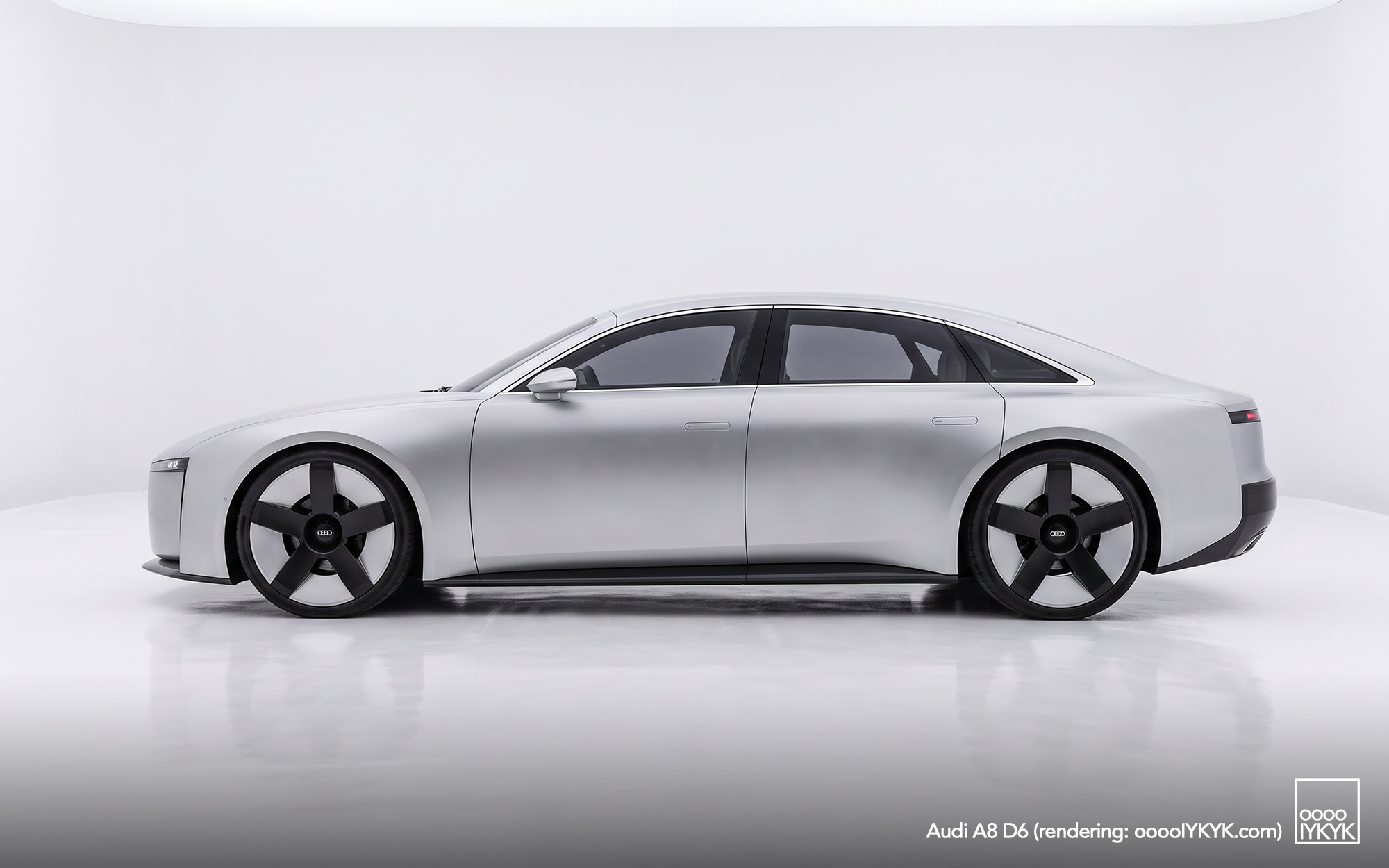
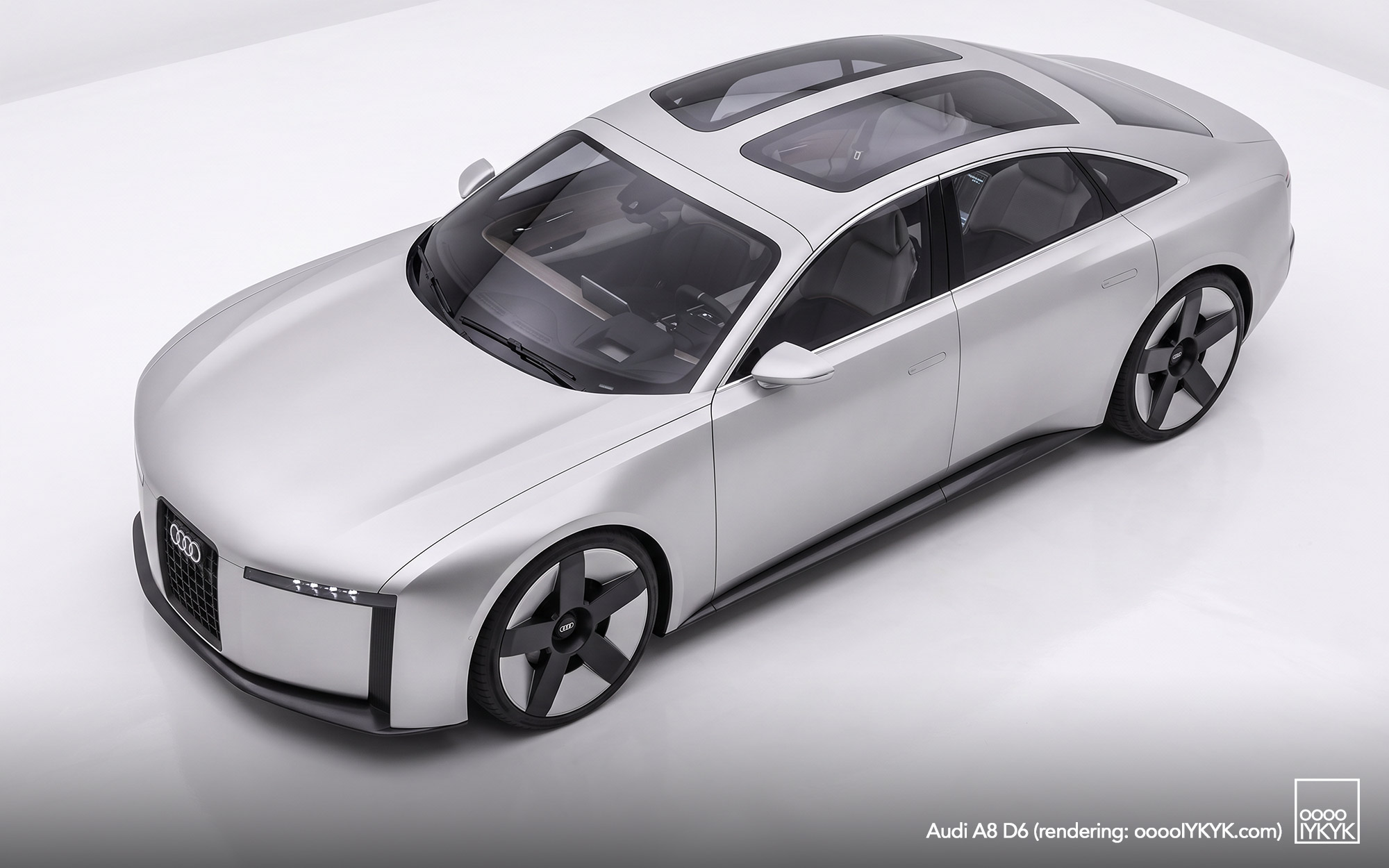
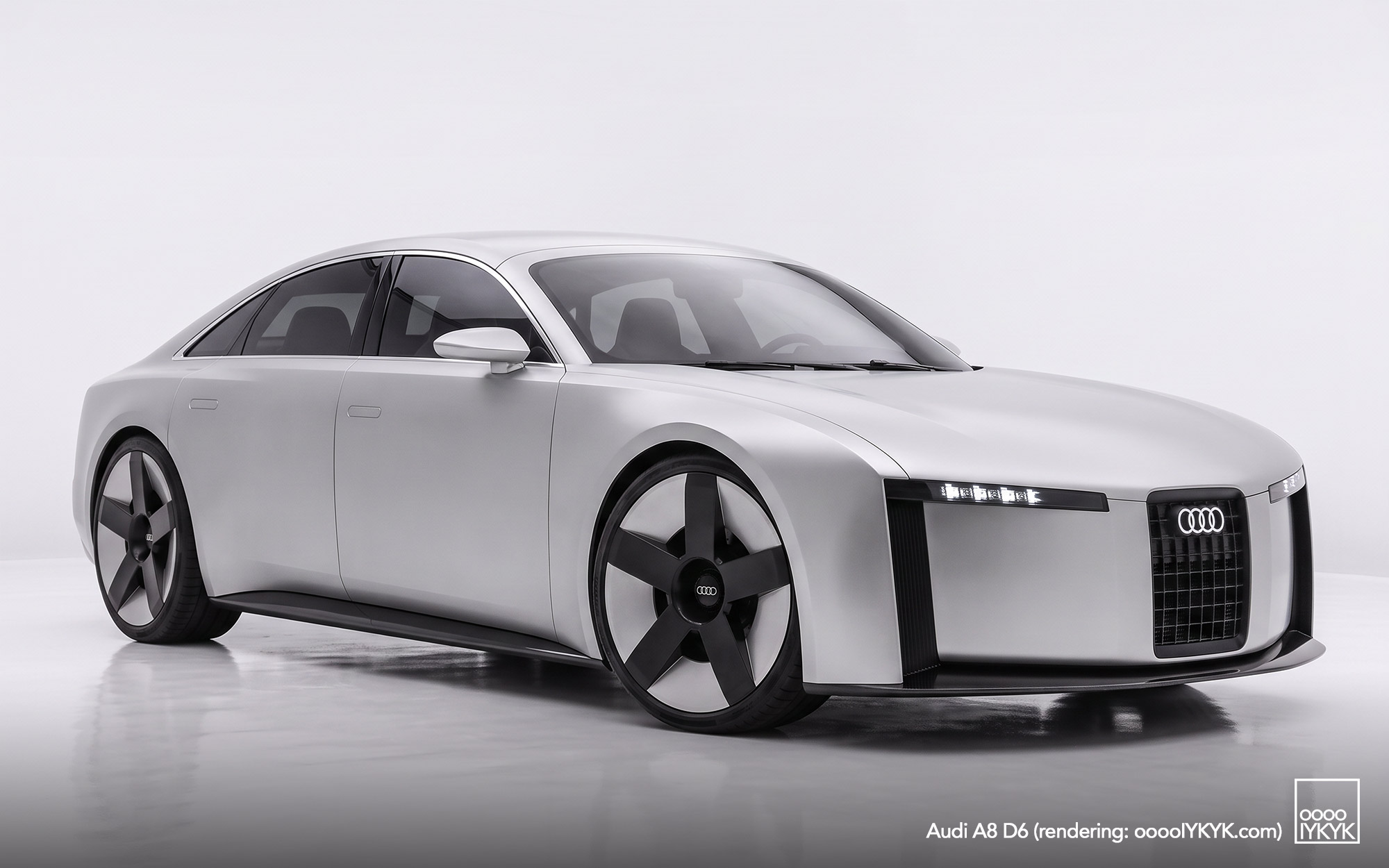
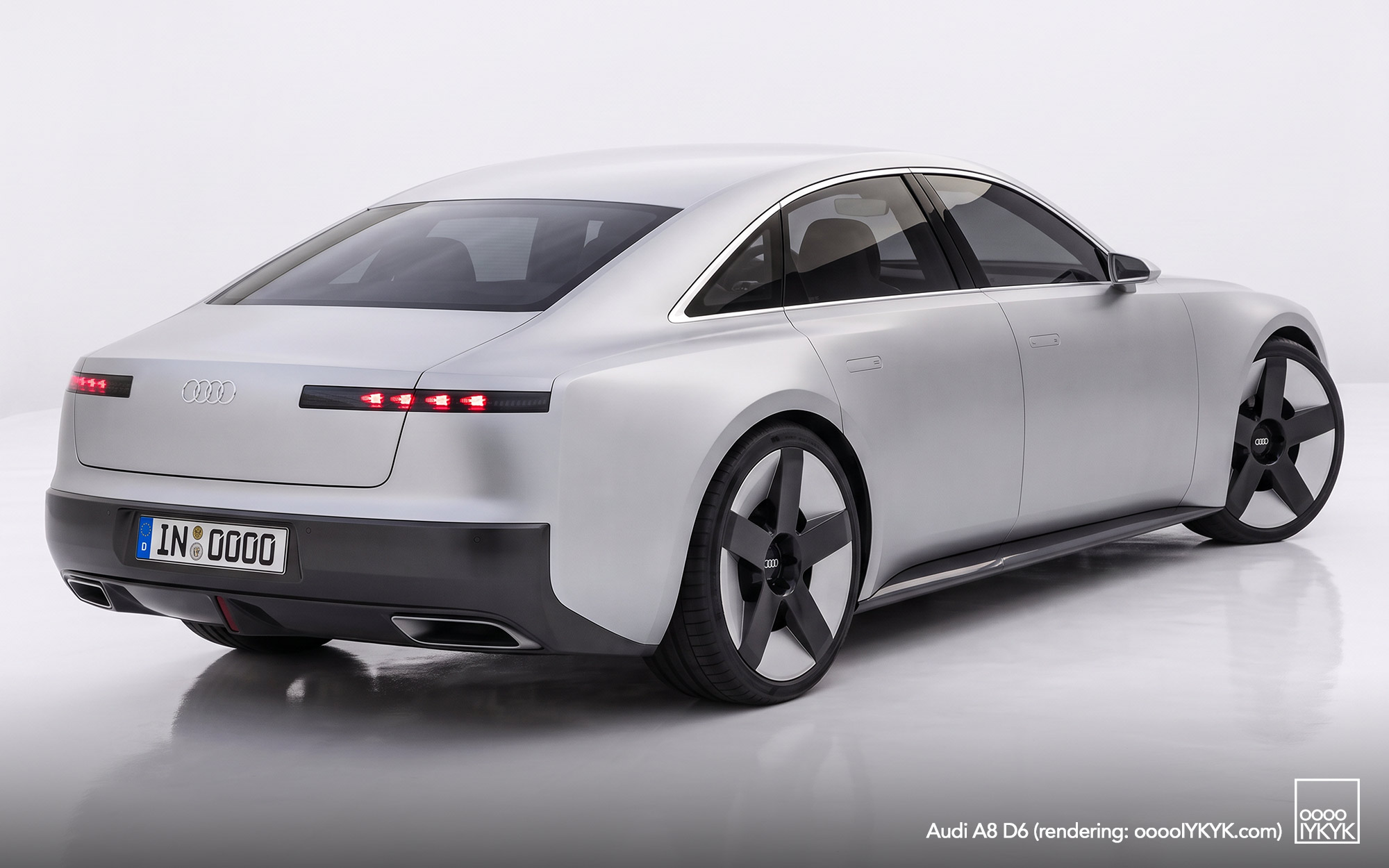
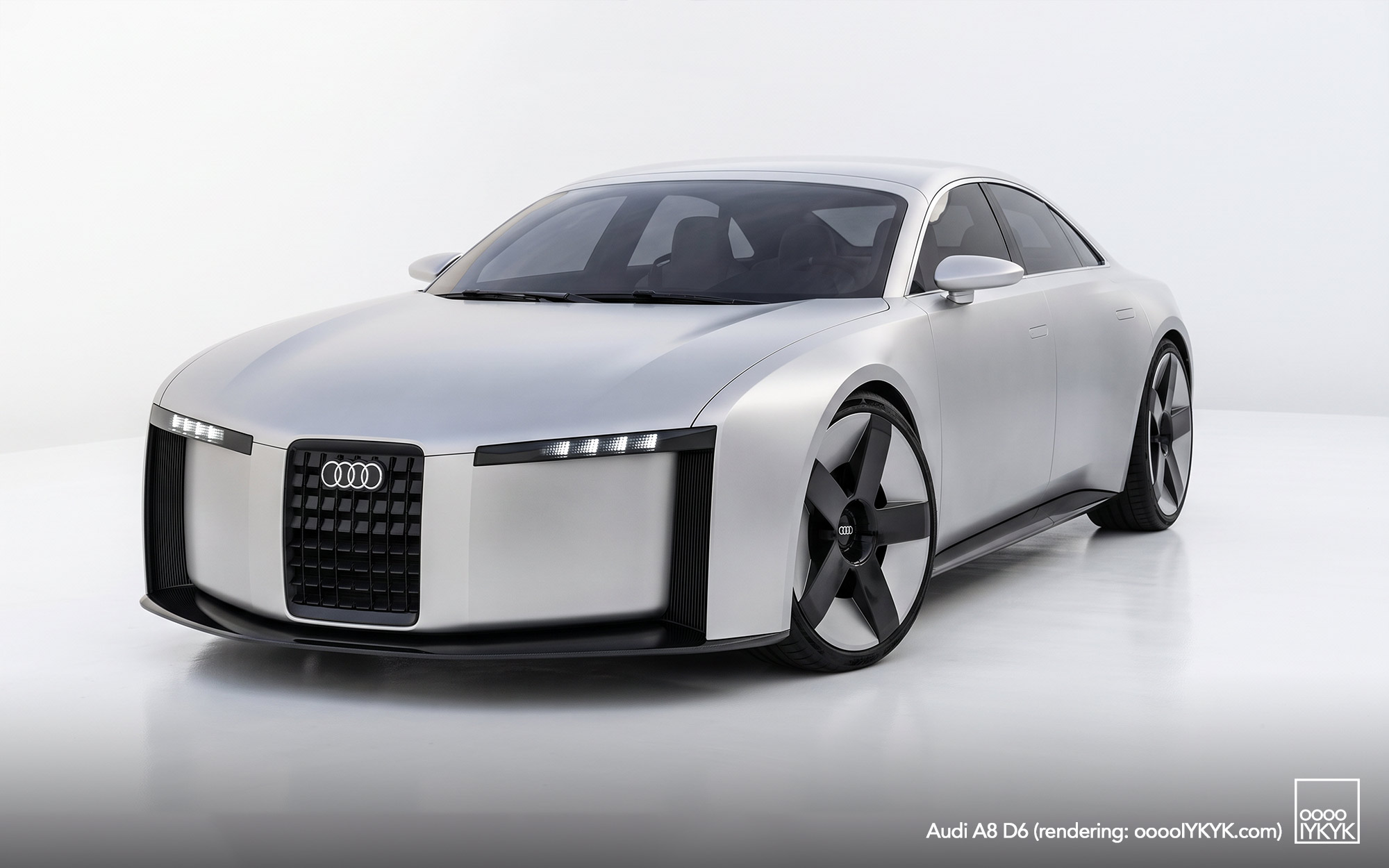
Our accompanying renderings explore a more evolutionary alternative: a traditional three-box profile with a pronounced trunk section, keeping a clearer visual connection to the A8 lineage. The treatment applies Frascella-era design cues to a familiar flagship silhouette, rather than assuming Audi will adopt the grandsphere’s more unusual form.
The renderings are independent illustrations. Audi has not released the successor’s production design, and the Leipzig and MSB direction remains subject to final confirmation. What is emerging is the possibility of an A8 that preserves its flagship role while changing the architecture, proportions and manufacturing arrangements beneath it.
PHOTO GALLERY