

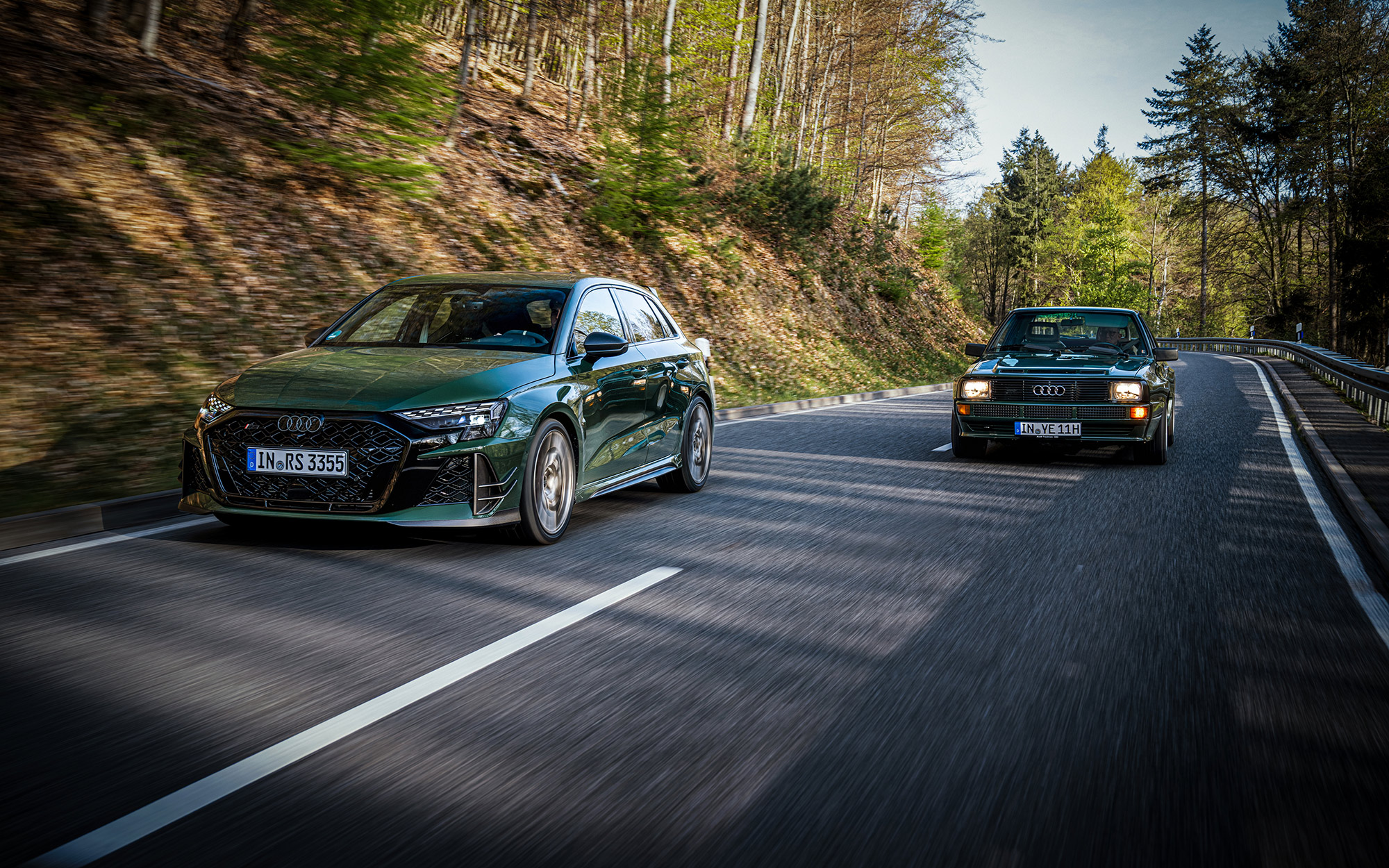

Rumors surrounding the future of Audi’s turbocharged inline-five have decried its demise whenever new emissions legislation appeared on the horizon. This time, though, the discussion appears tied to a very real engineering challenge. According to reports out of Germany, Audi is evaluating hybrid solutions as a way to preserve the 2.5-liter five-cylinder beyond the arrival of Euro 7 emissions regulations.
The engine in question is the EA855 evo unit currently powering the Audi RS 3, one of the final remaining high-performance five-cylinder production cars on the market. That engine has become central to Audi Sport’s identity over the last decade, both for its unique firing order and also its historical connection to the original turbocharged Audi quattros of the 1980s.
Euro 7 regulations are expected to significantly tighten emissions compliance requirements beginning late in 2027. While previous standards largely focused on emissions under controlled testing environments, Euro 7 expands scrutiny into broader real-world operating conditions including cold starts, transient loads and lower temperature operation. These are precisely the conditions that make high-output turbocharged engines more difficult and expensive to certify.
According to the German reporting, Audi’s challenge is not necessarily power output or fuel economy alone, but the cost and complexity involved in adapting a relatively low-volume enthusiast engine to meet the next regulatory phase. Proposed changes would reportedly require more advanced catalytic converter systems, expanded NOx monitoring, revised combustion strategies and additional particulate filtering hardware.
Rather than retiring the engine outright, Audi Sport appears to be studying electrified alternatives that could reduce emissions during the most demanding portions of the drive cycle while retaining the character that has defined the platform for decades.
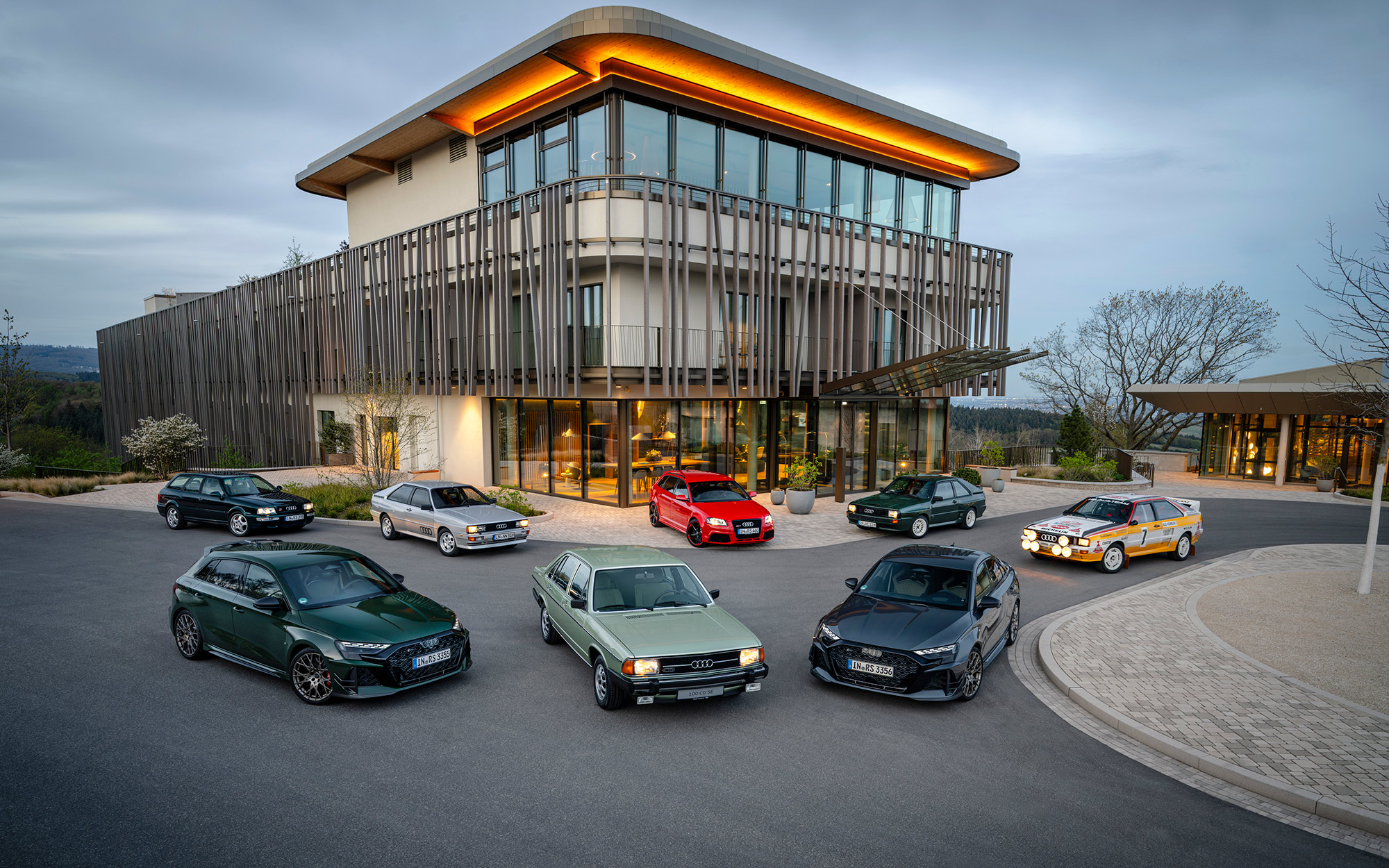
Reports suggest Audi has explored multiple hybrid configurations including mild-hybrid assistance, transmission-integrated electric motors and potentially electrified rear axle systems similar in concept to newer Volkswagen Group performance hybrids. Such systems could reduce reliance on enrichment under boost while also allowing the combustion engine to operate in cleaner and more efficient load windows.
The timing of the discussion is notable given Audi Sport’s broader shift toward electrified performance models. The new Audi RS 5 Avant already introduces plug-in hybrid performance to the RS lineup, pairing a combustion engine with electrification as Audi prepares for a new era of performance development tied closely to efficiency targets and Formula 1-influenced hybrid technologies.
Audi Sport managing director Rolf Michl reportedly confirmed that the company remains open to multiple solutions for the five-cylinder’s future, reinforcing that the engine has not yet been written off internally.
The turbocharged inline-five has become one of the final mechanical links connecting modern Audi Sport products to the company’s original rally era identity. Its uneven exhaust note and compact packaging have remained defining characteristics of the RS 3 and related performance models even as the broader industry shifts toward electrification.
Should Audi ultimately proceed with a hybridized version of the five-cylinder, it would likely represent the final major evolution of the architecture rather than a temporary stopgap. It could also position the engine as a specialized halo powertrain within Audi Sport’s future portfolio rather than a conventional mass-market performance engine.
For now, no production decision has been announced. What appears increasingly clear, however, is that Audi is at least attempting to find a technical path that allows one of its most recognizable engines to survive the next phase of European emissions legislation.
SOURCES