


This 10 Things about Massimo Frascella series stems from an in-depth feature published by Autocar Magazine. Meant as an in-depth take on Audi’s Chief Creative Officer, it delved both into what brought him to Audi and where he plans to take the four rings during his tenure. Using that as a starting-off point, this series aims to highlight the key points while expanding them more in the Audi-specialist context this website aims to provide.
Part #1 began with Frascella’s taproot – the Audi TT (Mk1).
Part #2 focused on his background, broader than simply JLR and involving some TT Mk1 designer icons.
Part #3 took a closer look at his appreciation for the 2000s era Audi range that sold alongside the TT.
Part #4 examined where Audi goes from here.
Part #5 weighs screens versus switchgear.
Part #6 is decidedly not retro
Part #7 considers how he’ll expand upon Concept C.
Part #8 provides context on the Audi R26 F1 livery.
The plan for this series is to cover two installments per day over five days. For this next installment, he makes an obscure yet very cool callback.
#9 MASSIMO DIGS THE STEPPENWOLF
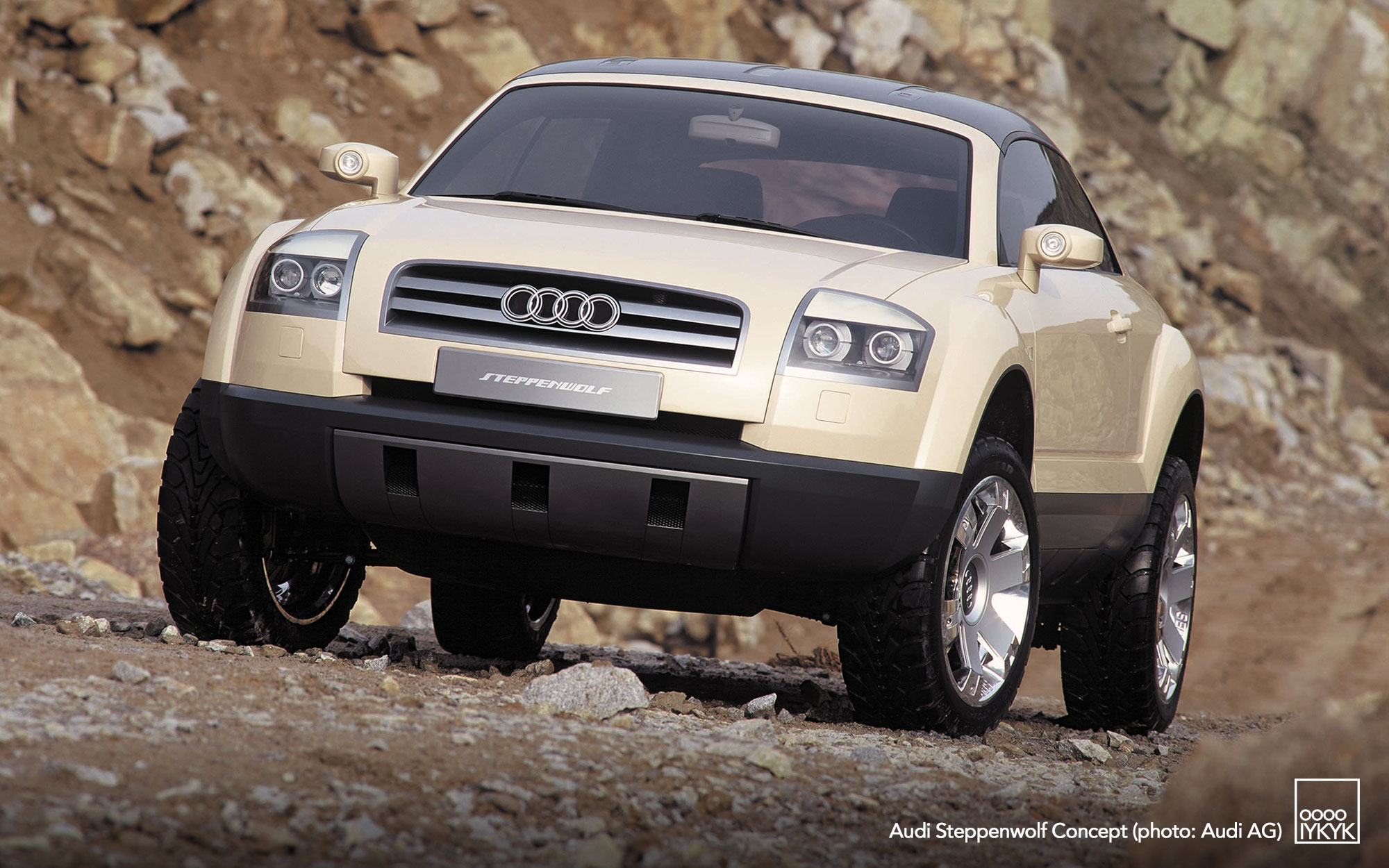
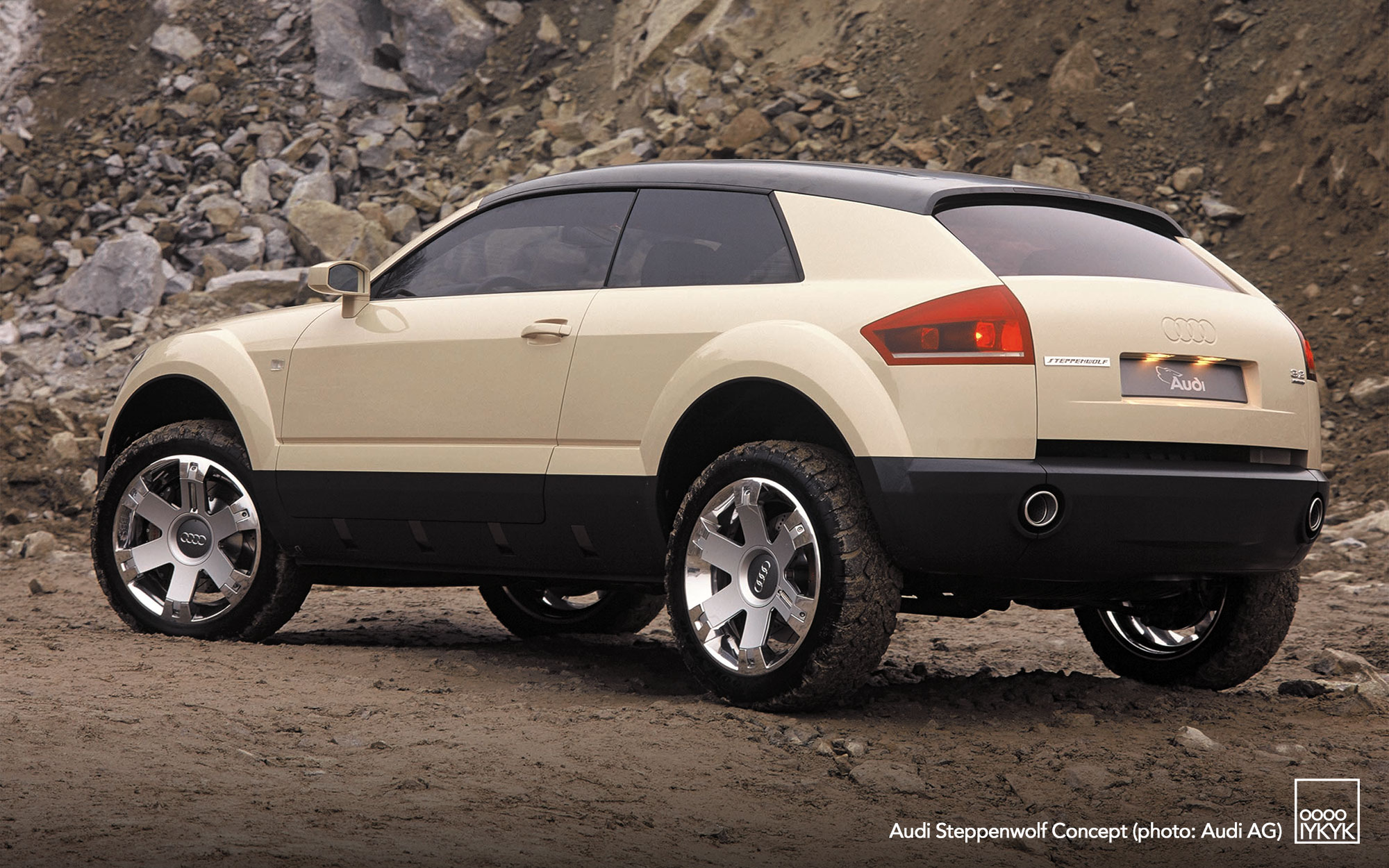
“Criminally overlooked” is the way Autocar describes the 2000 Audi Steppenwolf Concept. That car was based heavily on the TT design, but with a shootingbrake station wagon style coupé body while paired with pre-allroad style offroad lift and kit, not to mention the VR6 that would see duty just a few years later in the TT 3.2 and Volkswagen R32.
“I was so shocked when I first saw it and got a sense of scale: It’s so tiny!”
The Steppenwolf was unveiled at the 2000 Paris Motor Show, representing Audi’s early exploration of the compact crossover segment long before SUVs dominated the market. Conceived as a three-door compact crossover, the Steppenwolf’s blending of the sporty design language of the original Audi TT with off-road capability, using the same Volkswagen Group’s PQ34 platform that underpinned the TT makes it perhaps a bit more obvious given Frascella’s affinity for the TT Mk1.
The Steppenwolf also showcased several experimental features, including four-level adjustable air suspension similar to the Audi allroad quattro, a removable carbon-fiber hardtop with an optional soft top, and an electro-hydraulic parking brake. Its design emphasized a blend of coupe-like sportiness and SUV practicality, with increased ground clearance and rugged exterior elements. Although the Steppenwolf never entered production, it foreshadowed Audi’s later expansion into compact SUVs, particularly concepts like the Cross Coupé quattro that ultimately led to the production Audi Q3 in 2011.
Find more information on the 2000 Steppenwolf Concept on the ooooIYKYK Audi Archive Project.