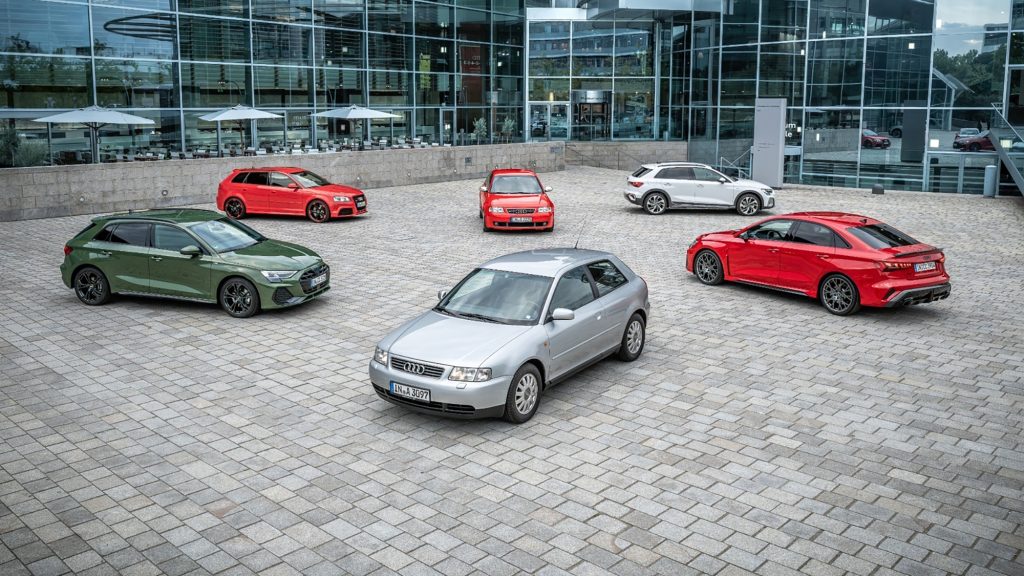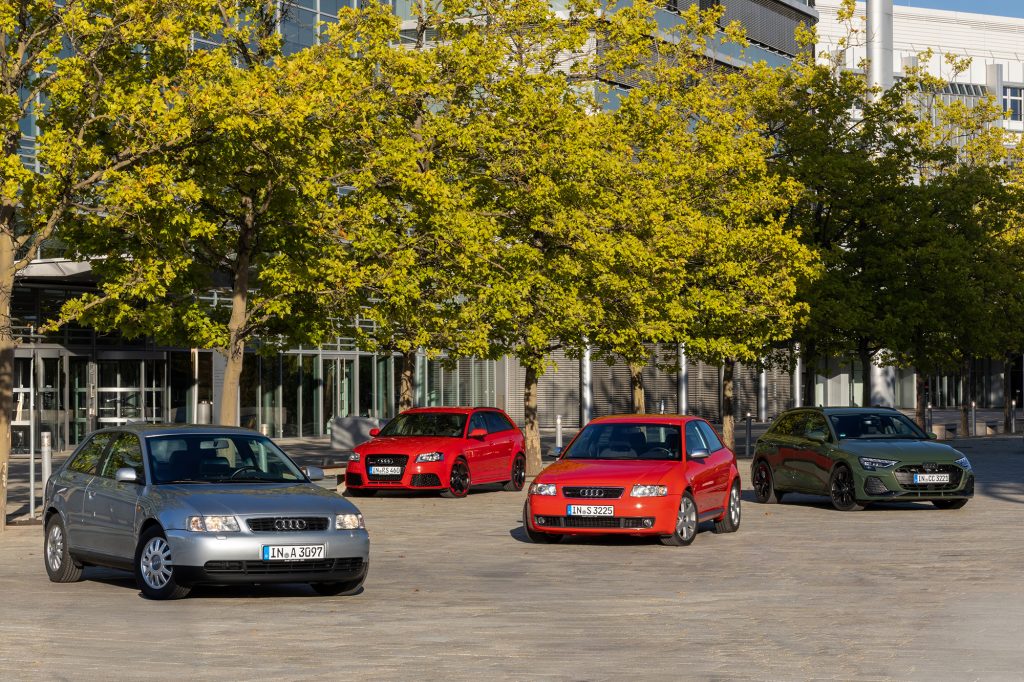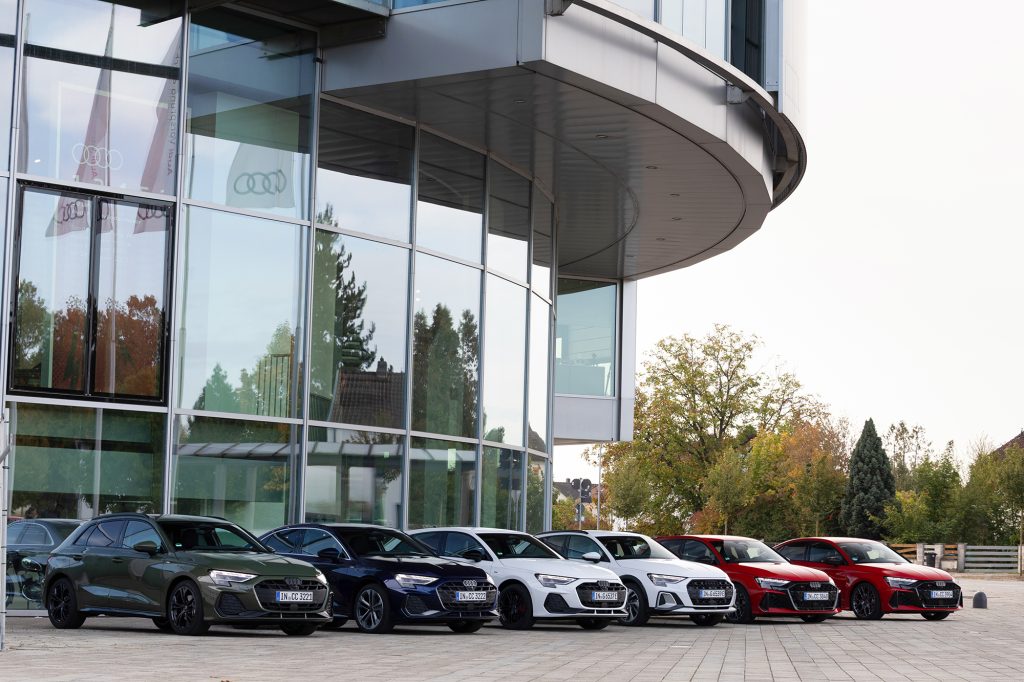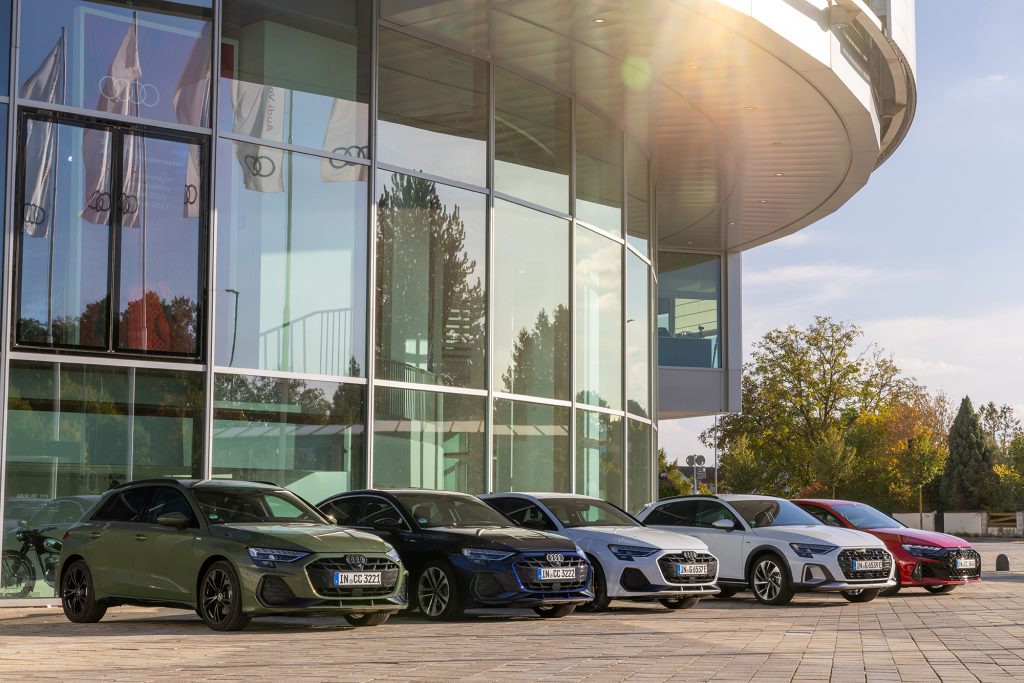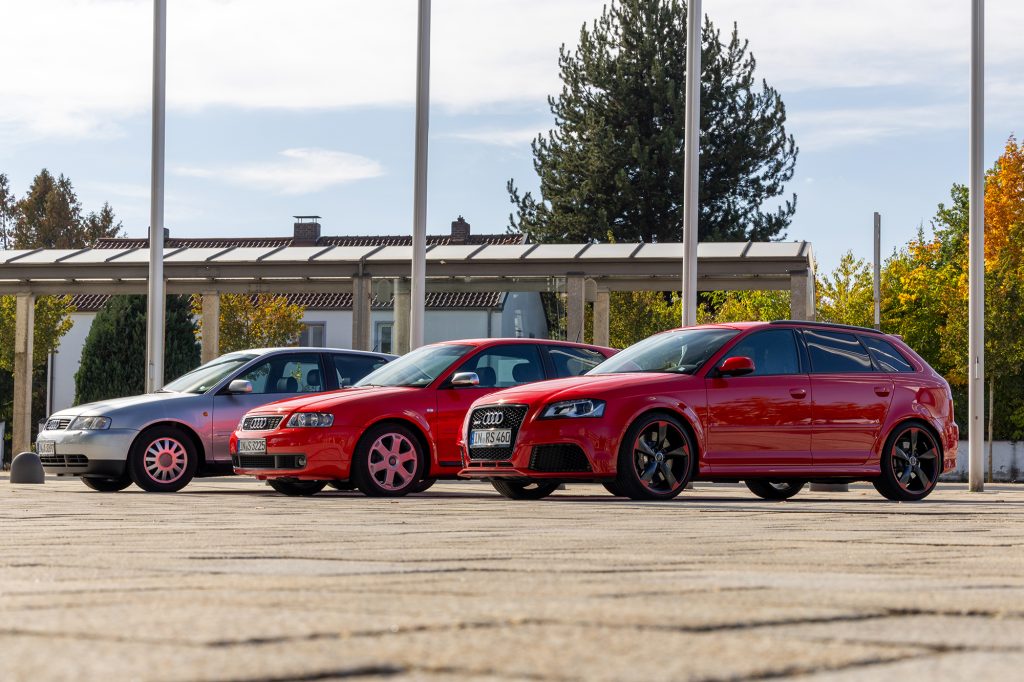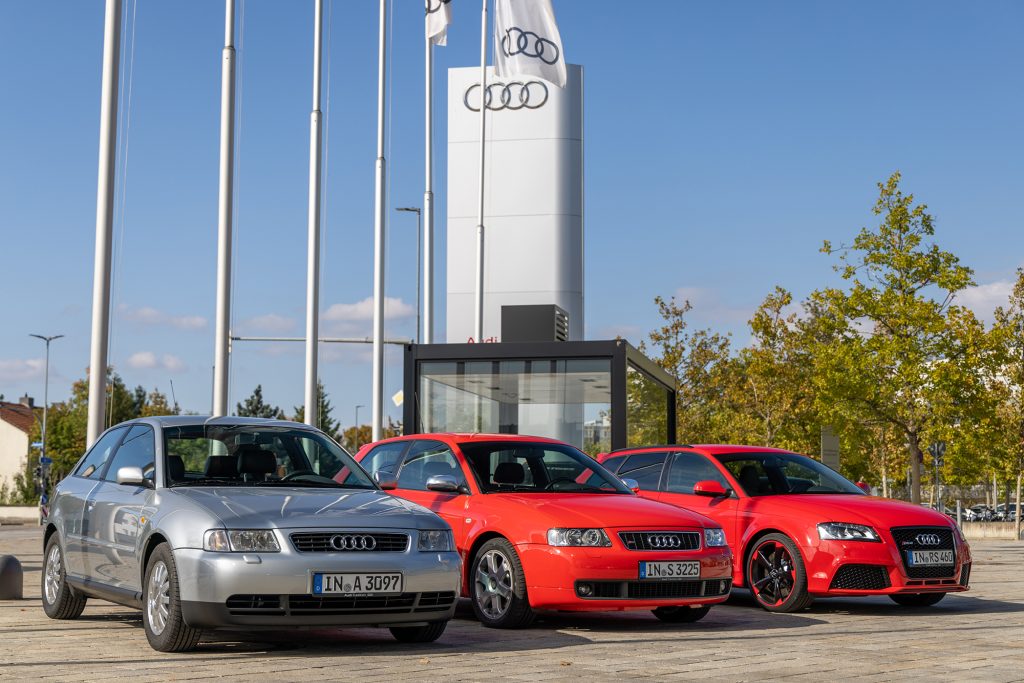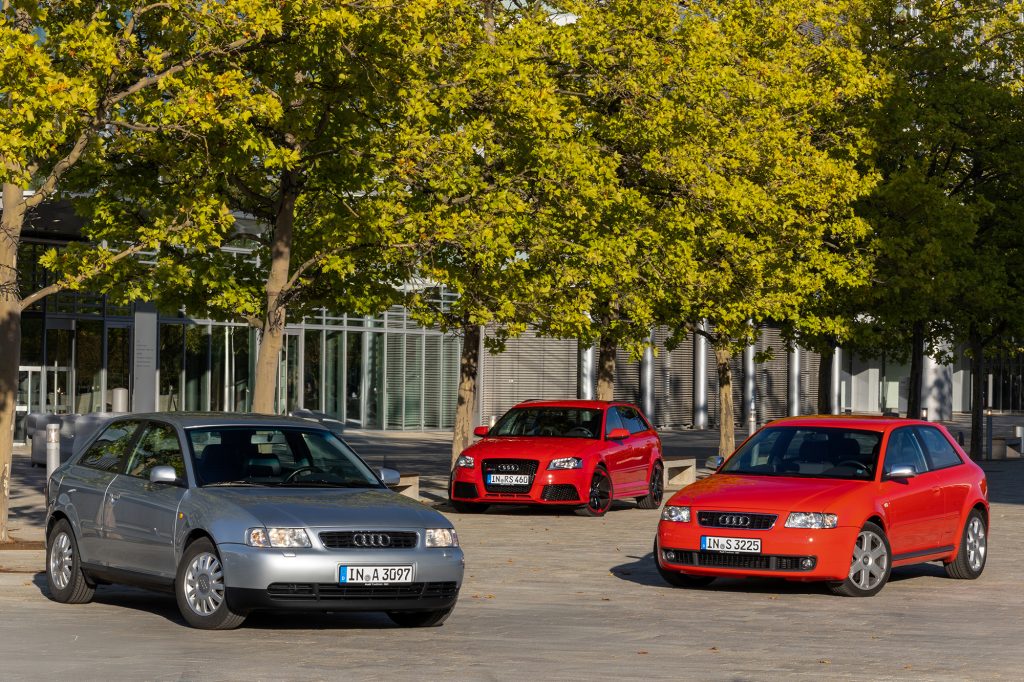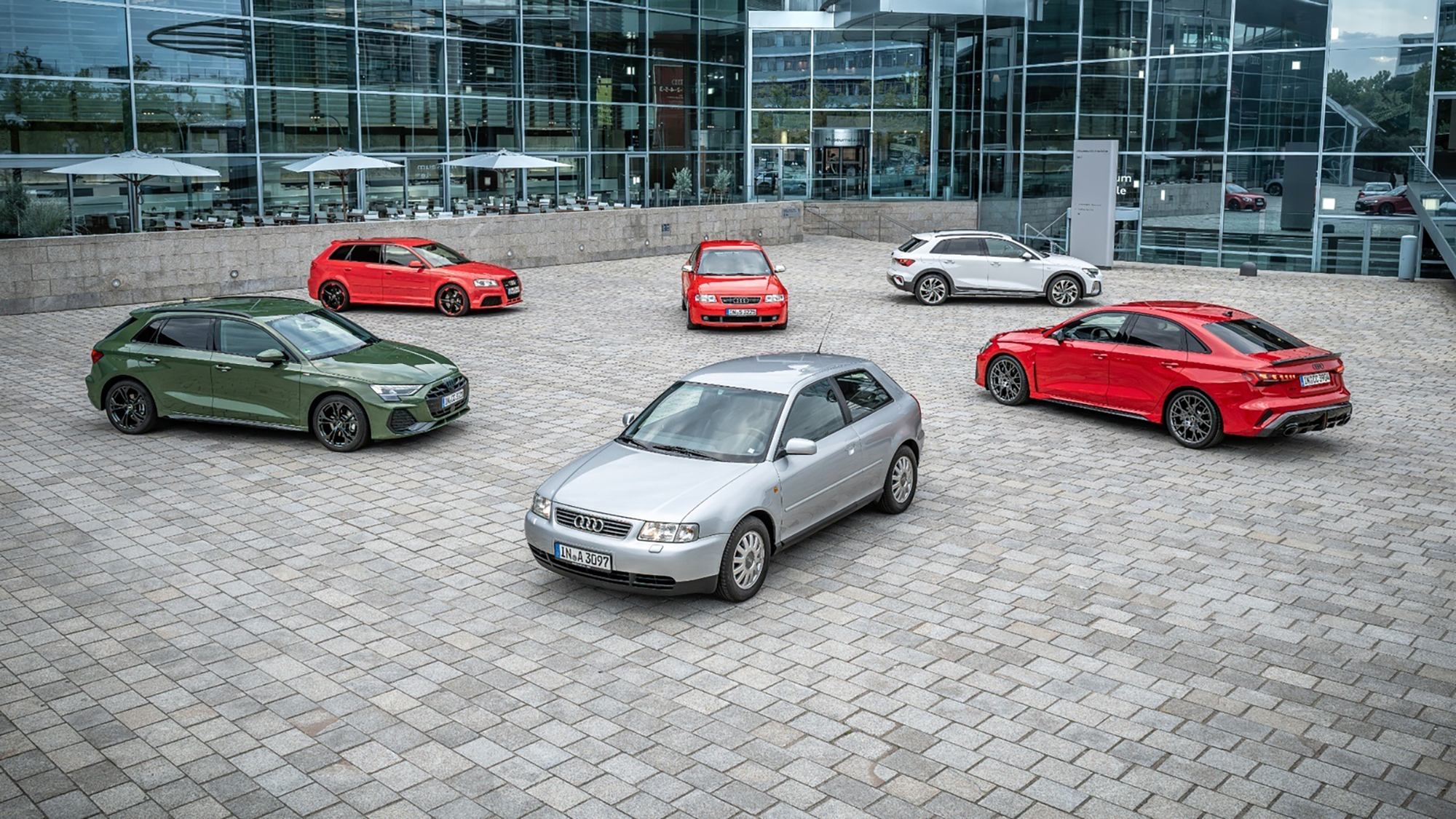

Thirty years after its 1996 debut, the Audi A3 has surpassed six million units produced and reached customers in more than 100 countries. Across four generations, it has grown from a three-door hatchback into a model family encompassing multiple body styles, gasoline and diesel engines, electrified powertrains, and S3 and RS 3 performance variants.
Audi describes the original A3 as the model that established the premium compact class. Its approach was straightforward: bring the materials, equipment, design and driving characteristics associated with larger Audis into a smaller car. The subsequent generations expanded that formula through quattro all-wheel drive, dual-clutch transmissions, more sophisticated chassis technology, digital interfaces and plug-in hybrid propulsion.
The anniversary also traces a change in the A3’s role within Audi. What began as a compact hatchback developed into a global product range, with the Sportback serving as its highest-volume body style and the Sedan broadening its appeal beyond Europe. According to Audi, the current generation offers 17 model and powertrain variants across the lineup.
FIRST GENERATION: THE ORIGINAL PREMIUM COMPACT, 1996–2003
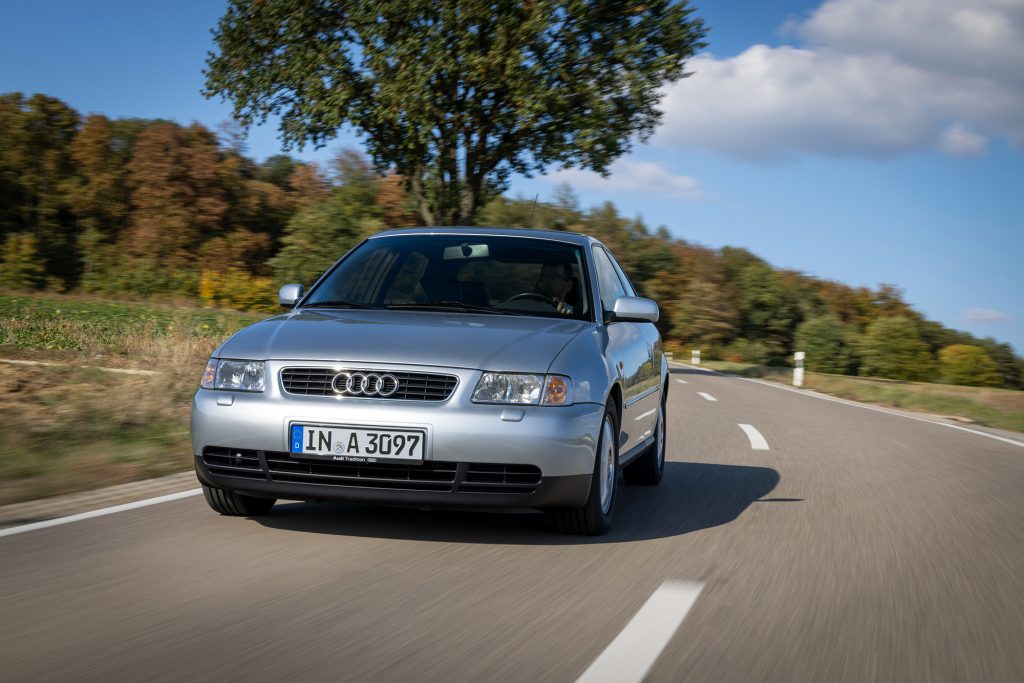
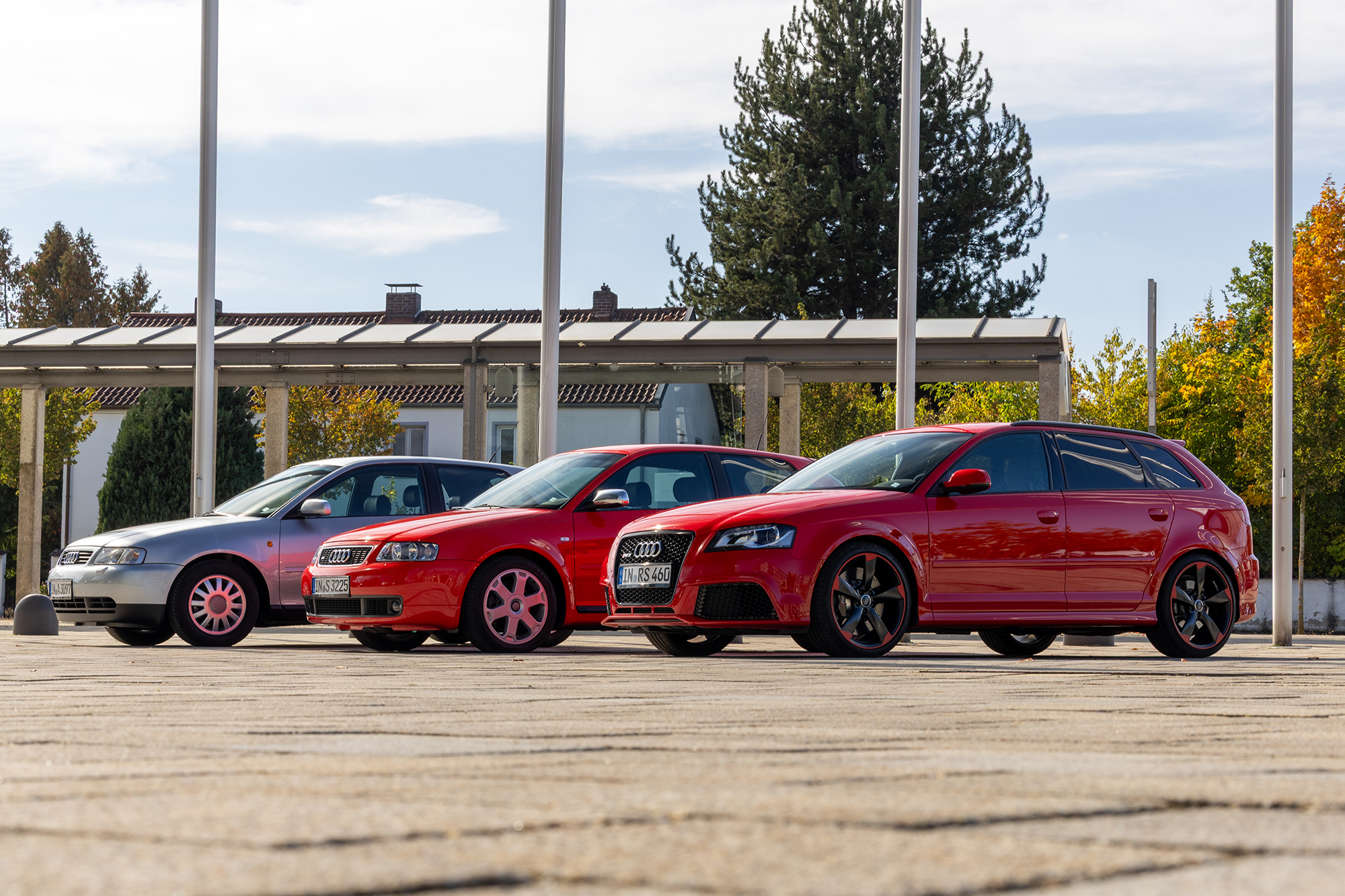
The first-generation A3, known by its 8L designation, made its world premiere at the 1996 Salon Mondial de l’Automobile in Paris. Initially offered as a three-door hatchback, it used a rising shoulder line, substantial C-pillars and a low greenhouse to give its compact proportions a more coupé-like appearance.
Inside, the emphasis was on craftsmanship, clear ergonomics and material quality. The A3 brought Audi’s interior approach to a smaller footprint, while its equipment and accessories gave buyers considerable scope to configure the car. Three equipment lines established different priorities: Attraction served as the core offering, Ambition emphasized sportiness, and Ambiente focused on comfort and a more elegant presentation.
Over the model cycle, Audi offered four gasoline and four diesel engines. A significant mechanical addition arrived in September 1998, when quattro all-wheel drive joined the range. For the A3’s transverse-engine layout, Audi used an electronically controlled multi-plate clutch positioned at the input to the rear differential. It extended the quattro offering into Audi’s compact model family with a system suited to the A3’s packaging.
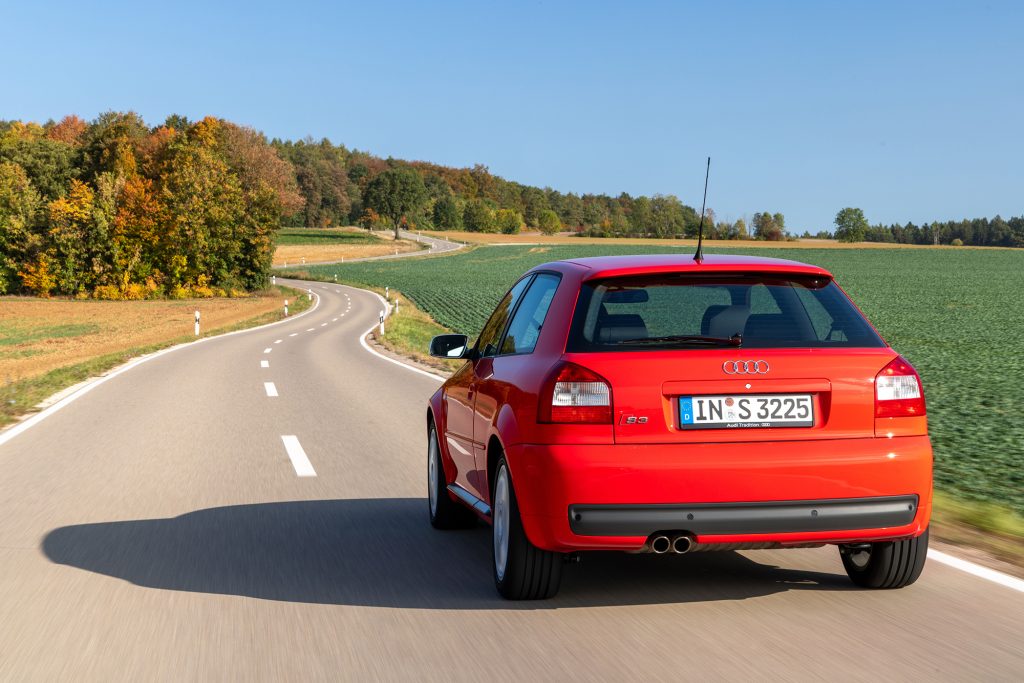
A five-door A3 followed at the beginning of 1999, widening the car’s practical appeal. That year also brought the first S3, establishing a performance derivative that would become a recurring part of the A3 family.
The original S3 remained a three-door and combined a more muscular exterior with electrically adjustable Recaro sports seats and piano-lacquer interior trim. Its turbocharged 1.8-liter four-cylinder engine used two intercoolers and initially produced 154 kW, or 210 PS. A six-speed manual transmission sent power to all four wheels, while 17-inch wheels and ventilated disc brakes at each corner completed the package.
Output increased to 165 kW, or 225 PS, in fall 2001. By the end of the first generation, the A3 had established the main elements that would shape its successors: compact dimensions, multiple equipment levels, a broad engine range, available quattro and a distinct S model.
SECOND GENERATION: SPORTBACK, CABRIOLET AND RS 3, 2003–2013
The second-generation A3 arrived in 2003 under the 8P designation. Increased length, width and wheelbase created more interior room, while the chassis introduced a four-link independent rear suspension alongside a MacPherson-strut front axle. Electromechanical steering was another part of the revised mechanical package.
Four- and six-cylinder engines broadened the range, and dual-clutch transmission technology became an important addition. It allowed rapid gear changes with minimal interruption to power delivery, bringing another technology associated with more expensive cars into the compact Audi lineup. Automatic transmission choices also included tiptronic.
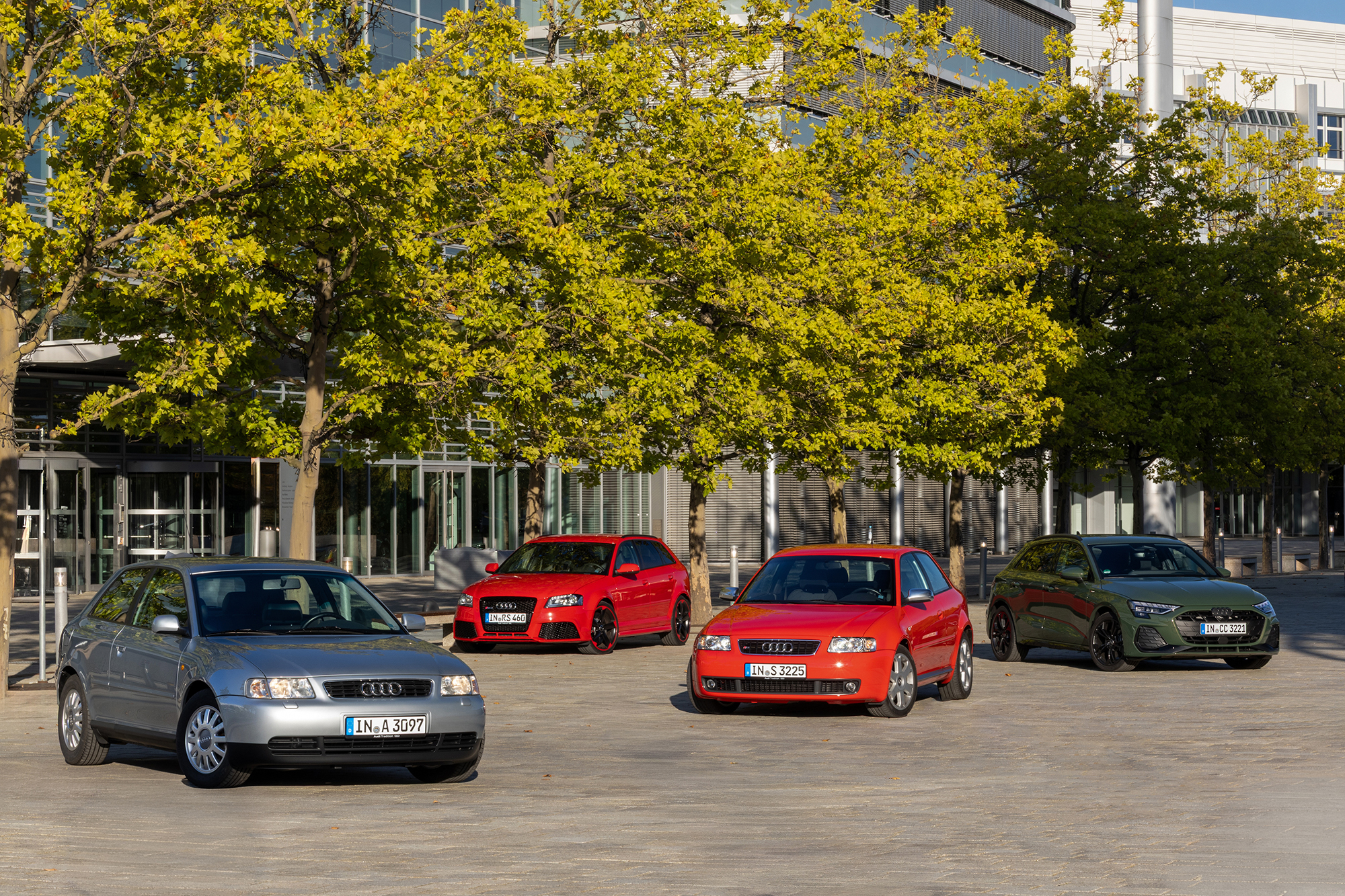
The A3 Sportback followed in September 2004. Its wheelbase was 65 millimeters longer than that of the previous generation’s five-door model, and its extended rear body gave it a more wagon-like profile. The name identified a five-door model with its own proportions and identity within the range.
The Sportback also introduced the Singleframe grille to the A3 family. Already seen on the A8, the grille would become one of Audi’s most recognizable design features. The Sportback subsequently became the A3’s highest-volume body variant, combining the compact model’s positioning with greater everyday utility.
The performance range expanded alongside it. In 2008, the S3 became available as a five-door Sportback, powered by a turbocharged 2.0-liter four-cylinder engine producing 195 kW, or 265 PS. Buyers could now combine S3 performance with the more practical body style.
That same year, Audi added the first A3 Cabriolet. Its fabric roof introduced an open-top alternative and extended the model family beyond hatchbacks.
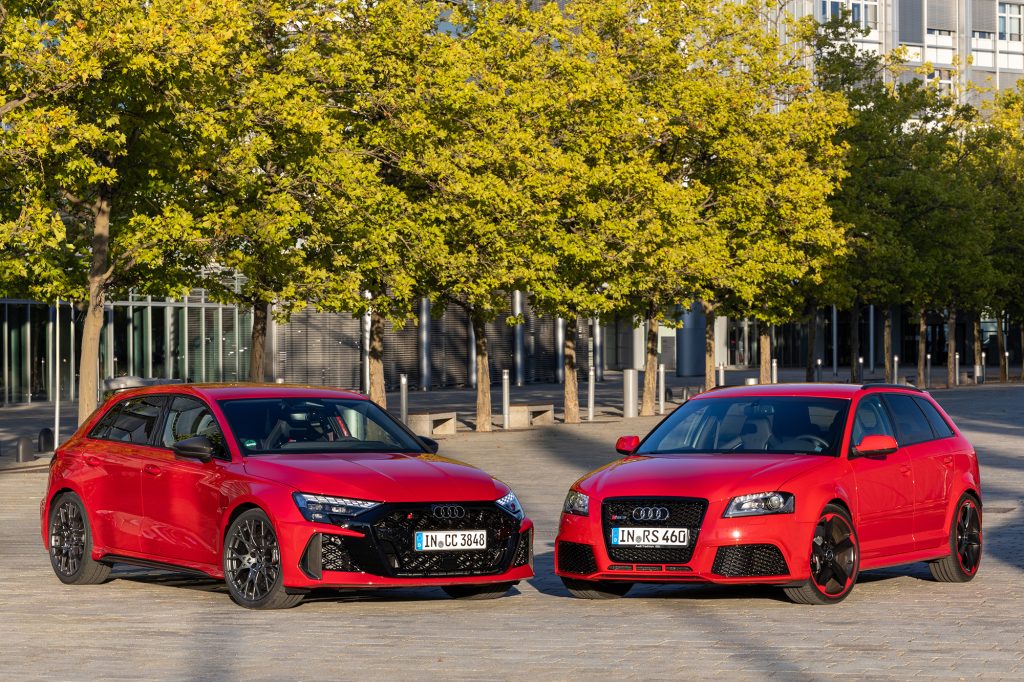
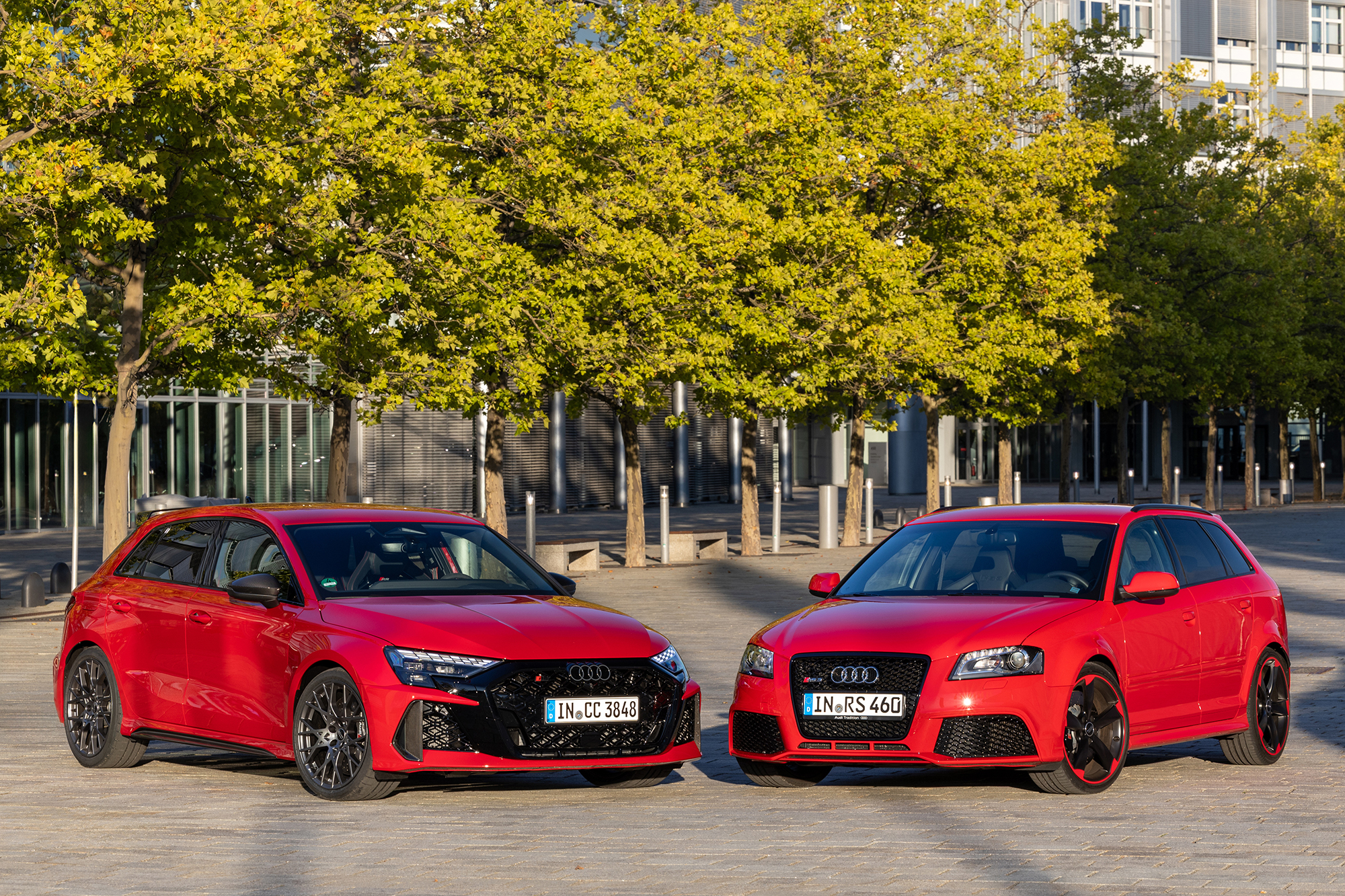
The most substantial performance addition came in 2011 with the first RS 3 Sportback. Its turbocharged five-cylinder engine produced 250 kW, or 340 PS, and worked with all-wheel drive. The RS 3 brought Audi’s five-cylinder performance identity into the A3 range and established a new flagship above the S3.
Its exterior changes included wider front fenders made from carbon-fiber-reinforced polymer, larger air intakes and twin exhaust outlets. The mechanical and visual changes gave the RS 3 a distinct role within the family, beginning a line of five-cylinder compact performance cars that continues in the fourth generation.
THIRD GENERATION: MQB, THE SEDAN AND PLUG-IN HYBRID POWER, 2012–2020
Introduced in 2012, the third-generation A3 carried the 8V designation and became the first Audi based on the Volkswagen Group’s modular transverse matrix, or MQB. The platform supported a wider range of derivatives while allowing greater attention to weight reduction, efficiency and electronic systems.
Aluminum components helped reduce body weight. Meanwhile, the cabin adopted a retractable central monitor and an MMI interface operated through a rotary/push controller, with touchpad functionality available within the system. Voice control, smartphone connectivity and online services expanded the A3’s digital capabilities.
Driver assistance technology also became a larger part of the offering. Adaptive cruise control, lane-change assistance and lane-keeping assistance brought features associated with larger vehicle classes into the compact range.
The engine strategy emphasized turbocharging and reduced displacement. Cylinder-on-demand technology was another addition, allowing two cylinders in a four-cylinder engine to deactivate under partial load. These changes reflected a growing emphasis on combining usable performance with lower fuel consumption.
In 2013, the A3 Sedan introduced a notchback body for the first time. It was a consequential expansion for a model previously defined largely by its hatchback forms, attracting additional customers particularly outside Europe. The Sedan gave Audi another way to position the A3 in markets where a conventional trunk and three-box shape held greater appeal.
Electrification followed in 2014 with the A3 Sportback e-tron. Audi’s first plug-in hybrid in the compact class combined the Sportback body with a powertrain that could draw on both an internal-combustion engine and electric propulsion. It established an electrified branch of the A3 family that would continue into the next generation.
At the other end of the range, the RS 3 continued to develop. The third-generation RS 3 Sportback raised output to 270 kW, or 367 PS. In 2016, Audi unveiled the first RS 3 Sedan, pairing the notchback body with a 2.5-liter TFSI five-cylinder engine producing 294 kW, or 400 PS.
The third generation expanded the A3 in two significant directions: the Sedan increased its global reach, while the plug-in hybrid added a new approach to efficiency. At the same time, the RS 3 extended the performance range into a second body style.
FOURTH GENERATION: DIGITAL CONTROLS AND MORE ADVANCED CHASSIS TECHNOLOGY, SINCE 2020
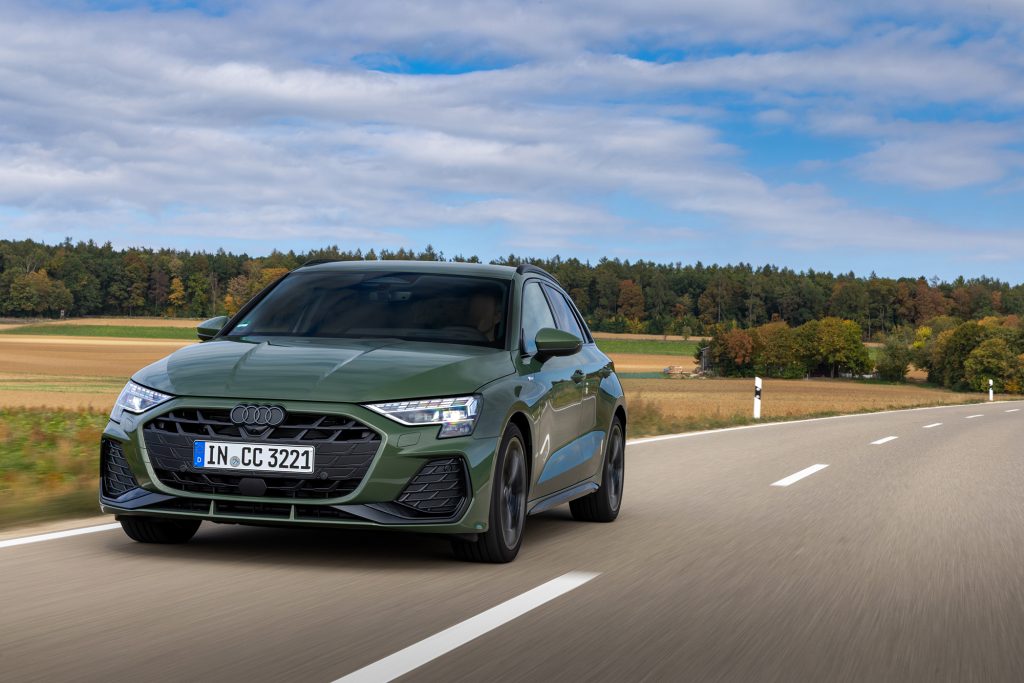
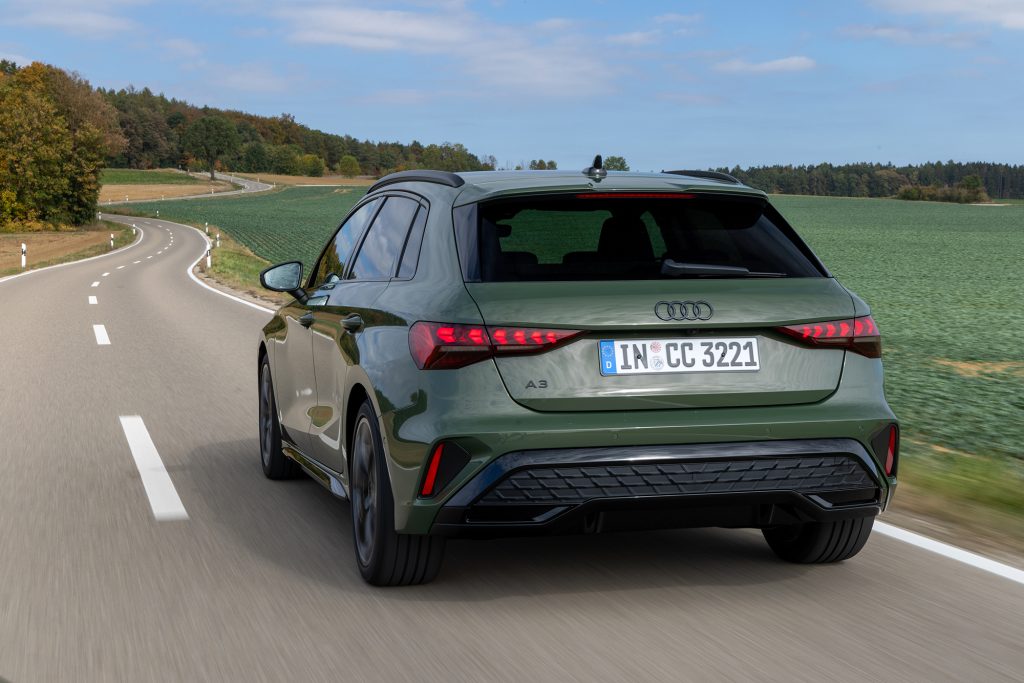
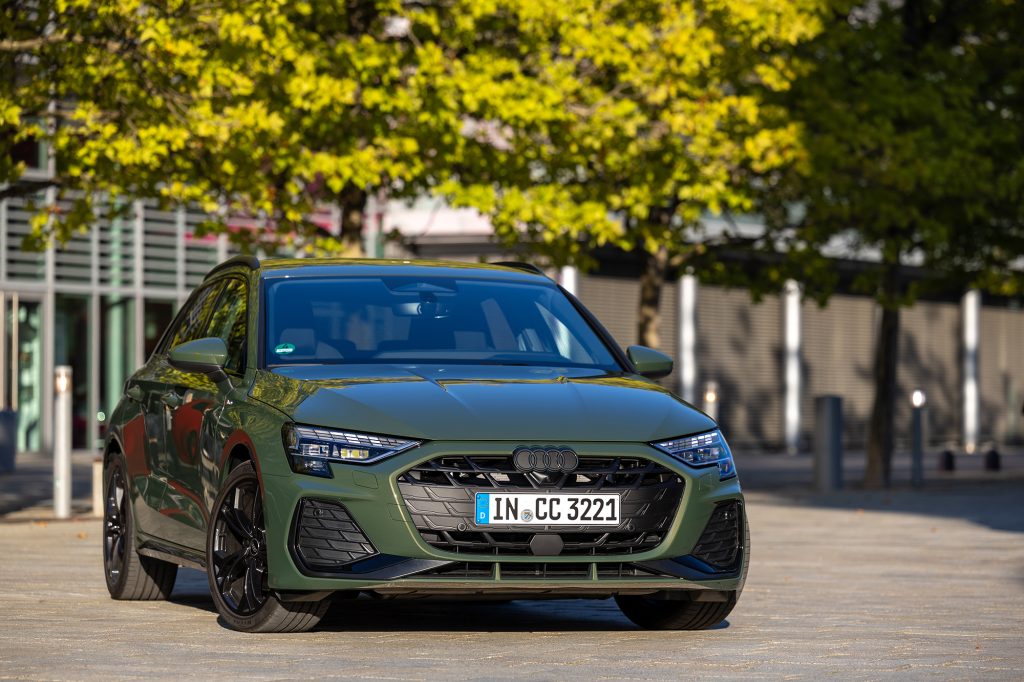
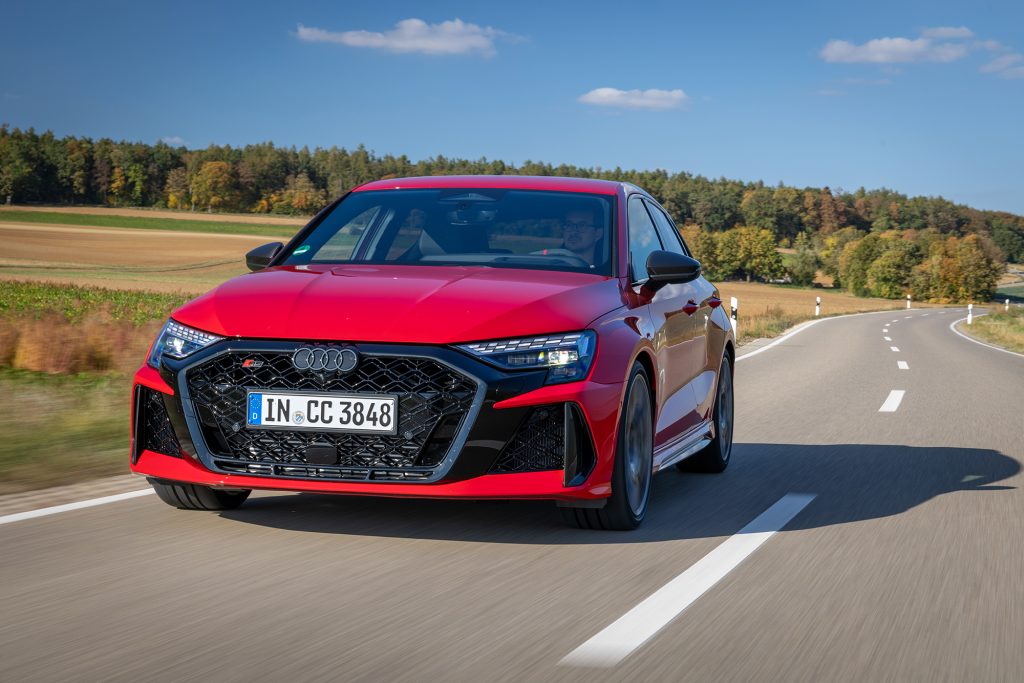
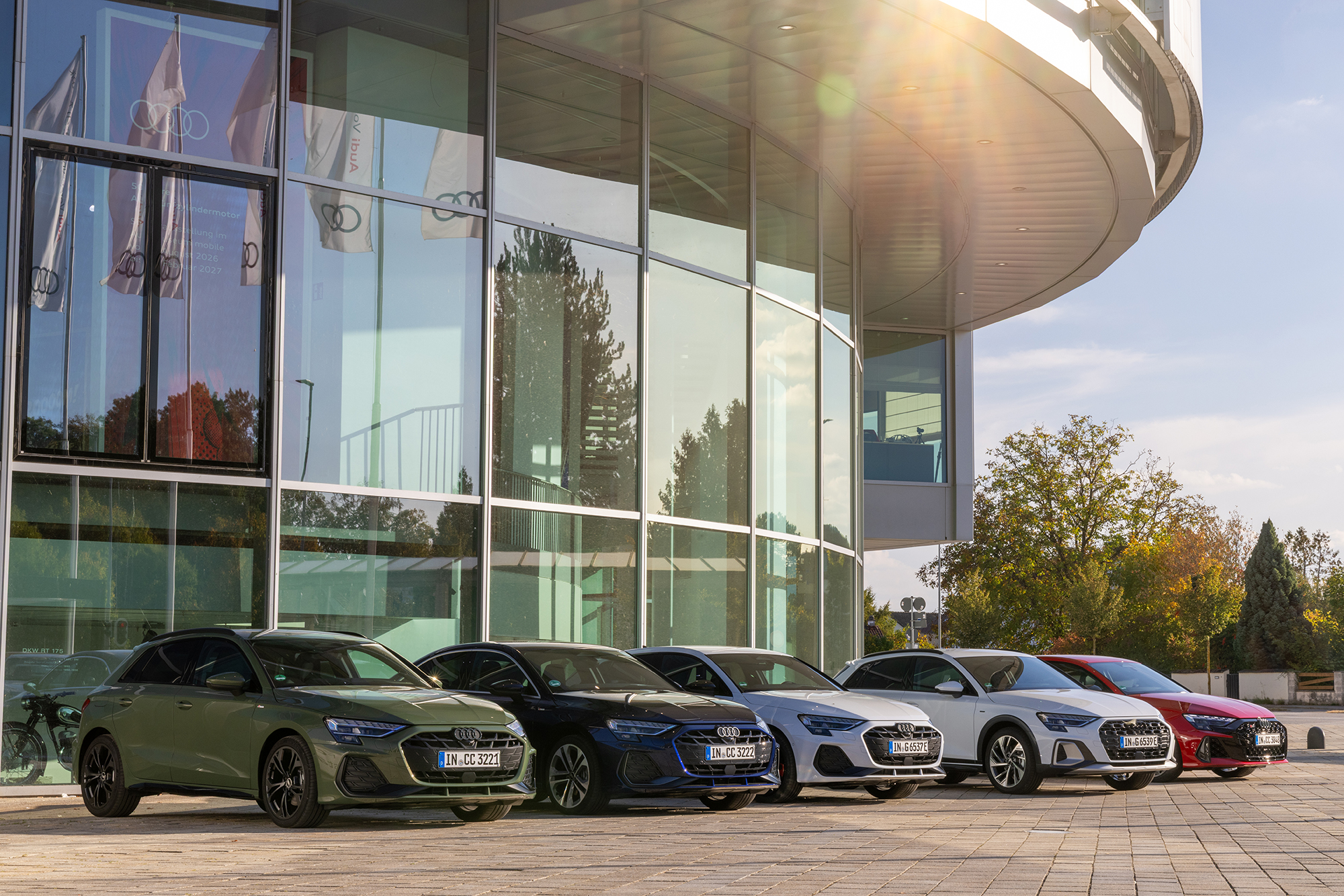
The fourth-generation A3, designated 8Y, reached the market in 2020. Its design adopted a more pronounced sporting character, while digital daytime running lights and a touch-based infotainment interface reflected changes in Audi’s lighting and cabin technology.
Selected powertrains introduced 48-volt mild hybrid systems, adding electrification to conventional engine configurations. Alongside the plug-in hybrid offering, these systems gave the A3 family multiple ways to address efficiency rather than relying on a single powertrain format.
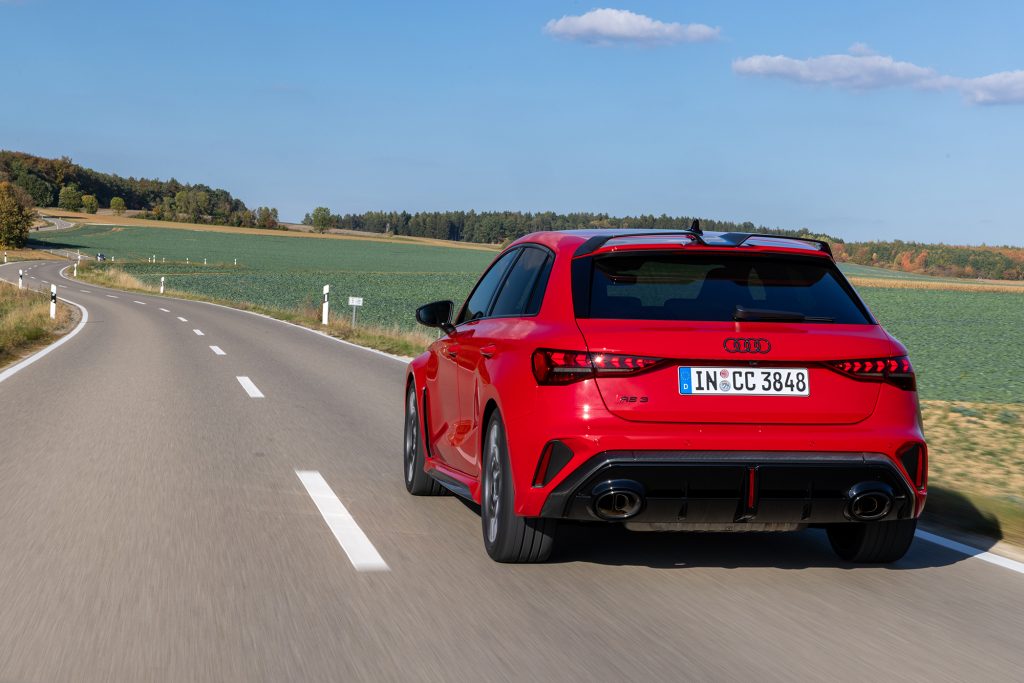
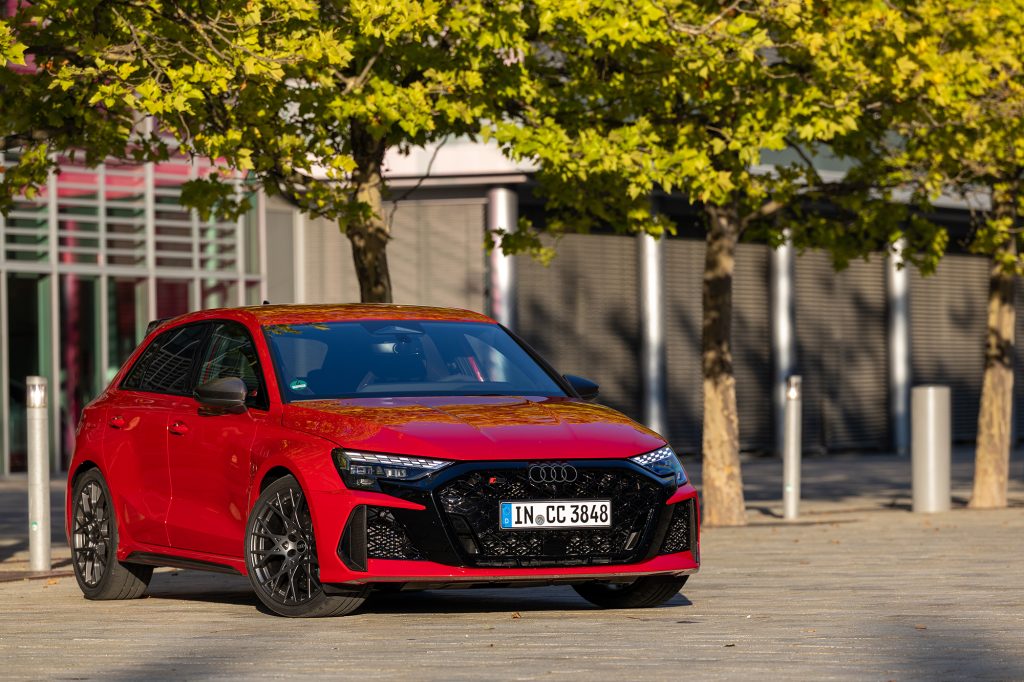
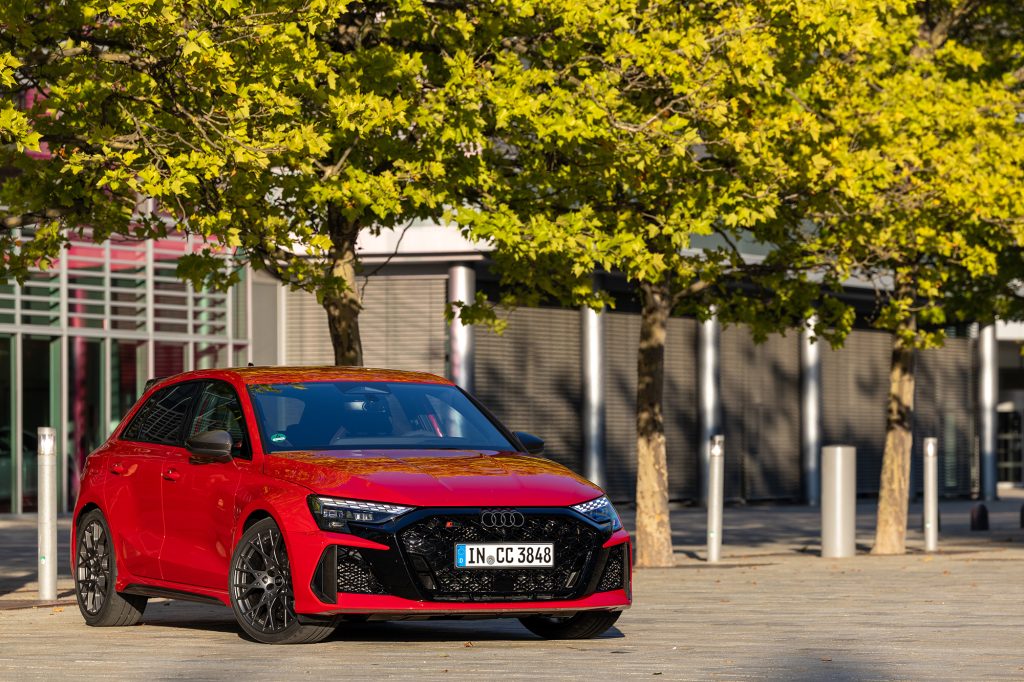
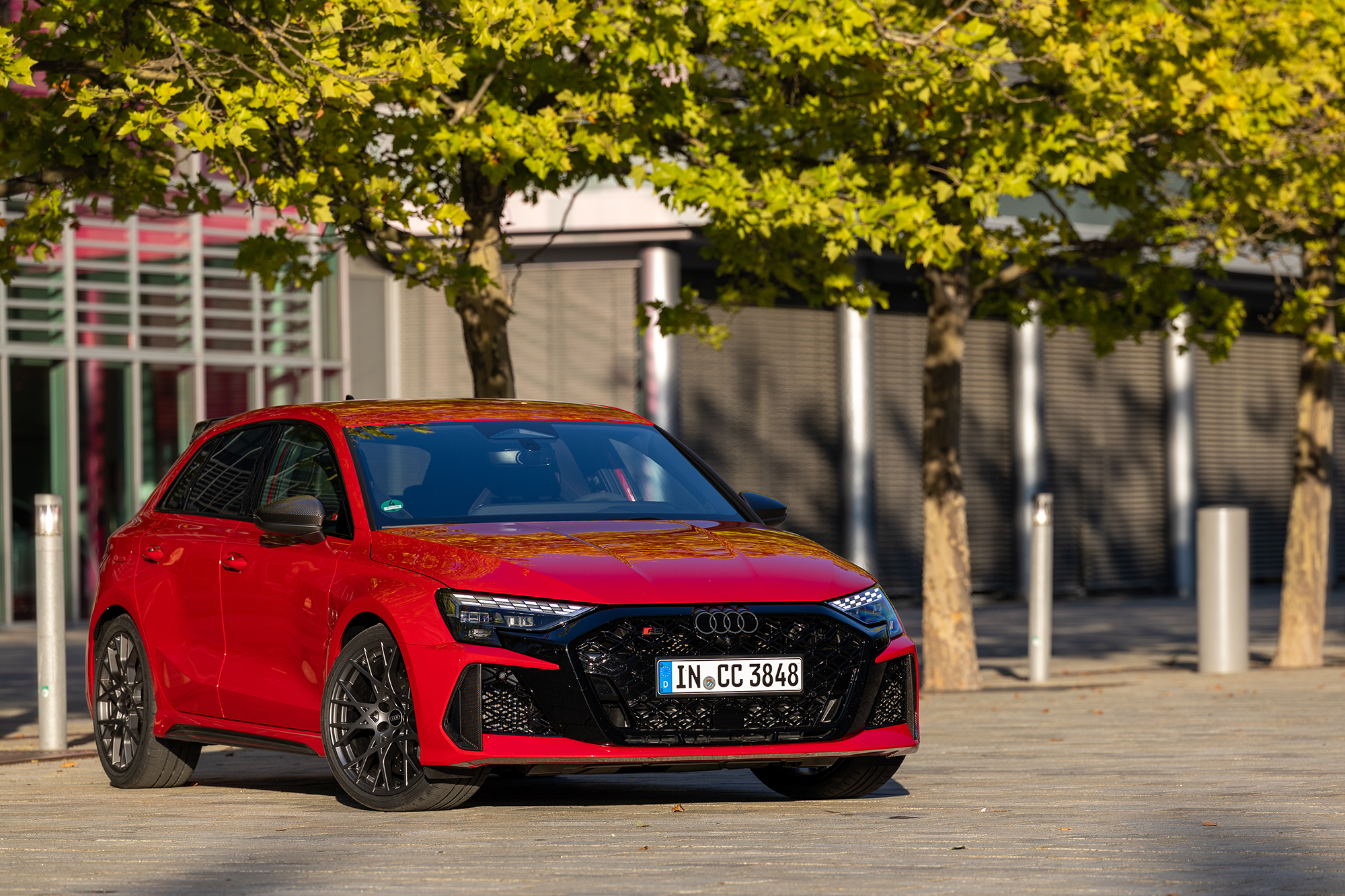
The next RS 3 arrived in 2021. It retained the five-cylinder engine but added more torque and a new rear-axle torque splitter. By varying torque distribution between the rear wheels, the system gave the RS 3 greater scope to influence its cornering behavior.
Audi quoted acceleration from 0 to 100 km/h in 3.8 seconds and a maximum speed of up to 290 km/h. The significance of the new model also lay in its chassis: the torque splitter added another means of managing how the car delivered its performance through a corner.
The 2024 refresh brought related technology to the S3. Output increased to 245 kW, or 333 PS, while the S3 gained a torque splitter, revisions to the front axle and optimized steering. The update addressed both engine performance and handling, giving the S3 a more developed chassis package.
Audi also added the A3 allstreet in 2024. With a more rugged exterior treatment, a higher seating position and three centimeters of additional ground clearance compared with the A3 Sportback, it introduced a crossover interpretation of the compact model. The allstreet expanded the family toward buyers seeking some of the seating and usability characteristics associated with an SUV.
Across the fourth generation, digital services, driver assistance systems and connected functions have become increasingly prominent. The range now combines those features with a choice of body styles and powertrains that is substantially broader than the original three-door offering.
FROM INGOLSTADT TO AN INTERNATIONAL MODEL FAMILY
Ingolstadt has been central to the A3’s production history from the beginning. Demand also led Audi to establish production beyond its headquarters, adding local manufacturing at São José dos Pinhais in Brazil in 1999 and expanding production to Audi Hungaria’s Győr plant in the early 2000s.
More than six million A3 models have been produced over the past three decades, with deliveries spanning more than 100 countries. Those figures place the A3 among Audi’s most successful model series and demonstrate how far its reach has extended beyond the European compact hatchback market.
Its development has followed several parallel paths. The five-door and Sportback models increased practicality, the Cabriolet added an open-top option, and the Sedan opened the range to additional markets. The S3 and RS 3 established distinct performance tiers, while mild hybrid and plug-in hybrid powertrains broadened the approach to efficiency.
The underlying proposition has remained consistent through those changes: offer Audi design, materials and technology in a compact car. Thirty years after the original 8L appeared in Paris, the A3 represents an entire model family built around that idea.
PHOTO GALLERY