

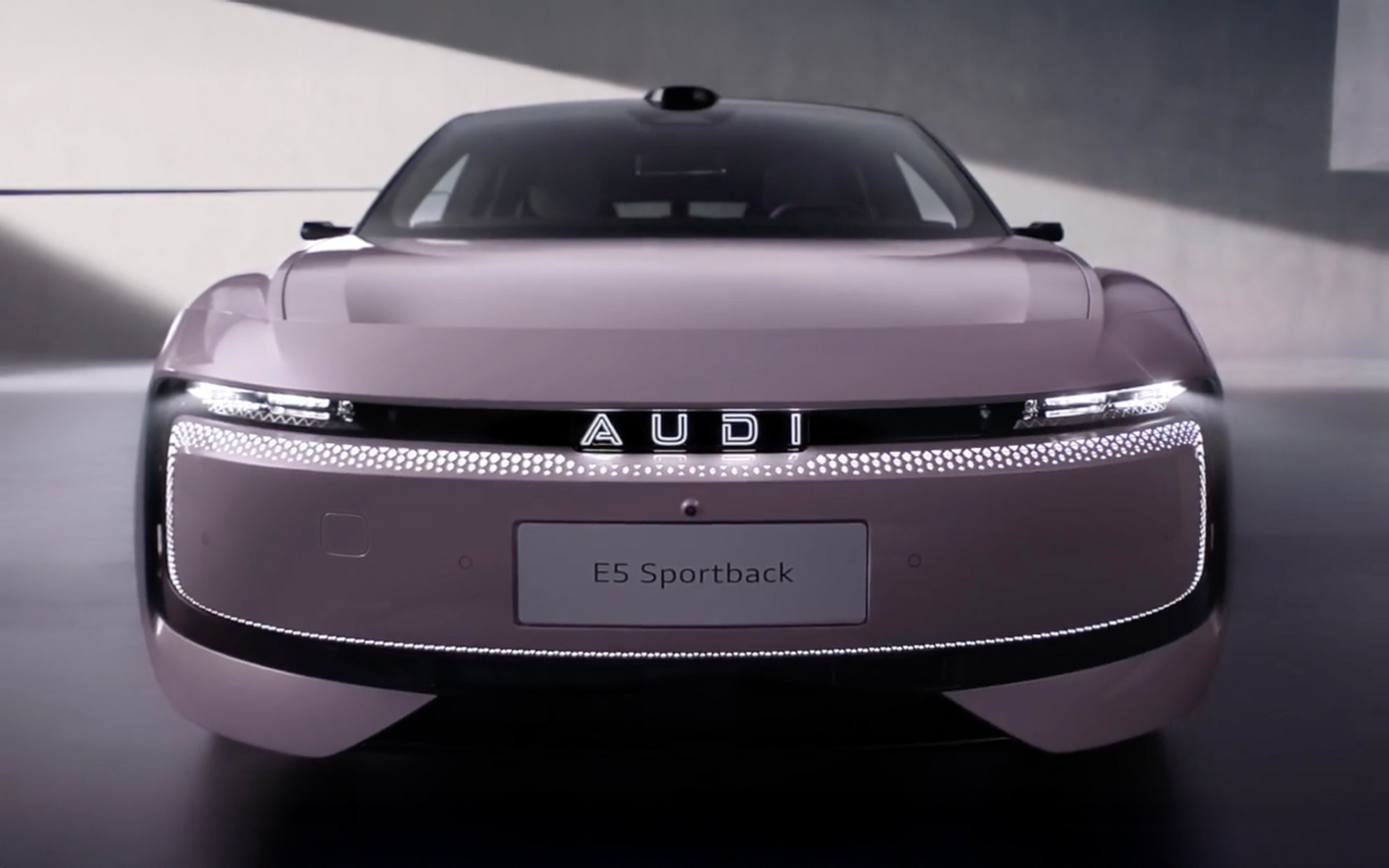

Audi AG has initiated legal action against an independent importer offering Chinese-market AUDI models in Germany, moving to stop an unofficial route that has brought the E5 Sportback and E7X to Europe despite neither model being intended for sale there.
Other coverage we’re seeing, or at least click-focused titles, would seem to suggest Audi is fighting itself as if the right hand is arm wrestling with the left. To clarify then, that is not the case. Audi isn’t attempting to stop its own European introduction of the cars. Rather, German importer Auto China has independently sourced vehicles from China, imported them into Europe and arranged the homologation necessary to register them in Germany — all without authorization from Audi AG.
Automobilwoche first reported Audi’s legal action against Auto China, with the automaker confirming that it had begun proceedings against the importer and intended to enforce its rights. Audi also confirmed that the vehicles are not exported outside China through distribution channels authorized by Audi AG.
CHINA-SPECIFIC AUDI
The situation is unusual because the cars aren’t simply Chinese-market versions of familiar European Audis.
AUDI (printed in all caps and without the traditional four-ring emblem) was established by Audi in cooperation with SAIC specifically for China. Its vehicles combine Audi involvement with Chinese development, technology and production and are intended to address a different segment of the Chinese market than Audi’s conventional global model range.
Audi itself describes the E7X as “dedicated to and tailor-made for China.” The electric SUV is produced at the AUDI production facility in Anting, Shanghai, and follows the E5 Sportback as the second production model from the AUDI/SAIC collaboration.
None of that has stopped an independent company from bringing them to Europe.
Auto China advertises both models directly to European customers. Its website lists the E5 Sportback from €59,980 and the E7X from €72,900 and says it handles sourcing, EU homologation, registration, transportation and after-sales support itself. It also advertises a two-year warranty and service package rather than an Audi factory warranty.
That’s a noteworthy tell. These aren’t Audis being quietly imported by Audi through some back door. They’re grey-market cars being acquired and brought into Europe by an independent business.
WHY AUDI CARES
There’s more at stake than simply controlling where a particular model is sold, something that’s probably obvious to most anyone who understands why a multi-national car brand would want to protect their brand and control where their own products are sold.
Cars engineered specifically for China aren’t necessarily configured for European regulations, infrastructure, software environments, connected services or Audi’s European after-sales systems. Auto China says it handles the regulatory approval necessary to register the vehicles, but that doesn’t transform them into officially supported European-market Audi products.
Audi reportedly says neither it nor its authorized dealers outside China can provide maintenance and repair support for the AUDI models because the vehicles aren’t recognized within those markets as Audi vehicles.
There is also the more fundamental question of Audi’s ability to control the use of its intellectual property and distribution of products carrying its brands. And Audi has a significant precedent sitting within its own corporate family.
VOLKSWAGEN HAS ALREADY FOUGHT THIS BATTLE
Volkswagen previously went to court over German dealers importing the China-only Volkswagen ID.6 CROZZ. That dispute concerned 22 vehicles produced in China by Volkswagen’s joint venture and subsequently offered for sale in Germany without Volkswagen’s approval.
In March 2026, the Hamburg Regional Court largely ruled in Volkswagen’s favor. The court determined that Volkswagen’s trademark and design rights had not been exhausted because the vehicles hadn’t previously been placed on the market within the European Economic Area with Volkswagen’s consent.
Buying a legitimate Volkswagen in China didn’t automatically give an importer the right to commercially market that vehicle in Europe using Volkswagen’s protected trademarks and designs.
The court consequently upheld Volkswagen’s right to prevent their sale and even found that the company could demand surrender of the vehicles for destruction. The ruling was not yet legally final when the court announced it.
The Audi situation isn’t necessarily identical, particularly given the unusual relationship between Audi AG and the ringless AUDI brand developed with SAIC, but the Volkswagen decision provides a fairly obvious roadmap for why Audi would challenge the imports.
THE MORE INTERESTING QUESTION
If anything, Auto China’s efforts demonstrate something else entirely: European consumers are interested enough in Audi’s China-specific products that a business believes there’s money to be made importing them halfway around the world, homologating them and providing its own warranty and service infrastructure.
That’s particularly interesting given the pricing. Even after the expense of importing and homologating the vehicles, Auto China lists the E5 Sportback from €59,980 and the E7X from €72,900. Those figures aren’t directly comparable with official European-market Audis because the equipment, warranty, service support and regulatory circumstances are different, but they inevitably invite comparisons with considerably more expensive European Audi EVs.
That may make for an uncomfortable comparison, but it shouldn’t obscure what’s actually happening here. Audi developed AUDI and its vehicles specifically for China. It hasn’t authorized their European distribution. An independent importer found a way to bring them to Germany anyway, and Audi is now using the courts to try to stop it. That’s less a case of Audi fighting itself than a fairly conventional manufacturer-versus-grey-market-importer dispute involving some very unconventional Audis.