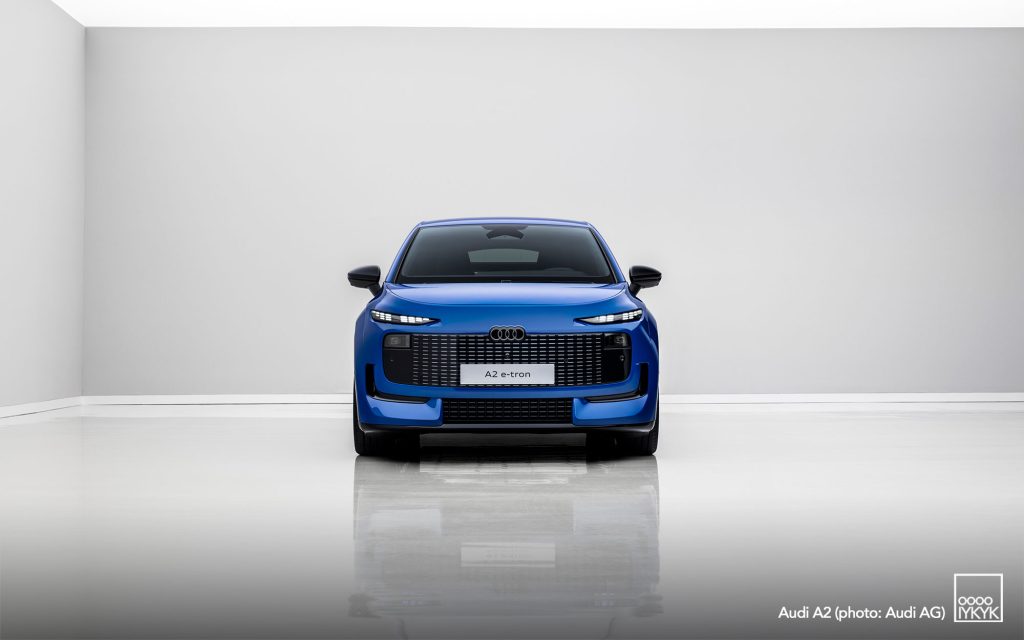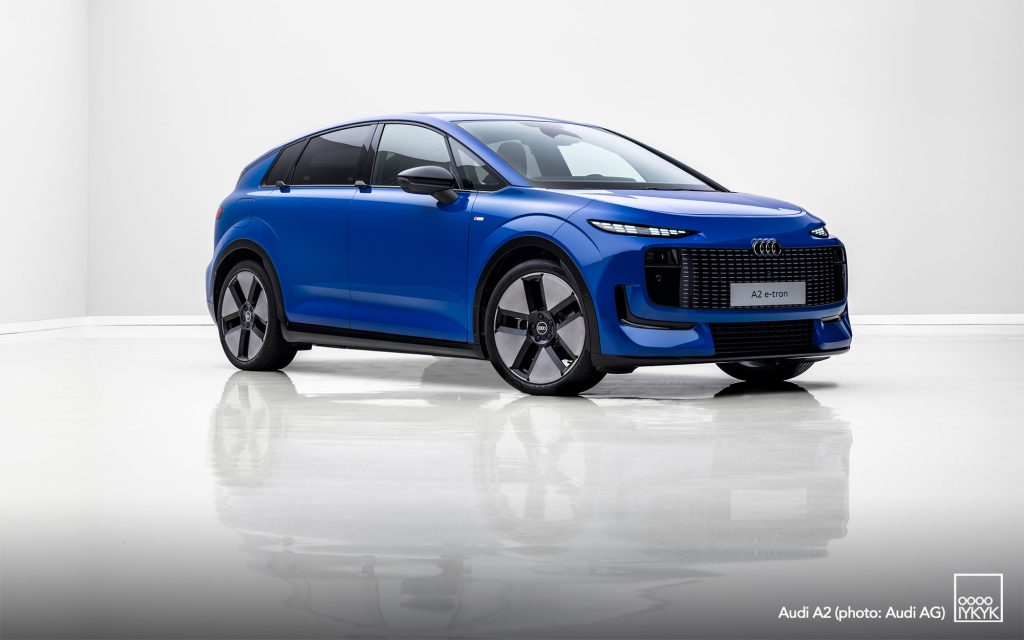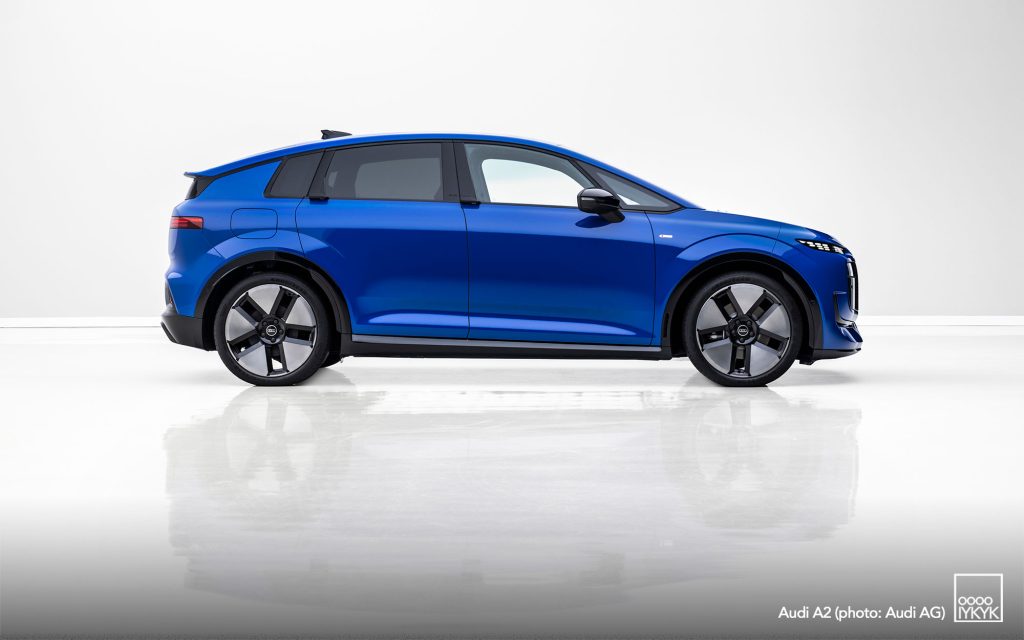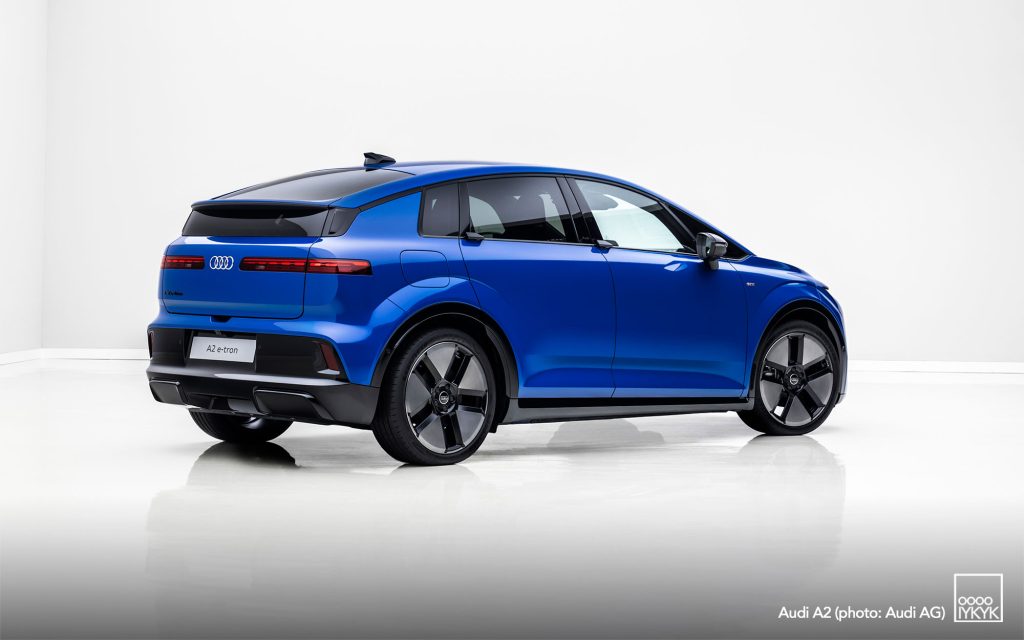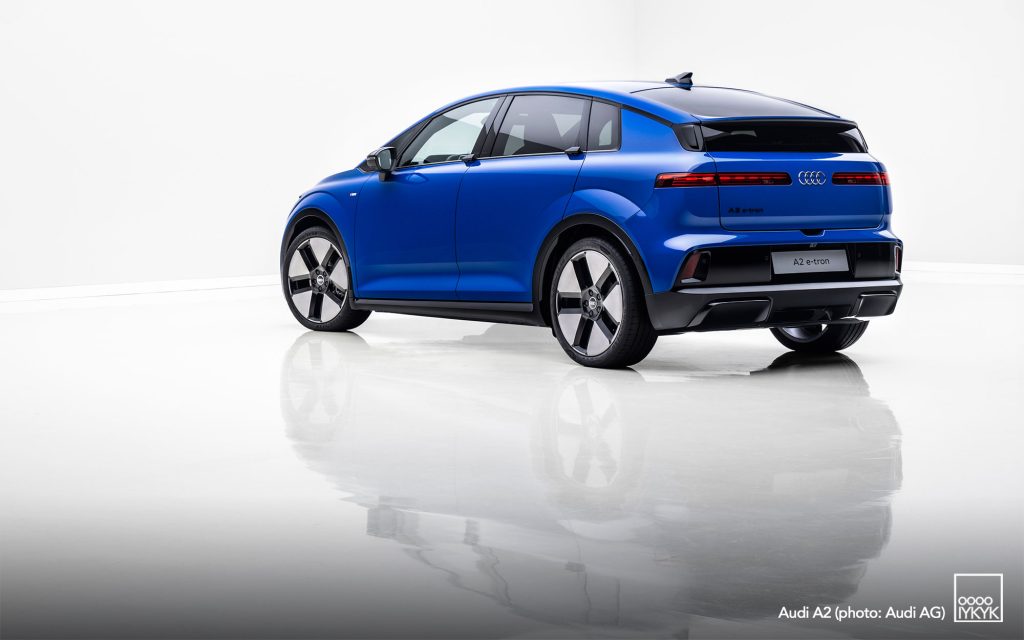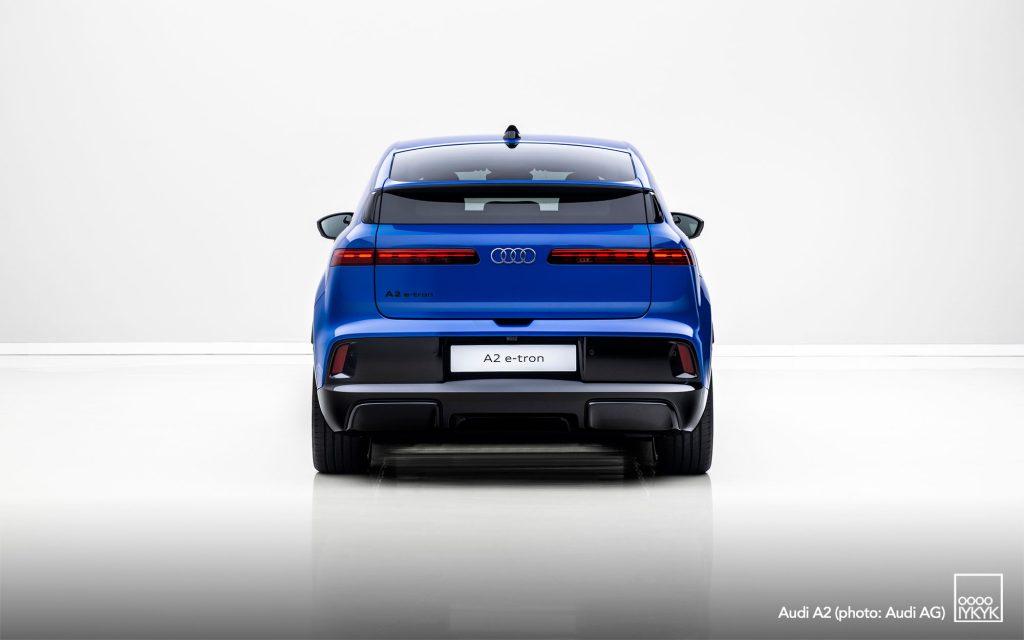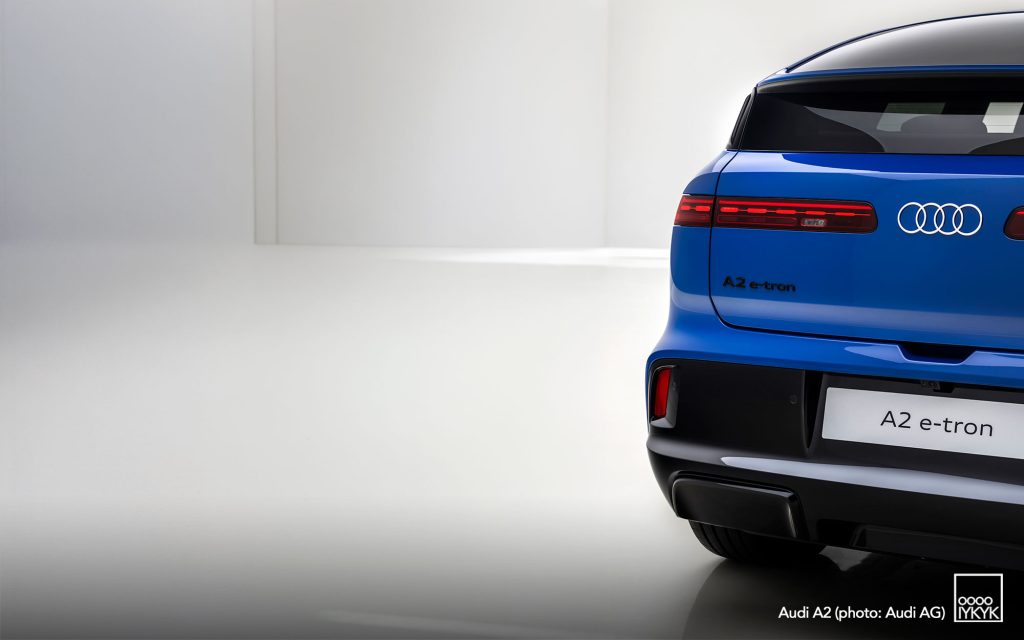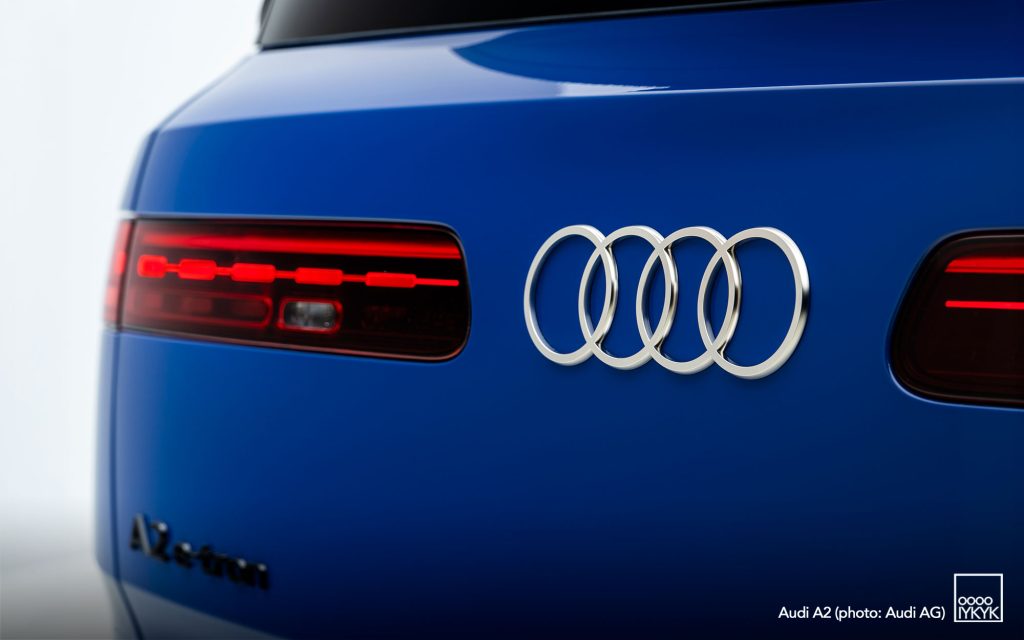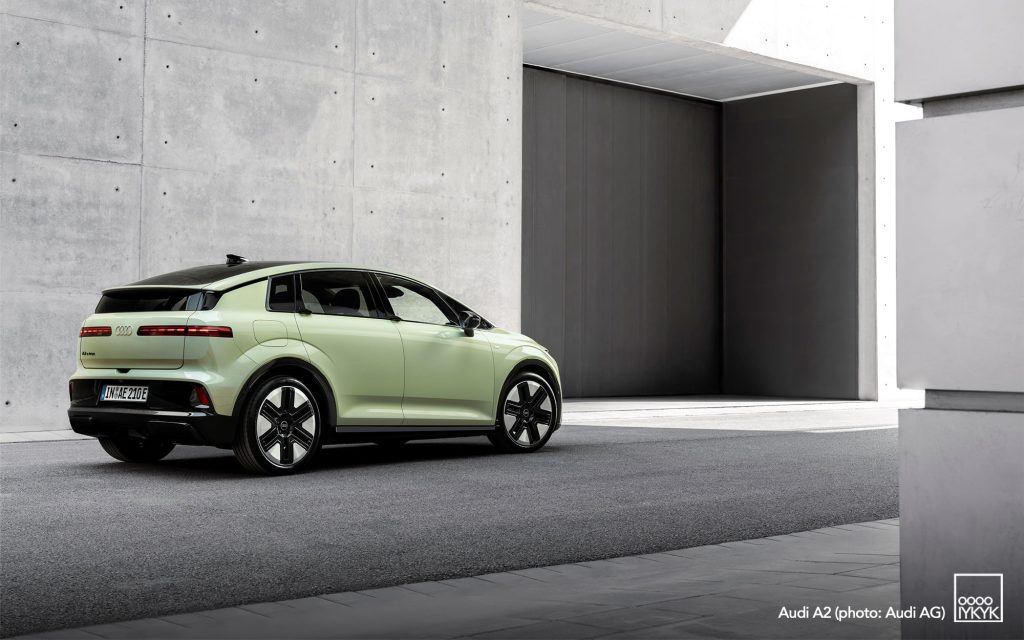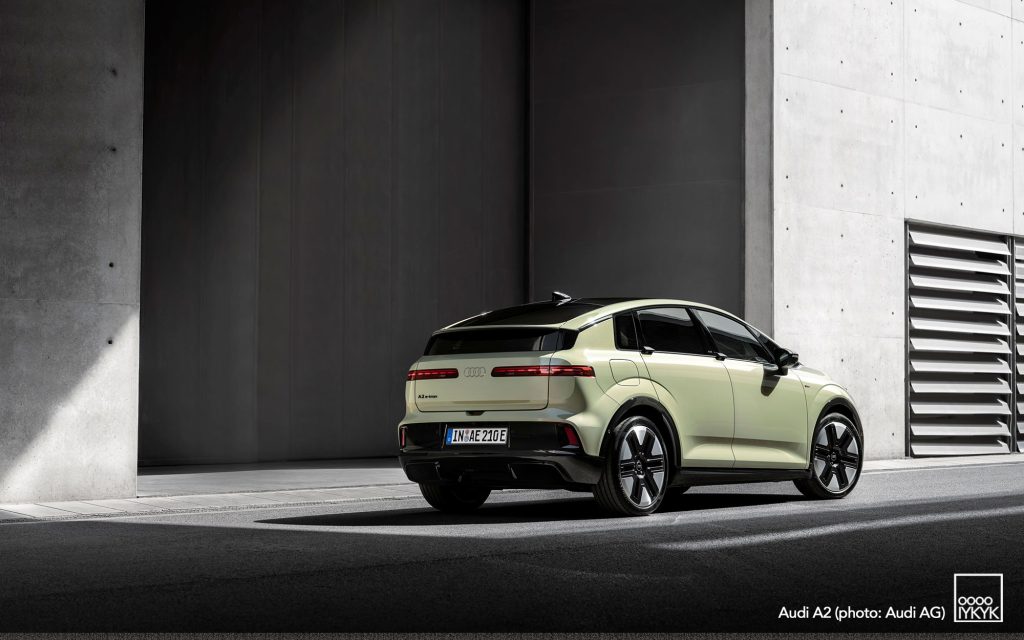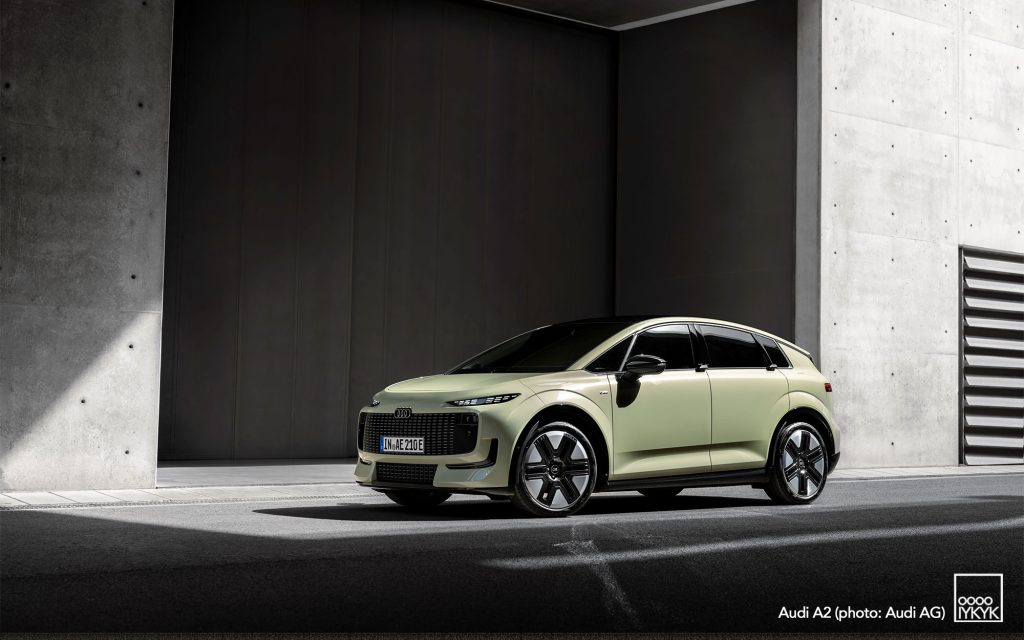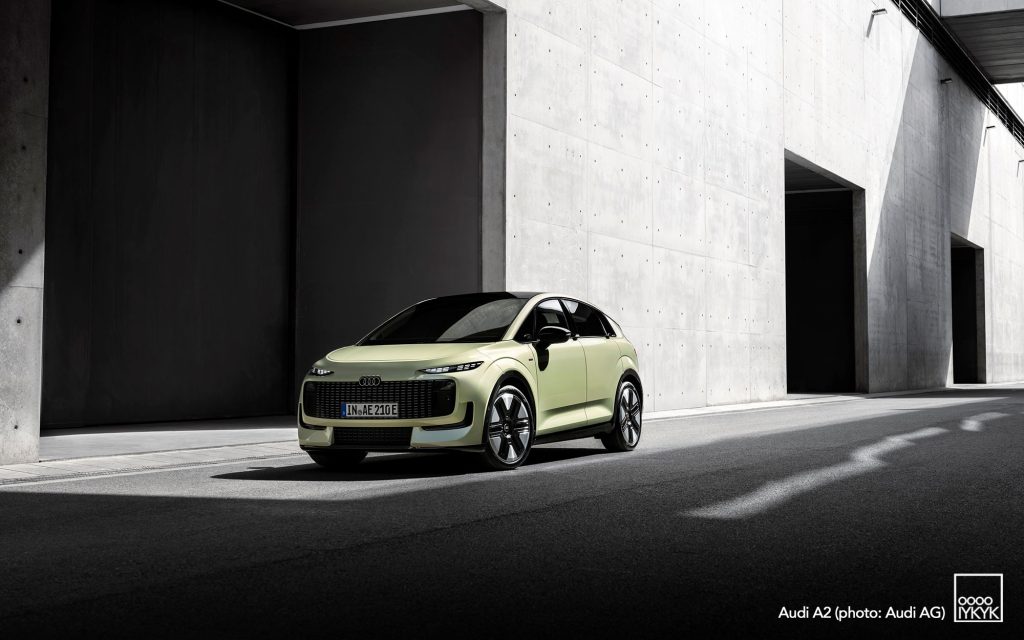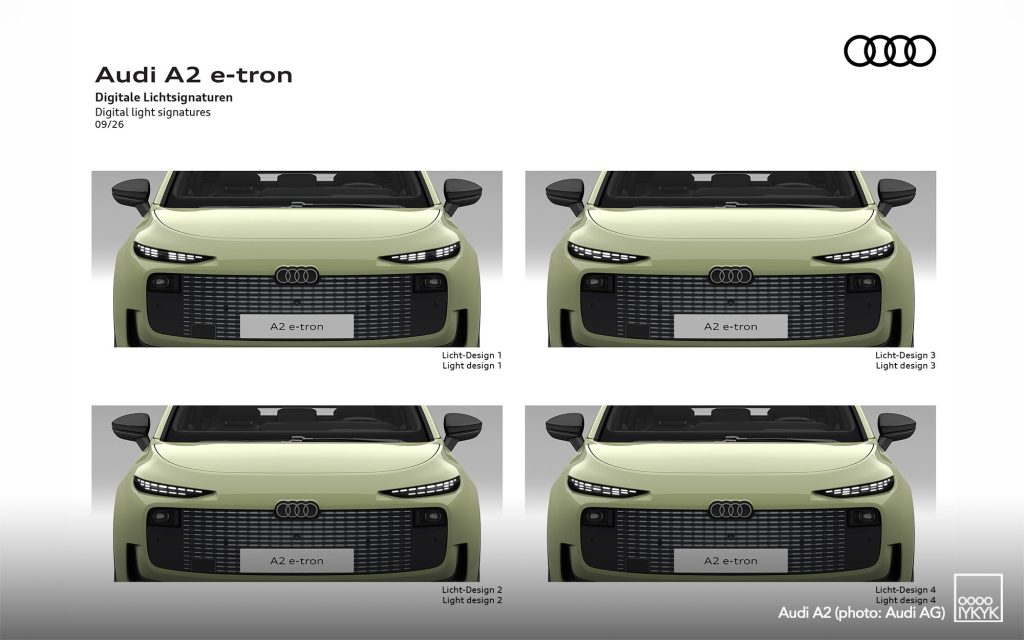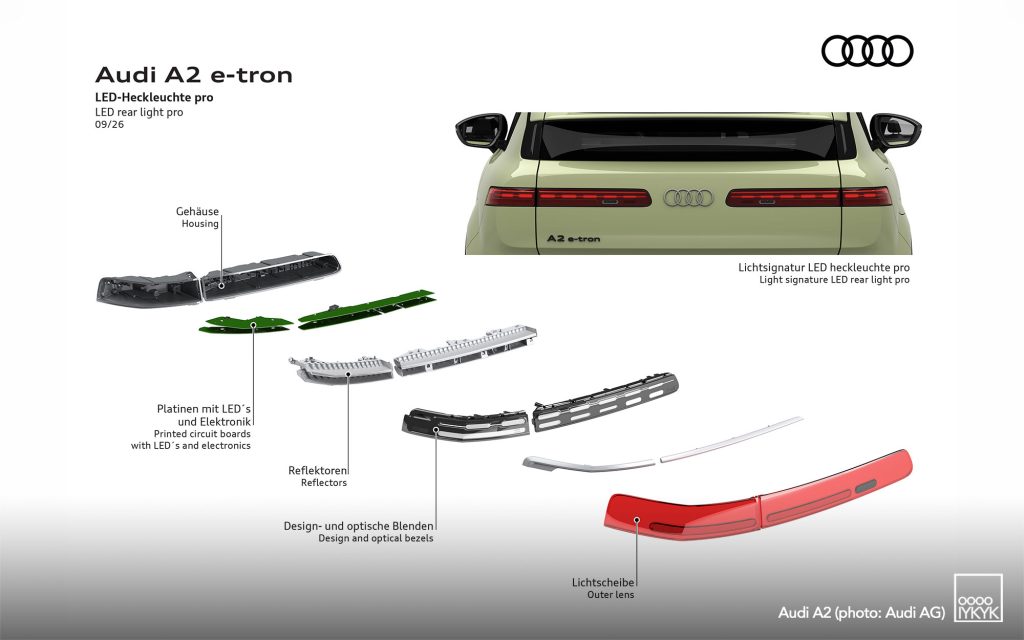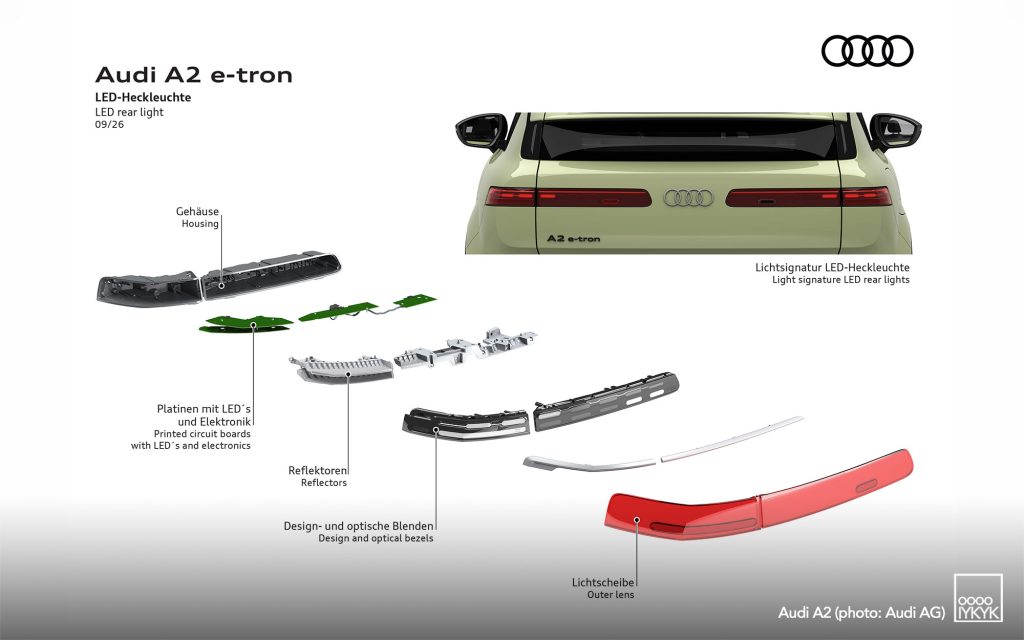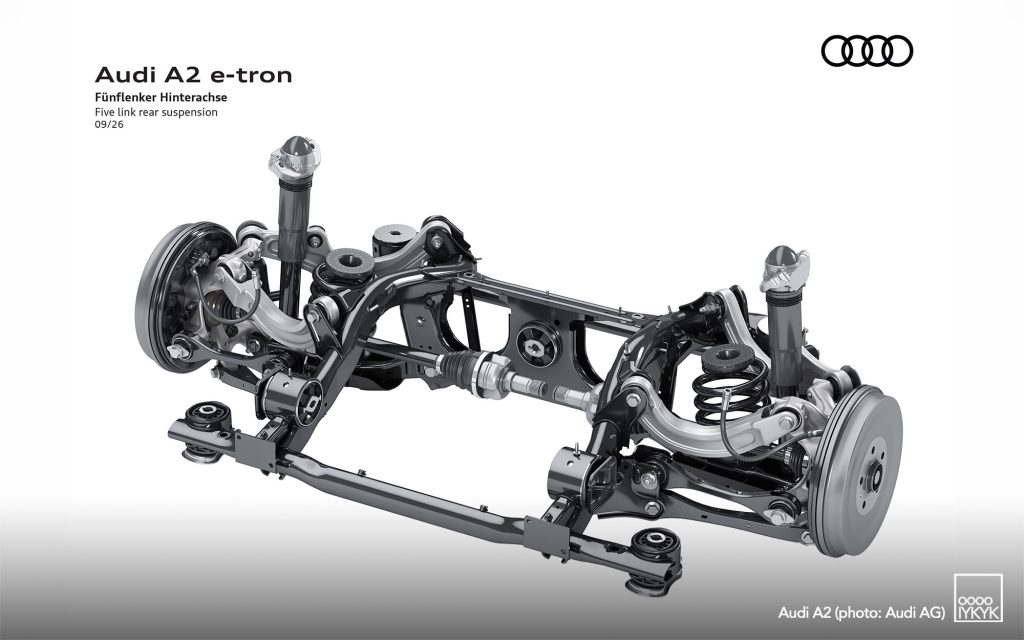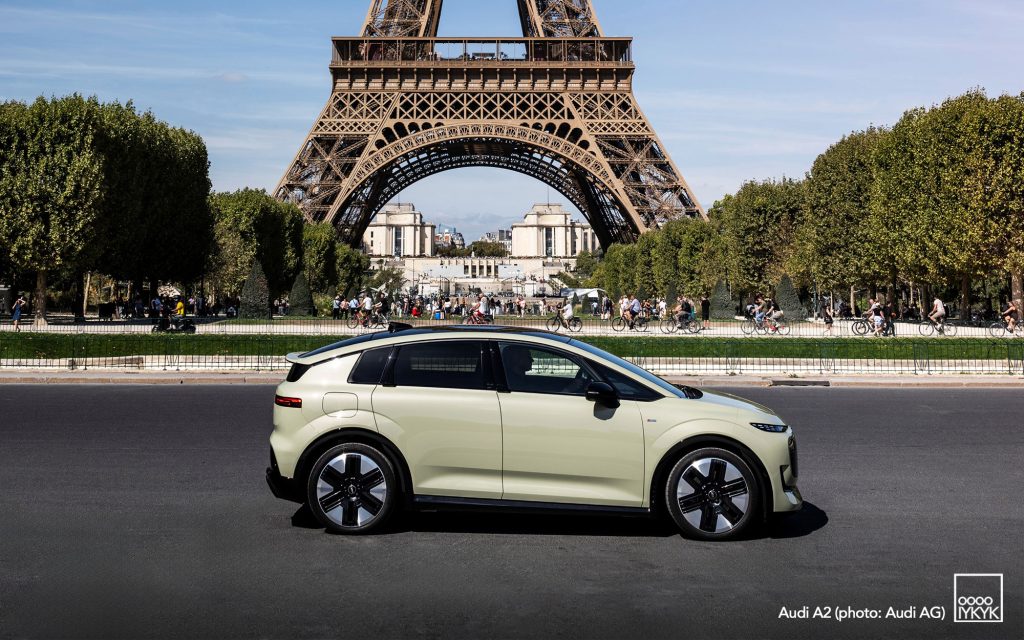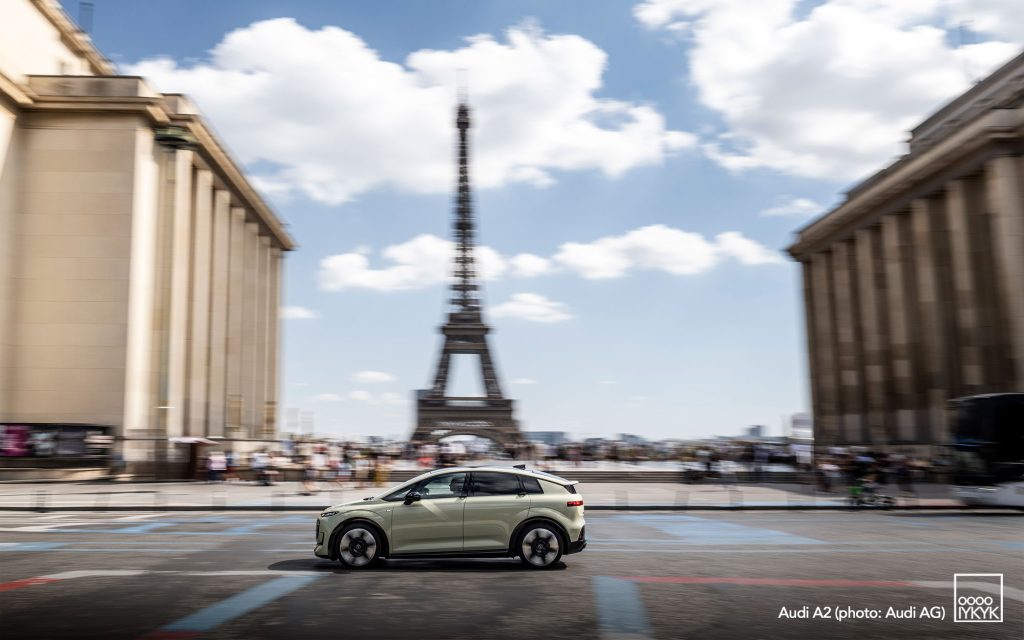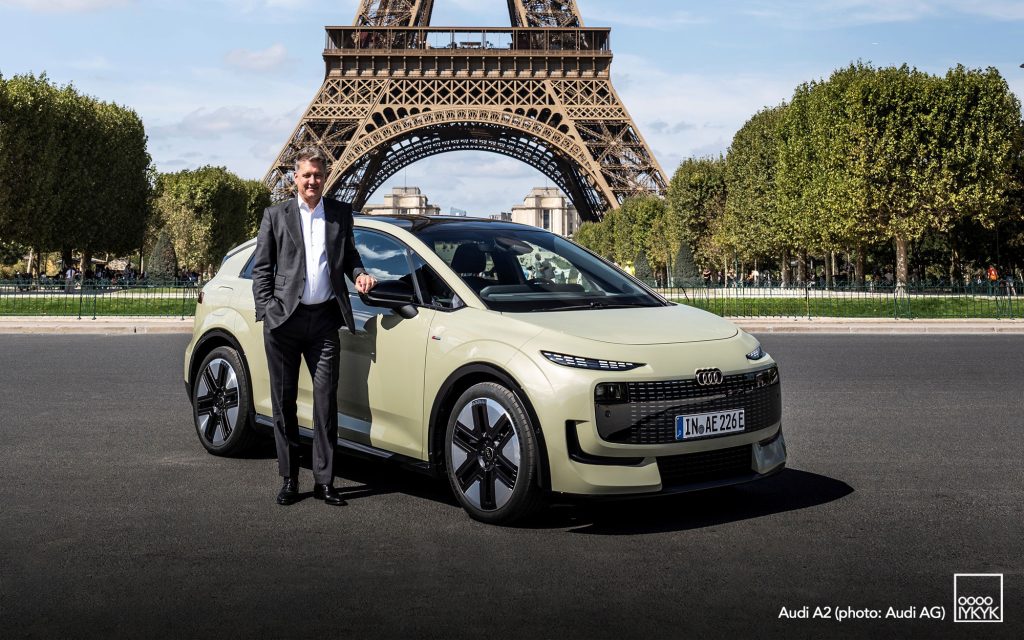

The Audi A2 has officially returned, with form and tech that make it appear Ingolstadt aimed to also bring back the spirit of the original.
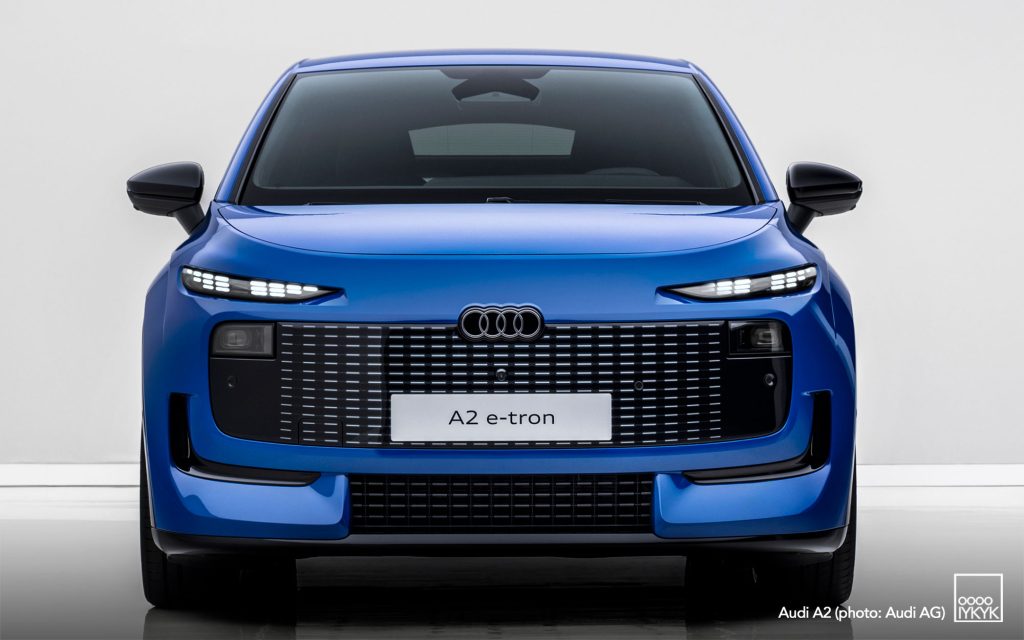
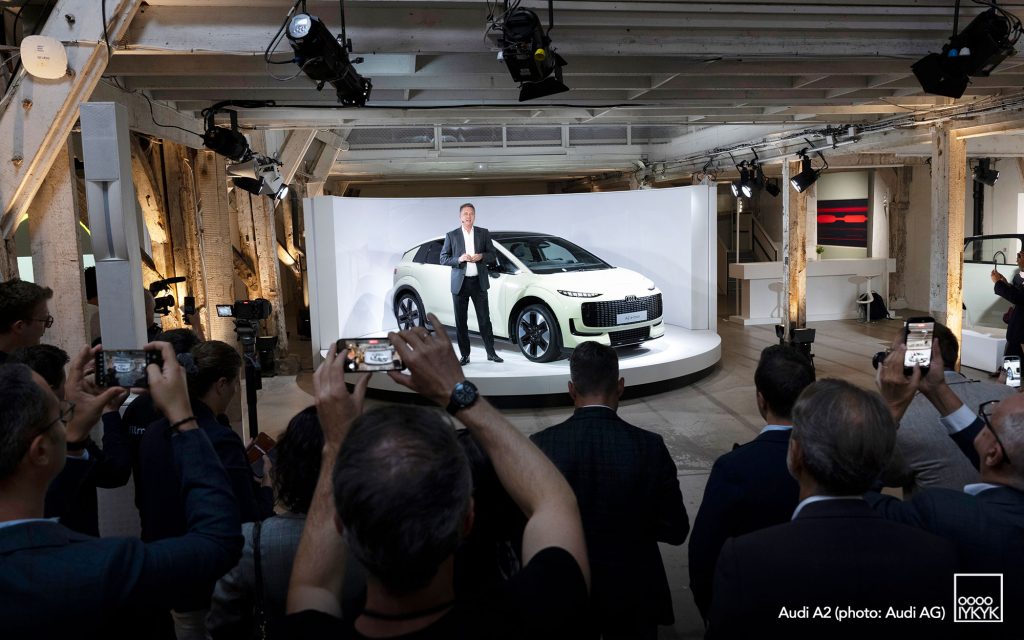
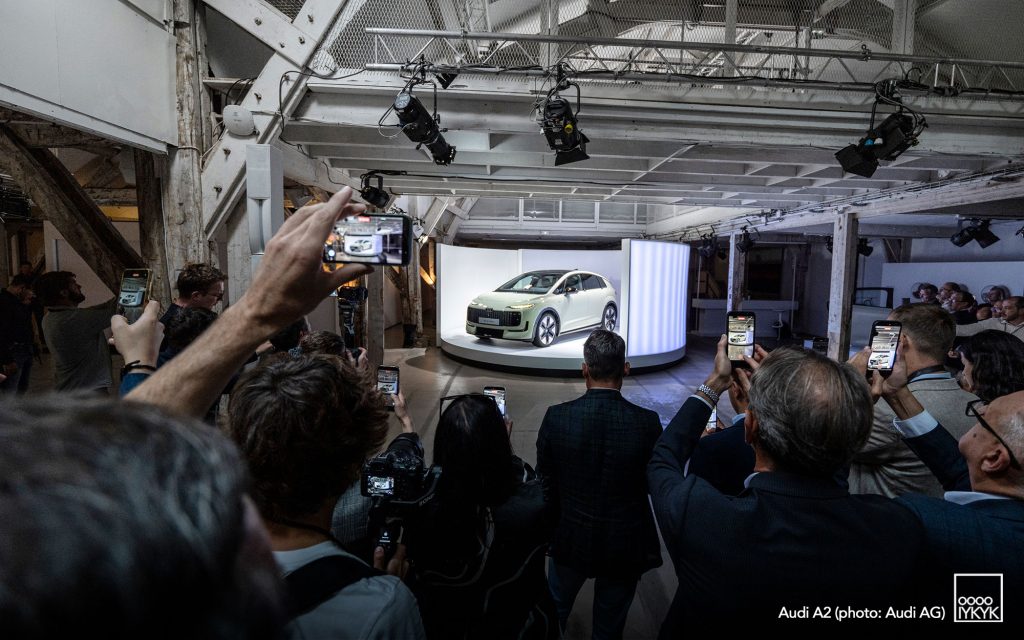
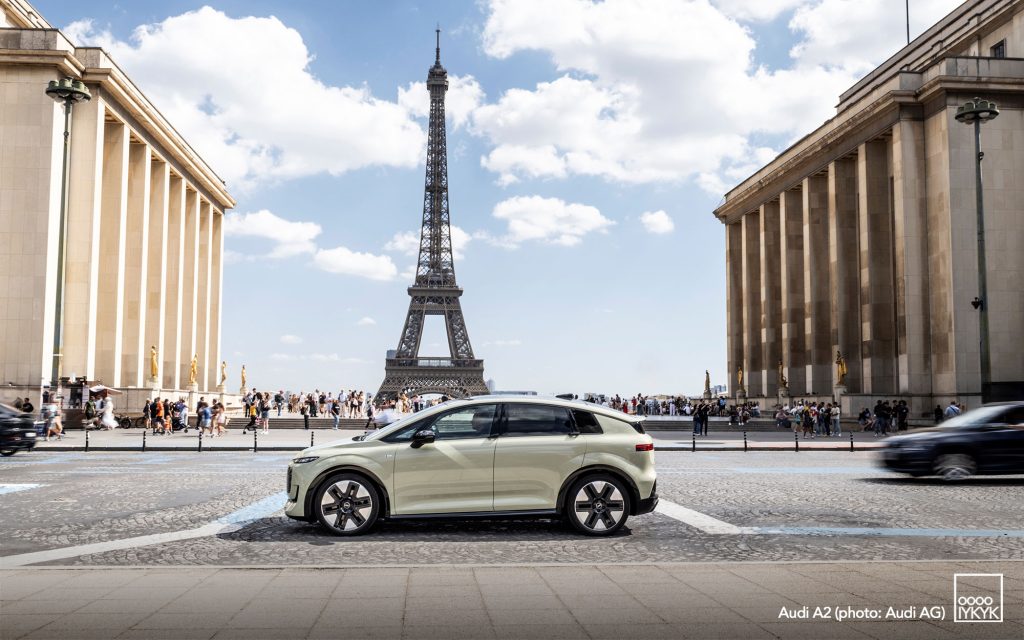
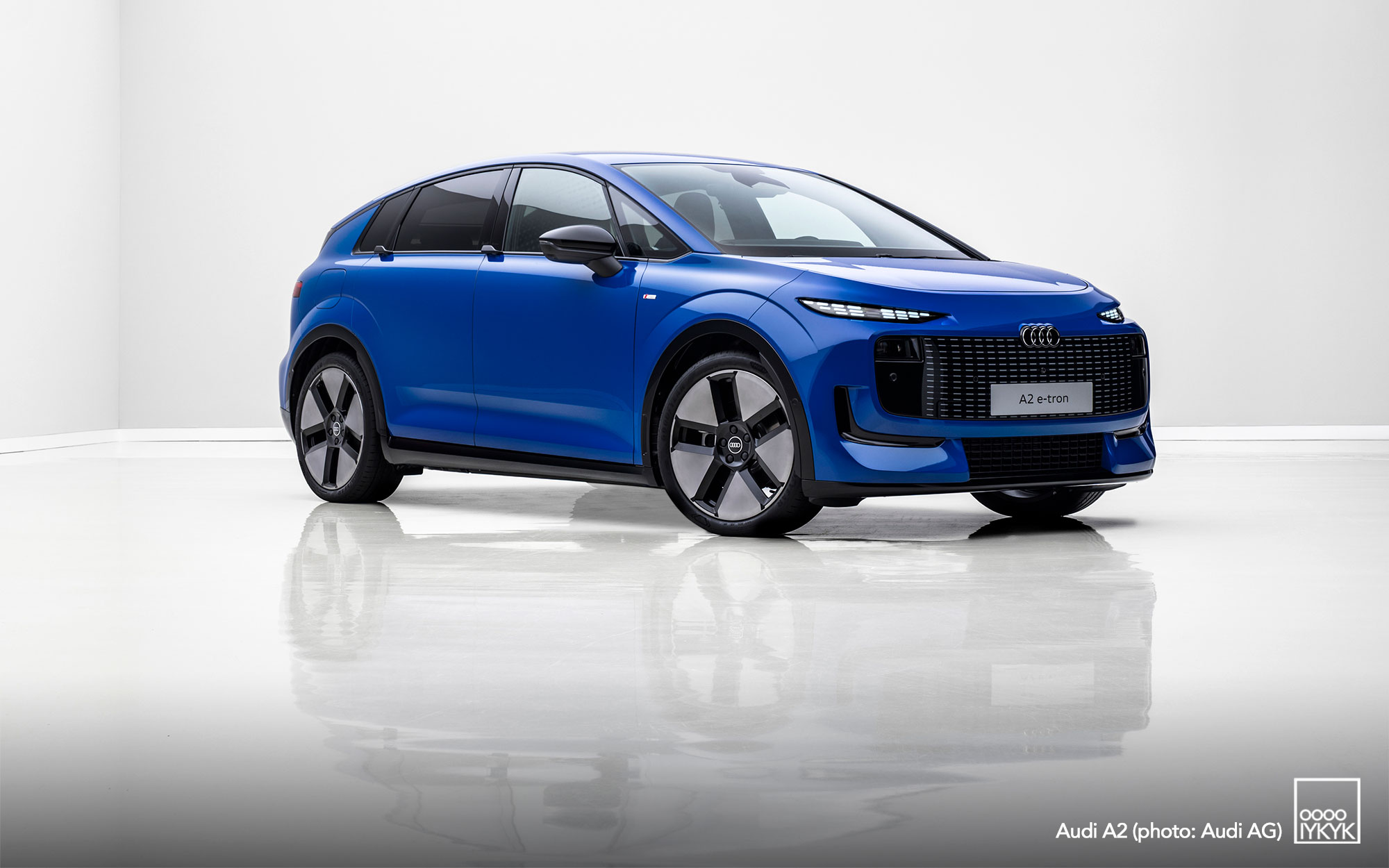
Revealed today in Paris, the new Audi A2 e-tron is an all-electric compact model conceived specifically around efficiency, packaging and everyday European usability. Audi claims energy consumption as low as 12.8 kWh per 100 kilometers, a maximum WLTP range of 646 kilometers and a drag coefficient of 0.24. That makes it the most energy-efficient series-production Audi in the company’s history. Orders are set to open in Germany on September 10, with pricing beginning at €38,200 and first deliveries scheduled for December.
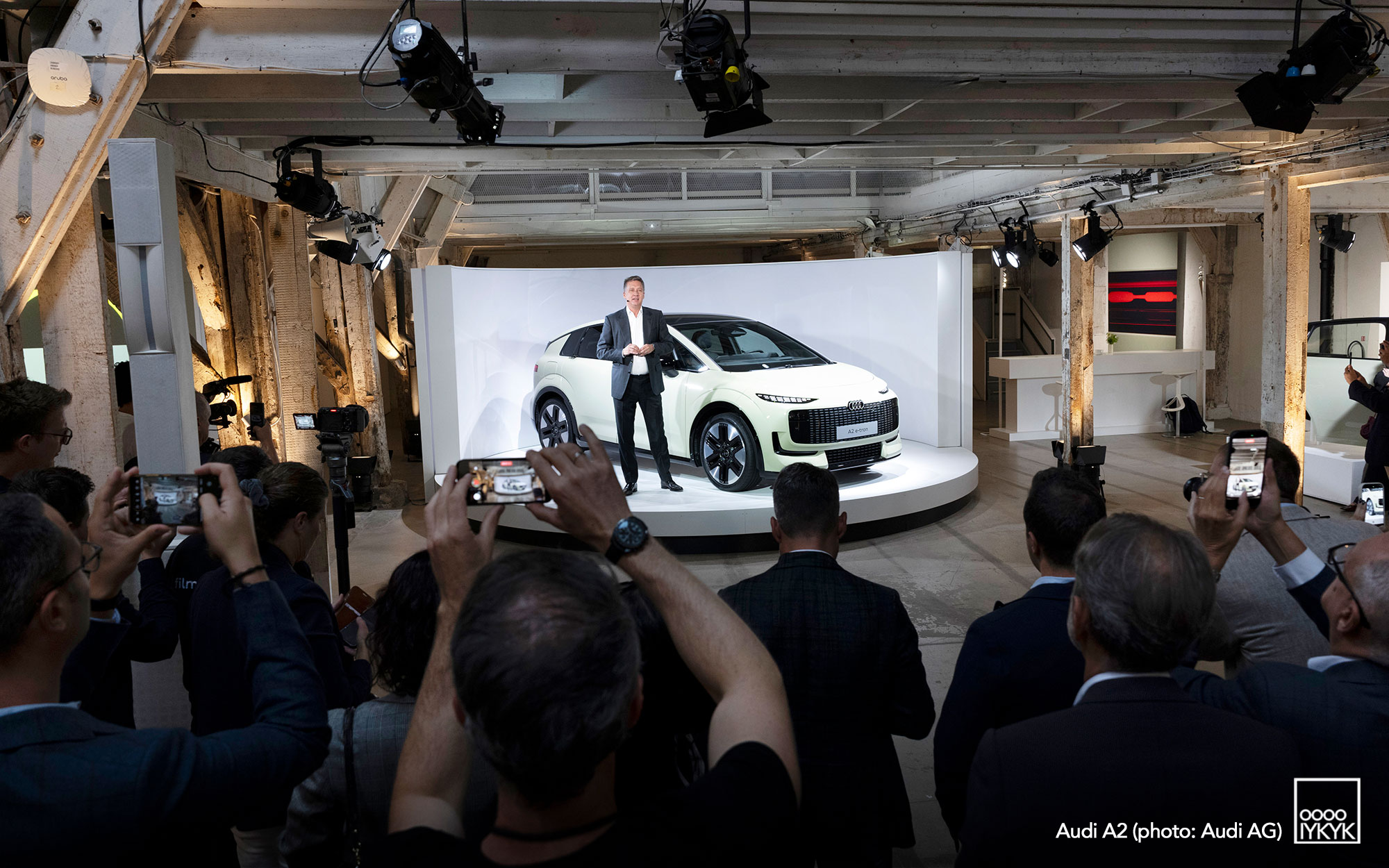
NAME IS THE POINT
Calling it A2 is notable. Earlier rumors when test mules first started appearing suggested the car could have also been called Q2. The logic could have been that crossovers sell better than hatchbacks, and thus a crossover designation could have been seen as safer. Ingolstadt could have also gone with something completely different.
They didn’t do any of that though. They went with A2, which is fitting because the original A2 has become increasingly appreciated precisely because it represented such an unusually quirky yet purposeful engineering exercise. Introduced in 2000, the first A2 combined an Aluminum Space Frame (ASF) aluminum body, unusually efficient packaging, low weight and extensive aerodynamic development in pursuit of minimizing the resources required to move people around.
The ultimate expression was the A2 1.2 TDI, the first four-door production car rated at three liters of fuel per 100 kilometers. Its aluminum body shell weighed approximately 153 kilograms, roughly 60 percent of the weight of a comparable conventional steel structure. Yet the car measured just 3.83 meters long while offering impressive passenger and luggage space. Audi built 176,377 examples before production ended in 2005.
It wasn’t necessarily an easy commercial success. The A2 was expensive to build, unconventional to look at and arrived in a market that perhaps wasn’t yet particularly interested in paying a premium for efficiency. Two decades later, however, many of those same qualities have helped turn it into something of an Audi enthusiast cult object.
Audi appears to understand that history.
“The Audi A2 has been a constant in my career ever since I joined the Volkswagen Group in the 1990s,” Audi CEO Gernot Döllner said when previewing the new car’s efficiency target. “Even then, its groundbreaking three-liter version made efficiency its hallmark.”
The new A2 then isn’t so much a retro revival as a return to the original theme.
‘
EFFICIENCY, RATHER THAN EXOTIC
That distinction is notable here because the 2026 A2 e-tron doesn’t reembrace all of the original’s paradigms. Rather than making aluminum construction the centerpiece of the program, Audi has approached efficiency across the entire vehicle: aerodynamics, electric drivetrain, battery chemistry, packaging, tires, regenerative braking, materials and even the way the car itself is manufactured.
Döllner describes that as a broader reconsideration of premium. “Premium cannot just mean more — more power, more size, more resources,” he said during the reveal. “It has to mean using resources more intelligently, without compromising on quality, technology or the customer experience.”
It can be argued that’s consistent with the A2 even if the underlying structure isn’t aluminum.
The headline number is 12.8 kWh/100 km in the 140-kW A2 e-tron equipped with the optional efficiency package. For perspective within Audi’s own range, no previous production model carrying the four rings has achieved a lower certified energy-consumption figure.
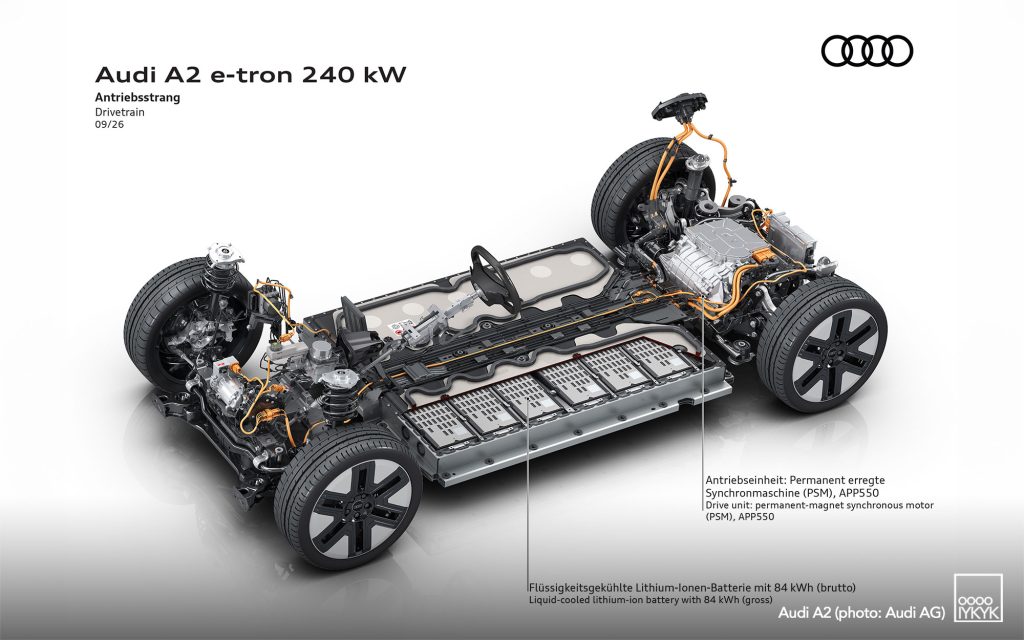
Audi has also resisted the temptation to make the longest-range version the most powerful one. Four output levels will be offered: 125, 140, 170 and 240 kW. The first three produce 350 Nm of torque, while the 240-kW version increases that to 545 Nm. Battery capacities are 52, 61 and 84 kWh.
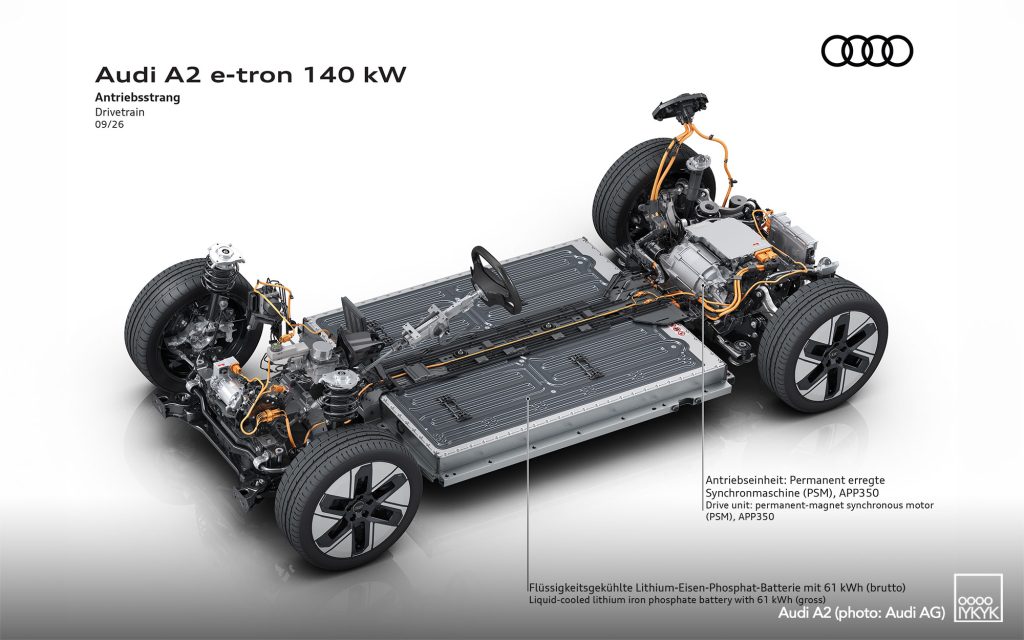
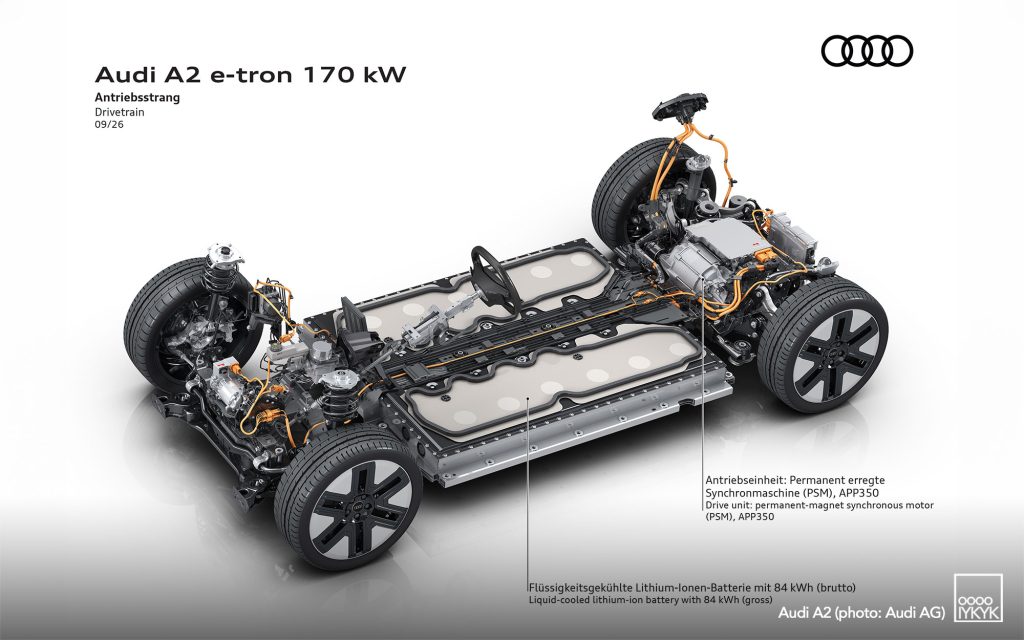
The 125-kW car combines the 52-kWh battery with up to 423 kilometers of WLTP range. The 140-kW version uses 61 kWh and reaches as much as 515 kilometers. Above those sit two 84-kWh cars: the 170-kW version is the range champion at up to 646 kilometers, while the more powerful 240-kW model sacrifices a little efficiency for performance and is rated at up to 630 kilometers.
The performance spread is equally broad. The base car reaches 100 km/h in 8.8 seconds, followed by 7.9 seconds for the 140-kW version, 7.0 seconds for the 170-kW model and 5.7 seconds for the 240-kW A2. Top speed is limited to 160 km/h on the first three and rises to 200 km/h on the flagship.
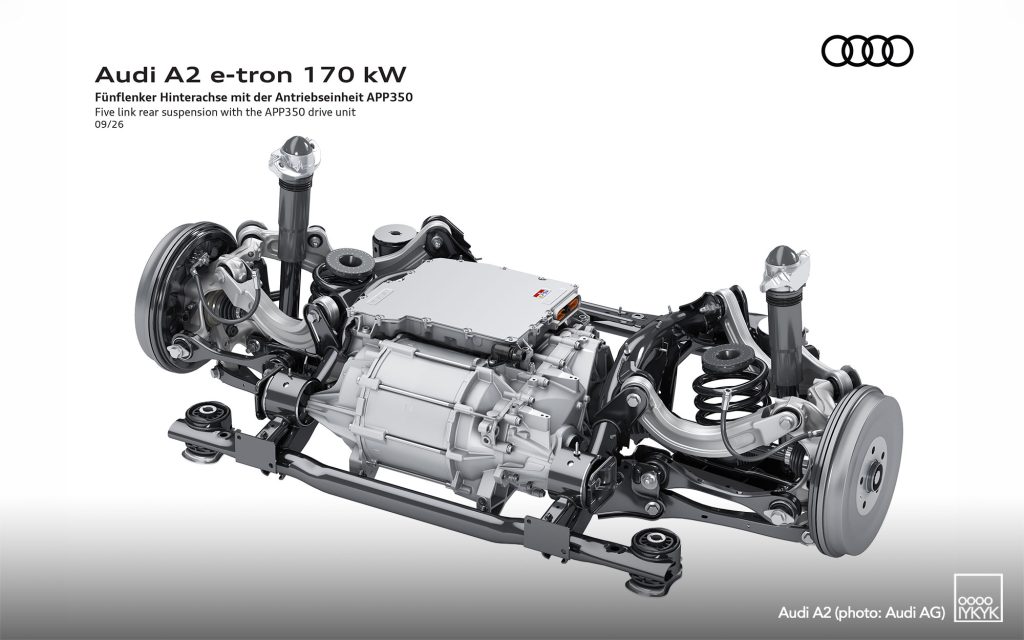
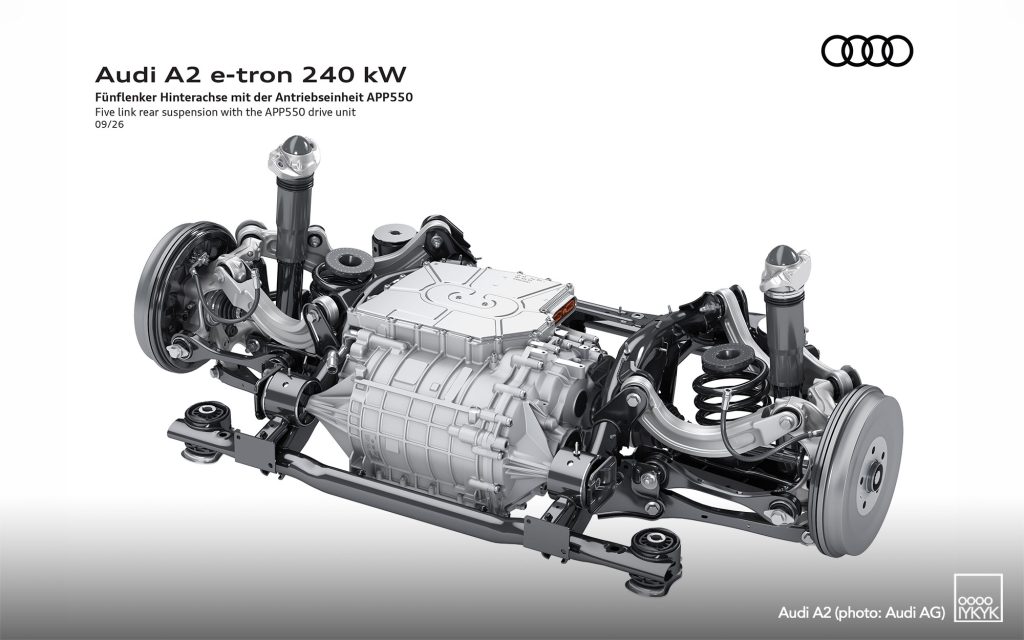
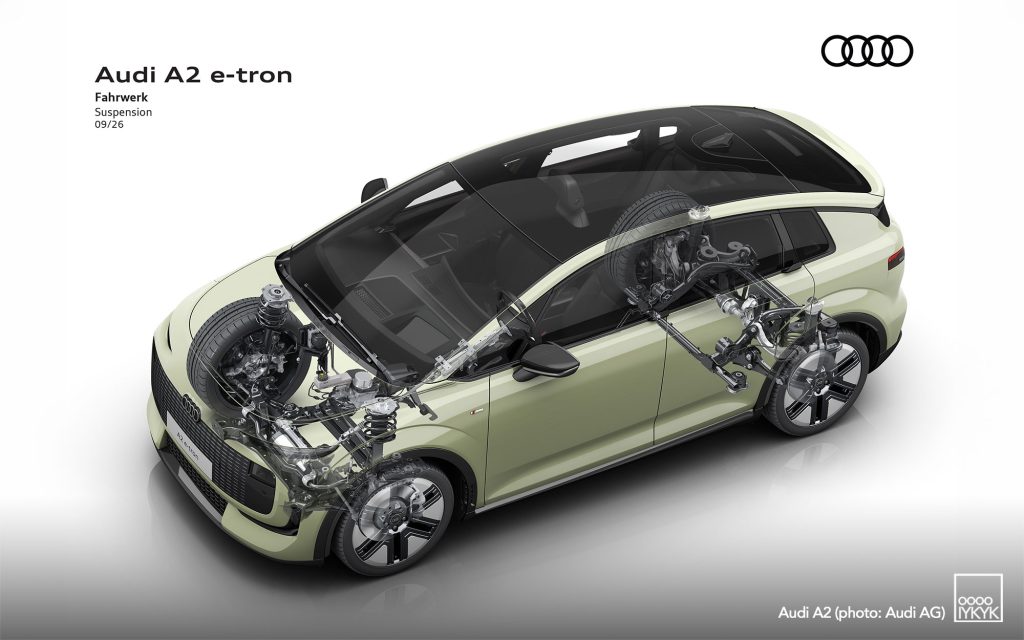
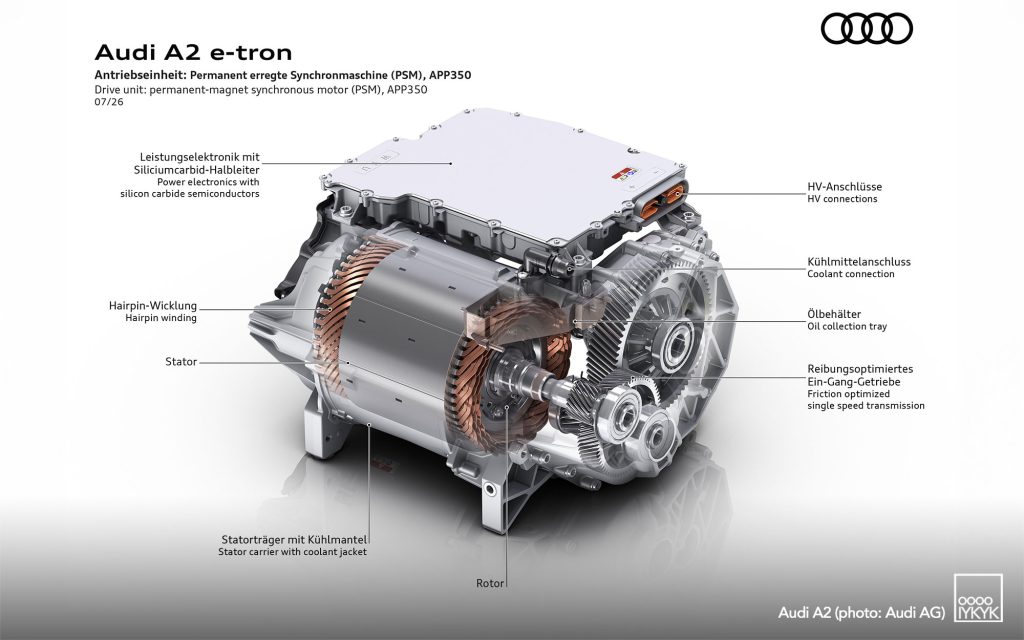
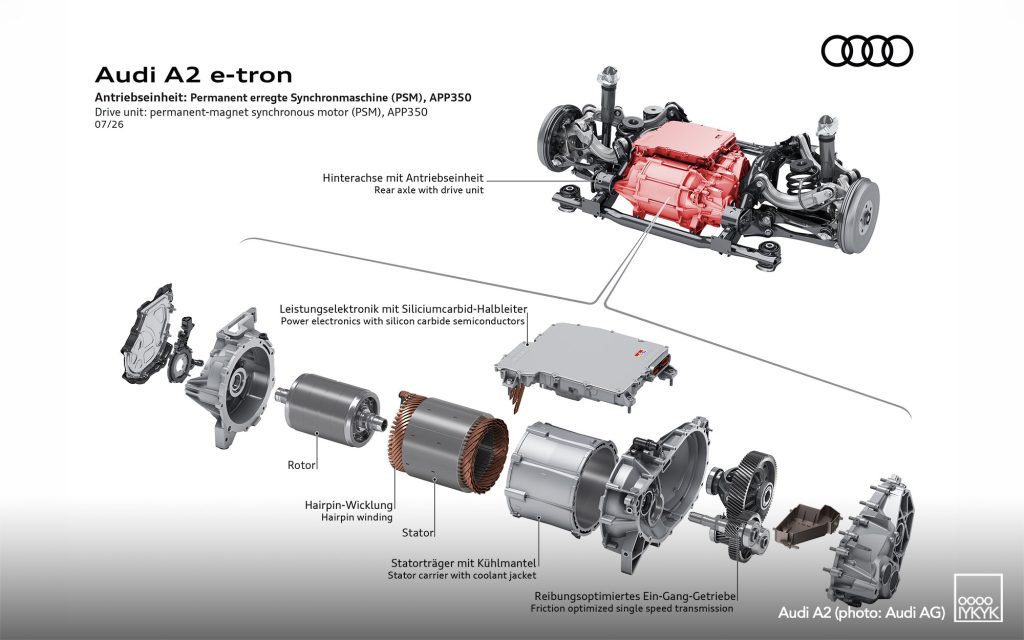
Unlike the front-wheel-drive original, the new A2 is rear-wheel drive. Permanent-magnet synchronous APP350 or APP550 motors power the rear axle, depending on specification, with silicon-carbide power electronics employed to reduce conversion losses. Audi has also attacked friction within the transmission through polished gear teeth, optimized bearings and low-viscosity lubricants.
‘
THREE BATTERIES, TWO CHEMISTRIES
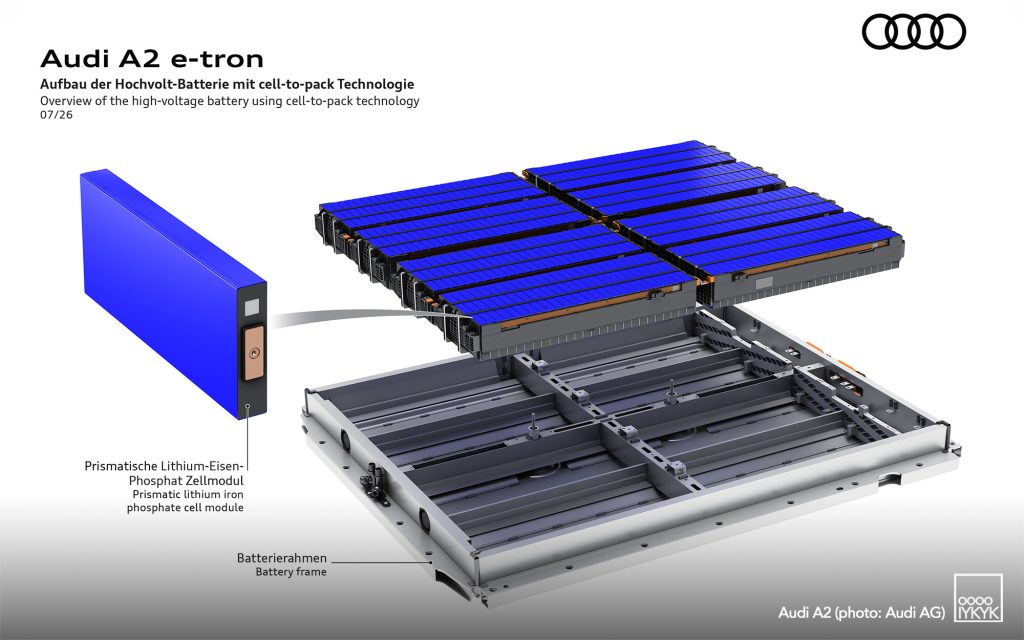
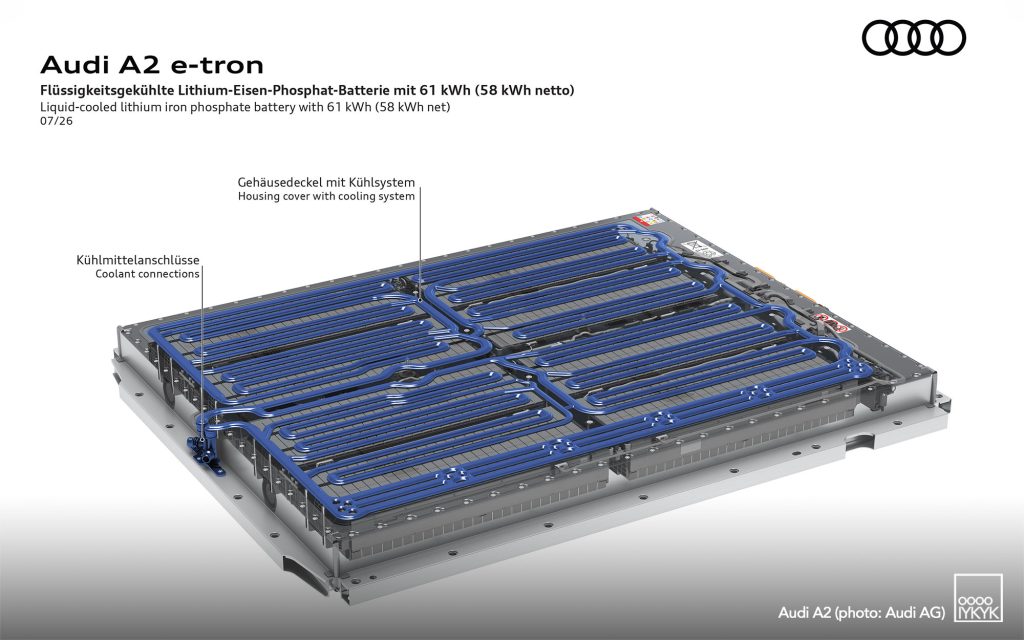
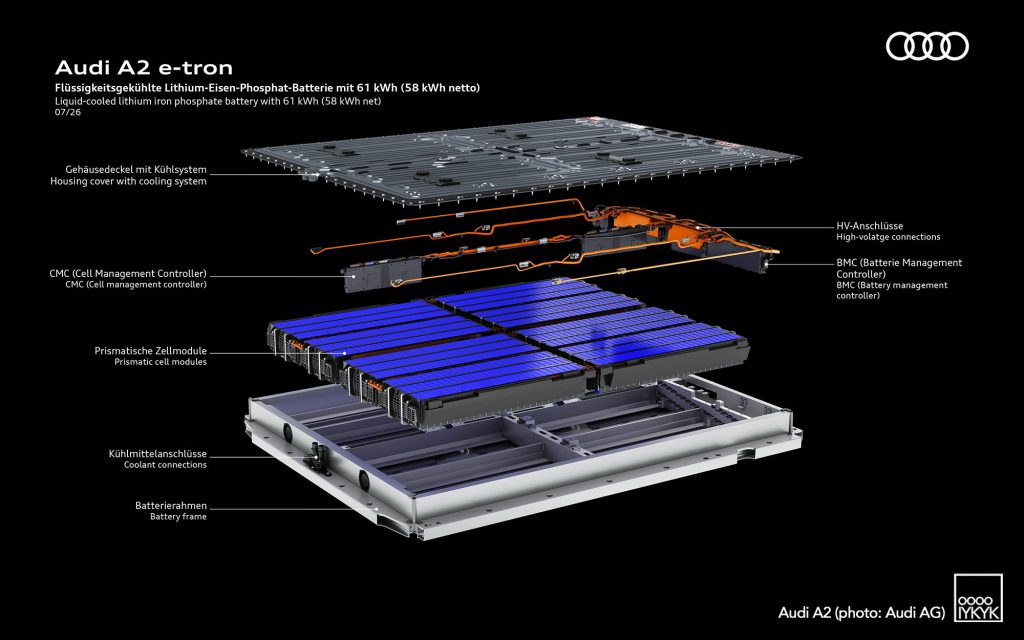
The battery strategy is another point of interest. Audi uses lithium iron phosphate, or LFP, chemistry for the smaller 52- and 61-kWh packs. These batteries employ cell-to-pack construction, bonding the cells directly into the housing to improve packaging density.
The larger 84-kWh battery switches to nickel manganese cobalt chemistry and is reserved for the 170- and 240-kW variants. That gives Audi the ability to tailor battery cost, capability and chemistry to the intended role of each model rather than relying on a single pack throughout the range.
Charging performance follows the same hierarchy. The 52-kWh battery can accept up to 100 kW DC and reaches 10 to 80 percent in 24 minutes. The 61-kWh pack peaks at 105 kW, requiring about 26 minutes, while the 84-kWh battery can charge at up to 183 kW and requires 29 minutes.
Those aren’t benchmark charging numbers in the manner of an 800-volt performance EV. Audi’s argument is that a highly efficient car needs to consume less electricity in the first place, reducing both the battery capacity required and the energy that must subsequently be put back into it.
THE WIND TUNNEL FOCUS RETURNS
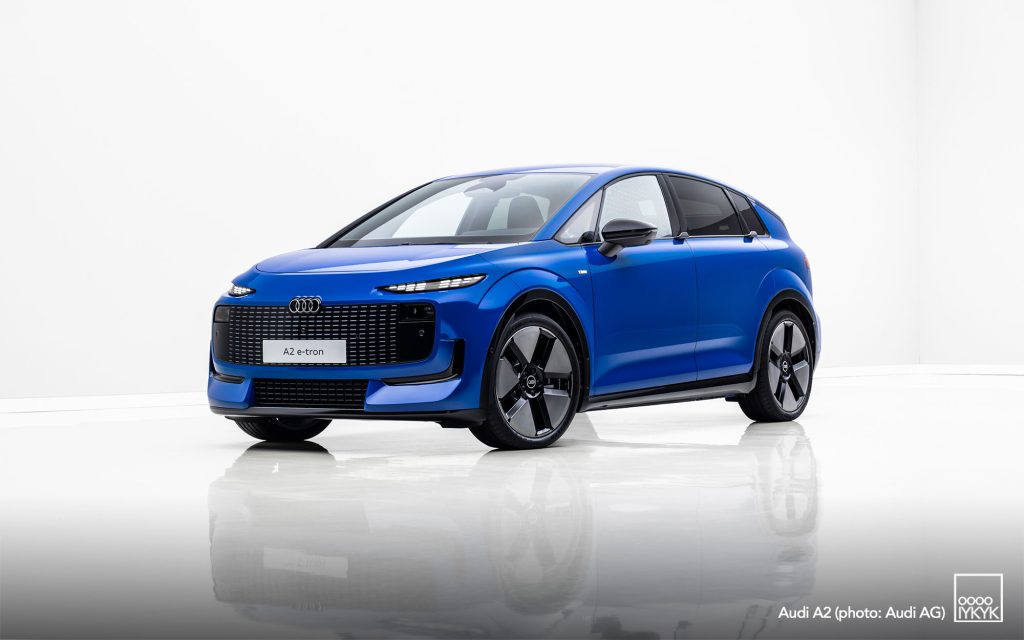
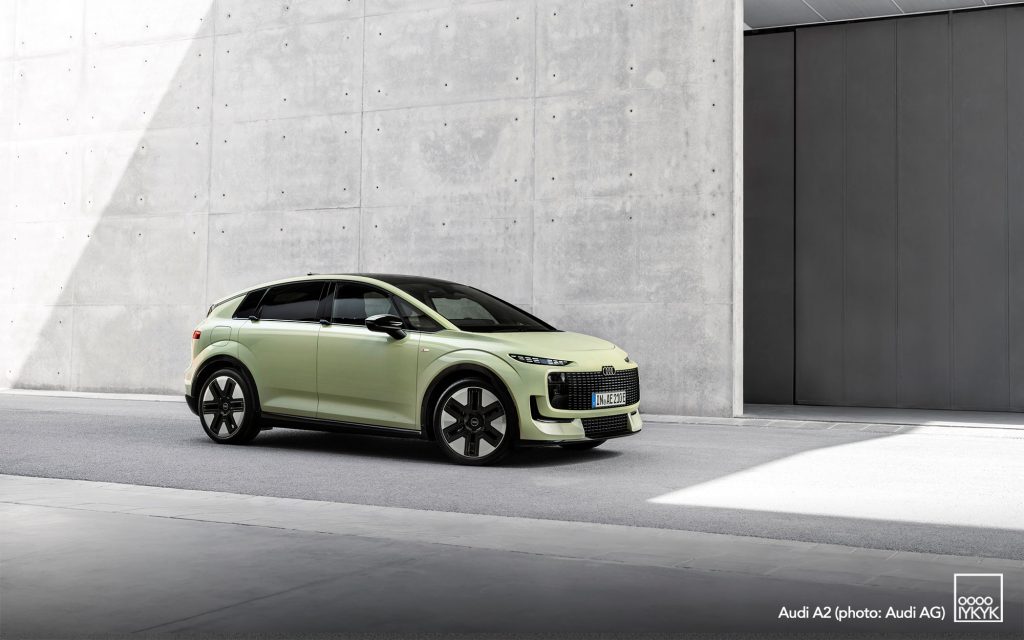
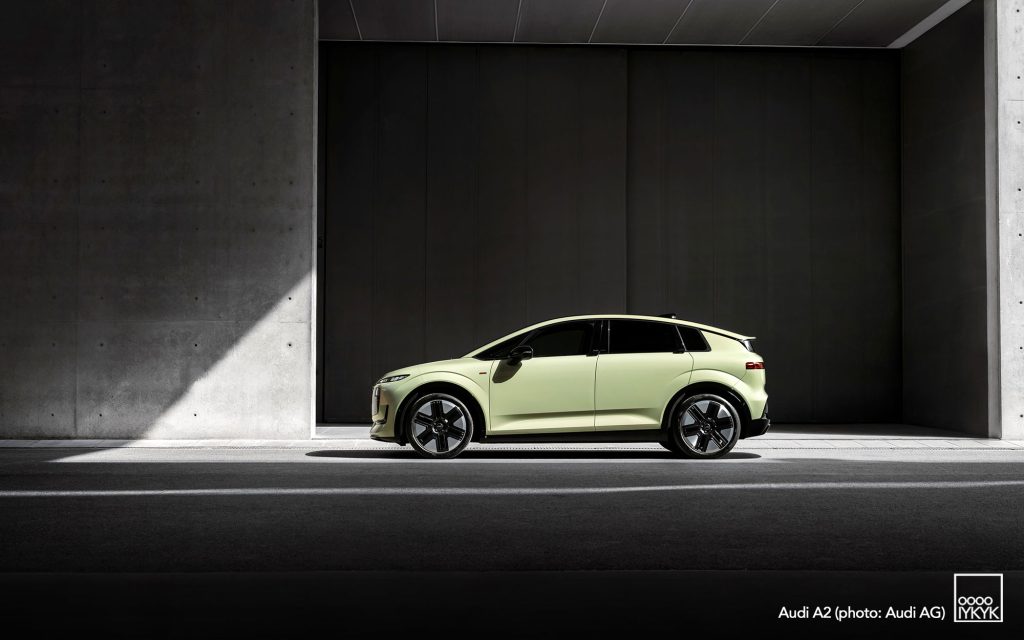
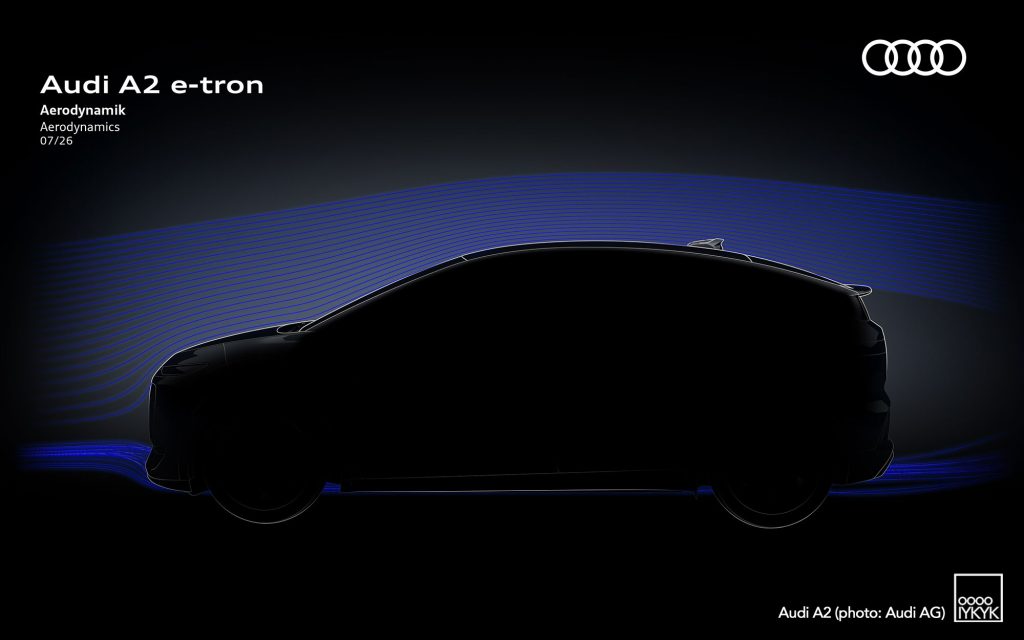
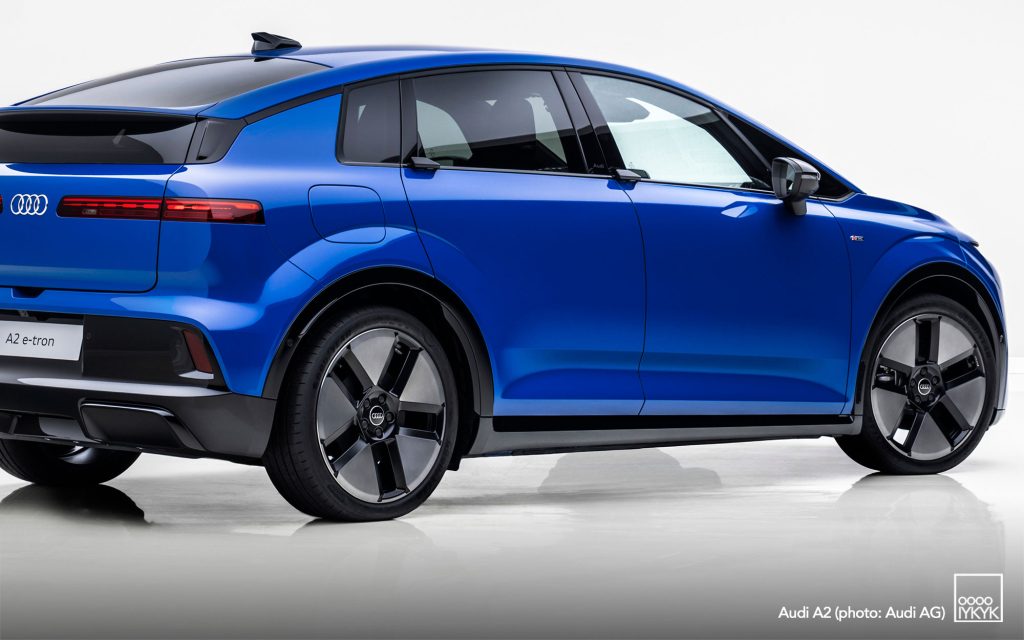
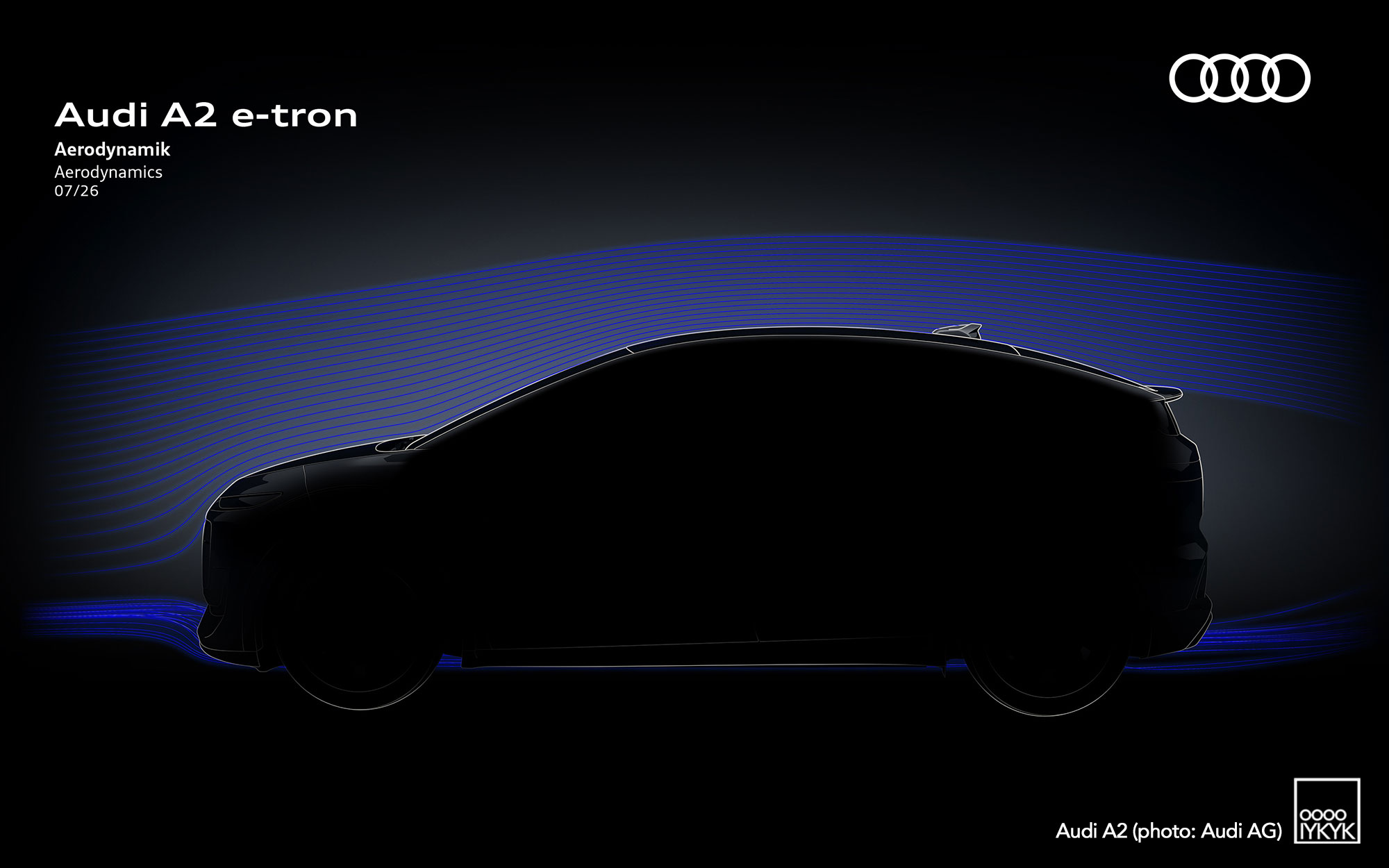
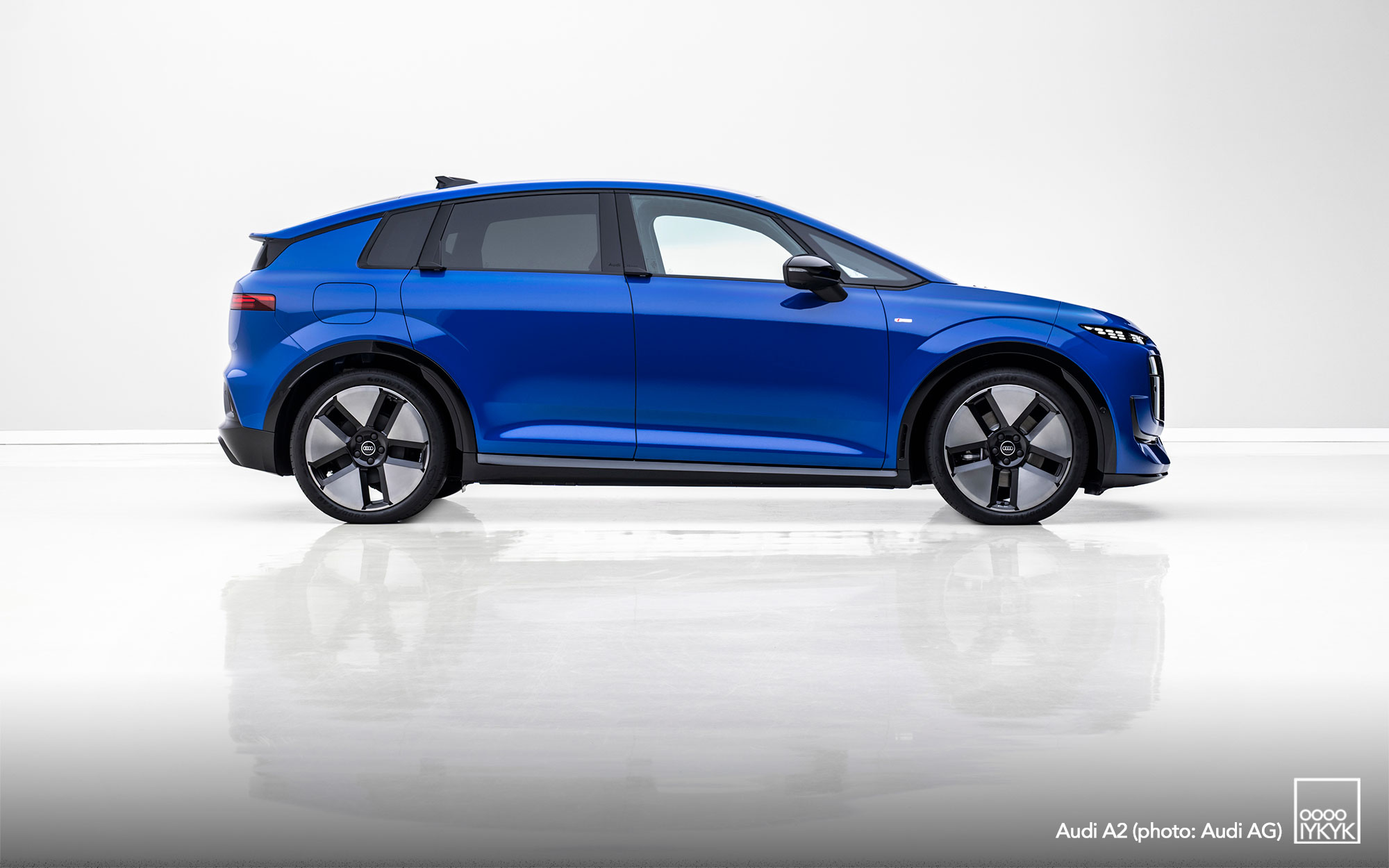
Aerodynamics were fundamental to the original A2, and they’re fundamental again. The new car achieves a Cd of 0.24, Audi’s best figure in the compact segment.
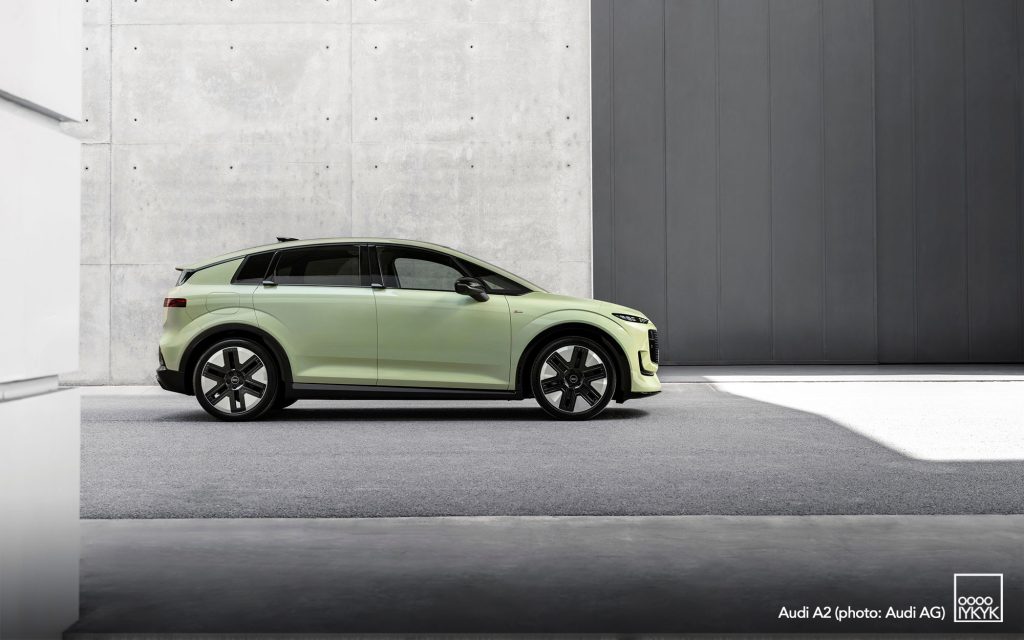
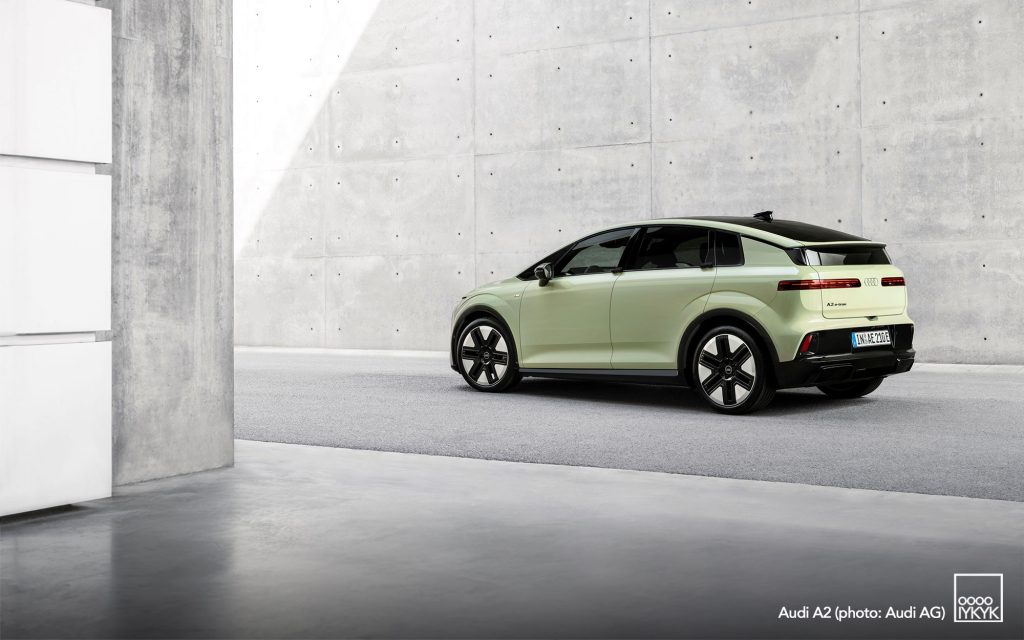
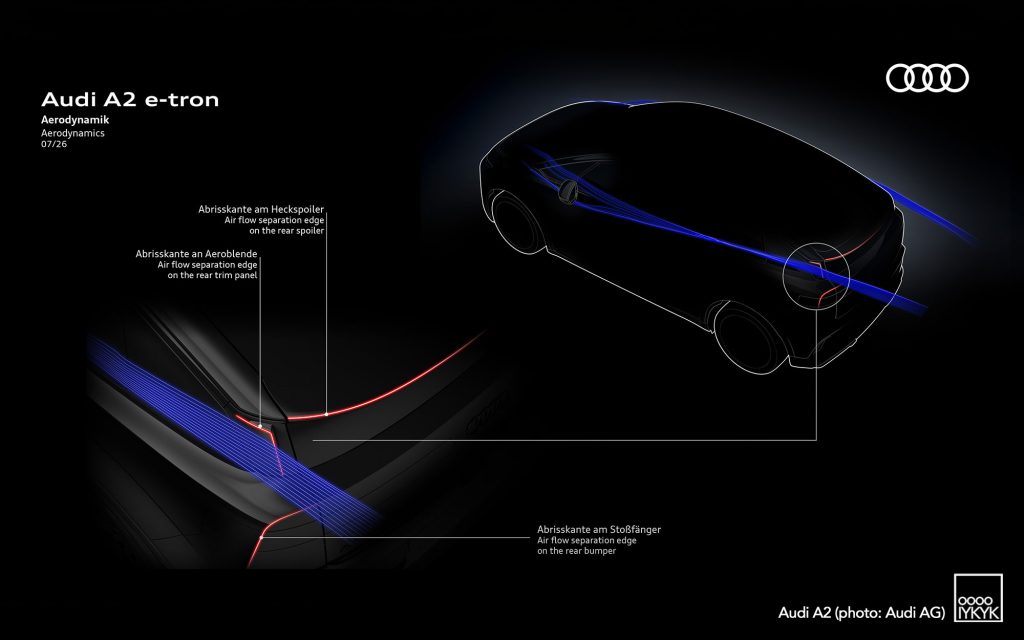
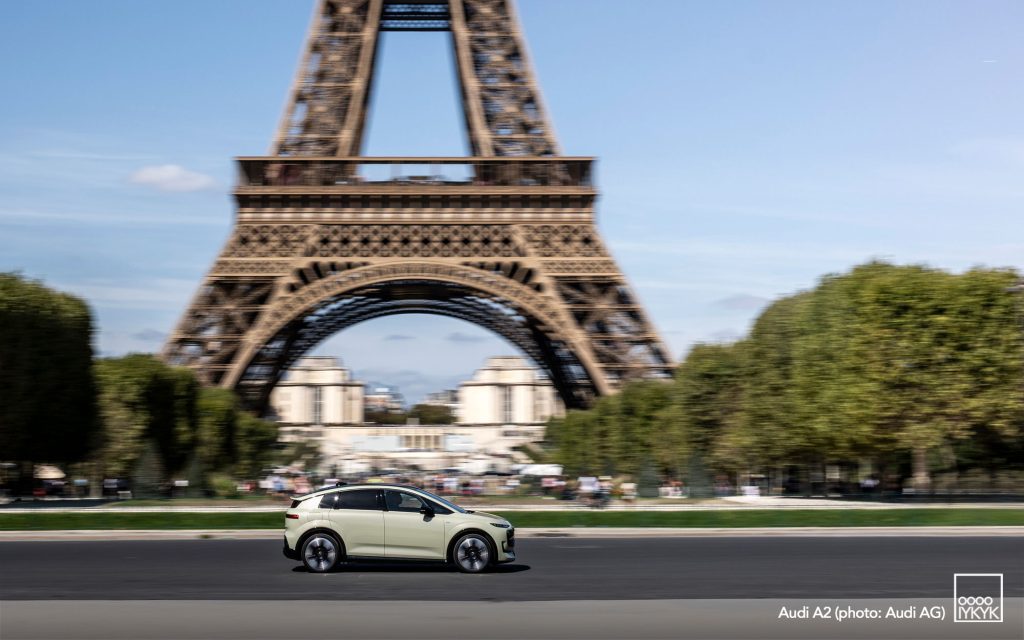
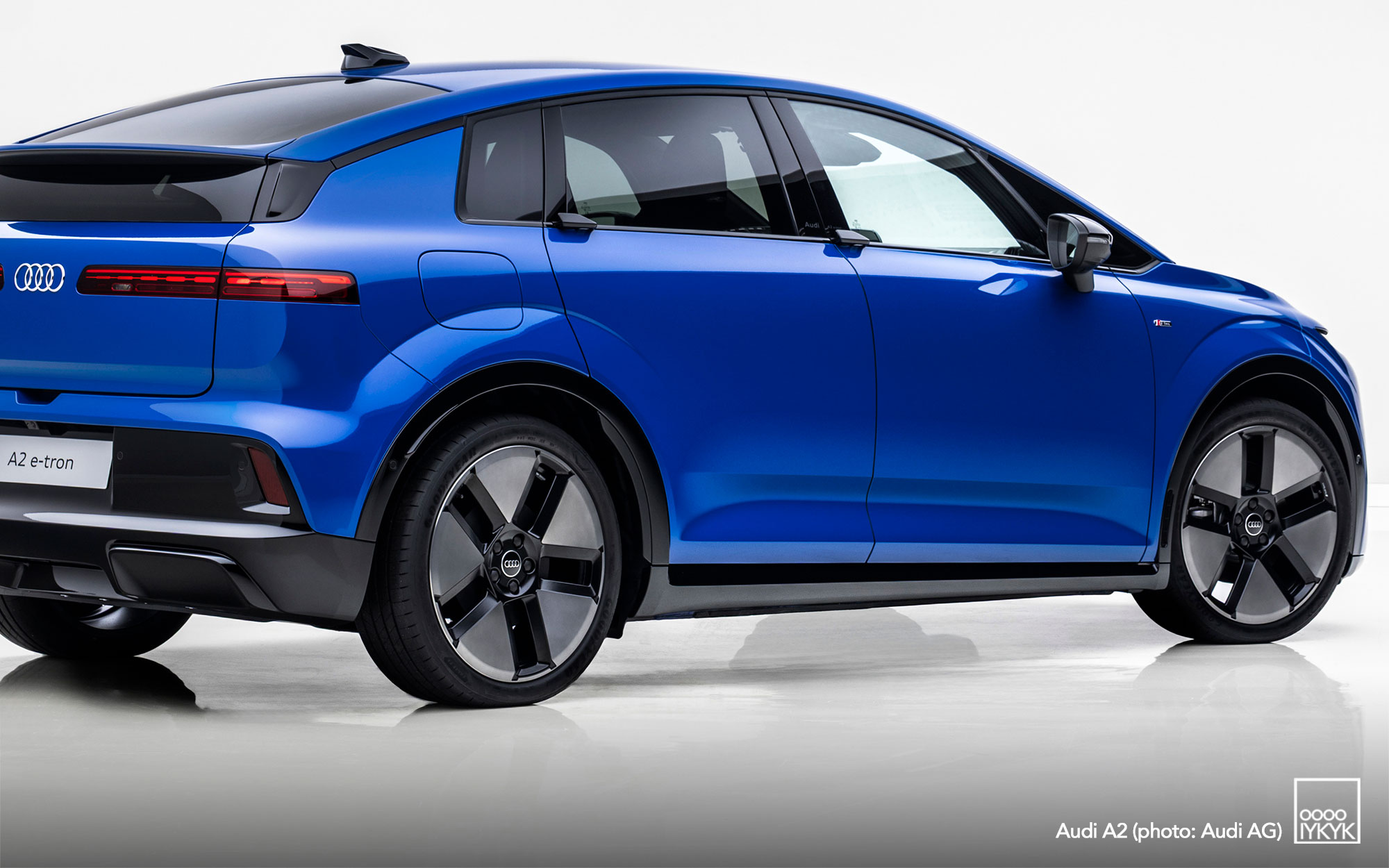
Its proportions are dictated partly by that objective. Short overhangs bookend a comparatively long 2.77-meter wheelbase, while the A-pillar flows into a long roof arc that descends toward a carefully defined rear spoiler.
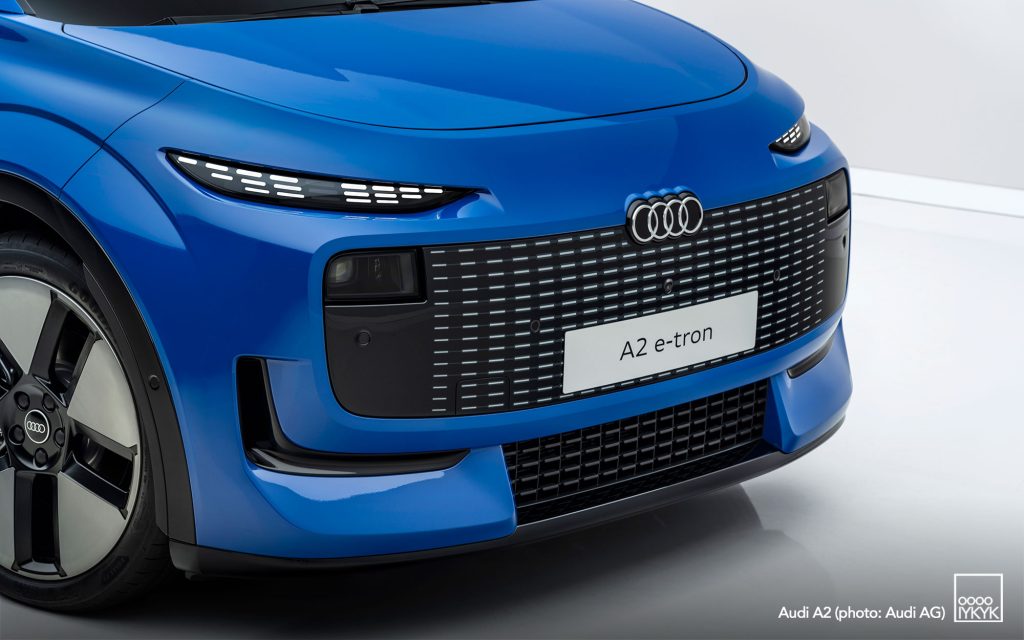
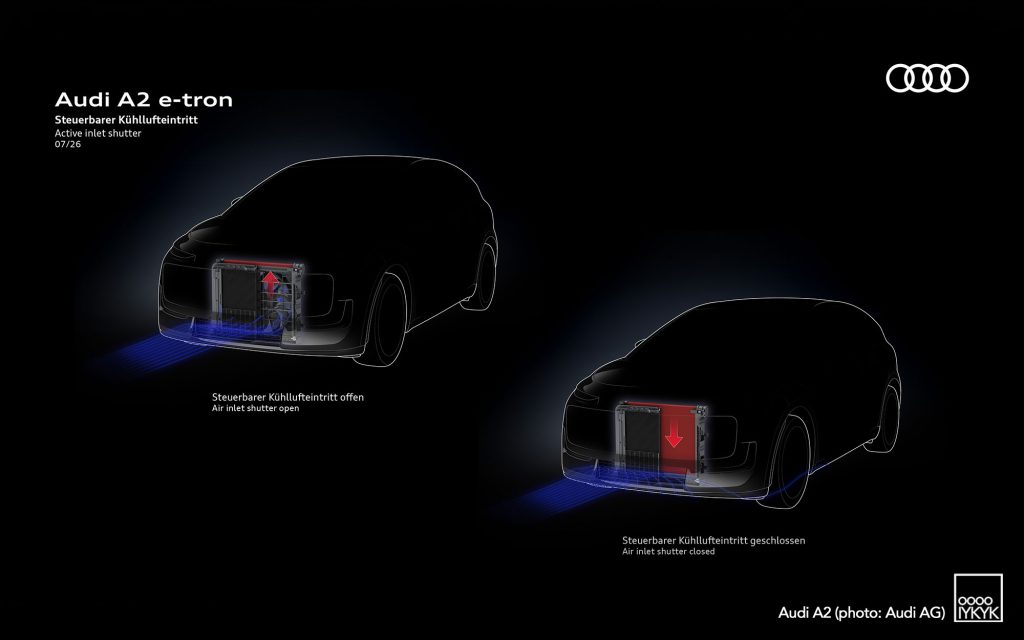
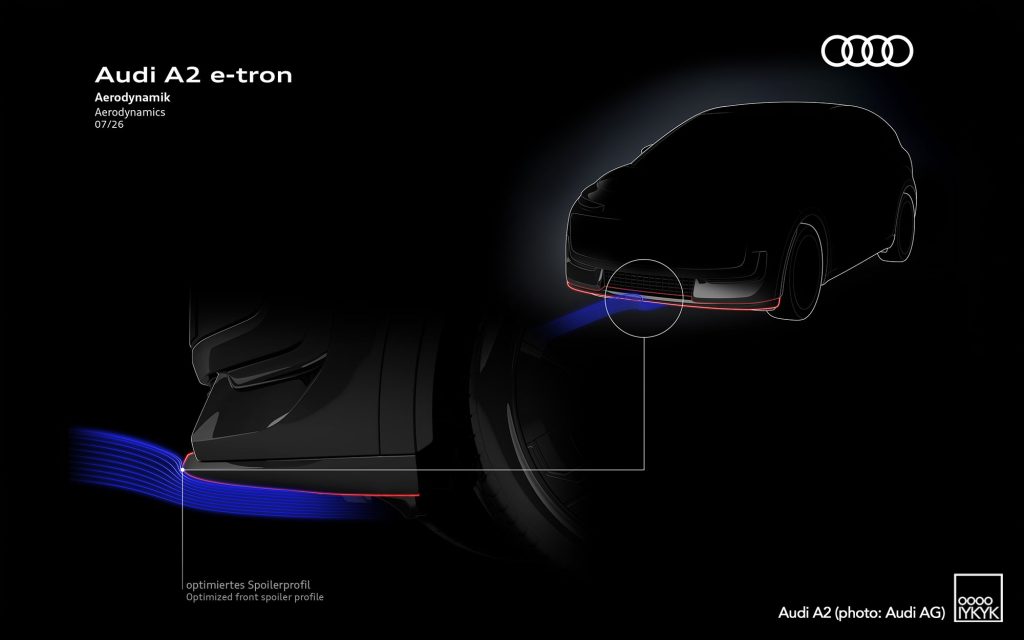
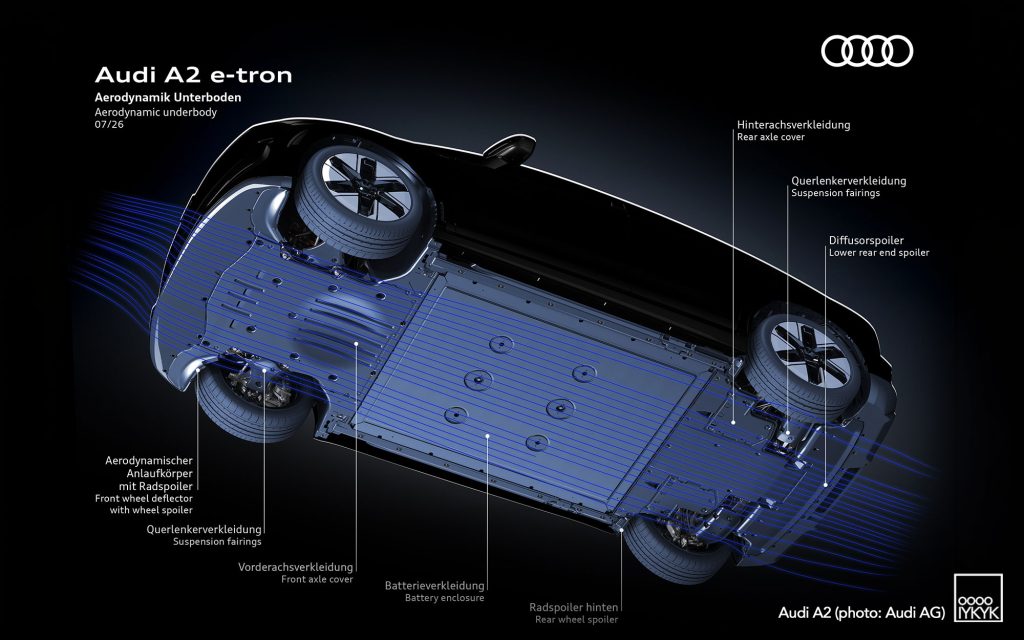
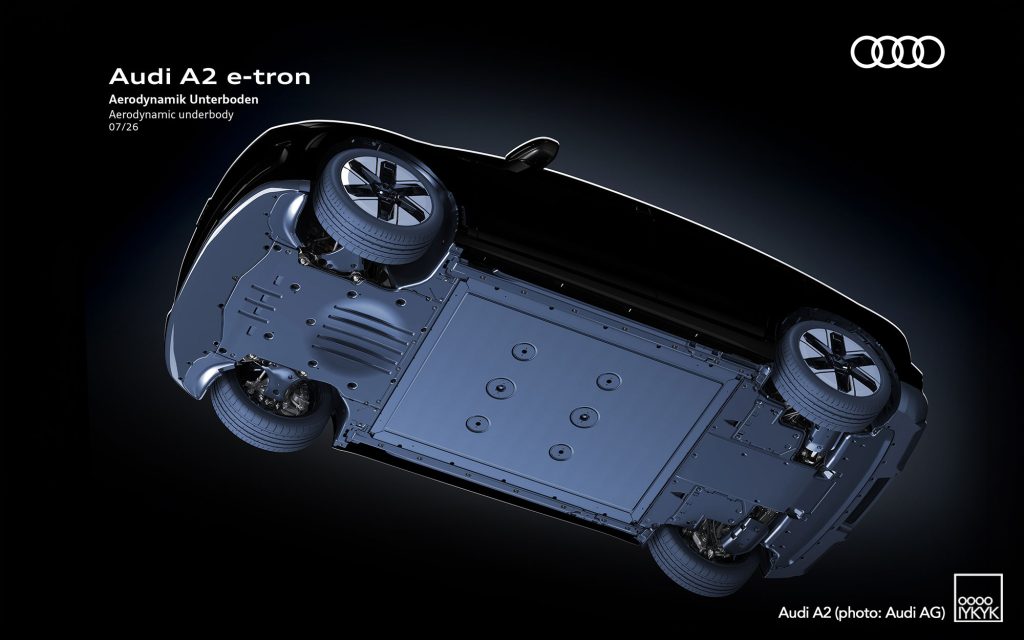
The underside is largely enclosed, with airflow directed smoothly from the front splitter beneath the battery and toward the rear diffuser. A controllable cooling-air inlet remains closed when additional cooling isn’t required, including during typical highway driving.
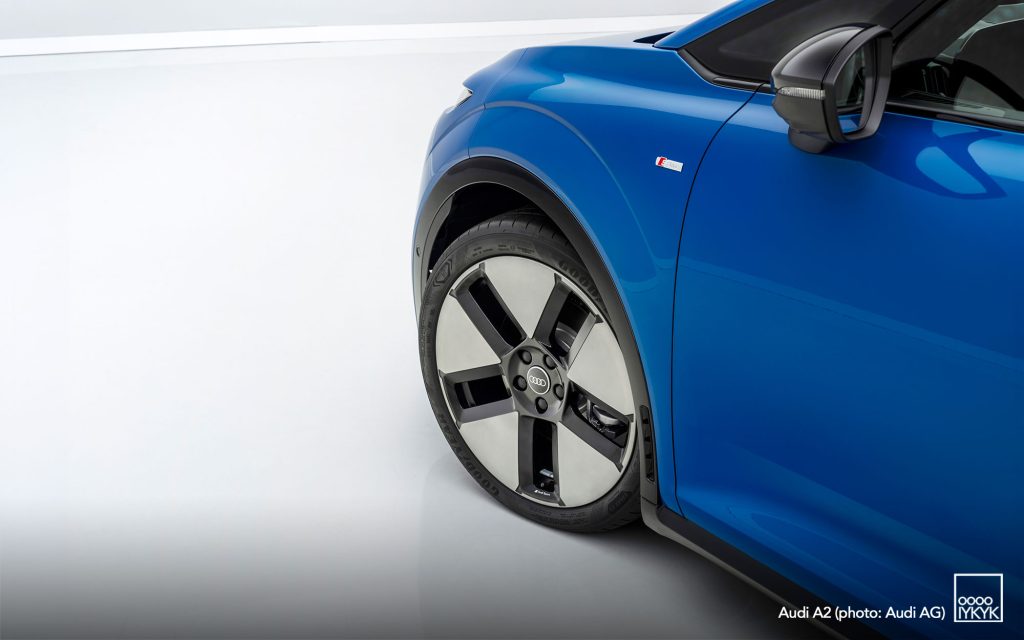
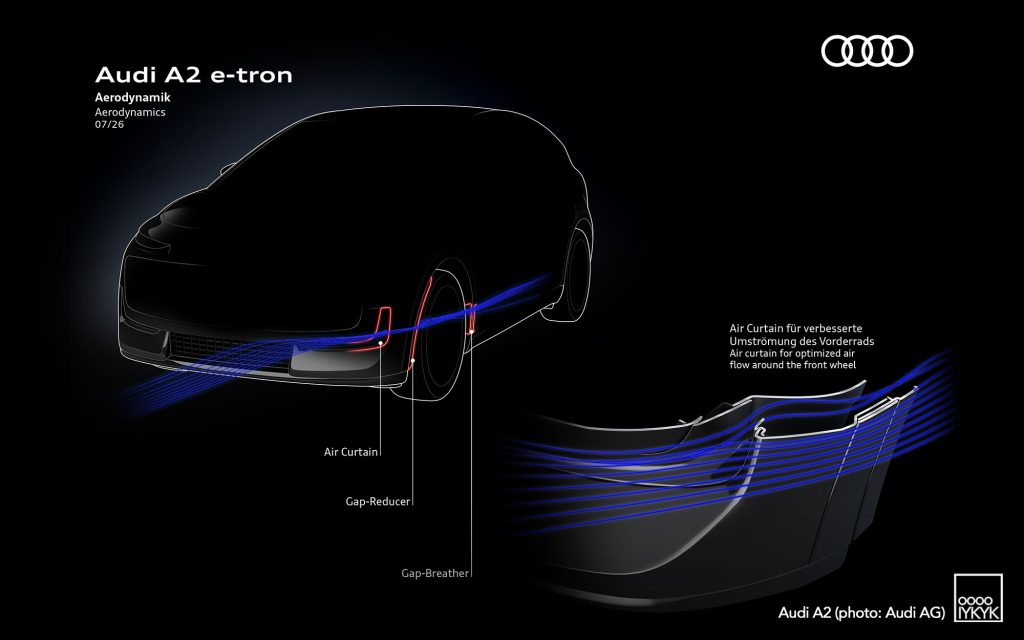
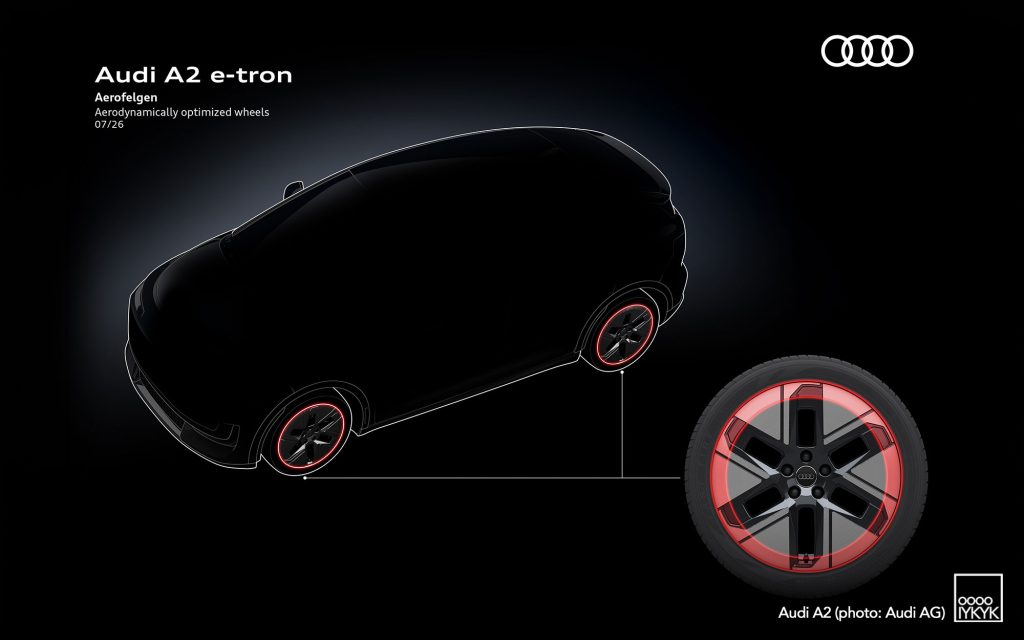
Audi has paid attention to the wheel openings, traditionally one of the messier aerodynamic areas of a road car. So-called “gap reducers” incorporated into the wheel-arch trim decrease the space between wheel and arch, while additional vents manage pressure and turbulence. More enclosed aero wheels further clean up airflow.
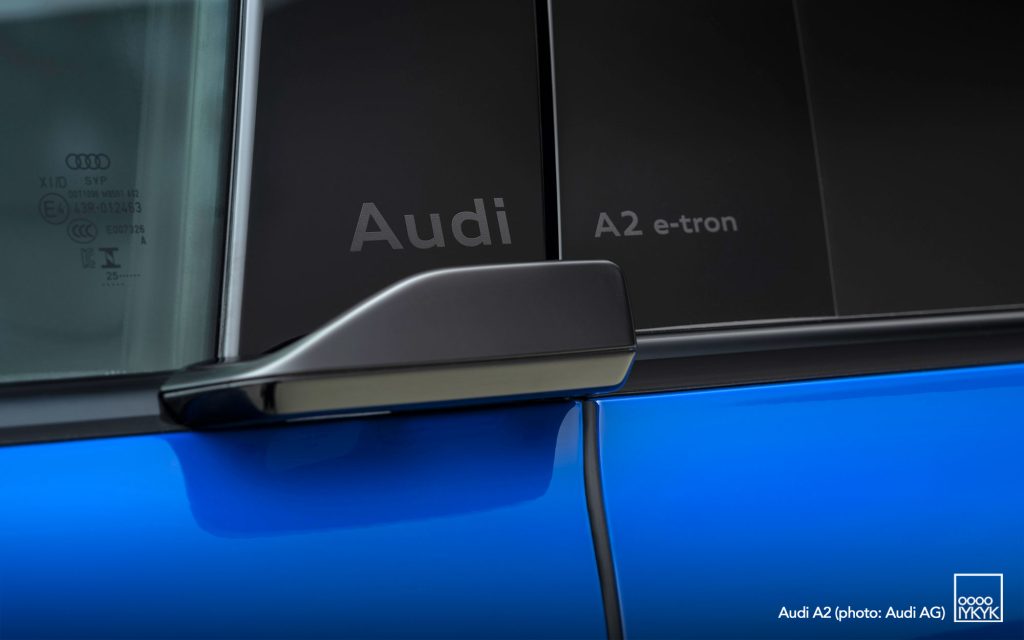
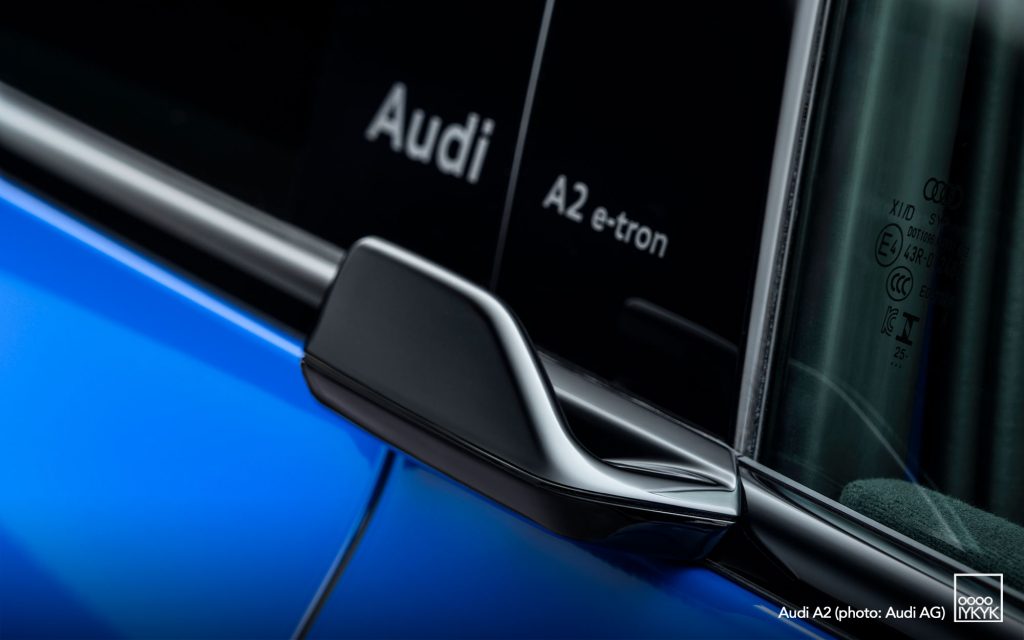
Even the door handles have been redesigned. Wing-like electrically operated handles sit nearly flush with the body and respond to touch rather than using a conventional mechanical pull mechanism.
The S line adds air curtains and more aggressive visual detailing without abandoning the same aerodynamic philosophy.
AN A2 SHOULD BE SMALL OUTSIDE AND BIG INSIDE
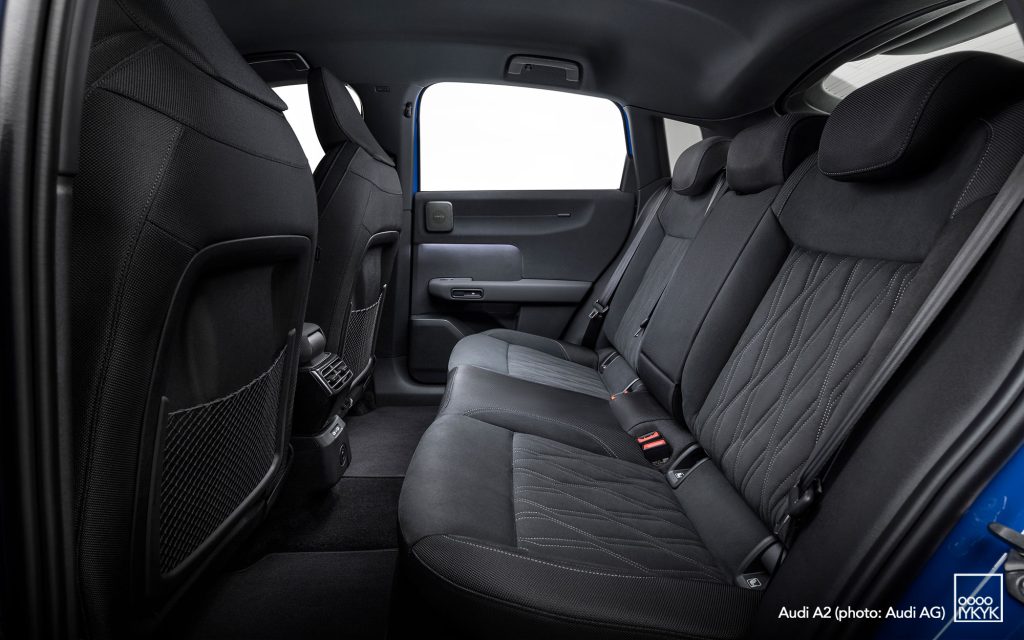
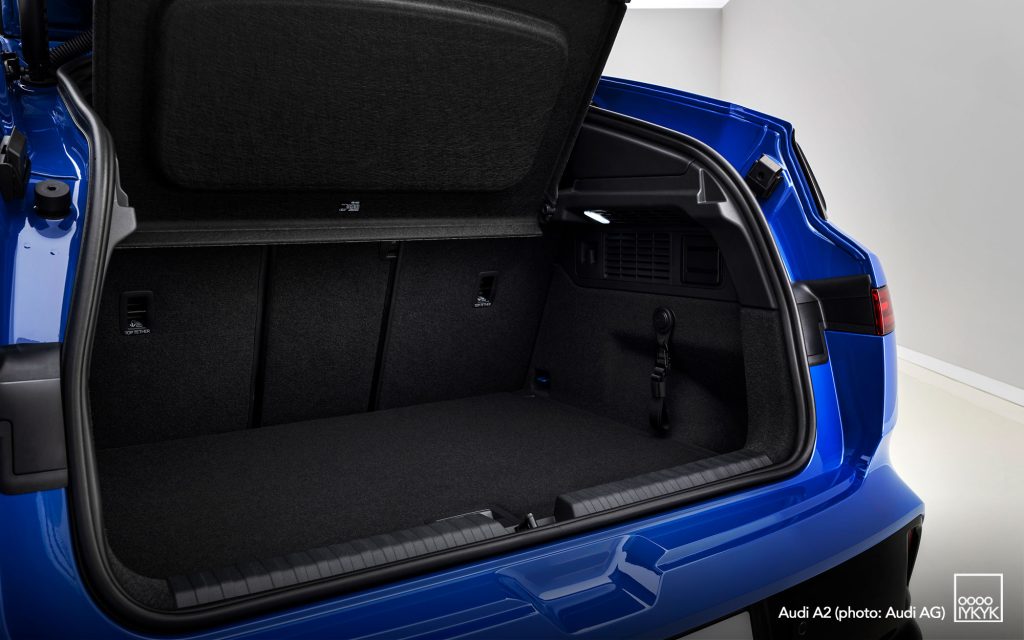
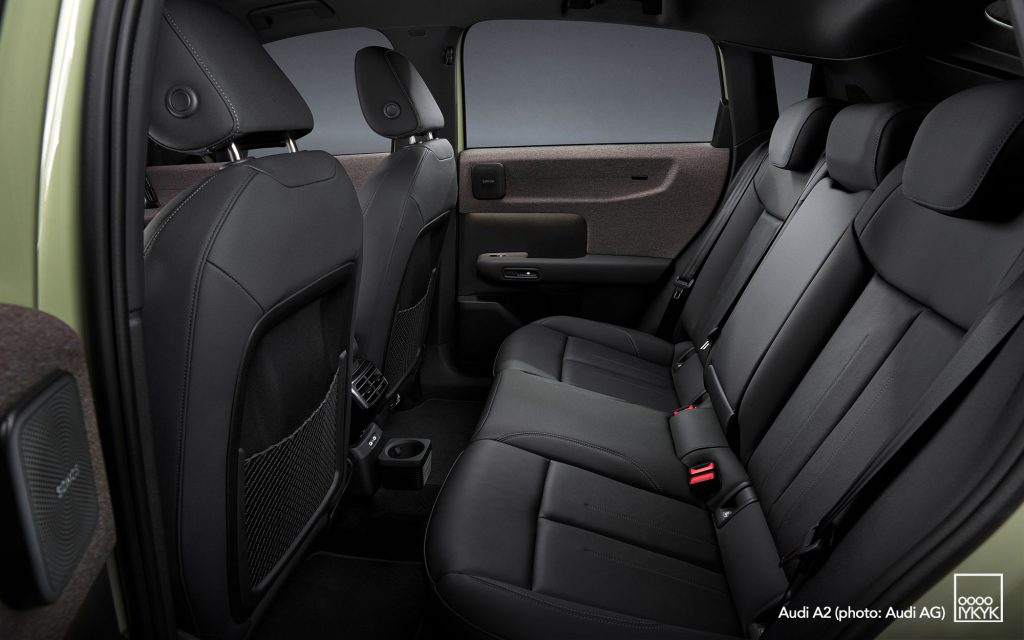
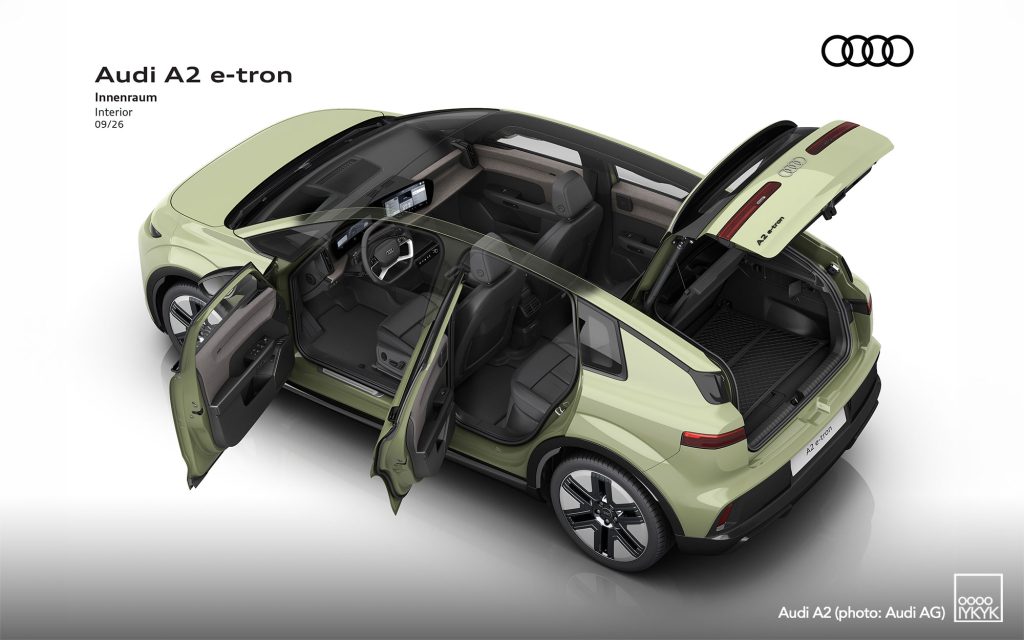
Another important link to the original A2 is packaging. The new car remains compact but uses its long wheelbase and EV architecture to maximize passenger space. The luggage compartment offers 396 liters with the rear seats upright and 1,336 liters folded.
Higher-output versions equipped with the 84-kWh battery also gain a small 13-liter front luggage compartment.
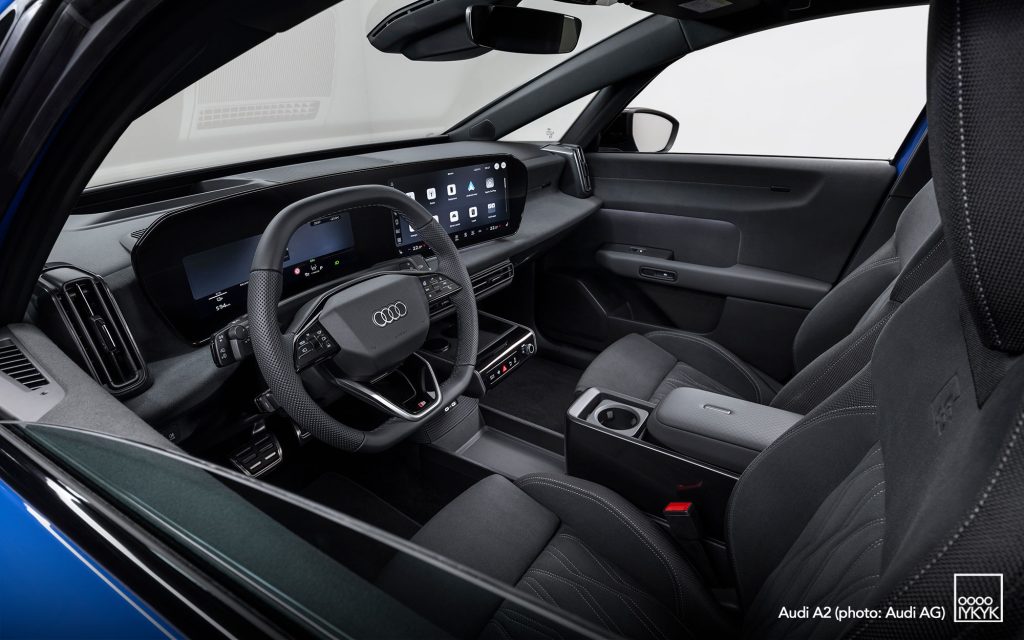
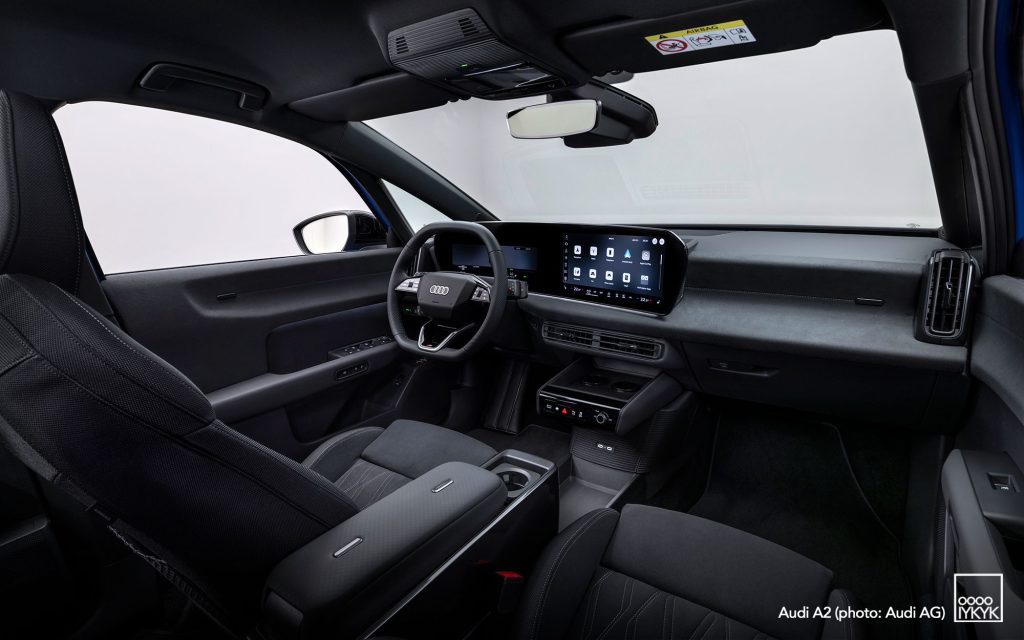
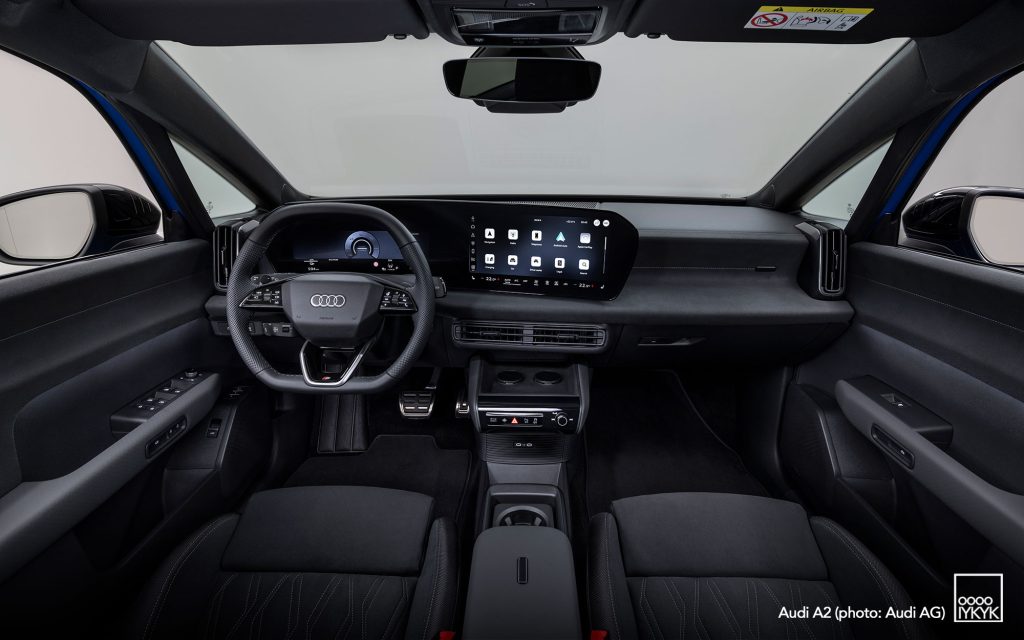
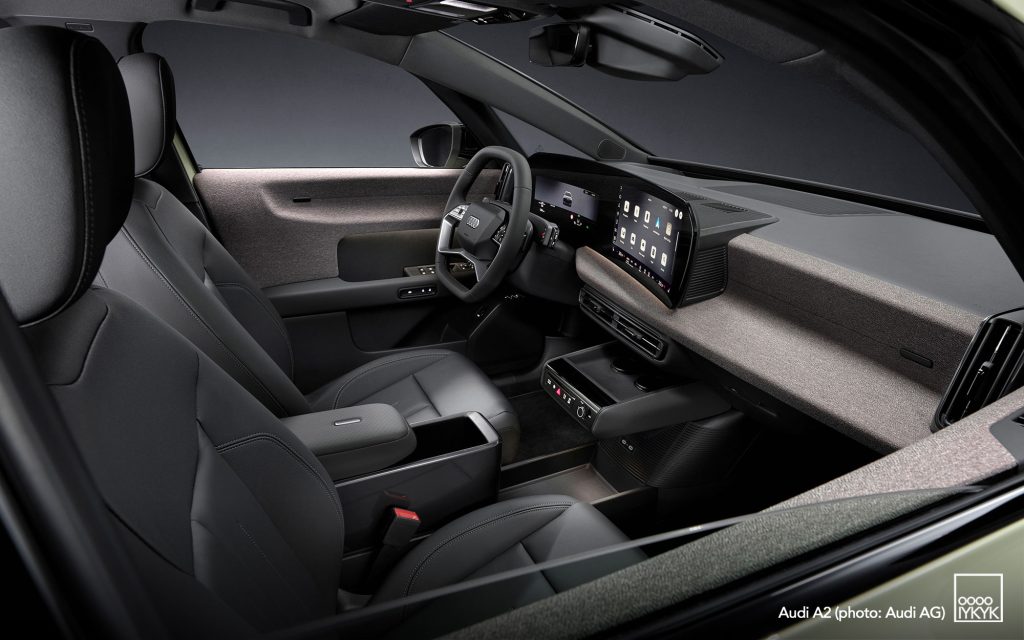
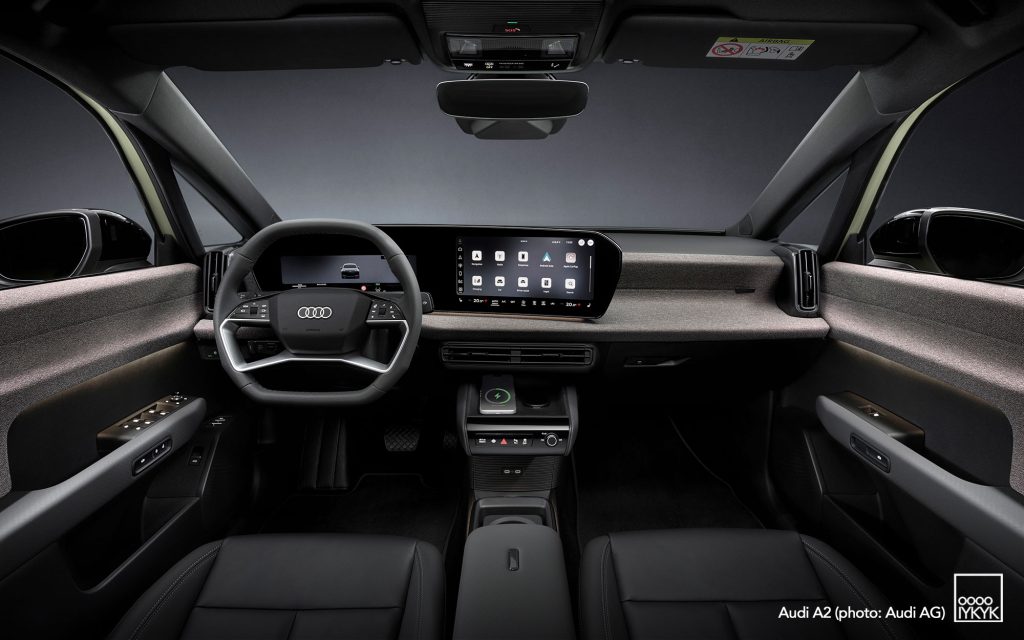
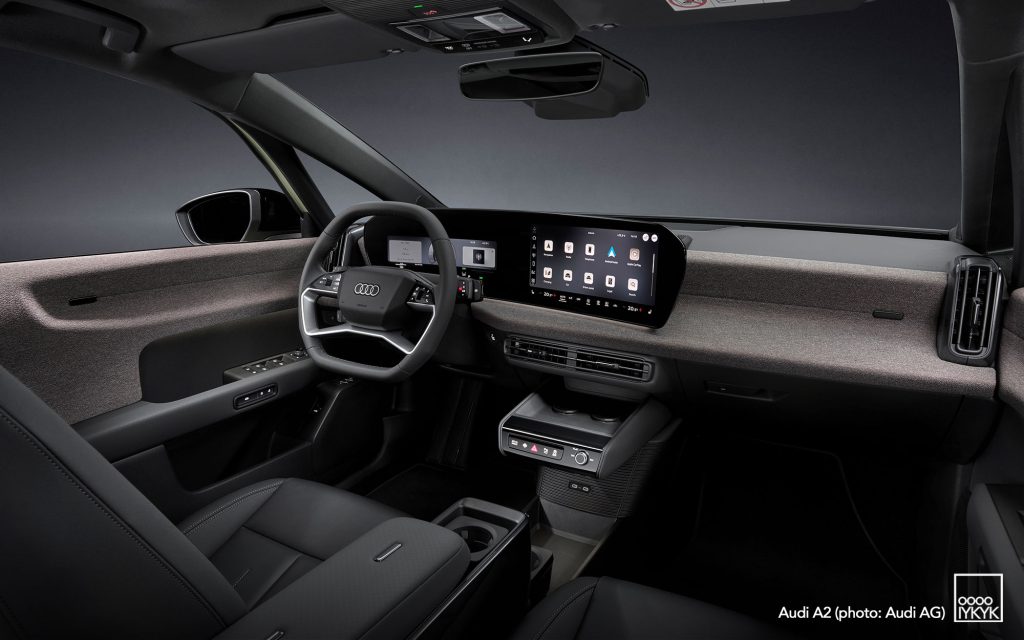
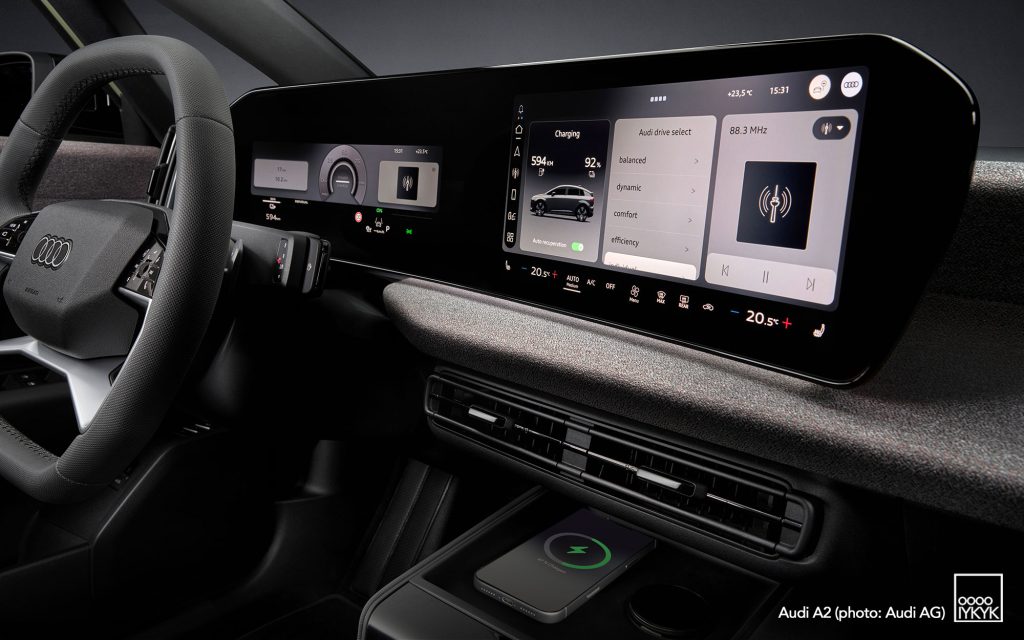
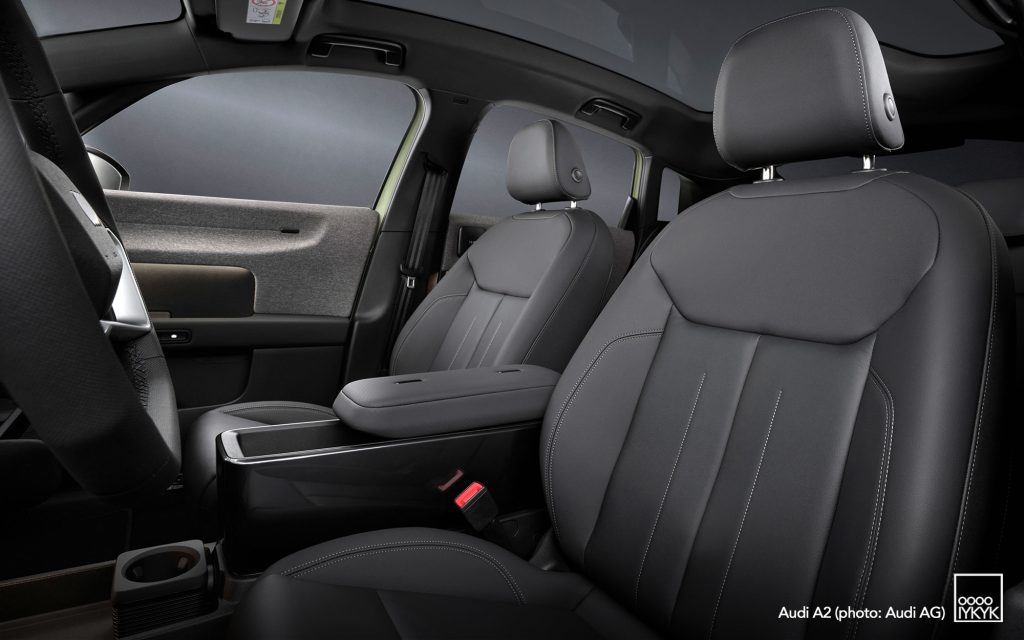
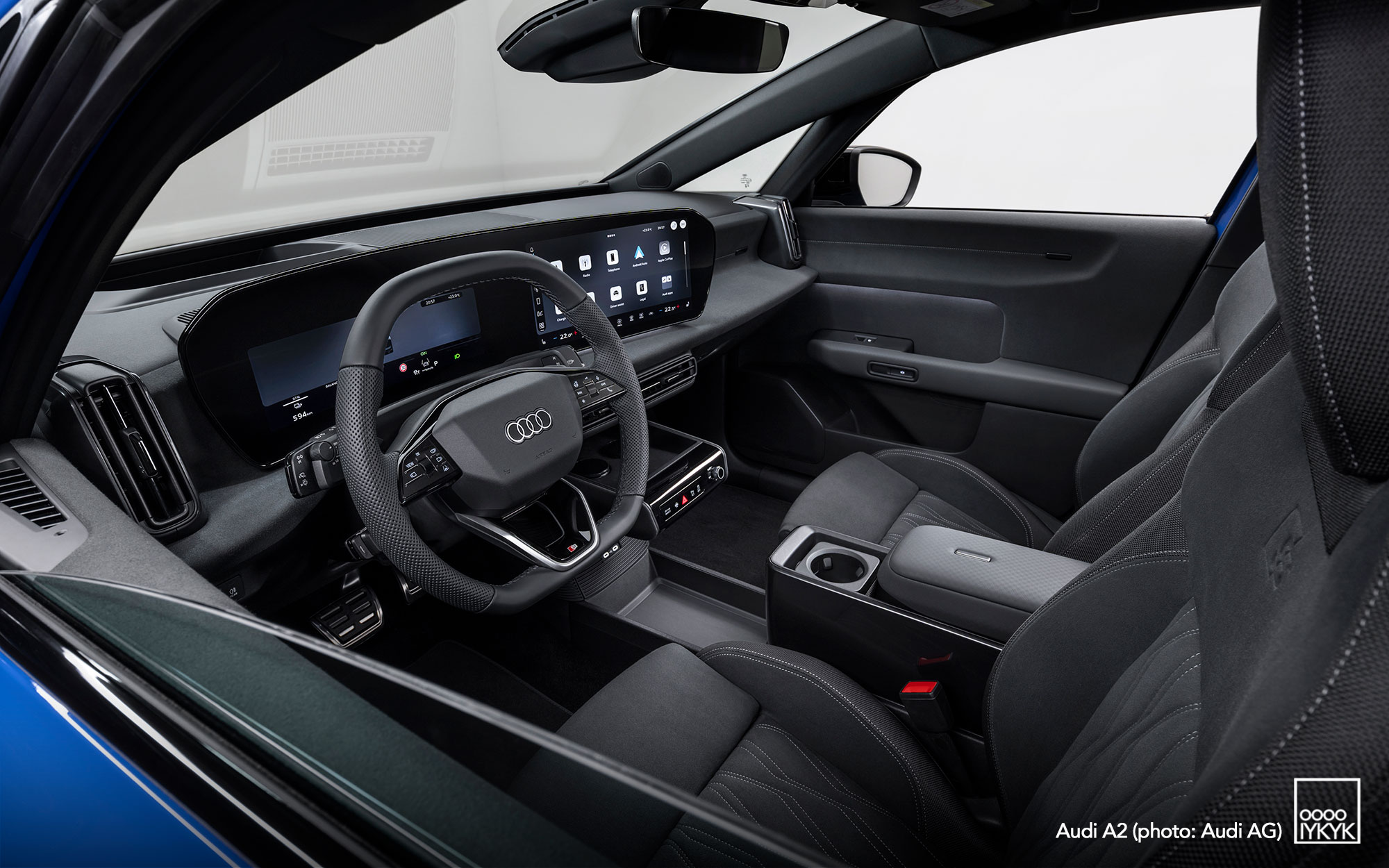
Inside, Audi has moved the gear selector onto the steering column, opening the center console for storage and a new Qi 2.2 wireless charging area capable of simultaneously charging two phones at up to 25 watts.
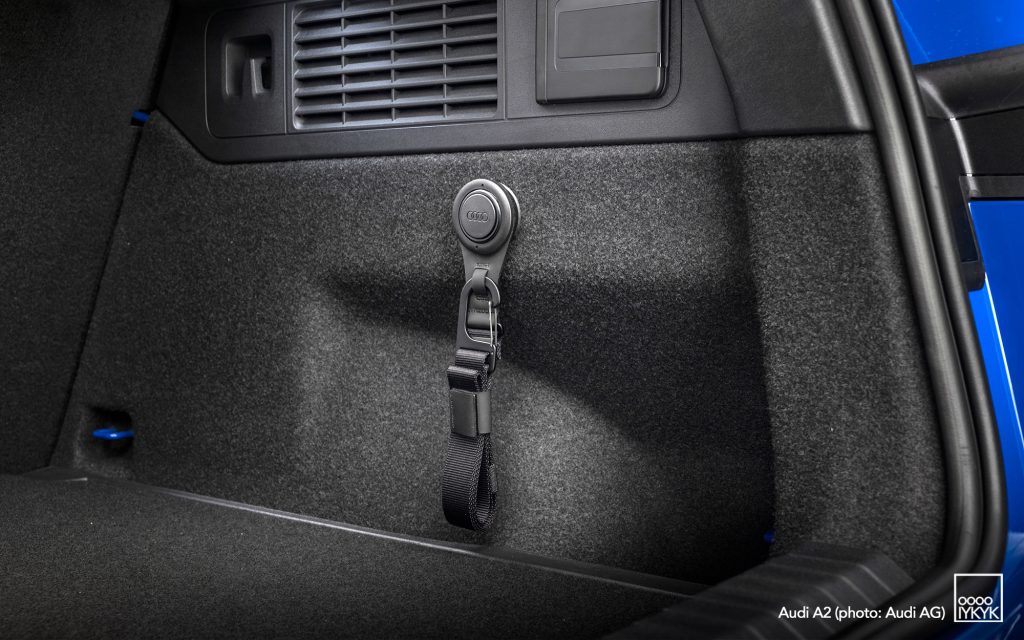
Perhaps the strangest — and possibly cleverest — detail is Fidlock. Audi has integrated the familiar magnetic-mechanical fastening system used in cycling and outdoor equipment directly into the vehicle. Three attachment points and a cup holder are standard in the center console, while three additional mounting locations can be specified in the luggage compartment.
That means charging cable bags, cup holders, straps and other accessories can be attached with the same magnetic lock, while compatible third-party Fidlock accessories can theoretically be used as well. It’s the sort of slightly obsessive functional detail that seems appropriate in a car like an Audi A2.
VERY DIGITAL INTERIOR
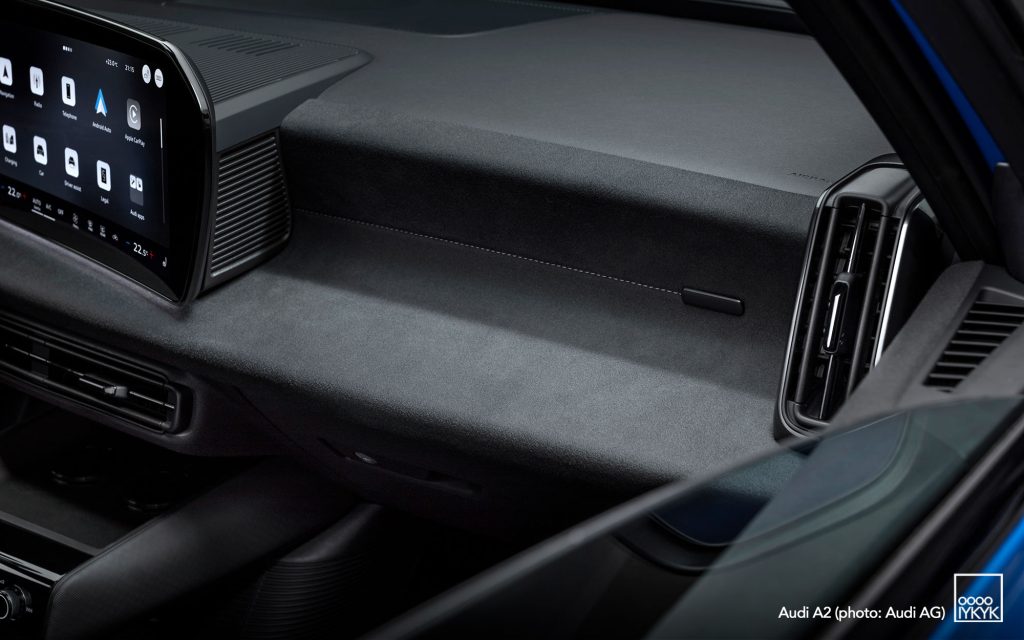
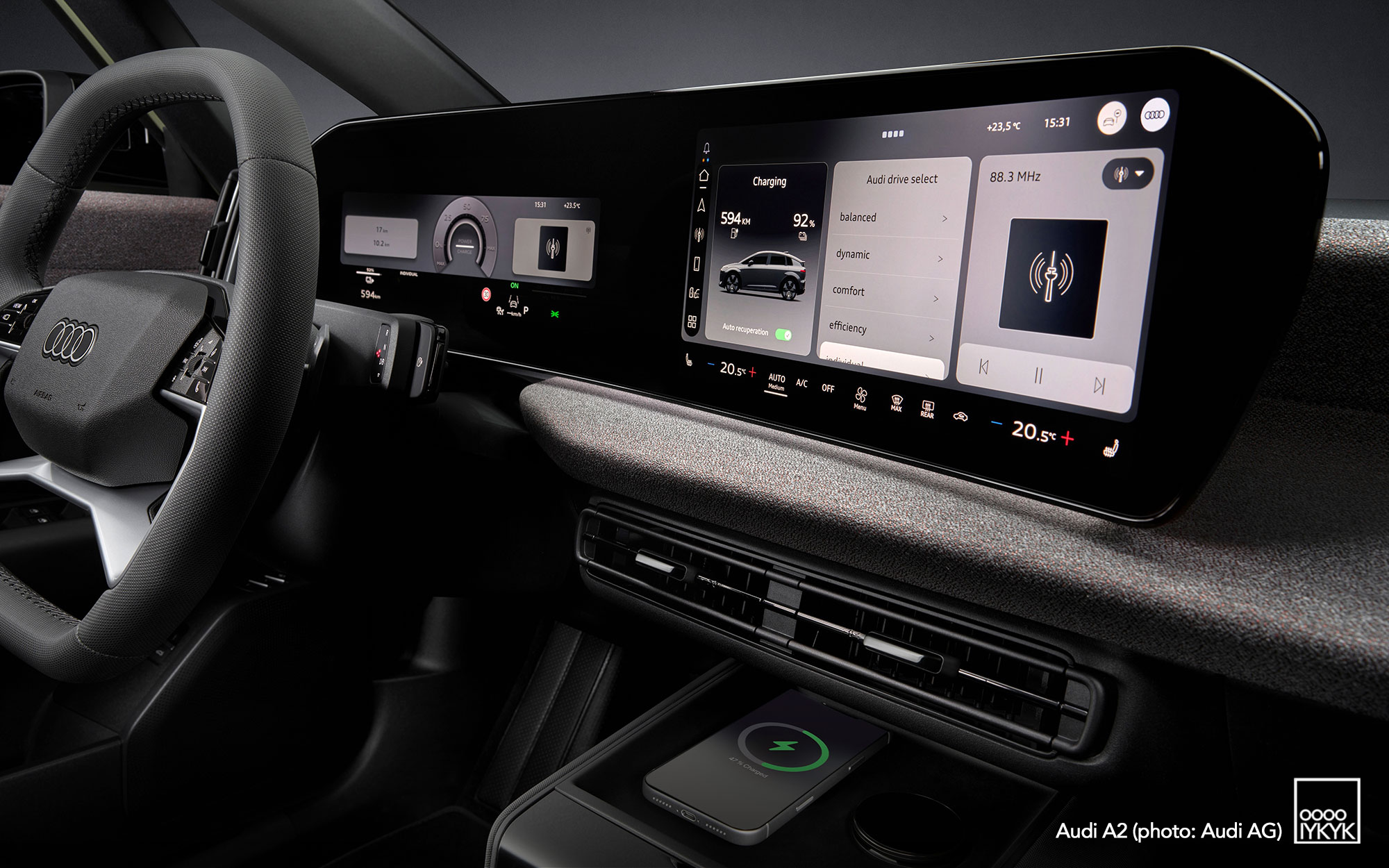
Where the original A2 was straightforward, its successor is more 2026 Audi. The standard curved panoramic display combines an 11.9-inch Audi virtual cockpit plus with a 12.8-inch MMI touchscreen. An augmented-reality head-up display is optional.
Audi’s AI-enabled assistant can answer vehicle questions using information from the owner’s manual as well as handle more general requests through cloud-based AI models.
The e-tron route planner integrates traffic, topography and charger availability while automatically preparing the battery ahead of charging stops. A smart range manager can even calculate whether altering the route or reducing cruising speed would eliminate a charging stop.
Audi connected work goes a step further, integrating Microsoft Outlook and Teams. Voice control can retrieve information, compose emails, read calendar entries, join Teams meetings or begin navigation to a meeting location.
Whether anyone actually wants their A2 to become an extension of the office is another question, but technologically the little Audi is being positioned far above what would traditionally be expected of an entry model.
The same applies to assistance systems.
Adaptive cruise control, parking sensors, a reversing camera, side assist, exit warning and rear cross-traffic assist are standard. Optional adaptive cruise assist plus combines longitudinal control with lane guidance at speeds up to 210 km/h and will eventually gain automatic lane-change functionality. It can also recognize red traffic lights and bring the car to a halt under defined conditions.
BIDIRECTIONAL
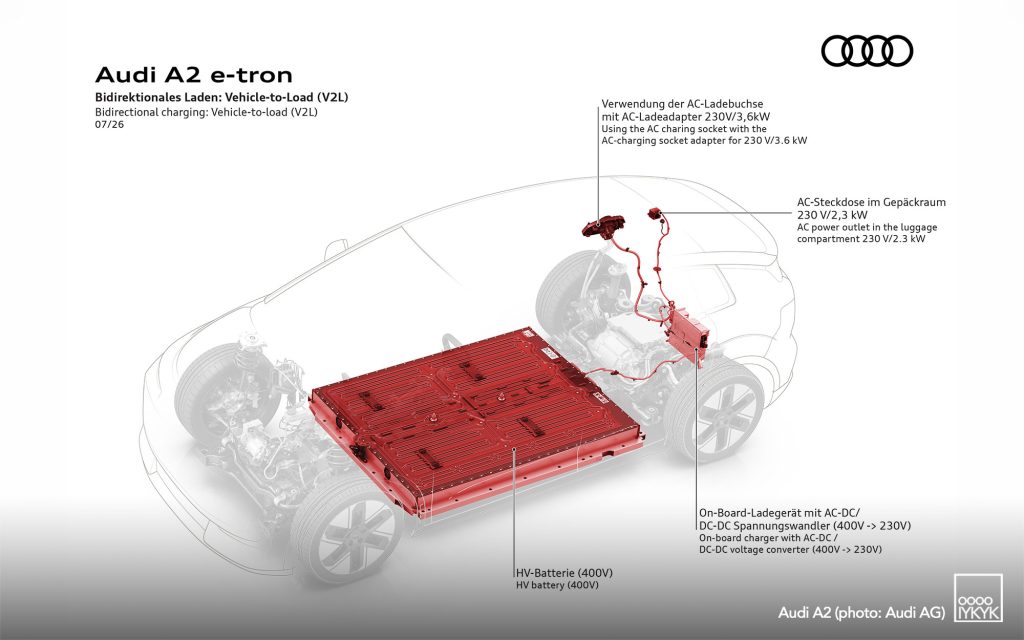
The battery isn’t exclusively there to move the car. Vehicle-to-Load capability allows the A2 e-tron to power external equipment, whether through an outlet in the luggage compartment or an adapter attached to the charge port.
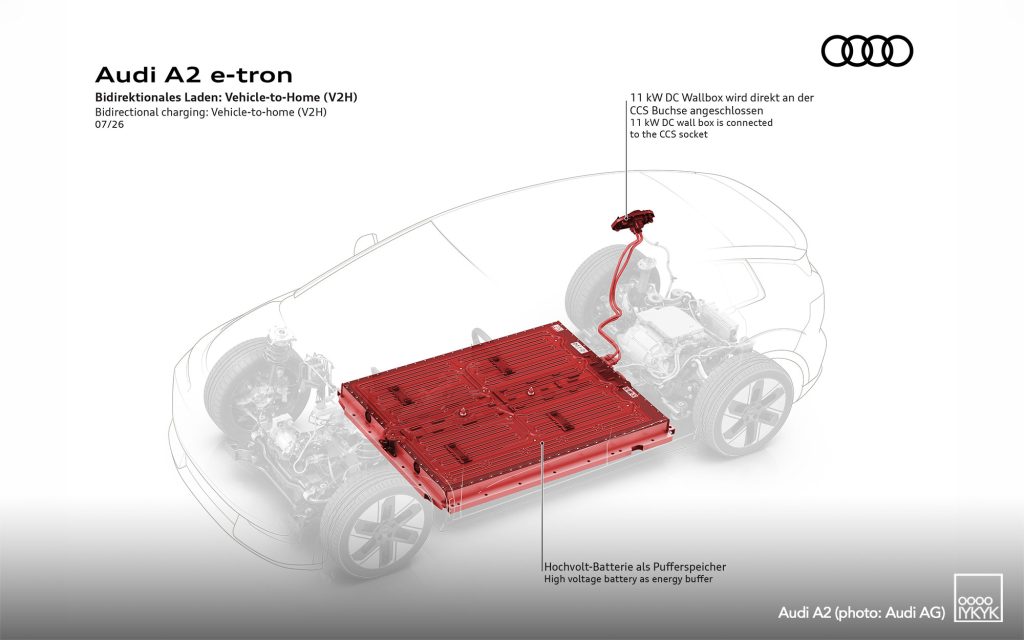
In Germany, Austria and Switzerland, Audi will also support Vehicle-to-Home functionality with compatible DC wall boxes. That allows the A2 to effectively operate as stationary household battery storage, potentially storing electricity generated from residential solar panels and returning it to the home later.
Audi limits normal discharge to a battery state-of-charge window between 20 and 80 percent, while owners needing maximum driving range can override that behavior and charge to 100 percent. It’s another example of Audi looking at efficiency beyond simply the number displayed on the vehicle’s instrument panel.
‘
FACTORY IS PART OF THE STORY
This may be the least glamorous aspect of the new A2, but strategically it’s worth mentioning. The original A2 required a specialized manufacturing approach in Neckarsulm because of its aluminum construction. Audi developed dedicated production facilities for the car, which began production there in 1999.
The new one almost reverses that thinking. A2 e-tron production takes place at Audi’s home plant in Ingolstadt alongside A3 bodies, using an existing 110,000-square-meter facility.
More than 1,200 existing manufacturing assets have been incorporated into the program, including approximately 250 robots previously used to build other Audi models. Rather than developing another costly bespoke manufacturing ecosystem, Audi has deliberately engineered the new A2 around infrastructure it already has.
Development itself was also accelerated. Audi says the A2 e-tron reached series production 21 months faster than comparable previous vehicle programs.
Ingolstadt will also adopt the “pearl chain” sequencing strategy already used at Neckarsulm, locking customer vehicles into a production sequence six days before assembly and carrying that order through the manufacturing process.
The irony is interesting. Neckarsulm’s engineering expertise helped create the first A2 and its groundbreaking ASF construction. More than 25 years later, manufacturing concepts proven at Neckarsulm are feeding back into Ingolstadt production of the new A2.
‘
RECYCLING RATHER THAN SIMPLY LIGHTWEIGHTING
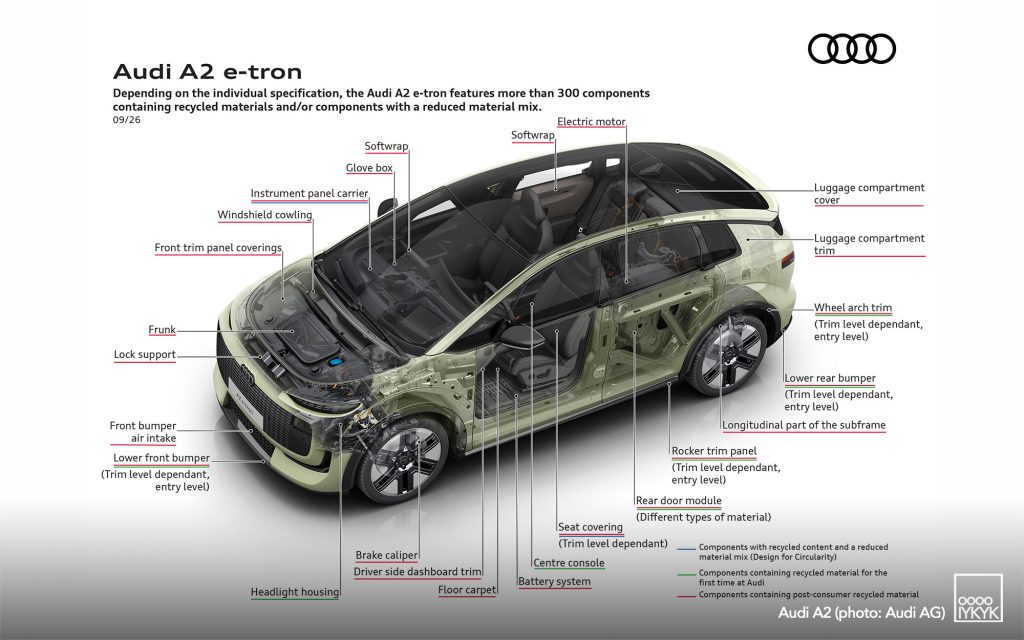
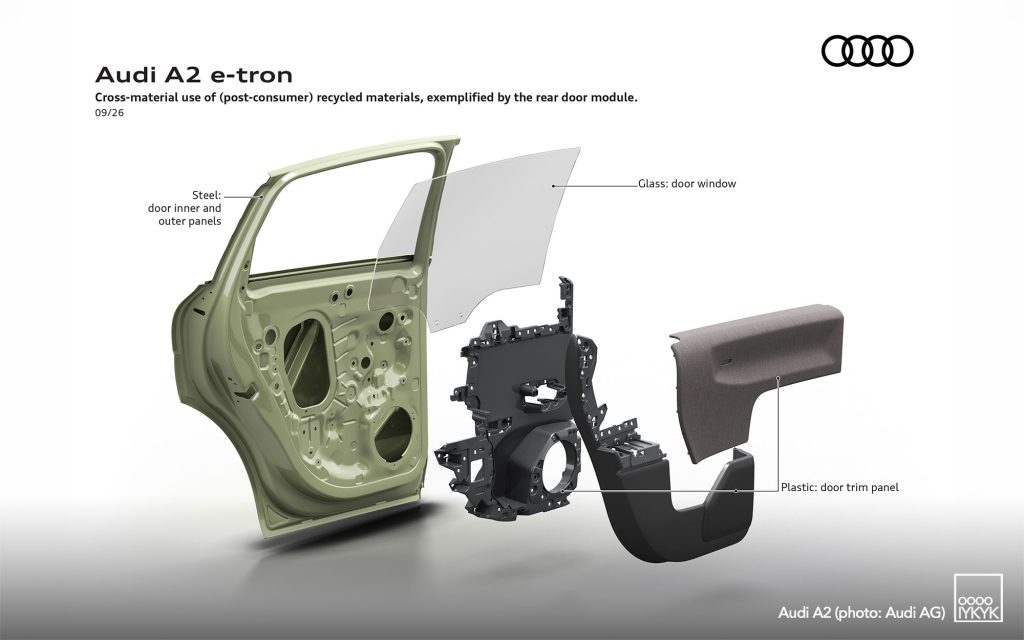
Materials tell a similar story. Depending on specification, more than 300 A2 components incorporate recycled material. More than 100 use post-consumer material recovered after previous use, including steel, aluminum and plastics.
Audi is also focusing on how easily those components can eventually be recycled again. Rather than substituting recycled content into complicated assemblies, engineers are reducing the number of different plastics within individual components and moving toward monomaterials where possible.
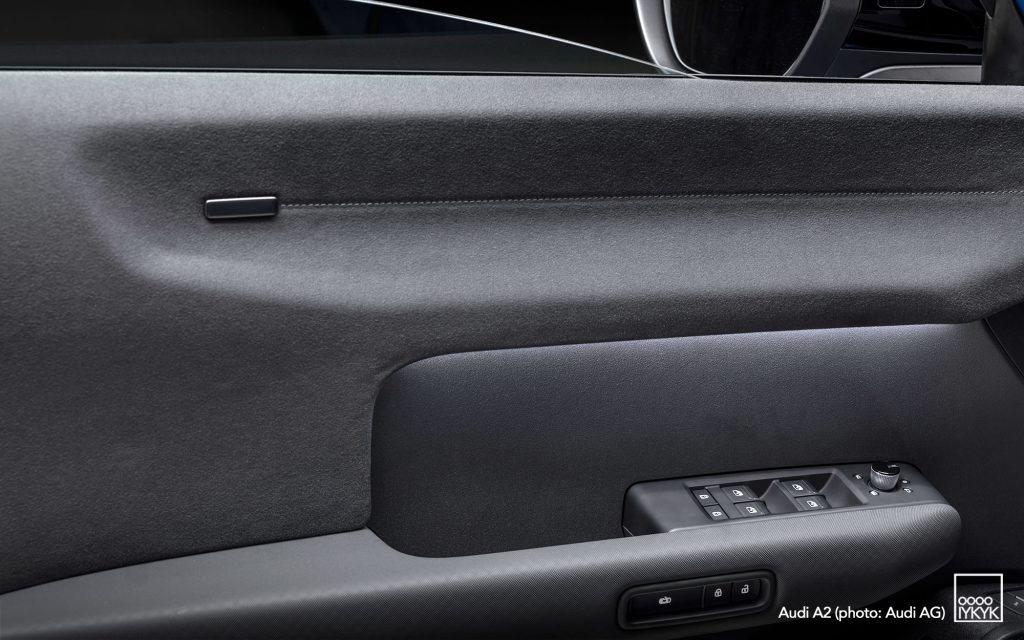
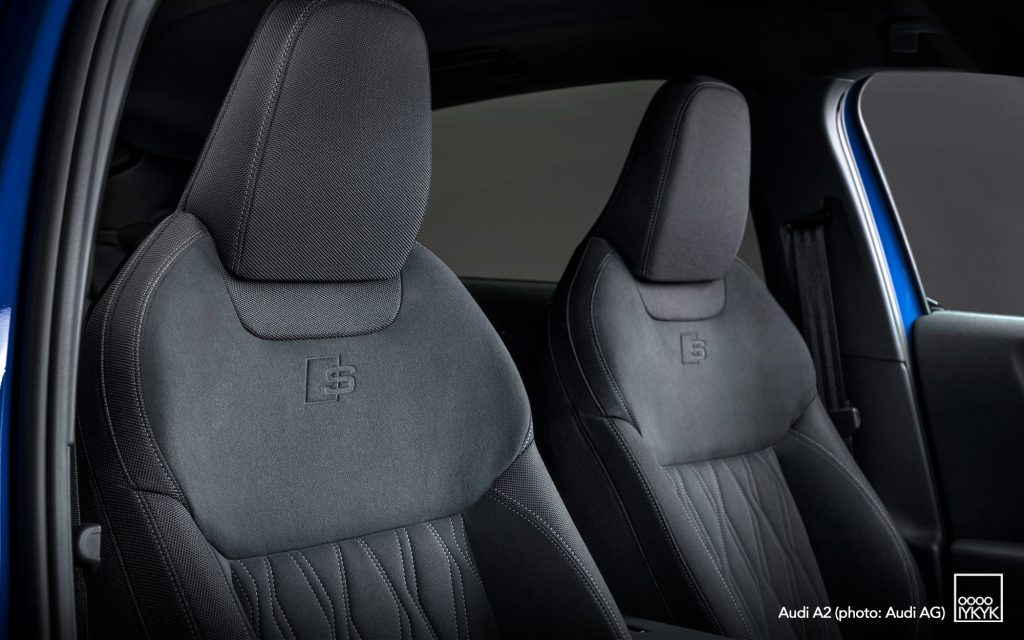
Optional Softwrap interior material and fabrics used on three available sport seats are produced from 100-percent recycled polyester.
WHAT IT REPRESENTS
Audi CEO Gernot Döllner isn’t being subtle about the broader significance of this car.
“The A2 e-tron is more than a new model: It represents Audi’s renewal,” he said at launch.
Audi’s recent history has been dominated by bigger vehicles, increasingly complicated drivetrains and the race to add performance, screens, features and battery capacity. The new A2 moves in a different direction.
It is relatively small. It’s rear-wheel drive. It prioritizes aerodynamic efficiency. Its longest-range variant isn’t its most powerful. Its production strategy is based around reusing equipment rather than building an expensive bespoke factory. Its designers are considering how components eventually come apart as seriously as how they go together.
Even the €38,200 starting price is part of that philosophy, positioning the A2 as Audi’s point of entry into battery-electric ownership rather than another high-priced flagship technology demonstrator.
The first A2 was arguably a car engineered ahead of the market. Twenty-five years later, Audi has revived it at a time when efficiency is no longer an eccentric engineering obsession but one of the fundamental challenges facing electric mobility.
AUDI A2 E-TRON AT A GLANCE
125 kW — 52 kWh LFP battery — 350 Nm — 0-100 km/h in 8.8 sec — up to 423 km WLTP — from €38,200
140 kW — 61 kWh LFP battery — 350 Nm — 0-100 km/h in 7.9 sec — up to 515 km WLTP — consumption from 12.8 kWh/100 km
170 kW — 84 kWh NMC battery — 350 Nm — 0-100 km/h in 7.0 sec — up to 646 km WLTP — from €48,900
240 kW — 84 kWh NMC battery — 545 Nm — 0-100 km/h in 5.7 sec — up to 630 km WLTP — from €51,200
Orders open September 10, 2026, with first European deliveries beginning in December.
PHOTO GALLERY