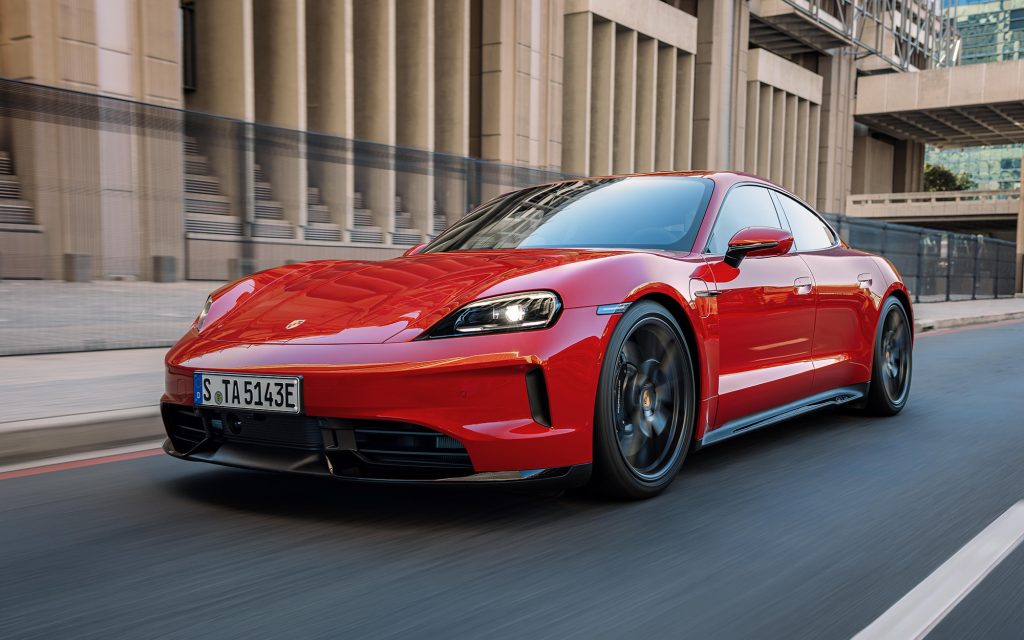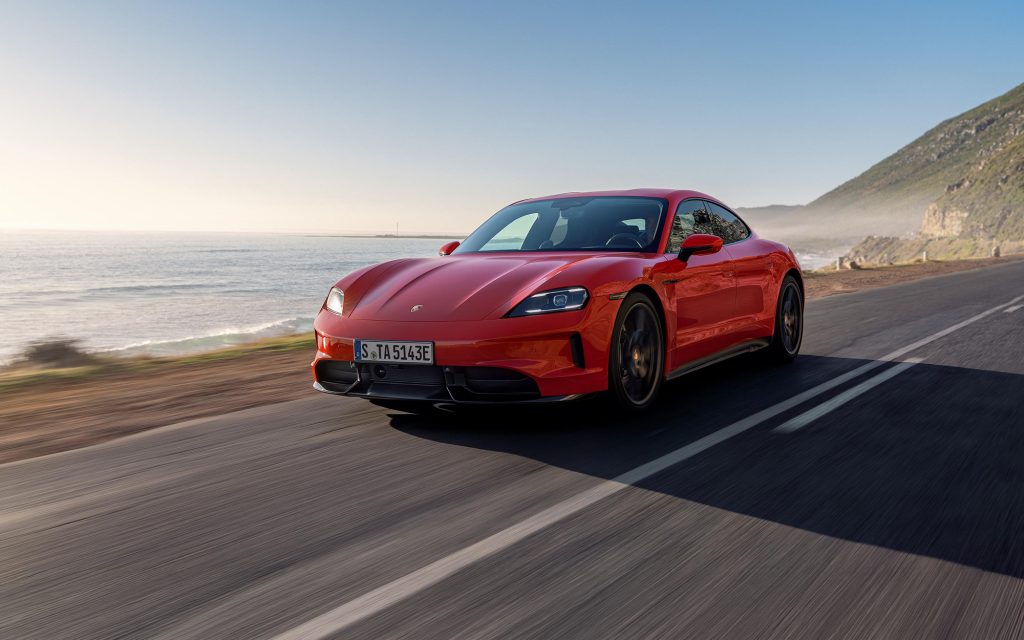


Porsche has announced a significant round of updates for the 2027 model year Taycan, introducing a new virtual transmission system called E-Shift, a completely revised infotainment experience, charging improvements and additional battery capacity across much of the range.
While the changes arrive under the Porsche banner, those interested in the Audi e-tron GT / RS e-tron GT should take notice. The Taycan and e-tron GT share the Volkswagen Group’s J1 platform, along with much of their electrical architecture, drivetrain technology and software foundation. Effectively, they’re close platform mates, which means many of the Taycan’s latest enhancements could eventually find their way into future versions of the e-tron GT and RS e-tron GT.
E-SHIFT INTRODUCES EIGHT VIRTUAL GEARS
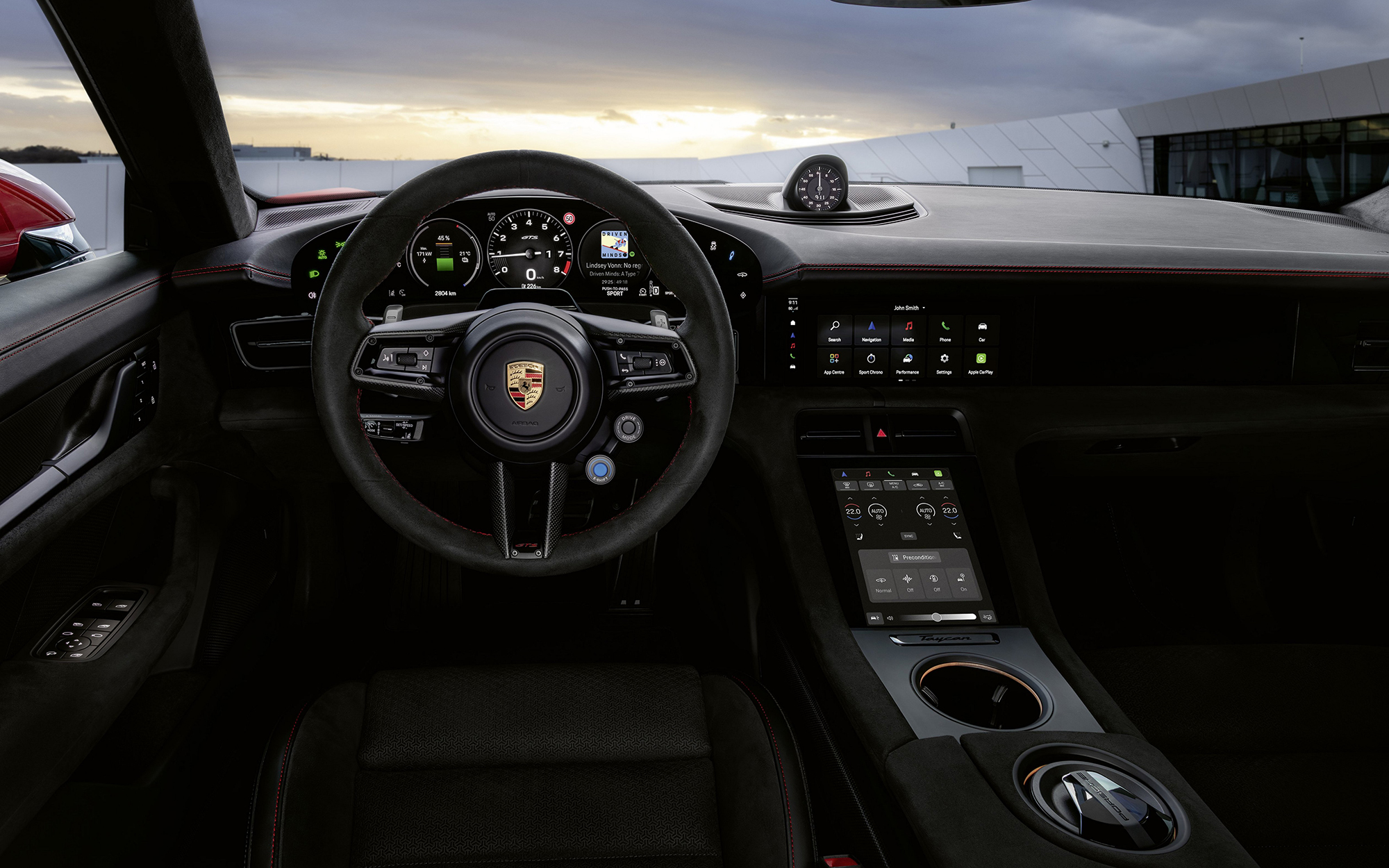
The headline update is Porsche E-Shift, a new system designed to add greater driver involvement to the electric driving experience.
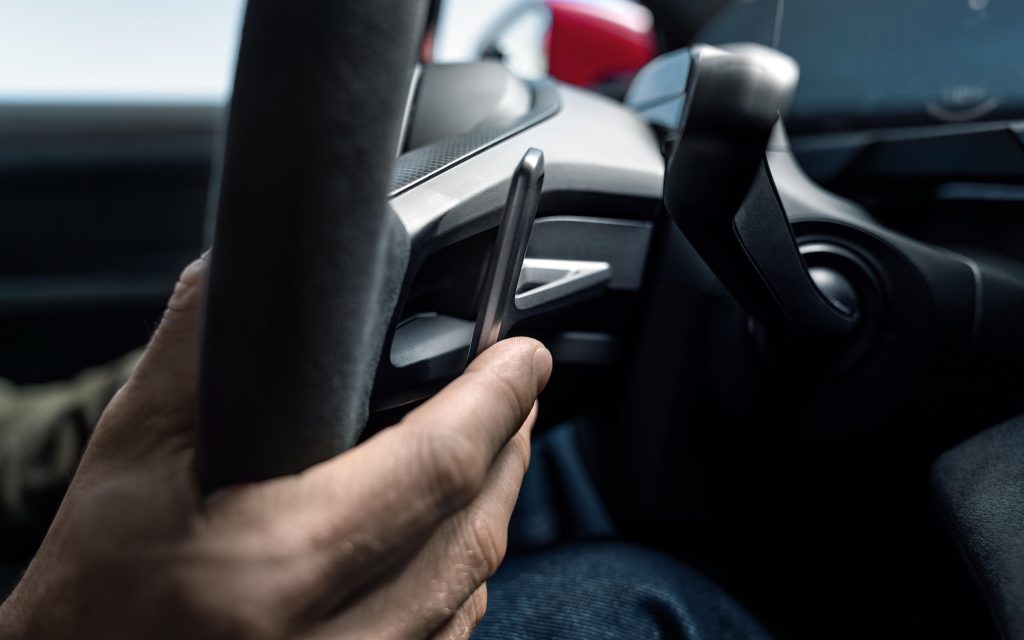
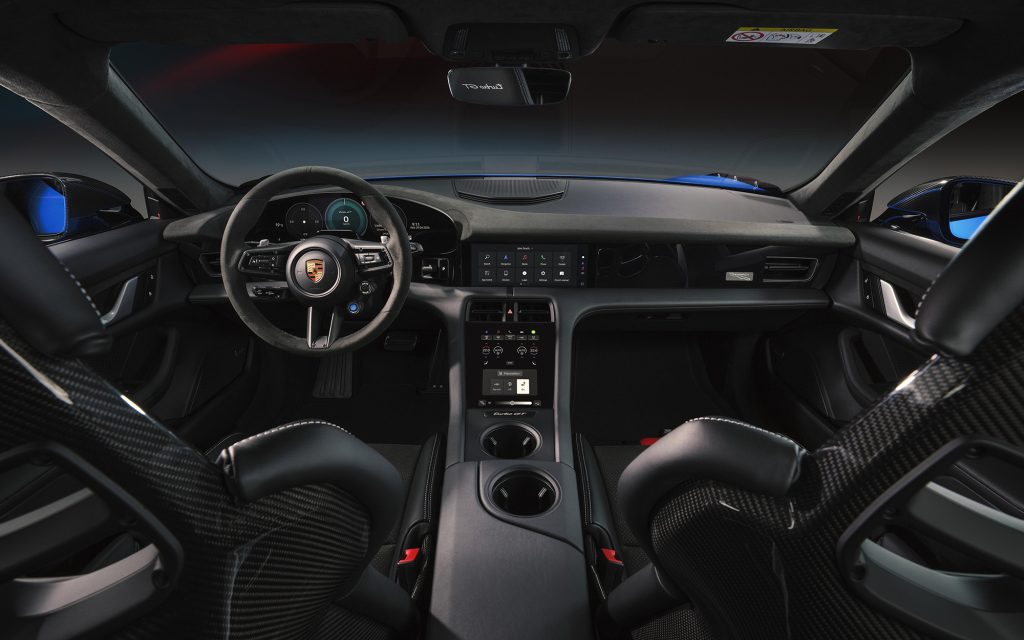
Unlike some competing systems that rely entirely on software simulation, Porsche’s solution builds upon the Taycan’s existing two-speed transmission. E-Shift creates eight virtual gears and allows drivers to shift between them using paddles mounted behind the optional GT Sport steering wheel.
The system combines simulated gear changes, a virtual rev limiter and gear-specific drag torque intended to mimic the engine braking characteristics of a combustion-powered sports car. Porsche says noticeable shift sensations are built into the programming, creating a more engaging experience during acceleration and deceleration.
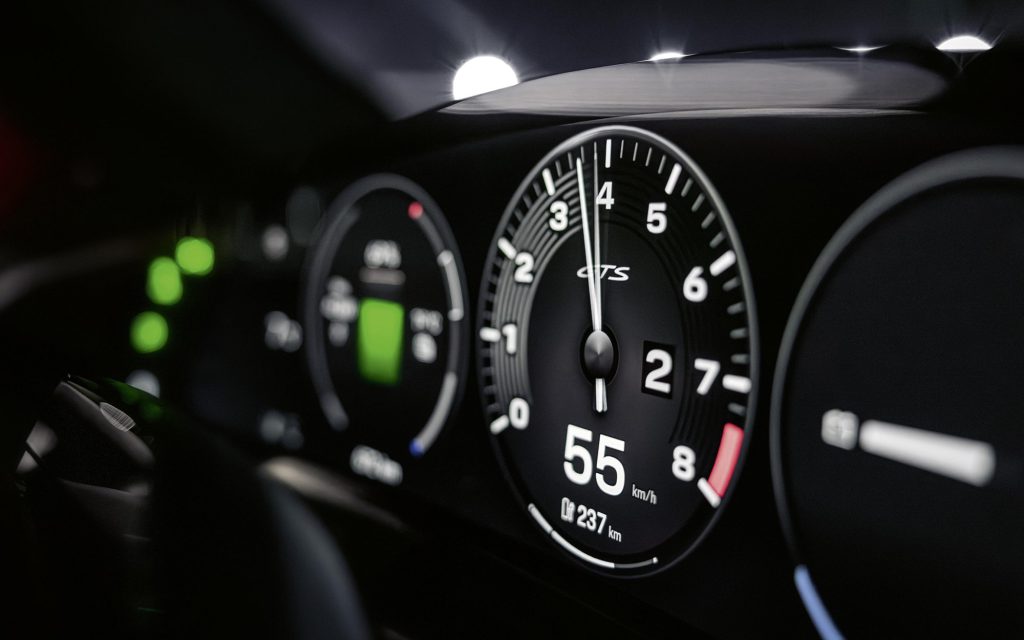
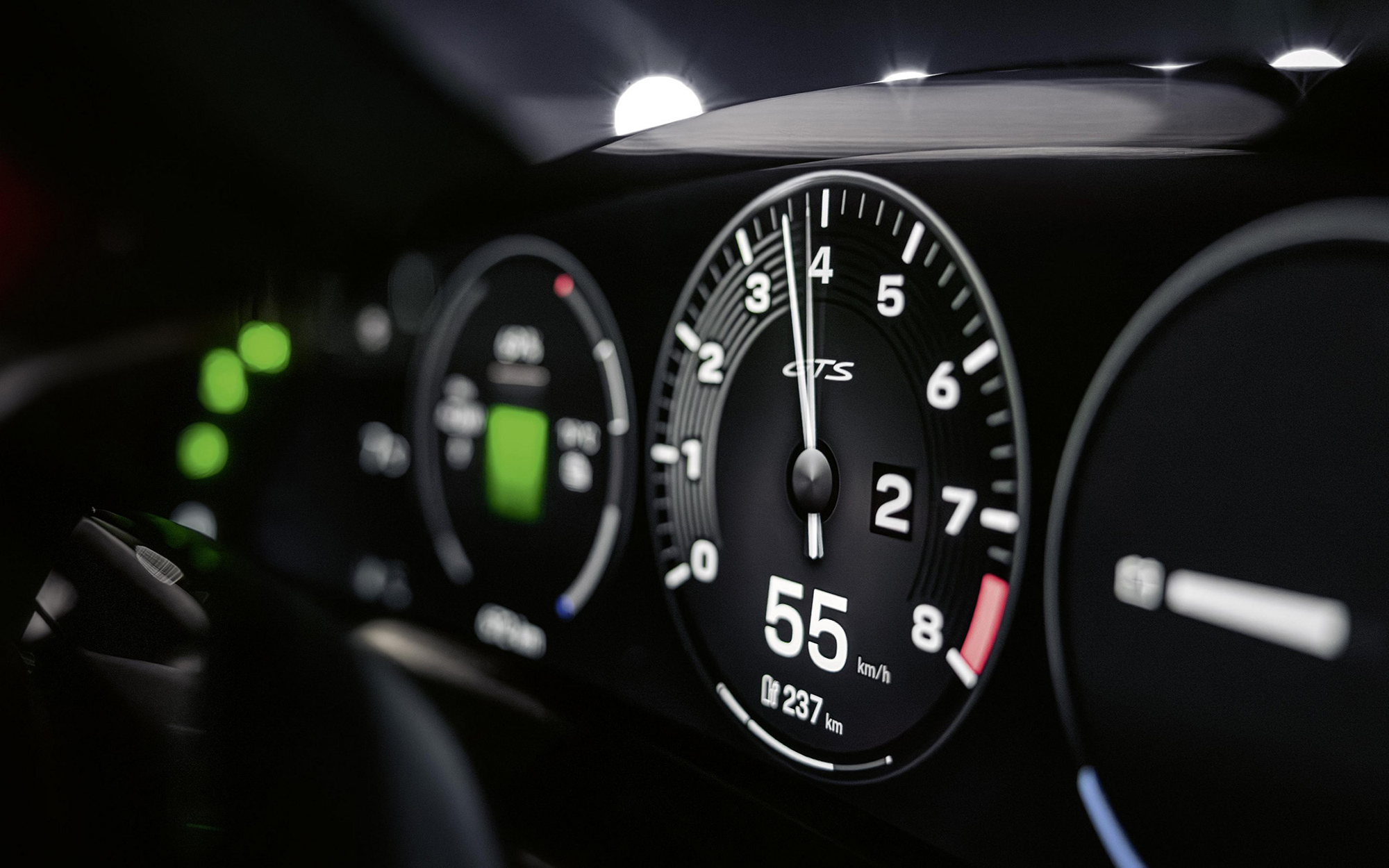
A revised Porsche Electric Sport Sound works in conjunction with the system, adapting both interior and exterior sound characteristics based on vehicle speed, load and selected virtual gear. Drivers also receive a virtual tachometer, gear indicator and shift lights within the instrument cluster.
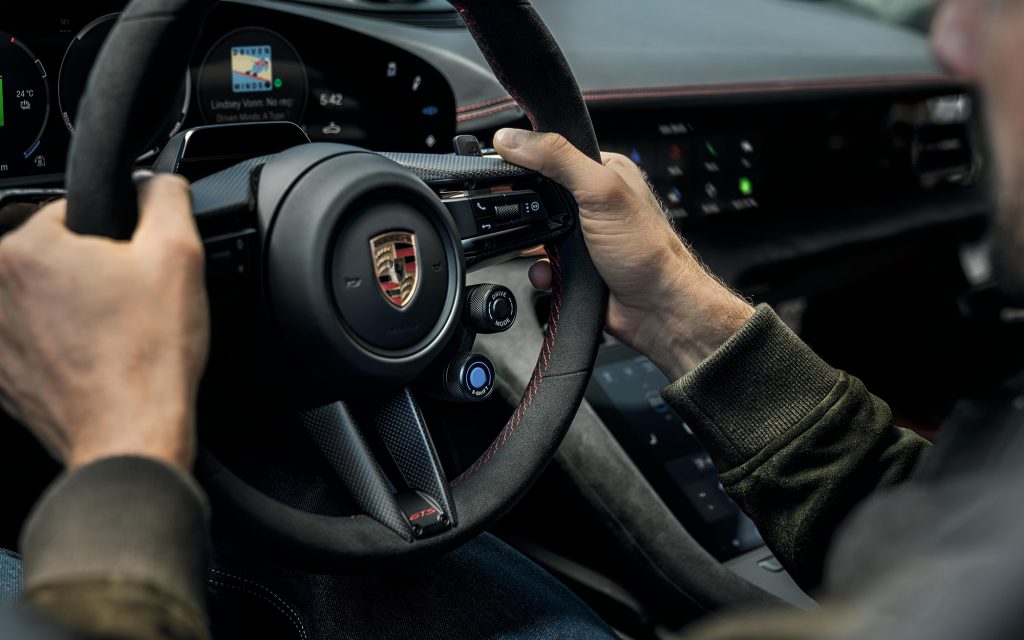
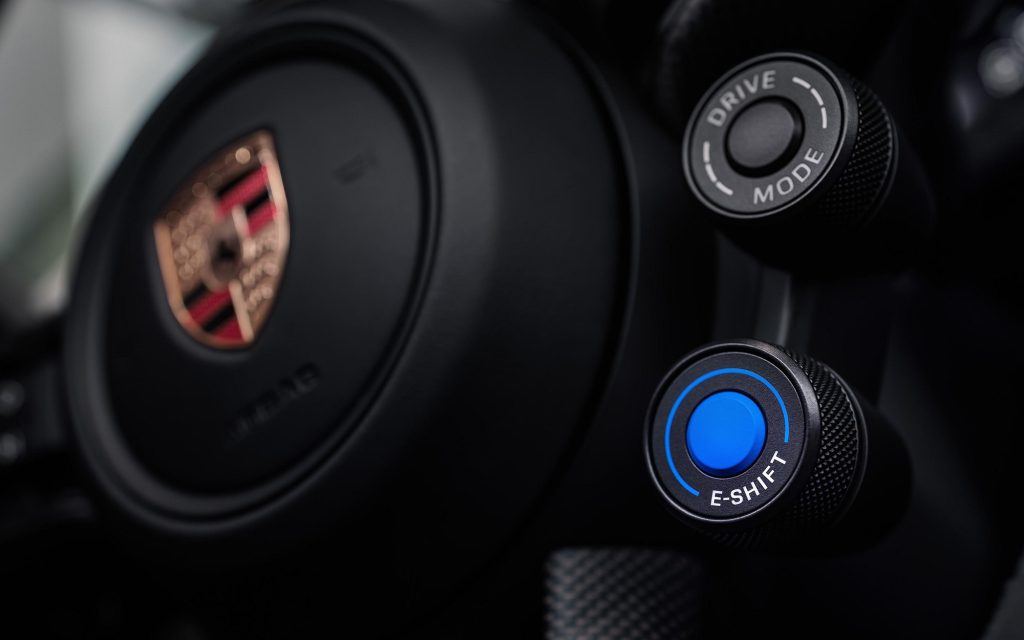
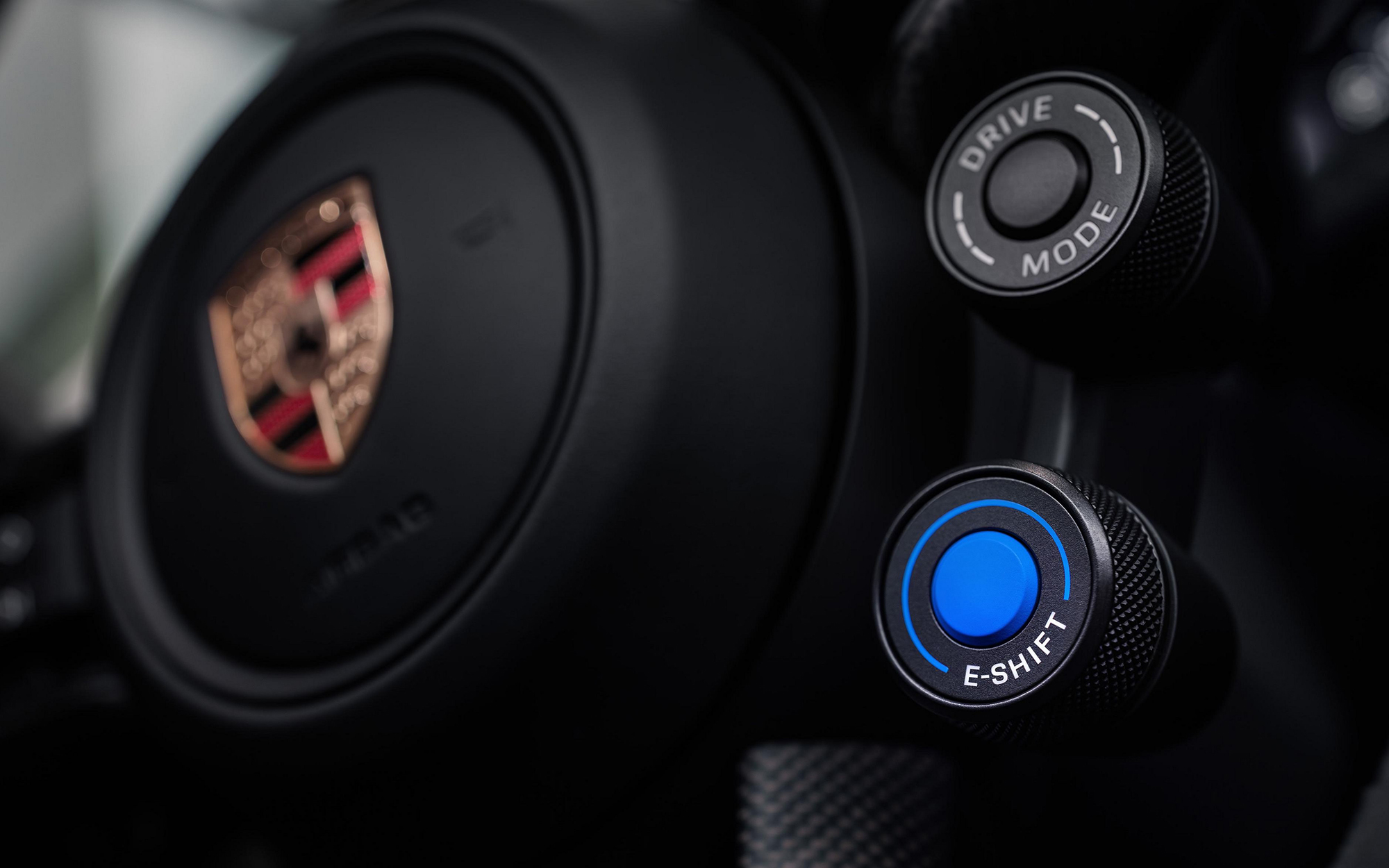
E-Shift can operate automatically or manually. In manual mode, drivers can select from all eight virtual ratios using the steering wheel paddles. The system is activated through a dedicated mode switch and can be completely disabled if preferred.
The technology bears similarities to systems introduced by Hyundai in the Hyundai Ioniq 5 N and later adopted by other Hyundai Motor Group performance EVs, though Porsche’s implementation benefits from the Taycan’s existing two-speed rear transmission.
In regards to the e-tron GT / RS e-tron GT, E-Shift may be the most interesting development. Given the close relationship between the Taycan and the GT, there appears to be little technical reason why Audi would not eventually implement a similar feature through future software updates or a model-year refresh.
NEW PORSCHE DIGITAL INTERACTION SYSTEM
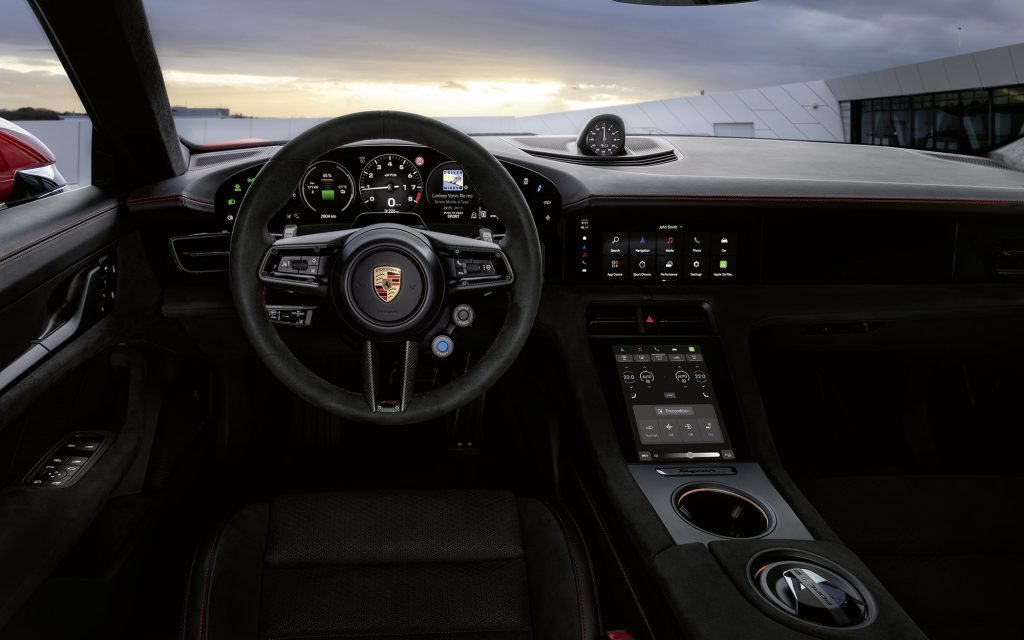
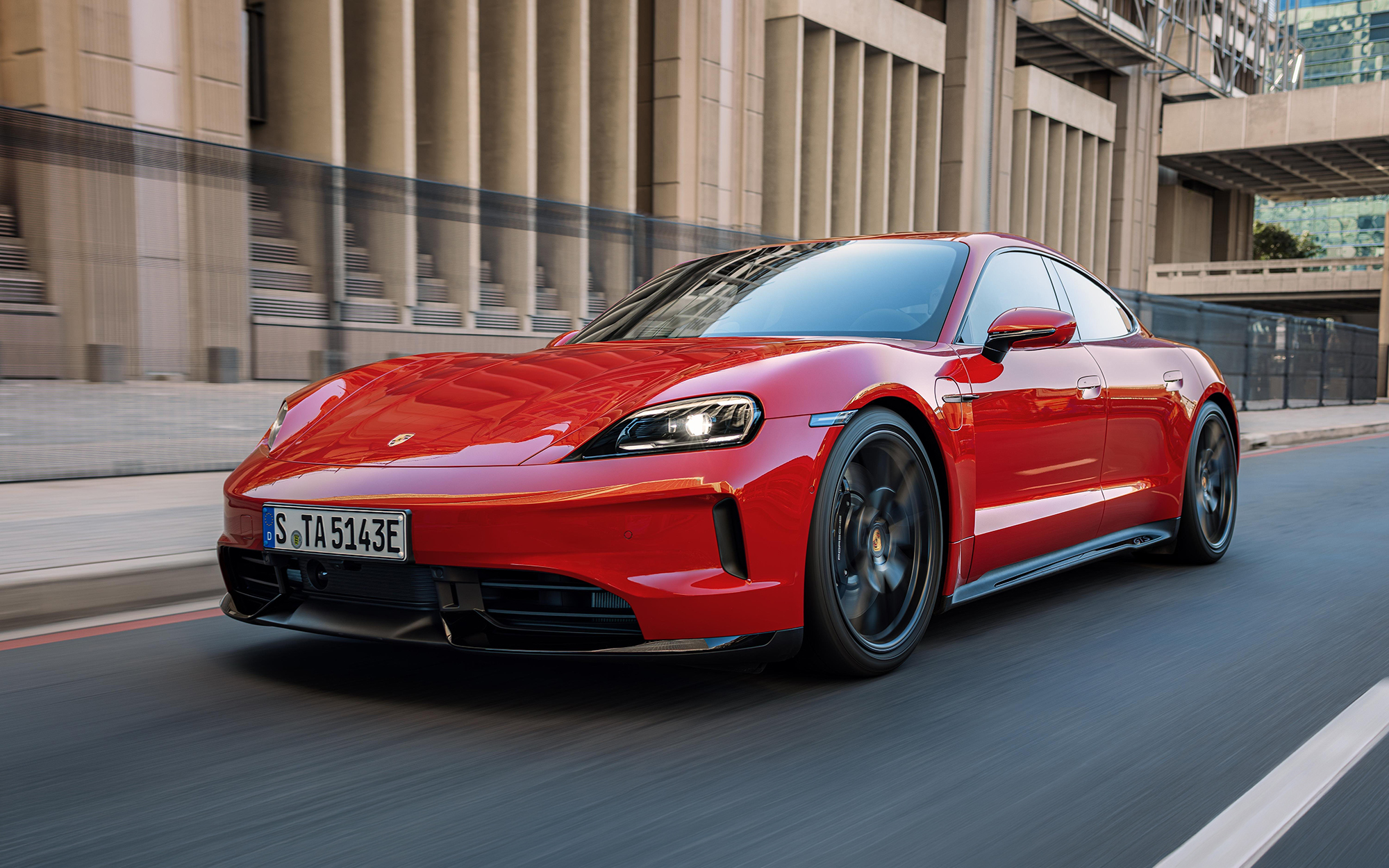
The 2027 Taycan also receives Porsche’s latest Porsche Digital Interaction operating system, previously introduced on the electric Macan and upcoming Cayenne Electric.
The new system brings substantially greater computing performance, with Porsche claiming up to five times the processing power of the outgoing setup. The interface has been redesigned with a cleaner layout, minimalist graphics and smoother animations.
A new 3D vehicle model, displayed in the customer’s actual vehicle color, serves as a central control hub for many vehicle functions. The model can be rotated and interacted with directly through the touchscreen.
Additional improvements include configurable widgets, expanded split-screen functionality and a Themes app that allows users to personalize display colors and ambient lighting themes.
Apple CarPlay and Android Auto integration have also been expanded, while navigation gains more detailed route calculations, enhanced charging planning and 3D building visualization.
Voice control receives one of the largest upgrades. Porsche’s AI-supported Voice Pilot now allows more natural conversations, follow-up questions without repeatedly saying “Hey Porsche,” and enhanced points-of-interest searches powered by Google.
A faster wireless charging tray supporting magnetic ring technology now delivers up to 25 watts of charging power, approximately 50 percent faster than before.
LARGER BATTERY BECOMES STANDARD
Porsche has also standardized the larger Performance Battery Plus across the Taycan lineup.
The 105 kWh battery pack now comes standard on Taycan, Taycan 4 and Taycan 4S models. In addition to increased capacity, the larger battery supports charging rates of up to 320 kW when connected to compatible 800-volt DC fast chargers.
A new battery state-of-health display has also been added, providing owners with additional information about long-term battery condition.
NACS CHARGING COMES TO THE TAYCAN
North American Taycans gain a native NACS DC fast-charging port on the passenger-side front fender, while the driver’s side retains a J1772 AC charging connection.
The change simplifies access to Tesla Supercharger infrastructure while maintaining compatibility with existing AC charging equipment. Porsche will include a CCS adapter for compatibility with CCS-equipped public charging stations.
Given Audi’s plans to adopt NACS across its North American EV portfolio, a similar solution could eventually appear on future e-tron GT models.
NEW RANGE-OPTIMIZED TIRES
Porsche has also introduced new “Summer Tires Range Plus” tires for Taycans equipped with 20-inch wheels.
The reduced rolling resistance tires are available on rear-wheel-drive Taycan sedan and Sport Turismo models and can add approximately 12 miles of WLTP driving range. When combined with the Performance Battery Plus, Porsche quotes a maximum WLTP range of approximately 435 miles (700 kilometers).
While these tires are targeted primarily at efficiency-focused variants rather than performance models, they demonstrate Porsche’s continued effort to improve range without requiring major hardware changes.
FIRST FACTORY-FIT MANTHEY KIT FOR AN EV
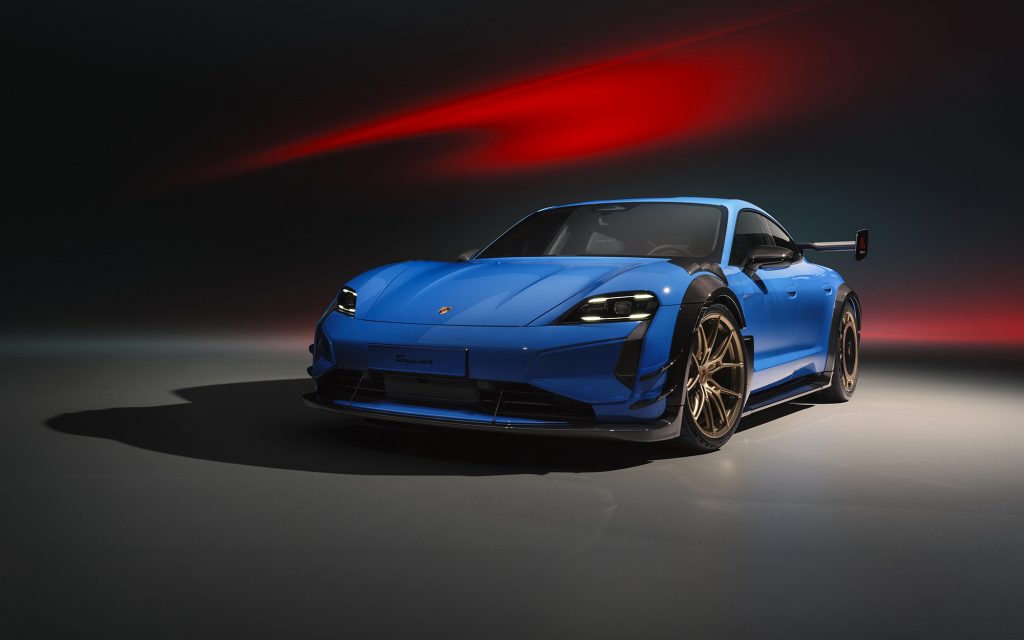
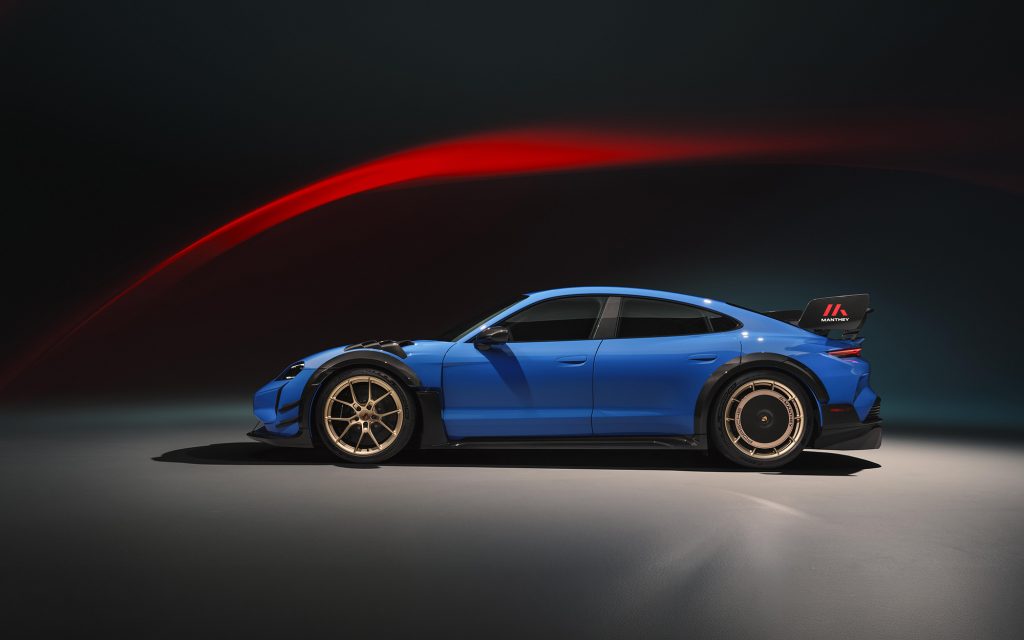
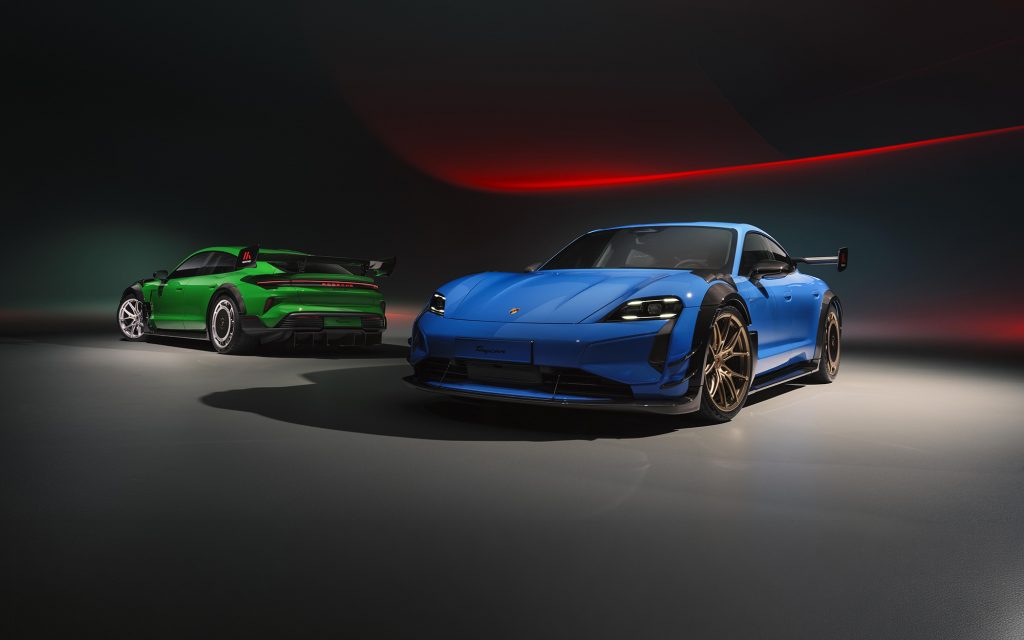
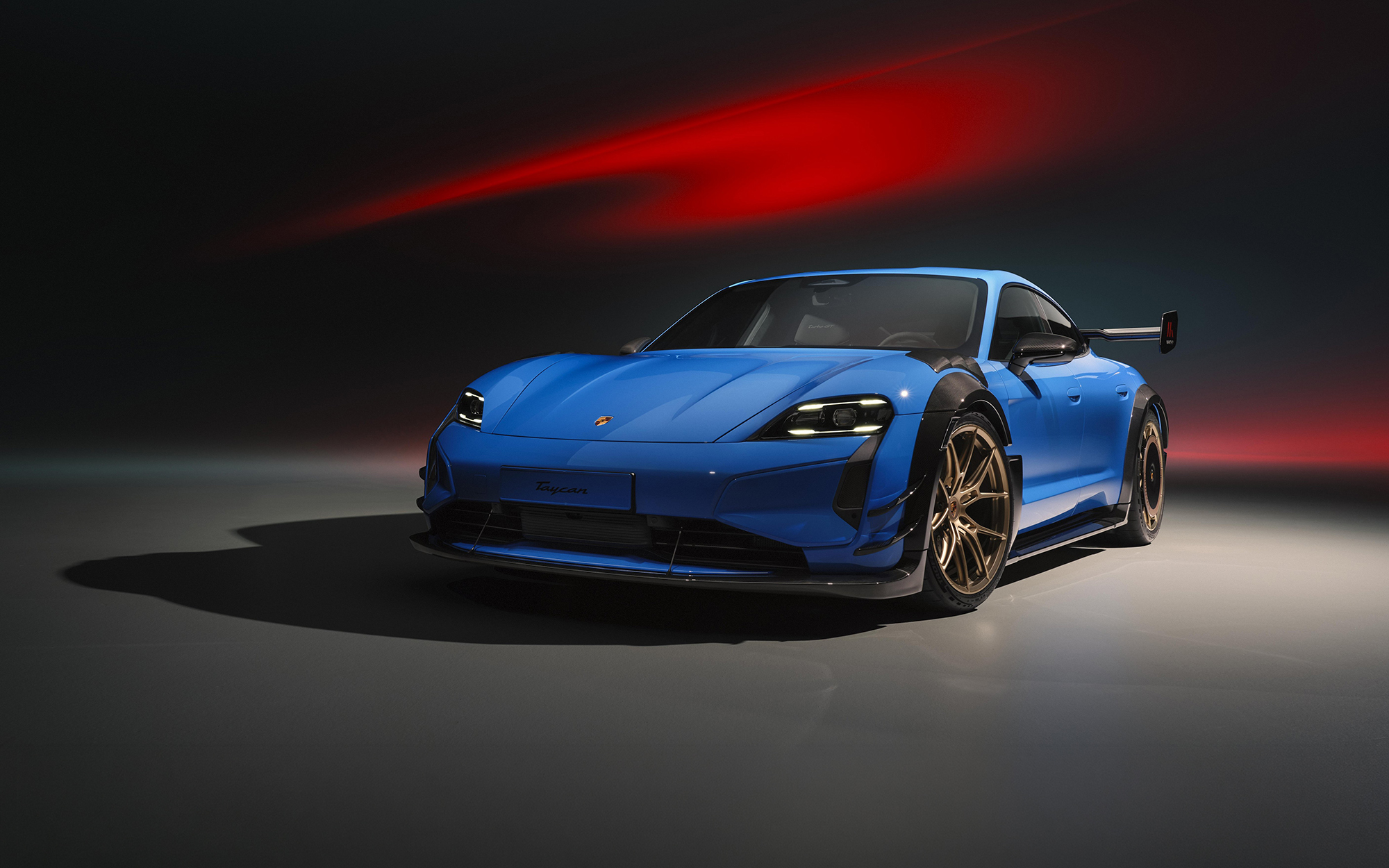
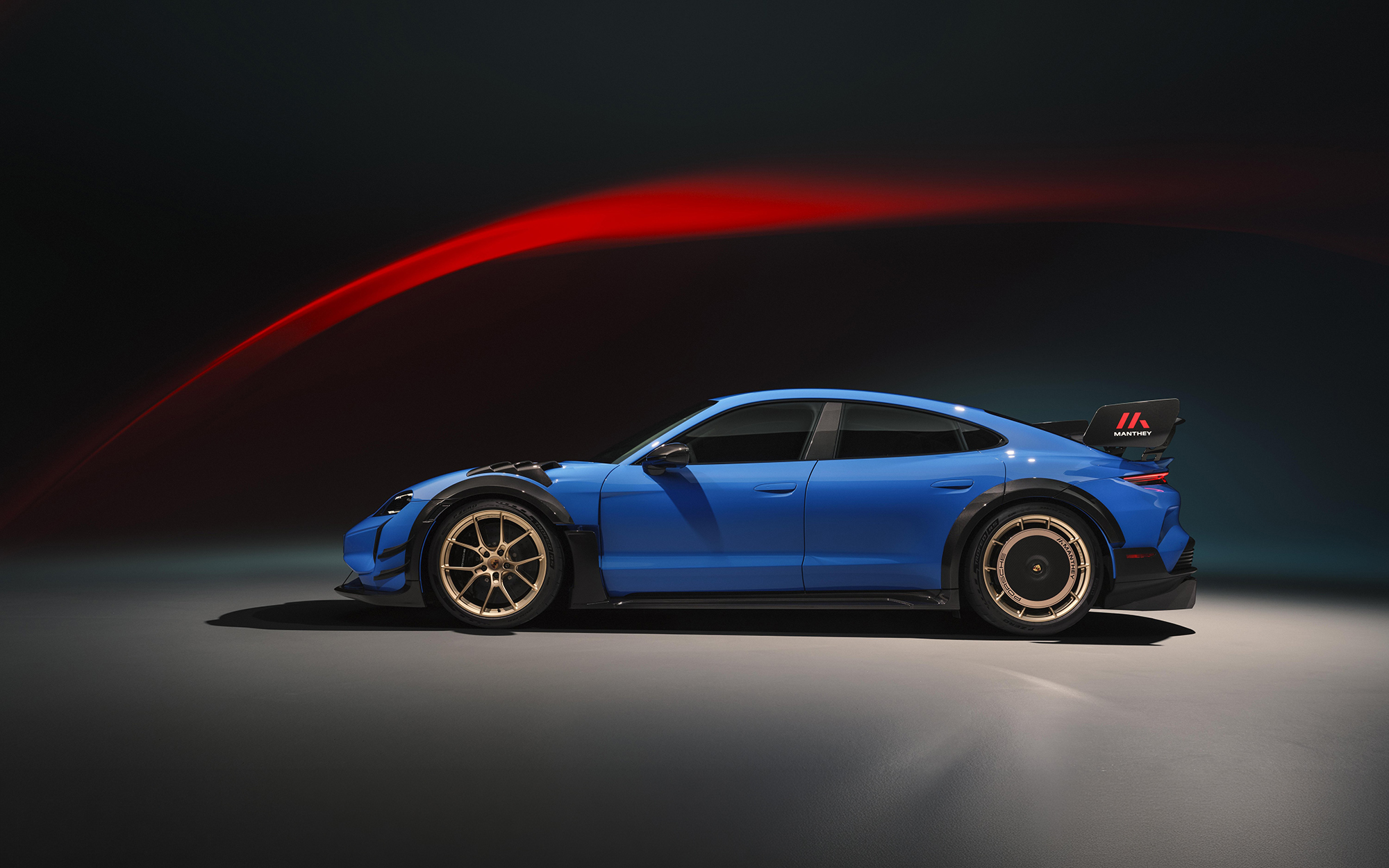
The most aggressive update is reserved for the Taycan Turbo GT with Weissach Package.
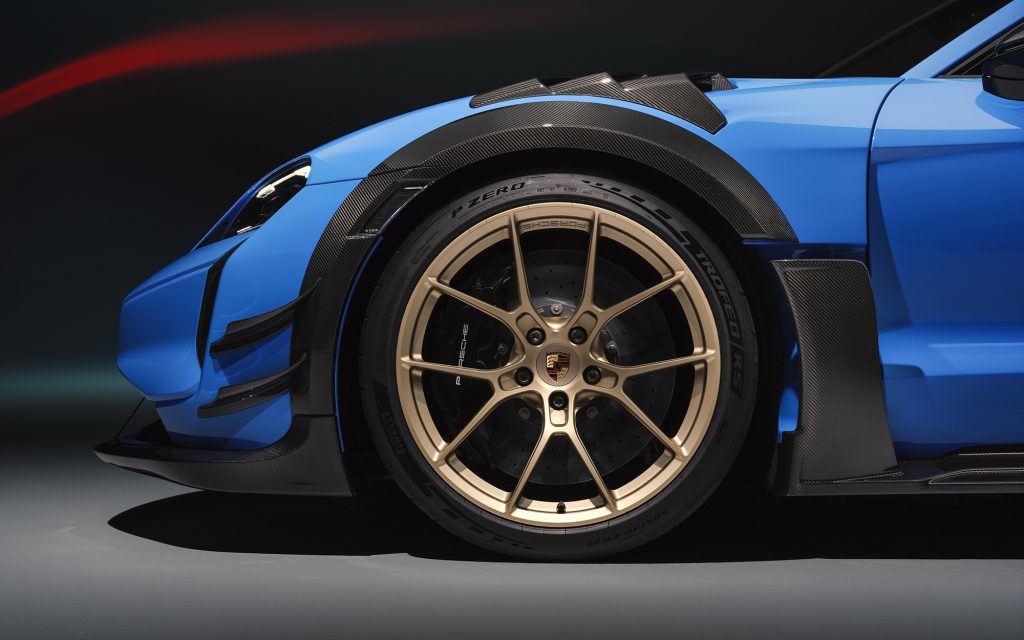
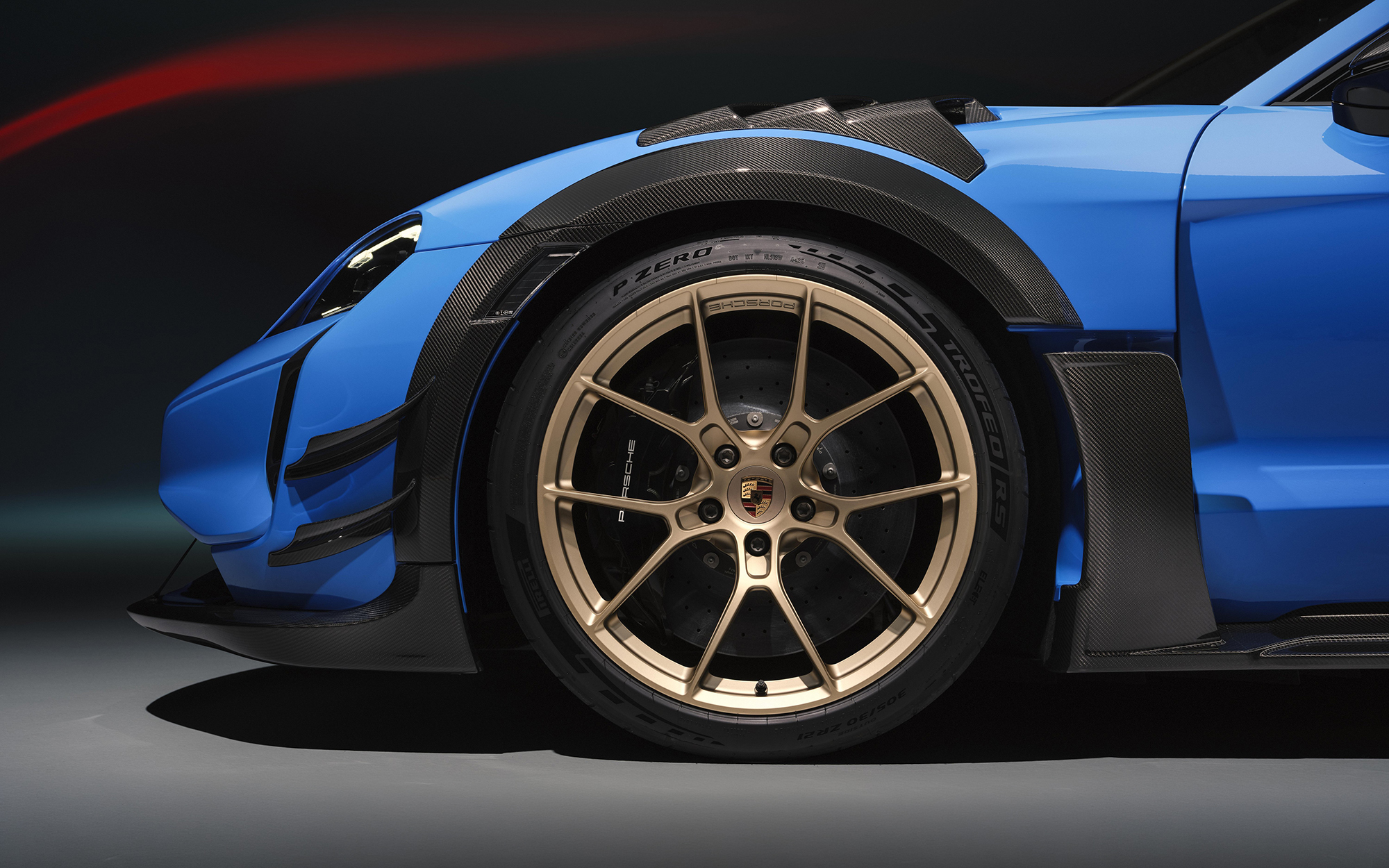
For the first time, Porsche will offer a Manthey Racing performance package directly from the factory. The package includes revised aerodynamics, suspension calibration, wheel and tire changes, larger front brakes and powertrain modifications.
Aerodynamic revisions include an adjustable front diffuser, larger rear wing, revised rear diffuser and new underbody air management components. Porsche says downforce increases from 95 kilograms to 310 kilograms at 124 mph.
The package also introduces lightweight 21-inch wheels and titanium wheel bolts, reducing unsprung mass despite the larger brake hardware.
Power rises as well. Continuous output increases by 20 kW to 600 kW (804 horsepower), while Attack Mode climbs to 730 kW (979 horsepower) for 10-second bursts. Additional launch control torque has also been added.
The result is a Nürburgring lap time of 6:55.553, making it the fastest electric executive car ever to lap the circuit and more than 12 seconds quicker than the standard Taycan Turbo GT Weissach Package.
Unlike E-Shift and the infotainment upgrades, the Manthey package is unlikely to have a direct Audi equivalent. Manthey Racing’s involvement is unique to Porsche’s motorsport and performance programs, and Audi traditionally develops its own track-focused performance packages.
WHAT THIS MEANS FOR AUDI
The Taycan’s 2027 updates provide a glimpse into the continued evolution of the J1 platform. While Audi has not yet announced corresponding changes for the RS e-tron GT, several of the updates appear highly transferable.
E-Shift, the revised infotainment software, battery management improvements and eventual NACS integration all seem like logical candidates for future Audi adoption. Whether Ingolstadt chooses to implement the same virtual transmission experience remains to be seen, but Porsche’s willingness to add a layer of emotion and driver interaction to its flagship EV may signal a broader shift in how performance electric vehicles are developed moving forward.
The updated 2027 Porsche Taycan range is available to order now, with North American deliveries scheduled to begin in the fall of 2026.