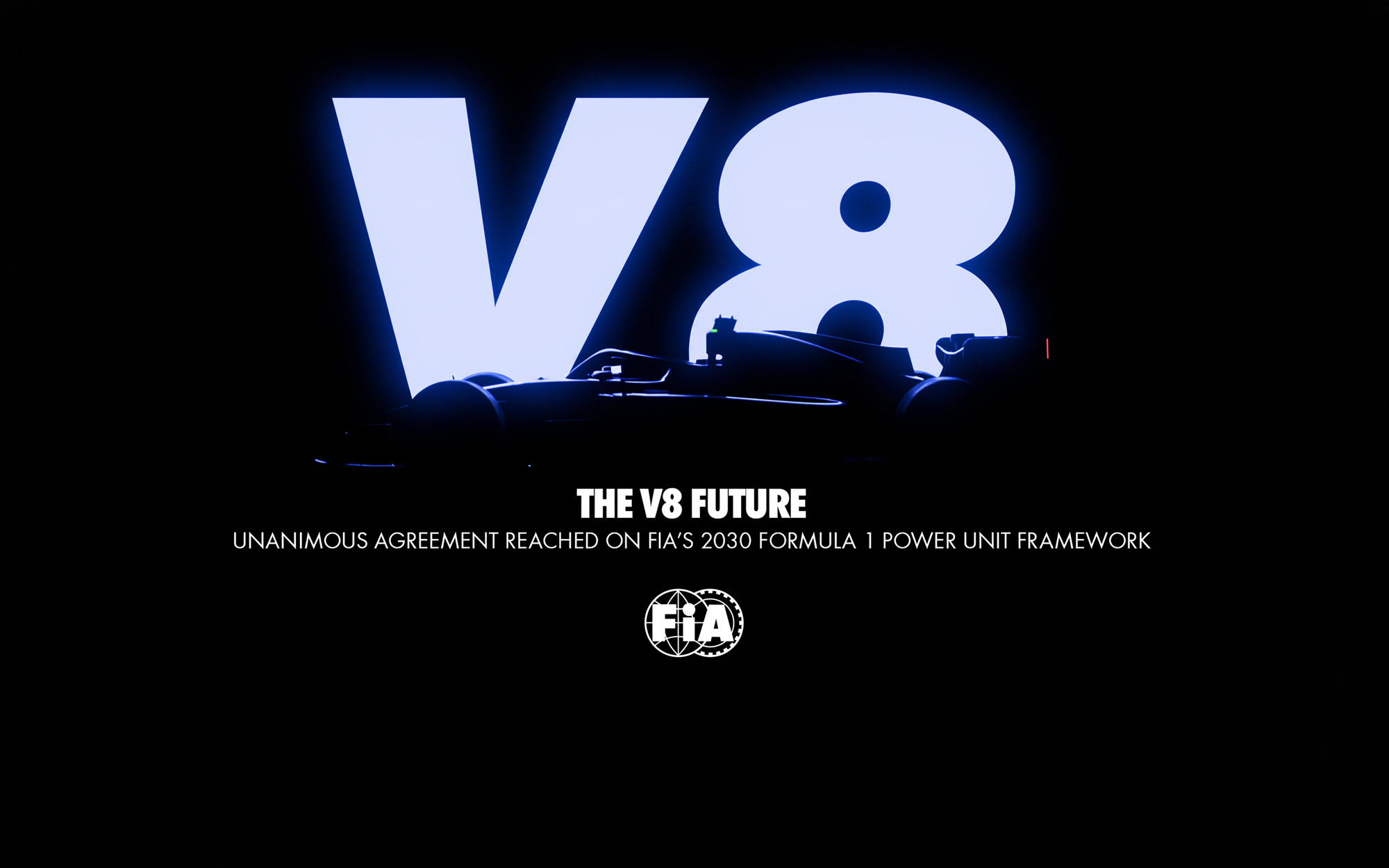

The Audi Revolut F1 Team is still in its first season with a power unit built around the 2026 regulations. It now has a direction for the one that would follow. On November 20, the FIA announced unanimous agreement among the governing body, Formula One Management, the teams and the power-unit manufacturers on a framework for 2030. At its center is a 2.1-liter turbocharged V8 running on advanced sustainable fuel, with a smaller hybrid component than today’s power units. The framework still requires approval from the FIA World Motor Sport Council.
A NEW ENGINE FORMULA FOR NEUBURG
When Audi announced its Formula 1 entry in 2022, it cited the incoming rules’ emphasis on sustainability and cost efficiency as important reasons to join. The resulting AFR 26 Hybrid, developed in Neuburg an der Donau, pairs a 1.6-liter turbocharged V6 with a 350 kW motor-generator. The proposed 2030 formula retains sustainable fuel and hybrid technology while shifting more of the emphasis back to the combustion engine. It would also bring V8s back to the grid for the first time since 2013.
For Audi, the immediate issue is how soon the engineers get a rulebook they can design to. A 2030 introduction would give the current V6 formula four racing seasons, from 2026 through 2029. Neuburg would have to develop the next power unit while supporting the one already on track. The FIA says the V8 would carry over some aspects of the current engine geometry. How much that would let Audi reuse, and how much electrical power the new rules would allow, remain open questions.
WHAT AUDI WANTED FROM THE NEXT RULES
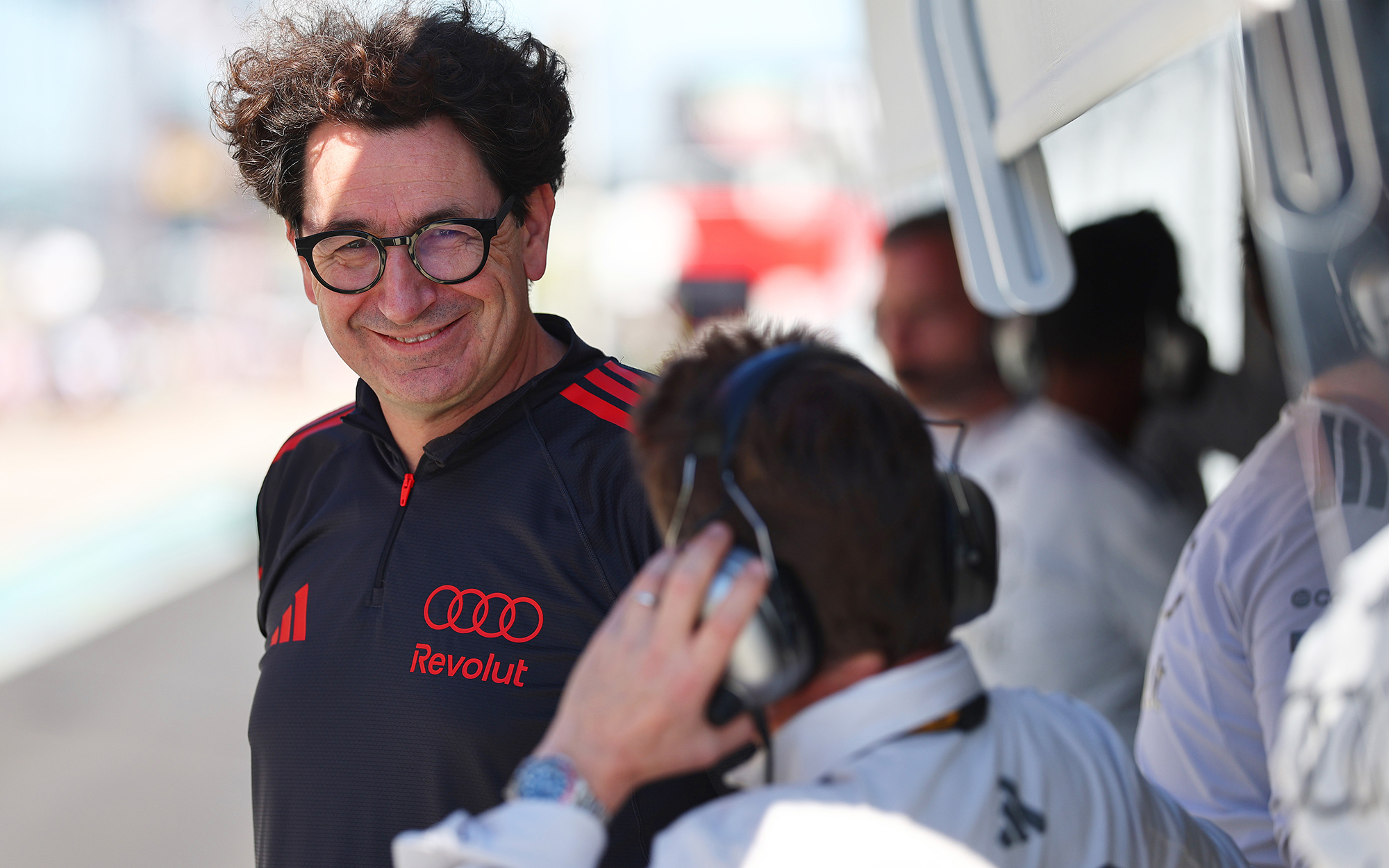
Speaking at the Azerbaijan Grand Prix in September, Audi team chief Mattia Binotto welcomed a V8, a stronger engine note and lower costs. He also backed retaining hybrid technology and said turbocharging could have a place in the new formula. His larger point was that Formula 1 should remain a place for manufacturers to develop advanced technology, even as it takes cost and complexity out of the power unit.
Binotto said a 2030 debut would require agreement by the end of 2026 so manufacturers could begin design and concept work in 2027. The FIA plans to present the definitive framework to the World Motor Sport Council in Shanghai in December. For Audi, that meeting matters because it could give Neuburg the rules it needs to start designing its second Formula 1 power unit before the first has completed its debut season.