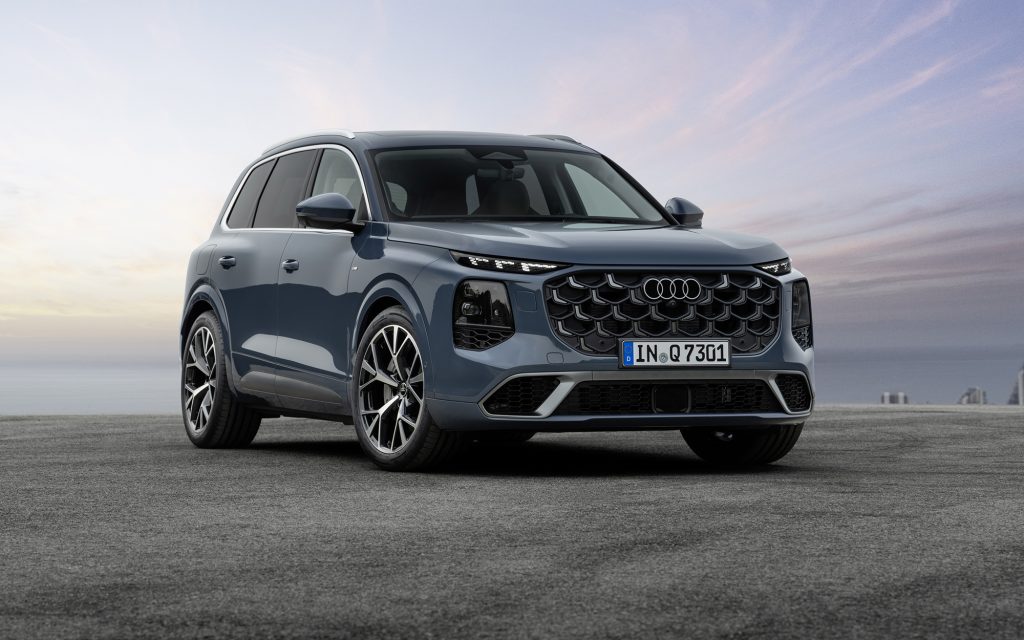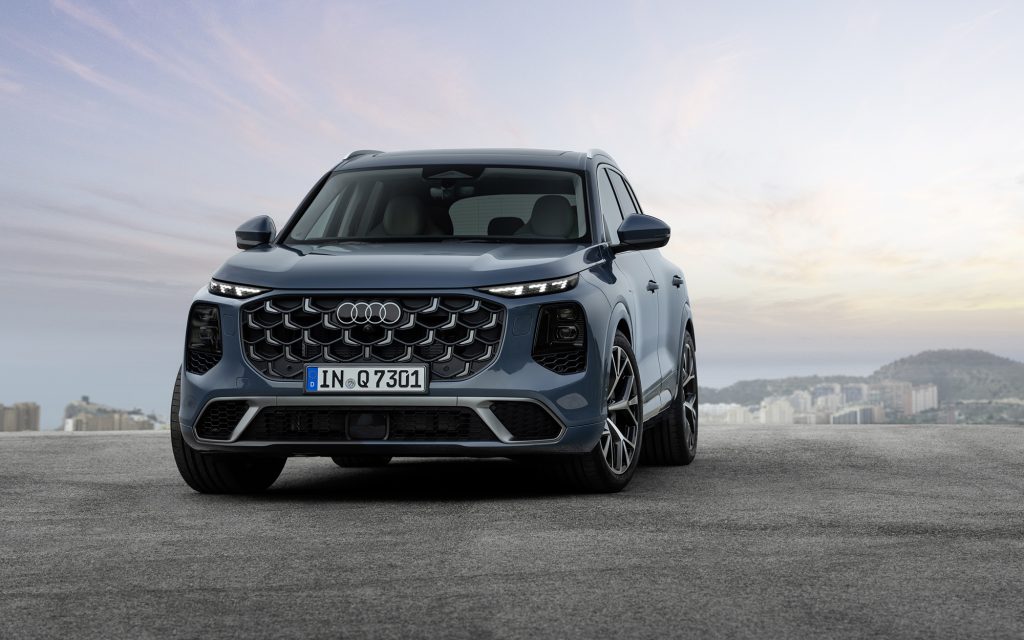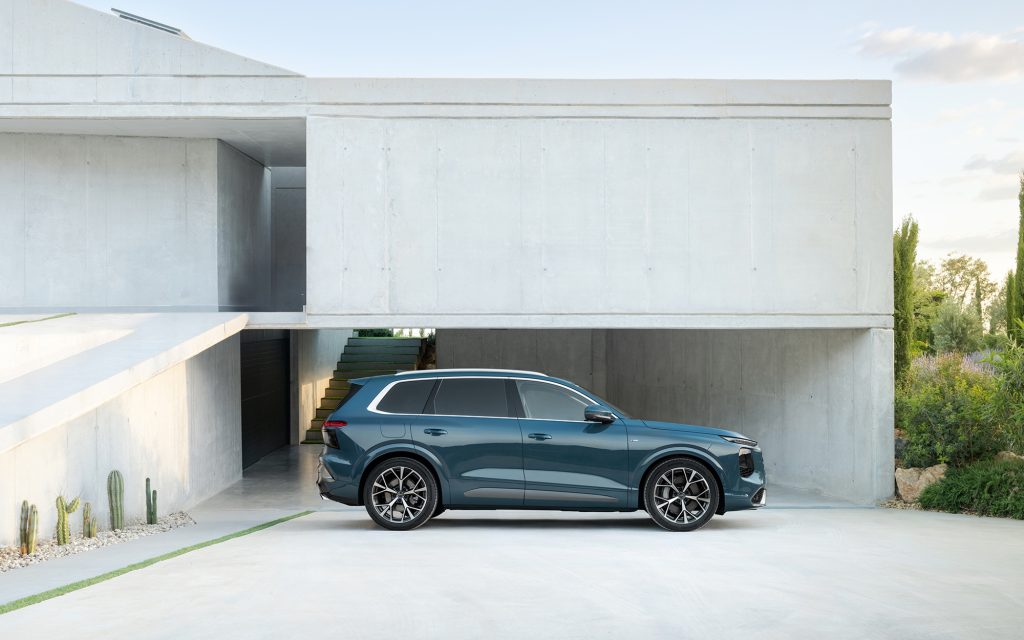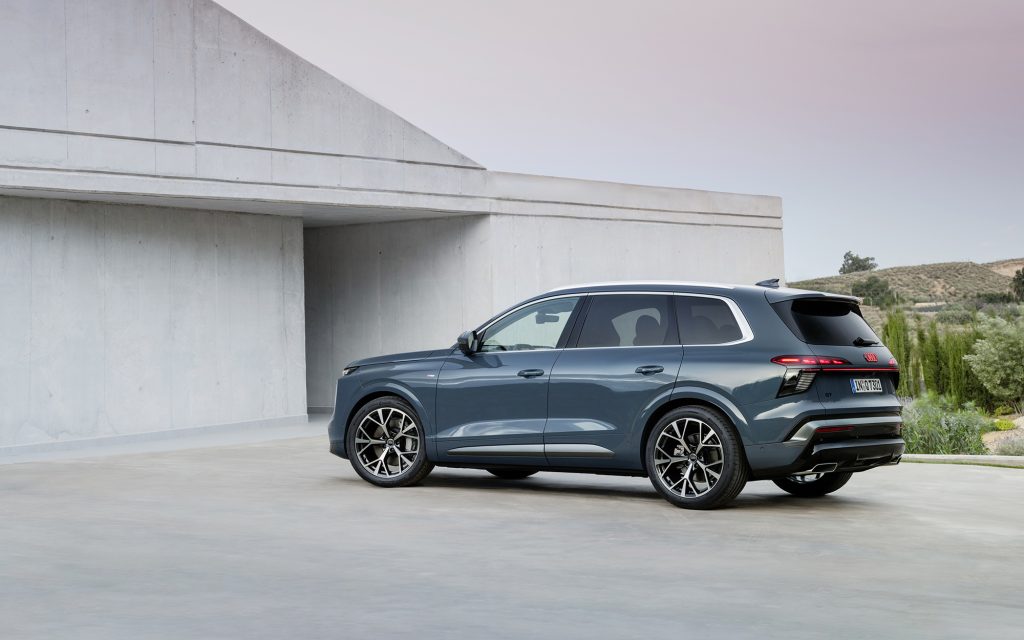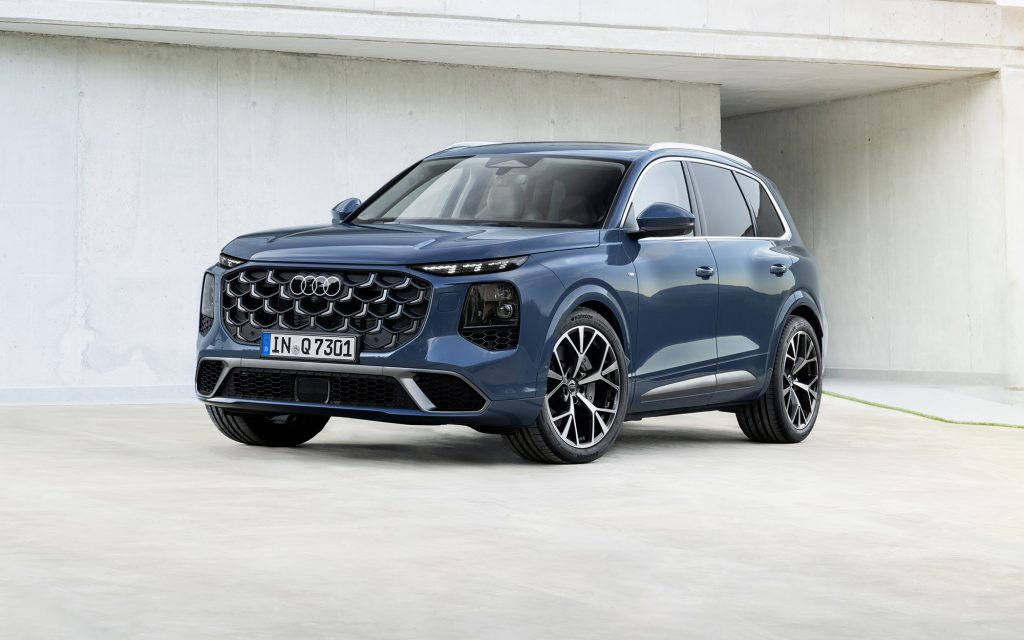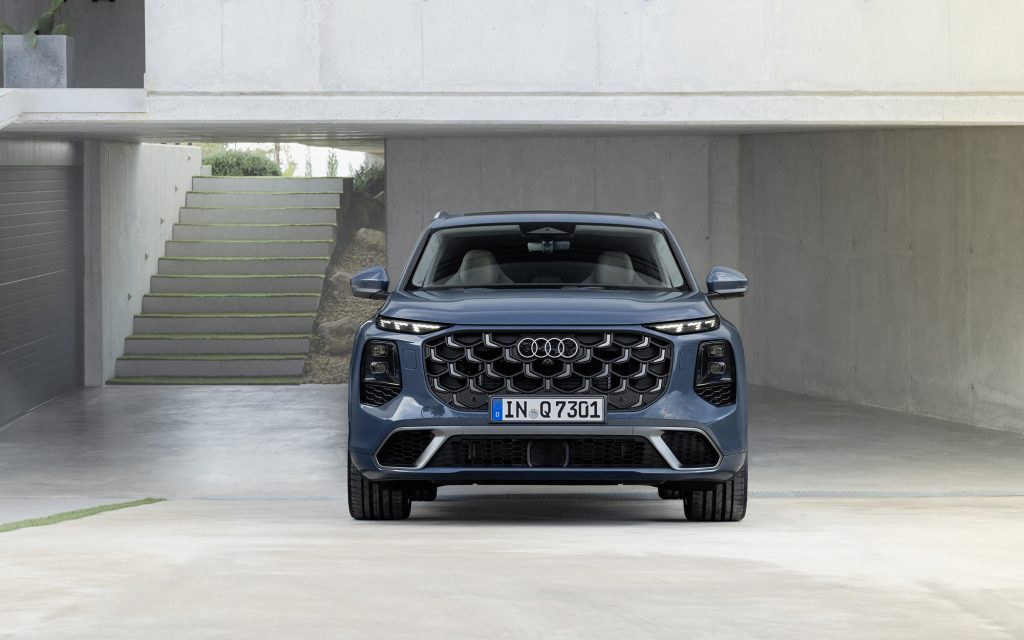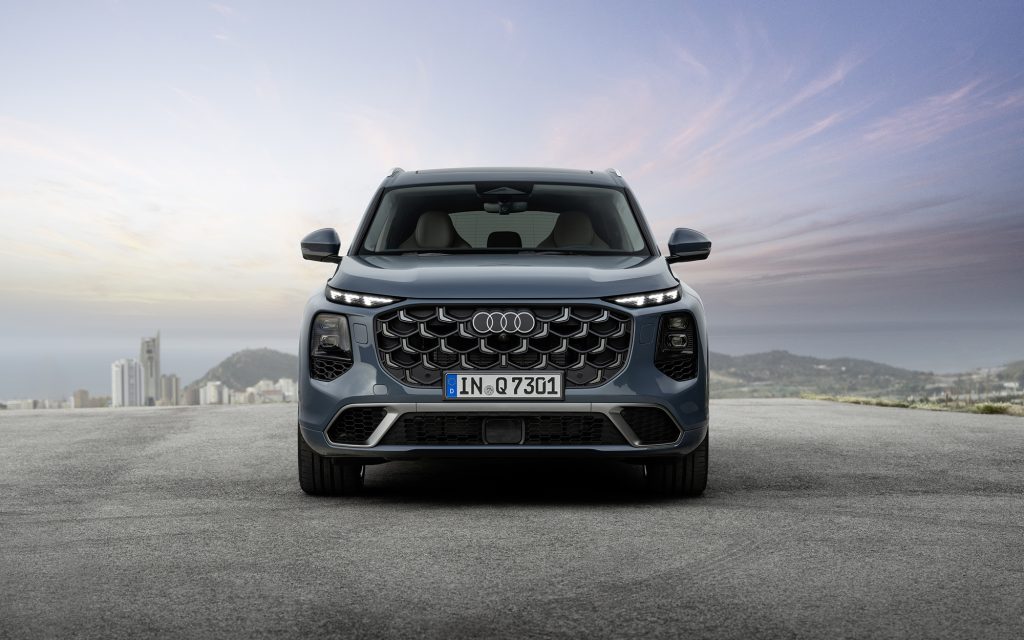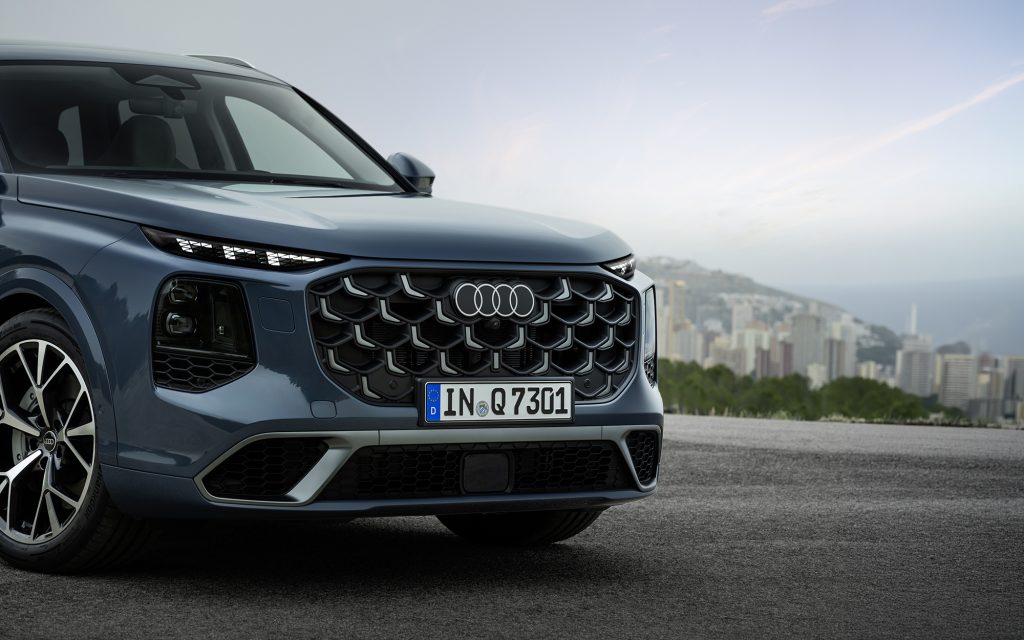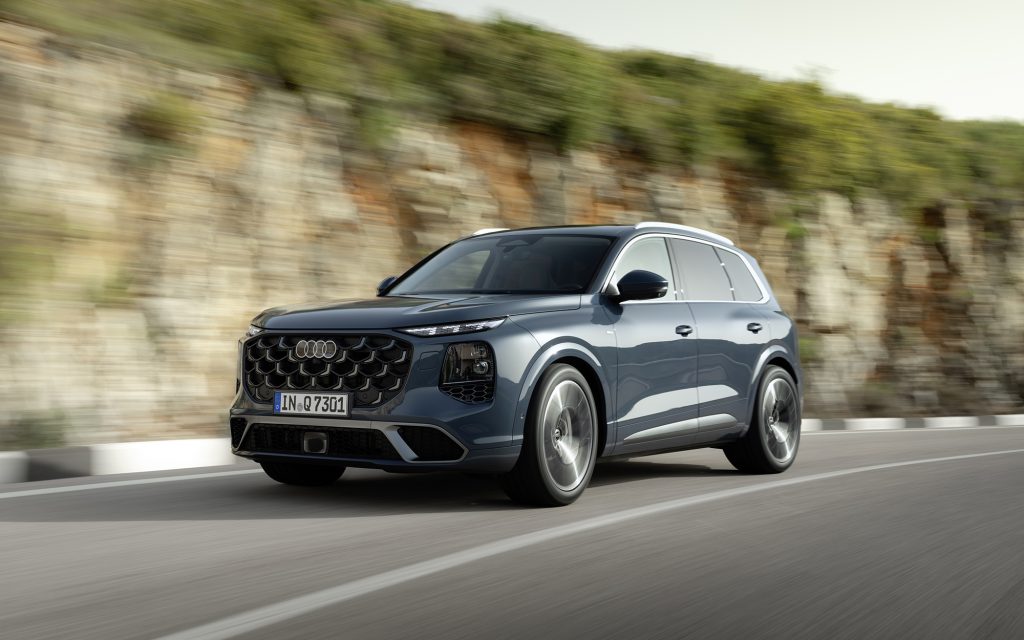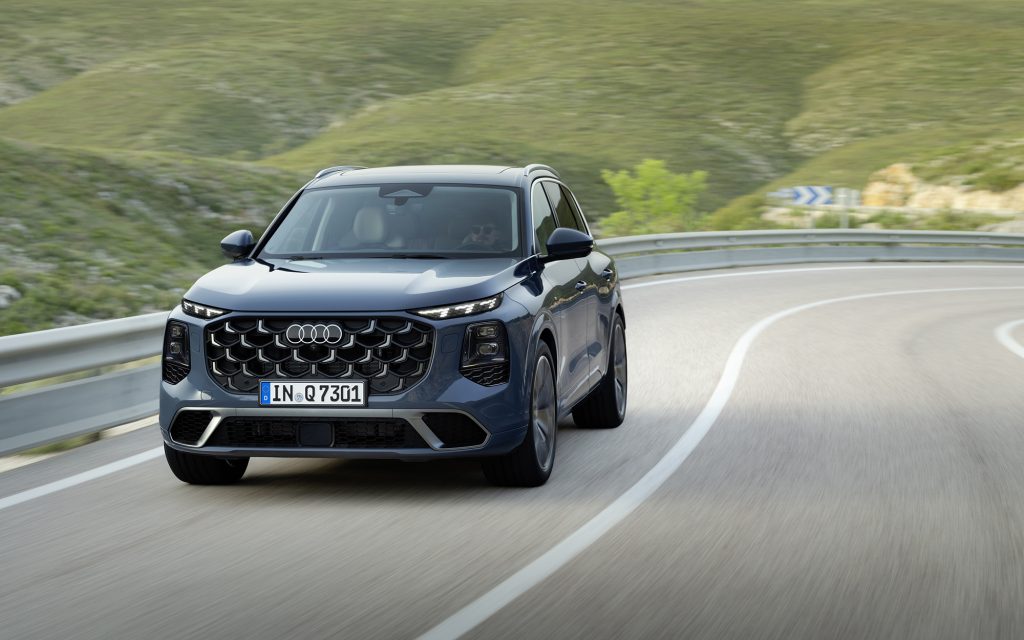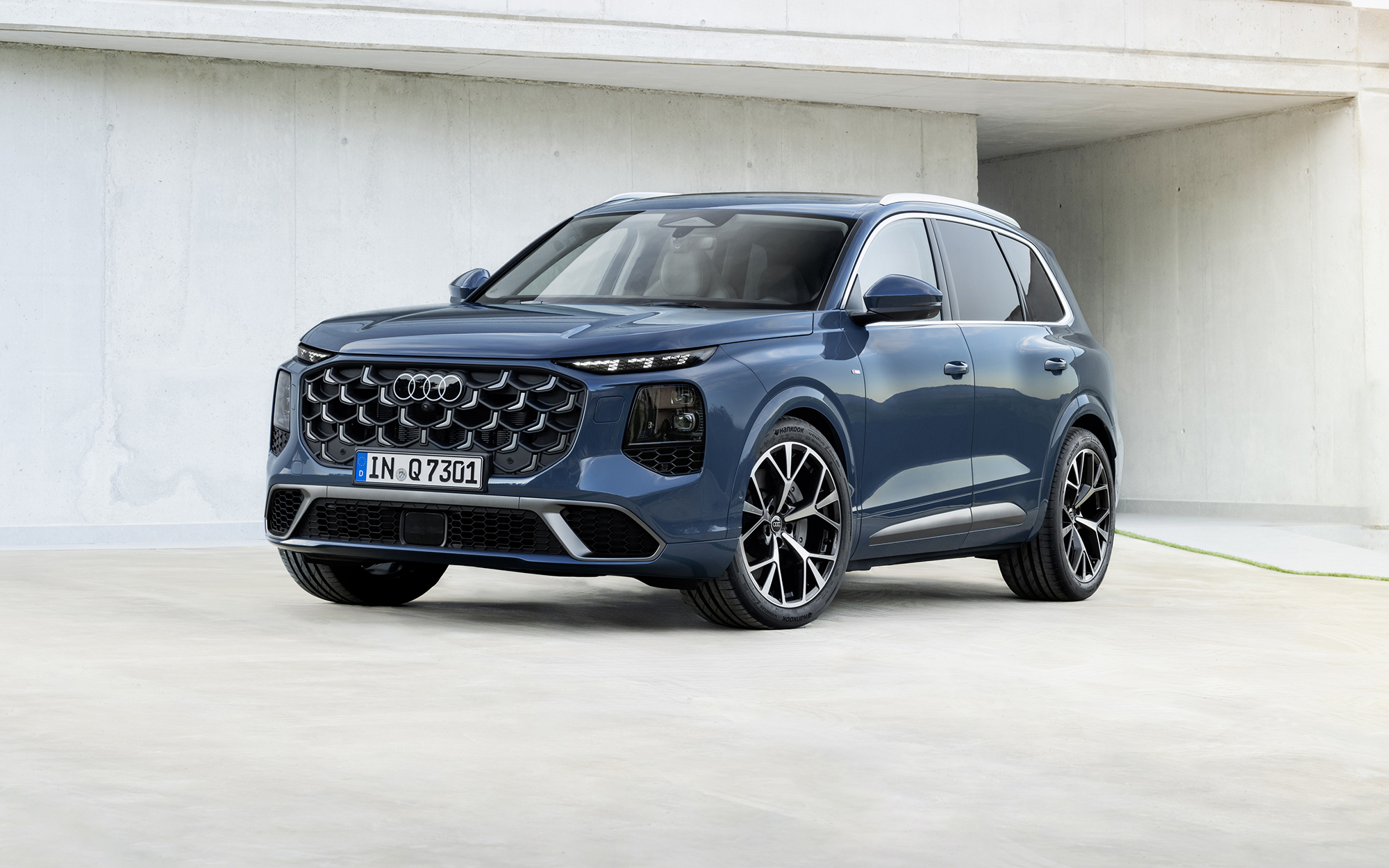

More than two decades after the original Q7 helped establish Audi in the luxury SUV segment, the brand has unveiled an all-new third-generation model that aims to advance the formula with greater versatility, more sophisticated technology and a renewed focus on premium comfort.
Revealed on June 9 in Ingolstadt, the new Audi Q7 arrives as the latest chapter in a model line that has been a cornerstone of Audi’s SUV portfolio since 2005. Built once again in Bratislava, Slovakia, the new Q7 will be available to order in Germany beginning in June 2026, with first deliveries scheduled for September.
“For more than 20 years, the Audi Q7 has represented the perfect premium SUV. With its new generation, we carry this mission forward,” said Audi CEO Gernot Döllner.
The third-generation Q7 enters the market with a familiar mission: combine luxury, technology, practicality and long-distance capability in a single package. Audi says the new model sets benchmarks in spaciousness, driving dynamics, comfort and digital technology while retaining the versatility that has defined the Q7 throughout its history.
‘
FOR THE FIRST TIME THREE SEATING CONFIGURATIONS
One of the most significant developments is a broader range of seating options.
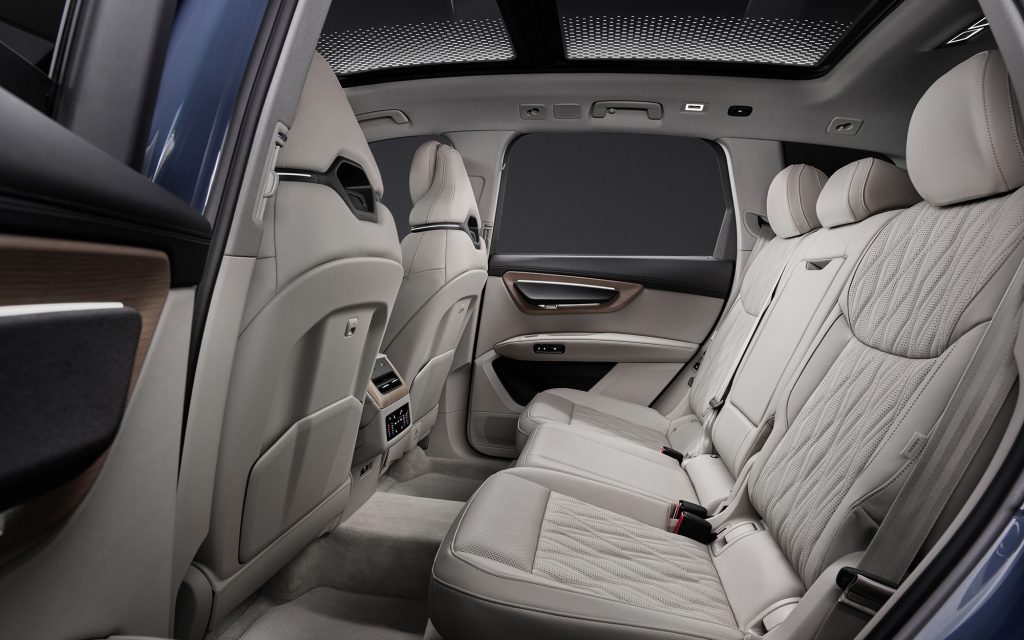
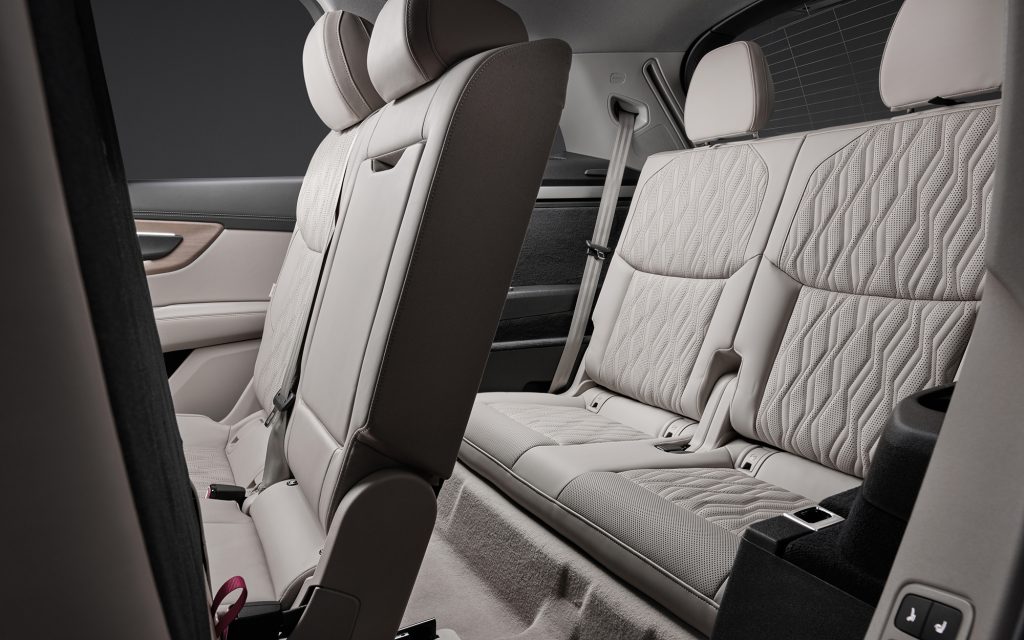
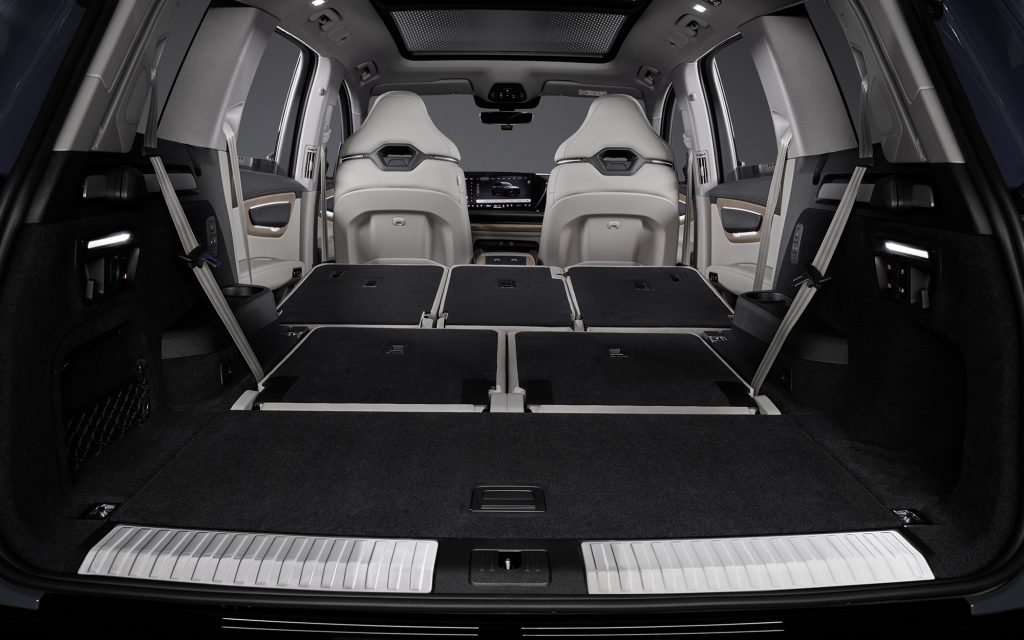
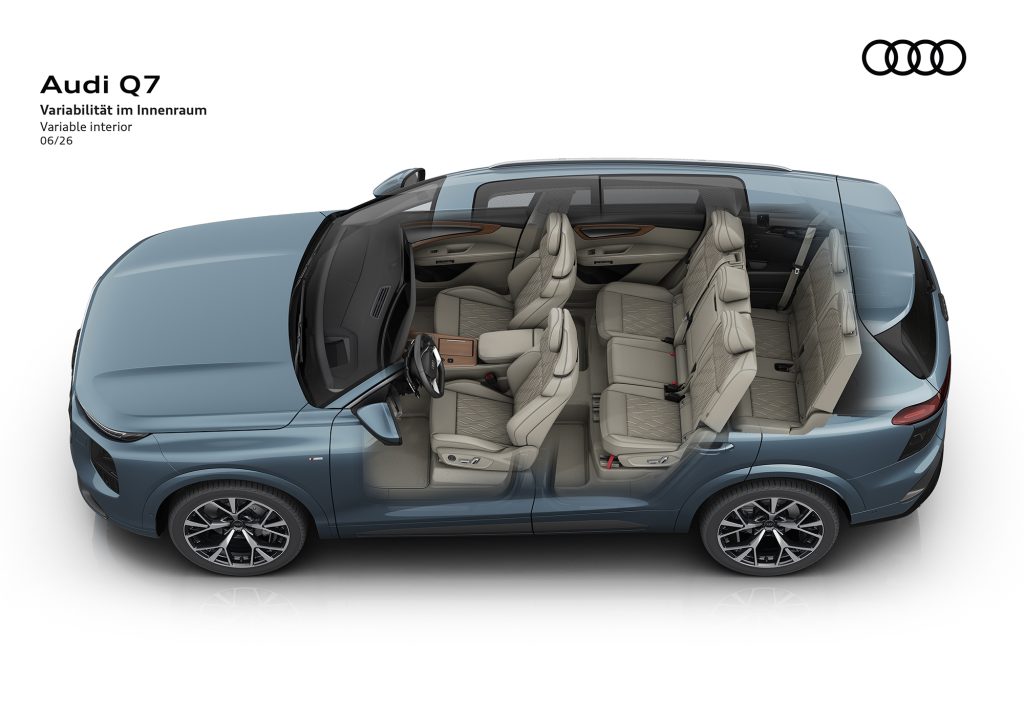
The new Q7 is available with five seats as standard, but customers can also choose six- or seven-seat configurations. The six-seat layout is a first for the model and replaces the traditional second-row bench with two individual seats, creating a more executive-focused cabin experience.
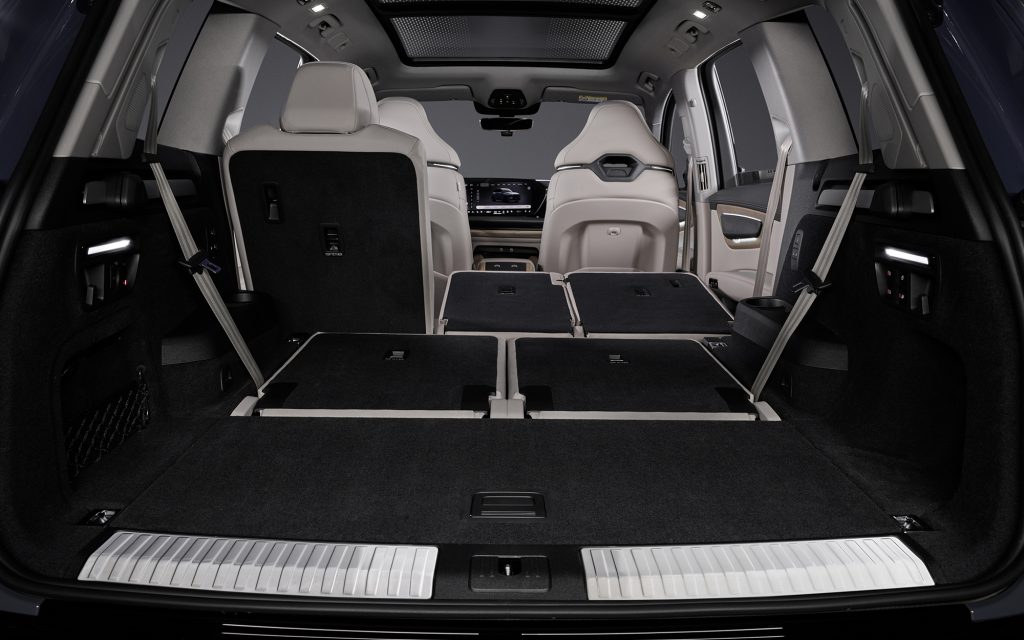
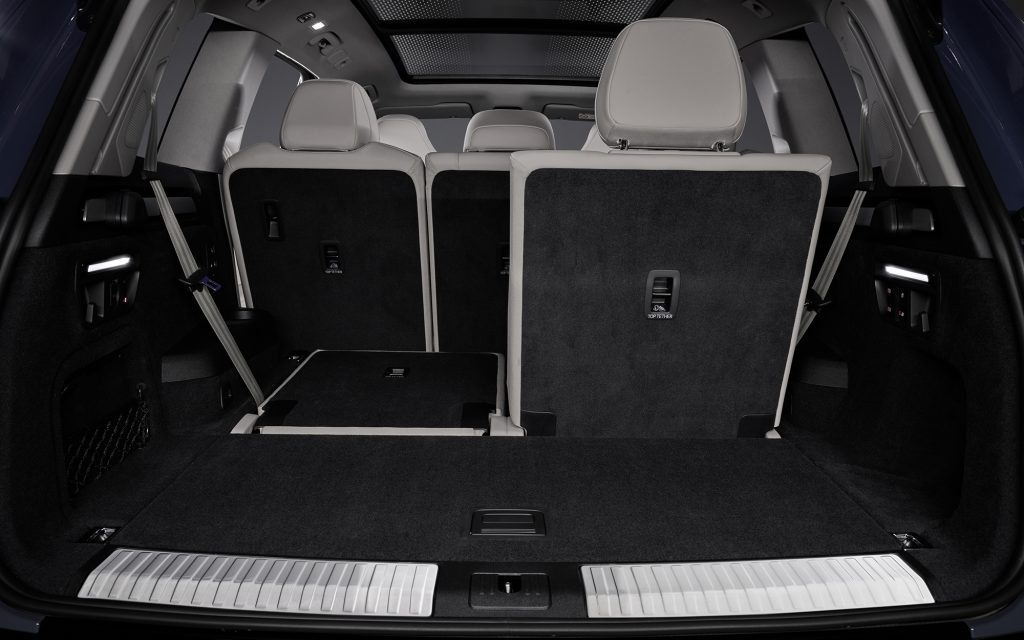
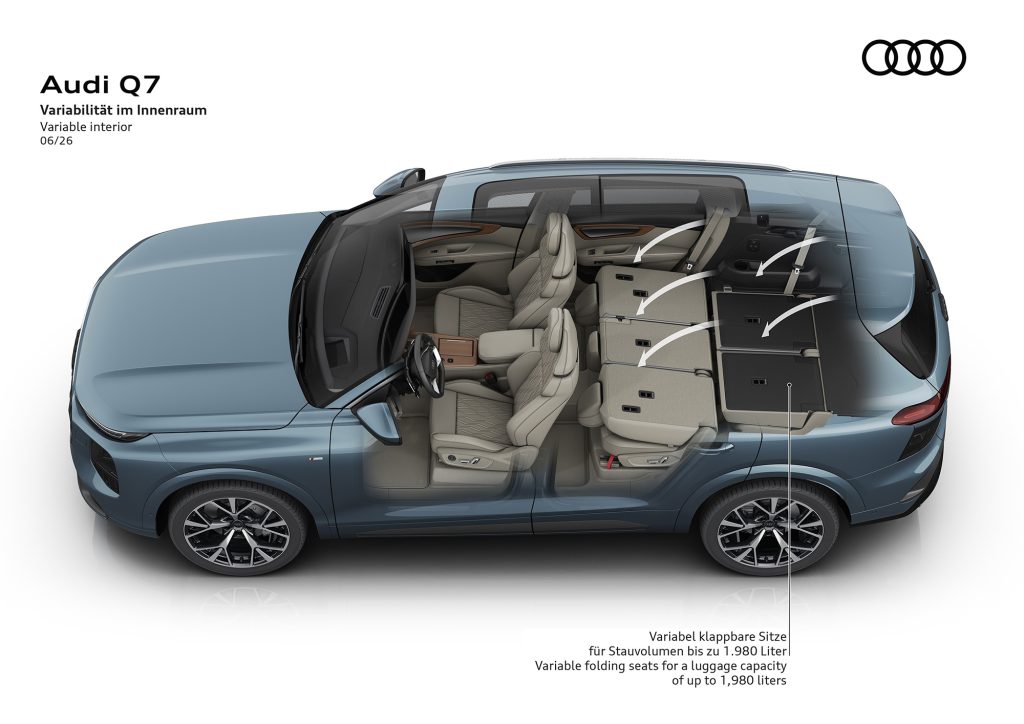
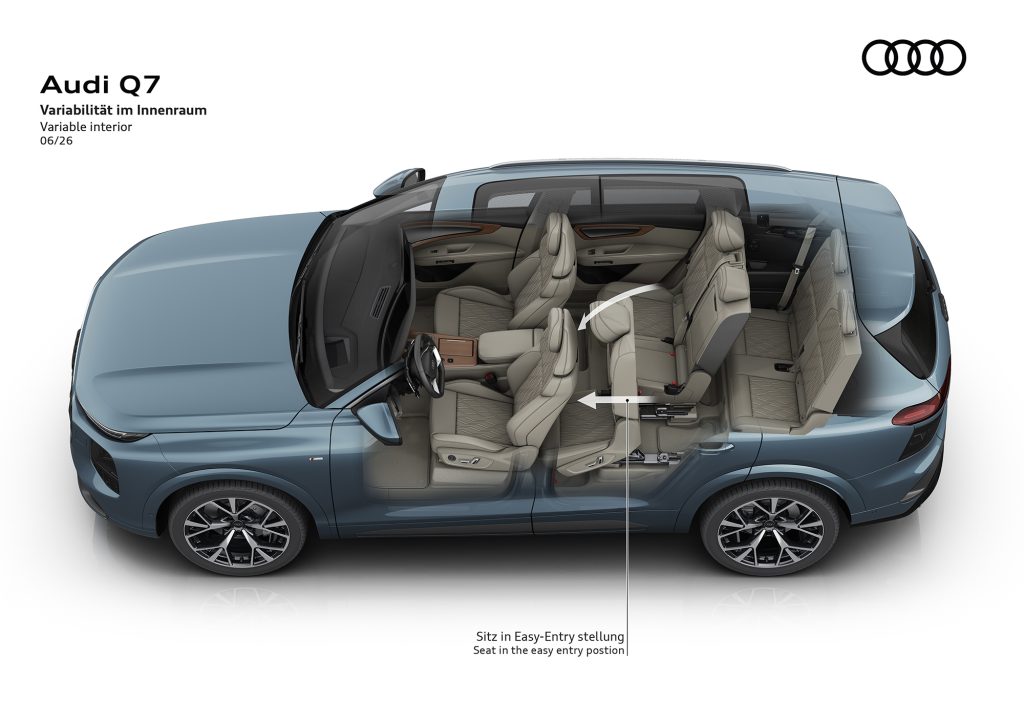
The seven-seat configuration remains available and continues to prioritize family usability. Audi notes that three child seats can be installed side-by-side in the second row, while power-adjustable seating and flexible folding arrangements increase versatility.
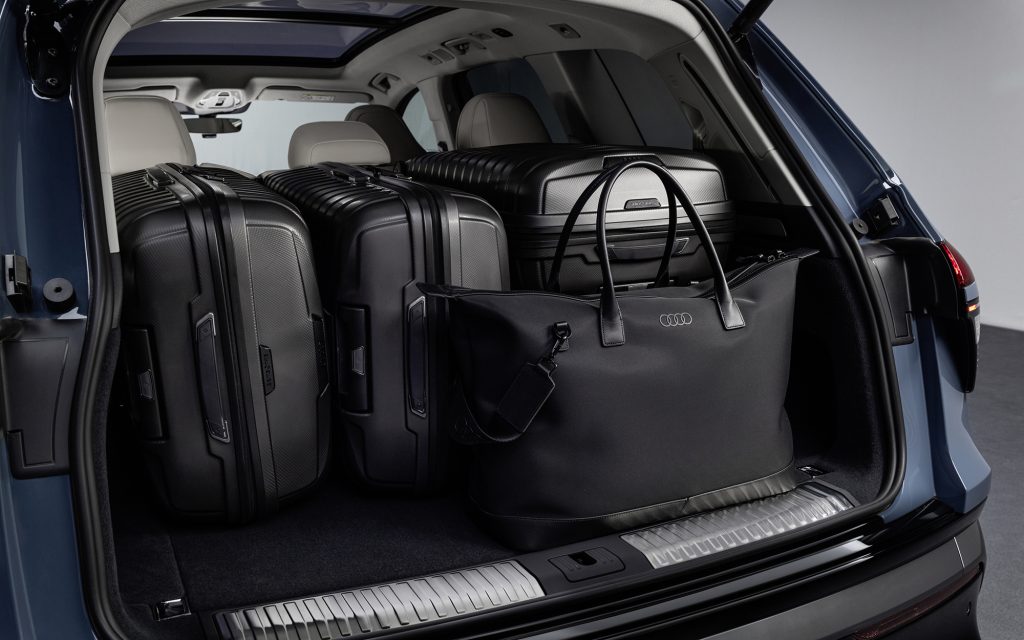
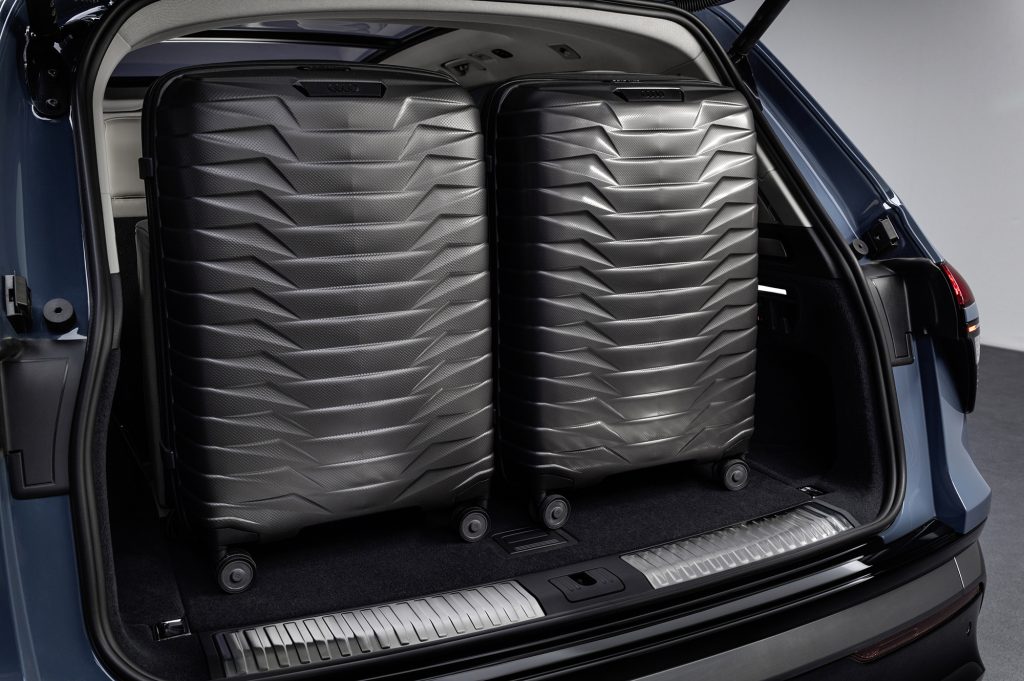
Cargo capacity remains a strong point. The five-seat version offers up to 806 liters of luggage space, expanding to 2,075 liters with the rear seats folded. The seven-seat variant provides up to 722 liters behind the second row and up to 1,980 liters with additional seats folded.
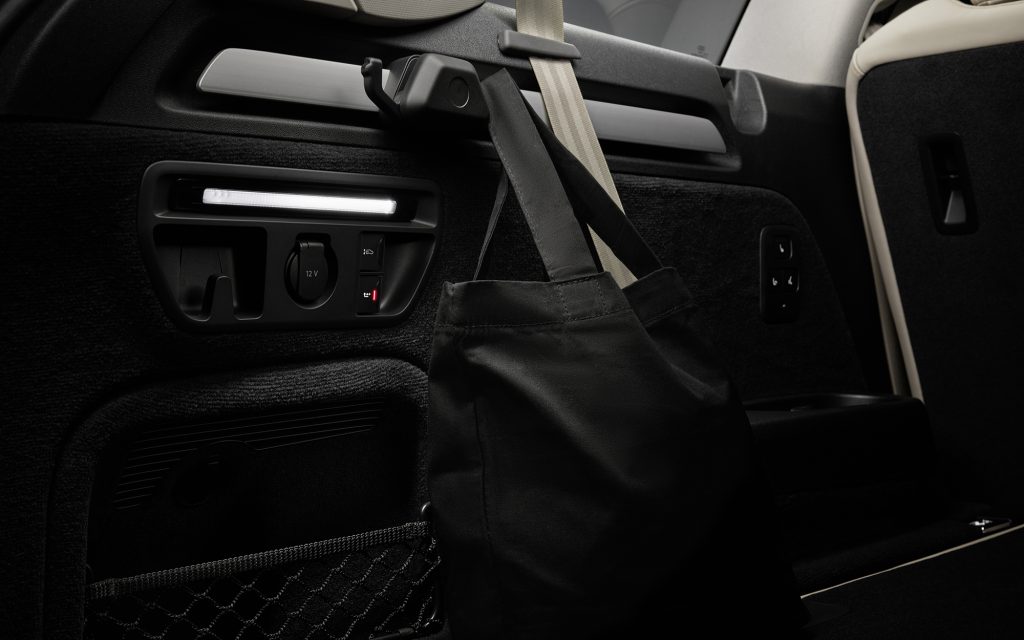
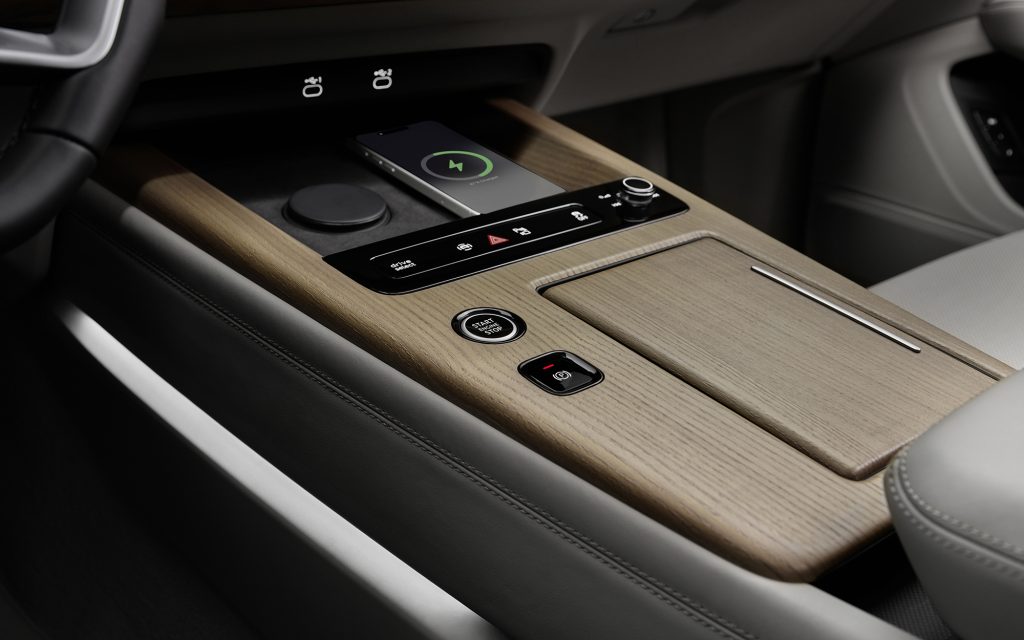
Additional practicality comes from a redesigned center console, expanded storage compartments, wireless charging for two smartphones using the Qi2.2 standard and an optional cargo rail system integrated into the luggage compartment.
‘
PANORAMIC ROOF BECOMES CENTERPIECE
Audi has placed particular emphasis on the Q7’s new panoramic sunroof.
The large glass roof spans all three rows and introduces several new features, including switchable transparency and integrated illumination. Occupants can electronically transition the roof between transparent and opaque states, with the glass divided into nine individually controlled segments.
The roof also incorporates 78 LEDs whose lighting color can be coordinated with the vehicle’s ambient lighting settings. Audi says the roof structure itself has been redesigned to be slimmer, creating additional headroom throughout the cabin.
The laminated glass blocks more than 99.5 percent of UV radiation while reflecting infrared heat, eliminating the need for a conventional sunshade.
‘
PREMIUM CABIN RECEIVES COMPREHENSIVE UPDATE
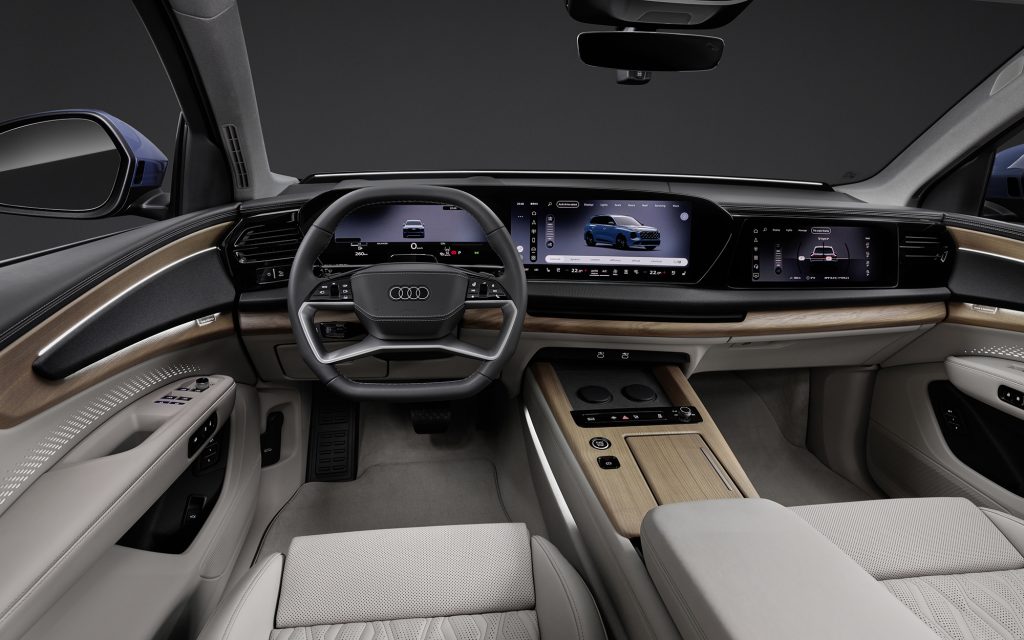
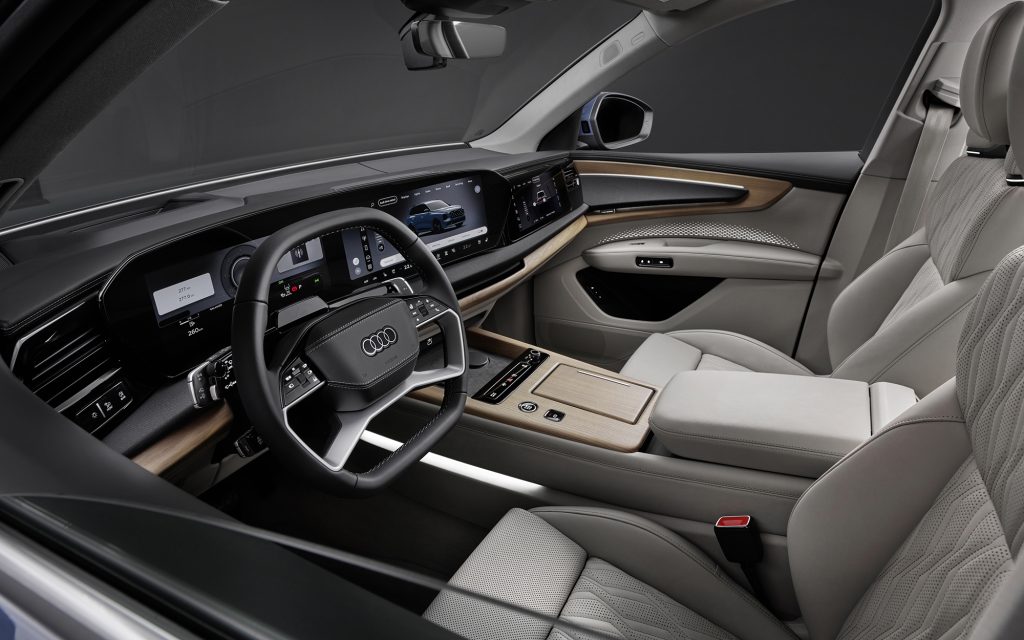
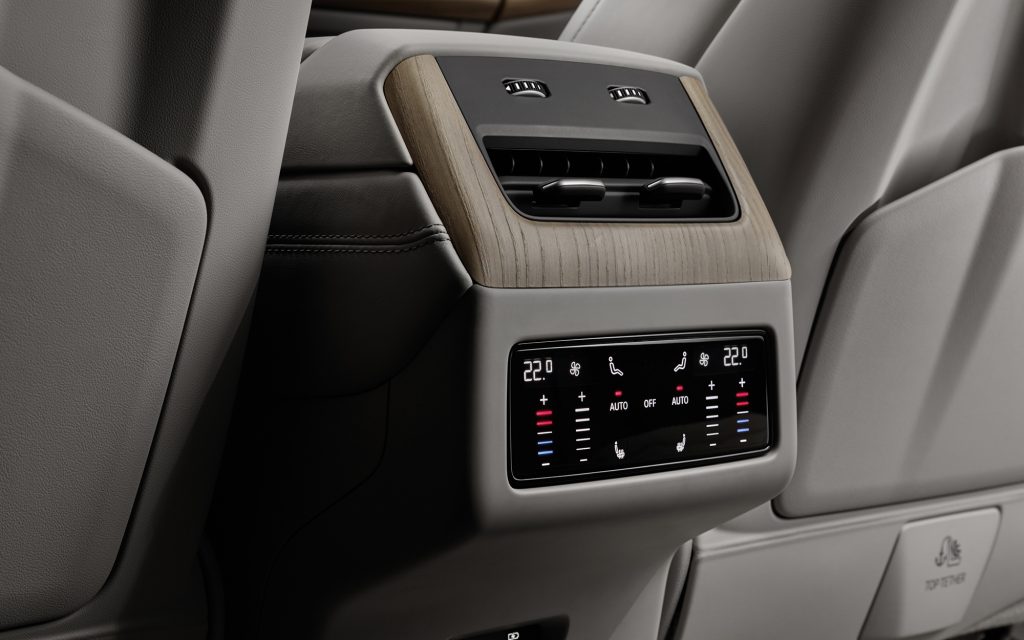
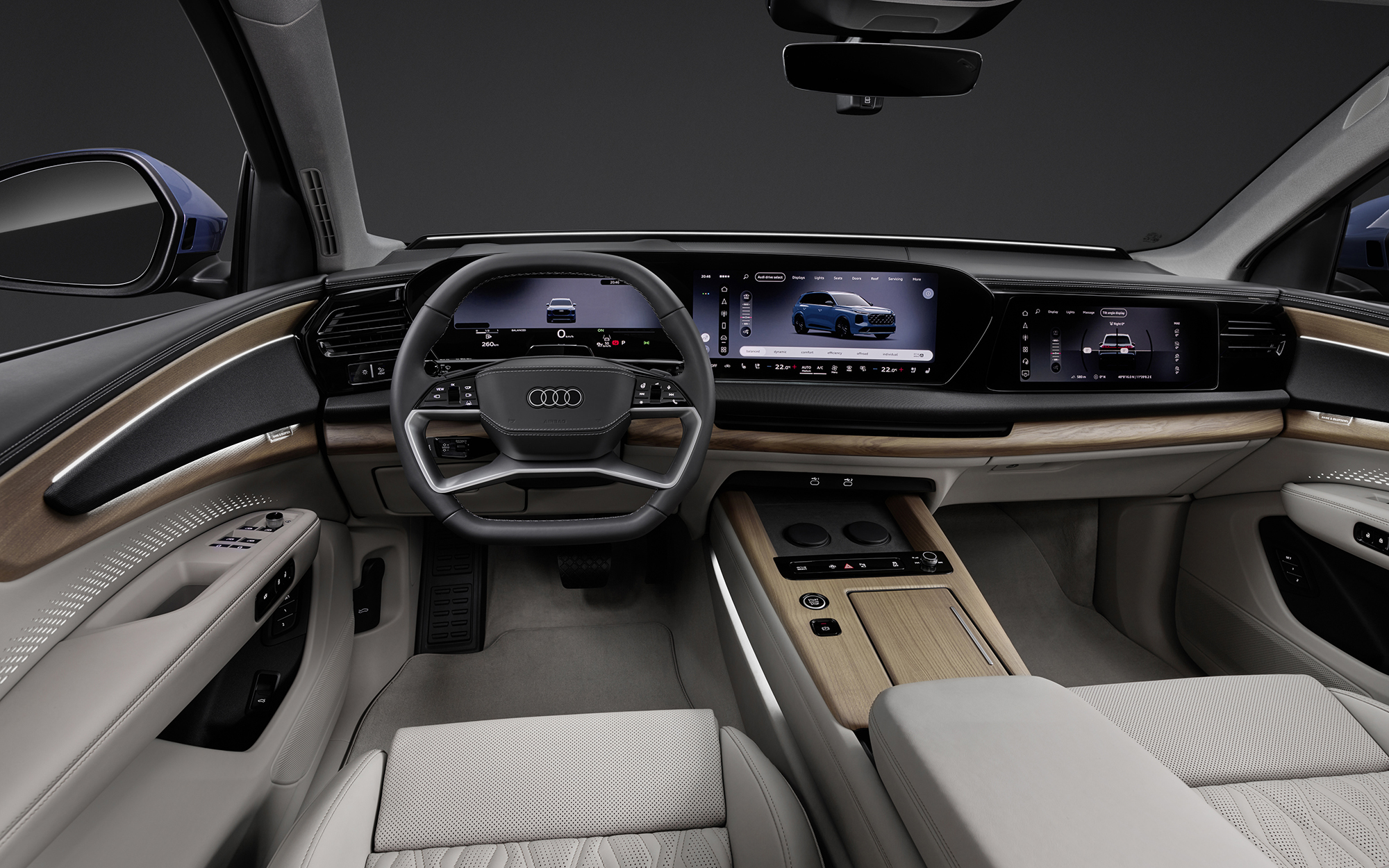
Inside, Audi has thoroughly modernized the Q7 while maintaining a clean and geometric design language.
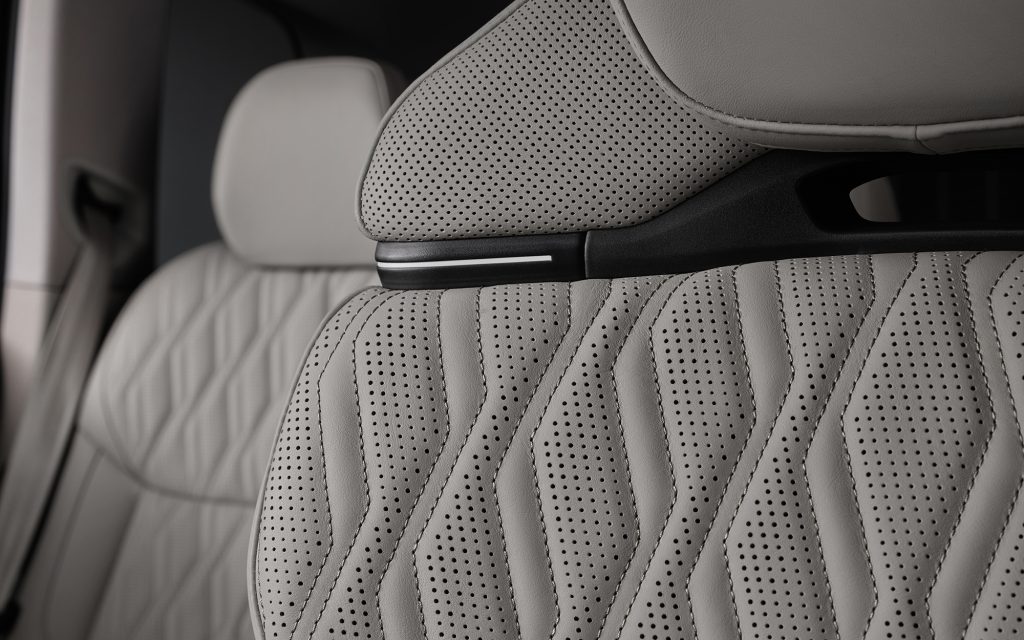
New material choices include stone beige upholstery, tamarind brown and pastel silver color themes, along with decorative trim options such as fine-grain ash, natural lime structure wood and carbon fiber weave with basalt gray accents.
Audi’s optional premium textile package combines alpaca fiber with leather, while Audi exclusive customers gain access to ten additional color options and expanded personalization opportunities.
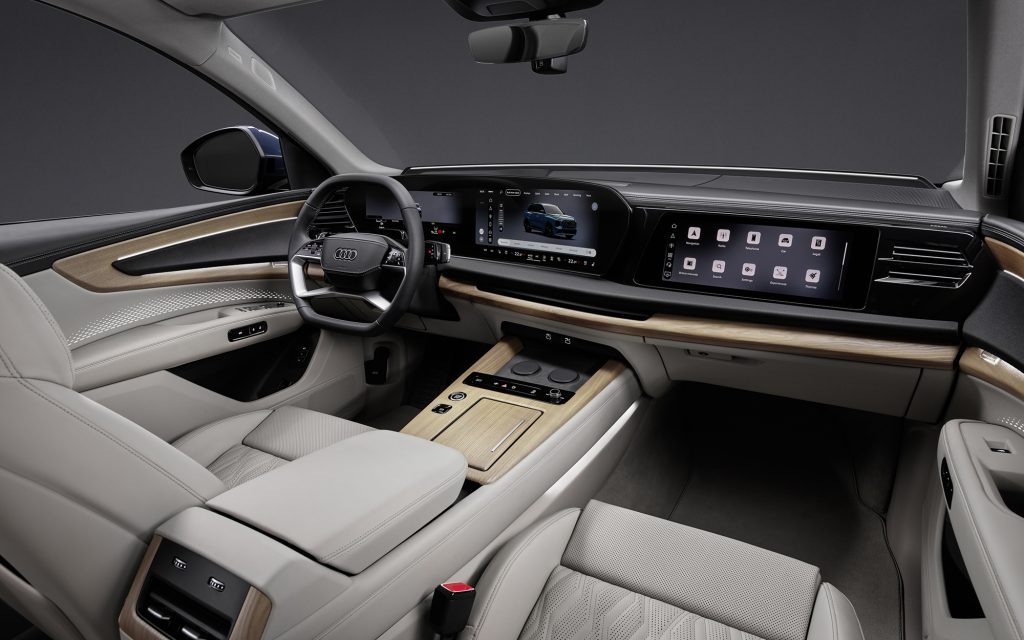
Ambient lighting has also become more sophisticated. A full-width Interaction Light LED strip stretches across the dashboard, providing welcome animations, safety notifications and visual interaction with various vehicle functions.
Sports seats plus can be specified with illuminated elements beneath the headrests, while indirect lighting integrated into the dashboard and center console creates what Audi describes as a floating appearance for interior components.
‘
ADVANCED INFOTAINMENT AND INTEGRATED AI
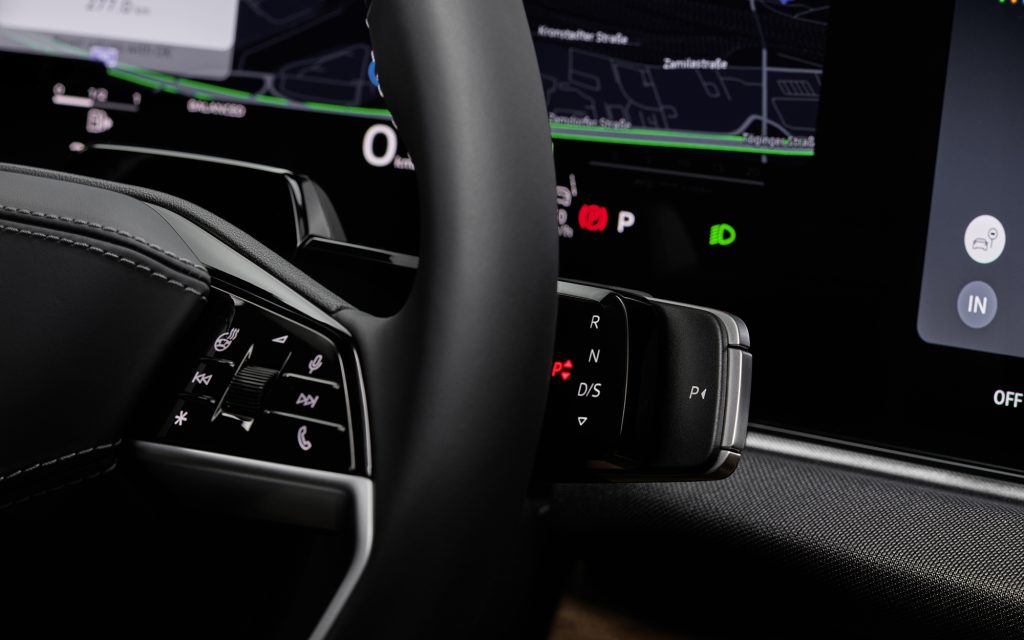
The Q7 adopts Audi’s latest digital architecture, centered around the curved OLED-based MMI panoramic display.
A passenger display is now standard equipment, featuring Audi’s dynamic privacy mode technology to prevent distraction for the driver.
An optional head-up display projects key information directly into the driver’s field of view, while the Audi Application Store provides direct access to apps covering navigation, entertainment, weather, productivity and charging services without requiring a connected smartphone.
Audi’s self-learning voice assistant has also been expanded. The system can manage vehicle functions, navigation and information requests. If the vehicle’s onboard systems cannot answer a general question, the request can be forwarded to ChatGPT through integrated functionality.
An optional factory-installed dashcam system is also available.
‘
NEW LIGHTING TECHNOLOGY EXPANDS AUDI’S DIGITAL SIGNATURE
Lighting technology is one of the defining elements of the new Q7.
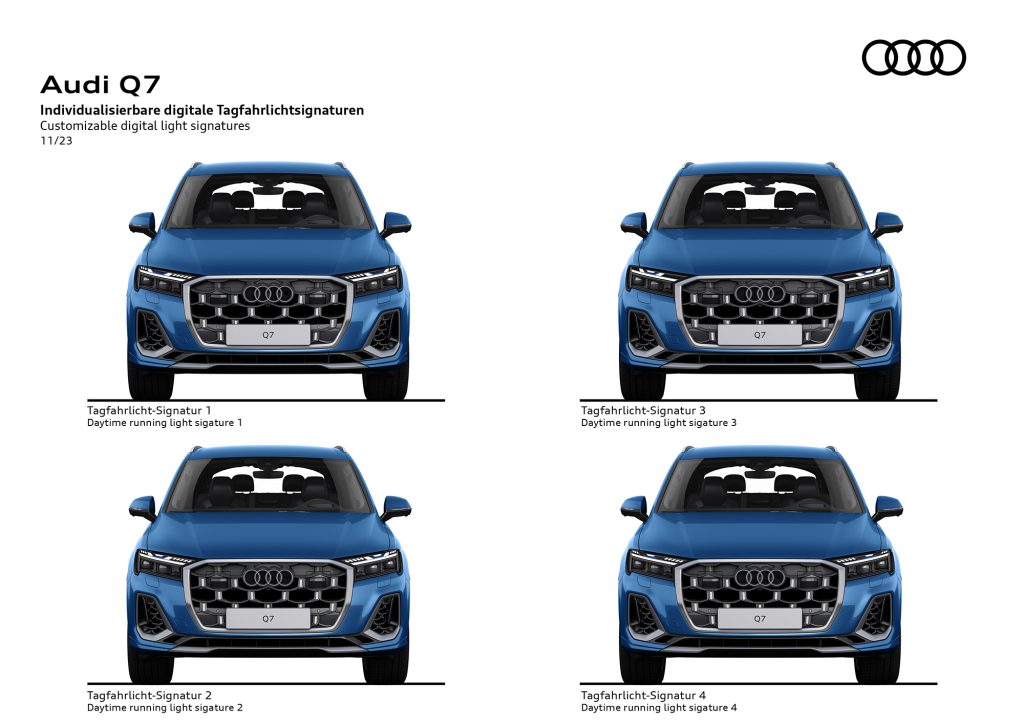
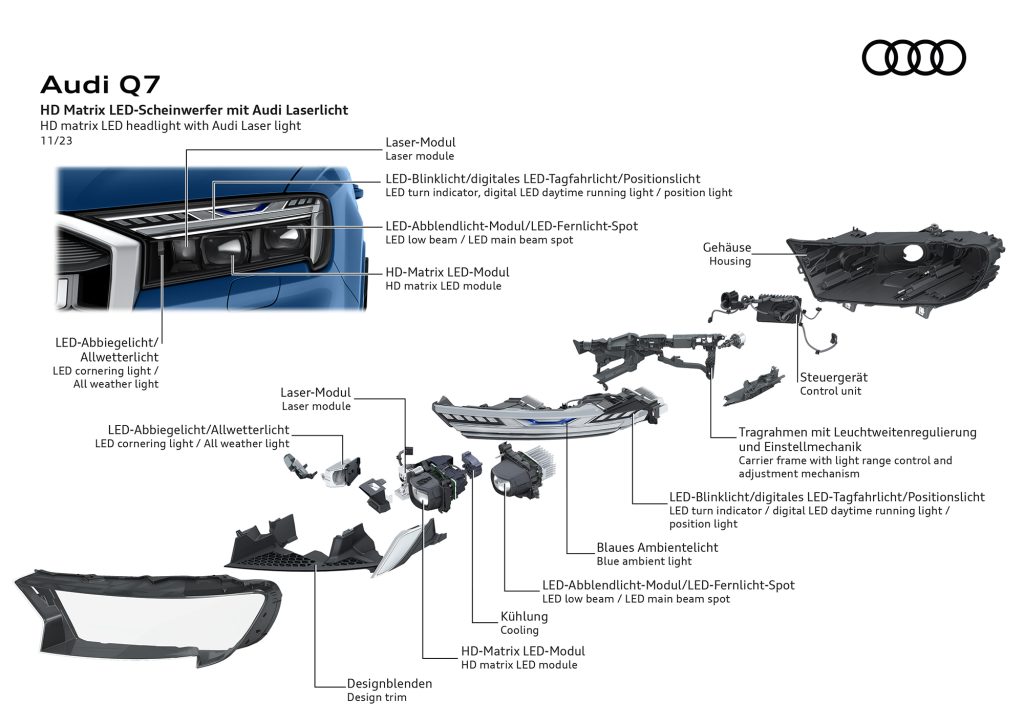
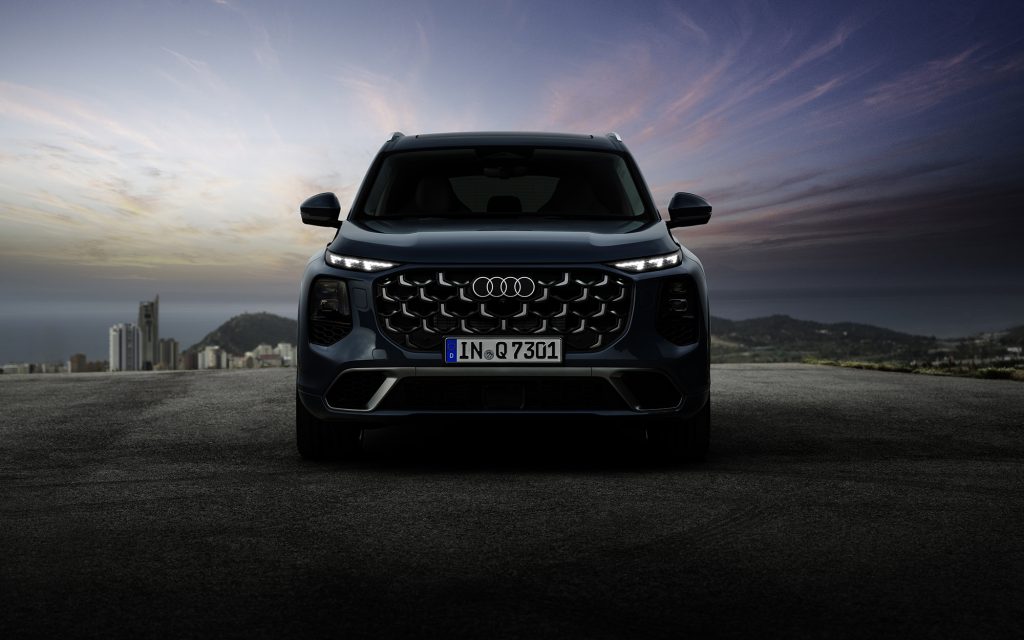
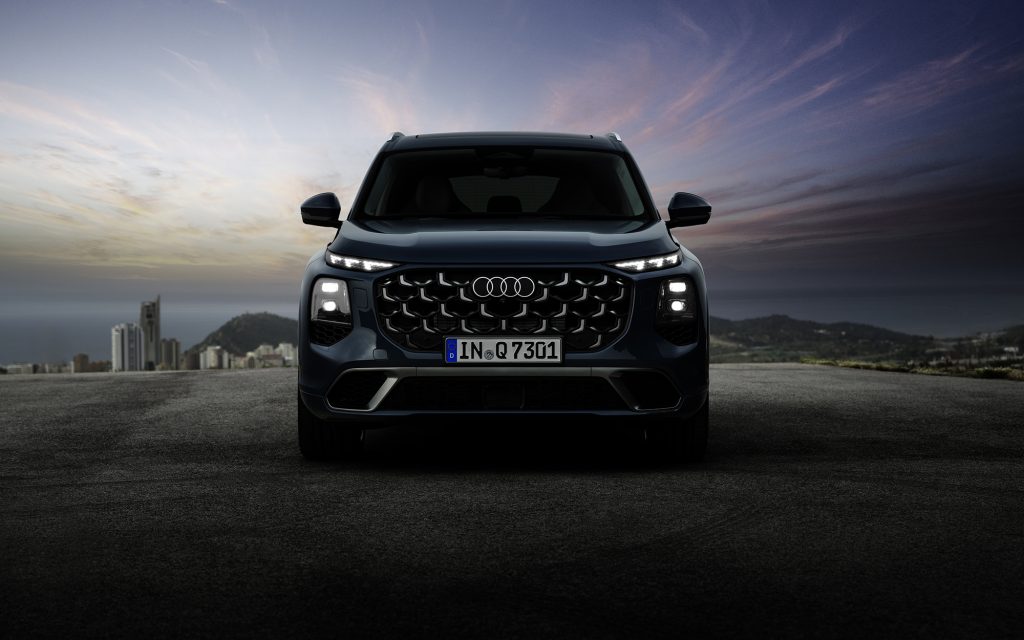
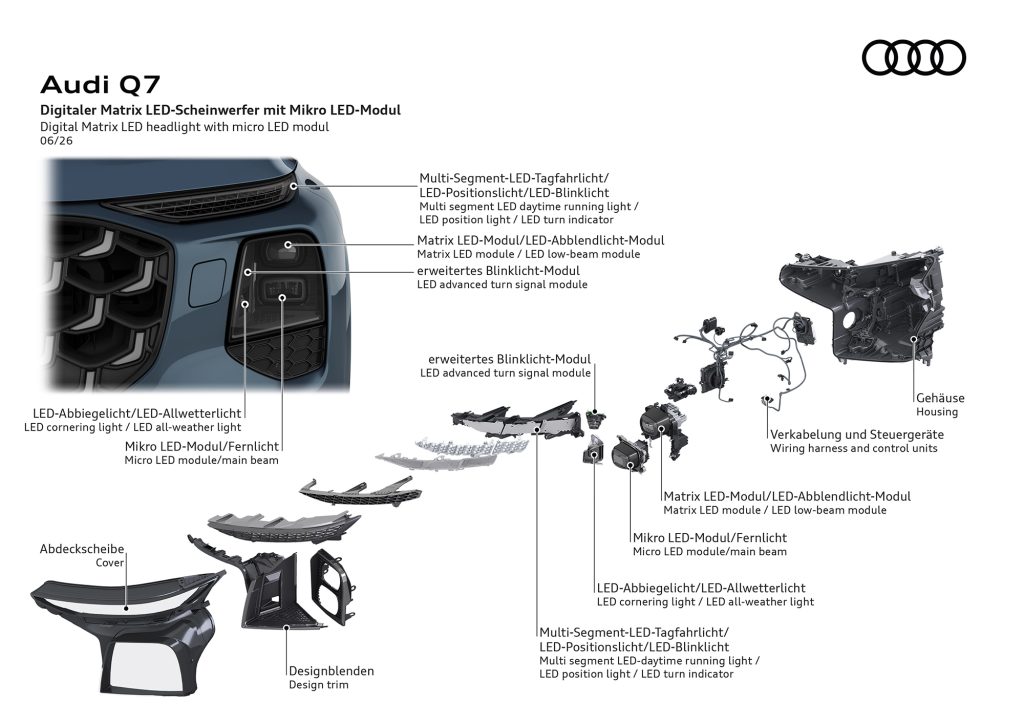
Optional digital Matrix LED headlights employ micro-LED technology capable of projecting high-resolution light patterns onto the road surface. Audi has increasingly integrated these systems with driver assistance functions, allowing important information to be displayed directly within the driver’s field of vision.
The headlights can project lane guidance information, blind-spot alerts and even ice crystal warnings when road conditions may be hazardous.
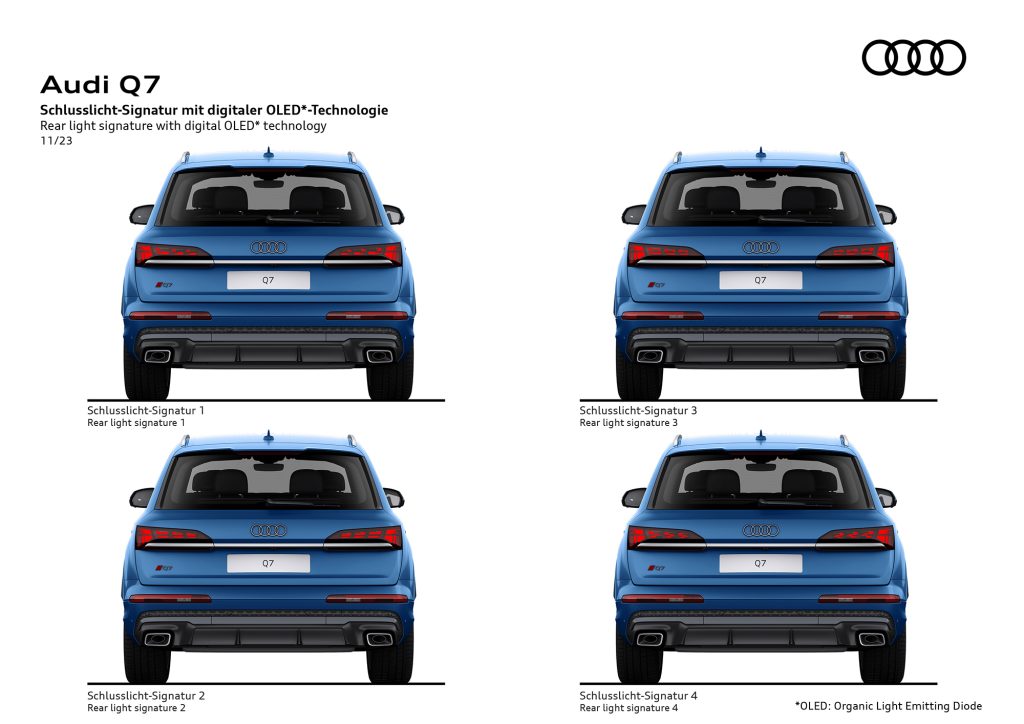
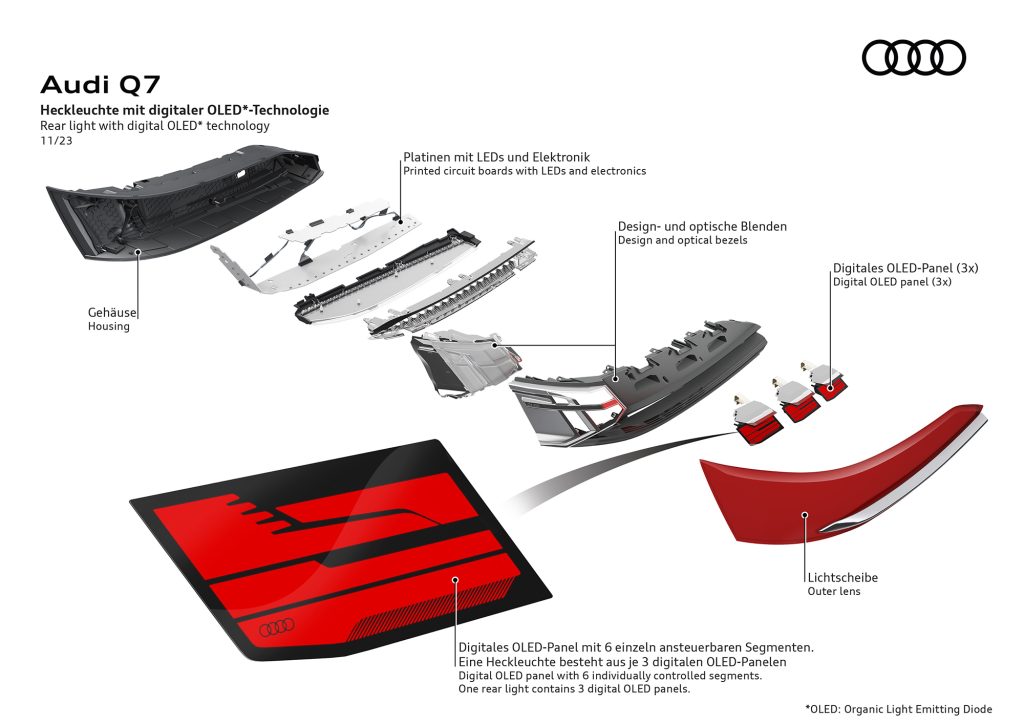
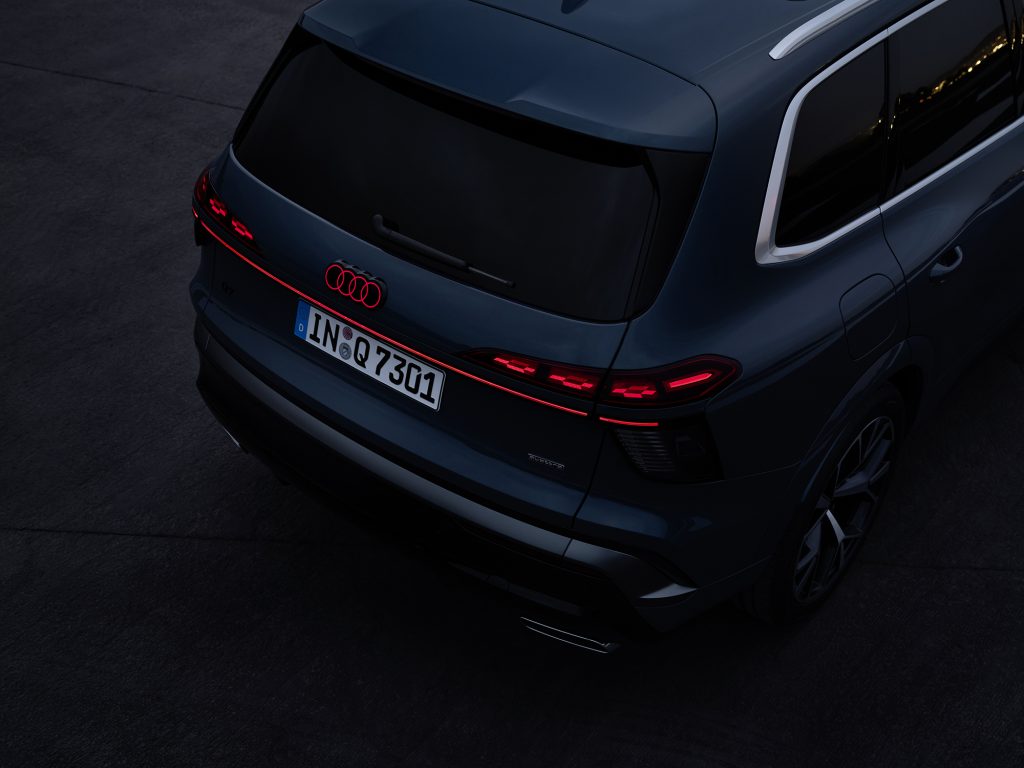
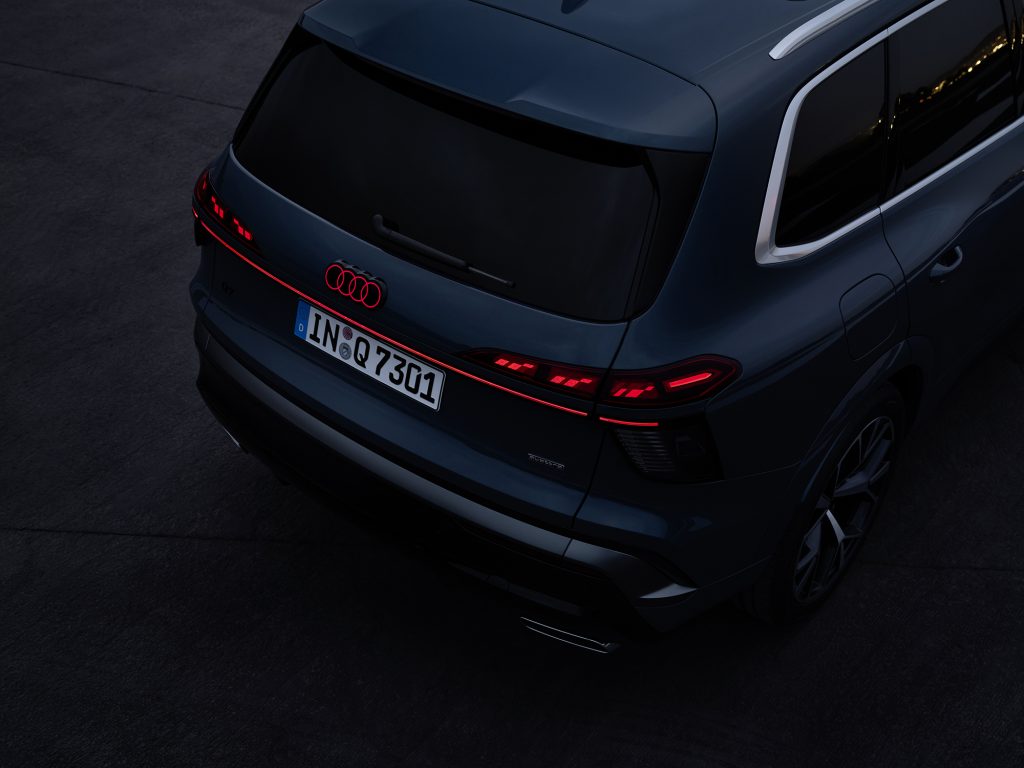
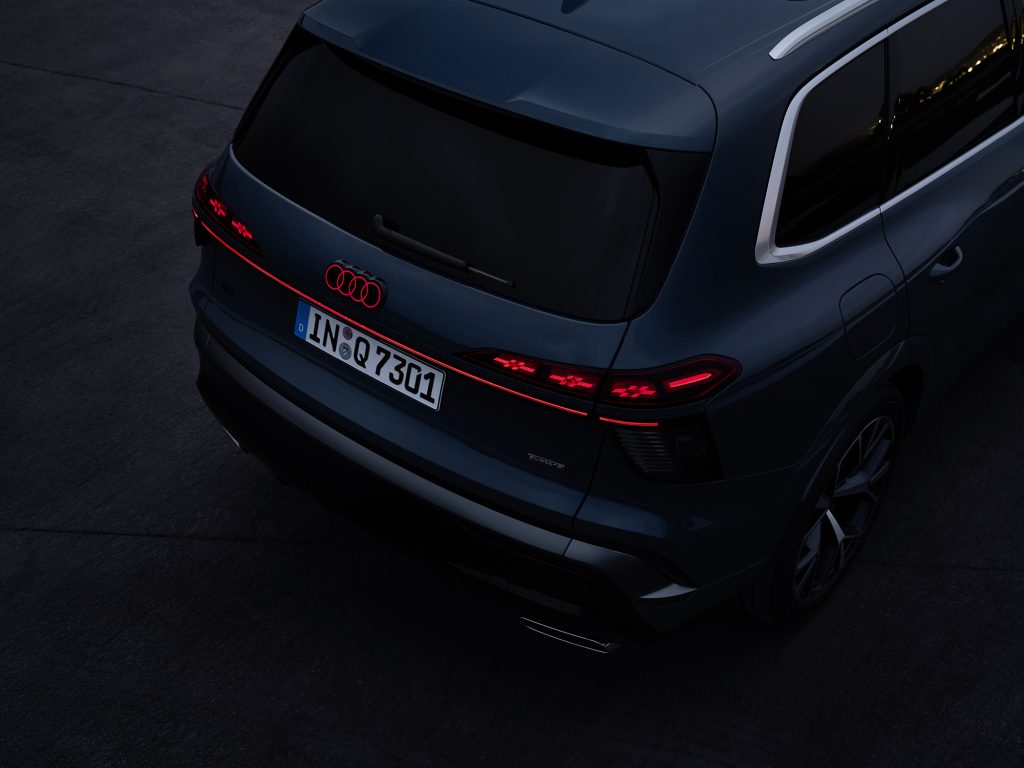
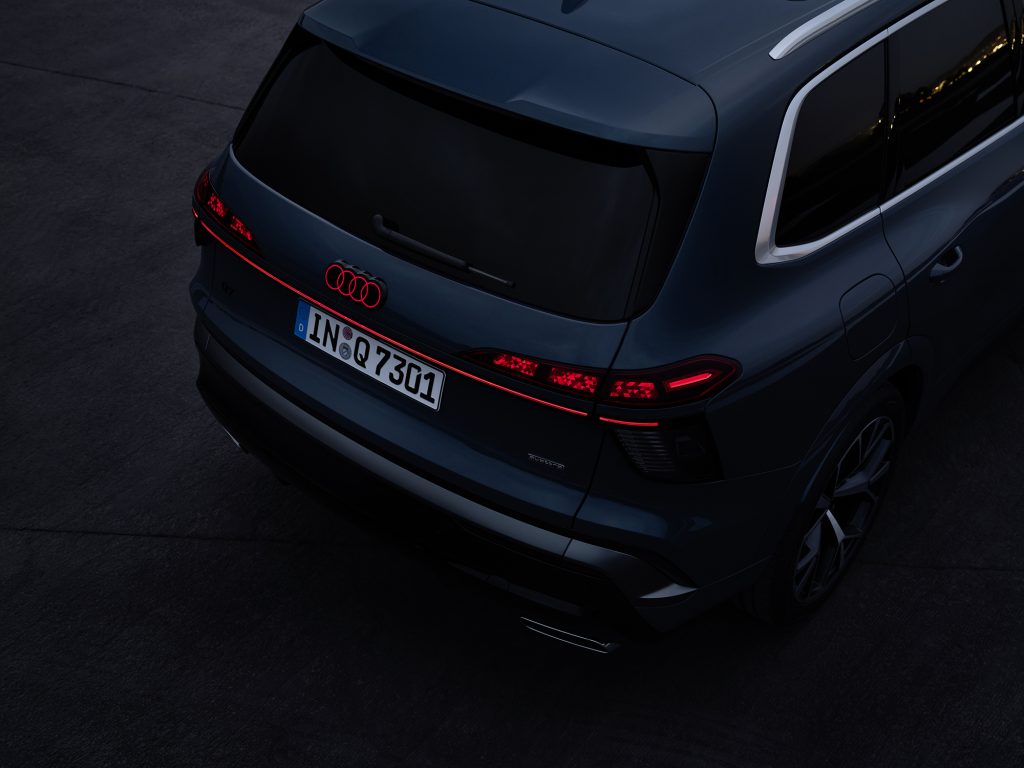
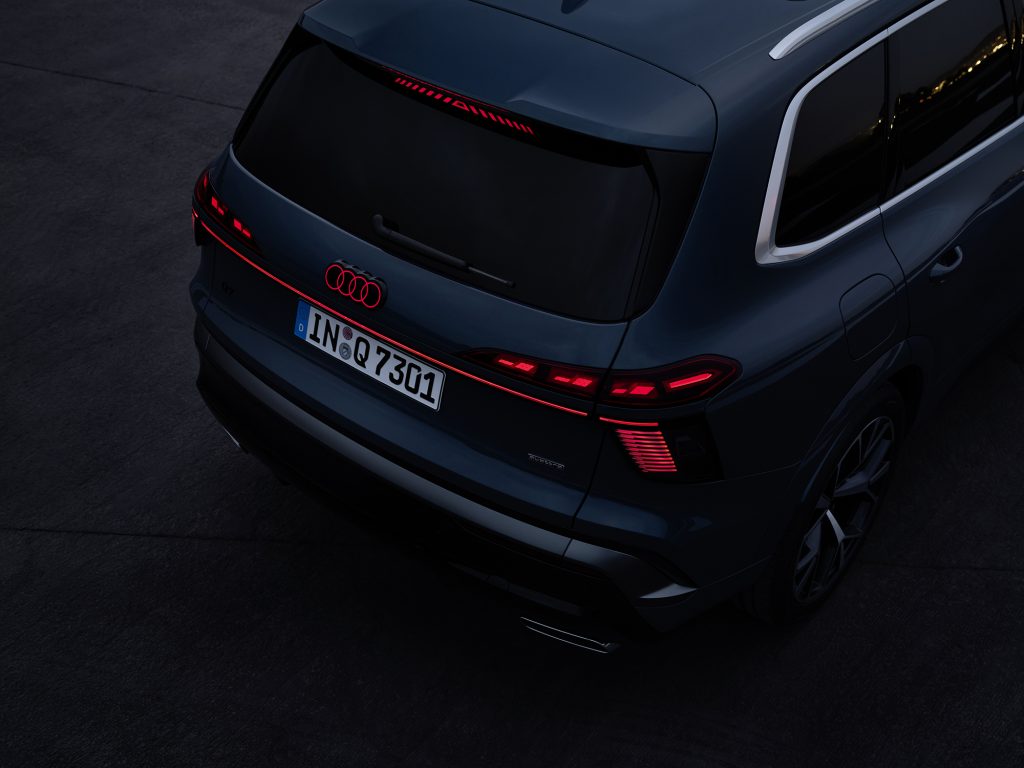
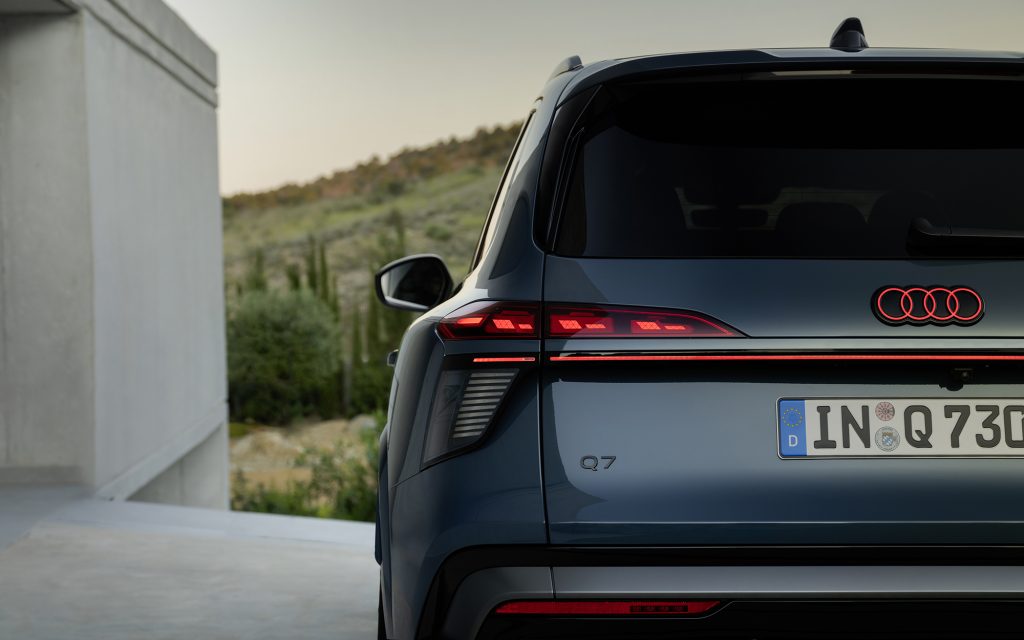
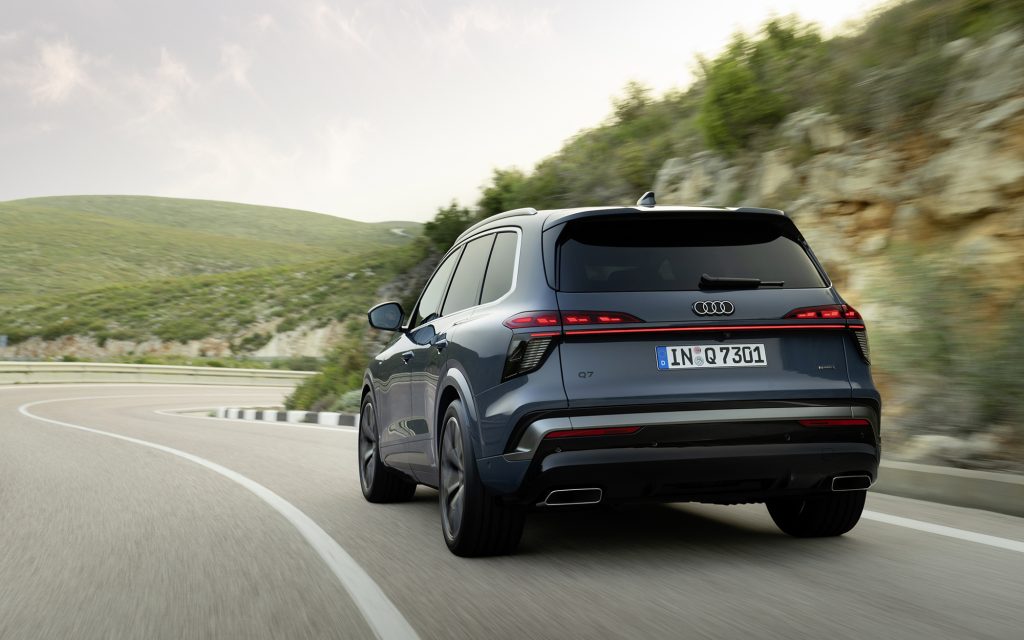
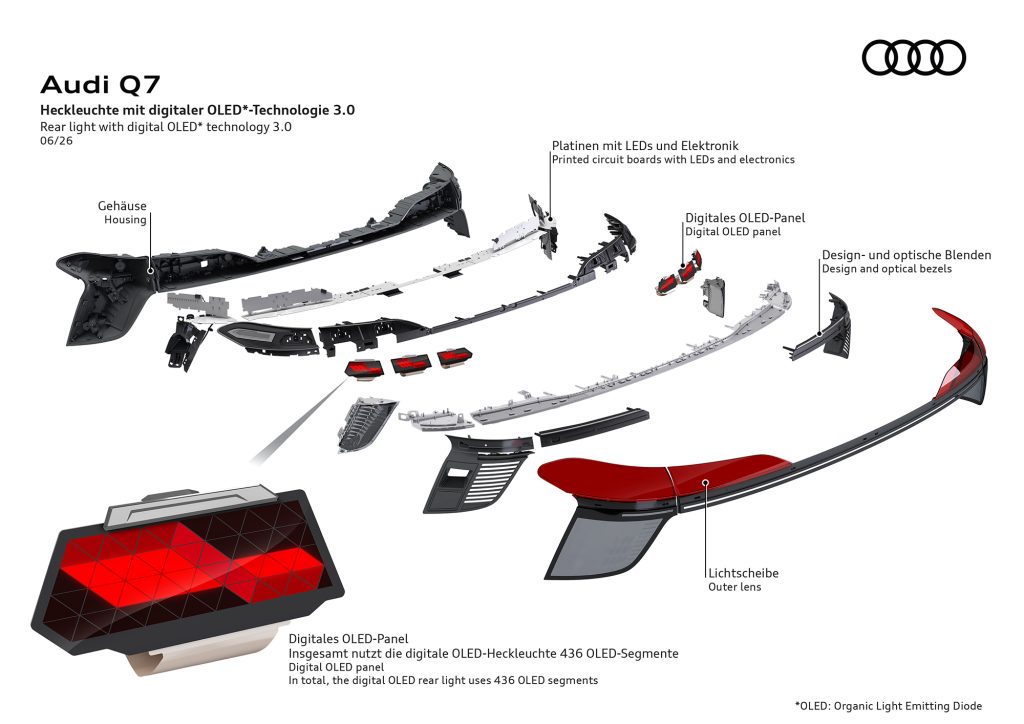
At the rear, third-generation digital OLED lighting introduces more segments than previous systems, enabling increasingly complex light signatures and three-dimensional effects. Customers can choose from up to eight different digital lighting signatures.
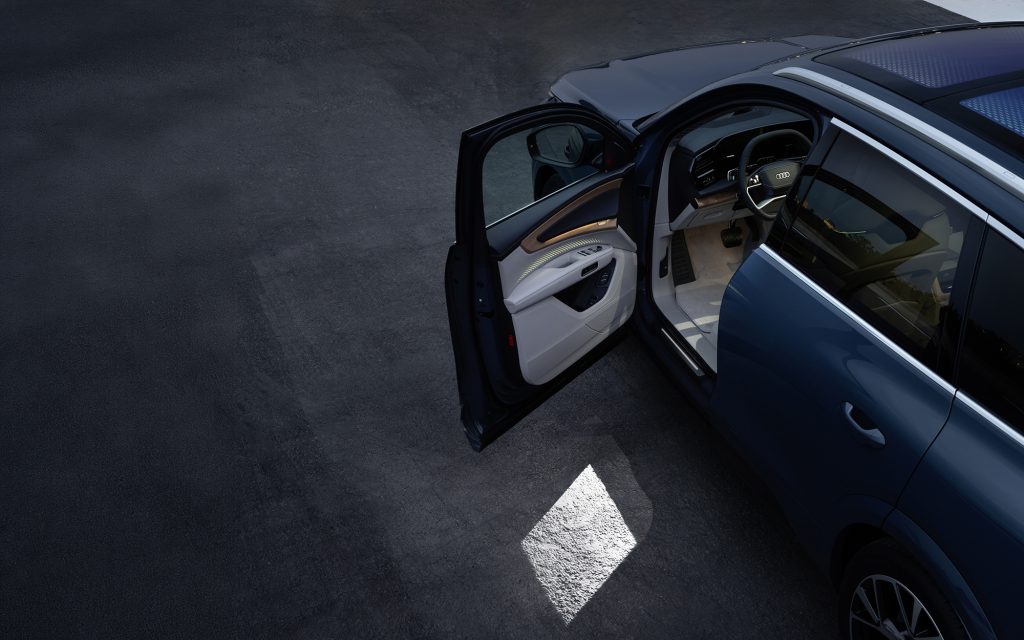
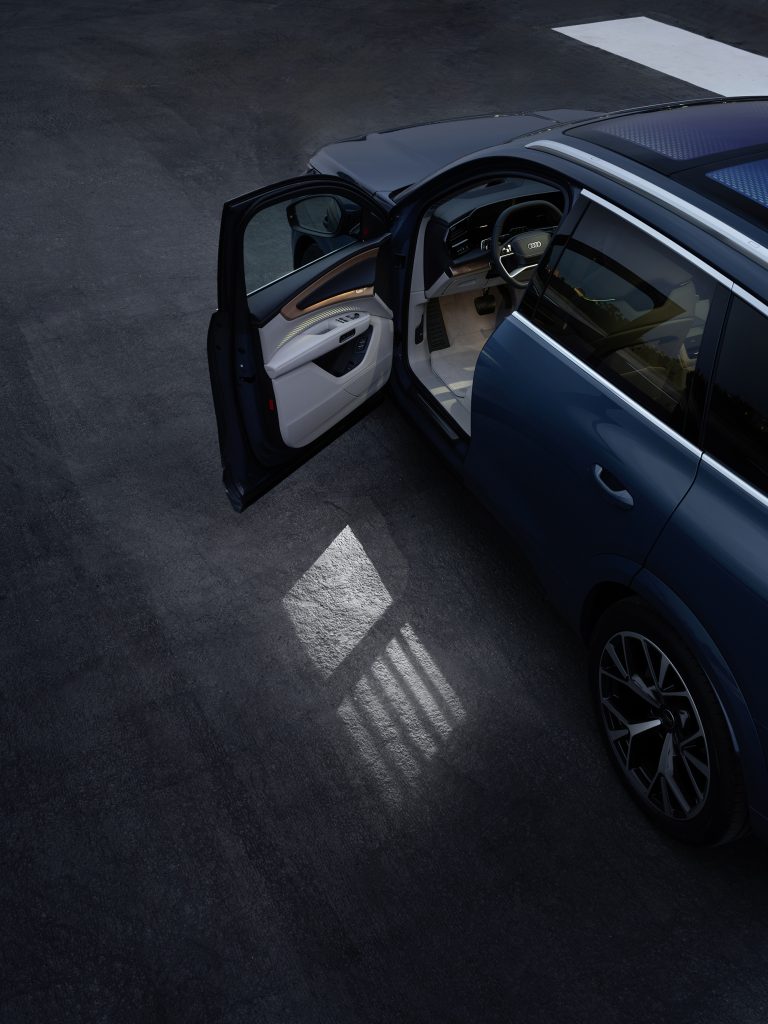
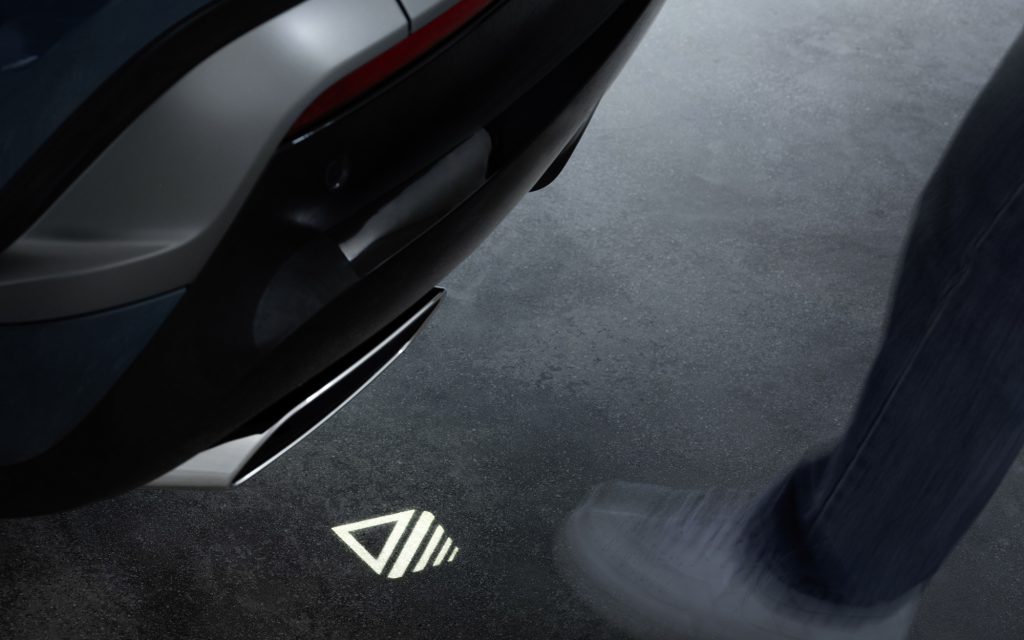
A new projection feature integrated into the doors displays illuminated rhombus patterns on the ground when occupants enter or exit the vehicle.
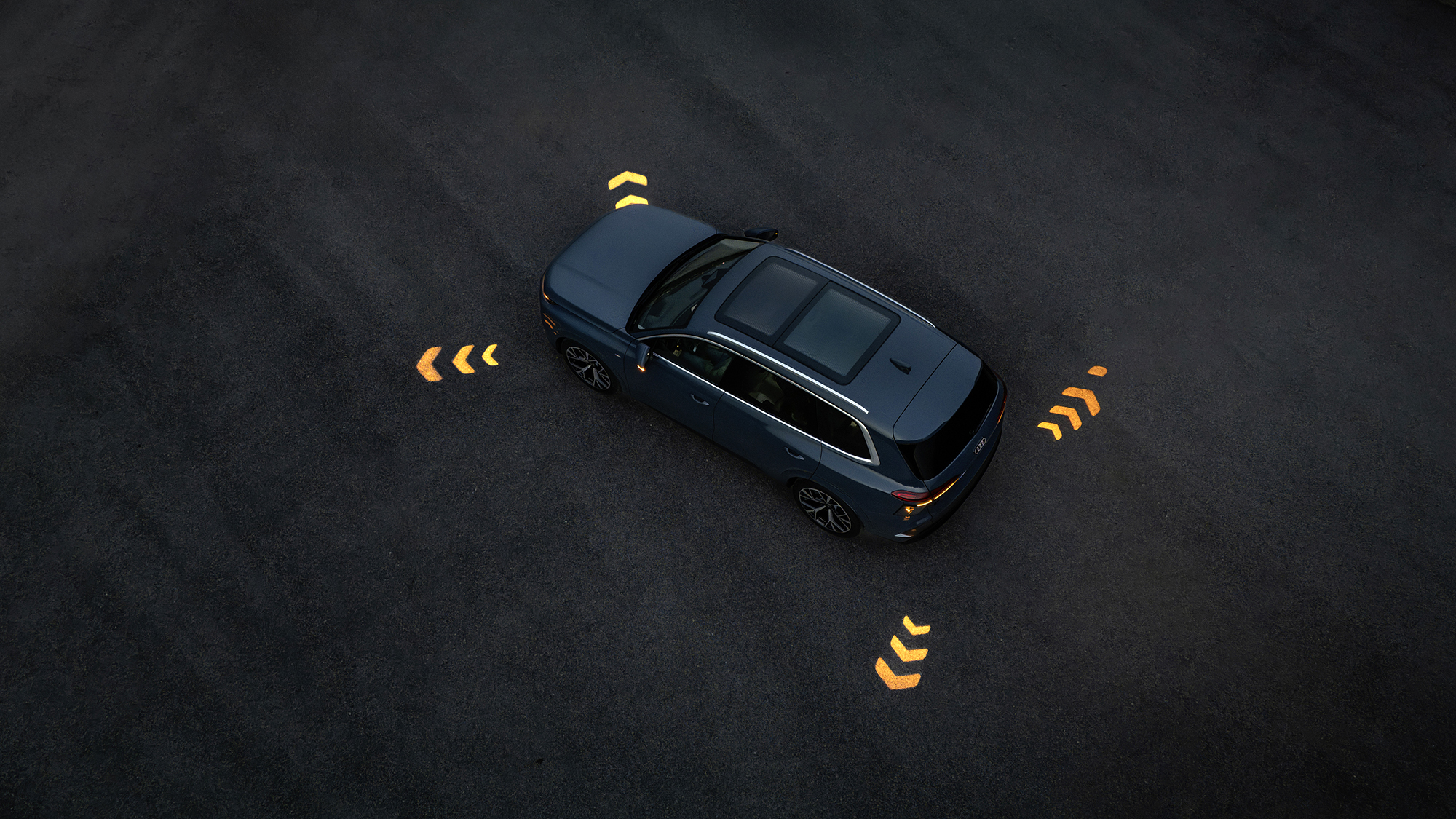
WORLD-FIRST ADVANCED TURN SIGNAL PROJECTION
Perhaps the most unusual lighting feature is what Audi describes as a world first.
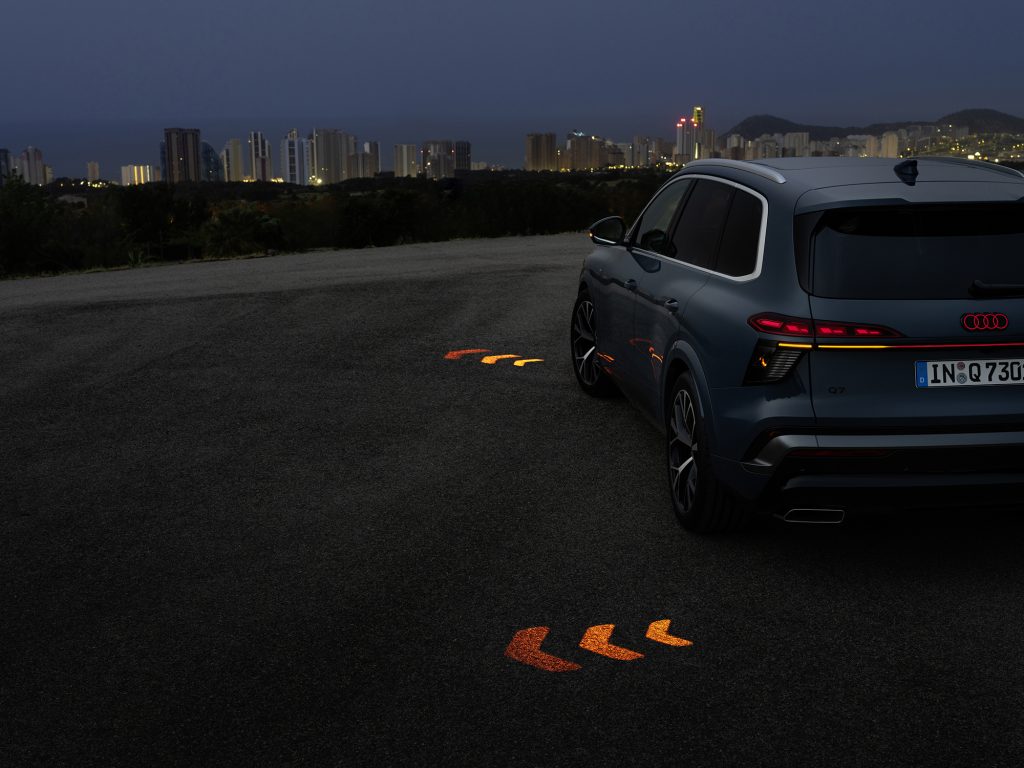
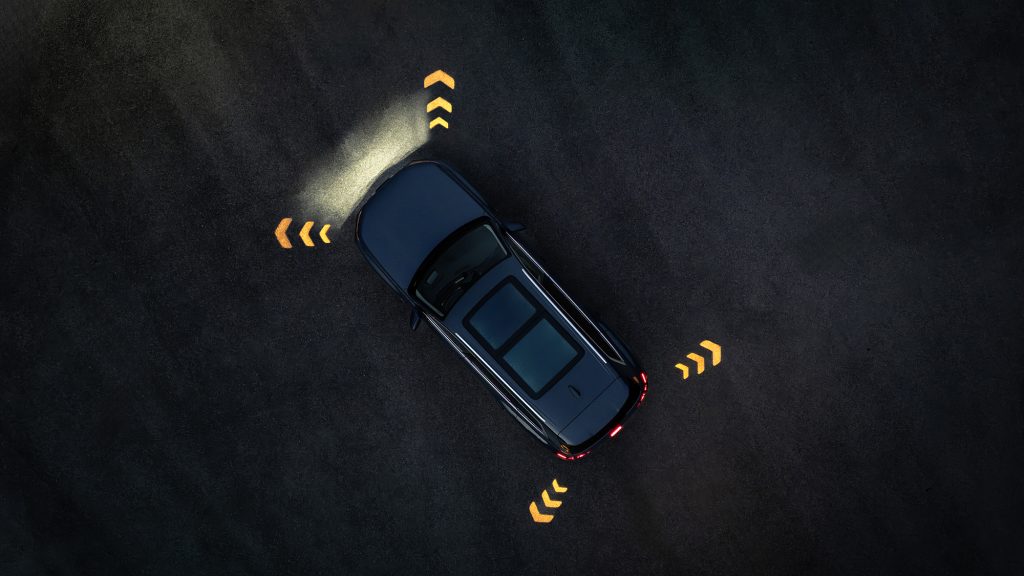
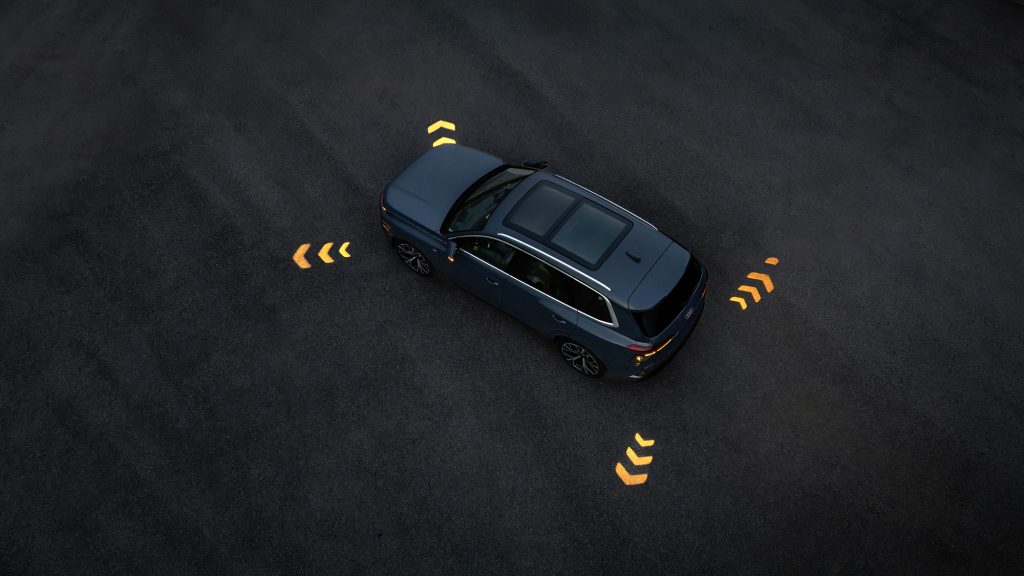
When the turn signals are activated at night, the Q7 projects a stylized turn signal graphic onto the ground alongside the vehicle. Working in synchronization with the front and rear dynamic indicators, the system is designed to improve visibility for pedestrians, cyclists and other nearby road users.
The OLED rear lighting system also communicates specific warnings to following traffic, including accident notifications, automated parking indications and proximity alerts when vehicles approach too closely while the Q7 is stationary.
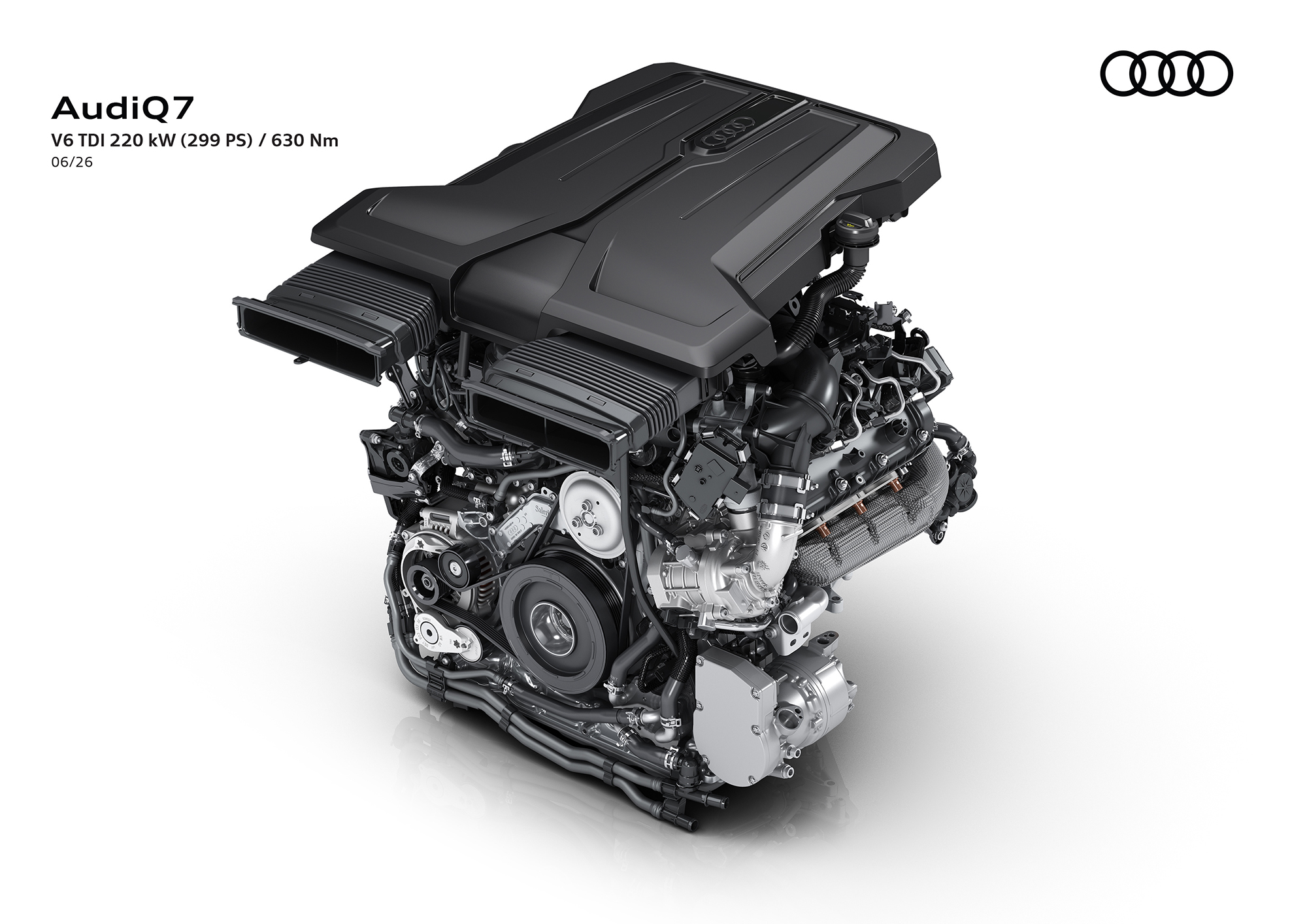
V6 DIESEL POWER WITH MHEV PLUS TECHNOLOGY
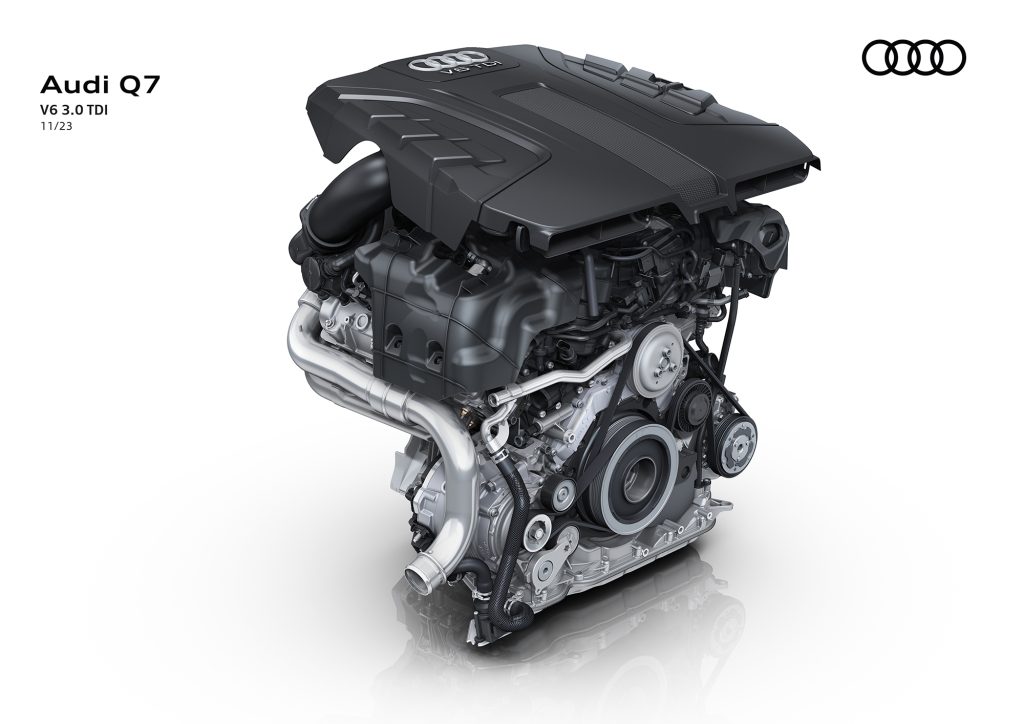
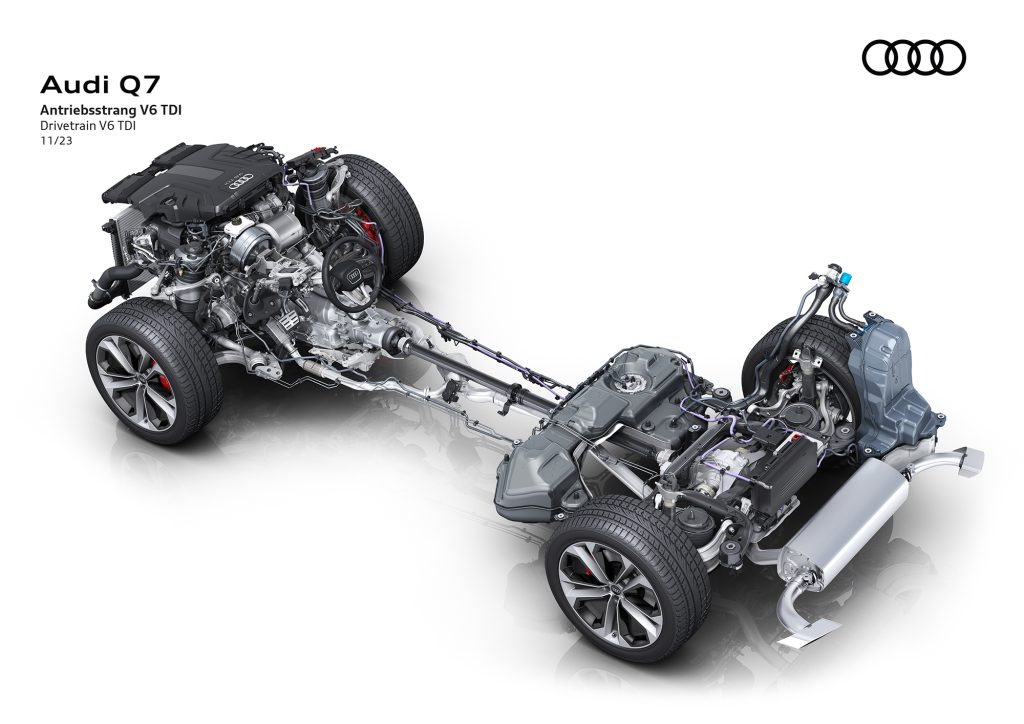
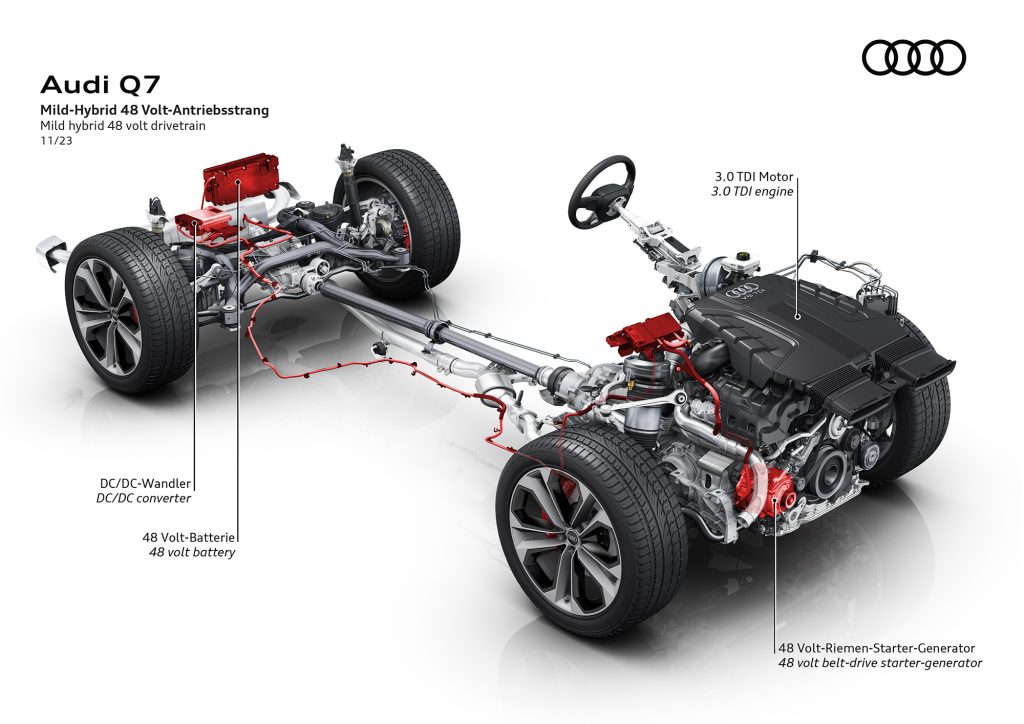
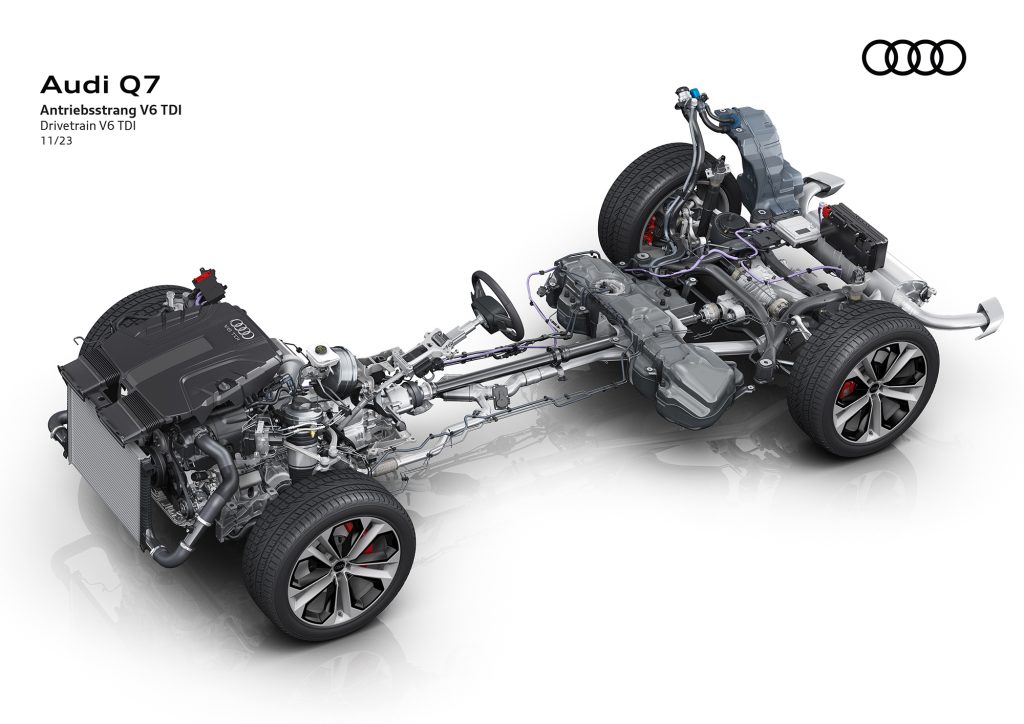
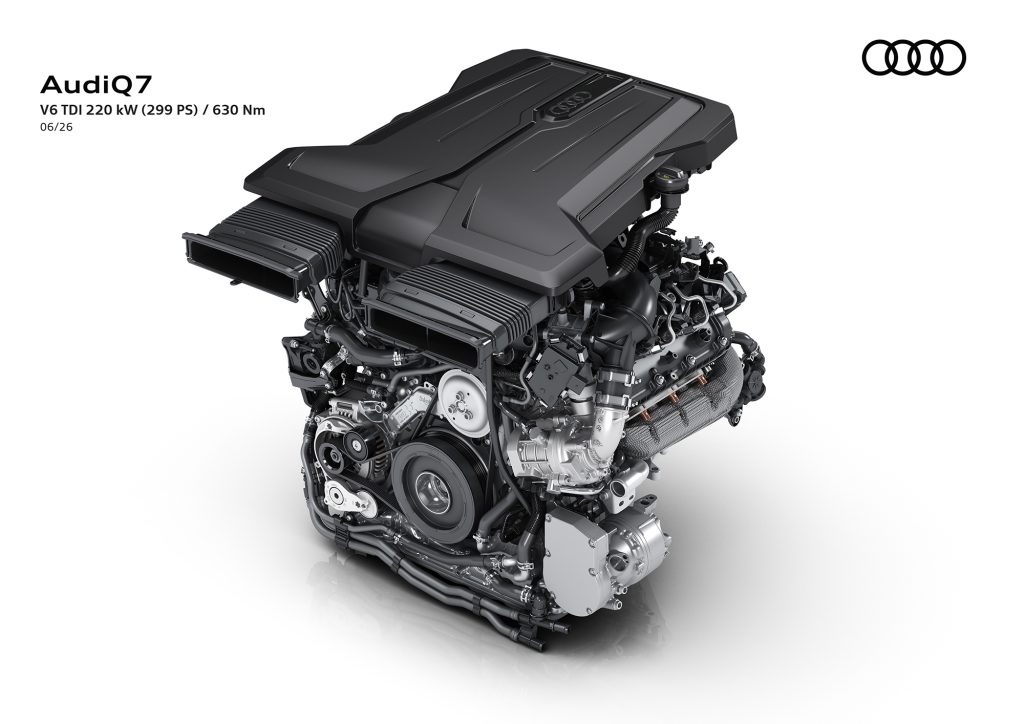
At launch, Audi will offer the new Q7 exclusively with a three-liter V6 diesel engine available in two output levels.
The higher-output version produces 220 kW (299 PS) and 630 Nm of torque, while the second delivers 180 kW (245 PS) and 500 Nm.
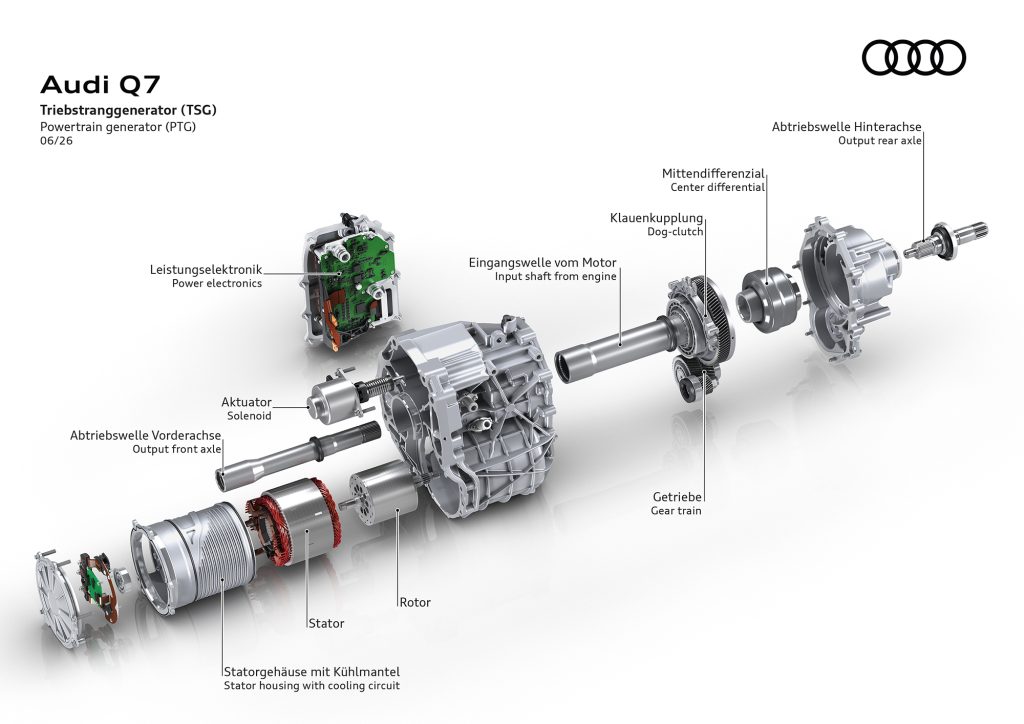
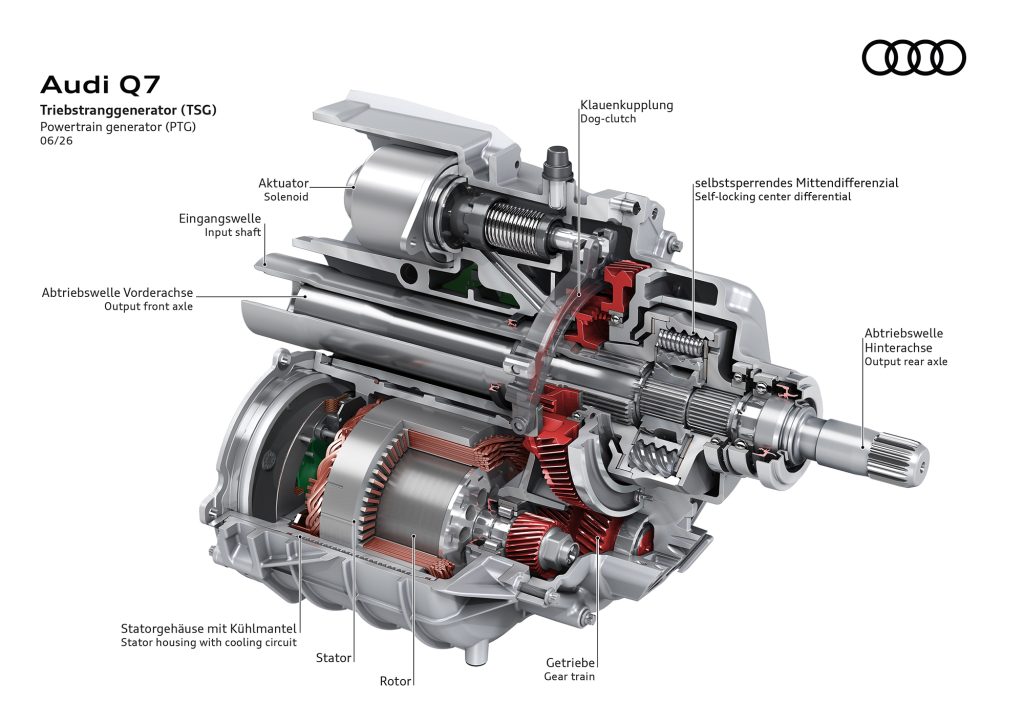
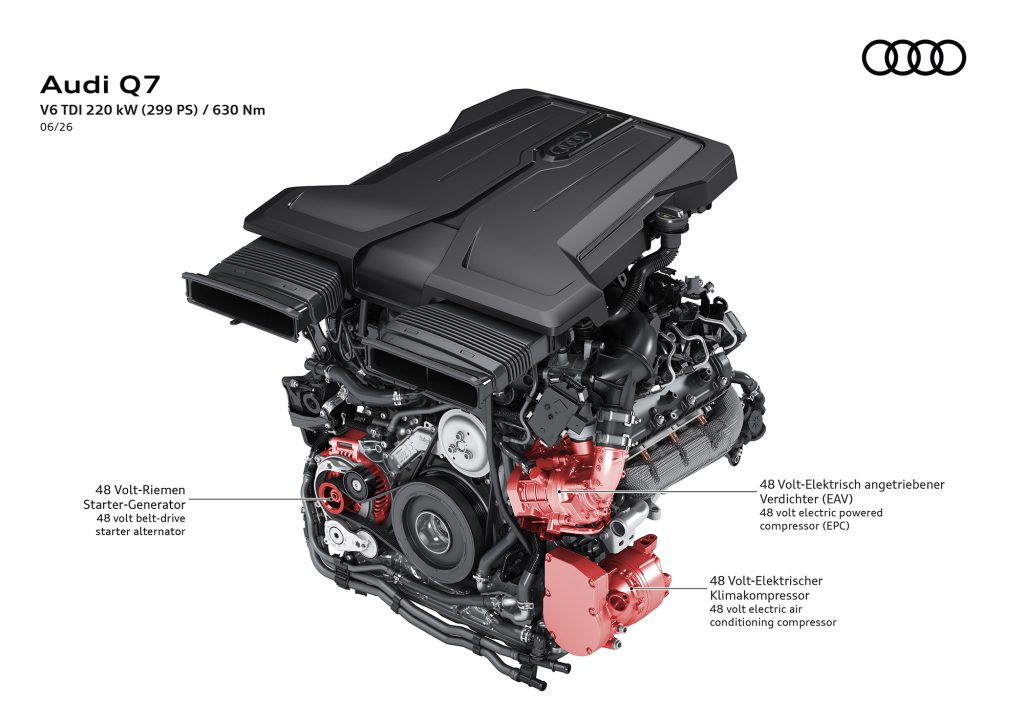
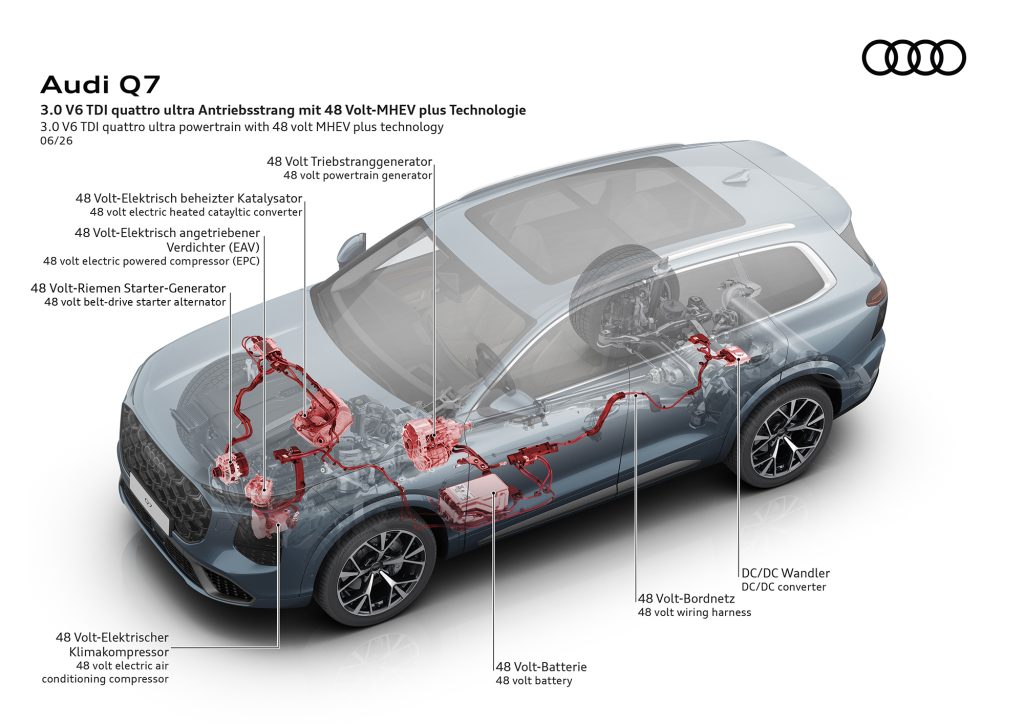
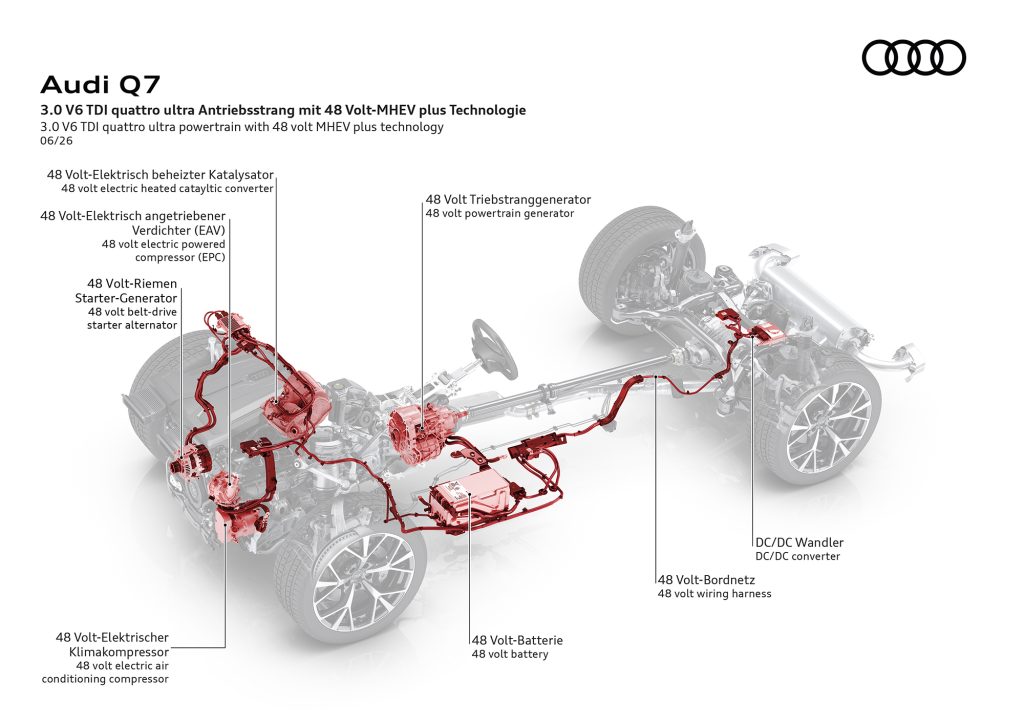
Both variants employ Audi’s MHEV plus mild hybrid system, which includes a next-generation powertrain generator capable of contributing up to 18 kW (24 PS) and 370 Nm of additional assistance.
The system enables limited electric operation during low-speed driving situations such as maneuvering, parking and urban traffic.
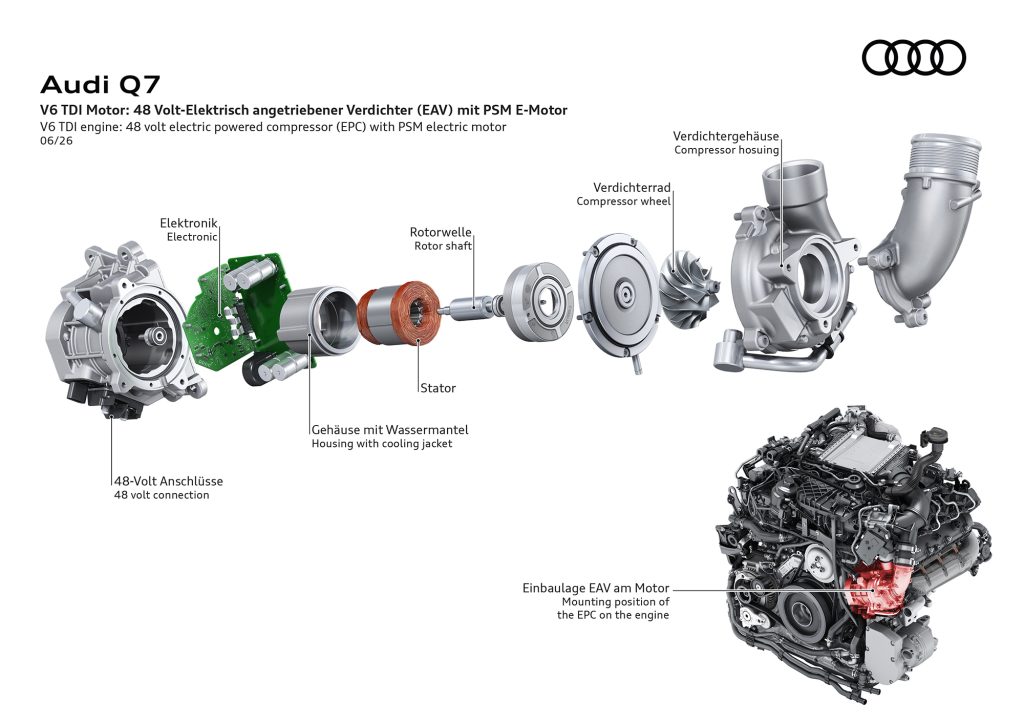
A key technical feature is an electric-powered compressor that works across the entire engine speed range. The compressor can spin up to 90,000 rpm within 250 milliseconds, helping build boost pressure rapidly and improving throttle response while enhancing mid-range performance.
Audi says the combination of electric assistance and diesel torque creates a driving character that closely resembles a comparably powerful electric vehicle.
The engines are paired with an eight-speed tiptronic transmission and standard permanent quattro all-wheel drive featuring a new limited-slip center differential with preload.
Owners can also use HVO (hydrotreated vegetable oil) fuel, which Audi says can reduce CO₂ emissions by up to 70 to 95 percent compared with conventional diesel.
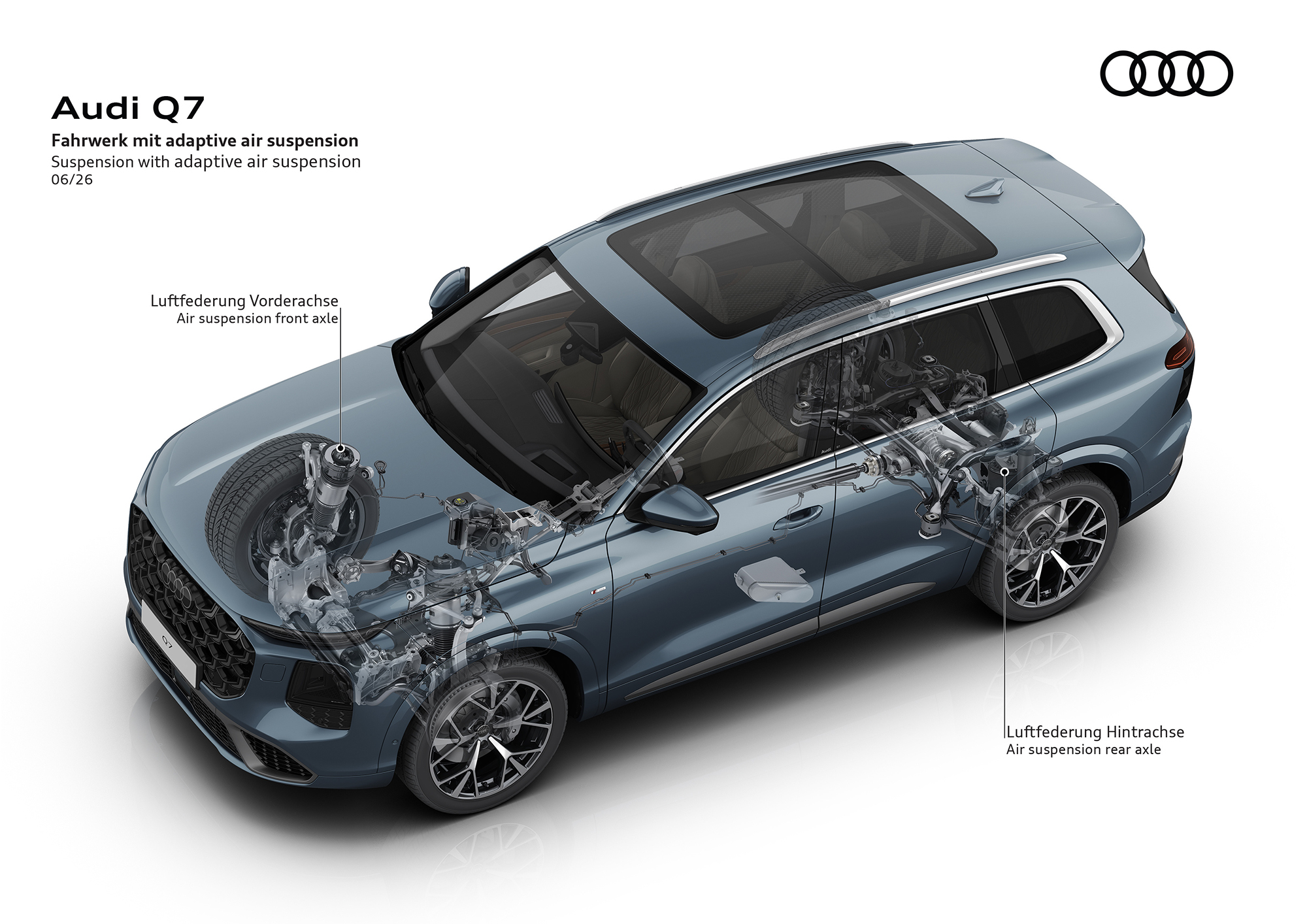
EXPANDED CHASSIS TECHNOLOGY
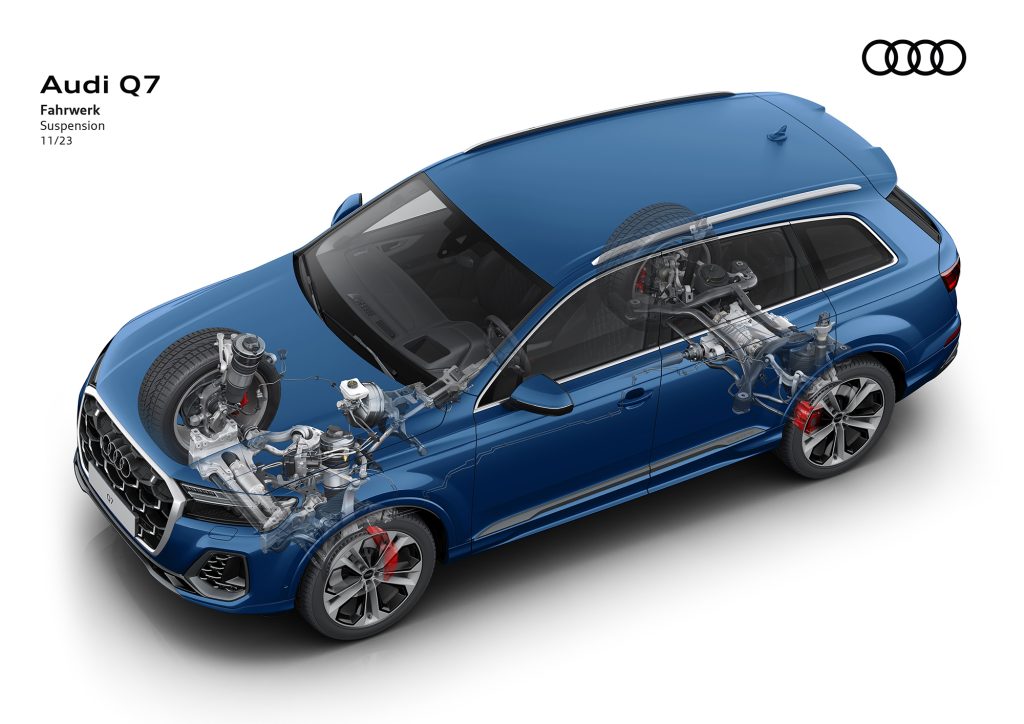
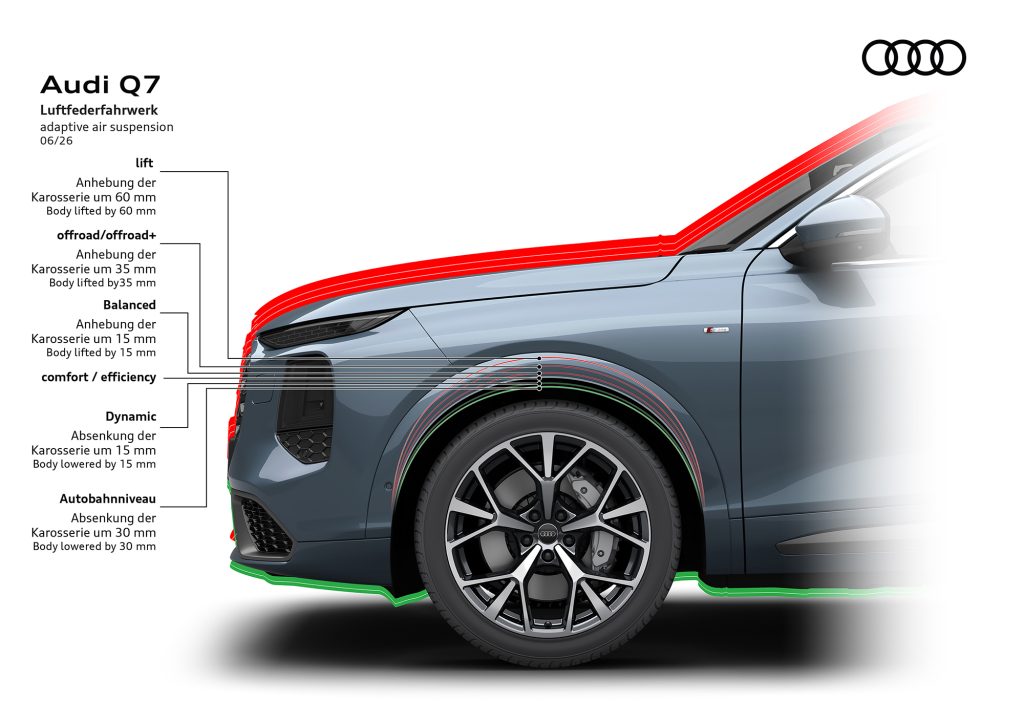
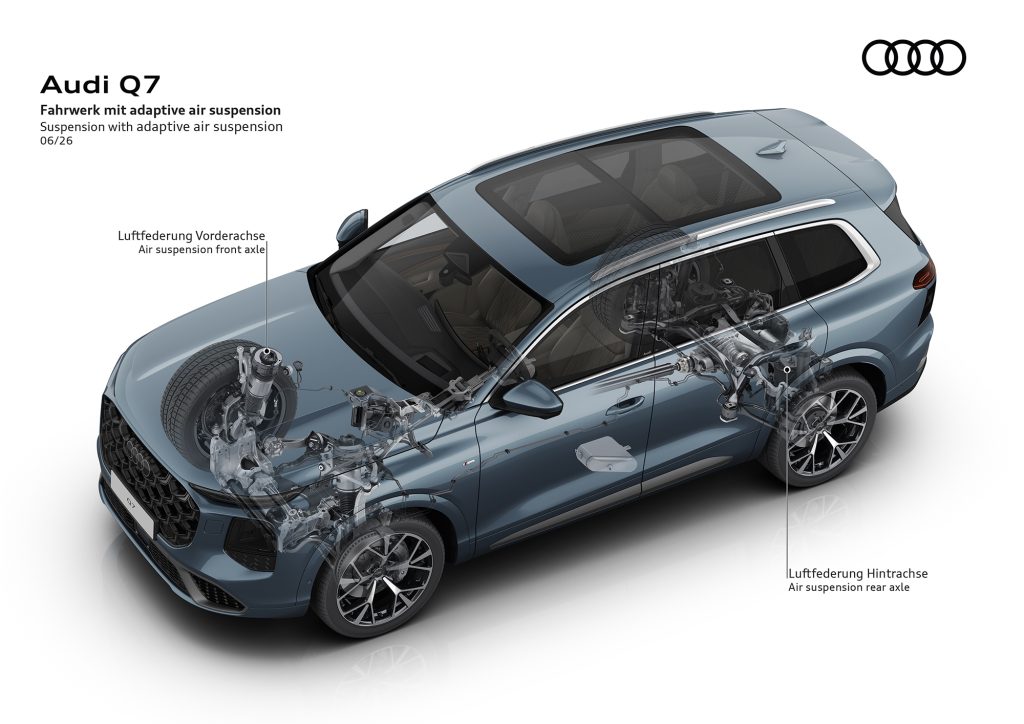
Three suspension configurations will be available.
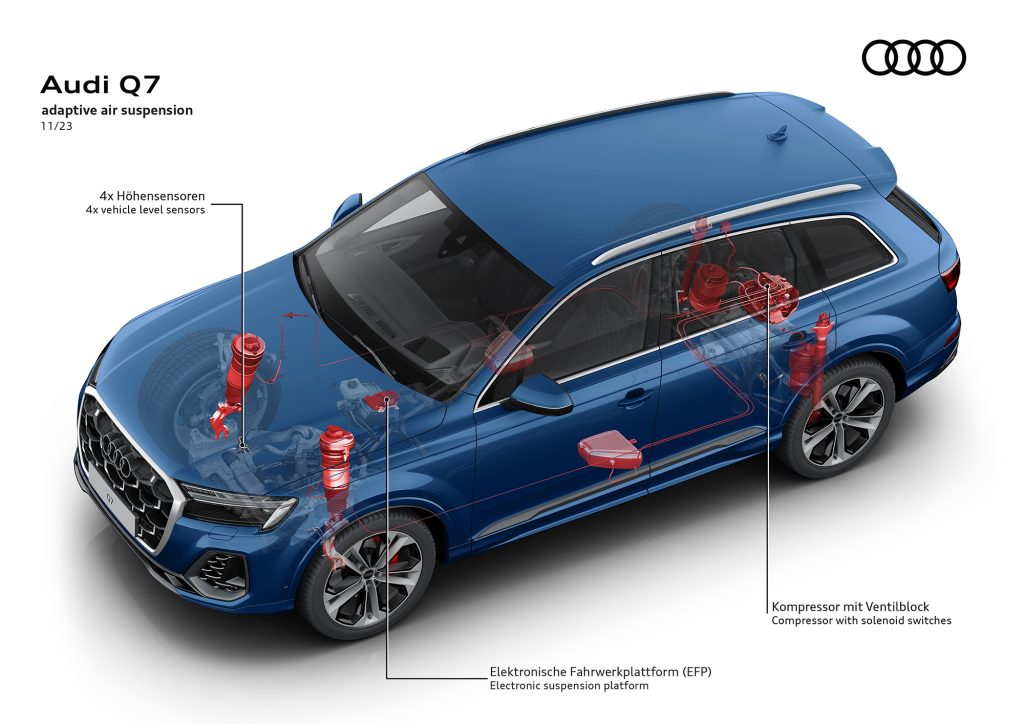
The standard setup uses steel springs, while adaptive air suspension and adaptive air suspension sport are optional. The sport version lowers the vehicle by 30 millimeters.
The air suspension systems include route-based predictive functions using geodata. For example, the Q7 can automatically prepare suspension settings for known railroad crossings.
A new exit function lowers the vehicle by 62 millimeters to ease entry and exit.
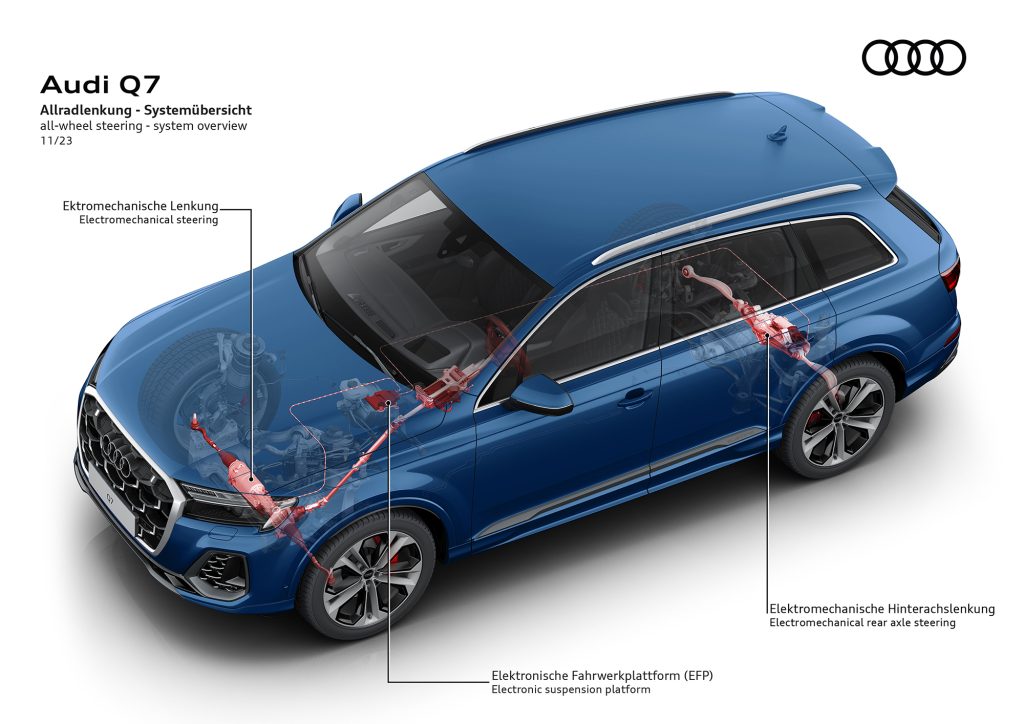
All-wheel steering is also available and is designed to improve low-speed maneuverability while enhancing stability at higher speeds.
Wheel options range from 20 inches to a factory-offered 23-inch wheel for the first time in Q7 history.
EXPANDED DRIVER ASSISTANCE FEATURES
The new Q7 receives a comprehensive suite of assistance systems.
Highlights include:
- Adaptive driving assistant plus
- Automatic emergency braking
- Blind spot monitoring
- Rear cross-traffic alert
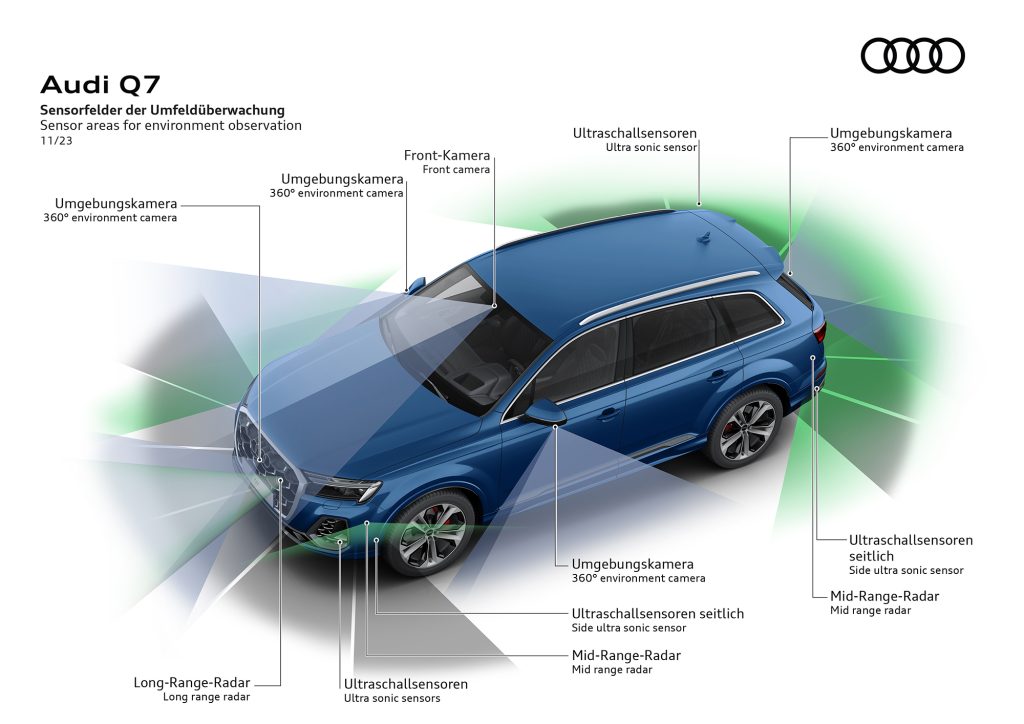
- 360-degree camera system
- Automated parking functions
- Trailer maneuvering assist
- Trailer stability control
- Exit warning system
A new Emergency Assist feature can steer the vehicle onto a highway shoulder and bring it to a controlled stop if the driver becomes unresponsive.
The trained parking system can memorize up to five parking maneuvers of up to 200 meters each and repeat them automatically under driver supervision.
Reverse Assist can also remember a route approximately 50 meters long and retrace it autonomously at speeds up to 10 km/h.
‘
AVAILABLE THIS SEPTEMBER
The third-generation Audi Q7 continues production in Bratislava, where both previous generations were also built.
Orders in Germany open this month, with deliveries beginning in September 2026.
Pricing starts at €87,900 for the 180 kW (245 PS) variant and €90,500 for the 220 kW (299 PS) version.
With a broader range of seating configurations, a dramatically expanded lighting technology package, advanced driver assistance systems and a new generation of electrified diesel powertrains, Audi is positioning the latest Q7 as its most versatile large SUV yet while continuing a model line that has been a key part of the brand’s global lineup for more than twenty years.
PHOTO GALLERY