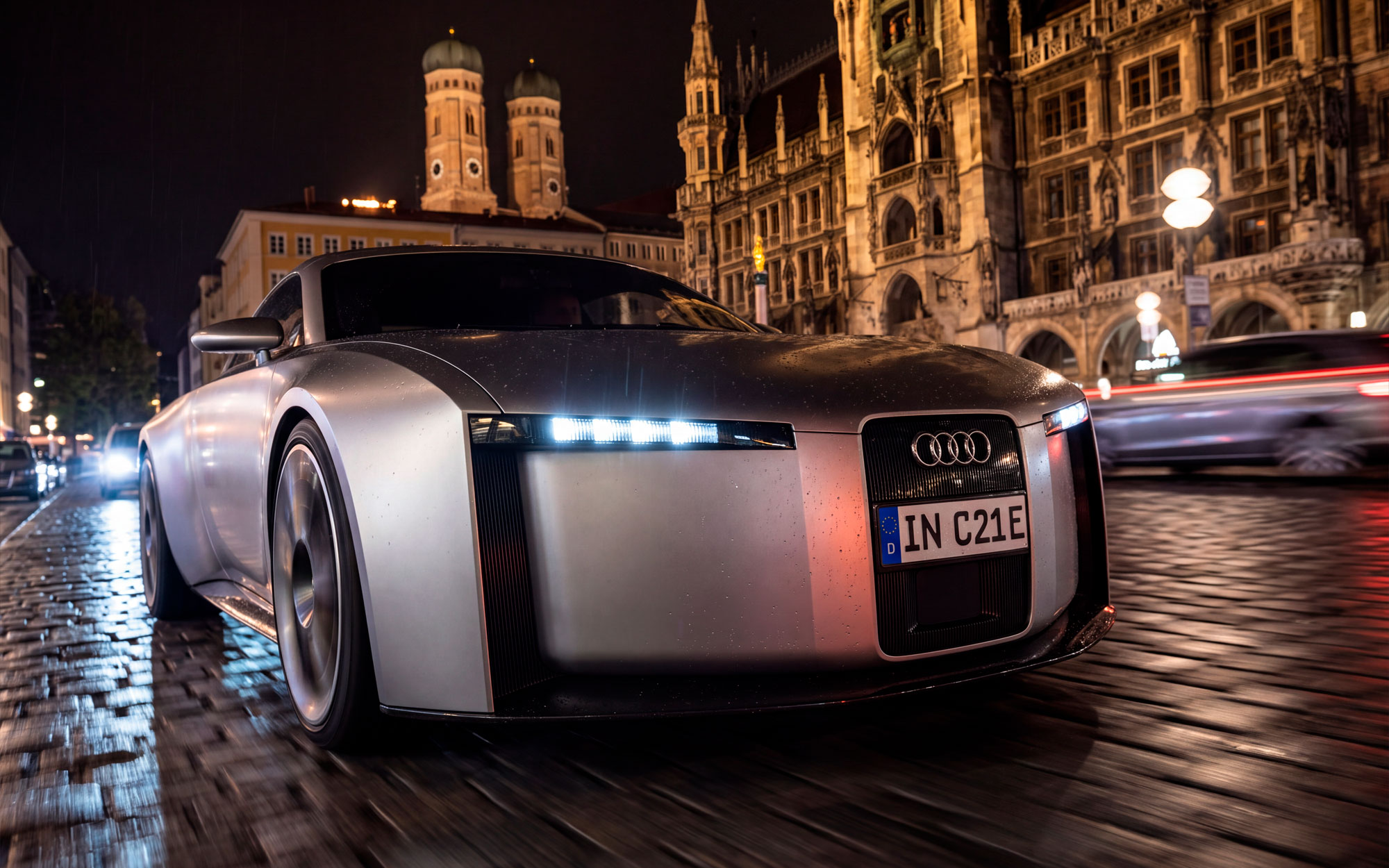

Audi has filed a German patent application exploring ways to make electric vehicles more engaging through sound, vibration, lighting and scent. The proposals range from transmitting the electric motor’s actual mechanical feedback to simulating gear changes and turbo lag, with more unusual examples including electrical arcs and sparks generated by a metal component contacting the road.
No specific vehicle was announced in connection with the filing. Even so, the production sports car previewed by the Audi Concept C is an obvious potential application for some of these ideas. With that car expected to share its platform architecture with the upcoming electric Porsche 718, the question becomes particularly relevant as Porsche begins demonstrating how its own electric sports car will deliver familiar driving sensations.
MAKING THE ELECTRIC MOTOR VISCERAL
Published as DE 10 2025 107 436 A1, the application was filed on February 27, 2025, and made public on August 27, 2026. Audi AG is the applicant, with Dr. Dirk Bäder and Dr. Michael Grabowski named as inventors. The German Patent and Trade Mark Office lists the application as pending.
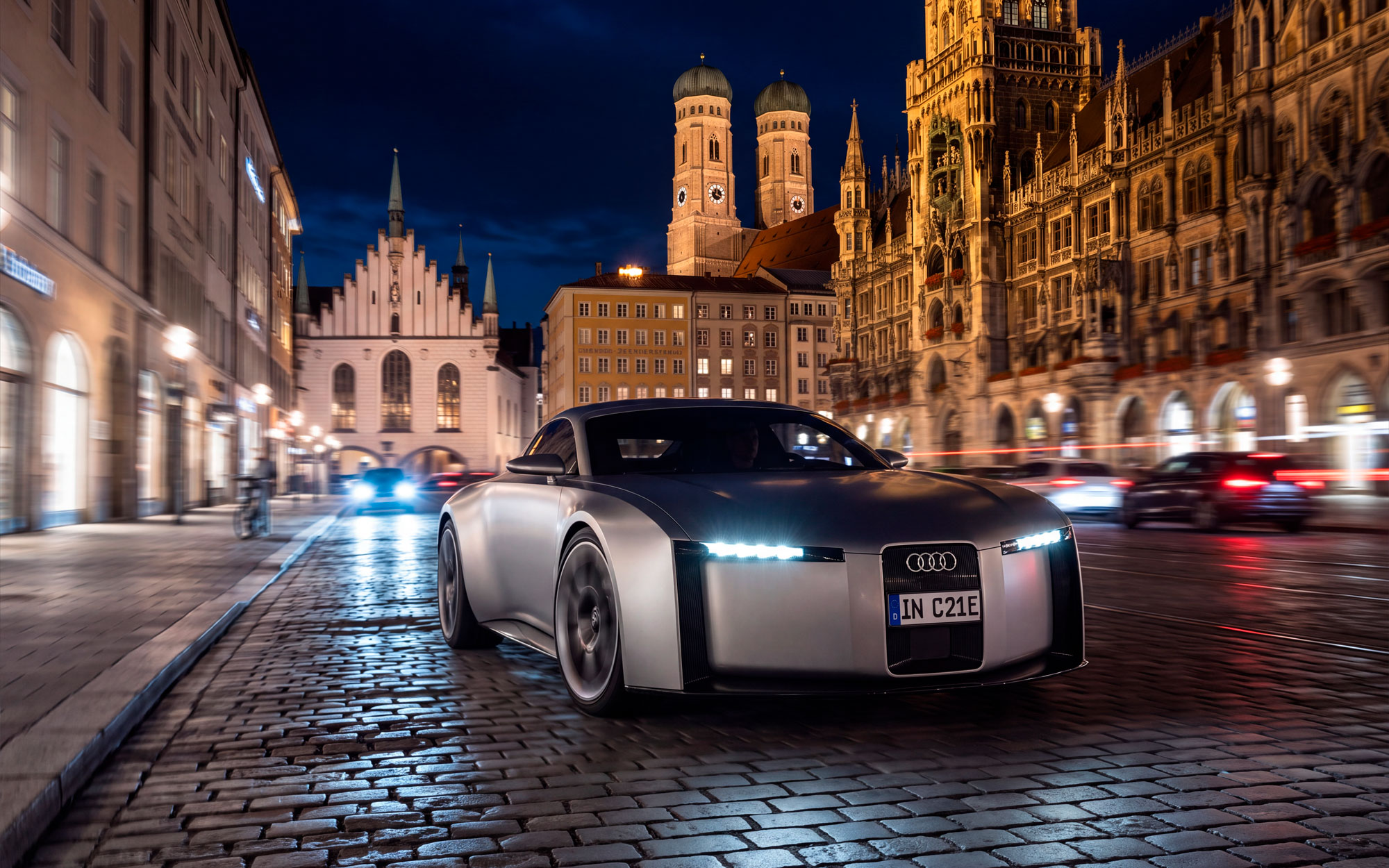
One central proposal involves transmitting sound and vibration generated by the electric motor into the passenger compartment or outside the vehicle. The description identifies rigid motor mounting elements and a hollow steel profile as possible transmission paths. It also suggests carrying that feedback through motor-compartment insulation or omitting the motor’s sound insulation.
This approach would make the electric powertrain’s own operation more viscerally noticeable. The inventors describe stronger mechanical feedback as a way to increase awareness of the vehicle and give drivers a more tangible connection to its performance.
A related arrangement would use a coupling to disconnect the motor from the drive shaft or wheels. That would allow the motor to turn while the vehicle remained stationary, with its speed conveyed through sound and vibration. The description explicitly compares the experience with revving a sports car.
SIMULATED SHIFTS AND TURBO LAG
The application also describes a controller capable of simulating gear changes and transmission ratios. Paddle-operated shifts could change the acoustics, vibration and progression of acceleration, while downshifts could produce changes in motor speed that the driver would hear and feel.
Stored characteristic curves could reproduce turbo lag or the operating range of a turbocharged engine. For an electric vehicle, that would mean deliberately shaping power delivery to recreate the delayed response and subsequent build in acceleration associated with a combustion powertrain.
Another example describes temporarily releasing additional torque or power, either at the driver’s request or through artificial intelligence anticipating demand. The filing provides no output figures or duration for that proposed boost.
LIGHT, SPARKS AND SCENT
The second main branch of the application concerns visual effects linked to the vehicle’s operating state. Lighting could change with motor speed, becoming more intense or animated as performance increases.
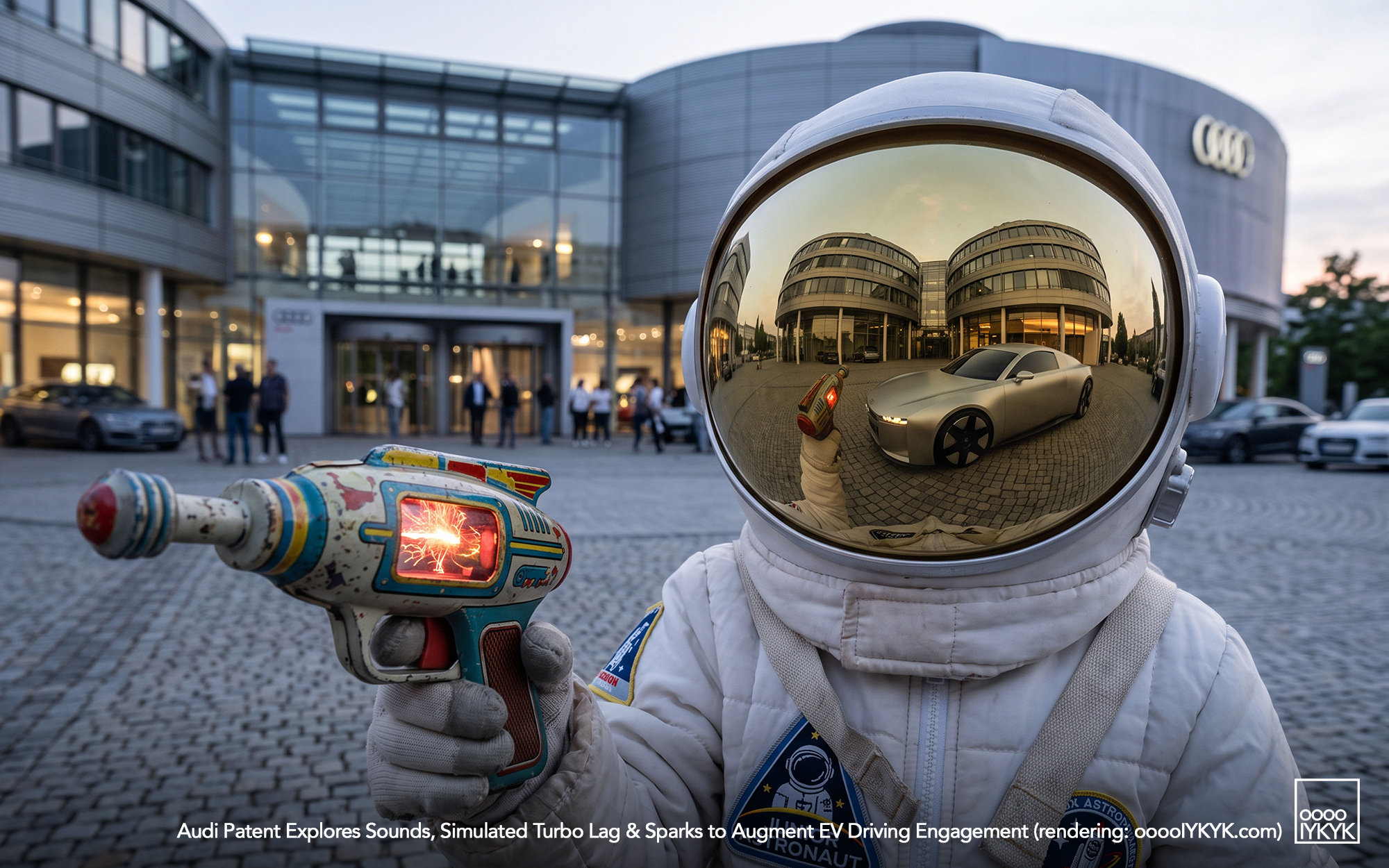
More unusual proposals include an electrical arc generated between electrodes behind protective glass. Such a device could be mounted outside the vehicle or within the driver’s field of view, including the center console, and respond to accelerator input.
A separate arrangement would generate sparks through electrical discharge, friction or a sacrificial metal component pressed against the road surface. The description suggests activating that effect under selected acceleration, speed or braking conditions. Brief flashes of light could also imitate backfires or flames around the underbody or rear.
Other examples include headlights that wink when a recognized person approaches, pulsating exterior light strips and electronically variable paint. A display around the windshield’s edges could generate speed-dependent blur or distortion, creating a peripheral “warp” effect.
Scent diffusers could dispense calming fragrances in traffic and invigorating ones during sporty driving. One example references an electrical smell reminiscent of a toy train. The document describes scent reservoirs without specifying a chemical formulation for that effect.
While these are all interesting and creative ideas, the devil is in the details. Just how these patented ideas get implemented considerate of drivers’ needs will determine whether this is welcome augmentation of interaction between human and machine or simply forced theatre.
THE PORSCHE 718 CONNECTION
Porsche’s electric 718 provides a timely example of how some familiar sports-car sensations can translate to an EV. In its October 7 report, Autocar described a high-speed passenger ride in a development Boxster and reported that the next-generation Boxster and Cayman are planned to launch in 2027 as electric models, following development delays.
Car and Driver’s separate ride report adds a direct connection to the subject of Audi’s filing. Its prototype featured Porsche’s E-Shift system, with paddle-operated simulated gear changes and engine sound. The publication also described the E-Core architecture, which places the battery behind the seats to retain a low driving position and characteristics associated with a mid-engined sports car.
These reports show that simulated drivetrain feedback is already being demonstrated in the forthcoming Porsche. They do not establish that its system uses Audi’s proposed hardware or that the brands will share the sensory features described in this application.
A NATURAL FIT FOR THE PRODUCTION CONCEPT C?
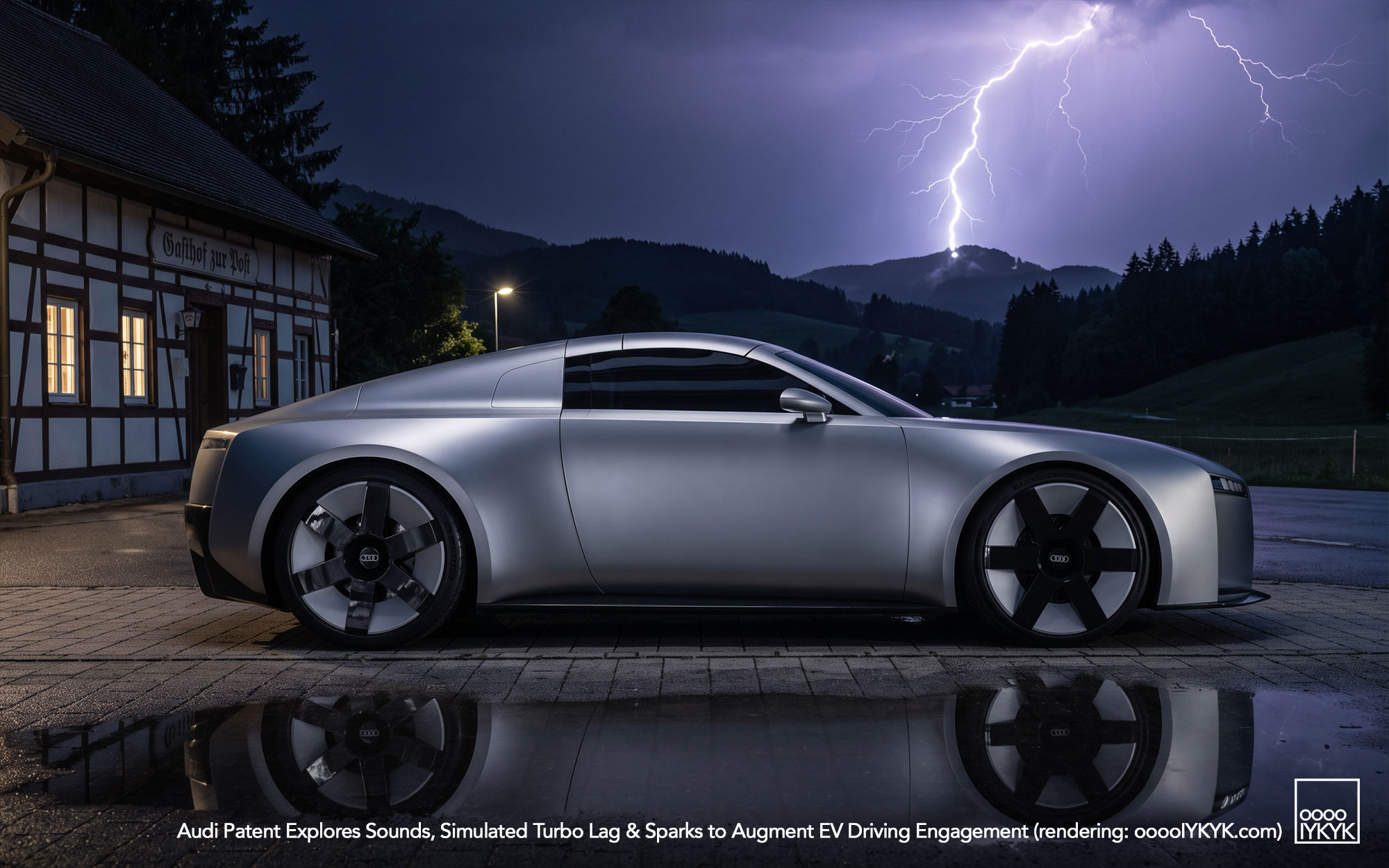
Audi has confirmed that the electric sports car previewed by Concept C will enter production at Böllinger Höfe from 2027. Autocar has reported that the production model is set to share its sports-car platform with the electric Porsche 718 Boxster and Cayman.
Given that positioning, it is easy to imagine selectable motor feedback, simulated shifts or tailored power delivery being offered on the production Audi. An electric sports car designed around driving enjoyment would be a logical place to introduce such equipment, particularly when its Porsche relative is already demonstrating simulated shifts.
That remains a guess. The patent application identifies no model, and it does not establish that Audi intends to build every example it describes. Its more elaborate proposals—road-generated sparks, electrical arcs and windshield distortion—are considerably further removed from the familiar feedback demonstrated in the 718 prototype.
For now, the filing offers a detailed look at how Audi is considering the sensory character of electric vehicles. The production Concept C provides a compelling potential setting for some of those ideas, with the exact selection still to be announced.