


Reports that the Volkswagen Group is evaluating one of the most ambitious restructuring programs in its history have cast renewed attention on Audi’s German operations, particularly the future of the Audi Neckarsulm facility.
According to German business publication Manager Magazin, Volkswagen Group CEO Oliver Blume has outlined a long-term strategy that could eliminate as many as 100,000 positions across the Group by 2030 while reducing investment spending, restructuring portions of the company’s operations and reassessing the long-term role of four manufacturing sites that could eventually cease vehicle production once current product cycles end. These include:
- Audi Neckarsulm plant
- Volkswagen Hanover
- Volkswagen Zwickau
- Volkswagen Emden
Most notable in an Audi context is of course Neckarsulm. While Volkswagen has not officially confirmed the reported plans now rumored in the German press, the scale of the proposal underscores the financial and competitive pressures facing Europe’s largest automaker as it confronts slowing global demand, increasing competition from China, geopolitical uncertainty and the costly transition toward electrification.
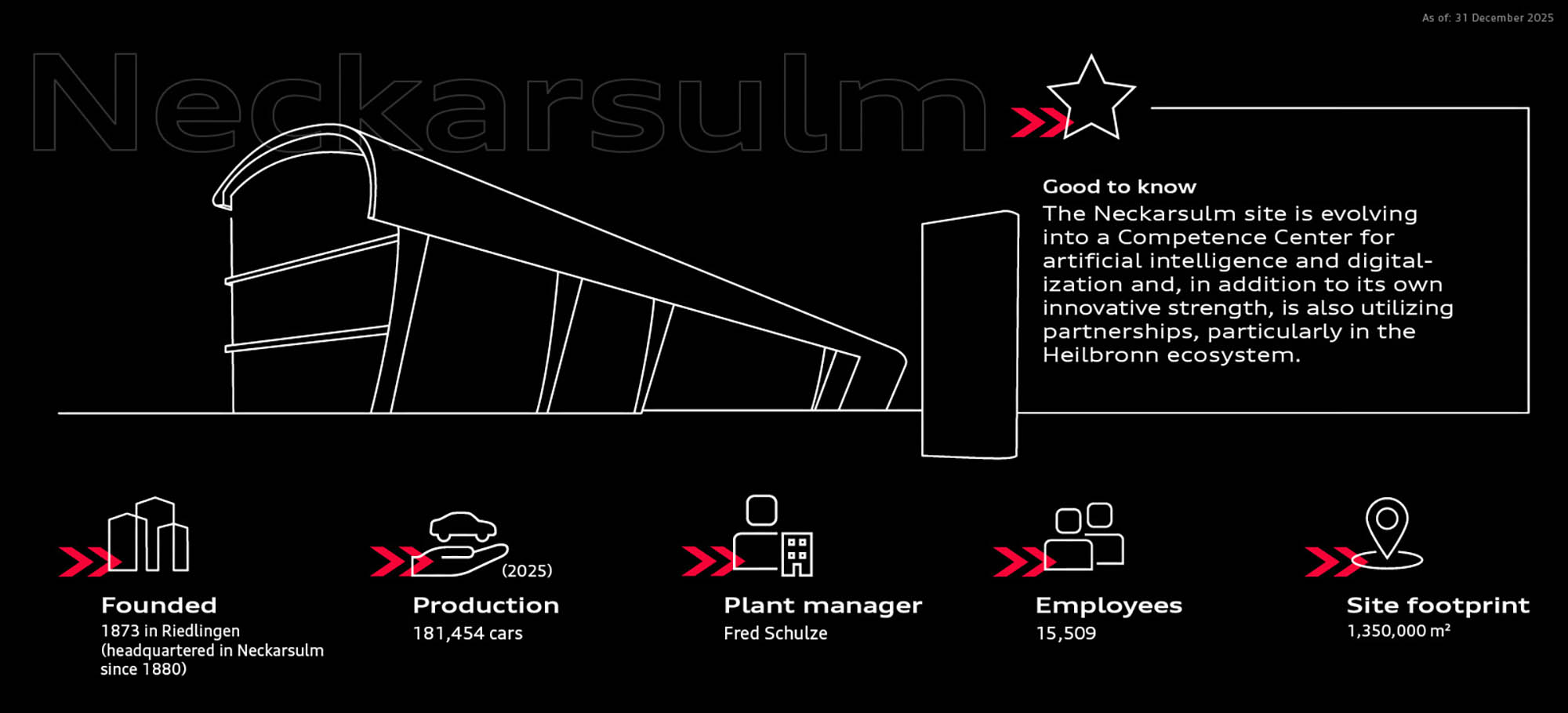
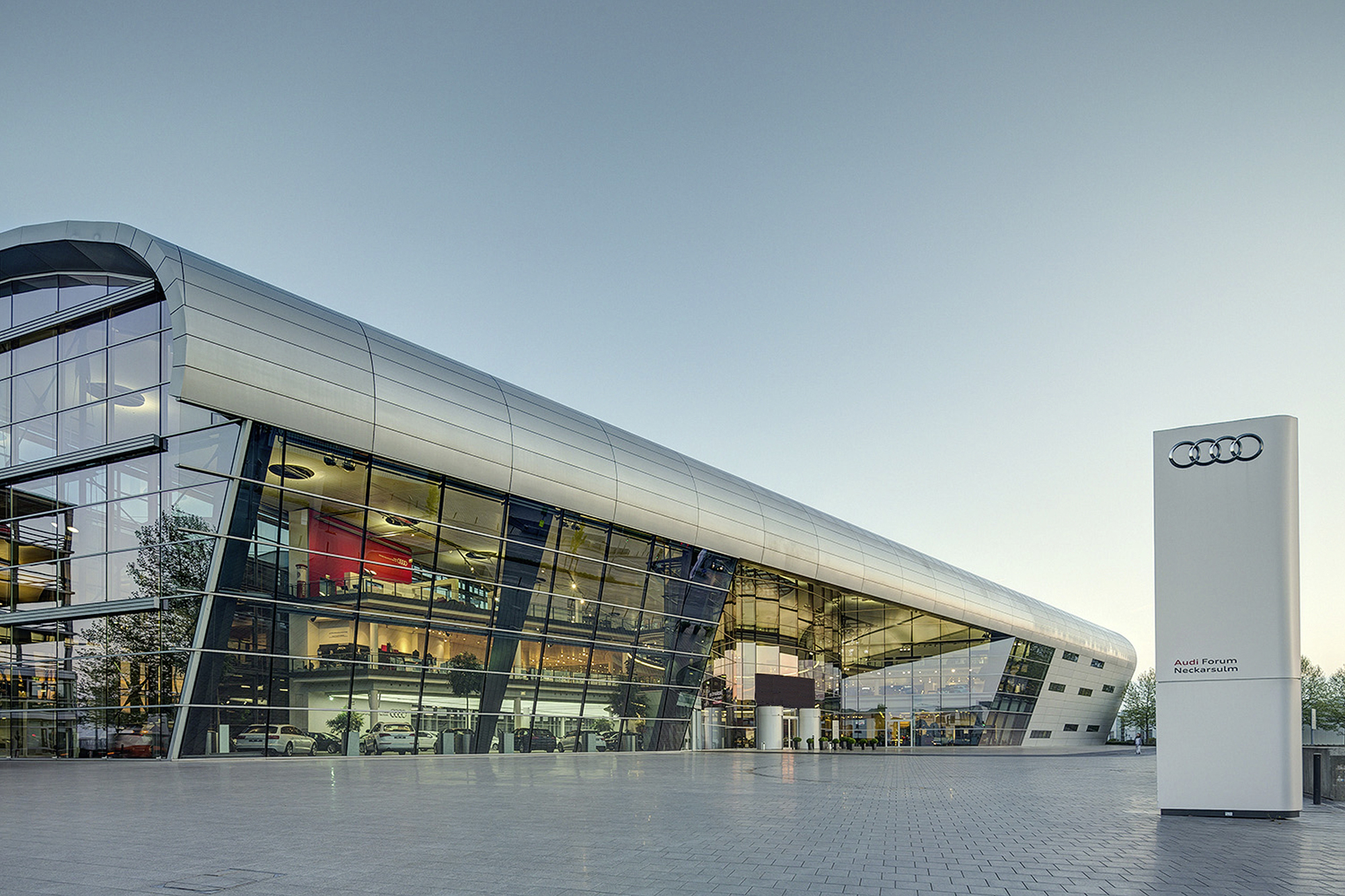
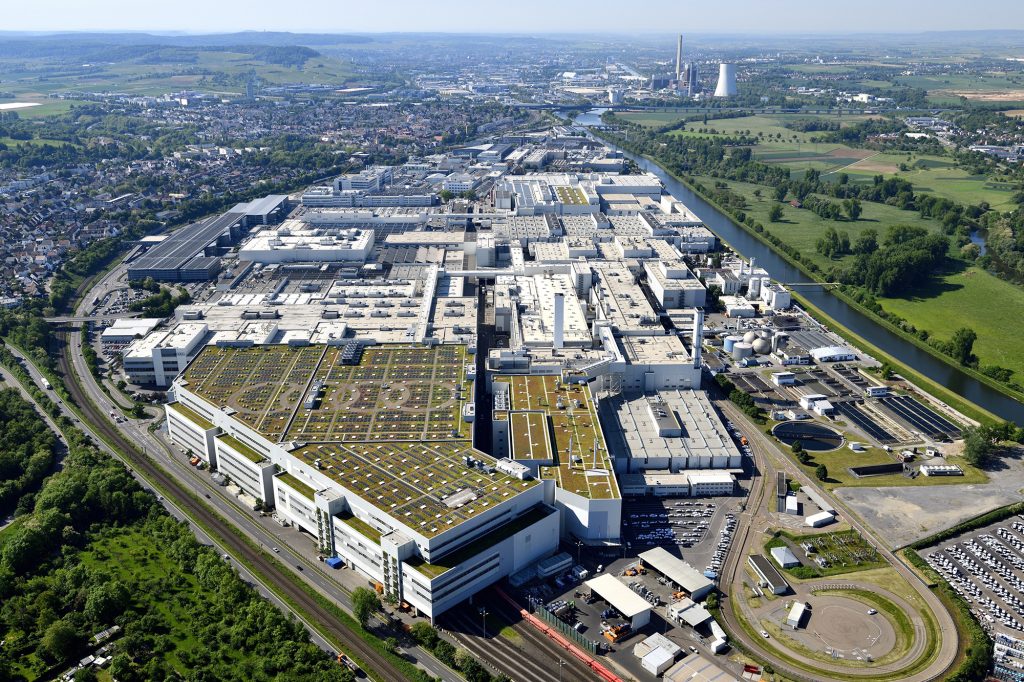
For Audi, the implications extend beyond employment numbers. Neckarsulm is much more than a vehicle assembly plant. It is central to Audi Sport GmbH by producing many of the brand’s highest-performance RS models alongside the A6 and A7 families, houses key engineering and development departments, pilot production operations and the Audi Forum Neckarsulm visitor center that is a key touchpoint between Audi and its customers with delivery center, Audi exclusive showroom, historic exhibition, Audi collection shop, restaurant and events hosting. Any significant reduction in the site’s role would represent one of the most consequential changes to Audi’s industrial footprint in decades.
Those concerns formed the backdrop to Audi’s second-quarter employee assemblies held this week in Neckarsulm and Ingolstadt. Although neither meeting directly addressed the Manager Magazin report, both focused heavily on the need for long-term certainty, continued investment and clear commitments to Audi’s German manufacturing network.
Speaking before approximately 3,200 employees in Neckarsulm, works council representative Rainer Feigenspan acknowledged the uncertainty many employees are feeling amid recent media reports involving Volkswagen Group facilities. His message to company leadership was direct: employees need “clarity, security and reliability” regarding the site’s long-term future. The works council emphasized that Audi’s Future Agreement, reached with management in March 2025, remains fully in effect, including employment protections extending through the end of 2033.
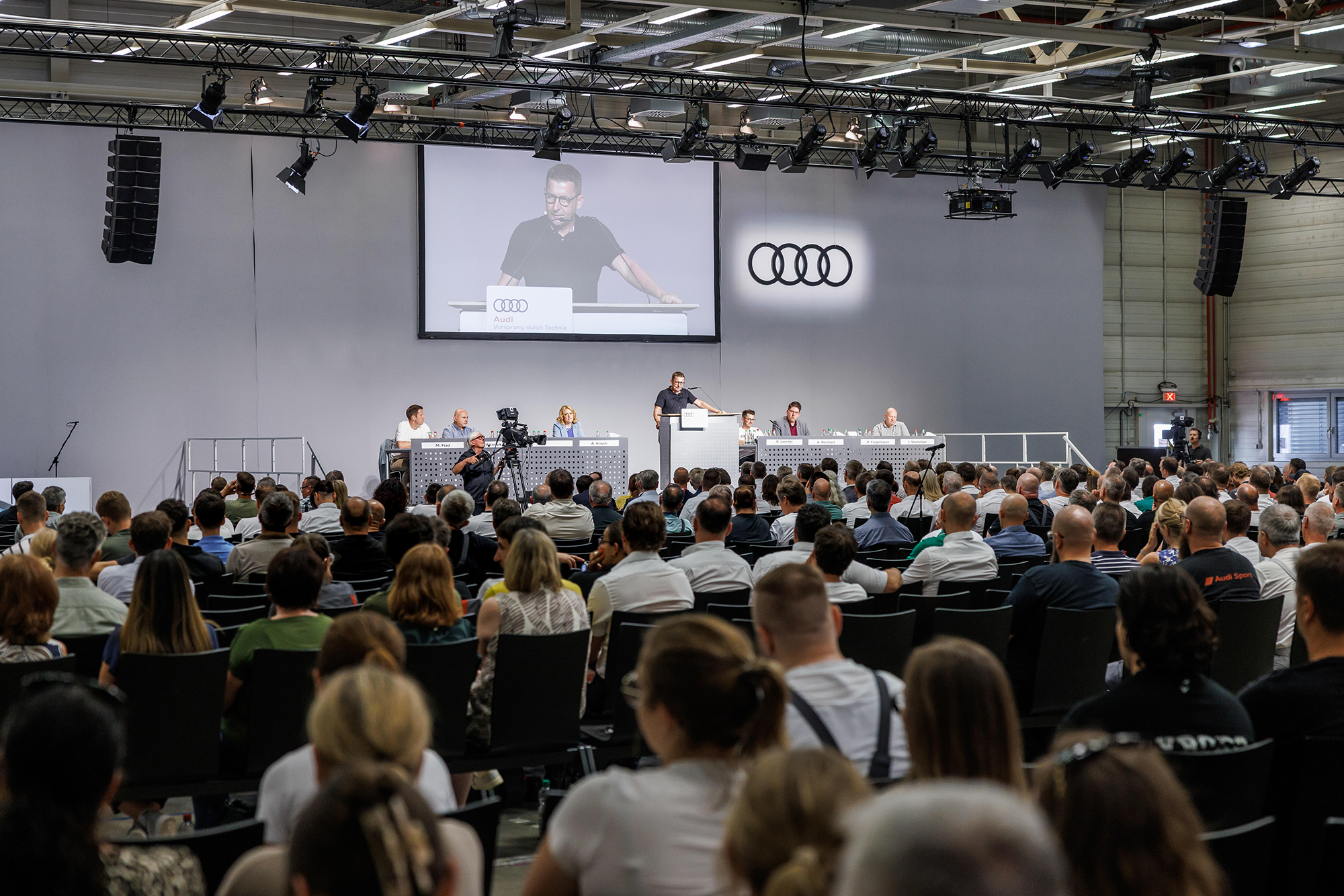
Rather than simply calling for job preservation, employee representatives outlined what they believe is necessary to secure Neckarsulm’s future: long-term product allocation, continued investment in new technologies, workforce training, transformation initiatives and expanding the site’s role as a center for artificial intelligence and digitalization. The works council also pointed to recent efforts by employees to reduce manufacturing costs, arguing that the company must now deliver on its commitments by assigning future products and maintaining competitive utilization of the plant.
At Ingolstadt, the message was similar but even more direct. Works council chair Jörg Schlagbauer used the introduction of the new Audi Nuvolari as an example of what the company can accomplish when small, focused teams move quickly and collaborate across departments. He argued that this entrepreneurial spirit is exactly what Audi needs as it navigates one of the most challenging periods in its modern history.
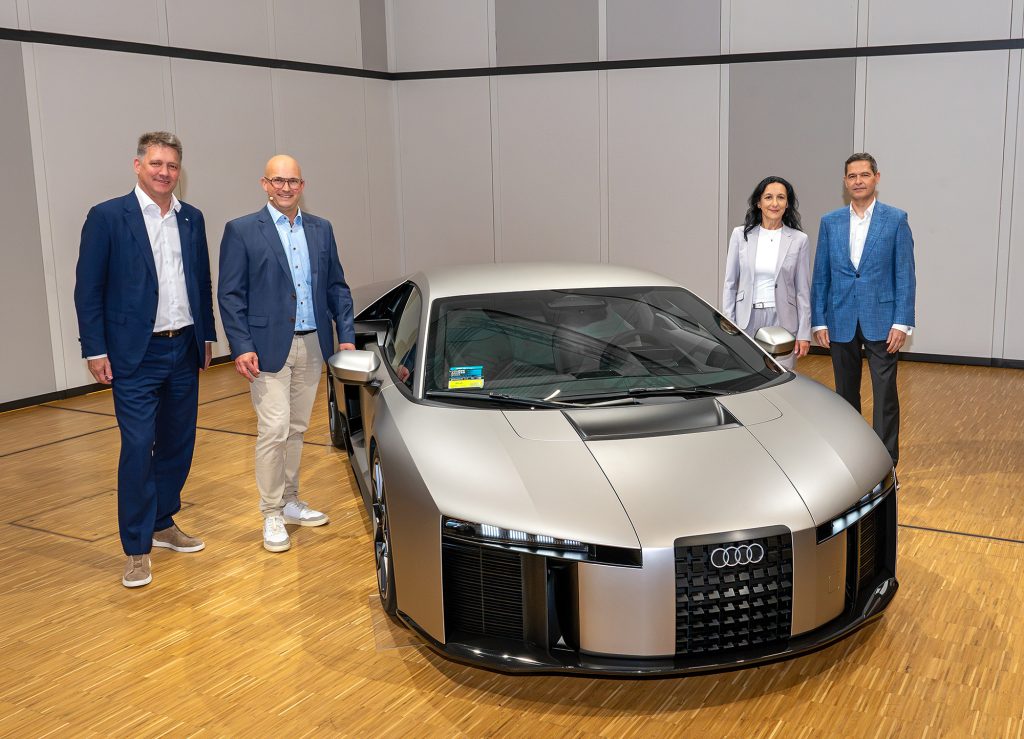
Fellow works council representative Rita Beck stressed that investment—not simply cost reduction—must remain central to Audi’s strategy. She pointed to projects including a new automated large-parts warehouse, the return of additional in-house manufacturing work, the launch of the next-generation Audi Q3 in Ingolstadt and future products such as the Audi A2 e-tron as examples of the investments needed to secure long-term employment.
Perhaps the most notable statement from the Ingolstadt assembly addressed Neckarsulm directly.
“Neckarsulm is part of Audi’s DNA—that is not up for discussion,” Beck said, emphasizing solidarity between Audi’s German production sites while rejecting any suggestion that the facilities should compete against one another for future investment or product allocation.
Audi Board Member for Human Resources Xavier Ros also acknowledged that conditions have changed significantly since the Future Agreement was signed in March 2025. He noted that approximately 4,500 of the previously announced 6,000 reductions in indirect positions have already been completed or contractually agreed upon, but argued that worsening market conditions, increasing competition and changing geopolitical realities require Audi to continue adapting its business.
“We have already achieved a great deal, but we have to do more,” Ros told employees, adding that Audi’s long-term competitiveness depends on working closely with the broader Volkswagen Group while continuing to implement the company’s transformation strategy.
For those focused on Audi in particular, the significance of the discussion extends beyond headlines about workforce reductions. Neckarsulm occupies a unique place in the company’s history. The city became part of Audi’s story following Volkswagen’s acquisition of the former NSU factory in 1969, preserving one of Germany’s oldest automotive manufacturing sites. Over the decades, Neckarsulm evolved into the birthplace of many of Audi’s technological milestones, from aluminum-intensive construction and high-performance luxury sedans to today’s RS models and the headquarters of Audi Sport GmbH. Alongside its production facilities, the site remains home to engineering teams, development operations and the Audi Forum Neckarsulm, making it one of the brand’s most important centers of expertise and heritage.
Whether Volkswagen ultimately pursues the full scope of the reported restructuring remains uncertain. What is increasingly clear, however, is that both Audi management and employee representatives recognize that the competitive landscape has shifted dramatically. Their public message has centered on investment, innovation and securing future products for Germany’s factories. For Neckarsulm, whose importance reaches well beyond vehicle production, those decisions may ultimately prove among the most consequential in shaping Audi’s future.