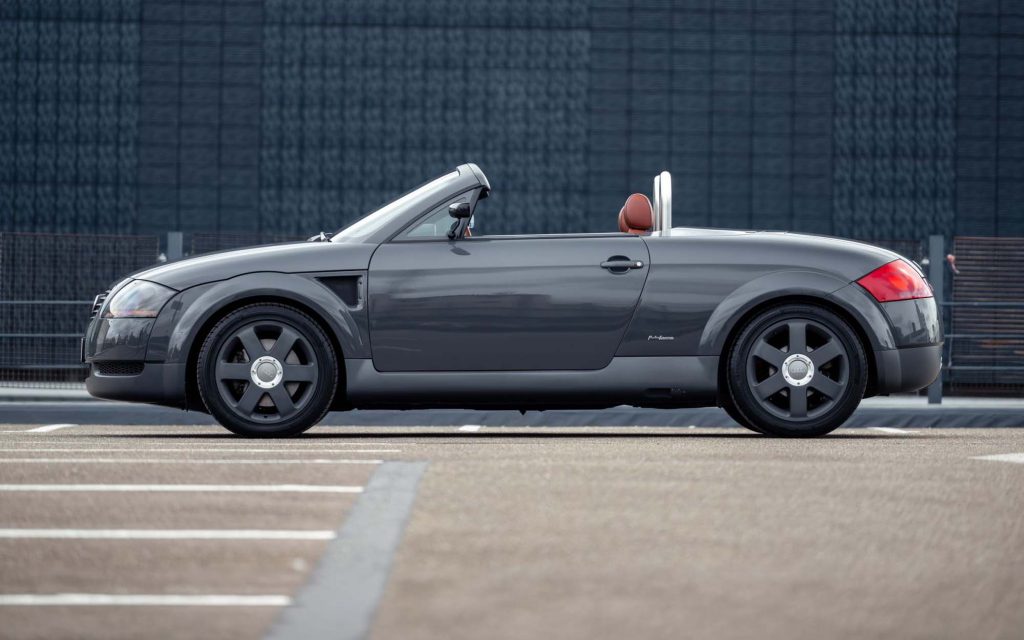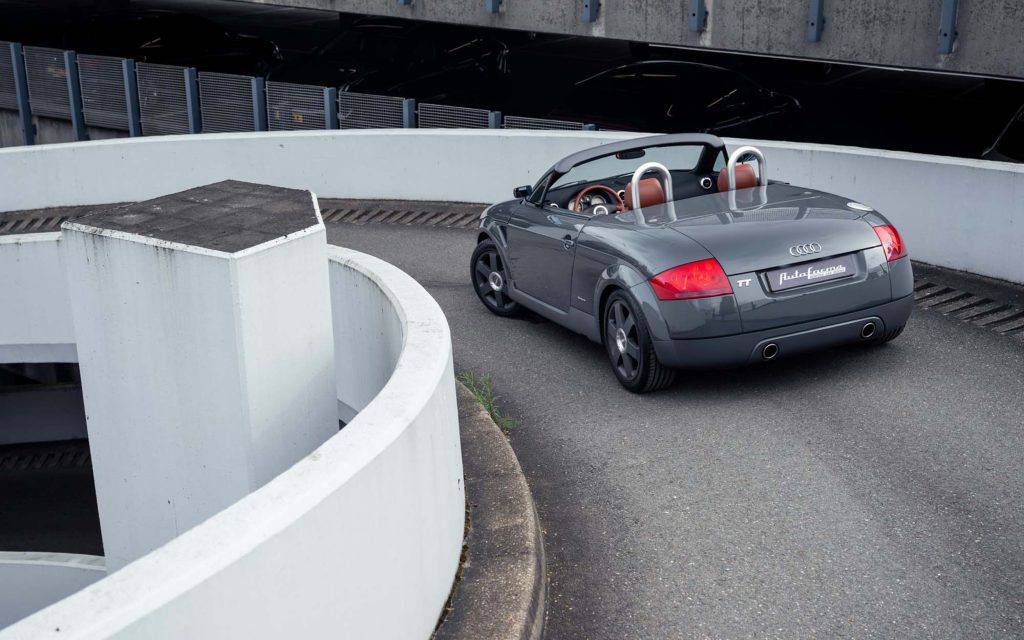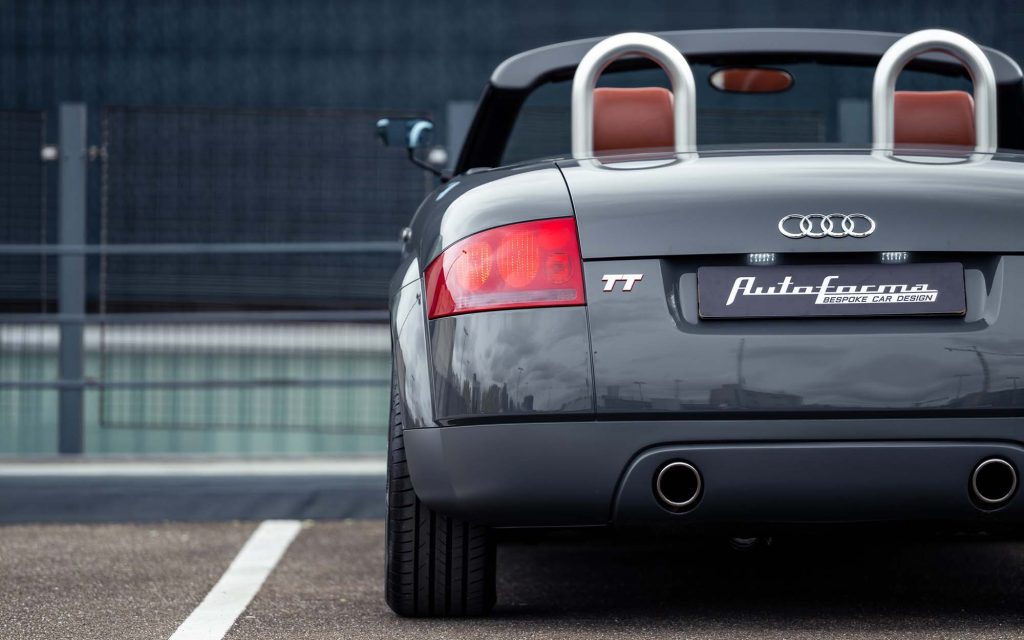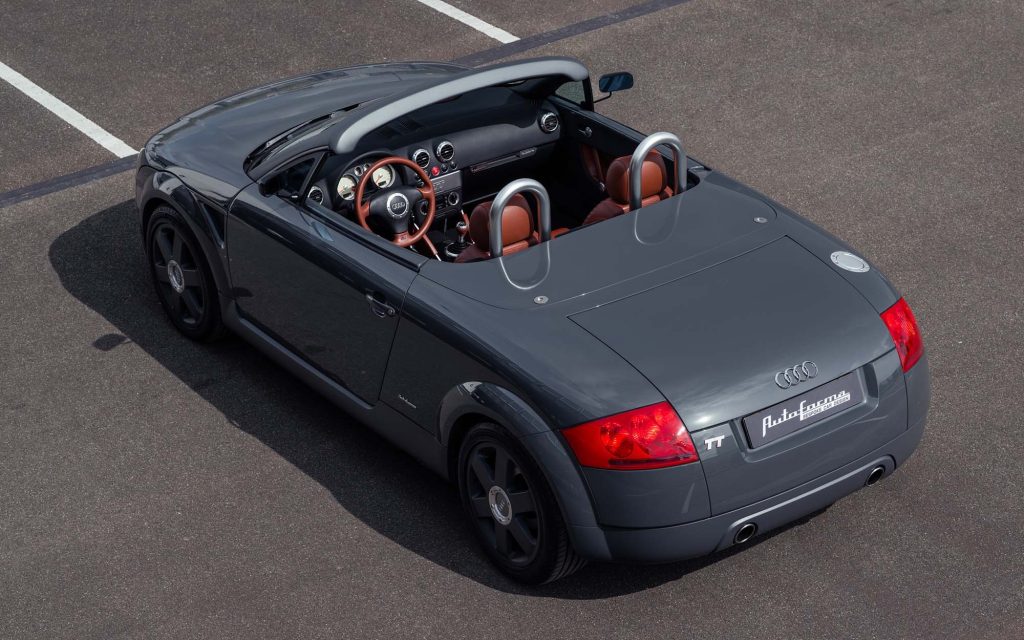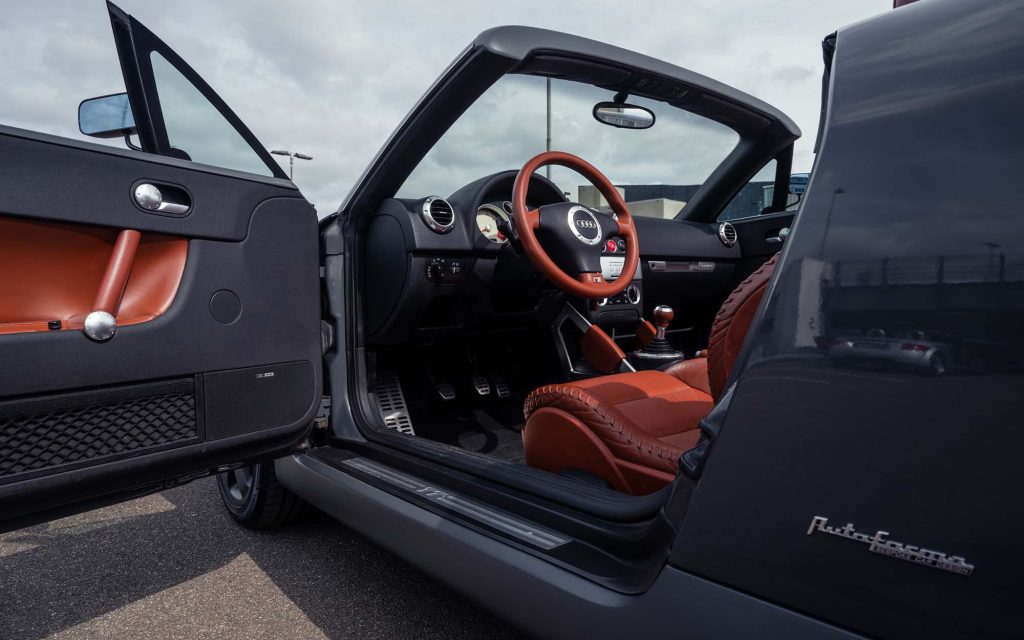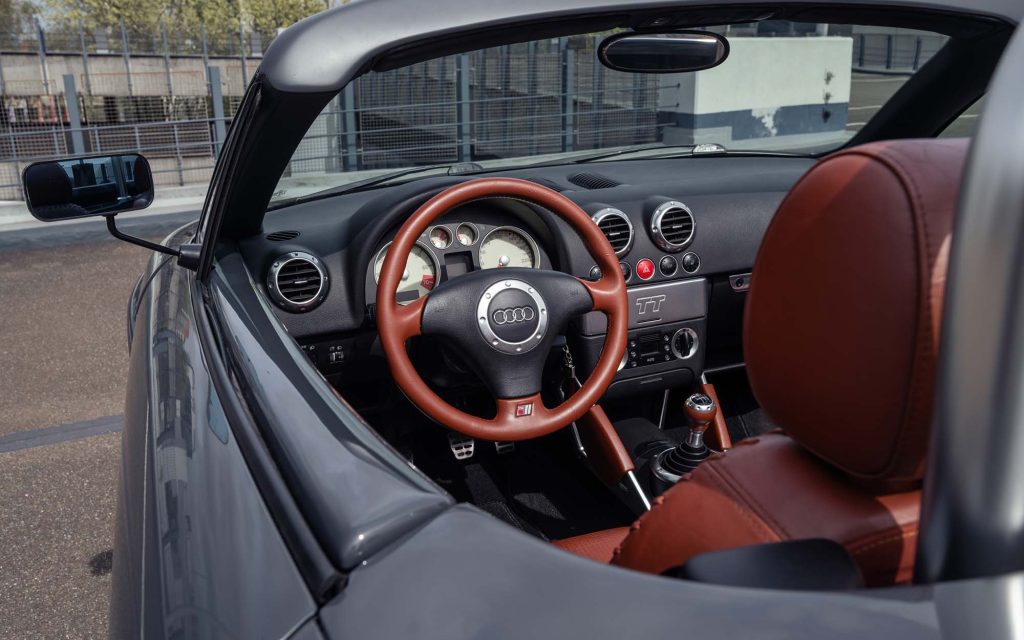



In recent years, as the automotive world has been seemingly turned upside down amidst a shift towards electrification, there’s no question that the world of reimagined and remastered classics has been experiencing an obvious trend towards growth. Latest to arrive in that space is the Audi TT (Mk1) you see here, reimagined as a TTS as inspired by the 1995 concept car by the same name.
The car itself began life as a fully production Audi TT Roadster from that same generation. From there, significant effort was made to match the car more closely to the concept car that hinted its direction – the 1995 TTS.
For Autoforma and designer Neils van Roij, the process involved creating concept-similar parts through the use of processes such as CAD scanning, rapid prototyping and finally bespoke craftsmanship by their team already seasoned in building other reimagined offerings already.
Commenting on the subject, Neils van Roij states, “The Audi TT Roadster is a symbol of automotive design excellence. We wanted to celebrate its 25th anniversary by creating a vehicle that not only pays tribute to the original production model design, but also takes it to a level of sophistication and style that makes the concept car so exceptional. To this end, we adjust the bumpers, skirts, stance of the wheels, exterior mirrors, side windows, rear deck and trunk lid, to arrive at a final design.”
Autoforma makes clear this isn’t an exacting replica of the original TTS Concept. Instead, they believe they’ve “refined and elevated” the donor TT Roadster by bringing it closer to the original open-top concept car.
In this they leaned in on the reductionist approach of the TTS Concept. The front bumper has been redesigned with shorter and more horizontal air intakes more closely resembling that of the concept.
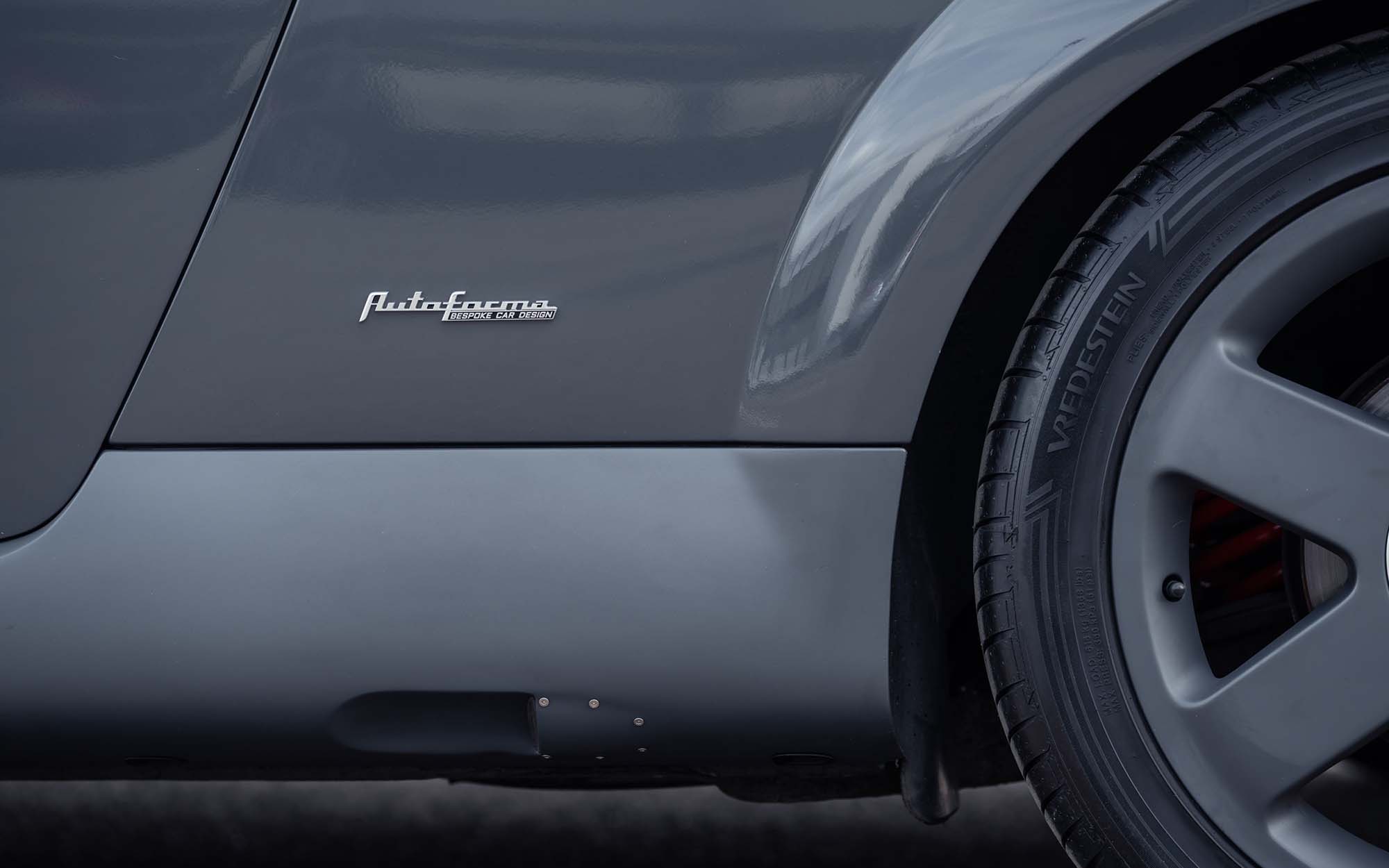
Front fender side vents also match those of the concept – a detail that never made it to production though we do recall aftermarket company OSIR did create some at some point. In this case, two small torx screws keep the piece attached while the turn signal is hidden behind the associated grille for a cleaner appearance. In doing so, the windshield washer reservoir was relocated to the trunk because the vents also have now been made functional.
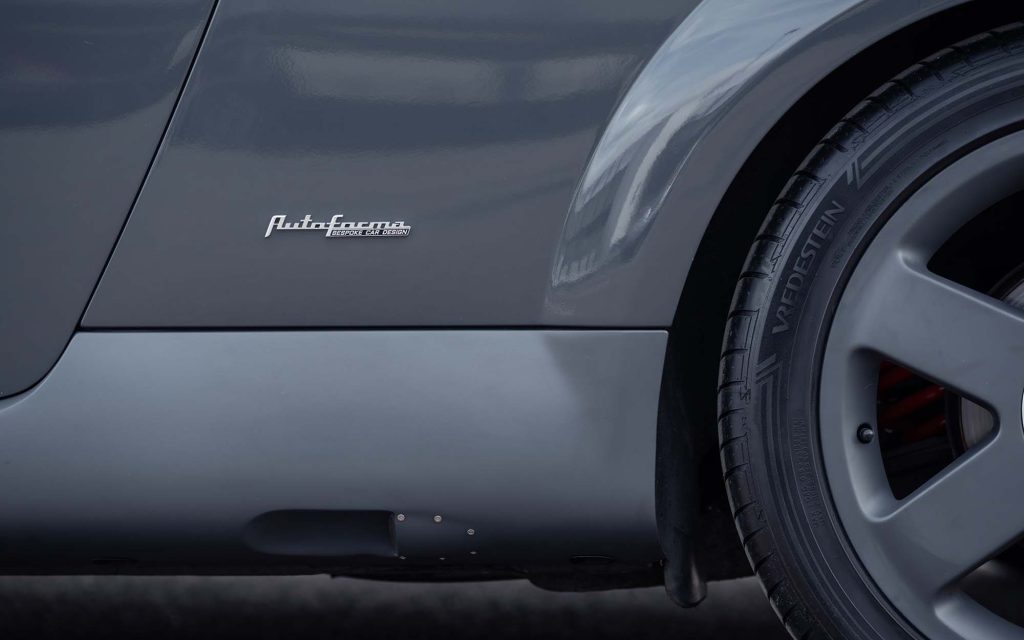
Many other details from the concept also made the jump to this car. Toward the rear of the side sill are oval air intakes. At the rear, a new diffusor surrounds the exhaust system exit.
Components added were constructed in advanced materials including 3D-printed carbon backed in carbon fiber-backed panels – all meaning increased strength and less weight.
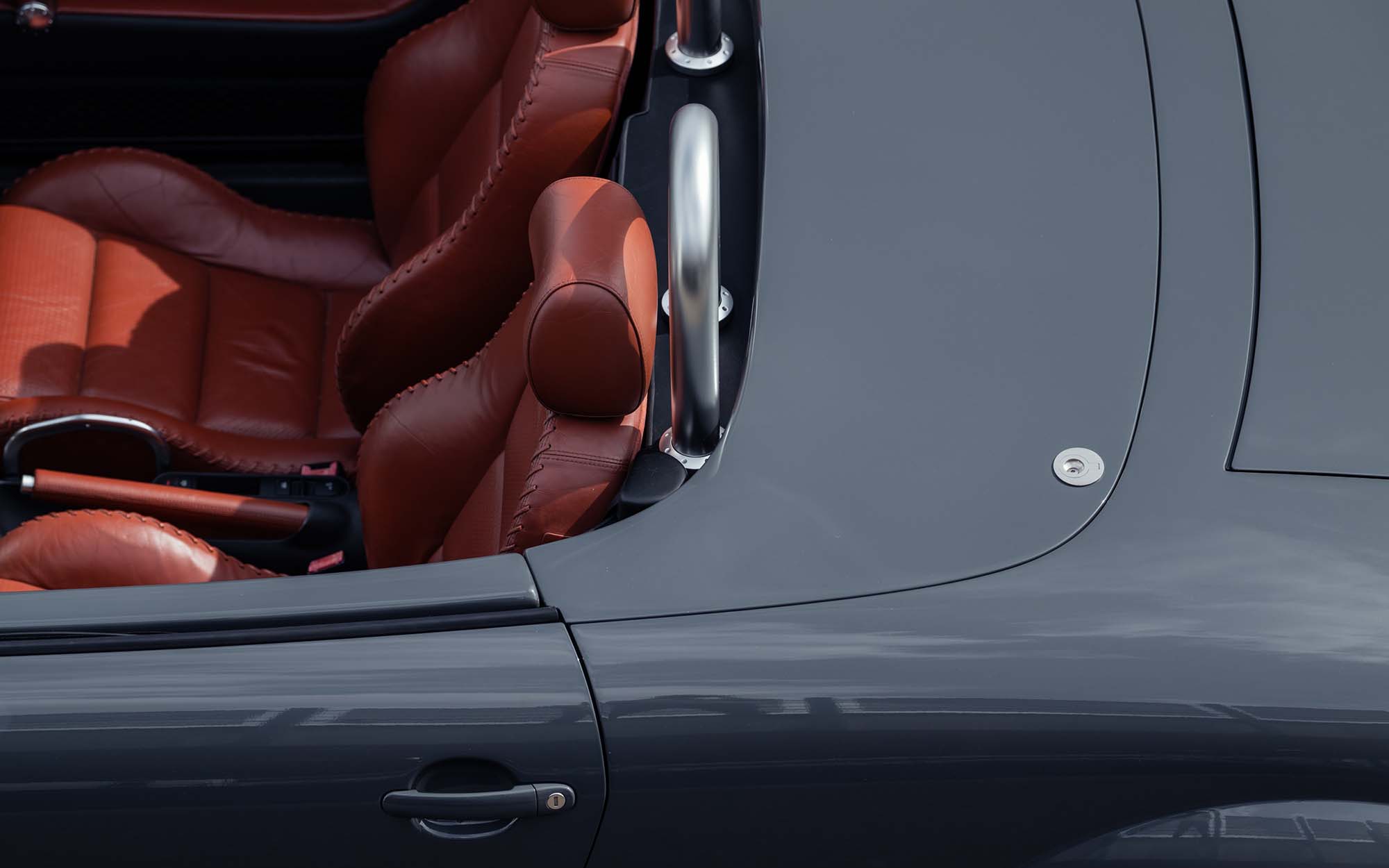
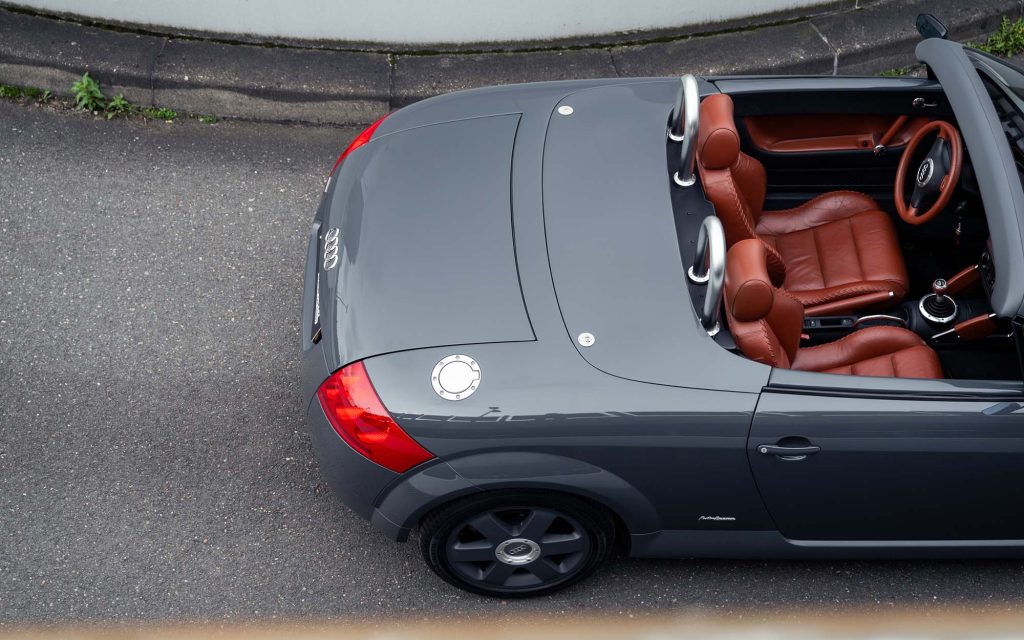
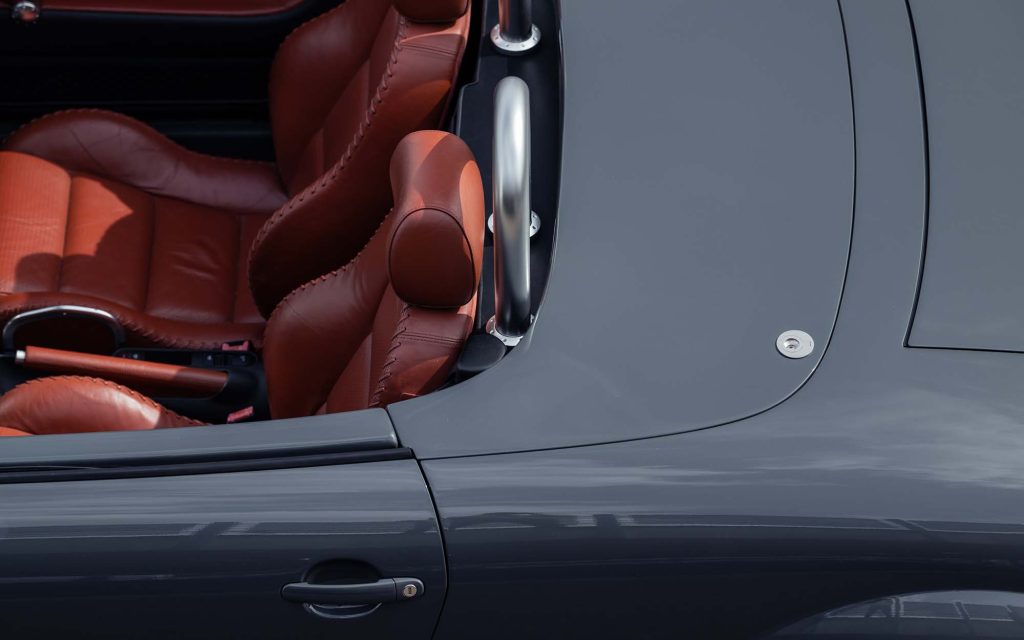
Also notable is the removal of the convertible roof. Similar to the concept, this has been replaced with a composite cover that integrates the surfaces to the top of the door surfaces for a cleaner appearance that here deviates from the design of the original TTS concept.
Other details were further tidied, including removal of rear weld seams behind the boot lid, deletion of the roof antenna and also of the trunk-mounted spoiler.
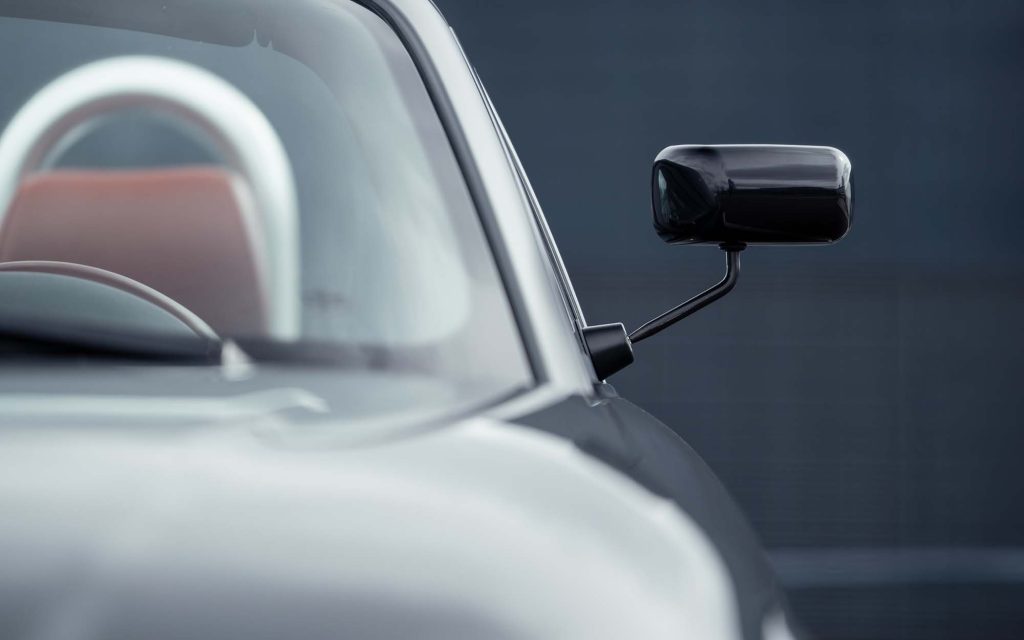
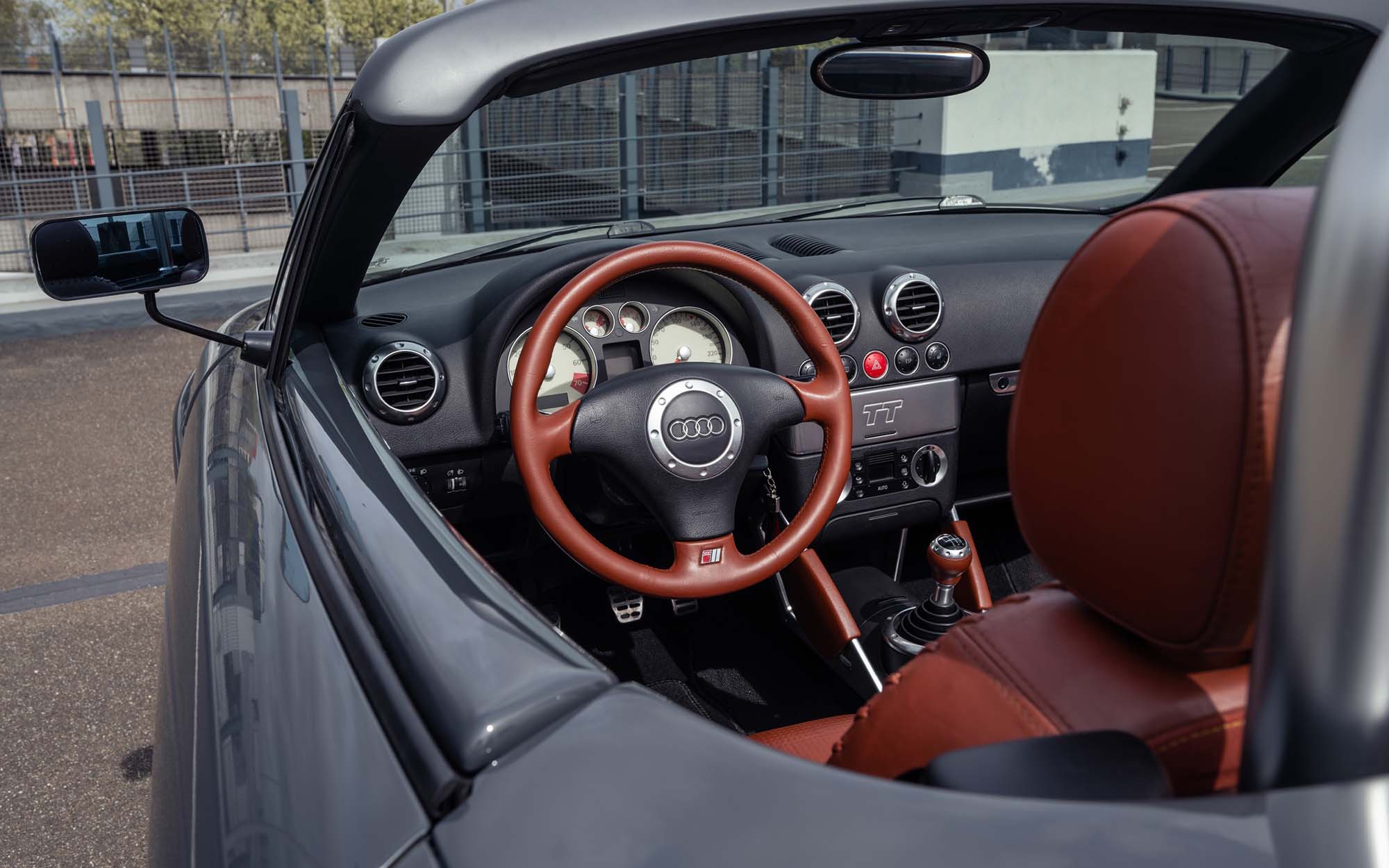
Like the concept, the car has been finished in Nimbus Grey Pearl, though another deviation from the original was the choice to paint the lower section has a matte finish – a surface tone/texture that continues in other places such as wheels, A-pillar and windshield surround and laser cut frames for the fixed front quarter windows where compact racing mirrors closer to those on the original TTS Concept have also been installed.
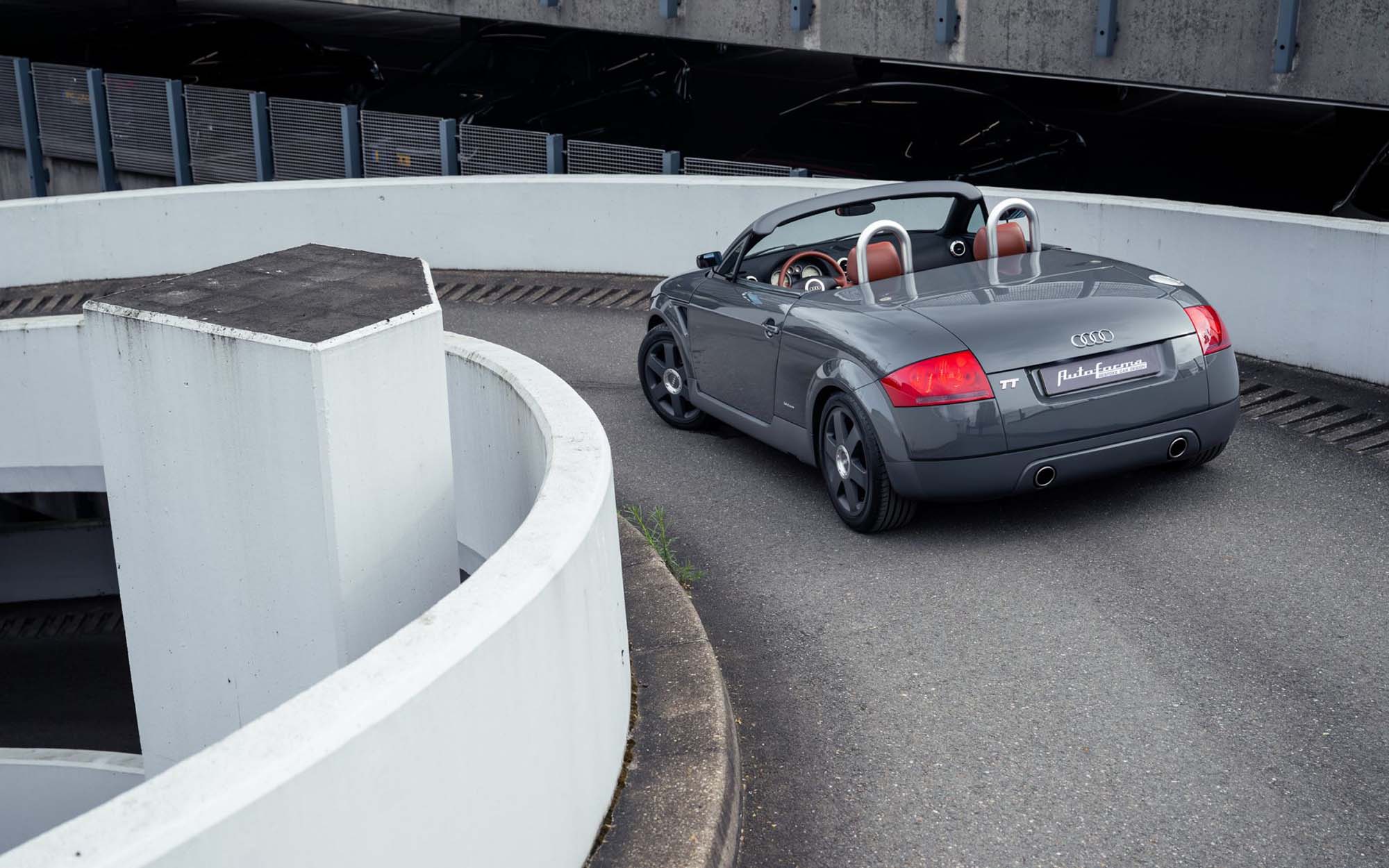
Beyond that, the car has been lowered slightly, with slightly wider track.
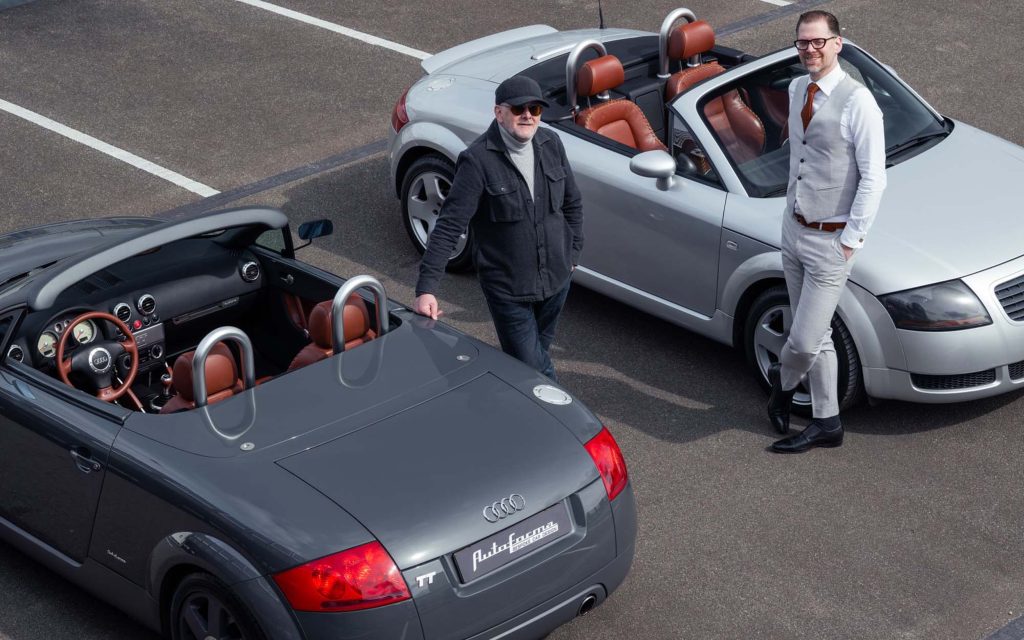
Look closely at photos of the original TTS Concept and you’ll notice some other changes. The interior of the concept deviates further from the production interior through more reductionist design that further emphasizes light weight. This car appears closer to production, though key details were changed like a refinishing of the original baseball glove leather seats in monochromatic brown while the TTS Concept had a slightly different prototype seat and it was hear we first saw the amber and yellow baseball glove treatment.
The car is a one-off project commissioned by Dutch eyewear designer Jos Baijens who was one of the very first Audi TT owners back in 1998 when the production version came to market.
MORE INFORMATION
PHOTO GALLERY