
Given the nature of this recurring series, it is more common than not that the cars seen here are entirely fictional. In today’s case, the car is real… at least it was. Period photos and the associated story of the car unearthed by Car Design Archives tell the story and give us some basic clues of its appearance – even though low-resolution and pixelated. Otherwise, we may never have known of its existence.
It’s hard to imagine an Audi sports coupé as complete-looking as this one not ever seeing a show stand, auto show spotlights nor a showroom floor. Instead, this proposal existed quietly, hardly-remembered and only known to few – a footnote in design history given its existence likely would have stolen too much thunder from chosen finished products such as the Volkswagen Scirocco.
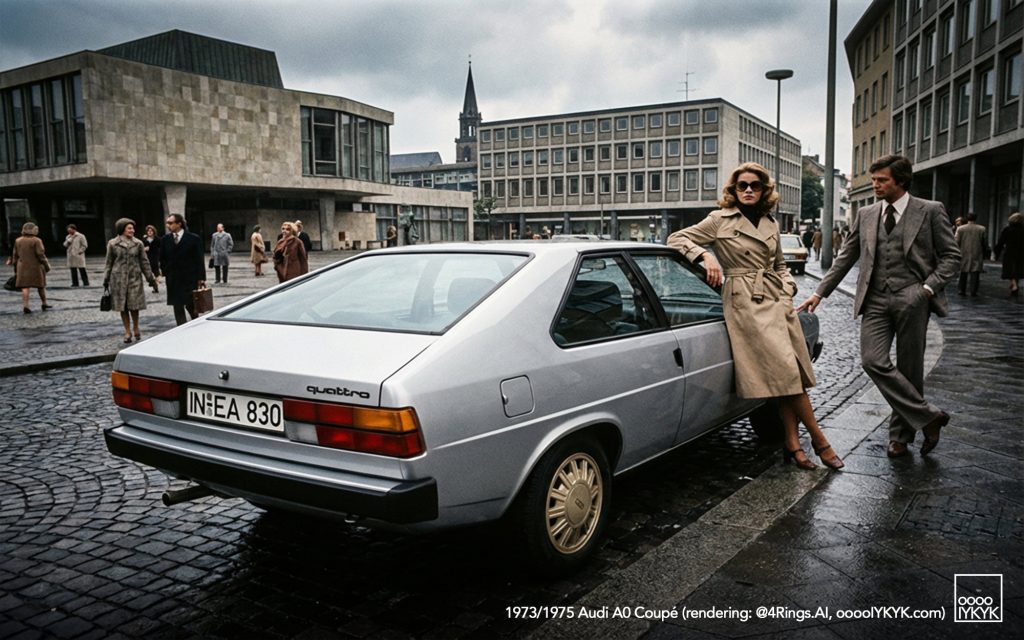
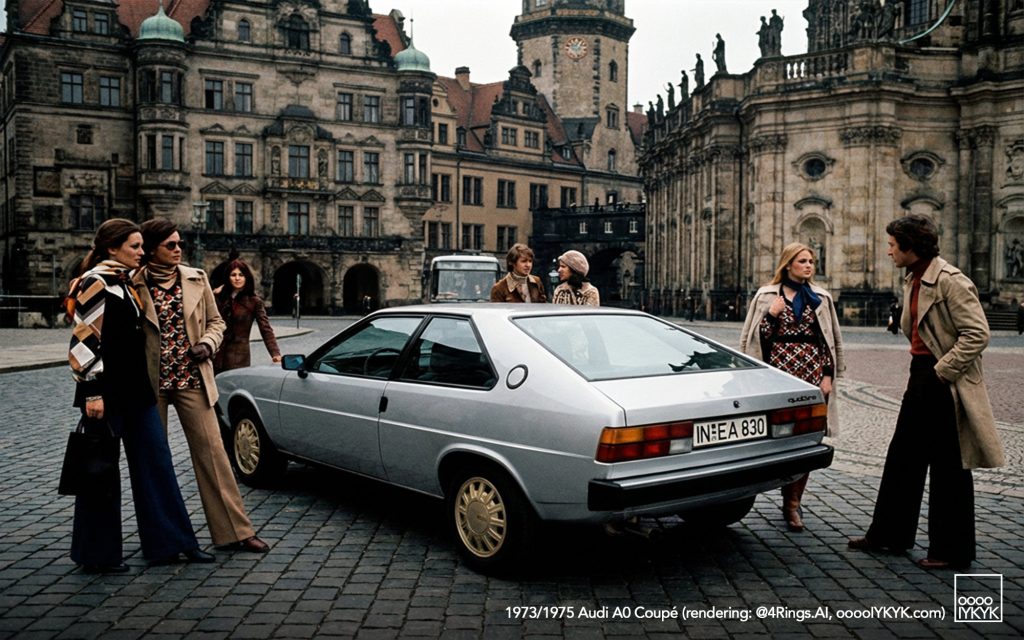
Such is the existence of the Audi A0 Coupé. Conceived enigmatically between 1973 and 1975, the A0 Coupé was an internal design exercise based on Audi’s smallest front-wheel-drive architecture, the same A0 platform underpinning the Audi 50 and Volkswagen Polo (Mk1). It never carried an official concept name and was never formally announced. Yet it made it further than most “what-ifs”—all the way to a full-scale prototype, photographed during that evaluation day alongside other mid-1970s Audi and Volkswagen studies.
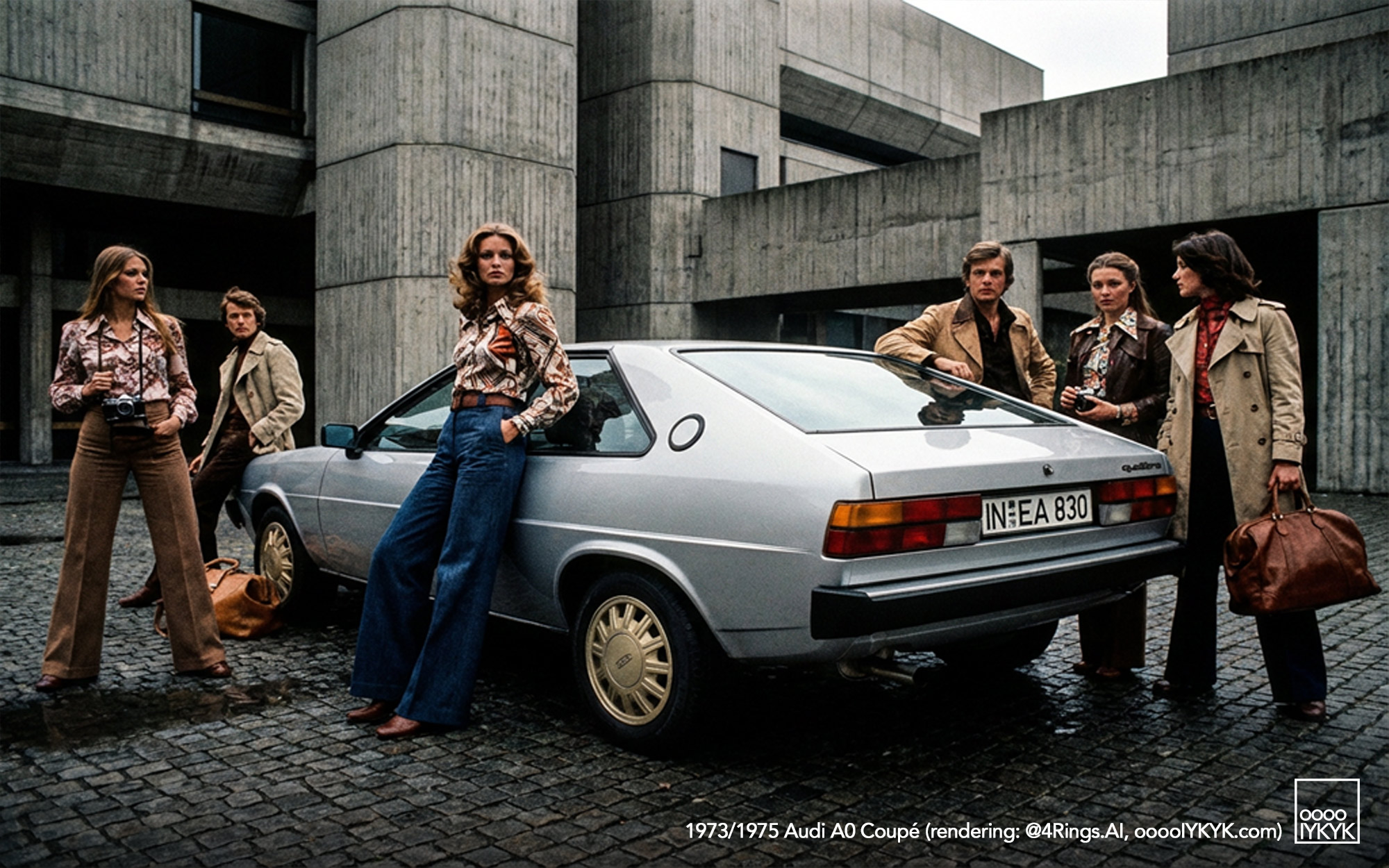
From a design standpoint, the lineage seems to read as production-minded evolution of the 1973 Audi Asso di Picche, the Italdesign proposal penned under Giorgetto Giugiaro. The wedge profile, horizontal emphasis, and futuristic restraint feel like an attempt to translate Giugiaro’s show car language into something plausibly manufacturable—smaller, tighter, and more Audi-specific.
The Asso di Picche is an interesting taproot in a lot of ways, from B1 Coupé exploration that eventually inspired the B2 Coupé on which the ur quattro was based, to early wedge-design experimentation by Giugiaro. In fact, it’s the legendary heritage of the former and the exotic design of the latter that inspired Sebastian Motsch to modify that design for a photoshop rendering years ago – one that we expired and further expanded upon from multiple angles in this very AI Imagined series.
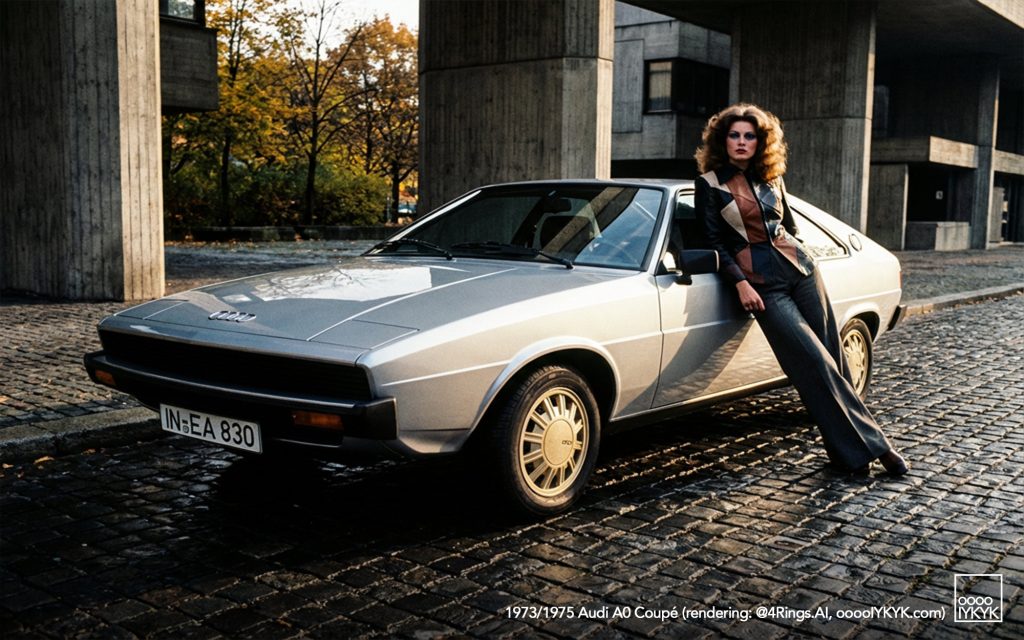
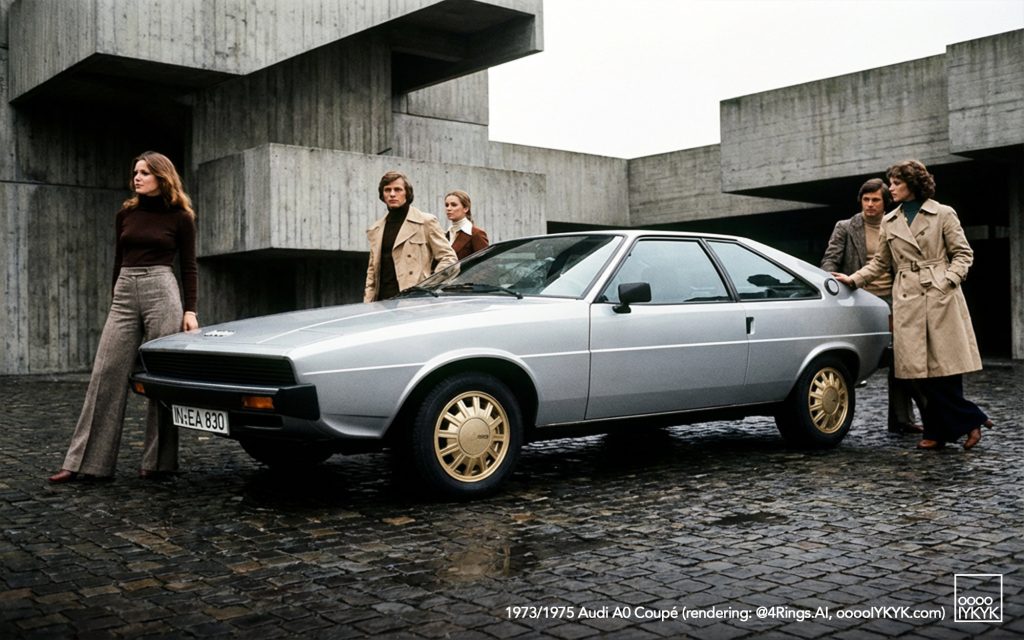
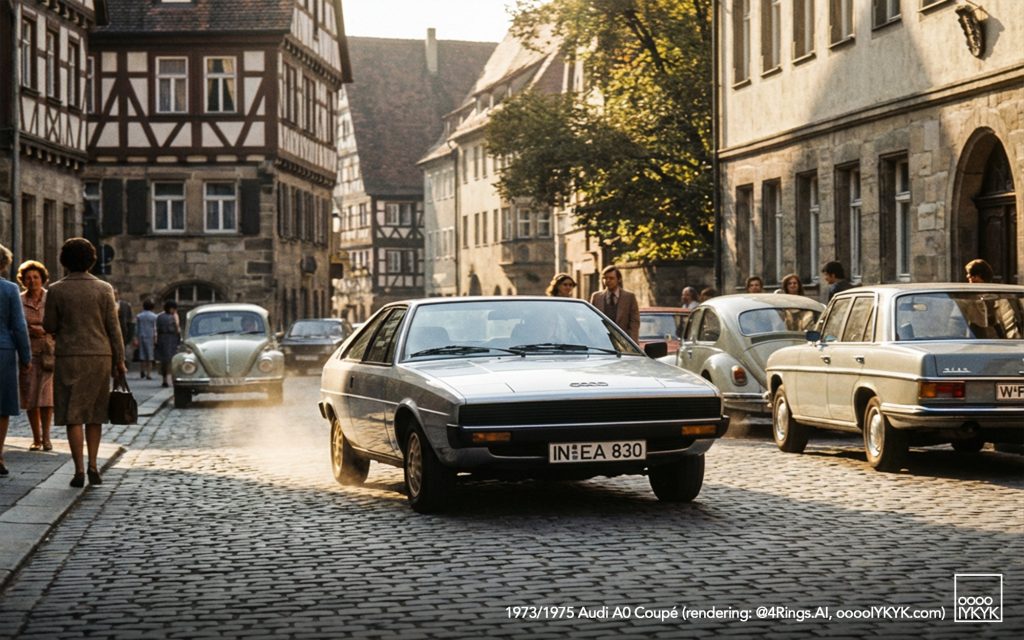
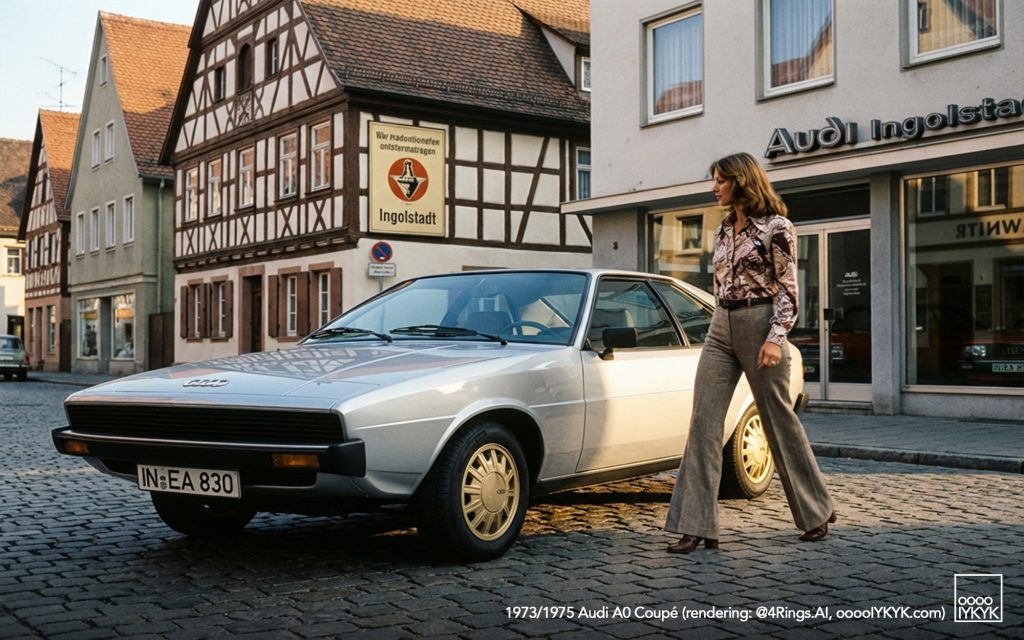
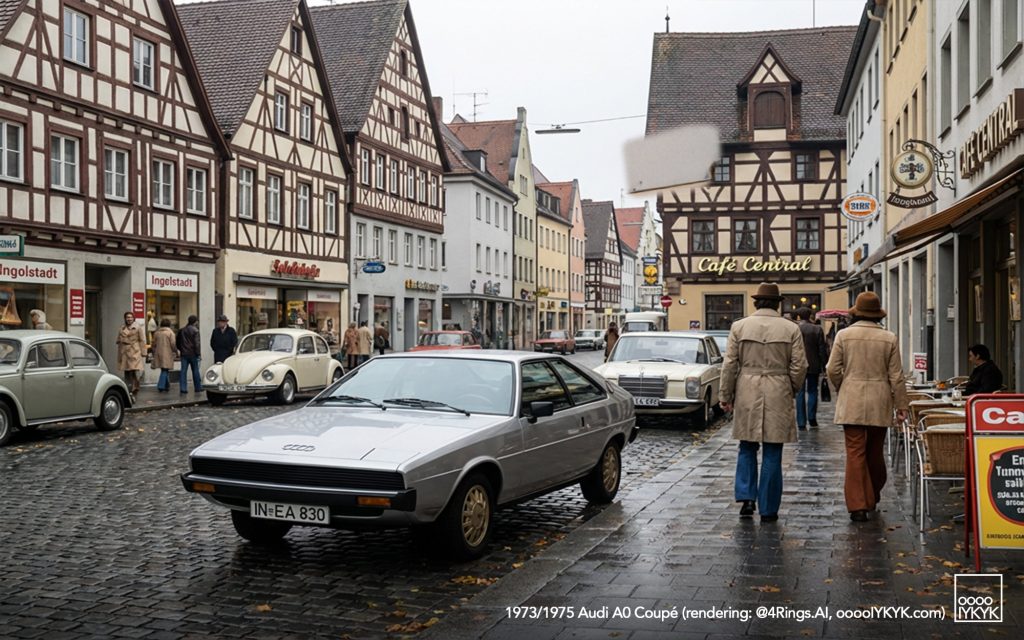
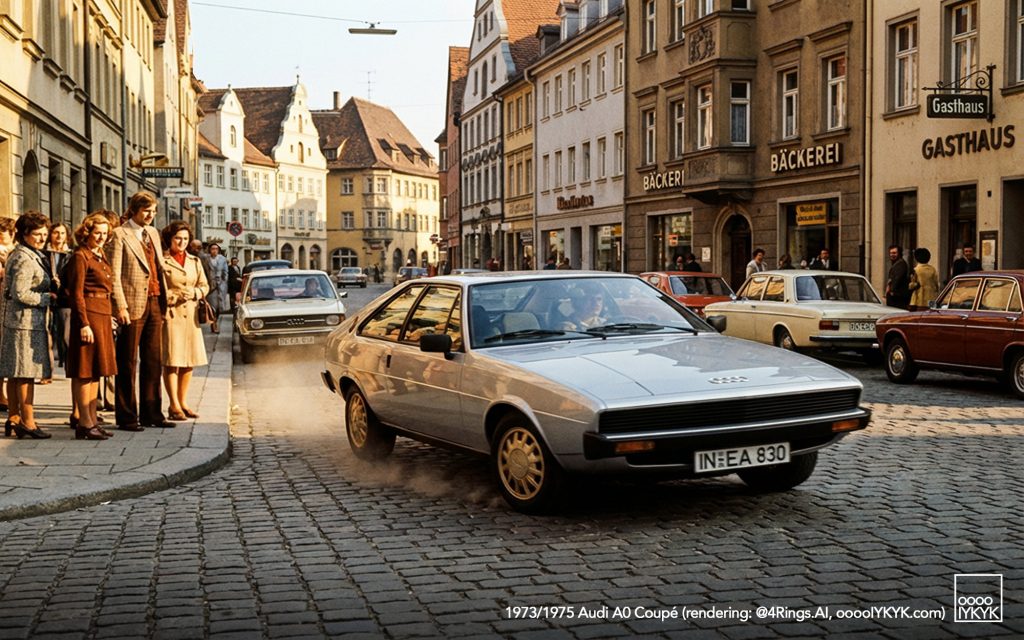
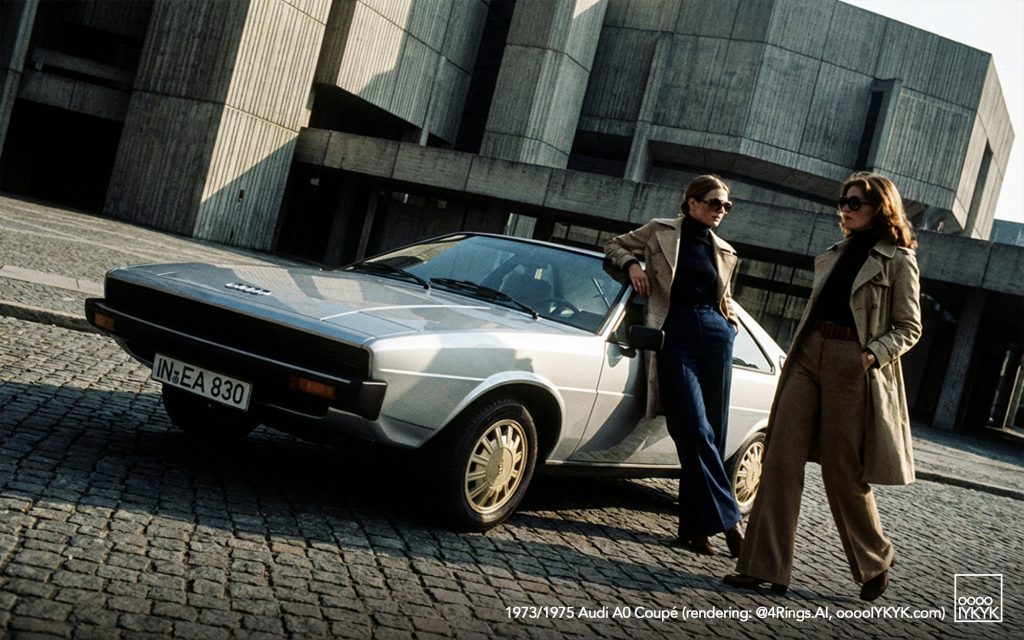
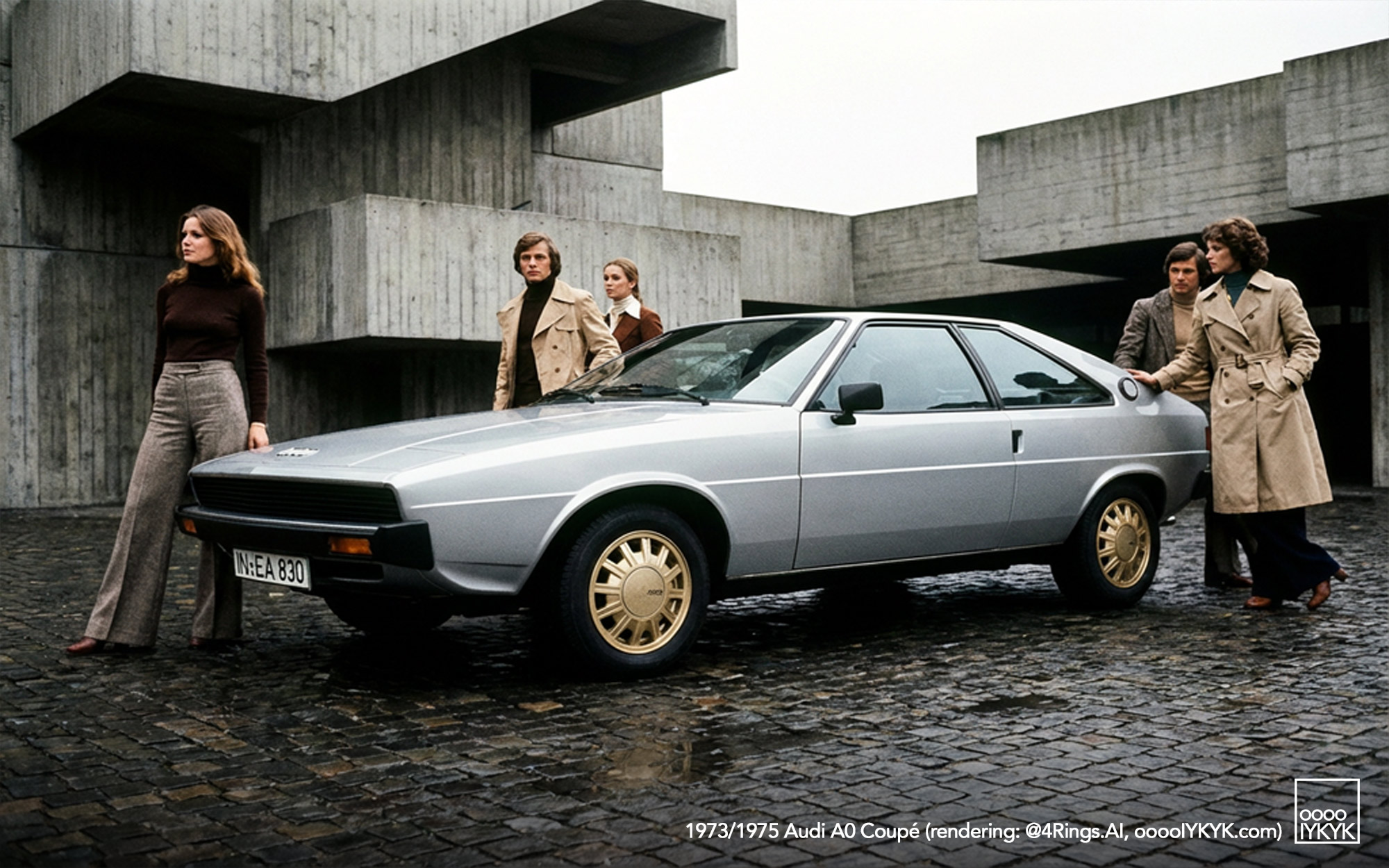
Back to the A0 Coupé prototype, period photographs show Claus Luthe standing beside the A0 Coupé during evaluation, the car parked among other experimental Volkswagens and Audis, its EA-series plate hinting at its internal project status. The front design details are unique even today: a full-width black grille uninterrupted by headlamps, pop-up headlights reinforcing the wedge, and gold-finished wheels recalling contemporary Audi and Volkswagen performance models. Interestingly, the hatchback design of the rear seems to hark quite closely that of the C2 Audi 100 Avant that was more fastback / Sportback in its profile than the long roof station wagon designs we think of today when one says the word “Avant”.
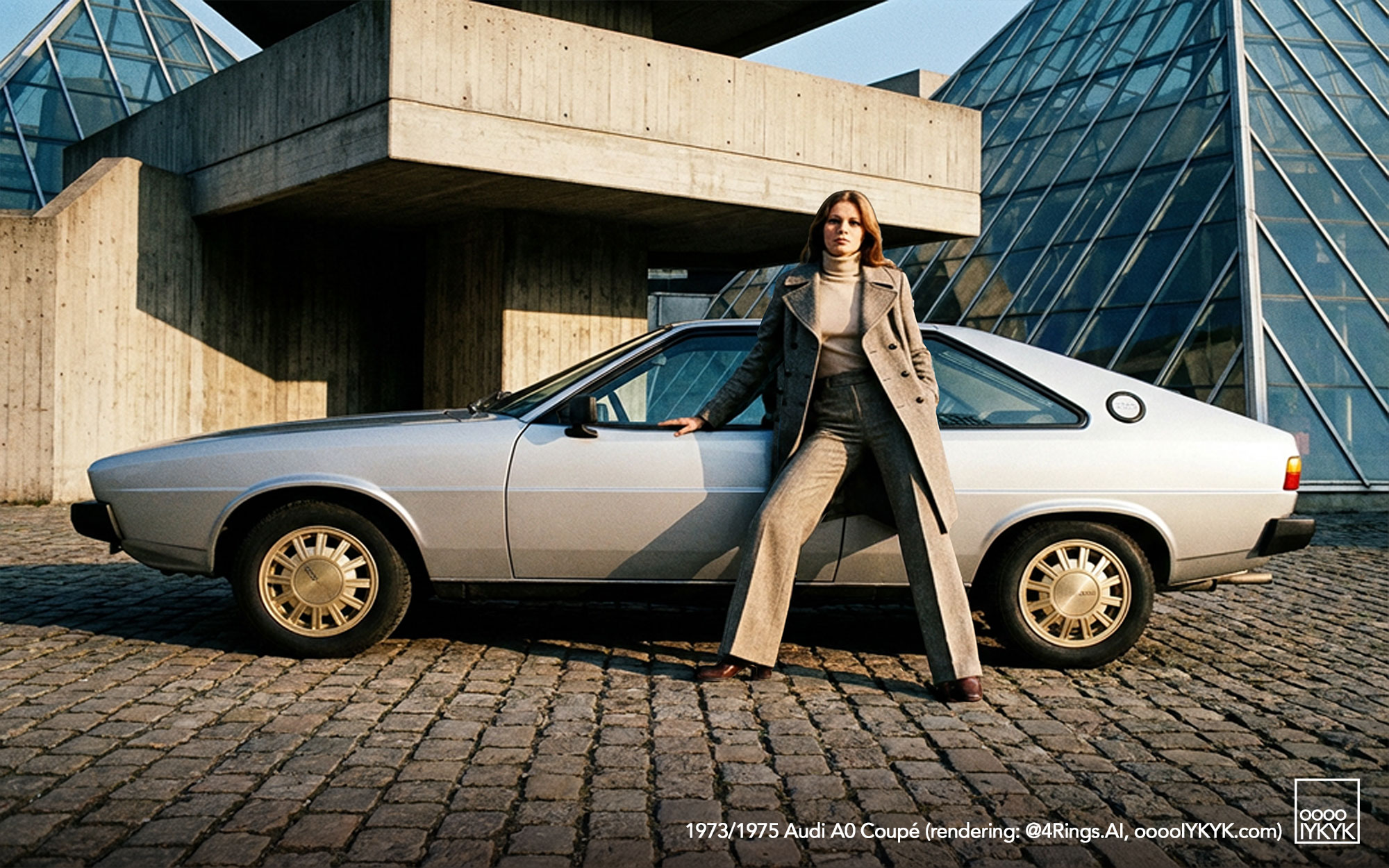
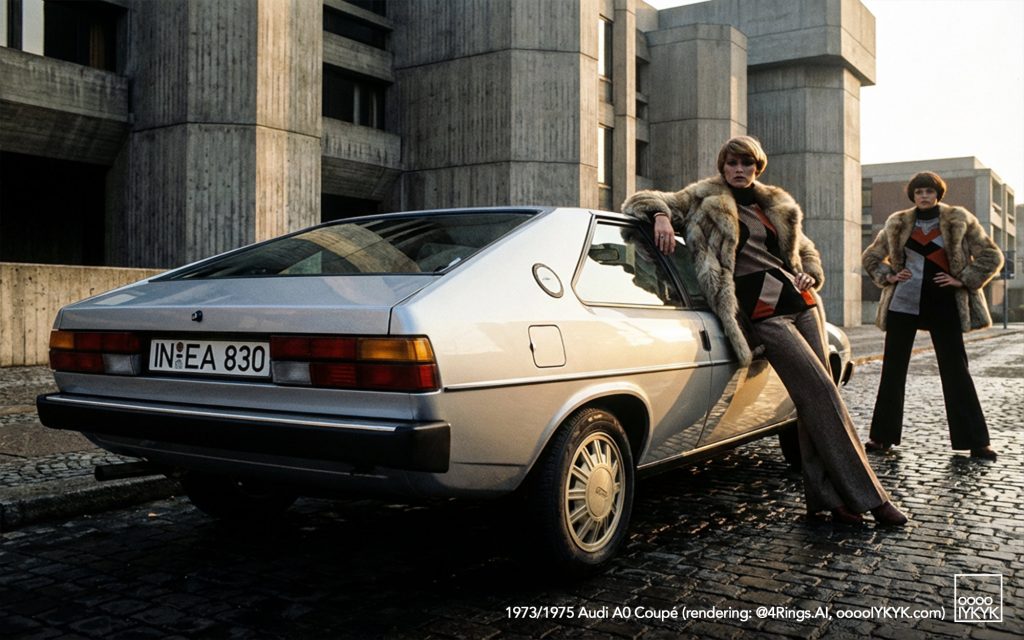
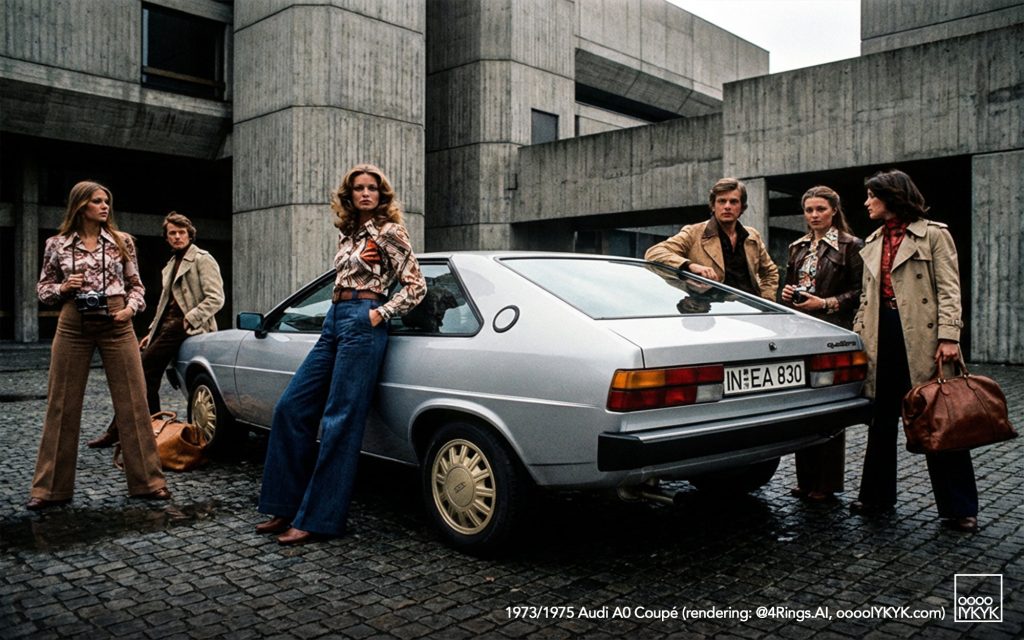
AI RENDERINGS OF THE AO COUPÉ IN 1970s GERMANY & FASHION POSES
Using AI tools, we placed a digitally recreated A0 Coupé—modeled specifically for the ooooIYKYK archives—back into 1973 Germany. The goal wasn’t exaggeration or retro-futurism, but rather seeing it in the time for which it had been imagined. Evaluation-day light. Muted industrial backdrops. Soft grain. Period-correct tones. Several frames lean deliberately toward a 1970s European fashion-magazine aesthetic, the kind of imagery that might have appeared in a design quarterly or internal Audi publication rather than a press kit.
The result is intentionally ambiguous. These images feel real—convincingly so—despite the fact that the whereabouts, survival, and even final disposition of the original A0 Coupé prototype remain unknown. It is likely that it was destroyed. The car was never a production model. It was never an official concept car. And yet, for a brief curious window of time in the early 1970s, there is photographic evidence that at least one example clearly existed.
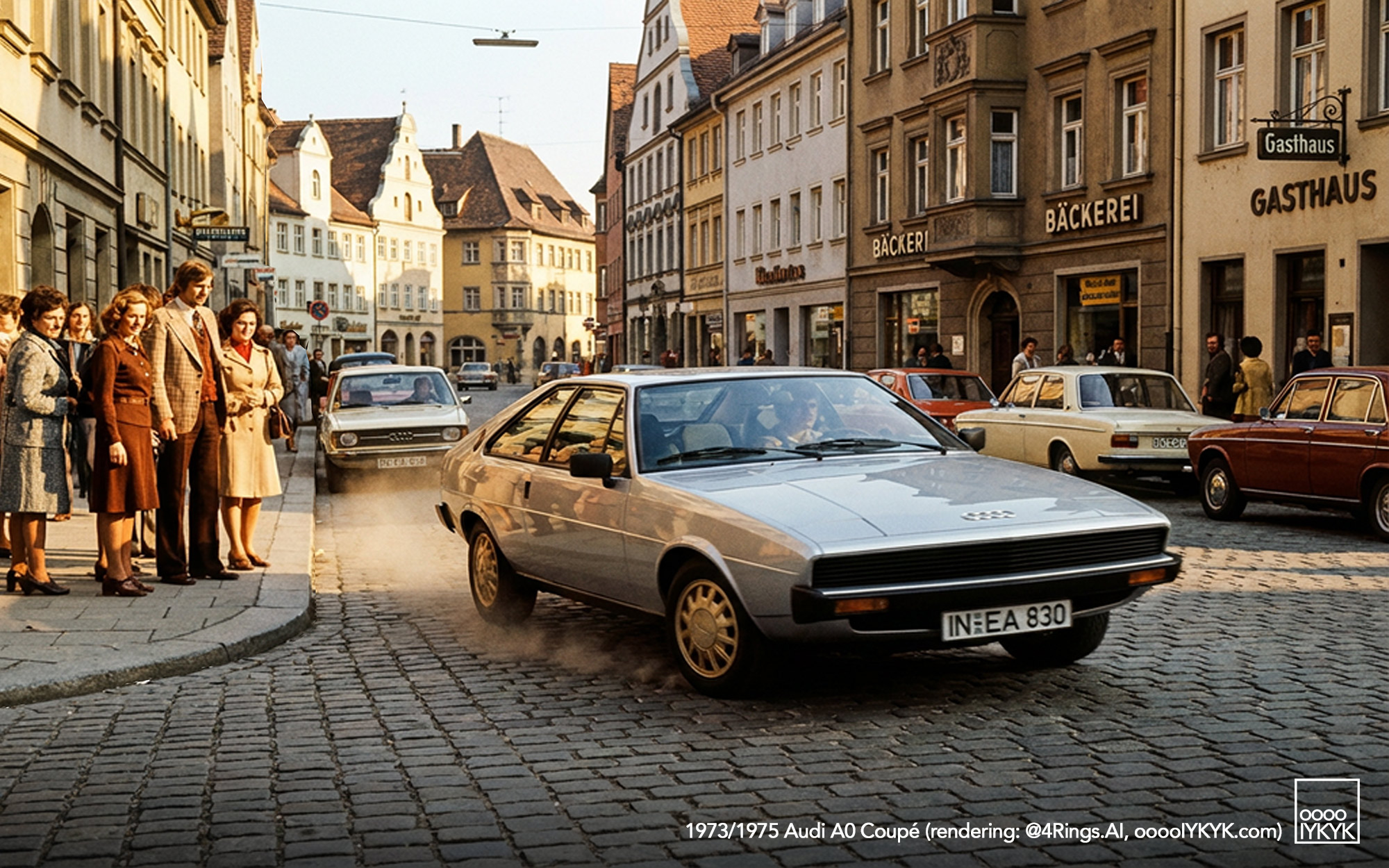
That mystery and obscurity are a lot of what makes the A0 Coupé so fascinating. It sits at the crossroads of Audi’s early 1970s identity crisis and rebirth—between NSU heritage and a Giugiaro-influenced future, between small-car economic realities and emerging premium brand confidence. It also represents a road not taken, one ultimately abandoned as Audi repositioned itself upmarket and left the A0 segment to Volkswagen.
AI Imagined doesn’t rewrite history—but it lets us linger in the margins of it – an experimentation in historical fiction… at least as far as we know. It’s unlikely this 1:1 scale model was a runner and ever made it outside the studio or secure factory yard where it would have been evaluated by executives.
PHOTO GALLERY