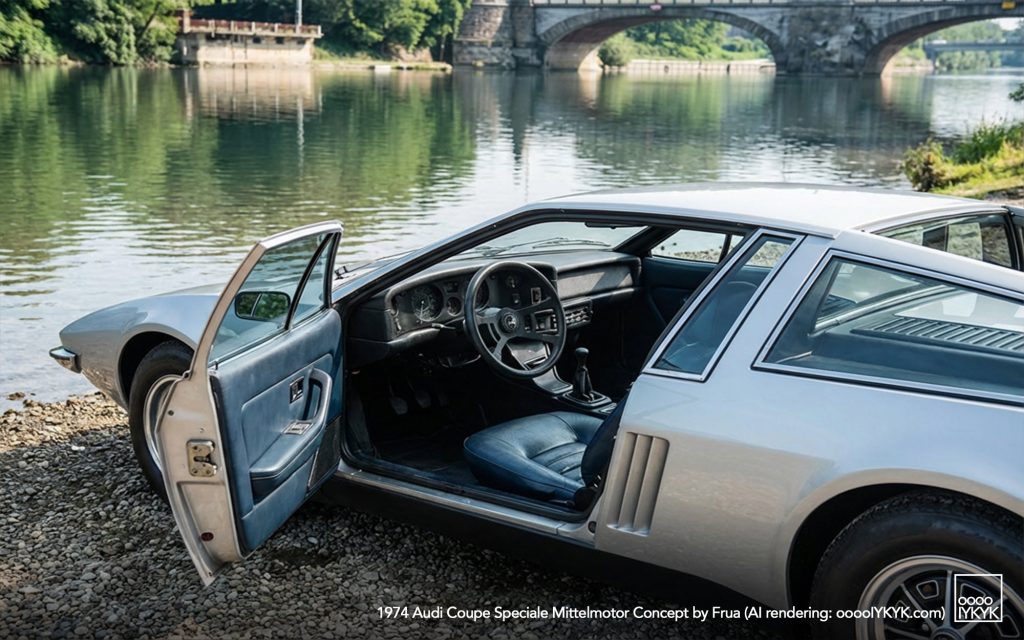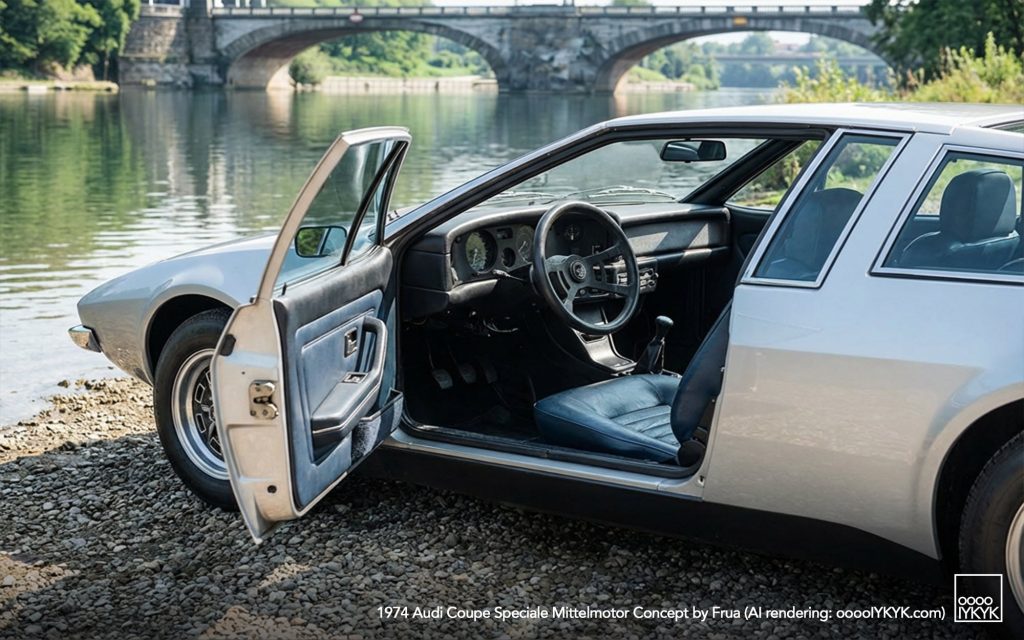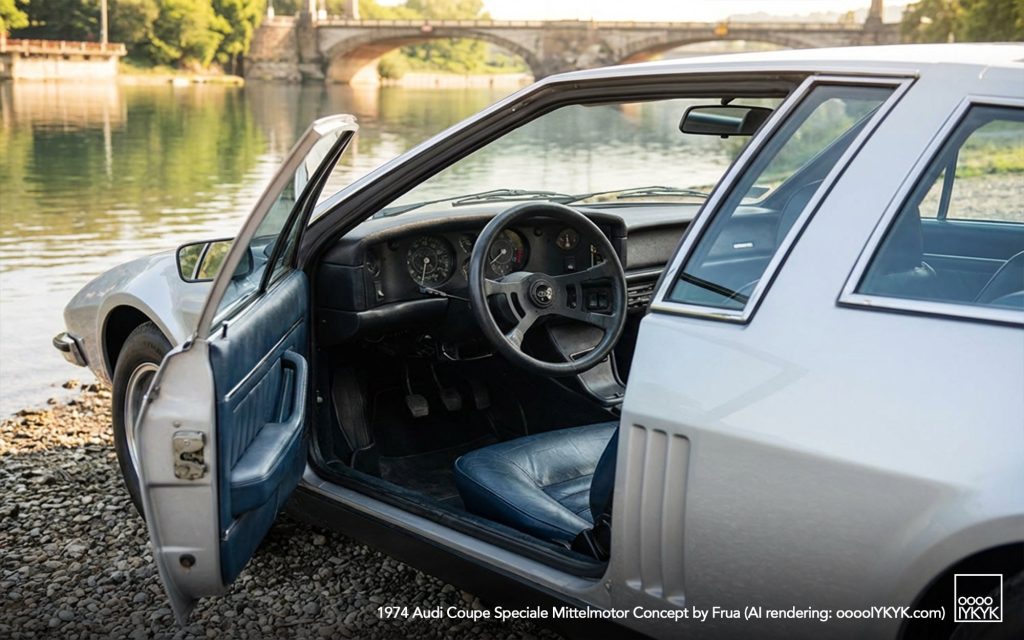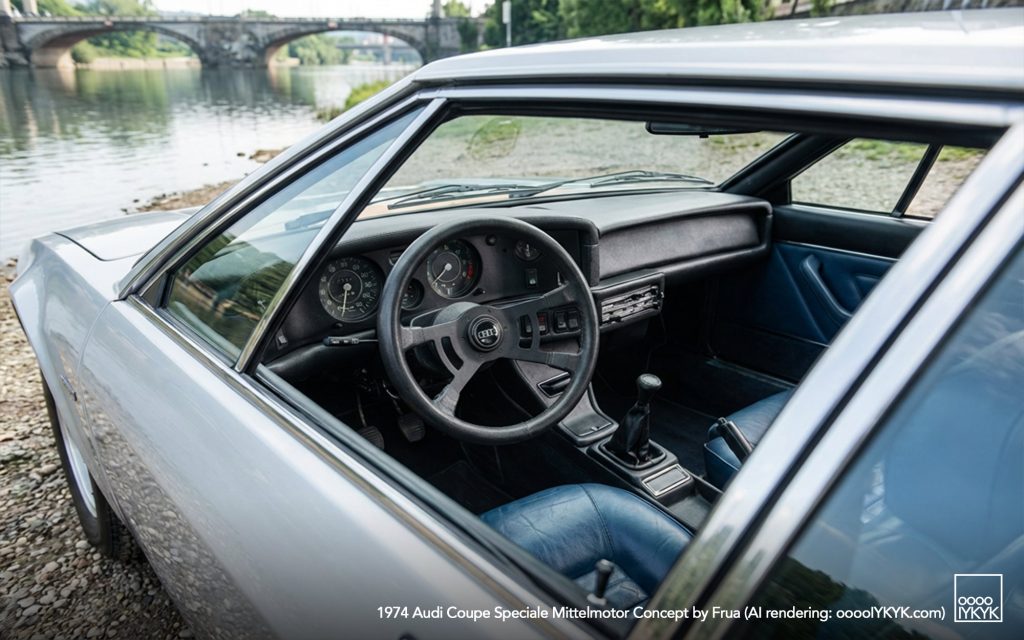

Long after Audi pioneered its pre-war Auto Union Silver Arrows and over a decade before Ferdinand Piëch and Audi Sport would begin exploring the idea of a mid-engine rally car for Group B or Group S, the idea of such a machine briefly appeared during one of the most fertile periods of European sports-car design.
In 1974, amidst the beginning of the wedge-shaped design boom of the era, a small Turin design studio presented a striking concept at the Geneva Motor Show. The car carried Audi badges, but it had not been commissioned by the company itself. Instead, it was the work of Italian designer Pietro Frua — an independent stylist whose résumé already included some of the most elegant grand tourers of the 1960s.
The car was called the Audi Coupé Speciale Mittelmotor, and it represented an intriguing “what-if” moment in Audi history: a mid-engine sports coupe conceived more than three decades before Ingolstadt would actually build one.
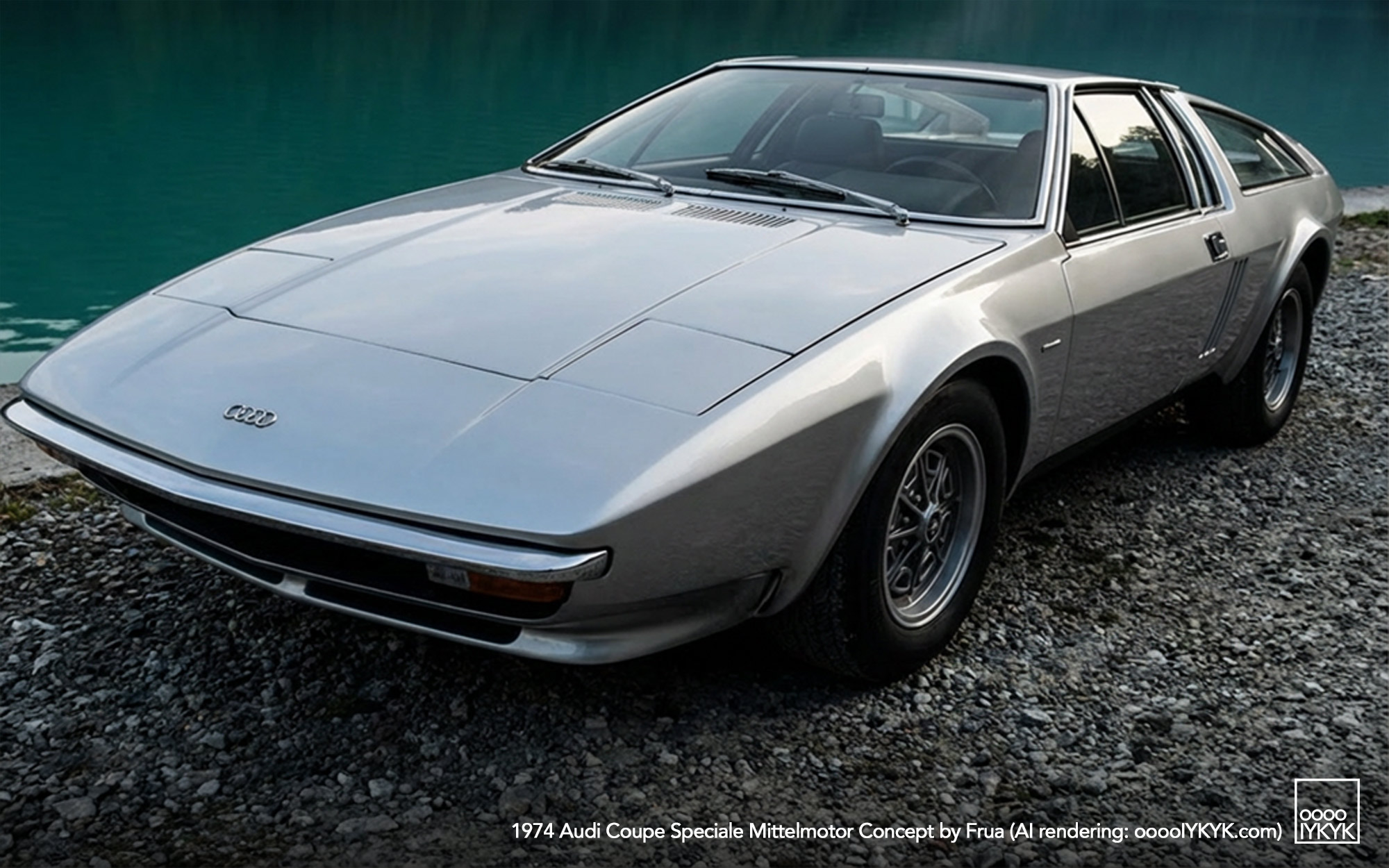
PIETRO FRUA THE DESIGNER BEHIND THE IDEA
By the time the Audi concept appeared in Geneva, Frua was already a respected figure in Italian coachbuilding circles. Though his name never achieved the global recognition of houses like Giorgetto Giugiaro or firms such as Bertone or Pininfarina, Frua’s influence ran deep.
Working out of Turin, Frua had built a reputation for elegant, restrained GT design. His portfolio included the flowing lines of the Maserati Mistral and early styling influence on the Volvo P1800. He also collaborated extensively with German manufacturers, particularly BMW, designing several show cars and prototypes during the late 1960s.
That relationship eventually faded around 1970, leaving Frua searching for new commissions. As the European concept-car scene thrived during the early 1970s, independent design studios often created speculative projects to attract manufacturer attention. Frua’s Audi concept appears to have emerged from exactly that environment. In fact, it dropped roughly six months after Giugiaro and Karmann presented their own wedge-inspired Audi Asso di Picche concept based on the Audi B1 architecture.
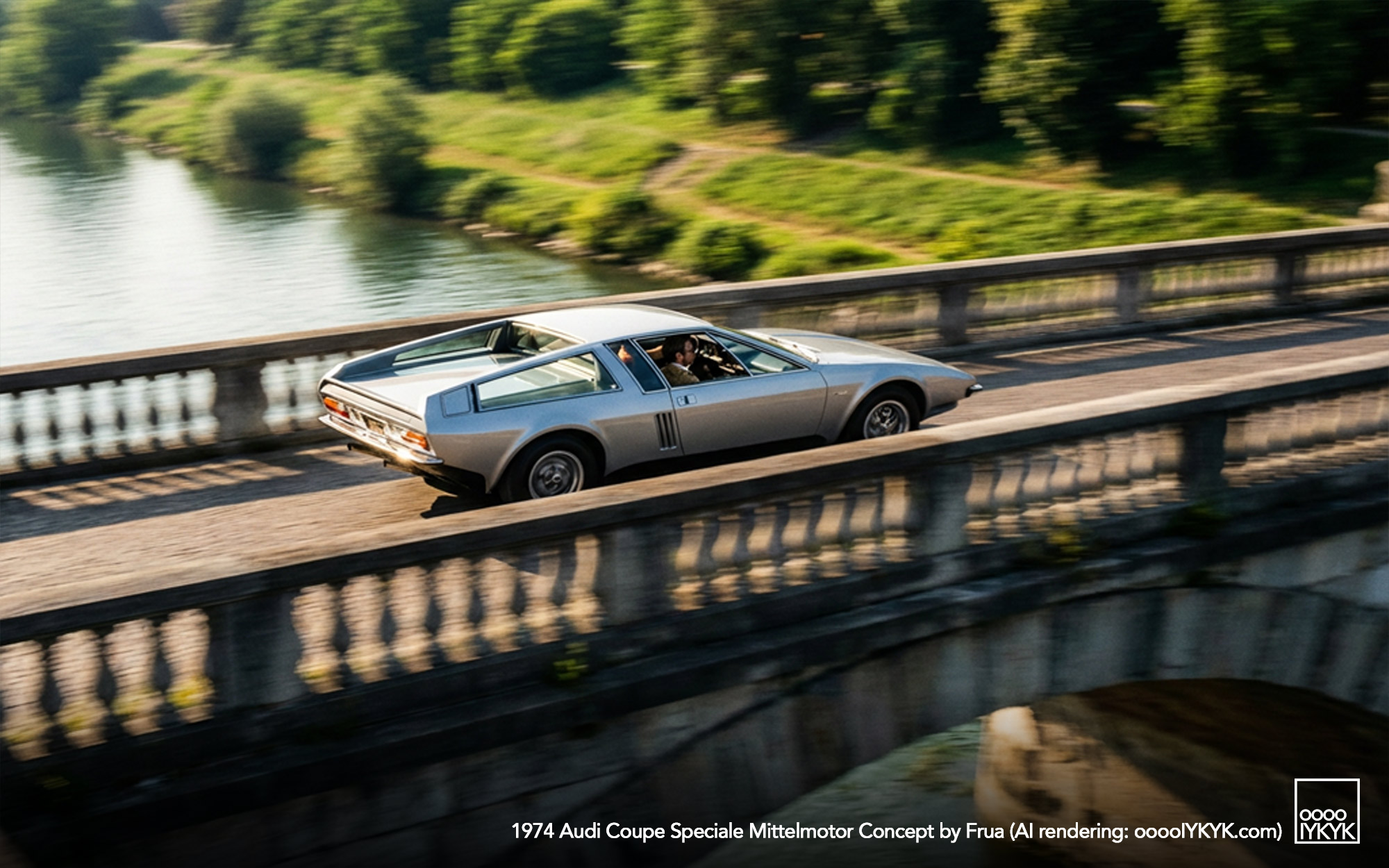
PREHISTORIC R8 AN AUDI MID-ENGINE BEFORE AUDI WAS READY
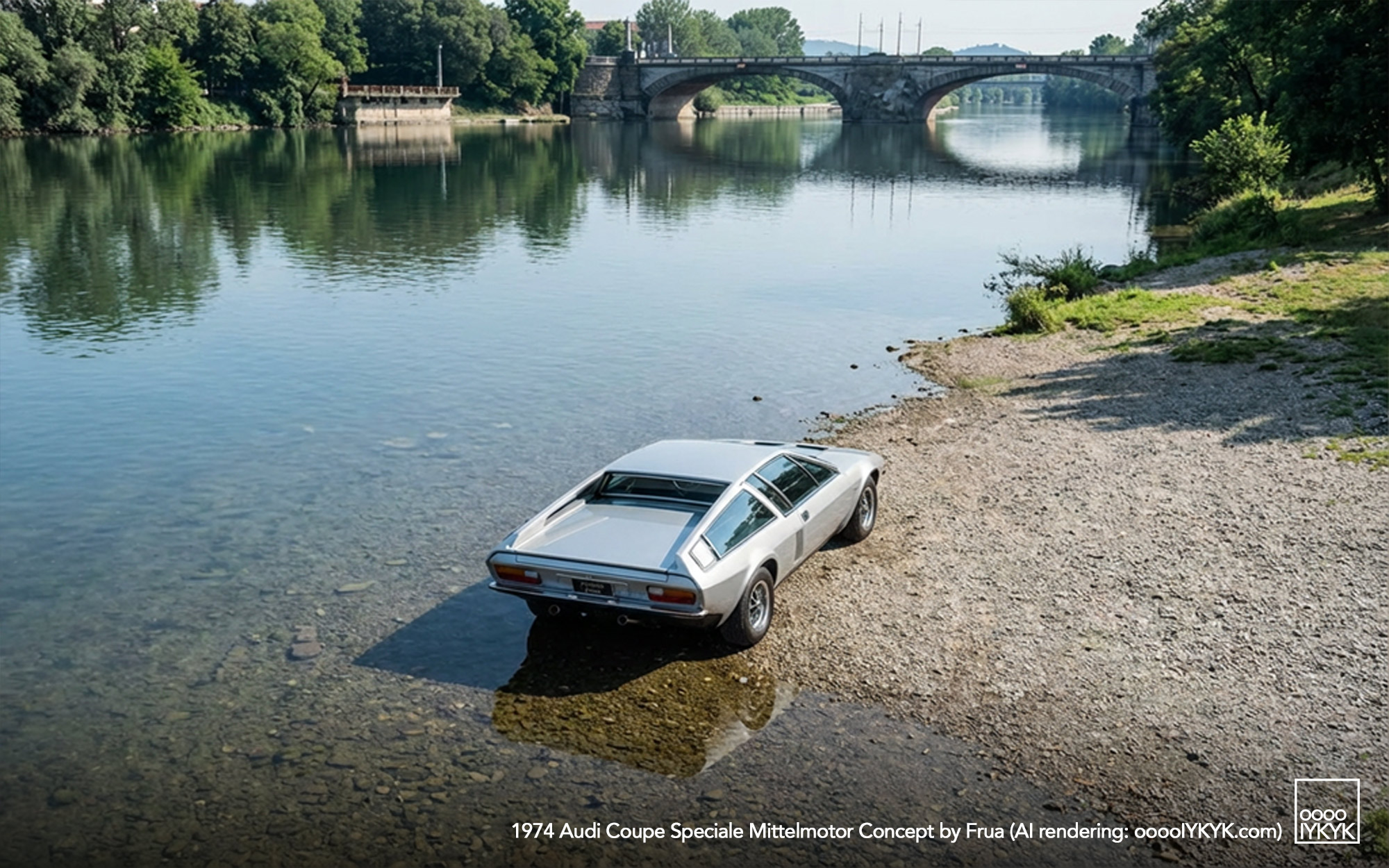
The Coupé Speciale Mittelmotor used components from the Audi 100 Coupe S (type F105) as its foundation. Frua dramatically reconfigured the layout, transforming the front-engine, front-wheel-drive Audi into a mid-engine sportscar.
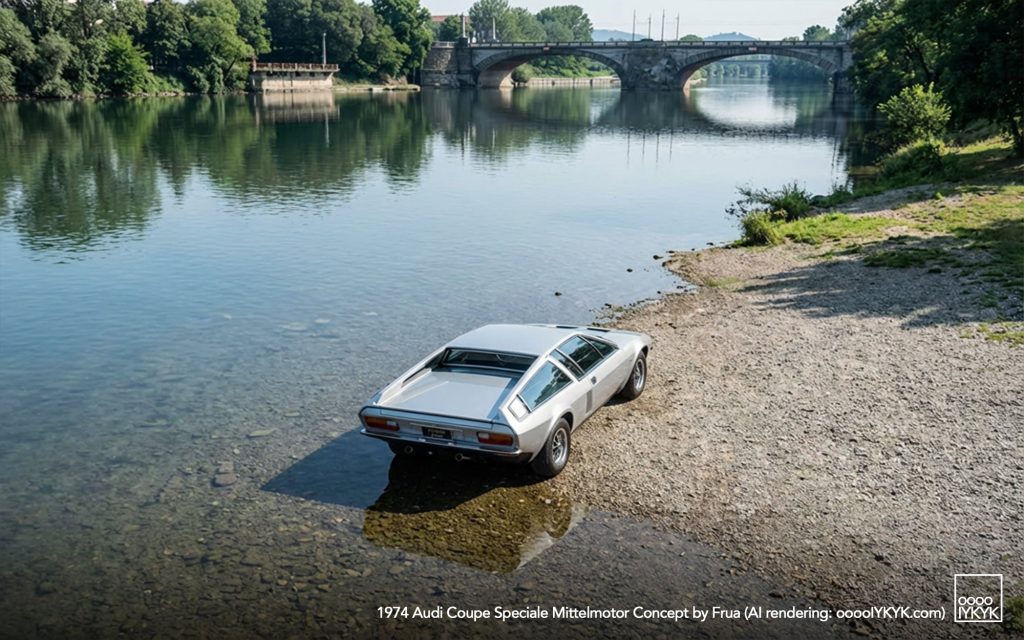
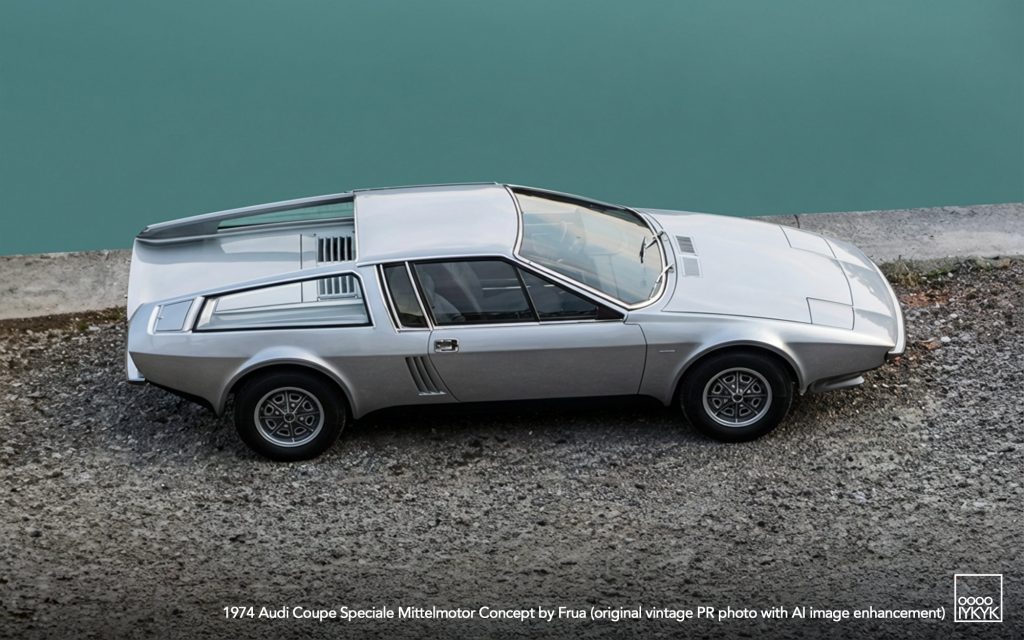
The drivetrain remained relatively modest by exotic-car standards. Power came from Audi’s inline four-cylinder engine producing roughly 112 horsepower, positioned behind the passenger compartment in true mid-engine fashion. The unusual packaging arrangement placed the radiator immediately behind the cabin, with the engine mounted further aft above the transmission.
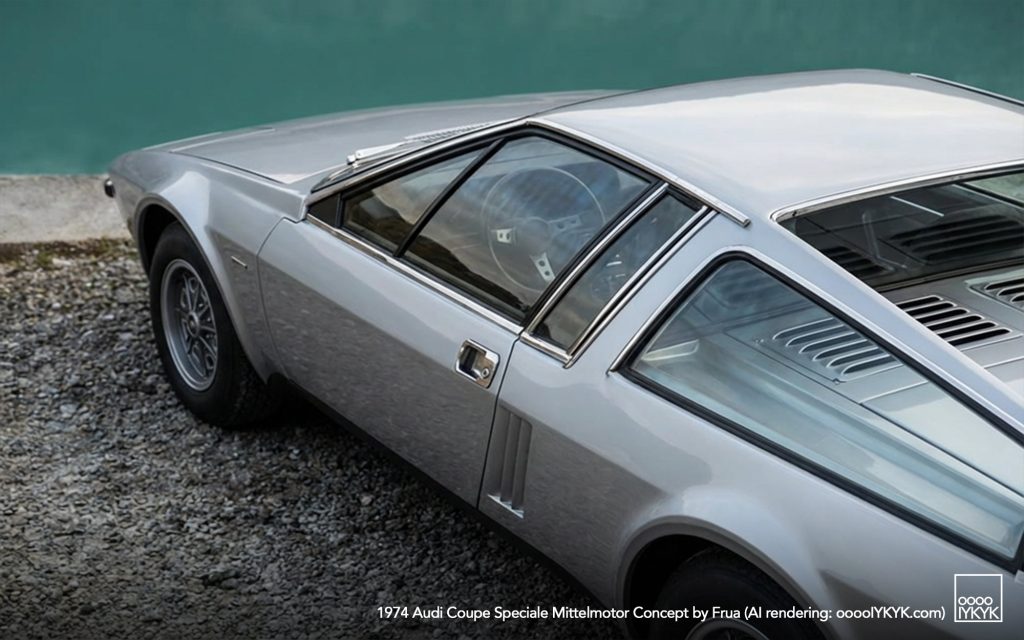
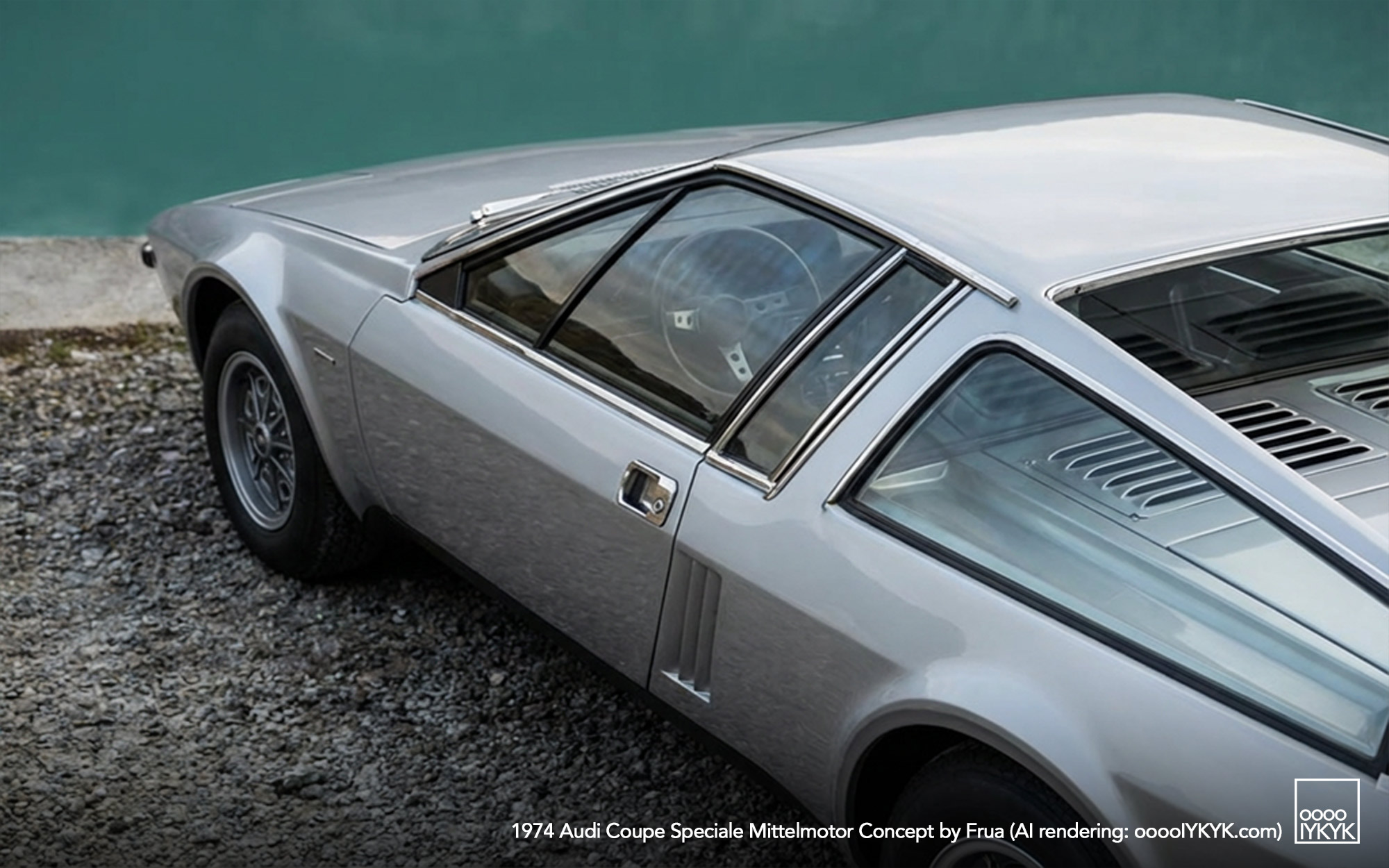
Cooling air reached the powertrain through distinctive gill-like vents behind the doors and through slots in the rear engine cover. Storage space was minimal: a small luggage compartment sat in the nose, while another shallow compartment was located above the gearbox at the rear.
From an engineering standpoint, the concept was more experimental than production-ready. Yet its mechanical layout hinted at a direction Audi would not pursue in series production until the 21st century when it launched its first-generation R8.
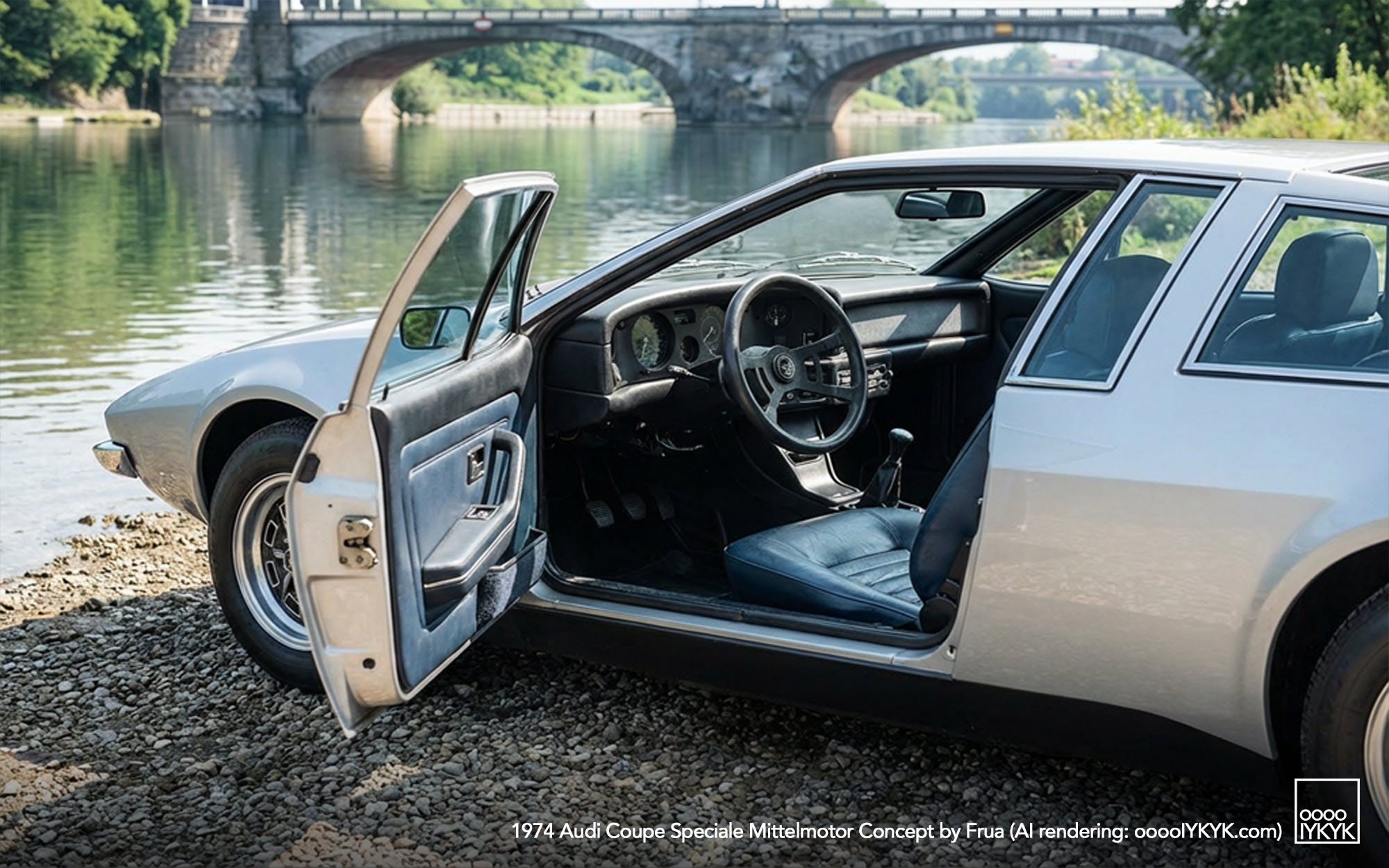
DESIGN LANGUAGE OF THE 70s
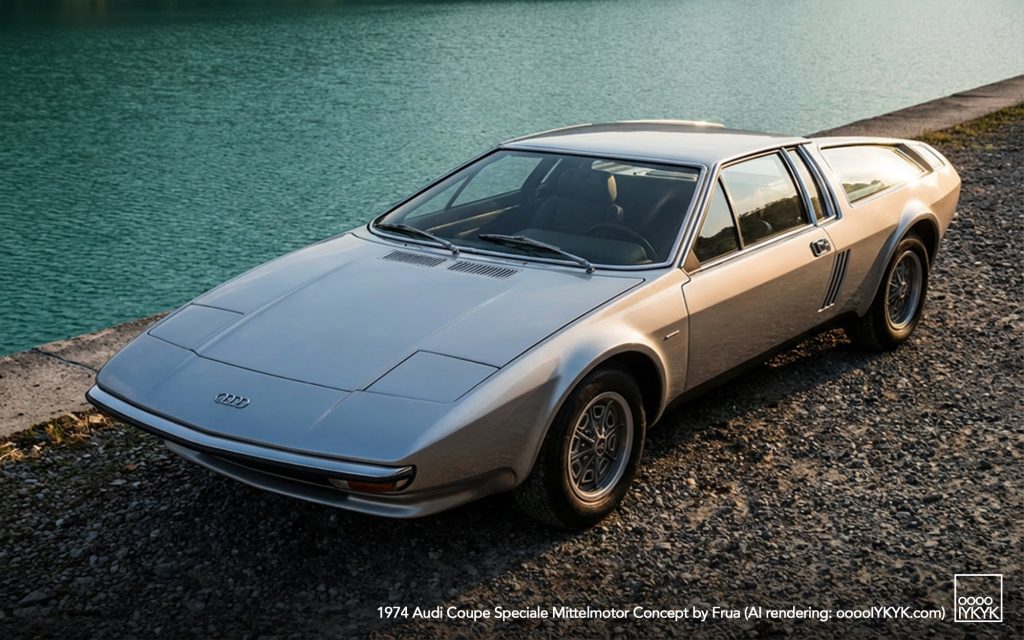
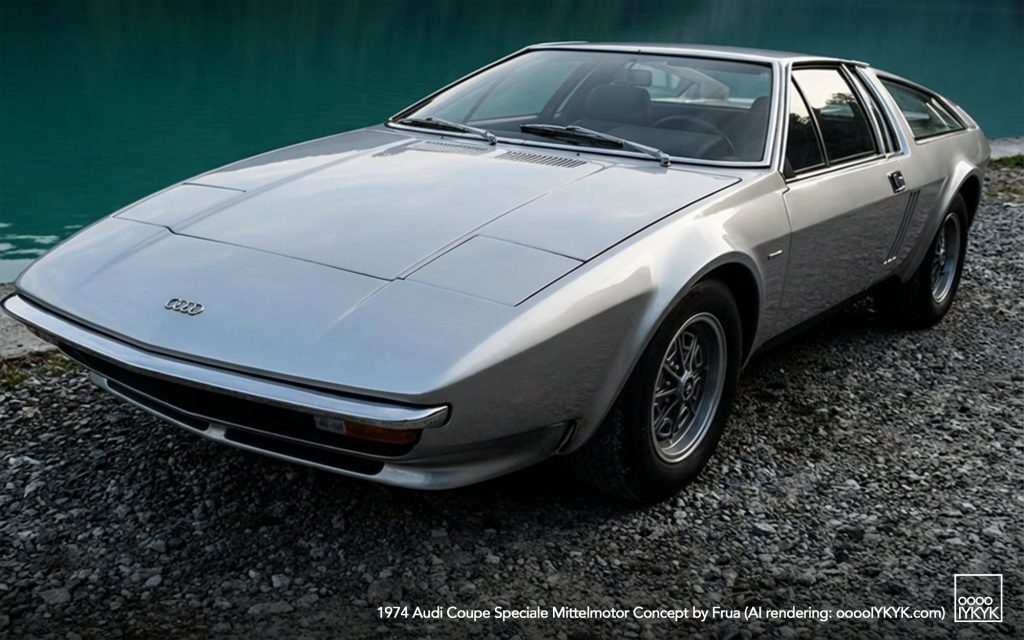
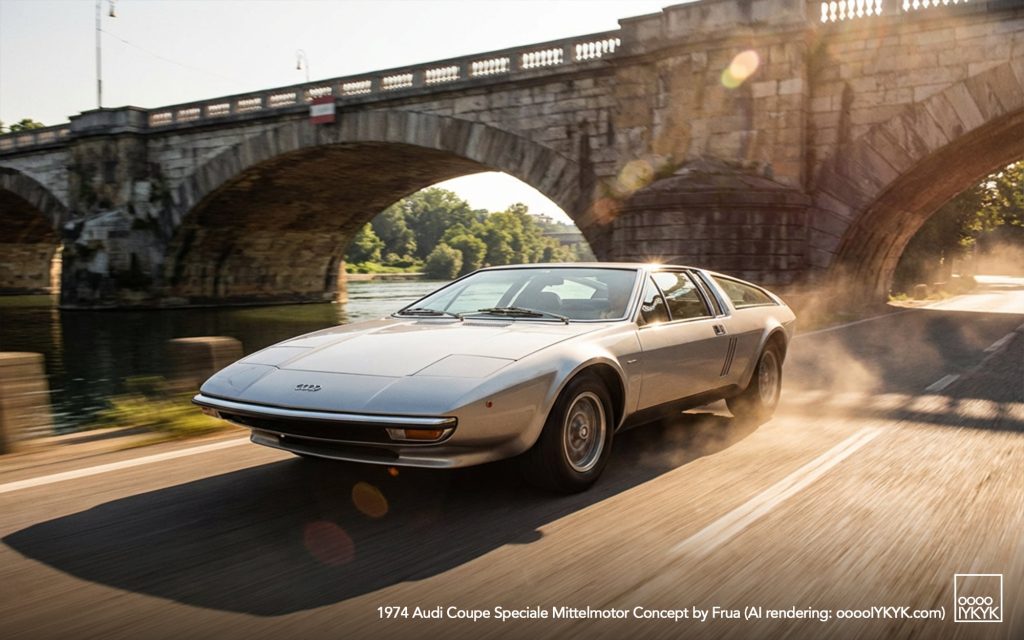
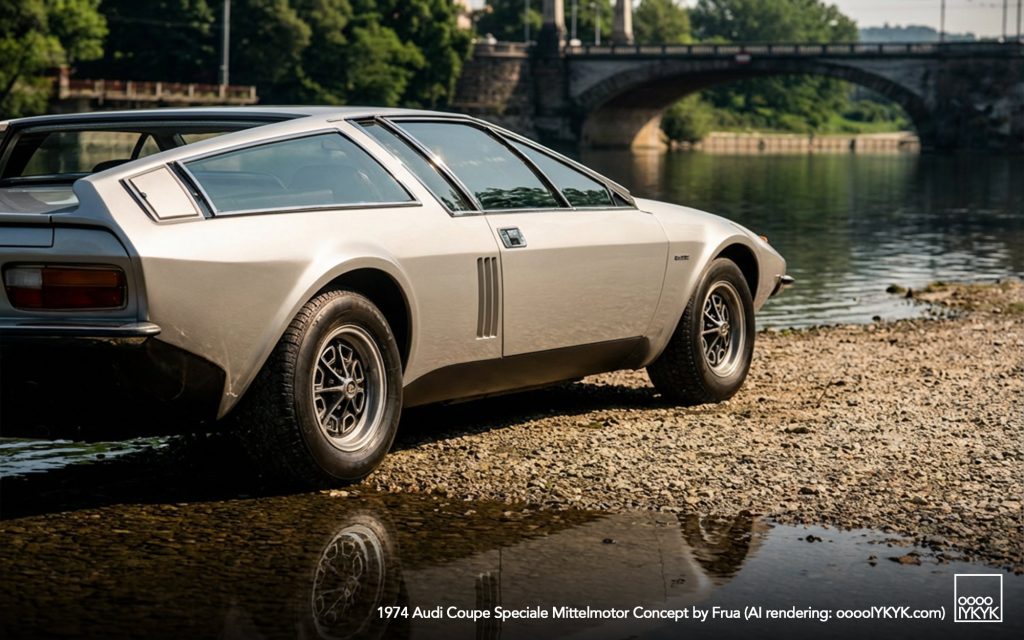
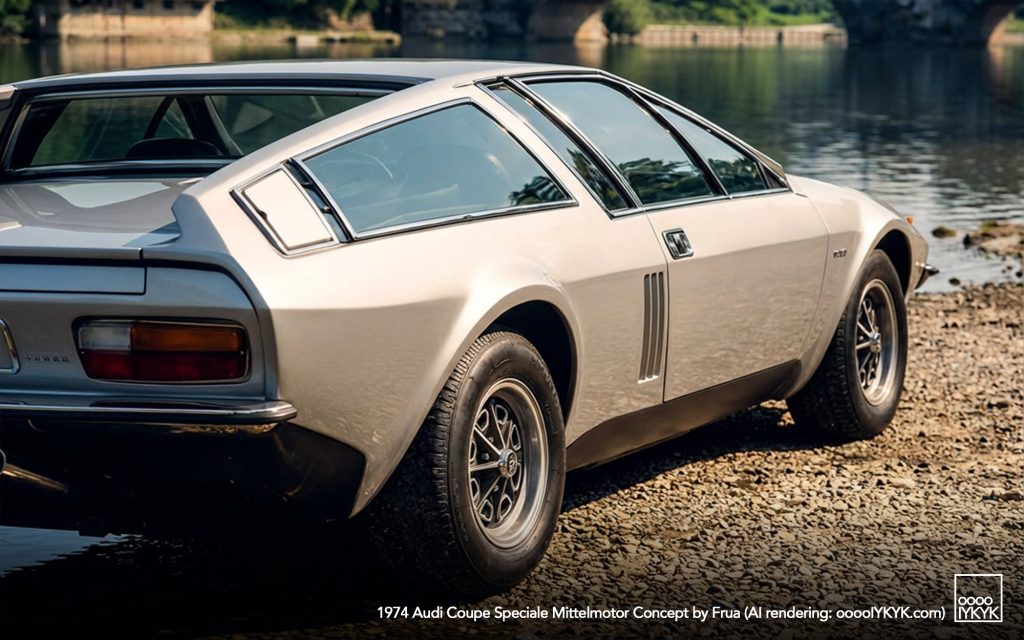
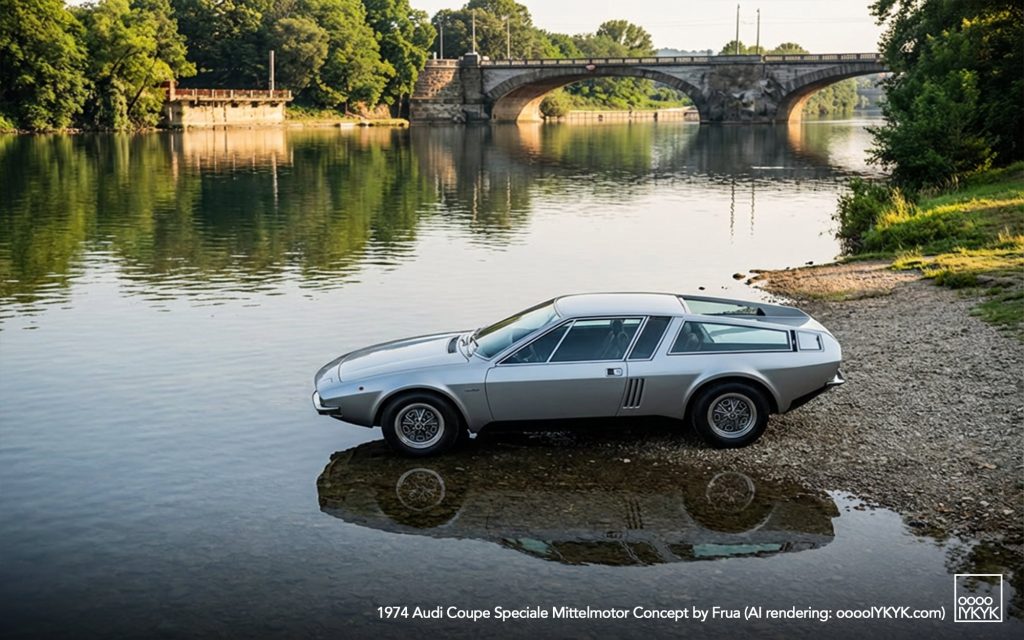
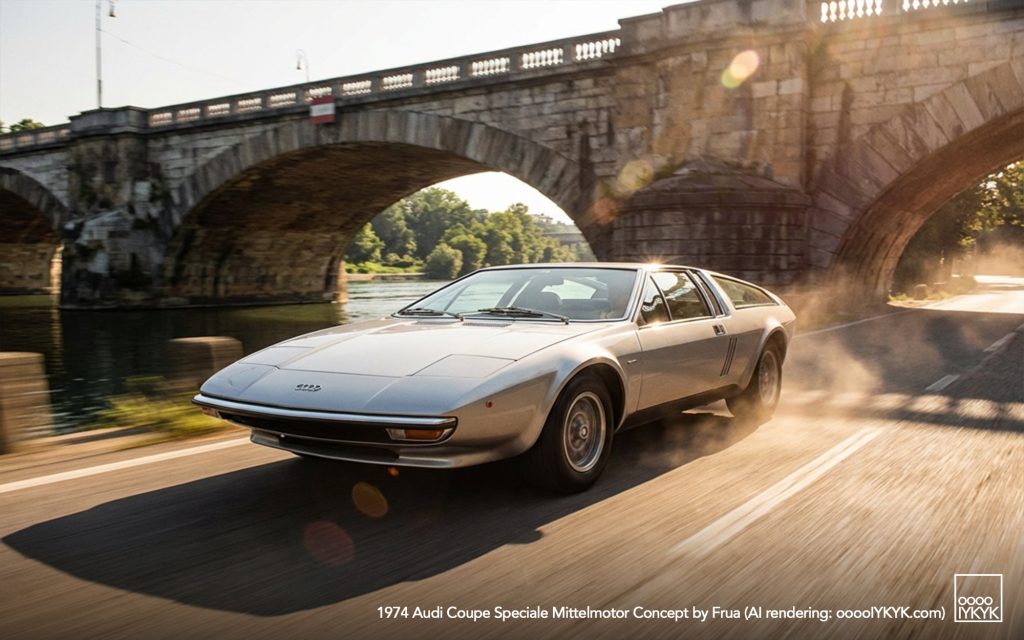
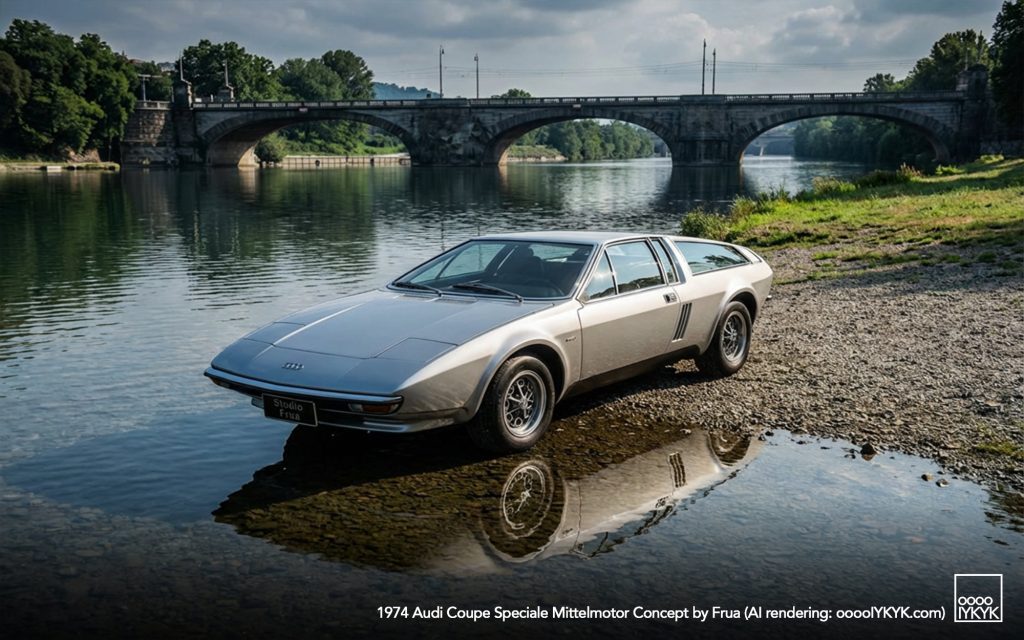
Visually, Frua’s Audi concept captured the aesthetic vocabulary of the early 1970s phase of wedge design.
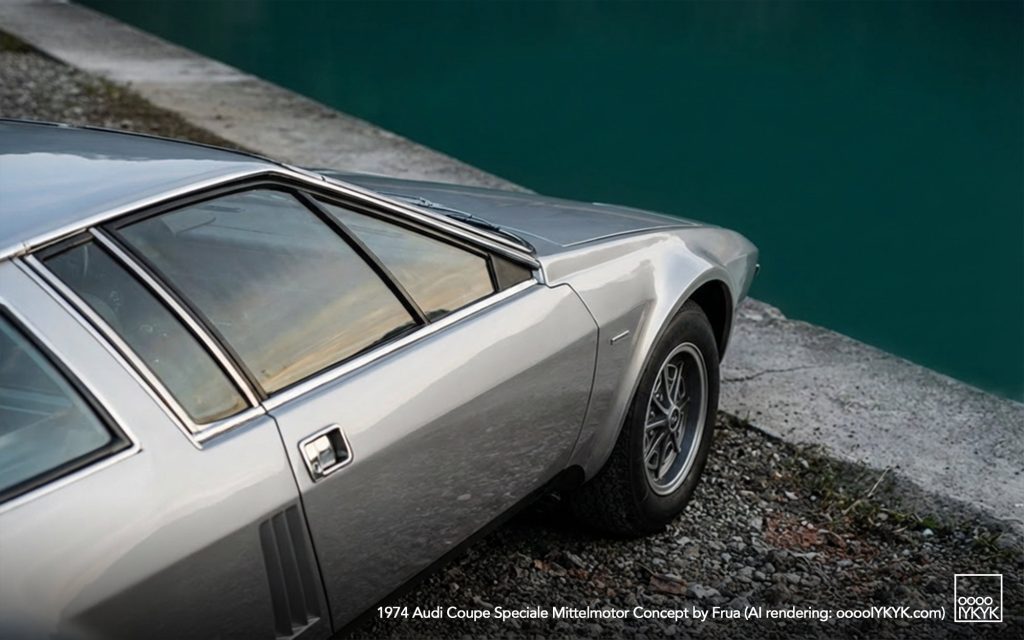
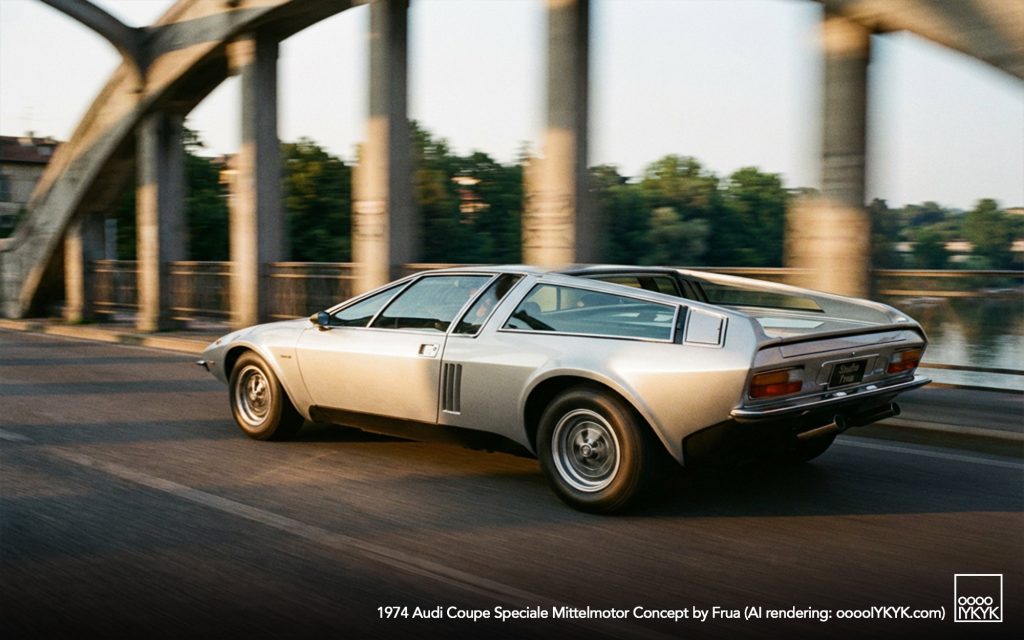
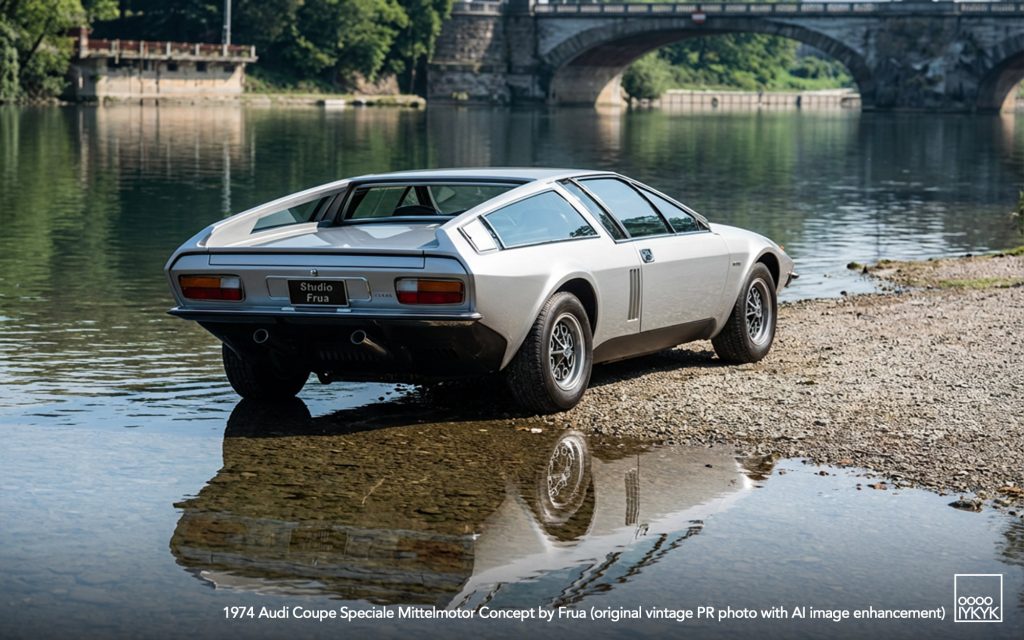
The body was low and angular, shaped around a low, flat and angular silhouette that had become fashionable among Italian designers of the time. The roofline flowed into sharply defined rear buttresses, visually separating the C-pillars from the rear deck.
Observers often note similarities to the Maserati Merak, another product of the wedge era penned by Giugiaro. The resemblance is particularly apparent in the distinctive rear pillar treatment and the car’s compact proportions. However, in the case of the Audi Coupé Speciale, the sightline cuts were enclosed with glass rather than left open on the Maserati.
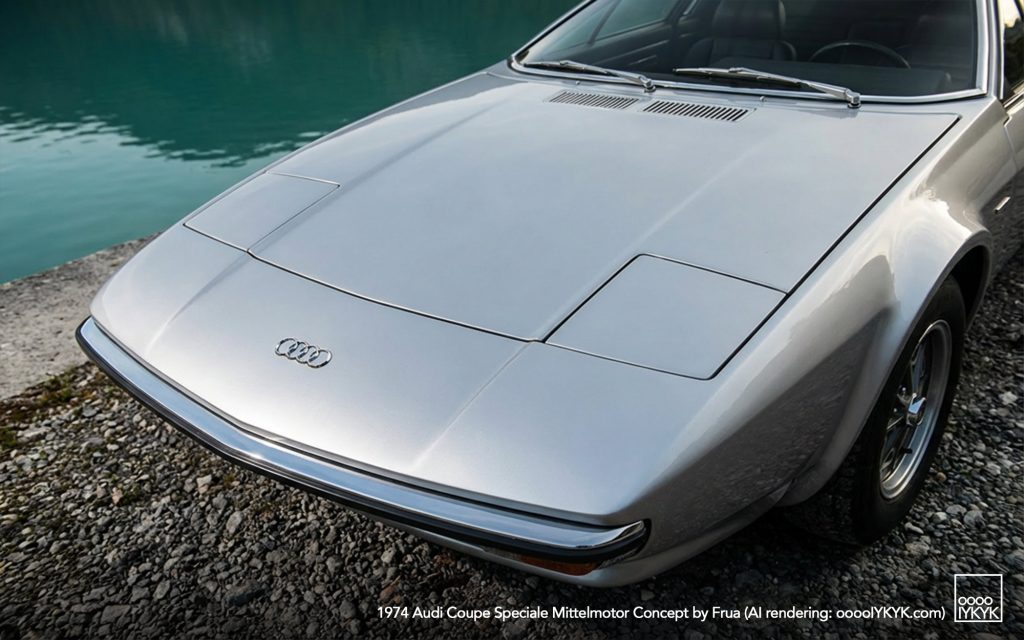
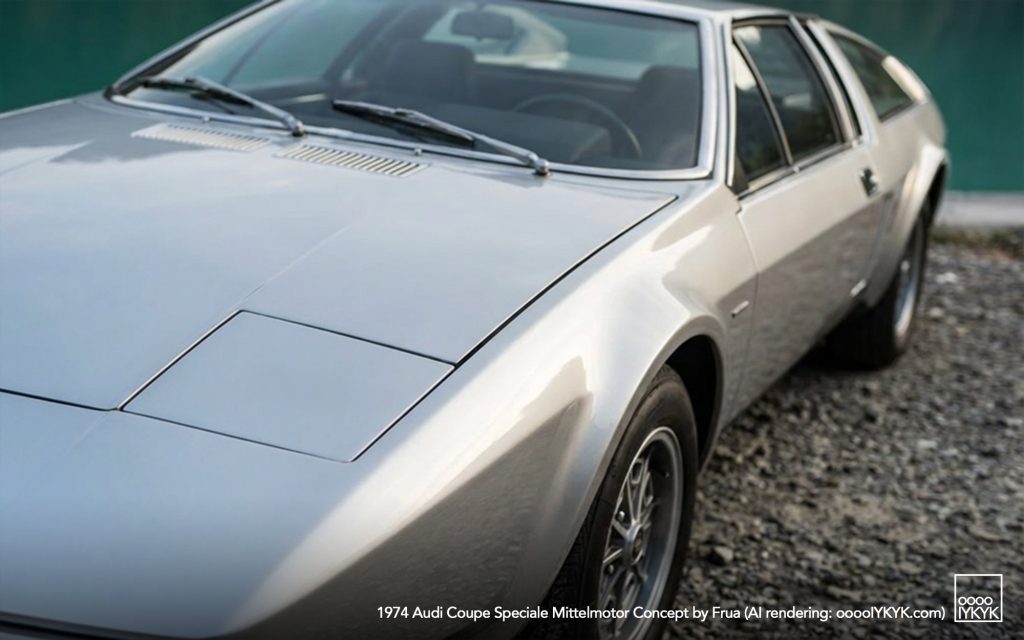
Unlike the Merak, however, Frua’s Audi remained relatively understated. The surfaces were clean and restrained, punctuated mainly by subtle air vents and delicate four-ring emblems placed on the bodywork. The result felt less like an exotic showpiece and more like a livable sportscar — albeit decades ahead of Audi’s own product strategy where the R8 became the more livable alternative to its Lamborghini Gallardo cousin.
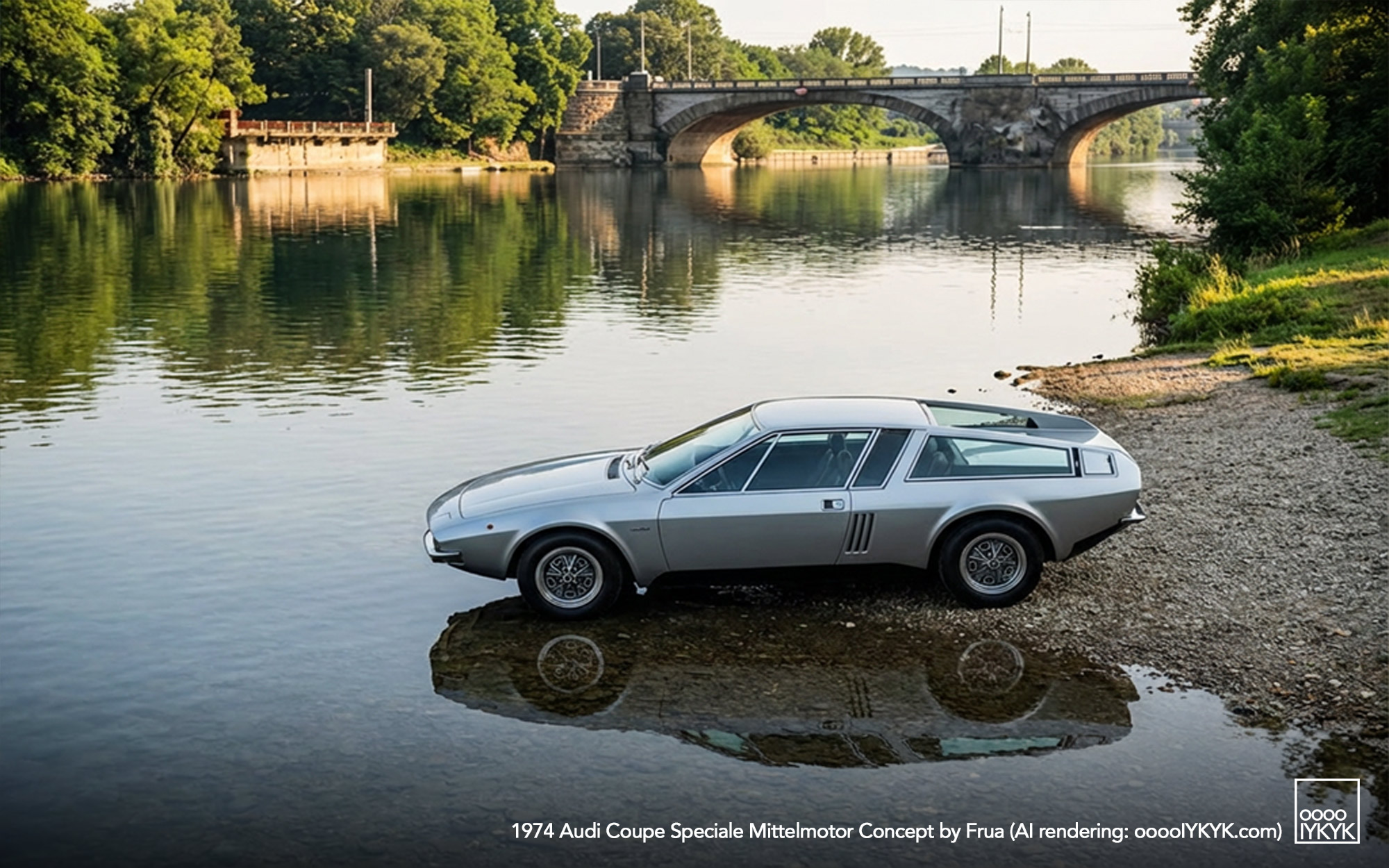
CONCEPT WITHOUT A CLIENT
According to accounts from Audi Tradition, the car was not commissioned by Audi. Frua appears to have developed the project independently and presented it at Geneva as a speculative design proposal.
Such projects were not uncommon at the time. Italian studios frequently used motor-show concepts to demonstrate ideas and potentially attract work from manufacturers. The aforementioned Asso di Picche was just such a proposal from Giugiaro seeking design work and Karmann Coachworks seeking to fill production capacity. Likely Pietro Frua’s line of thinking was much the same as Giorgetto Giugiaro at the time. Audi was a hot new brand that the gargantuan Volkswagen company was aiming to make a serious competitor to Mercedes-Benz. It would have been safe to assume there’d be plenty of work for the ambitious and recently reborn brand.
For Audi, the concept arrived at a transitional period. The brand was still rebuilding its identity following its postwar revival and had yet to establish the performance reputation that would later come with the quattro era.
In that context, a mid-engine sports car may have seemed a bit too far afield of Audi’s priorities of the mid-1970s.
MYSTERY OF THE CAR’S WHEREABOUTS
One of the most intriguing aspects of the Coupé Speciale Mittelmotor is that its fate remains uncertain.
Frua continued operating his design studio until the early 1980s, before his death in 1983 at age 70. At some point after the Geneva debut, the concept disappeared from public view. Even Audi’s own heritage department has, at times, indicated uncertainty regarding its location.
Unlike many concept cars preserved in manufacturer collections, Frua’s Audi was likely built outside Audi’s control. That circumstance may explain why it vanished into the broader history of Italian coachbuilt prototypes. Unlike say Giugiaro’s Asso di Picche or Pininfarina’s Audi quartz Coupé that would follow, Pietro Frua’s Coupé Speciale never found a place to spend the decades safely in the hands of Audi Tradition.
GLIMPSE OF WHAT MIGHT HAVE BEEN
In hindsight, the Frua concept occupies a fascinating corner of Audi history.
The company that would later build the aluminum-intensive Audi R8, dominate endurance racing at 24 Hours of Le Mans, and develop some of the most technologically ambitious performance cars in Europe once had almost no presence in the traditional sports-car arena.
Yet in 1974, a small Turin studio imagined precisely that future.
The Audi Coupé Speciale Mittelmotor remains an obscure footnote today — a speculative design, a freelance proposal and perhaps a quiet pitch for business from a designer seeking his next collaboration. Still, the concept’s elegant lines and bold mechanical layout hint at an alternate timeline where Audi might have entered the mid-engine sports-car world decades earlier.
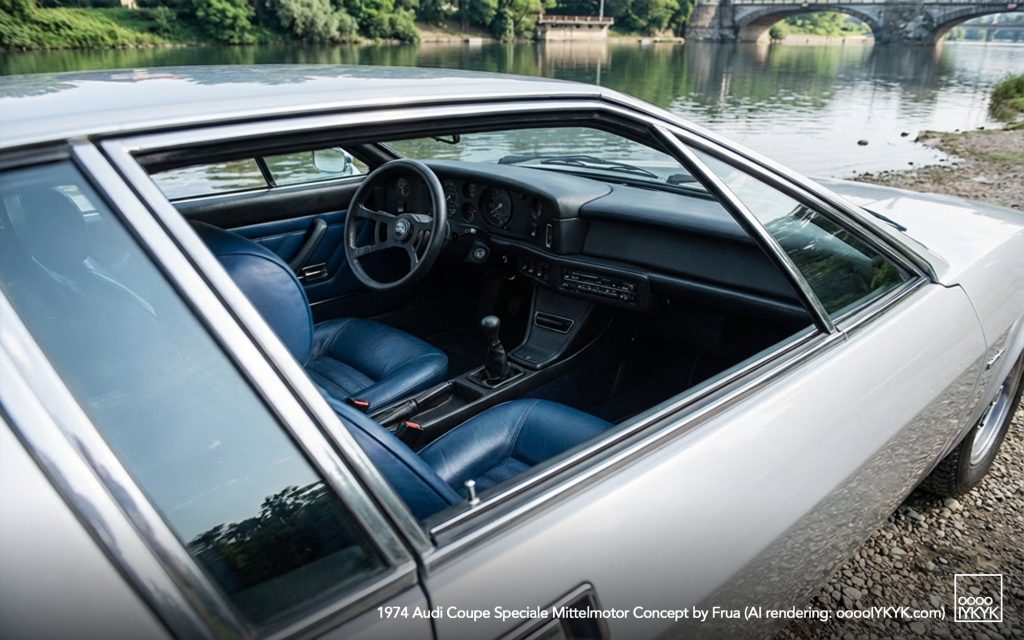
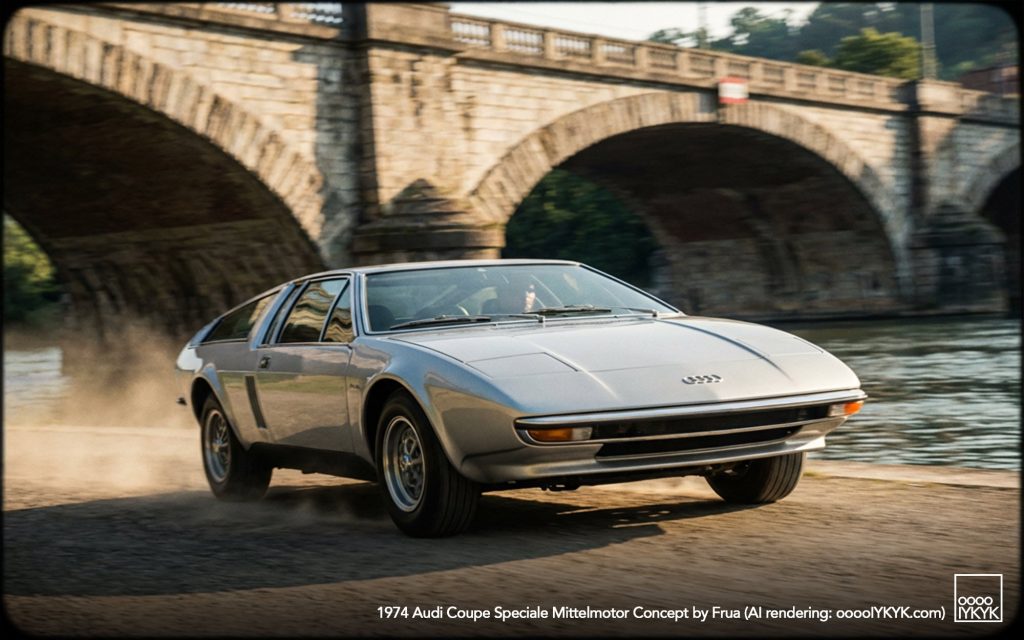
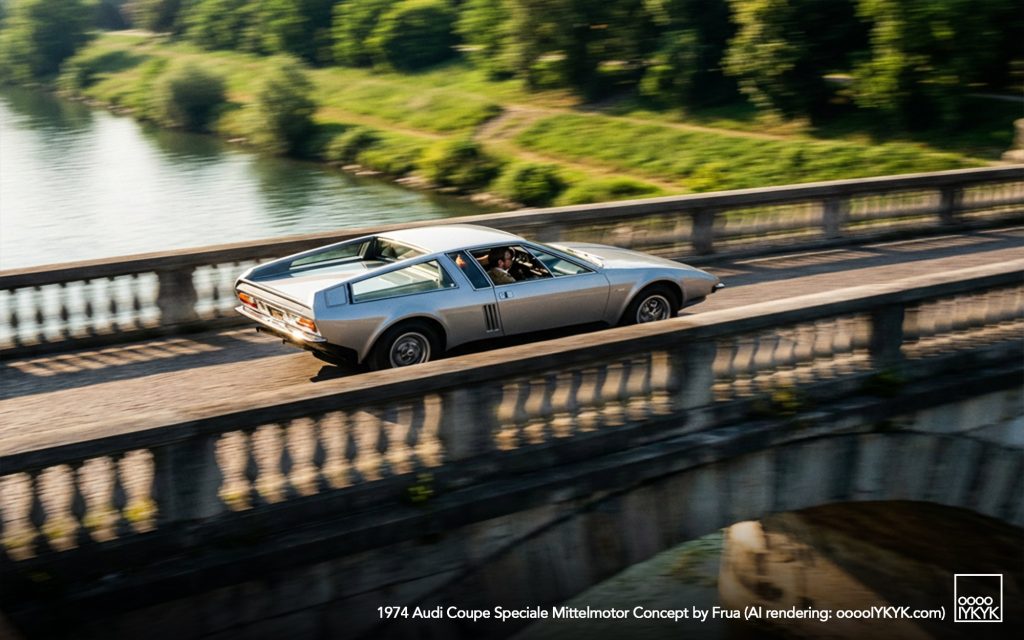
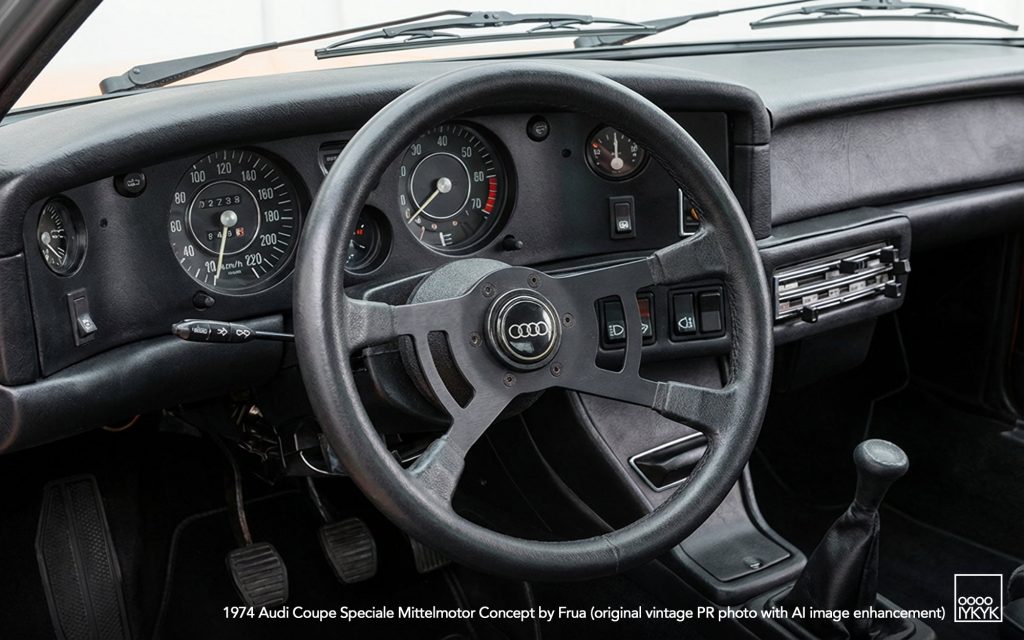
The images you see here are largely true to form. Not a lot of photos exist of the 1974 Audi Coupé Speciale to definitively show all details. Nevertheless, there are shots of most angles leaving only really the area under the front bumper and the interior aft the dashboard s the main points of ambiguity.
Using reference images including some publicity photos acquired, we built upon those publicity photos in order to create a more complete set of images of the car. Most shots of the period show the car as silver with blue accents, though in others it appears to be more silver and black. Repainting concept cars for multiple showings isn’t unheard of, so both configurations could be accurate. I’ve gone ahead and used the blue and silver renderings for the ooooIYKYK Audi Archives entry for the car, while the images used in this layout show the car as the more subtle silver and black.
Whichever configuration you choose, the car is a fascinating configuration. Even half a century later, it remains one of the most intriguing and least-known cars ever to wear the four rings.
PHOTO GALLERY