

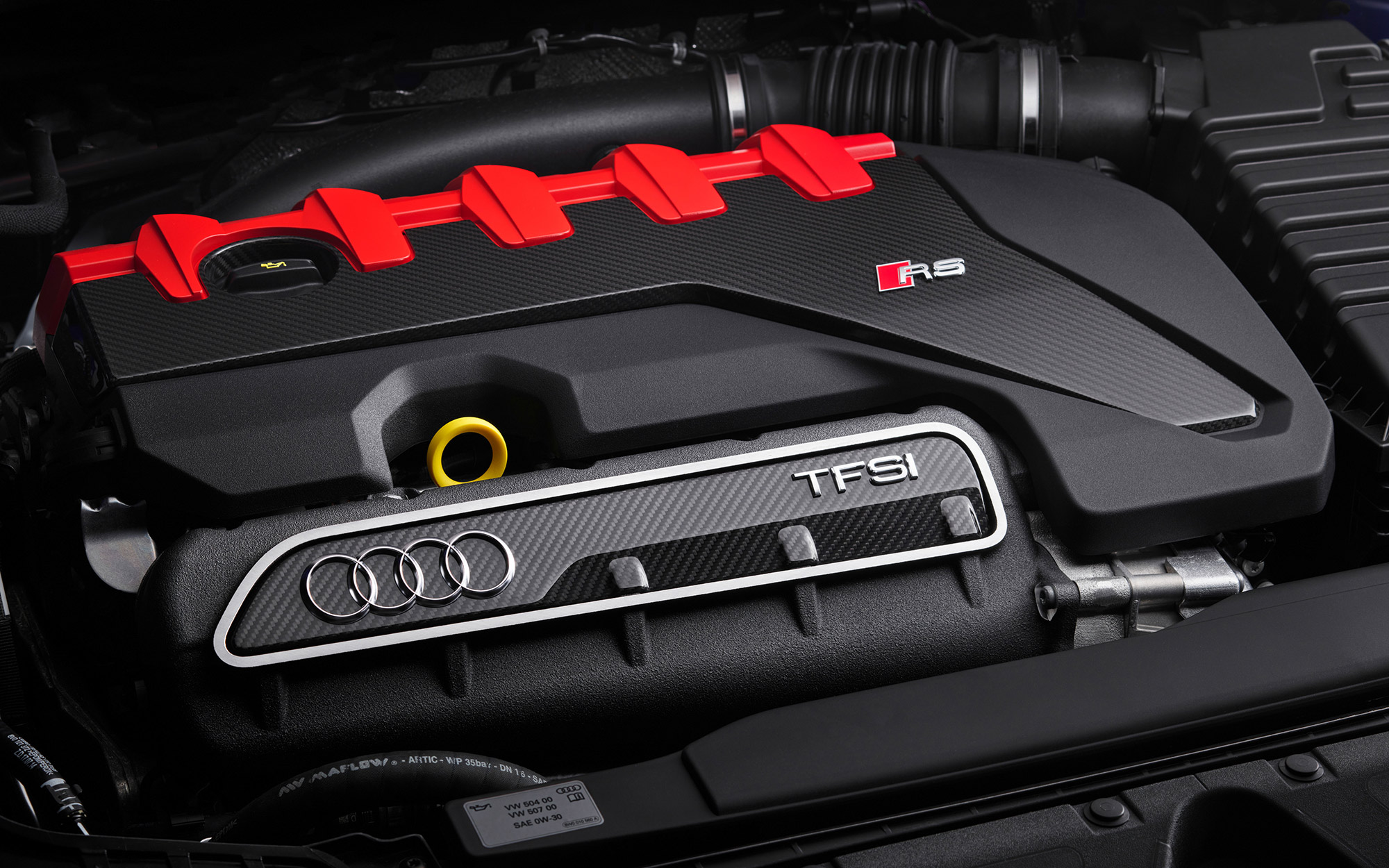

Considering the orchestrated shift to hybridization outlined by Autocar in reference to the upcoming RS 5 (B10) and RS 6 (C9), the plight of Audi Sport GmbH’s smallest RS 3 and RS Q3 is maybe even more important to fans of the 5-cylinder turbo (EA855). Fortunately, Autocar dug into this subject as well.
We already knew that Euro 7 emission and noise certification was a hurdle for the 2.5 TFSI 5-cylinder. The cost to update the engine for these regulations has been a challenge for Audi to make pencil, while rumors of Volkswagen stepping to the plate to power its own Golf R with the 2.5 TFSI certainly fired up hopes of a future when it hit circulated last fall. The engine is the most powerful in the Volkswagen Group portfolio when it comes to transverse fitment, meaning any project manager ideating a top-tier performance Volkswagen would want to consider it.
Rumors suggest Audi has blocked VW’s use of the 2.5 TFSI in the past by placing an untenably high internal component acquisition cost on this last of the Audi Sport GmbH-developed engine, but its survival hinging on VW’s development budget dollars may have changed that outlook.
Autocar didn’t speak to any of that, but it did confirm that Audi is also actively assessing how electrification might help make a stronger financial case for high-performance models like the RS 3 and RS Q3 that are based on the Volkswagen Group’s MQB modular transverse platform matrix that will now remain in production into the next decade according to Autocar.
The British car magazine’s intel went further, stating that Audi is working with Volkswagen’s R division to explore a PHEV solution similar to what is being readied in the RS 5, RS 6 and other larger RS models that is suitable but made for the transverse layout of MQB.
This group is considering multiple options including the EA855 5-cylinder turbo and Volkswagen’s EA888 turbocharged 2.0-liter 4-cylinder turbo that is also used in the Audi S3. Either would be paired with a battery and motor for a high-performance PHEV, a configuration from which any future RS 3 or RS Q3 would be built around.