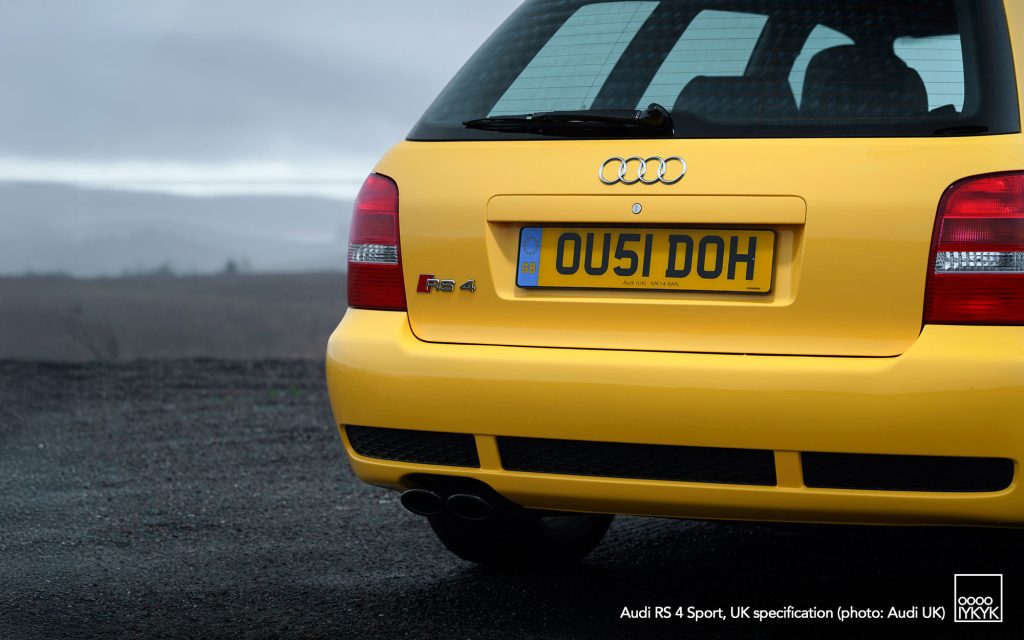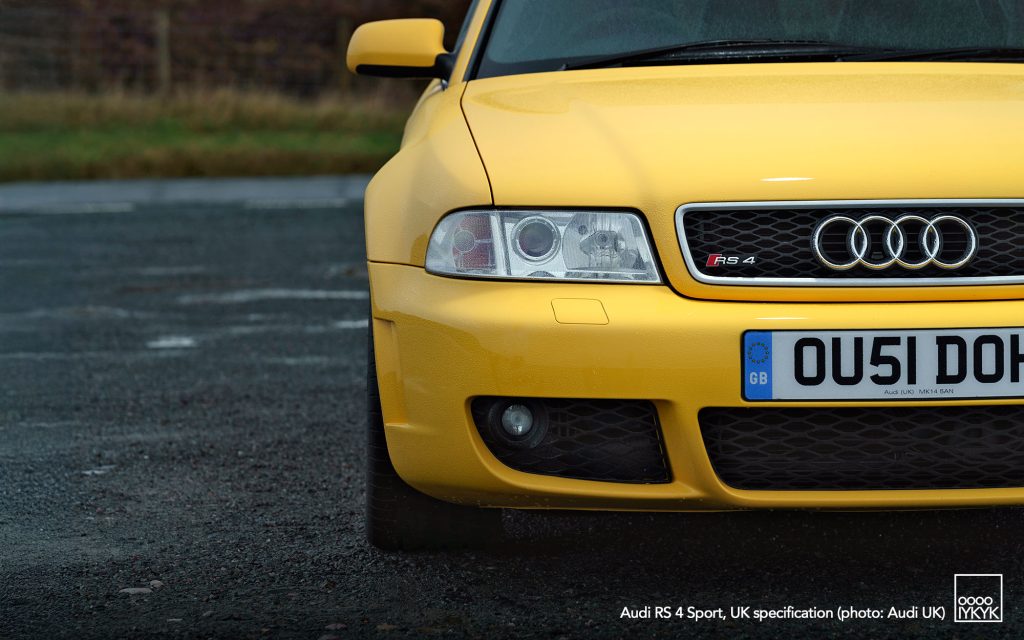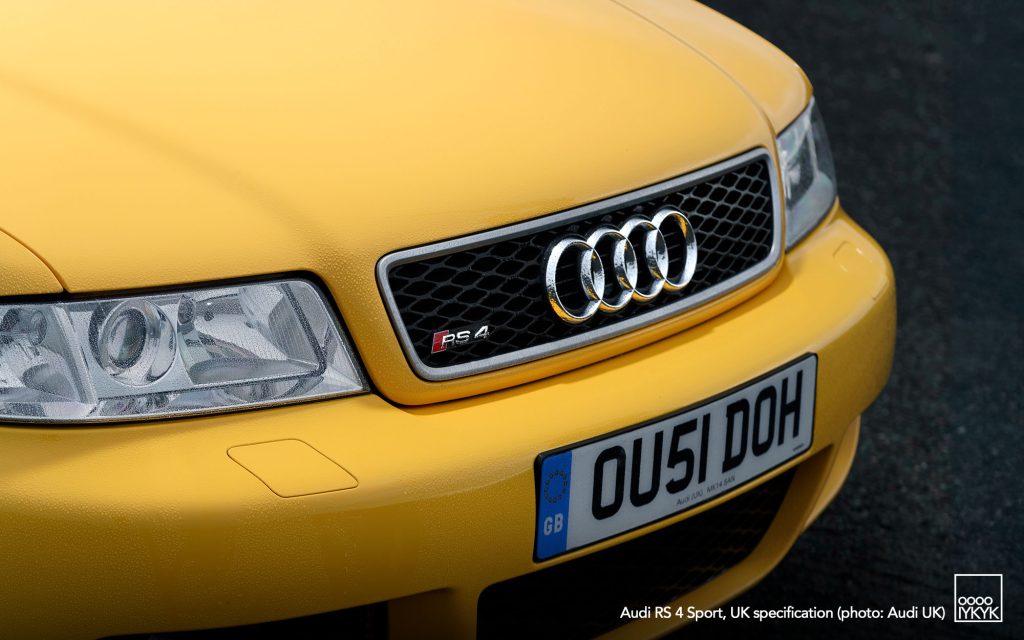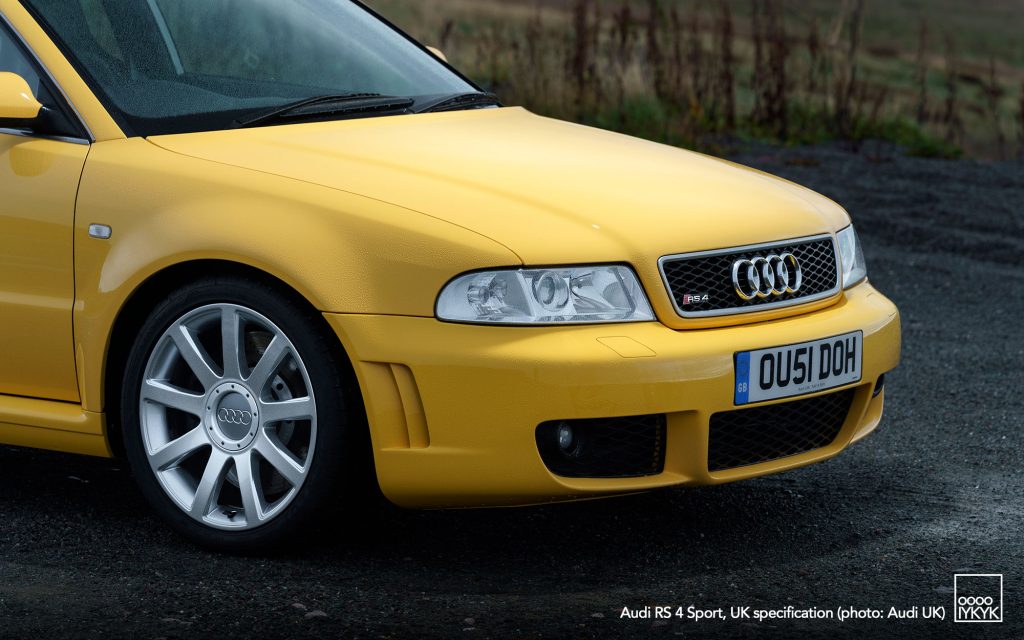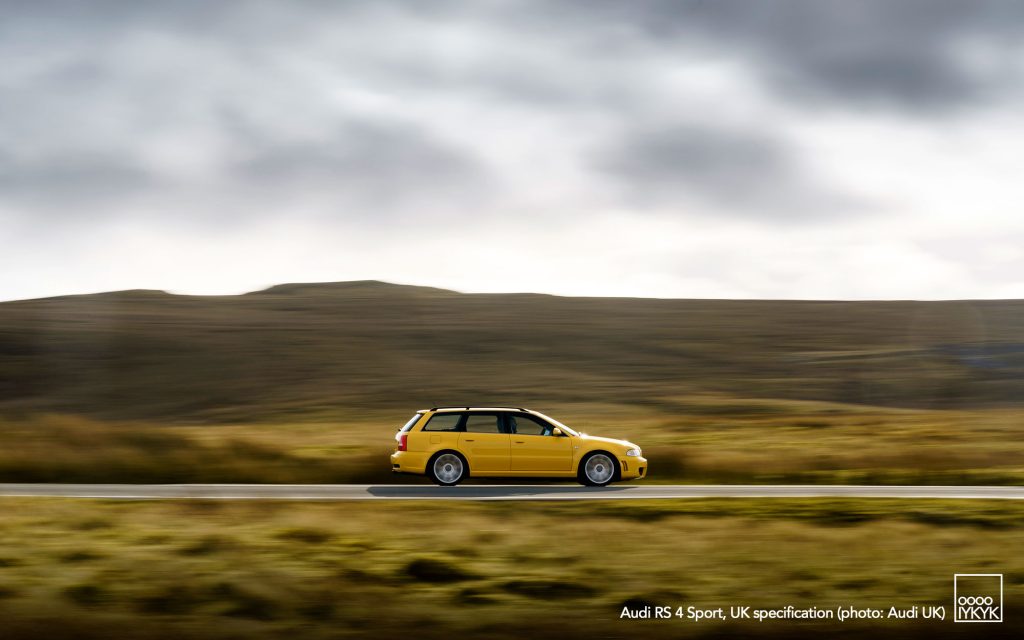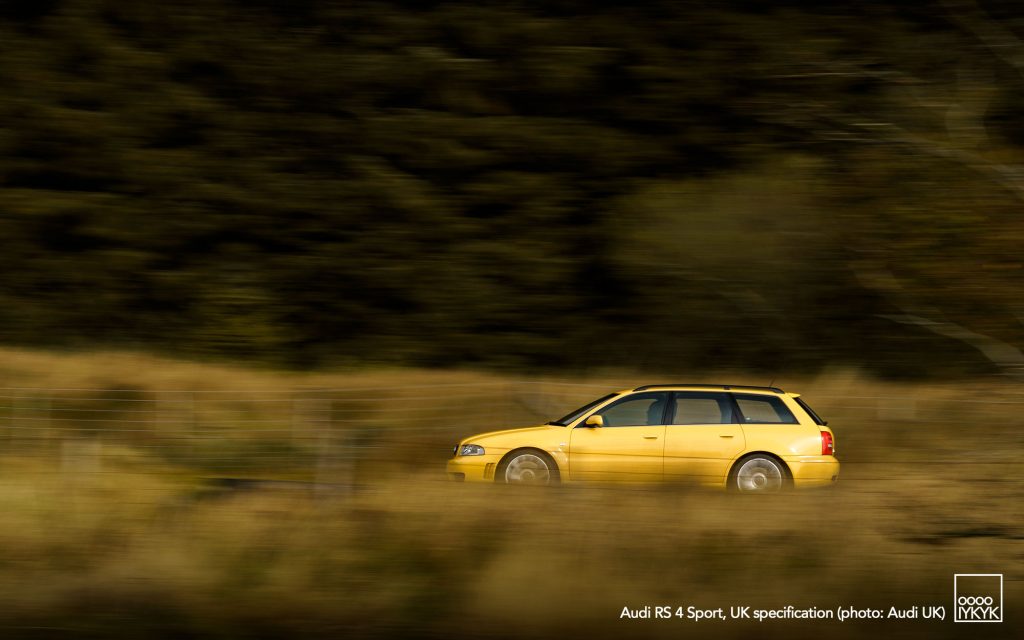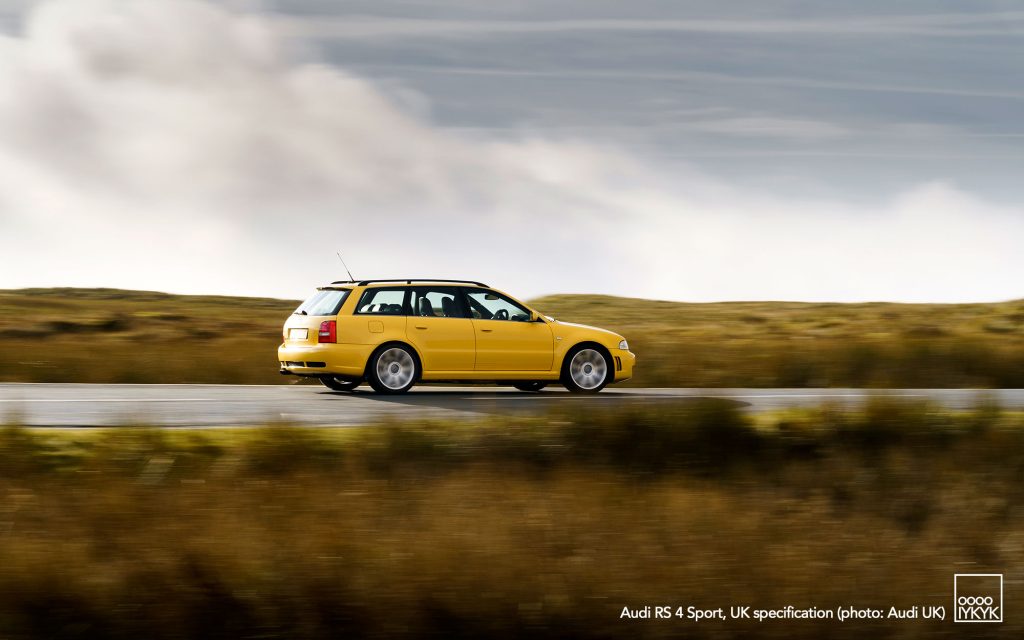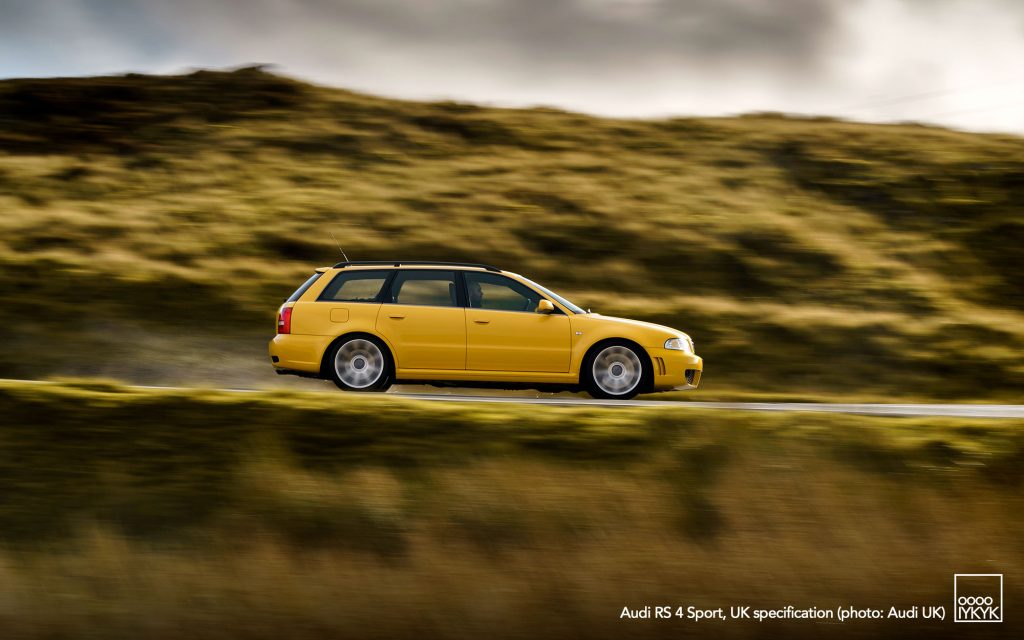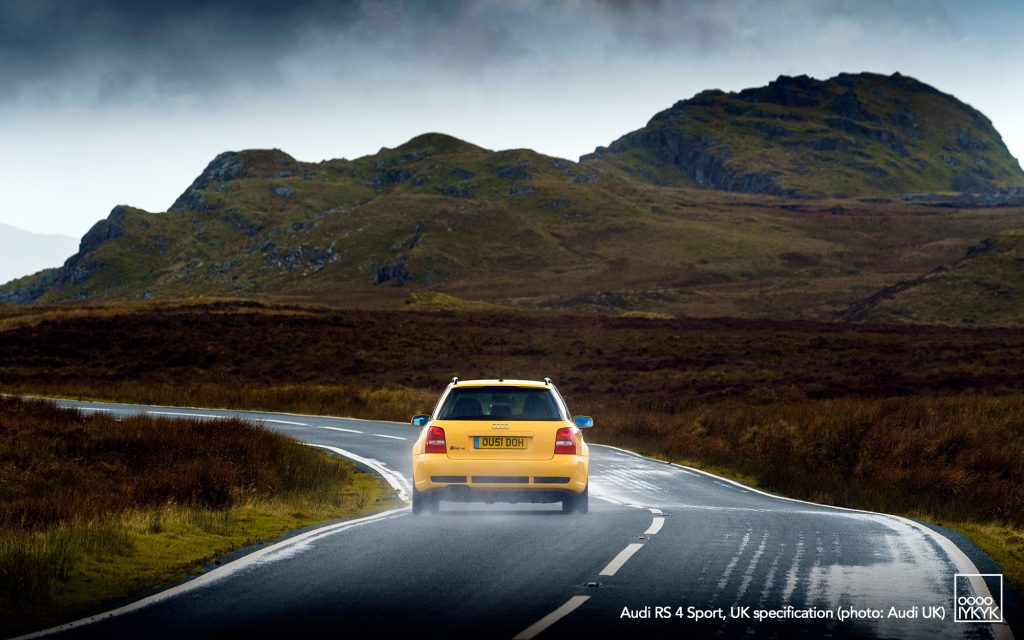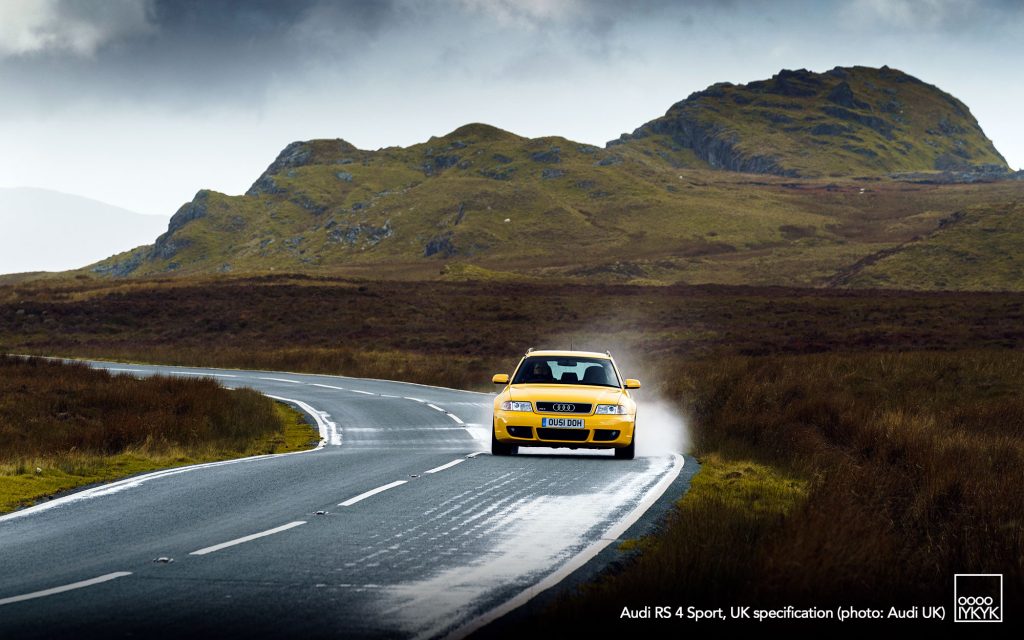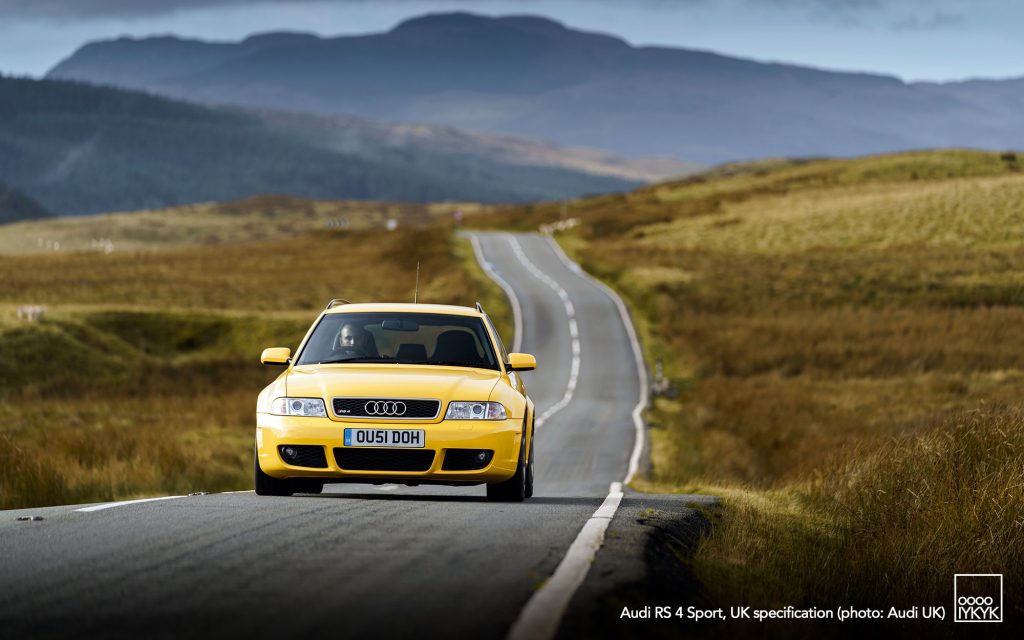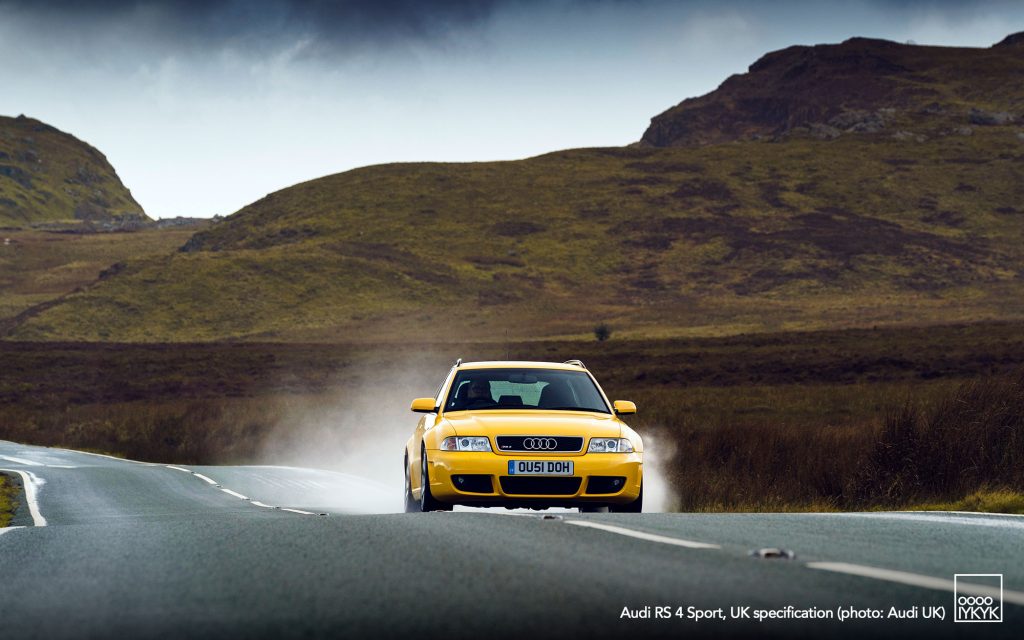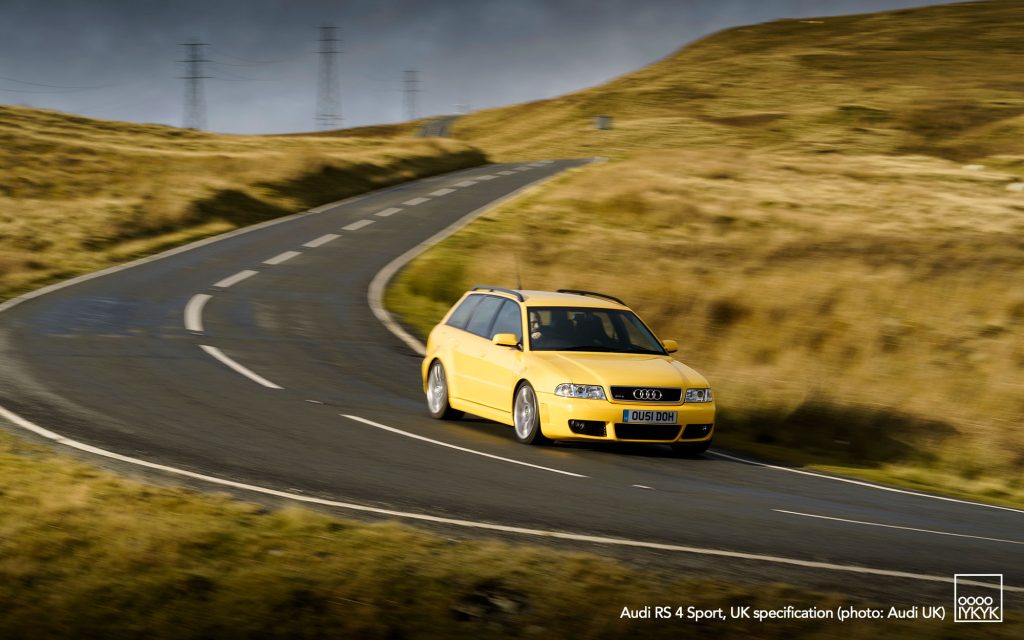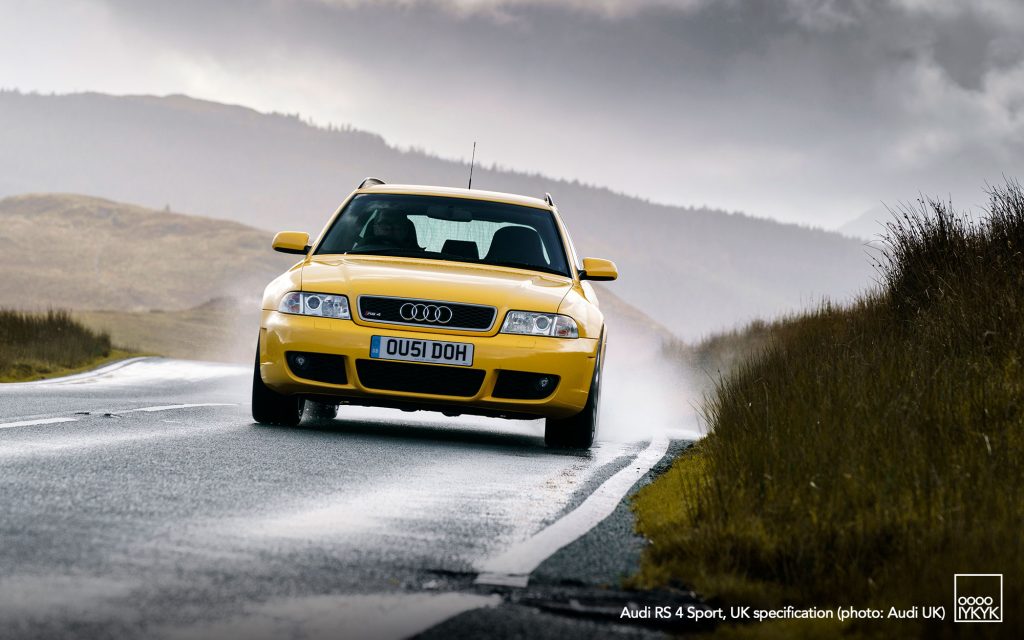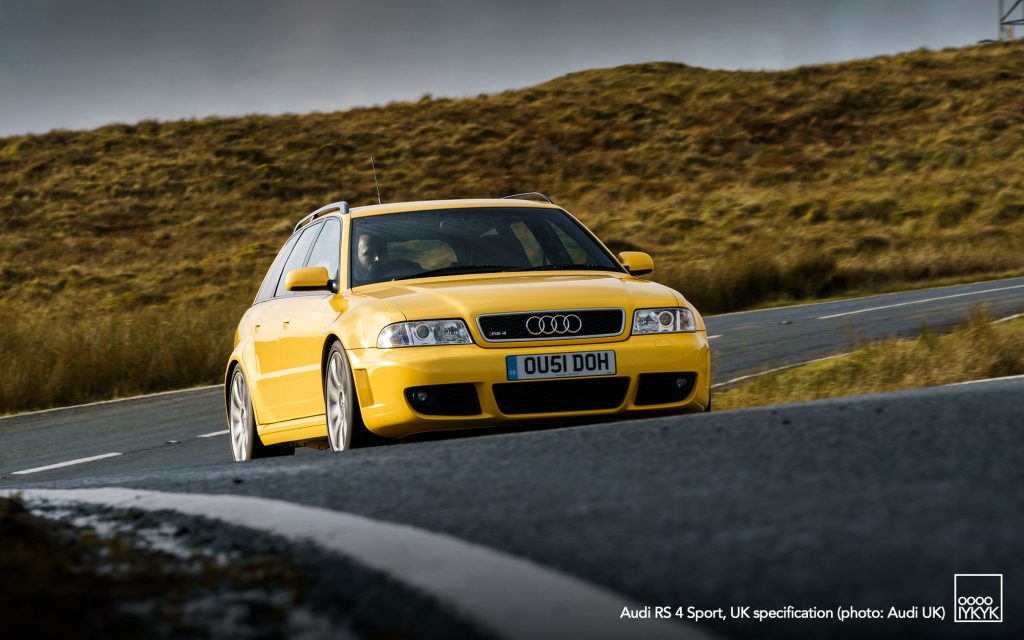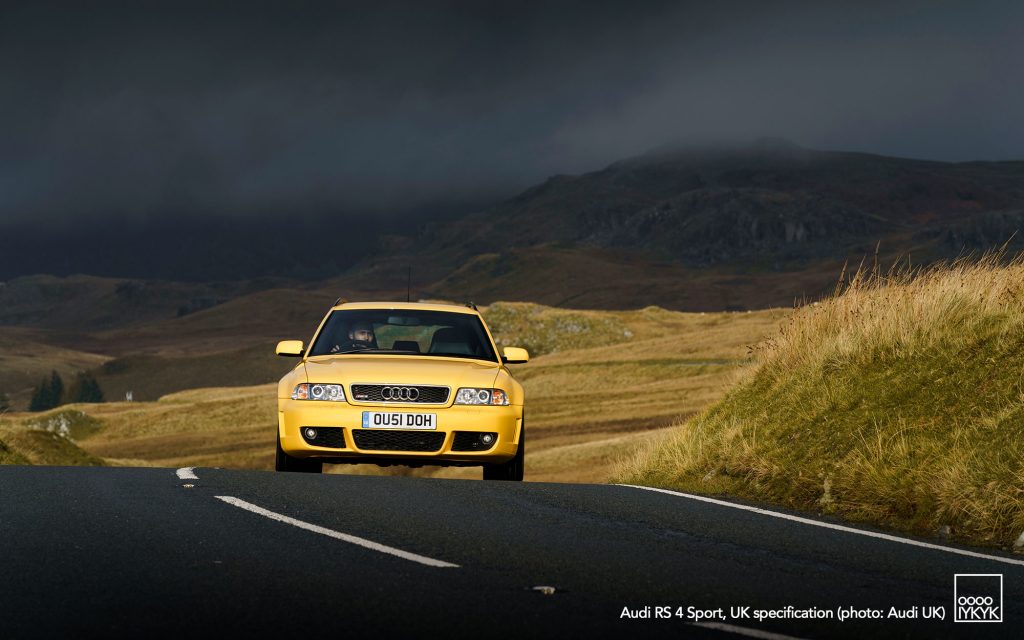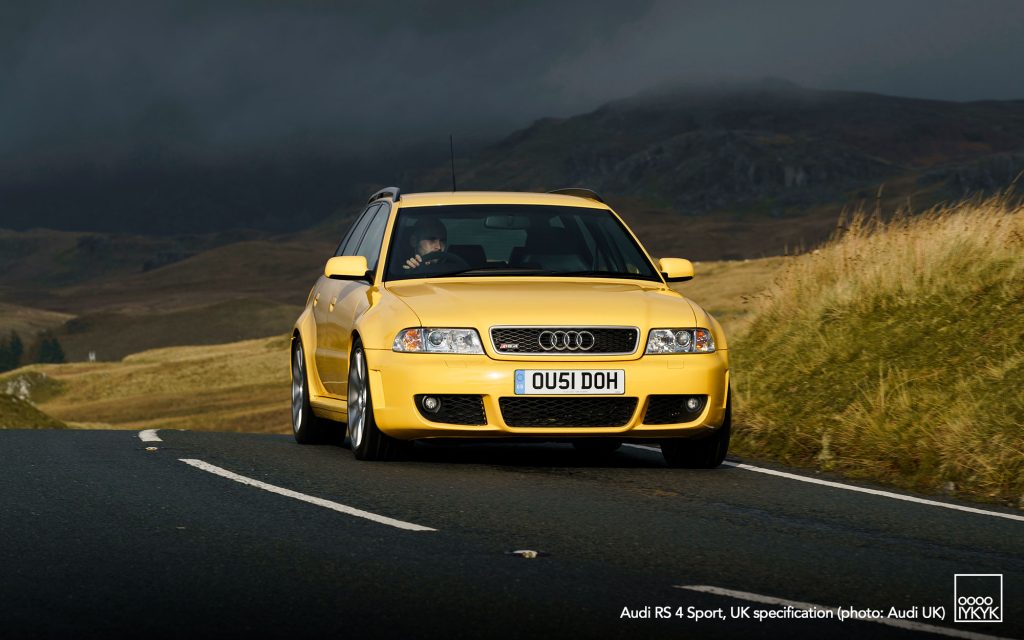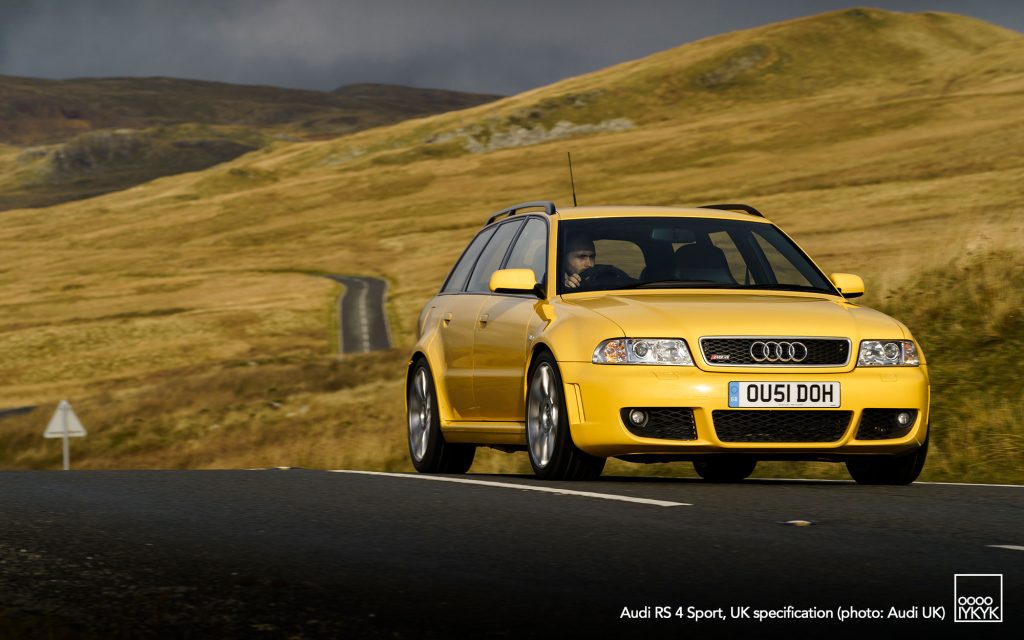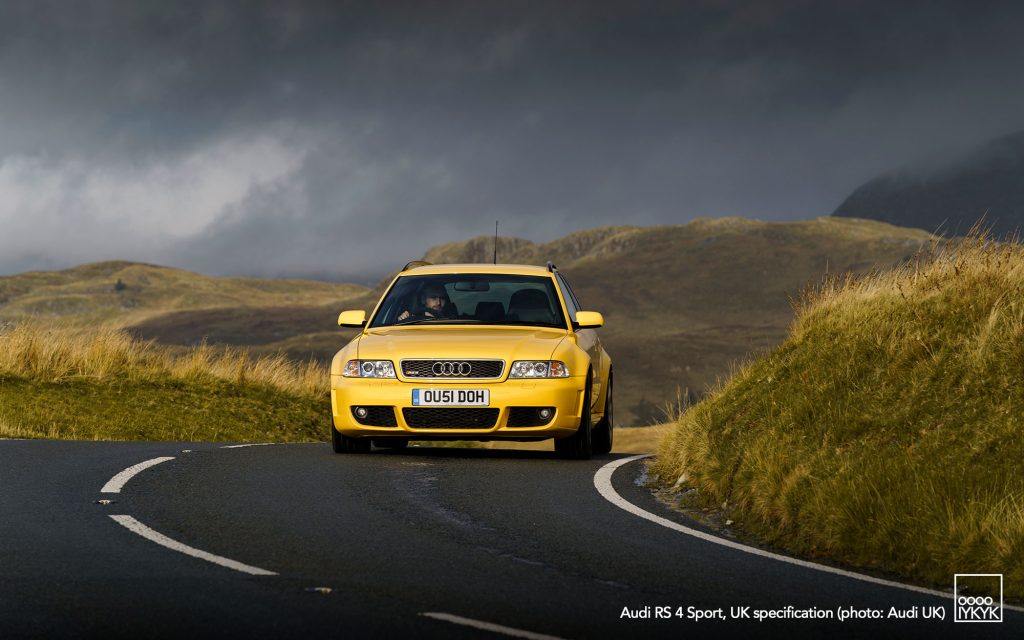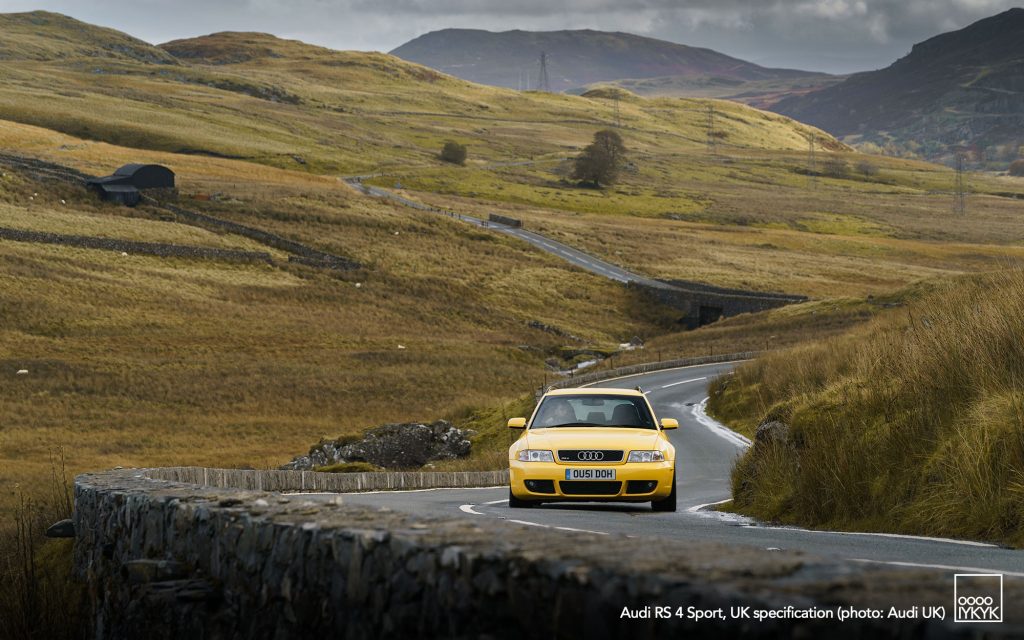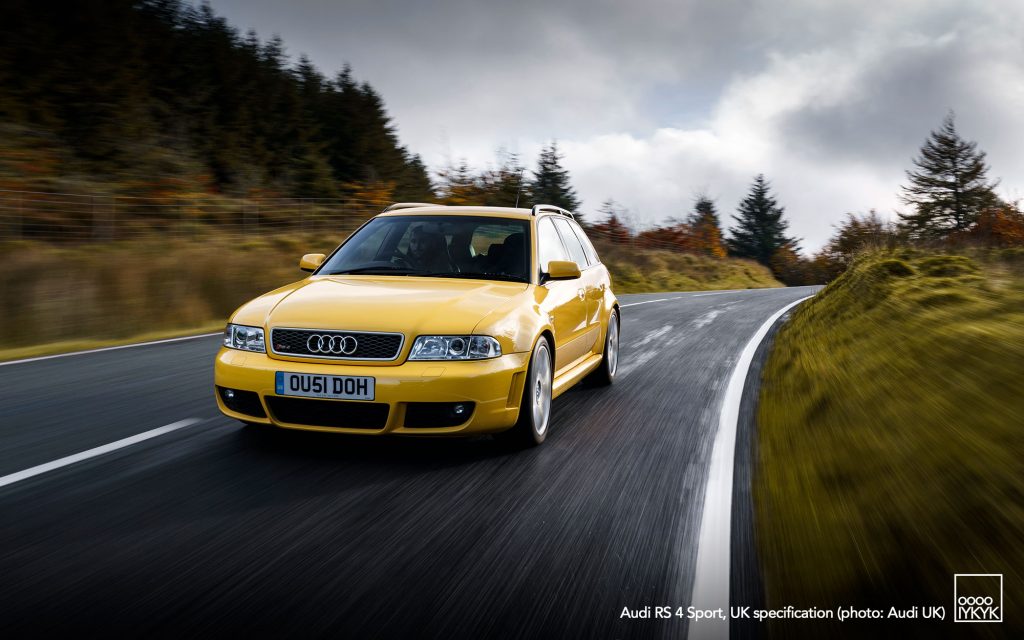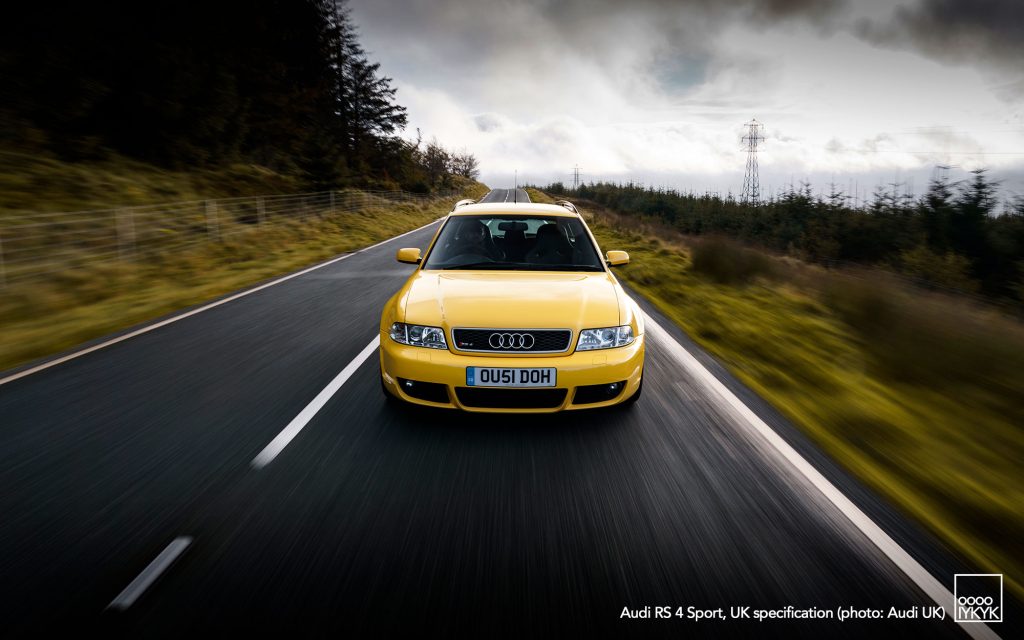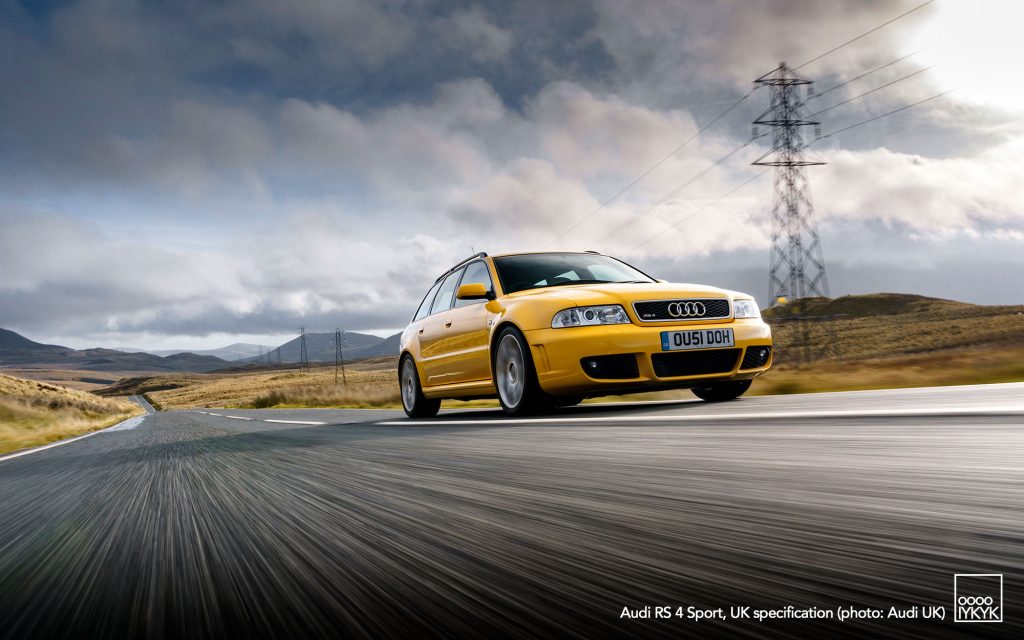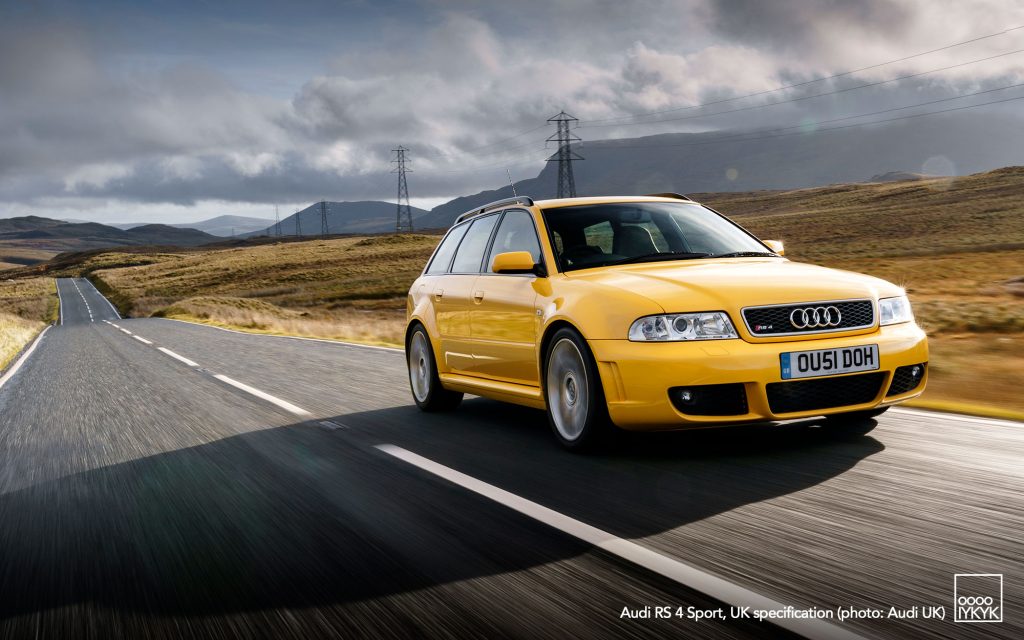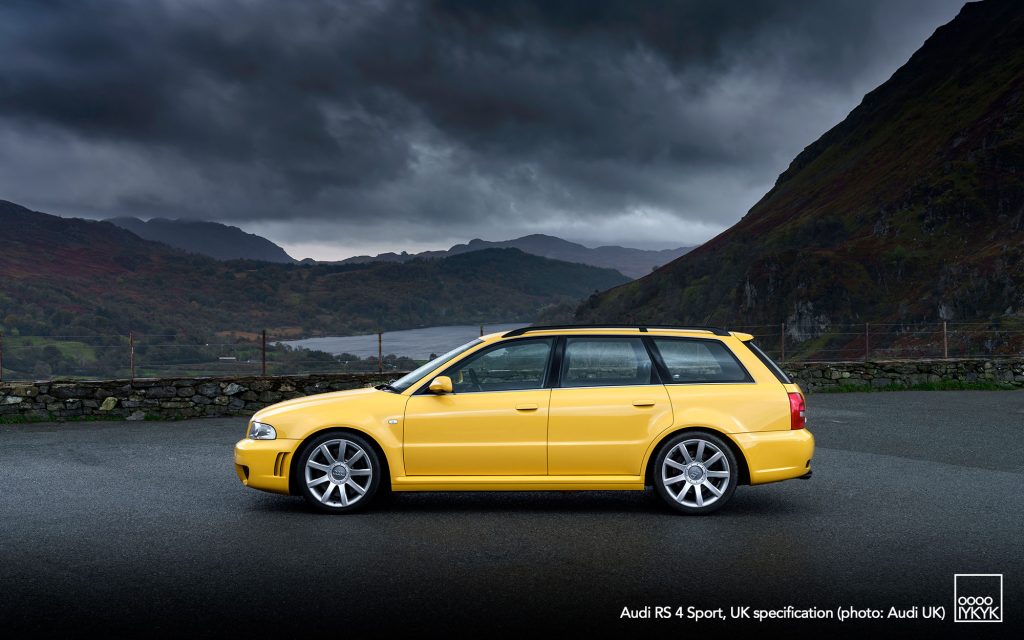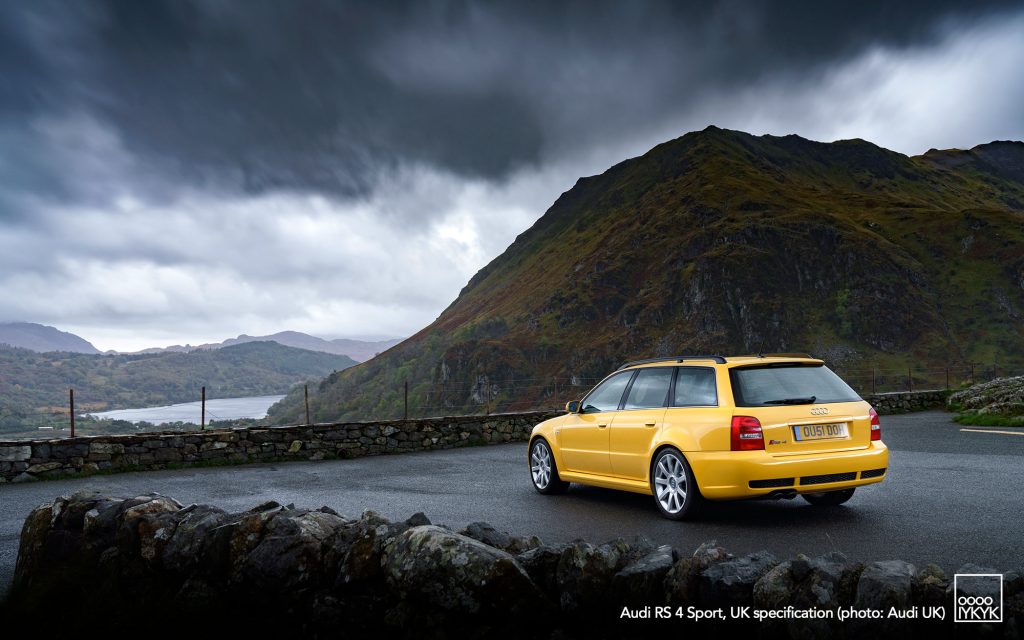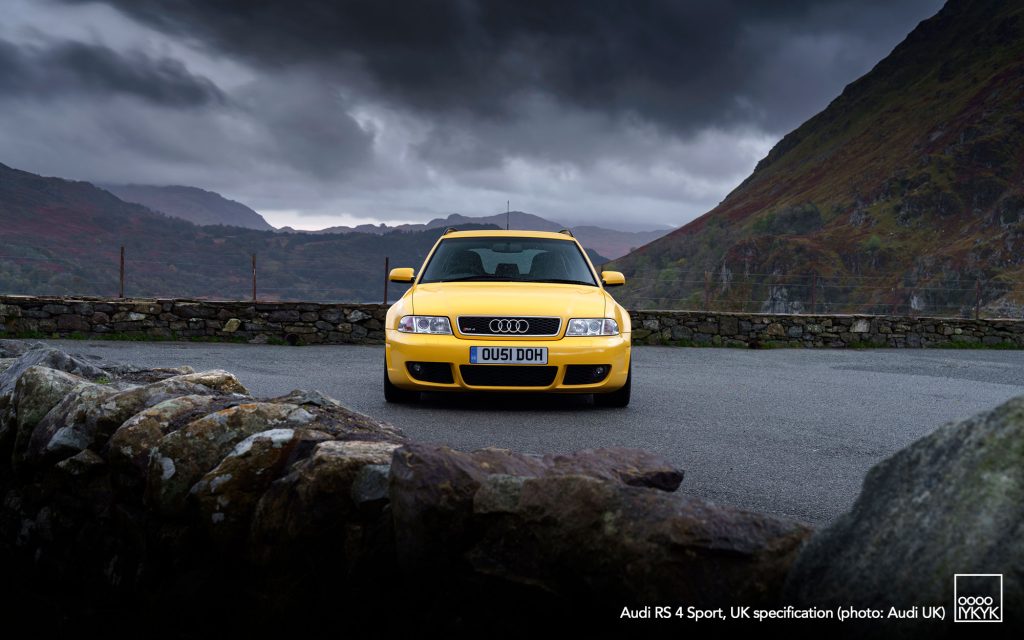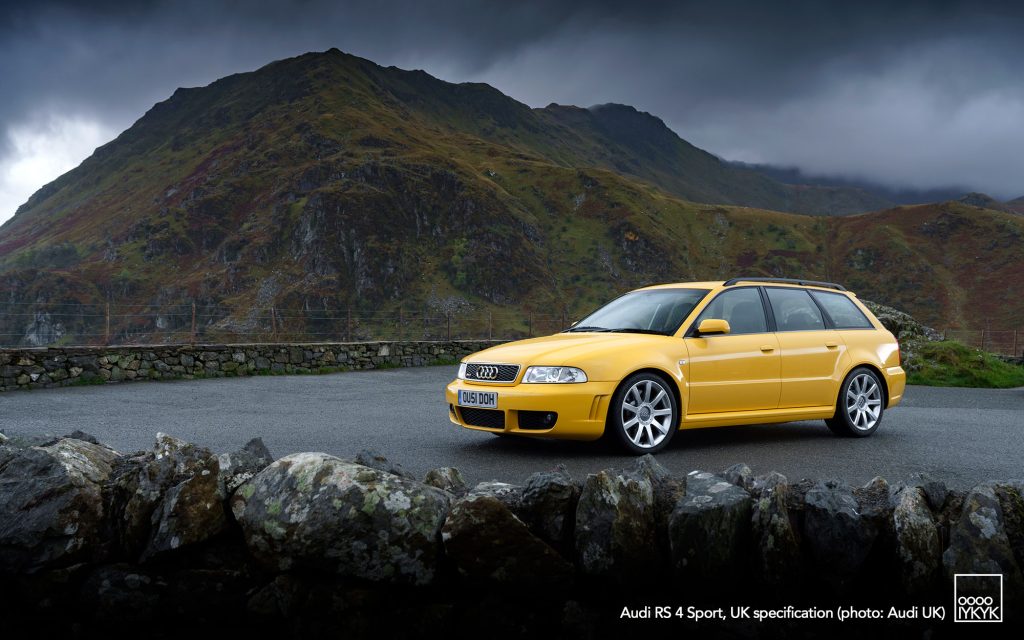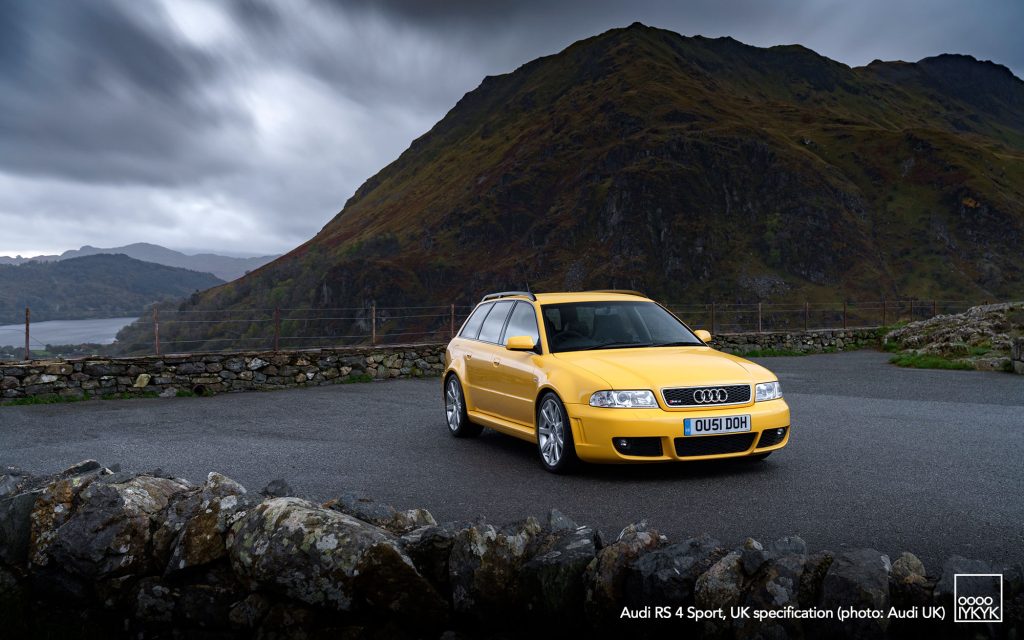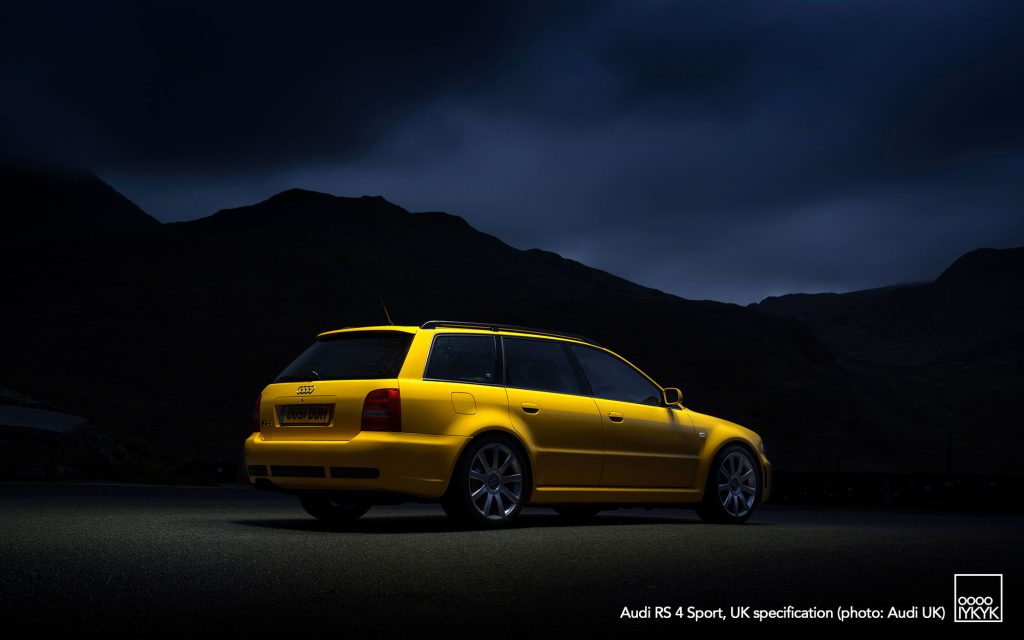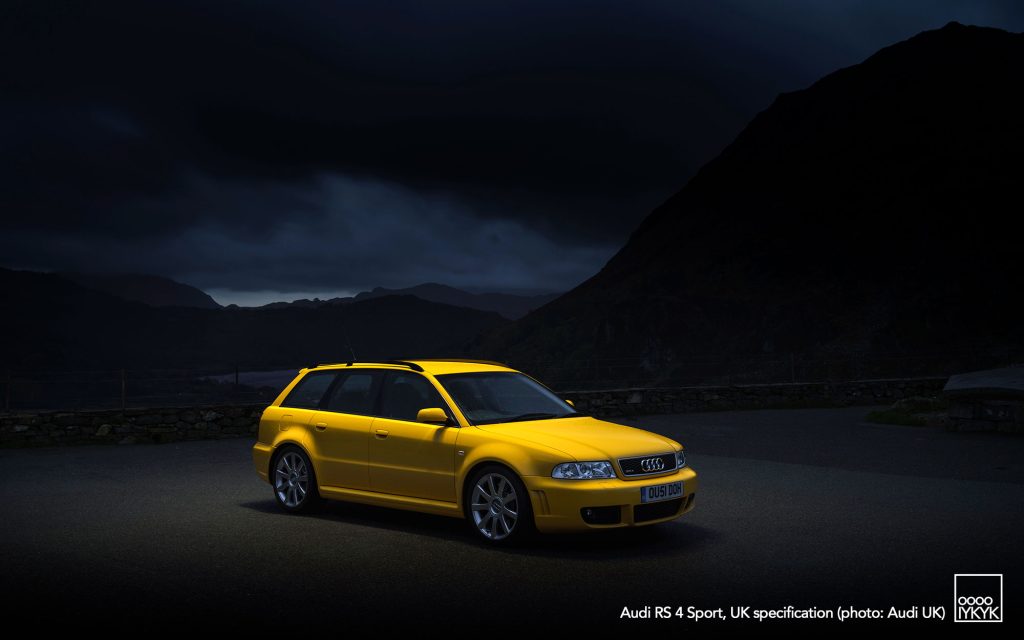
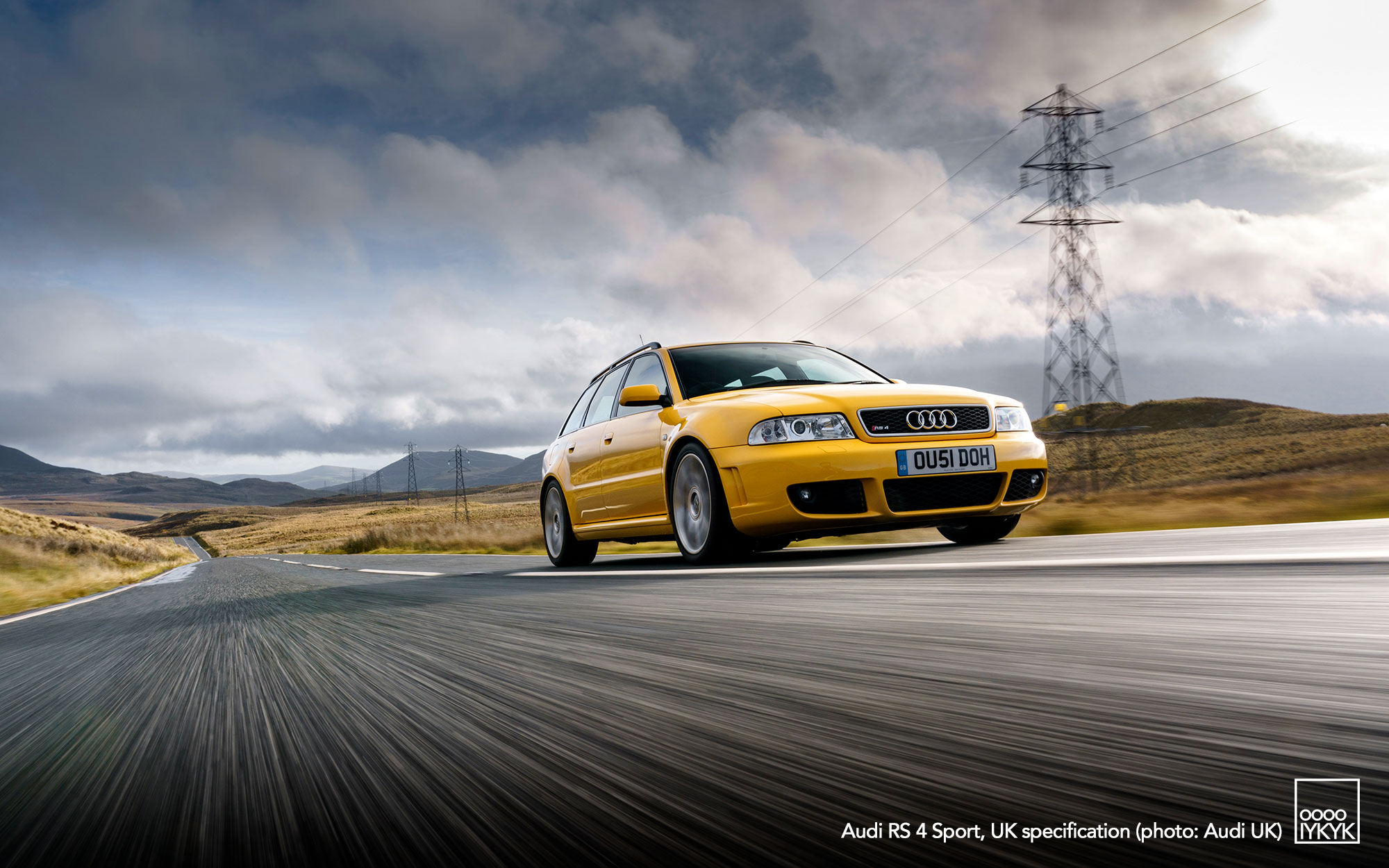

While the Audi RS 4 (B5) is a legend most any Audi aficionado is familiar with, far fewer know the specifics of the Audi RS 4 Sport. Back in 2001, quattro GmbH created an even more extreme version of its autobahn-stormer RS Avant, though few were built nor know the backstory. Given one’s just popped up this week for sale, it seemed timely to dig in on just what we’re looking at.
photos for this story by: Dean Smith via Audi UK
SETTING THE SCENE AT MUSEUM MOBILE
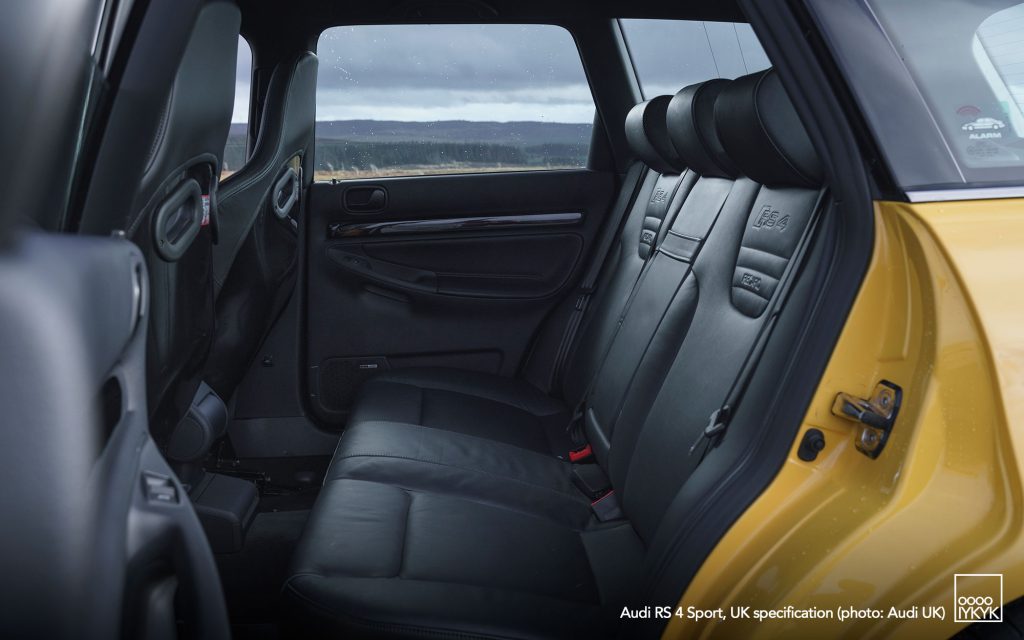
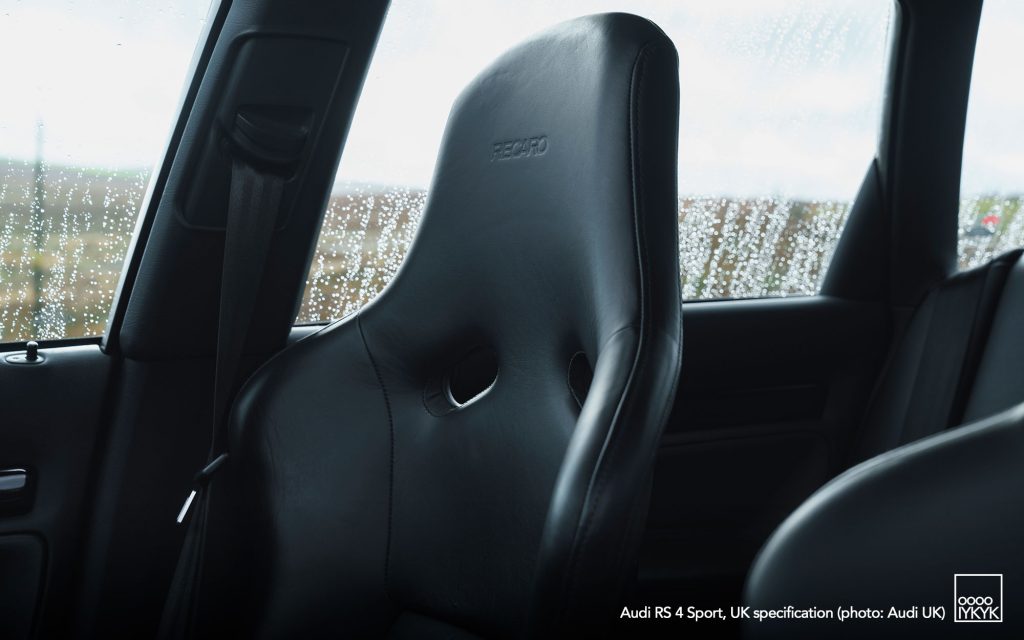
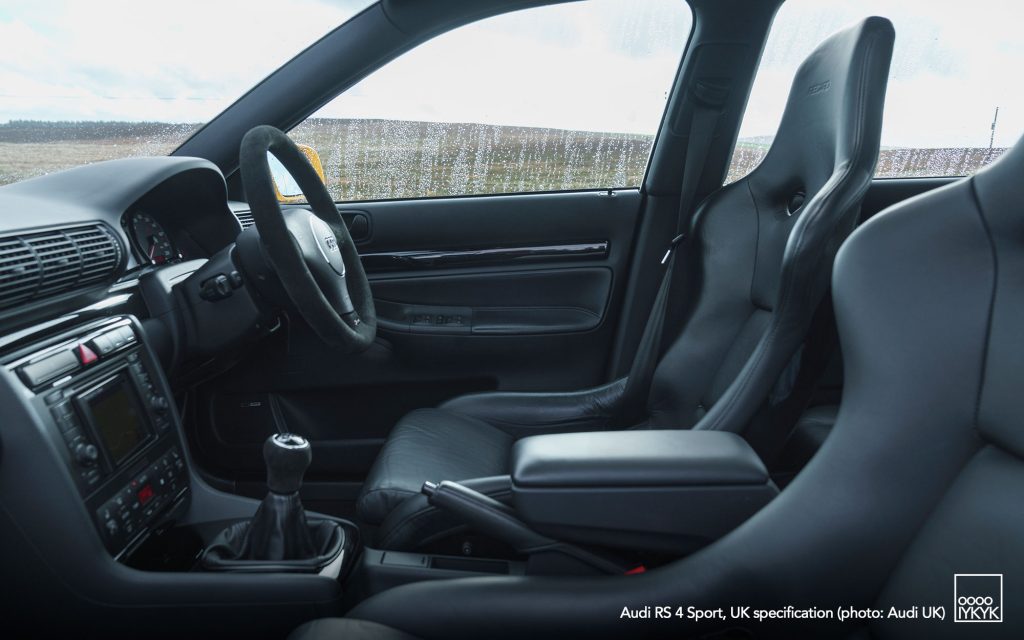
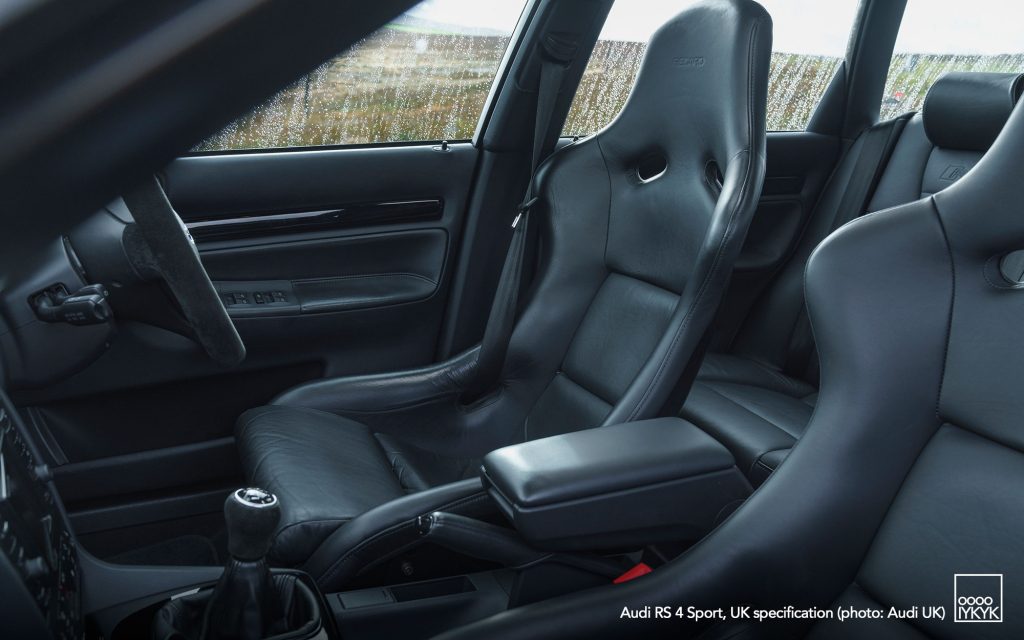
Thousands of people wander past the Audi RS 4 on display at the towering glass museum mobile located at the entrance of the Audi Forum Ingolstadt. The car’s Imola Yellow paint grabs your attention, and the RS 4’s already legendary status means few if any miss the car itself. However, few peer inside and see the telltale Recaro Pole Position seats and know just what it is they’re looking at.
And what is that exactly? That specific car, the one in the museum, is a 2001 Audi RS 4 Sport that is part of the expansive Audi Tradition collection. And though it gets out from time to time, the yellow Avant is largely a fixture in the museum. It may very well also be the specific car photographed for the quattro GmbH brochure printed in early 2001 to highlight the details of the RS 4 Sport program.
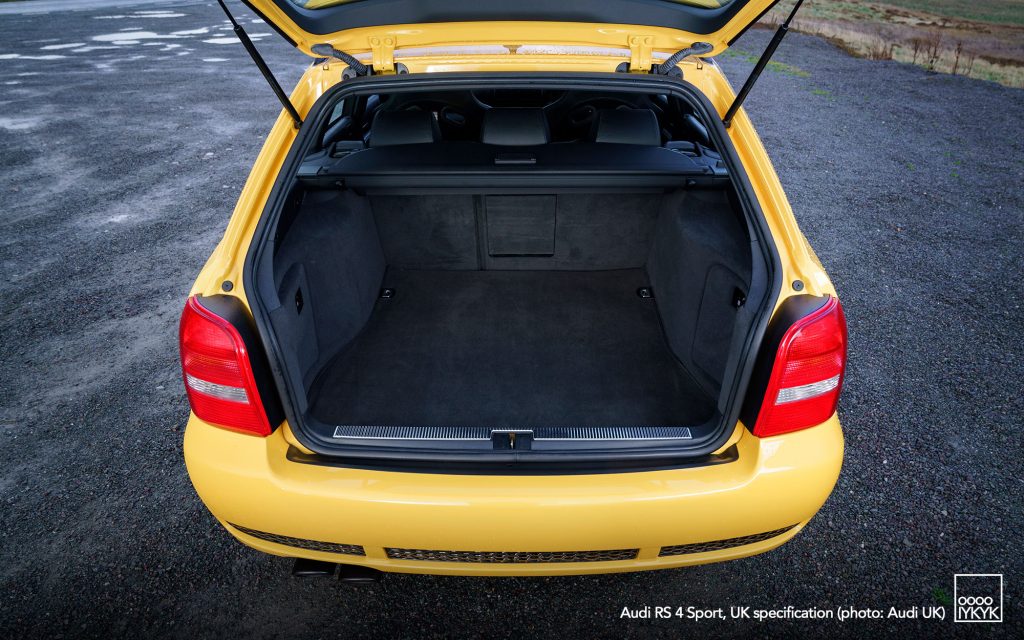
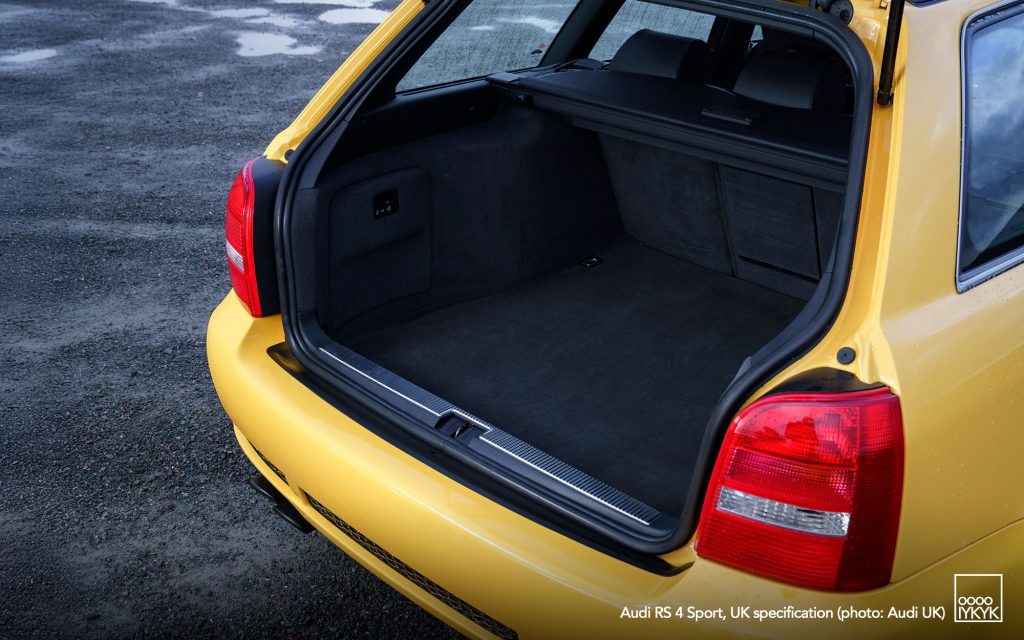
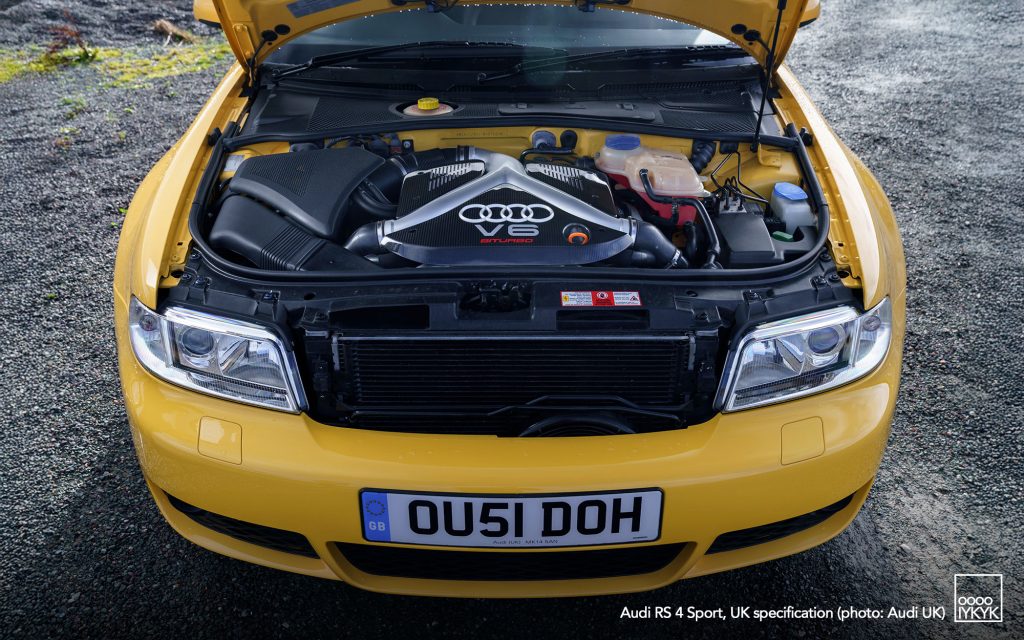
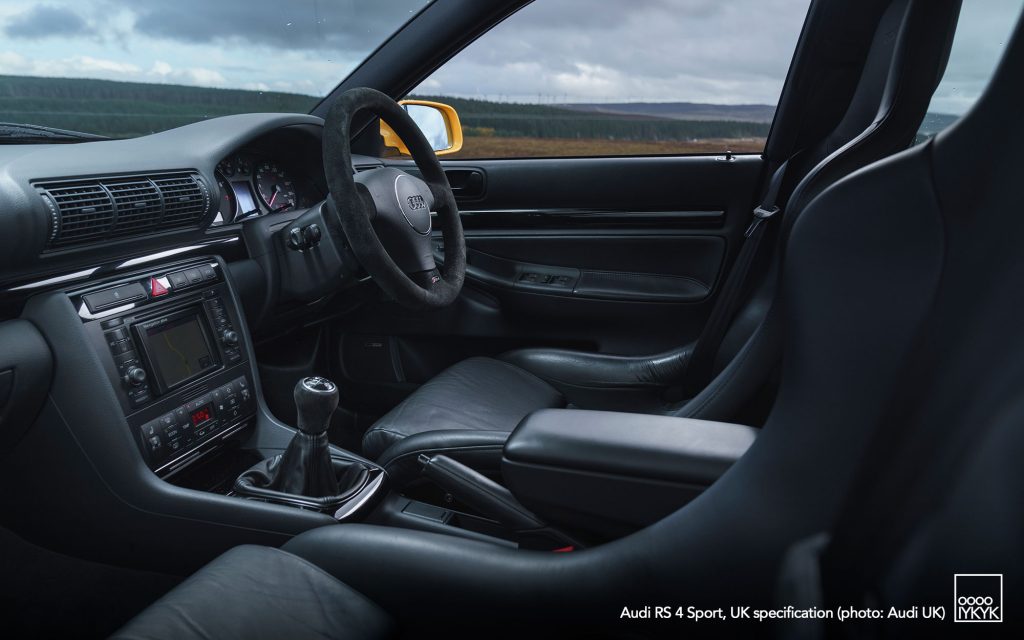
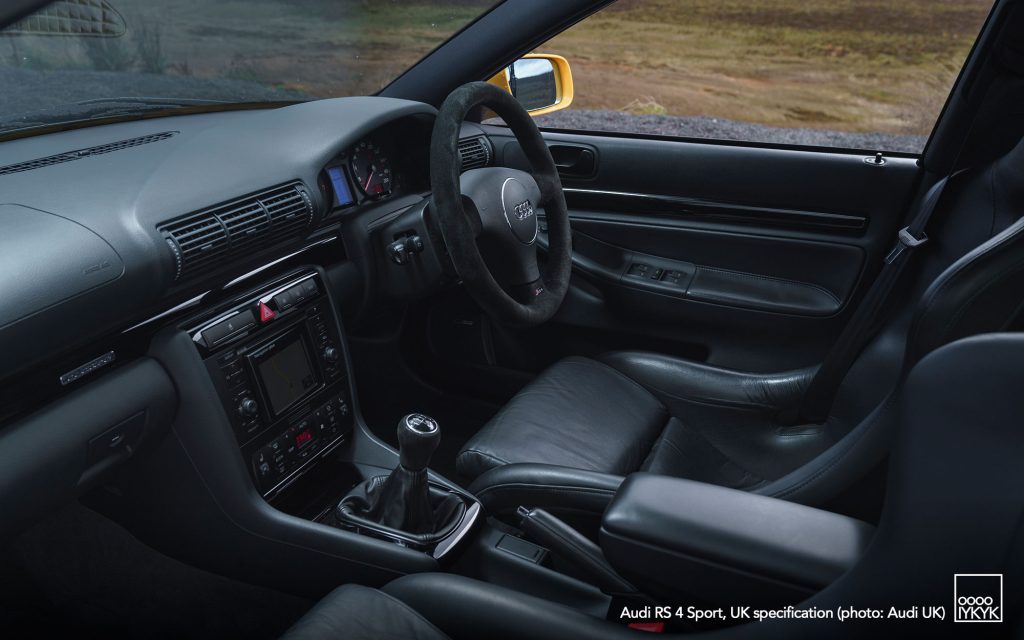
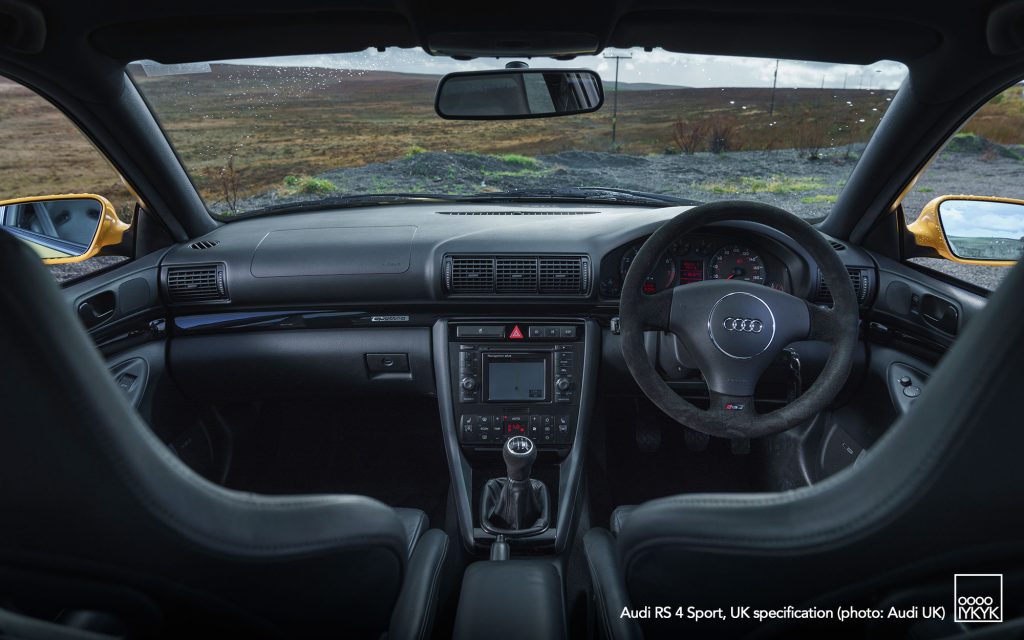
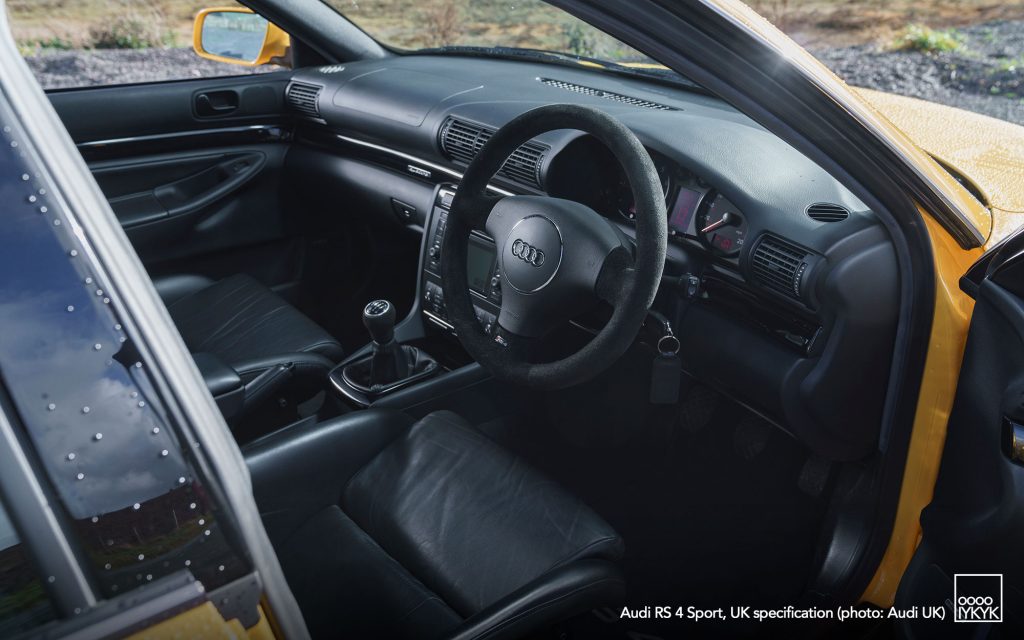
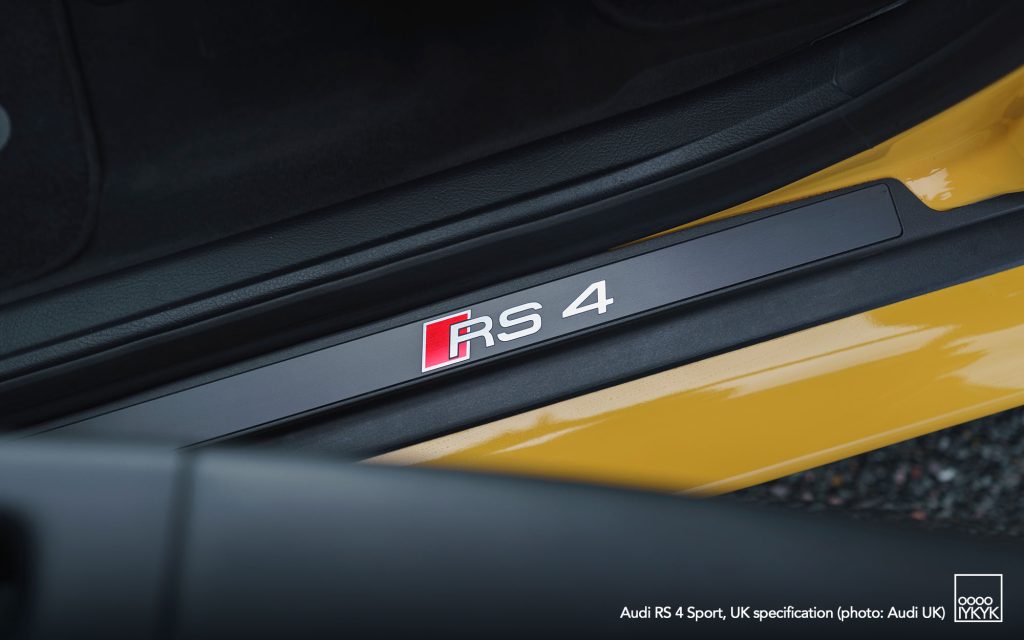
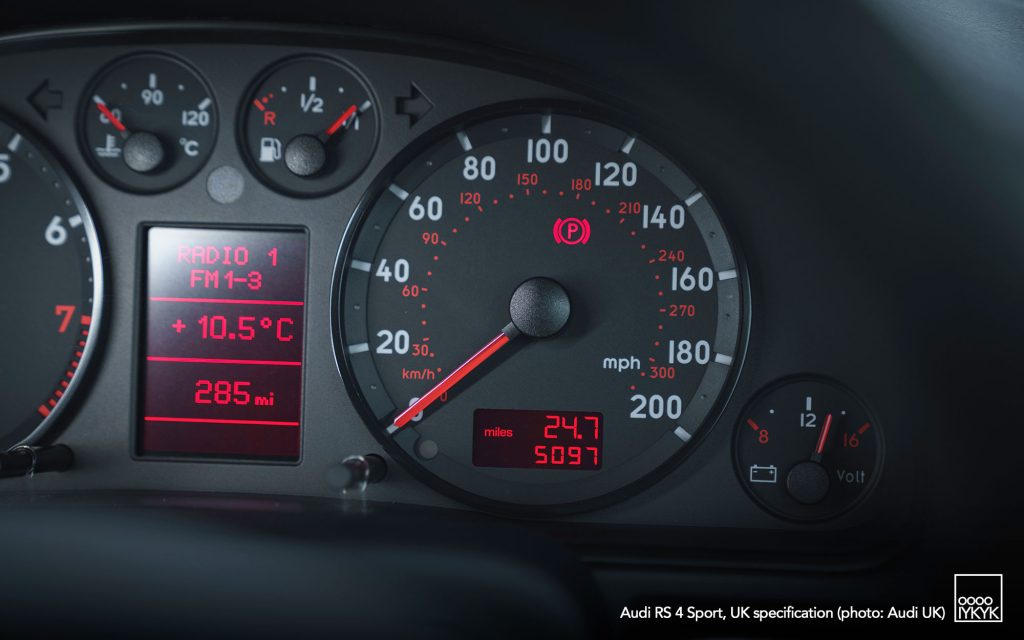
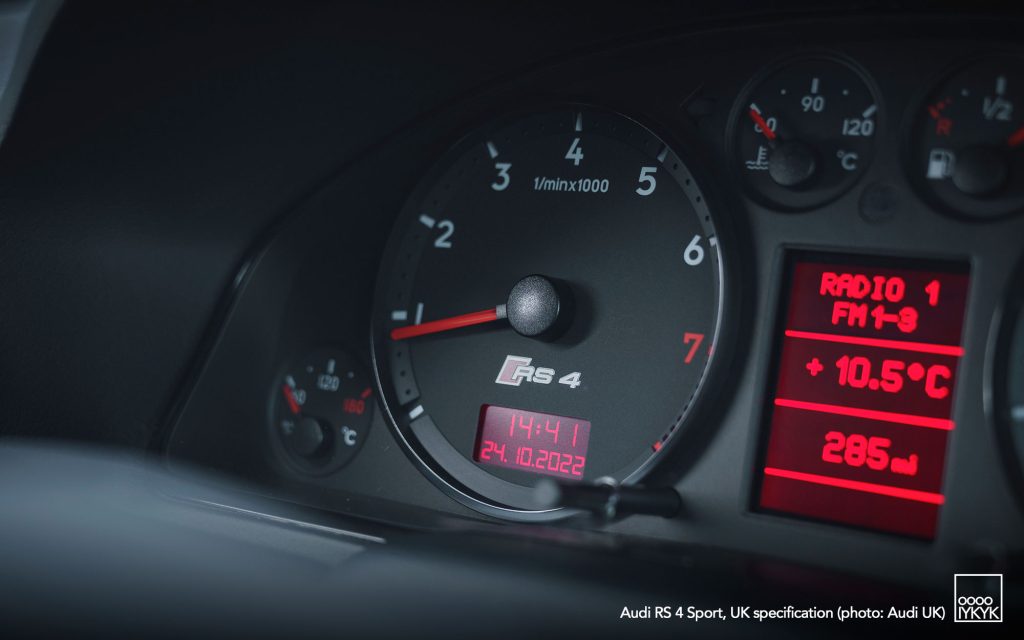
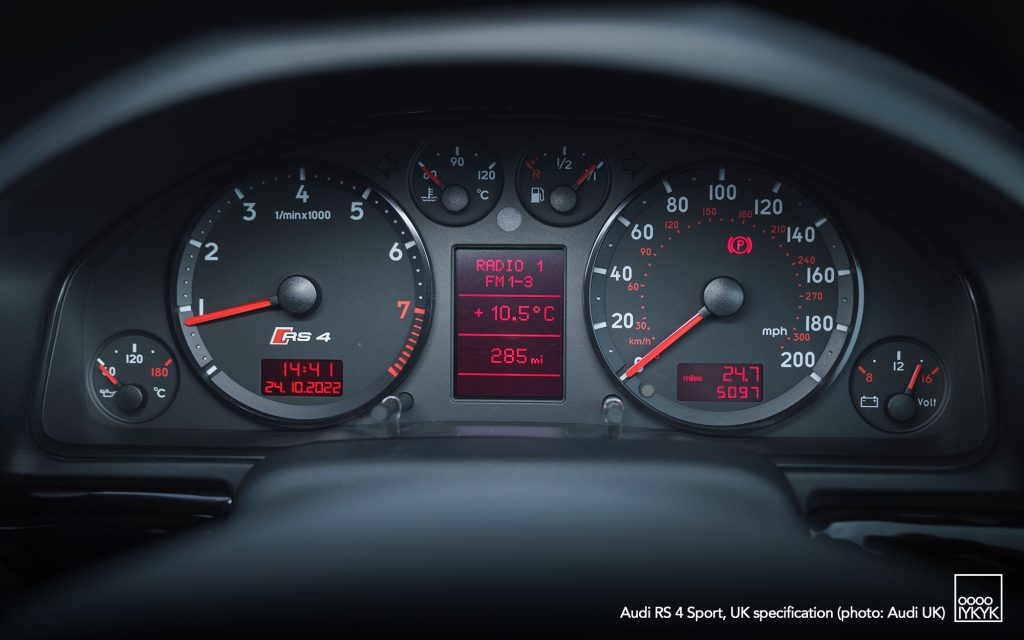
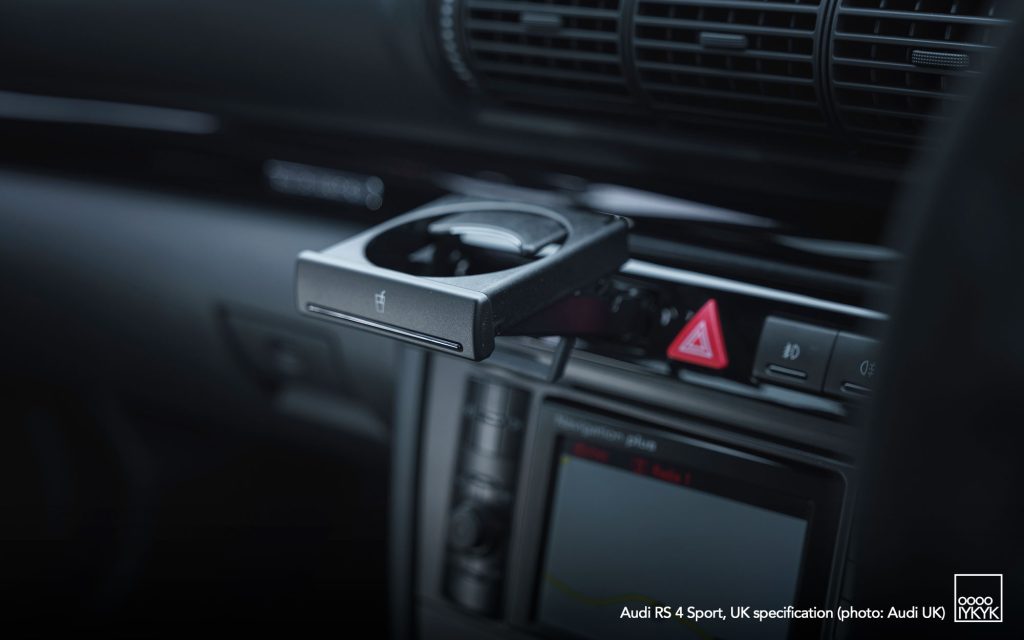
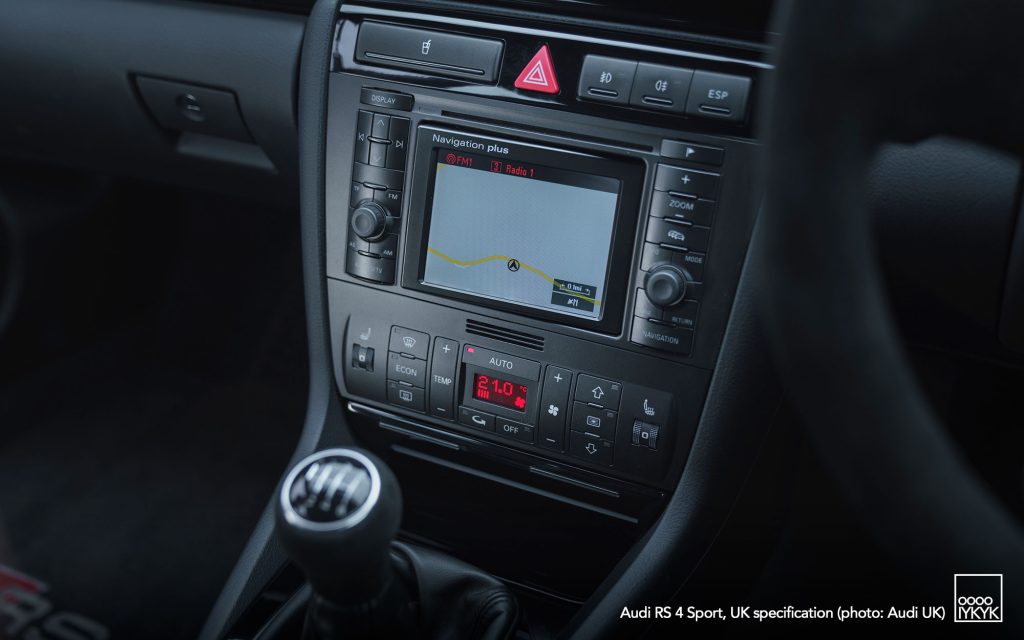
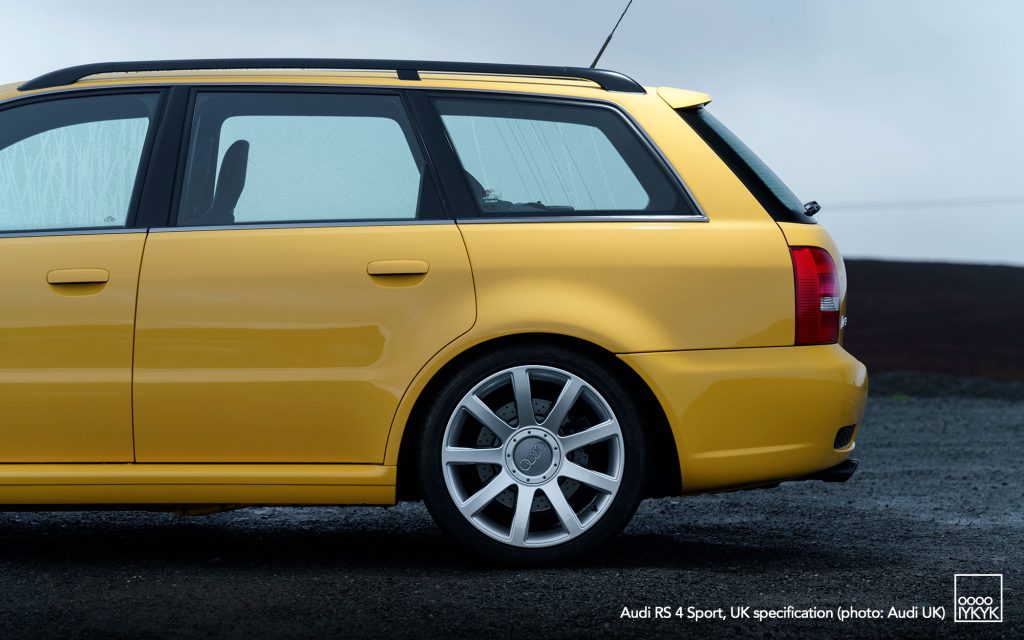
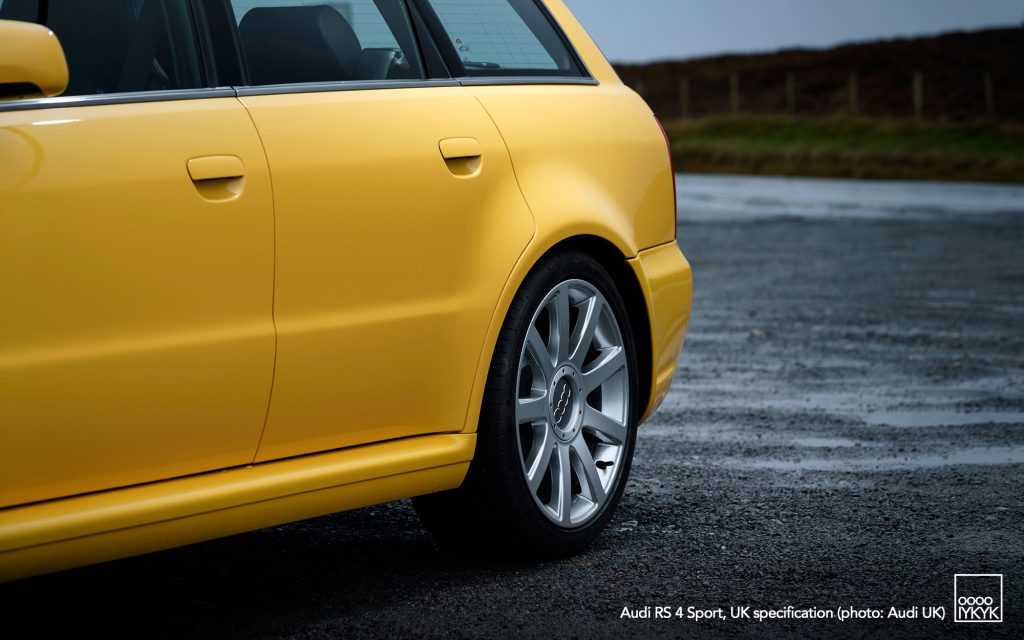
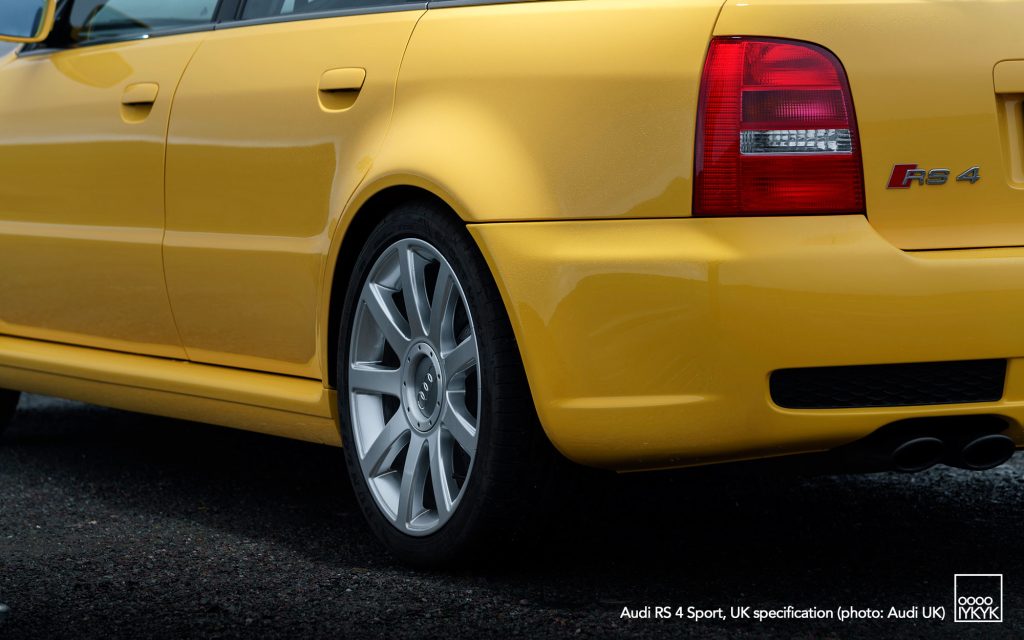
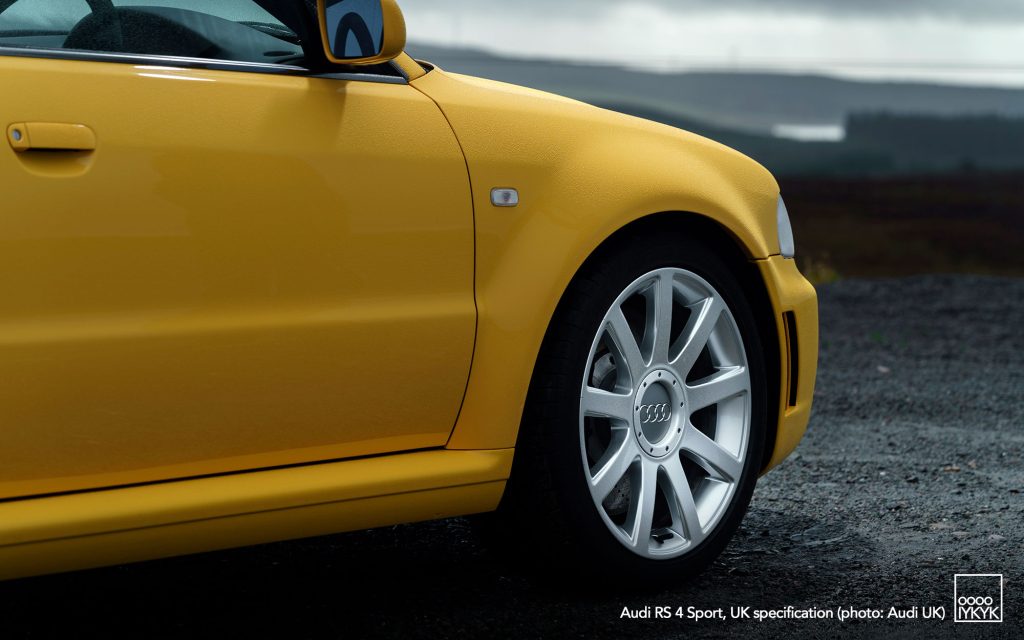
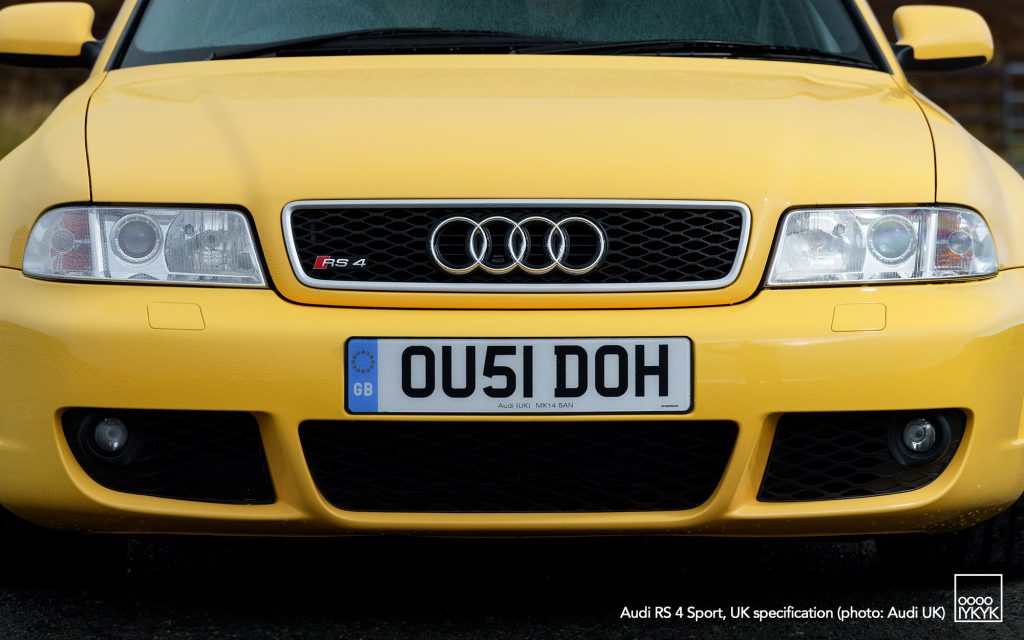
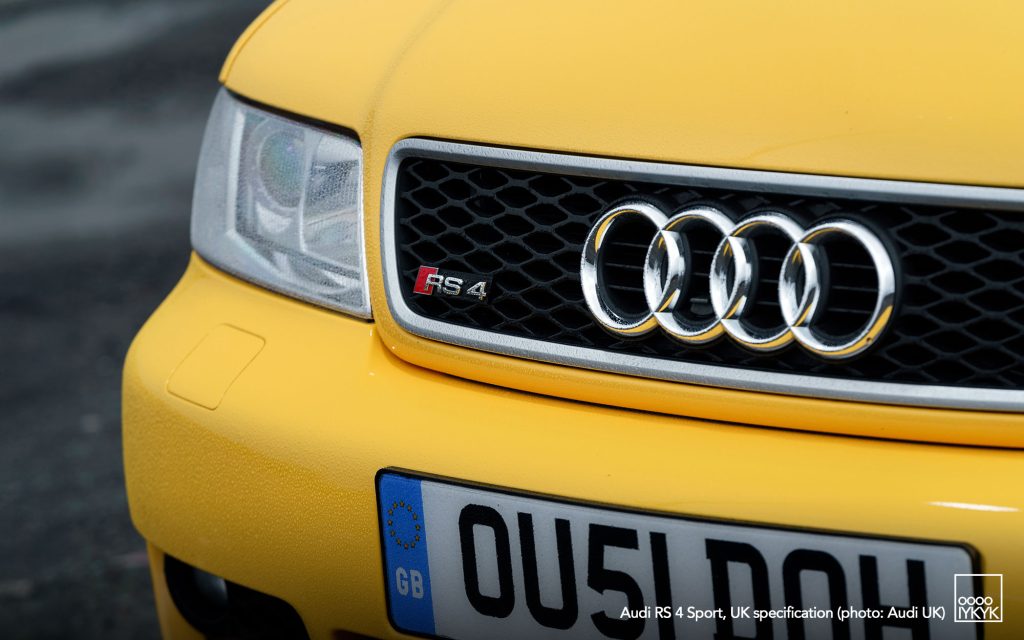
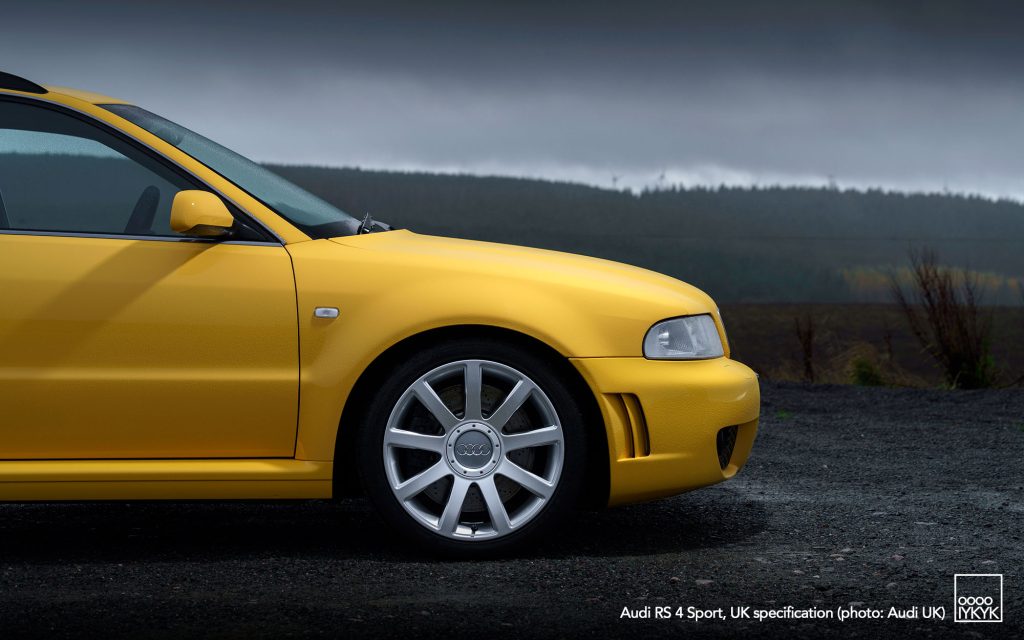
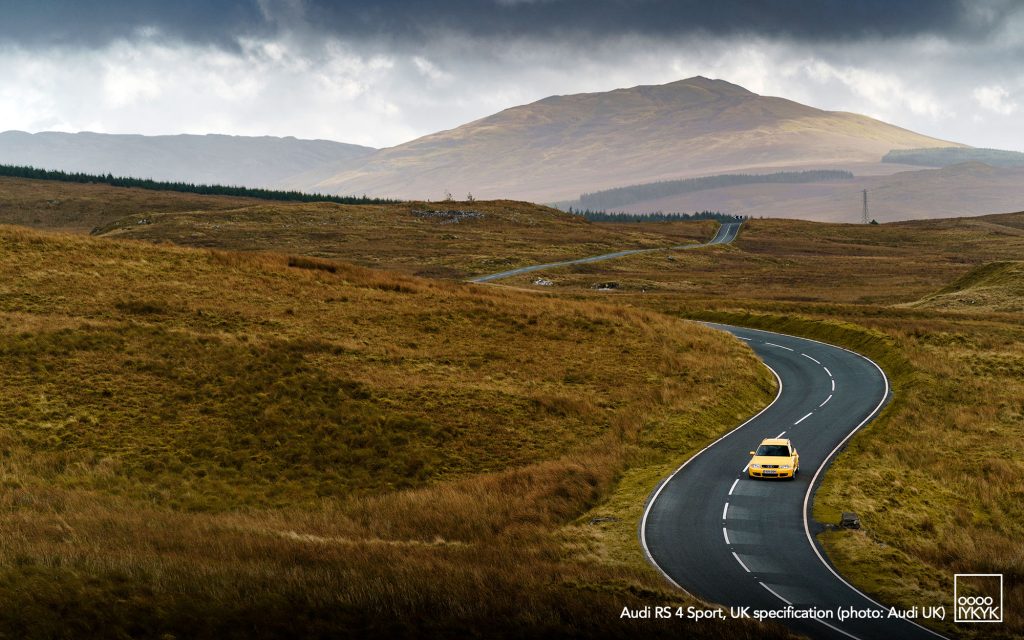
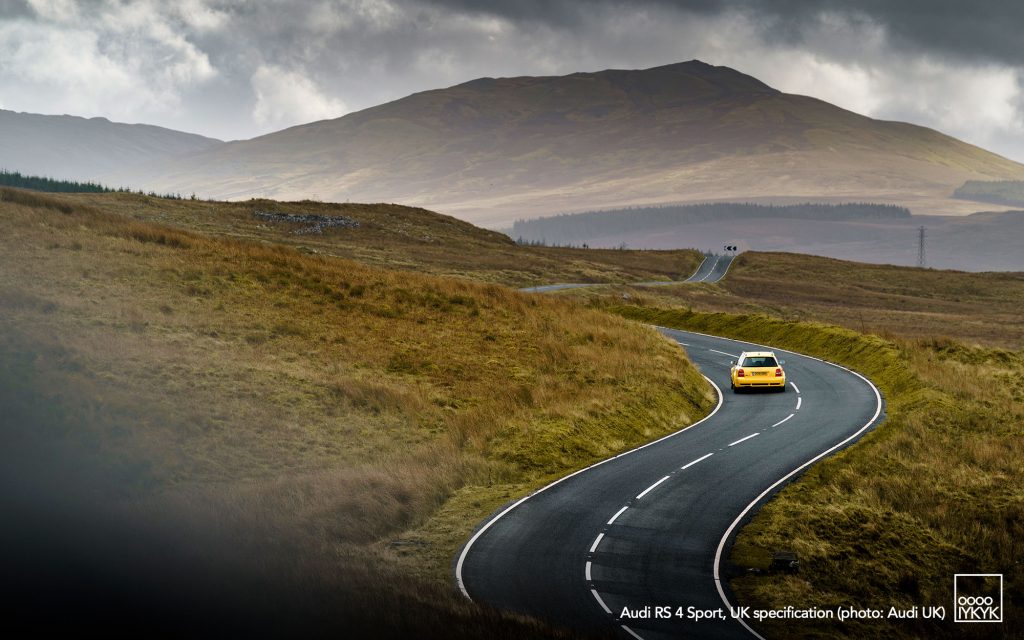
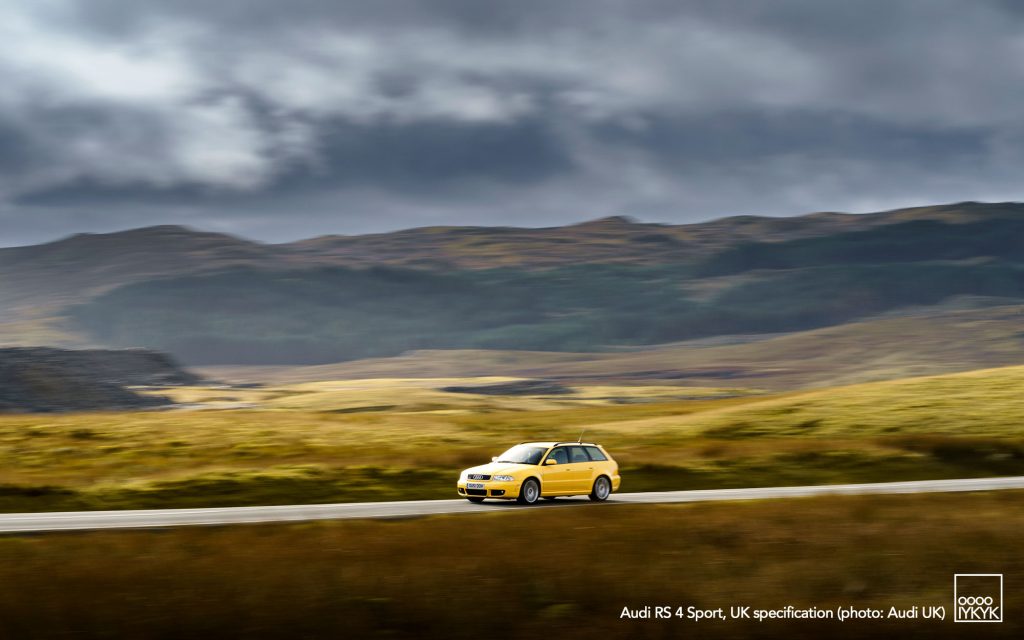
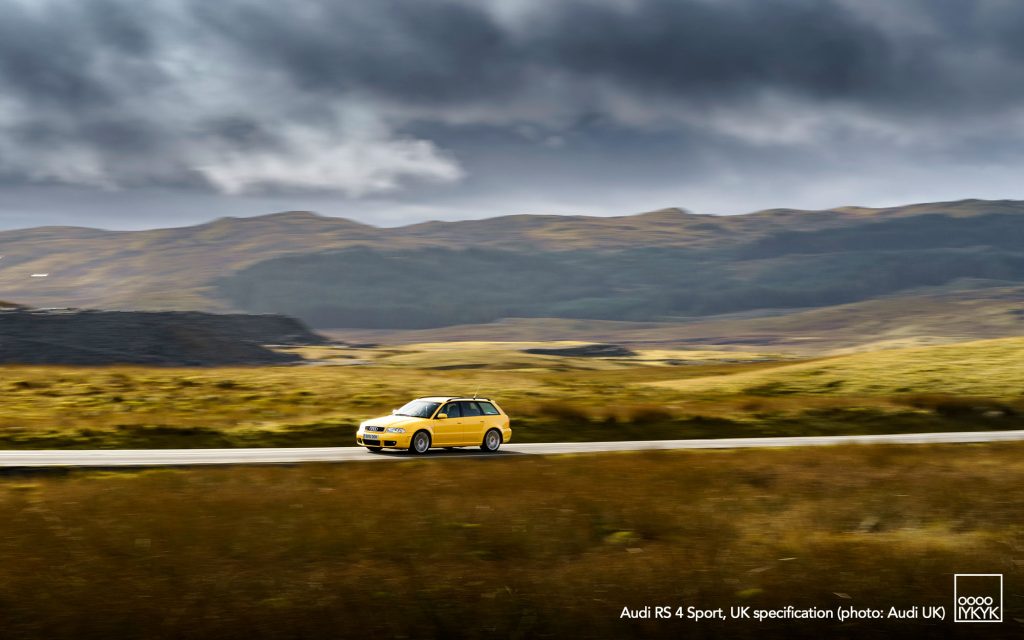
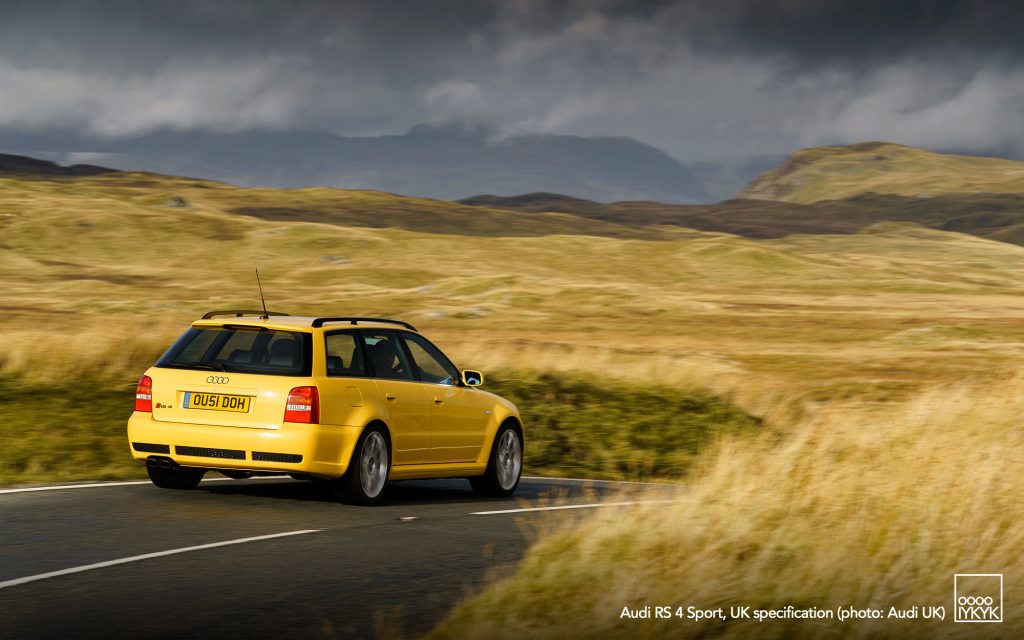
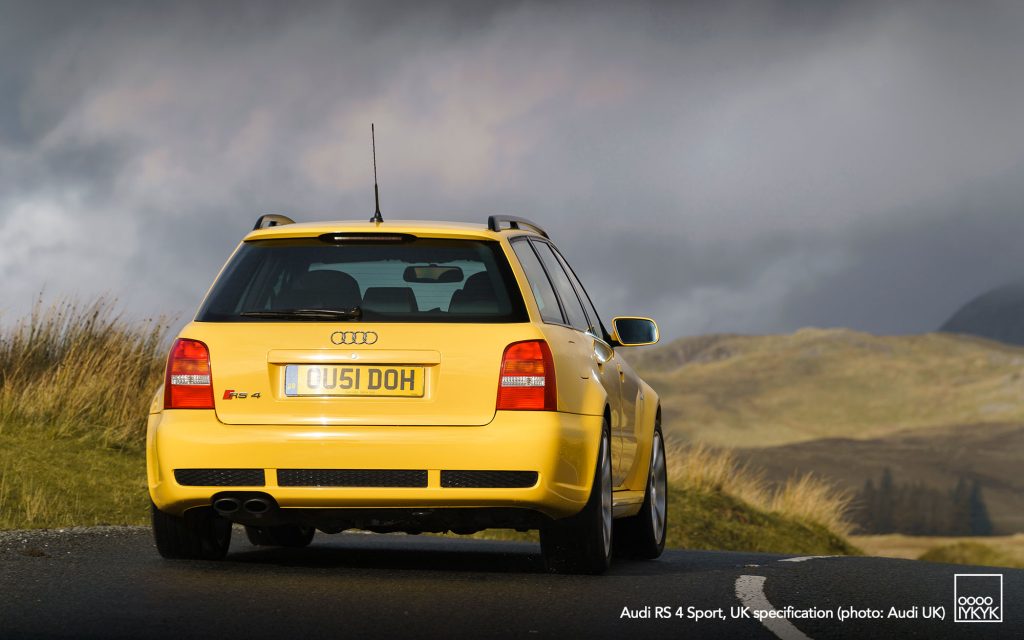
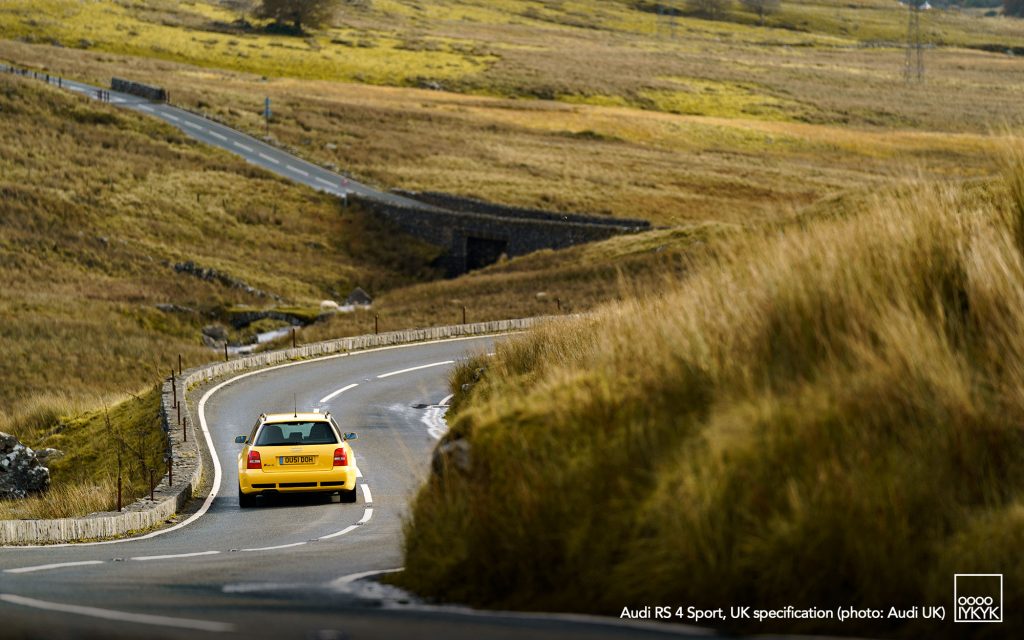
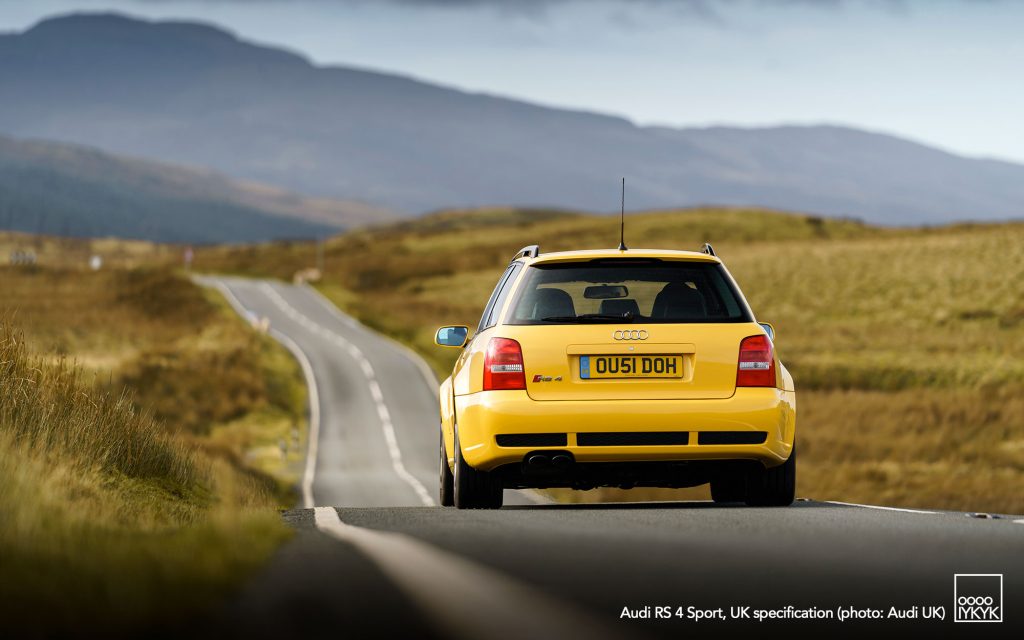
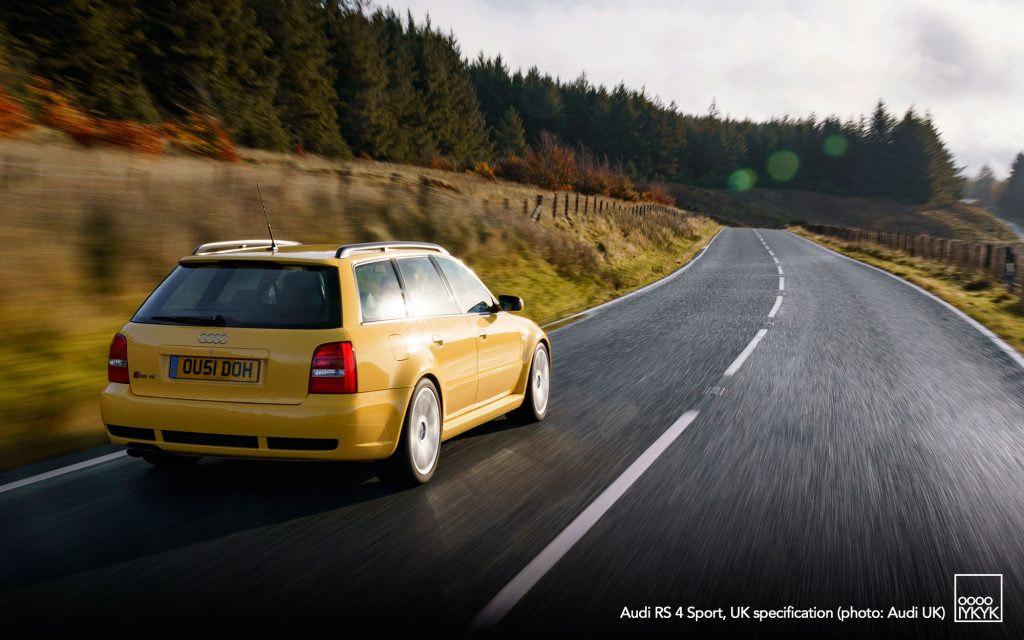
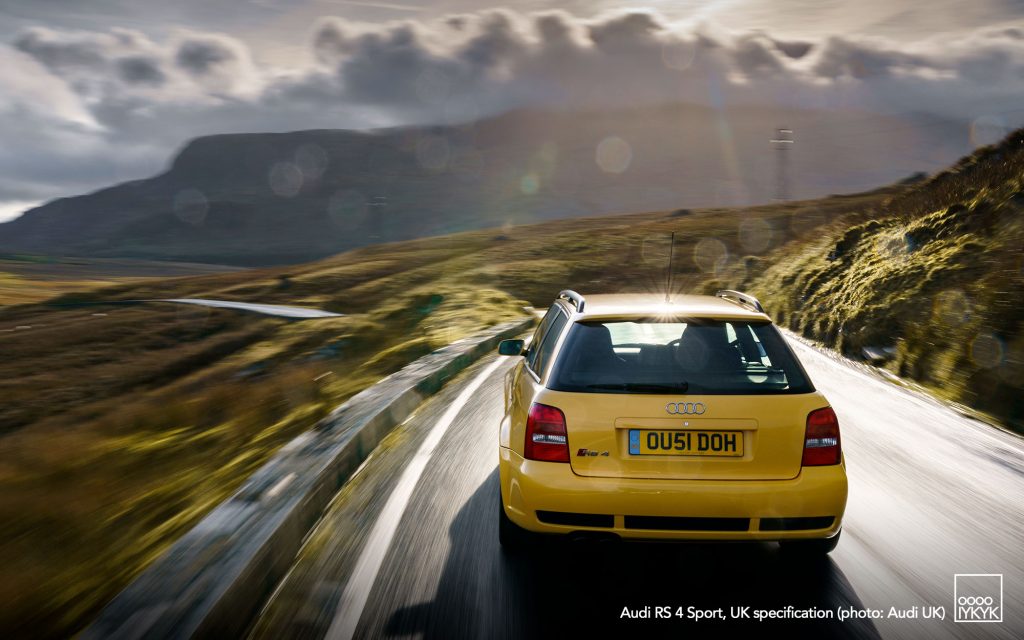
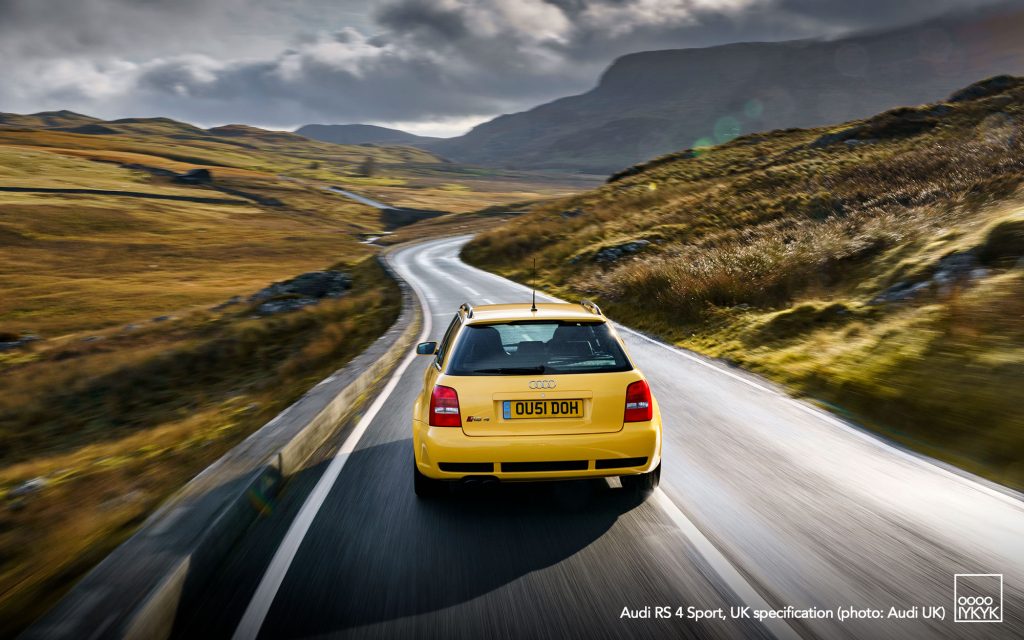
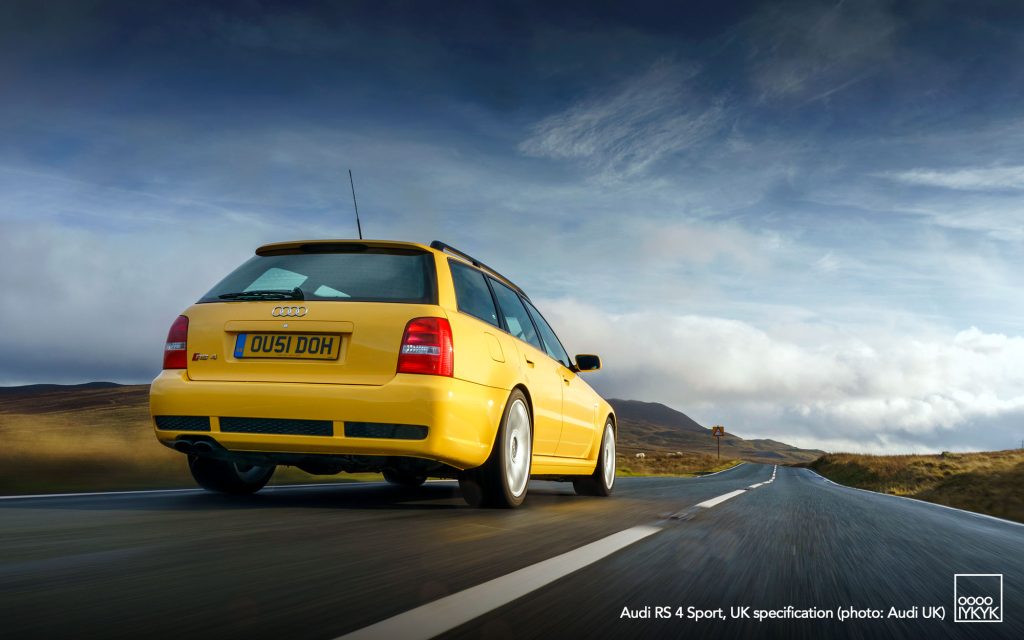
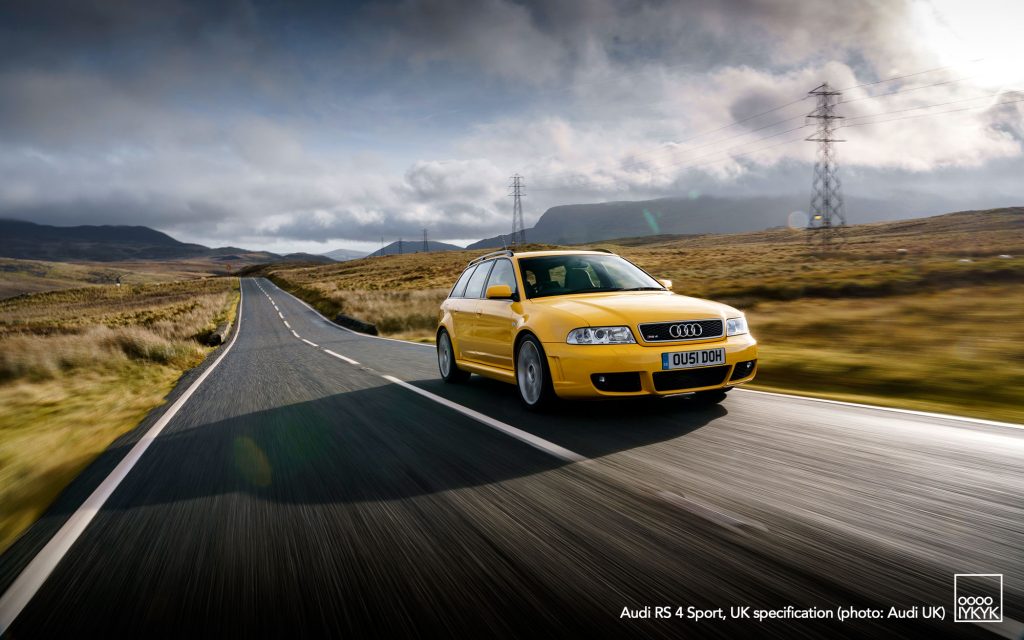
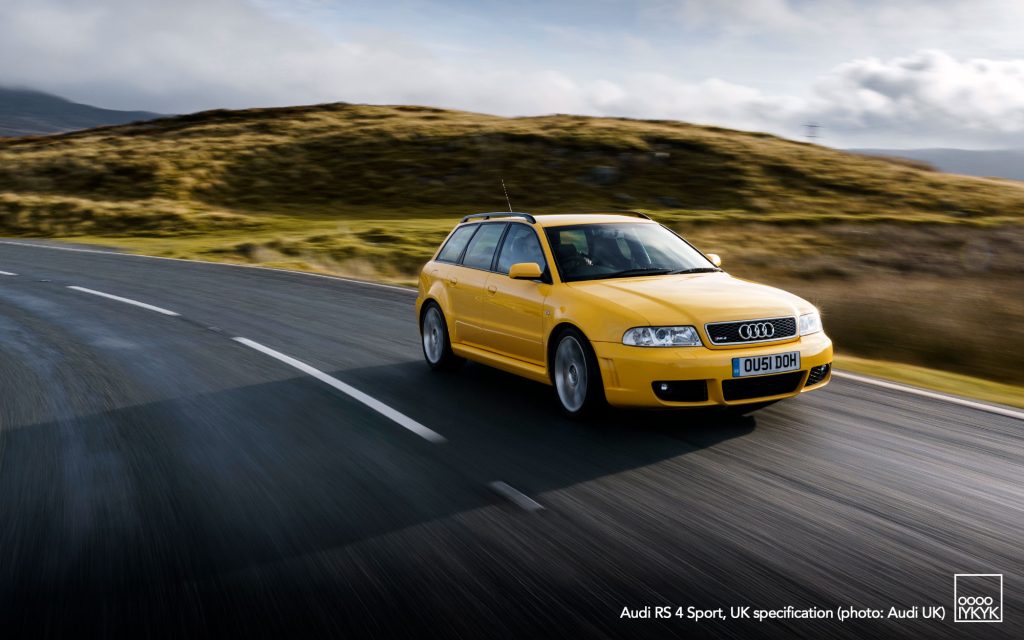
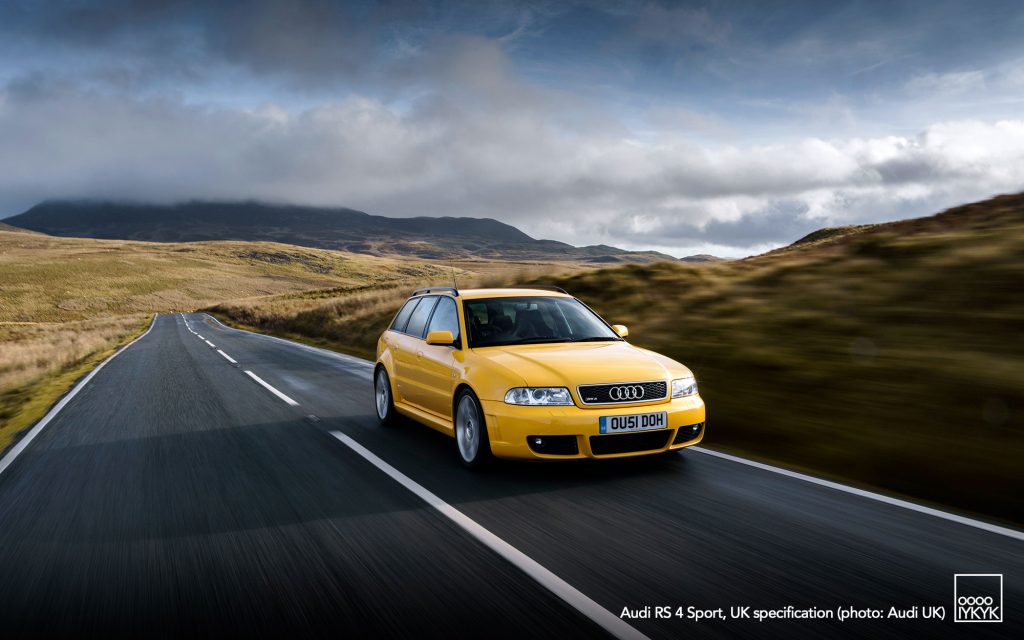
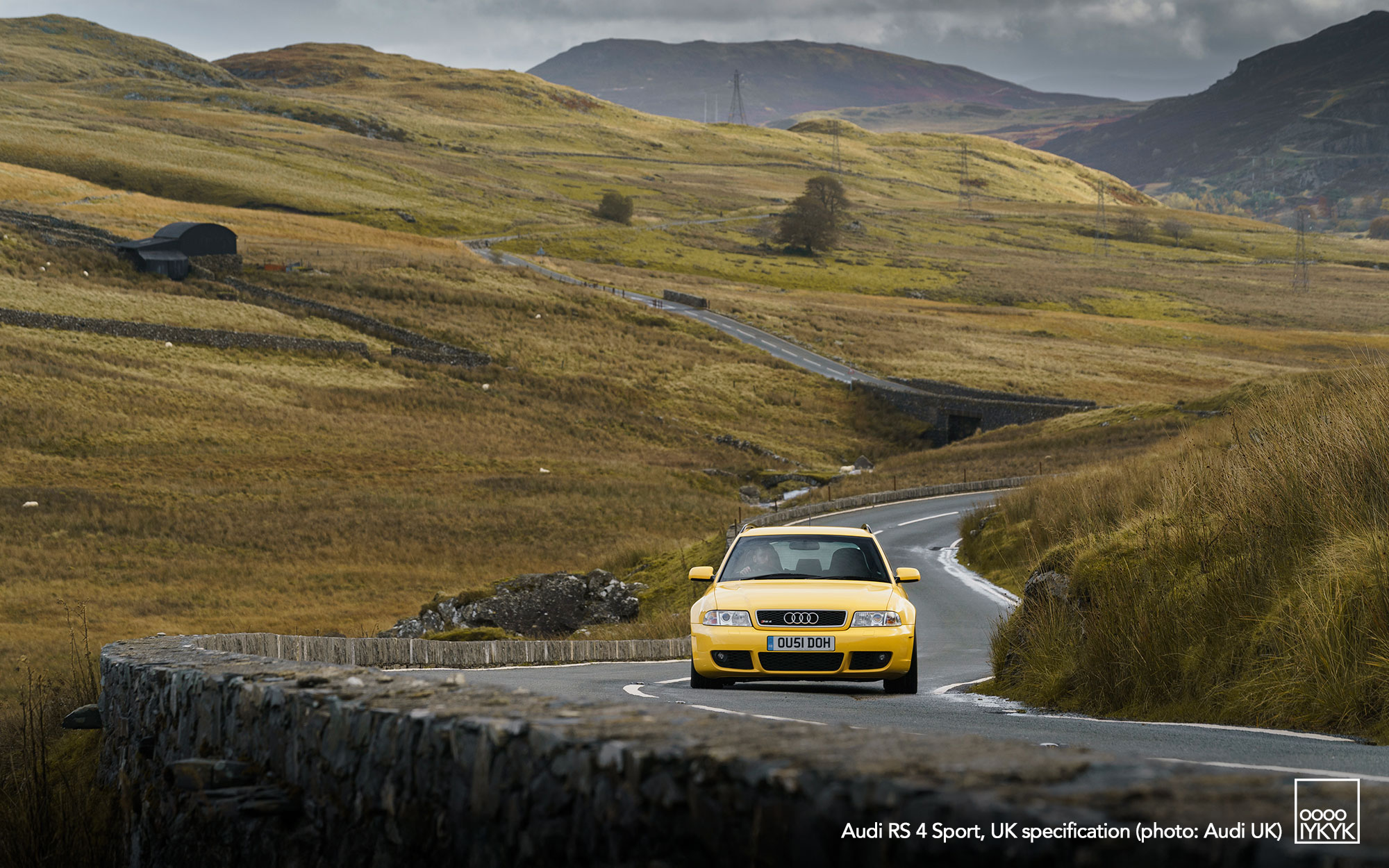
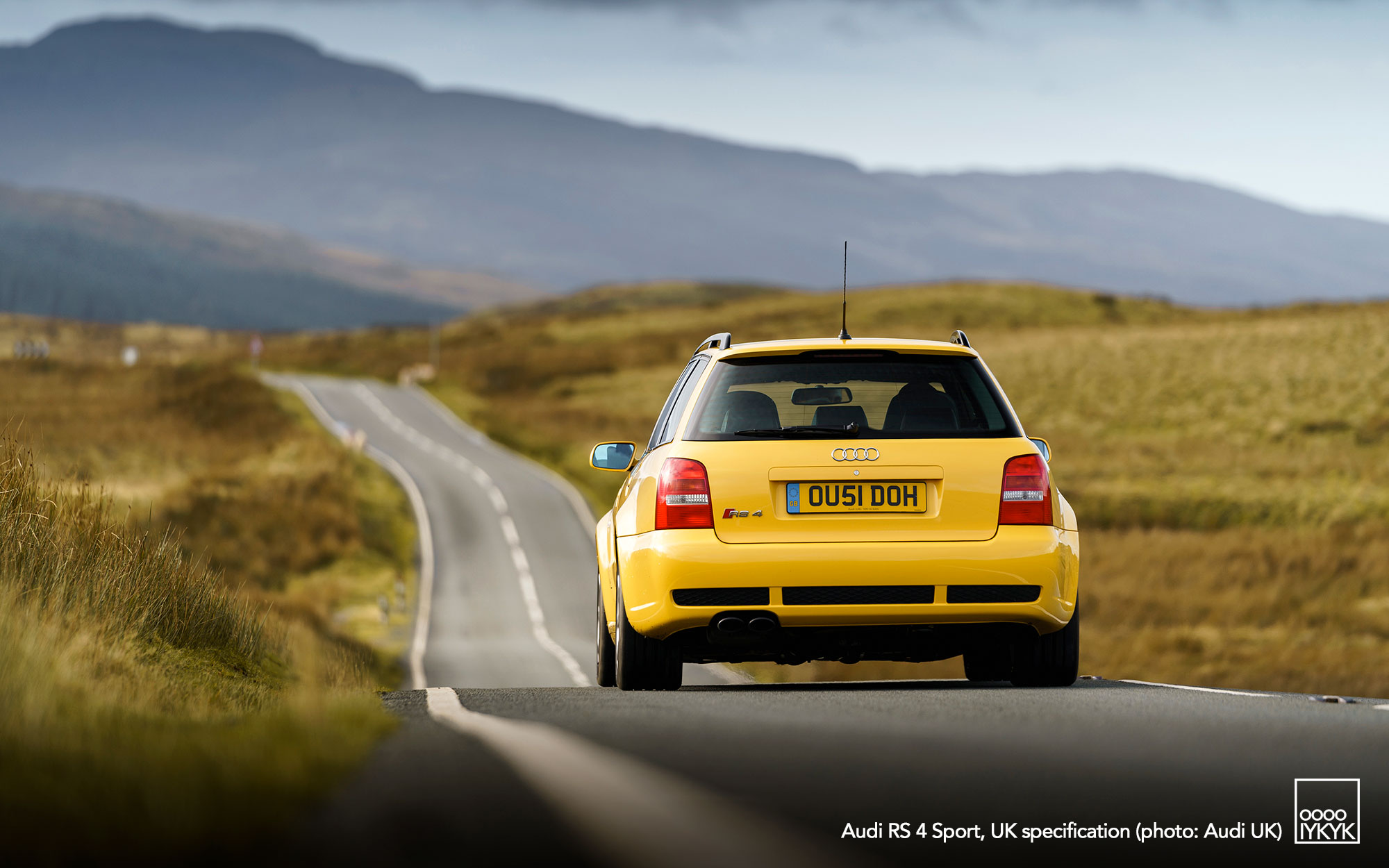
Only a sliver of original B5 RS 4 buyers ever ticked the boxes that transformed their cars into the RS 4 Sport specification. Even fewer survive today in factory-correct trim… especially unmodified examples. Which is why this nearly identical Imola Yellow UK-spec example maintained by Audi UK’s Heritage Fleet, photographed here in painstaking detail, is one worth focusing on in order to tell the story. Obviously, the car is UK market spec, meaning right-hand drive.
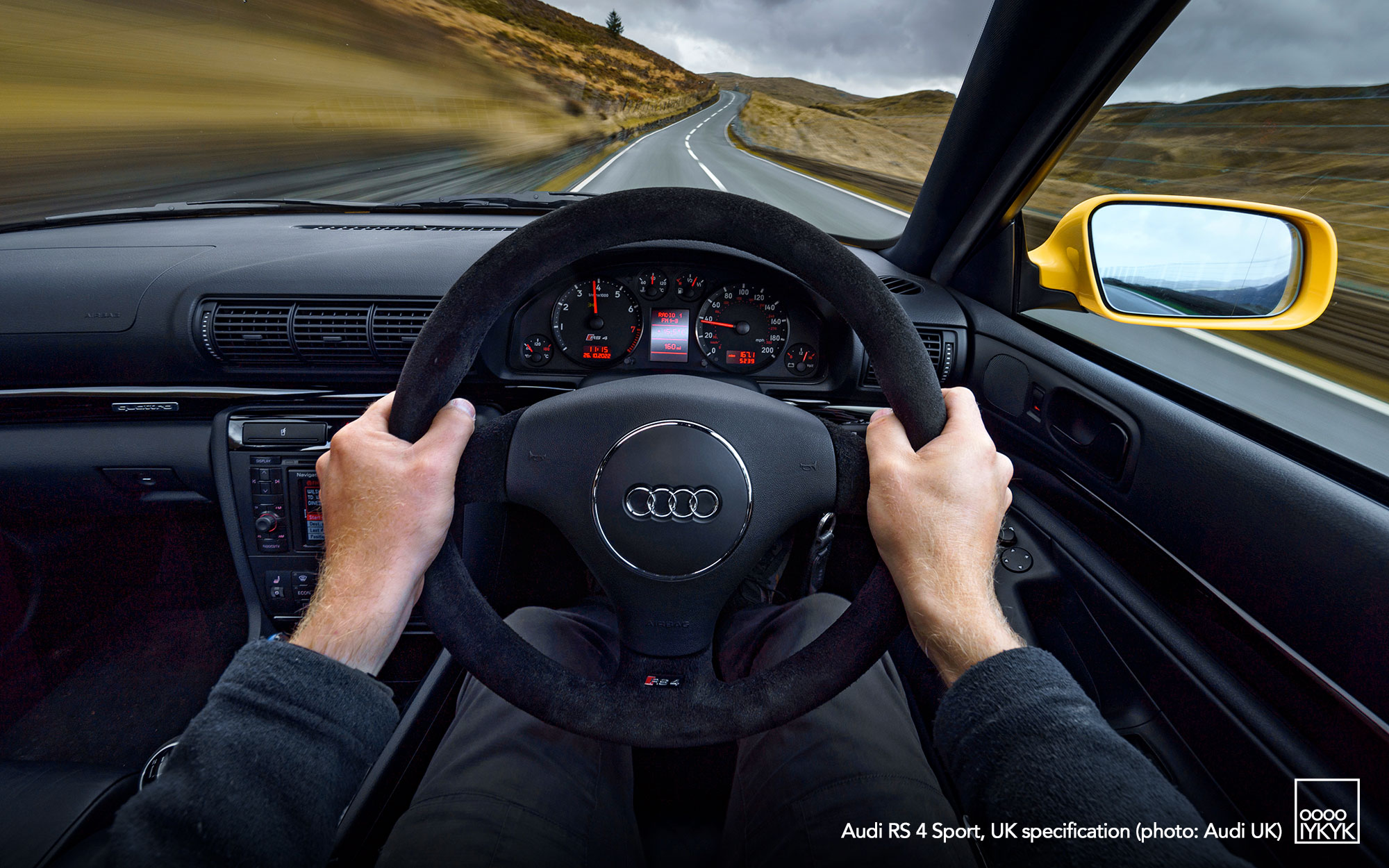
With its full black leather seating, matte black exhaust tips, and that hunkered stance, the RS 4 Sport was the moment quattro GmbH tested just how far its customers were willing to go in the name of Rennsport purity.
NO COMPROMISES B5 RS 4 AVANT
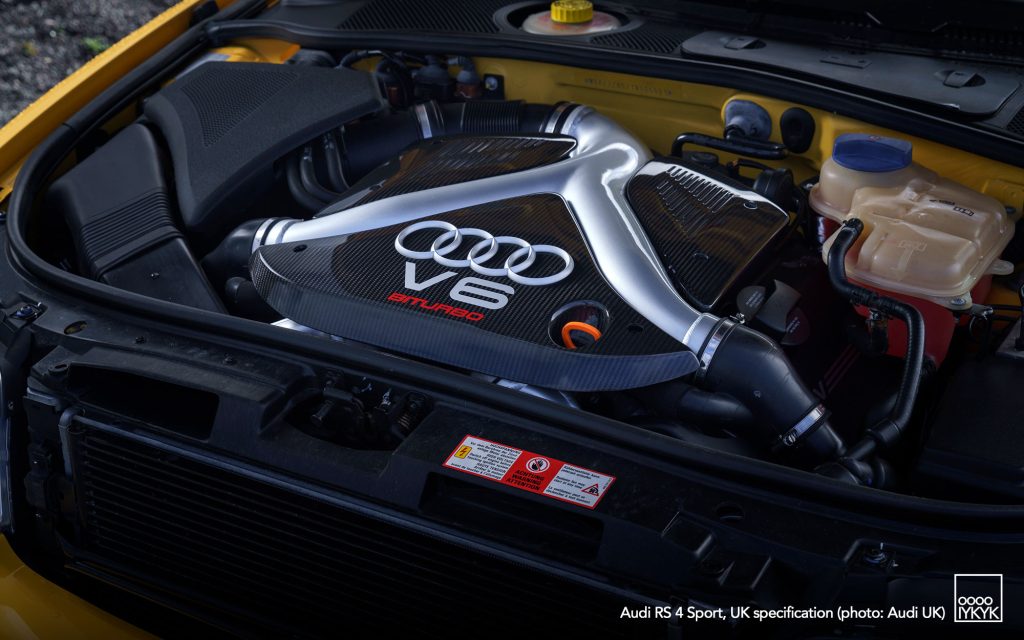
When Audi launched the original RS 4 Avant in 1999, it redefined what a fast wagon could be. Raising eyebrows, Audi chose to break from the collaborative partnership with Porsche it had employed with the RS2 Avant, instead establishing its own formula that was all-Audi. At the time, Audi AG had come to own the UK firm Cosworth that was legendary in the automotive engine tuning world, so they tapped their own resources, producing a Cosworth-enhanced 2.7-liter biturbo V6 delivering 380 PS – 374.5 hp, up from 270 hp in the U.S.-spec S4 (B5). Visually, the car was further enhanced with purposeful arch flares wider than any A4-derivative before it and also breaking Audi out of the box flare tradition of the ur quattro.
But within quattro GmbH, there was a sense that some customers still wanted more. The RS badge—denoting Rennsport—carried expectations the mainstream car didn’t always satisfy if you can believe it. Audi needed a way to serve the most hardcore faithful without building a second model line.
While the RS 4 Avant had debuted at the 1999 Frankfurt IAA motor show with plenty of fanfare, quattro GmbH chose to launch the RS 4 Sport was launched quite differently as a range of line-item factory-installed accessories for the car with an (again) identical example that may very well be the Audi Tradition car on display at the 2000 Essen Motor Show – Germany’s aftermarket tuning show.
With it, quattro GmbH created a catalogue of track-leaning performance parts that could be ordered and installed before the car was delivered. An RS 4 equipped with all of these components would effectively be known, officially and internally, as the RS 4 Sport.
SUSPENSION REWROTE THE CAR’S CHARACTER
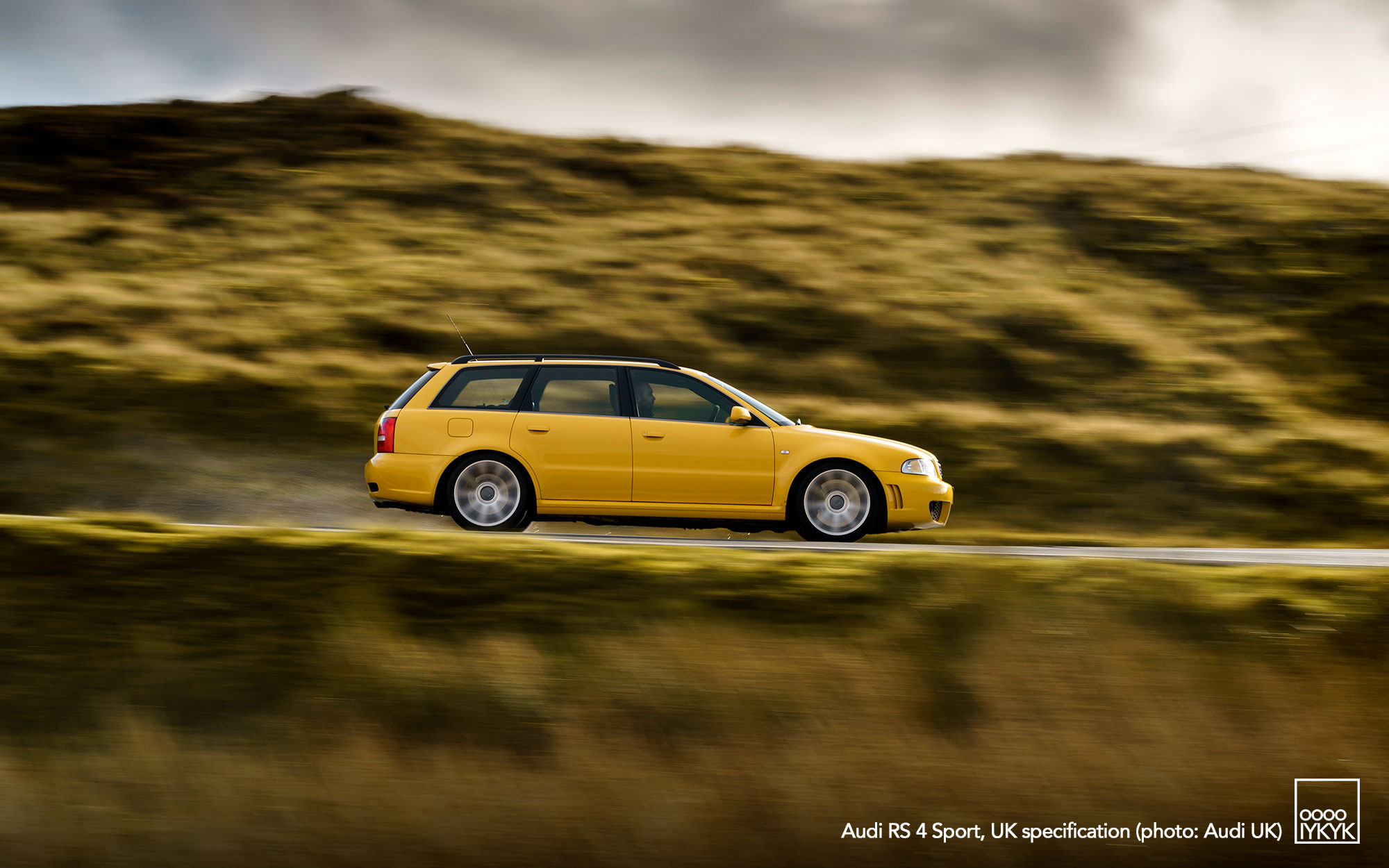
The most visually obvious change—and the root of several early logistical headaches—was the additional 15 mm drop delivered by the RS 4 Sport’s firmer spring and damper combination. With a stiffer rear anti-roll bar added to the mix, the stance became low enough that Audi had to go so far as to commission bespoke loading ramps because Sport-spec cars would simply not clear standard transport carriers.
The performance payoff was transformative though. Contemporary testers reported improved turn-in, reduced roll, and a far more communicative chassis than the standard RS 4. Sport Auto, in fact, loved the package so much that it converted its own long-term (also) Imola Yellow test car to Sport specification while the package was still undergoing factory endurance testing.
The magazine’s editorial staff famously argued over which of them would buy the car at the end of the test. That tells you everything (source: Audi RS: History • Models • Technology).
BRAKES & EXHAUST LOUDER, STRONGER, SHARPER
The RS 4 Sport didn’t stop at suspension tuning. It doubled down on the business of going fast—and stopping just as quickly.
- Cross-drilled front rotors paired with grippier, noisier pads
- A sport exhaust system with a smaller centre muffler and matte black tips
- More aggressive backpressure characteristics for a harder edge to the 2.7T soundtrack
The brakes improved consistency under repeated high-load events, while the exhaust underlined the RS 4 Sport’s shift away from everyday civility and into a more track-honed weapon.
INTERIOR MOTORSPORT CUES WITHOUT PRETENSE
Where the standard RS 4 made nods toward luxury, the Sport specification brought motorsport ergonomics into the cabin.
Audi fitted:
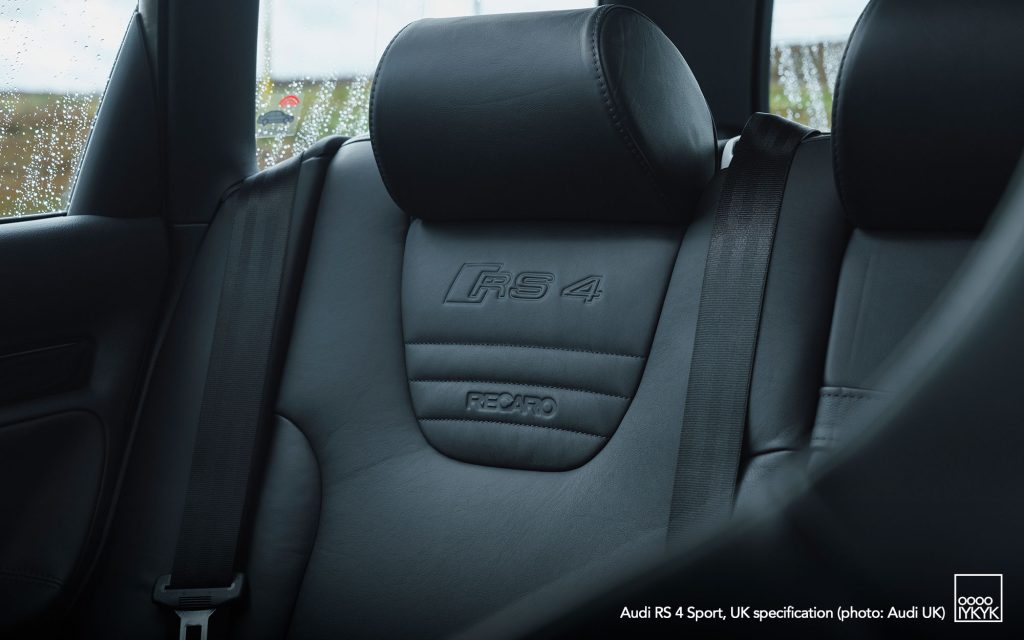
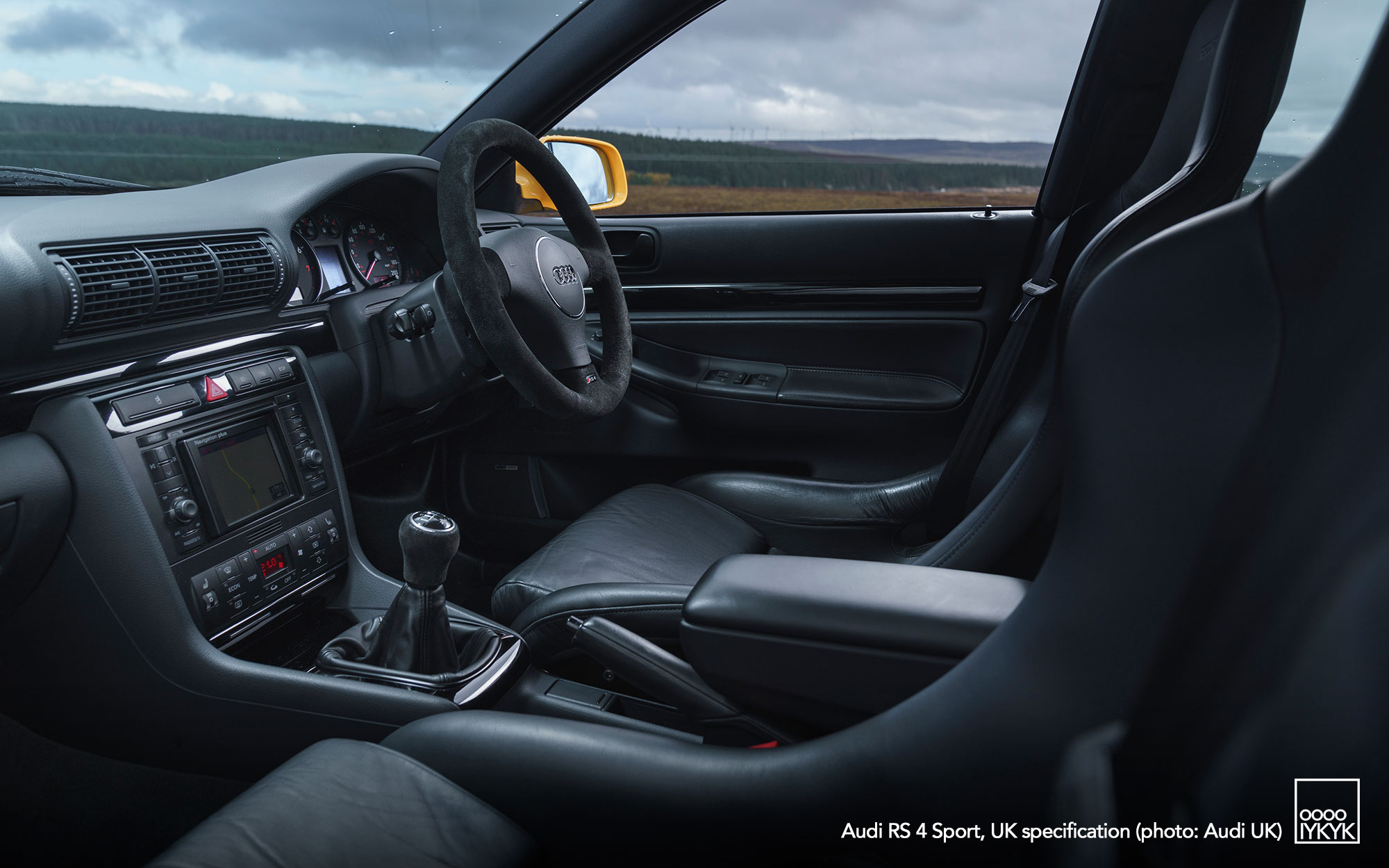
- Recaro Pole Position bucket seats
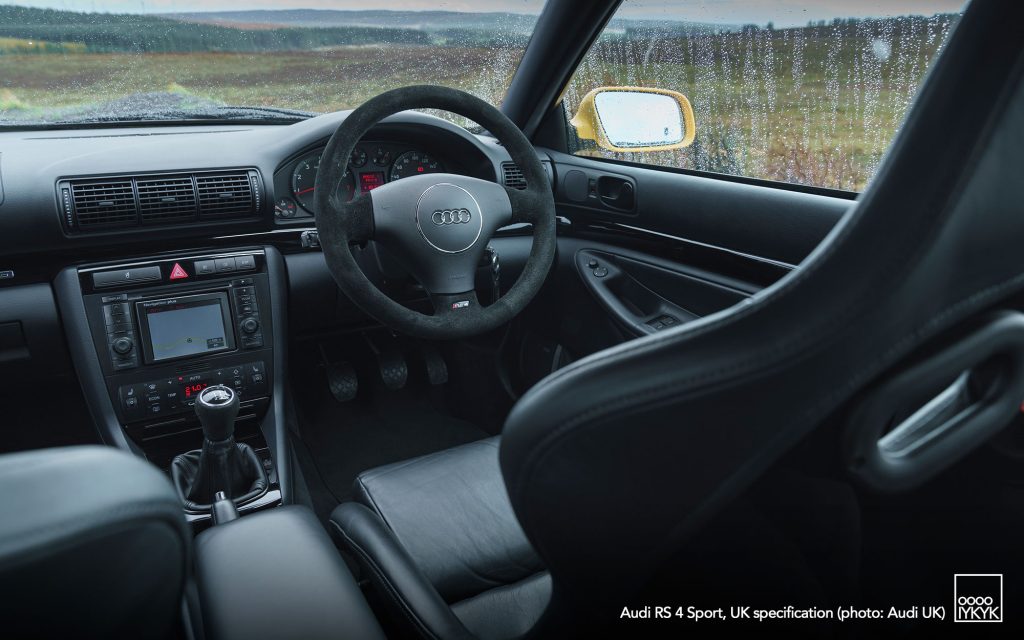
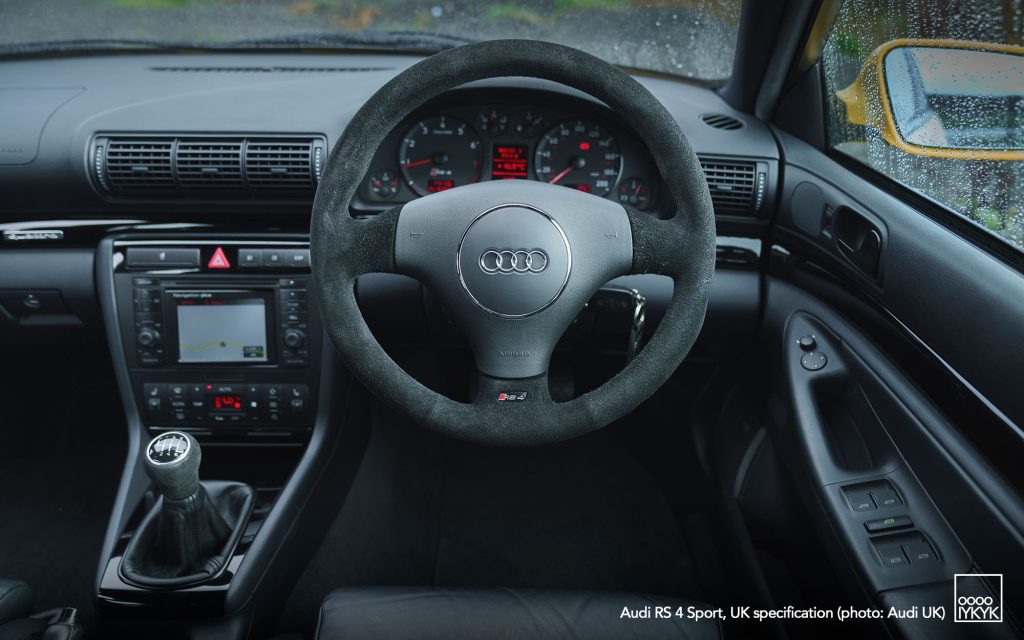
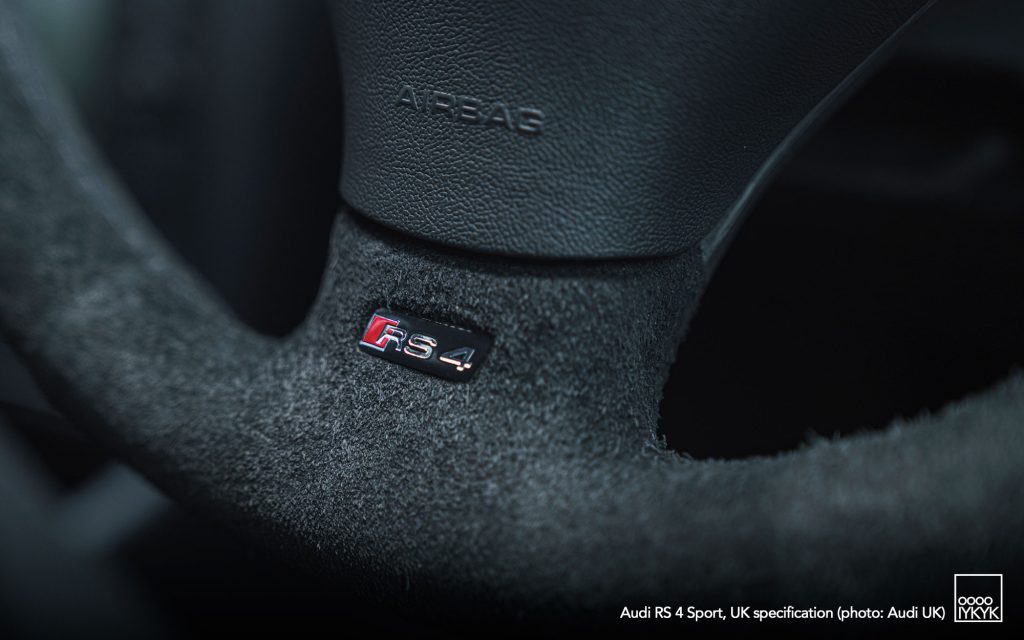
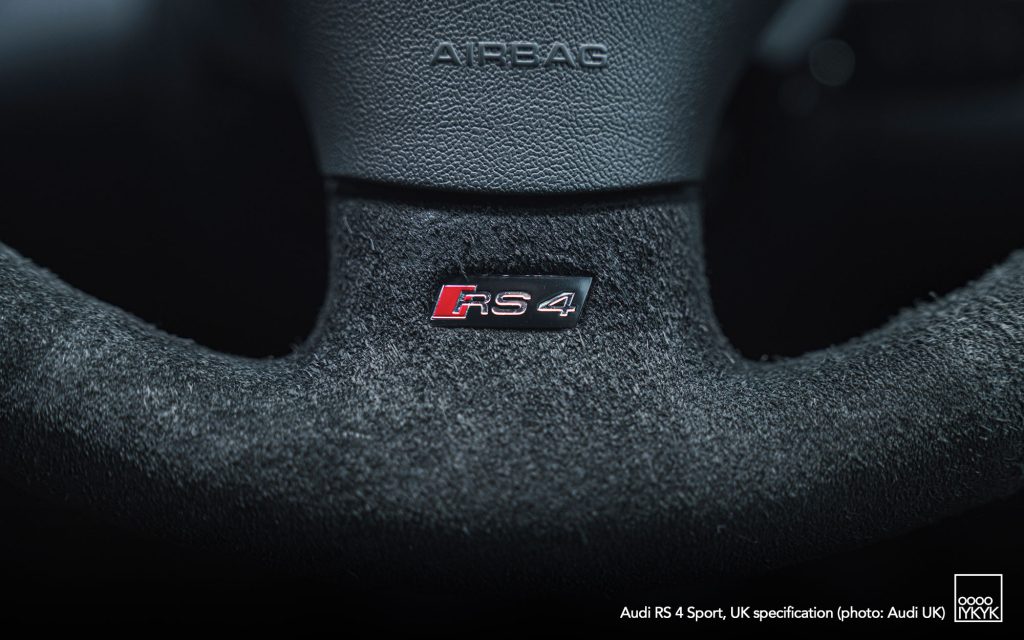
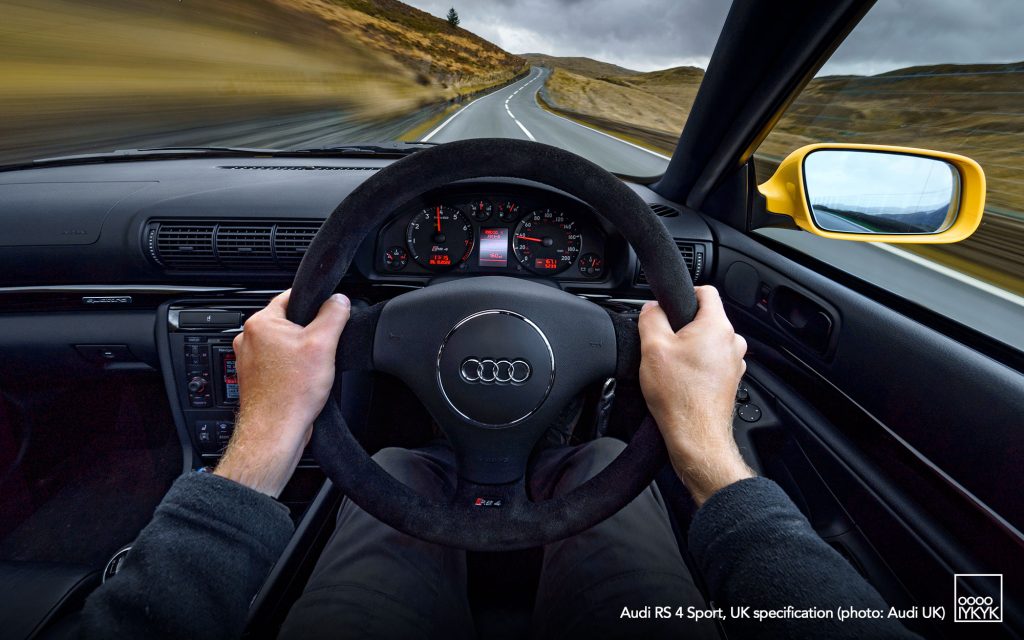
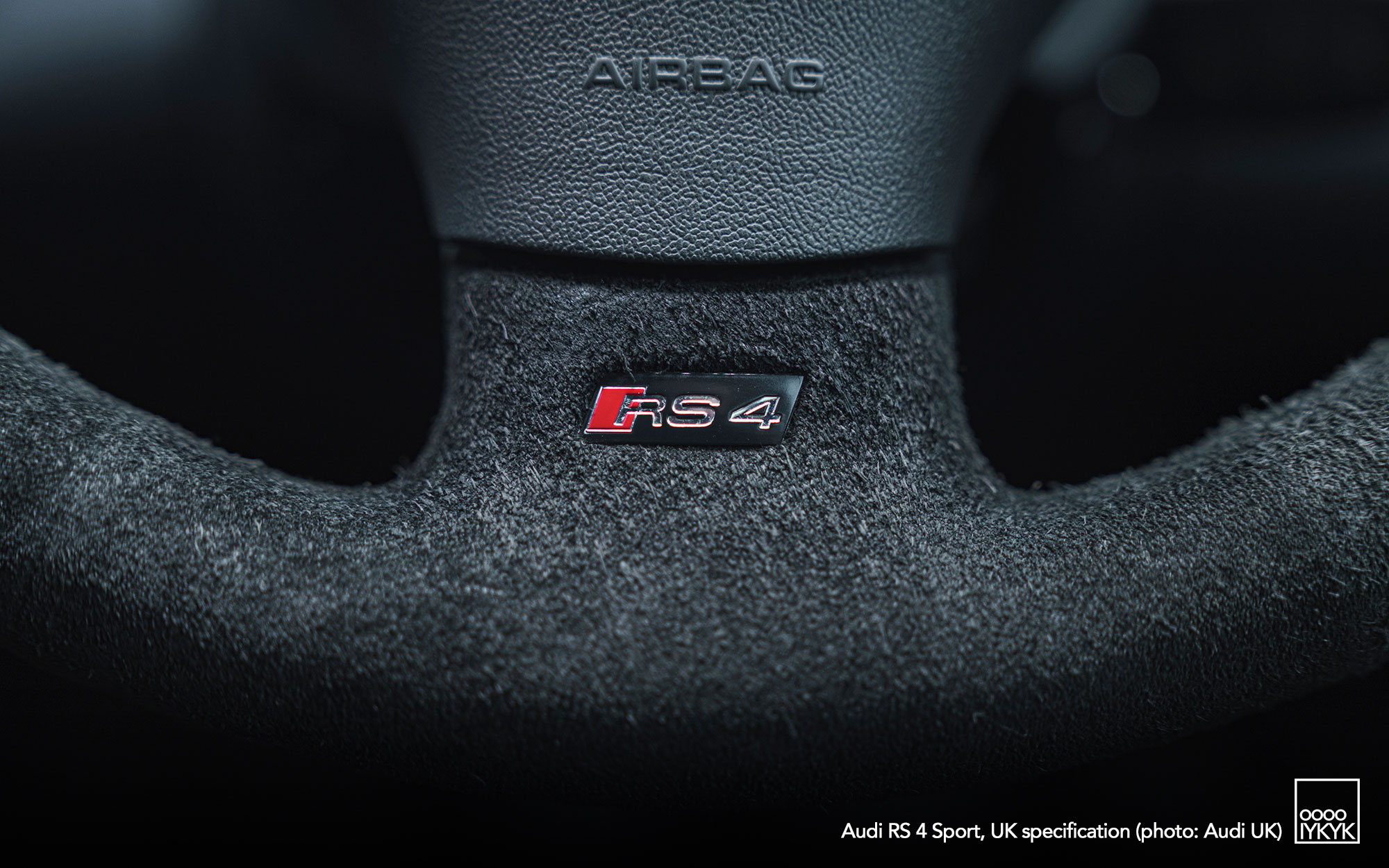
- A suede-wrapped steering wheel
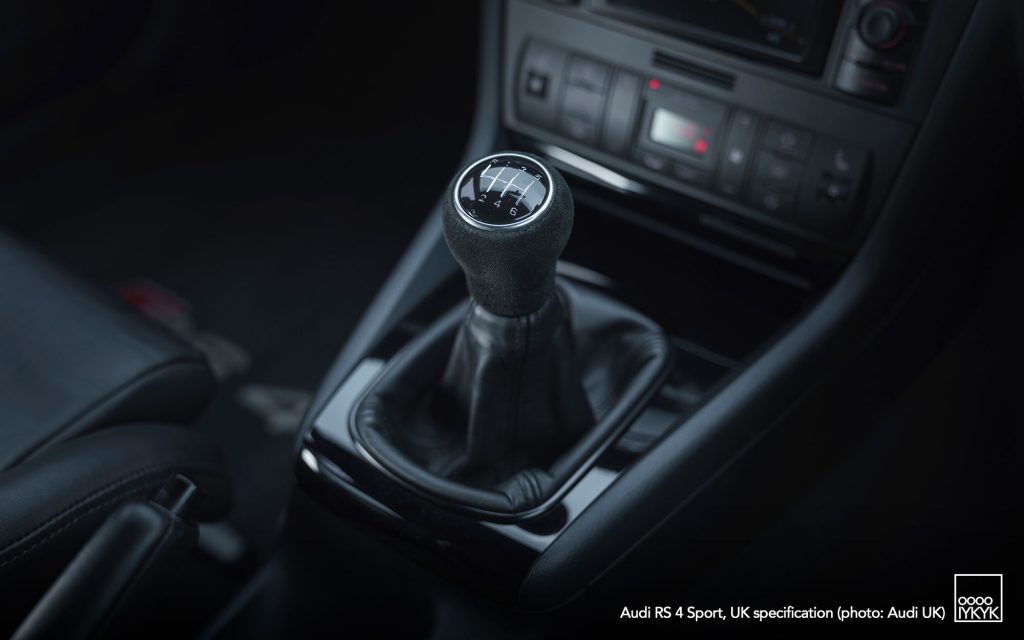
- A matching suede gearshift knob with the material reversed—“rough side out” for grip
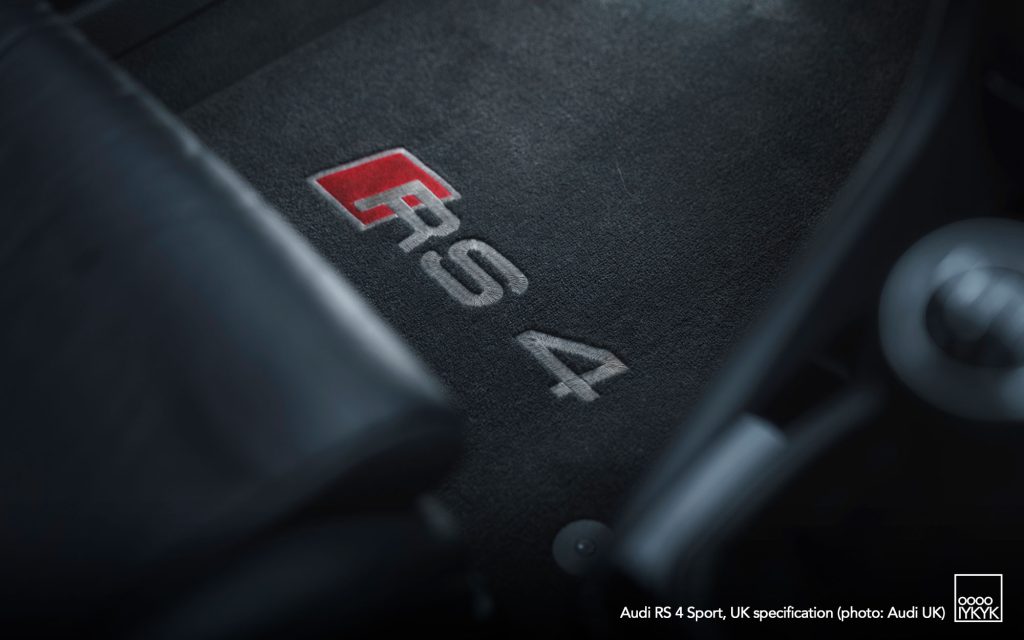
- Optionally, floor mats with RS 4 embroidery and coloured leather piping
The UK-spec car you see in Audi UK’s photos wears full black leather, one of three options that also included Alcantara seat centers like the Audi Tradition car or High Tech fabric seat centers like the car that’s our Find of the Day this week. In period, this configuration gave the RS 4 Sport an unmistakable link to its Imola Yellow exterior—something that resonates even more strongly today in a world of muted, grayscale interiors
On its own, the Pole Position shell seat is a legend. Even then, this seat was already standard fare in cars like the Porsche 911 (964) Carrera RS and subsequent Porsche specials. Audi had begun fitting it in its own cars, initially as a rare line item on the TT that would eventually become much more commonly equipped in the TT Sport that came about toward the end of Mk1 TT production.
Also worth highlighting are the steering wheel and shift knob. The synthetic suede-like material Alcantara had seemingly just hit at this moment in history and it was all the rage at the time. It was even one of the seat options on this car, though the material on the steering wheel and shift knob weren’t Alcantara as we’d see on other special edition and Audi exclusive-specced models. In the case of the RS 4 Sport these were actual suede, notable for the darker black hue and more expensive to source.
FACTORY HOT ROD IN THE PURIST SENSE
It’s tempting to think of the RS 4 Sport as a limited edition, but that would undermine what made it so special. Unlike numbered specials or market-packaged appearance kits, the Sport was a factory-sanctioned transformation, designed to push the B5 platform beyond the boundaries Audi could justify even for the mainstream RS 4 Avant.
The total price of the Sport components—6,730 euros in period—wasn’t insignificant. The package offered something few OEMs dared produce at the time: the ability to turn the brand’s halo performance wagon into something meaningfully closer to a motorsport car, without losing the fit and finish of factory build quality.
It struck a balance that prefigured Audi Sport’s later “performance” and “competition” packages by more than a decade.
PUTTING IT IN PERSPECTIVE
Audi Sport’s modern catalogue is full of superbly engineered RS variants and track-capable special editions. But the RS 4 Sport occupies a niche of its own—a moment when manufacturers prioritized their own placement at enthusiast events like Essen and quattro GmbH channeled customer enthusiasm directly into a higher-performance configuration via a line-item catalogue that pushed the limits of what a family car could be and what a consumer could afford versus packaging it all together for manufacturing simplicity. Bespoke trucking methods for lower suspensions are just such notable evidence of this.
You can almost see sweat beading down the brow of the Audi manager digging deeply into their problem solving repertoire as Ferdinand Piëch ordered them to “make it happen!” Of course, we don’t know that this actually happened, but it all sounds on tone for this era of an extreme authenticity culture that Piëch had constructed over decades.
The UK-spec example featured here reinforces that importance. With its immaculate preservation, original seats, motorsport-leaning details, and Imola Yellow paint, it serves as an essential reference point for understanding the early Rennsport mindset.
It also feels strangely contemporary. Many of the ideas introduced here—firmer coilovers, track-biased brakes, semi-bucket seats, and aesthetic tie-ins to earlier RS cars—reappeared as key ingredients in the 2024 RS 4 Avant edition 25 years, the modern tribute to the B5 Sport, but built by micro-batching nearly identical spec cars to fit a more modern production process and post-Piëch accounting.
At the time, quattro GmbH (now Audi Sport GmbH) knew exactly what it was doing. So did the customers who ticked every box.
MOMENT WORTH REVISITING
Back in November of 2000, the Audi RS 4 Sport represented the first time Audi openly acknowledged that a portion of its audience wanted something less compromised, more focused, and far closer to the spirit of Rennsport than the mainstream could provide.
Well, perhaps I should rephrase that. The brand had done it before with the Sport quattro, but those were for homologation reasons in order to qualify for Group B rallying and the changes made the already 911 price-dwarfing quattro practically unattainable to the common Audi consumer. Not so the RS 4 Sport. Sure, it was expensive compared to the business person-spec A4 1.8T of its era, but it wasn’t a Group B homologation. And the RS 4 Sport equipment? You could line item that, choosing just the suspension or just the seats. meaning a motivated enthusiast could reach for what was most important to them.
Few reached for it all, which is what made this car so rare. Find another in the market? We doubt you will. Even the Nogaro Blue car also featured here as a Find of the Day appears to have been a former press demonstrator for Audi UK, though it’s only showing part of the RS 4 Sport product catalogue.
Seemingly always one to play ball when Audi manufactures special performance models, it’s notable such a car would be found in England, that it would show much of the catalogue as factory installed, or that it would have a similarly specced sister car (with leather, remember?) that’s also part of the UK’s preserved fleet.
More than twenty years later, as Audi readies a B10 RS 5 Avant (and Sedan) though was notably absent at this week’s Essen Motor Show (and has been for several years now) it becomes clear that the RS 4 Sport wasn’t merely a derivative. It was evidence of a concept that challenges today’s volume driven business practices, a model of a product created from the enthusiast’s perspective rather than that of the accountants or parts procurement specialists. It makes you wonder whether such a model still has a place today?
PHOTO GALLERY