

Following World War 2, the Audi brand went dormant. Auto Union assets had fallen into Russian hands, located as they were behind the Iron Curtain. Executives moved to restart the brand – first as DKW and Auto Union, then relaunching Audi 60 years ago this autumn.
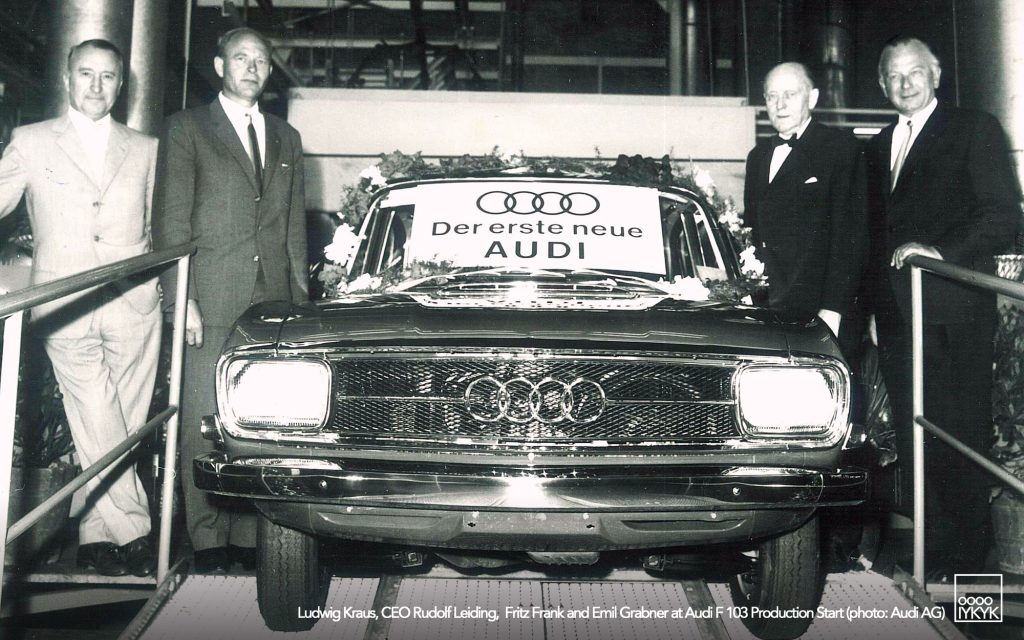
The first post-war Audi rolled off of the assembly line on August 13, 1965. It had been about 25 years since a car had been produced under the Audi name, and now the marque had made its return.
The purpose of the move was to emphasize a focus on the progressive embracing of technology. In the case of “The Audi” (a.k.a. F103), the heart was a four-stroke 5-cylinder engine. The car would mark the initial arrival of what would become an entire model range that would remain in production until 1972.
POSTWAR AUTO UNION’S SURVIVAL
Auto Union in that postwar period marks a significant moment of fortitude in the history of the company. At that moment, Germany’s infrastructure was a wreck. Auto Union AG as it had existed in the prewar era in Saxony had been dismantled and was effectively gone. Former employees of Auto Union who’d relocated to the zones controlled by the west first moved to create a depot for spare parts in order to support cars that had survived.
That first facility was based in Ingolstadt. By 1949, the group formed Auto Union GmbH and even began producing vehicles. In those early years, the focus was motorcycles and vans sold under the DKW brand, vehicles that would be important offerings during this period of reconstruction and economic growth in the postwar German economy.
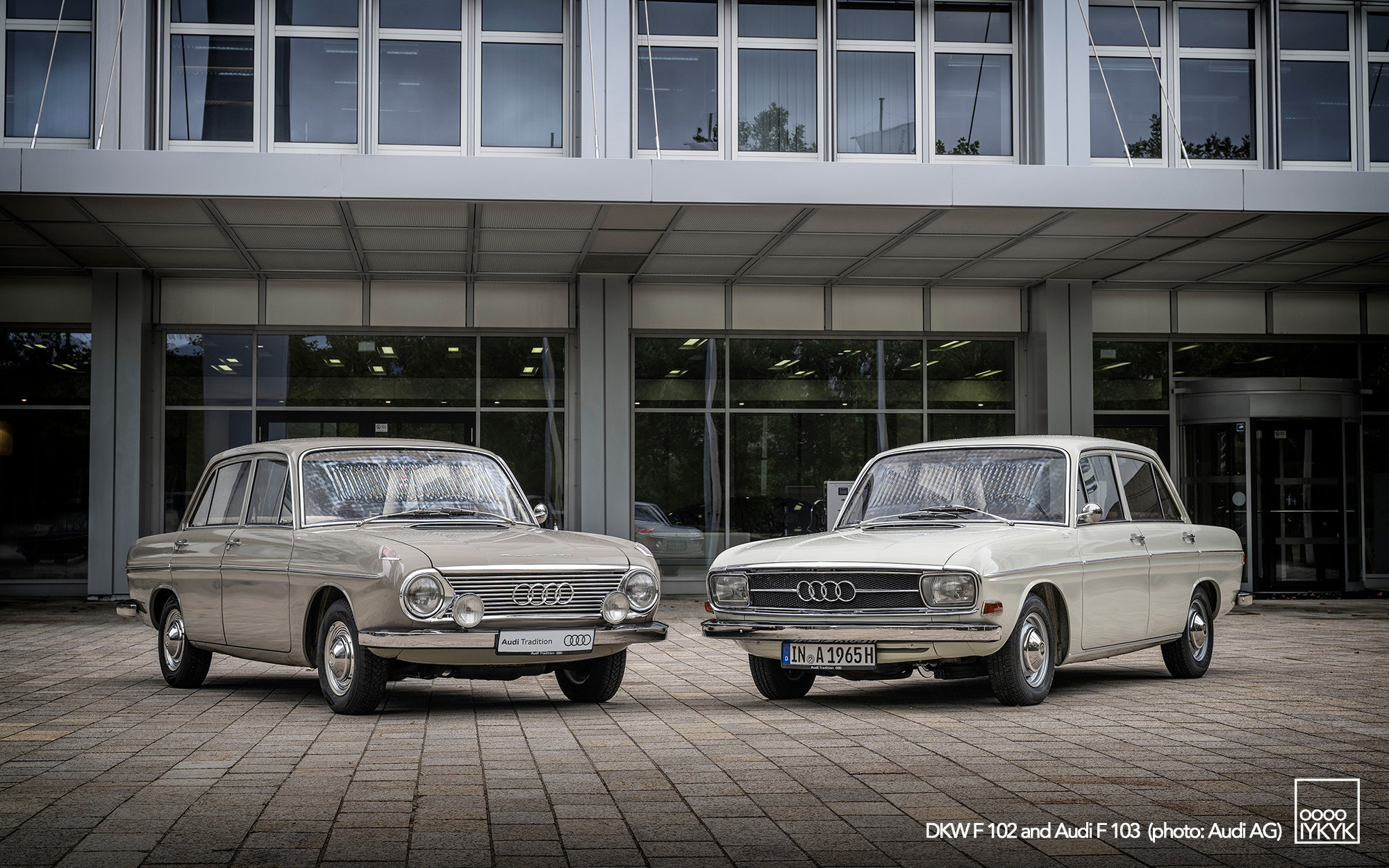
As the German economy got back on its feet, the affluence of German consumers began to rise and consumer demand for higher quality transportation grew in kind. Given these postwar DKWs were based on pre-war tech, their offerings began to be considered outdated and thus less desirable. The two-stroke DKWS were a clear disadvantage, and sales dipped accordingly. Their latest offering at the time, the DKW F 102, may have been fresh-looking and modern in appearance, but was betrayed by the lower power, harshness and odor of its two-stroke engine.
ERA FROM MERCEDES TO VOLKSWAGEN OWNERSHIP
Auto Union GmbH was aquired by Daimler-Benz AG in 1958, though by 1964 found itself offloading the company to Volkswagenwerk AG. Volkswagen quickly moved to better utilize Auto Union’s production capacity. VW’s Beetle was a pillar on which the German postwar economy was based, and Ingolstadt would go on to produced almost 348,000 1200/1300 Beetles from 1965 to 1969.
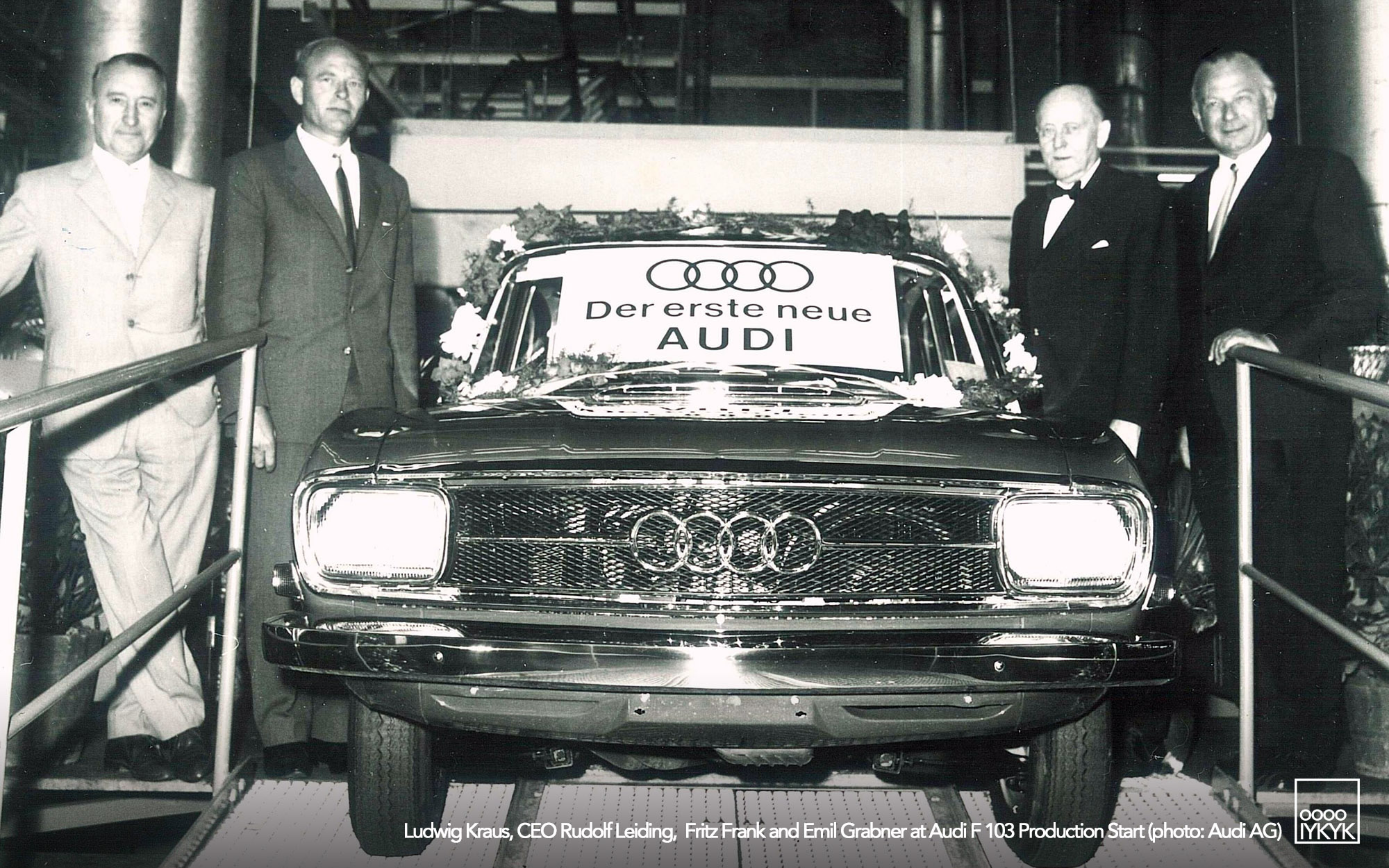
More relevant to Auto Union and its prewar brand holdings was the decision by Daimler-Benz to begin development of a four-stroke engine. Daimler assigned engineer Ludwig Kraus to the project, relocating him to Ingolstadt where he would go on to become head of development. In his time there, Kraus would bring the new four-stroke engines into series production – the same engine fitted in the F 103 that debuted in 1964. The F103 would arrive 25 years after the last prewar Audi 920 rolled out of the Auto Union plant in Zwickau, Saxony, and 55 years following the arrival of the first Audi automobile – the Type A 10/22 PS created by August Horch.
THE AUDI F 103 COMES TO MARKET
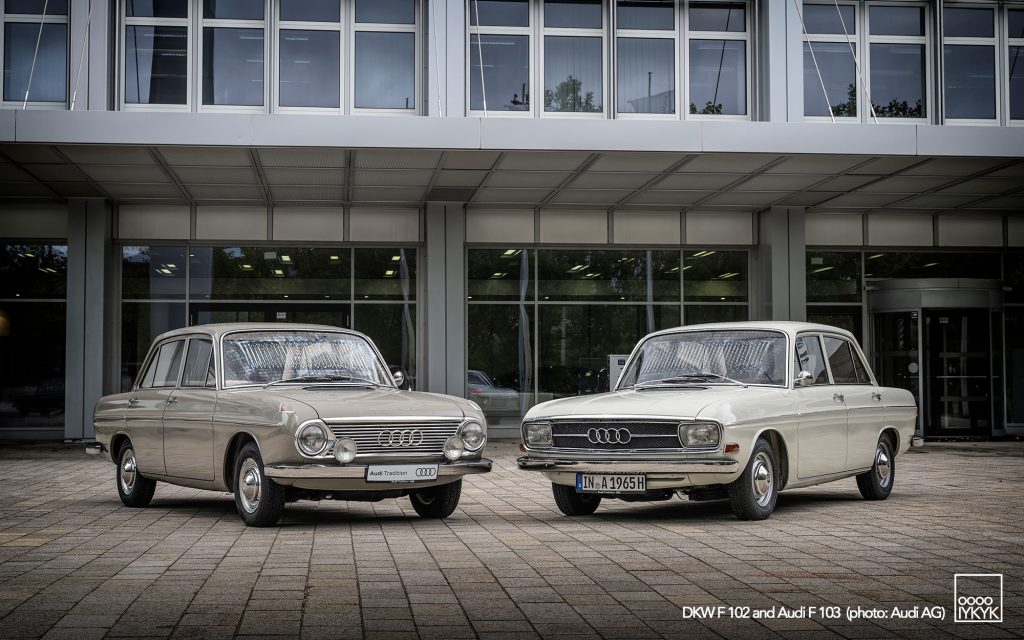
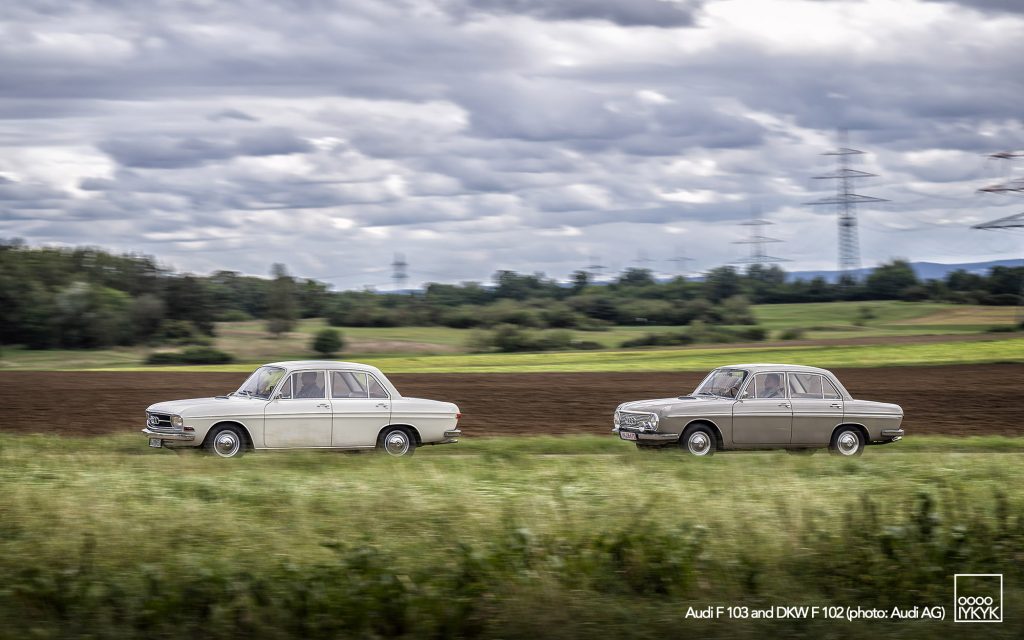
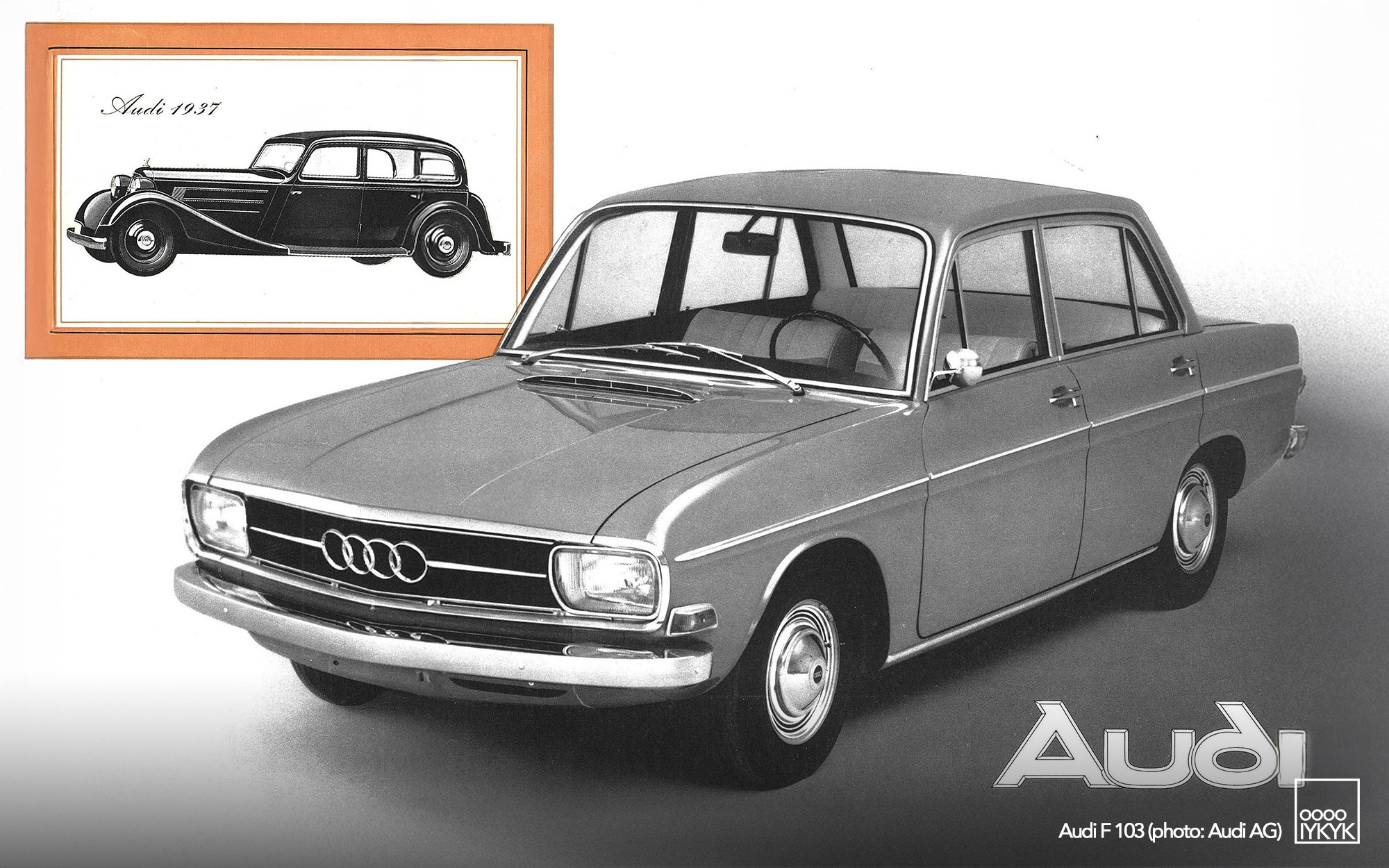
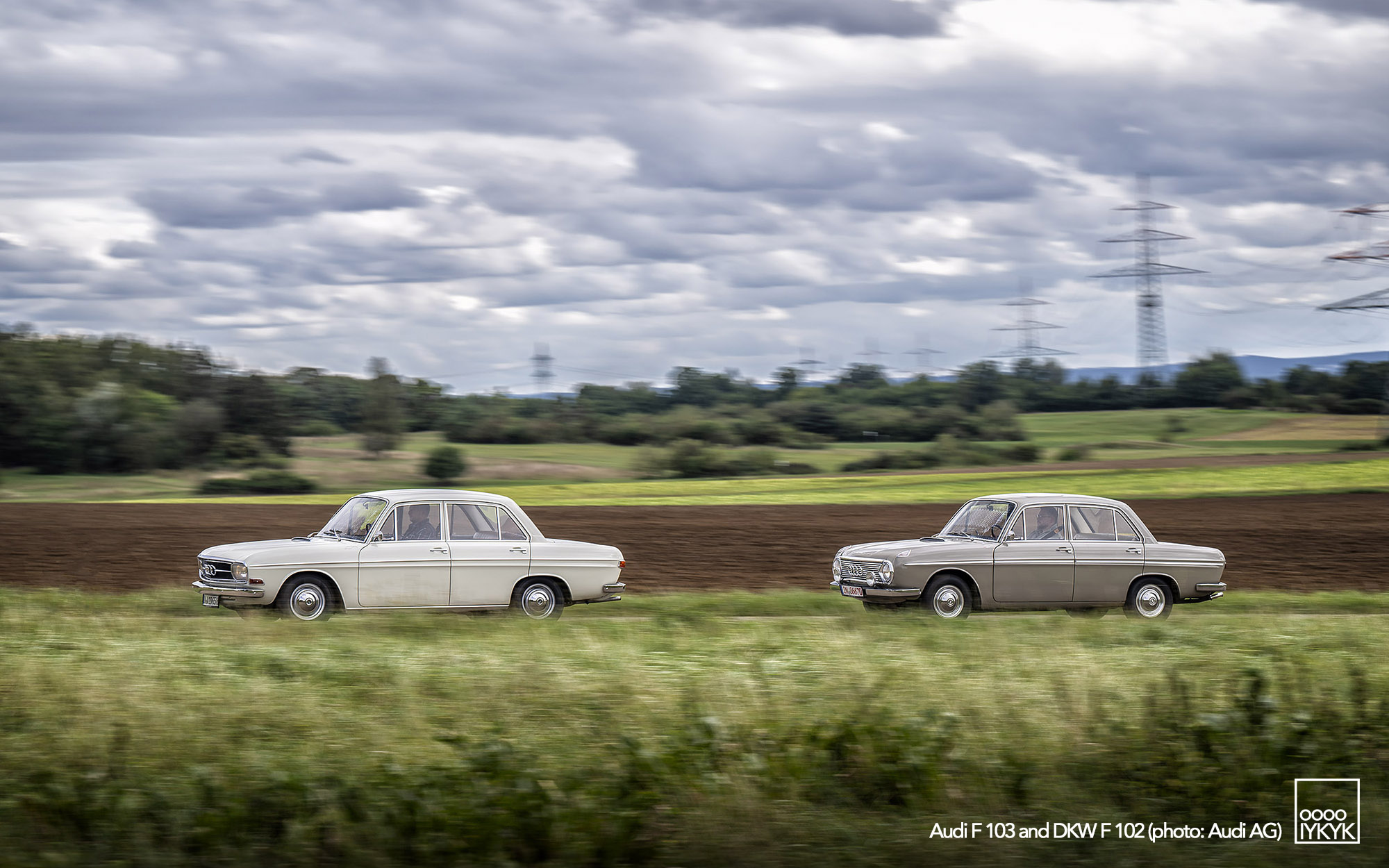
Though the differences in appearance between the Audi F 103 and the DKW F102 it replaced seem rather subtle, the technical leap forward from two-stroke to four-stroke engine were anything but. The executive team at Auto Union GmbH moved signal the change by dropping the lagging DKW brand name and replacing it with Audi.
At first, there was no further designation. This first car was known simply as “Audi” and marketed as an Auto Union “Audi type”. Internally, this replacement to the DKW F 102 was referred to as the “F 103”. However, its success would see that new paradigm stretched to represent an entire series.
Oddly enough, “Audi” was simply a model designation. Auto Union GmbH was the name of the company, a corporate name that would remain until 1985 until it was changed to “AUDI AG.”
SIDENOTE
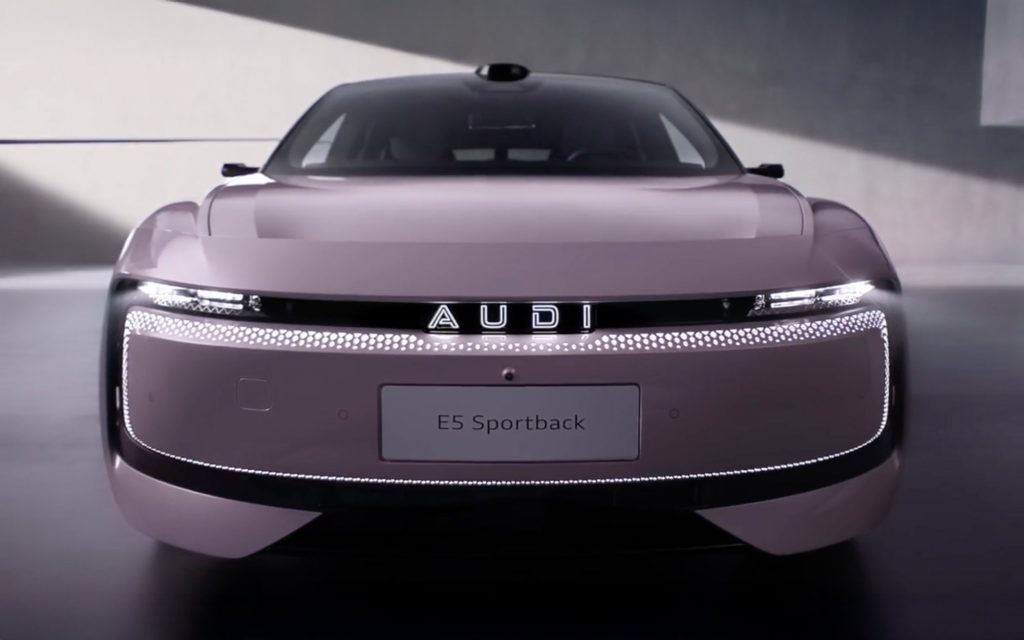
Given this history, it seems pretty obvious that those early years inspired the thinking behind Audi’s choice to launch its new Chinese sub-brand as an AUDI. Though perhaps a bit confusing to some, it harks a simpler time at the brand when a new paradigm was being created. No doubt Audi management today seeks to signal another new era in the case of rethinking the brand for the Chinese market.
As the business around the F 103 began to grow and more models with greater performance levels came to the fore, designators such as Audi 80, Audi Super 90, Audi 75 and Audi 60 came into use. Unofficially, the first model became known to owners and the press as the Audi 72, joining this new lexicon that was a bit of a nod to the pre-war heritage of designations denoting power numbers. Under this model, “Audi 72” meant the Audi with 72 PS.
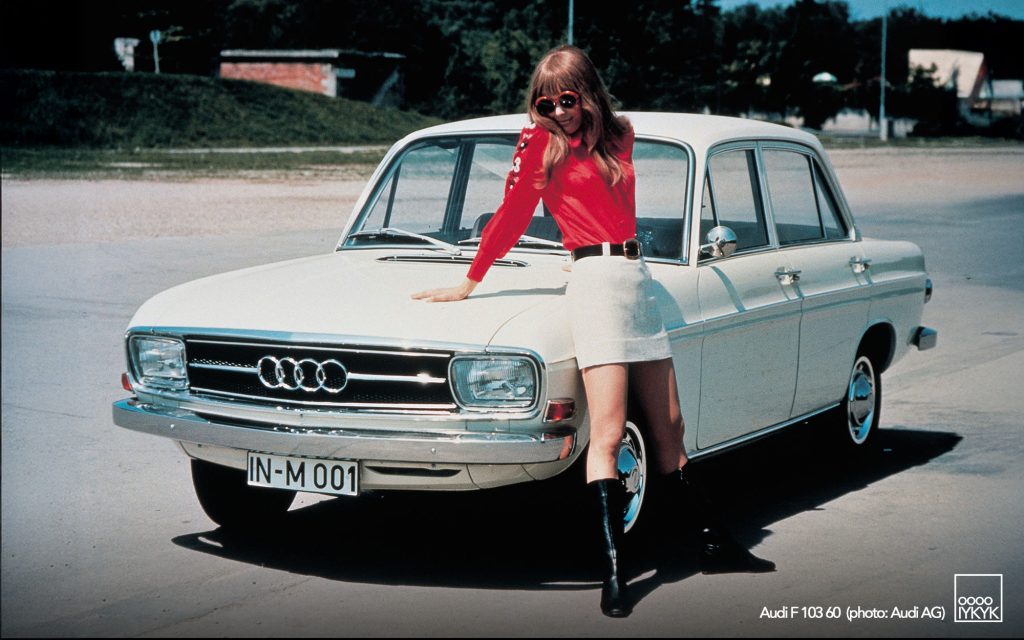
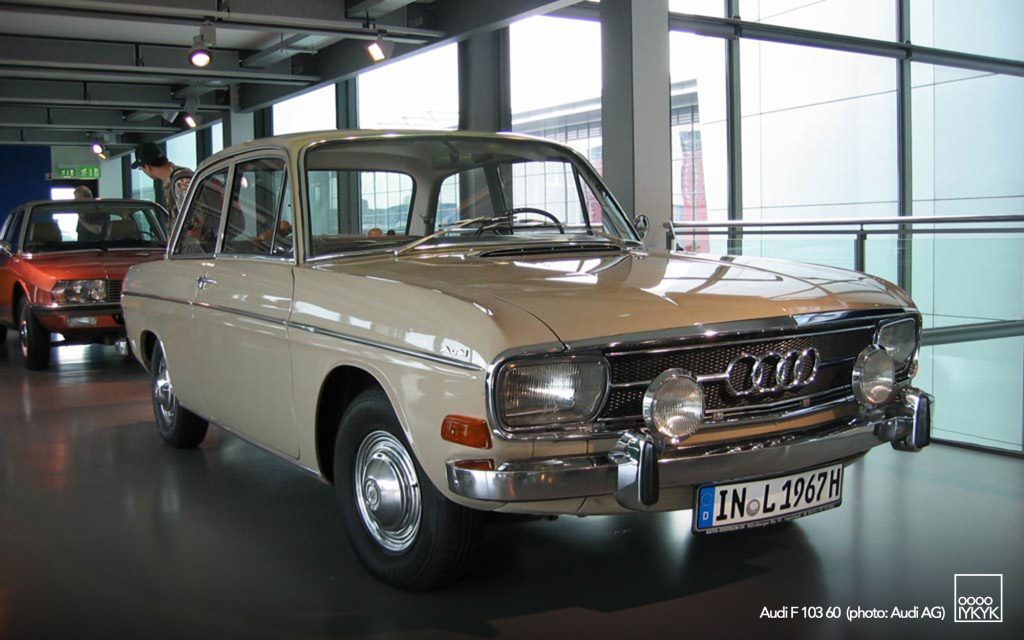
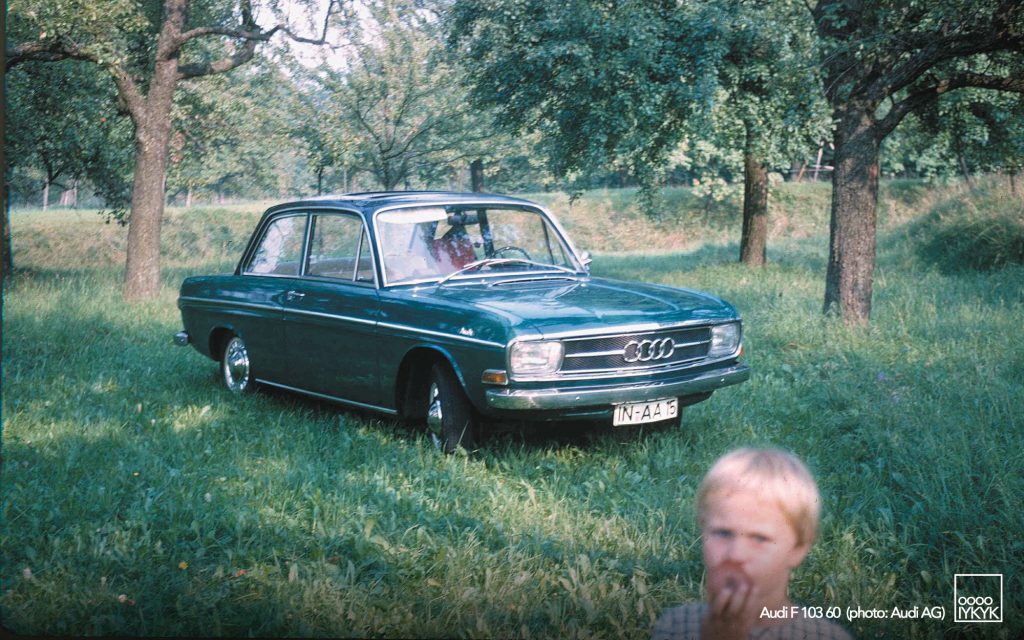
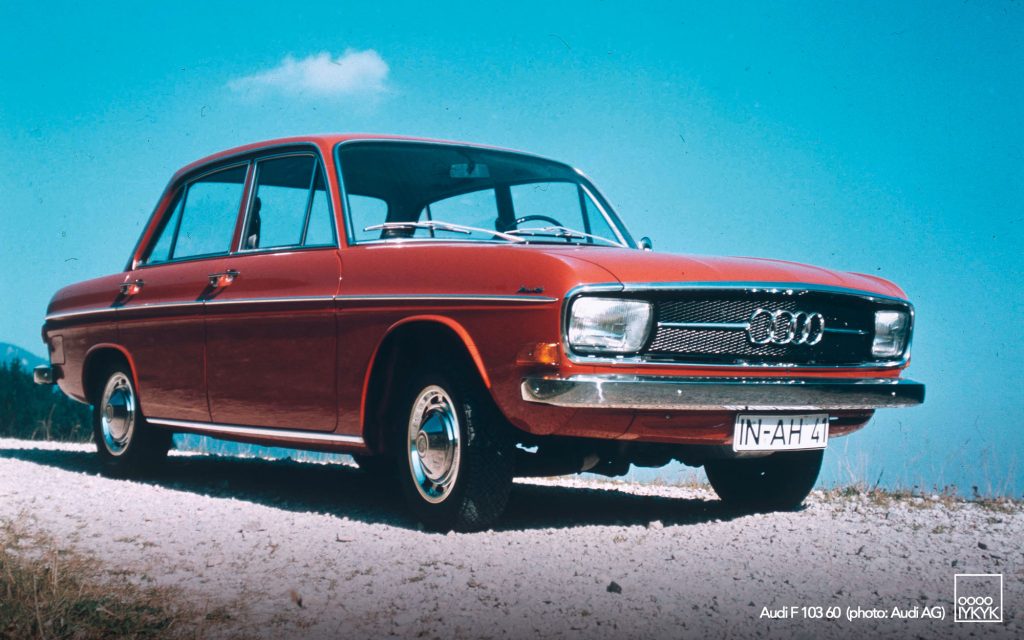
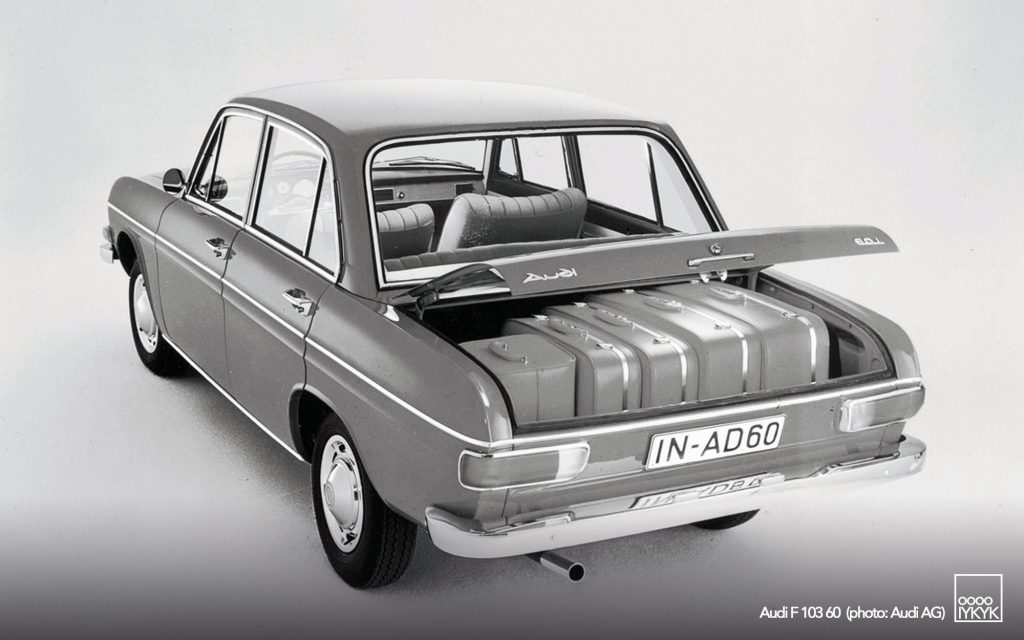
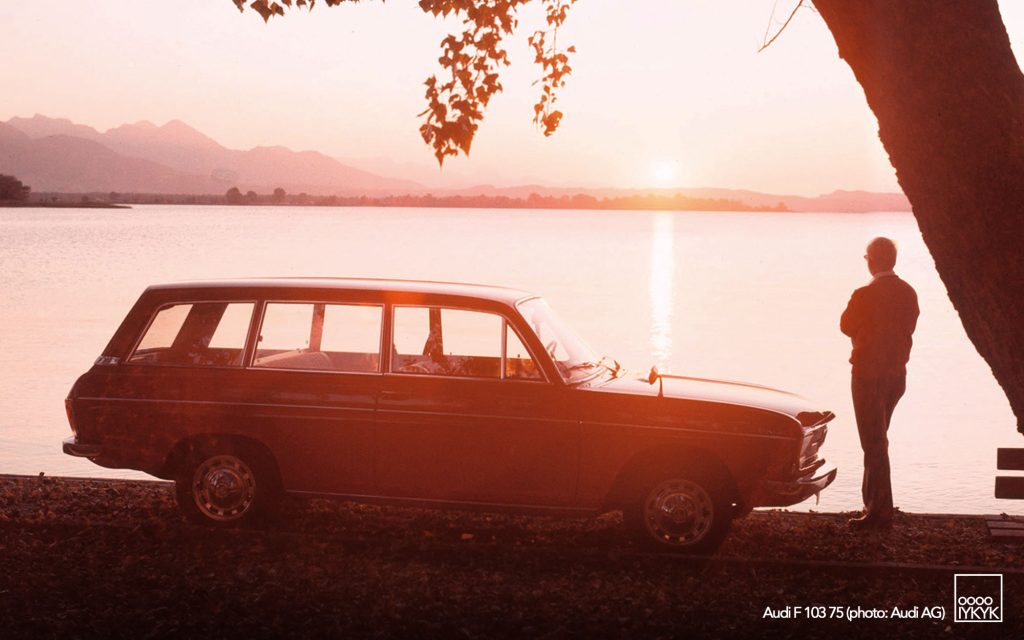
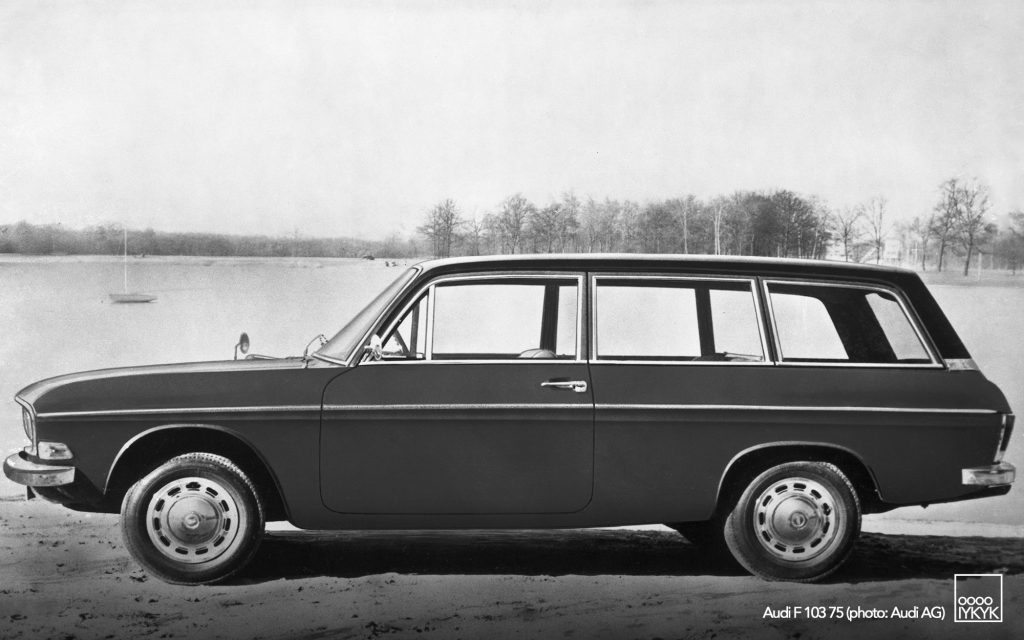
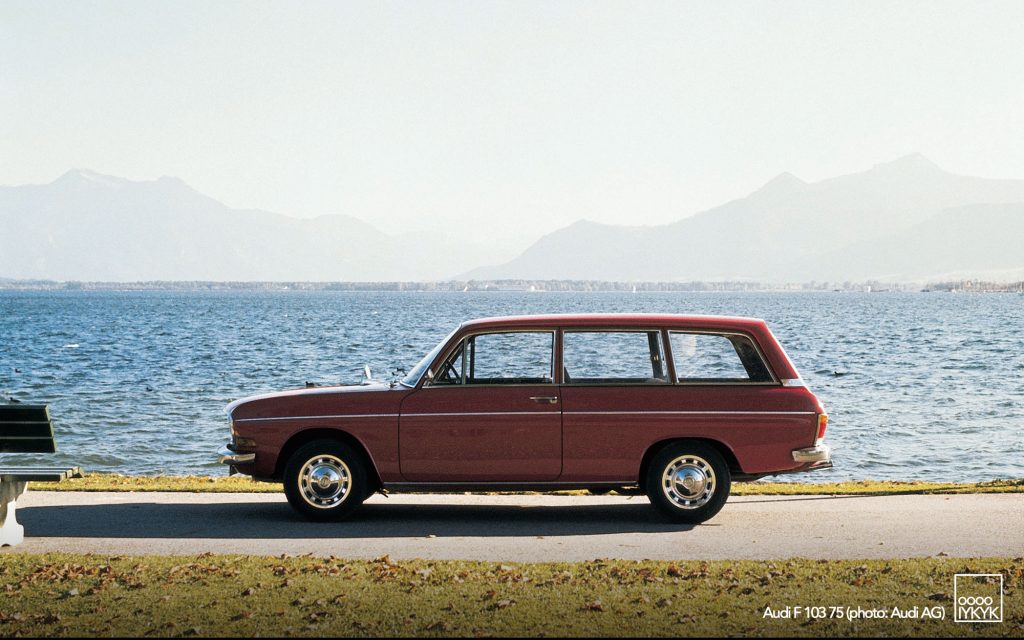
Production of the new Audi began in 1965 as a sedan, with a station wagon launching in the spring of 1966 and known as the “Variant” in VW parlance. Sedans were offered in 2-door and 4-door versions, while higher equipment level cars received the suffix “L”.
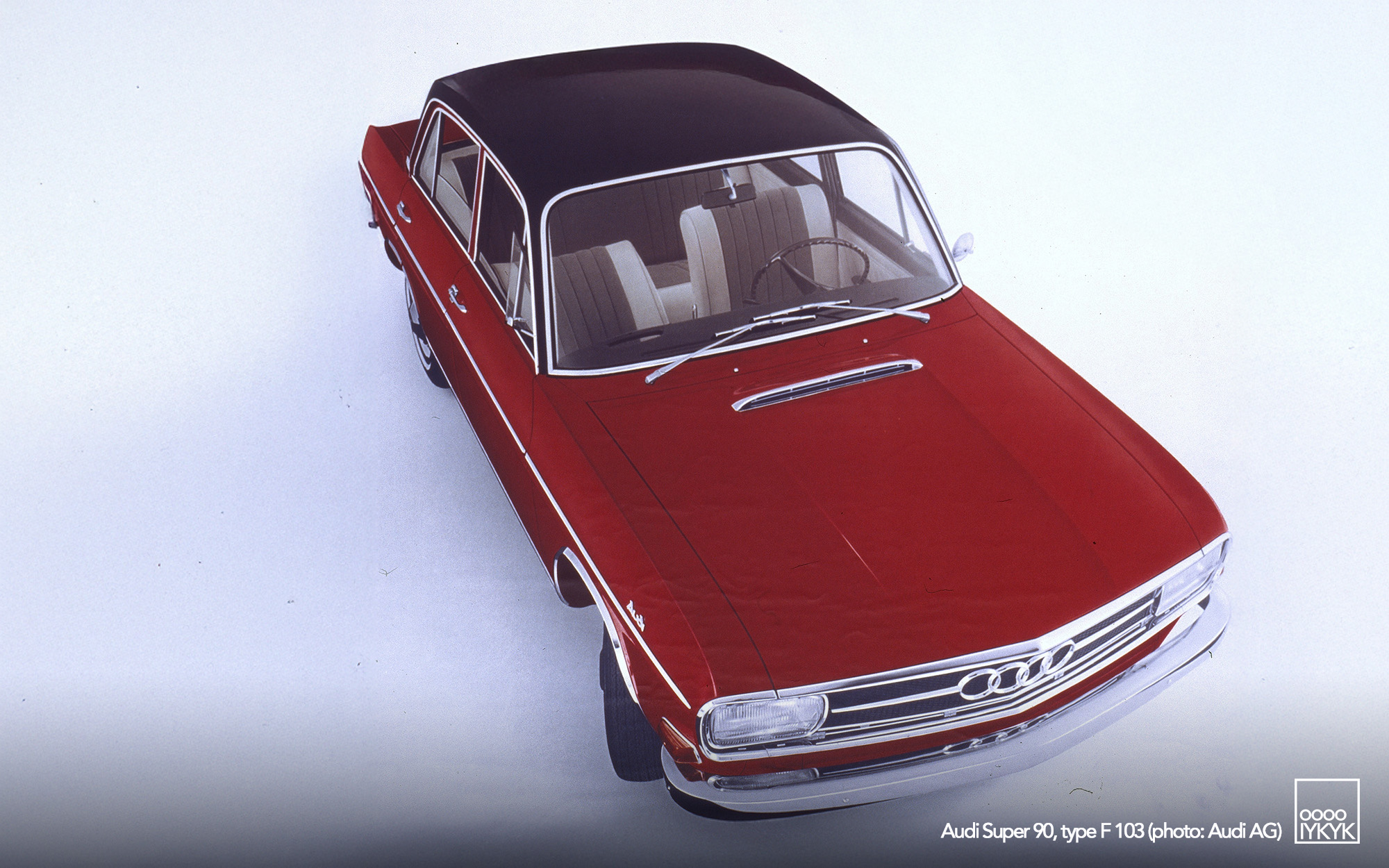
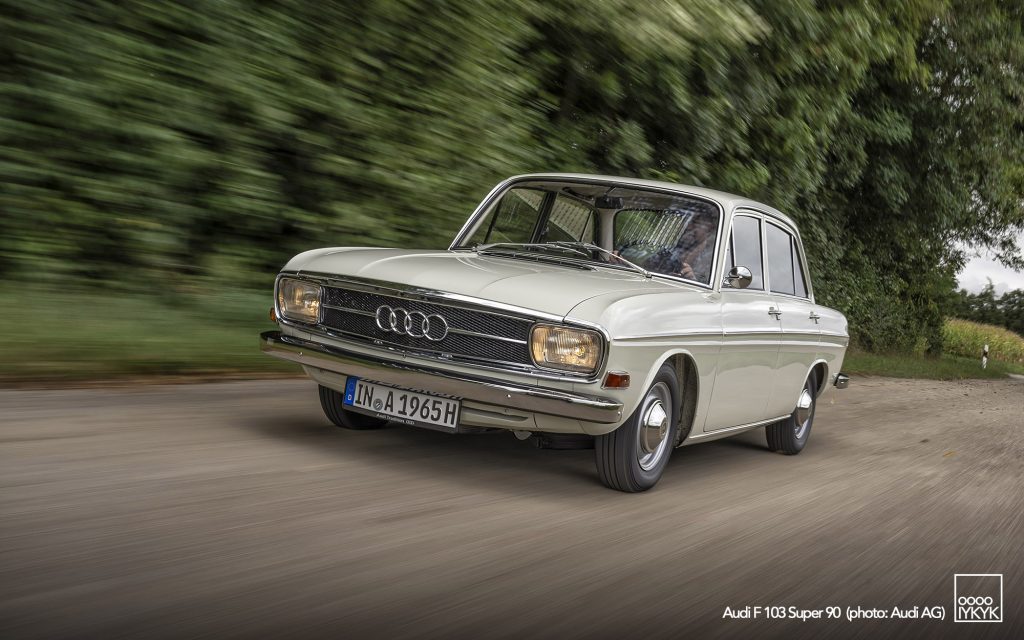
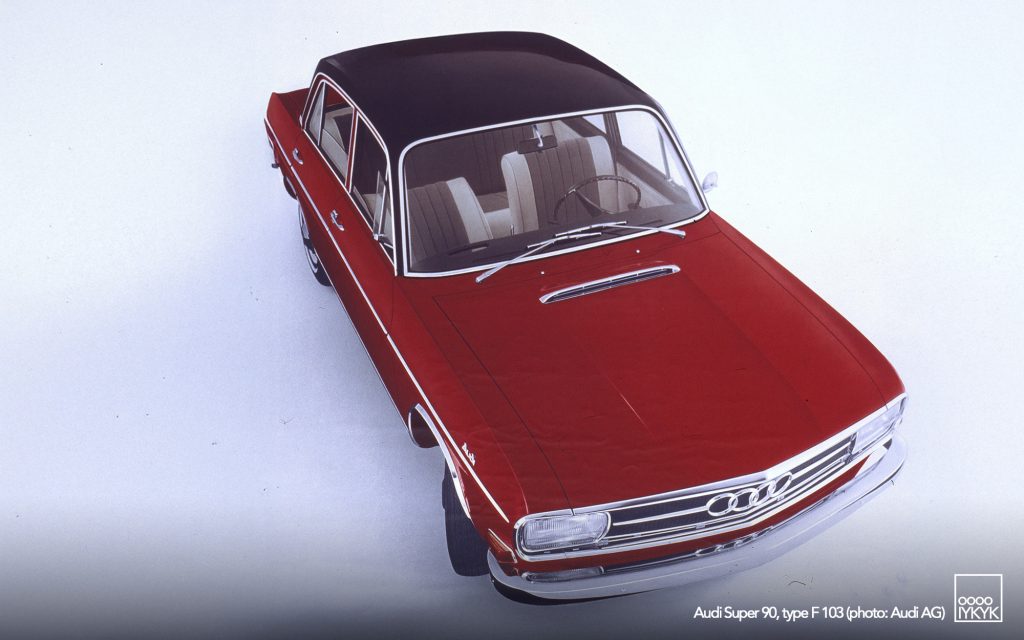
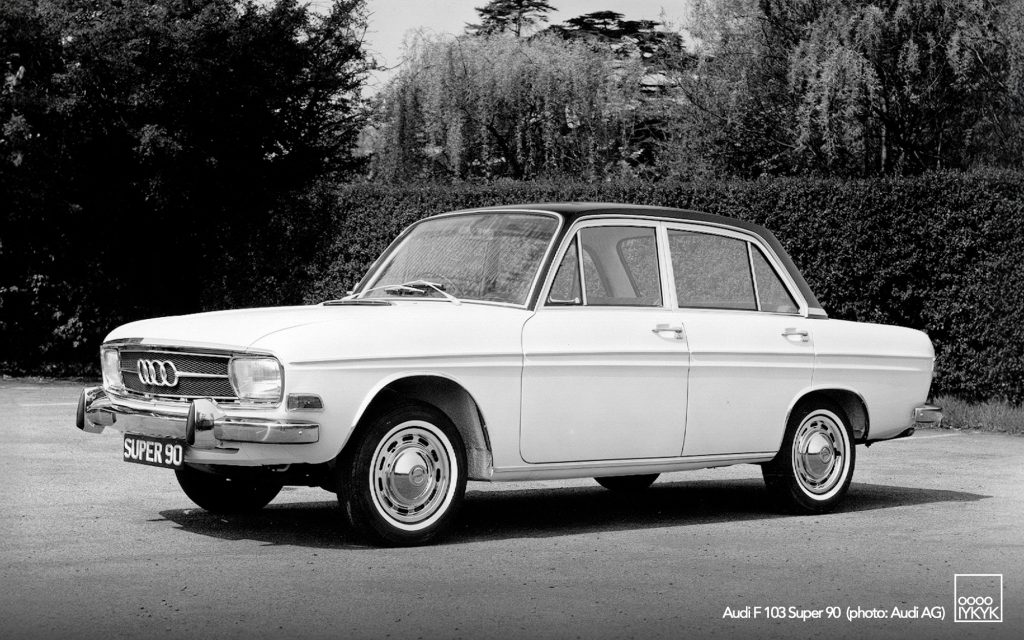
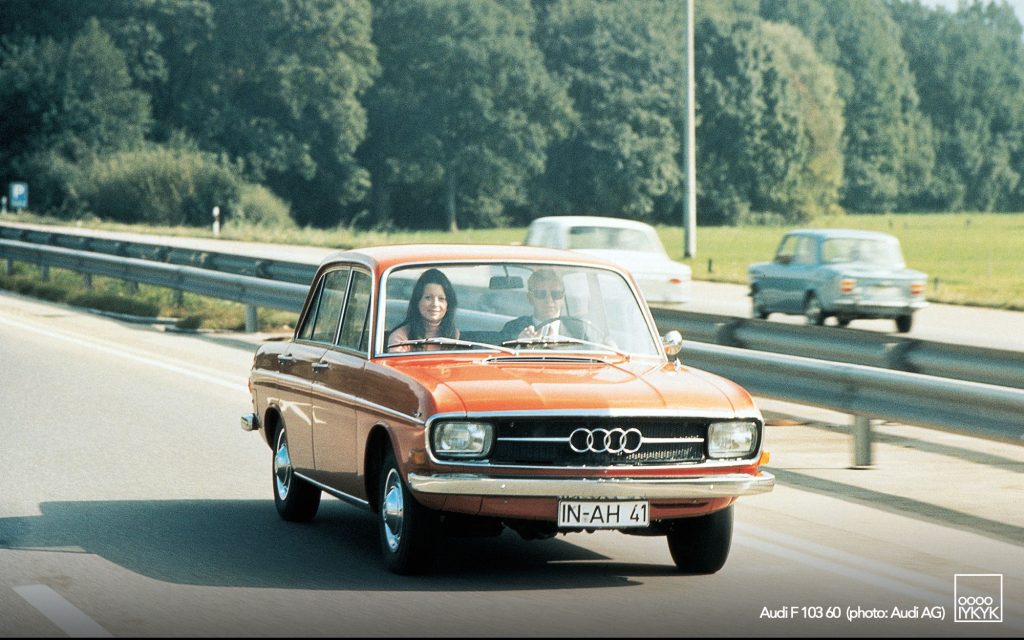
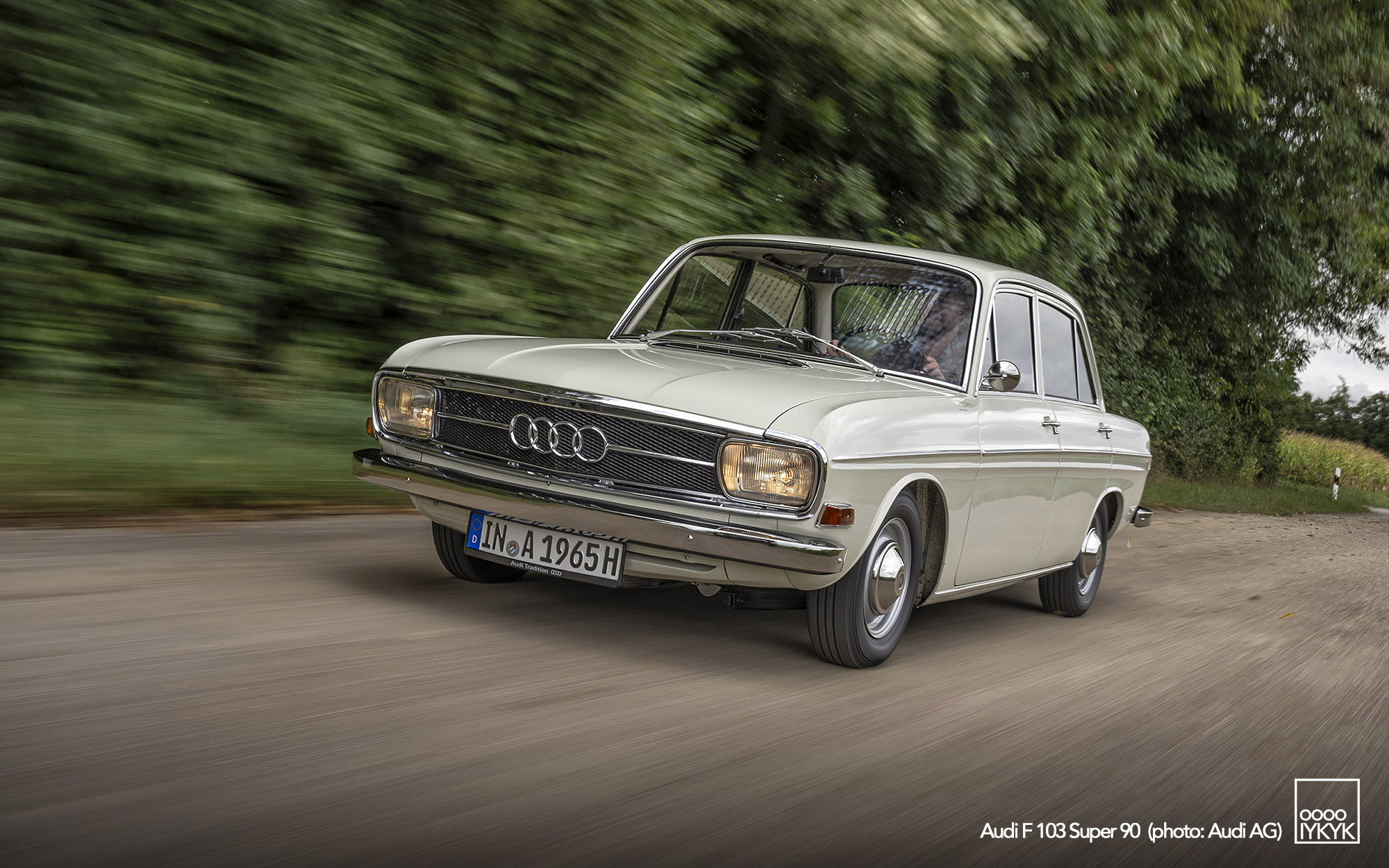
1966 marked the arrival of the Audi 80 with 80 PS engine. This was shortly followed by a top of-the-line Audi Super 90 with even greater equipment levels. The Super 90 is most easily identified from other F 103 models by its chrome-plated trim on the wheel arches, while its larger displacement 90 PS engine helped it reach a top speed of 160 km/h. By 1968, a mass-market Audi 60 model featuring 55 PS was added to the range and the Audi 75 replaced the 72 and 80 PS offerings.
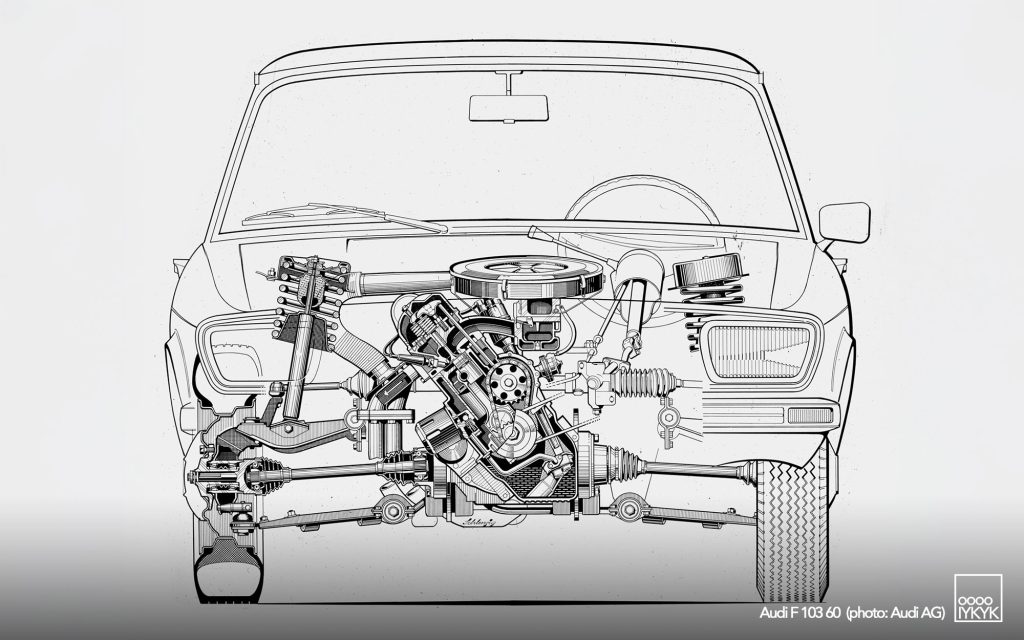
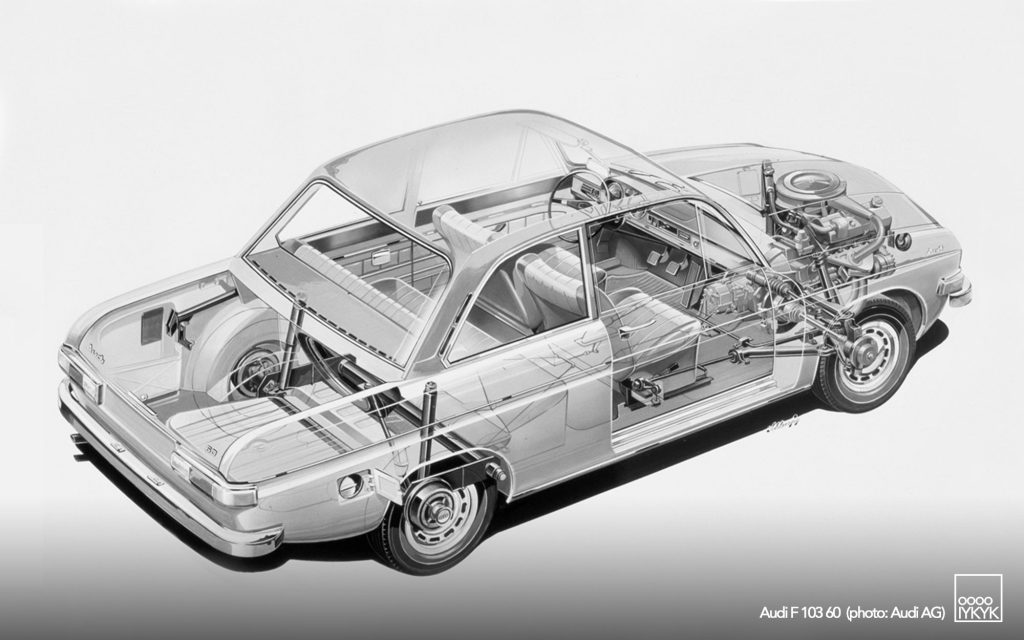
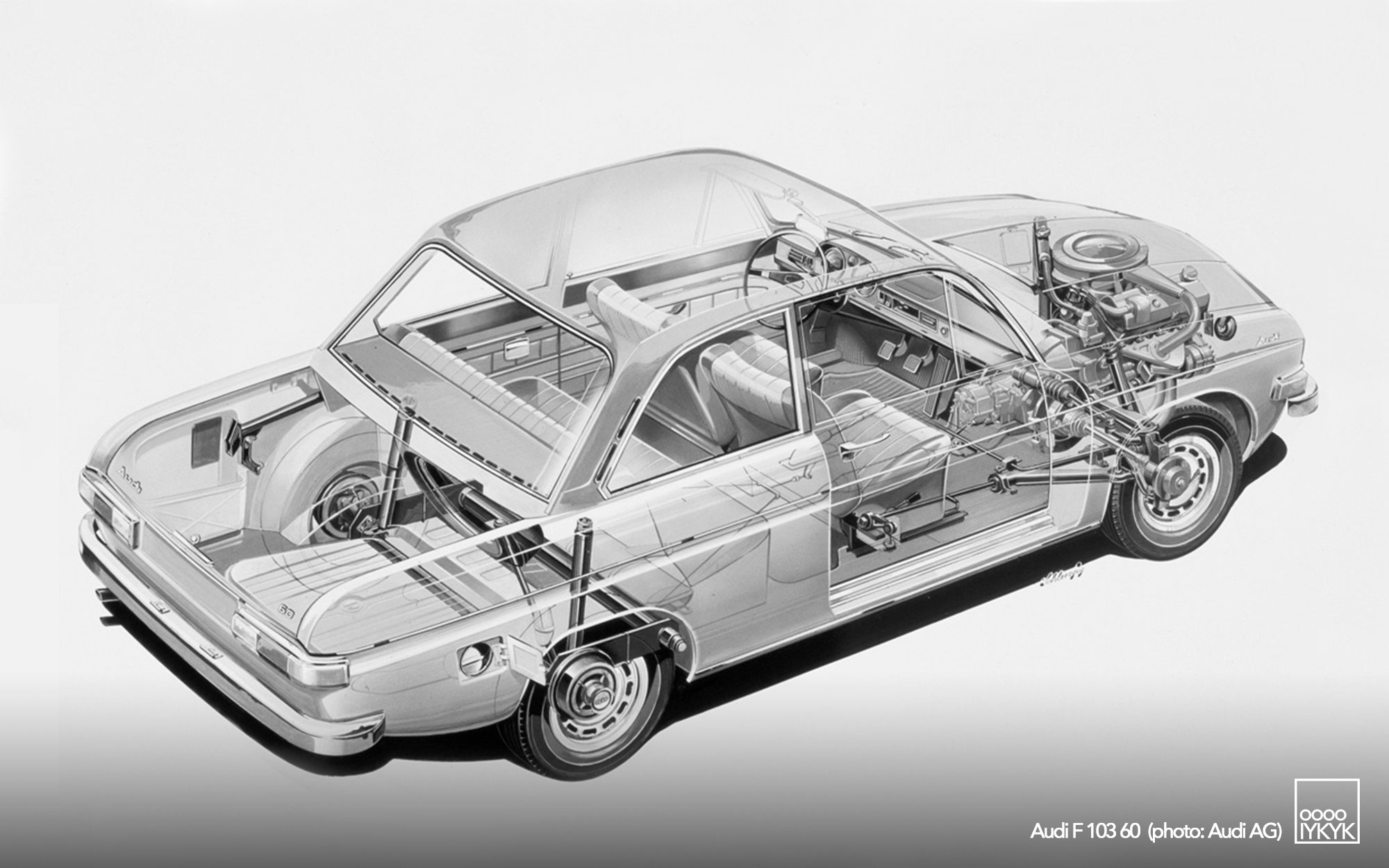
Period marketing of this post-war Audi referred to the engine as “medium-pressure” due to its compression ratio of 11.2:1 that was between that of a typical gasoline engine and a diesel engine of the time. Also, the DKW F 102 that served as the basis of the new Audi had to be lengthened by 100 mm and the radiator installed at an angle next to the engine on the left-hand side in order to accommodate the longer 4-stroke engine.
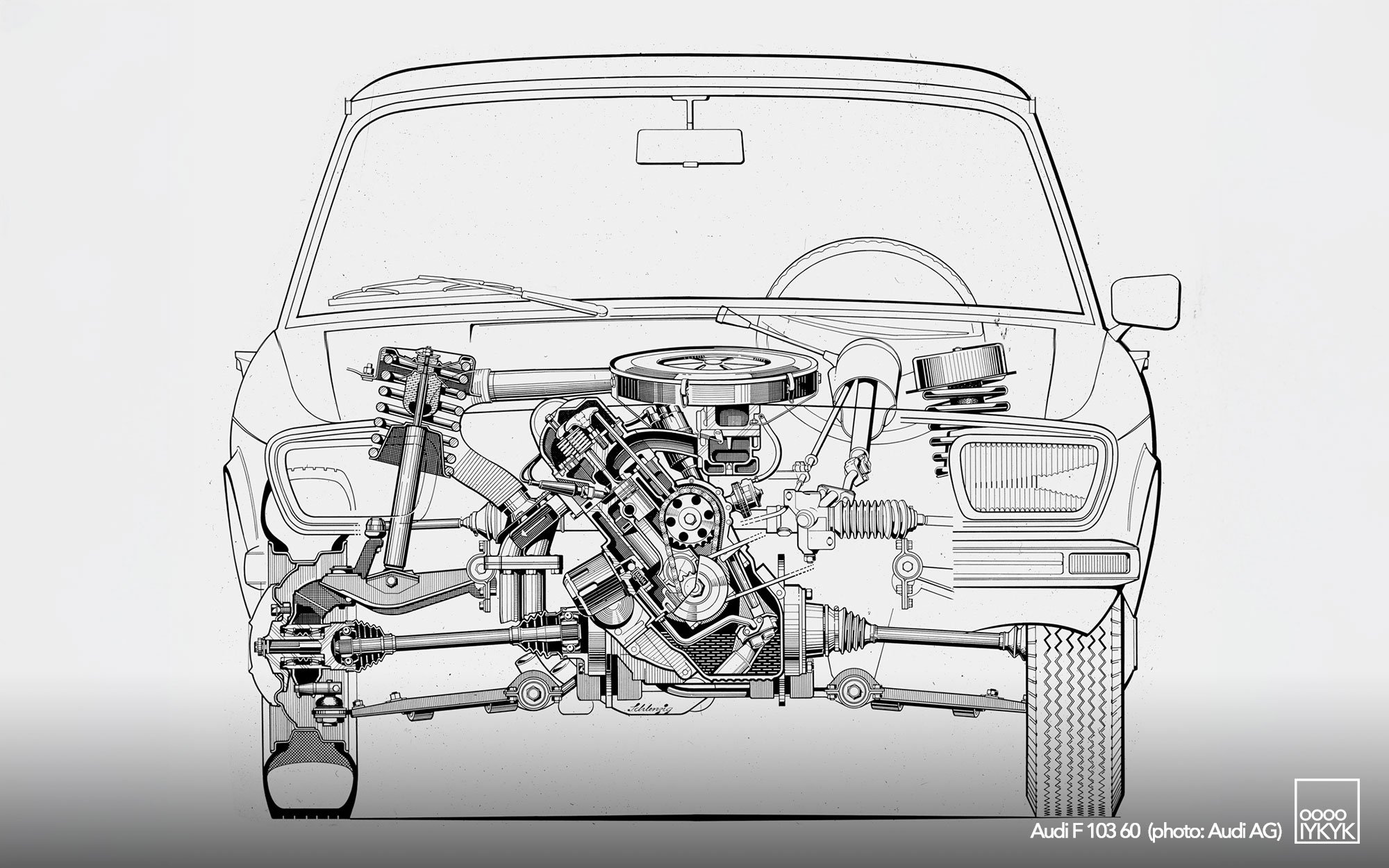
The F 103 was also fitted with a four-speed manual transmission with column-mounted shifter as standard. No automatic transmission was offered in the F 103 series. Like the earlier DKW F 102 it replaced, the Audi had disc brakes.
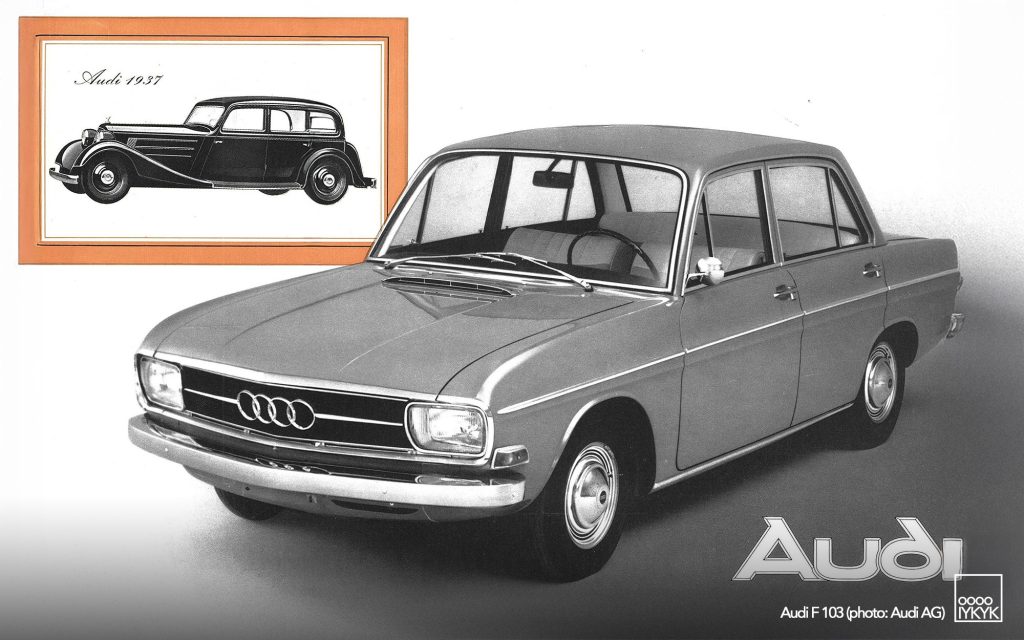
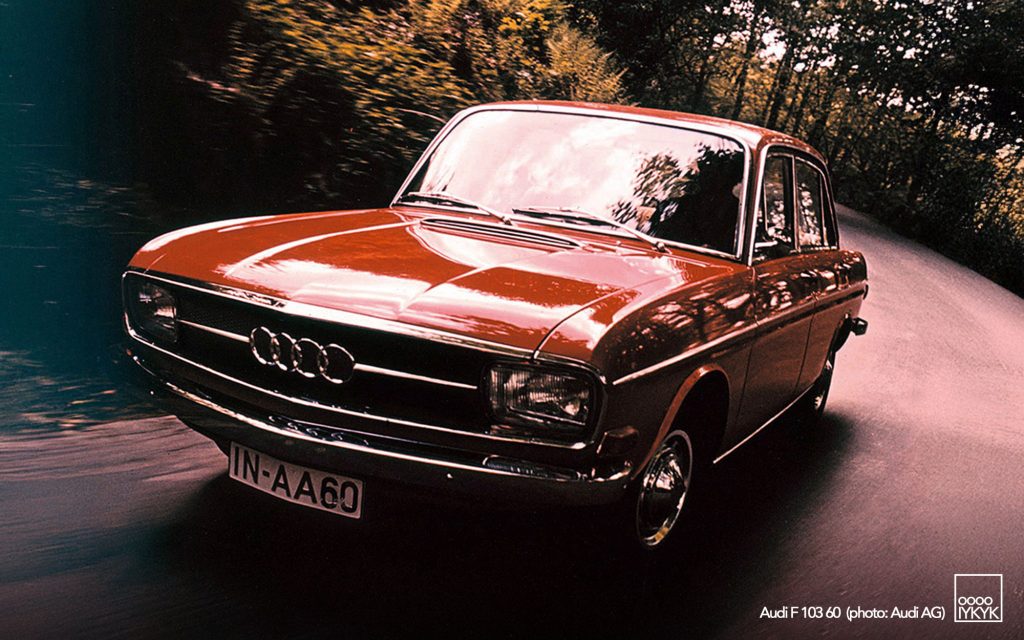
Visually, the round headlights and chrome-plated grille of the DKW F 102 were replaced with regtangular headlights and a wider black grille. Of course, this early design would go on to directly inform Audi design into the 1990s, then evolve into the Audi singleframe in the 2000s.
This new Audi would debut at the Frankfurt IAA motor show that fall of 1965 and was a resounding success. Signaling a new era for Auto Union GmbH and the reemergence of the Audi brand, some 16,000 examples of the new Audi were built in the first three months of production alone.
Over its seven-year production run, only minor changes were applied to the F 103. In 1970, all versions received an updated dashboard and parallel-action windshield wipers versus the earlier cars’ counter-rotating design. Optional equipment also added included a center-console-mounted gearshift that proved a bit more sporty than the standard column-mounted shifter. Later that summer, the fuel filler was relocated from the rear of the car to the right rear side panel. The rear lights were restyled to match those of the then-new C1 Audi 100 that had been in production since 1968 and was further influencing the trajectory of the company by expanding the Audi brand even further into the luxury segment.
The “Audi type” continued production into the summer of 1972. At that time, it was replaced with the new Audi 80 (B1) also known in the U.S.A. as Audi Fox.
During it production, the smallest and most affordable Audi 60 would become the most successful. Over half of the 416,852 cars built were Audi 60 and Audi 60 L models – 216,987 units.
Though rather conservative and unassuming by today’s standards, and hardly as romanticized as cars like the original “ur quattro”, it’s hard to overstate the importance of the F 103 based “Audi type” to Audi as we know it today. The car’s arrival was critical for the survival and growth of Auto Union GmbH. Its design laid the foundation for the Audi range that would follow over the coming years, while its obvious commercial success also contributed to the independence of the Audi brand within the Volkswagen Group as VW also moved to expand its business beyond the Beetle and moving to produce its own versions of Audi models like the 50 and B1 80 (ergo Passat / Dasher) as the companies moved deeper into the 1970s.
LEARN MORE AT THE AUDI FORUM ON JULY 23
On Wednesday, July 23, Audi historian and key former Audi Tradition staffer Ralf Friese will present the story of how the first postwar Audi came to be, and why this “original Audi” would go on to play such a pivotal role in shaping the future of the brand with the four rings. The event will take place at the Audi museum mobile in Ingolstadt. Admission is free. Registration is required by email to veranstaltungen.museum@audi.de or by telephone at 0841 89-34433. Please register by Monday, July 21. The lecture on Wednesday, July 23, begins at 6 p.m. Doors will open at 5:30 p.m.
PHOTO GALLERY