Watching auto industry news this week, it’s becoming increasingly apparent that Volkswagen Group’s newly approved restructuring plan goes considerably further than the possible end of vehicle production at Neckarsulm, Zwickau, Emden and Hanover.
Roughly 100,000 jobs could ultimately disappear through current and newly announced programs, while Volkswagen intends to dramatically reduce its model portfolio, simplify its corporate structure and reconsider hundreds of businesses and investments. For Audi, that review already appears to include everything from Italdesign and Ducati to football investments, historic manufacturing sites and potentially the future structure of the brand itself.
When reports first emerged that Volkswagen Group management wanted vehicle production to end at four German factories between 2031 and 2034, the possible loss of Audi’s Neckarsulm plant understandably dominated the conversation around the four-ring brand. That now appears to be only one part of a much larger story.
Volkswagen’s Supervisory Board unanimously approved what the company calls its Future Plan 2030 on September 3, setting into motion what Volkswagen describes as the most extensive transformation program in its history.
Volkswagen says approximately 50,000 additional positions worldwide will need to be eliminated under the new plan. Those come on top of roughly 50,000 reductions already underway through previous restructuring programs, bringing the potential total workforce reduction to approximately 100,000 jobs.
With Volkswagen Group currently employing roughly 650,000 people globally, the combined programs could ultimately eliminate around 15 percent of its workforce. And jobs are only one part of it.

FEWER MODELS, FEWER VARIANTS
Volkswagen intends to reduce the number of models offered across its brands by as much as 50 percent by 2035, while reducing the complexity of individual product offerings by as much as 75 percent.
The strategy aims to concentrate development, manufacturing and marketing resources on fewer products, increase production volume per model and reduce the fixed costs associated with maintaining overlapping architectures, derivatives, powertrains and regional variations.
For a sprawling multi-brand company encompassing Volkswagen, Audi, Porsche, Škoda, SEAT, CUPRA, Bentley and Lamborghini, that represents a fundamental rethink of the strategy Volkswagen Group followed for much of the Ferdinand Piëch era and what followed.
That previous model frequently sought to extract additional value from architectures and technology by proliferating products and derivatives across multiple brands. The new strategy appears to be moving in the opposite direction.
The implications for Audi aren’t yet clear because Volkswagen hasn’t published a list of models to be eliminated. But a reduction approaching 50 percent across the Group suggests considerably more than dropping a handful of slow-selling niche derivatives.
Model ranges, body styles, regional products and potentially entire product concepts will need to be reconsidered. And, that’s on top of an already culled lineup that’s only getting thinner. The Audi R8 and TT famously ended production in 2023. Since that time, the A5/S5/RS 5 Coupé and Cabriolet models disappeared when the model shifted to the B10 generation. The A1 and Q2 models are slated to end within the next few months. And, while the A8 is also wrapping up production with only enough North American units being made to finish out the calendar year, that last model is expected to be reborn on Porsche’s MSB platform underpinning the Panamera and Continental GT, while its production is expected to shift to Leipzig.
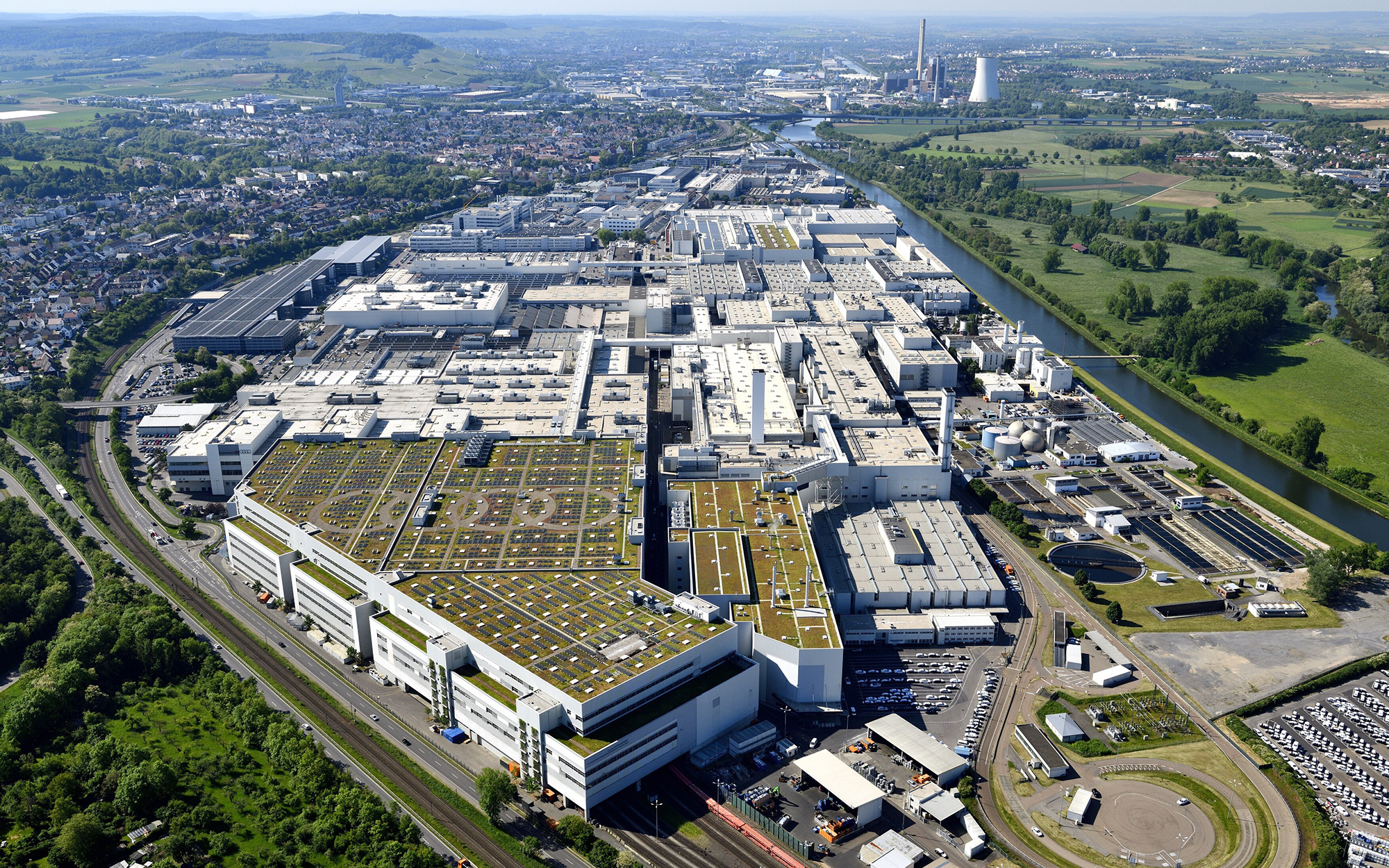
NECKARSULM, ZWICKAU, EMDEN AND HANOVER
The most visible manifestation remains Volkswagen’s industrial footprint. The Future Plan acknowledges more than 500,000 vehicles of unused annual manufacturing capacity in Europe. Production assignments for plants in Emden, Zwickau, Hanover and Audi’s Neckarsulm facility are expected to expire progressively between 2031 and 2034.
Rather than formally announcing that all four factories will simply close, Volkswagen has said alternative uses will be considered. That distinction remains a light of hope for Neckarsulm.
As has been explored here in previous stories, ending large-scale vehicle production in Neckarsulm doesn’t necessarily mean Böllinger Höfe, Audi Sport GmbH, Technical Development or Audi’s lightweight-construction expertise must disappear with it.
The physically separate Böllinger Höfe operation is currently being prepared to build Audi’s production sports car previewed by the Concept C beginning in 2027. Audi Sport GmbH is based in the area, while Neckarsulm represents decades of accumulated expertise in aluminum and increasingly sophisticated mixed-material construction.
The aforementioned relocation of the next-generation A8 to Leipzig raises additional questions about whether some of that technical center of gravity could eventually migrate toward Porsche, particularly if reports that the future A8 will use an architecture related to Porsche’s MSB platform prove correct.
Whatever ultimately happens, the approved Future Plan makes clear that Volkswagen considers its existing European manufacturing footprint unsustainable.
Neckarsulm is no longer an isolated rumor. It is part of a much larger effort to permanently reduce capacity.
Zwickau has a different significance to Audi. The modern Volkswagen plant isn’t currently central to Audi’s manufacturing strategy beyond the Q4 e-tron, but Zwickau is effectively the birthplace of the Audi brand. August Horch established Audi there in 1909 after leaving the company bearing his own name, and both Audi and Horch later became constituent companies of Auto Union.
Ending vehicle production there therefore carries considerably more historical significance for Audi than its current model allocation might suggest.
OSNABRÜCK: THE FORMER KARMANN PLANT COULD LEAVE AUTOMOTIVE PRODUCTION ENTIRELY
Another historically important German facility appears headed for an even more definitive change. Volkswagen has agreed key terms for the potential sale of Volkswagen Osnabrück GmbH. Under the proposed arrangement, Israeli investment company Aurelius Capital would acquire a majority interest, with the German state of Lower Saxony taking a minority stake.
The former automobile factory would then progressively transition into a center for defense and security technology. An initial project under consideration with Israel’s Rafael Advanced Defense Systems could manufacture systems and components for air-defense applications intended for Germany and Europe.
The transaction isn’t yet complete. Final agreements, corporate approvals and regulatory reviews remain outstanding, but Volkswagen intends to end vehicle production at Osnabrück in 2027.
For automotive enthusiasts, Osnabrück’s importance extends beyond its recent role building the Volkswagen T-Roc Cabriolet and handling overflow production of the Porsche 718 Cayman and Boxster. This is the former Karmann factory.
Wilhelm Karmann acquired the original Klages carriage-building operation in Osnabrück in 1901, beginning more than a century of automobile design, engineering and manufacturing at the site. Karmann’s relationship with Volkswagen began in 1949 and eventually produced millions of vehicles. Its work extended well beyond Volkswagen, however, as Karmann became one of Europe’s most important independent body manufacturers, engineering specialists and contract producers, working with Audi, Porsche, BMW and numerous other manufacturers.
Following Karmann’s insolvency in 2009, Volkswagen acquired significant portions of the operation and established Volkswagen Osnabrück GmbH. Volkswagen also inherited something else: Karmann’s historic vehicle collection.

WHAT HAPPENS TO THE KARMANN COLLECTION?
Volkswagen says the automobile collection at Osnabrück contains well over 100 vehicles and describes it as a treasure chest of automotive history. Its holdings extend beyond familiar production cars such as the Karmann Ghia, Beetle Cabriolet, Scirocco and Corrado to prototypes, concepts and vehicles created for manufacturers outside Volkswagen Group.
One of its most significant Audi-related cars is the 1973 Audi Karmann Asso di Picche. Karmann commissioned Giorgetto Giugiaro to create the four-seat sports coupé using Audi 80 mechanical components for the 1973 Frankfurt Motor Show. The sharply geometric Asso di Picche became one of Giugiaro’s influential “Ace” concepts and an important example of the design direction that would define his work later in the decade.
The original car survives and is part of the former Karmann collection and occasionally makes public appearances. It was taken to Pebble Beach in 2024 as part of a display by Italdesign. Today, along with several other Karmann collection cars, it is part of as special display at the Automuseum Melle located in Lower Saxony not far from the Osnabruck plant.
Now Volkswagen is surrendering majority control of Italdesign while potentially selling Karmann’s former factory. What happens to the greater collection maintained Osnabrück remains unclear.
Nothing we’ve seen in the proposed factory transaction establishes whether the historic vehicles would be included in the sale, remain at Osnabrück under new ownership or be relocated by Volkswagen. And while the cars might be sold or culled, it is doubtful that an Israeli defense contractor would have any interest in it.
What we do know is that the collection is clearly still active. Volkswagen Classic has used its vehicles for exhibitions, rallies and media appearances, and selected cars from the collection have been publicly exhibited away from the factory. If Volkswagen retains ownership, relocating the cars to Volkswagen Classic, Audi Tradition and other appropriate Group heritage collections would appear to be a logical possibility. The collection’s future is therefore worth watching independently of the factory itself.
Osnabrück also illustrates how much further Volkswagen’s restructuring can go than simply ending a production assignment. At Neckarsulm, Zwickau, Emden and Hanover, Volkswagen is discussing the end of vehicle production while considering alternative uses. At Osnabrück, prospective new owners and an entirely different industrial purpose have already been identified. If completed, one of Germany’s most historically important automotive manufacturing facilities would leave the automobile industry altogether.
VOLKSWAGEN IS ALSO SHRINKING THE COMPANY ITSELF
Perhaps more telling is a less visible part of the Future Plan. Volkswagen intends to simplify its corporate structure and reduce its portfolio of companies and equity holdings by roughly one-third. Reporting around the restructuring indicates approximately 600 of the Group’s roughly 2,000 businesses are being reviewed.
That puts several seemingly unrelated Audi stories from recent months into a different context. Volkswagen isn’t simply asking which factories it needs. It is determining which businesses it needs to own.
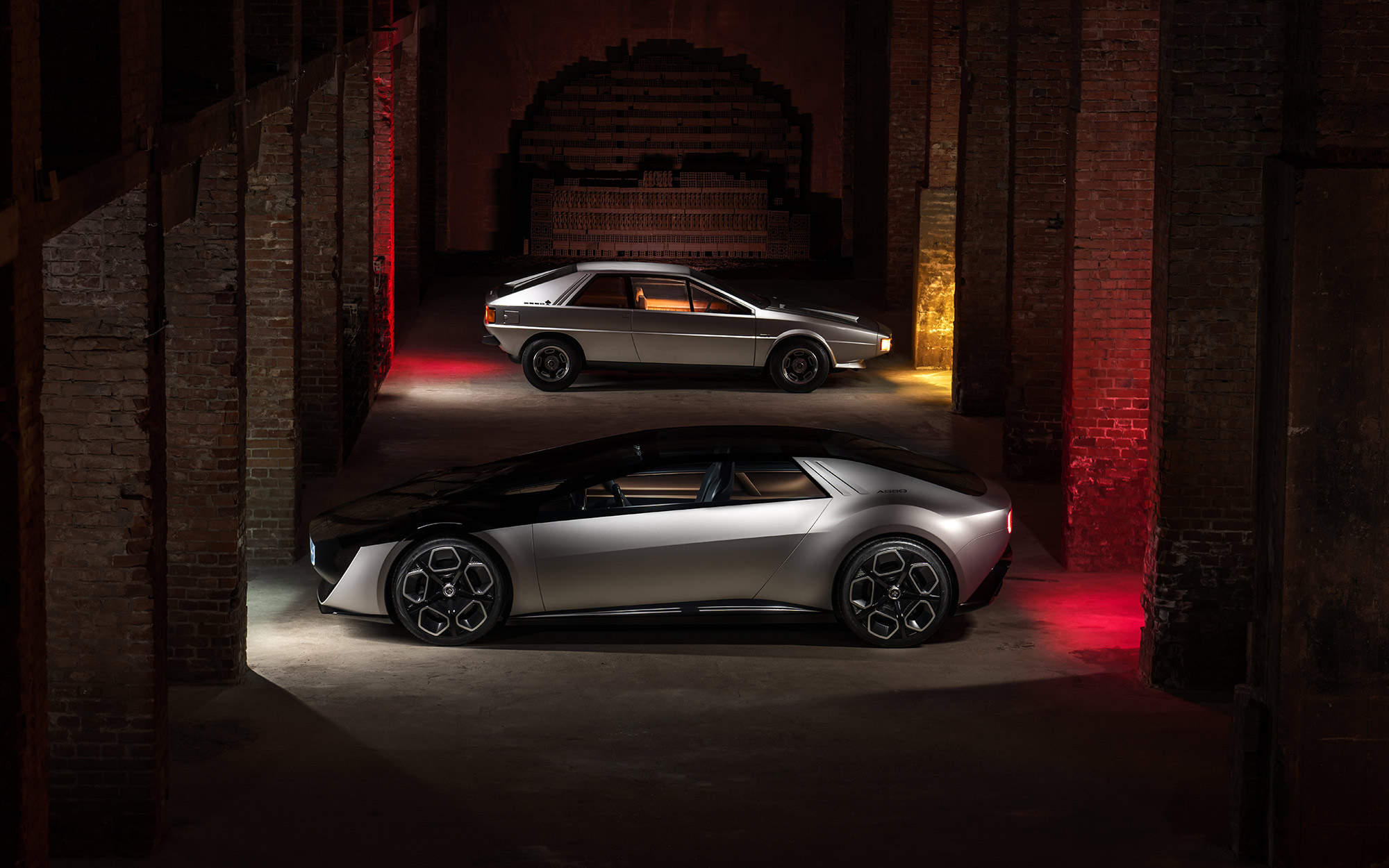
ITALDESIGN CONTROL HAS ALREADY CHANGED HANDS
One of those changes is no longer hypothetical. As previously reported here, Audi Group agreed to sell a majority interest in Italdesign to U.S.-based technology company UST. That transaction has now officially closed.
UST has completed its acquisition of 60 percent of Italdesign, while Audi Group retains a 40-percent minority interest through Automobili Lamborghini. Italdesign continues operating under its own name from Moncalieri near Turin.
Audi therefore hasn’t severed its relationship with Italdesign. It remains a shareholder and strategic partner. But control has left Volkswagen Group.
Volkswagen acquired control of Giorgetto Giugiaro’s company through Lamborghini in 2010, with Audi subsequently acquiring the remaining Giugiaro family interest in 2015. For more than a decade, Italdesign’s design, engineering, prototyping and low-volume manufacturing capabilities were effectively internal Volkswagen Group resources.
They no longer are. Viewed against the Future Plan, the timing makes considerably more sense.

DUCATI MAY BE NEXT
An even more prominent Audi-controlled asset is now formally under review. Audi CEO Gernot Döllner has confirmed that Volkswagen is considering whether to sell Ducati, the Bologna-based motorcycle manufacturer Audi acquired in 2012.
Döllner has characterized the discussion as part of disciplined portfolio management while emphasizing that no decision has yet been made. And while Ducati isn’t currently being reported as sold, its ownership is being openly questioned at the highest levels of Audi.
Ducati is also quite different from an underutilized factory or loss-making subsidiary. It is a prestigious, globally recognized performance brand with obvious cultural overlap with Audi and Lamborghini. Its engineering, motorsport and brand positioning have generally made it one of the more logical non-automotive additions to Audi’s portfolio.
Volkswagen nevertheless appears willing to ask whether owning it remains necessary. That may be one of the clearest indications yet of how aggressively the Group is reassessing its structure.
Audi considered selling Ducati once before in 2017, only to abandon the idea following resistance within Volkswagen. This time Ducati is being evaluated within a much broader mandate to reduce corporate holdings.
EVEN FOOTBALL IS UNDER REVIEW
The Group is also examining its extensive involvement in professional football, including equity positions held directly through Audi and Porsche.
Of particular significance to Audi is FC Bayern München. Audi owns 8.33 percent of Bayern, in addition to maintaining a long-running sponsorship and vehicle partnership with the club. Audi became a shareholder in Bayern in 2011, connecting two of Bavaria’s highest-profile international brands.
Volkswagen’s review reportedly extends to Audi’s Bayern position, its interest in FC Ingolstadt, Porsche’s investment in VfB Stuttgart and Volkswagen’s relationship with VfL Wolfsburg.
For Audi, Bayern is particularly symbolic. It represents a long-term brand association and equity investment closely connected geographically and culturally to Audi’s Bavarian identity. A sale would be financially insignificant compared with closing a major automobile plant or divesting Ducati.
Strategically, however, it would reinforce the same message: investments once justified through brand association and long-term relationships are now being tested against a stricter definition of core business.
No final decision on football holdings has been announced.

PORSCHE COMPLETES ITS EXIT FROM BUGATTI RIMAC AND RIMAC GROUP
Audi isn’t the only Volkswagen Group brand shedding investments accumulated during an earlier period of expansion. Porsche confirmed September 9 that it has completed the sale of its stakes in both Bugatti Rimac and Rimac Group following regulatory approval, formally ending its ownership relationship with the Croatian performance-car and technology group.
The agreements were originally signed in April, but the transaction has now closed. Porsche says it will receive approximately €1 billion from the sale, with €250 million of the proceeds allocated to further funding its pension obligations.
Porsche itself describes the transaction as “another step in focusing on its core business,” language that fits remarkably well with the larger restructuring now underway across Volkswagen Group.
The divestment is particularly notable given how quickly the relationship developed. Porsche first invested in Rimac in 2018, subsequently increasing its stake as the Croatian company became an increasingly important technology partner. That relationship became still more significant when Volkswagen Group restructured Bugatti in 2021, combining the historic French marque with Rimac Automobili to create Bugatti Rimac.
Under that arrangement, Rimac Group initially held 55 percent of Bugatti Rimac while Porsche held 45 percent directly. Porsche simultaneously owned a minority interest in Rimac Group itself, giving it exposure to both the Bugatti automobile business and Rimac’s wider electric-vehicle technology operations.
That structure has now come to an end. For Volkswagen Group, this represents the final stage of a much larger retreat from direct ownership of Bugatti.
Volkswagen acquired Bugatti in 1998 under Ferdinand Piëch and subsequently used the marque to pursue some of the most ambitious engineering programs in modern automotive history. The Veyron and Chiron weren’t simply products intended to generate conventional returns. They demonstrated what Volkswagen Group’s engineering resources could accomplish when cost and complexity were secondary to technical ambition.
That made Bugatti one of the most visible symbols of the Piëch-era Volkswagen philosophy. Volkswagen began unwinding that ownership when Bugatti Rimac was formed, but Porsche’s continuing stakes maintained a significant Volkswagen Group connection to the company. That connection has now been severed financially.

PORSCHE IS RESTRUCTURING TOO — BUT DIFFERENTLY
Porsche offers an interesting parallel because it faces many of the same pressures as the wider Volkswagen Group while pursuing a somewhat different response. Its problems are substantial.
Porsche delivered 279,449 vehicles in 2025, down 10.1 percent from the previous year. Operating profit fell from €5.64 billion to €413 million, while operating return on sales collapsed from 14.1 percent to 1.1 percent.
The company attributes much of that deterioration to approximately €3.9 billion in extraordinary costs associated with product-strategy changes, restructuring, battery activities and U.S. tariffs.
Porsche has consequently begun its own extensive restructuring. Management and labor representatives have agreed to eliminate thousands of positions through 2035, primarily through natural attrition, partial retirement and voluntary severance programs. Combined with earlier measures, Porsche expects roughly 9,000 positions — approximately one in five jobs — to disappear by 2035. Employees will also accept slower wage growth, reduced bonuses and changes to working conditions.
At the same time, Porsche is simplifying its corporate structure and converting investments into liquidity. The approximately €1 billion generated by the Bugatti Rimac and Rimac Group transaction provides an unusually visible example. Porsche says €250 million will be directed toward pension obligations, while the transaction raises its expected 2026 Automotive Net Cash Flow Margin from a previously forecast 3 to 5 percent to 5.5 to 7.5 percent.
Yet Porsche’s product strategy provides an interesting contrast with Volkswagen Group’s broader simplification. Rather than simply reducing its model portfolio, new Porsche CEO Michael Leiters has indicated that the company is considering expansion into additional high-margin segments, potentially including products positioned above its current two-door sports cars and Cayenne.
Porsche calls the strategy “Value over Volume.” In other words, Porsche is reducing employees, costs, corporate holdings and complexity while potentially broadening its automobile portfolio where management believes additional products can generate sufficiently high margins.
Porsche is also investing heavily in Zuffenhausen and Weissach rather than simply retreating from its traditional German engineering and production centers. That could become relevant to Audi as Volkswagen reallocates technical responsibility and capital among its brands.
If platforms, manufacturing expertise or specialist engineering can be consolidated around Porsche-led programs while still serving Audi, Bentley or Lamborghini products, the Future Plan provides Volkswagen with a powerful incentive to do so.
The reported future A8 shift in platform and production in Leipzig offers one potential example.
SEAT BRAND COULD DISAPPEAR AS CUPRA GROWS
Volkswagen’s product rationalization may ultimately extend beyond individual models. SEAT S.A. confirmed September 4 that the long-term future of the SEAT automobile brand itself is now under review, with a gradual phase-out beyond 2030 explicitly identified as one possible outcome. No final decision has been made.
Existing product plans will continue, including mild-hybrid versions of the Ibiza and Arona scheduled for 2027. The more consequential question concerns what happens when SEAT’s current generation of products reaches the end of its lifecycle.
SEAT S.A. says increasingly demanding regulations, the economics of electrification and the investment required to develop another generation of models are making the business case for continued investment in the SEAT brand more difficult.
That’s an extraordinary admission for a marque established in 1950 and controlled by Volkswagen since the 1980s. It’s also an unusually clear example of the calculation Volkswagen is now making across the Group.
Critically though, SEAT S.A. isn’t going away. In fact, Volkswagen intends to make the Spanish company more important. The distinction is between SEAT the brand and SEAT S.A. the industrial company.
SEAT S.A. says its future is secure, with Martorell gaining additional manufacturing responsibility within Volkswagen Group. The company is leading industrialization of the MEB21 architecture and production of the Electric Urban Car Family, while actively seeking an additional platform assignment for the factory. SEAT S.A. even expects employment to increase as those industrial responsibilities expand.
The investment is instead increasingly concentrating around CUPRA. Created as an independent brand only in 2018, CUPRA has now delivered more than one million vehicles and launched eight models in eight years. SEAT S.A. describes it as the company’s principal driver of growth and profitability.
The objective through 2030 is to push CUPRA toward a 3-percent European market share while expanding internationally. Entry into the Middle East is planned for the third quarter of 2027, while the company continues to evaluate additional markets — including the longer-term possibility of entering the United States.
That makes SEAT and CUPRA a particularly useful illustration of what Volkswagen’s restructuring actually means. The company is identifying where it believes investment produces the strongest return, concentrating resources there and questioning whether parallel products, brands and corporate structures continue to justify their existence.
In Spain, that could eventually mean preserving and expanding the company, factories, employees and technical capabilities of SEAT S.A. while allowing the historic SEAT automobile brand itself to disappear.
There is an interesting Audi connection here as well. CUPRA has become the only Volkswagen Group brand outside Audi currently offering Audi’s 2.5 TFSI five-cylinder engine. The revived Formentor VZ5 uses the 390 PS version of the engine, with CUPRA securing another limited run of 4,000 five-cylinder cars after the success of the original 7,000-unit VZ5 production run.
The timing is notable because the future of Audi’s five-cylinder has itself been uncertain. Increasingly demanding European emissions regulations had raised the prospect that the 2.5 TFSI might disappear when its current applications reached the end of their lifecycles. More recently, Audi Sport management has indicated that technical solutions are being investigated that could potentially extend the engine into another generation.
There are also industry rumors that CUPRA’s interest in retaining the engine has helped support the investment required to extend its regulatory life. We haven’t yet found sufficient confirmation to establish that CUPRA is actually funding development of an EU7-compliant version, so that should remain firmly in the category of rumor. But the possibility is strategically interesting.
If CUPRA is becoming important enough within Volkswagen Group to help justify continued investment in a specialized Audi-developed engine, that would demonstrate how dramatically the hierarchy within the Group has changed since CUPRA became an independent brand just eight years ago.
And it would illustrate another side of Volkswagen’s simplification strategy. Reducing complexity doesn’t necessarily mean eliminating every unusual product or technology. If multiple brands can share the development cost and the resulting products generate sufficient margins, specialized engineering may still have a business case.
The question increasingly appears to be not whether something is interesting enough to build, but whether Volkswagen can make enough money from it to justify continuing to build it.
ALL THAT COST CUTTING
Volkswagen is reconsidering how large the Group should be, how many people it should employ, how many factories it should operate, how many vehicles it should develop and how many businesses it needs to own.
Volkswagen faces weaker profitability, declining market position in China, intense competition from rapidly expanding Chinese manufacturers, enormous investment requirements for electrification and software, high European manufacturing costs and new tariff pressures in the United States.
The Group says it currently has European manufacturing capacity for more than 500,000 vehicles it doesn’t need. Its response is consequently moving beyond incremental savings.
Volkswagen is still planning enormous investment in products, technology and research and development. The strategy is therefore as much about where Volkswagen continues to spend money as where it cuts it.
Capital previously spread across marginal models, underutilized factories, redundant corporate structures or peripheral investments can instead be concentrated on businesses management believes offer the strongest prospects for acceptable returns.
Financially, the logic is understandable. Strategically, it represents a fundamental change from the practices Volkswagen Group enthusiasts have known over the past three decades.
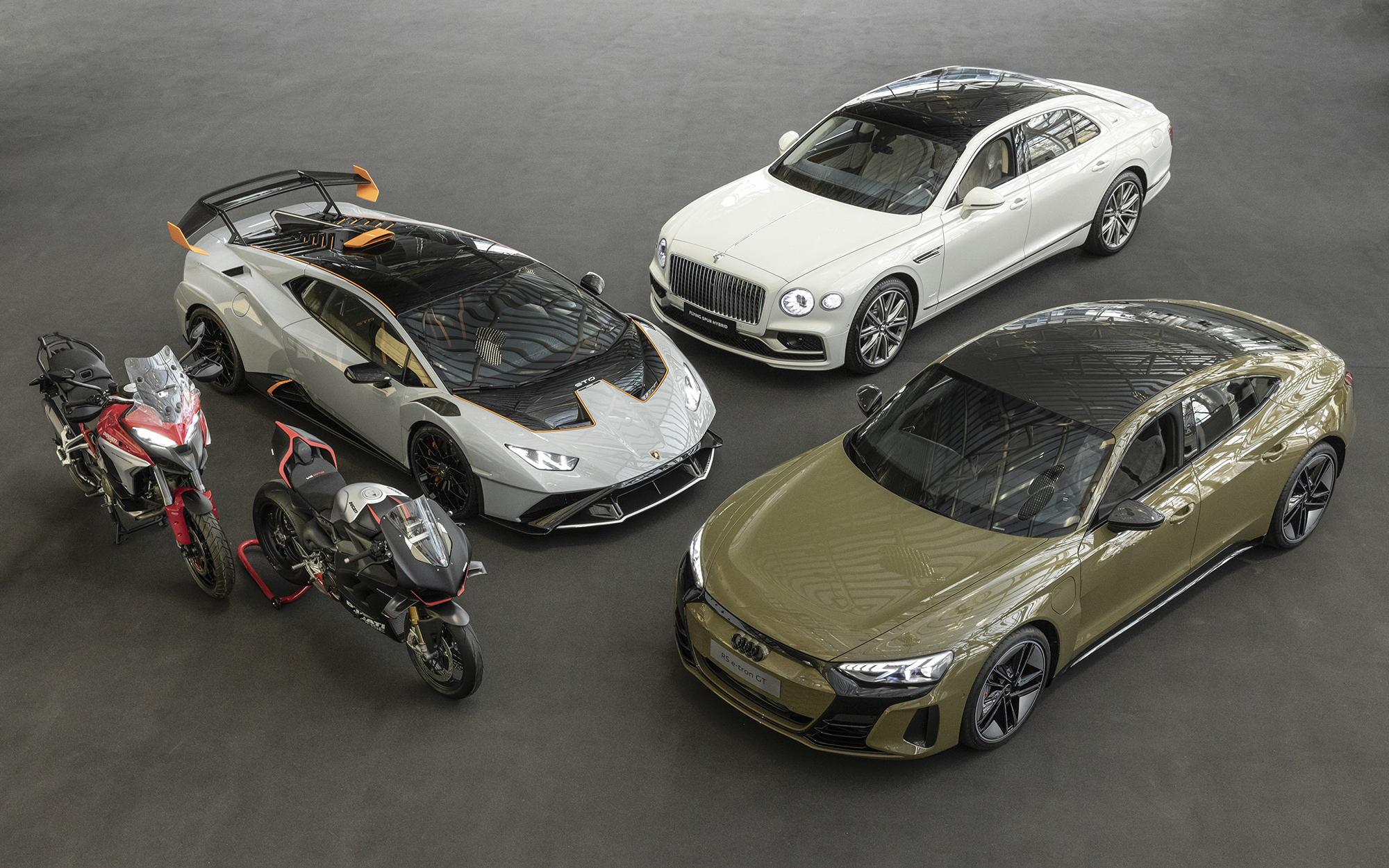
WHAT DOES THAT MEAN FOR AUDI?
Audi may be one of the most interesting brands through which to watch this transformation. Under Ferdinand Piëch and the generation that followed him, Volkswagen Group frequently used technical ambition and portfolio breadth as competitive advantages.
Audi developed aluminum-intensive structures. Lamborghini was rebuilt using Group engineering resources. Bugatti became an engineering showcase. Ducati joined Audi. Italdesign became part of Lamborghini. Karmann’s assets became Volkswagen Osnabrück. Platform sharing enabled increasingly broad product portfolios across virtually every segment.
In doing so, the Group accumulated vast resources and capabilities. Design studios. Engineering companies. Specialist manufacturers. Brands. Factories. Technical expertise. Motorsport operations. Strategic investments and partnerships.
Some of that strategy remains deeply embedded in today’s Volkswagen Group. But the Future Plan suggests the threshold for retaining those capabilities has changed.
For Audi, that means uncertainty surrounding Neckarsulm can’t be viewed independently from the potential sale of Ducati, the effective sale Italdesign, potential drawback from football, the future of historic facilities such as Osnabrück or the coming reduction in model complexity.
These are all changes coming to Volkswagen that can and likely will affect the Audi norm at a time when the brand itself is organizing a radical redo. And while cars like the Nuvolari and Concept C might signal a more Porsche-like approach “Value over Volume” approach, it’s unlikely Audi can survive on such a model alone while also competing with Porsche or even brands under its management such as Lamborghini and Bentley.
To survive and thrive, it’s highly unlikely a winning Audi strategy would be to just build 1,000 hp hyper cars like Bugatti once did within the group and hope for some residual sales of Q9s to the über wealthy. Within the group, Audi is pivotally important part of the conglomerate’s positioning within the approachable premium space.
And while private parties at Pebble Beach and $10,000 hospitality experiences at the Miami Grand Prix are most certainly nice, they still need to sell everyday cars to everyday people. In such a context, the brand’s lack of presence at Monterey’s club-level Legends of the Autobahn or last weekend’s L’OE Show in Pennsylvania with 30,000+ Volkswagen Group fans in attendance sure makes it feel like there’s still plenty of room for fine tuning that can be done in order to save cuts with longer runways such as Neckarsulm.
WHAT DOES VOLKSWAGEN NEED TO OWN, BUILD OR OPERATE ITSELF? need to own, build and operate itself?
The answer could produce a Volkswagen Group that is substantially smaller, simpler and potentially more financially resilient.
It may also produce one with fewer of the unusual engineering programs, industrial capabilities, brand relationships and specialist businesses that helped make the company unusually interesting in the first place.
For Audi, the implications of that transformation are only beginning to become visible.
SOURCES
- Associated Press — Volkswagen restructuring, workforce and German manufacturing plans
- The Wall Street Journal — Volkswagen board approval, workforce reductions and model portfolio
- Yahoo Finance — model portfolio and complexity reductions
- Volkswagen Group — Future Plan 2030
- Heilbronner Stimme — reported 2034 end of production at Audi Neckarsulm
- Tagesschau / SWR — Neckarsulm restructuring and regional response
- Bloomberg — proposed sale of Volkswagen Osnabrück and transition to defense production
- Volkswagen — Volkswagen Osnabrück and former Karmann vehicle collection
- Italdesign — 1973 Audi Karmann Asso di Picche
- Just Auto — completion of UST majority acquisition of Italdesign
- Italdesign — UST acquisition and continuing Audi/Lamborghini minority ownership
- GPOne — Audi confirmation that a Ducati sale is being considered
- Bavarian Football Works — Volkswagen Group review of football investments
- Porsche Newsroom — 2025 financial results and Strategy 2035
- Porsche Newsroom — Porsche Future Package and German investment plans