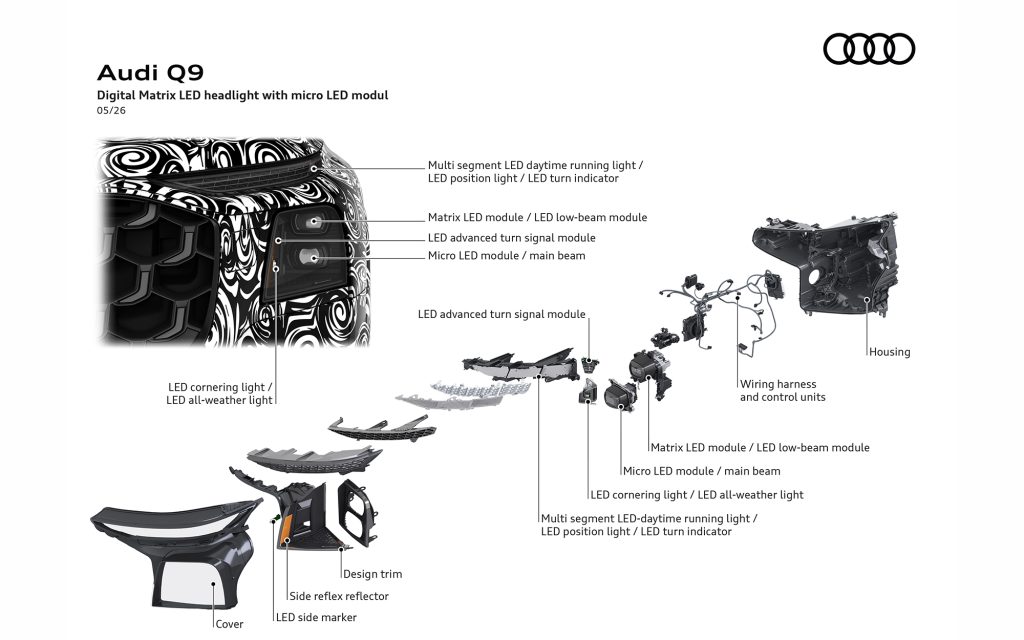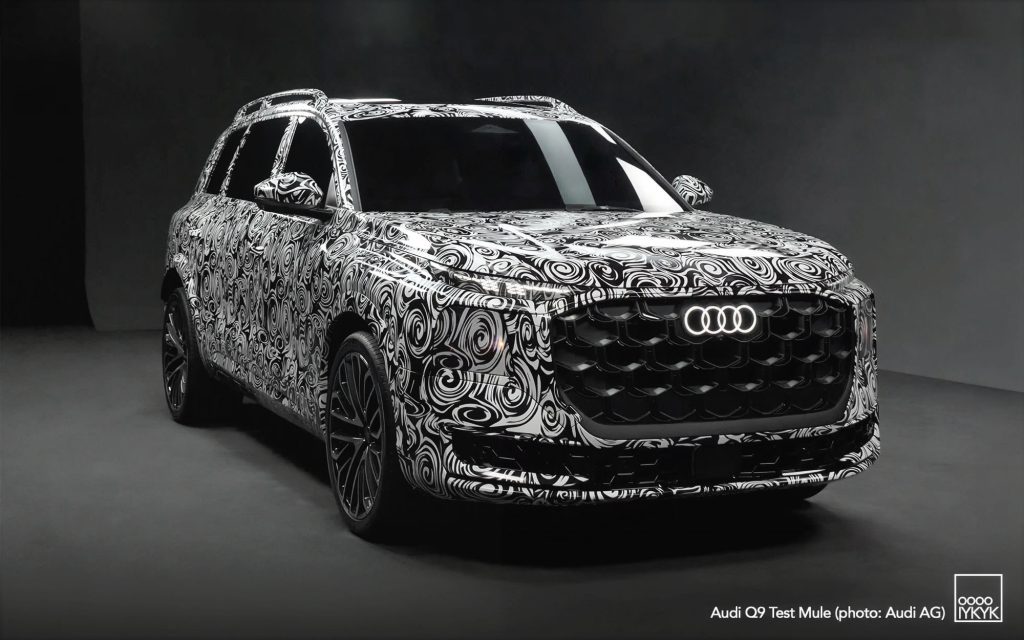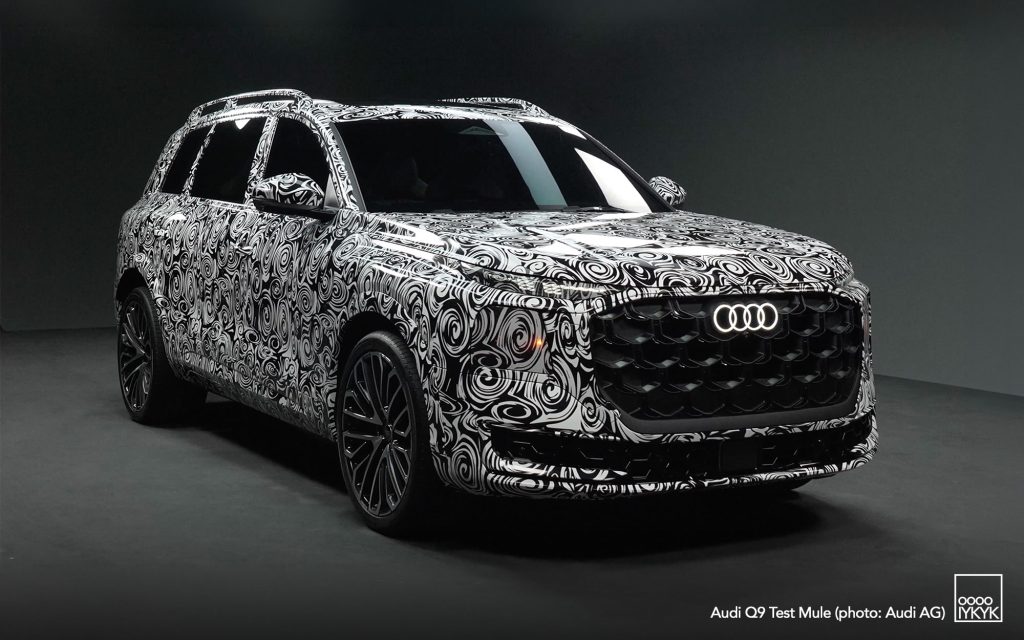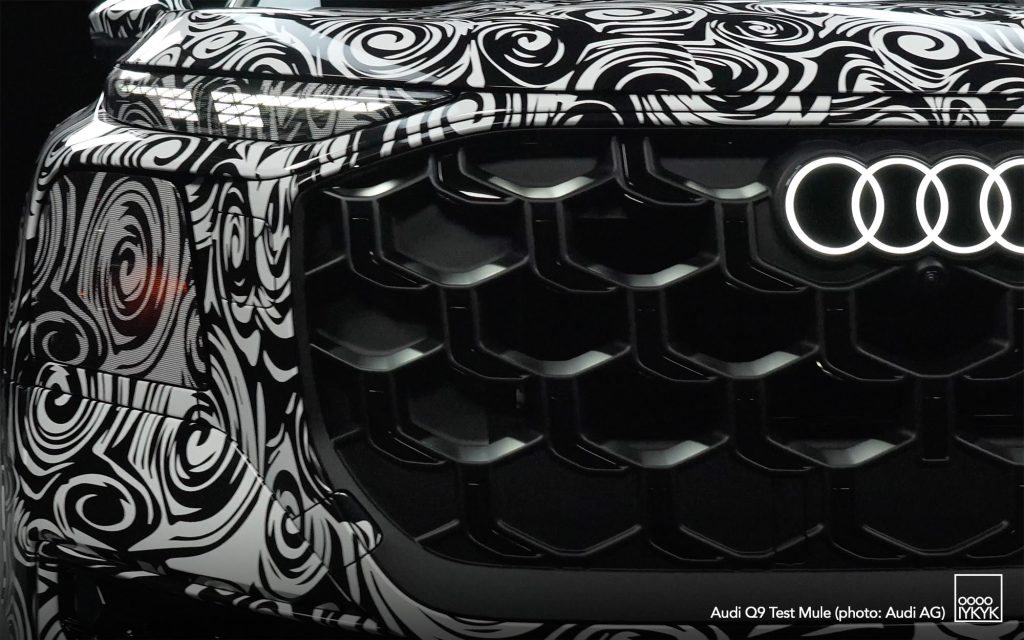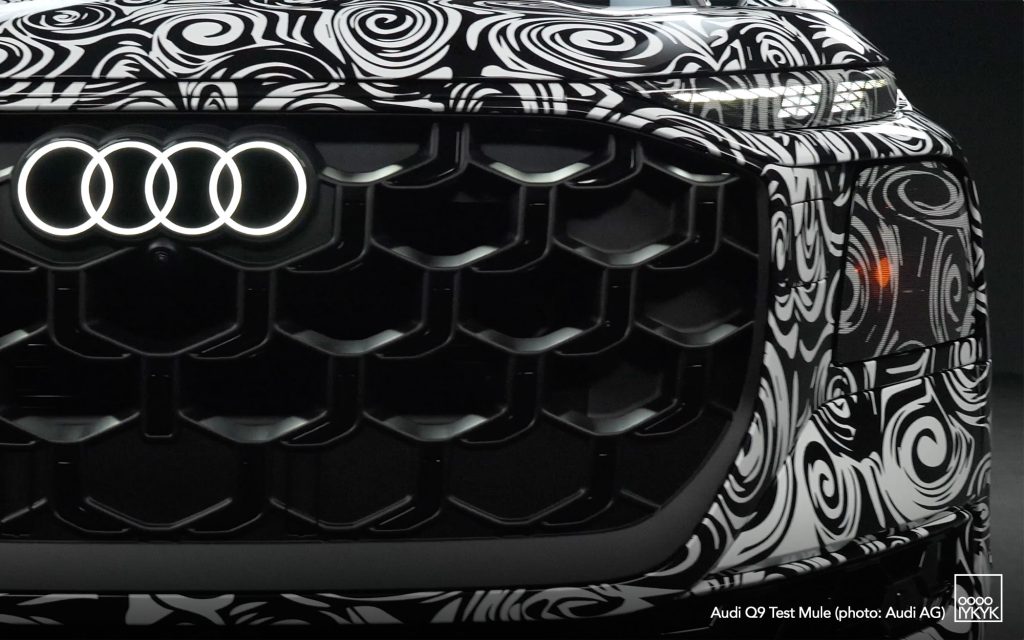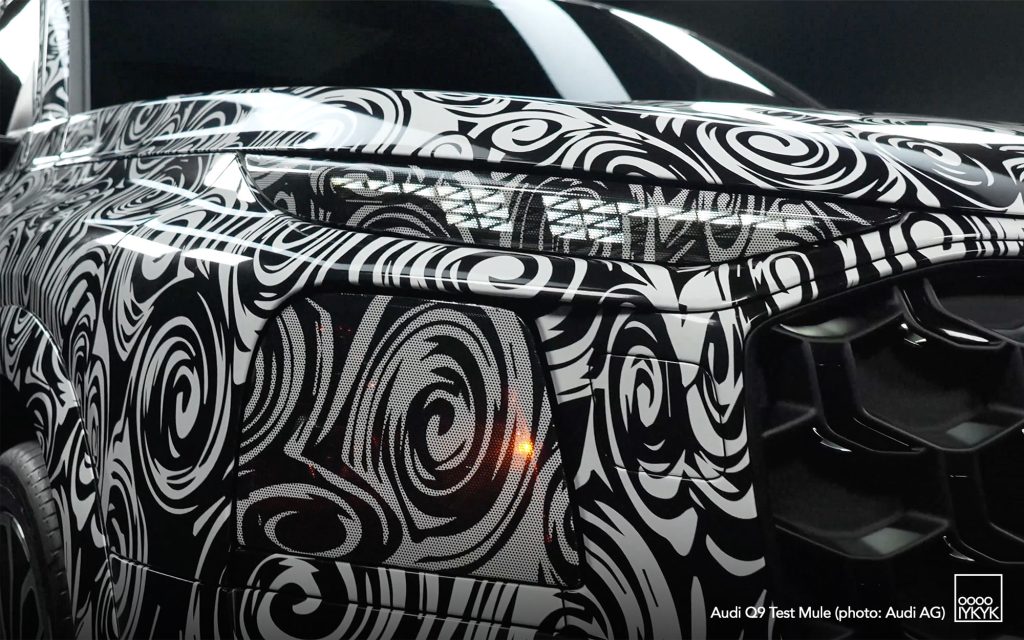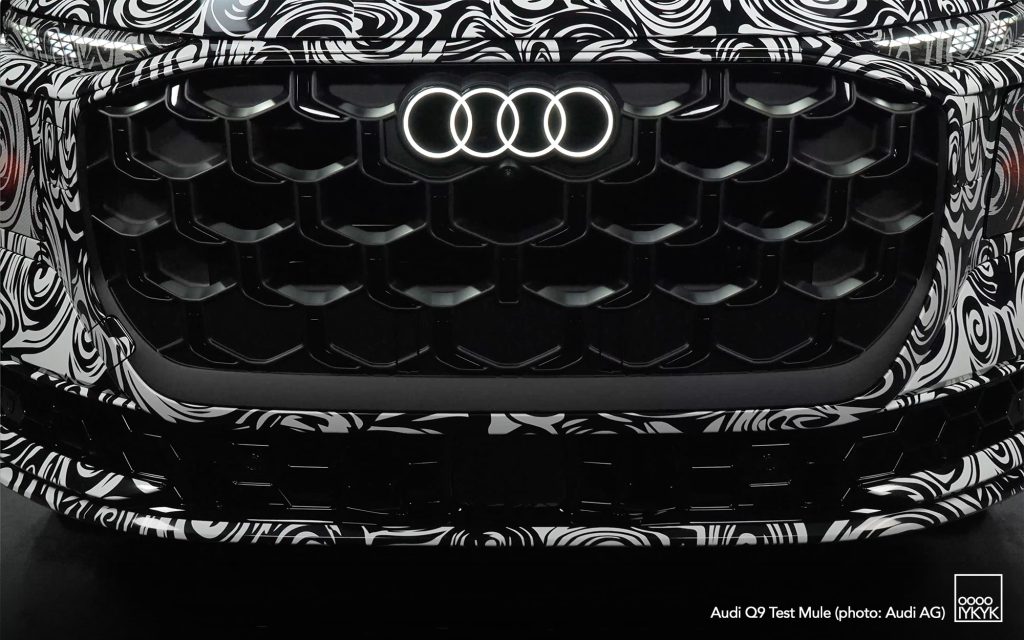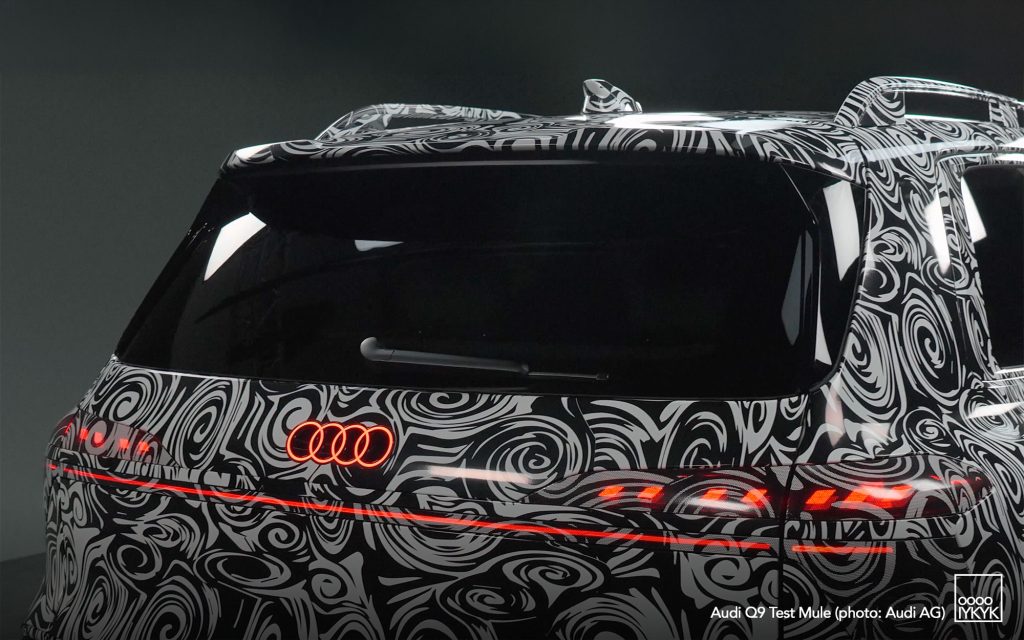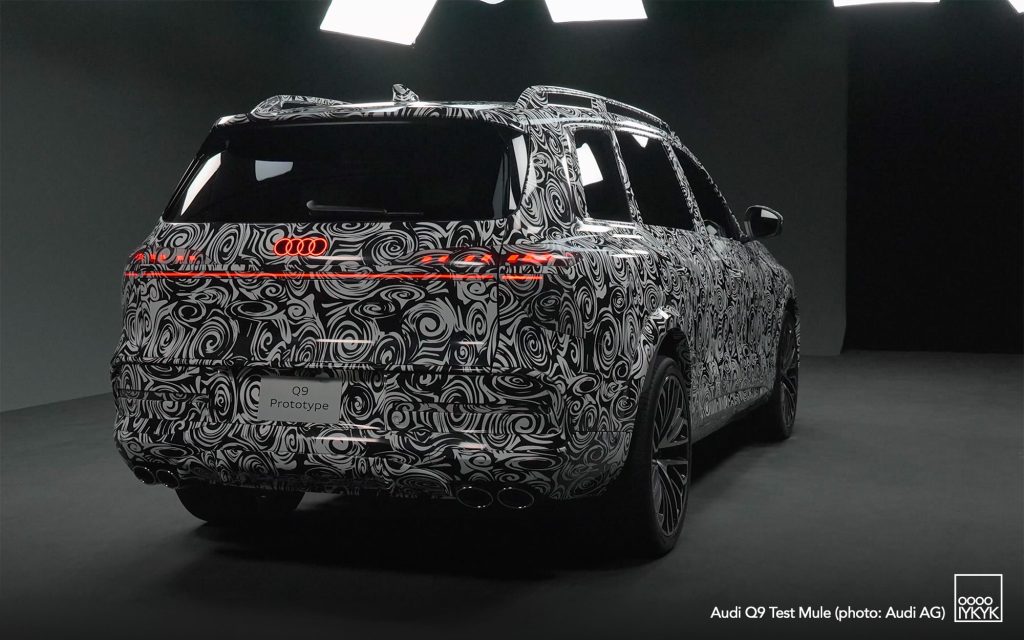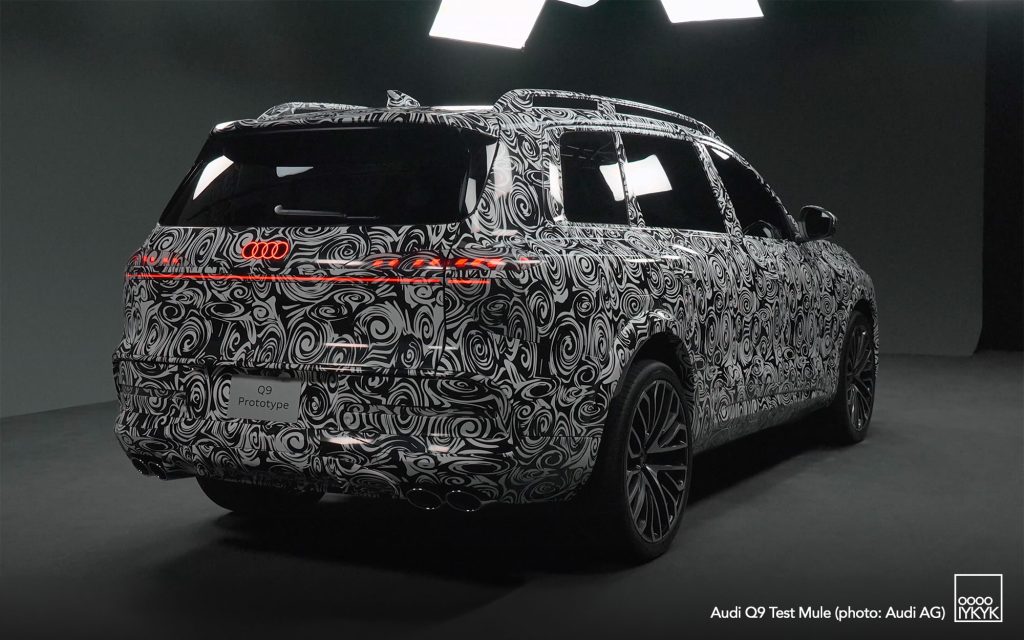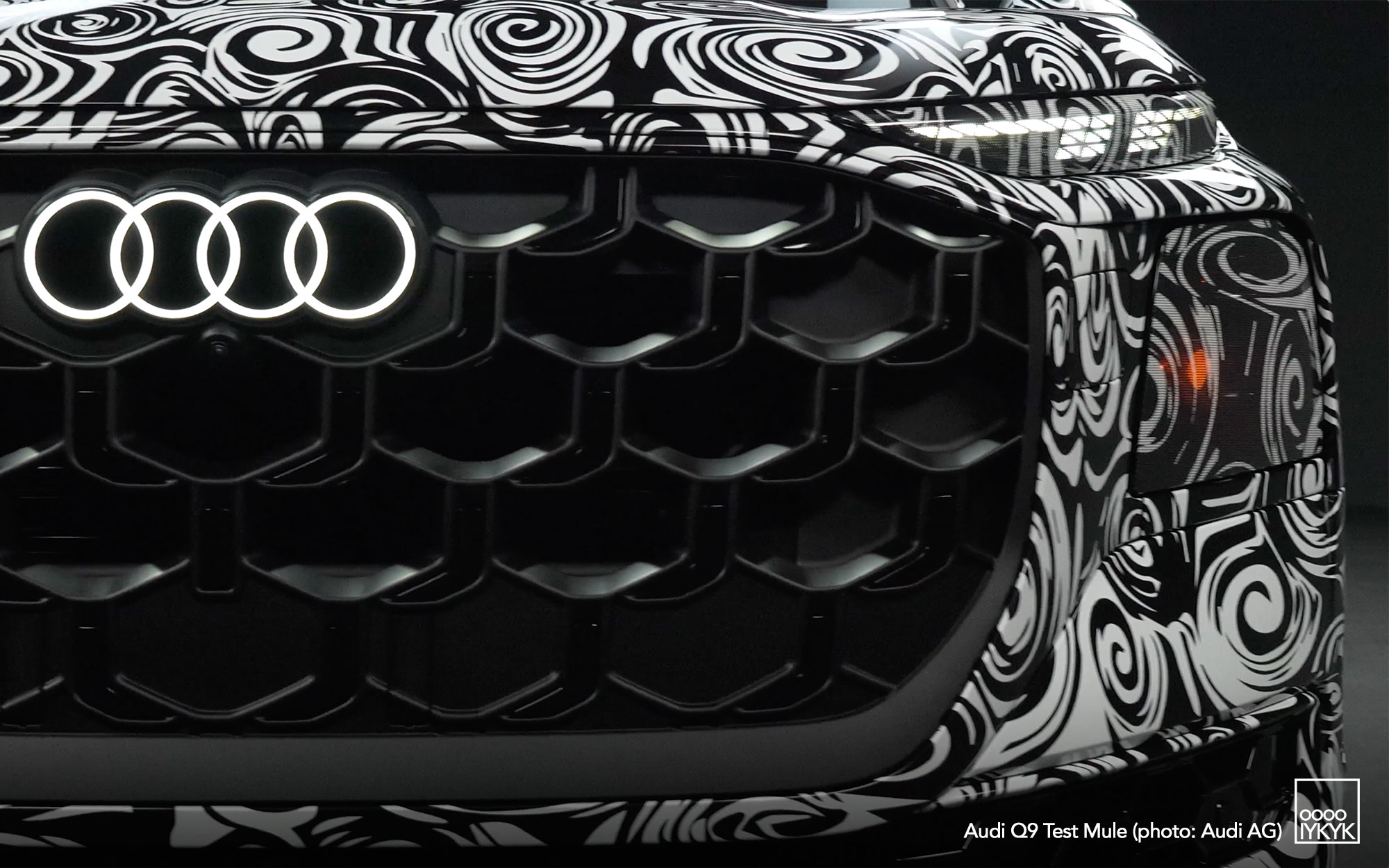

For years, European-market Audi models have enjoyed one of the brand’s most advanced technologies while U.S. buyers have largely watched from afar. That changes later this year as Audi of America is confirming adaptive driving beam Digital Matrix LED headlights will debut in America on the all-new 2027 Audi Q9 and Audi SQ9.
The announcement marks the first time Audi’s full Digital Matrix LED headlight technology will officially reach U.S. customers, bringing with it the debut of new micro-LED lighting hardware and a significant shift in how the brand approaches nighttime visibility, safety and exterior design.
‘
Unlike traditional high beams that simply switch between on and off, Audi’s Digital Matrix LED setup continuously adjusts its beam pattern in real time. Using front-facing cameras, the system detects oncoming vehicles and traffic ahead, then selectively shades portions of the beam to avoid blinding other drivers while still maintaining maximum illumination elsewhere on the road.
In practice, that means the driver can effectively leave high beams active while the system dynamically carves around traffic. The technology has been commonplace on European Audis for years, particularly on autobahns and rural roads where maximizing nighttime visibility is critical, but regulatory hurdles in the United States kept the feature sidelined despite repeated attempts from automakers.
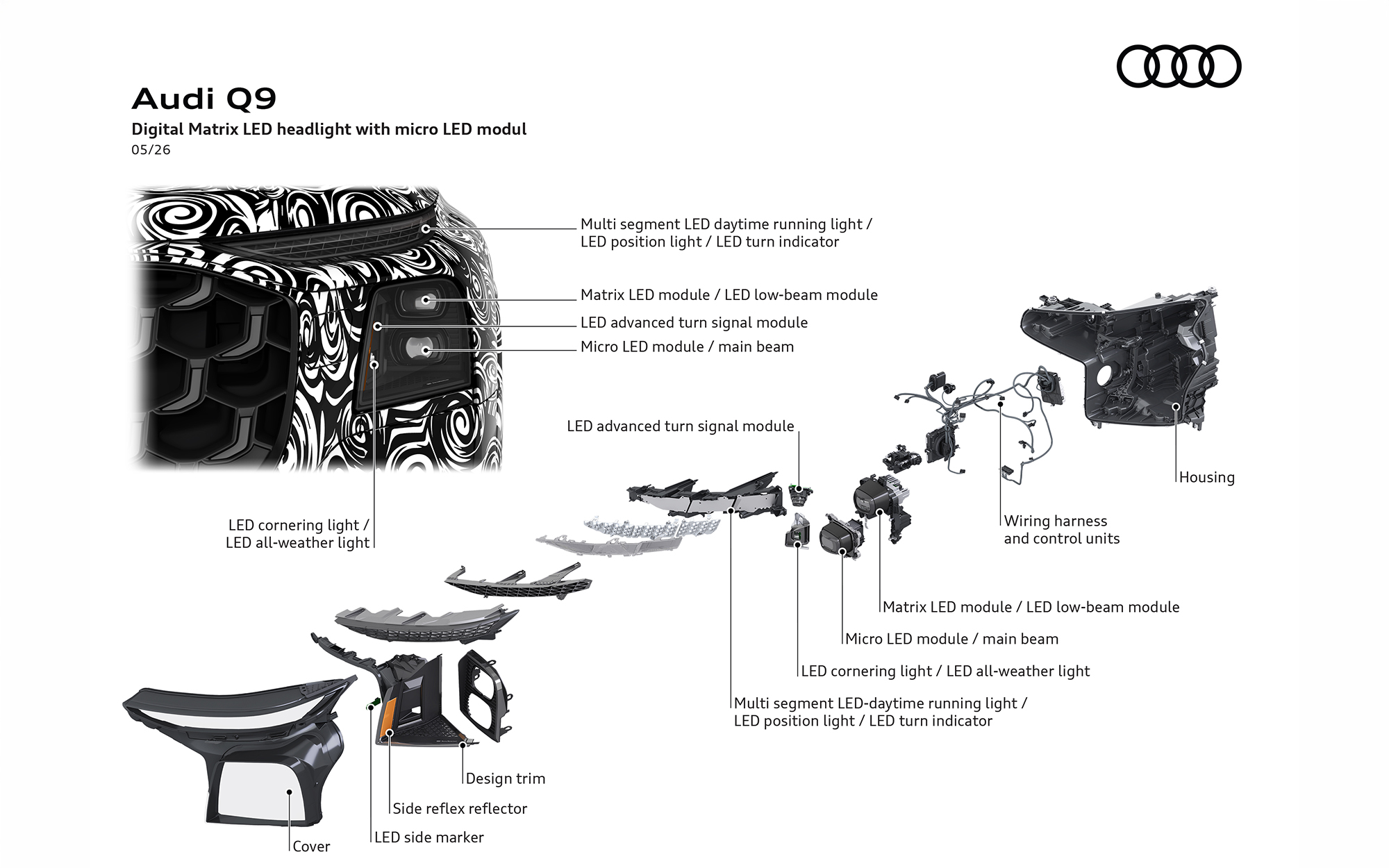
That began to change in 2022 when updated U.S. federal lighting regulations finally opened the door for adaptive driving beam systems. Even then, manufacturers still faced the challenge of meeting America’s stricter glare standards. According to Audi, the Q9’s system is the first from the brand engineered specifically to satisfy U.S. Department of Transportation requirements while still delivering the core functionality European drivers have had for more than a decade.
Headlight glare has increasingly become a hot-button issue among American drivers, particularly as larger SUVs and trucks continue to dominate the market. Audi cited a recent AAA survey claiming six out of ten drivers struggle with glare from modern headlights.
Audi has long treated lighting as an important part of its identity. The brand effectively normalized LED daytime running lights in the late 2000s, turning what was once a high-tech signature into an industry standard. Since then, Ingolstadt has steadily expanded its lighting portfolio with OLED taillights, animated welcome signatures and increasingly sophisticated matrix systems.
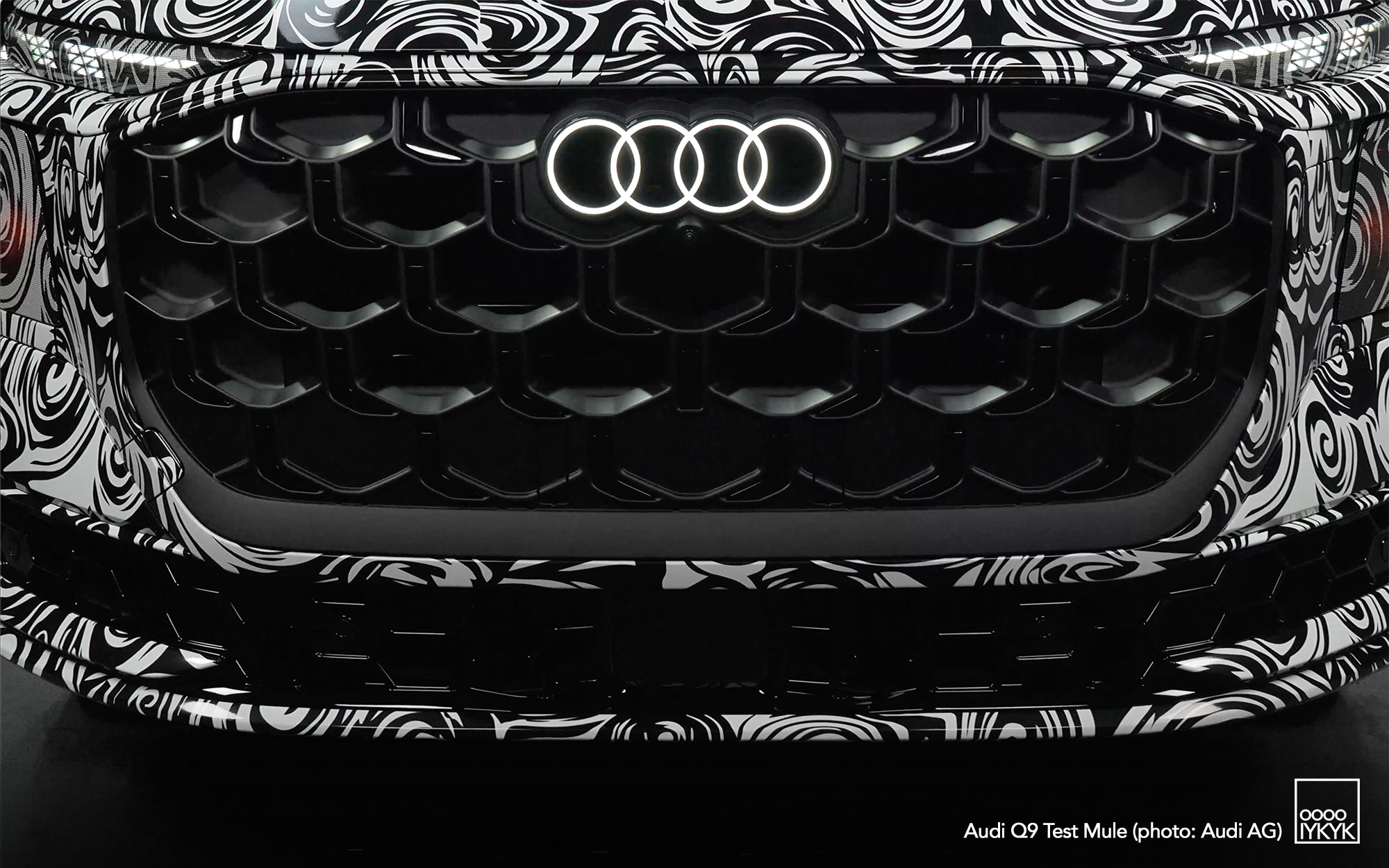
The Q9 appears set to become the next major step in that evolution.
According to Audi, the new flagship SUV family will use lighting technology not just for visibility, but also for personalization and communication. While the company stopped short of detailing every feature ahead of the Q9’s full reveal in July, executives hinted at broader applications for light both inside and outside the vehicle.
“Audi has always been a leader in lighting technologies,” said Filip Brabec, Senior Vice President of Product Planning at Audi of America. “We are very excited to be able to offer Digital Matrix LED lighting functions to our U.S. customers for the first time. It’s a technology that will benefit all road users by providing better lighting and less glare for all.”
Stephan Berlitz, Head of Lighting Development at Audi, added that the increasing digitalization of lighting systems is allowing Audi to expand both safety and functionality through technologies like micro-LED hardware.
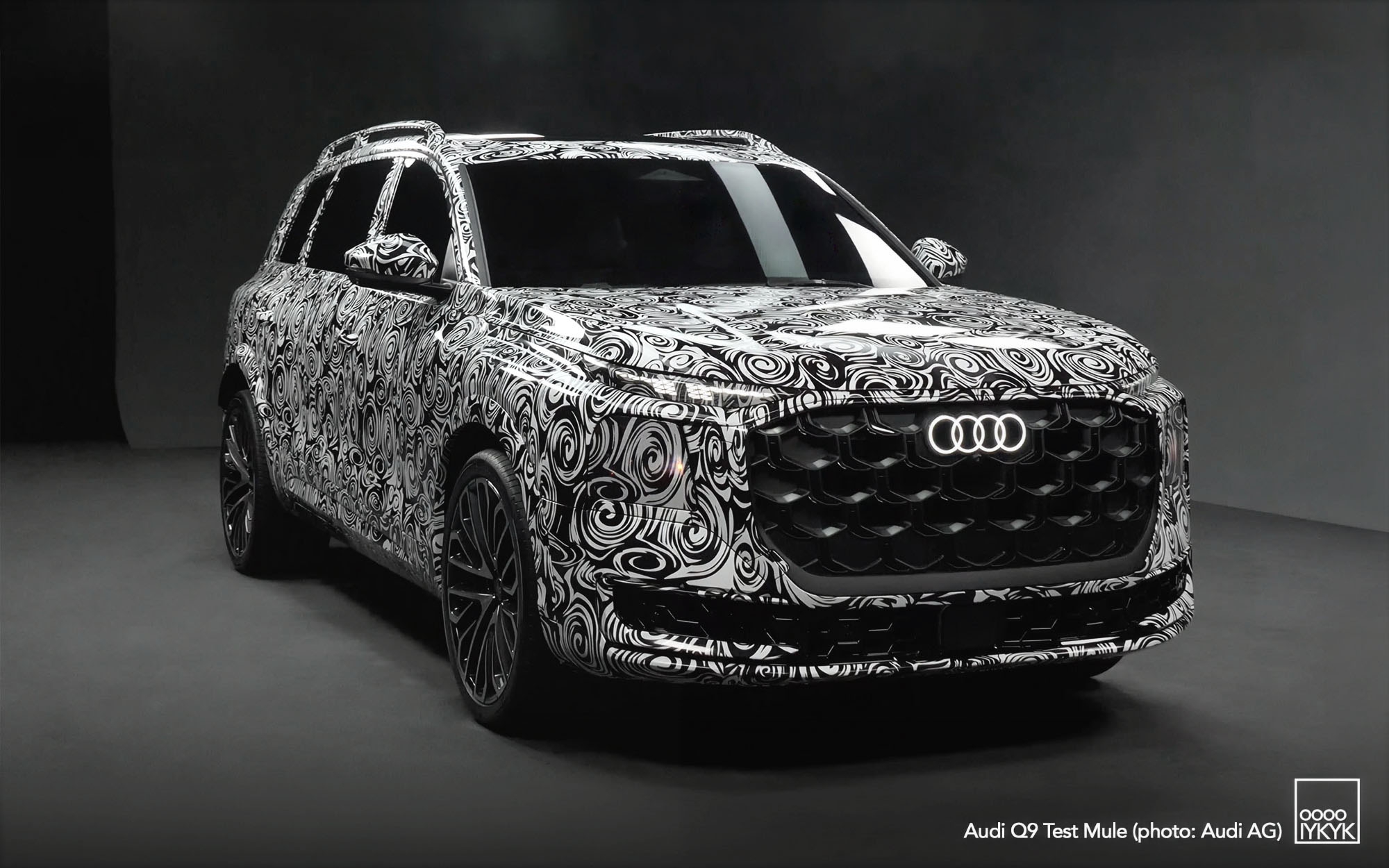
The Q9 itself will sit at the top of Audi’s SUV hierarchy as the brand’s new full-size flagship. Expected to rival vehicles like the BMW X7, Mercedes-Benz GLS and Range Rover, the three-row model is positioned to become one of the most technologically ambitious road-going Audis yet.
Audi says the full 2027 Q9 lineup will be revealed in July before arriving at U.S. dealers later in 2026.
MORE INFORMATION FROM AUDI
Digital Matrix LED headlights — more light, less glare
Audi Digital Matrix LED headlights help drivers see more of the road at night while selectively reducing glare for other road users. Instead of switching high beams fully on or off, the system continuously reshapes the light pattern in real time based on what its front-facing cameras detect.
For decades, U.S. lighting systems largely relied on fixed low- and high-beam patterns, often forcing drivers to choose between seeing farther ahead and avoiding glare for others with systems that illuminate the road uniformly and switch on or off as a single unit.
While modern headlights are brighter than ever thanks to Xenon and LED technology replacing more traditional halogen bulbs, most modern systems remain fundamentally non‑adaptive; often forcing a tradeoff between seeing farther ahead and avoiding blinding other drivers.
That matters because many drivers report glare as a real problem at night. According to a recent AAA survey, six in ten drivers struggle with headlight glare.
Conventional automatic high-beam systems can help, but they typically dim the entire headlight output when another vehicle is detected. Digital Matrix LED technology takes a different approach: it maintains high-beam illumination while dimming only the specific areas that could cause glare.
Rather than relying on a small number of fixed lighting segments, the Digital Matrix LED system can control light output with much finer resolution – supporting precise, automatic masking in real-world driving.
Audi targets a color temperature of 5500 Kelvin—close to daylight—because it aligns with high visual sensitivity and can help reduce fatigue. The Digital Matrix LEDs then shape that light continuously, keeping maximum illumination where it’s needed while selectively dimming only the portions of the beam that could create glare for other road users.
How Audi Digital Matrix LED technology work
Audi’s Digital Matrix LED headlights function like a digital projector for the road ahead—rapidly adjusting the beam pattern to match the traffic situation.
Fast facts:
- The micro-LED module is about 13 millimeters wide
- The module has a chip with approximately 25,600 individually controllable micro-LEDs
- Each micro-LED measures approximately 40 micrometers, or half the thickness of a human hair
In simple terms, the system creates a moving “shadow puppet” around other vehicles—blocking only the light that would hit their mirrors or eyes while keeping full brightness elsewhere.
Working with front-facing cameras, sensors, and software, the system continuously reconfigures the light pattern when it detects key situations in real time, like oncoming vehicles and vehicles traveling ahead in the same lane.
The system dims only the precise pixels that could cause glare, maintaining high-beam illumination elsewhere. The result is a more responsive lighting system that maximizes usable light for the driver while minimizing glare for vulnerable road users.
“The use of this micro-LED technology provides significantly improved illumination and enables intelligent lighting assistance in traffic by generating a high-resolution adaptive glare free high beam for all road users. Additionally, three advanced lighting scenarios are available as light projections on the wall when getting into and parking the car,” said Dr. Michael Kruppa, Head of Front Lighting Development at Audi.
Direct benefits of DMLs:
Compared to traditional headlights, Audi Digital Matrix LED headlights can improve visibility for the driver while reducing glare for vulnerable road users; helping support comfort and safety for everyone sharing the road.
- Improved visibility: Drivers benefit from a longer‑range field of view at night.
- Reduced glare: Other motorists experience lighting comparable to low beams, even when high beams remain active, while drivers experience optimal illumination by high beam thanks to selective and fully automatic masking of other vehicles, as well as glare reduction for reflective signs.
- Less driver fatigue: Smooth, continuous light adjustments reduce eye strain and sudden brightness changes. Adaptive systems can dim reflective road signs, better illuminate pedestrians, and respond predictively to changing road conditions.
- Advanced lighting scenarios: When entering or exiting the vehicle, the digital matrix LED headlights can display one of three in the MMI selectable advanced lighting scenarios on the wall.
Milestones for Audi in lighting technology
Light technology has changed significantly since the earliest days of the automobile. Throughout its history, Audi has consistently driven progress on the road and in motorsports with its lighting technology.
What used to serve exclusively for safety now shapes the visual appearance of every Audi model with its combination of design and technology. With the digitization of lighting technology, this perspective has changed even further towards even more personalization and comprehensive external communication.
| 1994 | Second-generation xenon headlights in the Audi A8 |
| 2003 | Audi adaptive light w’ automatic dynamic light range control in the Audi A8 |
| 2004 | LED daytime running light in the Audi A8 W12; also used in the DTM |
| 2007 | “String of pearls” daytime running light as a light strip in the Audi A4 |
| 2008 | Full LED headlights in the Audi R8; now available across model ranges |
| 2010 | LED headlights w’ adaptive light in the Audi A8; headlights networked with navigation data |
| 2011 | Visually homogeneous LED rear lights in the Audi A6 |
| 2012 | Turn signal w’ dynamic display in the Audi R8 |
| 2013 | Full LED headlights for the compact class in the Audi A3Audi is the first EU-certified manufacturer of LED technology as an ecological innovationAudi Matrix LED headlights w’ adaptive high beams in the Audi A8 |
| 2014 | Laser as additional high beam in the Audi R8 LMXMatrix laser technology in the Audi prologue show car |
| 2015 | Lighting Assistance Center opened w’ a light tunnel 120 meters in lengthOLED technology in IAA study |
| 2016 | OLED rear lights in the TT RS |
| 2017 | HD Matrix LED headlights including laser as additional high beam in the Audi A8Dynamic lighting scenarios: Leaving & coming home functions in the Audi A8 |
| 2019 | Digital Matrix LED headlights (DML) in the Audi e-tron & Audi e-tron Sportback |
| 2020 | Specific dynamic lighting scenarios & daytime running light signatures w/i the Audi A3 familyDigital OLED technology in the Audi Q5 |
| 2021 | Digital daytime running light signatures (customizable) via MMI in the Audi Q4 e-tronA8 is the first Audi model w’ fully digitalized lights w’ Digital Matrix LED headlights & digital OLED taillights |
| 2022 | Projection light for rear window |
| 2024 | Second generation digital OLED technology; active digital light signature and communication light in the Audi Q6 e-tron |
| 2025 | Micro LED technology in digital matrix LED headlights in the Audi Q3 |
PHOTO GALLERY