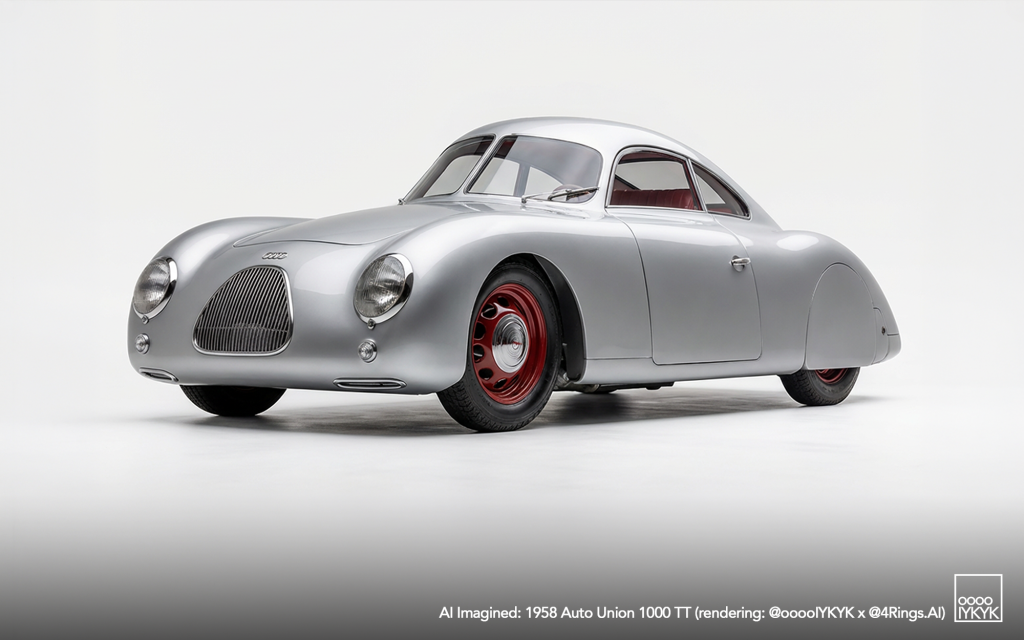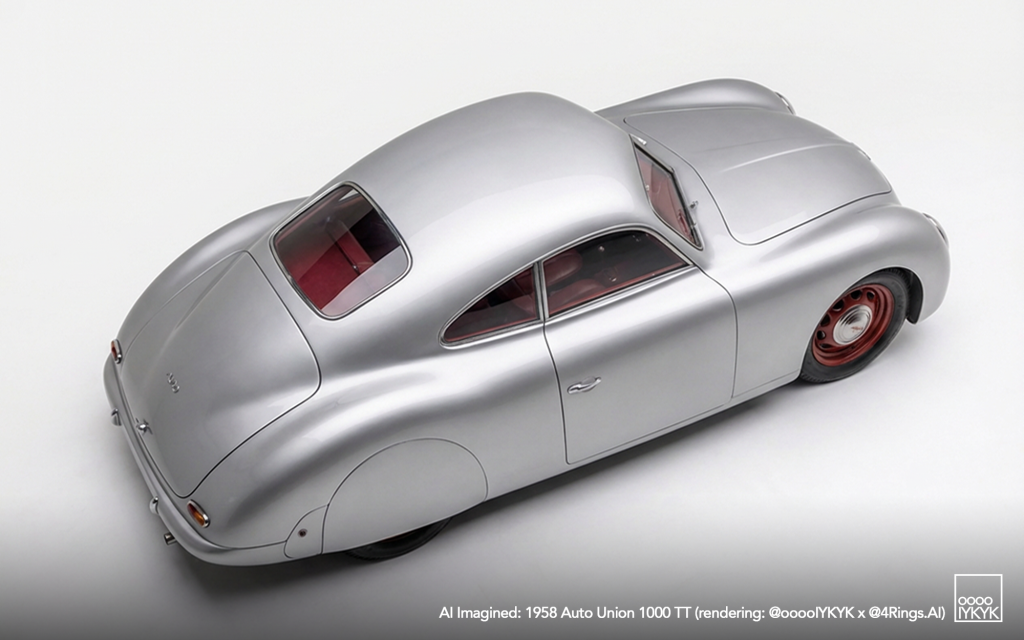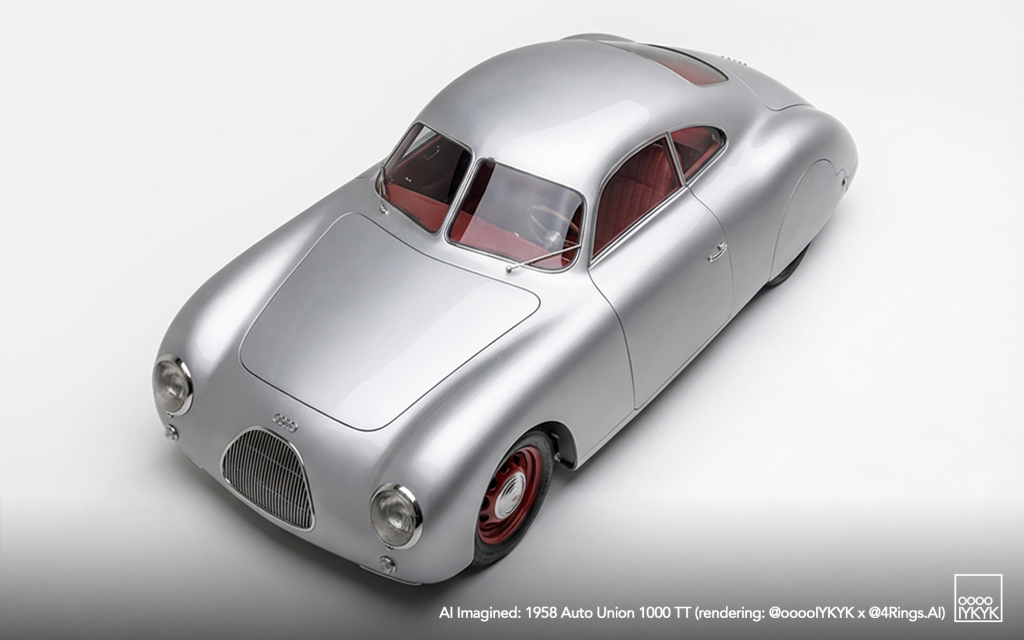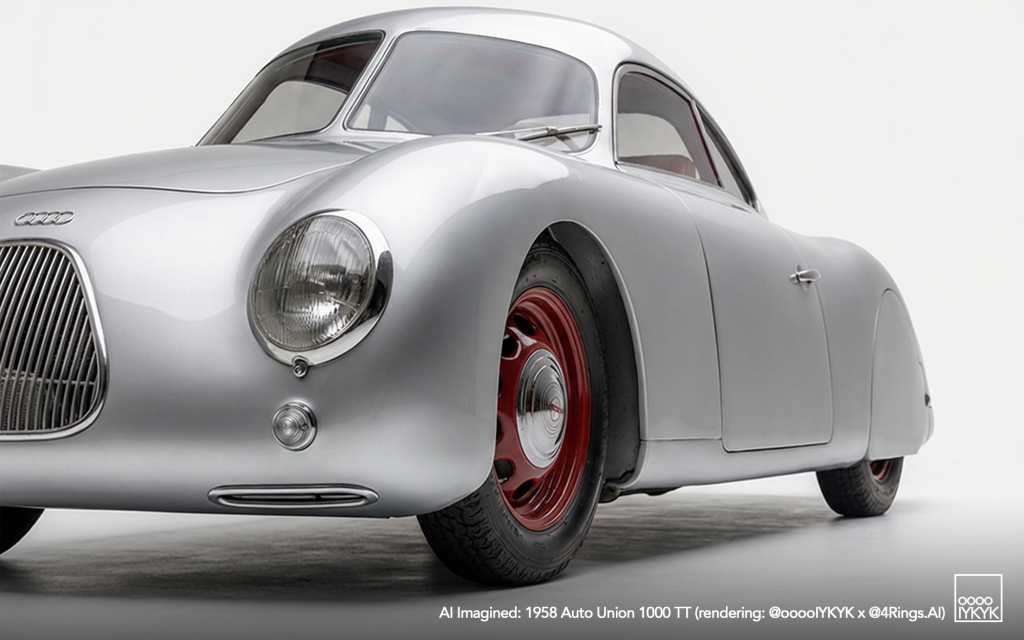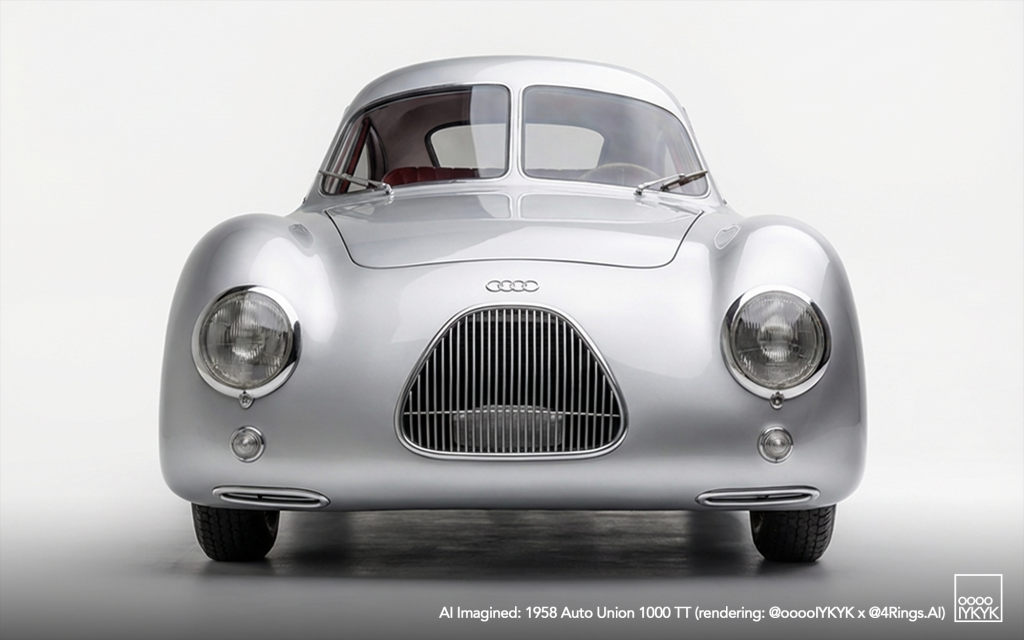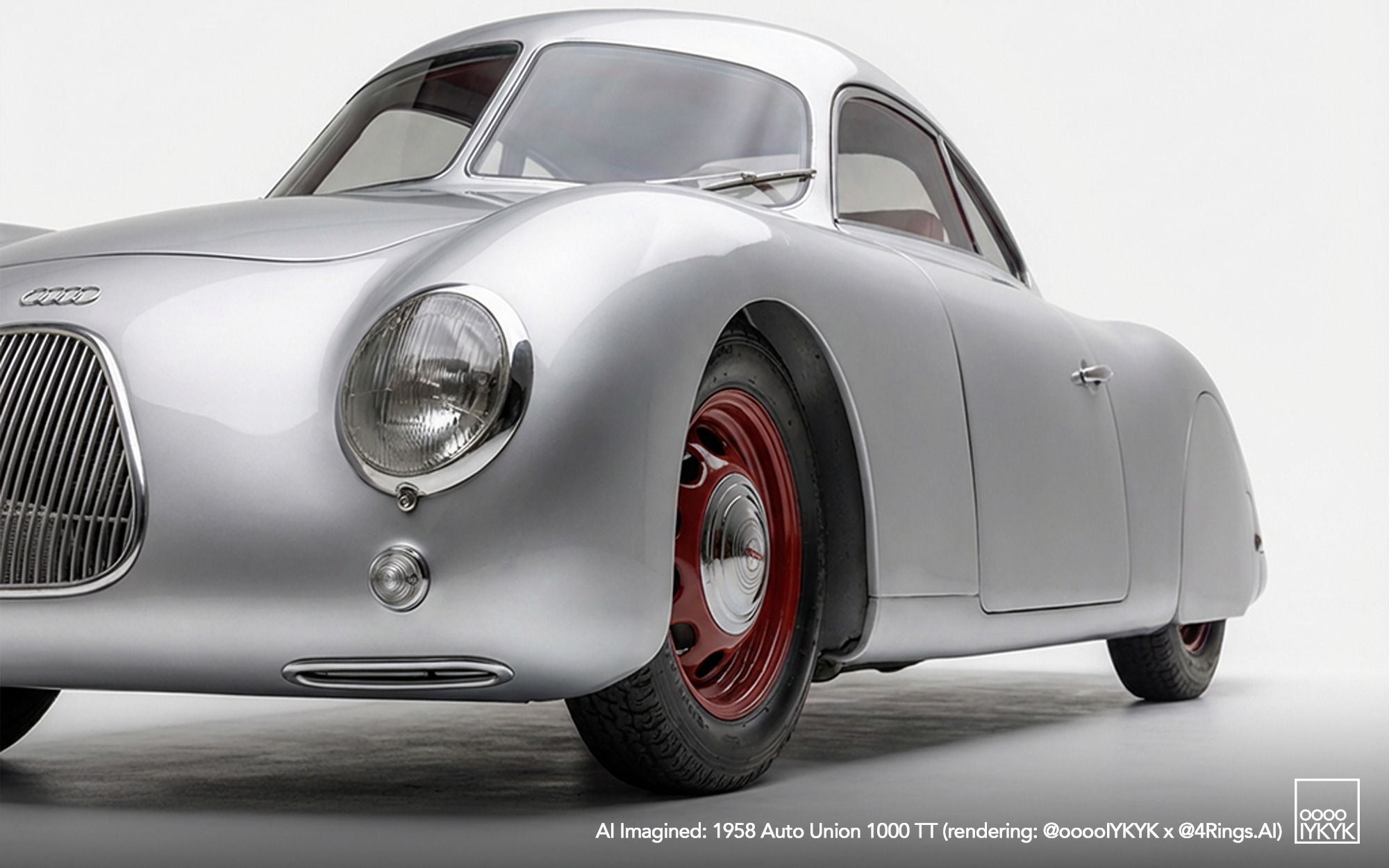

Park this week’s AI Imagined entry in the garage reserved for alternate universe specials. The realism of AI tools are allowing for greater accessibility by the average user to create known established designs. Want to make your own take on spec for the new RS 5 or perhaps render it as a Coupe? Sure. No problem. That’s capability is largely at your fingertips nowadays. .And, while I’m a fan of the creativity that inspires in others, it does inspire me to move off the grid of popular subjects and into the world of obscurity. Take for instance this 1950’s looking streamlined coupé.
By the 1950s, the corporation we know today as Audi (a.k.a. Auto Union at the time) was producing a mix of cars including the DKW 3=6 range. In the post war era, Auto Union had returned with its DKW nameplate and created the very sensible sedan powered by a two-stroke in-line 3-cylinder that was billed as making three cylinders feel like six. Multiple body styles were produced including a 2-door coupé, though arguably the cars were far more practical than they were sexy in this era when voluptuousness and extravagance were becoming the norm in automotive design.
Auto Union’s Bavarian neighbors at Porsche (okay technically Austrian at the time) were also building very sensible cars at the time, though that brand’s 356 was far more exotic and higher-performance than the more conservative DKW.
The 3=6 would eventually be rebranded. Sold as the 1000 and wearing the brand “Auto Union” made famous for its pre-war racing efforts with Porsche-designed mid-engined V16 silver arrows grand prix racers (that era’s Formula 1), the four rings of Auto Union held more panache than the DKW badge that had made its pre-war name selling smaller economical cars and motorcycles. In the Auto Union also came a more exotically designed coupe the 1000 SP. Effectively a scaled down take on the Ford Thunderbird, it won more hearts with style than it did in performance. I’ve always thought the SP, while handsome, seems a bit out of place in that its T-bird mimicry makes it seem decidedly un-German.
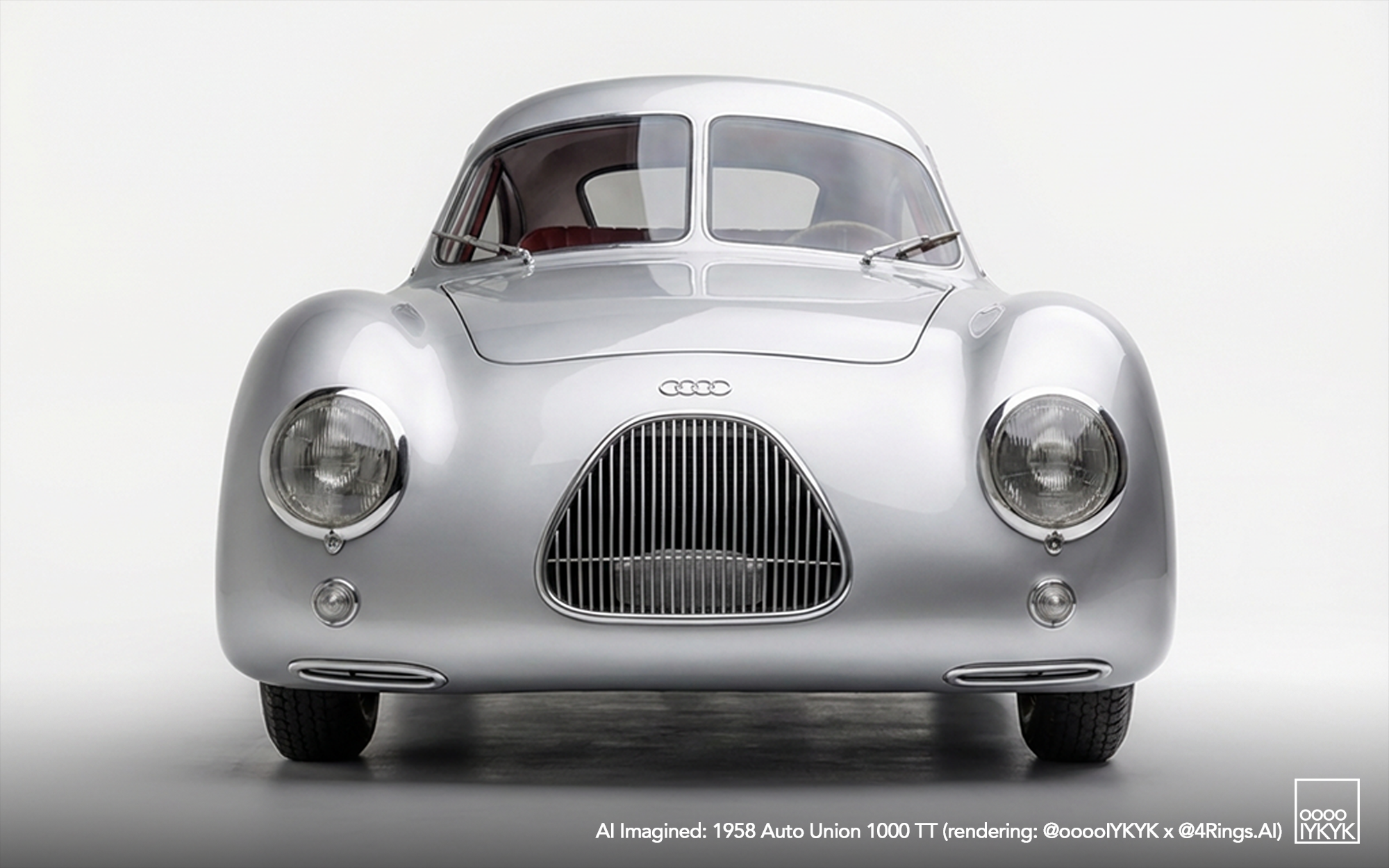
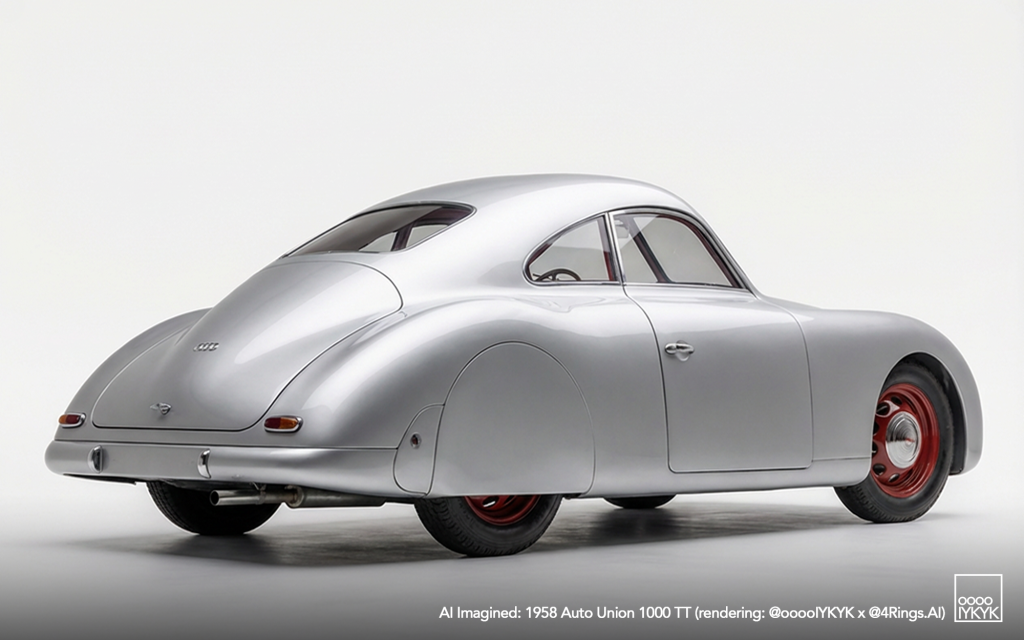
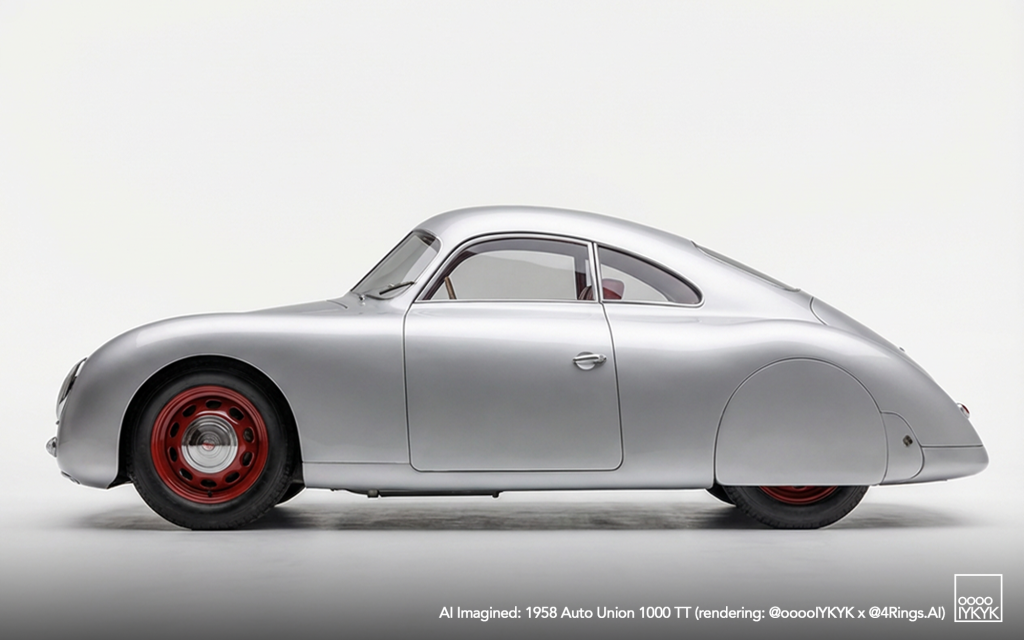
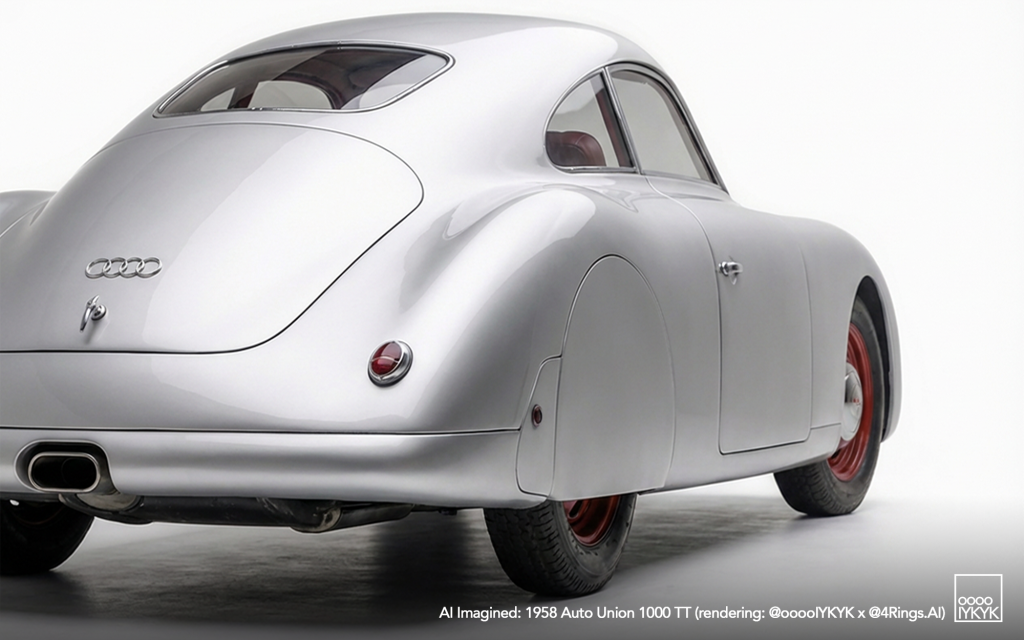
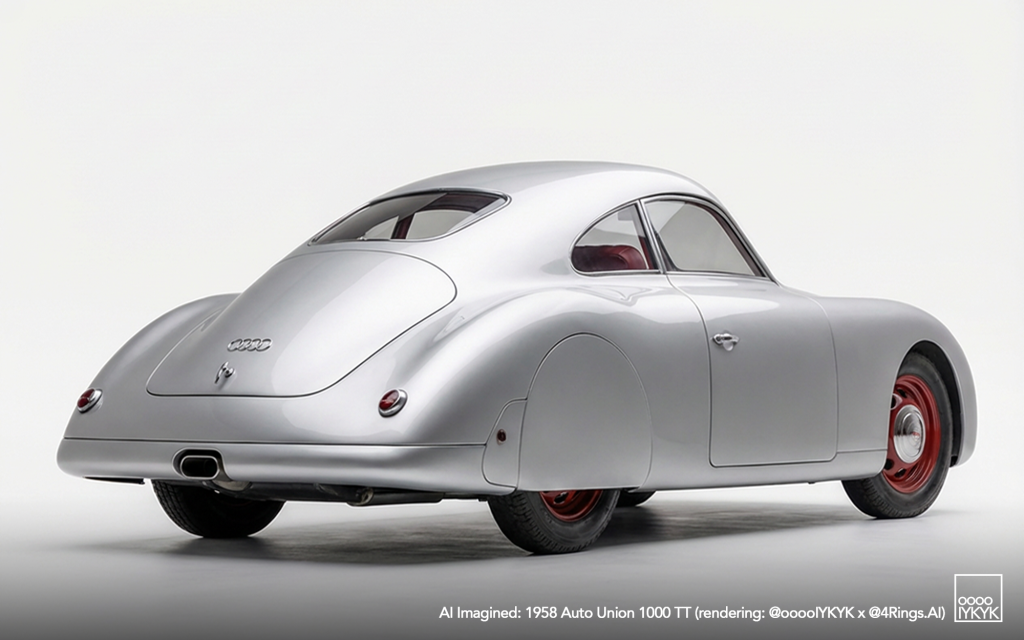
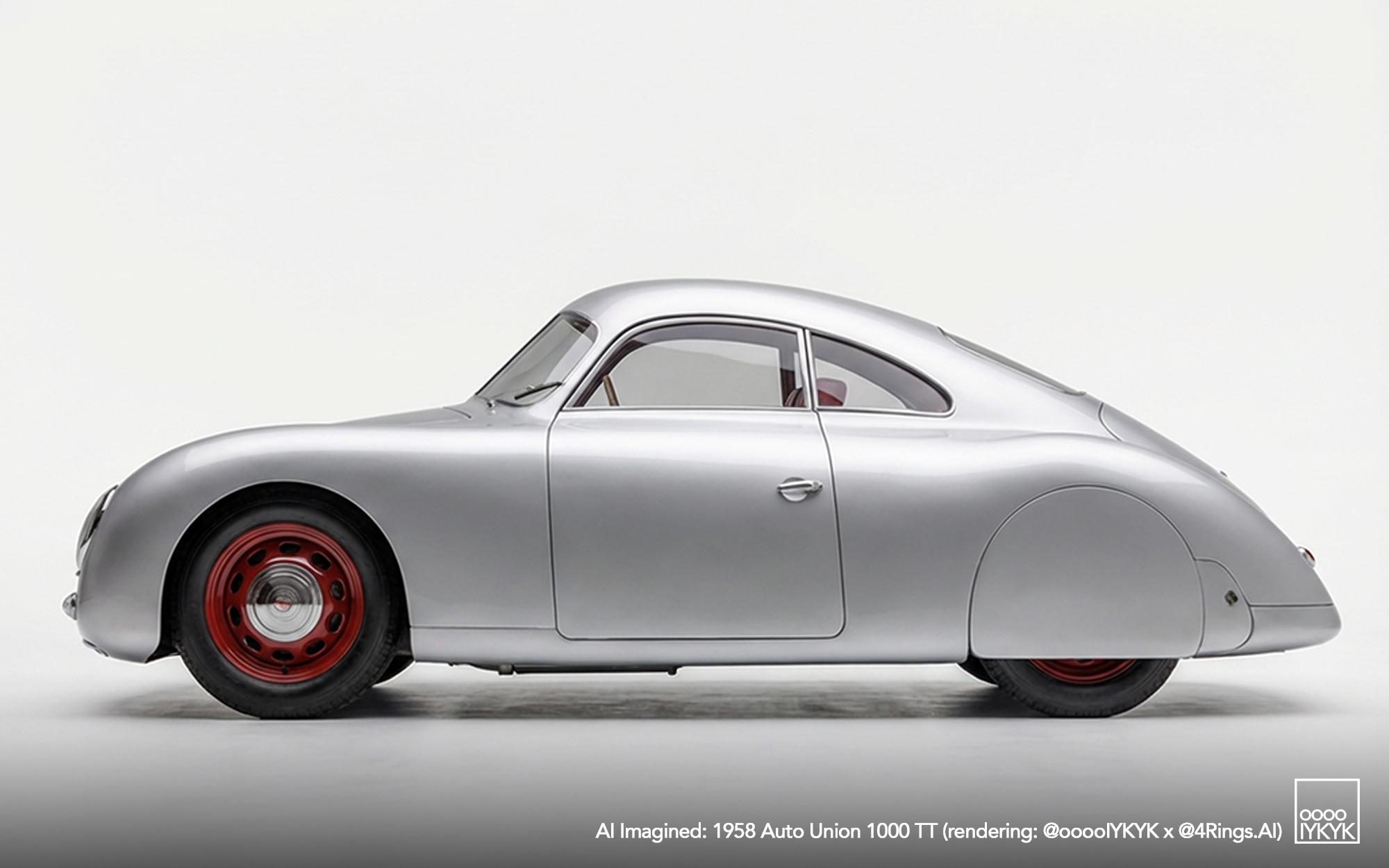
That’s where this car comes in. Proportionally, it seems to take on the nature of the 3=6/1000 offerings. Like pre-war specials such as the never-produced Auto Union Type 52 or the Wanderer Streamline Specials, the car wears spats over the rear wheels that are also consistent with the DKW 3=6 and Auto Union 1000 designs.
At the same time, the car also sees strong influence from the Porsche 356 of the same era. That’s important not just because the 356 would have been the benchmark in Germany at the time, but also because of the significance it would later play in the design of the first TT (Mk1).
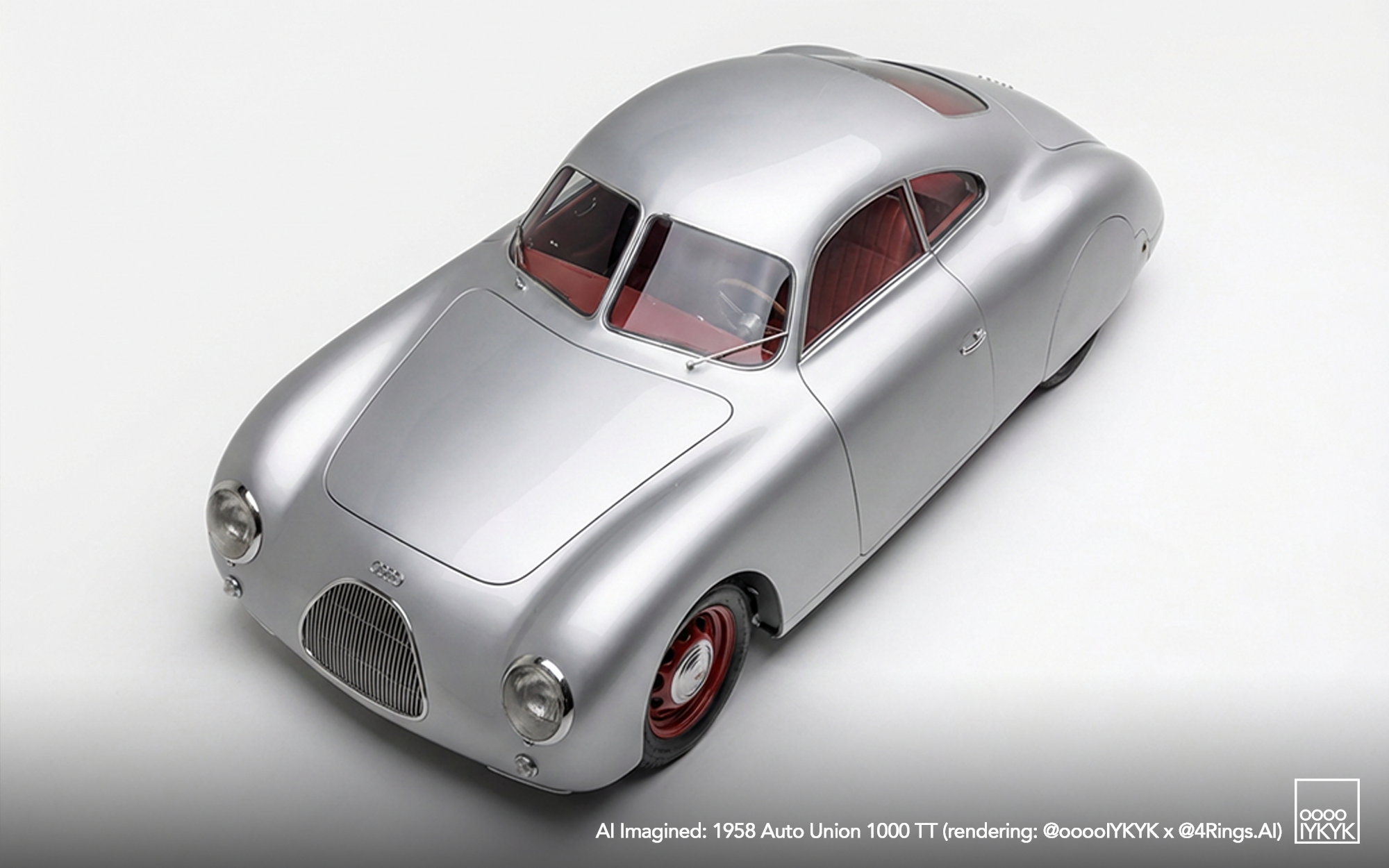
When it came to the TT, that initial design team intentionally blended the purity of the rounded 356 coupé design with simple Bauhaus-inspired take on pre-war Auto Union racing heritage. The recipe worked exceedingly well, creating something that was spiritually quite similar to the magic of the 356 and yet not at all a simple remake. It was both considerate of history but also distinctly modern.
For me, this car takes a stab at achieving what the TT (Mk1) design did in the 1990s but instead shoehorns the experiment into a different era. What if designers at 1950s Auto Union had the same idea and resources as Freeman Thomas, Peter Schreyer, J Mays and the talented Audi design team did some 40 years later?
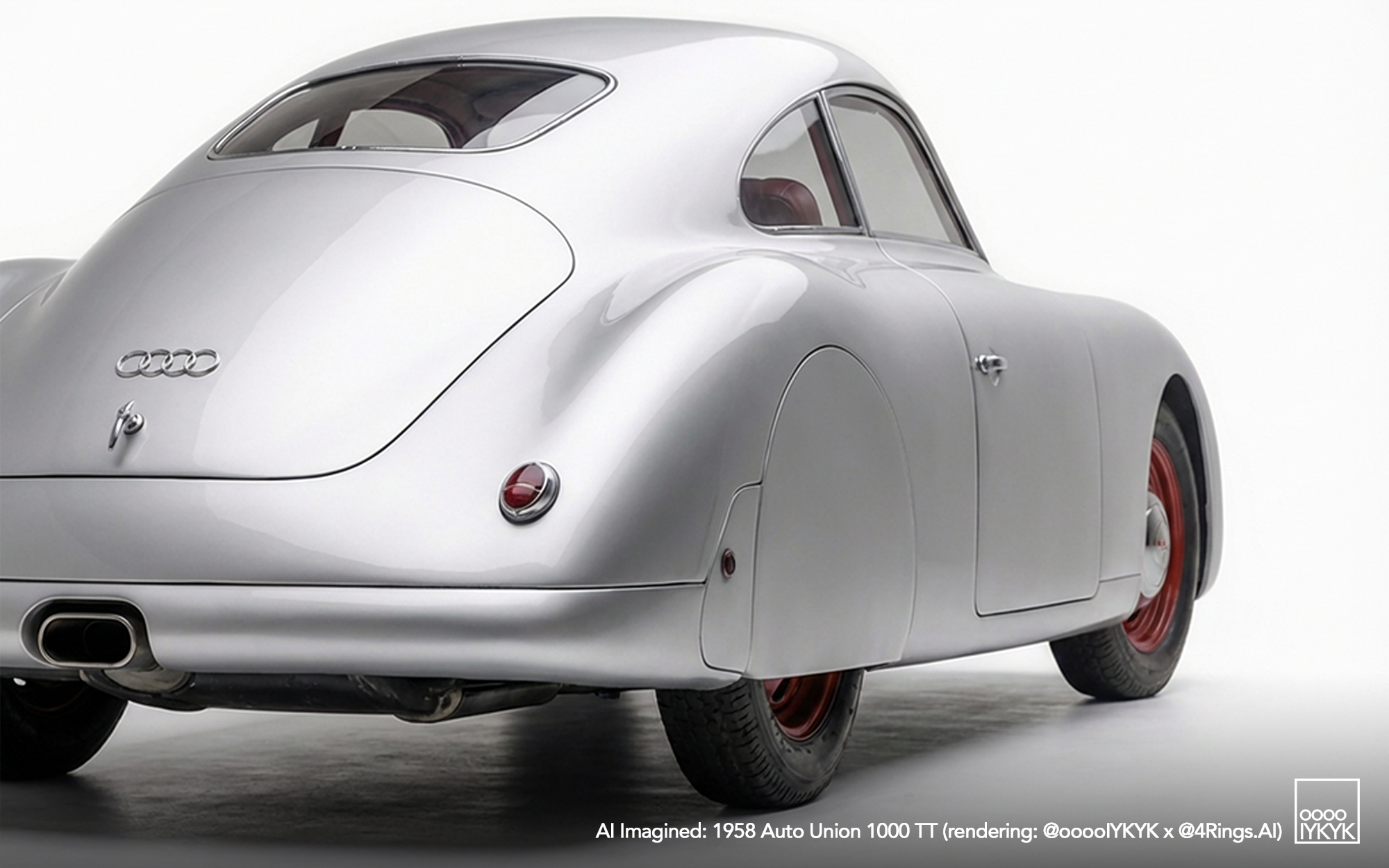
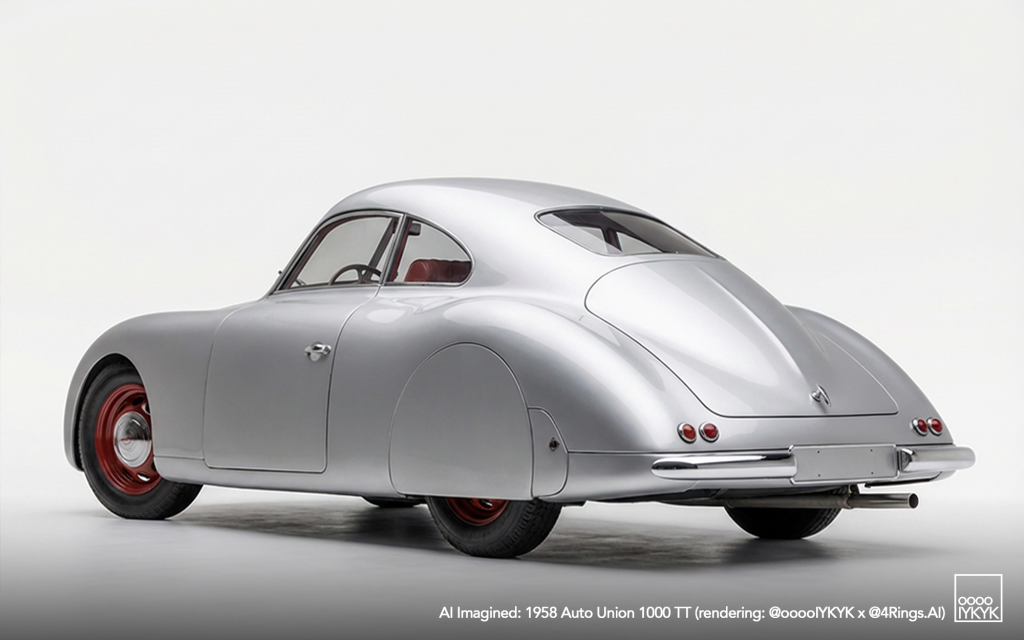
Would the result have been this? The car is a streamlined high-performance and voluptuous coupe that appears as if it could have sat on that DKW 3=6 / Auto Union 1000 architecture. One can imagine it driving around Bavaria in the 1950s, or entered in races of its time.
In this design there are several approaches to the rear design. While I rather like the central exhaust that Porsche eventually brought back with the first Boxster, the version with small exhaust pipe and bumperettes is decidedly more realistic.
While designs like this will never get the modern nostalgic appreciation of cars like an RS2 or ur quattro, I still find them to be a fascinating What If experiment that the increasingly capable AI image-generation tools are more than willing to consider.
Find more designs like this on the @4Rings.AI Instagram account.