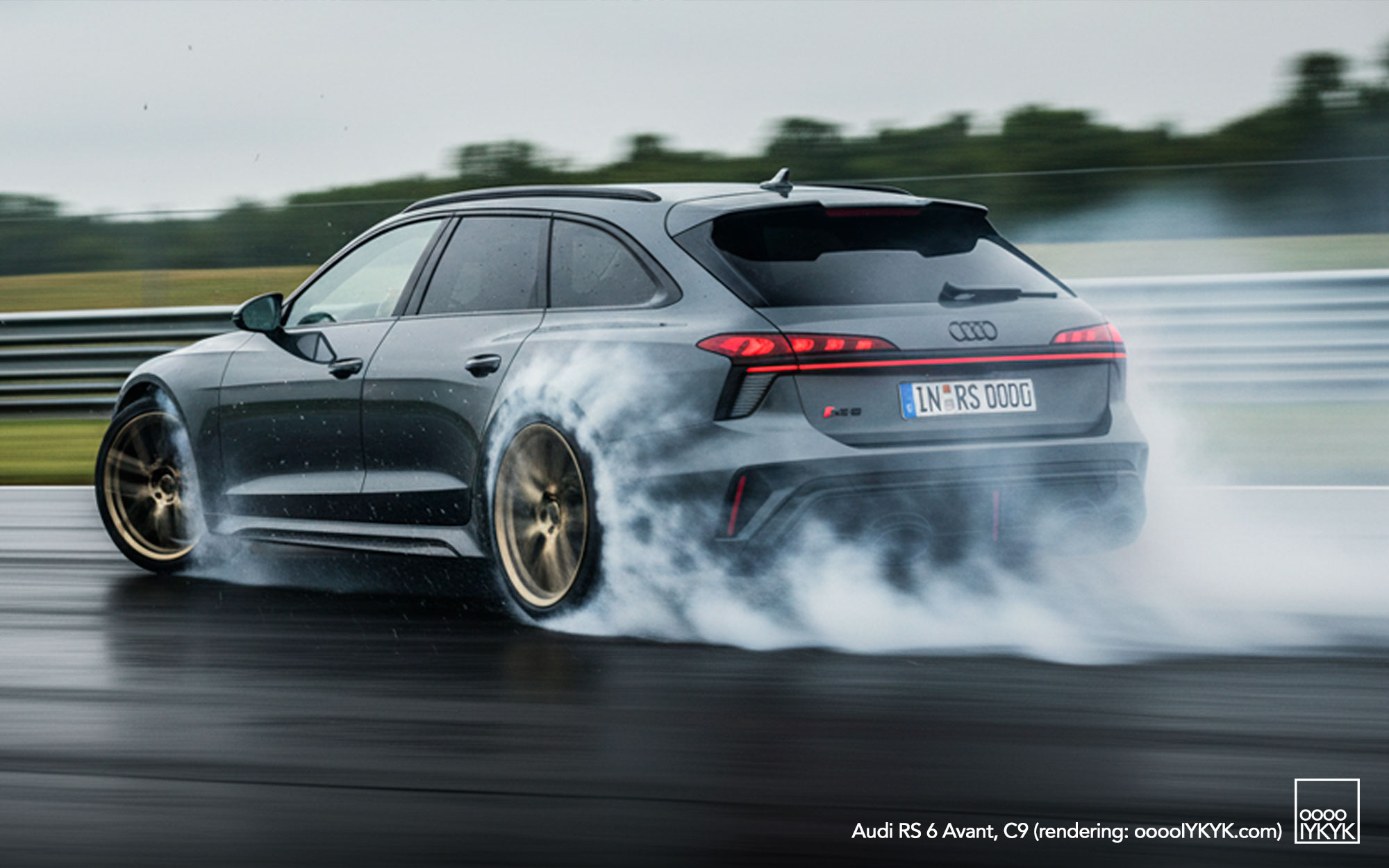

With the Audi Sport’s move to hybridize key models like the upcoming RS 6 (C9) as confirmed by Autocar this week and covered in yesterday’s story, there will no doubt be skeptics as to whether adding the heavier weight of a hybrid system was the right move. Of course, the need to move toward efficiency and electrification is something that doesn’t always go hand-in-hand with driving experience, but if Autocar’s intel is correct then it sounds as if the engineers at Audi Sport have decided to lean in and turn these new capabilities into an advantage.
How will they do that?
DRAWING FROM F1 & BEYOND
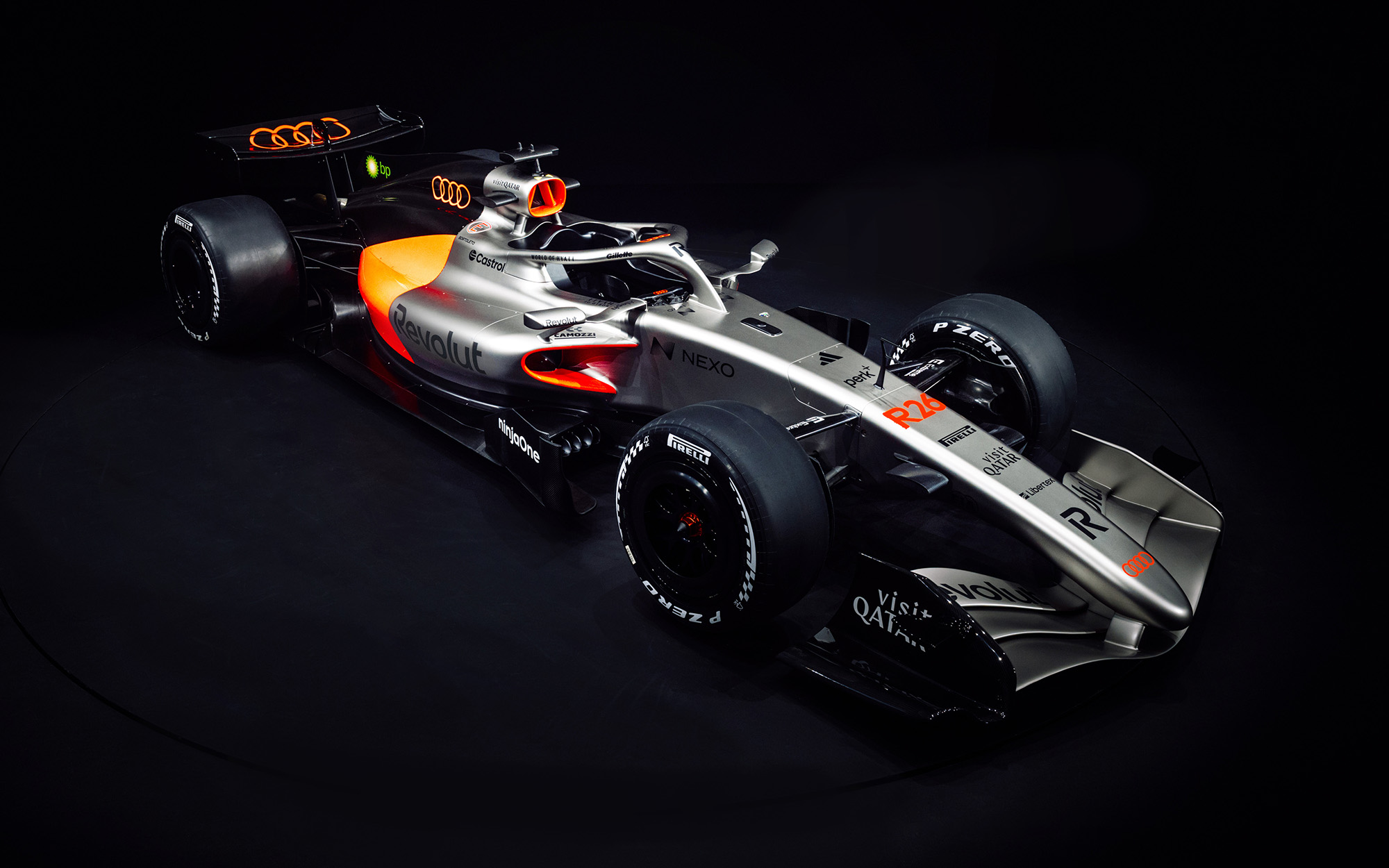
Autocar says, “Senior figures (from Audi) have already indicated that lessons in energy management, thermal control and electric power deployment from F1 will increasingly influence RS model development, particularly in the calibration of hybrid drive systems and the integration of software control.”
Well yeah, but that almost sounds like marketing speak. While Audi has been operating Sauber F1 for several years now, F1 is only really moving to hybridization for 2026 meaning Audi nor any other team have much on track experience with this drivetrain as of yet.
That doesn’t mean Audi’s a newb in this subject though. Quite the contrary. They’re probably one of the most experienced marques in the world when it comes to competing with hybrid drivetrains. They were the first brand to win Le Mans with a hybrid way back in 2012, repeating that again in 2013 and 2014. The brand competed in Formula E from 2017/2018 to 2020/2021, winning the championship there in 2017/2018. After departing both Le Mans prototype racing and Formula E, the brand famously turned to the iconic Dakar Rally where they campaigned the hybridized RS Q e-tron upcycling tech from both Formula E and DTM racing. No less than three of their proprietary Formula E MGU05 power units were mounted one at each axle and one used for energy recuperation while paired to the final evolution of the firm’s 2.0-liter turbocharged DTM racing engine. They competed in the Dakar Rally from 2022-2024, always a front-runner and winning outright with their highly experimental entry in 2024.
THE HANDLING ADVANTAGE MAKING QUATTRO SPECIAL AGAIN
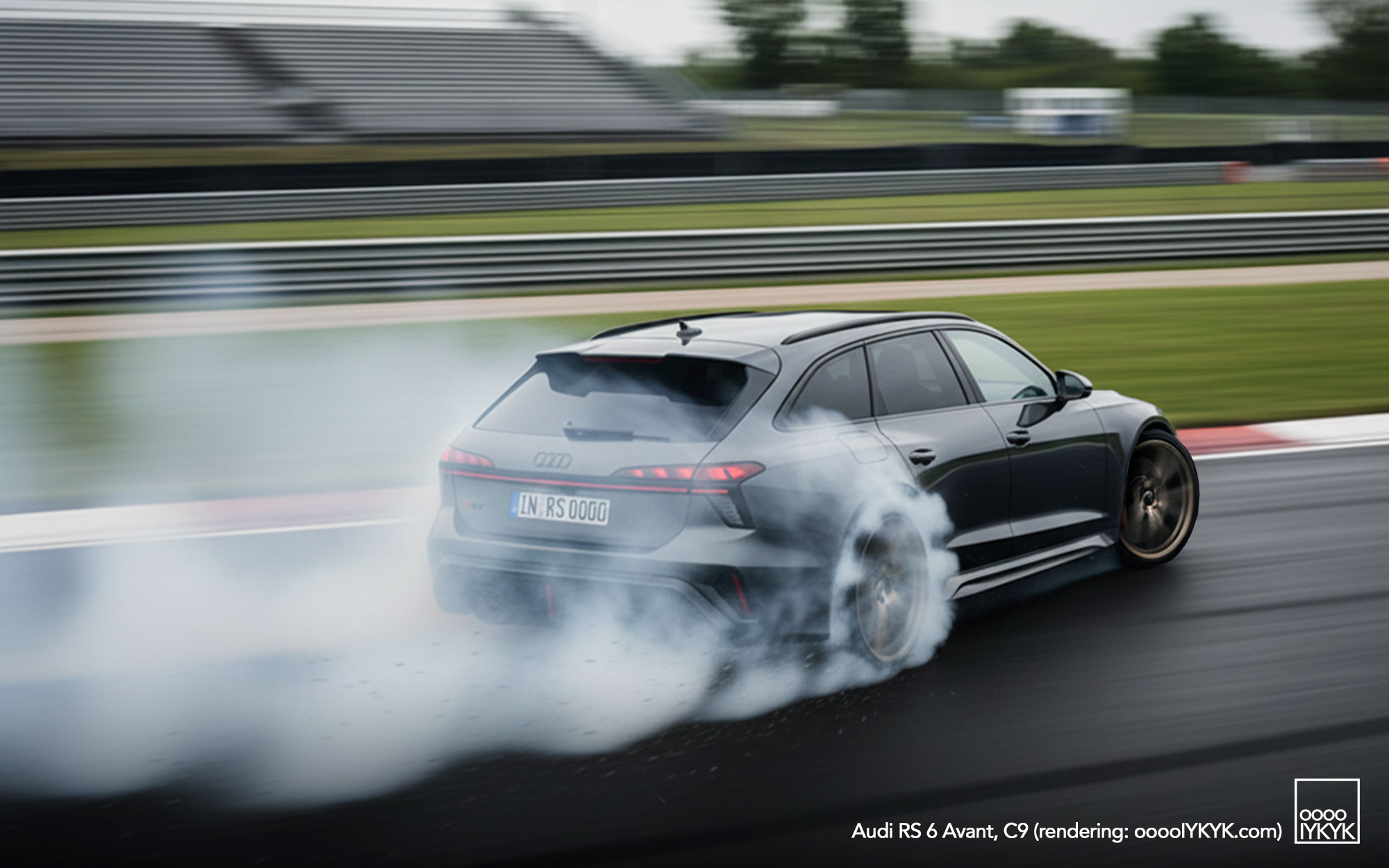
So, while calibration and software lessons learned in hybrid competition are no doubt advantages, it’s the way hybridization will be integrated into handling that should really be highlighted. Autocar says their Audi insider sources refer to these advancements as a “step change” in the dynamic capability of their new highest-performance hybrid road cars.
Central to that claim is what is being referred to as “e-torque vectoring”. Think along the lines of how the RS 3 was improved from the old RS 3 (8V) to the latest RS 3 (8Y). The RS 3 also uses torque vectoring via a differential utilizing a computer-controlled hydraulic clutch much like the RS 3’s Haldex-based quattro system itself, however in this new case we’re talking faster response and more power. It’s said by Autocar to be a rear-axle system “capable of distributing drive between the left and right wheels using electrically generated torque rather than purely mechanical grunt.”
Lessons for this have also been gleaned from the brand’s lineup of electric high-performance road cars like the RS e-tron GT and SQ8 e-tron. Those offerings already vary front-to-rear torque distribution and, in the case of the three-motor SQ8 e-tron, side-to-side torque distribution at a much greater speed and with greater precision than mechanical differentials.
Audi Sport GmbH has now taken these lessons and applied them to the ICE offerings. Here, they’re using the hybrid system to achieve the same results independently of the V8, meaning previously unseen levels of yaw control and stability control for the next-generation of internal-combustion RS cars.
Consider the outgoing RS 6 (C8). Even in its most extreme GT form, that car relied upon a center differential, vectoring managed through brake application and an active rear sport differential to produce its best dynamic result. Alternatively, the new RS 6 (C9) will utilize electrically generated rear axle torque to achieve those stabilizing and corner-rotation effects with augmented levels of precision and speed that particularly improves performance during rapid load changes and corner entry.
Autocar also shares that this system is capable of operating with pronounced rear bias should that be desired. Performance settings will also allow the blending of electric torque to reduce front-axle load, sharpen steering response and allow the rear axle to produce both propulsion and the vectoring of torque from side to side independently of the engines operating state.
The RS 5’s move also to hybridization and the expected addition of an RS Q5 means what you’d expect, that these improvements are also expected to be implemented into these B-segment RS offerings as well.
There’s no doubt that, over the now decades since quattro revolutionized the luxury car market and sectors of competition racing that all-wheel drive would be adopted by others. Somewhat victim of its own success, all-wheel drive has become ubiquitous, and advancements made by companies other than Audi. Given that, one senior Audi engineer summarized the situation best when he shared, “We have to find ways to make quattro special again. The RS 5 will show the potential of e-torque vectoring. It’s just amazing.”