
This week, the Volkswagen Group and Qualcomm Technologies signed a Letter of Intent setting the stage for a long-term supply agreement covering high-performance system-on-chips for next-generation infotainment, connectivity, and automated driving. Beginning in 2027, Qualcomm’s Snapdragon Digital Chassis solutions are expected to power the Group’s zonal Software Defined Vehicle (SDV) architecture across brands—and that includes Audi’s future lineup.
At the center of this strategy is the Group’s Western-market SDV architecture, being developed with Rivian Automotive and the newly formed Rivian and Volkswagen Group Technologies (RV Tech) joint venture. In simple terms, Volkswagen Group is moving toward vehicles governed by centralized, high-performance computers rather than a larger number of fragmented control units. Software becomes the defining feature and the hardware needs to be capable of evolving for a decade or more.
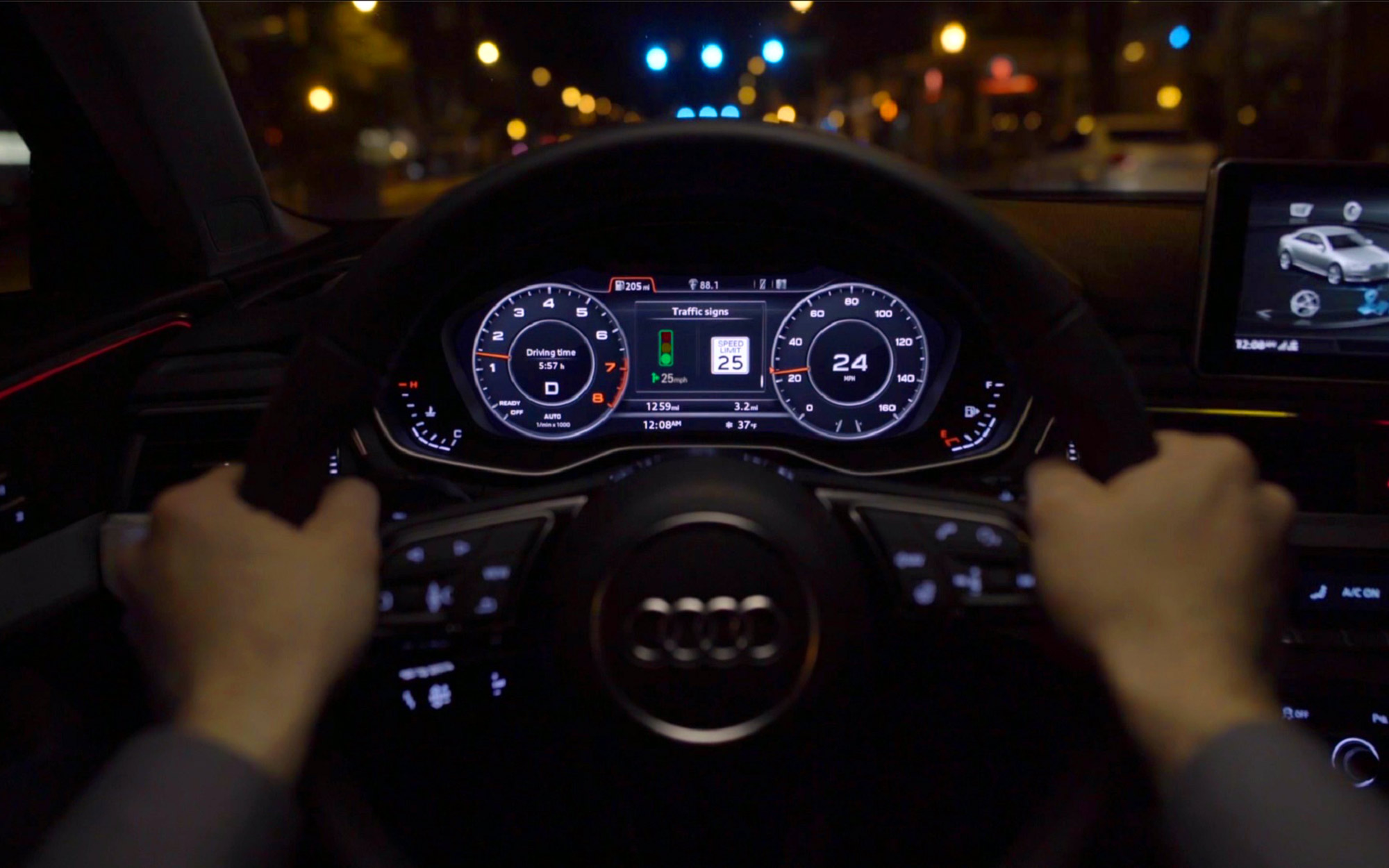
For Audi, this is an important move. The brand has long positioned itself as a technology leader, but the shift to SDVs has been a challenge. Snapdragon-powered infotainment and compute platforms mean future Audis built on the Scalable Systems Platform (SSP) will be designed from the outset for over-the-air upcdates, expandable driver assistance, and AI-driven interfaces that grow more capable over time rather than aging out. Think less “model year reset,” more continuous improvement.
Today’s Chinese-market AUDI E5 Sportback already showcases Snapdragon silicon in production form. The China-exclusive model uses Qualcomm Snapdragon–based hardware to underpin its digital cockpit and connected user experience, bringing high-performance compute, seamless infotainment, and deep software integration to the forefront. That formula has already proven compelling, with the E5 Sportback recently earning 2026 China Car of the Year honors.
The agreement also deepens an existing collaboration within the Group’s Automated Driving Alliance, led by CARIAD alongside Bosch. Here, Qualcomm’s Snapdragon Ride Elite platform is being positioned as the compute foundation for highly automated driving—handling real-time sensor fusion, decision-making, and ultra-low-latency responses. The planned result will be a scalable, AI-based automated driving stack that works across brands, segments, and price points while remaining fully compatible with the SDV architecture.
Where this gets especially interesting for Audi regarding infotainment, personalization, and brand identity. Snapdragon Cockpit Platform support enables what Qualcomm calls “agentic AI” experiences—systems that anticipate driver needs rather than merely responding to commands. Personalized climate settings, adaptive seating, predictive navigation, multimodal voice and gesture control: these aren’t isolated features, but components of a unified digital environment.
Connectivity is another major pillar. The intended agreement outlines plans for Snapdragon 5G Modem-RF and V2X integration across SDV-based vehicles, enabling high-bandwidth data transfer and real-time vehicle-to-everything communication. For Audi and the rest of the Volkswagen Group, that opens the door to more sophisticated traffic awareness, safety systems, and cloud-connected services—particularly important as these brands prepare for a future where automation and electrification converge.
Importantly, while this announcement carries Volkswagen Group branding, it’s being actively driven forward by AUDI AG and Volkswagen Passenger Cars with the explicit goal of Group-wide impact. That suggests Audi isn’t just along for the ride—it’s helping shape the technical direction that will underpin everything from entry-level EVs to flagship models later this decade.
In the broader context, this LOI underscores the idea that in the SDV era, differentiation increasingly comes from computing power, software architecture, and the ability to integrate AI at scale. By aligning closely with Qualcomm, Volkswagen Group is betting on a stable, predictable semiconductor strategy—and Audi stands to benefit directly as it defines what “Vorsprung durch Technik” means in this future of the automobile where code is as important as defining factor as anything else.