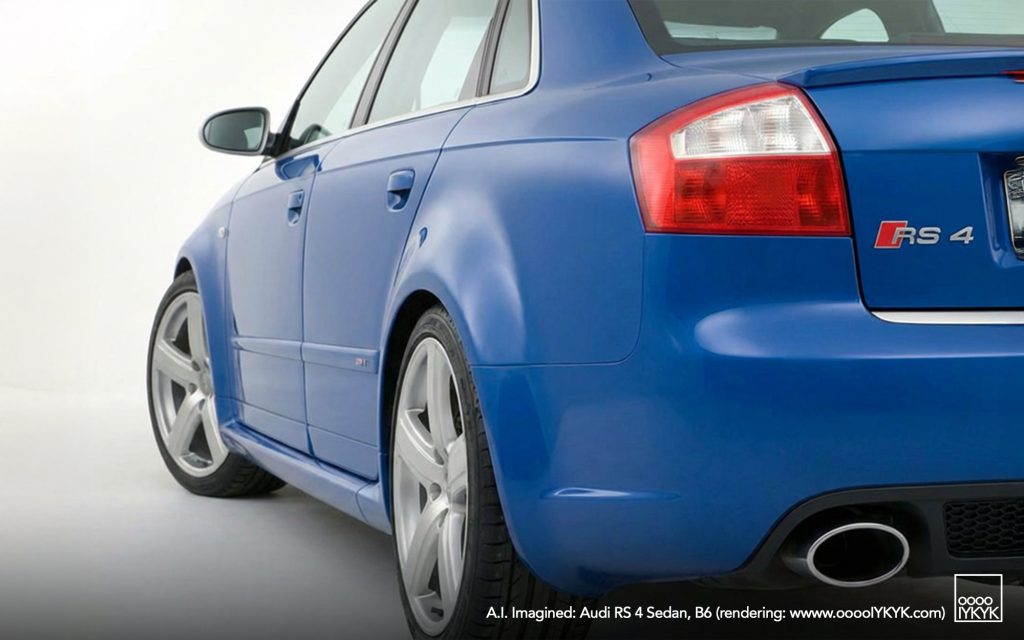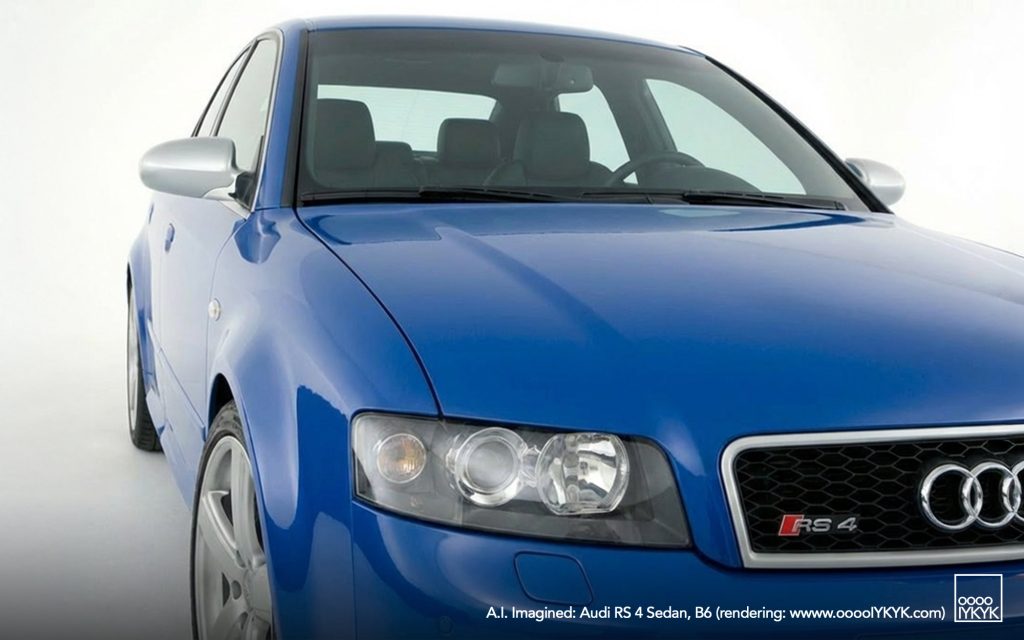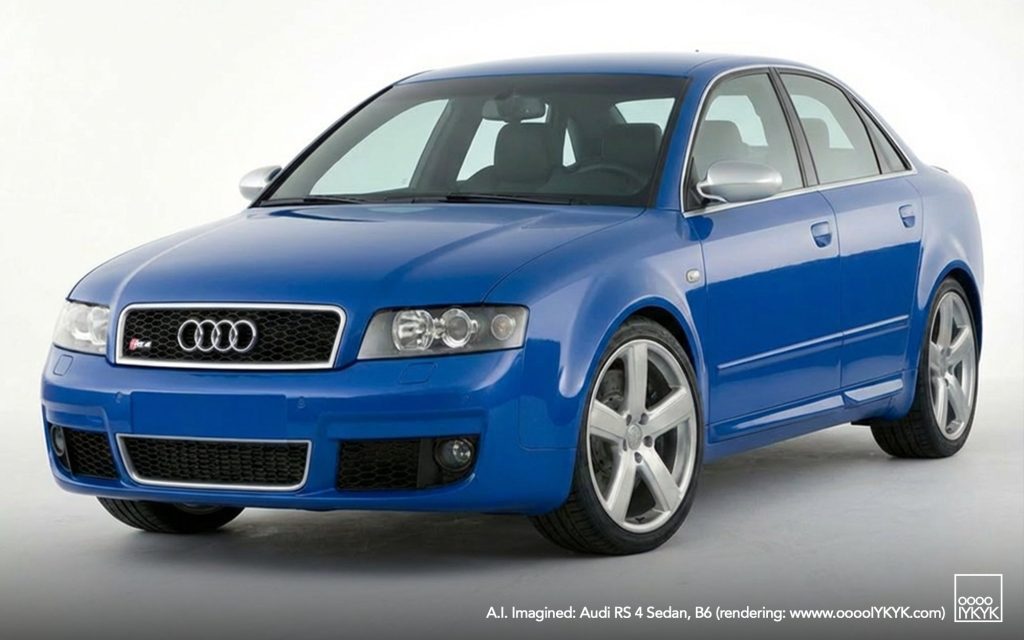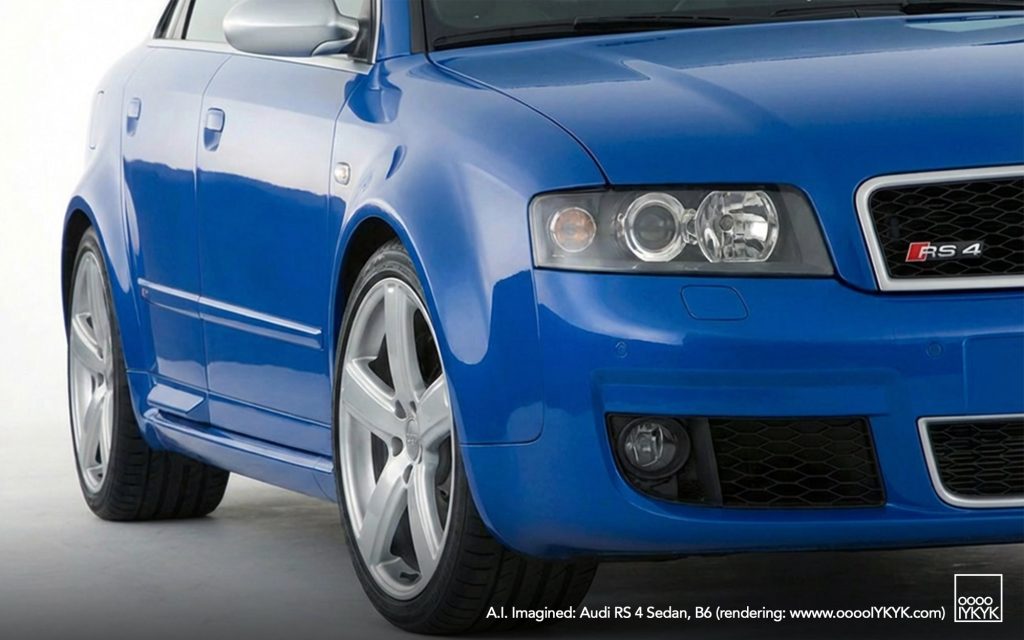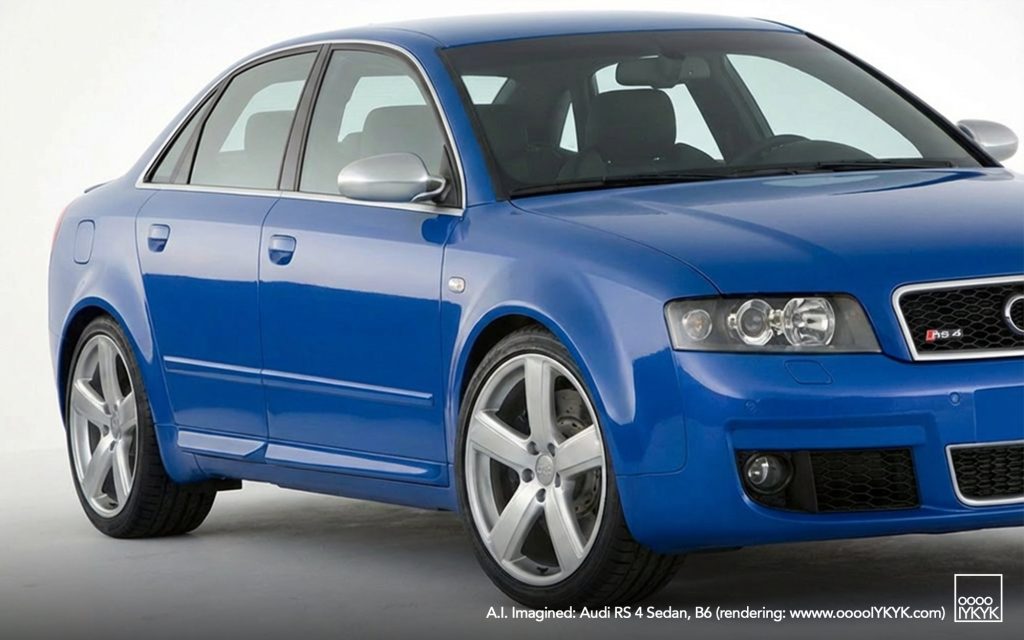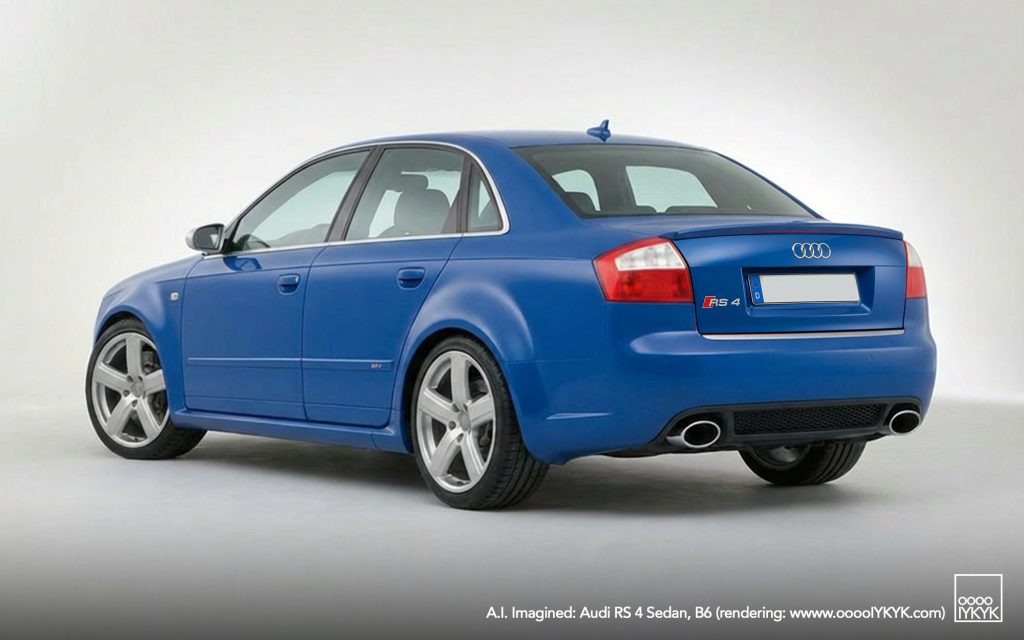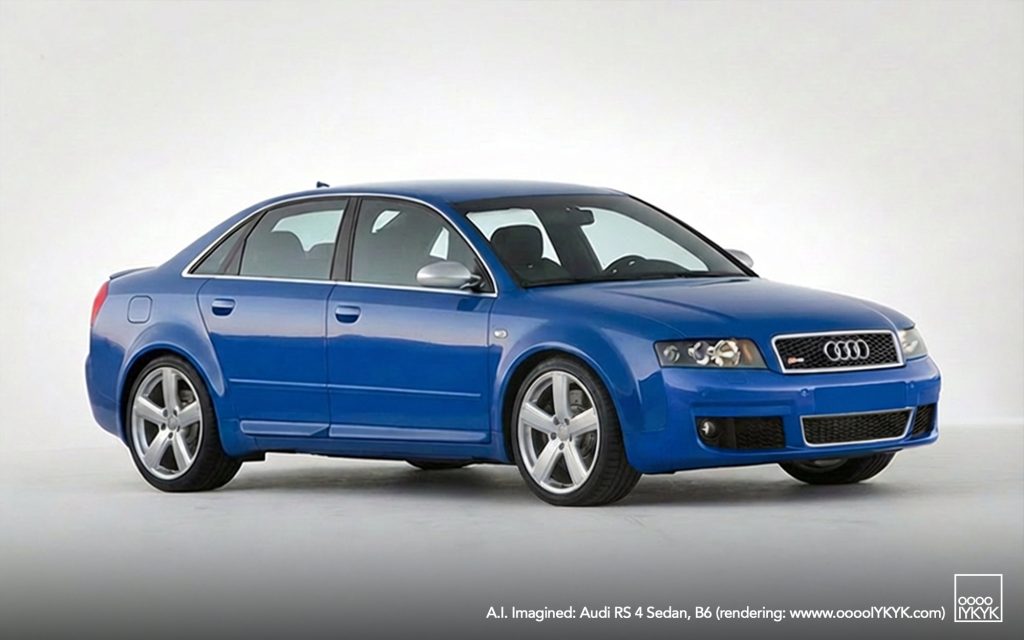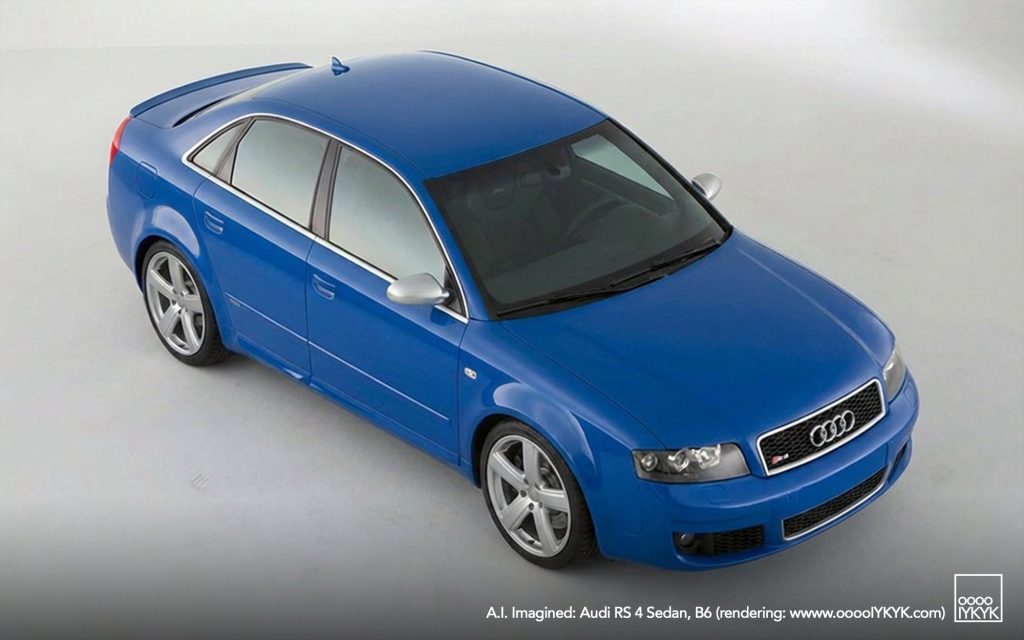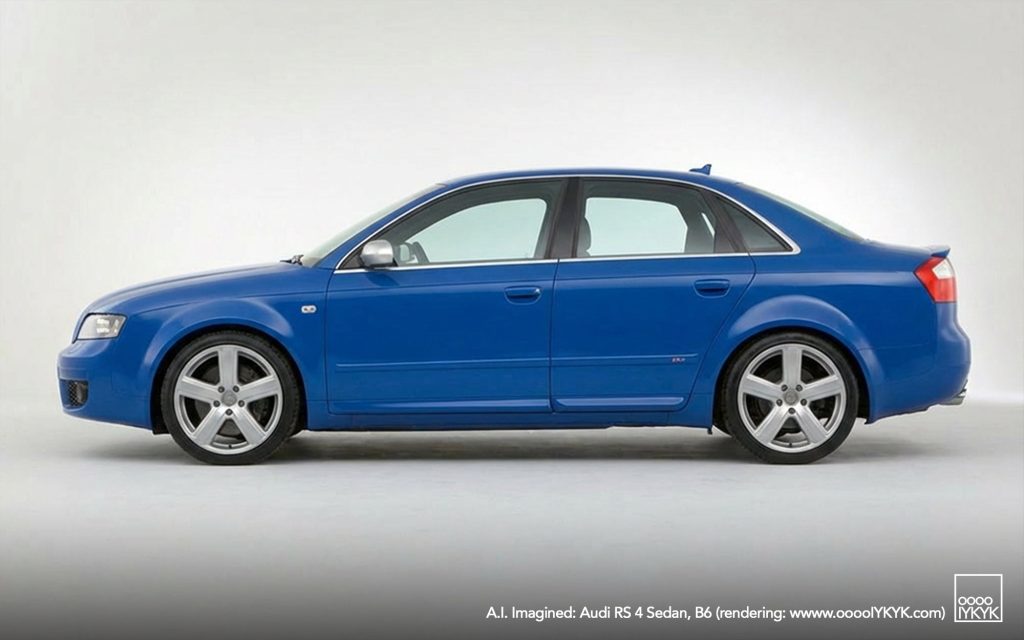

Long before AI tools, I’ve had a fixation for cars that “could have been” – never built for one reason or another, but something that could be enthusiast built today in order to have something completely original or cars-and-coffee head scratcher for those who think they know everything. Such is the case of the Audi RS 4 (B6).
If you’re reading this site then you know the RS2 Avant was the first RS car co-developed by Porsche. Next came the RS 4 Avant (B5) that dropped all Porsche associations and pretenses and leaned into Cosworth tuning – a legendary British tuning firm that found itself in that moment owned and operated by Audi.
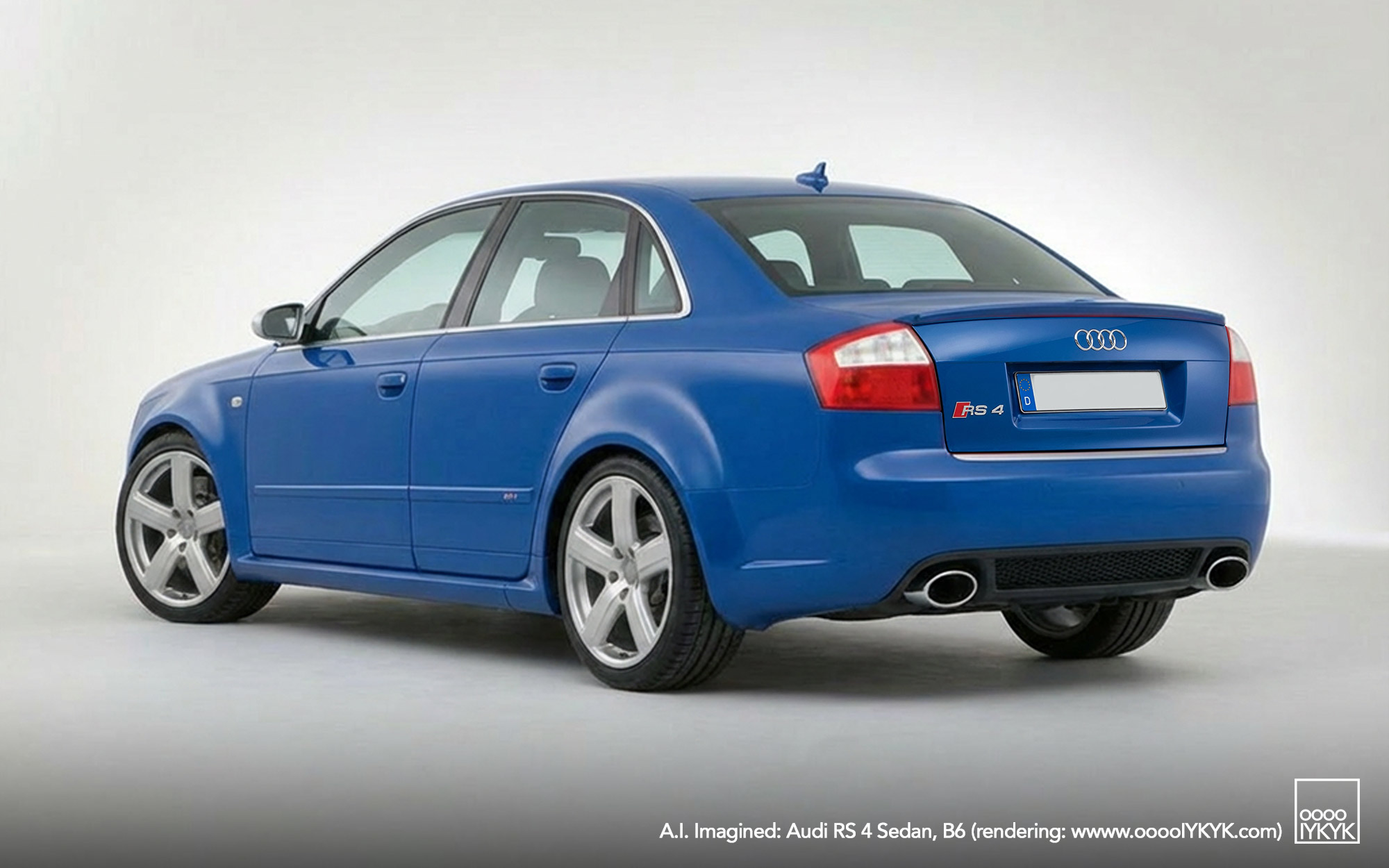
The next generation is B6 and it’s a curious one. There’s no RS 4 to be found here, while the usual mid-lifecycle freshening was referred to as a full next-generation and called “B7”. That car would get an RS version again, with the RS 4 (B7) using the high-revving 4.2-liter V8 that had been developed as the base engine for the R8 sportscar.
We all know how the RS 4 legend flows from there, but it’s that spot at B6 that leaves a question mark. Why no B6 RS 4? That generation A4 was undoubtedly the most avant-garde in its association with the bold design family of TT (mk1), A2 and A6 (C5). Yet, we never saw it in its boldest form.
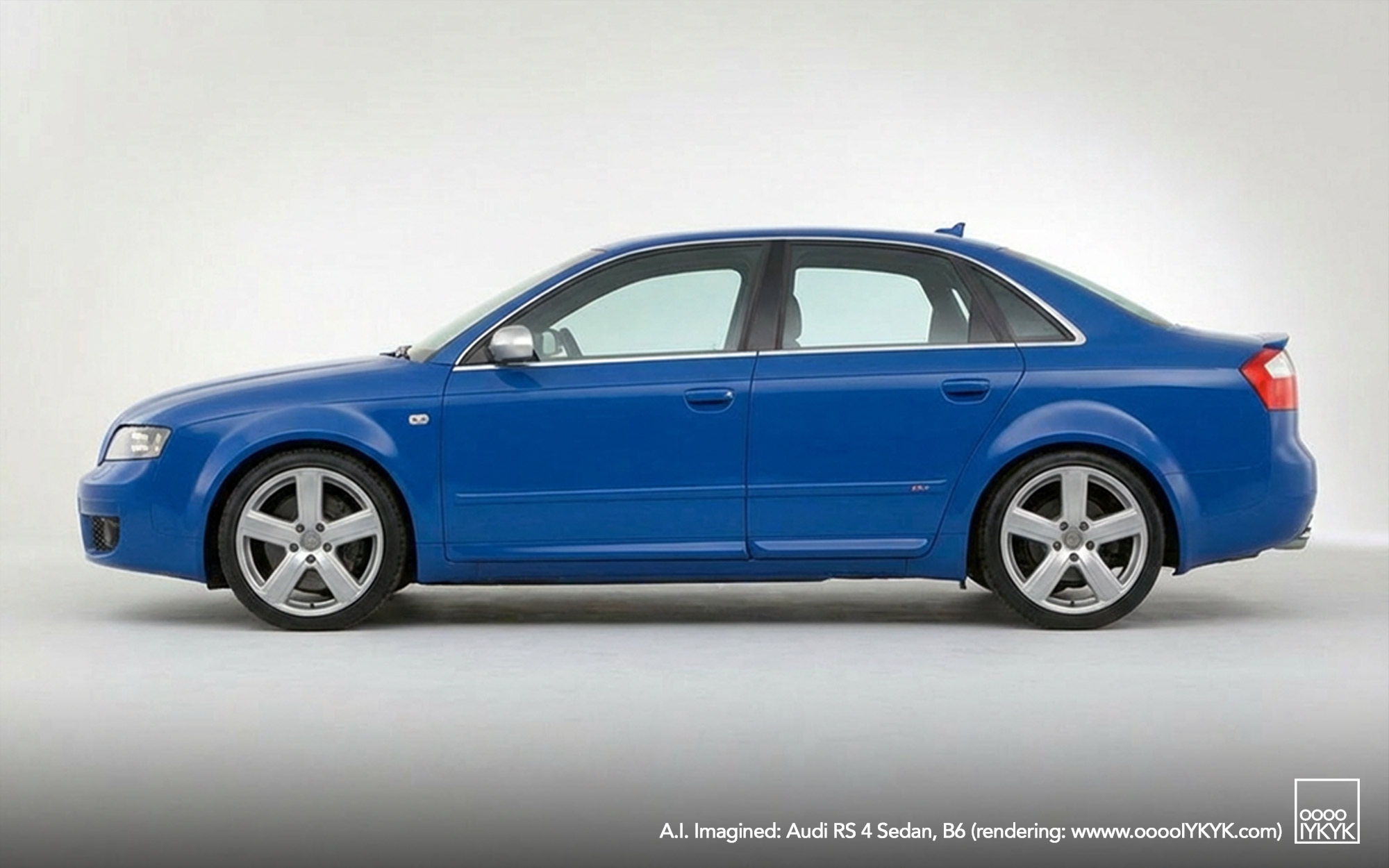
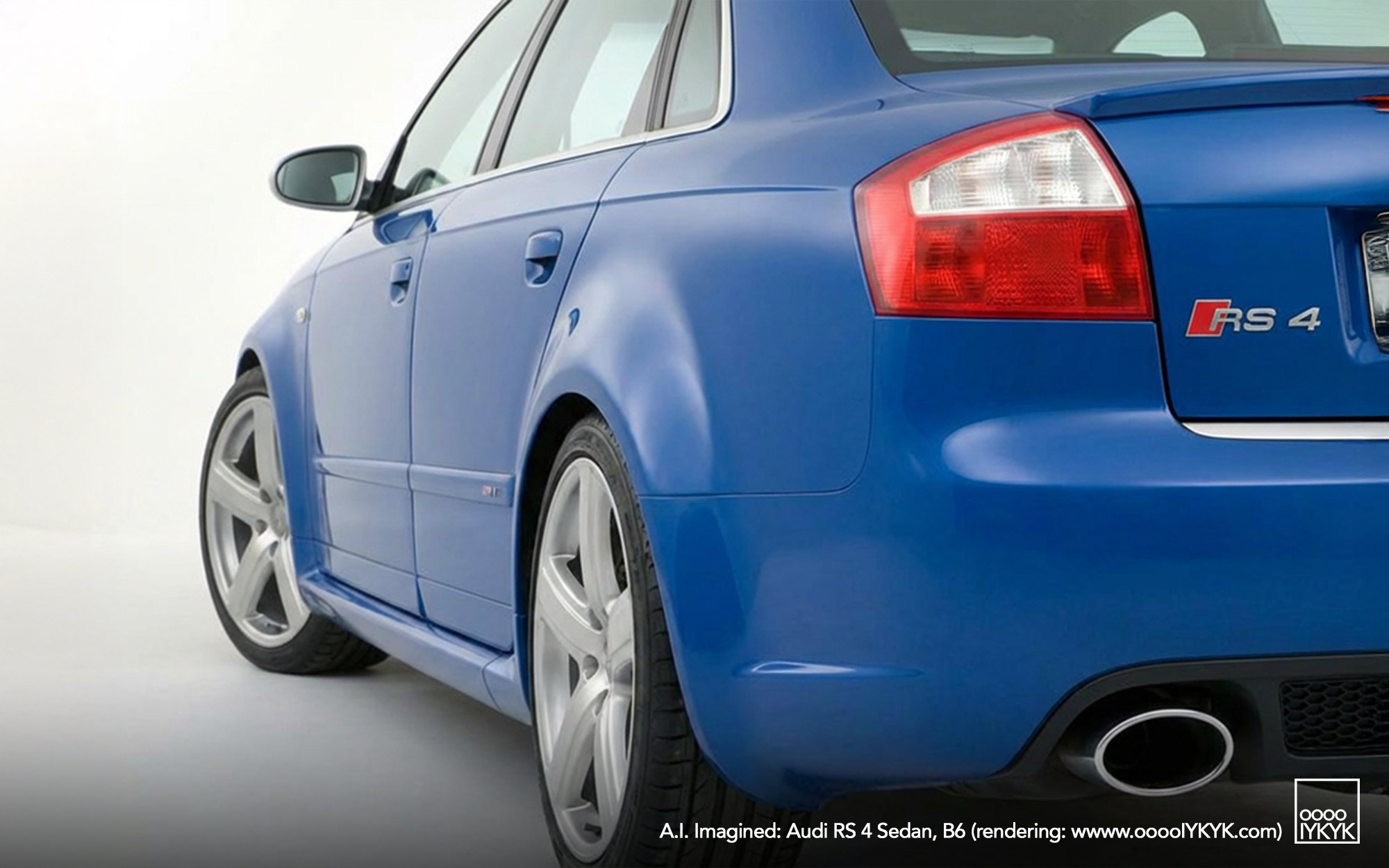
I’ve wanted to build one for years – i.e. have one built as building cars is not my personal skillset. It wouldn’t be hard though. The B7 RS 4 parts and trim mainly bolt on or in. The fenders are all steel… could those flares be welded in place?
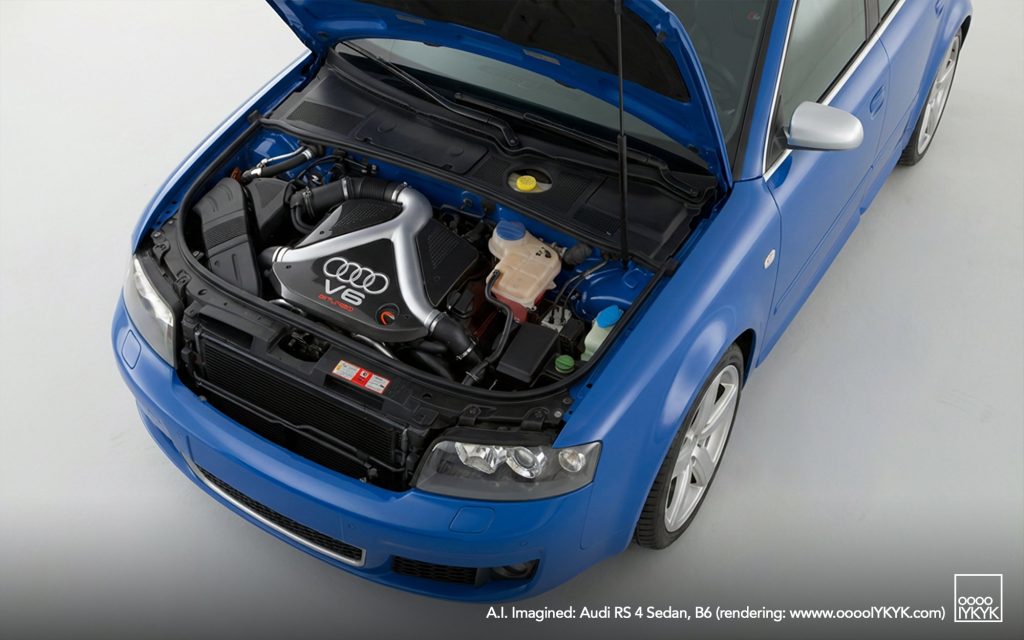
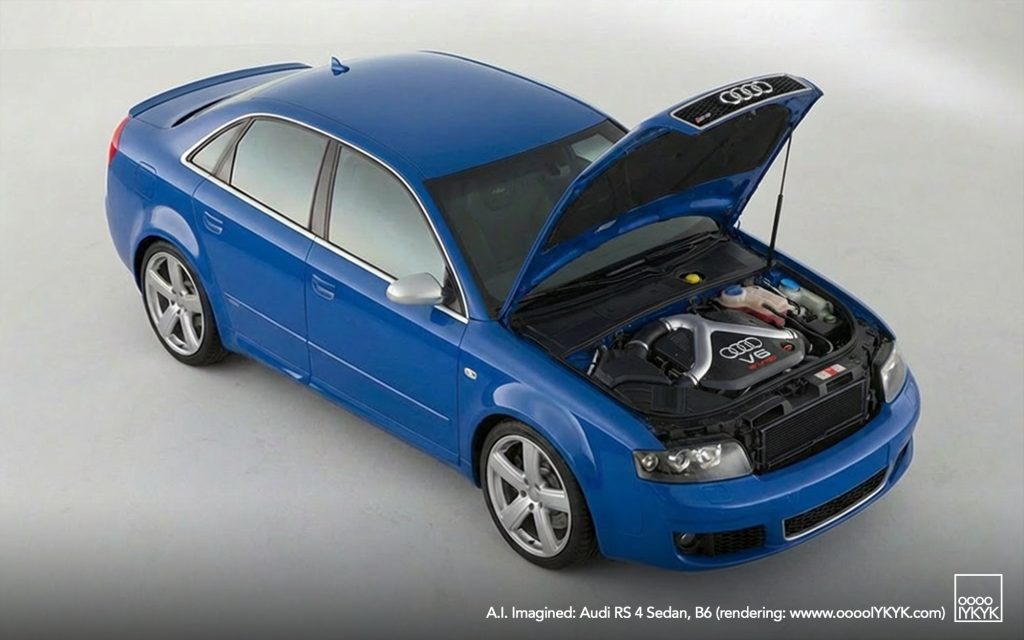
And what of an engine? The high-rev 4.2 is cool and all, but the 2.7T is more tuner friendly and lighter in the nose. Unlike the 4.2 high-rev version, the 2.7T was also in production in those B6 years. ABT Sportsline built one, and in the USA where technically you’re not supposed to put older engines into newer cars, the 2.7T remained in production in the A6 throughout the B6’s production life.
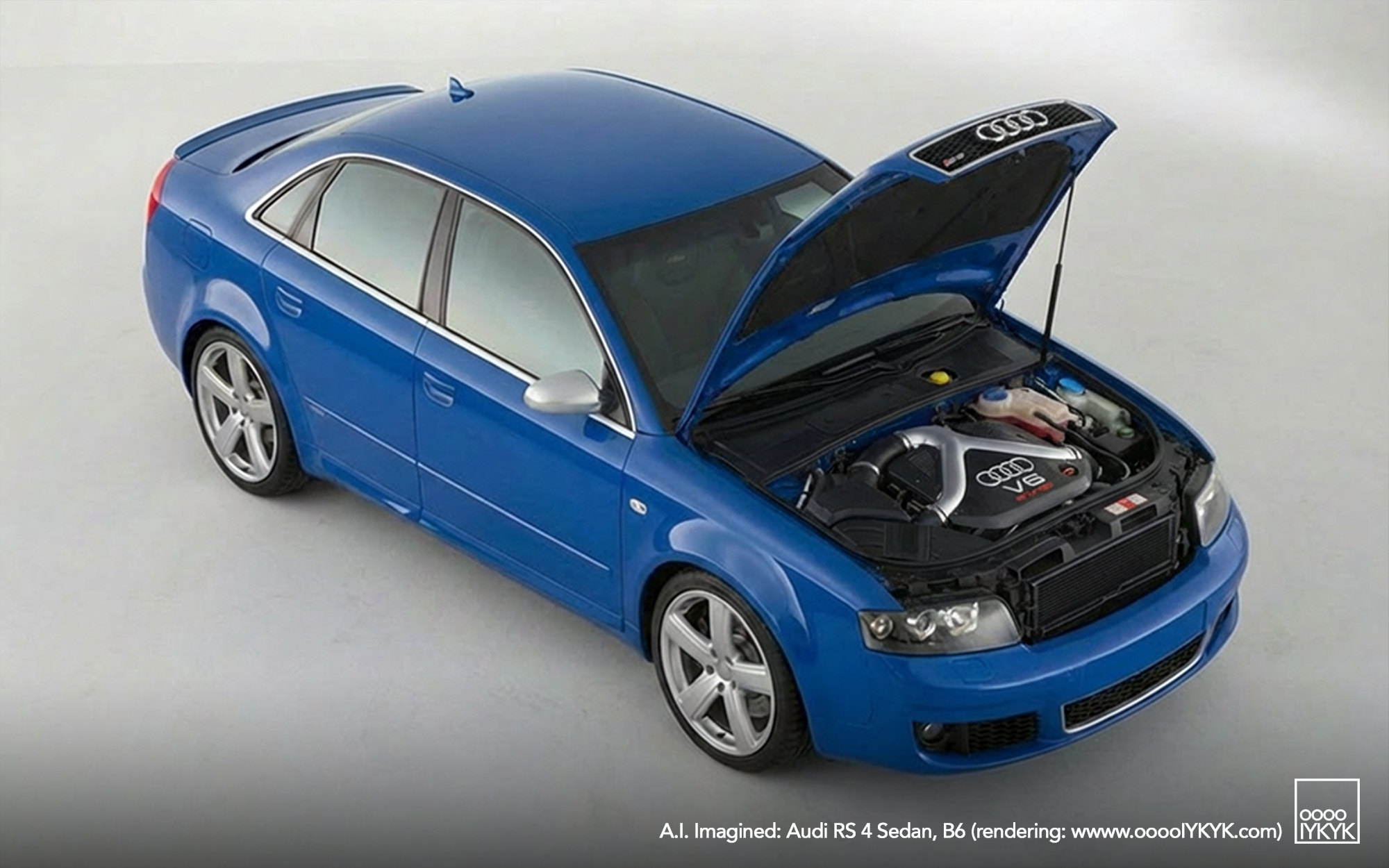
I’m a stickler for period correct, which is why I’d go 2.7T. It’s also the reason why, when I got around to finally visualizing the car using AI tools, I went with the RS 6 (C5) as the inspiration for the fascia. The C5 and B6 were both in that moment just before the arrival of the singleframe, and the importance of consistency for A, S, and RS design cues across their respective families has always been a priority at Audi.
For wheels I went with that period 5-spoke. They first appeared on the RS 4 (B5) in its initial press photography when launched, but they’d miss production and disappear for awhile in mainstream use until the RS 6 had arrived. They’d eventually become fairly ubiquitous across the brand as most of the best Audi wheel designs do. If it works, it works and they make them in more sizes and fitments. In this case, they fit the period due to that RS 6 association.
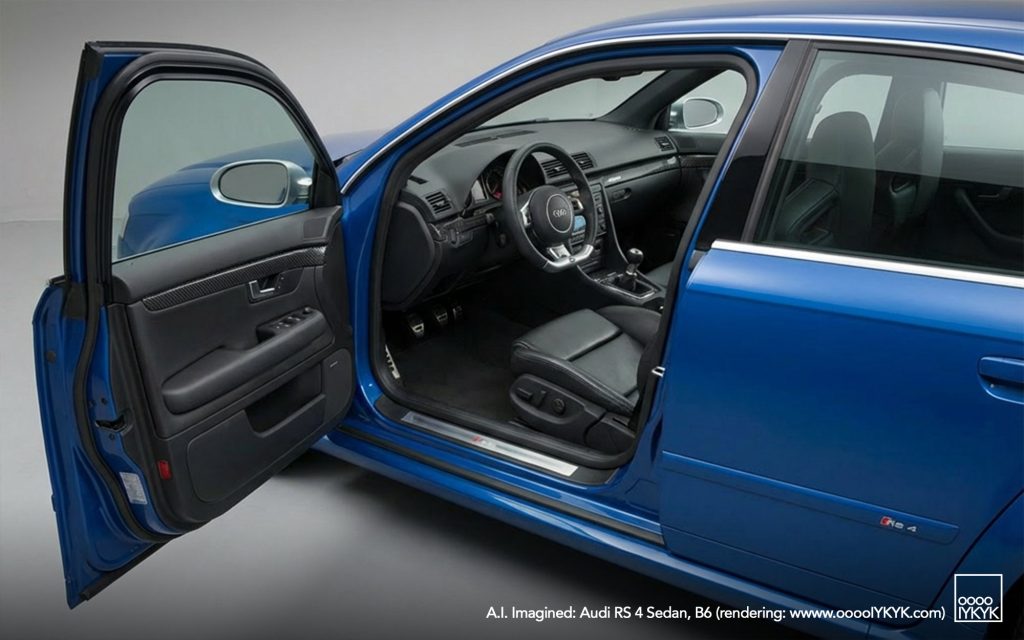
Under the hood I’ve added the B5 RS 4 2.7T for visual reference, with its carbon fiber shroud. and red “Biturbo” lettering. Inside, I went straight up B7 parts bin. The B6 and B7 shared a lot, and the B7’s cues were heavily inspired by the B5. It all sort of fits both stylistically and literally.
So, what do you think? Did I nail it? Would you do something differently? Should I revisit it with an Avant version? Let me know in the comments for this story on my social media channels.
PHOTO GALLERY