


Formula 1’s traveling exhibition is heading deeper to Germany, with organizers confirming Formula 1 Exhibition will open in Munich on May 20, 2026. For Audi Revolut F1 especially, the move carries added significance.
Munich may not be home to Audi on paper—that distinction belongs to Ingolstadt, roughly 50 miles to the north—but Munich does play home to a major Audi presence including training facility near the airport and sponsorship of the city’s major league soccer team FC Bayern. Culturally and geographically, this is Audi country… at least as much as one could expect given BMW’s own corporate headquarters is also located here. And in the brand’s first season as a Formula 1 constructor, the sport is arriving effectively at its doorstep.
The Munich installation will mark the tenth stop on the exhibition’s global tour, following previous runs in cities including London, Melbourne, and Mexico City. Its German debut in Oberhausen drew more than 150,000 visitors, reinforcing what Formula 1 already knows: Germany remains one of the sport’s most deeply rooted markets.
That timing isn’t coincidental.
Audi’s 2026 entry has reinforced Germany’s position within the modern Formula 1 lexicon in a way not seen since the peak years of Michael Schumacher and Sebastian Vettel. With Nico Hülkenberg now leading Audi’s effort, the country once again has a central figure on the grid—and now, a physical experience to match the moment.
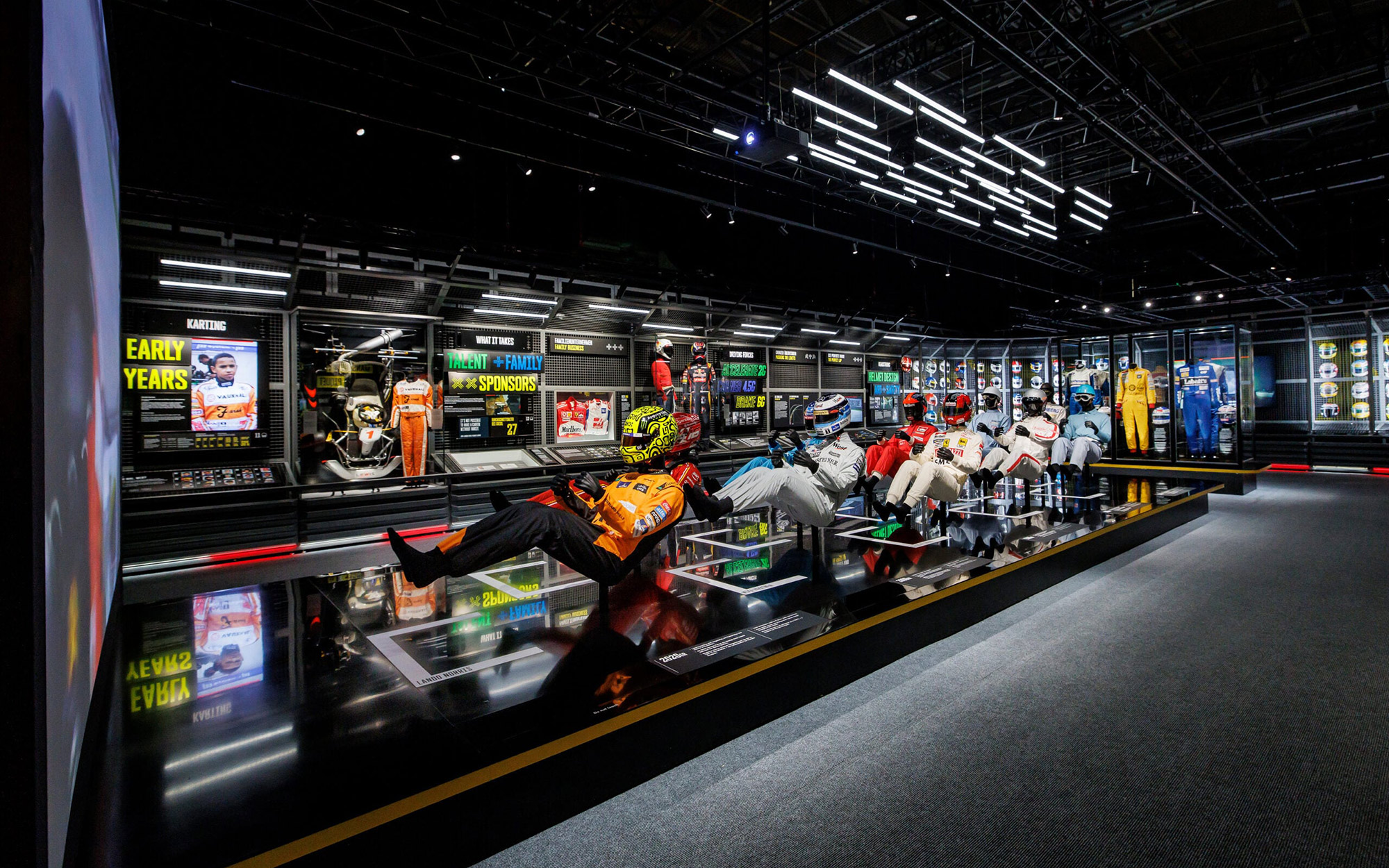
Set within Munich’s Pineapple Park, the exhibition spans roughly 3,000 square meters and is structured as a walk-through narrative of Formula 1’s past and present. Visitors move through themed rooms covering the sport’s defining eras, technical revolutions, and cultural impact, supported by archival footage, photography, and interactive installations.
Among the headline artifacts are the Mercedes W02—driven by Schumacher and Nico Rosberg—and the Red Bull RB16B that delivered Max Verstappen his first world championship.
For Formula 1, Munich represents a strategic placement in one of Europe’s key economic and technological hubs, a city synonymous with engineering and innovation. It also places the exhibition within immediate reach of two of the sport’s most influential manufacturers—Audi and Mercedes-Benz—both of which have shaped Formula 1 in very different eras.
As Audi works to establish itself in Formula 1’s new hybrid era, the arrival of a global F1 showcase just down the road from Ingolstadt presents an opportunity to remind its home market that the brand is back. The sport is no longer something happening elsewhere. It’s here—embedded in the same region that builds Audi road cars and now, increasingly, its racing future.