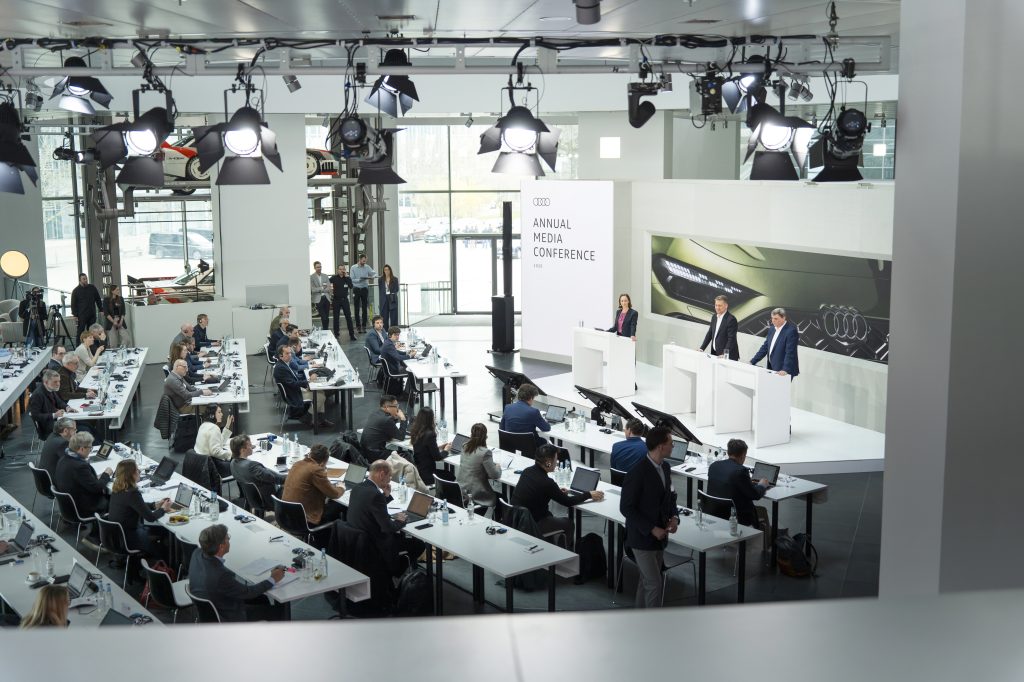
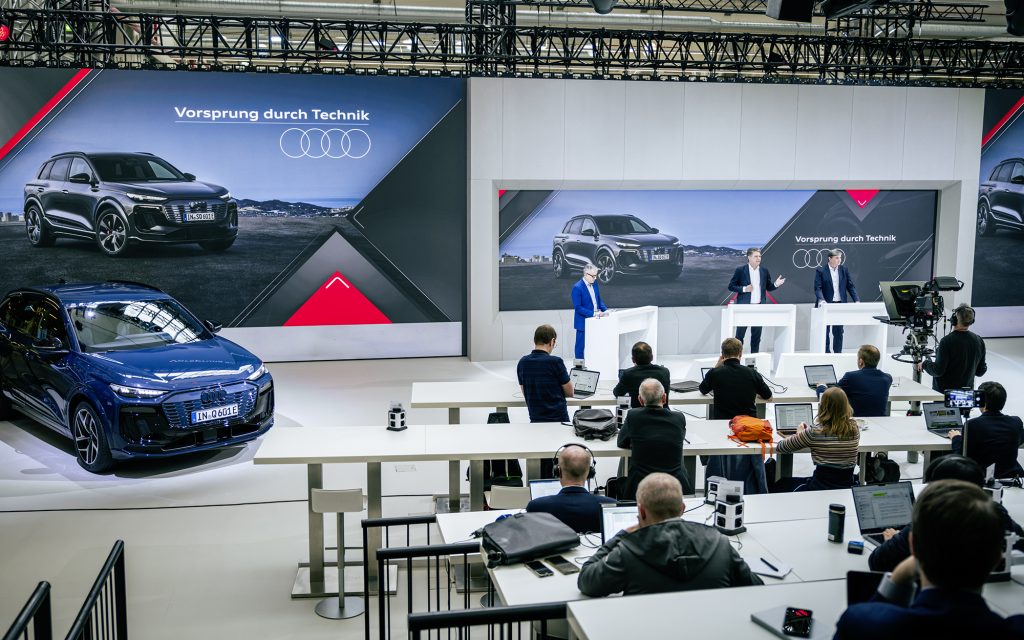
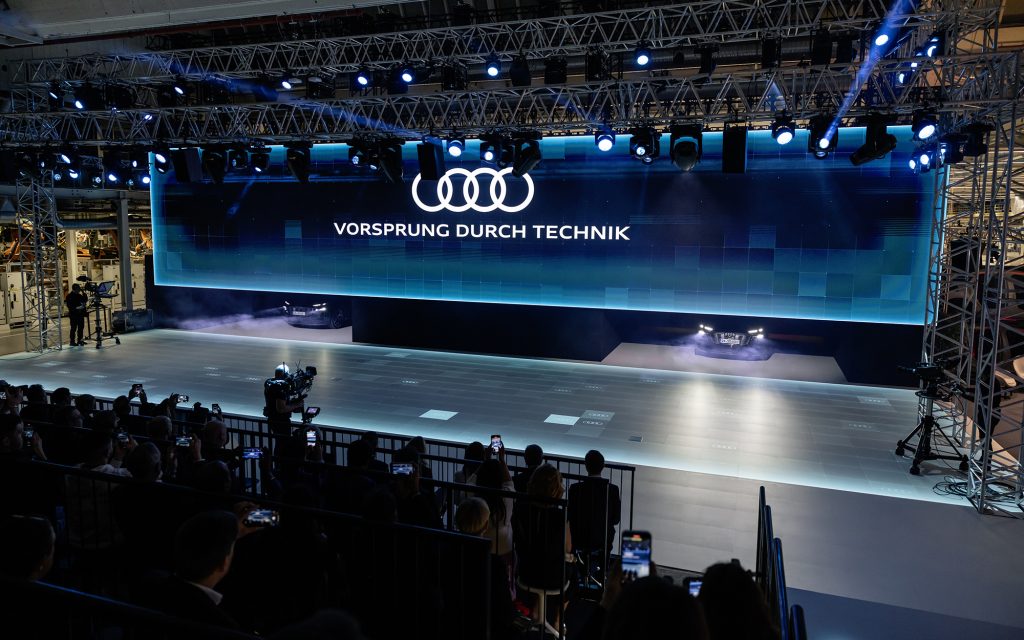
Each spring, Audi gathers media, analysts, and stakeholders for its Annual Press Conference to frame the narrative around where the company stands and where it’s going next.
In an industry defined by long development cycles, shifting regulations, and increasingly volatile global markets, these briefings have become a moment of accountability. They offer reporting on financial performance, product strategy and structural decisions, while also giving leadership a platform to address challenges head-on—from geopolitical pressures and tariffs to electrification timelines and competitive positioning.
Just as importantly, the Annual Press Conference serves as a signal to the market. It’s where Audi aligns its messaging across investors, media, and customers, setting expectations for the year ahead. New models aren’t typically revealed here, but relevant information is often mentioned, contextualized, strategic pivots are clarified, and broader ambitions—whether in electrification, regional expansion, or motorsport—are brought into focus.
It’s less about what Audi did last year, and more about how the brand intends to compete in the next one.
After a year defined by geopolitical pressure, tariffs, and ongoing transformation, the company closed 2025 with what leadership describes as a “robust” performance. But beneath the financials, the underlying story is one of recalibration: tightening operations, accelerating electrification, and preparing for a very public next chapter that includes both a new entry-level EV strategy and a Formula 1 debut.
SOLID FINANCIAL FOUNDATION WITH PRESSURE STILL PRESENT
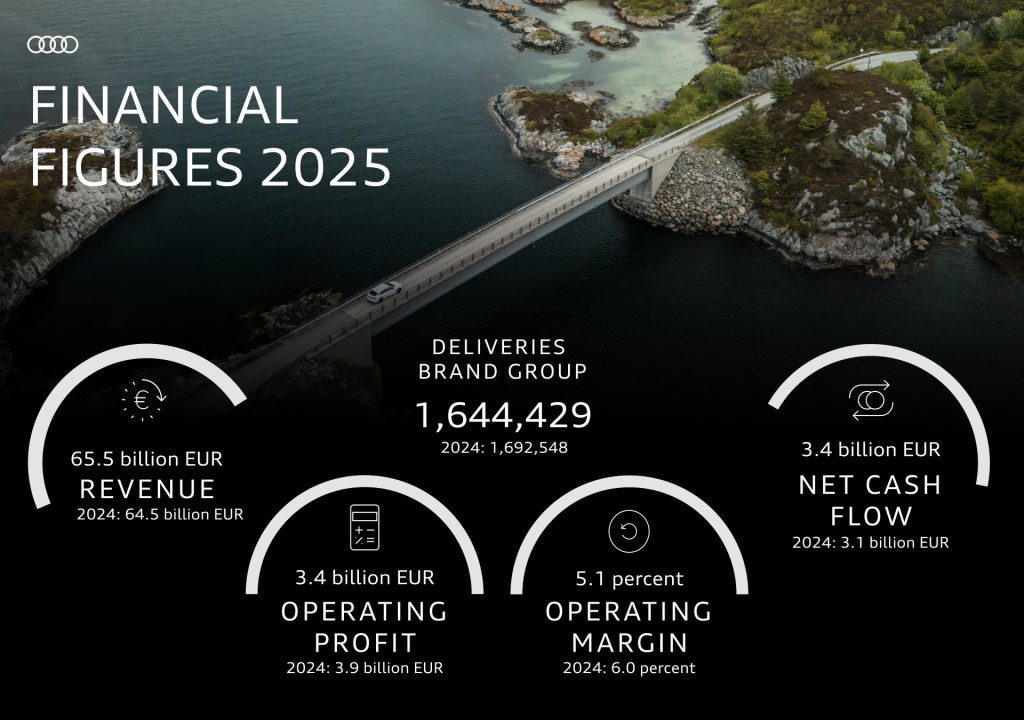
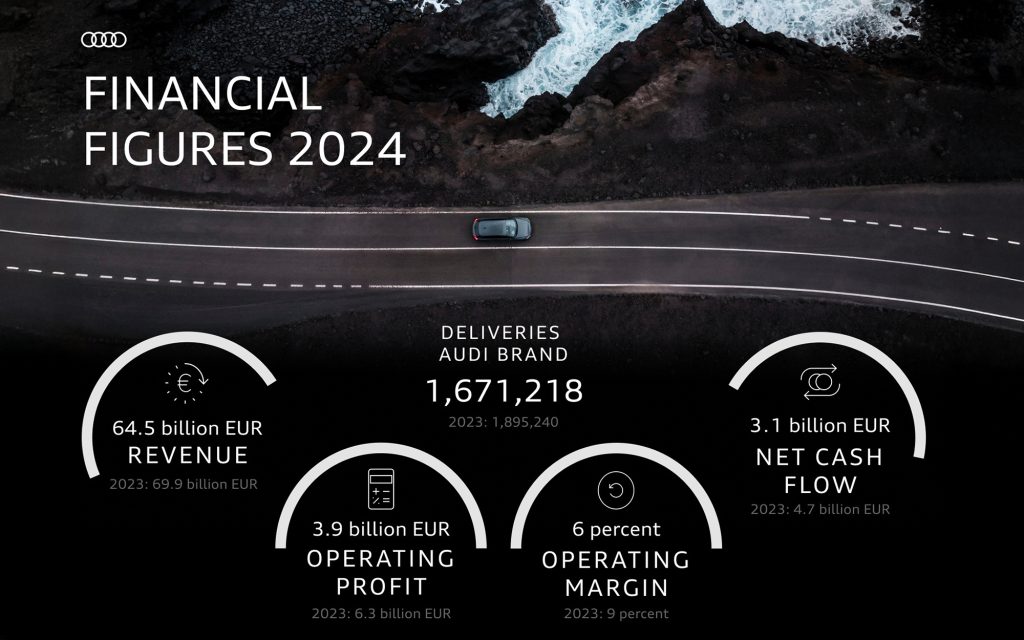
Audi reported revenue of €65.5 billion for 2025, up slightly year-over-year, alongside an operating profit of €3.4 billion and a 5.1 percent margin. Net cash flow also came in strong at €3.4 billion, reflecting disciplined cost control and investment strategy.
Those numbers land within Audi’s adjusted targets, though not without headwinds. U.S. tariffs alone accounted for a €1.2 billion impact, while broader industry pressures—including CO₂ compliance costs and platform development adjustments—continued to weigh on margins.
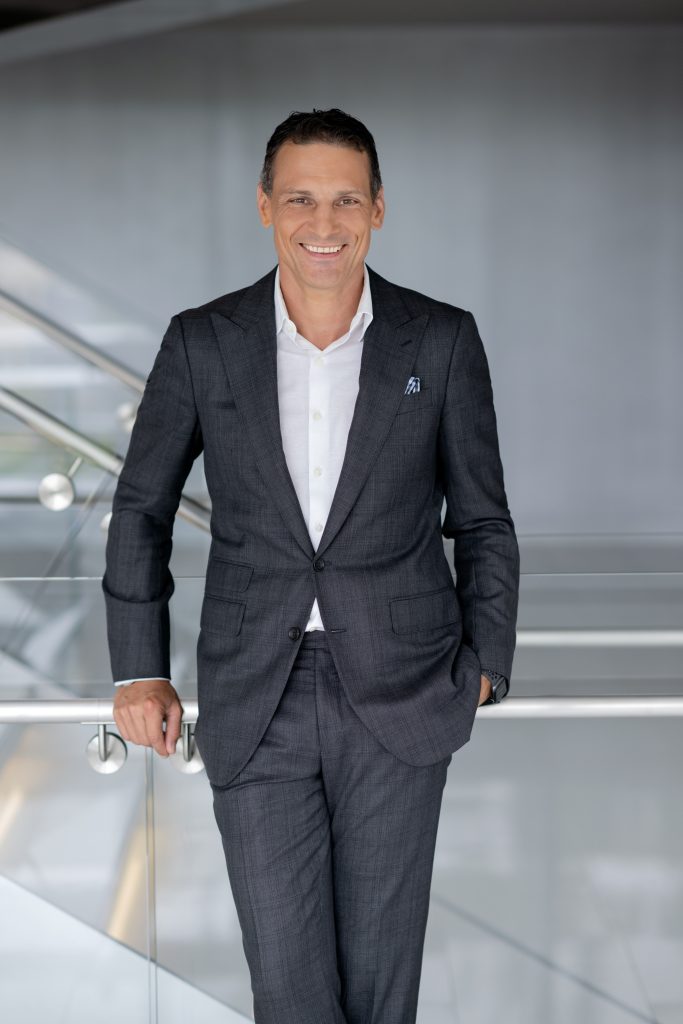
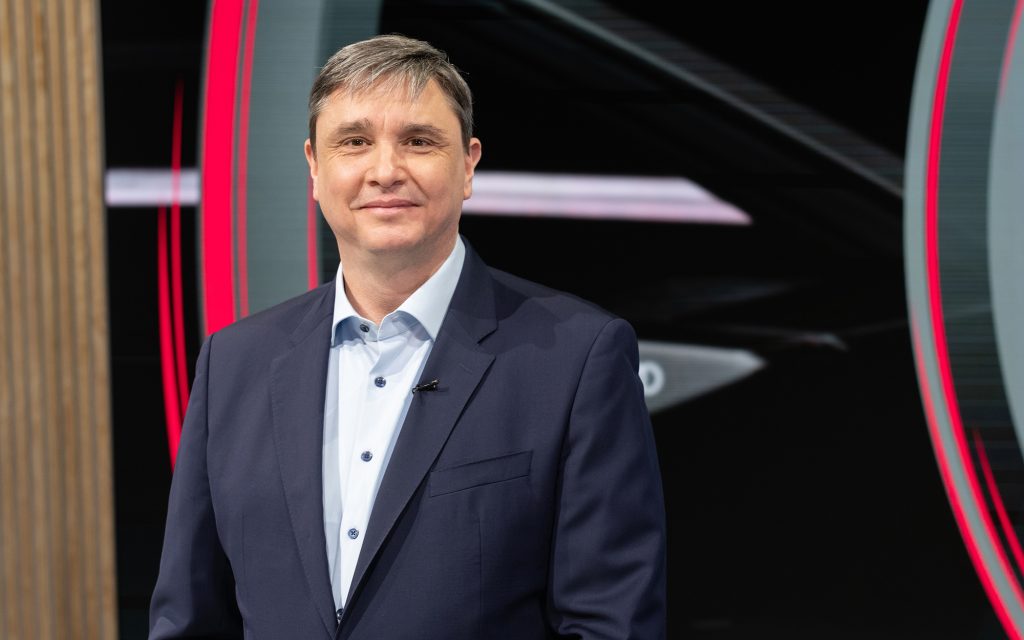
CEO Gernot Döllner positioned the results as proof of resilience rather than peak performance, emphasizing that Audi’s current phase is about making the right structural decisions, not chasing short-term gains.
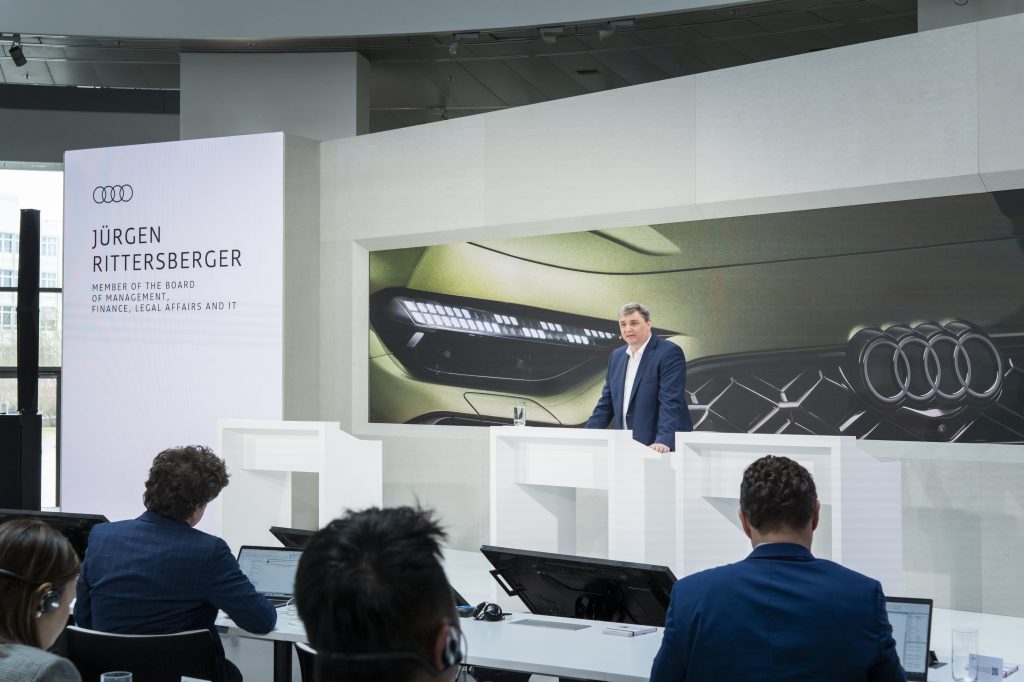
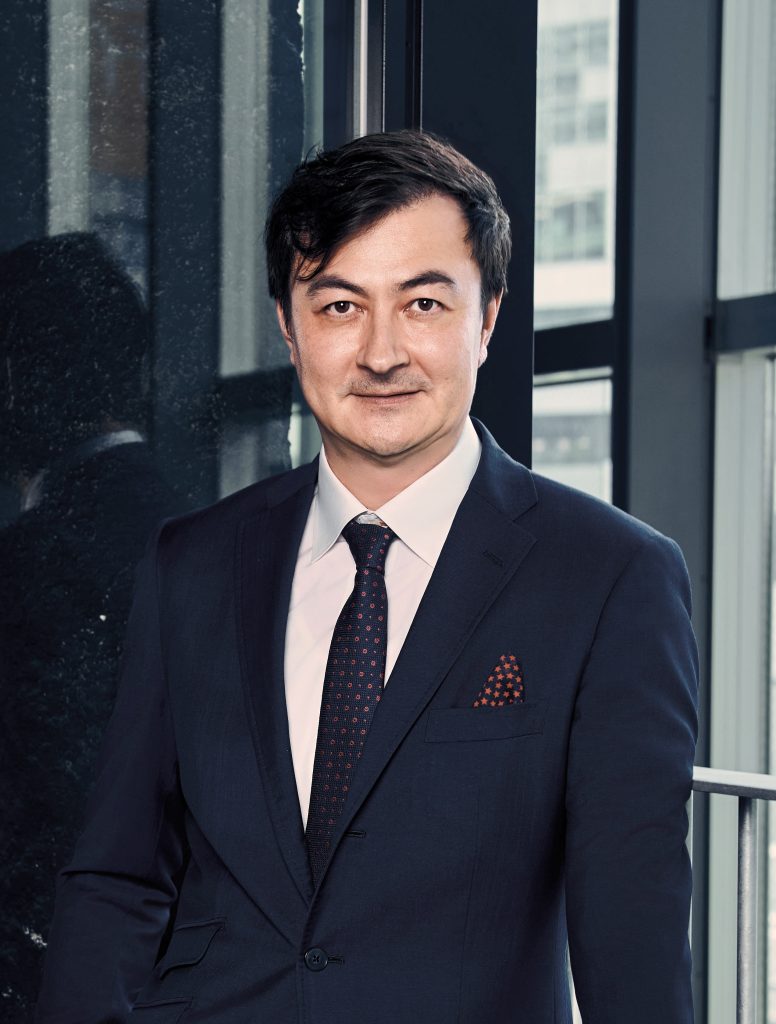
CFO Jürgen Rittersberger echoed that sentiment more bluntly: efficiency, competitiveness, and profitability remain the immediate priorities—and none of them come easily in the current climate.
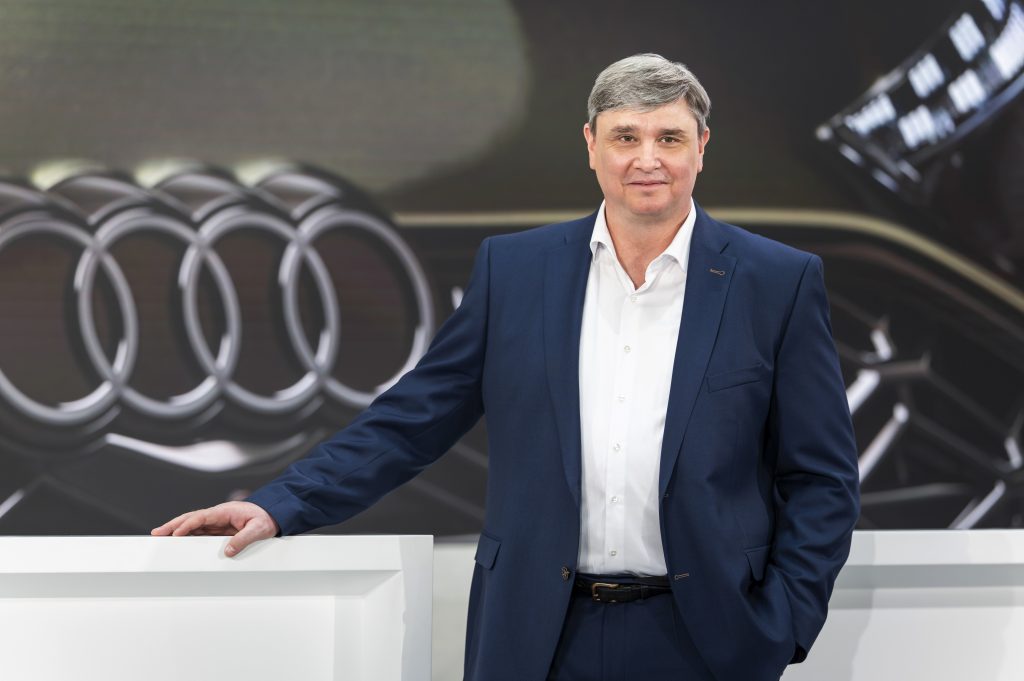
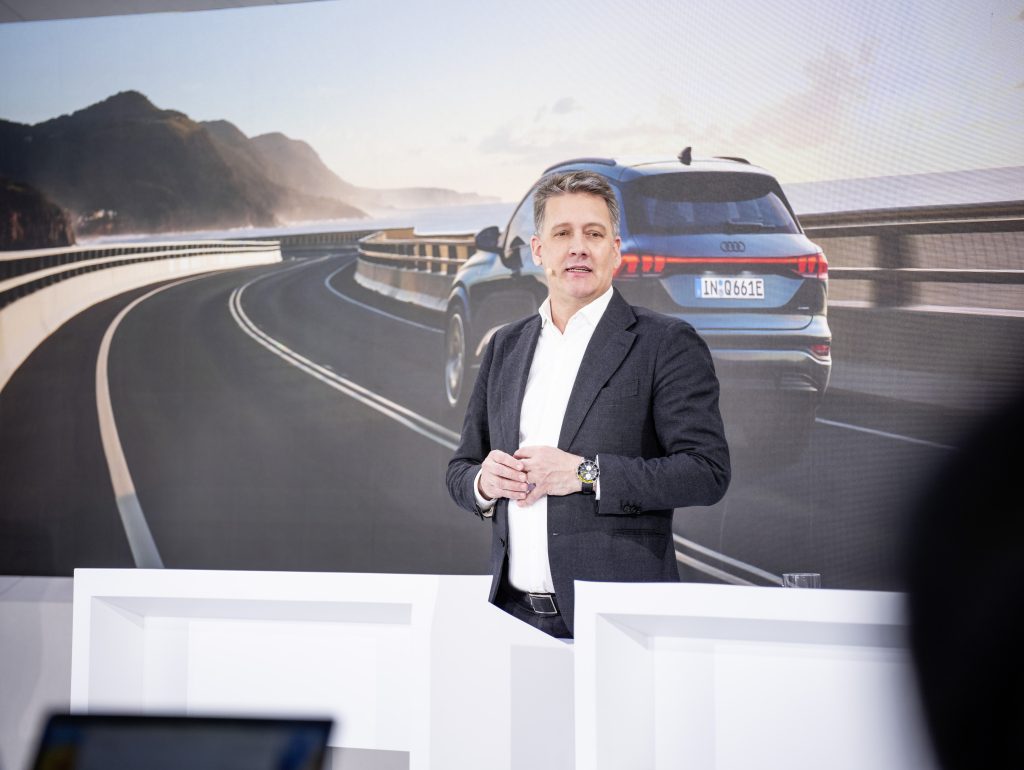
Gernot Döllner, Chairman of the Board of Management
EV GROWTH A REALITY NOT JUST A PROJECTION
If there’s a bright spot in Audi’s 2025 performance, it’s actually electrification.
The brand delivered over 223,000 fully electric vehicles globally—a 36 percent increase year-over-year. Models like the Q6 e-tron and A6 e-tron are already proving to be meaningful contributors, suggesting Audi’s latest generation of EVs is gaining traction in ways earlier efforts struggled to achieve.
Notable is the late-year momentum. From September onward, global deliveries outpaced the previous year every month, hinting that Audi’s extensive product refresh cycle is beginning to land with customers.
Audi is now claiming one of the youngest portfolios in the premium space after launching more than 20 new models across 2024 and 2025.
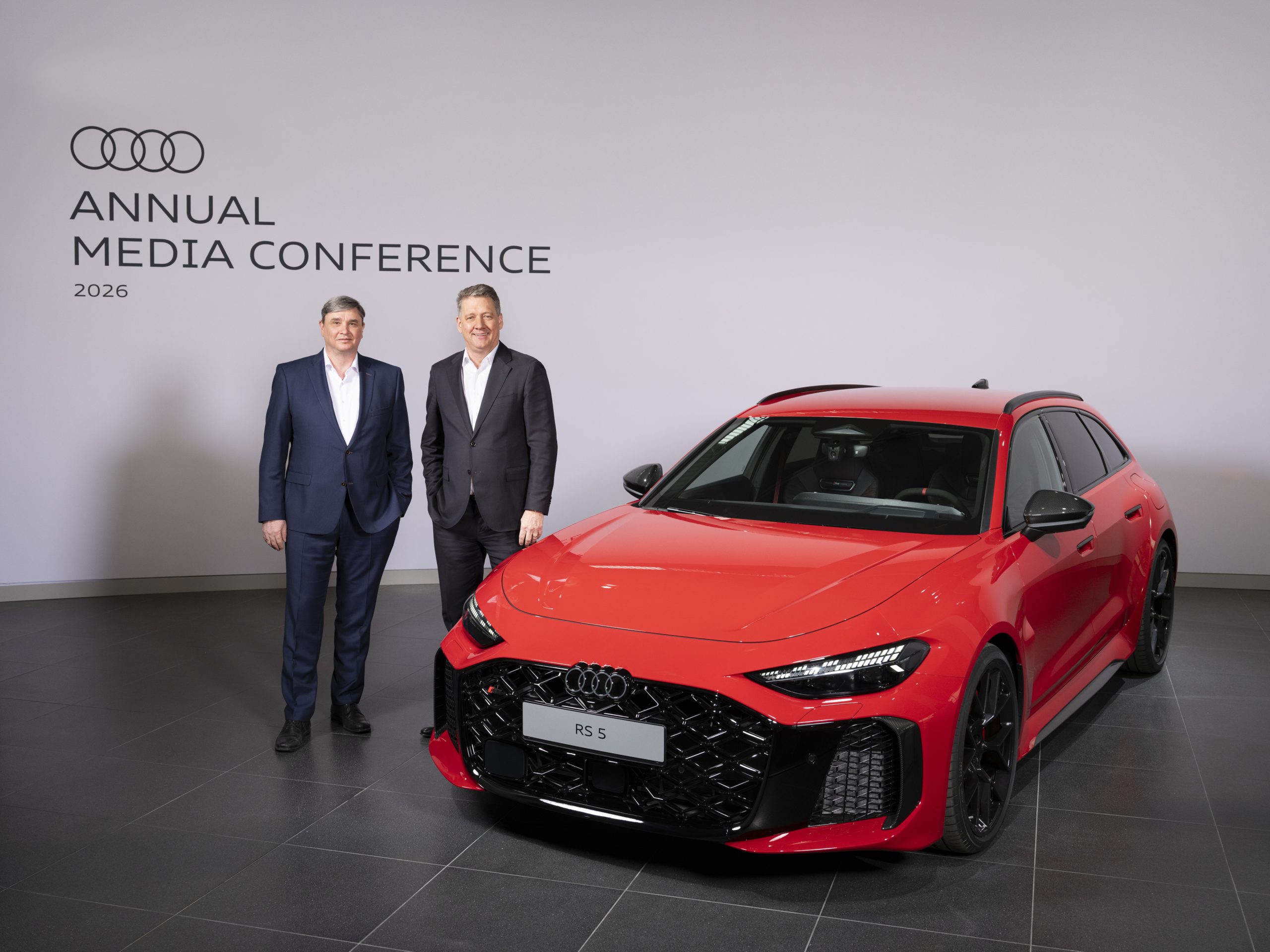
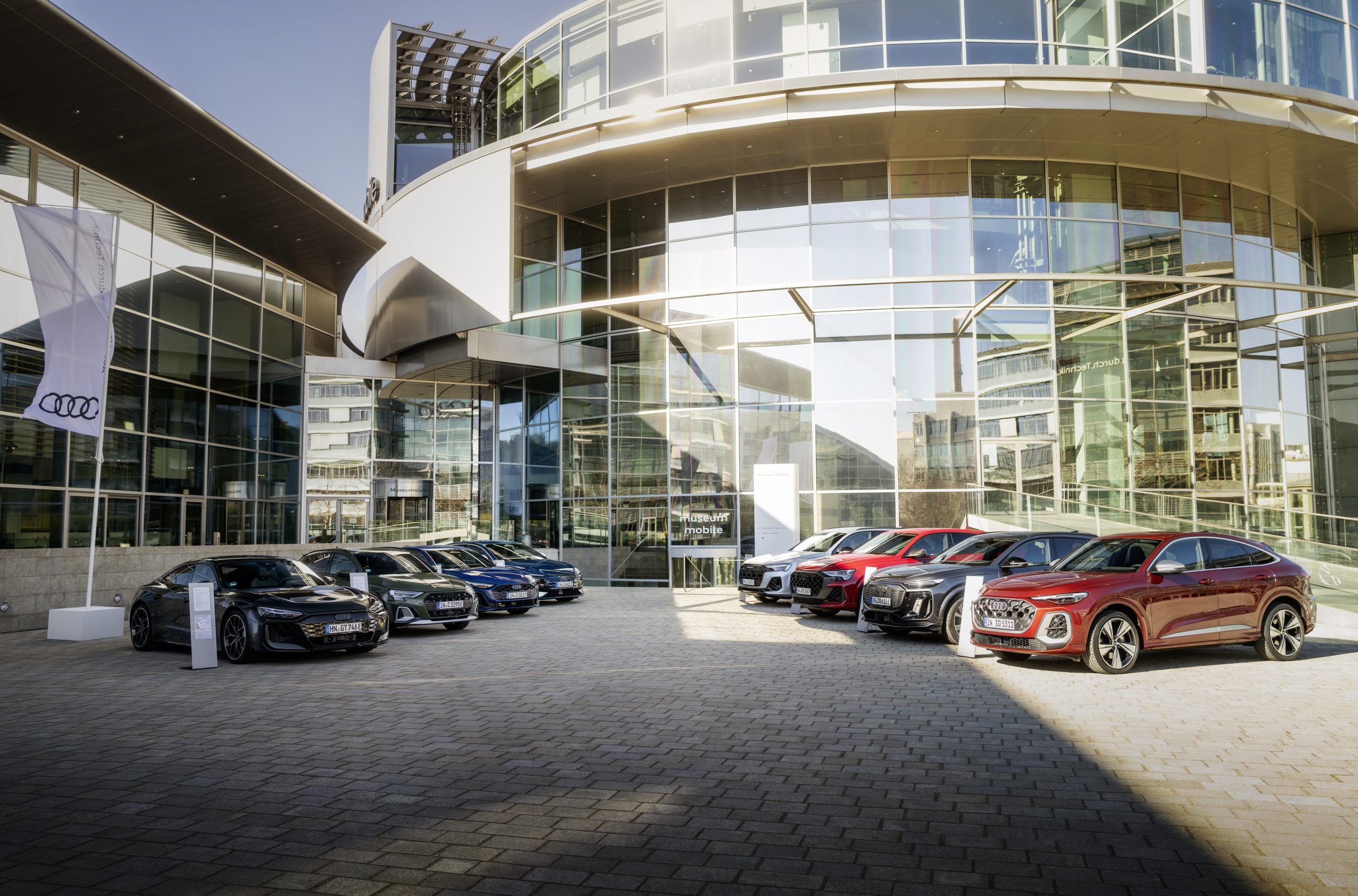
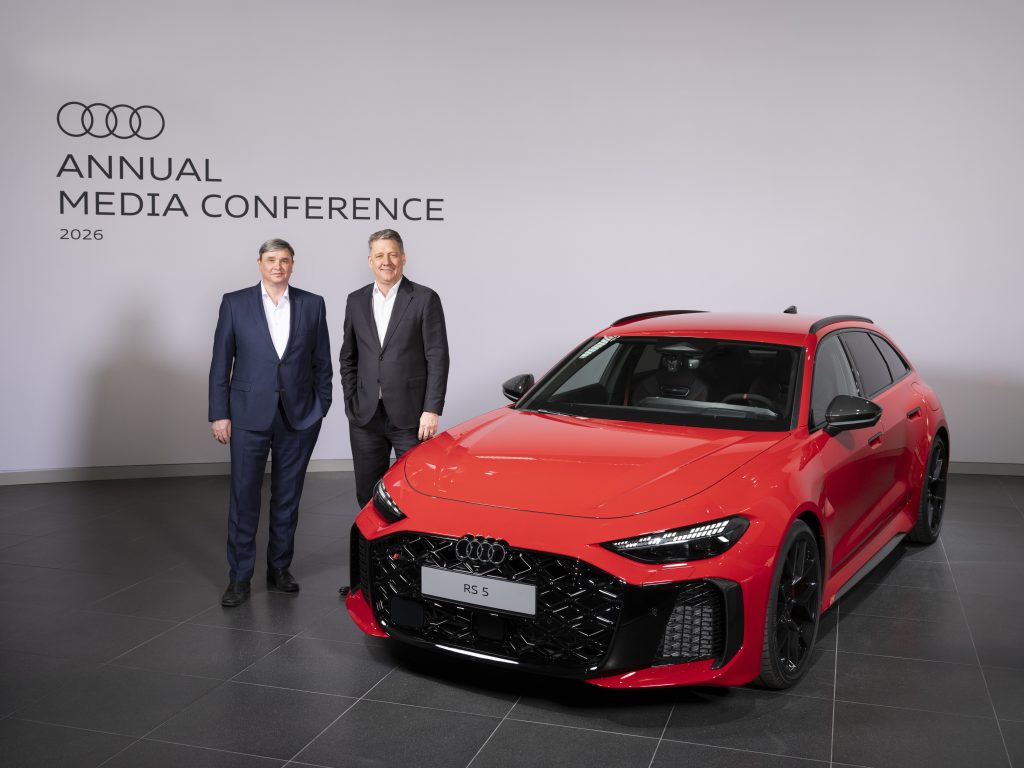
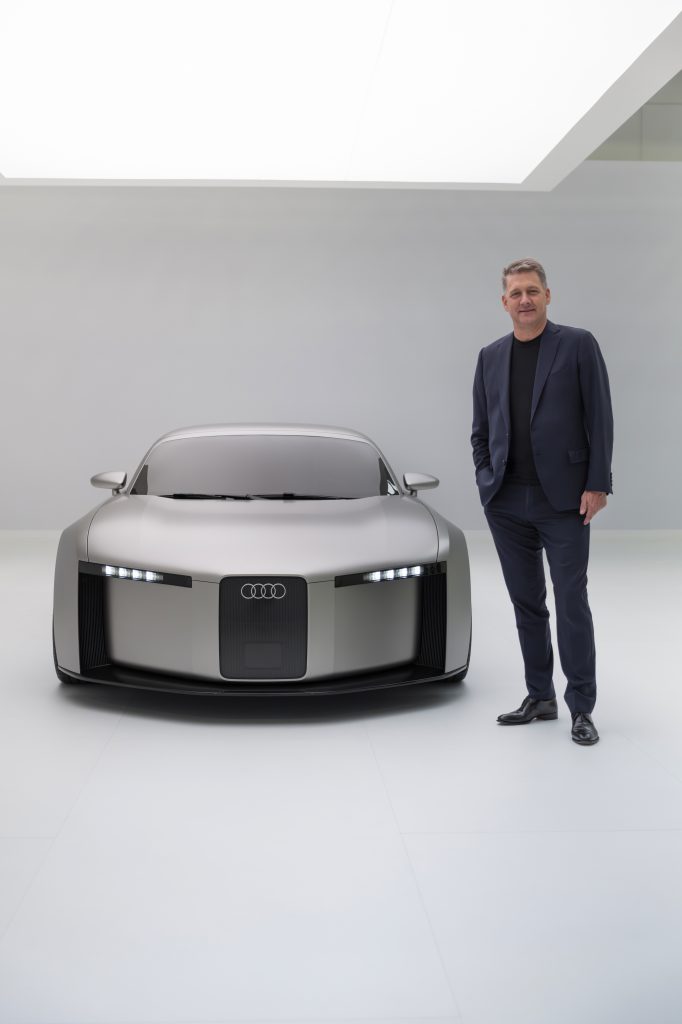
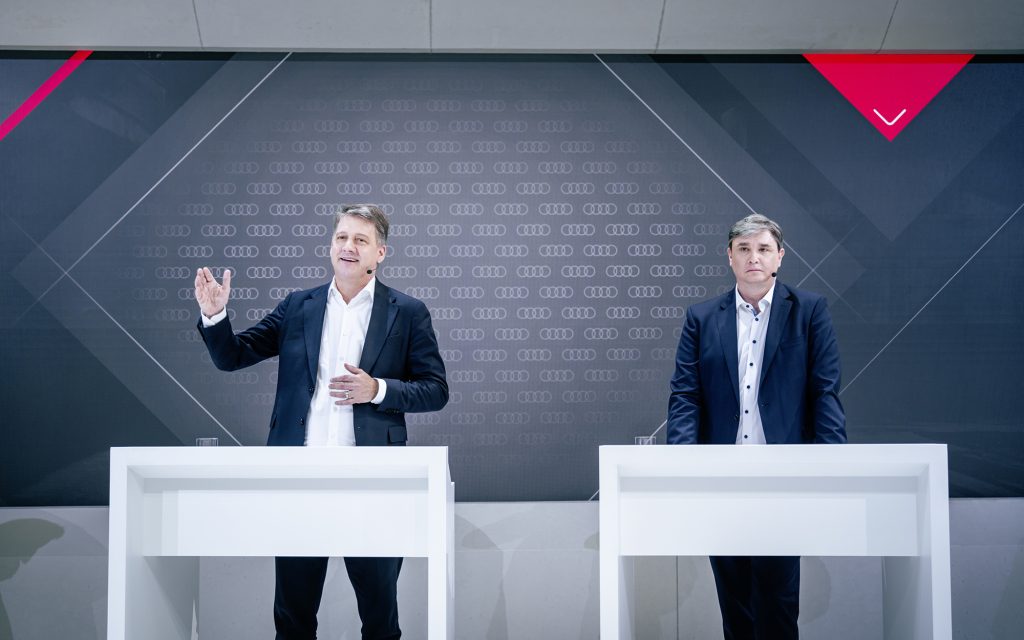
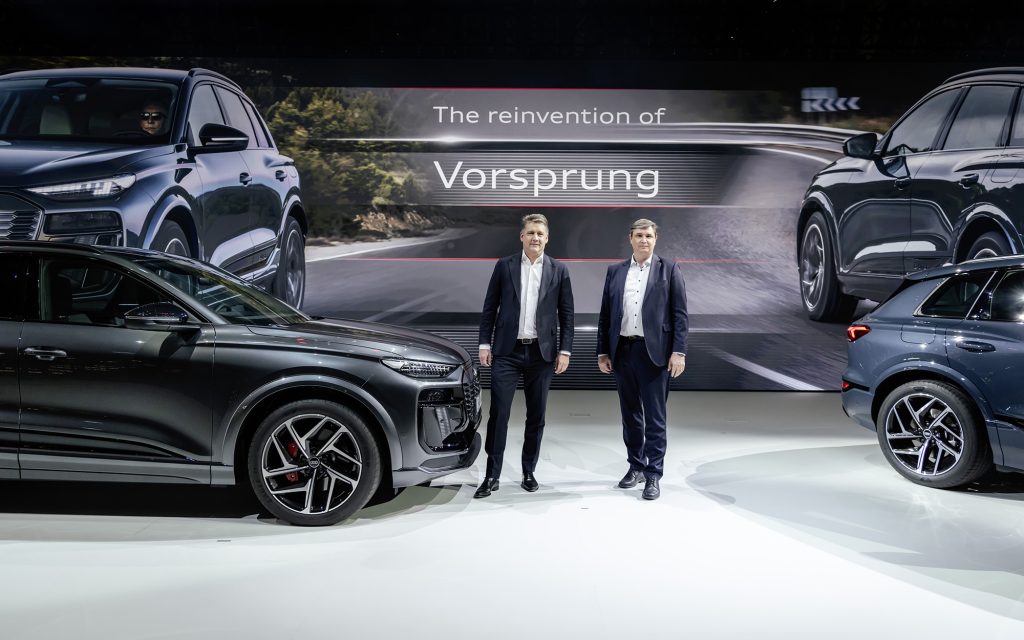
Jürgen Rittersberger, Member of the Board of Management for Finance, Legal Affairs and IT, and Gernot Döllner, Chairman of the Board of Management (from the left) next to the Audi RS 5 Avant in Progressiv red metallic
NEXT WAVE A2 e-tron, Q9 & FRESH PRODUCT PORTFOLIO
Looking ahead, Audi will build directly on that momentum in the coming year.
Two models stand out immediately:
The Audi A2 e-tron, positioned as a new entry-level EV designed to broaden access to the brand
The Audi Q9, a full-size flagship SUV aimed squarely at key markets like the United States
Alongside those, Audi confirmed continued rollout of core models including the next-generation Q7, a reworked Q4 e-tron, and the new RS 5—further reinforcing a portfolio strategy that blends electrification with high-margin performance and SUV segments.
There’s also a regional strategy emerging.
In the U.S., Audi is doubling down on SUVs with the Q9, Q7, and Q3 forming a refreshed and highly competitive lineup. In China, the approach is more layered, with both traditional Audi models and the new China-exclusive “AUDI” brand expanding the company’s footprint.
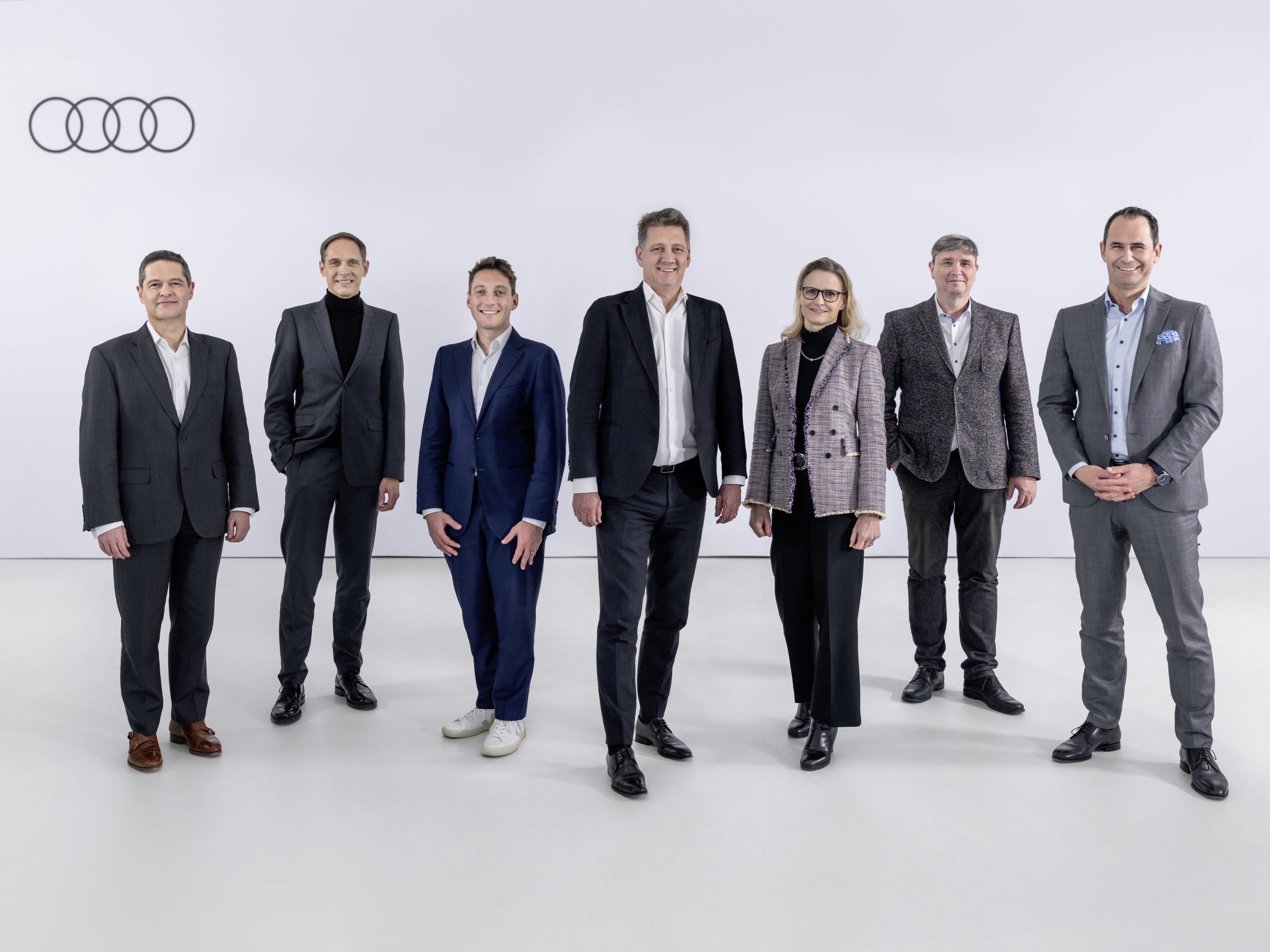
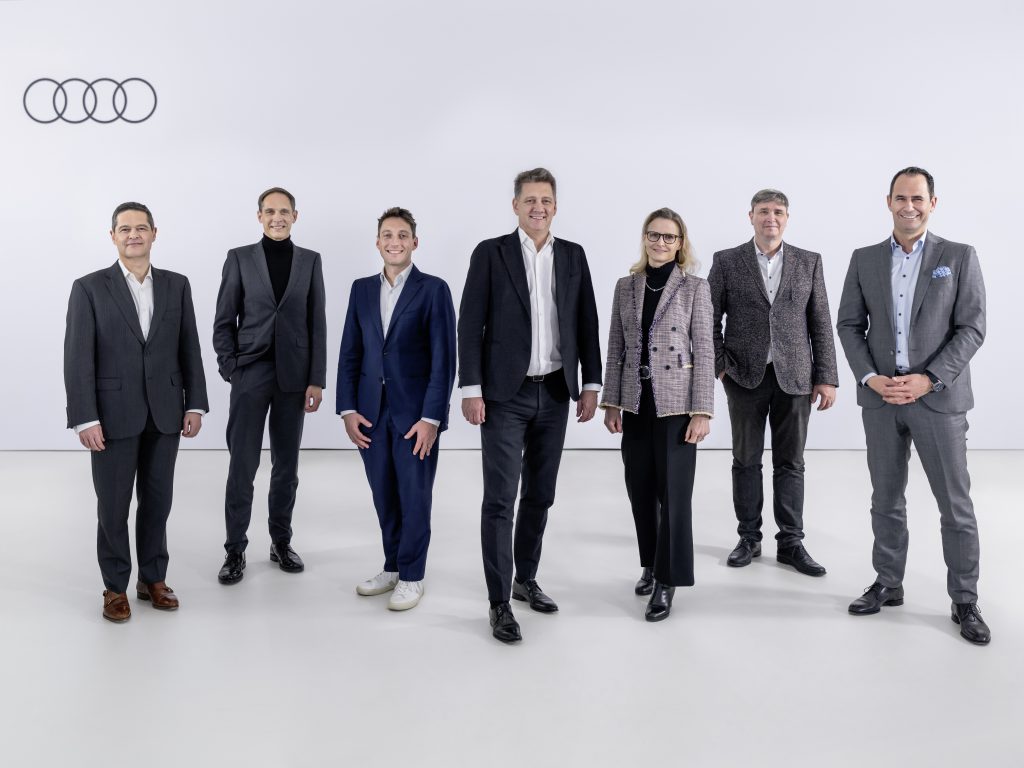
Xavier Ros (Member of the Board of Management at AUDI AG Human Resources), Gerd Walker (Member of the Board of Management at AUDI AG Production and Logistic), Geoffrey Bouquot (Member of the Board of Management at AUDI AG Technical Development), Gernot Döllner (Chairman of the Board of Management at AUDI AG ), Renate Vachenauer (Member of the Board of Management at AUDI AG Procurement), Jürgen Rittersberger (Member of the Board of Management at AUDI AG Finance, Legal Affairs and IT), Marco Schubert (Member of the Board of Management at AUDI AG Sales and Marketing), from the left.
STRUCTURAL CHANGE BEHIND THE SCENES
While product grabs headlines, Audi’s internal restructuring is maybe even more important.
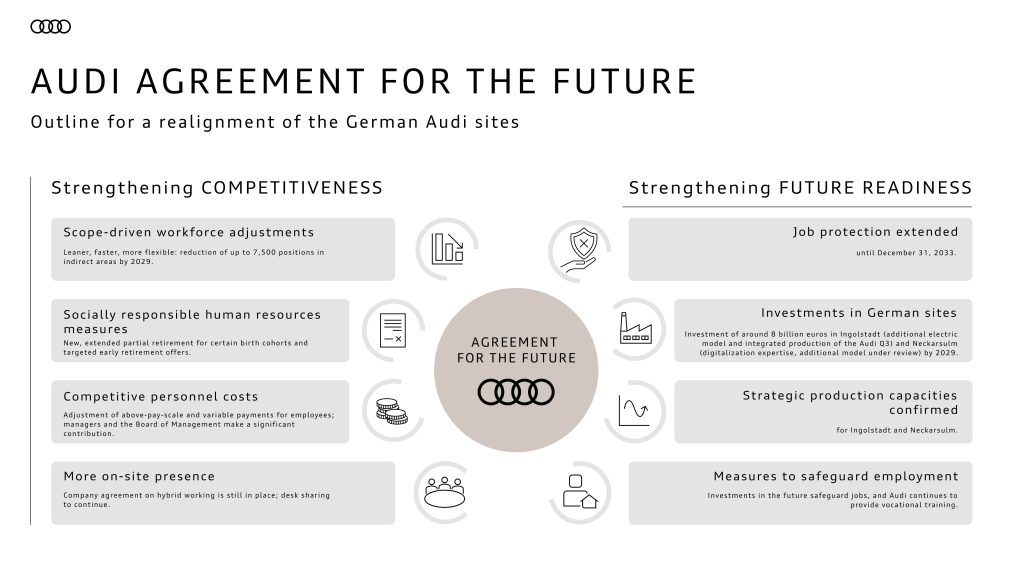
The company confirmed that it is well underway in implementing its “agreement for the future,” including workforce reductions of up to 6,000 roles by 2027—65 percent of which are already executed or contractually secured. Additional reductions are planned through retirement programs extending to 2029.
At the same time, Audi is maintaining a long-term commitment to its German manufacturing base, with job protections through 2033 and continued investment through the end of the decade.
The aim is to reduce cost and increase efficiency, but maintain industrial credibility at home.
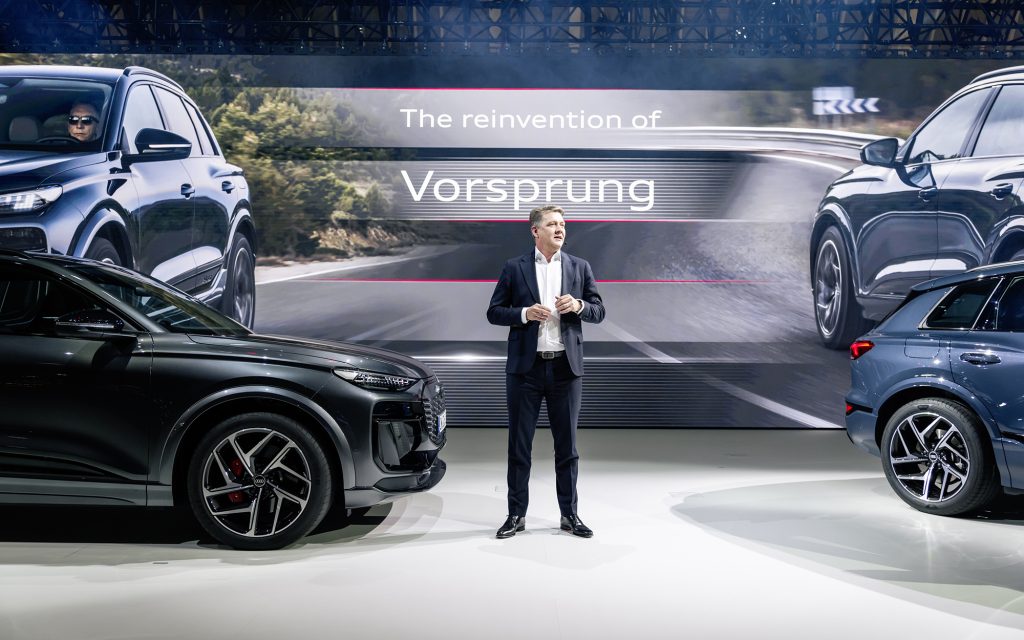
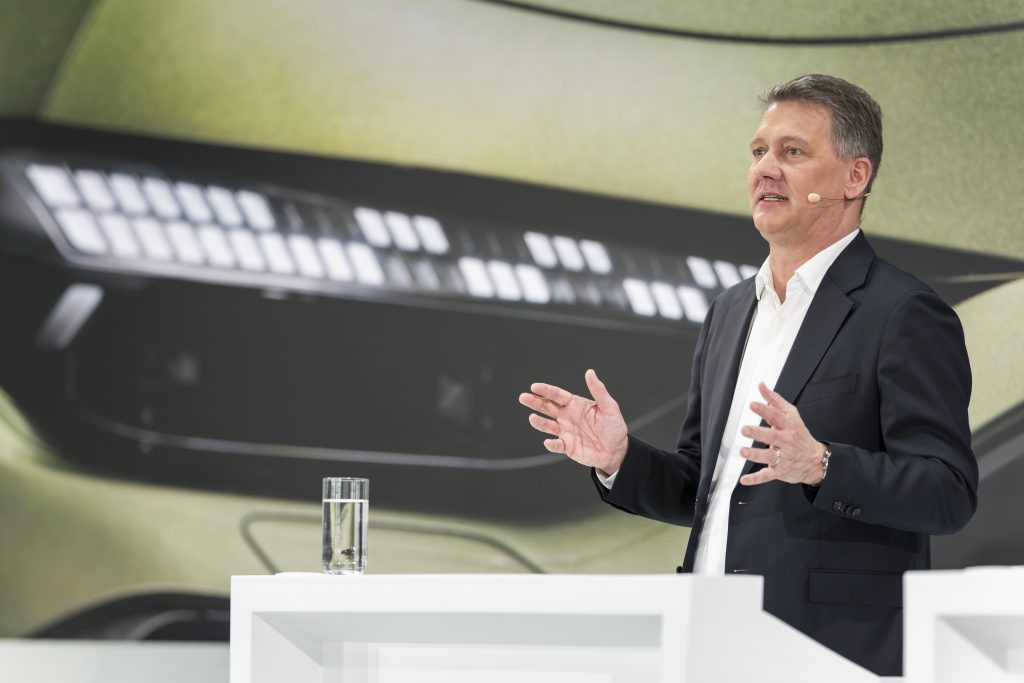
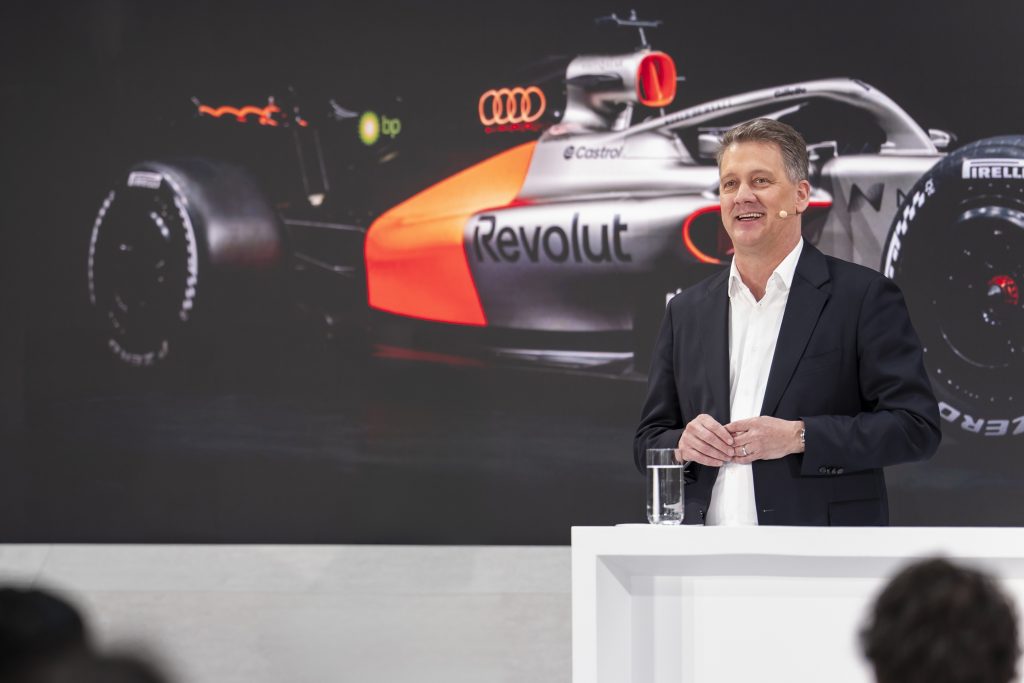
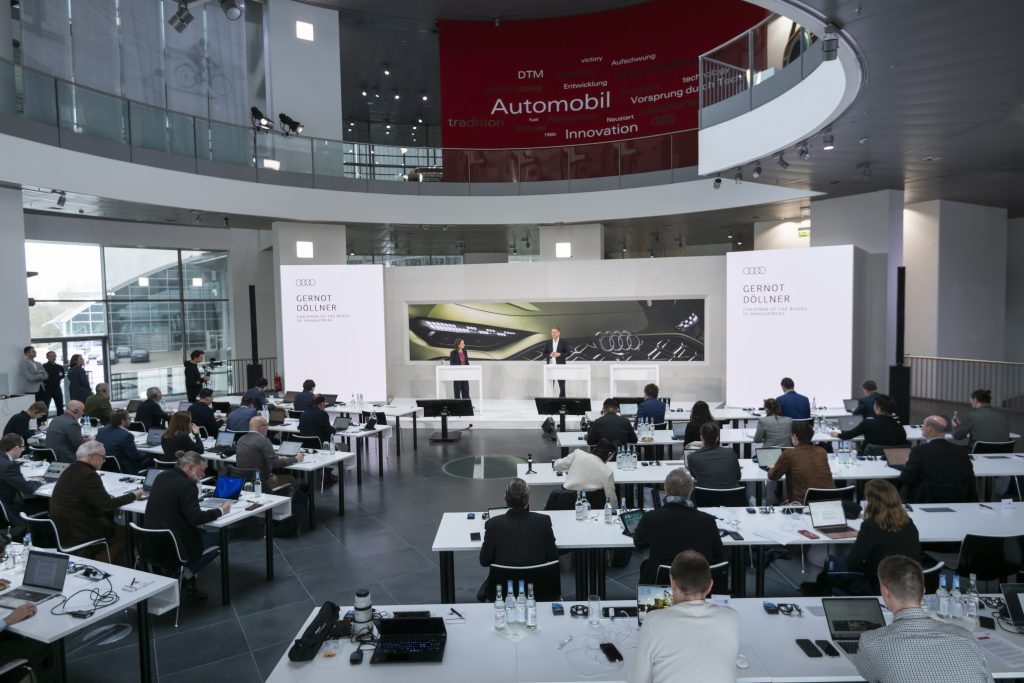
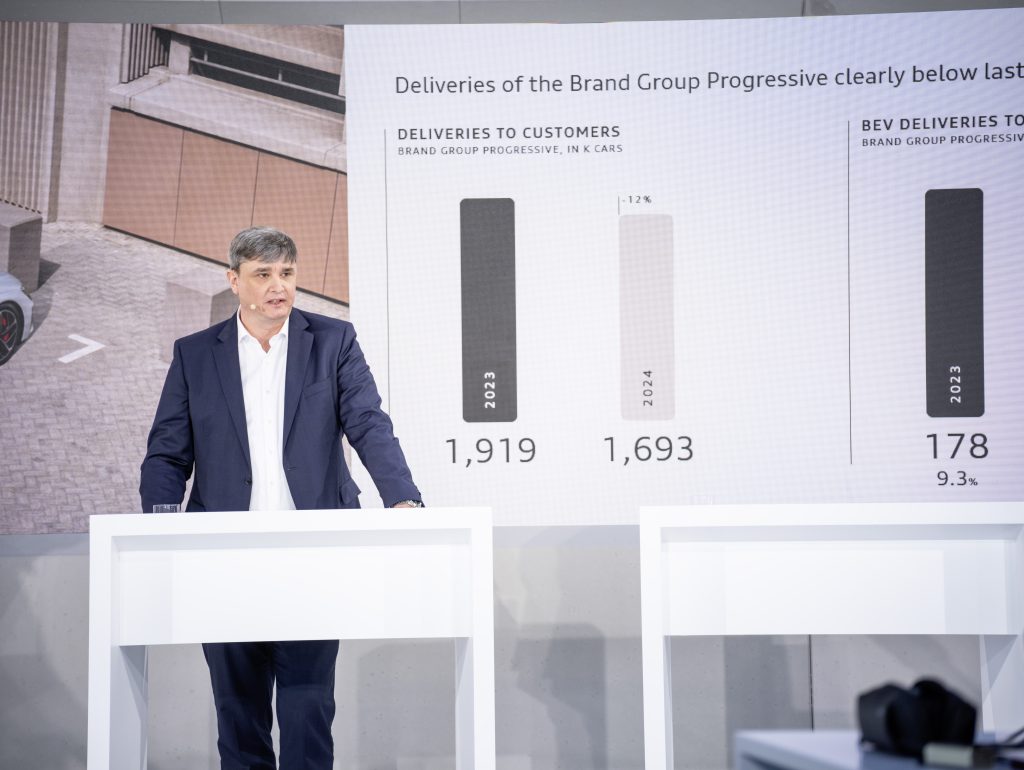
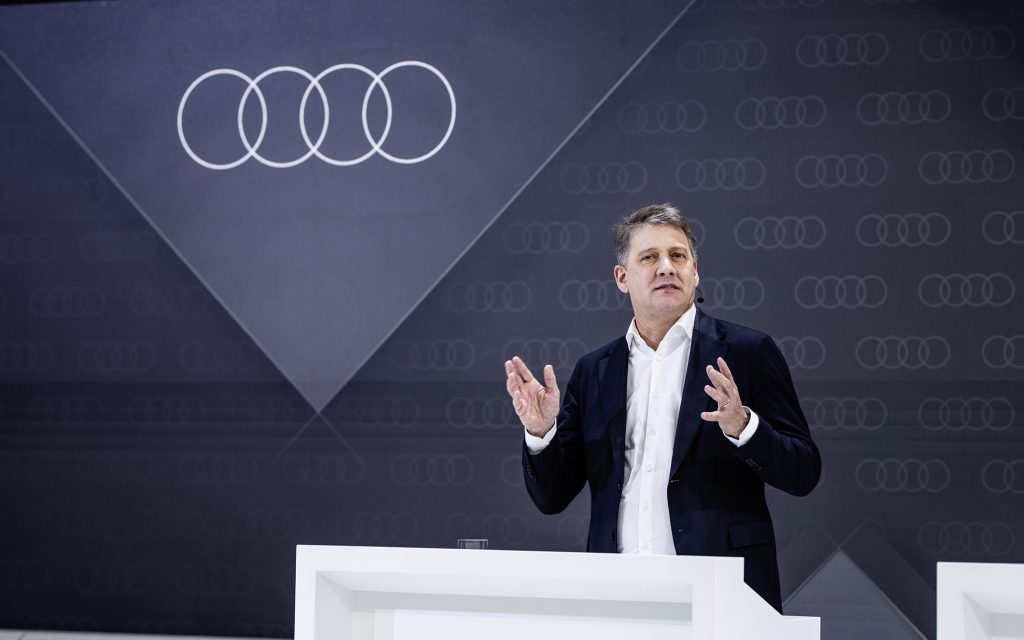
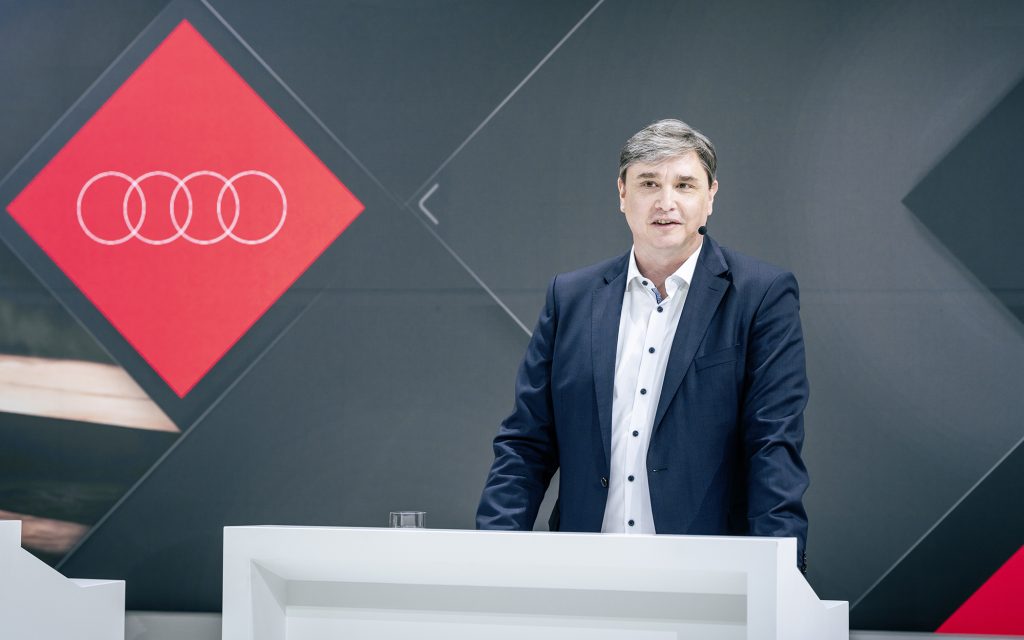
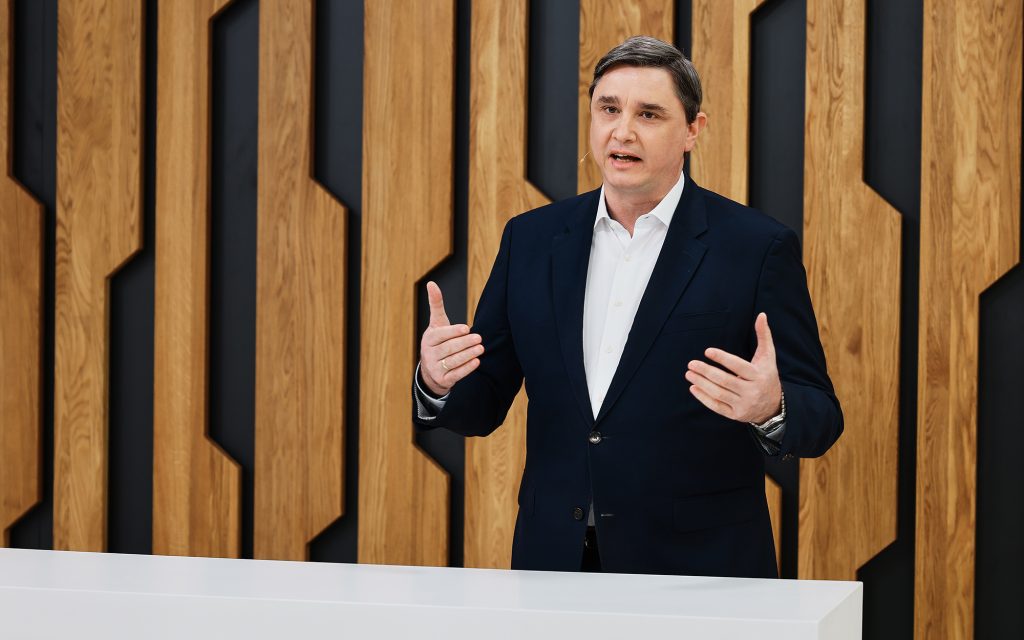
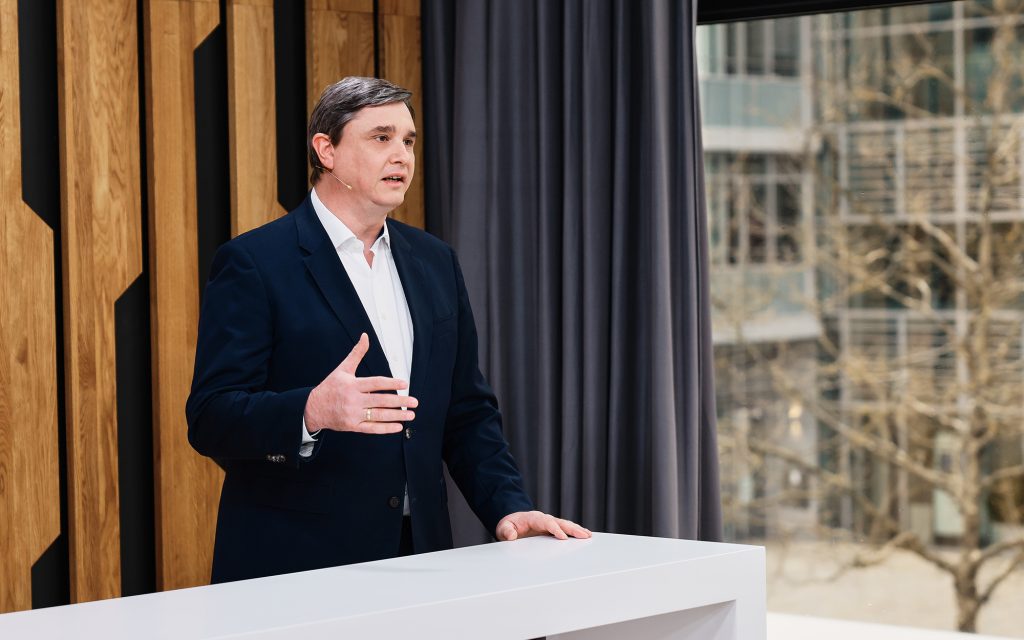
Gernot Döllner, Chairman of the Board of Management AUDI AG, at the Audi Annual Media Conference 2026
FORMULA 1 MORE THAN MARKETING
Then there’s Formula 1.
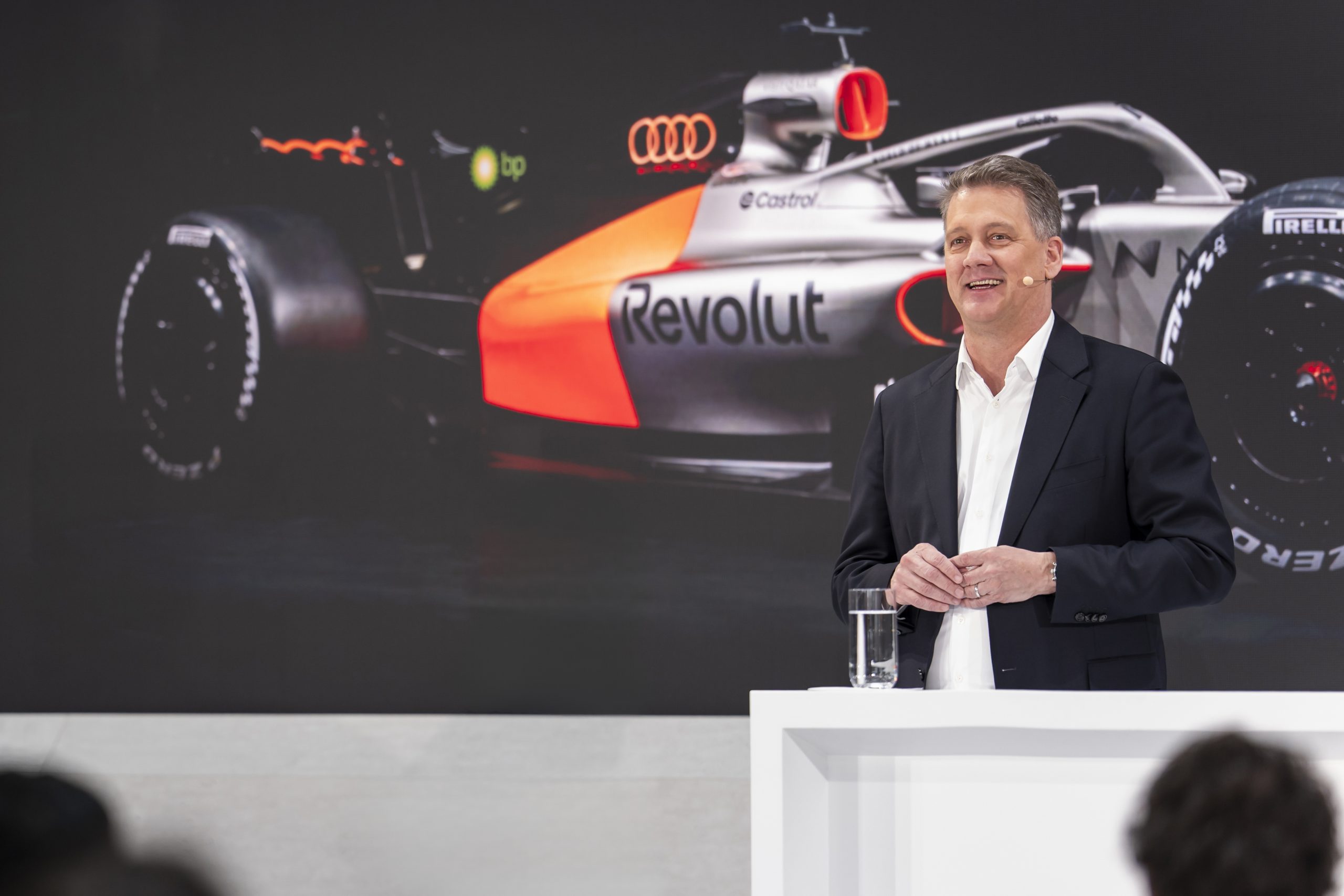
Audi’s entry into the sport—now officially underway following the season-opening race in Australia—was positione as a cultural reset within the company.
Döllner framed the Audi Revolut F1 Team as a “role model” for how Audi intends to operate moving forward: faster decision-making, tighter teamwork, and a renewed focus on performance.
For a company often seen as methodical to a fault, that shift could be just as significant as any new product launch.
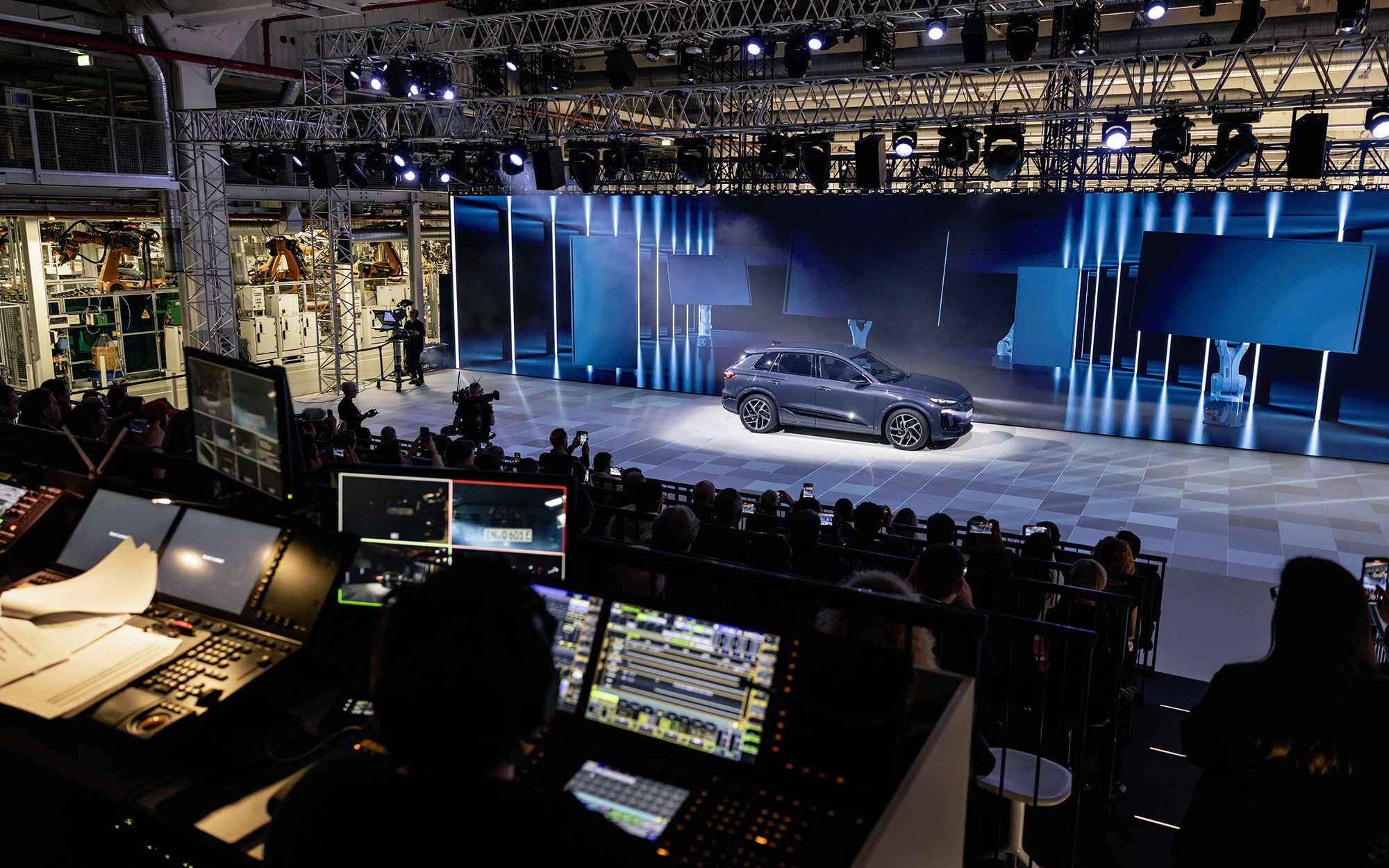
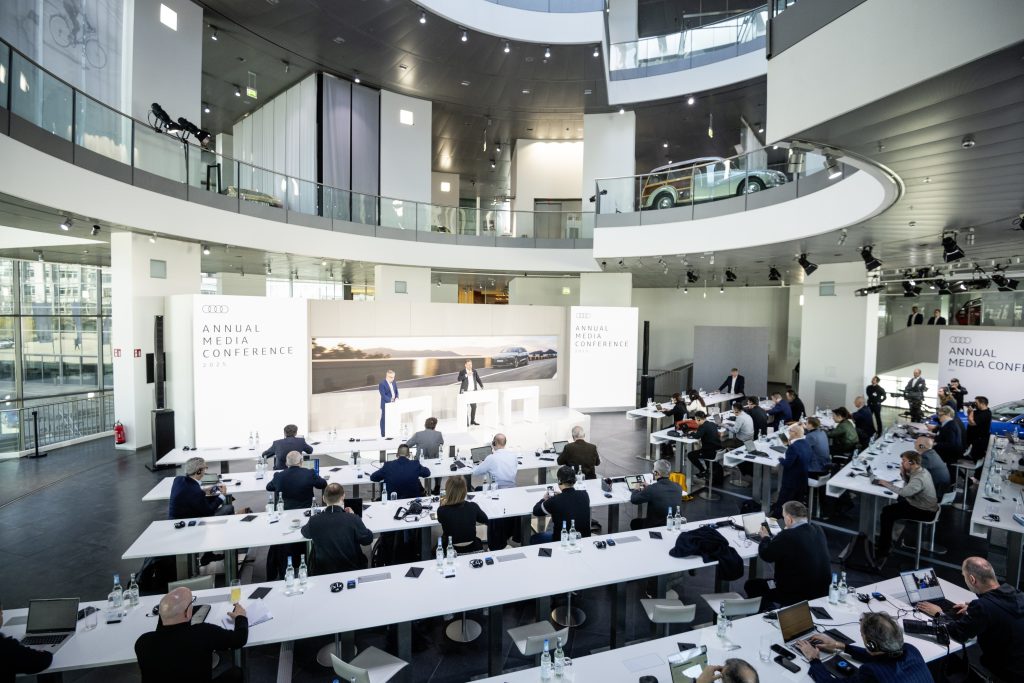
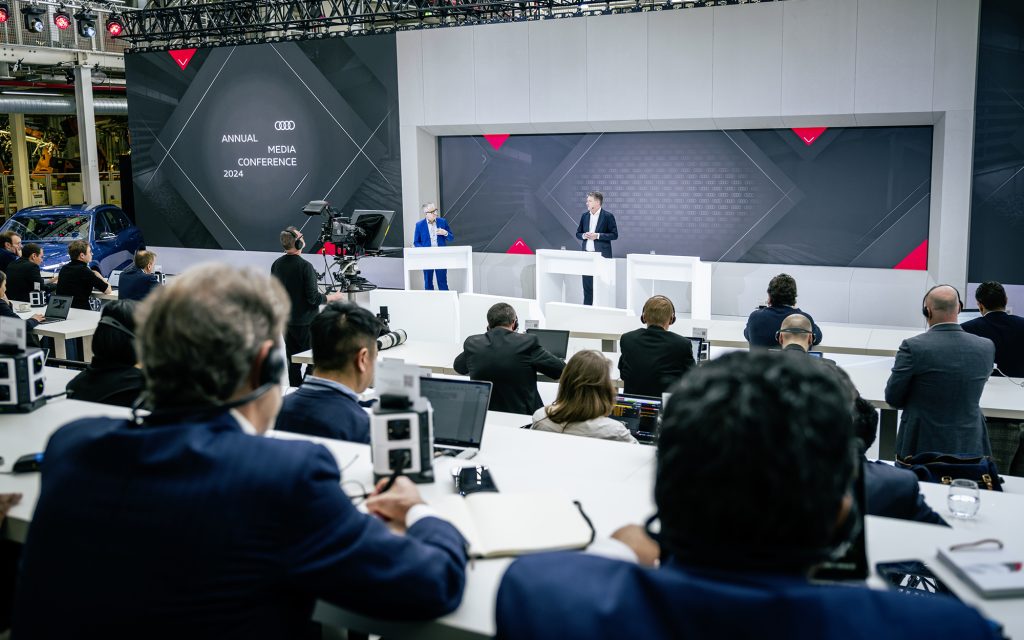
Annual Media Conference 2026
2026 OUTLOOK MEASURED CONFIDENCE
Audi’s guidance for 2026 reflects cautious optimism:
Revenue projected between €63–68 billion
Operating margin expected to improve to 6–8 percent
Net cash flow forecast between €3–4 billion
Those targets suggest a company that believes its current strategy is working—but isn’t assuming an easier road ahead.
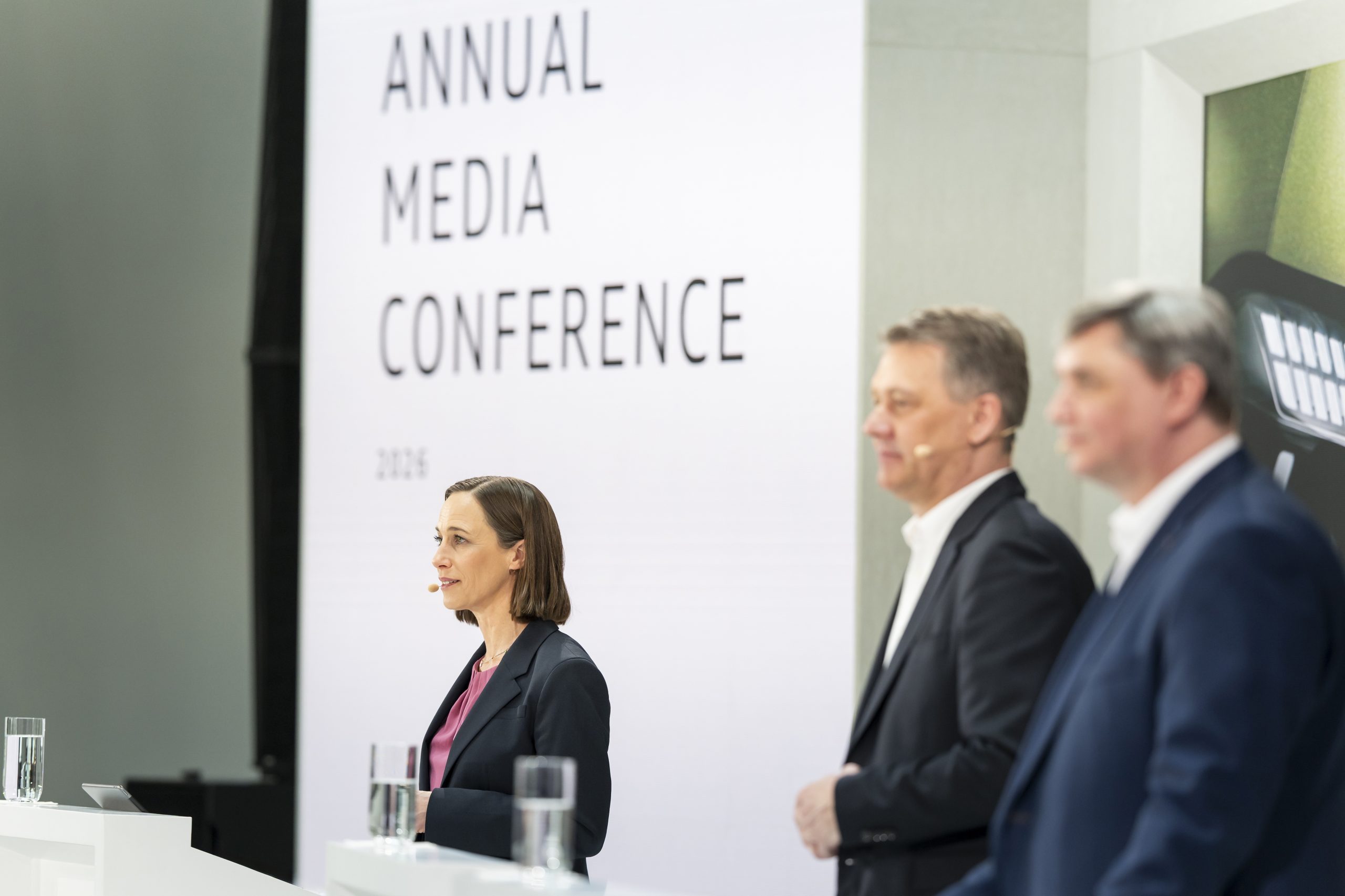
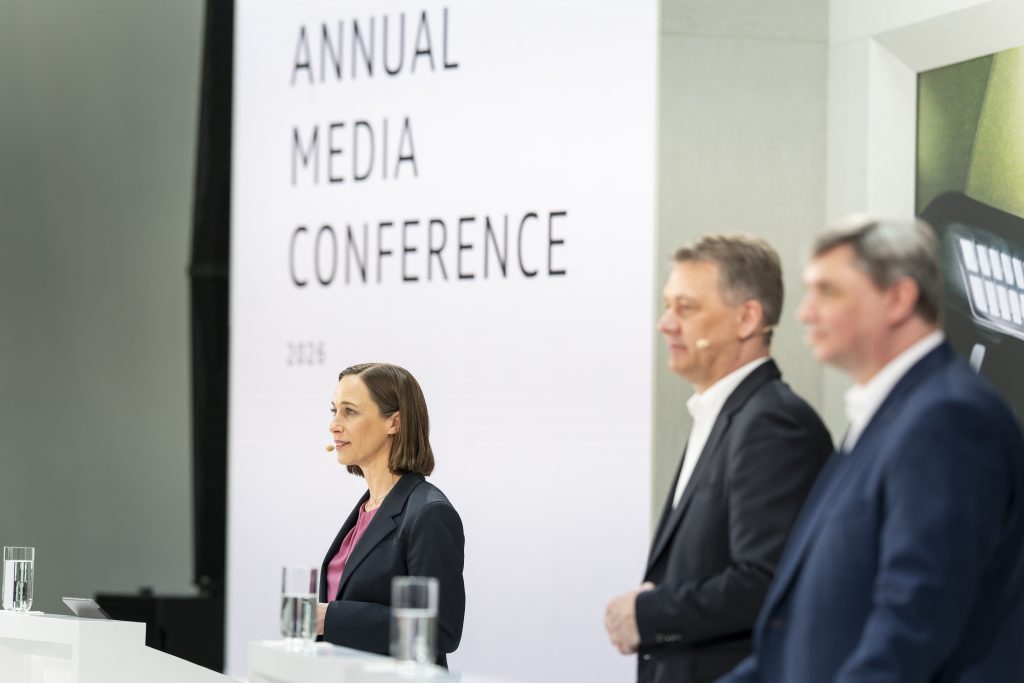
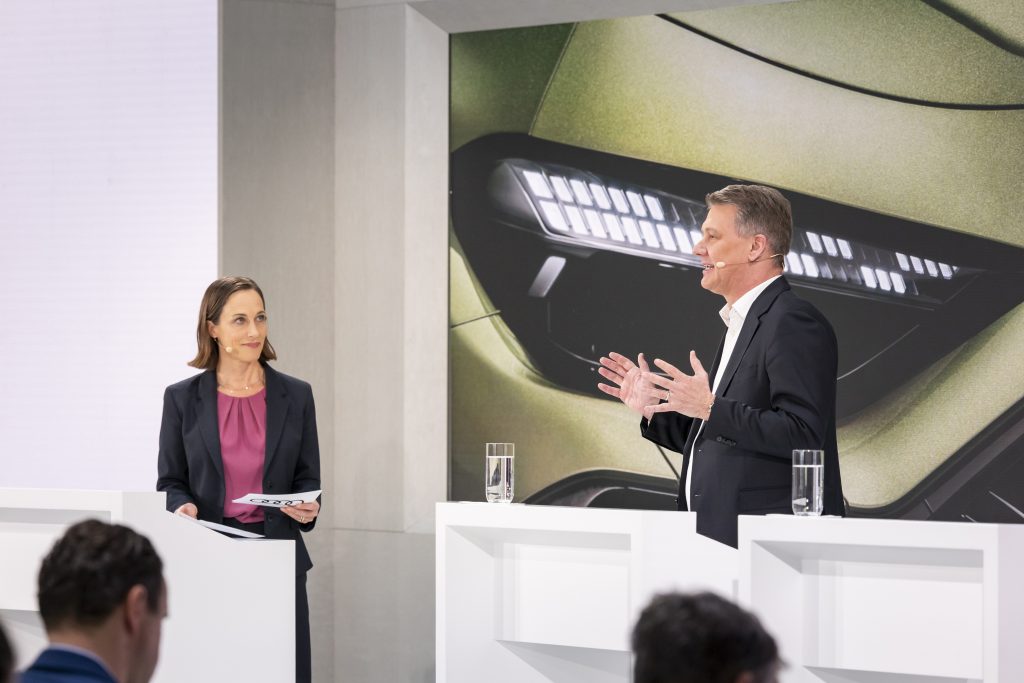
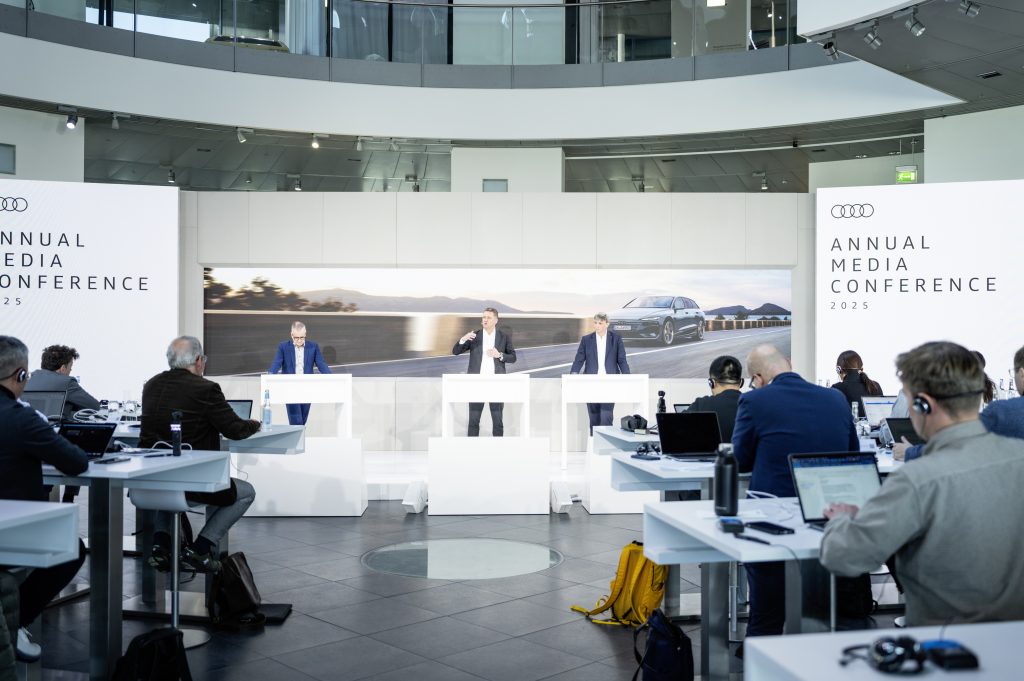
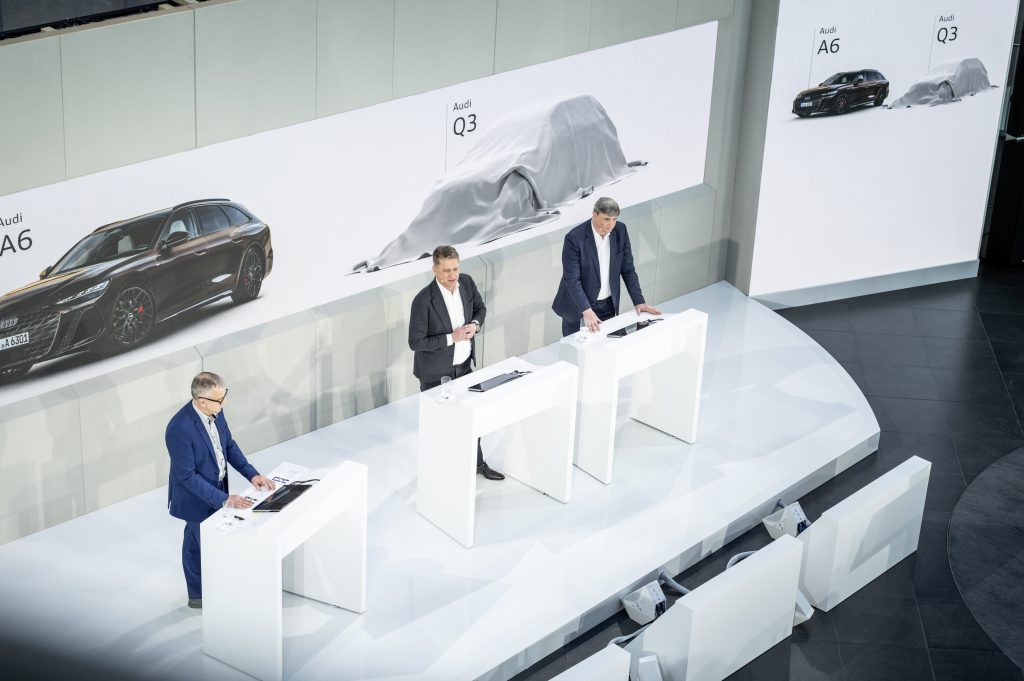
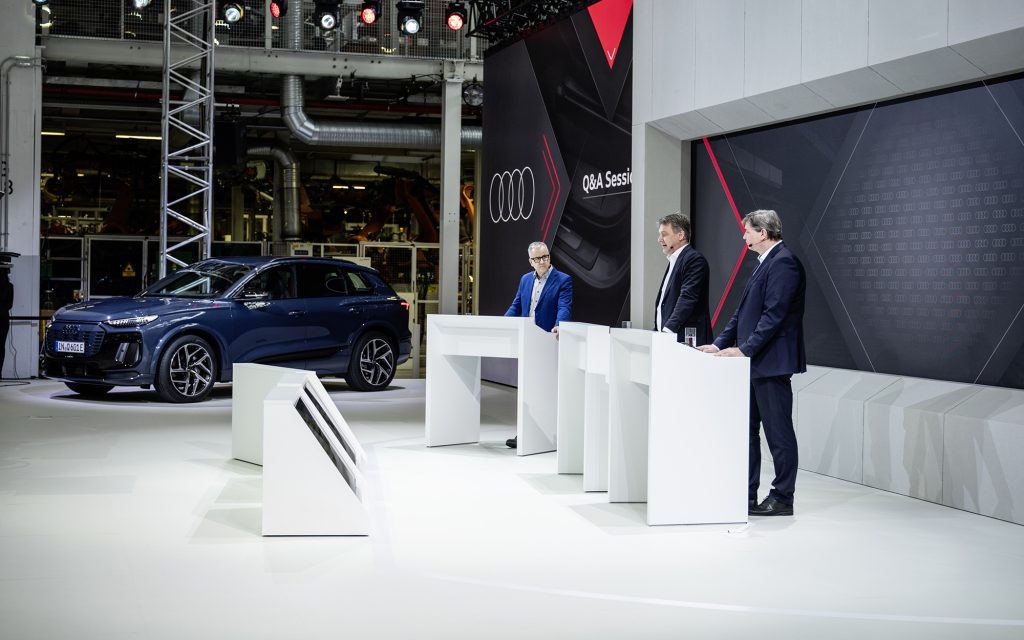
Carolin Strunz, Vice President Global Communications and Corporate Affairs, Jürgen Rittersberger, Member of the Board of Management for Finance, Legal Affairs and IT, and Gernot Döllner, Chairman of the Board of Management, at the Audi Annual Media Conference 2026
THE BIGGER PICTURE
What this year’s Annual Press Conference ultimately revealed is a brand in transition—but no longer searching for direction.
Audi knows where it needs to go: broader EV accessibility, stronger regional execution, tighter operational discipline, and a more dynamic public identity through motorsport.
The challenge now executing that plan—consistently, globally and under pressure.
PHOTO GALLERY
Jürgen Rittersberger, Member of the Board of Management for Finance, Legal Affairs and IT, at the Audi Media Conference 2026Carolin Strunz, Vice President Global Communications and Corporate Affairs, Jürgen Rittersberger, Member of the Board of Management for Finance, Legal Affairs and IT, and Gernot Döllner, Chairman of the Board of Management, at the Audi Annual Media Conference 2026Gernot Döllner, Chairman of the Board of Management AUDI AG, at the Audi Annual Media Conference 2026Gernot Döllner, Chairman of the Board of Management AUDI AG, at the Audi Annual Media Conference 2026Carolin Strunz, Vice President Global Communications and Corporate Affairs, and Gernot Döllner, Chairman of the Board of Management, at the Audi Annual Media Conference 2026Audi Annual Media Conference 2026Jürgen Rittersberger, Member of the Board of Management for Finance, Legal Affairs and IT, at the Audi Media Conference 2026Audi Annual Media Conference 2026Jürgen Rittersberger, Member of the Board of Management for Finance, Legal Affairs and IT, and Gernot Döllner, Chairman of the Board of Management (from the left) next to the Audi RS 5 Avant in Progressiv red metallicAnnual Media Conference 2026Financial Figures 2025Audi Canada will be led by Khaled Soussi.Matthias Schepers will take over as Vice President for Sales and Marketing at Audi China.Effective April 1, 2026, Daniel Weissland will take over as President of the FAW Audi Sales Company in China.Effective April 1, 2026, Vito Paladino will take over as President of Audi of America and Head of Audi North America Region.Rouven Mohr will assume the role of Chief Technical Officer and member of the Board of Management effective March 1.Carolin Strunz will take over as Head of Audi Communications on January 1, 2026.Audi CEO Gernot Döllner to the right of the Audi Concept CXavier Ros (Member of the Board of Management at AUDI AG Human Resources), Gerd Walker (Member of the Board of Management at AUDI AG Production and Logistic), Geoffrey Bouquot (Member of the Board of Management at AUDI AG Technical Development), Gernot Döllner (Chairman of the Board of Management at AUDI AG ), Renate Vachenauer (Member of the Board of Management at AUDI AG Procurement), Jürgen Rittersberger (Member of the Board of Management at AUDI AG Finance, Legal Affairs and IT), Marco Schubert (Member of the Board of Management at AUDI AG Sales and Marketing), from the left.CEO Gernot Döllner and CFO Jürgen Rittersberger present the figures from the 2024 financial year and provide insight into how the company is proceeding with its performance program and model initiative.CEO Gernot Döllner and CFO Jürgen Rittersberger present the figures from the 2024 financial year and provide insight into how the company is proceeding with its performance program and model initiative.CEO Gernot DöllnerJürgen Rittersberger, Member of the Board of Management for Finance, Legal Affairs and ITCEO Gernot DöllnerAnnual Media Conference of AUDI AG on March 18, 2025 – Gernot Döllner, Chairman of the Board of Management, and Jürgen Rittersberger, Member of the Board of Management for Finance, Legal Affairs and IT with the new Audi A6Audi agreement for the future – Outline for a realignment of the German Audi sitesAudi management and the works council are laying a milestone that will strengthen the competitiveness and future viability of the German sites long-term in the shape of an agreement for the future. Rainer Schirmer, Vice Chairman of the General Works Council, CEO Gernot Döllner, Jörg Schlagbauer, Chairman of the General Works Council, and Xavier Ros, Member of the Board of Management Human Resources (from left)Financial Figures 2024 – Brand Group ProgressiveOutline for a realignment of the German Audi sitesFinancial Figures 2024CEO Gernot Döllner and CFO Jürgen Rittersberger present and assess the financial result for the 2023 fiscal year. They also offer a glimpse of the numerous models to be launched over the next two years and provide information on the company’s strategic focus.CEO Gernot DöllnerAnnual Media Conference of AUDI AG on March 19, 2024: CEO Gernot Döllner (left) and CFO Jürgen Rittersberger present and assess the financial result for the 2023 fiscal year. They also offer a glimpse of the numerous models to be launched over the next two years and provide information on the company’s strategic focus.CEO Gernot Döllner (left) and CFO Jürgen Rittersberger present and assess the financial result for the 2023 fiscal year. They also offer a glimpse of the numerous models to be launched over the next two years and provide information on the company’s strategic focus.CFO Jürgen RittersbergerCEO Gernot DöllnerAudi Q6 e-tron world premiere on March 18, 2024, in IngolstadtAudi Q6 e-tron world premiere on March 18, 2024, in IngolstadtAudi Q6 e-tron world premiere on March 18, 2024, in IngolstadtAudi Q6 e-tron world premiere on March 18, 2024, in IngolstadtGernot Döllner, Chairman of the Board of ManagementAudi Q6 e-tron world premiere on March 18, 2024, in IngolstadtAudi Q6 e-tron world premiere on March 18, 2024, in IngolstadtAudi Q6 e-tron world premiere on March 18, 2024, in IngolstadtAudi Q6 e-tron world premiere on March 18, 2024, in IngolstadtGernot Döllner, Chairman of the Board of Management (left), and Jürgen Rittersberger, Member of the Board of Management for Finance, Legal Affairs and ITFor Audi CEO Gernot Döllner, the Premium Platform Electric and with it the Audi Q6 e-tron model series are the next technological leap towards electric premium quality.Annual Media Conference 2024For Audi CEO Gernot Döllner, the Premium Platform Electric and with it the Audi Q6 e-tron model series are the next technological leap towards electric premium quality.Production of the Audi Q6 e-tronFinancial highlights 2023Audi Group Q1 – Q3 / 2023Audi Group Q1 – Q3 / 2023Good performance in the first half of the year despite major challengesMember of the Board of Management of AUDI AG Finance, Legal Affairs and ITTesting under the most demanding conditions is essential for tuning the Q6 e-tron prototype.Audi puts the near-production prototype of the Q6 e-tron through its paces in the far north.The prototype of the Q6 e-tron is the first on the new Premium Platform Electric (PPE) technology platform.Superior traction is typical of Audi and the Q6 e-tron prototype.FIGURES AUDI GROUPBrand Group ProgressiveAudi Group First Half-Year: Operating Profit at All-Time HighAudi Group closes strong first quarterAUDI AG digitally presented its annual financial statements and outlook for the 2022 fiscal year from the “Audi Cube” on March 17.Jürgen Rittersberger, Member of the Board of Management for Finance and Legal AffairsJürgen Rittersberger, Member of the Board of Management for Finance and Legal AffairsAnnual Media Conference 2022AUDI AG presents its annual statements and a forecast for the 2022 fiscal year on Thursday, March 17, 11 am (CET).Successful first half-year for Audi: record deliveries and strong profitsMember of the Board of Management of AUDI AG Finance and Legal AffairsJürgen Rittersberger, Member oft he Board of Management of AUDI AG, Finance and Legal Affairs (as of April 1, 2021)Almost half of total investments for electromobility, hybridization and digitalizationThe Audi e-tron is the first full-electrical model from the brand with the four rings. The sporty SUV combines the space and comfort of a typical luxury class automobile with a range suitable for everyday use, catapulting the driver into a new era with the electrical all-wheel drive. Forward-looking, innovative, and electric – the next step into the future.AUDI AGMarianne Heiß is to strengthen the Supervisory Board of AUDI AG. A proposal to that effect is to be made to the shareholders at the company’s Annual General Meeting to be held in Ingolstadt on May 9, 2018.