
In the early 1970s, Audi was not yet the clearly defined premium performance brand it would become during the quattro era. The four rings was still emerging from the integration of Auto Union and NSU, operating within a Volkswagen Group that was urgently redefining itself beyond the Beetle.
Inside this moment of reinvention, Audi engineers were tasked with the development of projects that would go on to benefit other brands – projects like the Audi 50 ergo Volkswagen Polo, the Volkswagen Iltis and also a project internally known as EA 425. What happened next would shape two brands at once.
EA 425 AN ENGINEERING PROGRAM
EA 425 was conceived around Audi’s new water-cooled inline four. The layout was sophisticated for its time: front-mounted engine positioned behind the axle line, paired to a rear transaxle to achieve near-ideal weight distribution. The concept delivered approximately 48:52 balance — advanced thinking for a company still associated in many minds with front-heavy sedans.
With the heart of an Audi engine and a concept developed with direction from Ingolstadt, the project’s Audi DNA was never in doubt. Yet the car would not wear four rings.
VOLKSWAGEN PASSES PORSCHE ADOPTS
Volkswagen initially evaluated EA 425 as a possible in-house sports coupe — a halo product to diversify beyond the Beetle and its derivatives. But the board ultimately declined to move forward.
At the same time, Porsche needed a more accessible entry model to replace the aging 914 and 912 models, one that would sit below the 911 and reduce dependence on its rear-engined icon. EA 425 became that solution.
The project was transferred to Porsche who redesigned the exterior and interior in order to align with its brand language. When production began in 1976, the car entered the world as the Porsche 924.
And in a twist that underscores its lineage, early 924 production took place at Audi’s Neckarsulm facility.
AUDI LINEUP LACKED A COUPE
Timing makes the EA 425 project even more intriguing.
At that time, Audi’s own Audi 100 Coupé S had just exited production. The brand would not reestablish a proper sporty coupe until the B2-based Audi Coupé GT — and later the quattro — arrived at the turn of the 1980s. That left a noticeable vacuum in Audi’s lineup.
The Porsche 924 effectively occupied a segment Audi had relinquished in that moment — that of a stylish, accessible grand touring coupe with engineering credibility. One can’t help but ask: was EA 425 ever seriously considered to wear Audi badges?
The questions continue. Would an Audi-branded EA 425 have altered the urgency behind developing quattro? If Audi had already fielded a rear-drive, transaxle-balanced sports coupe in the mid-1970s, would the brand have felt the same pressure to differentiate through all-wheel drive at the end of the decade?
History suggests Audi ultimately chose a different path. With the B2-based coupe and its quattro system, Audi didn’t just create a sports model; it redefined the brand’s identity. In that context, perhaps losing EA 425 forced Audi to pursue something even more distinctive. It could have even been intentional.
FAST FORWARD A DECADE +
Porsche would build the 924 until 1988. The final Audi quattro rolled off the assembly line not long after that in July 1991.
Alongside the 924, Porsche had continued to evolve the transaxle product range. The 924 would get a closely related sibling with the 944 and 944 Turbo, cars that would be produced by Porsche in their own factory – production that ceased about the same time as the quattro in 1991. They’d give way to the final evolution of this transaxle evolution in the form of the 968.
IMAGINING AN ALTERNATE REALITY WHERE EA 425 EVOLUTION CONTINUED
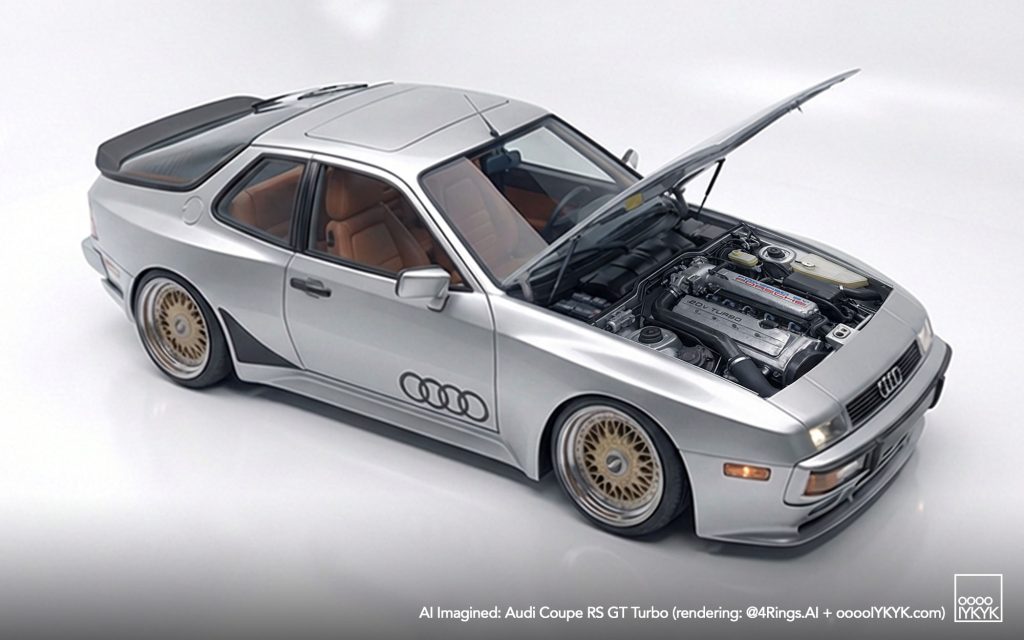
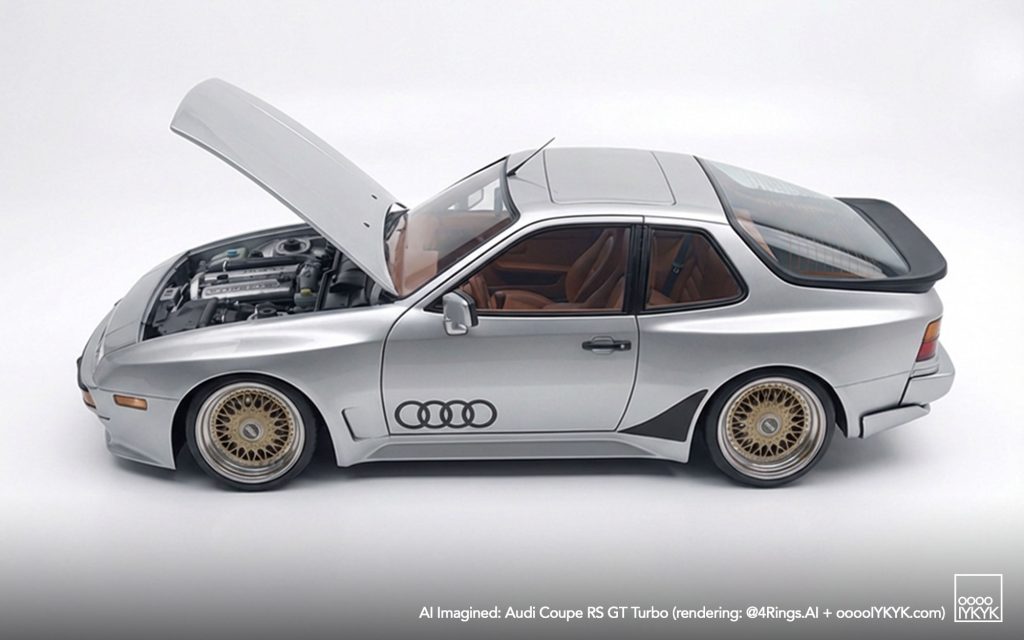
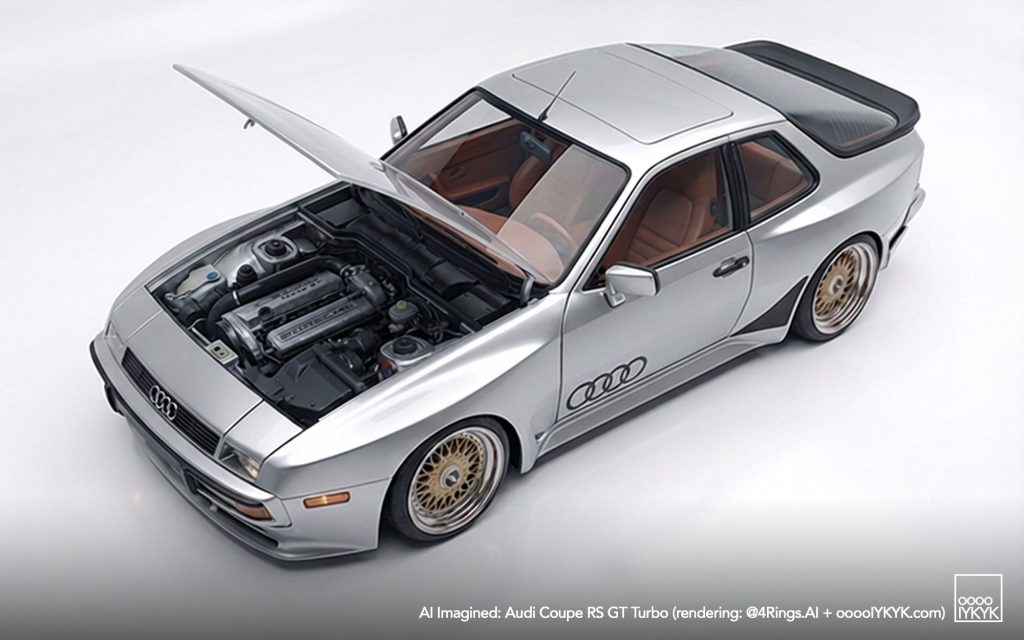
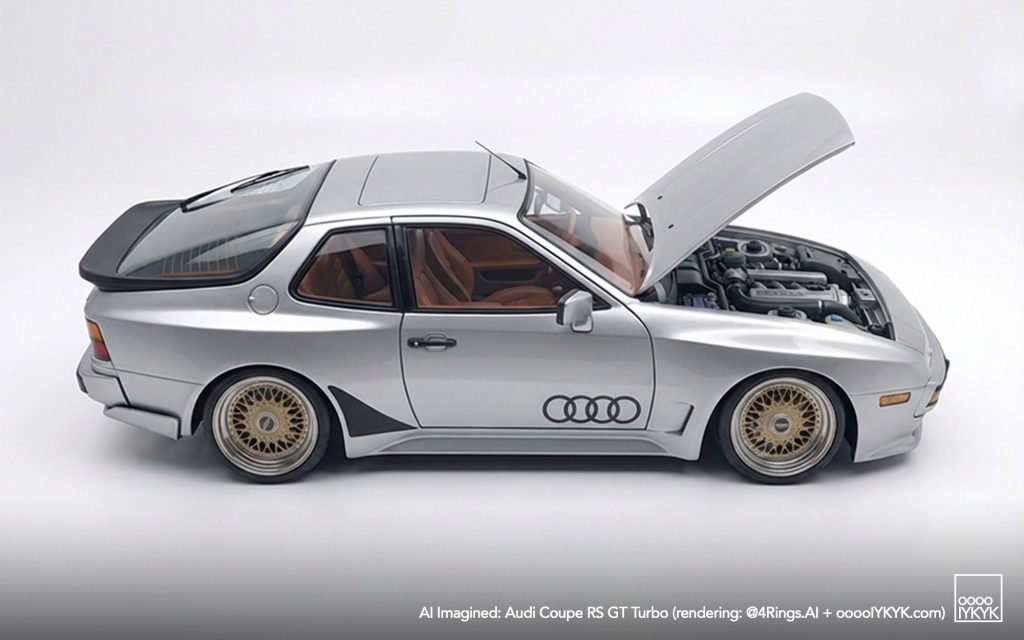
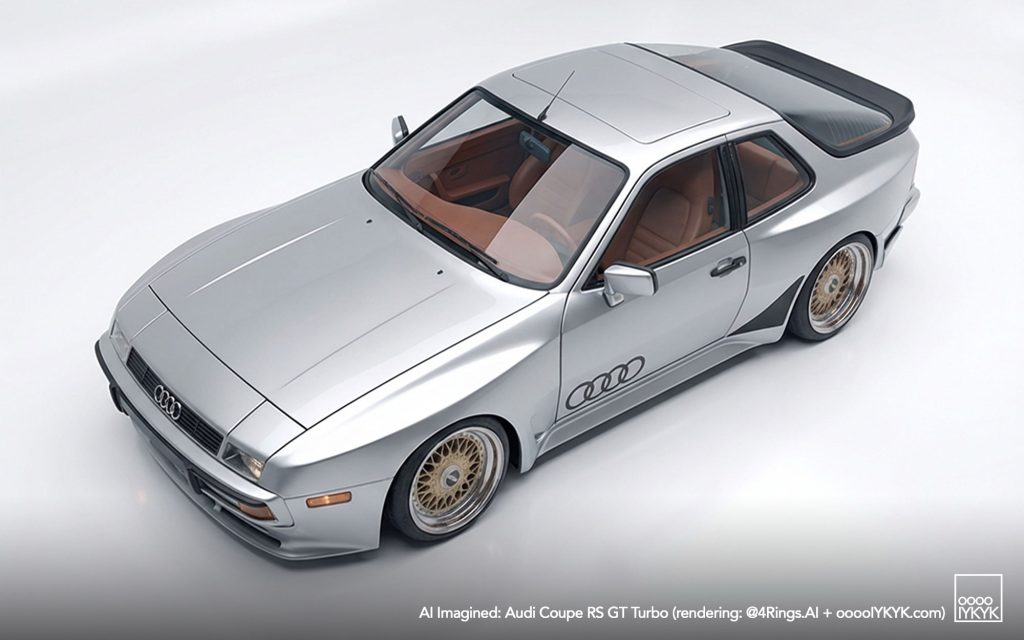
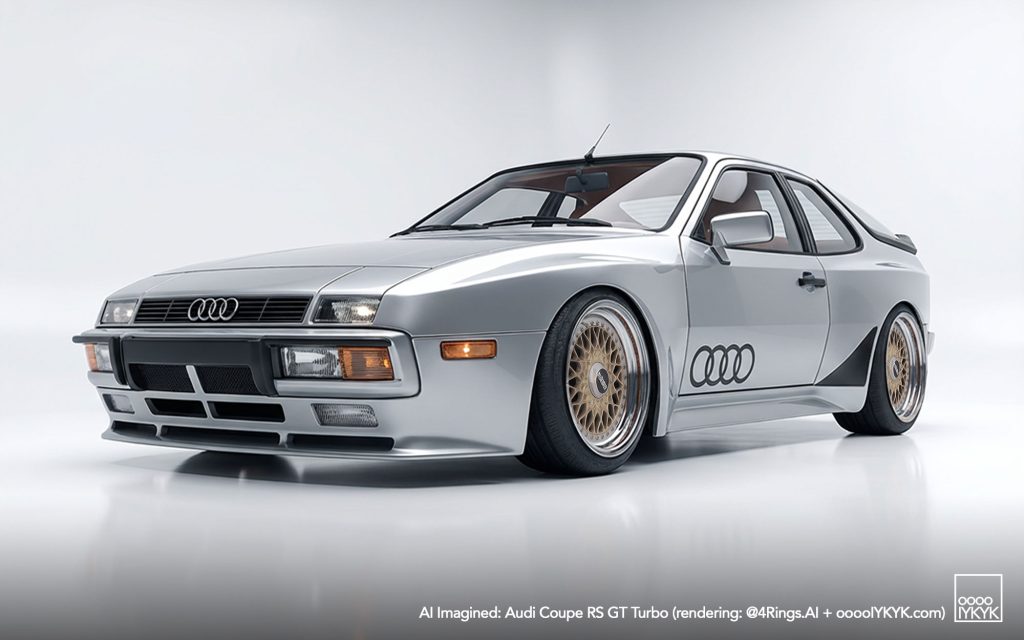
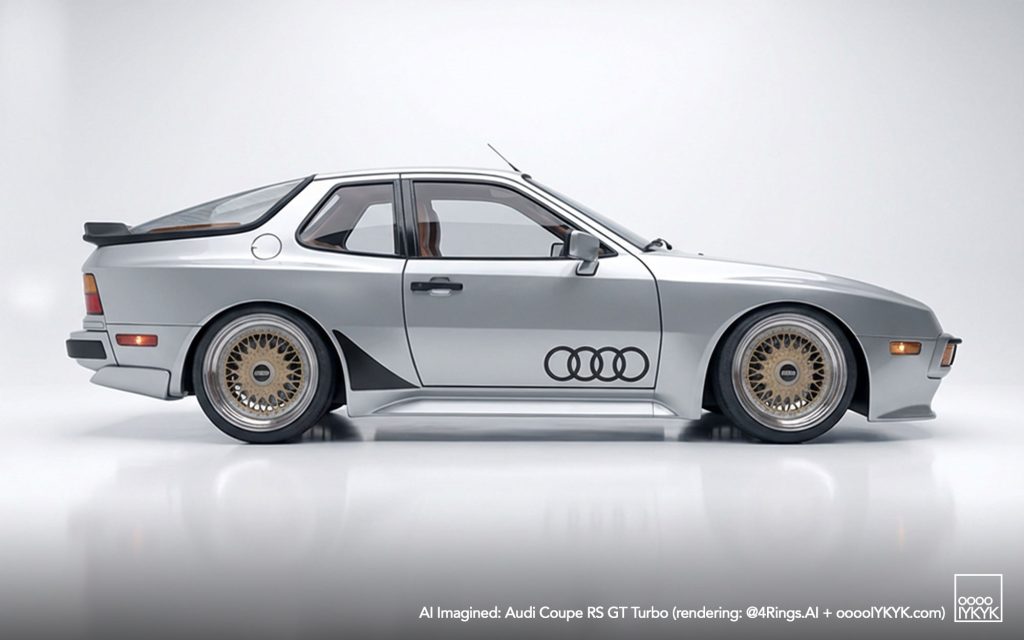
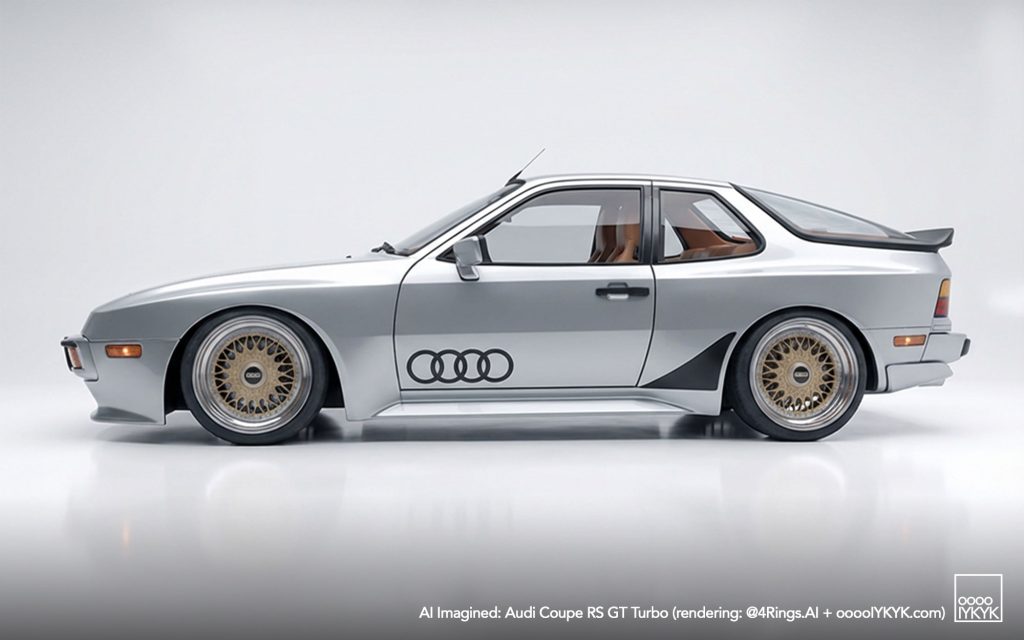
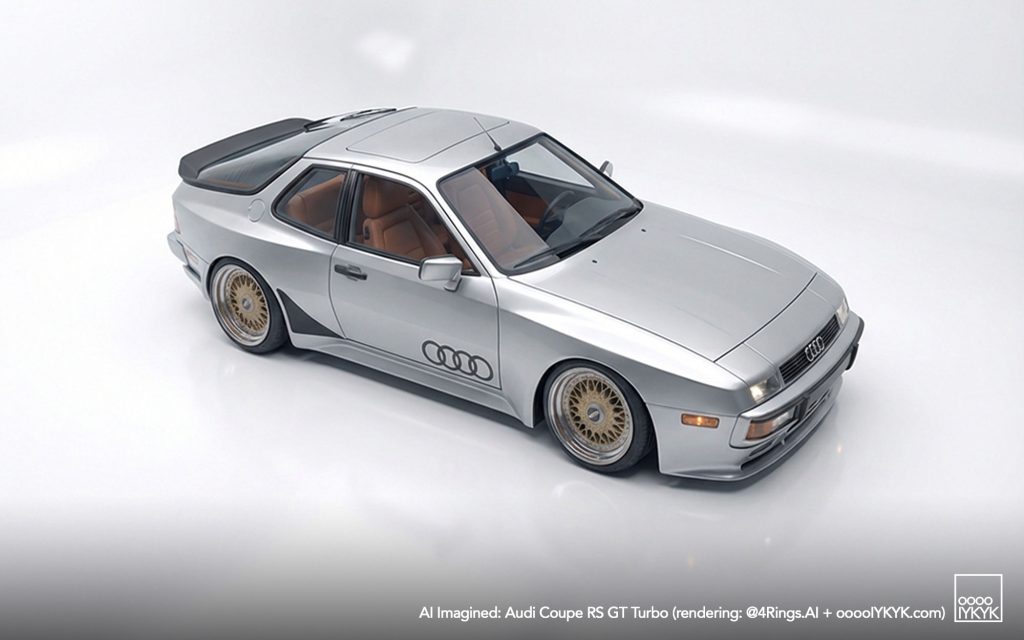
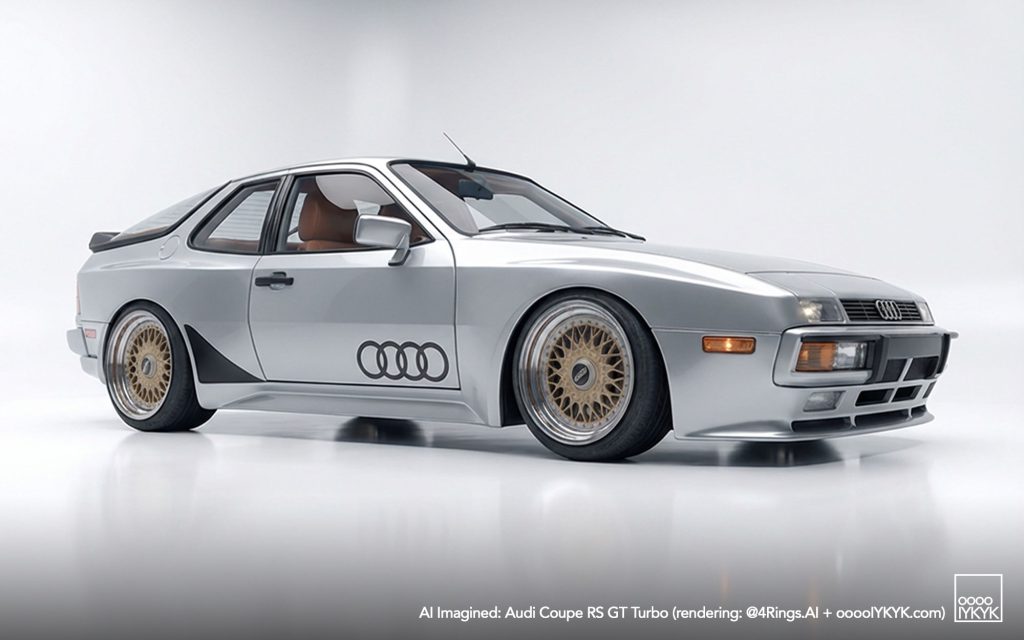
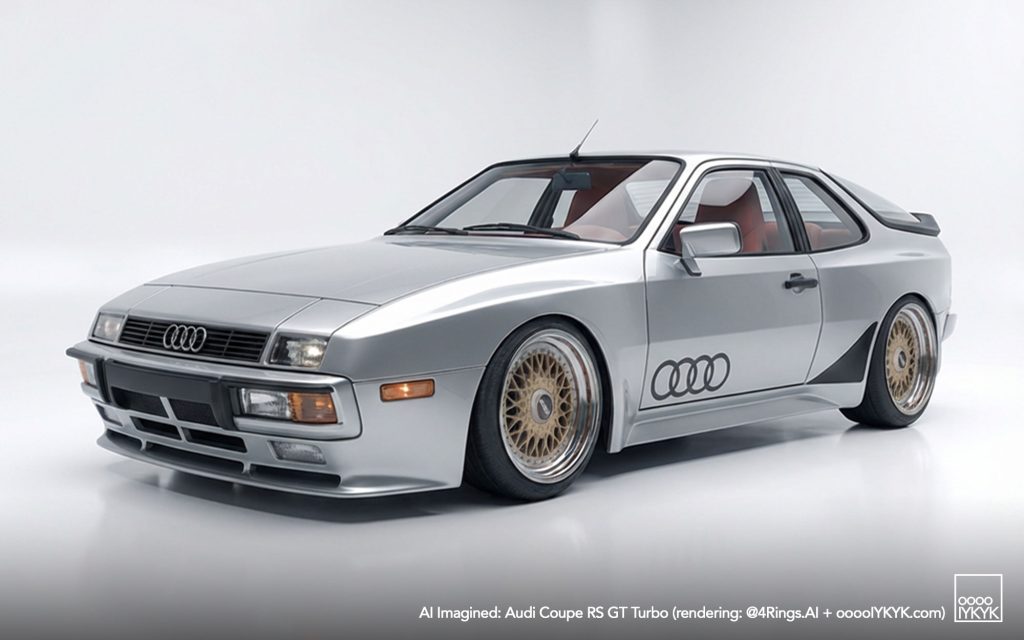
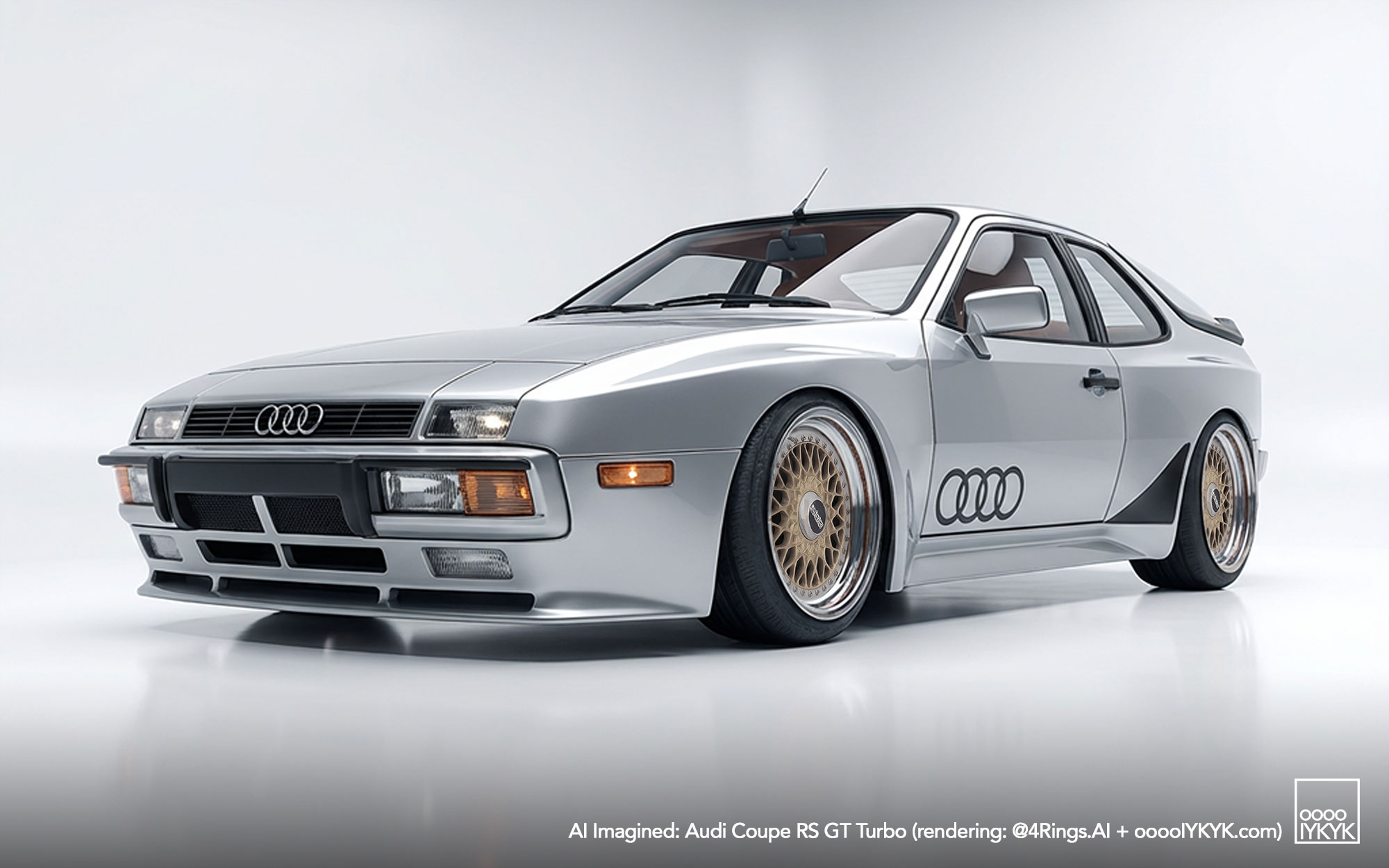
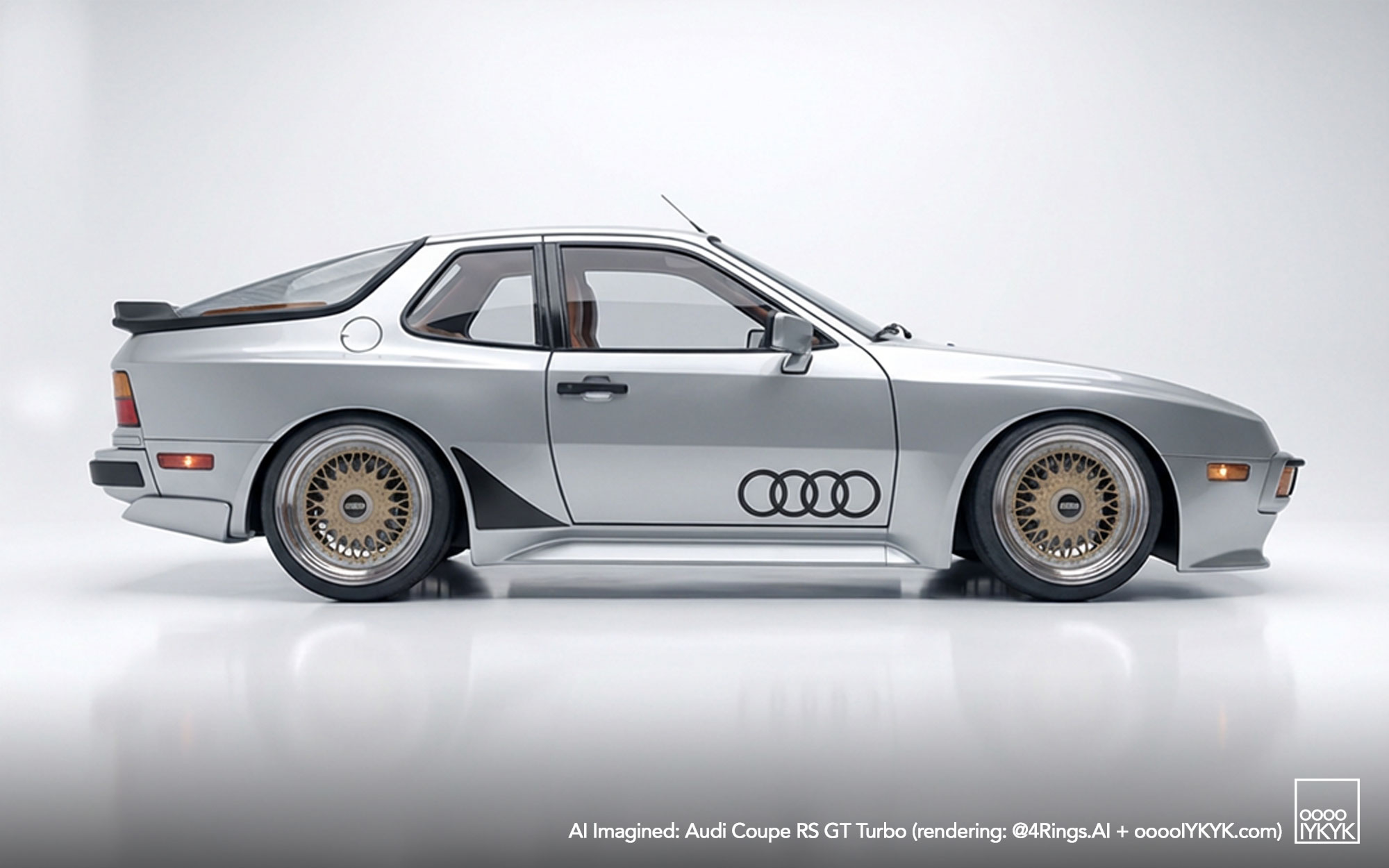
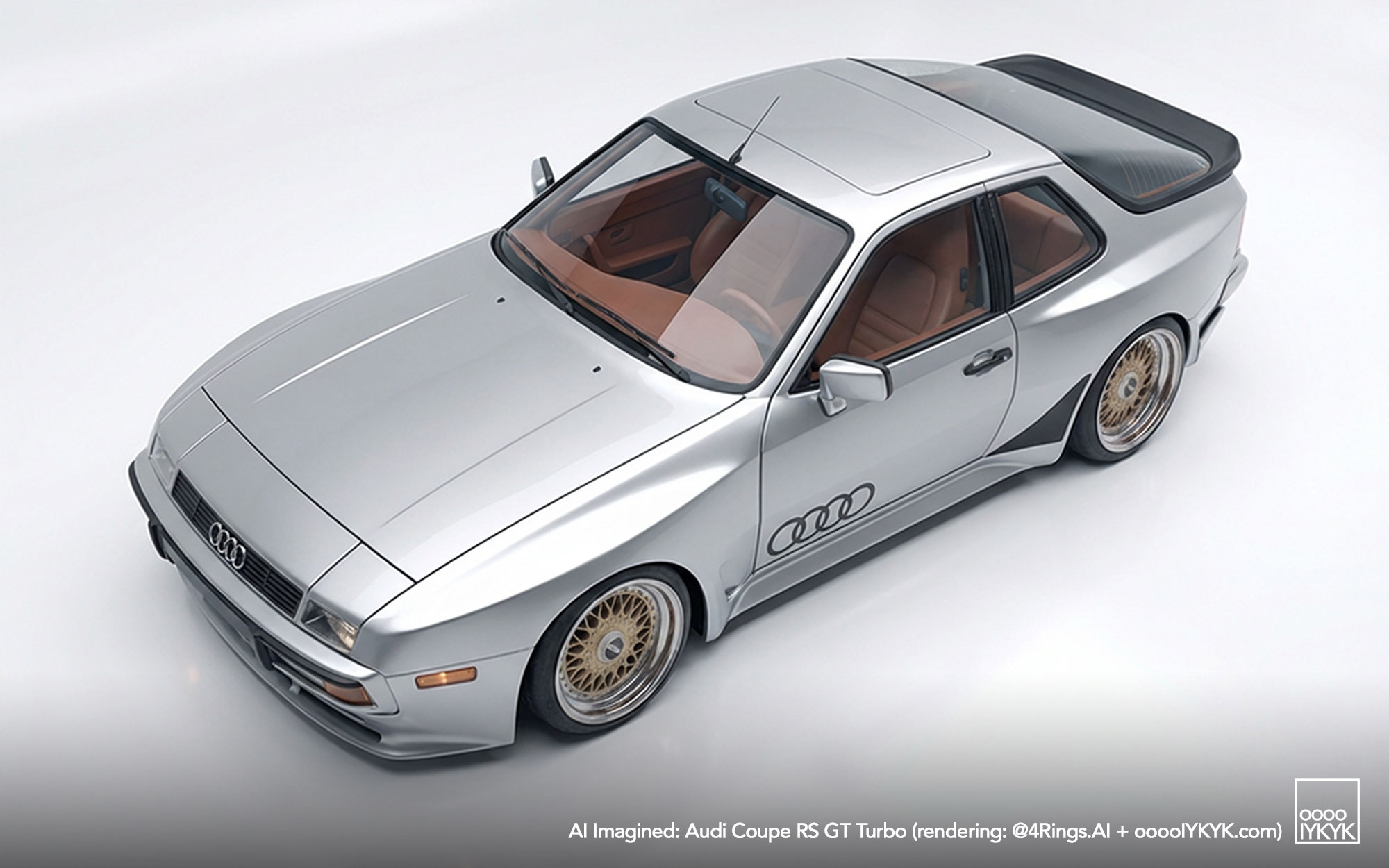
This AI project stemmed from a simple query, mining ideas for an Audi design based on the 924. The results were mainly 944-looking in appearance – wider than 924 and with Porsche’s own take on box flares that they’d integrate into the 944 design throughout its production run.
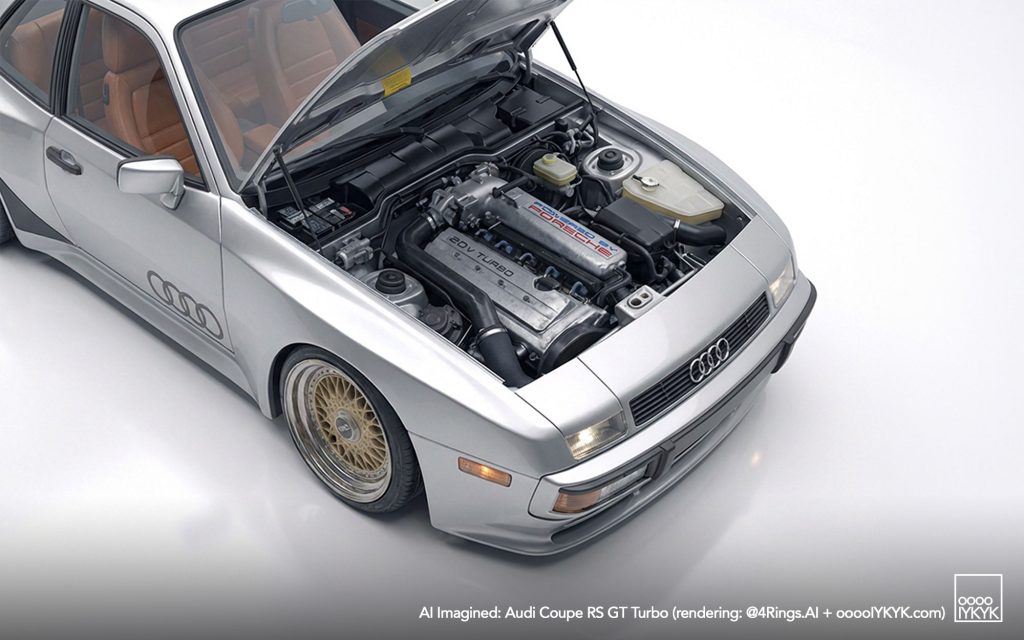
This particular design grabbed my attention. It’s quite close to the 944, though with a slight twist at the front in order to integrate a more horizontal grille more in keeping with Audi’s grille designs of the late 80s and earliest 90s.
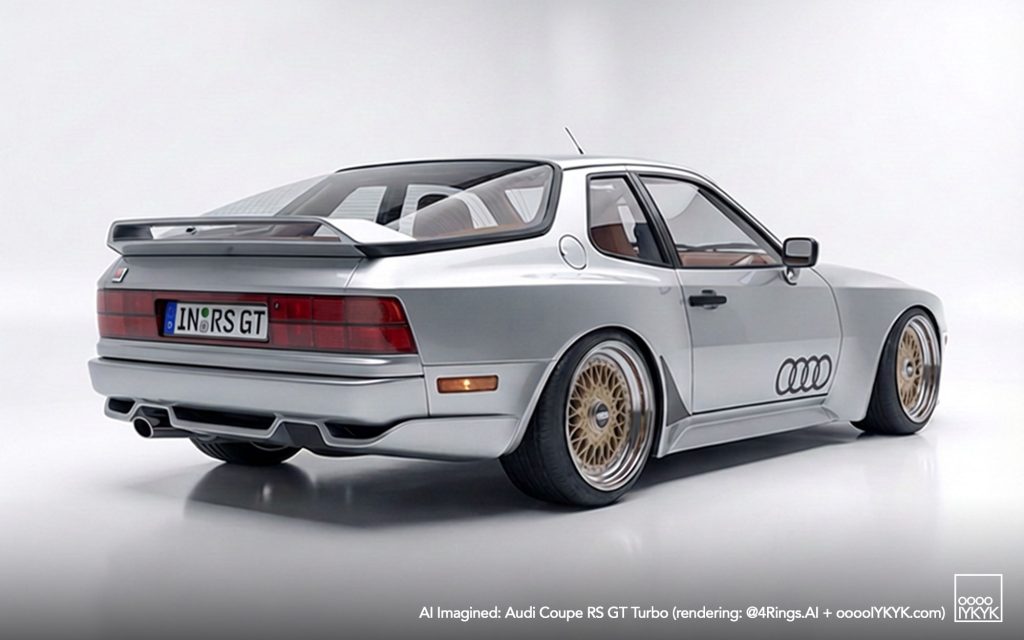
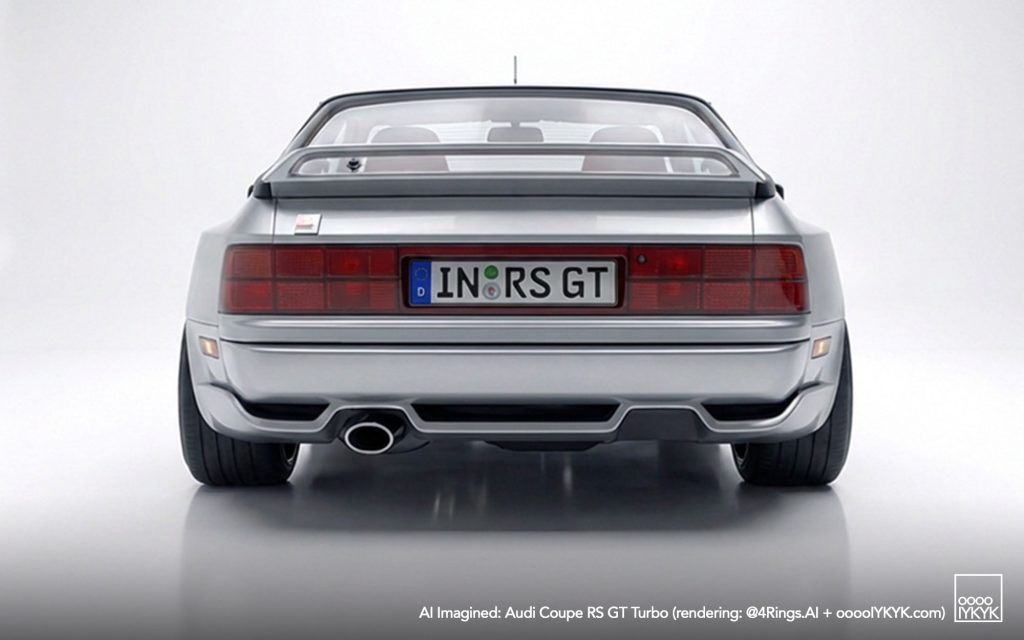
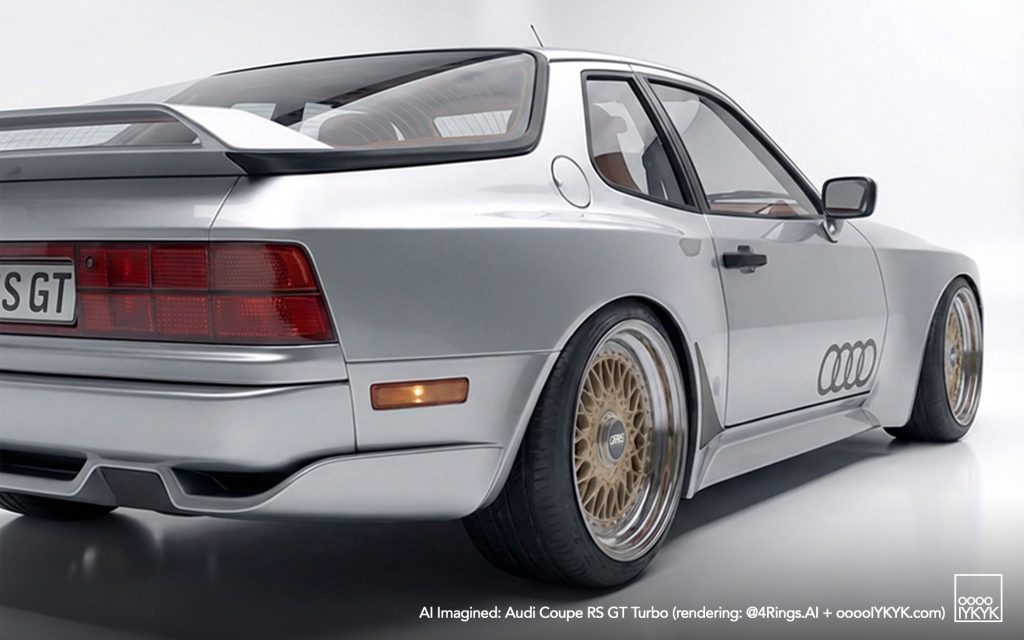
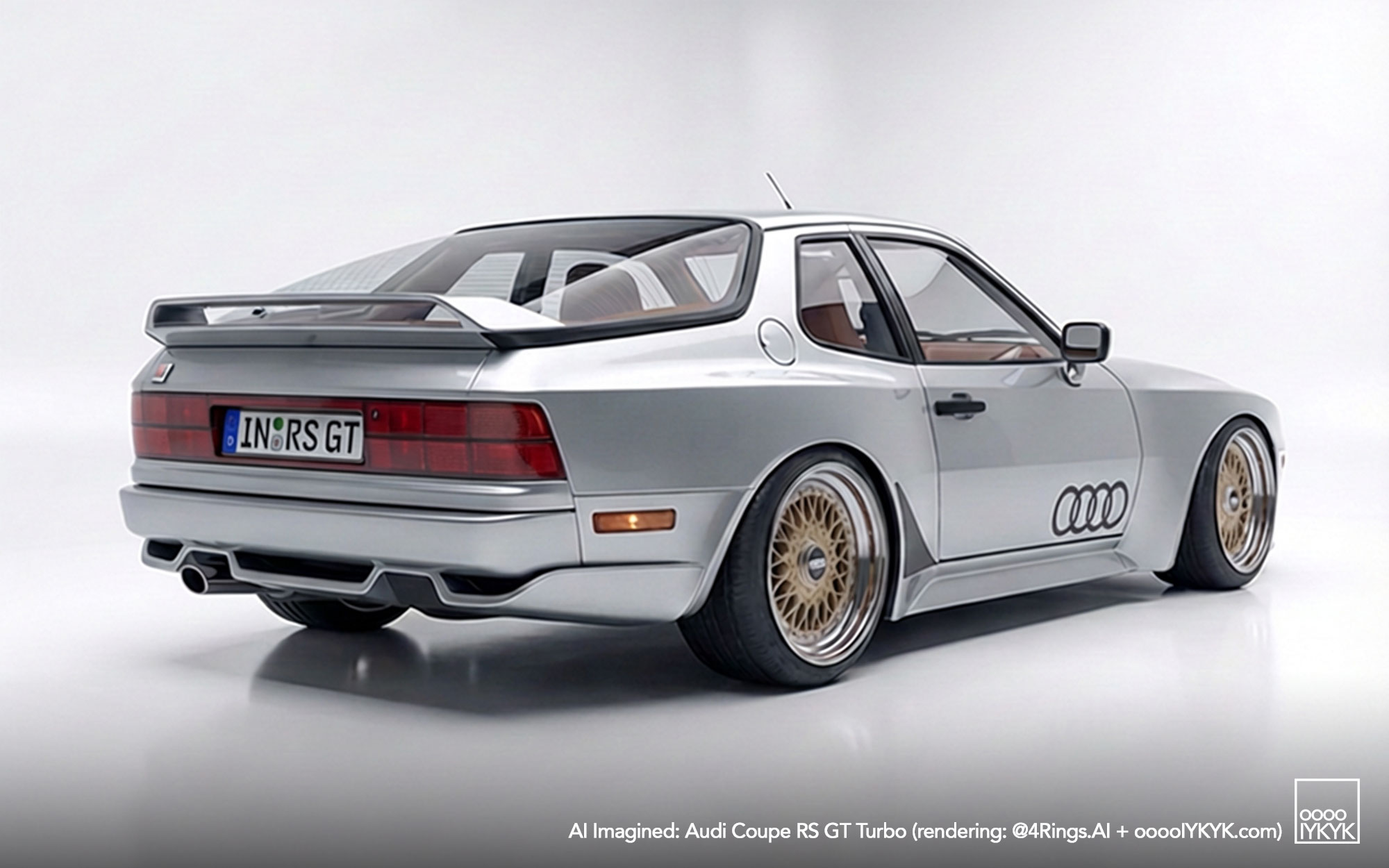
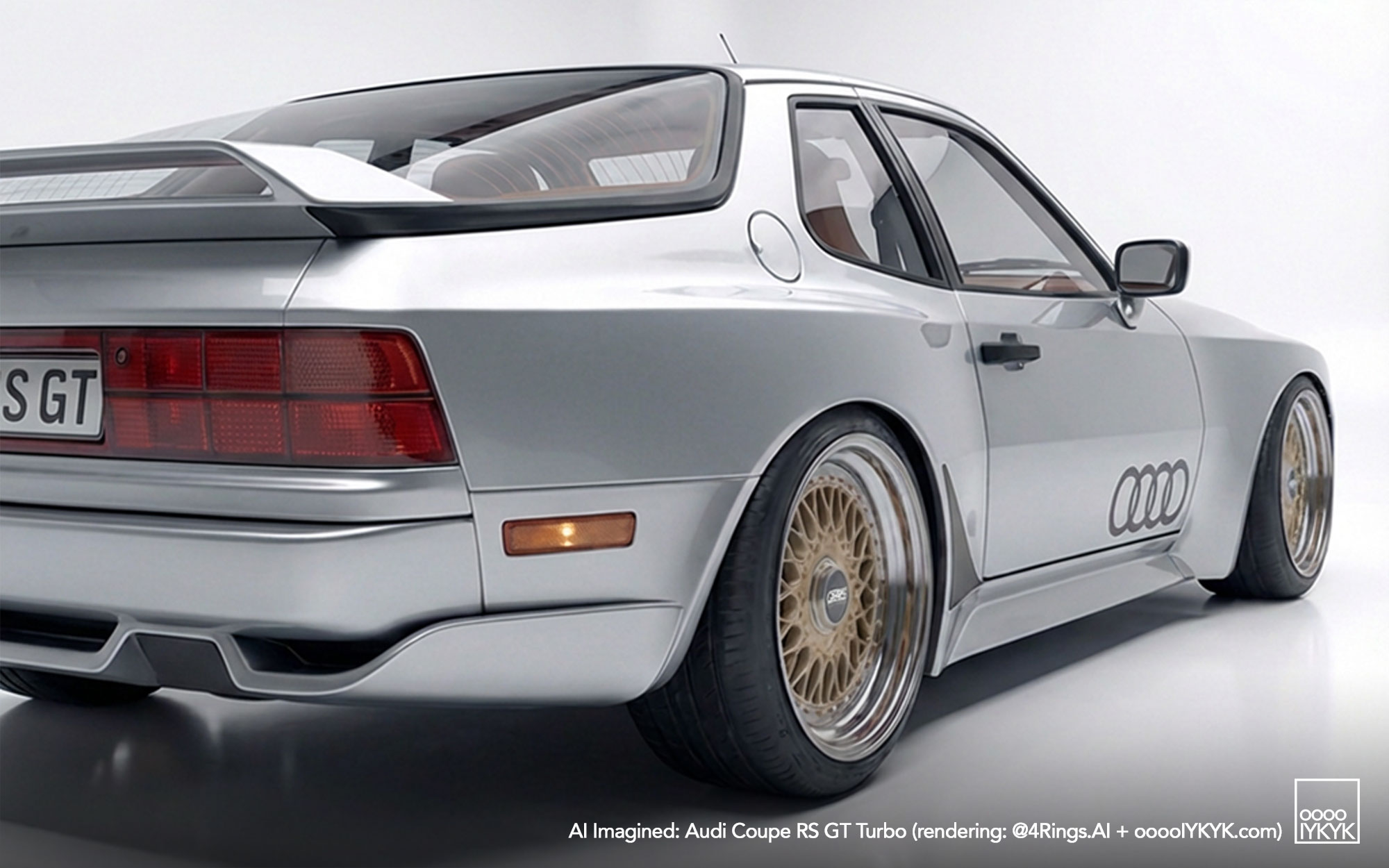
When I used AI tools to simulate the rear, the result was largely 944. So, I used photoshop to seek an appearance that was one part RS2 heckblende and one part 944 segmented taillight that’s not quite as smoothed and uniform as the RS2’s. Effectively, it’s a mix.
USING HISTORY AS A GUIDE FOR FICTION
Some of my favorite projects are ones with ties to actual history. More extended history of cooperation between Porsche and Audi offers several relevant experiments that could have led to this sort of car. I’d highlight these key points.
- Porsche experimented with fitting an Audi 5-cylinder longitudinally into the 924. A prototype of such a car exists today in Porsche Classic’s historic collection.
- Porsche engineered the final and most powerful evolution of the roadgoing Audi 5-cylinder engine. That engine would see production in the RS2 Avant.
- Over the years, tooling for retired models would get reused in other parts of the Volkswagen Group realm, like the B2 underpinning Santanas in places like Brazil and China. Audi’s own EA 425 production infrastructure ceased utilization when the 924 was retired.
- Audi and Porsche worked together again for the development of the J1-based Audi e-tron GT, RS e-tron GT and Porsche Taycan.
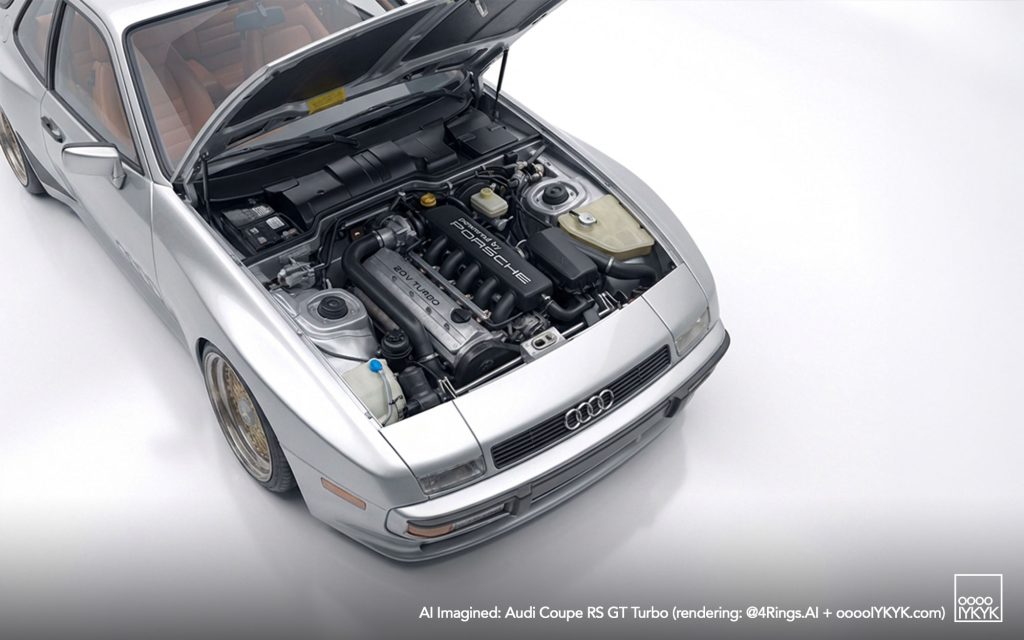
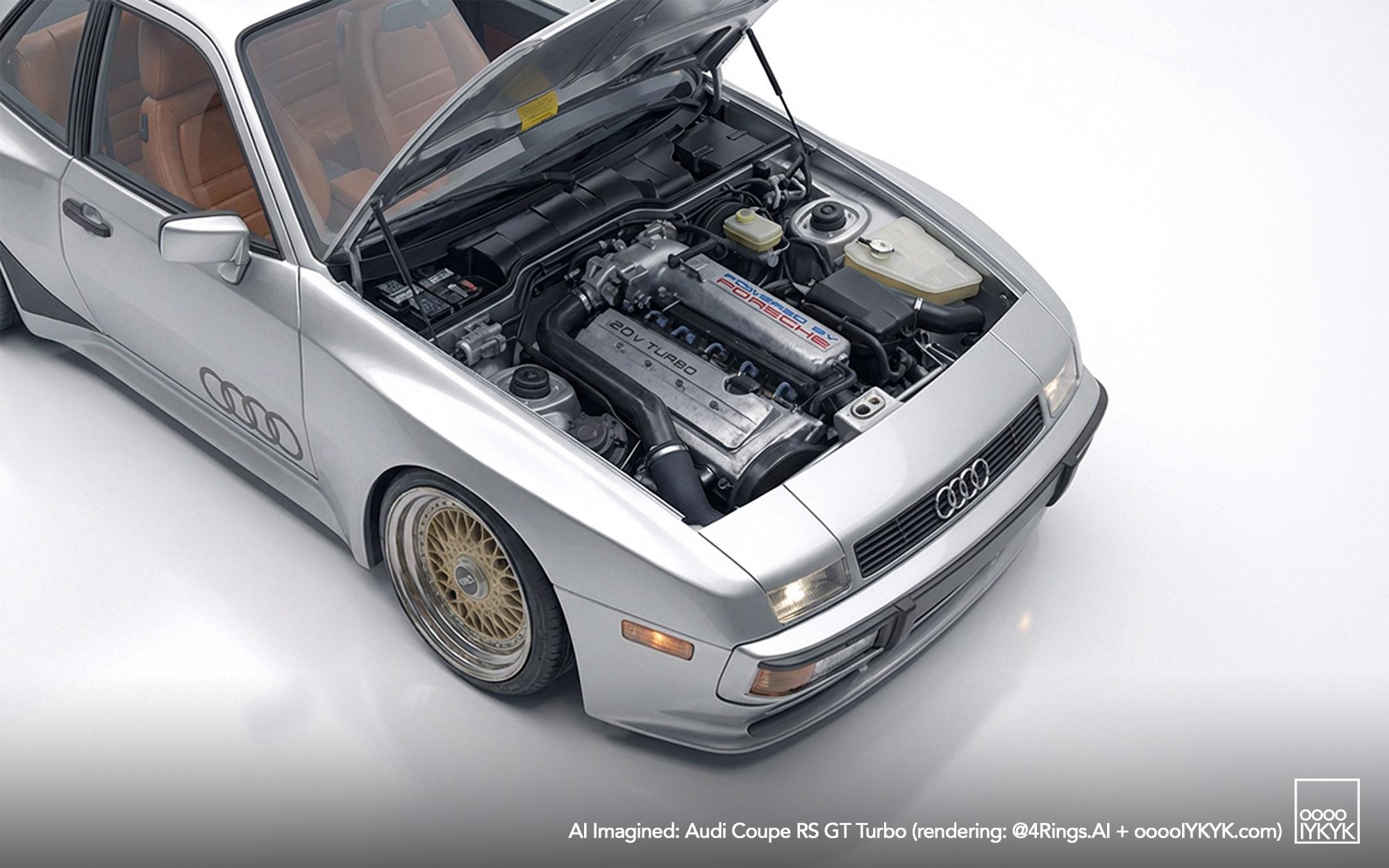
Given these points, and also a genuine curiosity for shops like Boost Brothers Garage who build kits for shoehorning the modern Audi 5-cylinder into Porsche transaxle cars, I wanted to imagine this EA 425 Audi sportscar as an evolution of the 924. Had Audi kept producing the car, perhaps redevelopment of it as an Audi would have resulted in something similar.
For naming, I went to the RS e-tron GT. “GT” began with that first B2 coupé, while RS began with the RS2 developed by Porsche. A Coupé RS GT pays homage to all using a naming convention from the modern Audi lineup.
Could this car have offered a more aggressive sportscar to be sold alongside the now heavier B3-based Audi Coupé and even S2 models? Could the Audi 5-cylinder have been used to make the car even more potent and more extreme alternative?
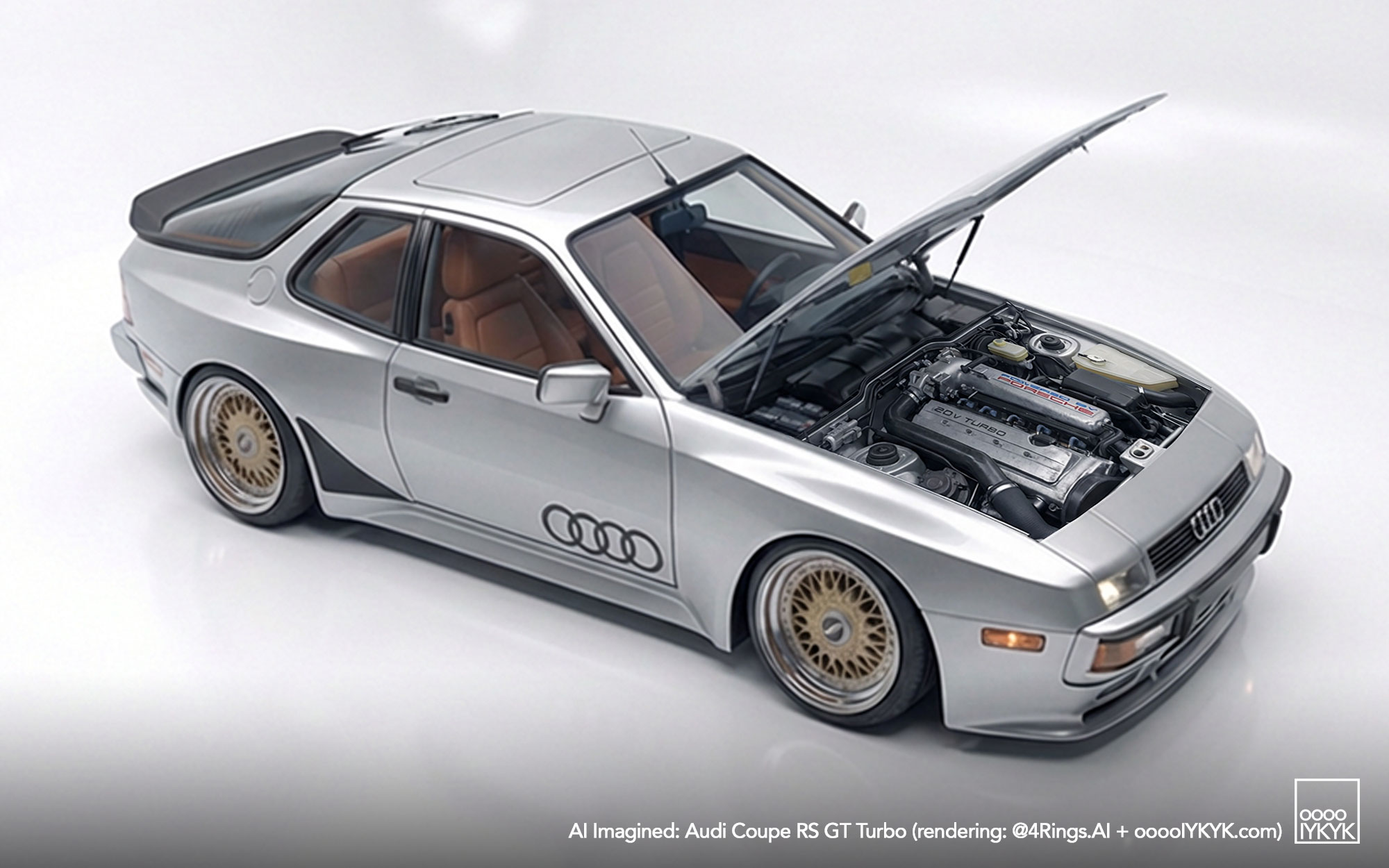
I can’t say I have the answers, but what I did do was create the car from multiple angles including under hood shots meant to simulate that 5-cylinder in the chassis. Using the RS2 version with its “powered by Porsche ” intake manifold just seems to fit even better.
PHOTO GALLERY