

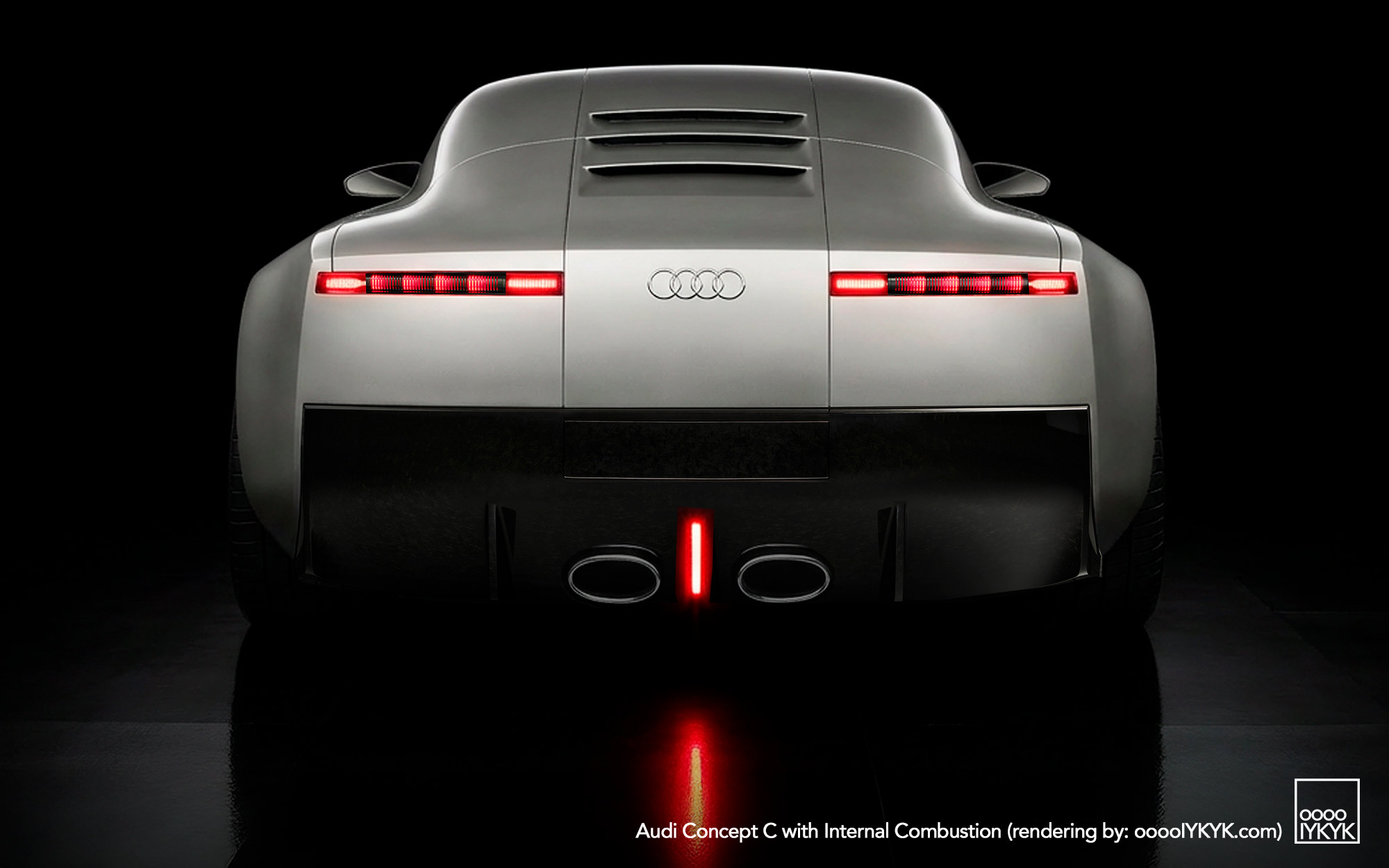

Back in September, news out of the auto industry rumor mill was that Porsche planned to sell top-end 718s alongside the new 718 Electric. Whether or not that meant the current “982” version of the 718 that was set to go out of production would then carry on or the next-gen 718 EV could also be produced as an ICE offering wasn’t really clear. Now, new report by Greg Kable from Autocar Magazine sheds what appears to be more detail on the situation… detail that could affect Ingolstadt’s own planning as it readies a roadgoing version of the Concept C for launch.
PLATFORM ARCHITECTURE WHAT’S IN A NAME?
Originally, Porsche had planned for the upcoming 718 generation to be exclusively electric, built on a platform Kable refers to as “PPE Sport”. That name is a new reference so far as I can tell and worth dwelling upon.
Throughout the timeframe of rumors of this car, various stories have stated everything from SSP (Volkswagen Group’s new scalable systems platform with software from the joint venture with Rivian) to PPE (the Audi-Porsche developed platform that underpins A6 e-tron and Q6 e-tron), to another called “E-Core” developed by Porsche. Unlike SSP and PPE, this design is not a “skateboard” style architecture with battery in the floor. Instead, it has the battery behind the bulkhead separating the passengers from the rear of the car for lower seating position and more mid-engine physics.
In this story, Kable is now using the term “PPE Sport”, which may or may not mean it is PPE derived. However, the description of the configuration sure sounds like it’s far from similar beyond perhaps some components sharing. Given that, it sounds like PPE Sport may very well be an updated name for E-Core that was first described in another Autocar story from about a year ago.
Also worth noting, this new Greg Kable report refers to the so-called “982” internal combustion 718 as the “4th generation” and the upcoming 718 Electric (a.k.a. PPE Sport) as the “5th generation” 718. That’s worth referencing as it helps differentiate as we dig into this further.
PORSCHE’S U-TURN IN POWERTRAIN STRATEGY
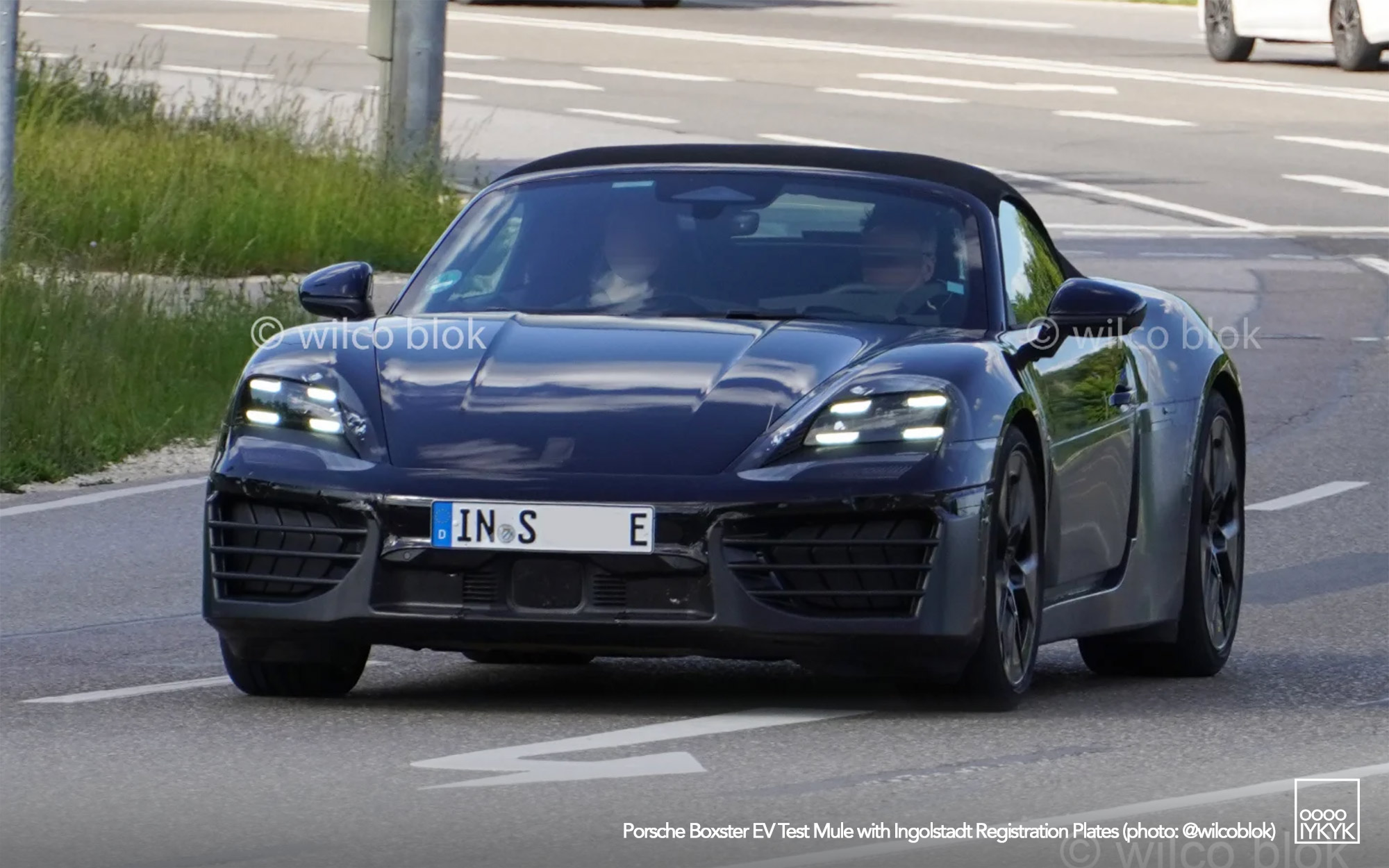
According to this week’s Autocar report, demand for electric vehicles softening faster than anticipated in key markets convinced Porsche to quietly begin re-engineering this PPE Sport platform to accept petrol powertrains as well.
Kable also reports that this wasn’t the original plan. If he’s accurate (and he usually is), it sounds as if production of the 4th-generation 982 718 ended last month as expected but that an updated version of the current 4th-generation Cayman that perhaps might be called 982.2 following Porsche enthusiast vernacular will carry on more or less with with GT4 RS specification and slot in above the 718 Electric.
What makes them a stop gap? The Autocar/Kable intel suggests senior officials from Porsche have shared that they are effectively “reverse-engineering the EV architecture” — an unusual and technically demanding task, since the PPE Sport platform integrates the battery pack as a stressed structural element of the chassis. Engineers are said to be developing a new structural floor section, revised rear bulkhead, and subframe to support a mid-mounted internal combustion engine and transmission. The goal is to bring ICE models closer to the dynamic capabilities of the electric versions, even with the inherent architectural compromises that are likely involved according to Autocar. Should they accomplish that mission, the planned 5th-generation 718 ICE models would presumably replace the updated 982 4th-generation cars by the end of the decade.
While Porsche has not officially confirmed this strategy, multiple automotive news outlets have relayed consistent insights from company sources, and the move fits into a wider company product realignment that has already delayed or rescheduled certain EV projects in favor of retaining combustion and hybrid options across the lineup.
AND THEN THERE’S AUDI
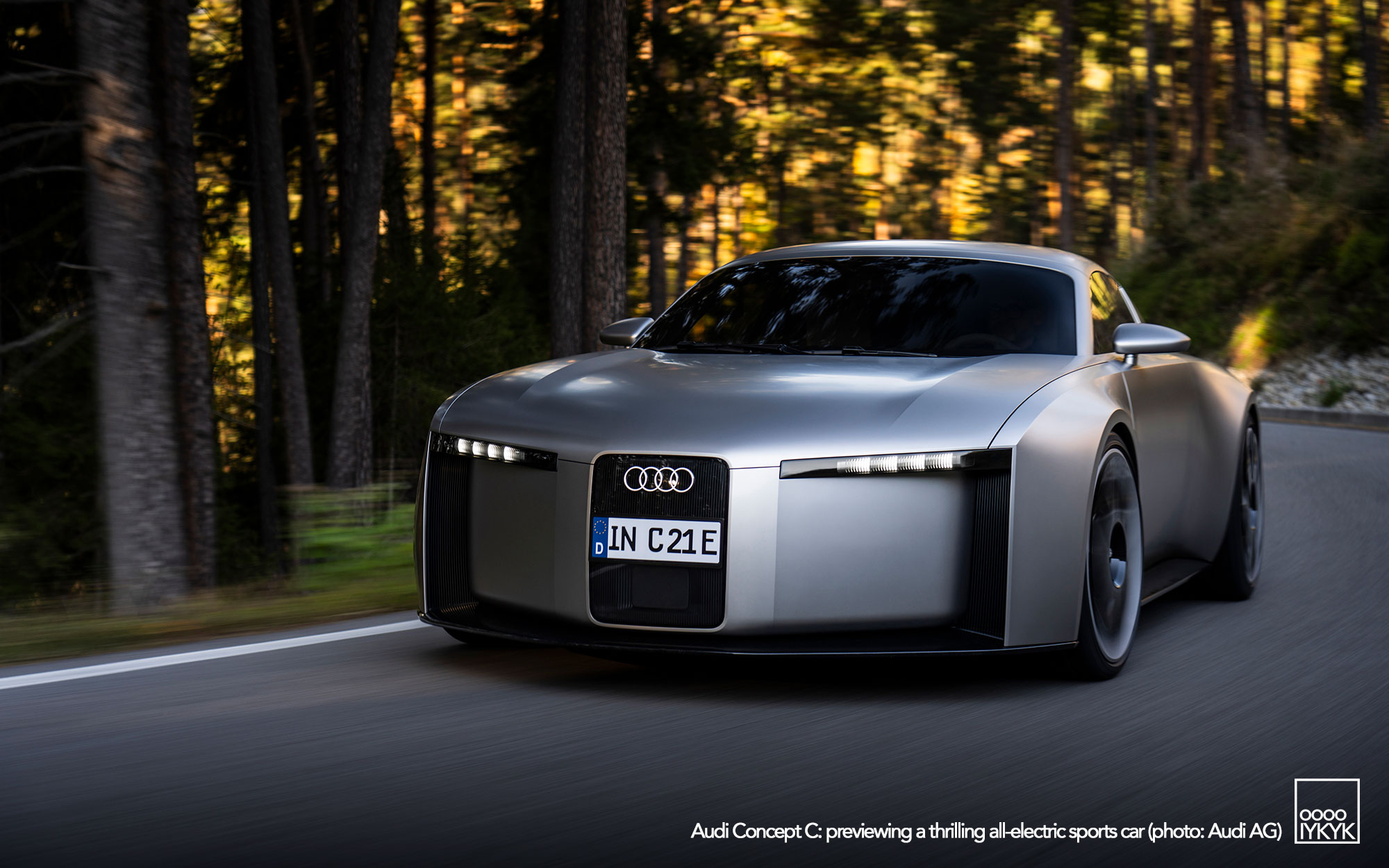
Audi has made no secret of its planned alignment with Porsche on this project, whether in testing their own mules of the 718 Electric or transparently confirming that its planned roadgoing version of the Concept C will also utilize this platform.
If Porsche’s next 718 platform is now being designed to support both ICE and EV variants, this begs some questions of Audi. And before digging into those, it’s worth noting two things.
- Audi CEO Gernot Döllner has gone on the record several times saying the car derived from Concept C is planned as an EV only.
- A contact of my own informed me last summer that while Porsche was considering a pivot to ICE for the fifth generation 718, Audi had no such plans.
So, let’s theorize.
- Would Audi consider a switch to ICE for this car? Outside of several EV-friendly markets, Audi has been challenged with EVs. Volume growth is there but residuals are a challenge that affects both lease rates and profitability. Likely an internal combustion version of this car would sell more units, though a compelling argument can also be made for Audi to have an electric version. Whether or not there’s a business case for both as there appears to be at Porsche remains to be seen.
- Reverse engineering an EV platform may not be optimum. With all due respect to Porsche’s engineering team, a solution after the fact could be a challenge. A platform engineered around electric propulsion that is later adapted for petrol power could impose weight and stiffness compromises — a crucial concern for sports cars that need sharp dynamics.
- Shared economies: A dual-powertrain strategy for the 718 may offer Audi the opportunity to leverage a broader range of components and expertise, especially if Audi elects to offer its own internal-combustion-equipped sports car alongside electric variants. That said, an Audi with a boxer engine could be alien to Audi customers and hallowed ground for Porsche who may not want to share. A fantasy scenario would be an Audi powered by the brand’s modern 5-cylinder engine, though trying to make a business case for that pencil wouldn’t be easy.
Porsche’s pivot may not only affect Stuttgart’s strategy and could recalibrate Audi’s own roadmap for a new-generation lightweight, driver-centric sportscar. The challenge for Audi will be striking the right balance between pure electric progress so popular in the brand’s recent ethos and traditional petrol-fueled passion that would come from offering a 5-cylinder sportscar — a configuration that could be described as core to the brand’s heritage.
Given what we know so far, this is all simply conjecture and theory. And, even if Audi wanted to do as little as offer a version of their car with the Porsche engine, it is most unlikely that this would happen before Porsche offers the same in a 5th-generation ICE 718 that Kable theorizes is set for about 2030.
BIGGER INDUSTRY CONTEXT
Porsche’s reported reversal at the 718 underscores a broader automotive reality: while electrification remains a cornerstone of future product plans, internal combustion engines continue to hold more importance in the financial viability of these companies than long-term forecasters had guessed.. This trend is visible across other brands and segments, where hybrid and ICE options are being preserved or even expanded into the late 2020s and beyond, and as the EU rolls back elements of its EV mandates.
For Audi, already navigating its own electrification journey — including Formula 1 commitments and EV platform investments — Porsche’s decision could serve as a valuable card to play when it comes to flexibility as they try to meet customer demand.
In preparation for this story, I did reach out to Audi PR with a link to the Autocar piece. Rather unsurprisingly, it was met with “no comment”.