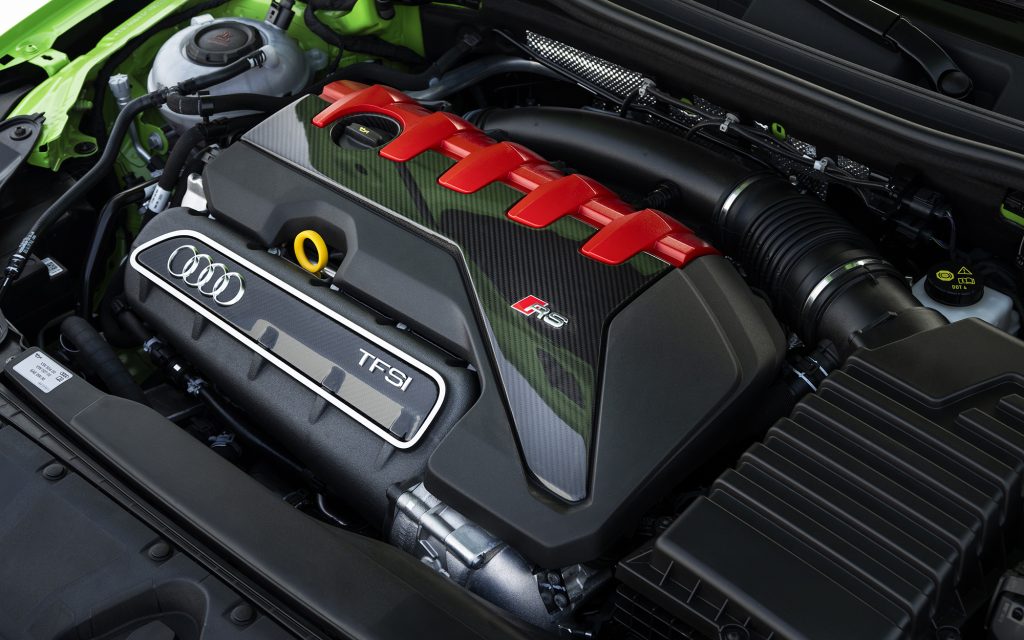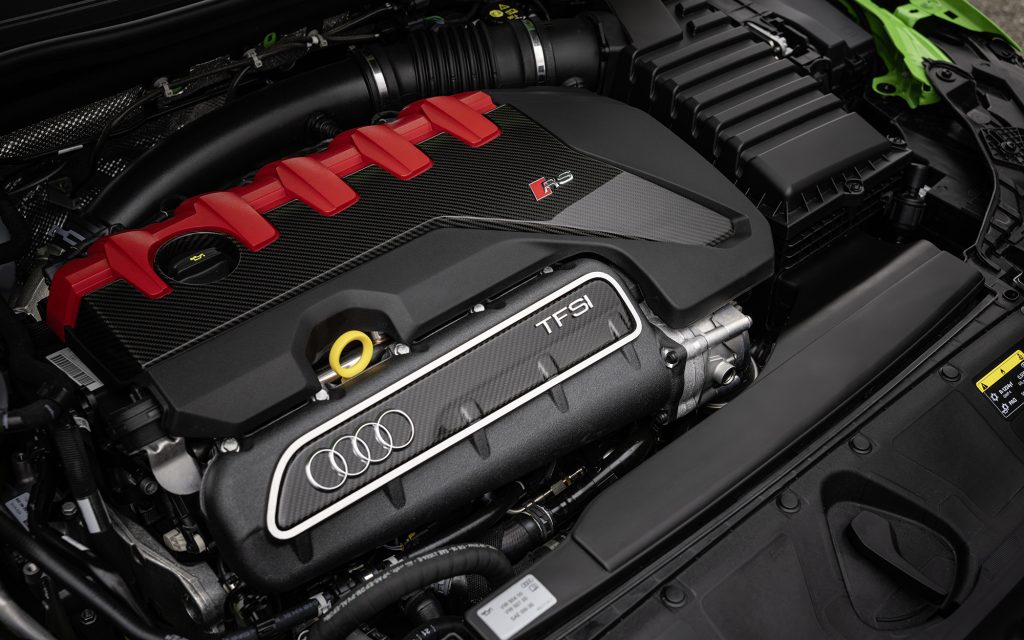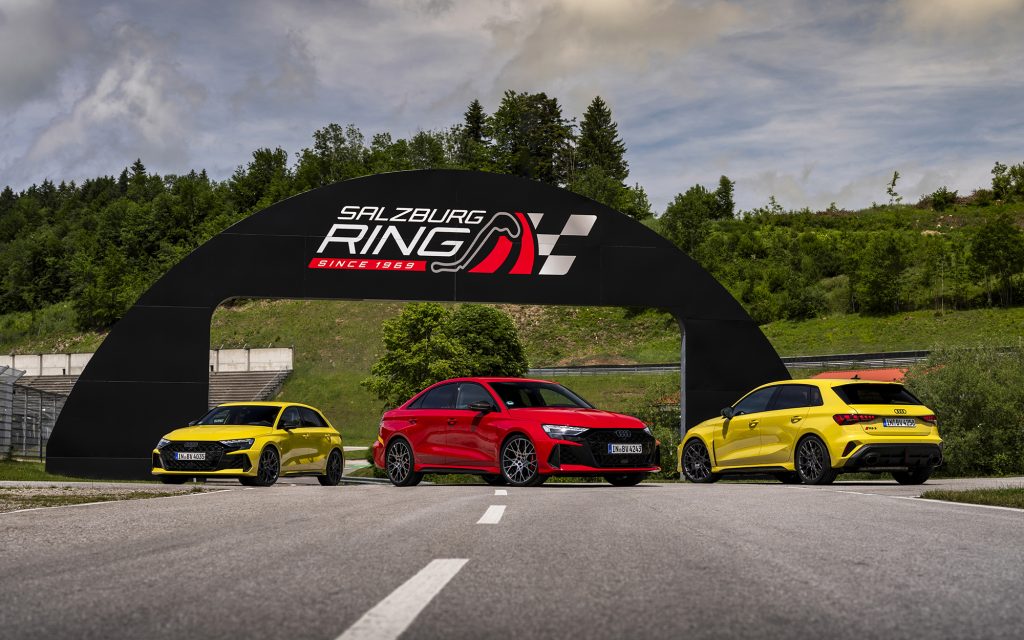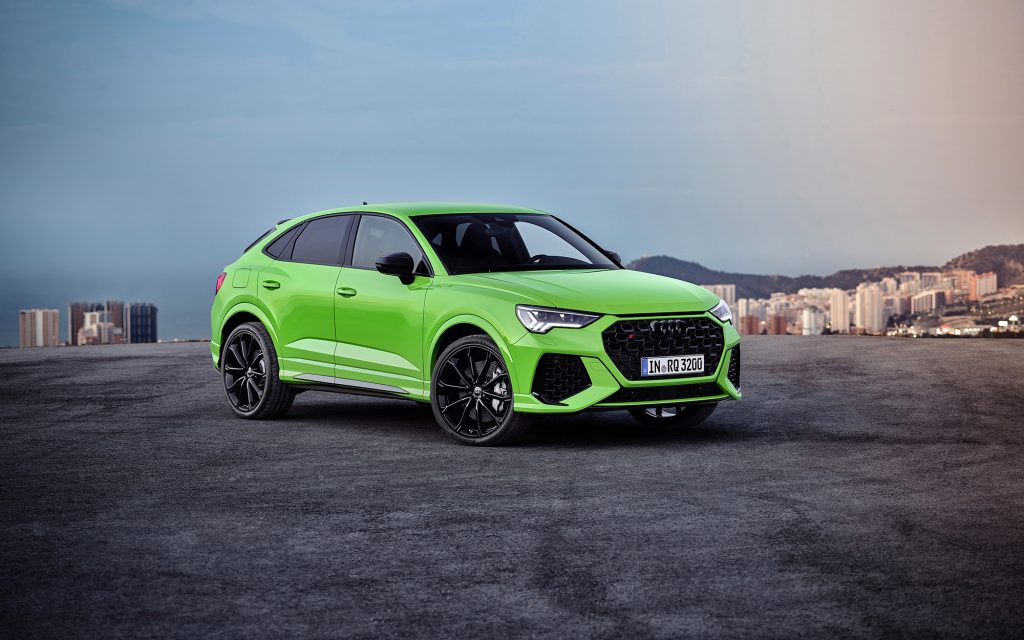
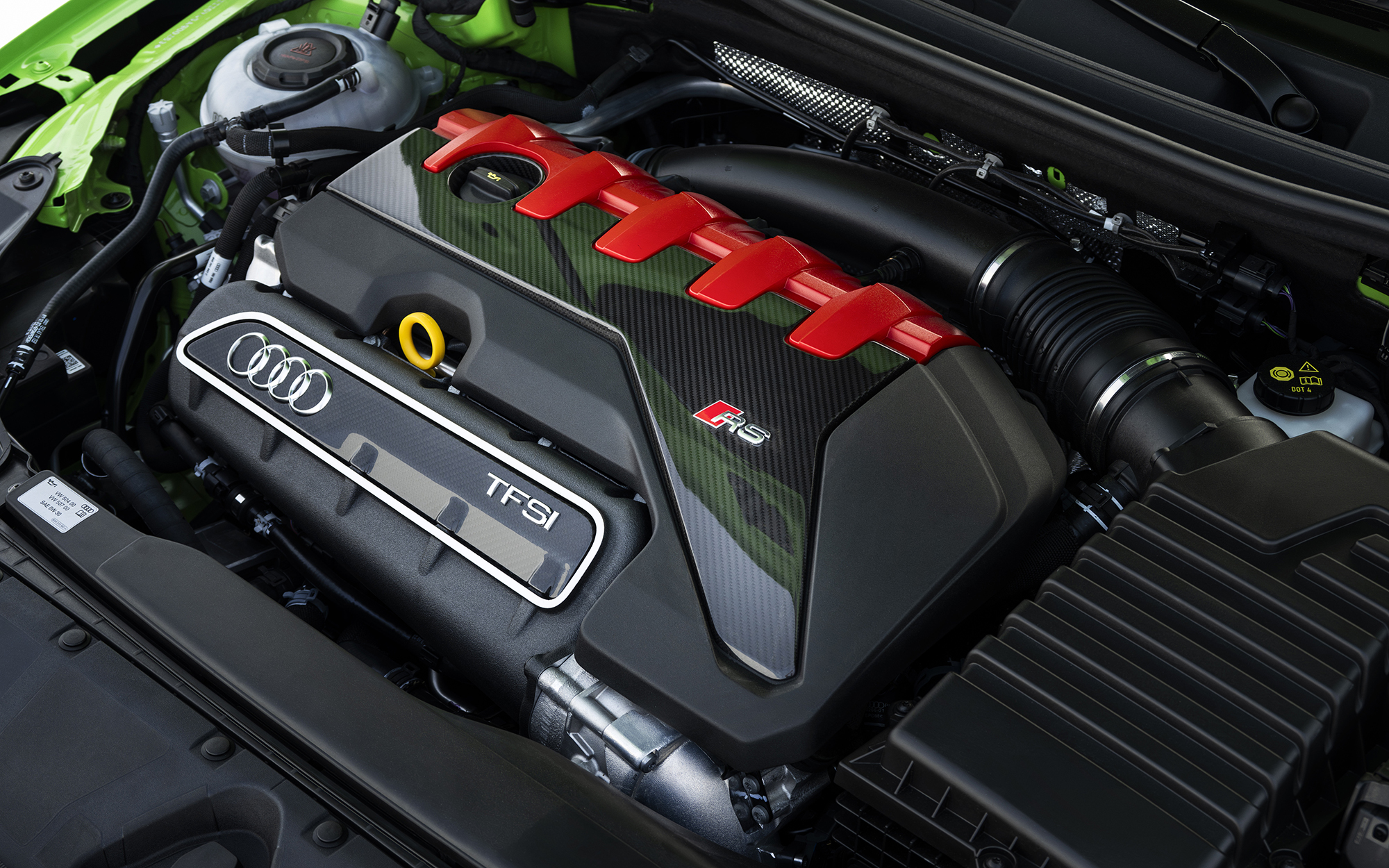

Audi will mark a milestone in 2026: half a century of the five-cylinder engine, the unmistakably Audi engine configuration that has shaped everything from early premium brand aspiration to dominating motorsport legends. Born in the era of the Audi 100 (C2) and immortalized by rally monsters, the five-cylinder became a signature engineering pillar. Today, the 2.5 TFSI in the Audi RS 3 carries that legacy forward with 400 PS, 500 Nm, and a sound that remains one of the coolest in internal combustion.
For Audi aficionados, the five-cylinder is a defining piece of brand DNA that bridges the original quattro to the modern RS era. It’s a lineage marked by unconventional innovation, motorsport dominance and a fascination that no other contemporary configuration quite matches. As the brand prepares to celebrate 50 years of this icon in 2026, it’s an opportunity to look back at the history, sound, technology, and craftsmanship that have made the five-cylinder one of the most enduring signatures of the Four Rings.
HISTORY FROM 100 TO RALLY ROYALTY
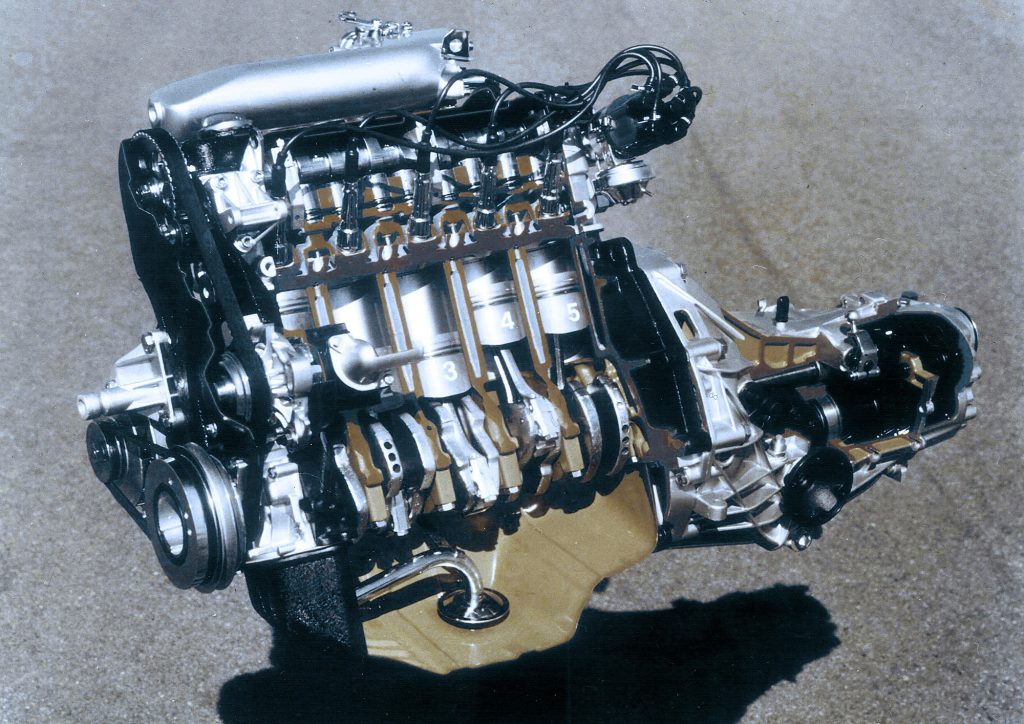
The five-cylinder story began in 1976 with the second-generation Audi 100 (C2). Audi engineers wanted more refinement and power than a four-cylinder could deliver, but space and weight constraints ruled out a six. Their solution — a stretched EA827-based inline-five displacing 2,144 cc and producing 136 PS — launched the car as the Audi 100 5E in March 1977. It was an engineering gamble that paid off: smoothness, efficiency, and power all jumped forward, and the brand had created a new signature.
Key milestones followed. Audi introduced a two-liter diesel five-cylinder in 1978, then a turbocharged petrol version in 1979 for the Audi 200 5T with 170 PS and 265 Nm. But it was 1980 that cemented legend: the original quattro arrived with turbocharging, intercooling, and permanent all-wheel drive, pushing 200 PS and rewriting what a road-going performance car could be.
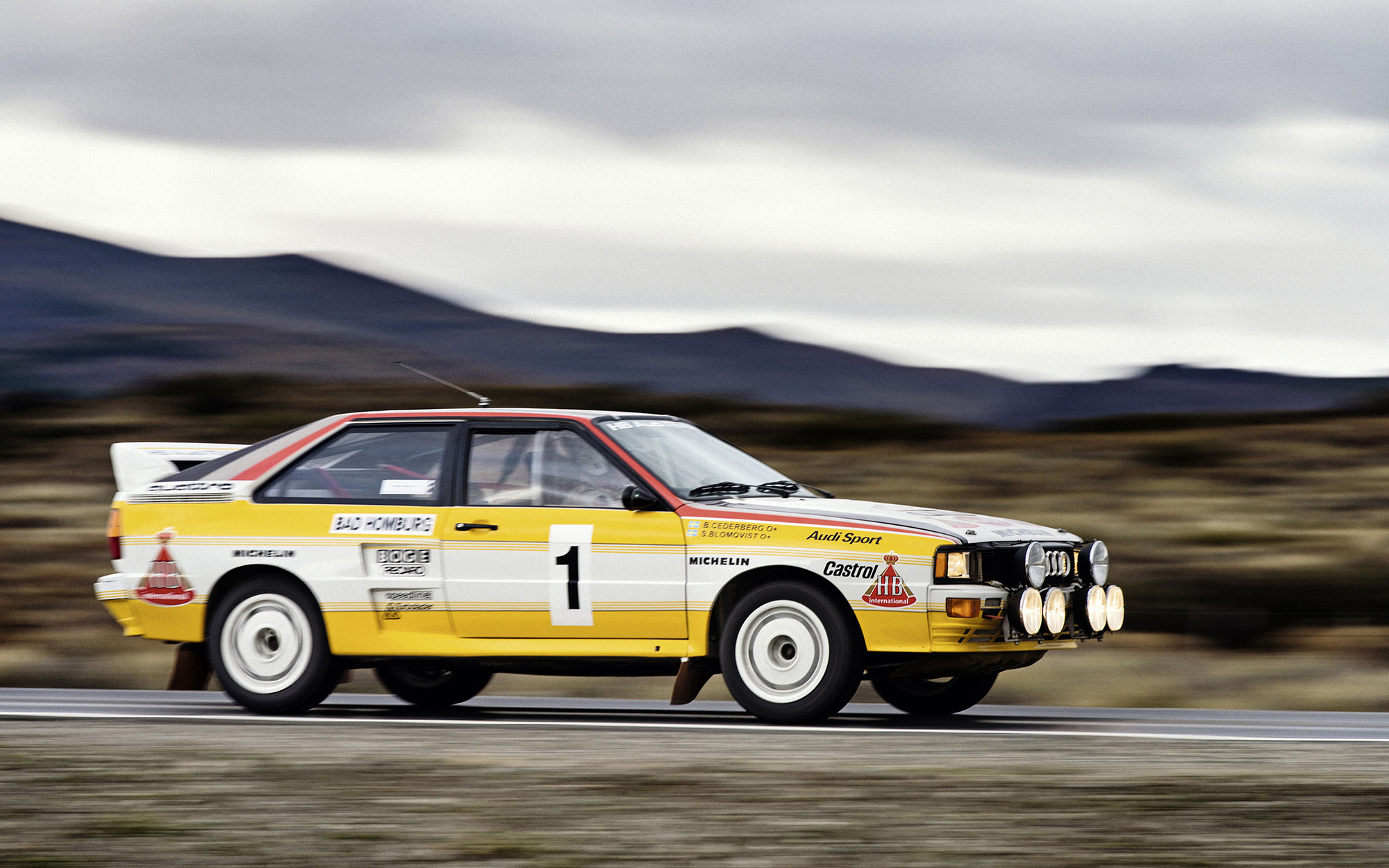
From there came dominance. World Rally Championship titles in 1982 and 1983. Hannu Mikkola, Stig Blomqvist, and a global shift in the perception of Audi as a performance marque. The 1983 Sport quattro raised the bar again with a 306 PS four-valve aluminium engine — the most powerful road-legal German car of its time — and more than 450 PS in its Group B form. Even after Audi withdrew from Group B, the five-cylinder carried on conquering: Walter Röhrl’s 1987 victory at Pikes Peak in the 598 PS Sport quattro S1 (E2), Hurley Haywood’s 1988 Trans-Am championship in the 200 quattro, and the 720 PS IMSA GTO that became a roaring fixture of American motorsport.
The diesel lineage advanced too, culminating in the 1989 Audi 100 TDI — the first direct-injection turbo diesel of its kind — while the petrol side closed its first chapter with the RS2 Avant in 1994. That Porsche-developed rocket launched the RS legend and delivered 315 PS from five cylinders. By 1997, the classic five-cylinder era faded as V6 engines took over. Audi fans would wait more than a decade for its rebirth.
THE REVIVAL MODERN 2.5 TFSI
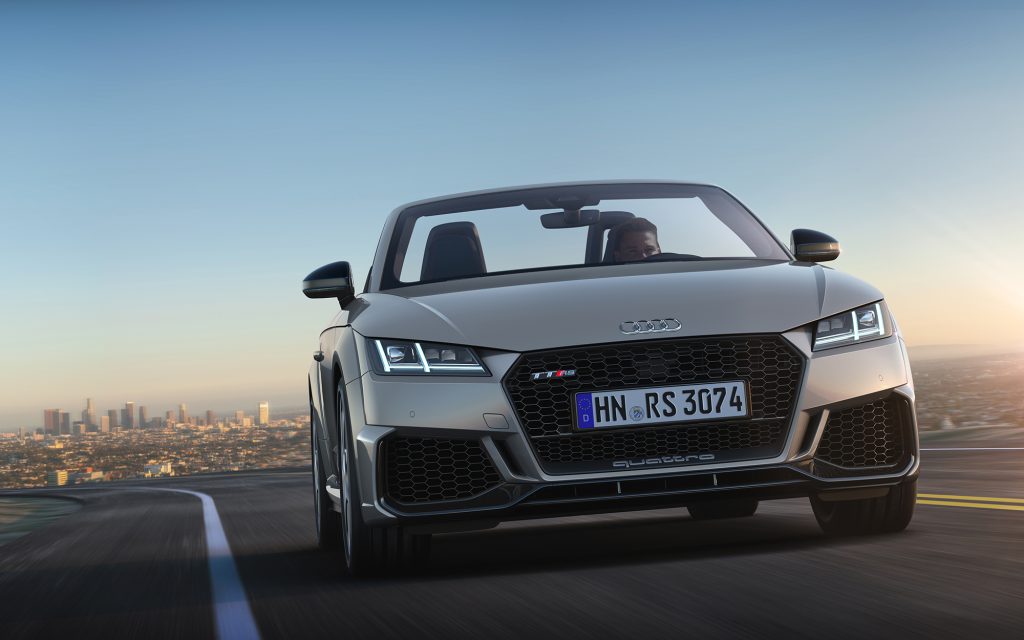
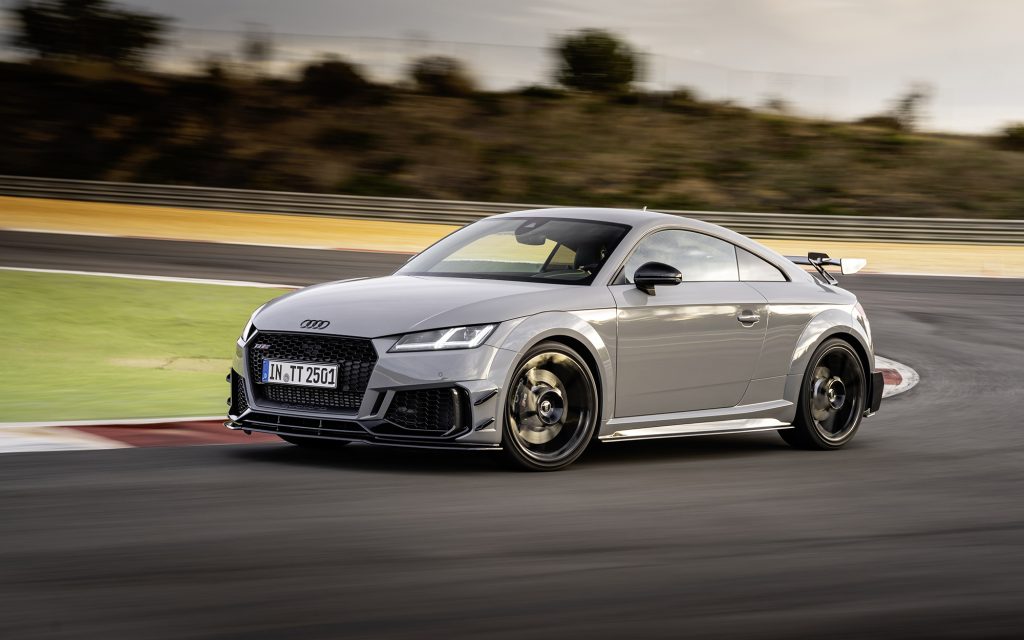
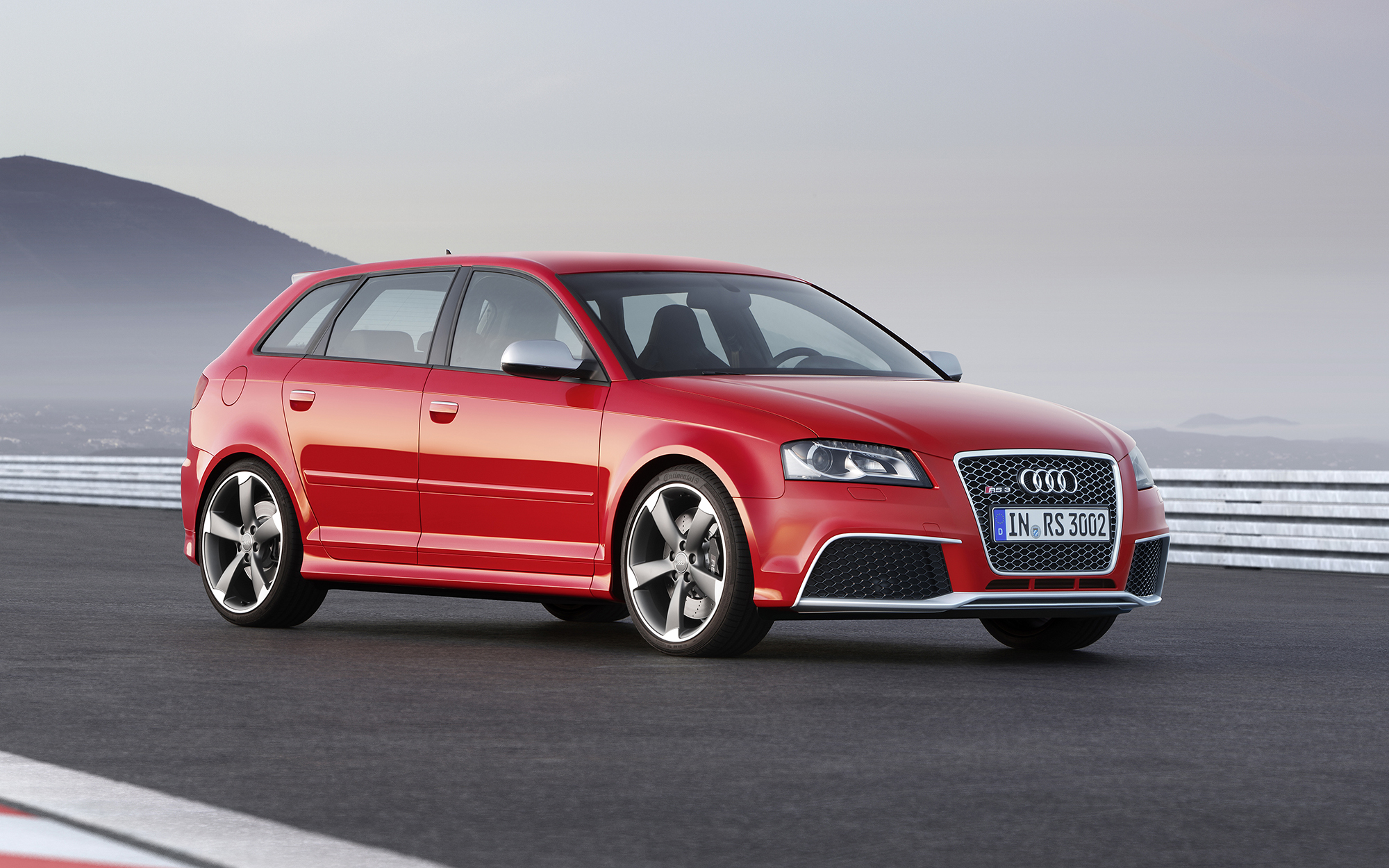
In 2009, the five-cylinder returned — reborn as a 2.5-liter, turbocharged, direct-injection powerhouse. In the TT RS, it made 340 PS; in the TT RS plus, 360 PS. Soon it migrated to the RS 3 and RS Q3 and, in 2016, evolved into the EA855 Evo Sport architecture: lighter, cleaner, more powerful, and more responsive.
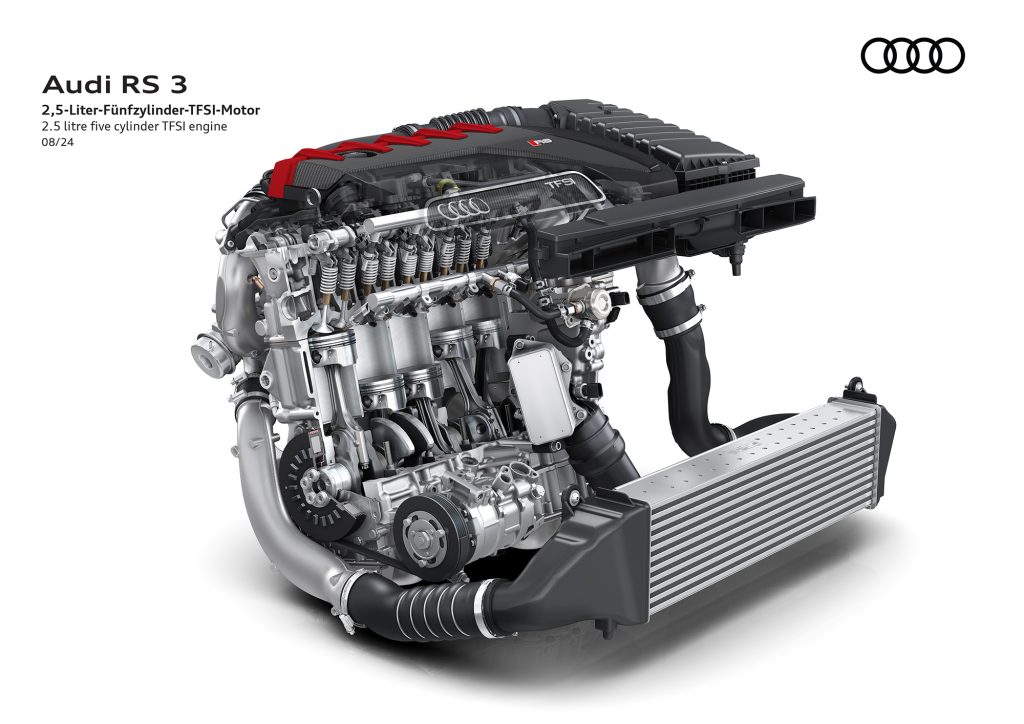
Today’s RS 3 embodies the most capable production five-cylinder ever built. With 400 PS, 500 Nm from 2,250 to 5,600 rpm, and 0-100 km/h in 3.8 seconds, it delivers supercar-lite performance with an emotional signature no inline-four or V6 can match. With optional dynamic packages, it pushes to 290 km/h. The newest engine management system ties the entire drivetrain together more quickly and precisely than before, raising the driving dynamics ceiling yet again.
THE SOUND
Nothing defines the five-cylinder quite like its tone. The 1-2-4-5-3 firing order creates an uneven, syncopated rhythm that sits somewhere between a rally special stage and mechanical opera. Each 144-degree step of crank rotation alternates between adjacent and distant cylinders, generating an off-beat cadence that became synonymous with the quattro’s rally debut.
Modern RS models amplify the character with fully variable exhaust flaps and an optional RS sports exhaust. In RS Performance, Dynamic, and RS Torque Rear modes, those flaps open earlier and wider, underscoring the emotional resonance that has kept the five-cylinder an enthusiast favourite for decades. Few engines today produce a soundtrack that feels both historic and alive in quite the same way.
THE TECHNOLOGY
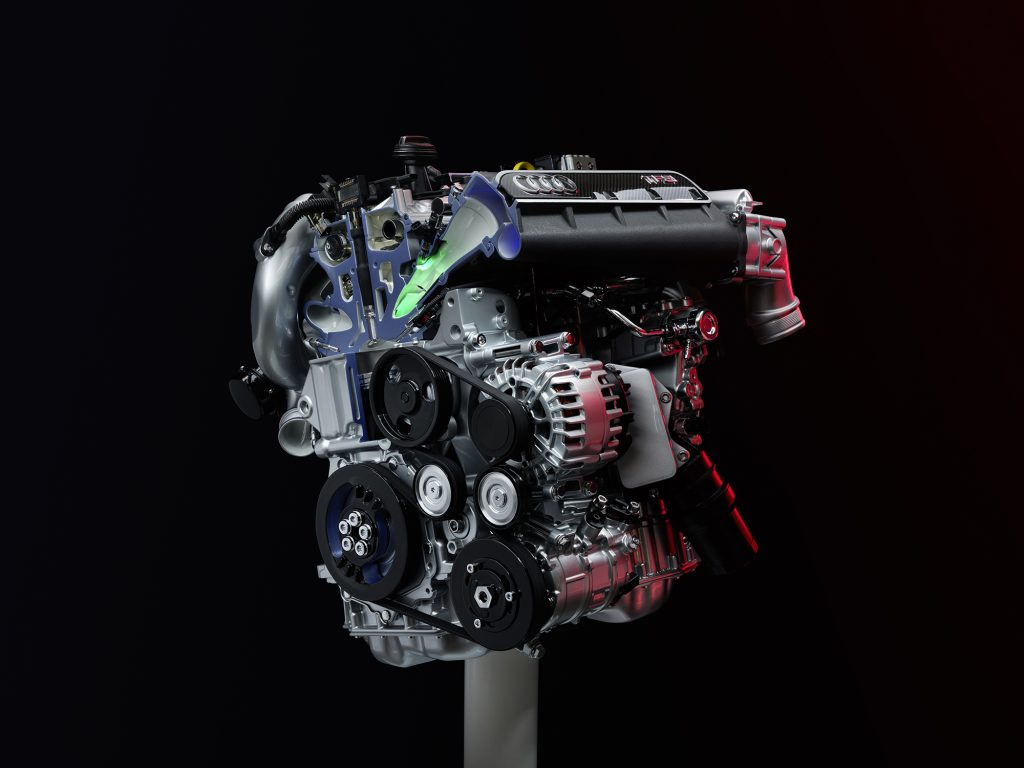
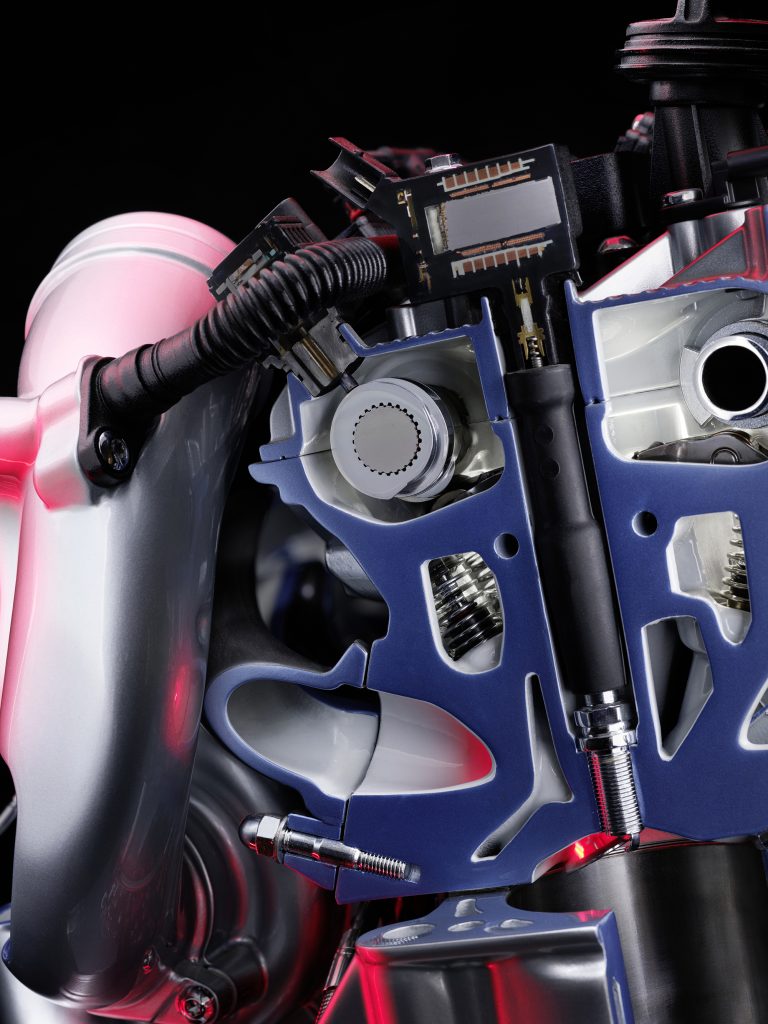
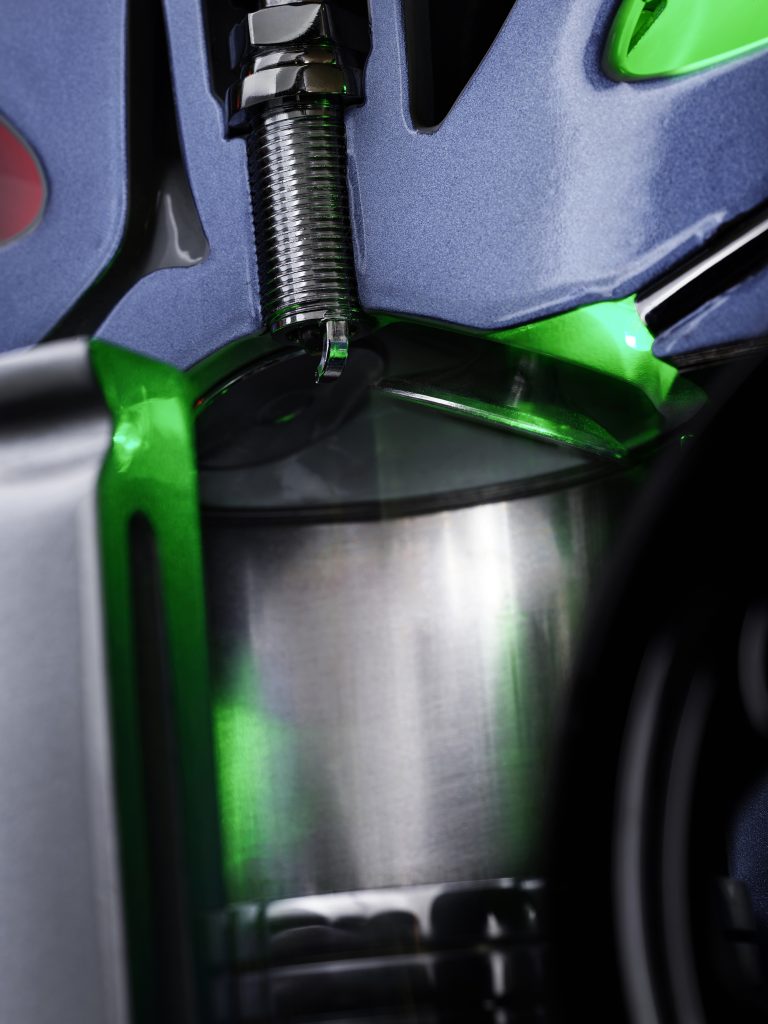
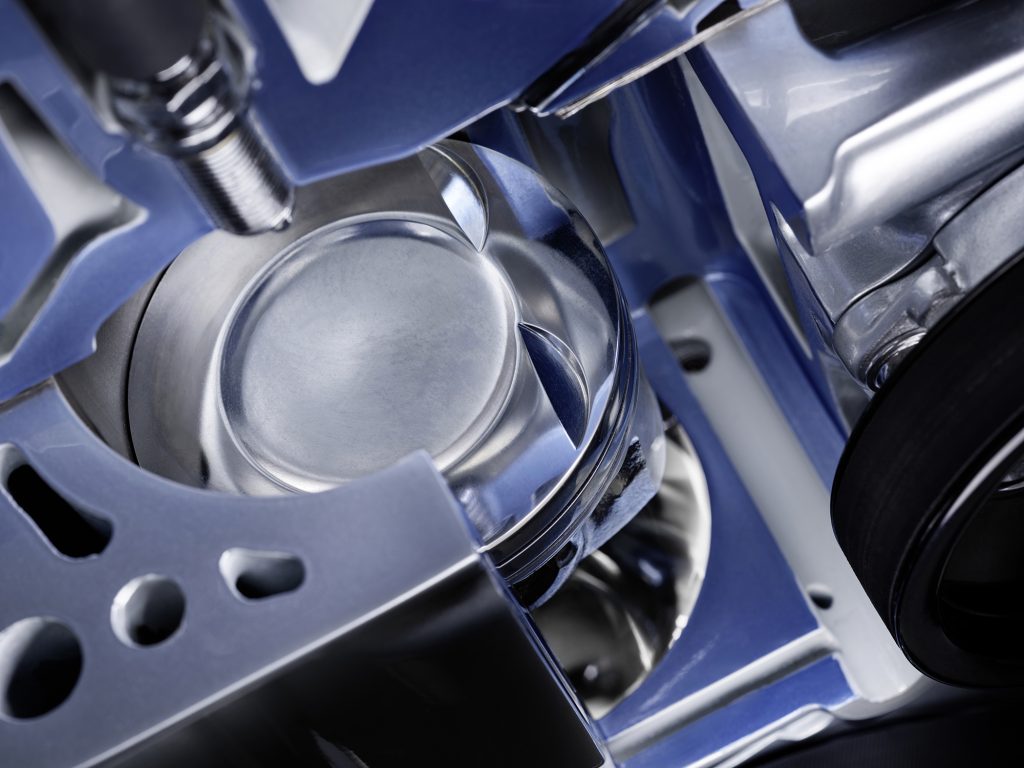
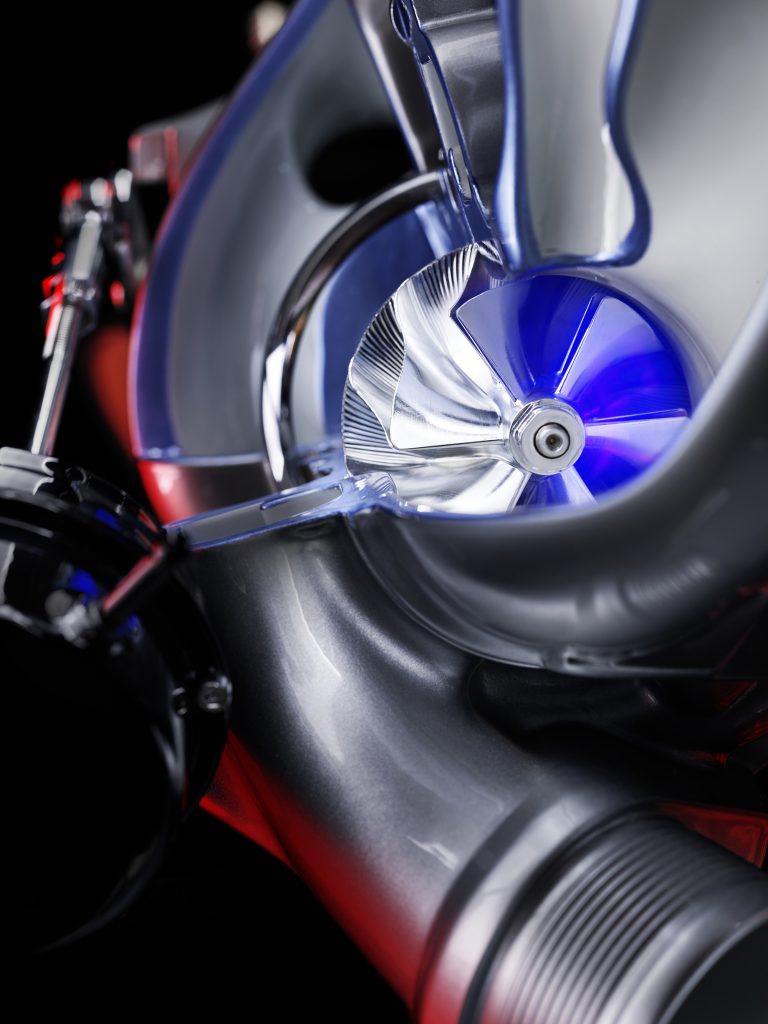
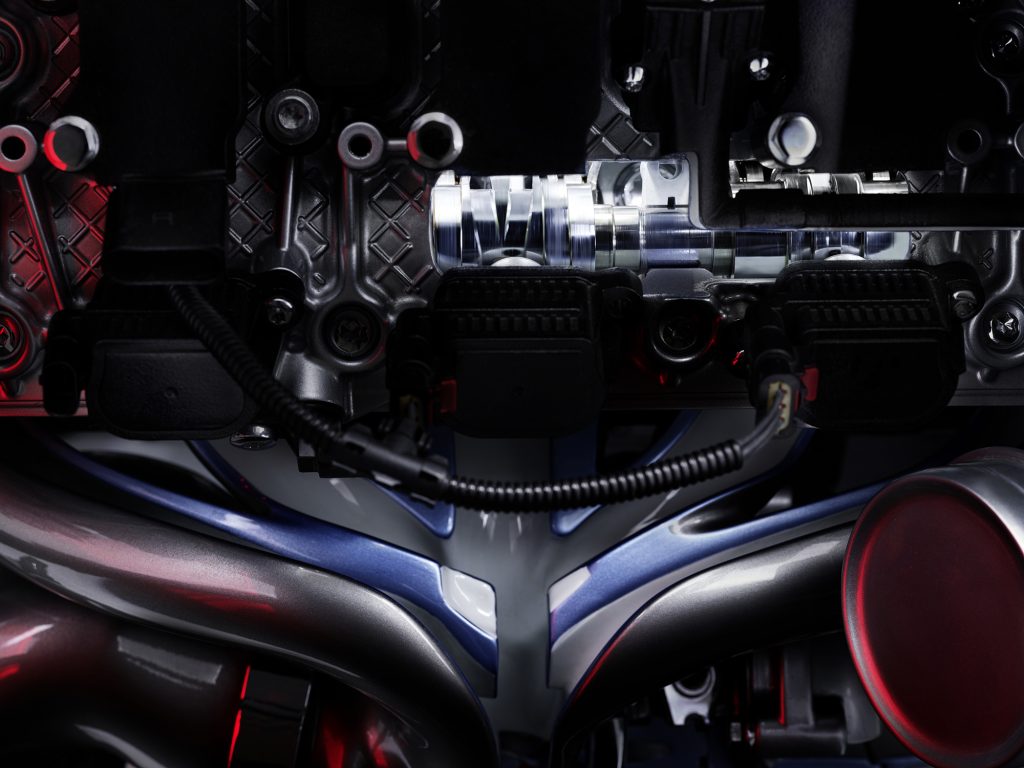
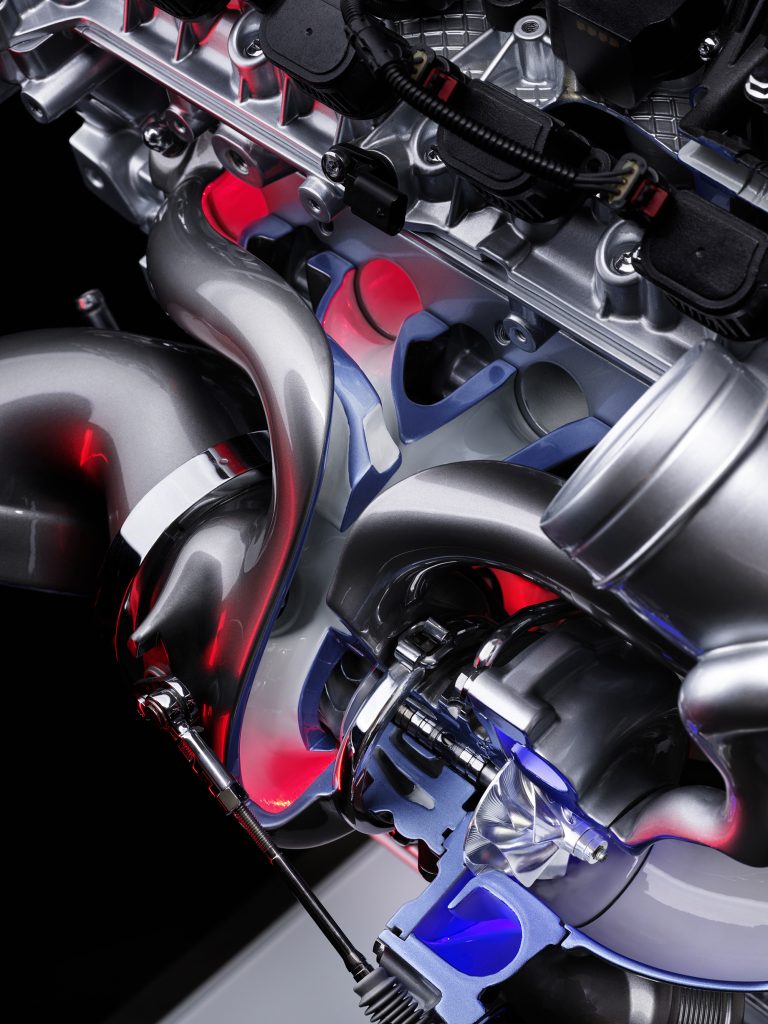
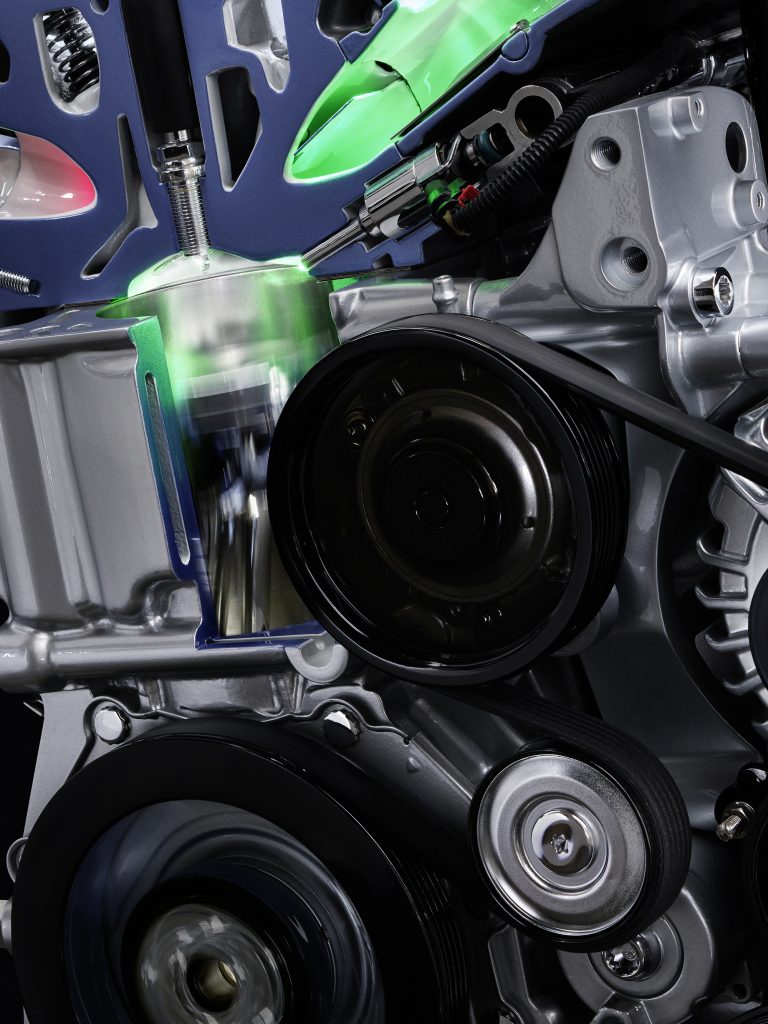
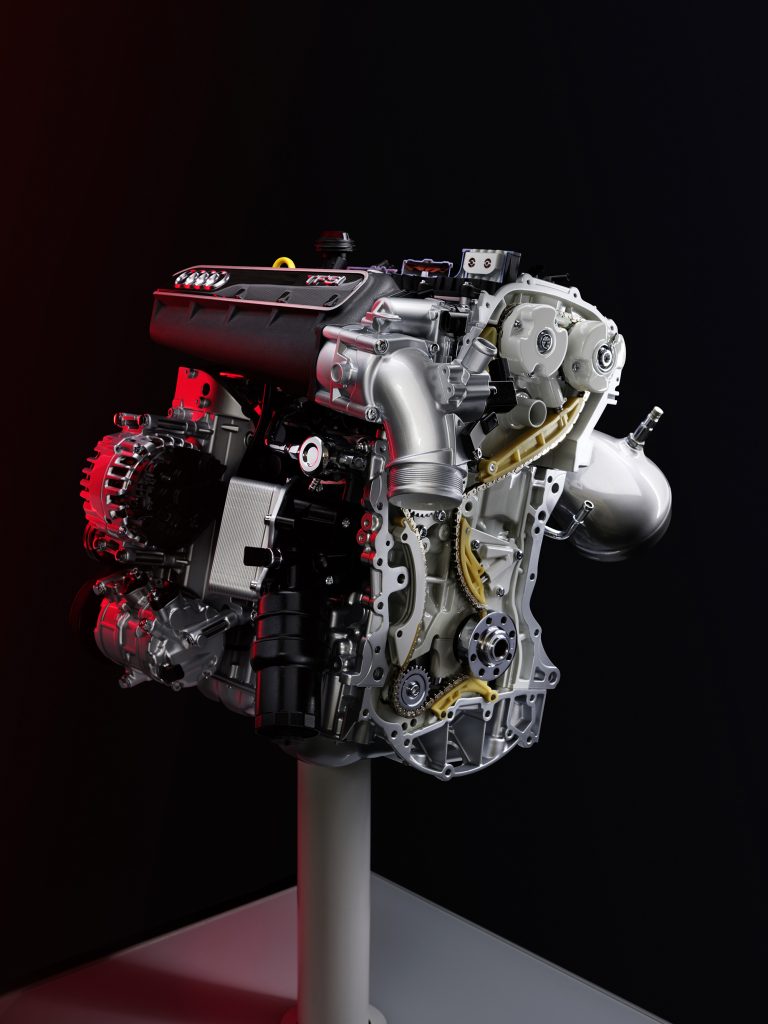
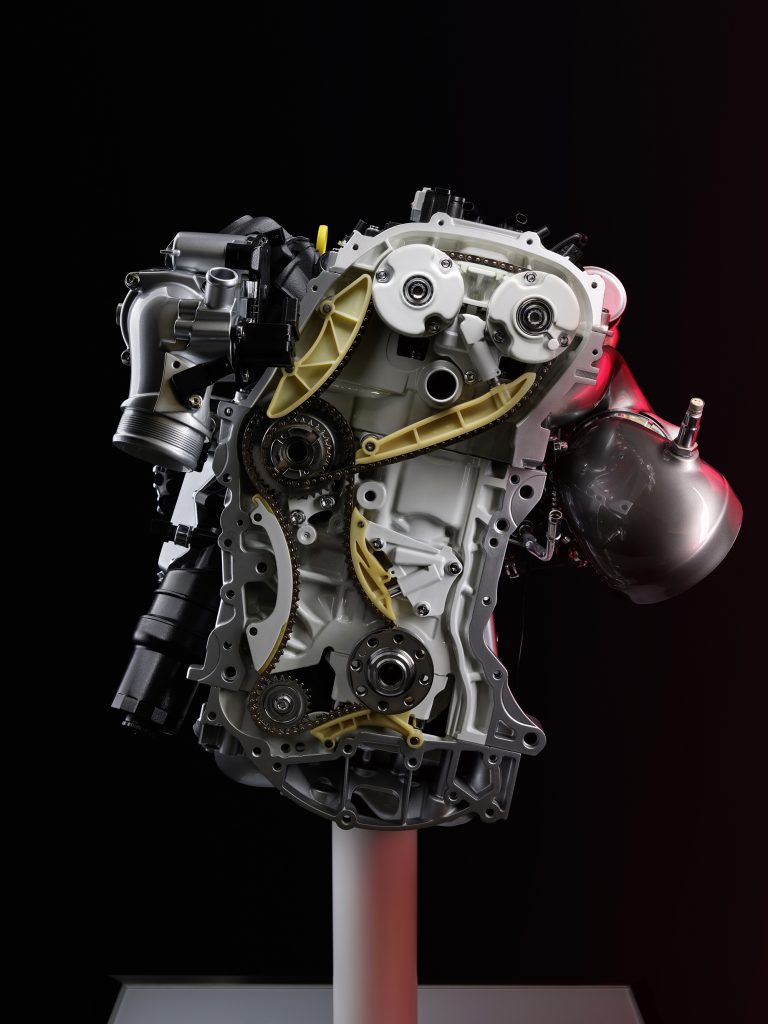
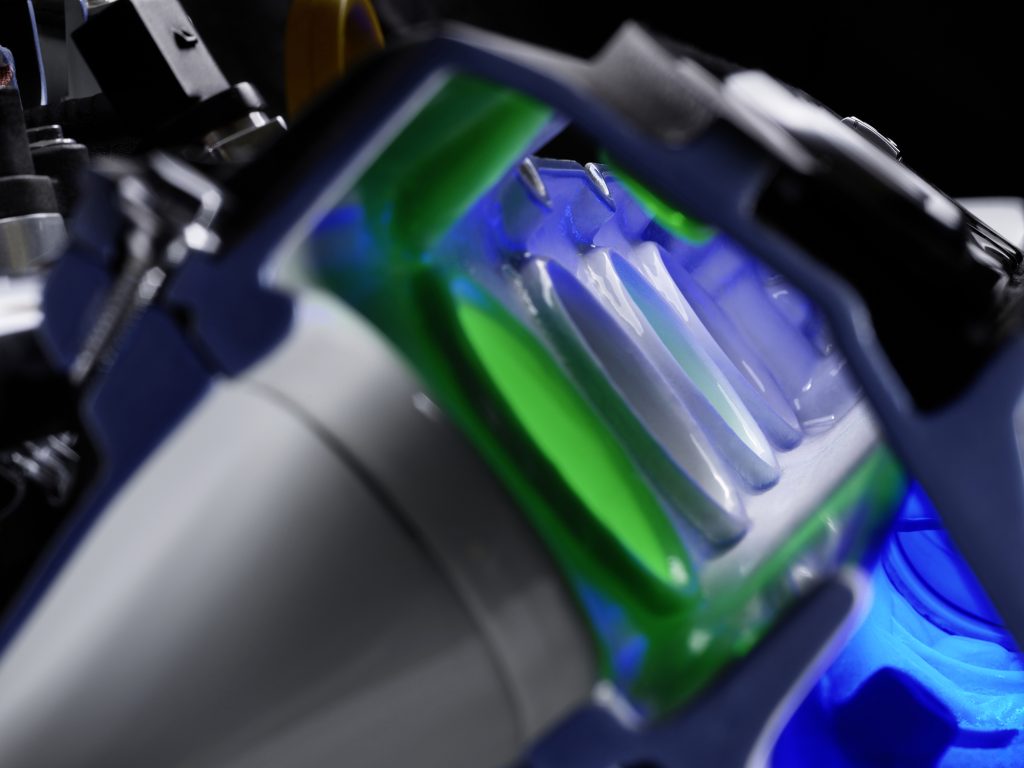
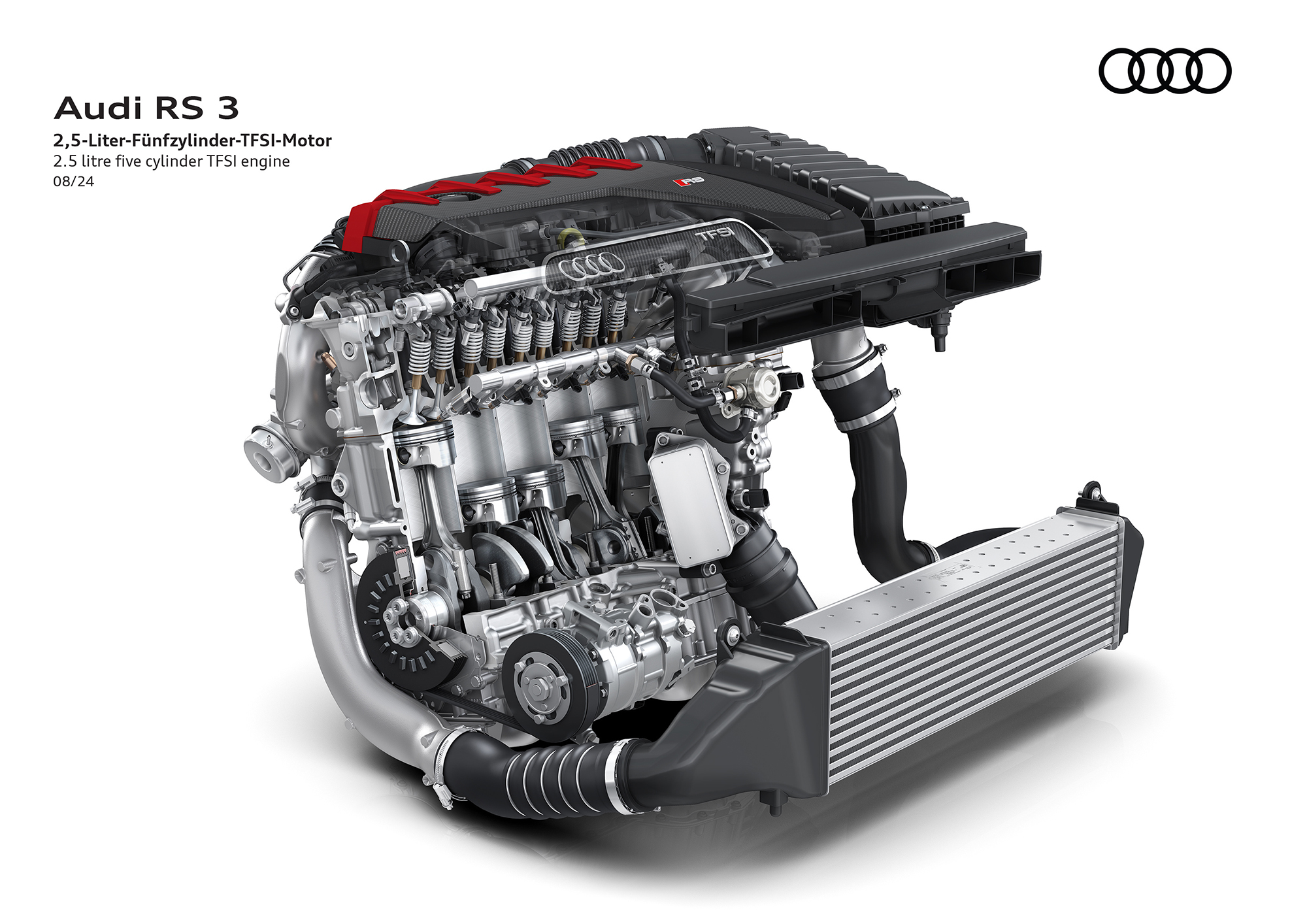
Developed for the 2016 generation of RS models, the EA855 Evo Sport engine marries old-school character to intensive lightweight engineering. An aluminium crankcase cuts mass dramatically; a hollow-bored crankshaft reduces rotational inertia; magnesium and aluminium ancillary components trim weight still further. Plasma-coated cylinder liners, optimised piston oil channels, and reduced internal friction yield smoother running, better cooling, and improved efficiency.
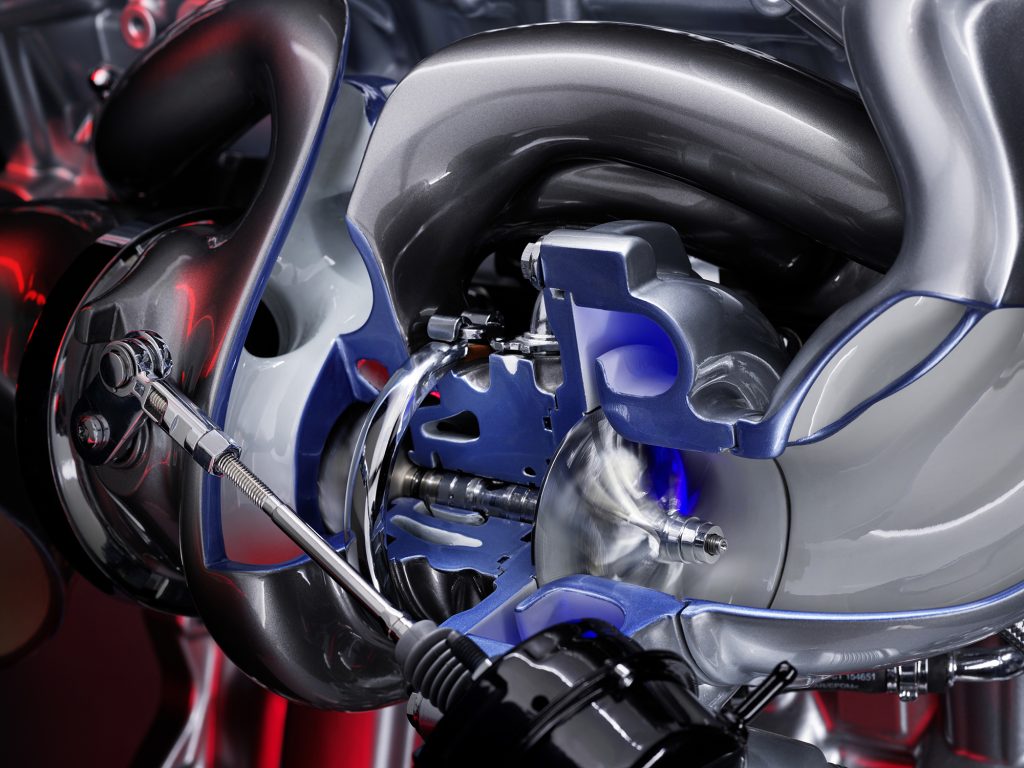
Dual injection — into both manifold and chamber — works alongside Audi valvelift to modulate exhaust valve timing and manage combustion with precision. A large turbocharger supplying 1.5 bar of relative boost helps maintain the five-cylinder’s trademark wall of mid-range torque. At around 160 kg, the entire unit is impressively compact, making it ideal for transverse installation in the RS 3.
Durability and performance validation remains old-school thorough: cold- and hot-weather testing from northern to southern Europe, high-altitude assessments, and thousands of kilometres on the Nürburgring Nordschleife ensure the engine performs consistently under every condition.
BUILT BY HAND
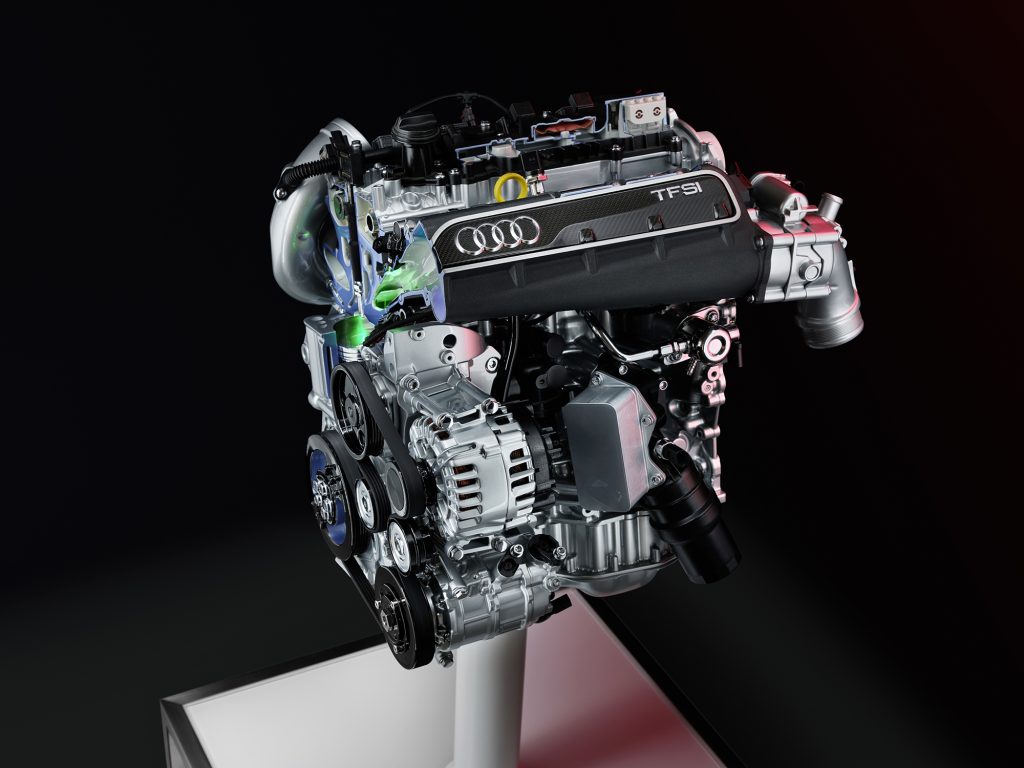
Perhaps the greatest testament to the five-cylinder’s importance is how it is built. At Audi’s Győr facility in Hungary, the 2.5 TFSI is assembled by hand in the Bock hall — a specialised 1,000-square-meter area where no robots are used. Highly trained technicians complete 21 meticulous assembly stations, constructing the engine from its aluminium crankcase upward.
Craftsmanship defines the process: embossed serial numbers, hand-oiled bearing shells, torque-checked crankshaft rotation, magnesium upper oil pans, precisely affixed timing chains, and the pairing of intake manifold and large turbocharger that give the engine its breathing. Before leaving Győr, every unit undergoes cold and hot testing to validate all mechanical and electronic systems. Only then is it sent to Ingolstadt, where it meets the RS 3 on the assembly line — the moment Audi calls its “marriage.”
LEGACY CONTINUES
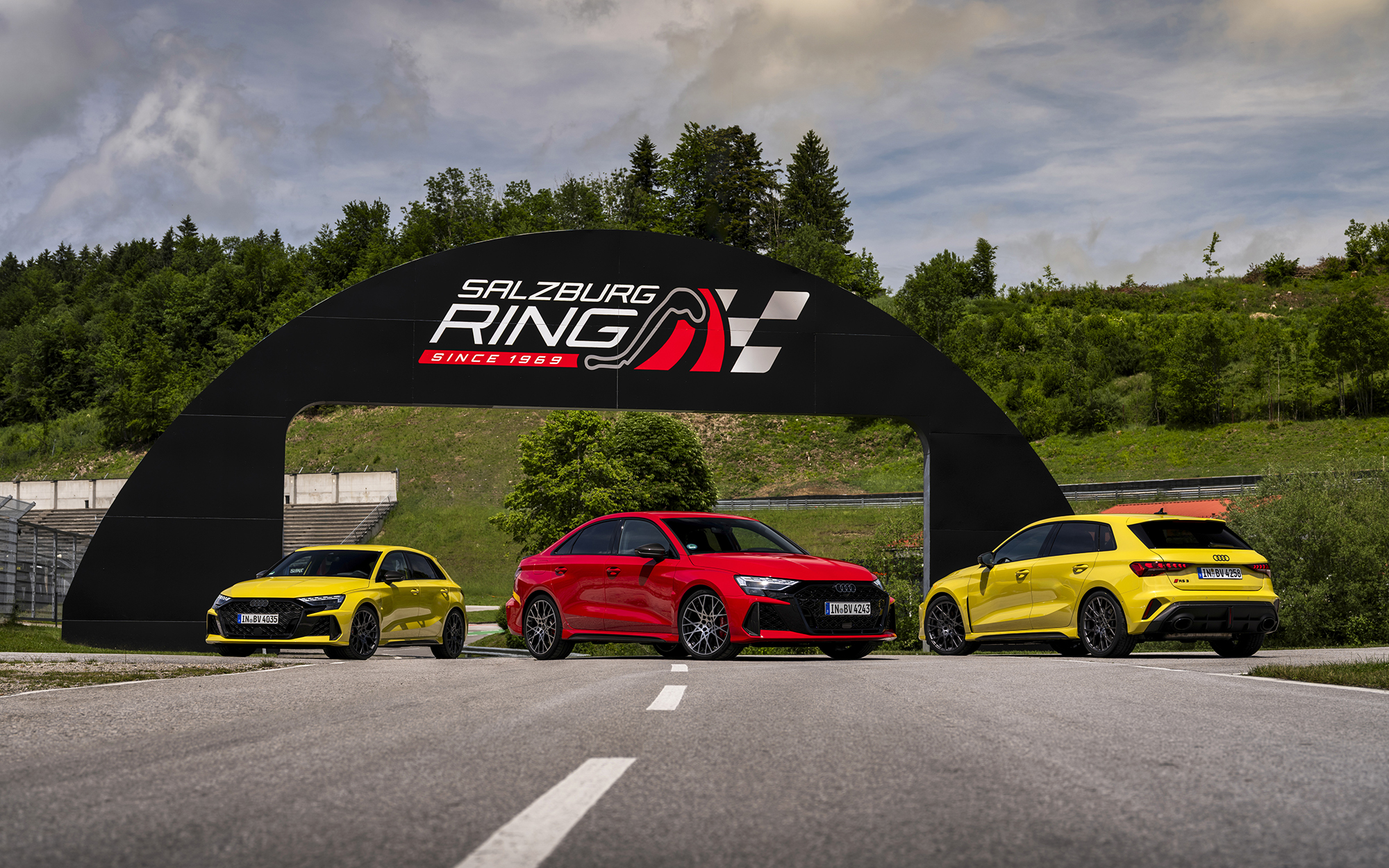
Fifty years on, the five-cylinder remains one of Audi’s greatest engineering signatures — perhaps its most memorable one. From rally stages to hill climbs, touring car circuits to the modern RS cars, it has shaped how generations of aficionados understand “Vorsprung durch Technik.” As the brand moves deeper into electrification and performance evolves beyond combustion alone, the five-cylinder stands as both history and heart.
In 2026, Audi will celebrate its anniversary. How they plan to do so has not yet been divulged, but paying this tribute gives hope that the 5-cylinder has more of a future than has been rumored because it is a reminder of how a single unconventional idea — five cylinders instead of four or six — became one of the most defining engines in automotive history, and in doing so it has become the heartbeat of the Audi brand.
PHOTO GALLERY
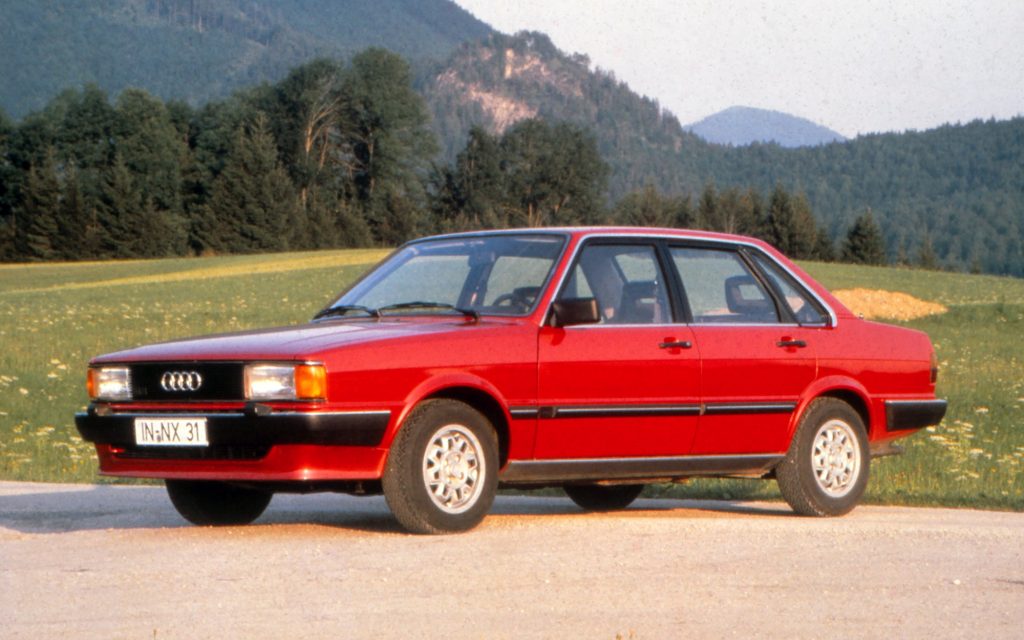
In April 1978, the five-cylinder carbureted version with an output of 85 kW (115 hp) replaces the basic twoliter four-cylinder version in the Audi 100 (C2). The new 1.9-liter unit produces maximum power at 5,400 revs and delivers 154 newton meters (113.58 lb-ft) of torque to the crankshaft at 3,700 rpm. The engine is used in the Audi 100 5 (C2), the Audi 80 CD (B2), the Audi Coupé GT 5S (B2) and in the Audi 100 (C3).
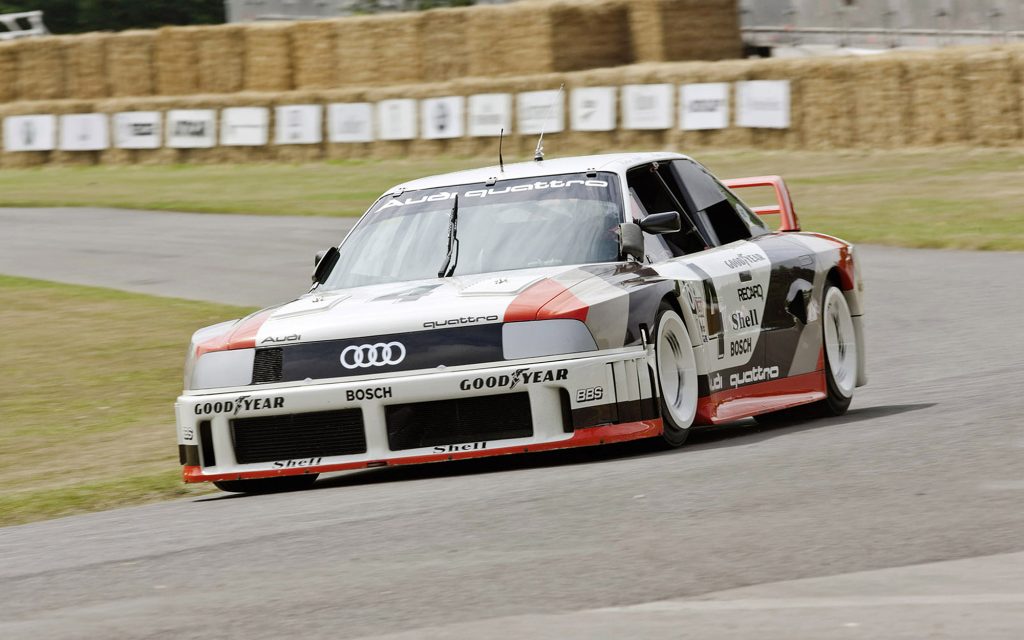
At the 1989 IMSA GTO in the USA, the Audi 90 quattro competes in its races with the most powerful fivecylinder works engine. The turbocharged aluminum engine is a 2.2-liter high-performance unit specially designed for racing. It develops 530 kW (720 hp) at 7,500 revolutions per minute and delivers 720 newton meters (531.04 lb-ft) of torque at 6,000 rpm. Overall, the Audi 90 quattro IMSA GTO wins seven races in the American touring car series in the 1989 season.
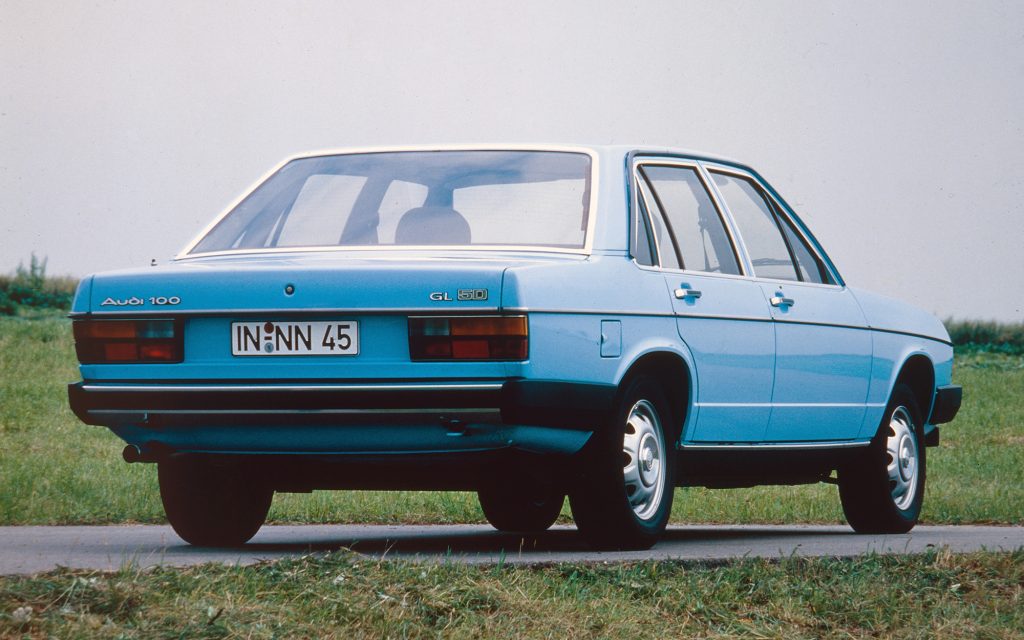
In 1978, Audi presents its first diesel model for the Audi 100 (C2). The five-cylinder naturally aspirated engine with a displacement of two liters develops 51 kW (70 hp) and 123 newton meters (90.72 lb-ft) of torque. It also powers the next-generation C3, propelling both the sedans and the Avant versions. From 1984, there is a turbocharged engine with an output of 64 kW (87 hp) and 172 newton meters (126.86 lb-ft) of torque.
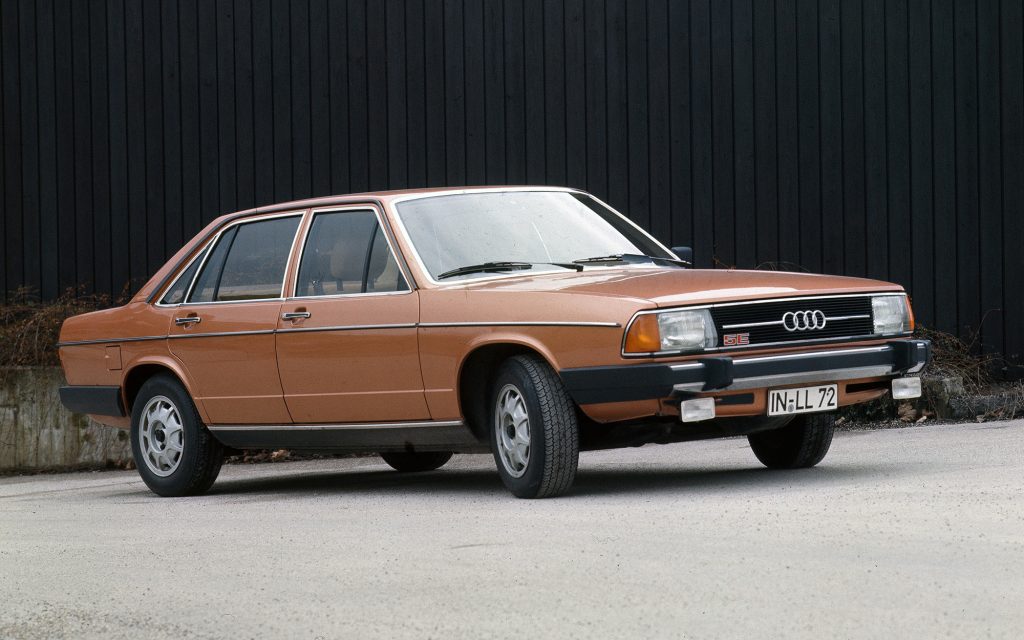
In August 1976, Audi introduces the second-generation Audi 100 (C2) in Luxembourg. For the first time, power is provided by a five-cylinder gasoline engine in a model from the brand with the four rings. The fuel-injected engine with a displacement of 2,144 cc develops 110 kW (136 hp) at 5,700 revolutions per minute. The maximum torque of 185 newton meters (136.45 lb-ft) is available at 4,200 rpm. The market launch of the Audi 100 (C2) follows in March 1977. From September 1979, the five-cylinder engine is also available in the Audi 200; from August 1982, it is fitted in the successor to the C2, the Audi 100 C3.
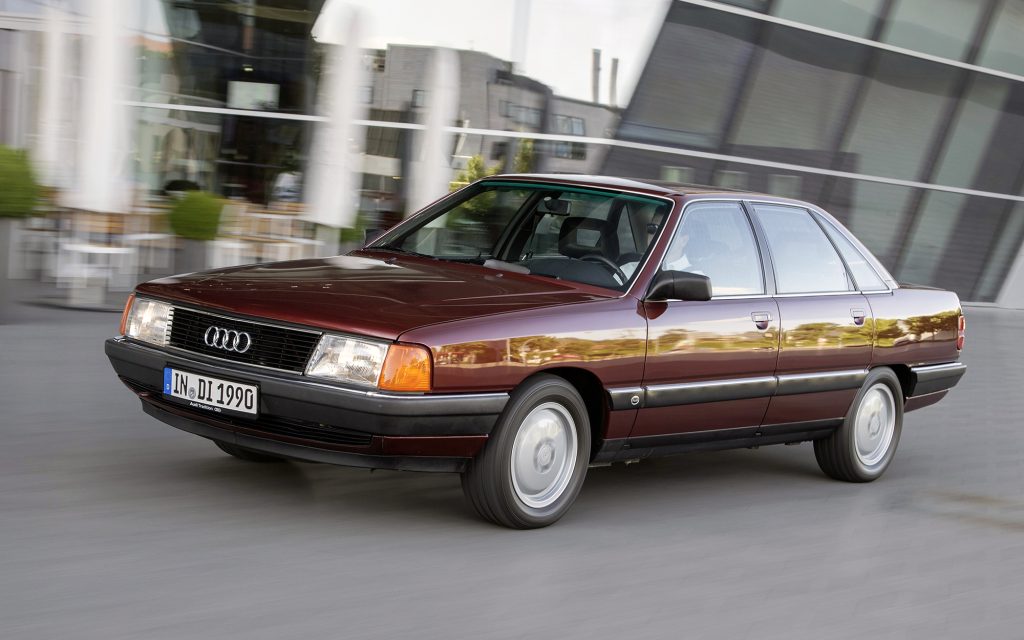
Audi presents another milestone in the automotive history in 1989 at the International Motor Show in Frankfurt am Main: the Audi 100 TDI. The first fivecylinder turbocharged diesel with direct injection for a production car produces 88 kW (120 hp) from a displacement of 2.5 liters and delivers 265 newton meters (195.45 lb-ft) of torque to the crankshaft. It is used in the C3 and in the C4 – from 1994 with an output of 103 kW (140 hp) and 290 newton meters (213.89 lb-ft) of torque.
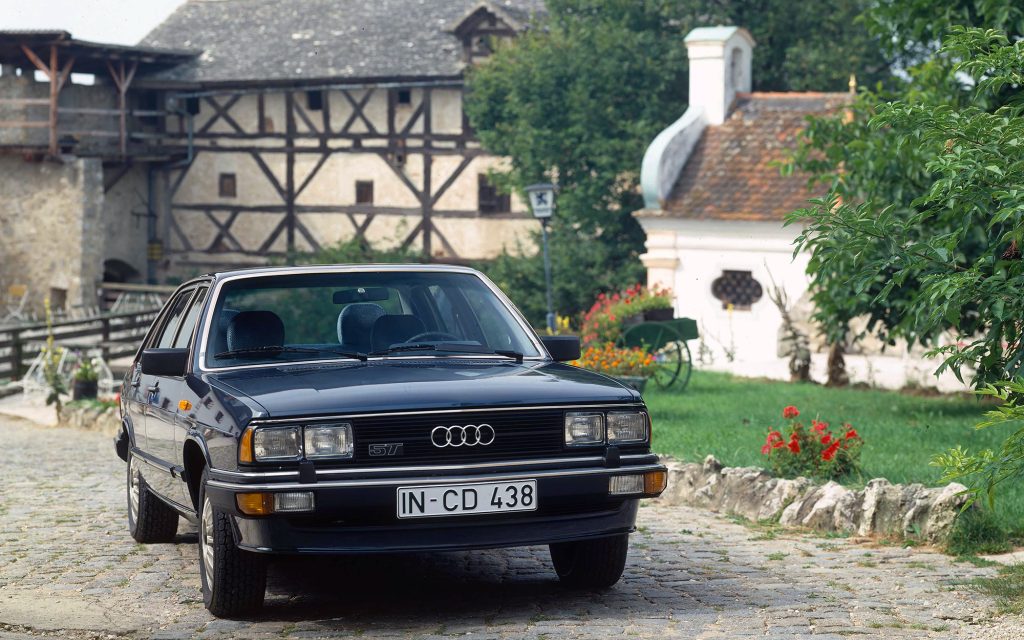
In 1980, the Audi 200 5T (C2) comes on to the market, which is powered by the first turbocharged gasoline engine from the brand with the four rings. From a displacement of 2,144 cc, the five-cylinder unit produces 125 kW (170 hp) at 5,300 revolutions per minute and 265 newton meters (195.45 lb-ft) of torque at 3,300 rpm. The Audi 200 5T (C2) is the first Audi in the luxury class and features the lavish equipment of the Audi 100 CD as standard.
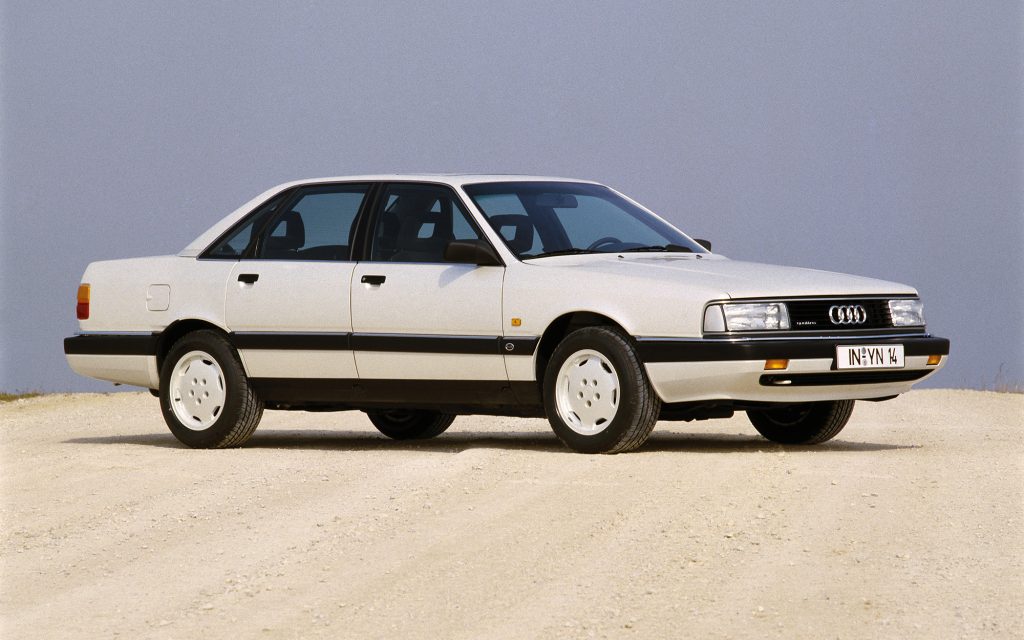
With two catalytic converters, four-valve technology, a closed tank venting system and a diagnostic system, this powerplant offers a very high standard of emissions control and technology. It is first available in the Audi 200 quattro 20V (C3), then in the Audi quattro 20V (B2) a year later and in the Audi S2 Coupe (B3) in 1990. The five-cylinder turbocharged engine has a displacement of 2,226 cc and delivers 162 kW (220 hp) at 5,700 revolutions per minute and 309 newton meters (227.91 lb-ft) of torque at 1,950 rpm.
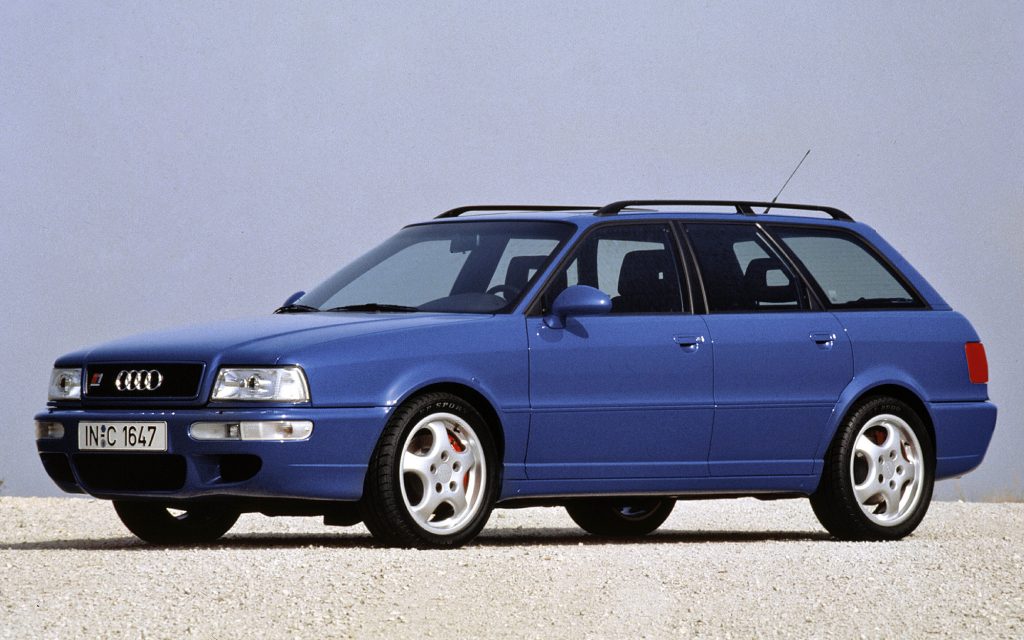
In 1994, the most powerful five-cylinder production engine built by Audi to date goes into action in the Audi Avant RS 2 (B4). With turbocharging, fuel injection and standard-fit emissions control, it produces 232 kW (315 hp) at 6,500 revolutions per minute from a displacement of 2,226 cc and delivers 410 newton meters (302.40 lb-ft) of torque at 3,000 rpm.
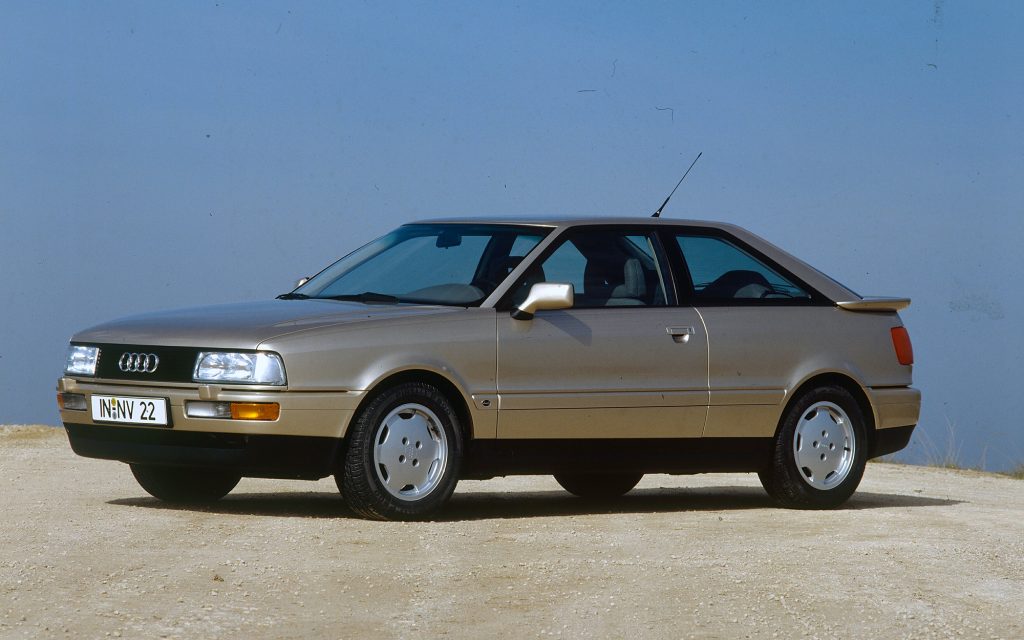
In 1984, a completely new development appears. Audi is the first manufacturer to optimize the five-cylinder engine with a fully electronic map-controlled ignition system and a catalytic converter as standard. From 2,309 cc, it produces 100 kW (136 hp) at 5,600 rpm and 188 newton meters (138.66 lb-ft) of torque at 3,500 revolutions per minute. The most widely used five-cylinder engine from Audi is found in the Audi 100 2.3E (C3), the Audi Coupe 2.3E (B3) and in the Audi 90 2.3 E (B3). From 1990, it also powers the Audi 100 2.3E (C4) and a year later the Audi 80 2.3E (B4) and the Audi Cabriolet 2.3E. Here, it delivers 98 kW (133 hp) at 5,600 revolutions per minute and 186 newton meters (137.19 lb-ft) at 4,000 rpm.
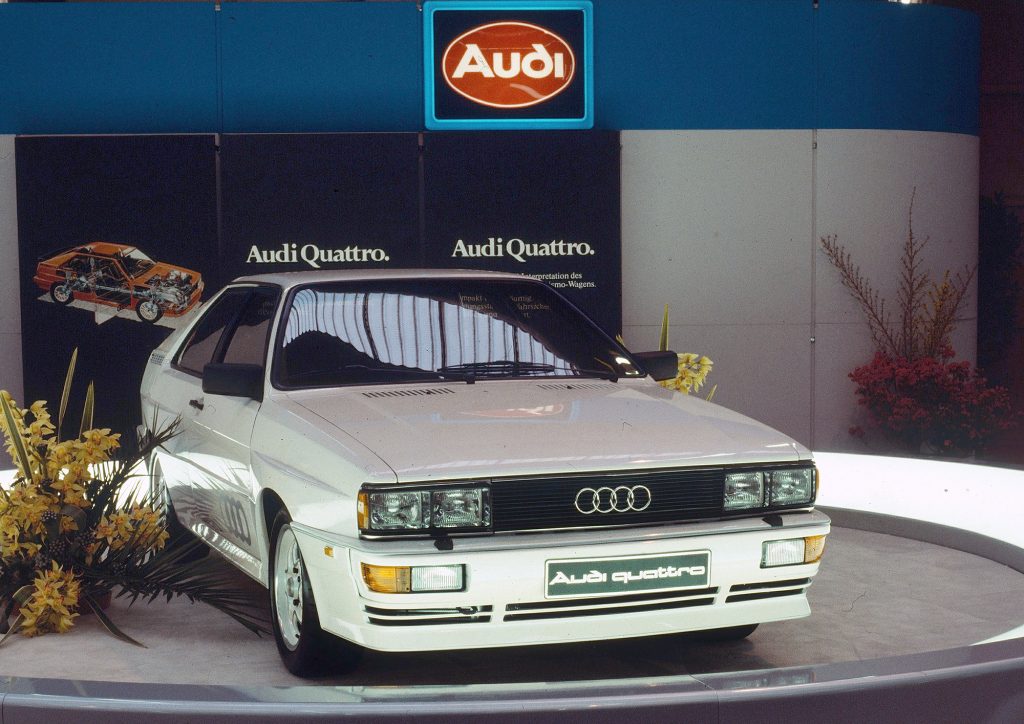
In 1980 at the Geneva Motor Show, Audi unveils the Audi quattro (B2), known as the “Ur-quattro” from the mid-1990s. It uses the powerplant from the Audi 200 5T (C2), but features an intercooler. As a result, the turbocharged engine achieves a higher output of 147 kW (200 hp) at 5,500 revolutions per minute and 285 newton meters (210.21 lb-ft) of torque at 3,500 rpm. The body of the Audi quattro is based on the Audi Coupe (B2), which in turn is based on the Audi 80. Flared fenders, bulkier bumpers and sills as well as a larger rear spoiler distinguish the Audi quattro from the Coupe.
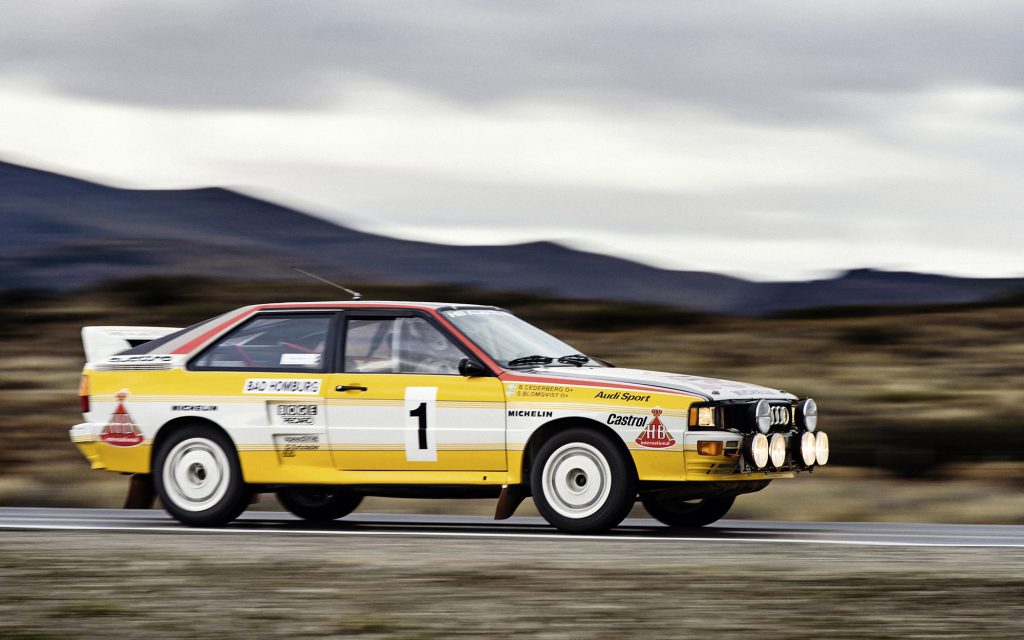
In the 1983 Corsica Rally, Audi competes for the first time with the Audi quattro A2, Group B. Its 2.1-liter turbocharged five-cylinder inline engine produces 265 kW (360 hp) at 6,500 revolutions per minute and delivers 450 newton meters (331.90 lb-ft) of torque at 4,000 rpm. At the end of the season, the Finn Hannu Mikkola wins the drivers’ title in this car. One year later, the Swede Stig Blomqvist replicates this success: he becomes world rally champion, while Audi wins the manufacturers’ world rally championship for the second time after 1982.
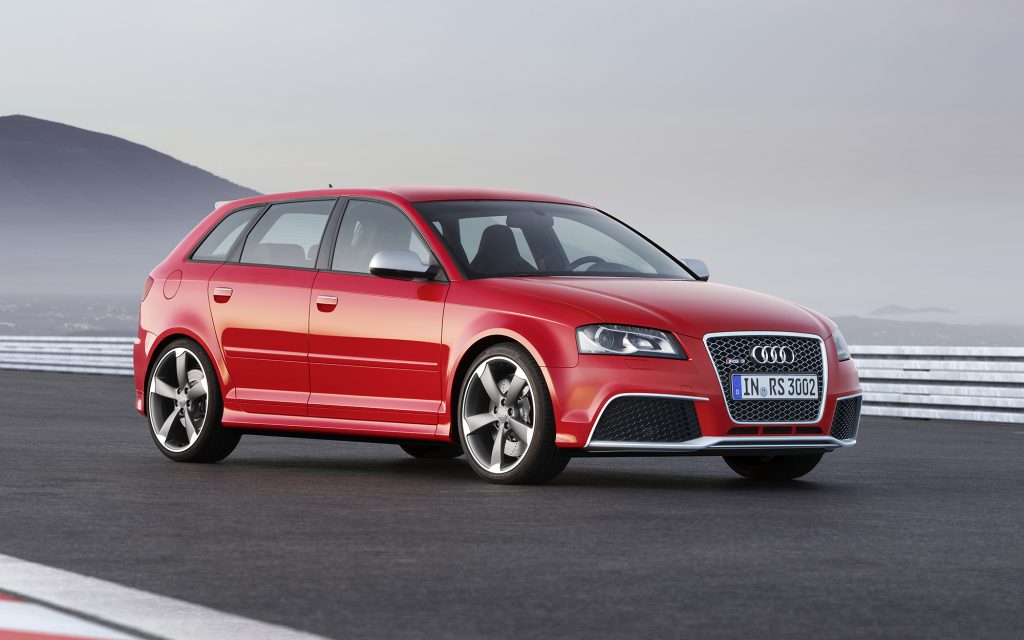
30 years after the first five-cylinder turbocharged gasoline engine was presented, Audi once again introduces a model with a five-cylinder gasoline engine and turbocharger at the Geneva Motor Show: the TT RS. The powerplant delivers 250 kW (340 hp) at 6,500 revolutions per minute from 2,480 cc and 450 newton meters (331.90 lb-ft) at 5,300 rpm. From 2011, this engine is also used in the RS 3 Sportback and from 2014 in the updated RS Q3. In the 2012 TT RS plus, the engine produces 265 kW (360 hp) at 6,700 revolutions per minute and develops 465 newton meters (342.97 lb-ft) of torque at 5,400 rpm.
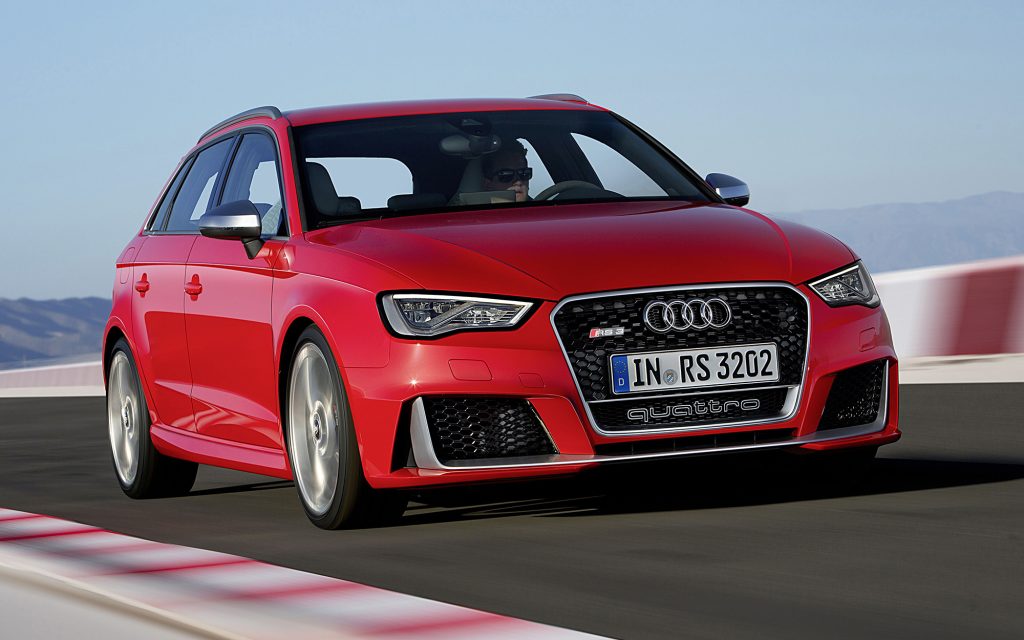
In the summer of 2015, the second-generation RS 3 Sportback* appears – the most powerful car in the premium compact segment with an output of 270 kW (367 hp). The combination of turbocharging and direct injection permits a high compression ratio of 10:1 and correspondingly good efficiency. The five-cylinder inline engine delivers a maximum of 465 newton meters (342.97 lb-ft) to the crankshaft. This torque is available from as low as 1,625 revolutions per minute and remains constant up to 5,550 rpm. Since spring 2016, Audi has been using the optimized version of the powerplant in the Audi RS Q3 performance* too.
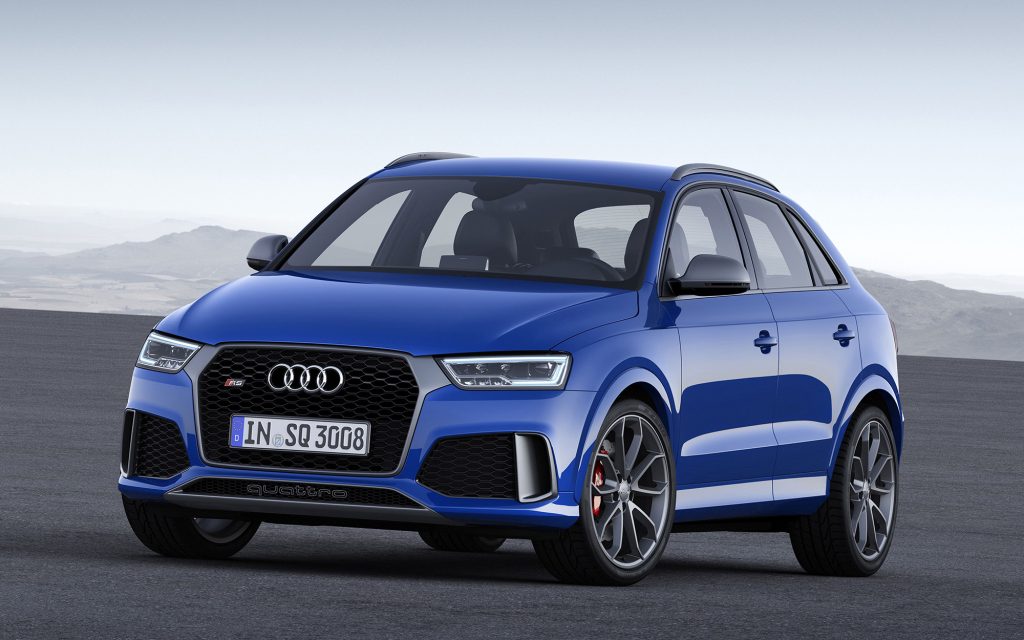
In the summer of 2015, the second-generation RS 3 Sportback* appears – the most powerful car in the premium compact segment with an output of 270 kW (367 hp). The combination of turbocharging and direct injection permits a high compression ratio of 10:1 and correspondingly good efficiency. The five-cylinder inline engine delivers a maximum of 465 newton meters (342.97 lb-ft) to the crankshaft. This torque is available from as low as 1,625 revolutions per minute and remains constant up to 5,550 rpm. Since spring 2016, Audi has been using the optimized version of the powerplant in the Audi RS Q3 performance* too.
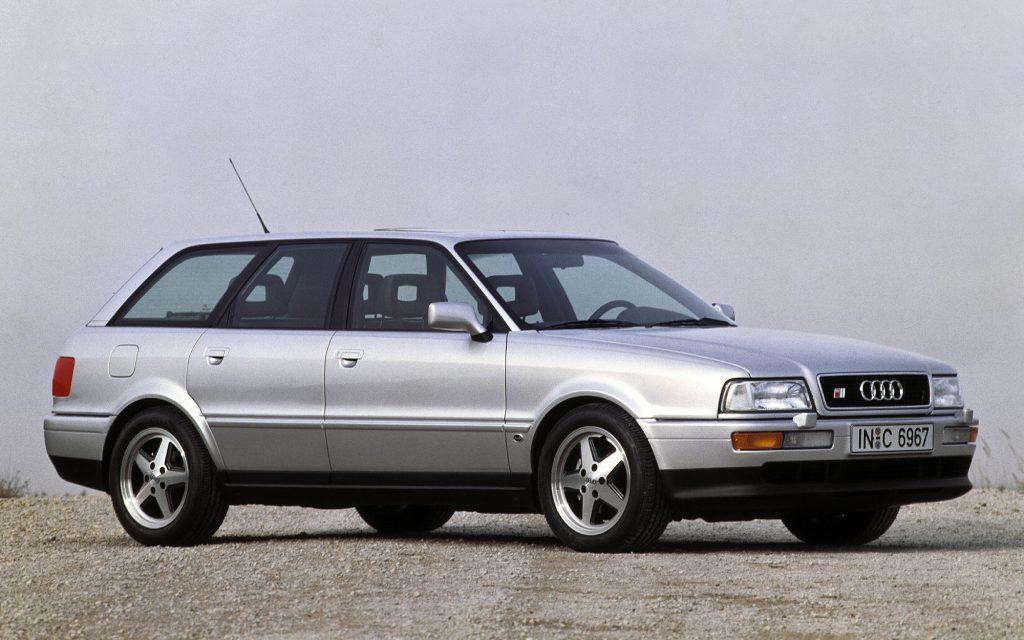
In the 1991 Audi S4, the Sport version of the Audi 100 (C4), a turbocharged 2.2-liter 20-valve five-cylinder inline engine is at work. It develops 169 kW (230 hp) at 5,900 rpm. Thanks to a brief increase in boost pressure, a peak torque of 350 newton meters (258.15) is achieved at 1,950 revolutions per minute. The engine also powers the Audi S2 Avant (B4) and the Audi S2 Coupé (B3). In 1994, the Audi S4 becomes known as the Audi S6.
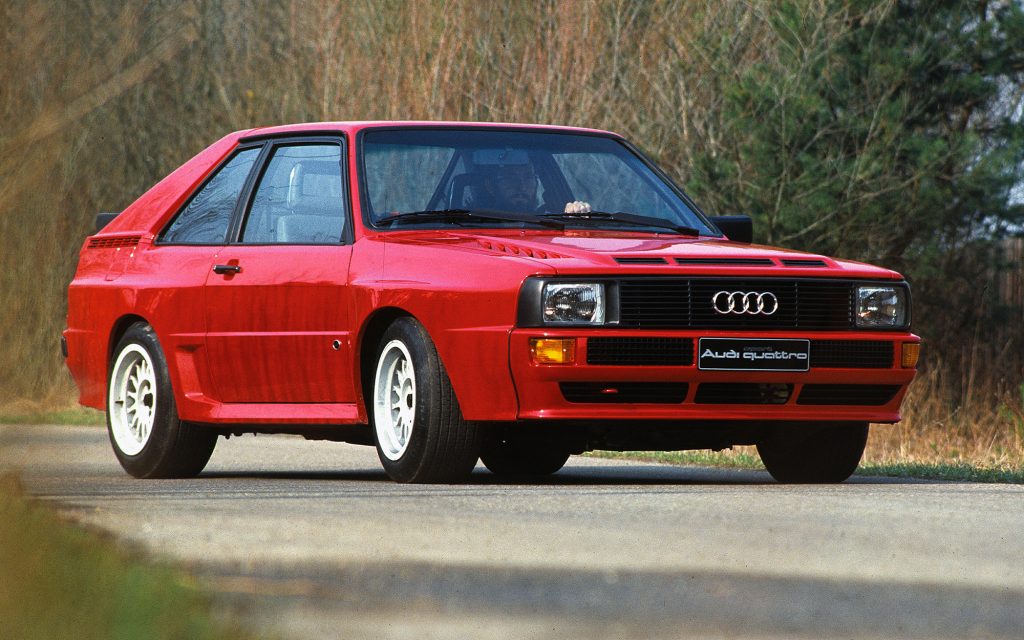
In September 1983, Audi presents the Audi Sport quattro (B2) at the International Motor Show in Frankfurt am Main. It is powered by a 2.1-liter highperformance engine with four-valve technology that produces 225 kW (306 hp) at 6,700 revolutions per minute. The maximum torque of 350 newton meters (258.15 lb-ft) is available at 3,700 rpm. Delivery commences in May 1984. The Audi Sport quattro (B2) is a special series limited to 214 vehicles, produced to meet homologation requirements for rallying. The rules stipulate that displacement must be limited to a maximum of 2,133 cc.
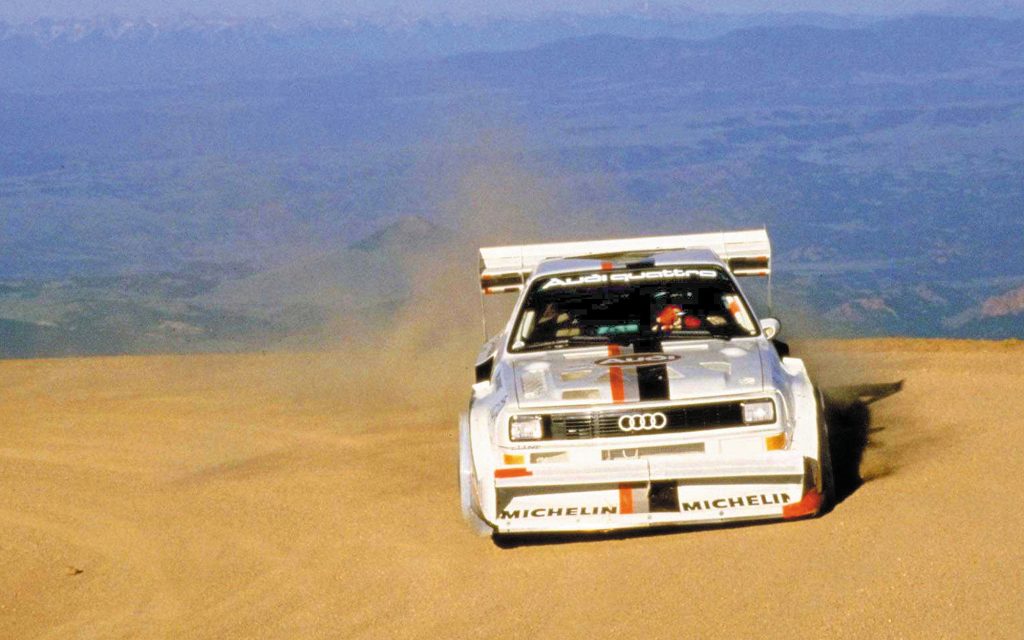
In 1987, Walter Röhrl wins the legendary Pikes Peak Hill Climb (USA) in the Audi Sport quattro S1 (E2), setting a new record. In 10 minutes and 47.85 seconds he conquers the almost 20-kilometer-long (12.43 mi) course with 156 bends and a difference in altitude of 1,439 meters (4721.13 ft). The 2.1-liter five-cylinder engine in the Audi Sport quattro S1 (E2) delivers 440 kW (598 hp) at 8,000 revolutions per minute and produces 590 newton meters (435.16 lb-ft) of torque at 5,500 rpm.
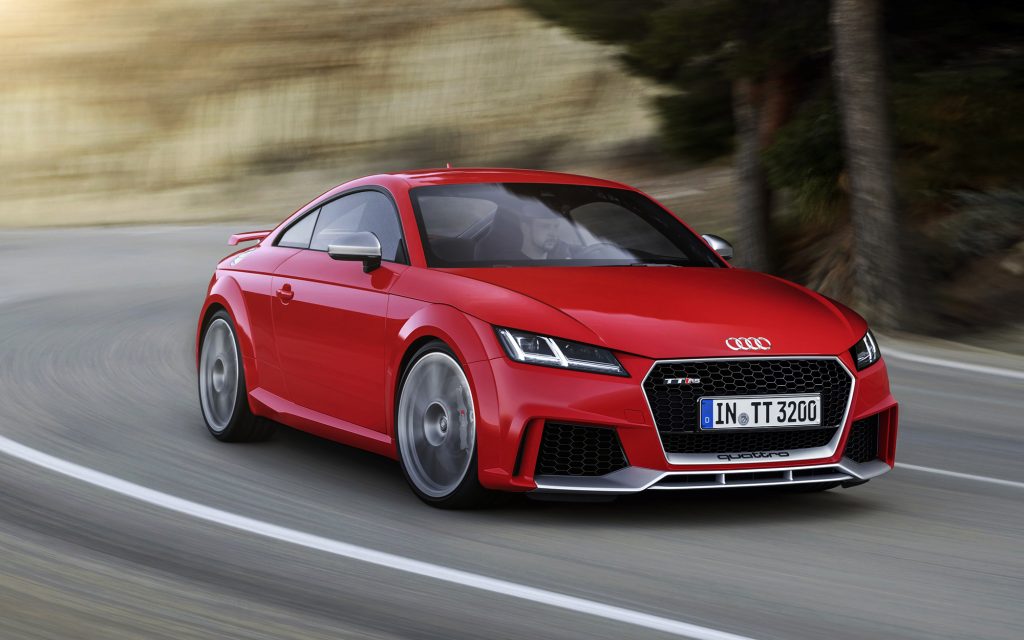
At the Beijing Motor Show in 2016, Audi presents the new TT RS Coupe* and the new TT RS Roadster*. The five-cylinder unit has been enhanced in every area – with lightweight construction measures, reduced internal friction, increased power delivery. From an unchanged displacement of 2,480 cc, the turbocharged engine gains a good 17 percent increase in performance. With an output of 294 kW (400 hp) it is more potent than ever before. The maximum torque of 480 newton meters (354.03 lb-ft) is available between 1,700 and 5,850 revolutions per minute. It ensures outstanding pulling power, which accompanies the unmistakable five-cylinder sound.
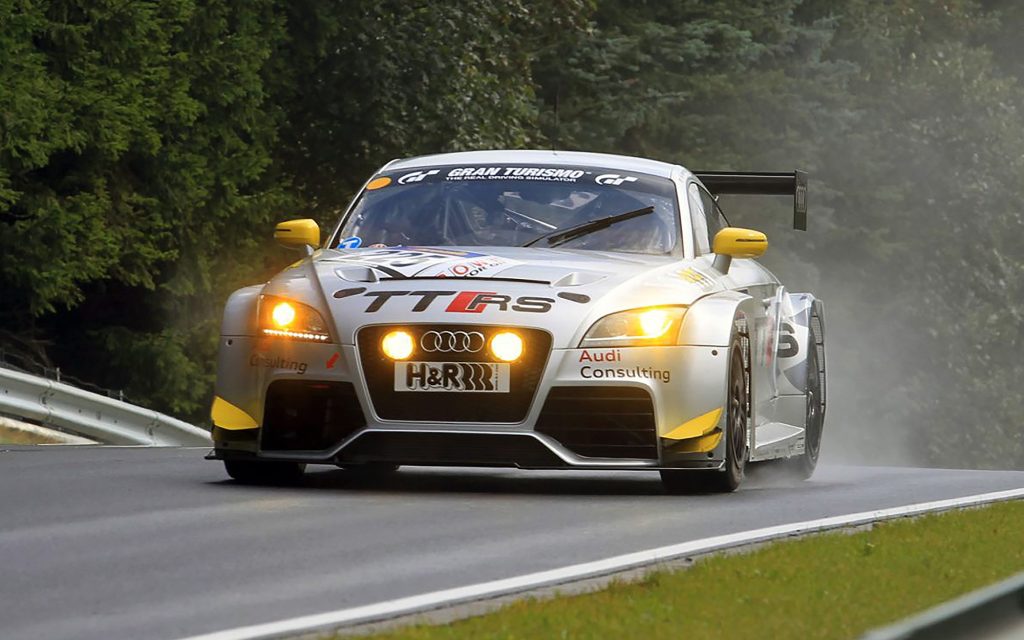
In 2010, Audi starts its motorsport activities with the TT RS. The racing car developed for endurance racing is powered by the five-cylinder engine from the production model. Following improvements to the intercooler and exhaust system, the powerplant delivers 280 kW (380 hp) at 5,800 revolutions per minute. The maximum torque of 500 newton meters (368.78 lb-ft) develops at 2,500 rpm. In the VLN Endurance Championship of 2010 and 2011, the frontwheel-drive racing car notches up several victories in the SP4T class up to 2.5 liters’ capacity. In August 2011, it clinches overall victory in the 6-hour race on the Nürburgring. Audi achieves further success with the
TT RS in the 24-hour race in the Eifel in 2011, where it takes class victory.
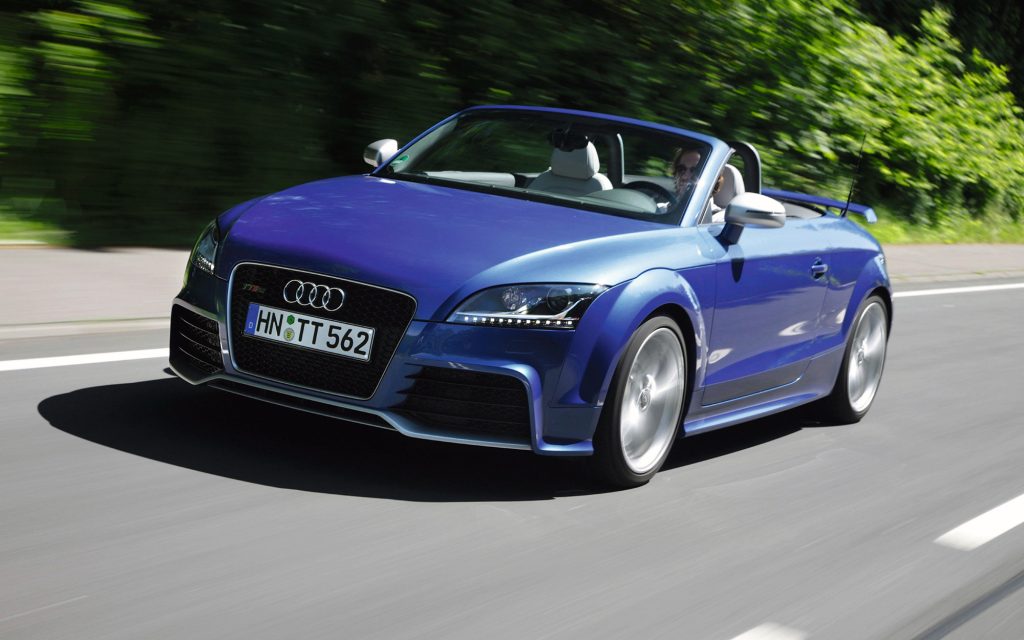
30 years after the first five-cylinder turbocharged gasoline engine was presented, Audi once again introduces a model with a five-cylinder gasoline engine and turbocharger at the Geneva Motor Show: the TT RS. The powerplant delivers 250 kW (340 hp) at 6,500 revolutions per minute from 2,480 cc and 450 newton meters (331.90 lb-ft) at 5,300 rpm. From 2011, this engine is also used in the RS 3 Sportback and from 2014 in the updated RS Q3. In the 2012 TT RS plus, the engine produces 265 kW (360 hp) at 6,700 revolutions per minute and develops 465 newton meters (342.97 lb-ft) of torque at 5,400 rpm.