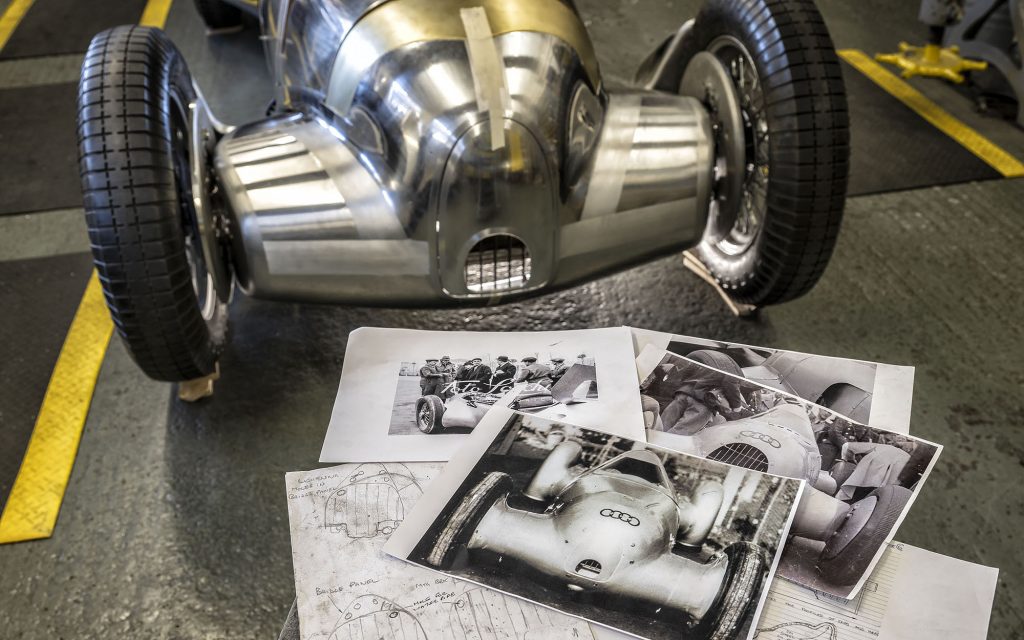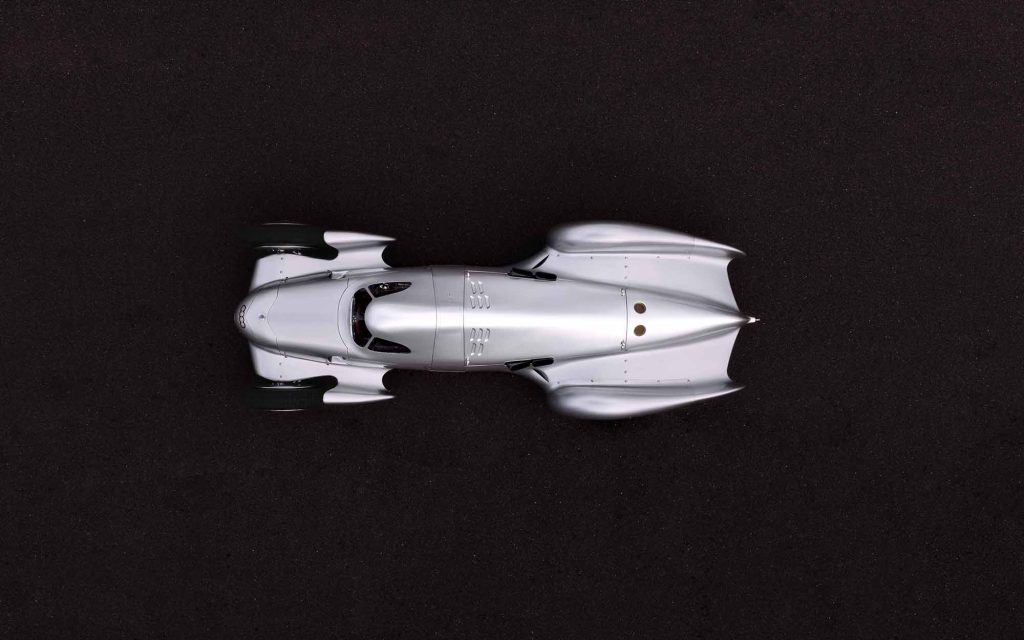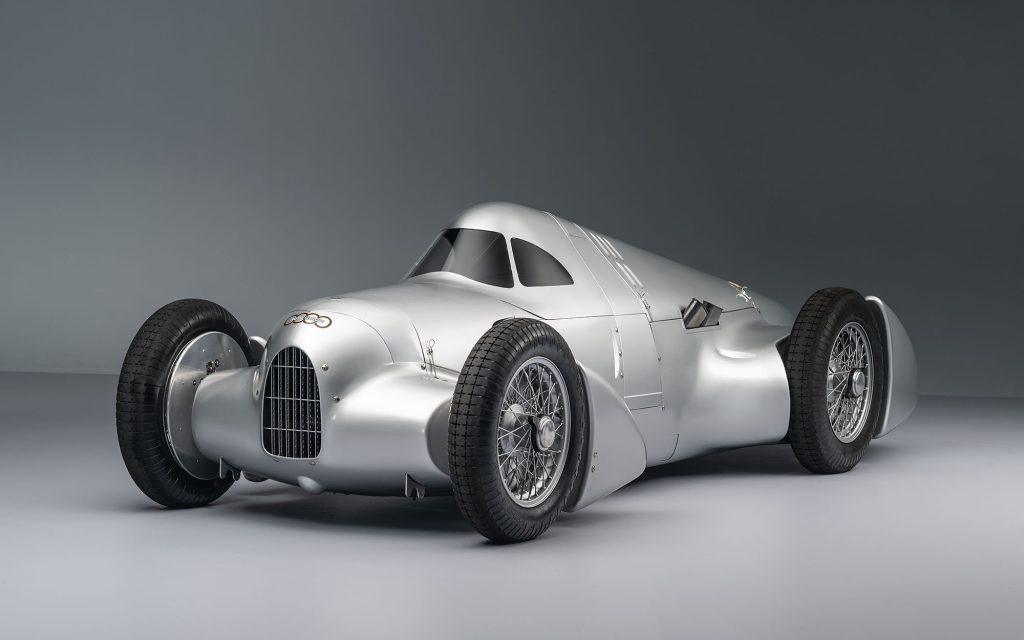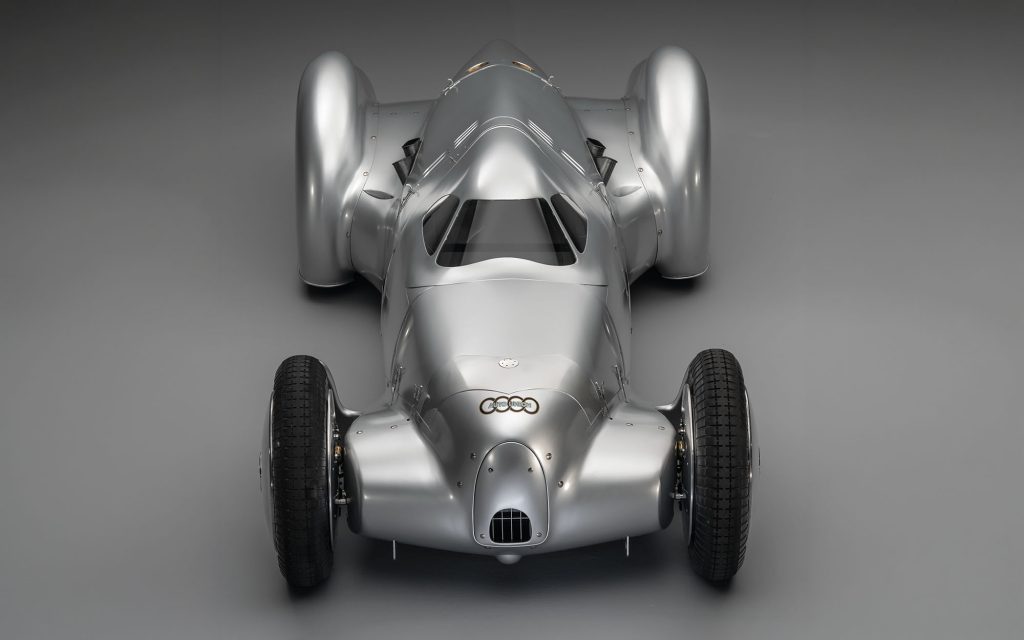

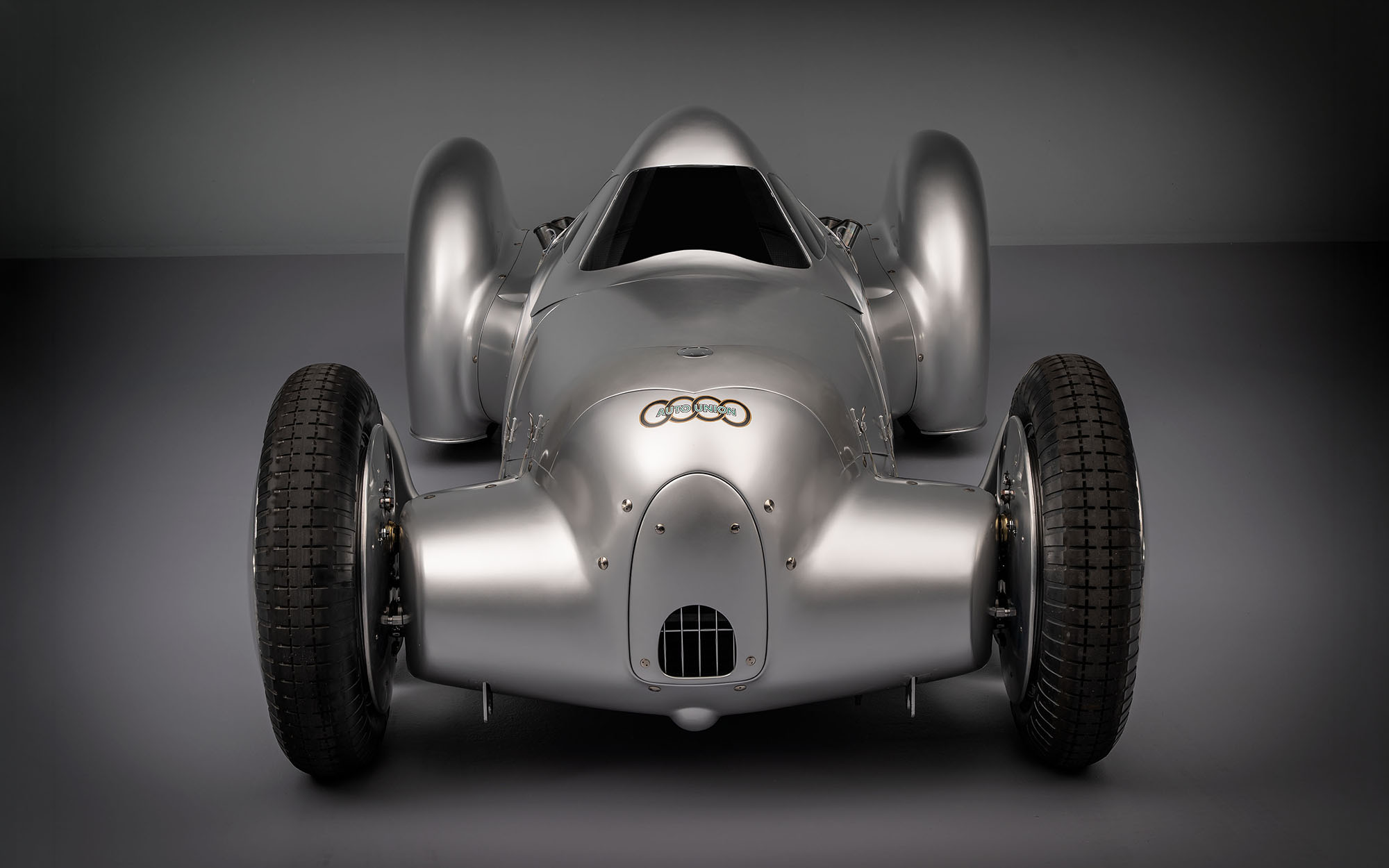

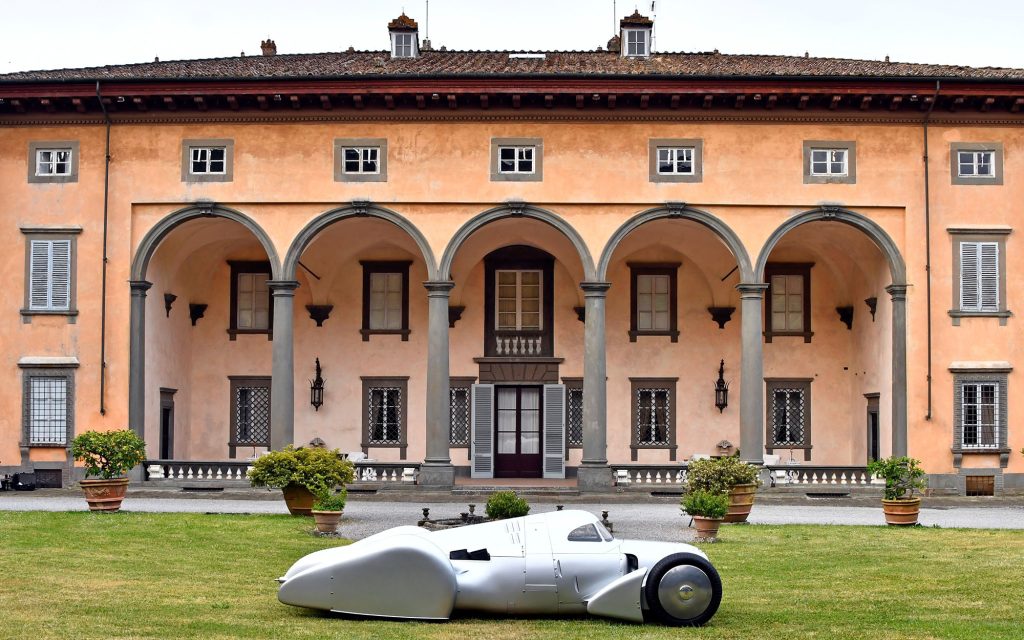
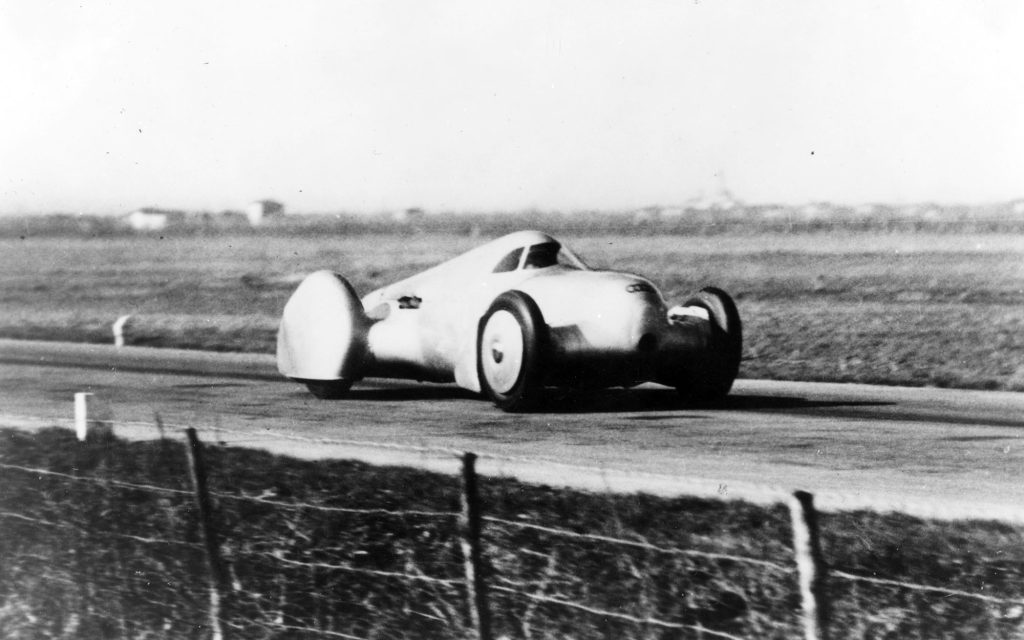
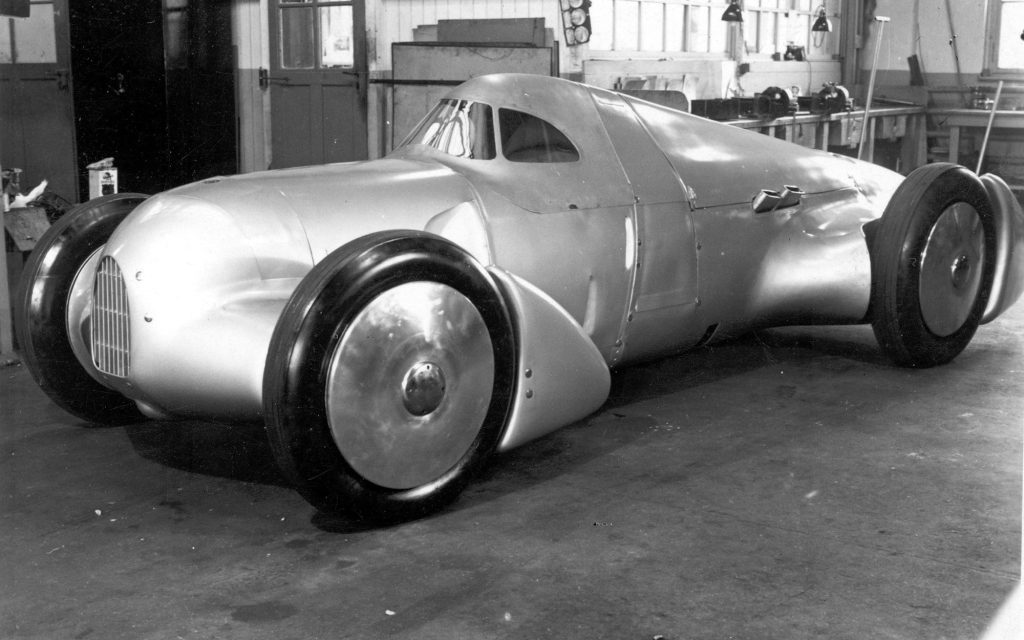
For decades, the Auto Union “Lucca” existed largely through black and white photographs, period race reports and archival documentation. This early “streamliner” or “Rennlimousine” that Hans Stuck drove to a flying-start mile record near Lucca, Italy on February 15, 1935 had long since disappeared, leaving one of Auto Union’s more technically ambitious pre-war Silver Arrows absent from Audi Tradition’s historic collection. Now, more than 90 years later, Audi Tradition has recreated the car from scratch and confirmed its first dynamic public appearance at the Goodwood Festival of Speed this July.
The Auto Union Lucca took a notable position in the escalating pre-war speed wars of the 1930s, when German manufacturers increasingly treated record attempts as demonstrations of engineering capability and national prestige. Auto Union AG, formed in 1932 from the combining of Audi, DKW, Horch and Wanderer, quickly went about establishing itself as a major force in Grand Prix racing through Ferdinand Porsche’s radical mid-engine Auto Union Type A. By 1934, the company had begun targeting outright speed records as aggressively as Grand Prix and hillclimb victories.
‘
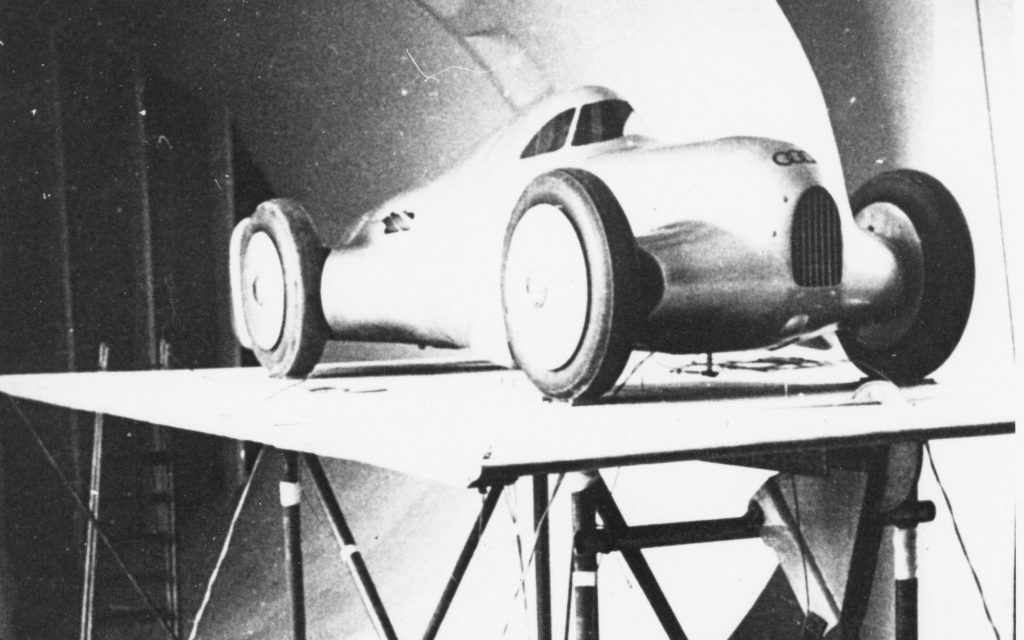
Mercedes-Benz and Auto Union were effectively locked in a technological arms race. After Rudolf Caracciola established new benchmarks for Daimler-Benz near Gyón, Hungary in late 1934, Auto Union’s racing department in Zwickau responded by developing a far more aerodynamic machine specifically for record attempts. Engineers refined the car using wind tunnel testing at the Berlin-Adlershof Aeronautical Research Institute, first experimenting with open-body concepts before settling on a fully enclosed streamlined design. Contemporary publications reportedly described the resulting bodywork as “a first in European racing car construction.”
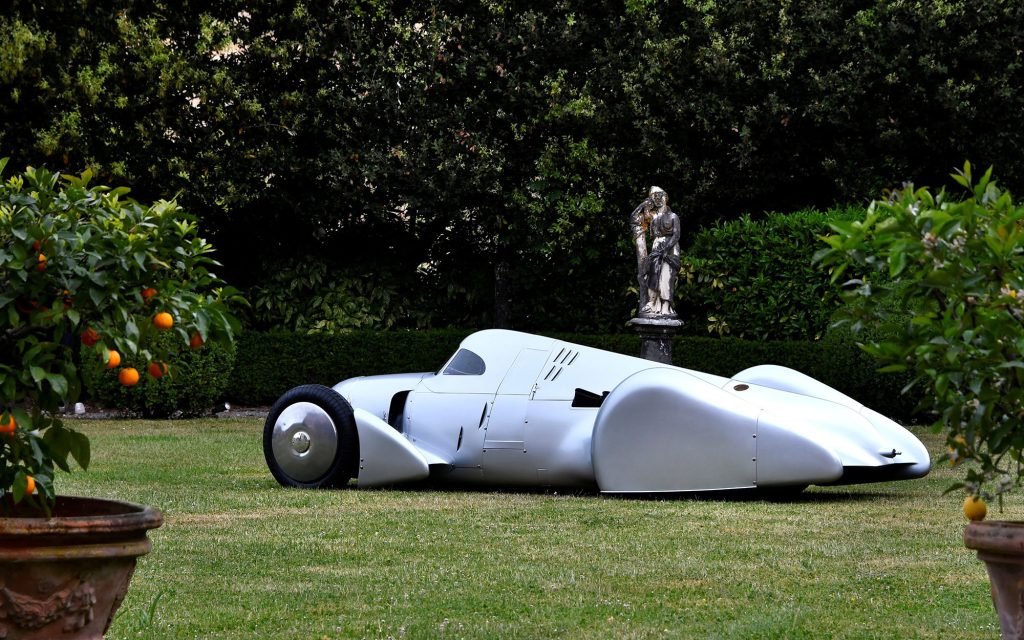
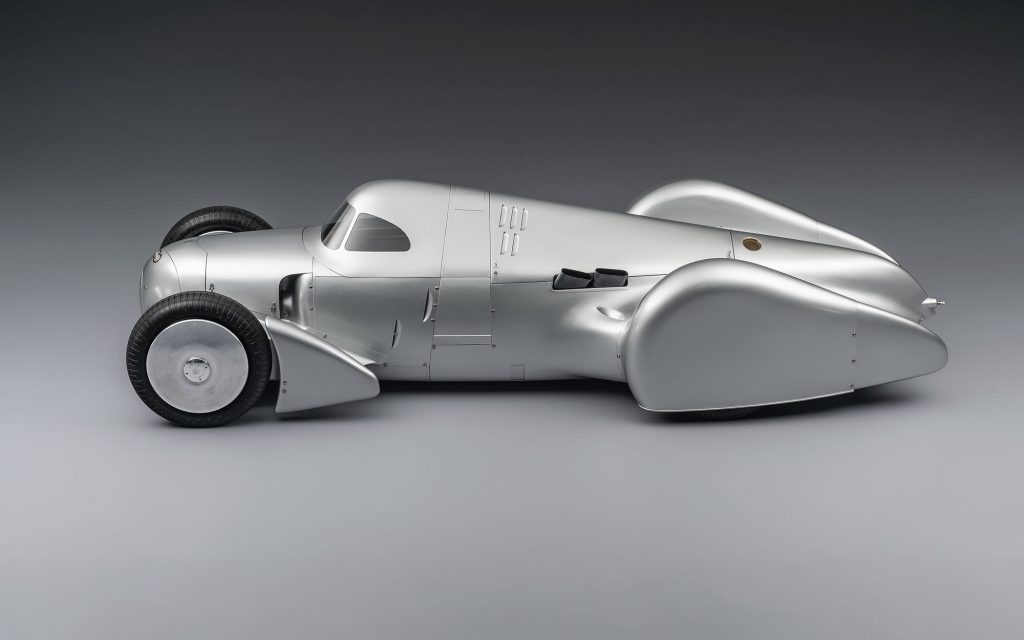
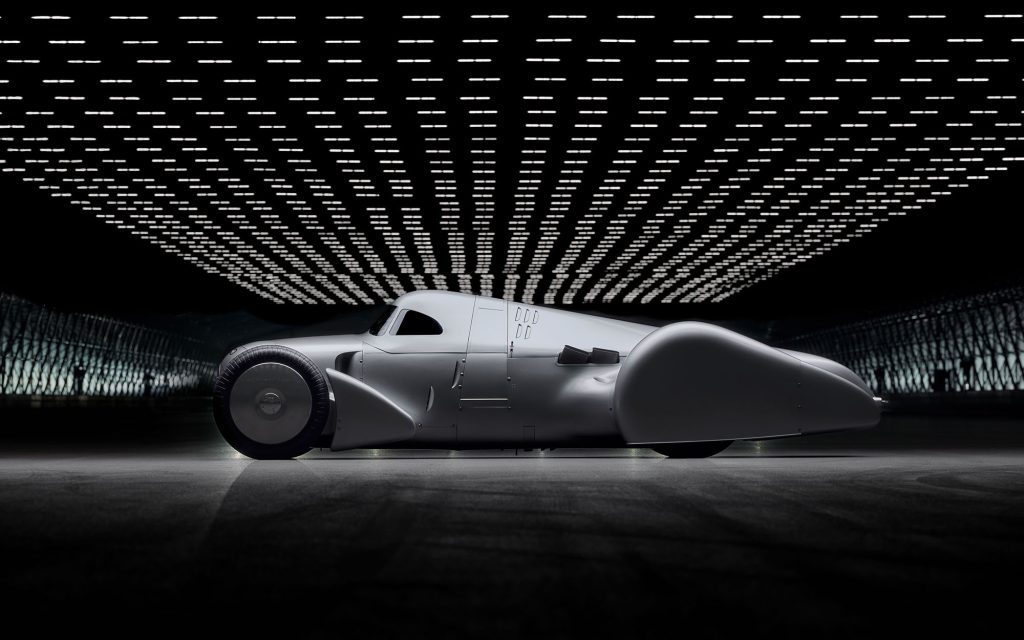
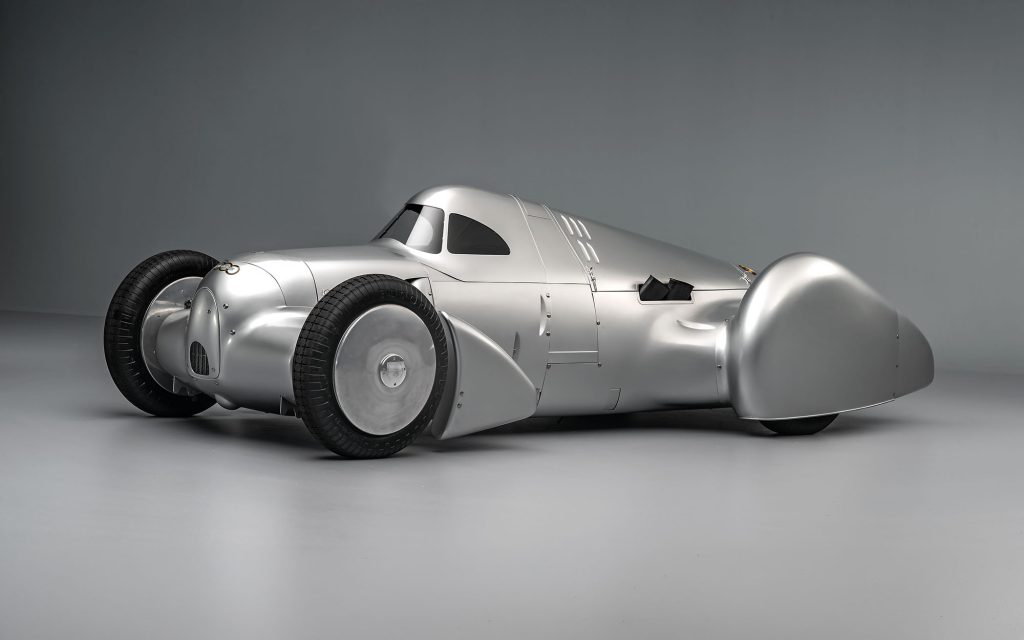
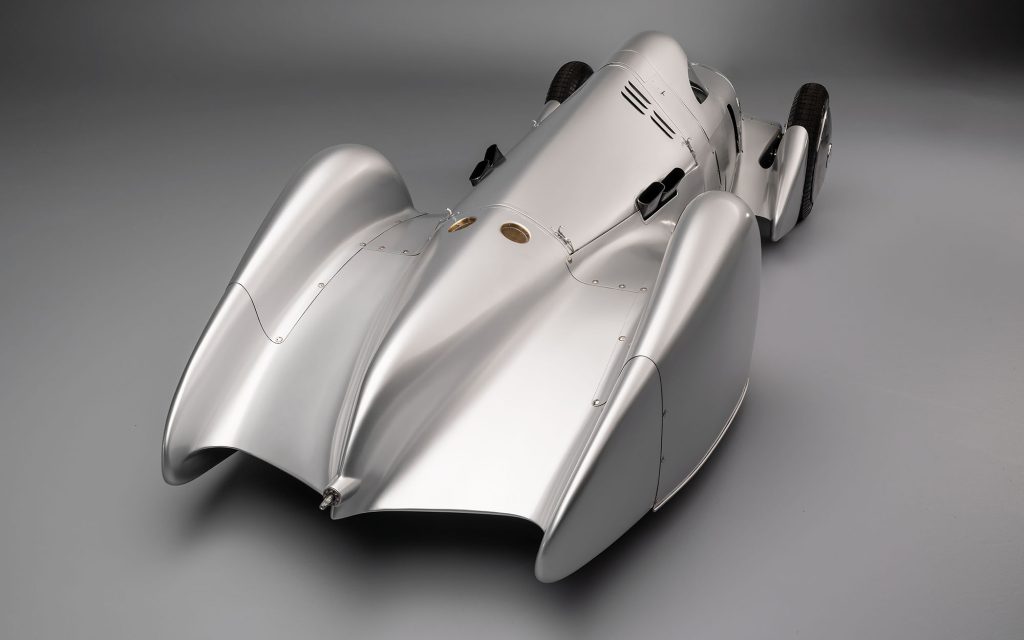
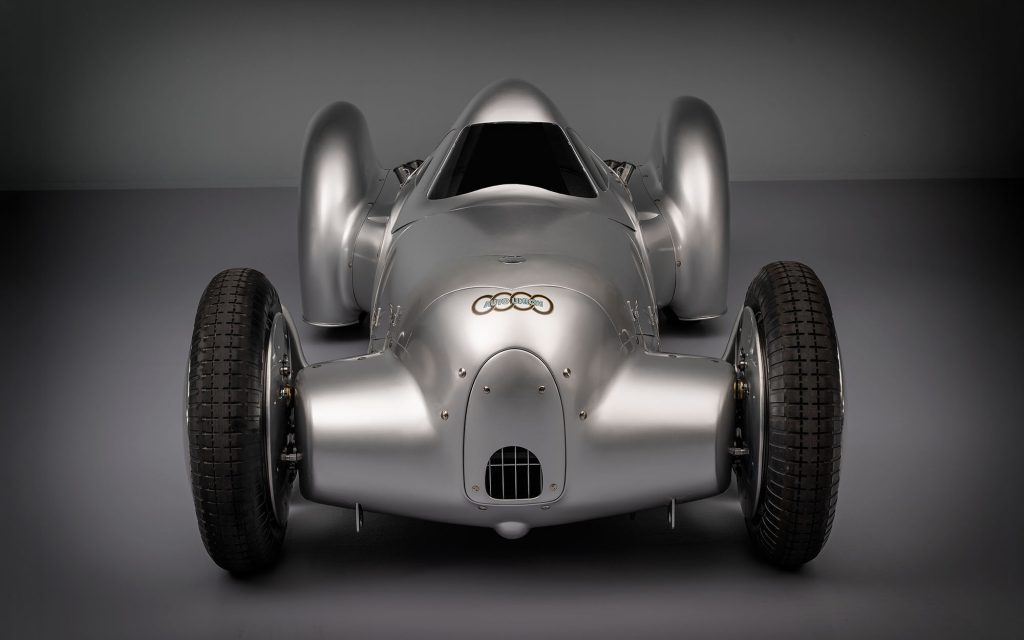
The resulting “Rennlimousine” differed substantially from the open-wheel Grand Prix cars it was derived from. Its aluminum bodywork featured enclosed wheels, a tapered tail section, carefully smoothed surfaces and integrated aerodynamic detailing intended to minimize drag at extreme speed. Beneath the body sat an early 16-cylinder Auto Union racing engine enlarged to approximately five liters and producing 343 horsepower in period specification.
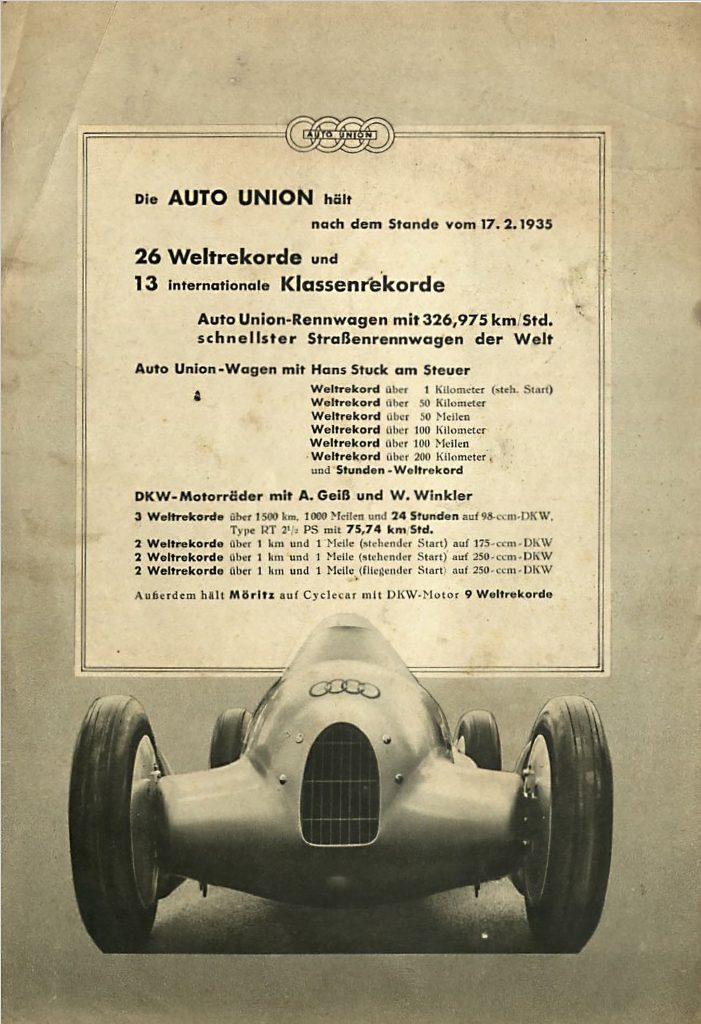
The car’s route to its eventual record attempt was itself unusual. Auto Union initially planned to challenge Mercedes’ marks in Hungary on the same stretch of highway used by Caracciola. Poor weather, mechanical issues and snow ultimately forced the team farther south through Italy before settling on a suitable section of autostrada between Pescia and Altopascio near Lucca. The road offered a nearly straight five-kilometer stretch that proved suitable for high-speed testing.
On February 15, 1935, Hans Stuck drove the streamlined Auto Union to an officially timed flying-start mile average of 320.267 km/h (199 mph), while timing equipment recorded a peak measured speed of 326.975 km/h (203.17 mph) during one of the runs. Auto Union immediately promoted the car as the “fastest road racing car in the world,” using the achievement as part of its broader rivalry with Mercedes-Benz and its Silver Arrows program.
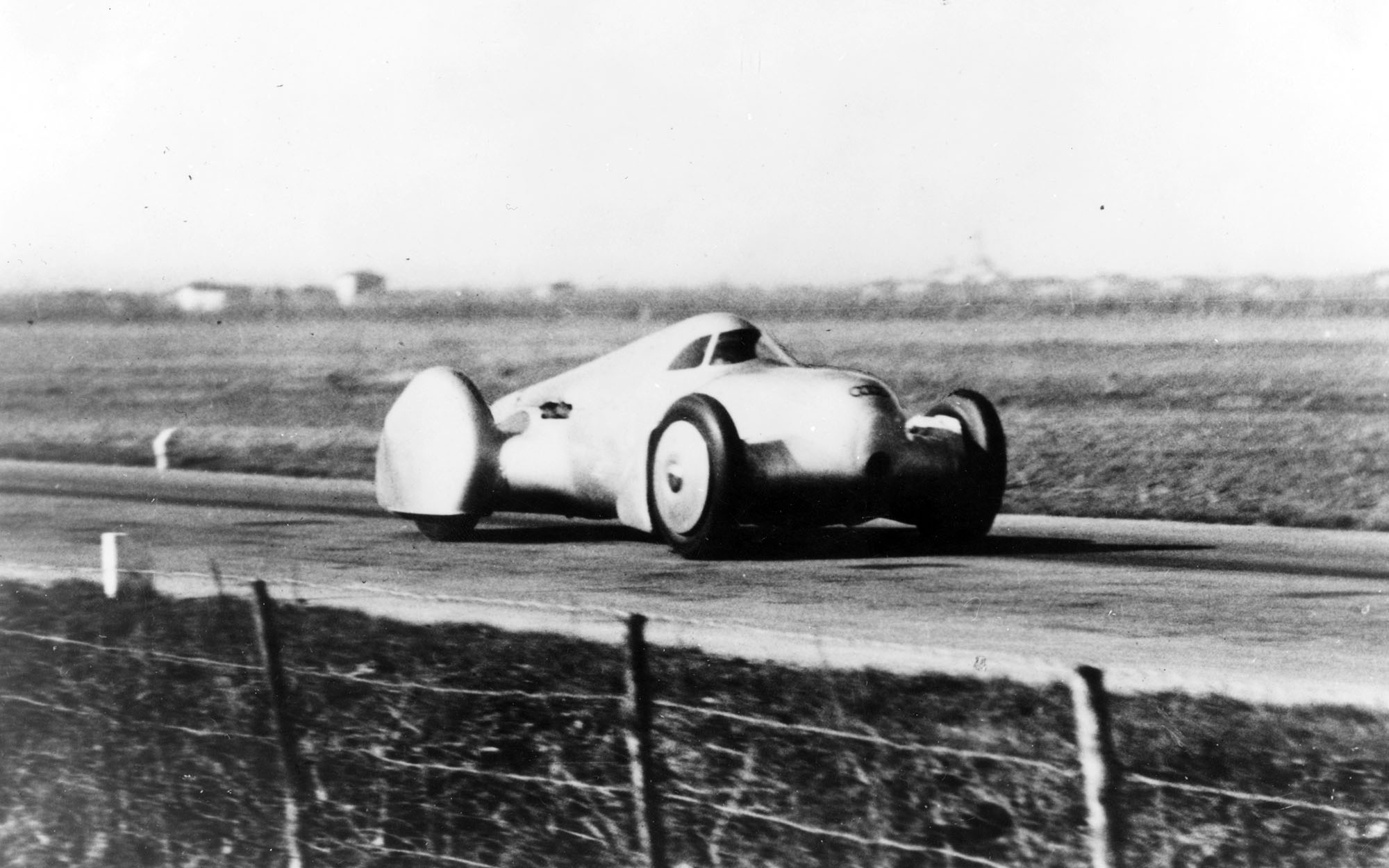
Despite its historical significance, the original Lucca car did not survive. Like many competition vehicles of the era, it evolved rapidly through continued development and modification. The streamlined record car later appeared in revised form at the 1935 Avusrennen in Berlin, where Auto Union fielded two Rennlimousinen alongside its Grand Prix entries. Neither finished the race, but the cars contributed valuable aerodynamic and engineering data to Auto Union’s broader racing program.
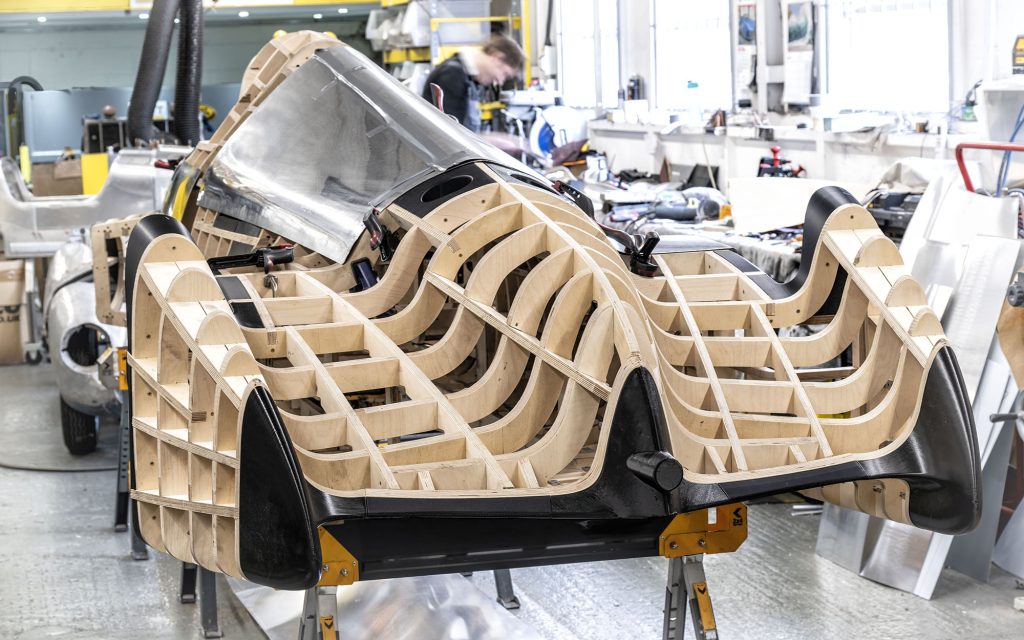
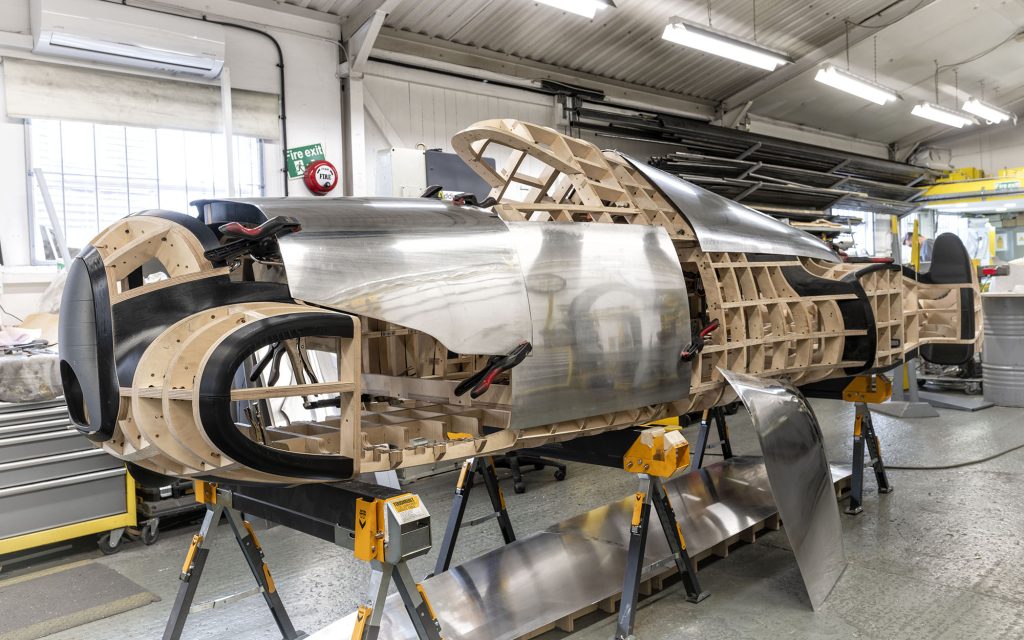
Reconstructing the Auto Union Lucca required Audi Tradition to effectively reverse-engineer a car that no longer existed. The project was entrusted to British restoration specialists Crosthwaite & Gardiner, which spent more than three years recreating the Rennlimousine using historical photographs, archival materials and surviving technical documentation. Every component was handcrafted specifically for the project.
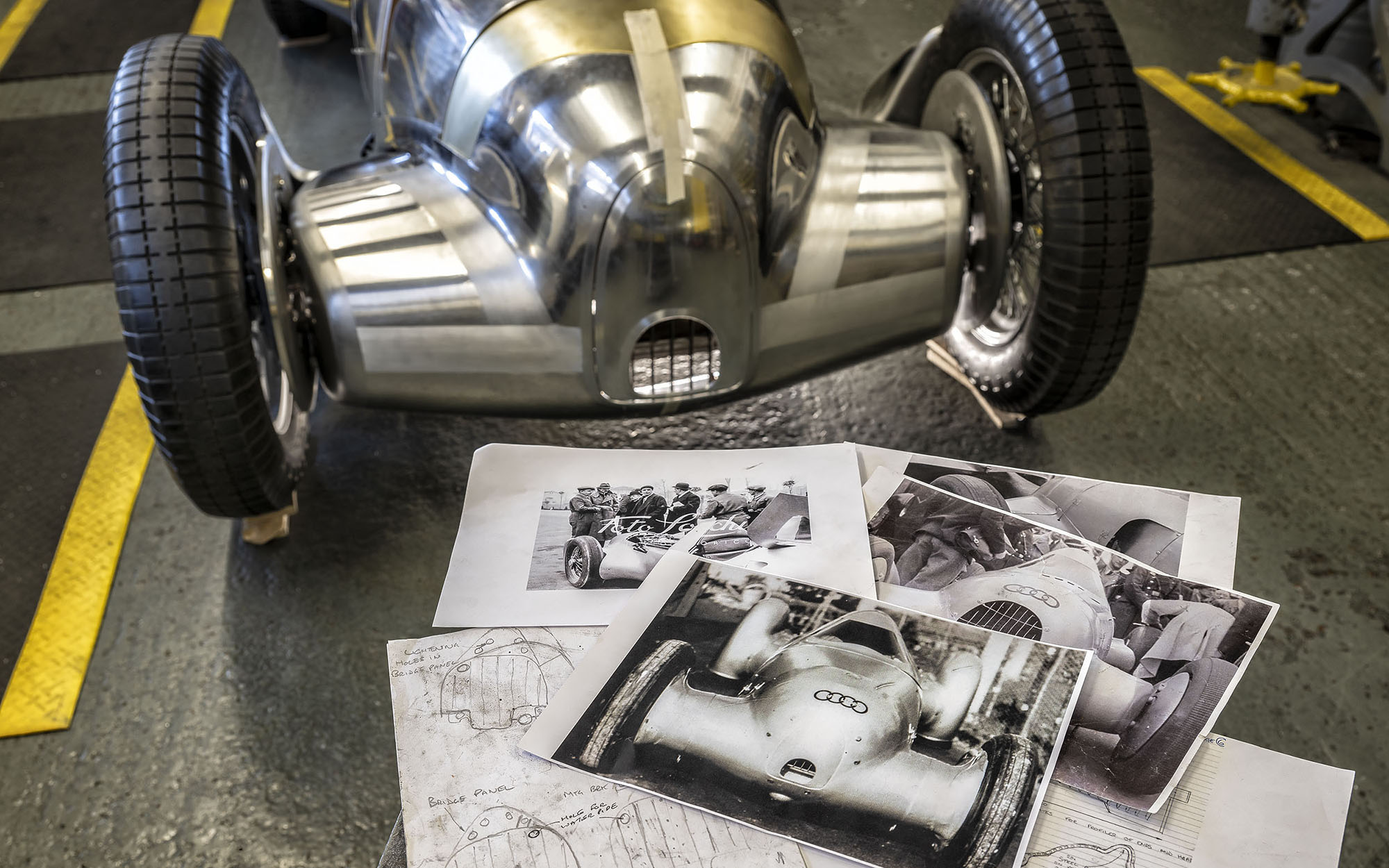
According to Audi Tradition, reproducing the streamlined bodywork proved especially labor intensive due to the complex shapes of the enclosed cockpit canopy and tapered rear section. The finished recreation was subsequently tested in Audi’s wind tunnel, where it reportedly achieved a drag coefficient of 0.43.
The recreated car is not a strict one-to-one replication of the original 1935 Lucca specification. Audi Tradition project manager Timo Witt confirmed the car incorporates several modifications derived from the later Avus configuration in order to improve durability and cooling during modern demonstration runs. The recreation also uses the 6.0-liter supercharged V16 from the later Auto Union Type C because it is visually indistinguishable from the original smaller-displacement unit while allowing compatibility with existing historic components within Audi’s collection.
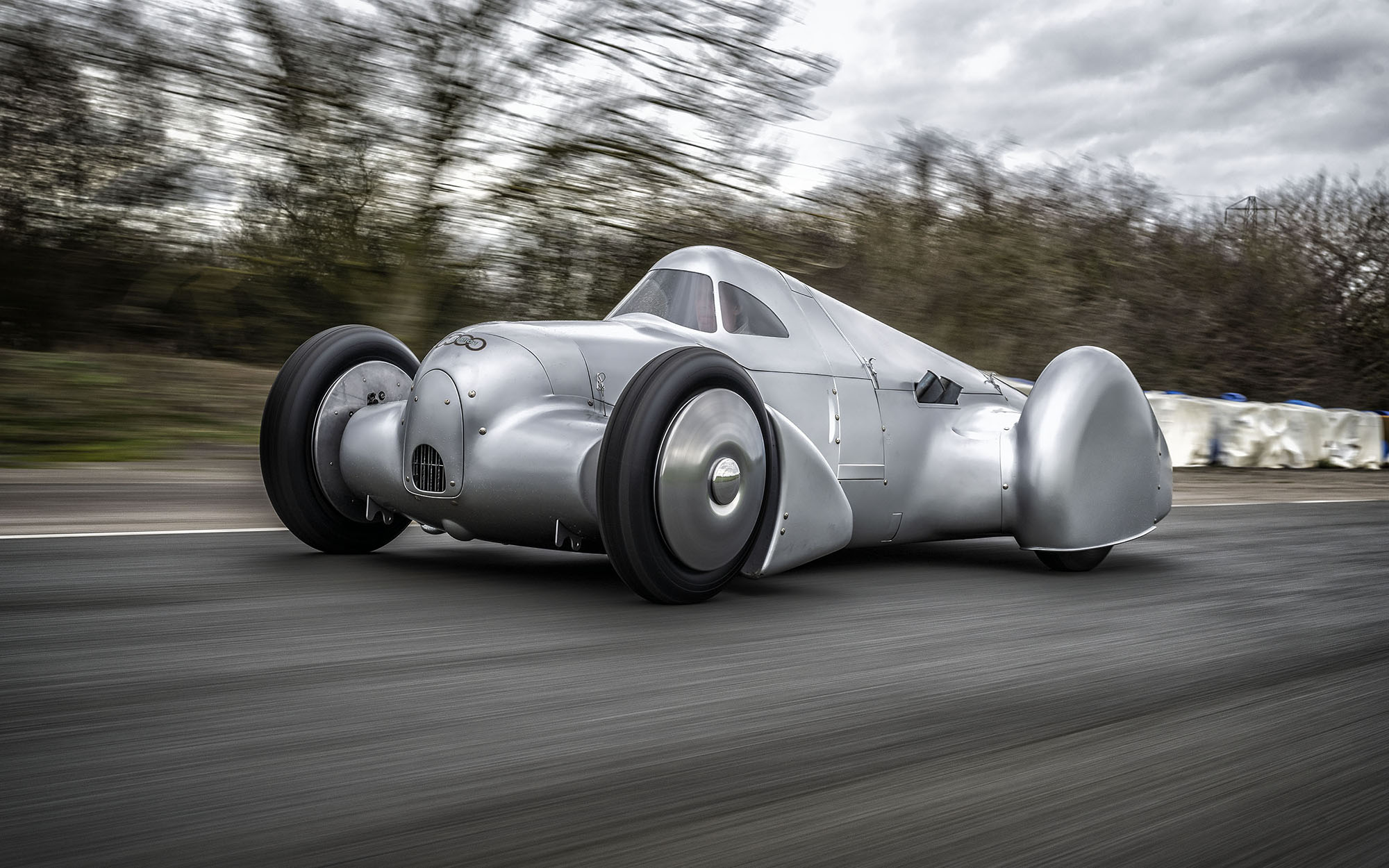
That engine now produces 520 PS (512.886 hp) and powers a one-off vehicle weighing approximately 960 kilograms (2116.44 lbs) . Fuel composition remains period correct in concept, utilizing a methanol-heavy blend similar to pre-war Grand Prix racing fuels.
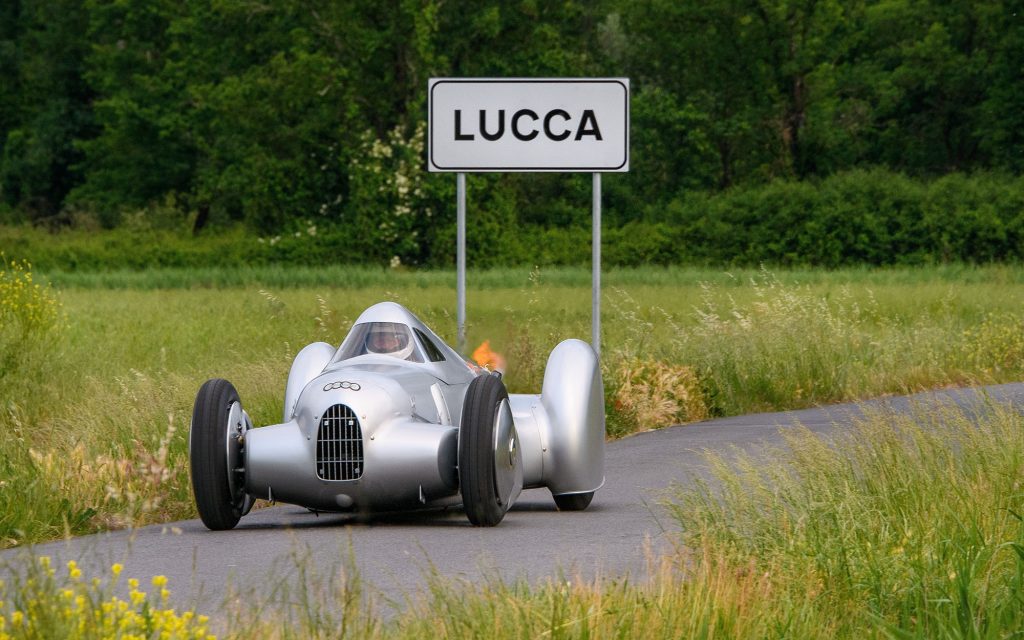
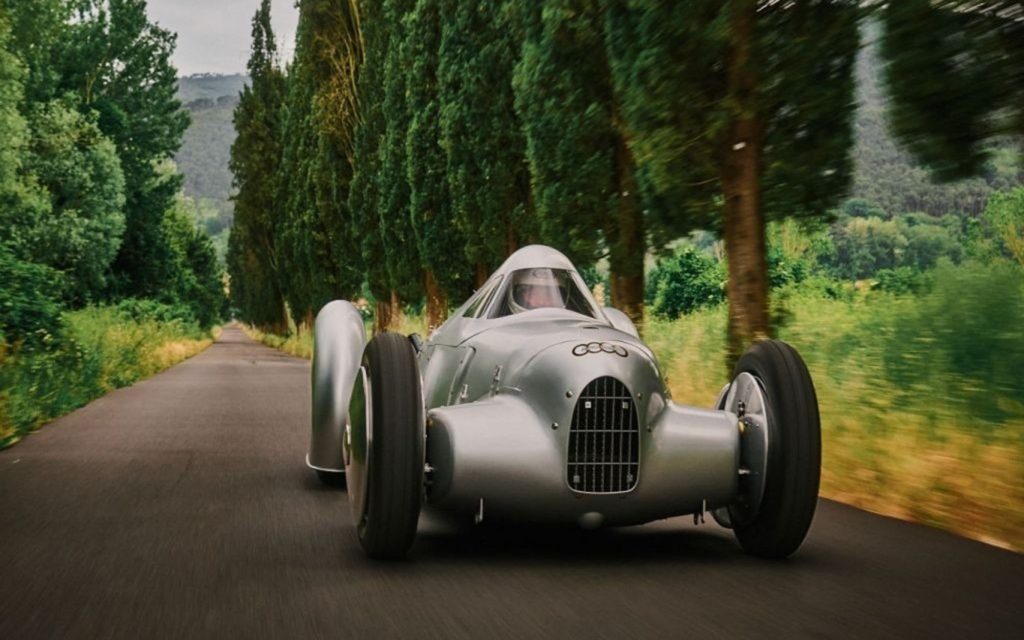
The Auto Union Lucca made its static debut in Italy this week, appropriately returning to the city where it established its record more than nine decades ago. Audi Tradition has now confirmed the recreated Rennlimousine will make its first public appearance in motion at the Goodwood Festival of Speed, scheduled for July 9-12.
PHOTO GALLERY
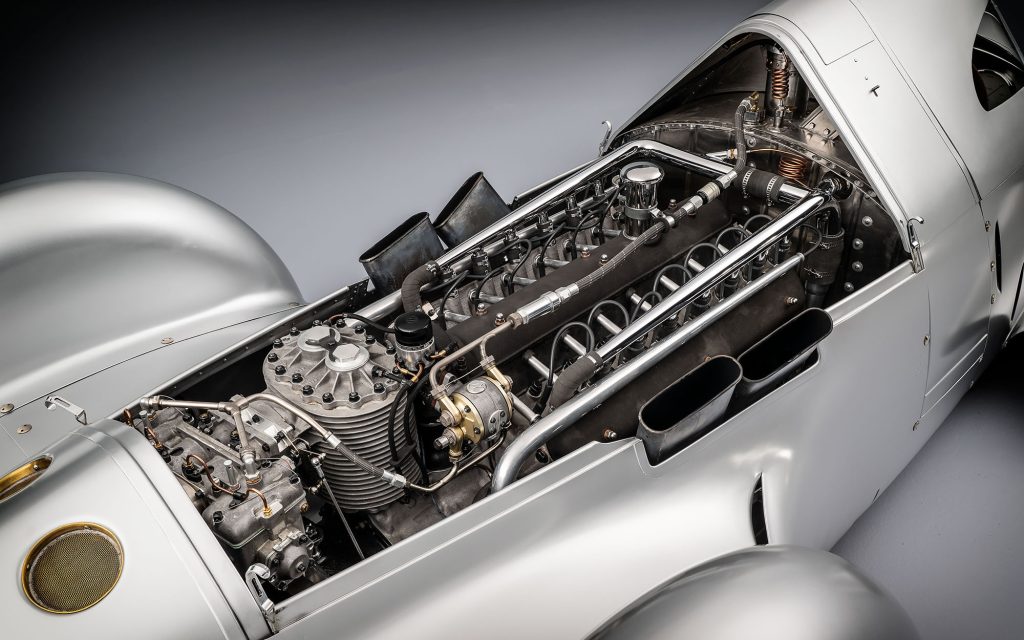
Detail: 16-cylinder-engine with supercharger.
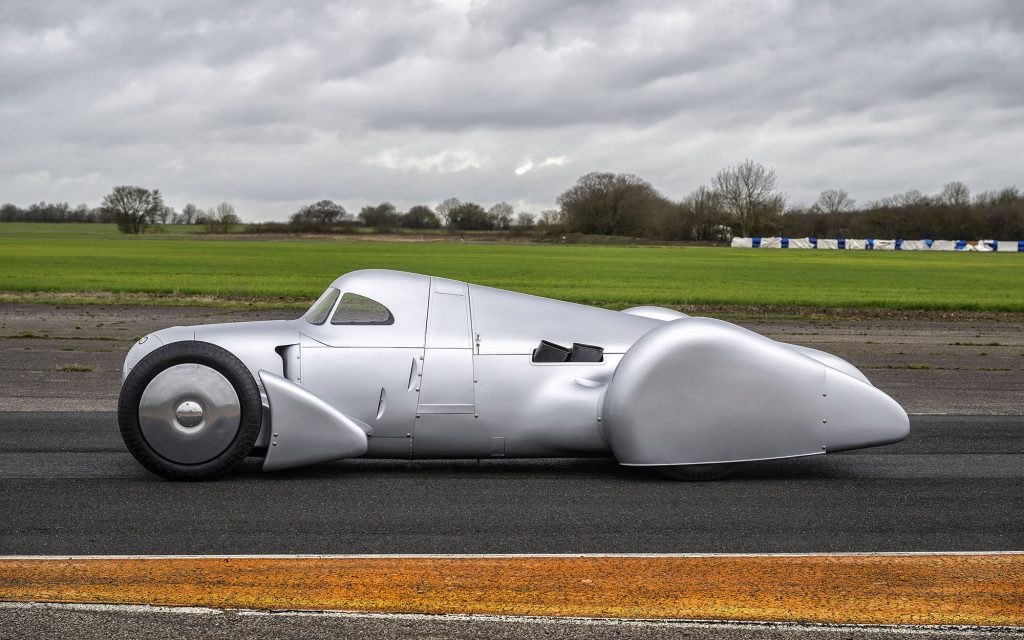
Driving shot at the first roll-out. Side view.
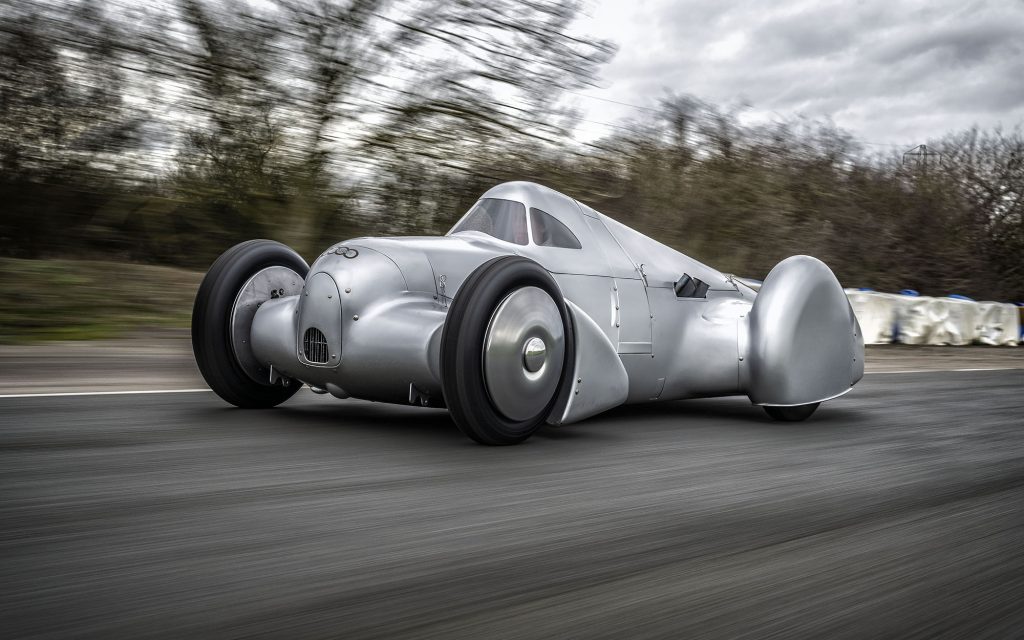
Driving shot at the first roll-out. Side view.
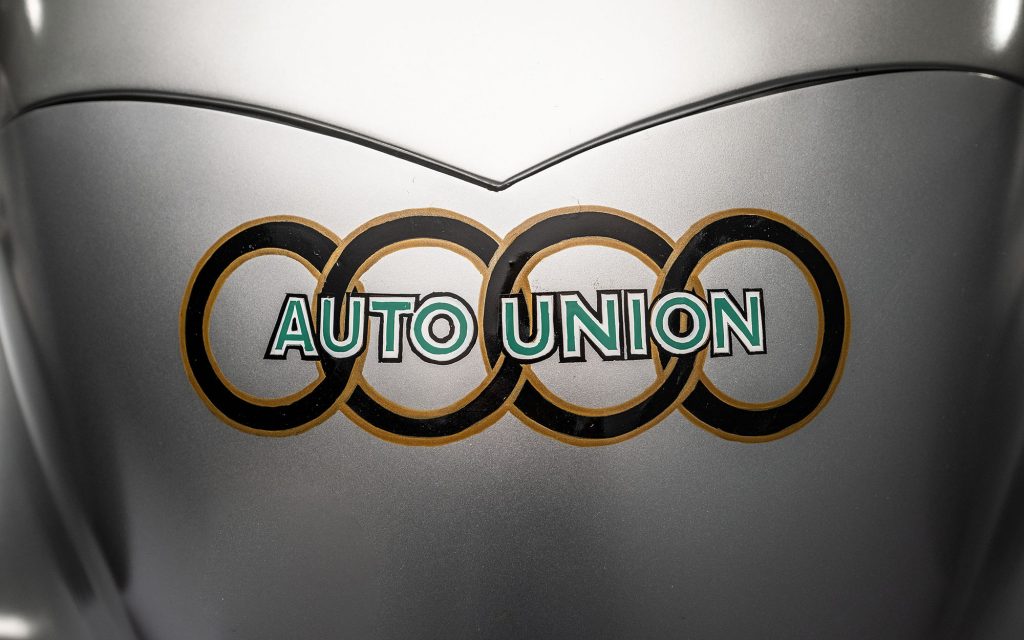
Detail: the Auto Union logo as used on the Auto Union racing cars of the 1930s.