

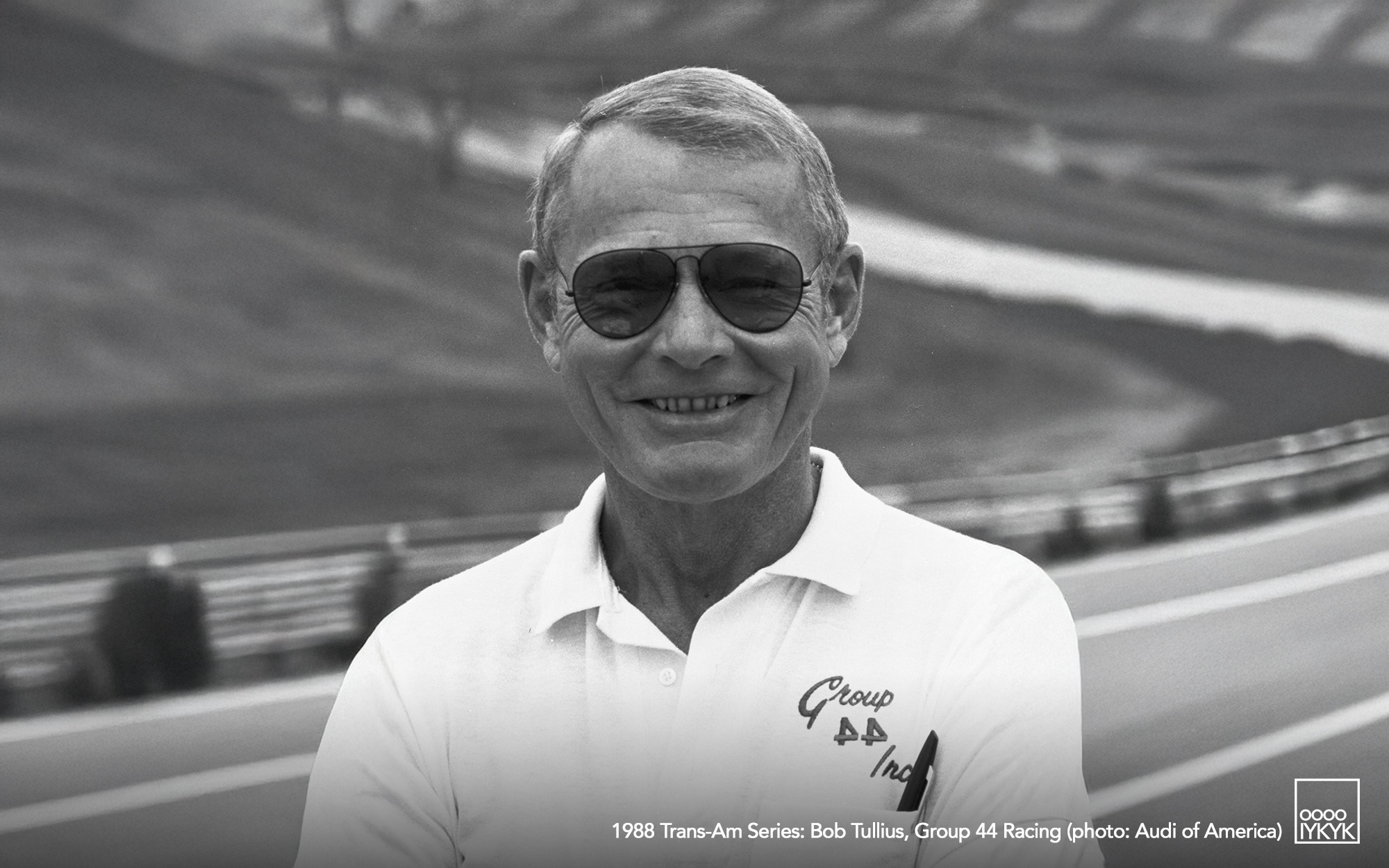

Bob Tullius, founder of Group 44 and one of the most influential figures in American sports car racing, passed away on March 16, 2026 at the age of 95. His name is often tied to race wins, championships and legendary machinery, but that only tells part of the story – the story of a man who competed in motorsport and also reshaped how it operated, how it was marketed and how it connected with fans.
Born in Rochester, New York in 1930, Tullius’ path to racing wasn’t exactly conventional. After serving in the United States Air Force and building a successful career at Kodak, he discovered motorsport almost by accident through a Triumph TR3 he’d purchased for his wife. One racing school later, he was hooked. By 1963, he had made the defining decision to leave his corporate career behind and pursue racing full time.
That decision ultimately led to the formation of Group 44 in 1965, alongside Brian Fuerstenau and Dick Gilmartin. What followed over the next 25 years was one of the most successful and influential runs in American racing history. Group 44 amassed more than 300 victories and 14 national championships across SCCA, IMSA and Trans-Am competition, along with three Trans-Am titles.
Tullius’ versatility as a driver was central to that success. He competed in everything from a Dodge Dart in the inaugural Trans-Am race at Sebring to turbine-powered prototypes at Le Mans, a Ferrari 512 BB at Daytona and NASCAR’s Grand American series. His final professional win came in 1986 at Daytona in the Jaguar XJR-7, capping a career that spanned more than two decades at the highest levels of the sport.
Yet for many, the defining chapter of Group 44 came through its partnership with Jaguar. Tullius played a key role in returning the marque to Le Mans after a 27-year absence, developing and campaigning the XJR-5 prototype. In 1985, Group 44 claimed victory in the GTP class at Le Mans, taking on and beating dominant factory efforts in the process. In recognition of his contributions, Jaguar founder Sir William Lyons personally awarded Tullius the Sir William Lyons Award in 1981.
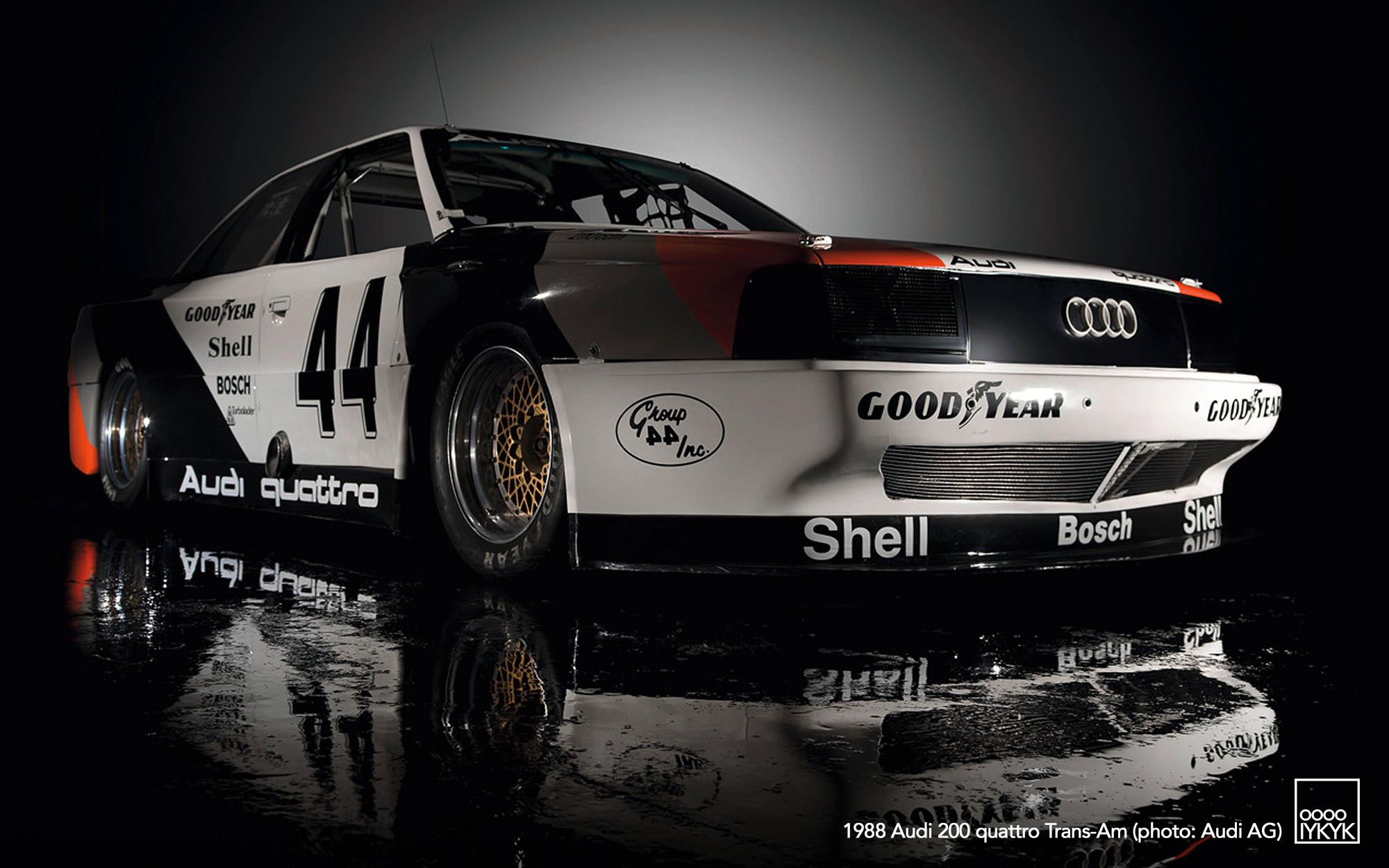
Even after the Jaguar era, Group 44 continued to evolve. In 1988, the team partnered with Audi for its Trans-Am program, delivering one of the most dominant seasons in series history. With Hurley Haywood behind the wheel of the Audi 200 Quattro, the team won eight of thirteen races and secured the drivers’ championship. It marked Group 44’s third Trans-Am title and further cemented Tullius’ reputation for adapting to new technology and new eras.
But perhaps Tullius’ most lasting impact wasn’t behind the wheel. It was in how he approached racing as a business.
“We started the practice of reaching out to the press, auto dealerships and sponsor affiliates… My staff were the first real marketing professionals in motorsports. We had a PR team and would go into markets in advance of races with promotional materials for stores, TV, radio and newspapers. It was 24-7 leg work.”
Long before modern motorsport became a fully integrated marketing platform, Tullius understood that success off track was just as critical as performance on it. Group 44’s immaculate presentation, corporate partnerships like Quaker State and coordinated media outreach effectively created the blueprint for the professional race team model used today.
Away from the circuit, Tullius was equally passionate about aviation. Visitors to Sebring Raceway often made a point to stop at the Group 44 hangar, where his race cars sat alongside a collection of historic aircraft. From a P-51D Mustang to a Beechcraft King Air, he logged thousands of hours in the air, even flying his Mustang in more than 140 airshows before donating it to the Royal Air Force Museum in 2003.
His contributions to motorsport were recognized across decades. Tullius was inducted into the Sebring Hall of Fame in 2014, the SCCA Hall of Fame in 2015, the British Sports Car Hall of Fame in 2017, the Motorsports Hall of Fame of America in 2018 and, most recently, the IMSA Hall of Fame in 2025.
Beyond accolades, he was known as a mentor, a promoter and a personality that helped shape the culture of the sport itself. He also remained deeply committed to causes outside racing, particularly animal welfare, supporting humane societies and personally fostering more than 20 cats over his lifetime.
Tullius is survived by his daughter, daughter-in-law, eight grandchildren and three great-grandchildren. He was preceded in death by his son, Russel.
Plans are underway to honor his life at this weekend’s 12 Hours of Sebring, a fitting venue for a man so closely tied to the circuit’s history. A broader celebration of life will be announced at a later date, with the family requesting that donations be made to the Humane Society in his name.
In a sport often defined by speed and results, Bob Tullius leaves behind something more enduring. Through Group 44, he proved that professionalism, storytelling and brand identity could be as powerful as horsepower. Modern motorsport still operates on the foundation he helped build.