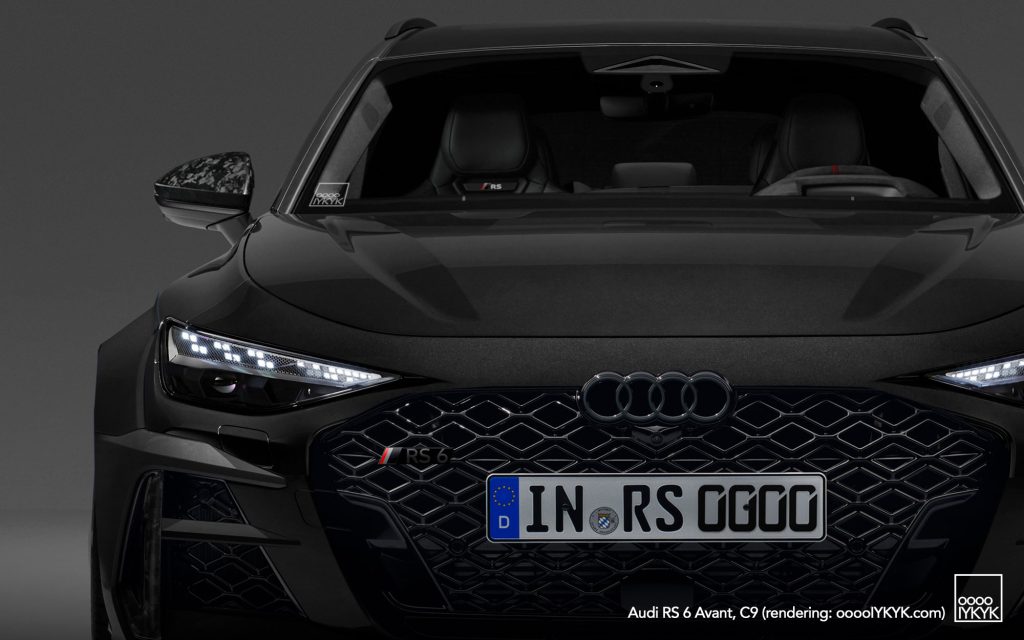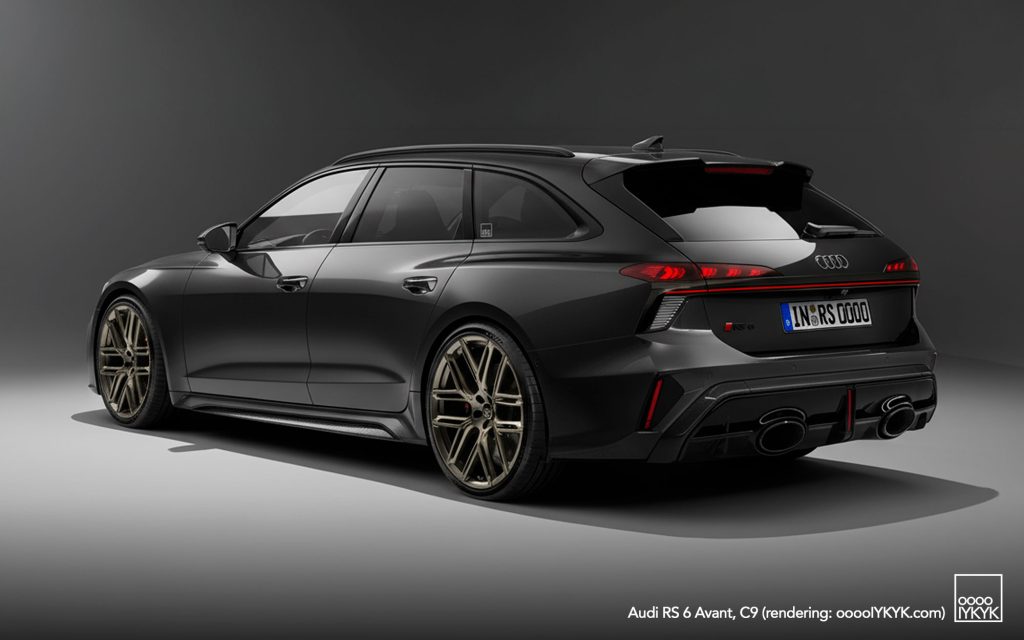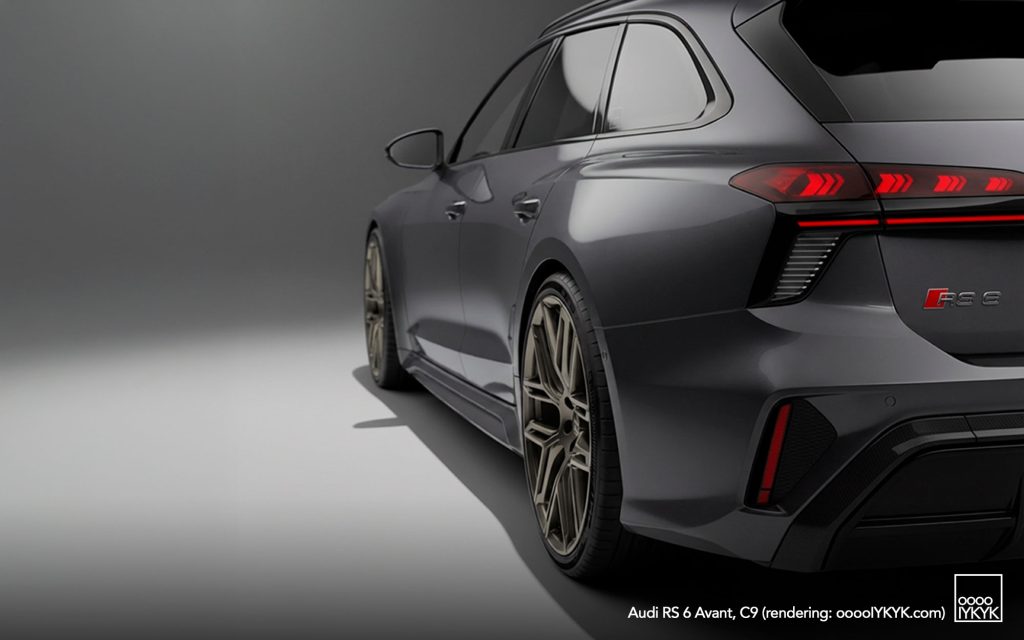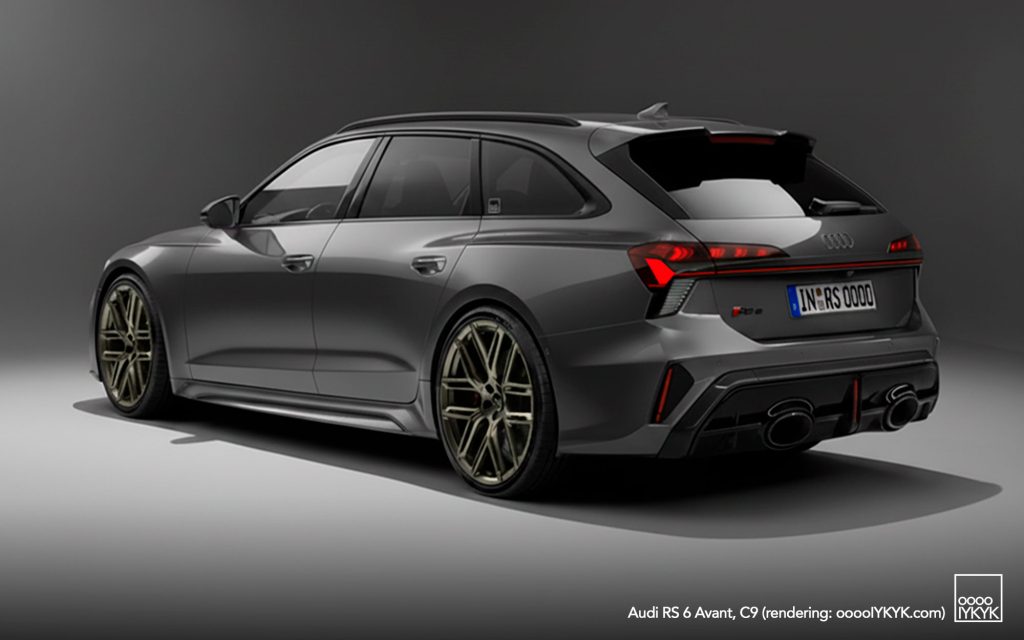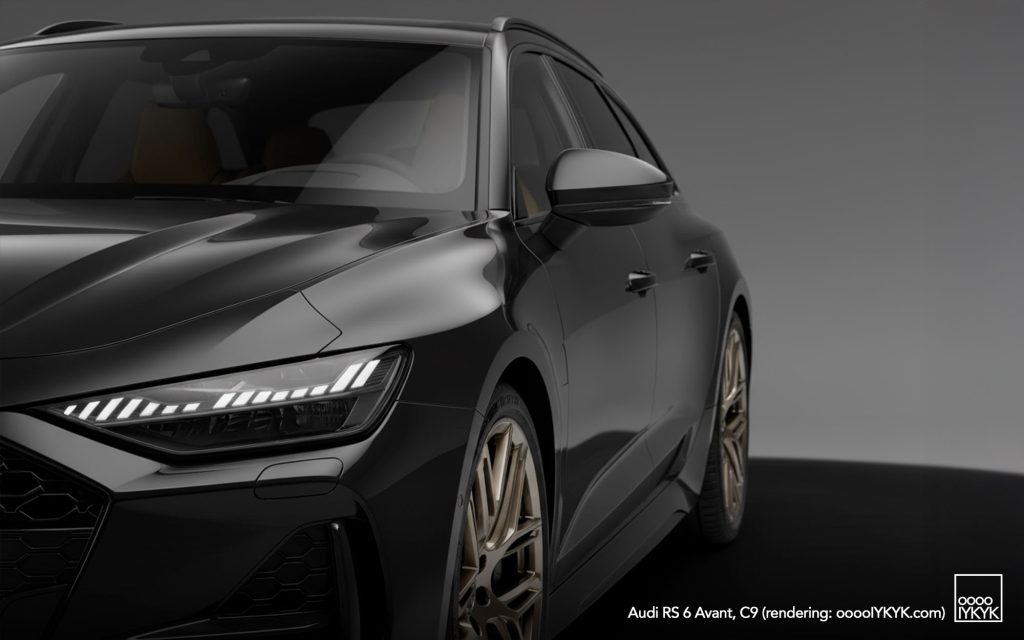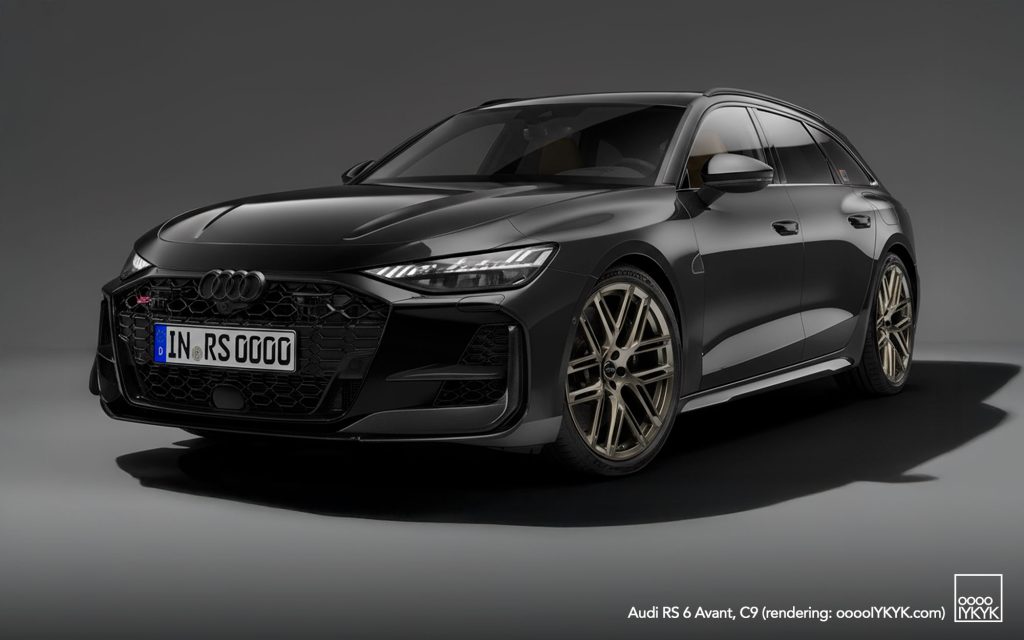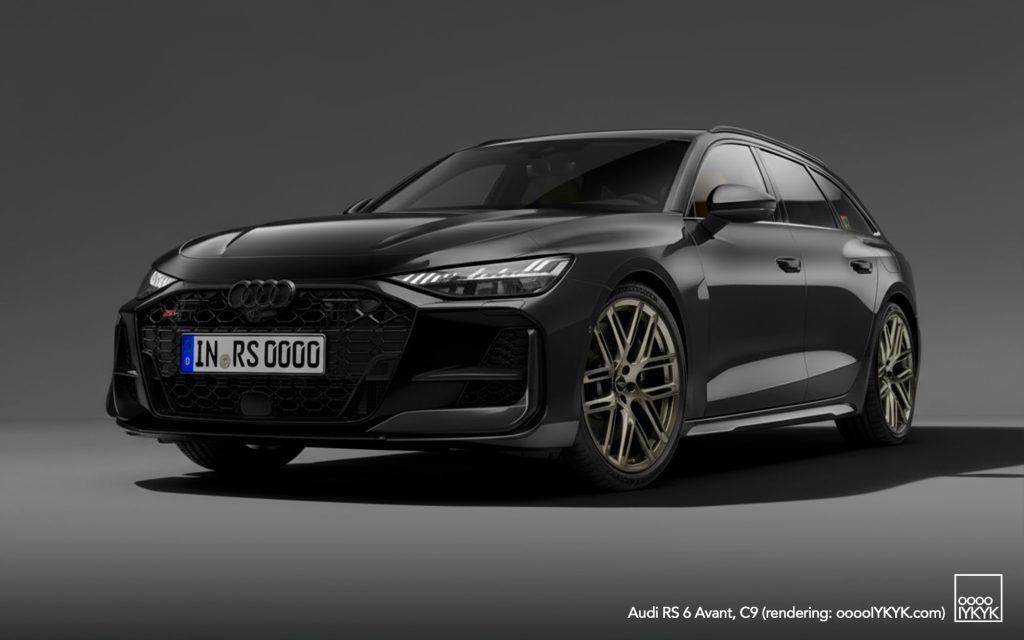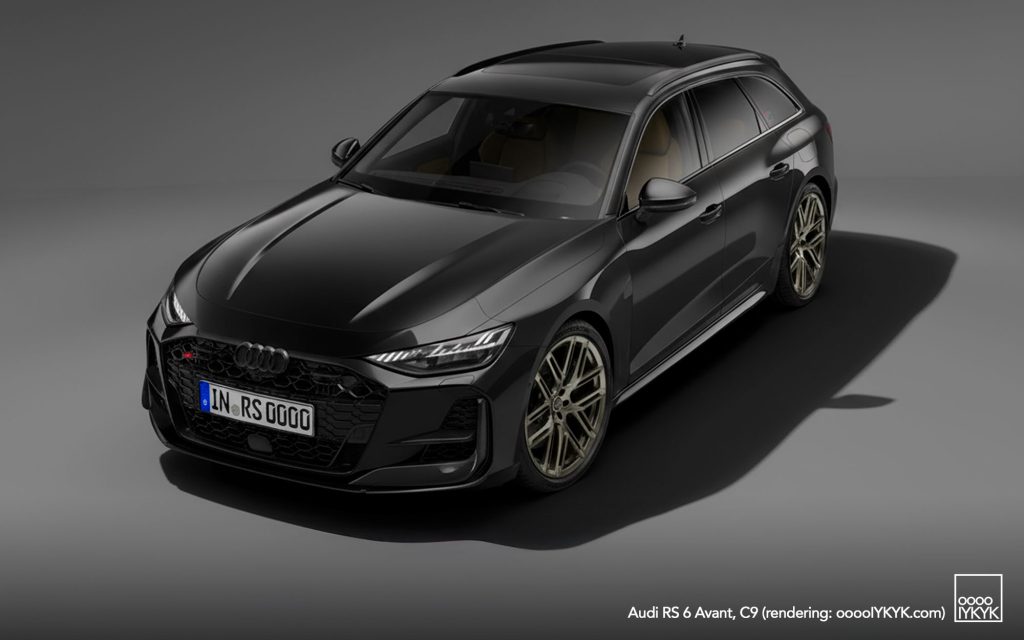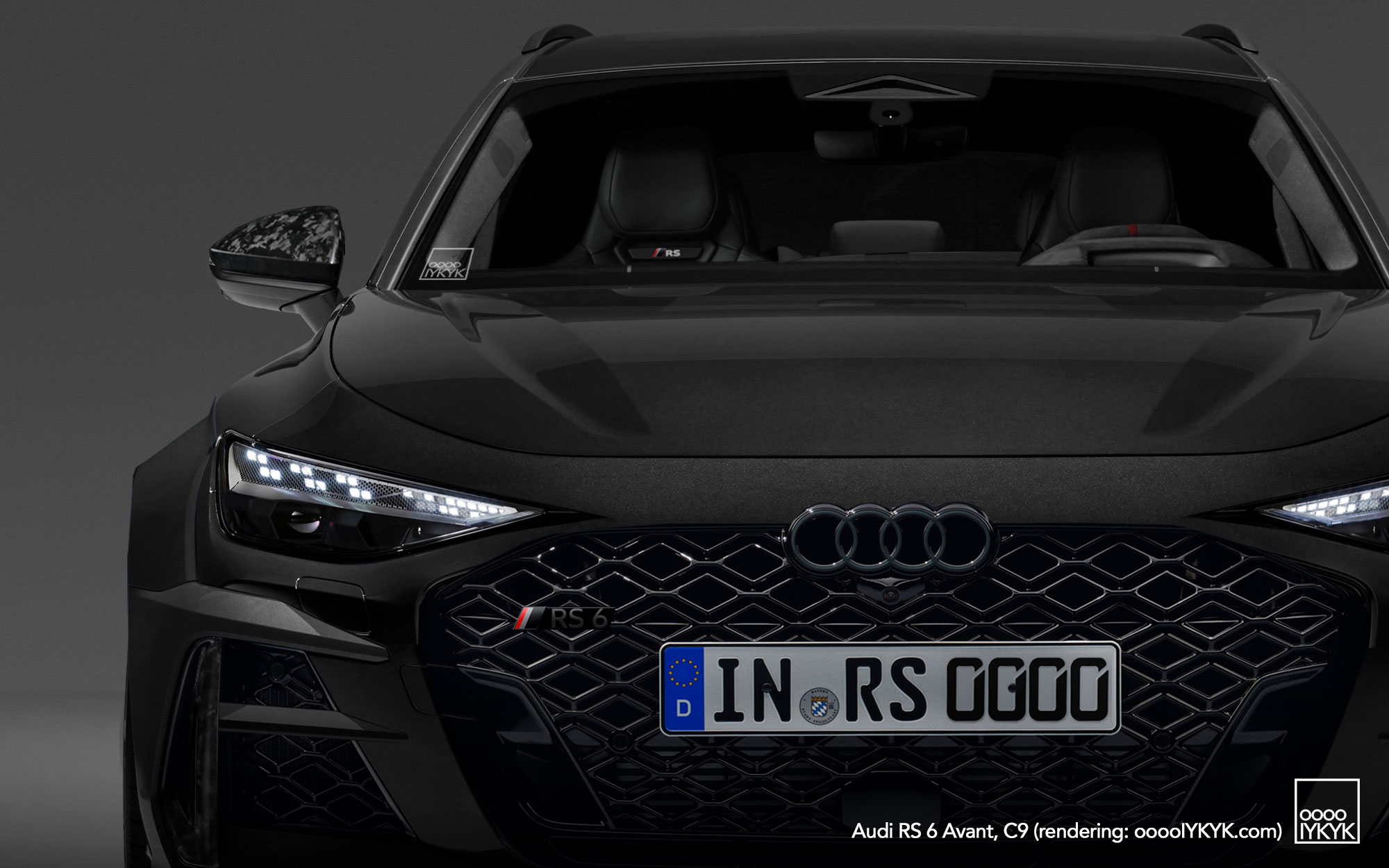

One of the most asked-about questions regarding Audi’s upcoming RS 6 (C9) is just what will power the car. More recently launched versions of key competitors have all gone hybrid – the 577 hp Mercedes-AMG E53 HYBRID with an inline 6-cylinder turbo and the BMW M5 with its 717 hp V8 twin turbo hybrid. So, how will Audi power the C9 RS 6?
In theory, Audi has several options. It could follow Mercedes-AMG’s lead and paired its 2.9-liter biturbo from the RS 5 with a hybrid drivetrain. It could follow BMW’s lead and pair the existing 4.0 biturbo with a hybrid system as is already available from its Porsche, Bentley and Lamborghini sister brands. Or it could stay the course with an ICE-only 4.0 biturbo perhaps with a higher horsepower rating that is already being used by the Volkswagen Group’s more exotic badges.
The latter ICE-only solution wouldn’t do much for efficiency, but it would keep weight gain in check. The C8 RS 6 was already large and heavy but contextualized against the M5 hybrid it is some 600 lbs. lighter, which translates solidly into the car’s comparison performance against its newer rival.
Editor’s Note: Since publishing this story, I’ve heard from several sources that parts of it may be incorrect. According to information ranging from a German Audi employee commenting on Instagram to individuals close to and even within Audi, the new RS 6 will apparently be powered by the 2.9-liter biturbo V6 paired with a plug-in hybrid system, rather than the 4.0-liter biturbo V8 previously reported to be part of that setup. I’ve explored this further in this week’s issue of the ooooIYKYK Newsletter about Audi, but I also wanted to address it here to ensure I’m providing the most accurate information possible.
What’s written below is based on details published last week in a story by Autocar. At the time, I believed that information to be correct. Now that my own sources have weighed in, I no longer believe that to be the case.
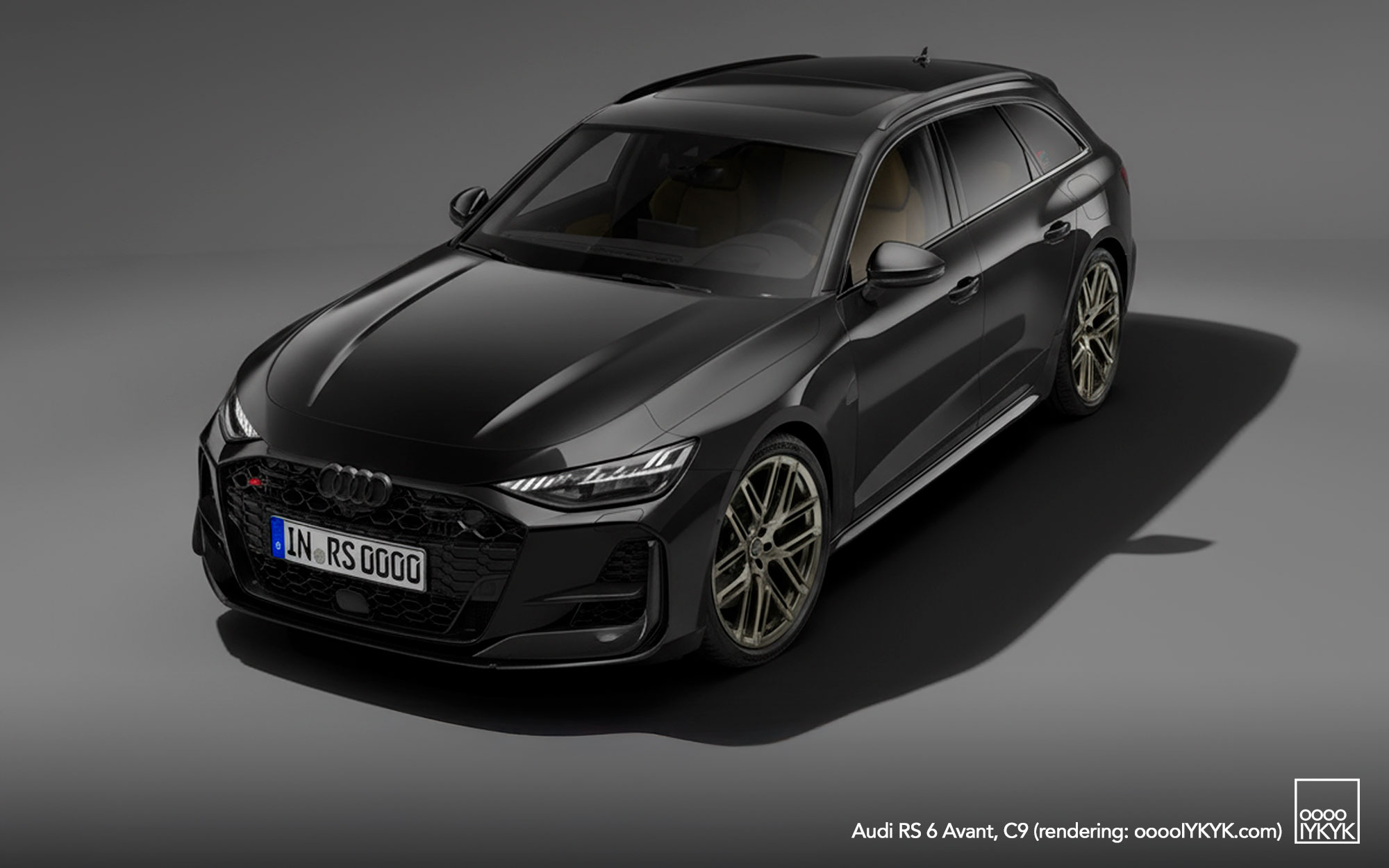
Autocar Magazine from the UK claims to have the inside line in a recently published story, confirming they have the final answer. Their sources have reportedly revealed that the car will have a plug-in hybrid V8.
The move was made to align the RS 6 with Audi’s push for electrification across Ingolstadt’s performance offerings. Adding a hybrid improves emissions and augments performance, even if it does add hundreds of pounds of additional weight form batteries and hybrid tech. Edmunds recently did a comprehensive acceleration and handling test between the current RS 6 (C8) and the BMW M5 Touring where you can see the advantages and disadvantages of both cars under those conditions. It’s worth a watch.
Of course, the RS 6 has never been a featherweight. The first-generation Audi RS 6 (C5) came to market way back in 2002 with its own twin-turbo V8. After a brief flirtation with a biturbo V10 in the C6 generation, the RS 6 has been perfecting the biturbo V8 formula ever since.
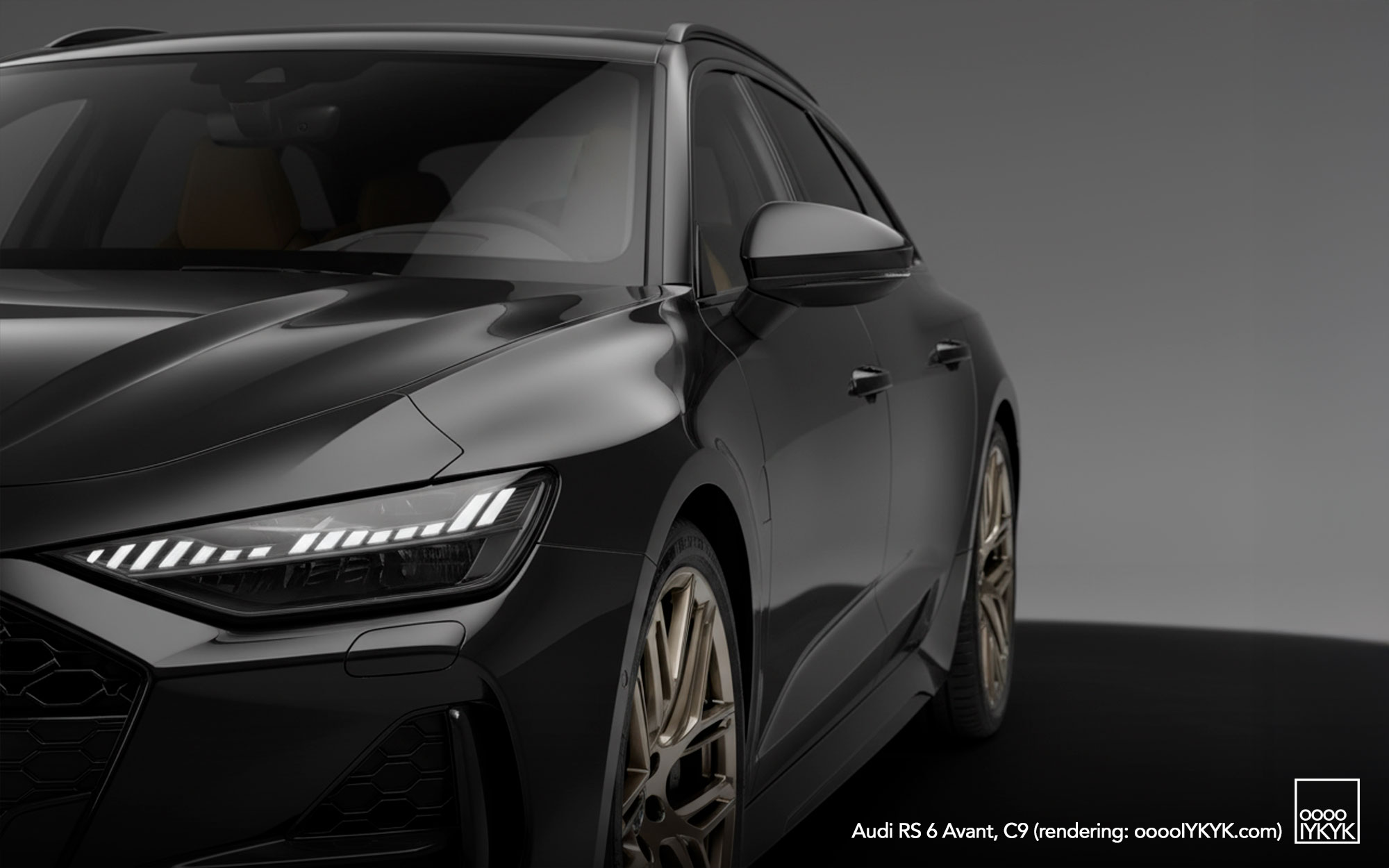
In the case of the C9, Autocar shares the combined engine output will slot in at about 800 bhp. If so, that would be higher than the M5 and rank the new RS 6 as Ingolstadt’s second-most-powerful production car behind the 912 bhp RS e-tron GT performance.
To imagine this new configuration, we needn’t look further than the Porsche Panamera Turbo S E-Hybrid, the Bentley Continental GT Speed and the Lamborghini Urus SE. These three already have the components Audi will need – the EA825 V8 biturbo engine, electric motor and 25.9 kWh battery. The Lamborghini even shares the same scalable architecture as the Audi. The RS 6’s planned PPC (premium platform consumption) underpinnings are effectively a heavily evolved version of the MLB Evo architecture that underpins the Urus and the outgoing RS 6 (C8).
Autocar says the range for the hybridized RS 6 (C9) is about 50 miles – like that of the Porsche Panamera Turbo S E-Hybrid. It is also expected to share the limited electric top-speed of 87 mph.
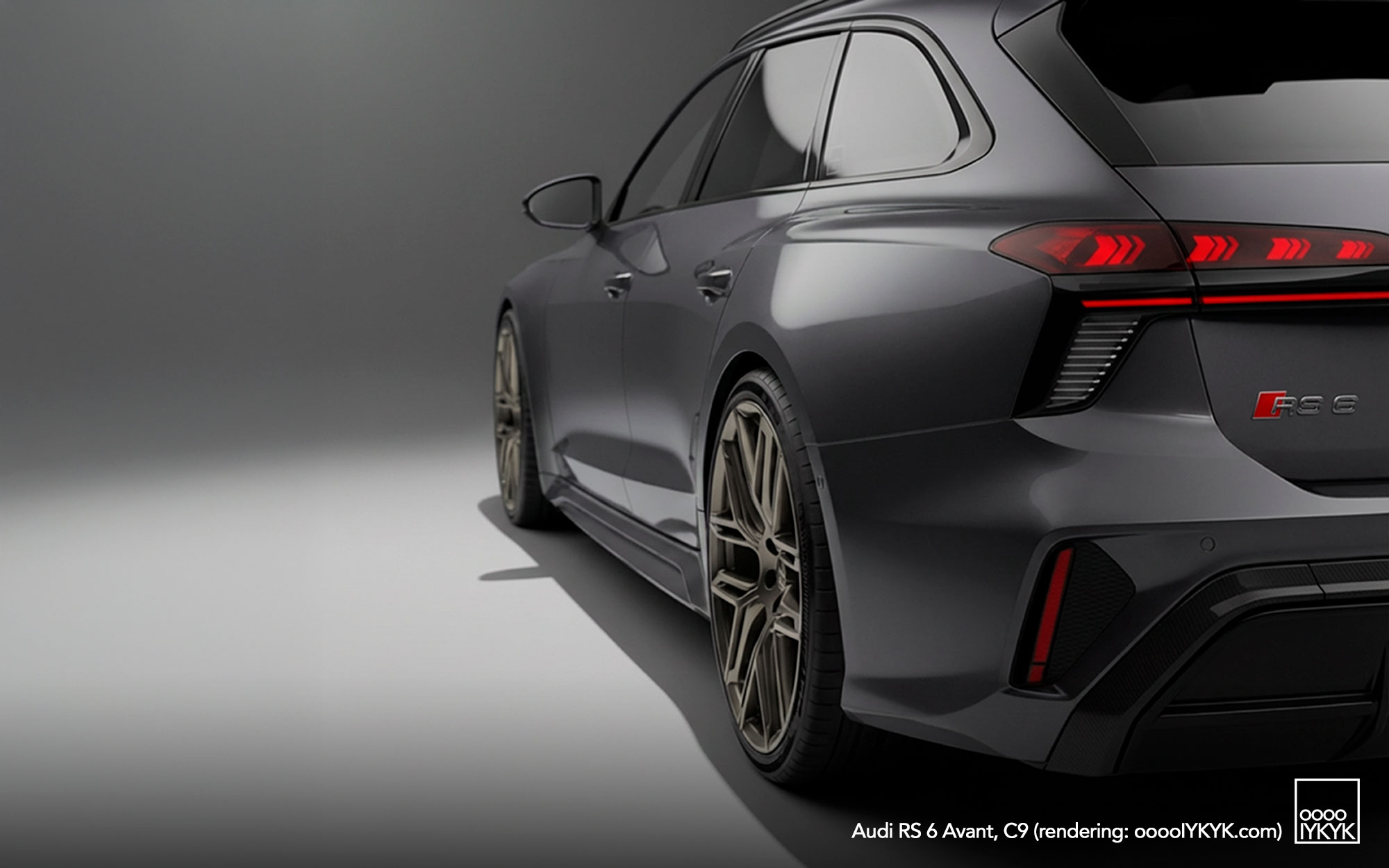
Autocar went further to explain Audi’s reasoning on this decision, sharing, “Audi is determined the RS 6 will not lose its long-distance, autobahn-bred character in the move to PHEV power. The brief is to preserve the model’s hallmark blend of lofty torque, four-wheel drive traction and high-speed stability while using electric assistance to sharpen response, improve low-speed drivability and enhance cornering balance.”
The obvious points for improvement are to improve torque delivery of a turbocharged engine. Audi did this in the earliest RS 6 models with stepped sizing on turbos to improve spool-up. However, with electric drive it can back fill torque immediately. In-Gear acceleration will also be measurably improved.
Additional power also means the RS 6 (C9) will boast faster acceleration and greater top-speed than the outgoing RS 6 (C8). Another benefit will be a more optimized front-to-rear weight bias thanks to the additional mass of the battery mounted below the trunk’s floor in the rear of the chassis.
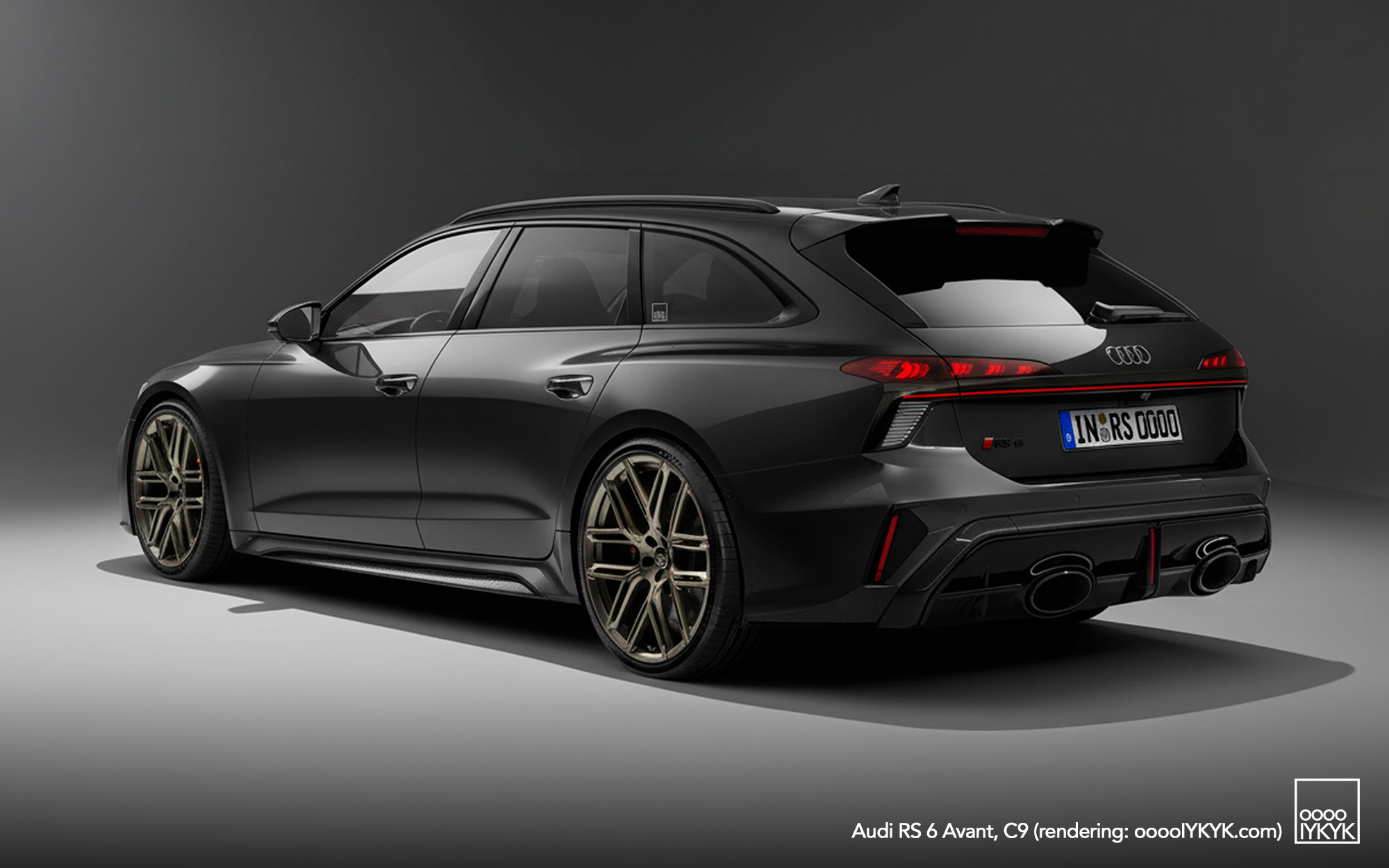
Beyond the RS 6, it’s natural to assume the investment in the V8 biturbo hybrid drivetrain will pay further dividends in the Audi Sport GmbH product portfolio. Autocar suggests future RS versions of the upcoming SUVs are also in the works. This means RS Q7 and RS Q9 variants of mules we’ve all seen testing and, interestingly, they also mention the RS Q8. That last one’s curious because we’ve not seen anything resembling a replacement to either the ICE Q8/SQ8/RS Q8 range or the EV Q8/SQ8 e-tron range. Given the mules spied testing, the RS 6 is expected to be produced as both Sedan and Avant, though how that translates to North American market availability remains to be seen.
So, did Audi make the right call? Certainly, those aware of the arms race with brands like BMW and on the quest for more power will see this as the obvious choice. Those seeking efficiency and the additional flexibility of short drives around town in fully electric mode will appreciate the savings in fuel costs. As for those seeking the dexterity of a lightweight model, we suspect they were probably in the wrong aisle anyway had they been seeking lightness while shopping for a C-segment autobahn power wagon.
PHOTO GALLERY