



This 10 Things about Massimo Frascella series stems from an in-depth feature published by Autocar Magazine in its print version. Meant as an in-depth take on Audi’s Chief Creative Officer, it delved both into what brought him to Audi and where he plans to take the four rings during his tenure. Using that as a starting-off point, this series aims to highlight the key points while expanding them more in the Audi-specialist context this website aims to provide.
Part #1 began with Frascella’s taproot – the Audi TT (Mk1).
Part #2 focused on his background, broader than simply JLR and involving some TT Mk1 designer icons.
The plan for this series is to cover two installments per day over five days. For this next installment, we examine his appreciation for the greater Audi design era inwhich the TT Mk1 was just one in a larger cohesive family of automobiles.
#3 VIA TT HE CELEBRATES THIS AVANTGARDE ERA
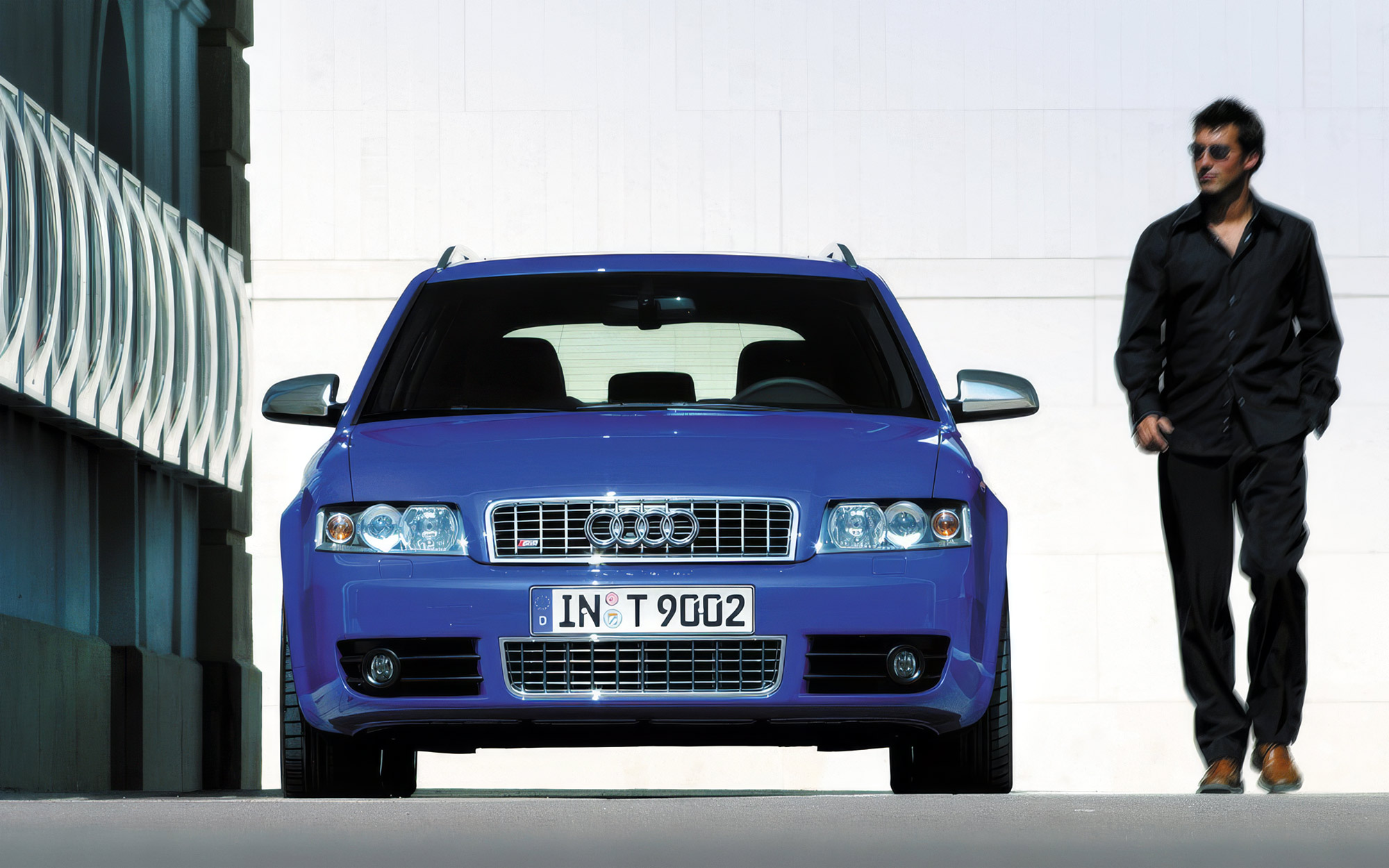
Via the TT, Frascella goes on to celebrate the car’s era at Audi. Think A4 (B6) or A6 (C5) that he refers to as “a masterpiece”. “You have to put the cars in the context of automotive in general at the time,” he shared with Autocar. “We tend to forget what the landscape was when those cars came out and what they represented. And they looked like nothing else on the road.”
That much is true. Frascella goes on to focus on the simplicity of the design, the clean lines, smooth surfacing and minimal decoration.
This section is highlighted by an early A6 4.2 (C5) sedan shot from the rear because I believe it drives his point home. Note the unpainted lower bumpers that broke the horizontal moulded bumper line schema of the time. The early unpainted format of this era Audi that’s also seen on the A4 (B6) really emphasizes this particular element, which continues a horizontal plain on the side of the the car – the line continuing up from the rear bumper, blending the rounded-edge of the TT-inspired taillight before continuing down the so-called “tornado” or shoulder line of the car in a really groundbreaking way.
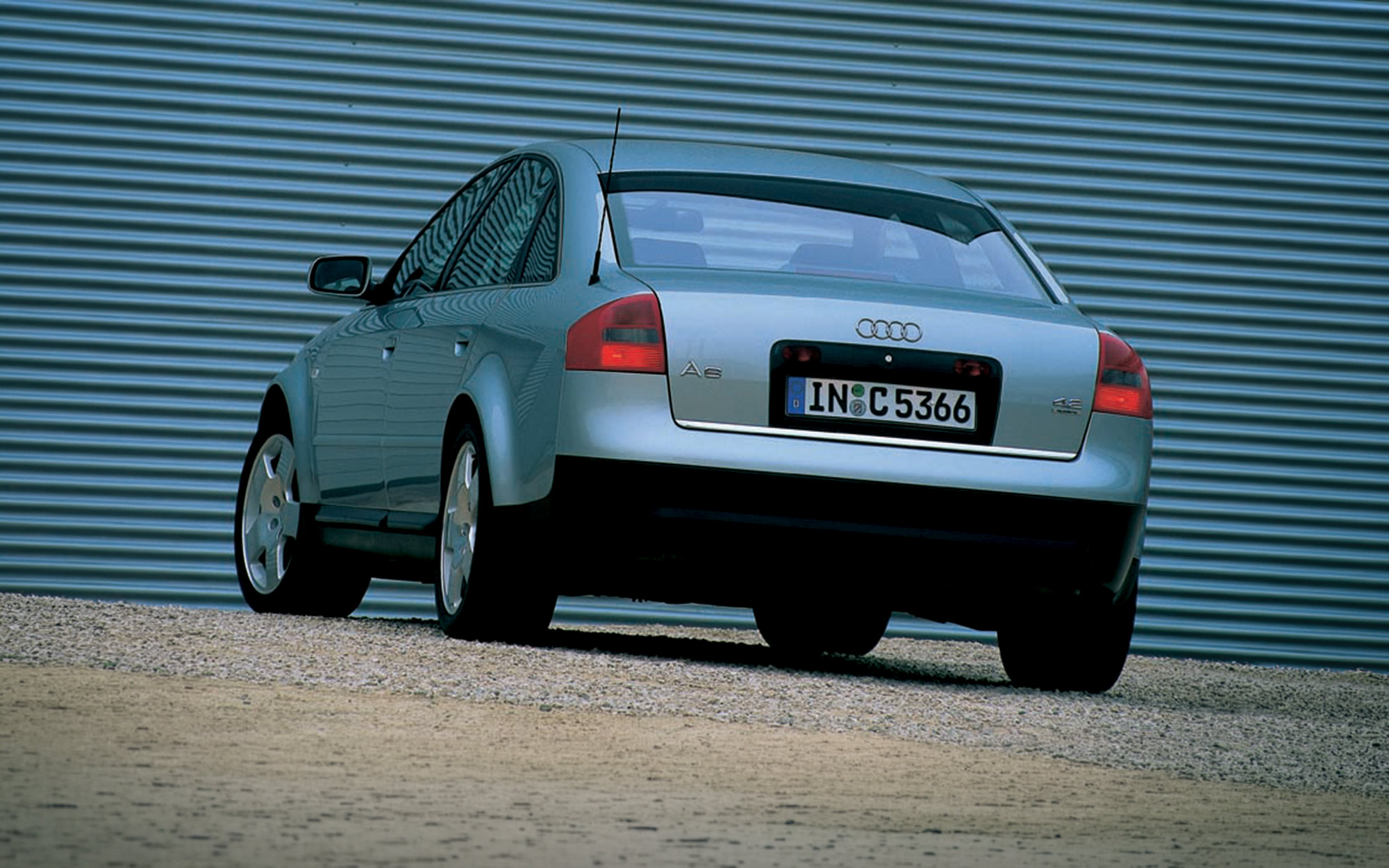
Also notable on the 4.2 were the fender flares. Audi also used the wider arches on the S6 of that era in order to help fund development of these unique panels. Though wider than the standard A6, they were subtle and downplayed for the more mature position the A6 occupied.
Differences like that integrated framed side plain and those arches marked effective differentiation from the more brash TT. Audi artfully moved TT elements to the rest of the line without looking forced. That will definitely be the challenge for Frascella and his skilled team at Audi design as they move to translate the bold language created for Concept C to a much broader Audi lineup.
“They were just really different – but not for the sake of it. They were different with the highest level of restraint,” he shared with Autocar. “How did these guys manage to come out with something so radically different, so radically emotional, with so much character, with almost nothing on it? Like with just one line, two lines at the most, no chamfers – in and out, convex and concave…. Just pure simplicity.”