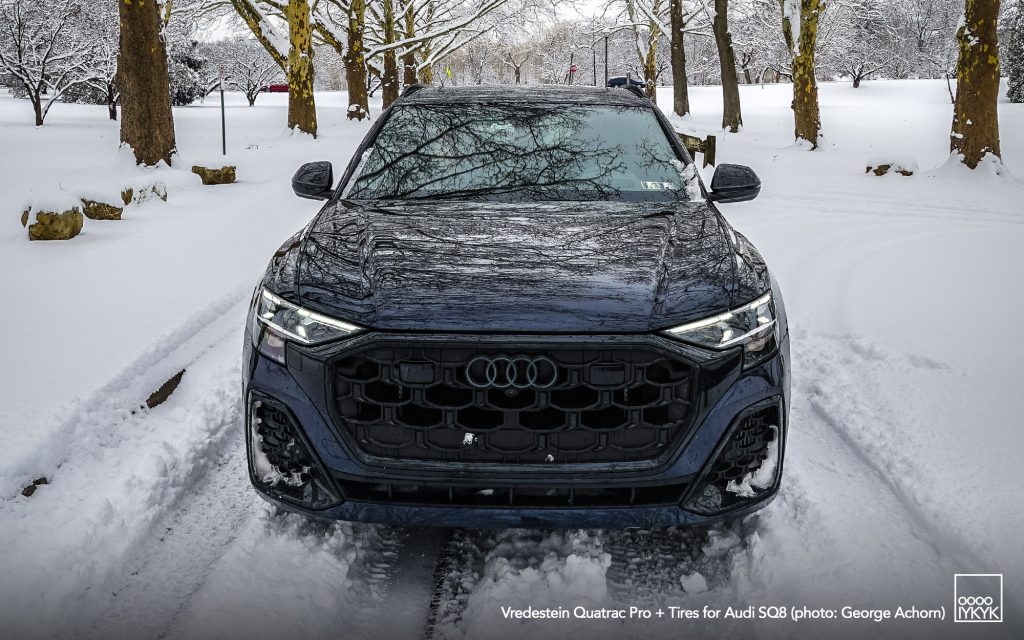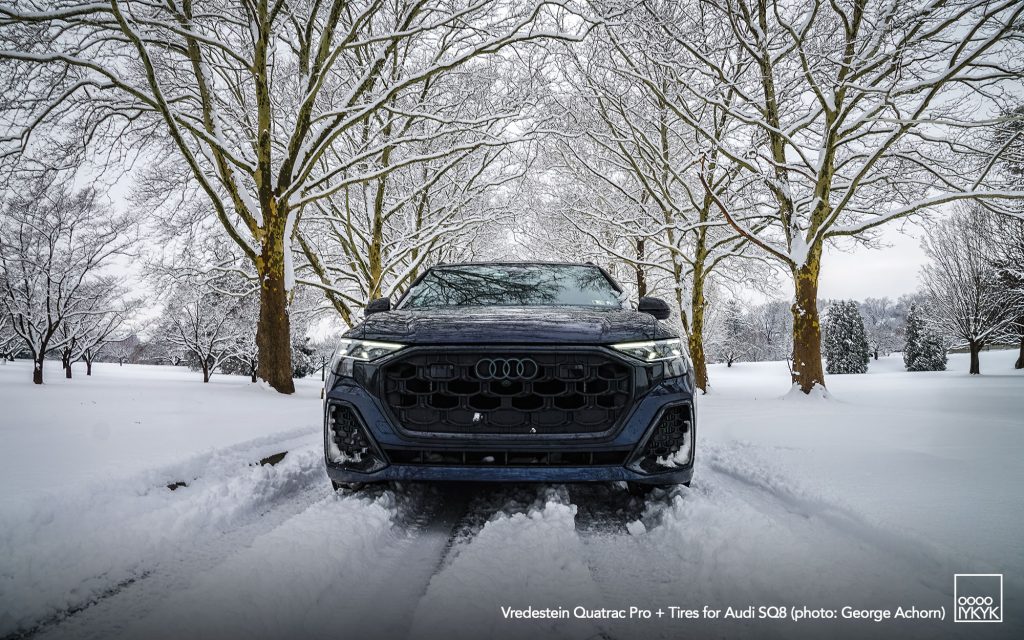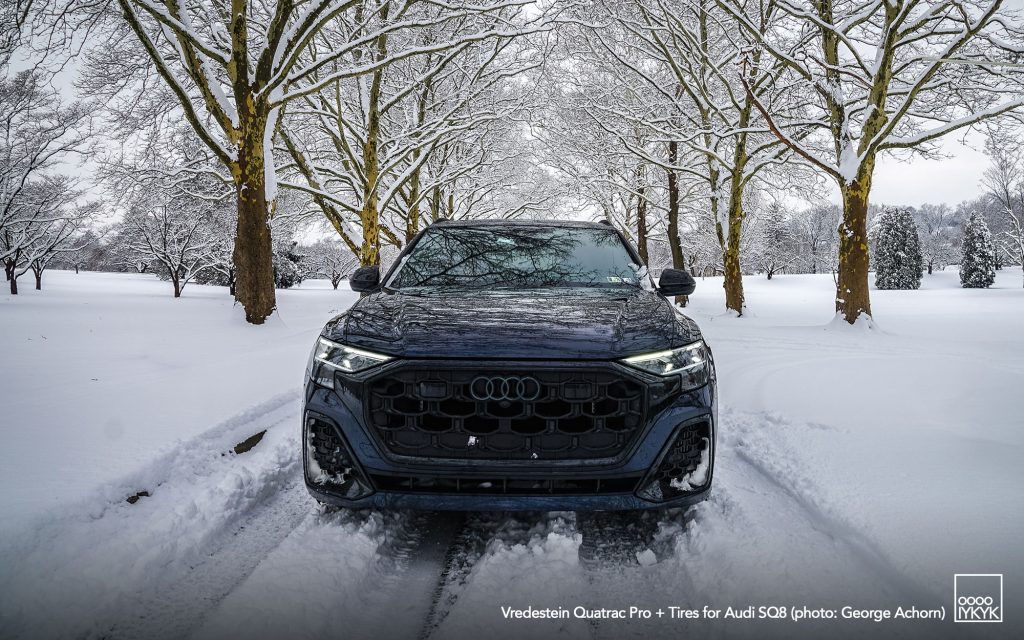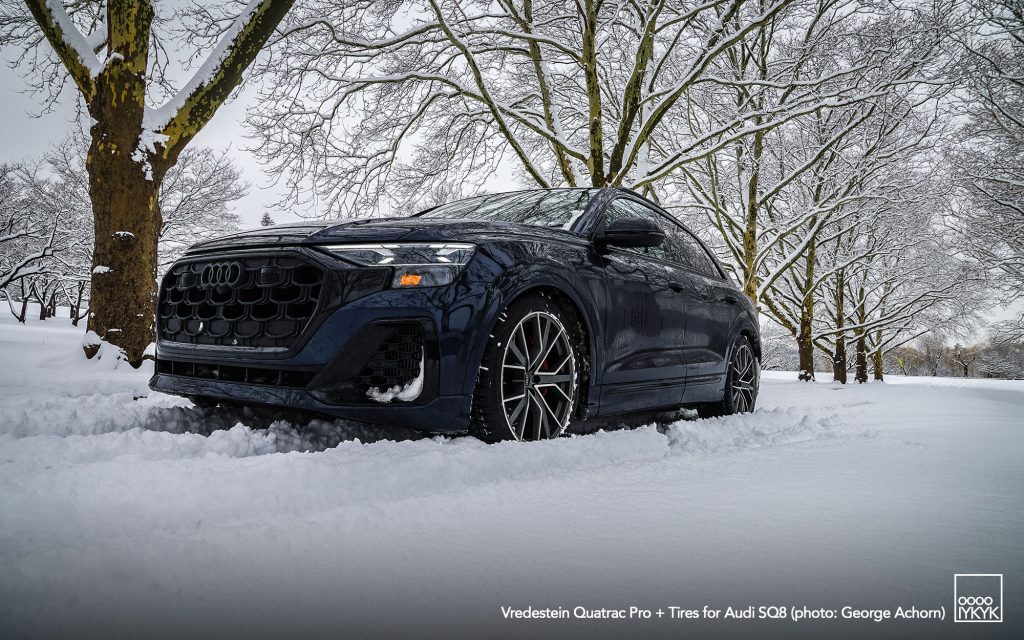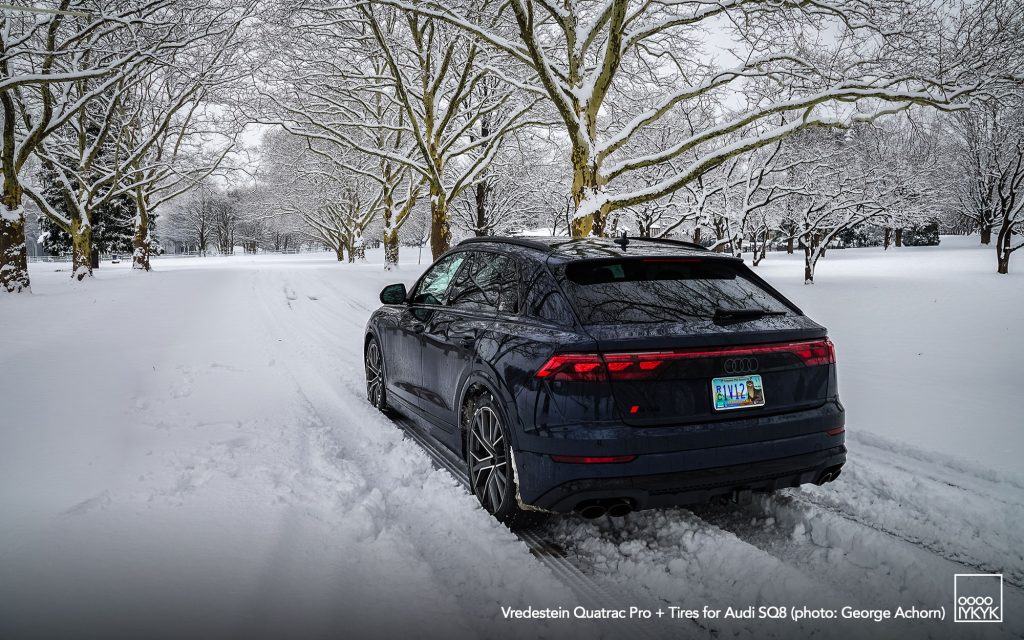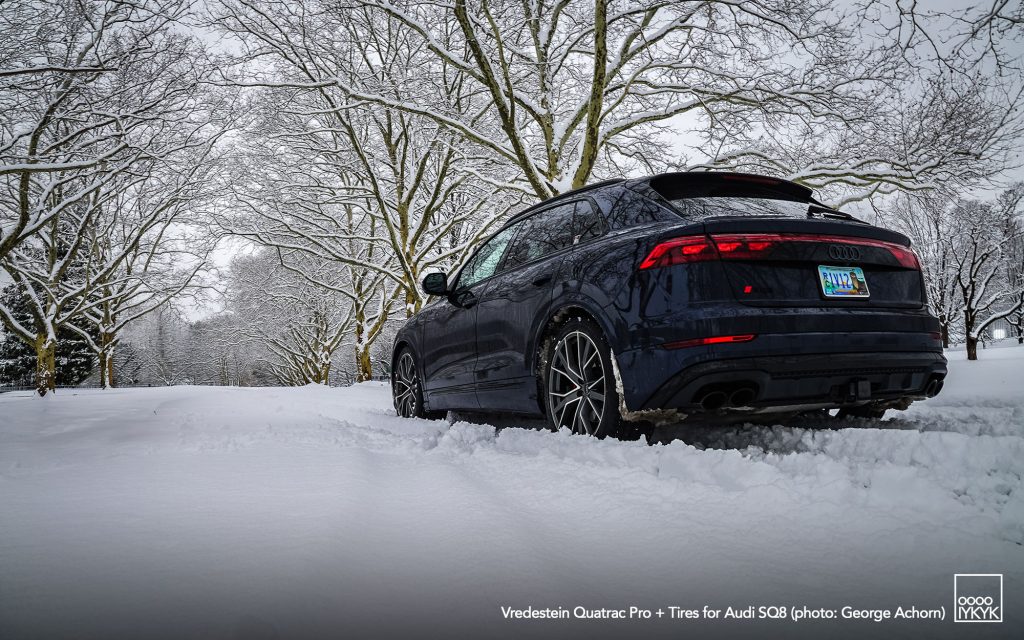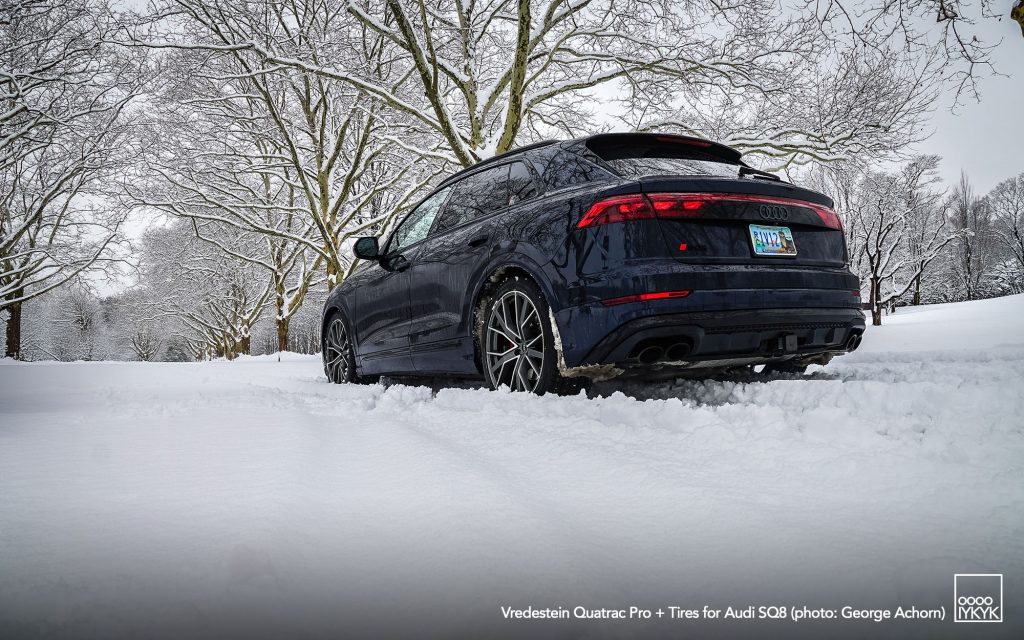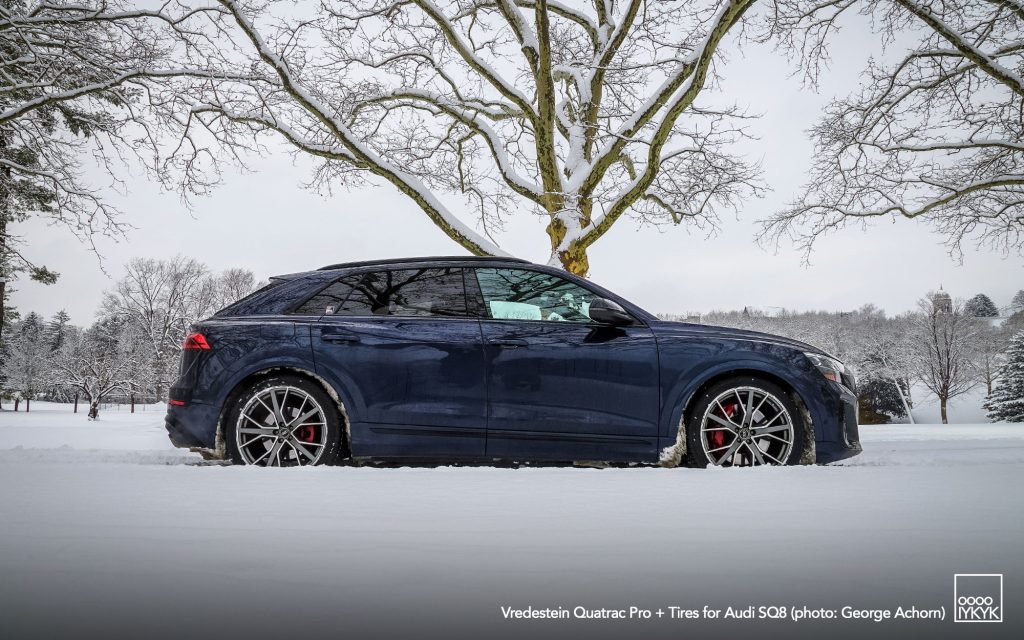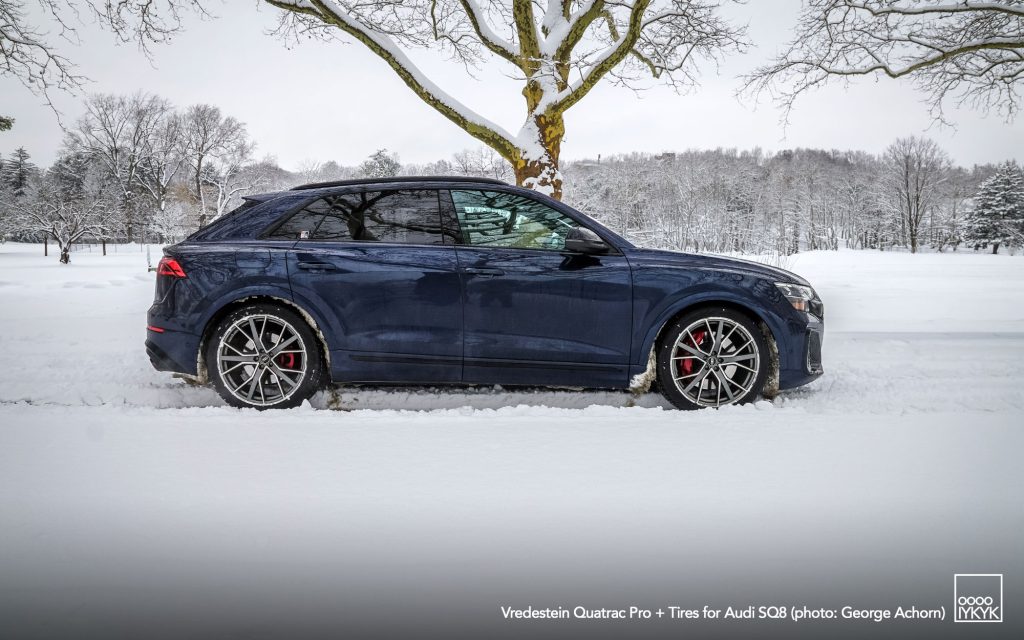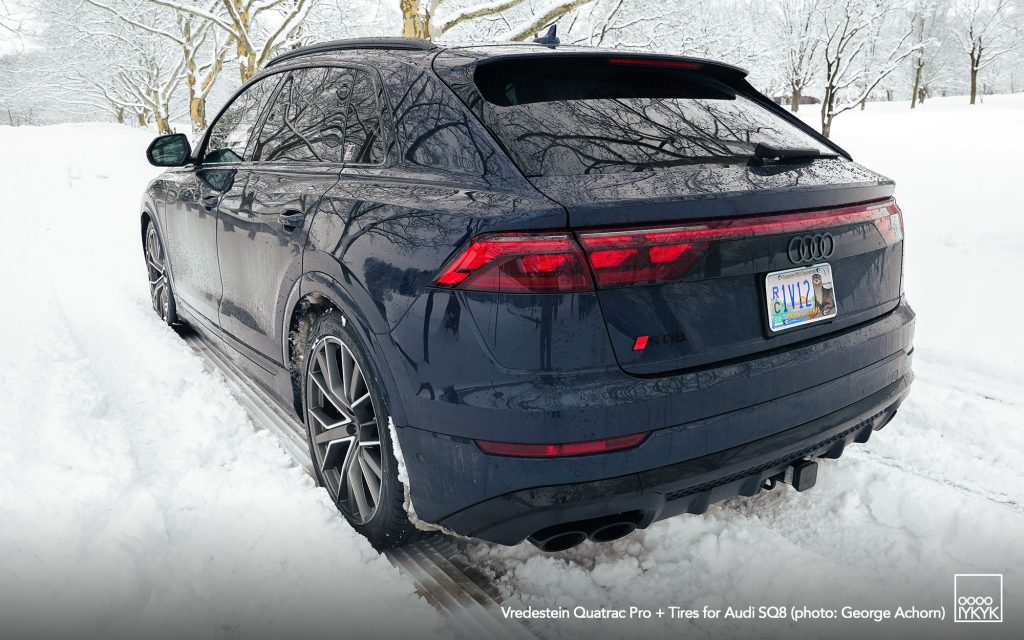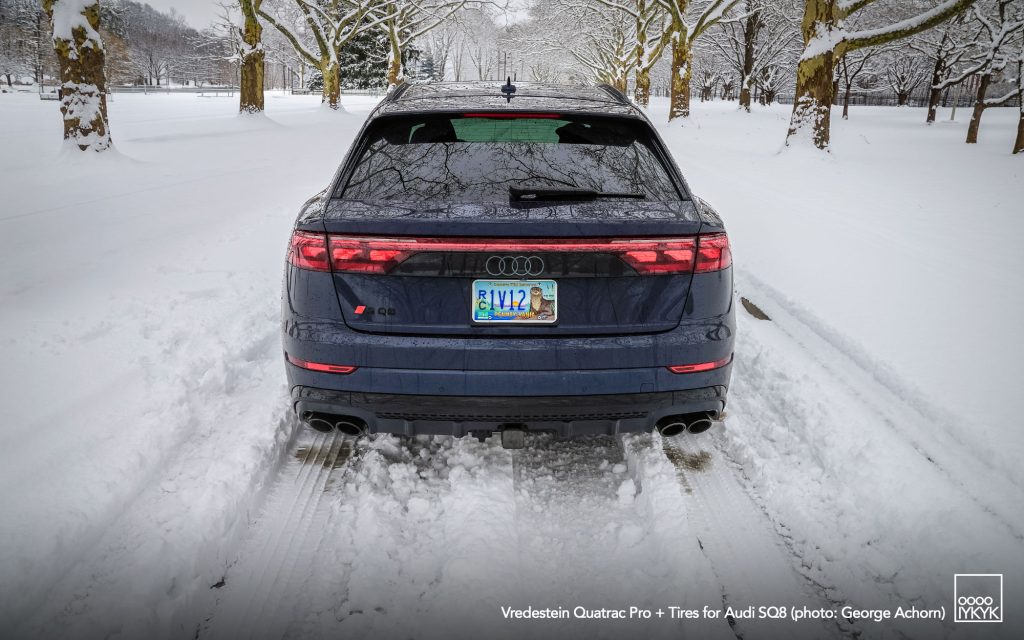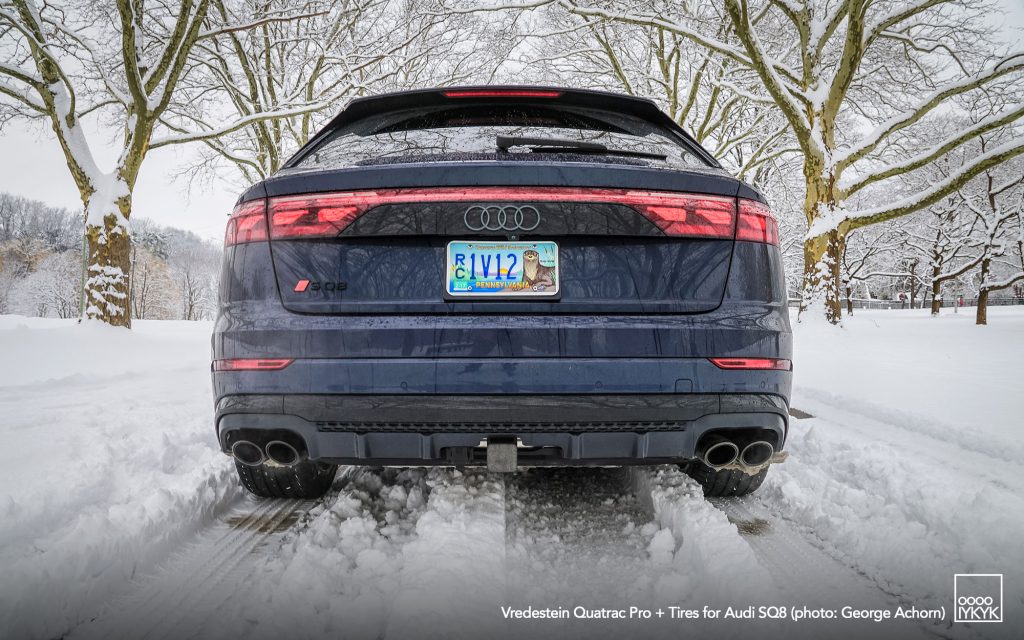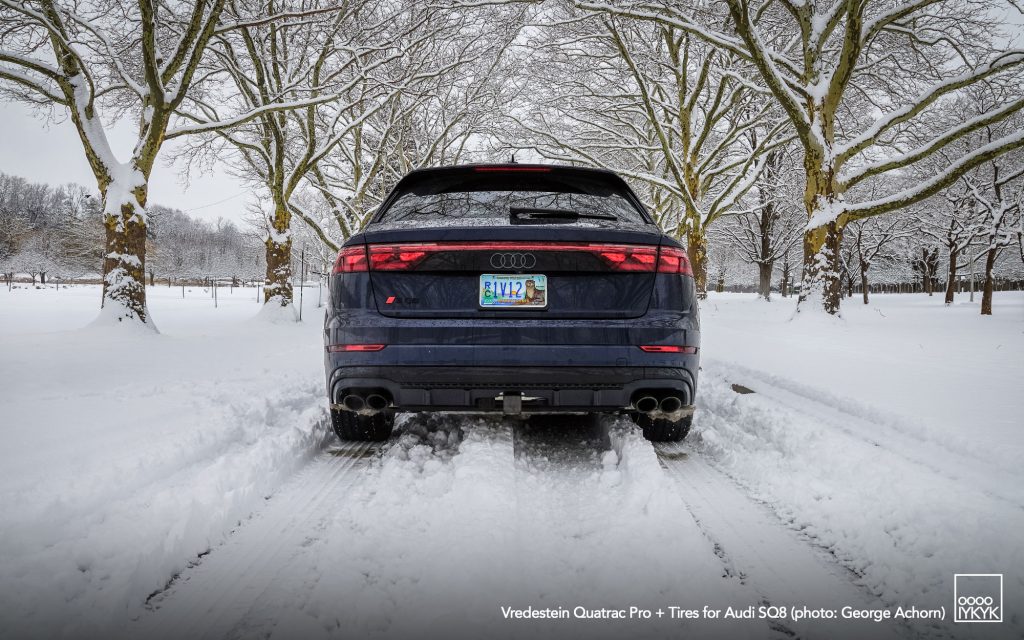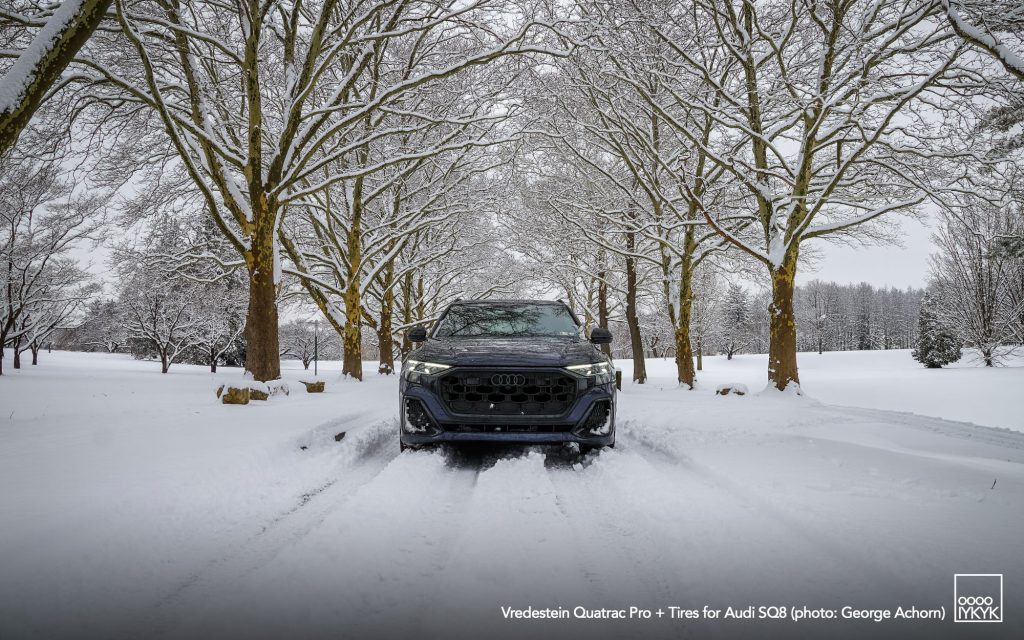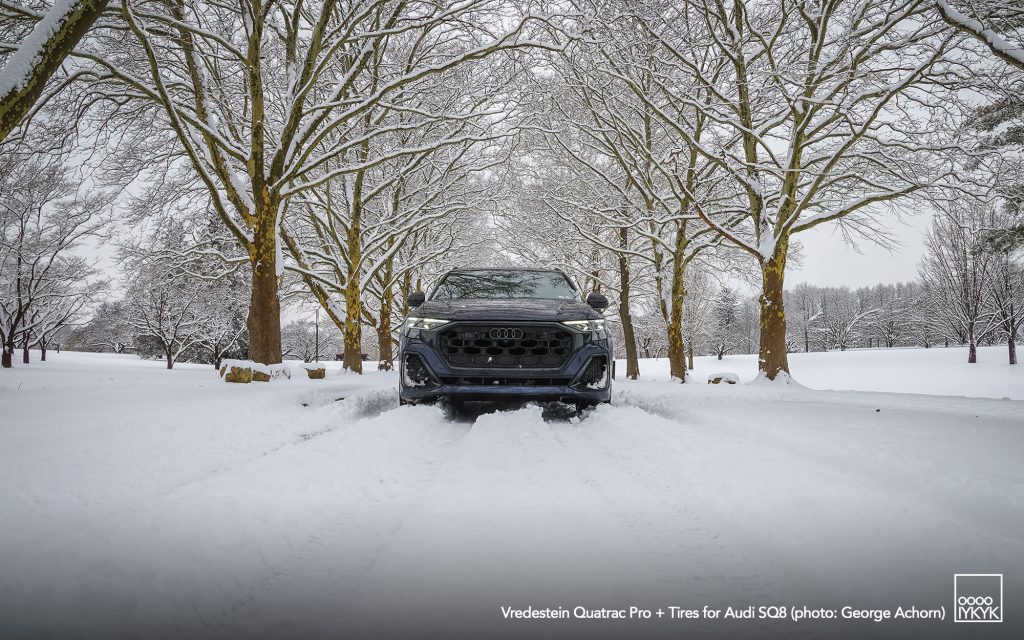

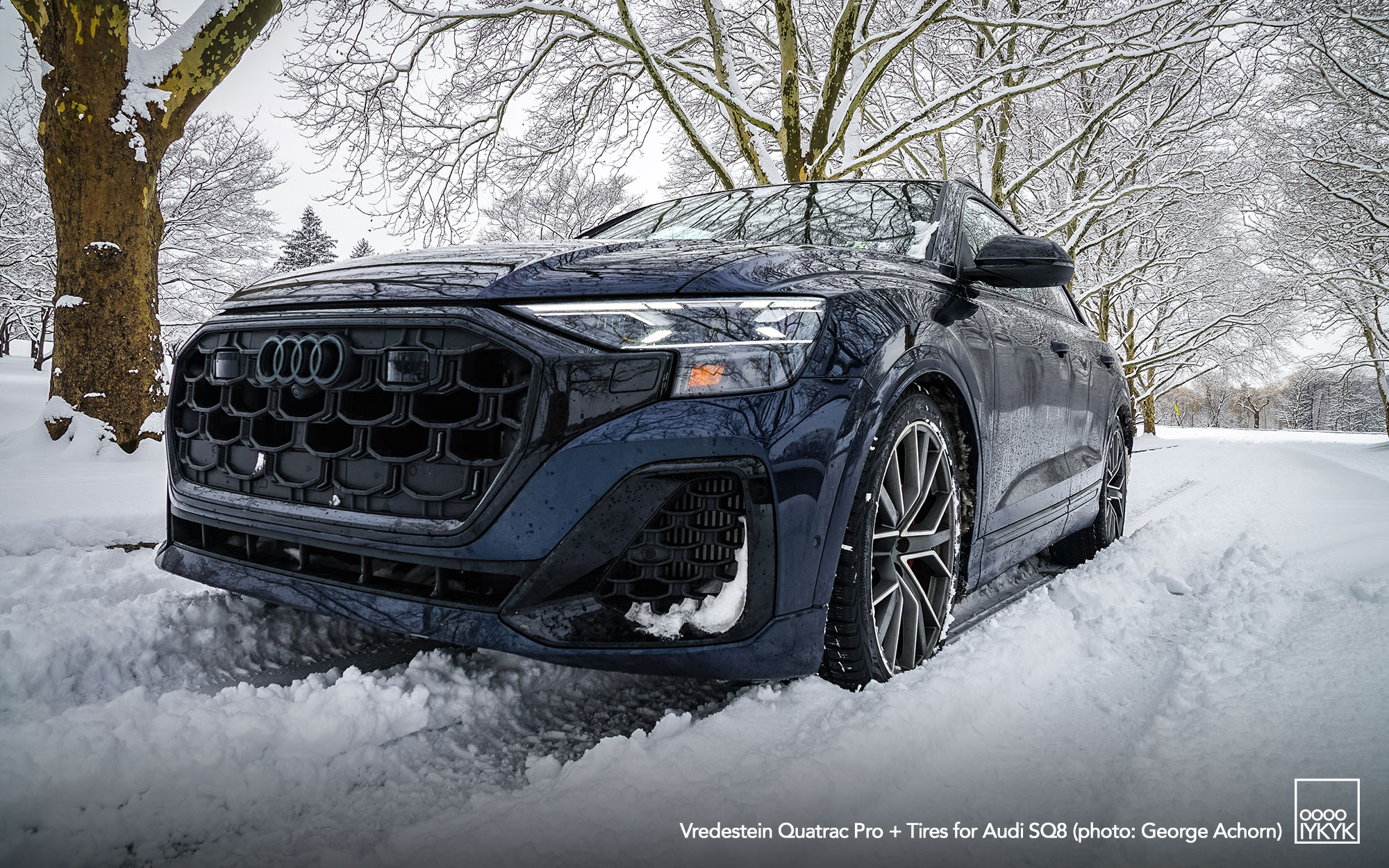

One assumption any four-season driver of an Audi quattro product will tell you should be avoided is assuming all-wheel drive offers invincibility. While all-wheel drive can be a fabled unfair advantage or a wheelperson’s superpower, the reality is that quattro is only half the battle… even quattro paired with torque-vectoring Sport Differential, ESP, ABS and four-wheel steering like our 2024 Audi SQ8. Because even with that mountain of hardware and tech, engineered to maximize control of the vehicle, the wrong set of tires can neutralize even this considerable advantage.
We took delivery of our Audi Certified Pre-Owned SQ8 Prestige last summer. The car had been tastefully specced by a customer of Audi Devon on the Main Line of Philadelphia, and that same customer would trade it within a year for an identically specced RS Q8 performance. Given what his next car would be, it may not surprise you to know that he’d gone ahead and had the car fitted with the optional 23-inch wheel package that comes from the factory fitted with Continental summer tires.
While that setup was sporty and handsome in the summer months, I knew I’d need a solution once the weather got cold. Rather unwisely, I bided my time and waited until after the holidays to actually make my winter plans. I made do with the 23-inch summer tires through a few light snows, staying local and avoiding going out — an oddity for someone who relishes the so-called “quattro weather.” Even still, one or two rather useless stops on snow, where the ABS chattered hopelessly as the car skidded forward toward some brake-checking driver in front of me, convinced me it was time to finally make the move.
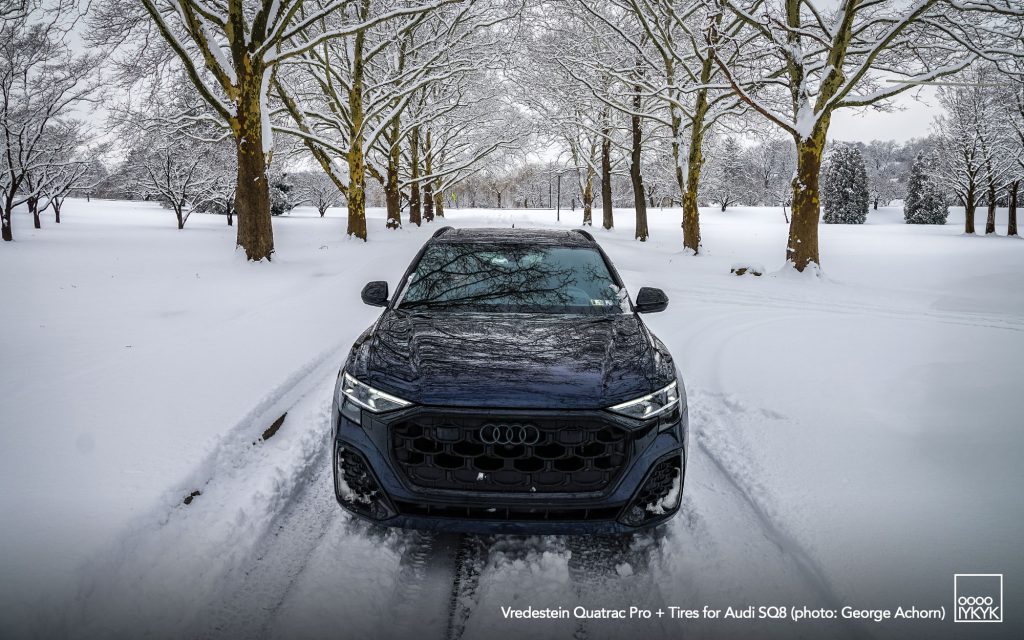
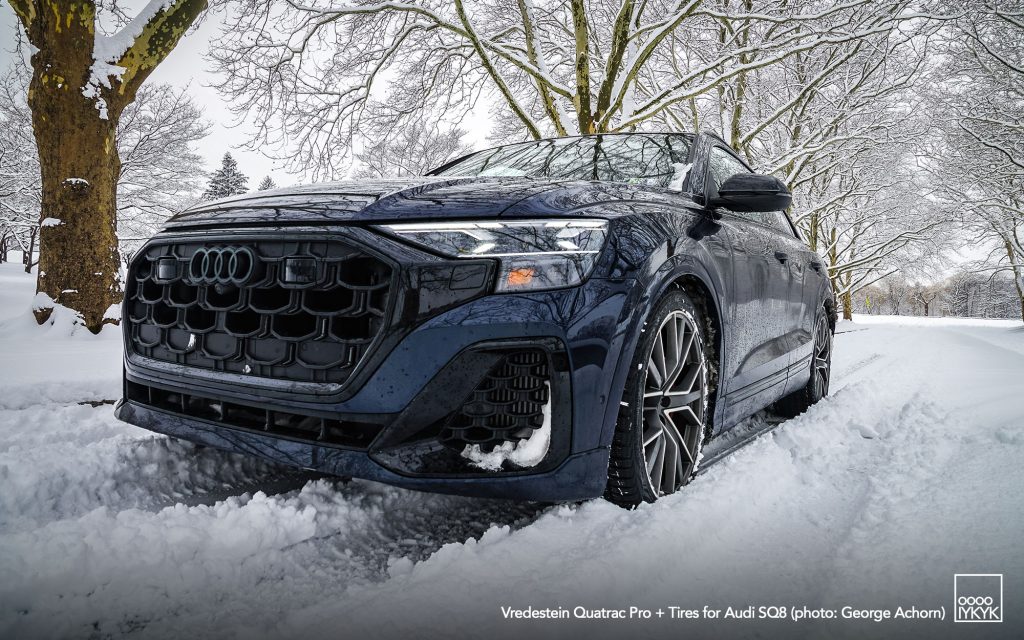
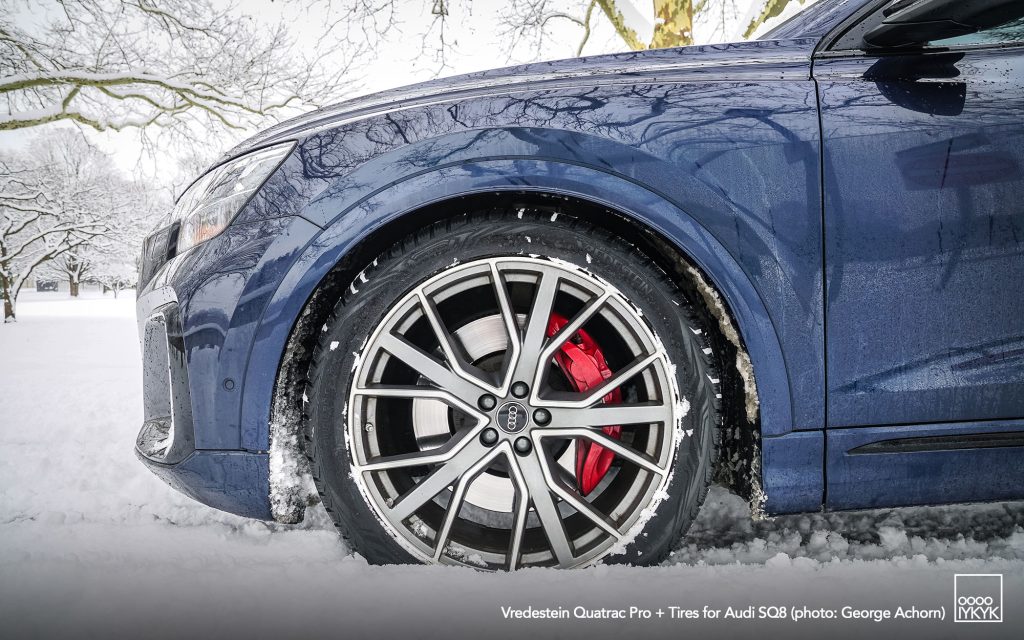
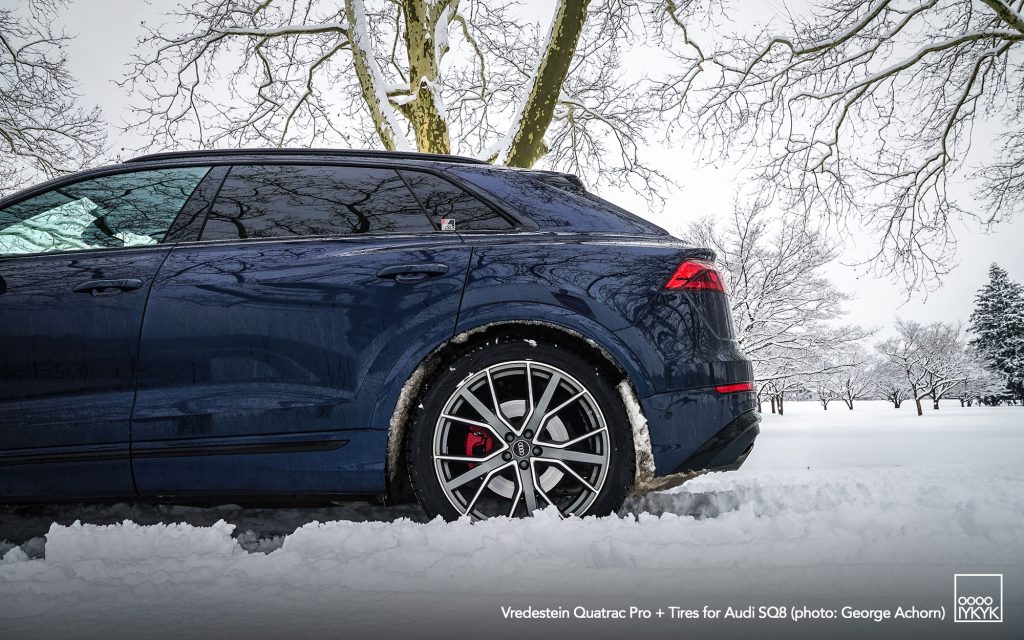
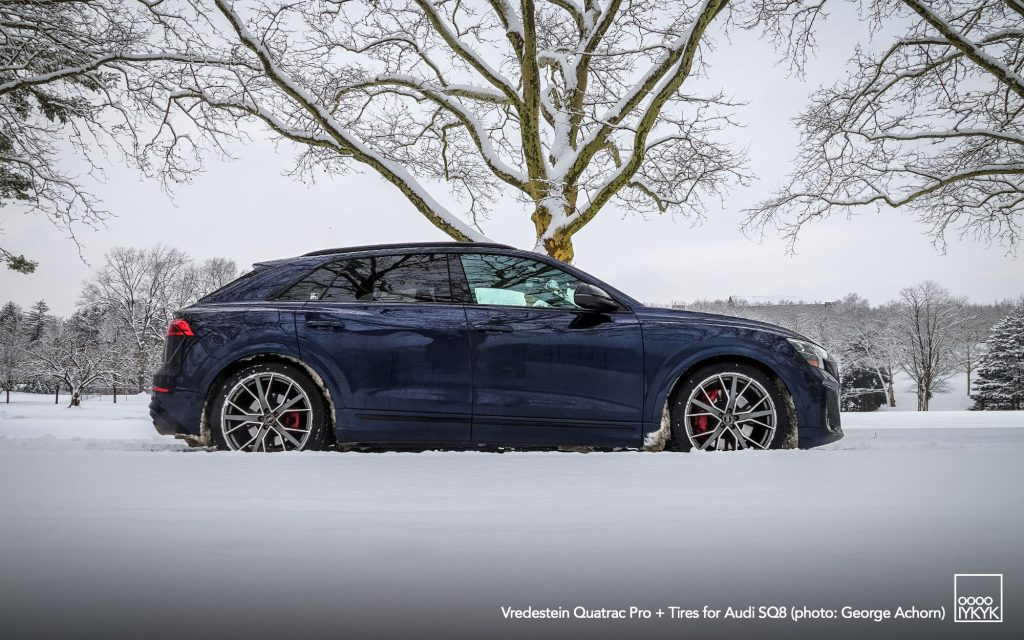
I’d already had a set of 22-inch Audi Split Y-spoke wheels (a.k.a. Tarantulas) that had served me loyally. Originally billed as European SQ7 wheels, I’d fitted them to an early Q7 (type 4M), then on two different family e-trons before they’d ended up in a stack in my garage waiting for the next family Audi they’d fit. That day came with the SQ8, which was proper fitment, though optically making the car look like every other Q8 out there — a true sleeper.
When it came to tires, I was on the fence about whether to go with an all-season tire or a dedicated winter tire. Winters can be an amazing superpower on a car like the SQ8, but I live in southern Pennsylvania where winters can be hit or miss — more miss than hit these last few years. I’ve also noticed that some all-seasons have gotten particularly effective in the snow. We’d run a set of Vredestein Quatrac all-seasons on our e-tron that sees year-round commuting duties, and it performed impressively in the snow.
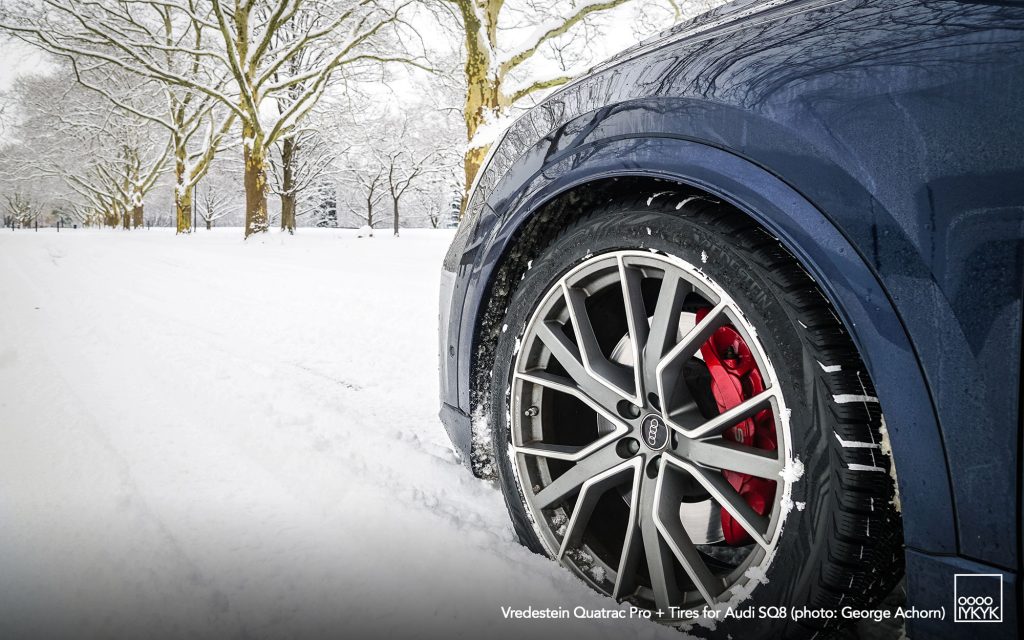
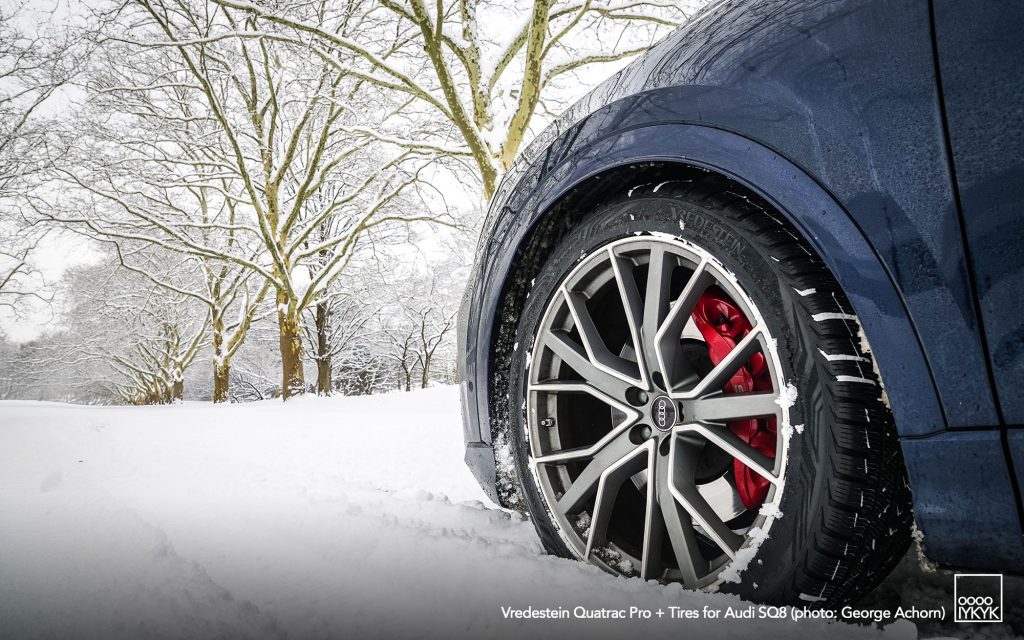
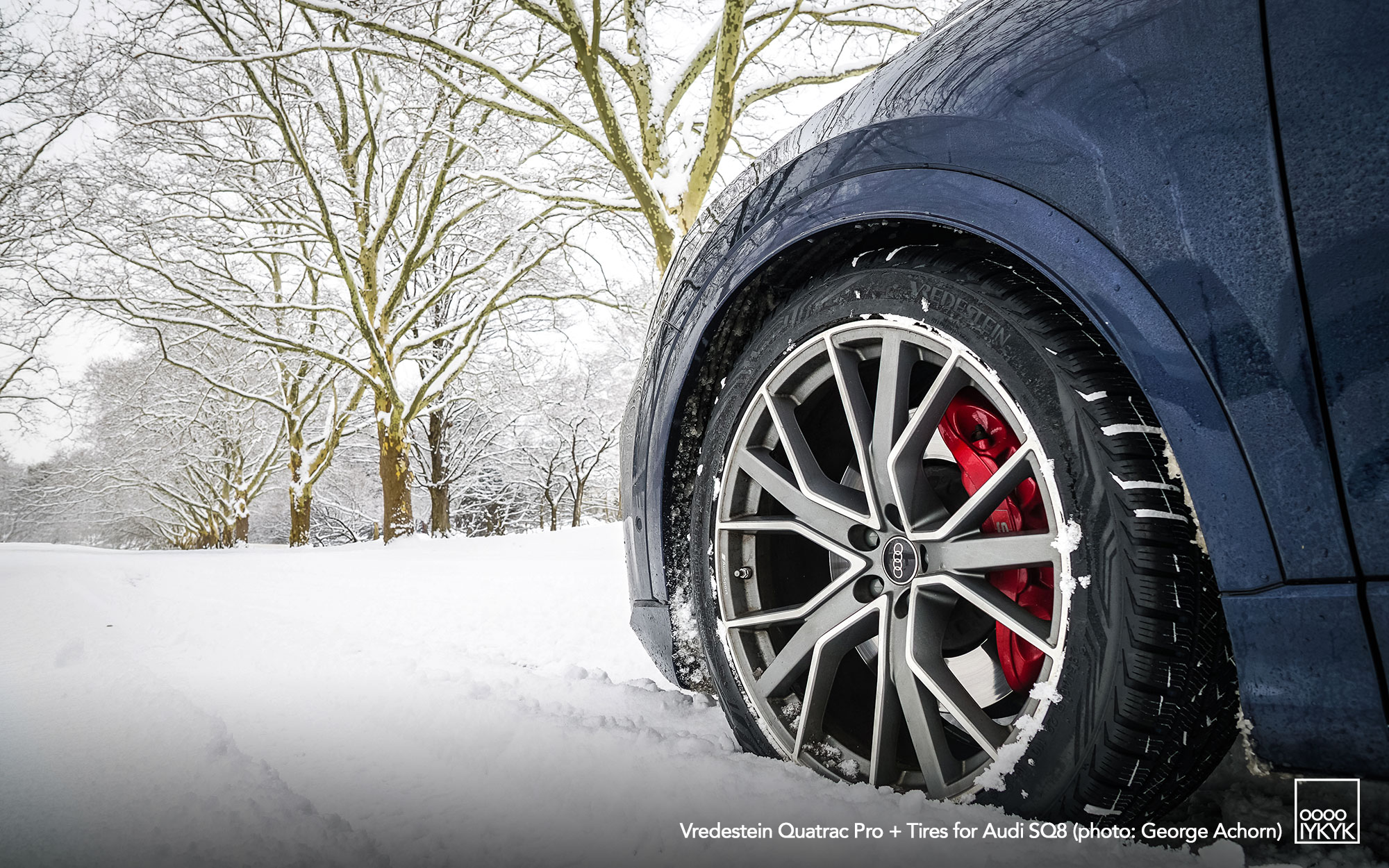
That Vredestein now makes the Quatrac Pro+ in 285/40R22 for the SQ8 in 22-inch fitment helped make the decision a relatively easy one. We wanted one setup that could handle cold mornings, slushy commutes and dry highway miles without turning the car into the sort of Alpine ice racer that might be more necessary in places like Chicago or Denver.
So, the Quatrac Pro+ is all-season, but it’s also earned the Three-Peak Mountain Snowflake rating. But what does that little mountain-and-snowflake symbol actually certify?
3PMSF NOT JUST A REGULAR ALL-SEASON
Most traditional all-season tires carry an “M+S” (Mud and Snow) marking. That designation is based on tread pattern geometry — open grooves and voids — not on a formal performance test. It doesn’t guarantee how the tire will actually accelerate, brake or steer on snow.
The Three-Peak Mountain Snowflake (3PMSF) symbol is different. To earn it, a tire must pass an industry-standard test for light-snow acceleration traction, demonstrating a measurable improvement over a reference all-season tire. In short, it proves the tire compound and tread design work together in cold, snowy conditions, not just in theory.
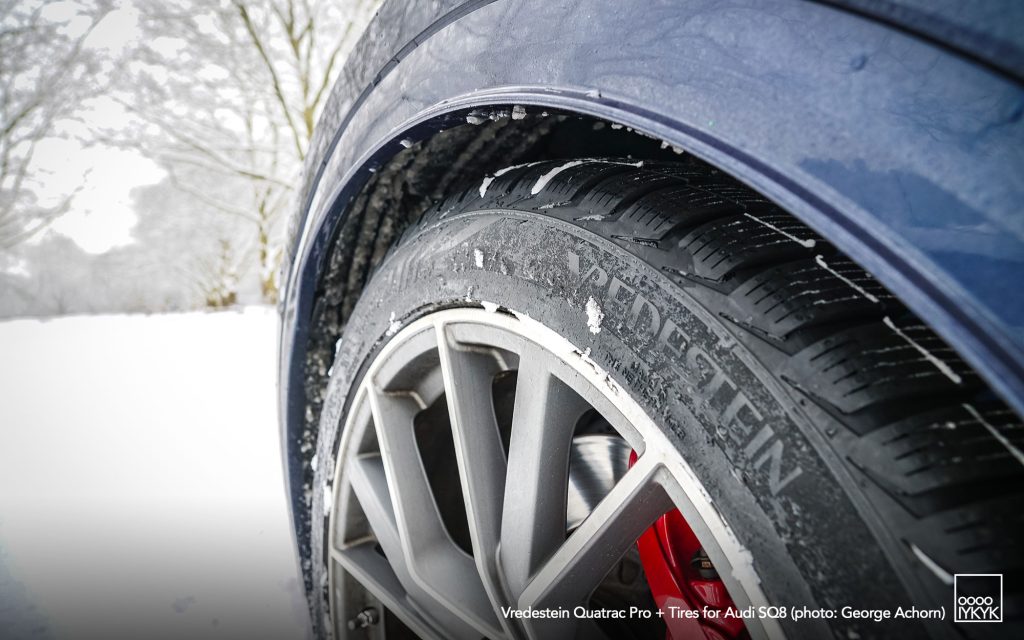
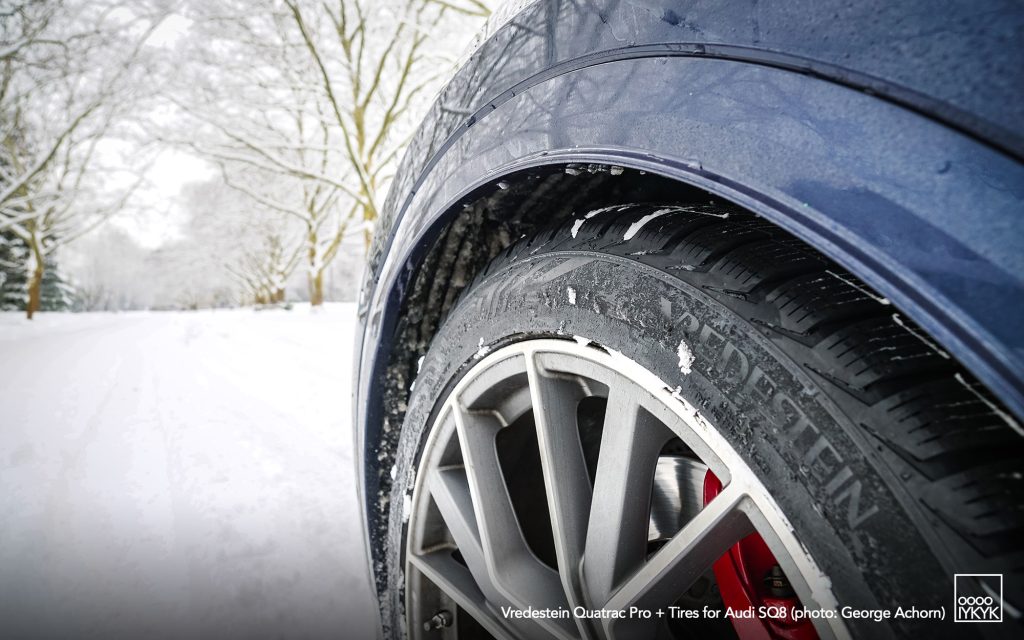
For the Quatrac Pro+, that comes from a high-silica, resin-rich compound that stays more flexible as temperatures drop. An asymmetric tread design splits duties: a stiffer outboard shoulder with larger tread blocks supports dry handling, while the inboard side uses wider grooves and more siping that gives the tire a winter tire appearance and, more importantly helps evacuate water and slush and to bite into light snow.
THE SPACE BETWEEN ALL-SEASON AND WINTER
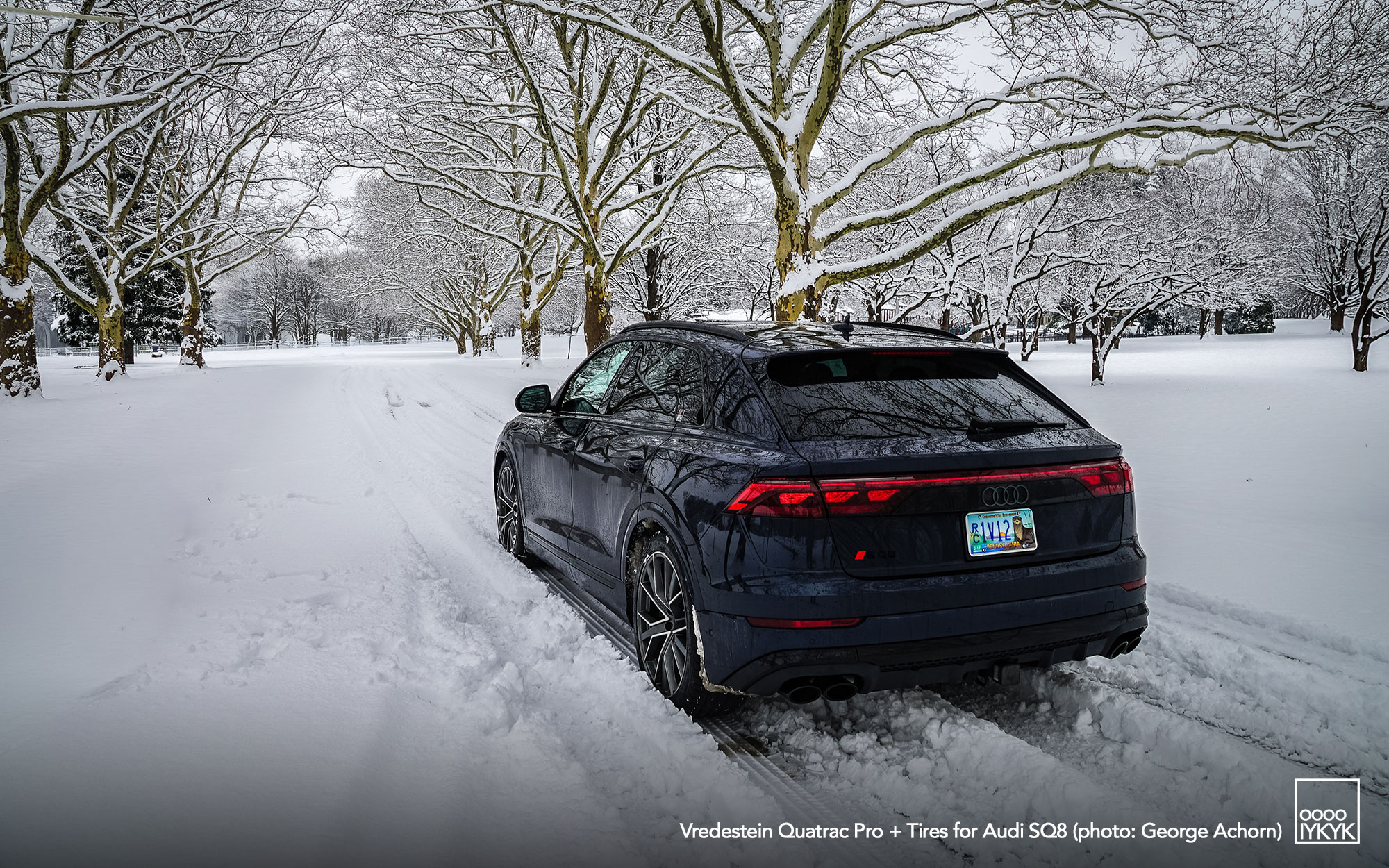
A 3PMSF all-weather tire occupies the middle ground between a conventional all-season and a dedicated winter tire.
A true winter tire goes further, using even softer cold-weather compounds and more aggressive siping and void ratios to maximize grip on packed snow and ice. The tradeoff is warm-weather behavior: winter tires can feel less precise on dry pavement and wear quickly when temperatures rise.
The Quatrac Pro+ doesn’t try to out-winter a winter tire. Instead, it closes much of the gap in cold and light-snow conditions while retaining the road manners expected from a year-round touring tire. That balance is exactly what the heavy, high-performance SQ8 needs when it’s expected to do everything from highway runs to foul-weather errands in the sort of climate where this particular Audi resides.
FITTED TO THE SQ8 JUST IN TIME
For our SQ8, the decision came down to real-world use. Quattro can only work with the traction available, and with this much mass and performance, braking and steering grip in cold weather matter as much as straight-line traction.
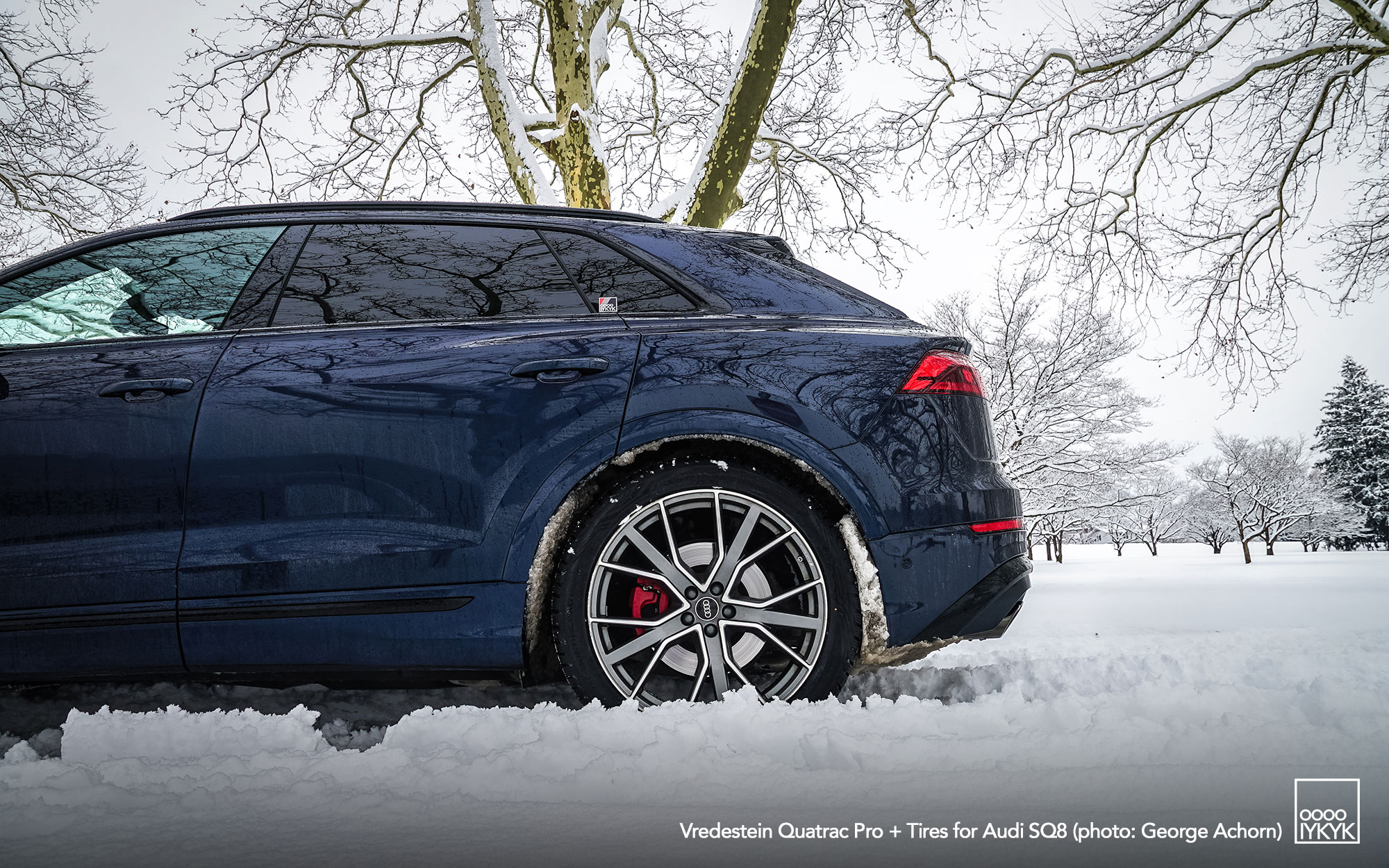
A 3PMSF all-weather tire like the Quatrac Pro+ widens the SUV’s effective operating window. It wasn’t chosen to replace a true winter tire in severe ice and deep snow, but it would offer a meaningful step up from a standard all-season alternative during the warmer months when I’ll be running the 23-inch wheels with summer tires. By going with an all-season, I won’t be so rushed to make the swap as temperatures rise.
Installation, it would turn out, came just in the nick of time. The tires went on one Wednesday in January, and by Friday a planned road trip happened to coincide with a weather system that had begun to drop one to four inches of snow along our route.
As the snow fell, it was clear that many other Pennsylvanians had made the same gamble I had — at least until the previous week. Collisions were everywhere, and our planned highway route was eventually closed, sending us onto winding farm roads with far too many others, including commercial trucks that had no business in the tight gullies and switchbacks we found ourselves encountering.
It would be the ultimate test: whether the Quatrac Pro+ would be the right final choice for the SQ8 and all its tech, making the final package capable enough to excel in those moments. Over and over, it never failed to impress. In fact, it performed so well that we recorded an entire episode of the oooIYKYK Podcast about it.
Now that it’s all over, it is far more entertaining to recount than it was to white-knuckle past wreck after wreck, or roll silently atop snow past crawling cars on a major highway where only one lane had been treated.
COMPARISON TESTED BY TIRE RACK
Independent testing completed by Tire Rack backs up our experience with similar qualities. On the road, the Quatrac Pro+ is described by Tire Rack as having a composed, slightly firm ride that smooths out smaller road imperfections and keeps noise levels low. Steering response isn’t razor-sharp like a max-performance summer tire, but effort builds naturally and predictably.
In wet conditions, the tire performs near the top of its category, with strong traction under throttle and confident, direct steering feel. Snow is where the 3PMSF rating shows its value: braking and acceleration performance stand out for the segment, and the tire’s lateral behavior is forgiving, leaving some room for mid-corner corrections if you overstep slightly. Ice grip remains average — a reminder that this is still an all-weather tire, not a dedicated winter specialist.
Dry emergency handling reveals the compromise. At higher speeds in abrupt maneuvers, the tire can feel more limit-sensitive than a performance-oriented summer setup. That’s the price of a compound and tread designed to function across a broader temperature range.
FINAL SUMMARY
It’s fair to say that my first real test of the SQ8 with its new Vredestein tires was a fairly risky ordeal. Though the SQ8 was never out of control, the same couldn’t be said for those all around me that day.
Even still, the riskiest part of the entire experience was probably waiting so late in the season to finally take off the summer tires and make that change. Had I not done so, I likely would have been one of those other poor souls stranded in a Lehigh County ditch… or maybe I’d have never left the house.
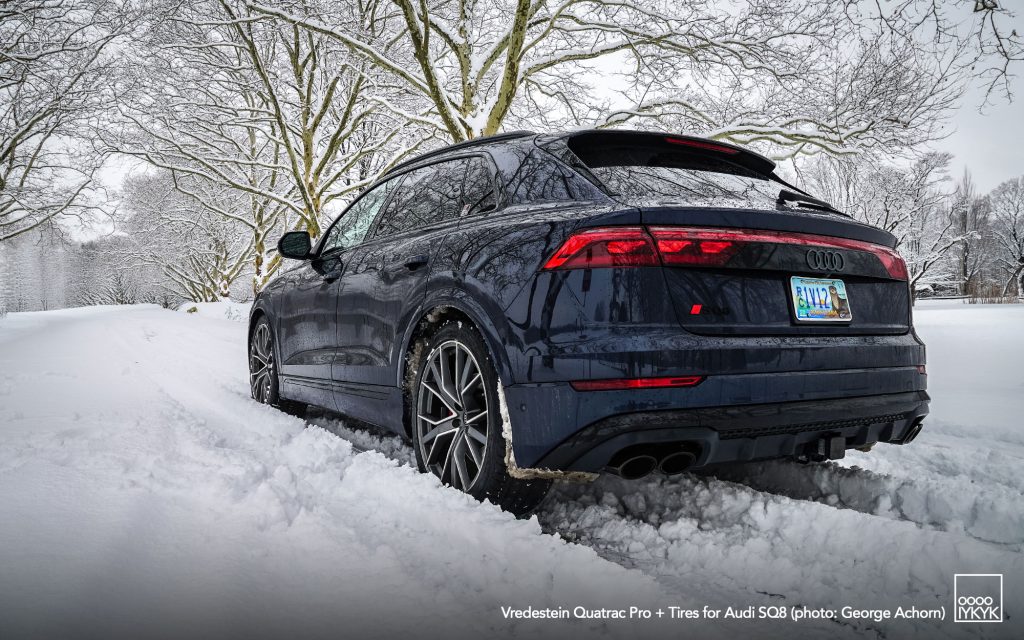
While the new setup is a bit more sleeper than the SQ8’s summer configuration, that’s also not a bad thing. It transforms the car from the handsome attention-getter it proved to be last summer into a wolf-in-sheep’s-clothing sleeper now. And, should I ever have a summer sidewall blowout or need a backup set of tires for any other reason, the flexibility of my all-season decision means I have that as an option.
PHOTO GALLERY