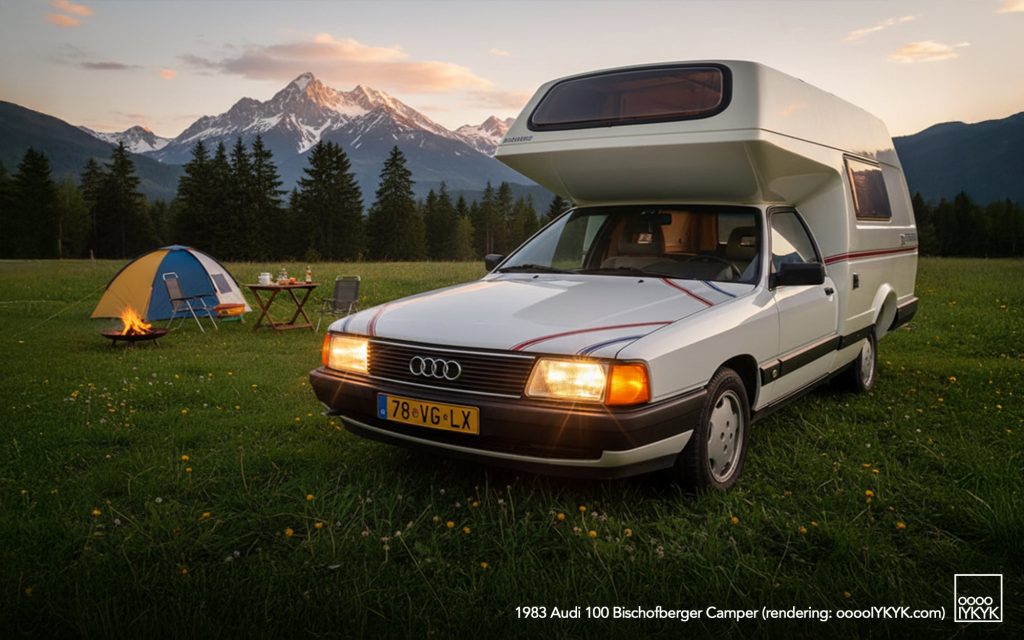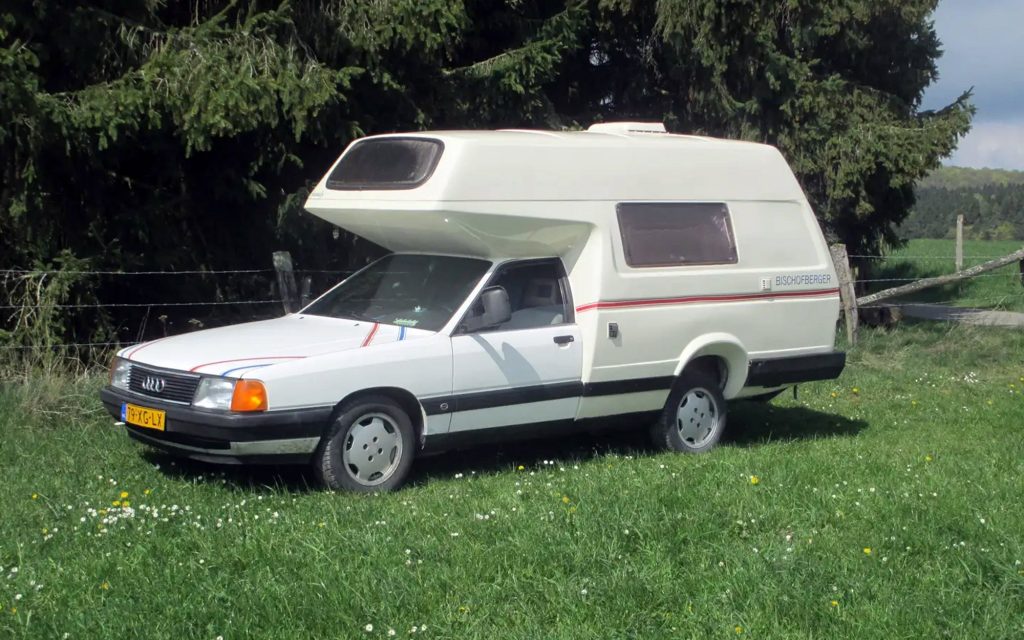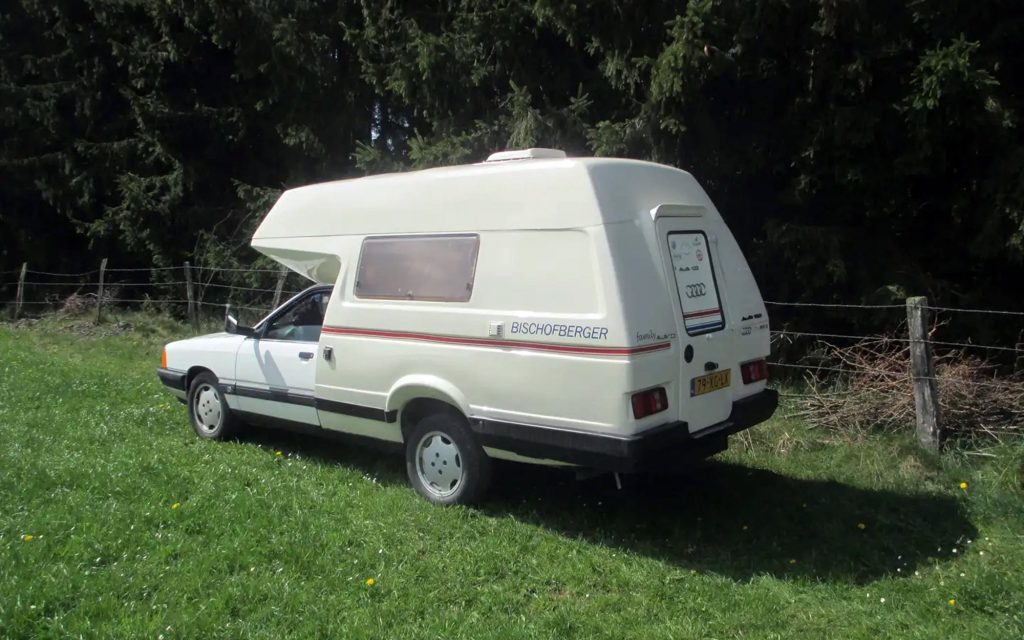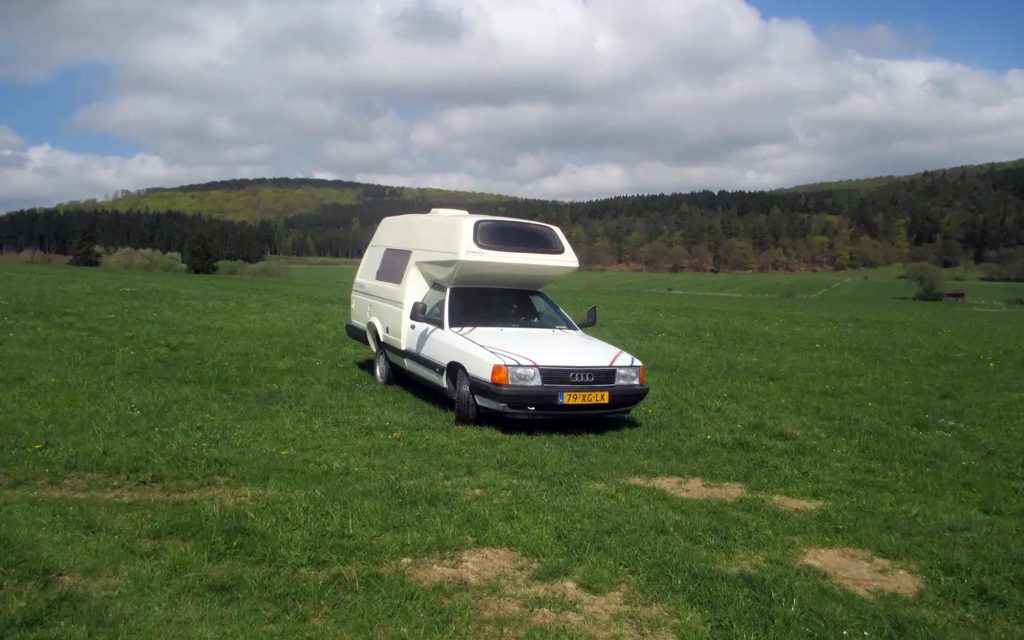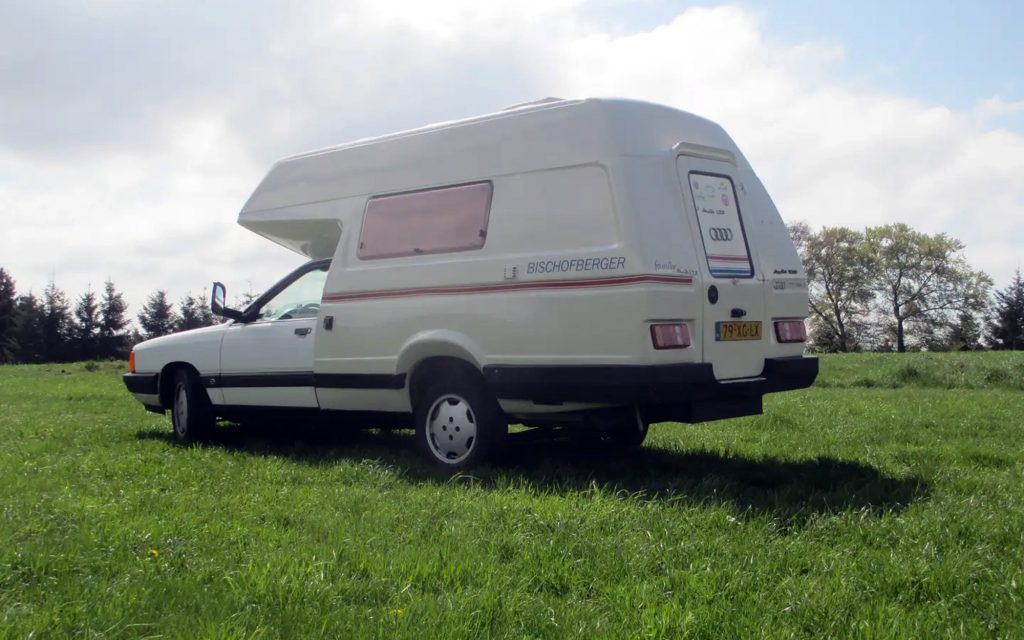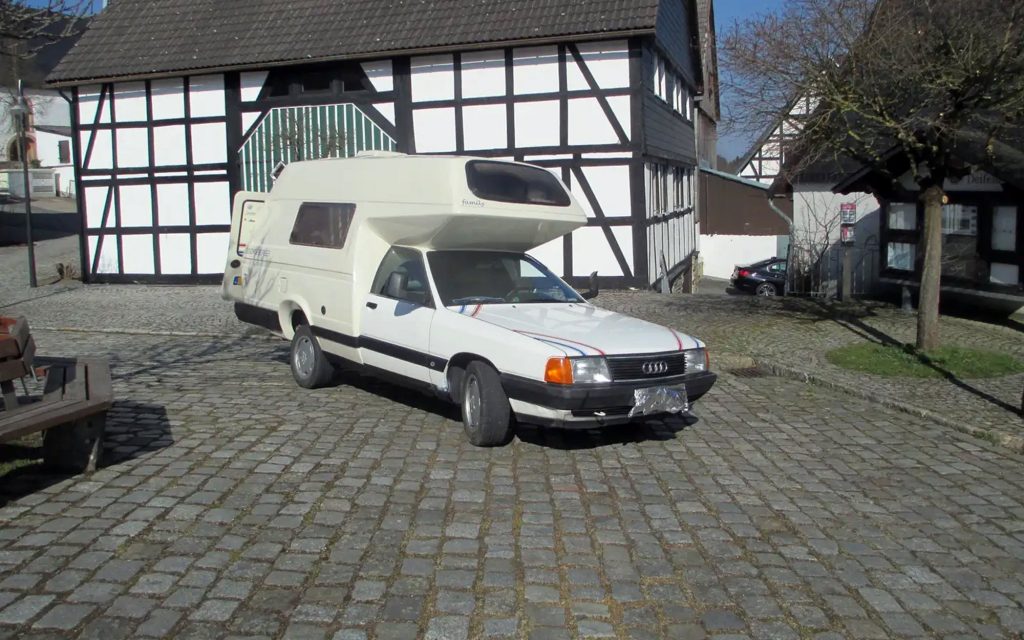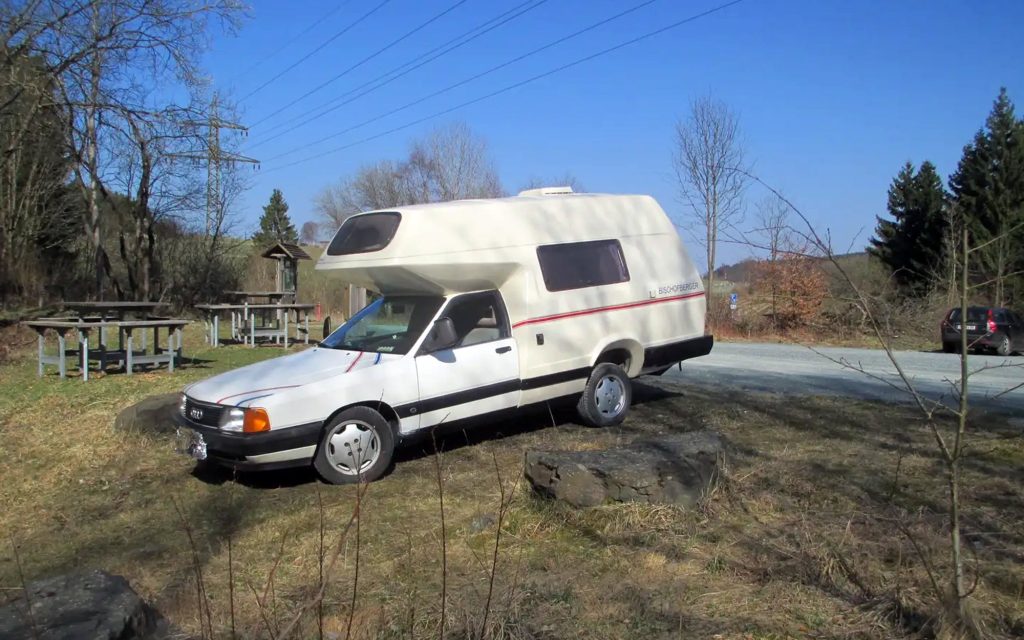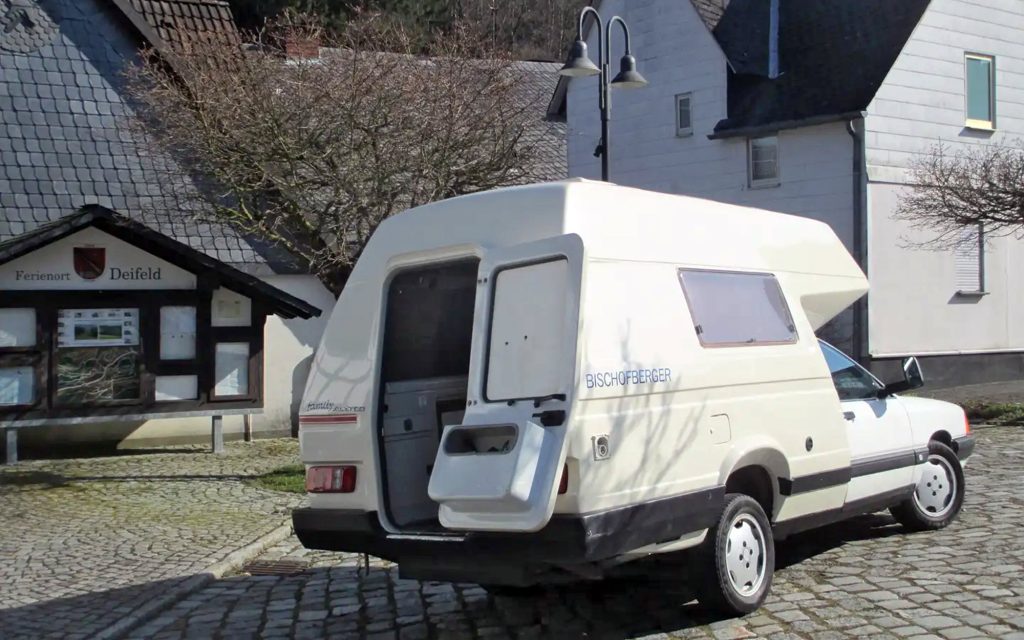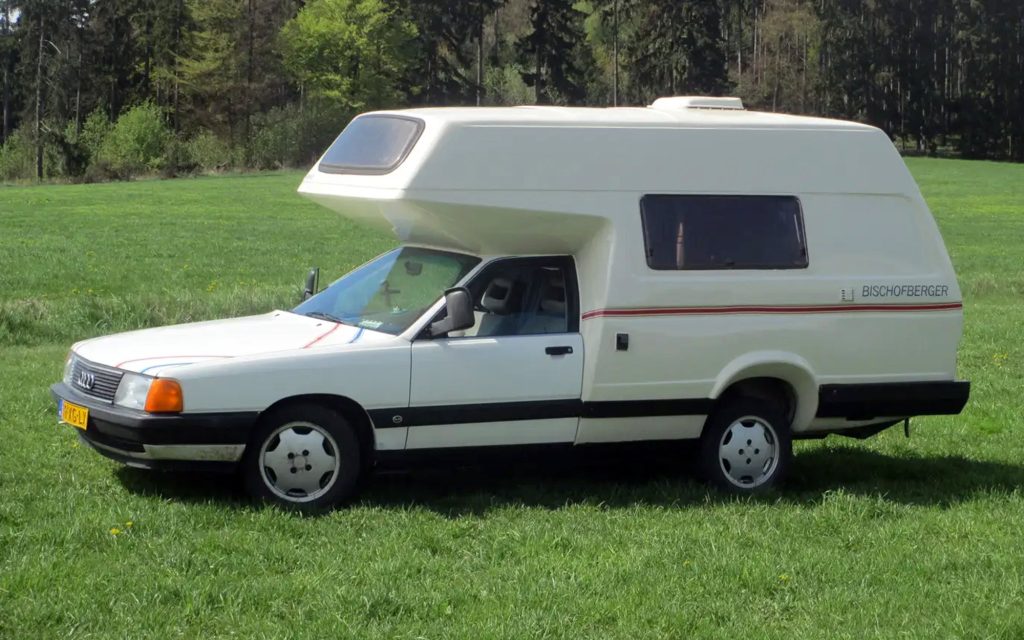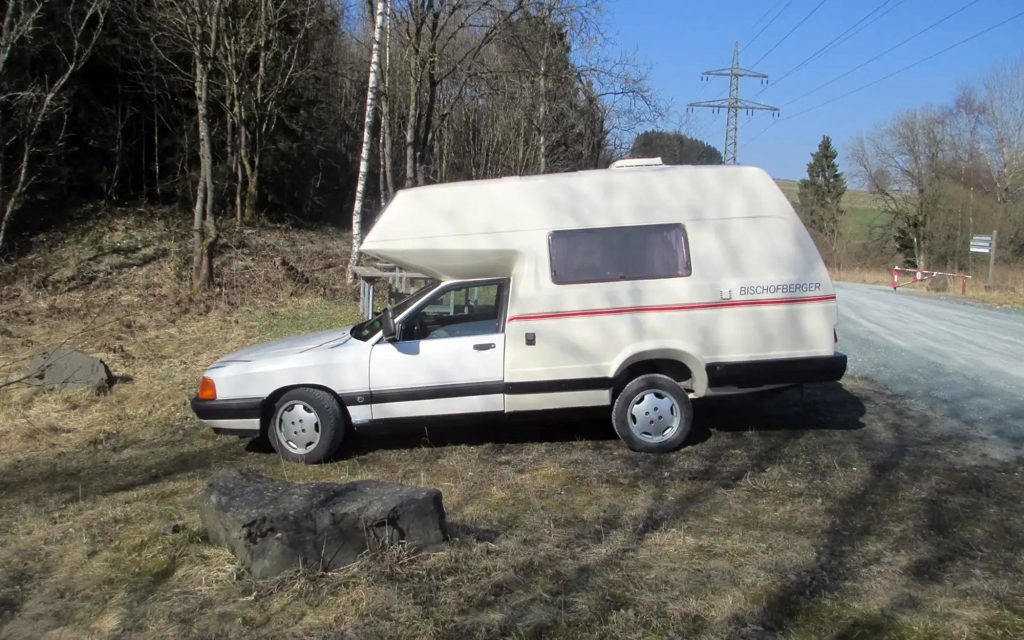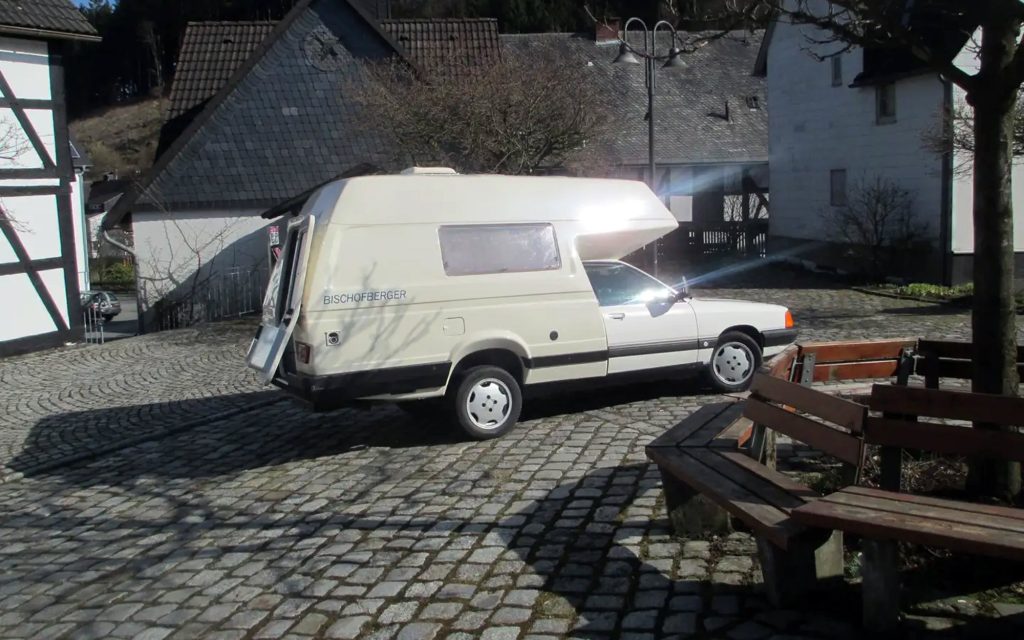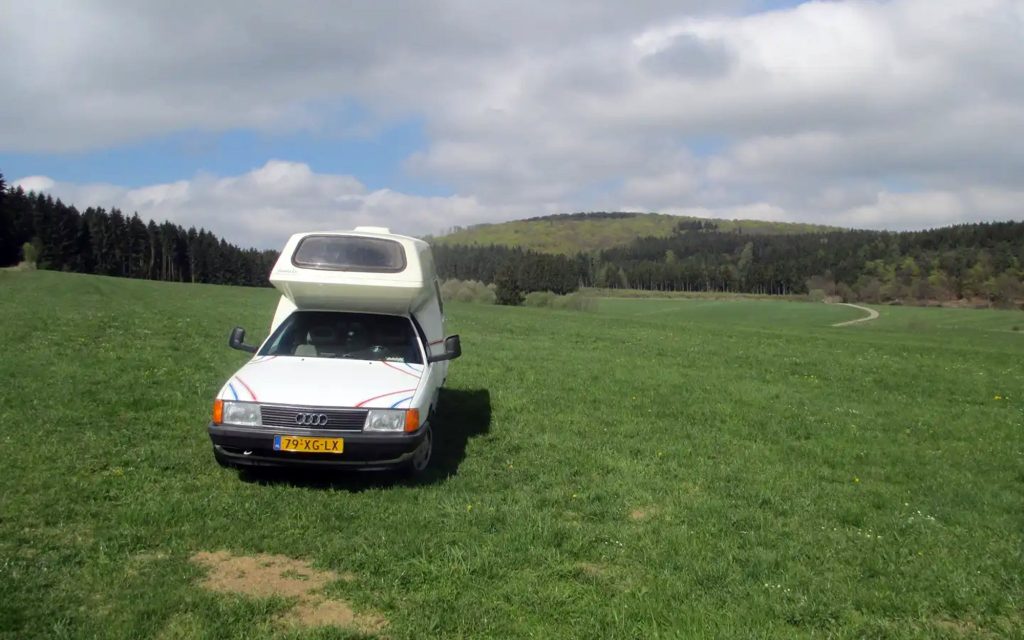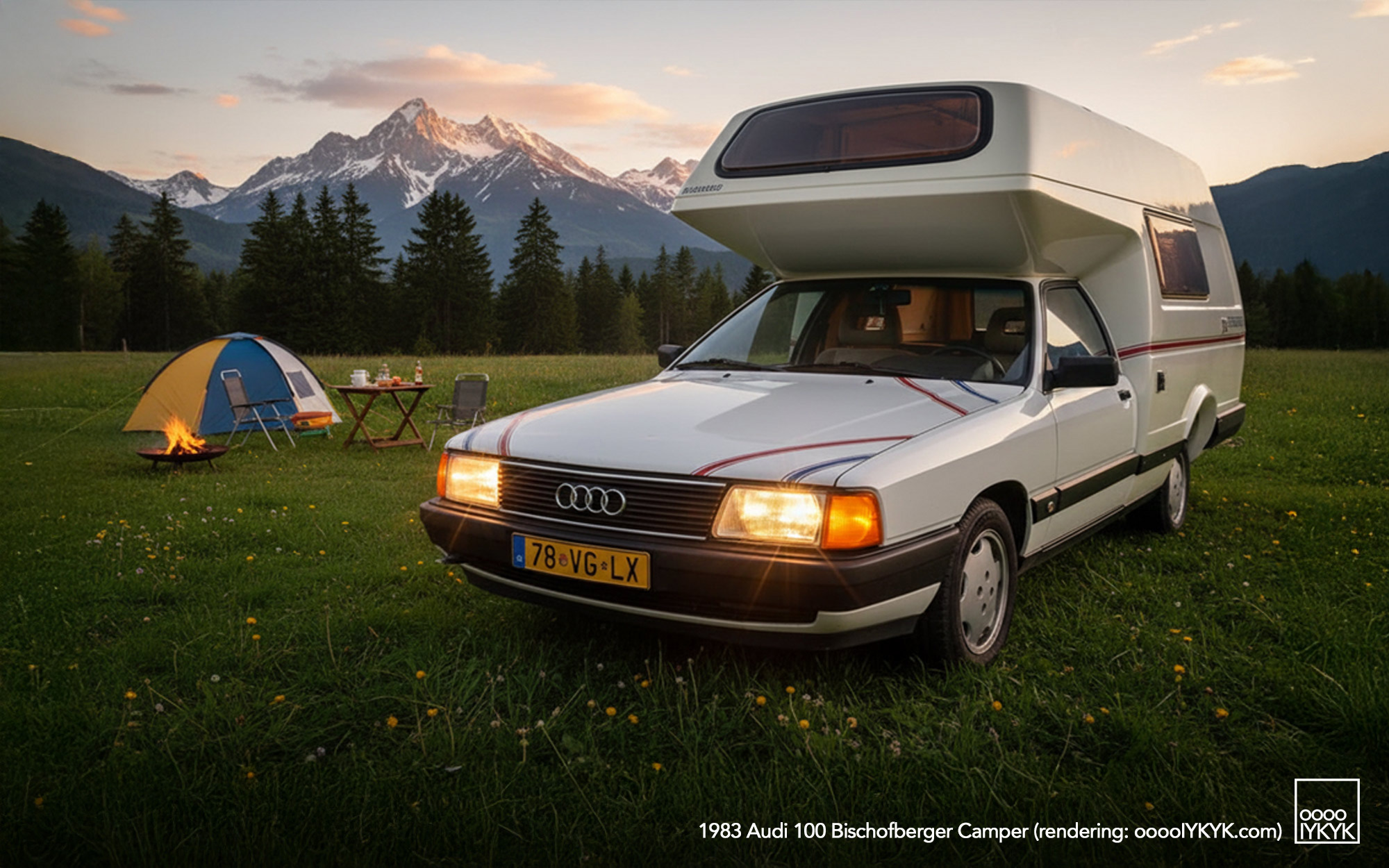

If it’s a vintage Audi you seek and obscure and ungainly are attractive to you, you’ll want to take note of this Bischofberger-converted Audi 100 (C3, type 44) camper. This 1983 conversion may very well be a car so obscure that even seasoned brand aficionados may pause to scratch their heads. Currently offered on Autoscout24.de, it’s the sort of discovery that remains a head scratcher for most, but steps forward as the ultimate opportunity for just the right buyer.
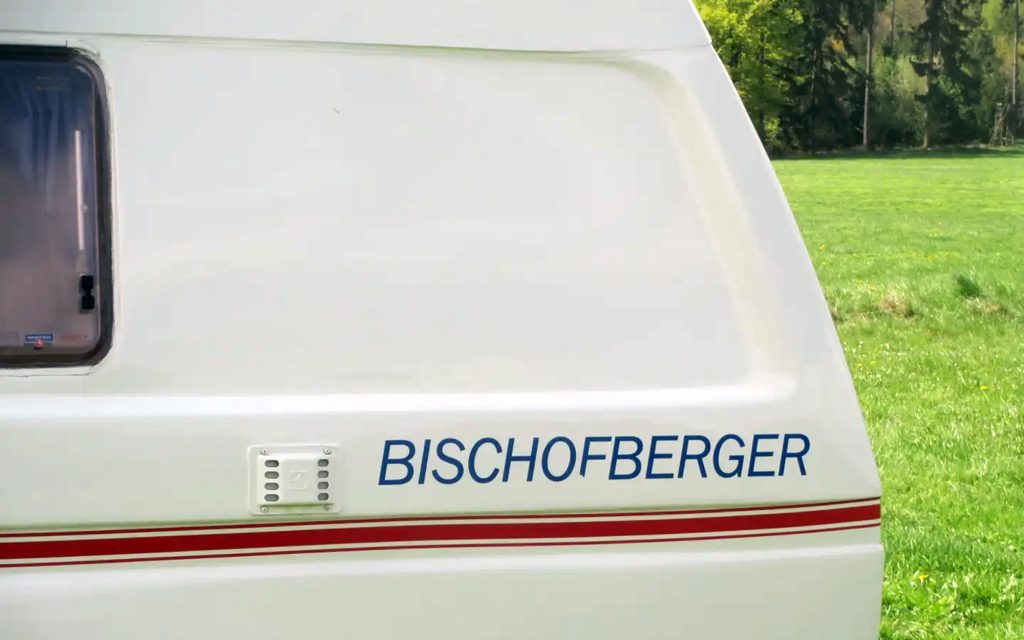
The conversion traces back to Bischofberger Motorcaravan GmbH, a small Swiss firm that spent the early 1980s experimenting with an unconventional idea: turning ordinary passenger cars into compact motorcaravans. Rather than starting with vans or commercial platforms, Bischofberger focused on sedans, initially working with the Audi 100 Family (C2, type 43) camper before refining the concept on the more aerodynamic Audi 100 Family (C3, type 44) camper seen here or building the high-performance one-off Audi 200 Condor (C3, type 44) camper.
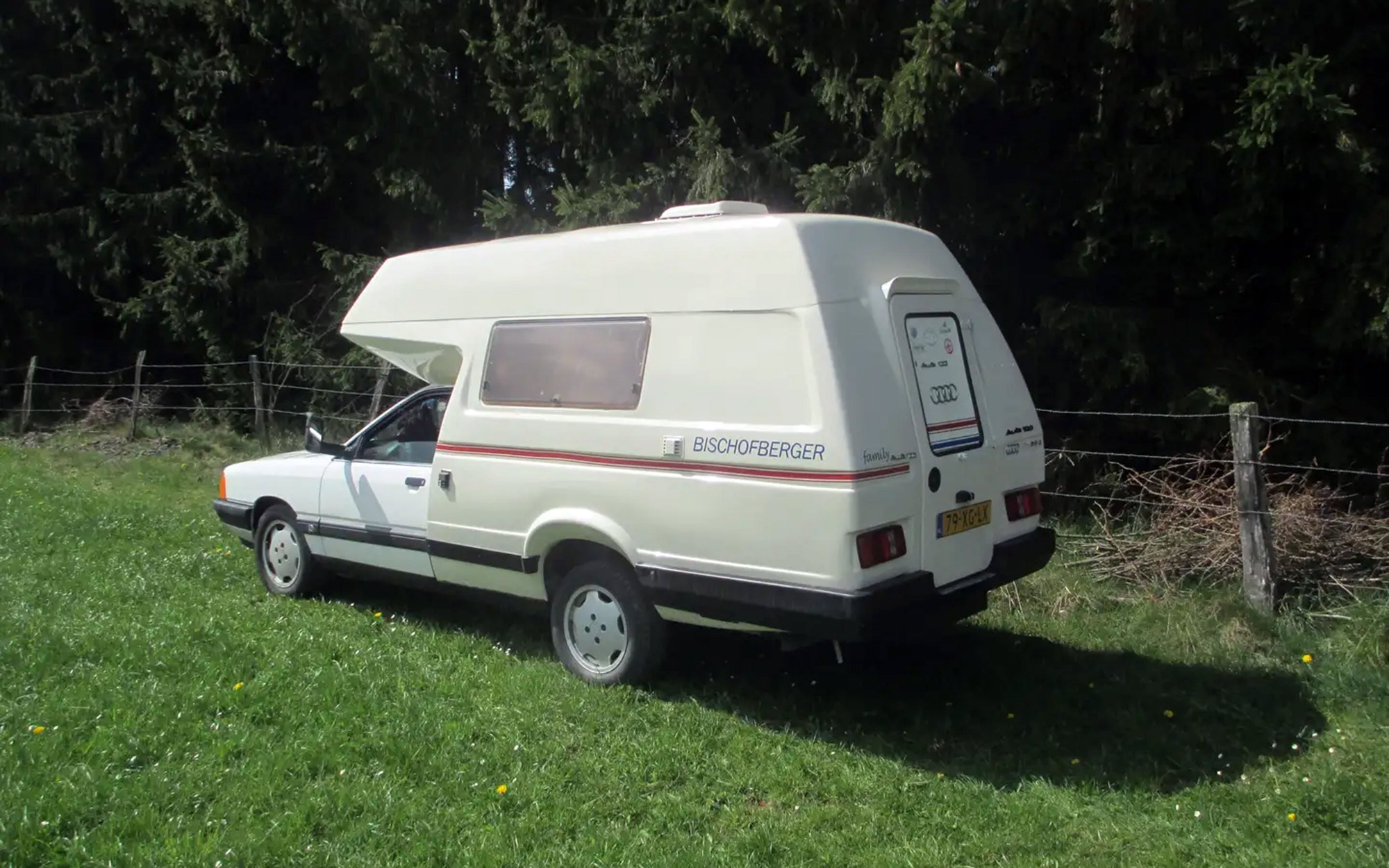
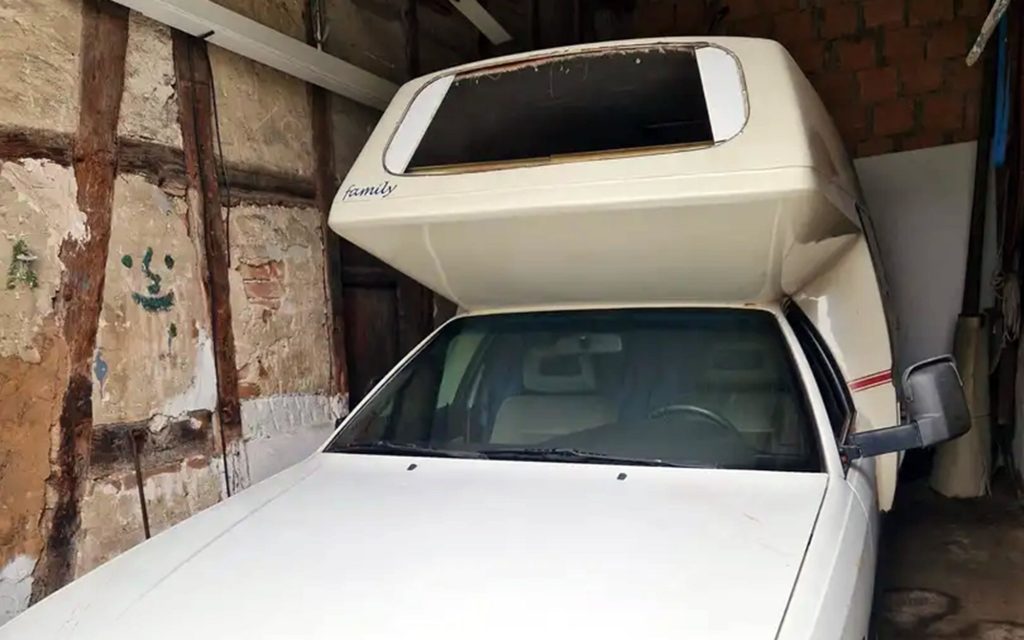
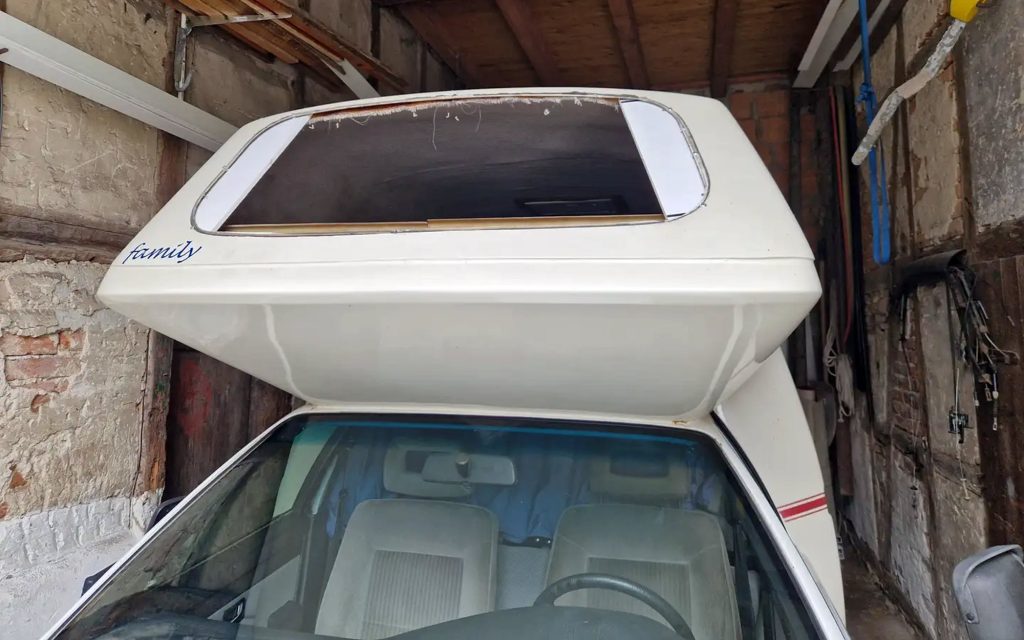
The execution was far from a backyard conversion. These cars were TÜV approved, tested in extreme conditions, and re-engineered with a reinforced tubular structure, uprated suspension and brakes, and a fiberglass habitation module grafted onto the rear. Despite its visual impact, the living compartment increased the overall length by only a few inches, preserving much of the original Audi’s proportions while adding genuine overnight capability.
What set the Audi-based camper apart from its contemporaries wasn’t novelty alone. By retaining a sedan platform, the Bischofberger conversion offered a noticeably lower center of gravity than traditional camper vans or buses. The result was a vehicle that promised more car-like road manners, particularly at speed, while still delivering amenities that leaned toward comfort rather than utility. In period terms, it was a more refined, road-focused alternative to the usual camper formulas of the era.
Predictably, it was never a volume product. Estimates suggest roughly 40 examples were produced, making surviving cars quite rare today. That scarcity, combined with the unusual Audi provenance, places this camper firmly in collector territory—appealing less to mainstream RV buyers and more to enthusiasts who appreciate left-field solutions from the fringes of the aftermarket.
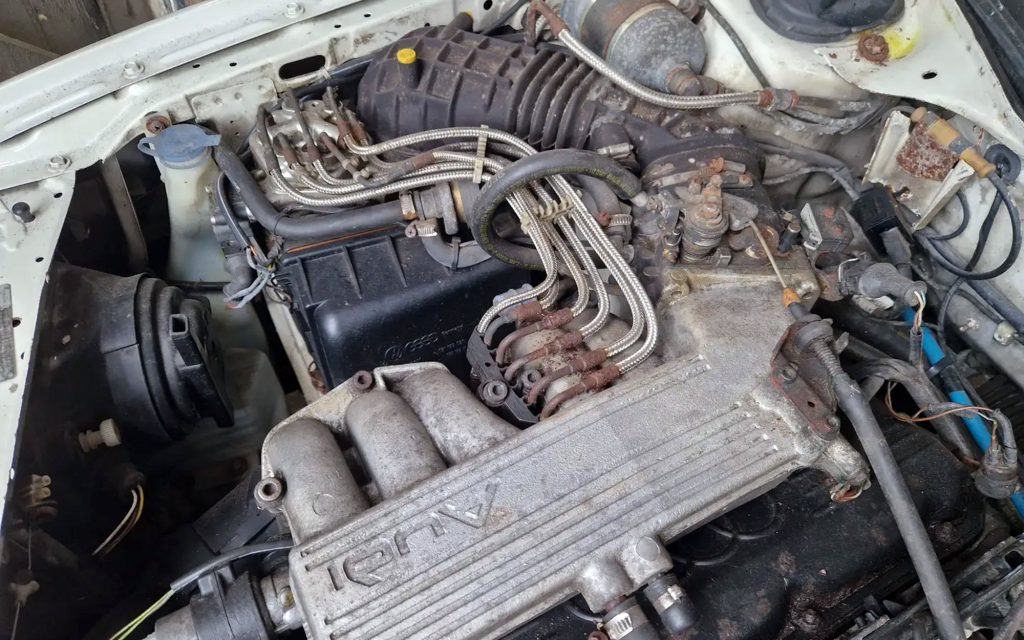
This particular example is equipped with a manual transmission and has also been converted to run on natural gas, a common modification in parts of Europe. It’s currently located in Medebach, Netherlands. Importantly for North American buyers, its 1983 build date makes it eligible for relatively straightforward importation and registration in both the U.S. and Canada.
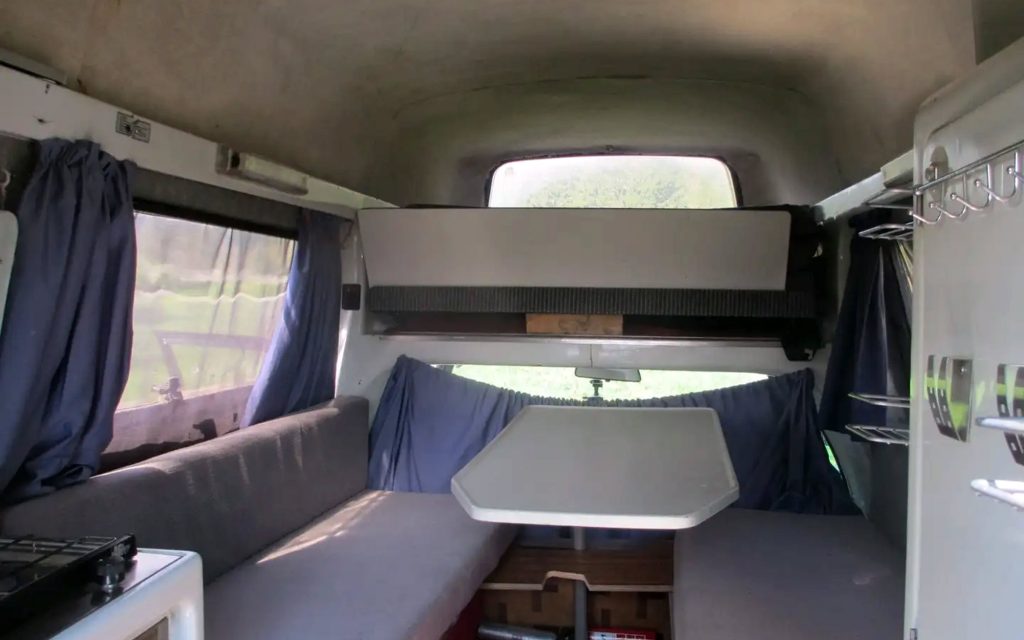
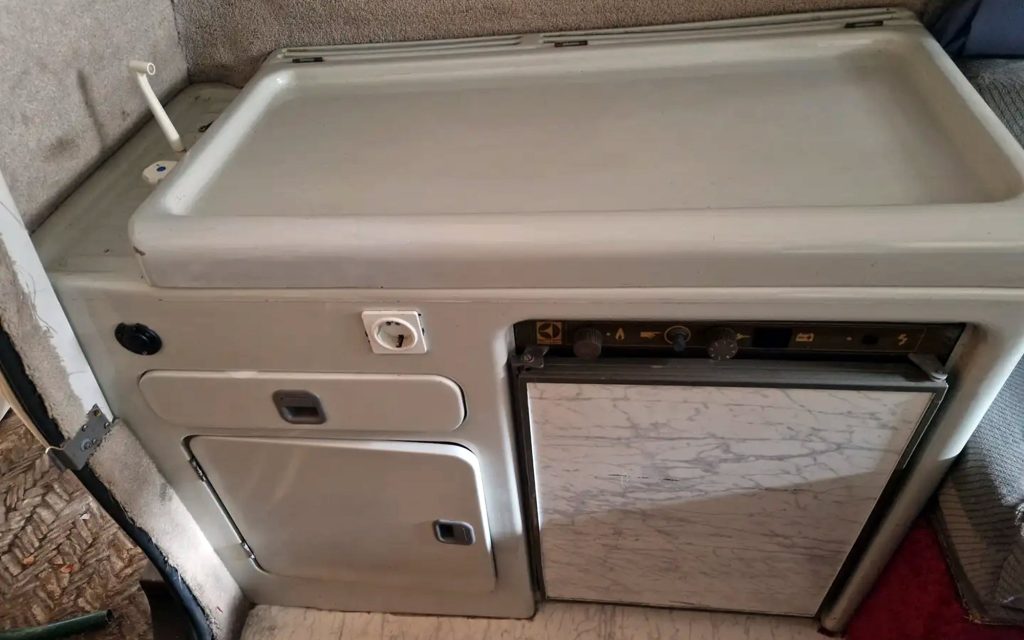
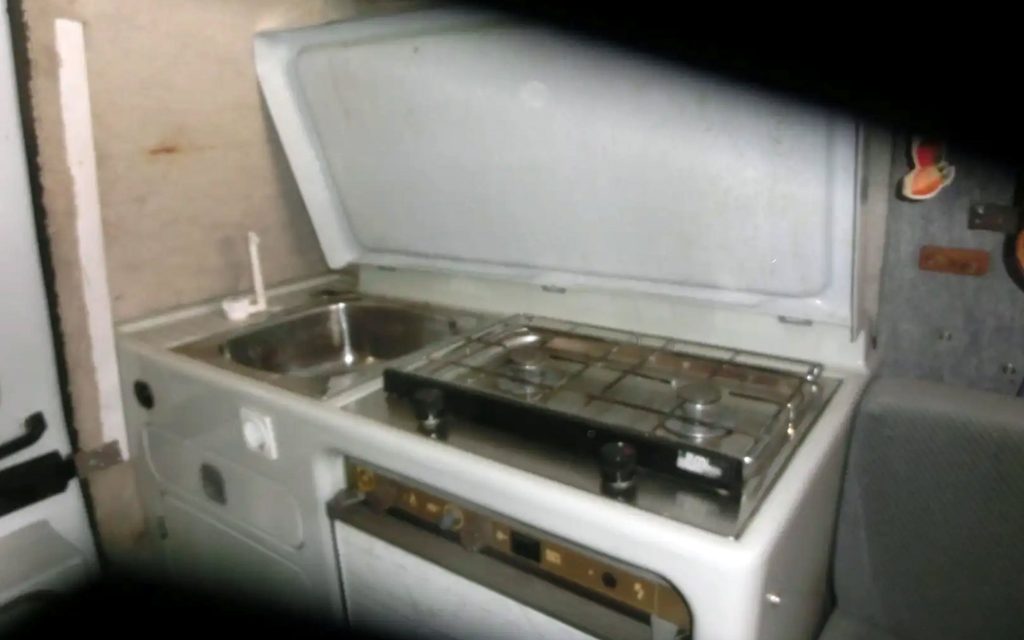
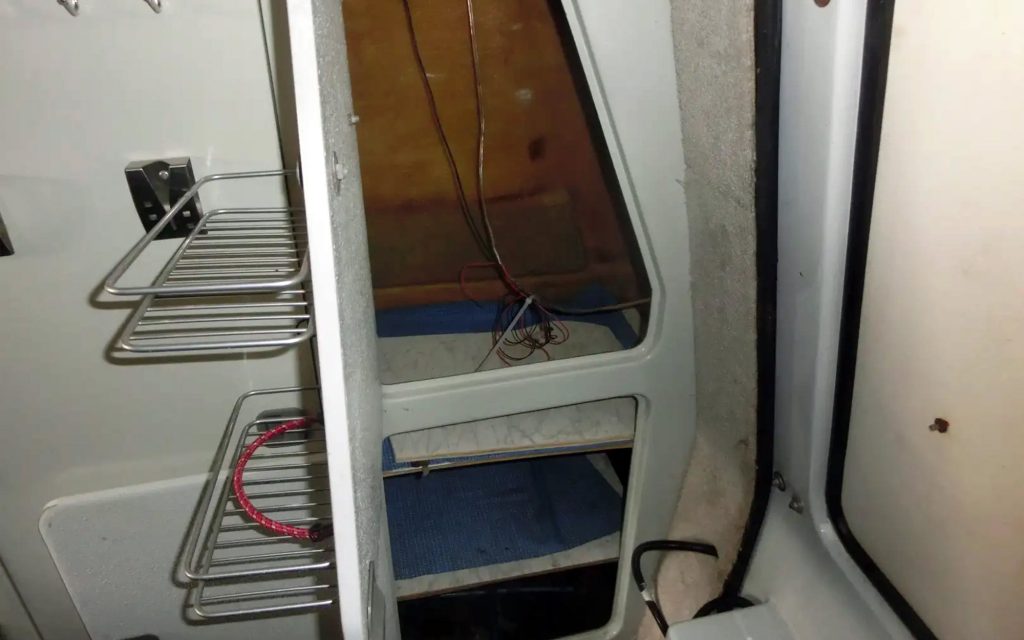
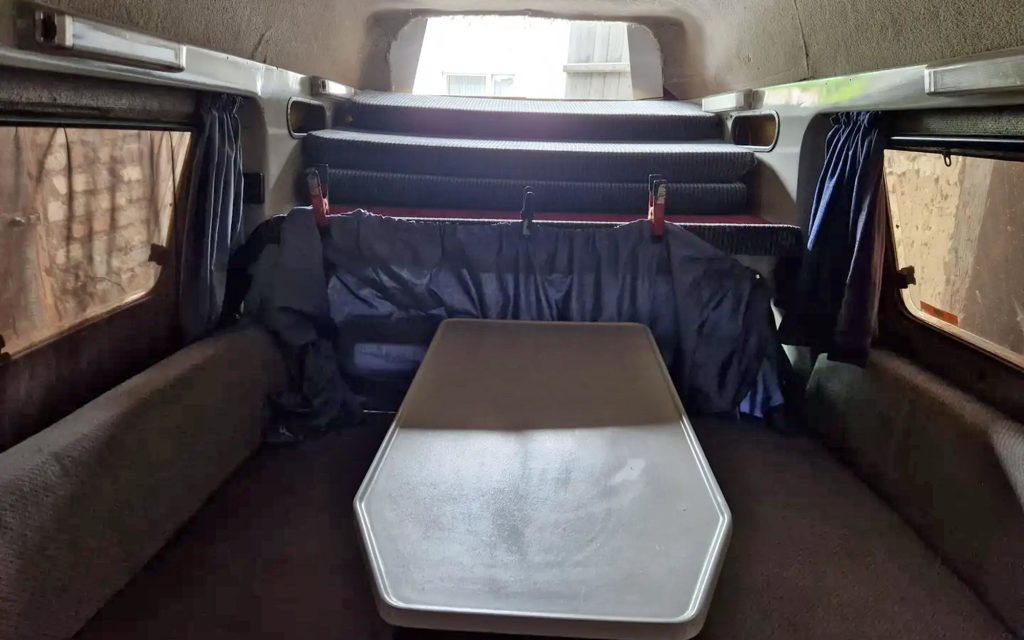
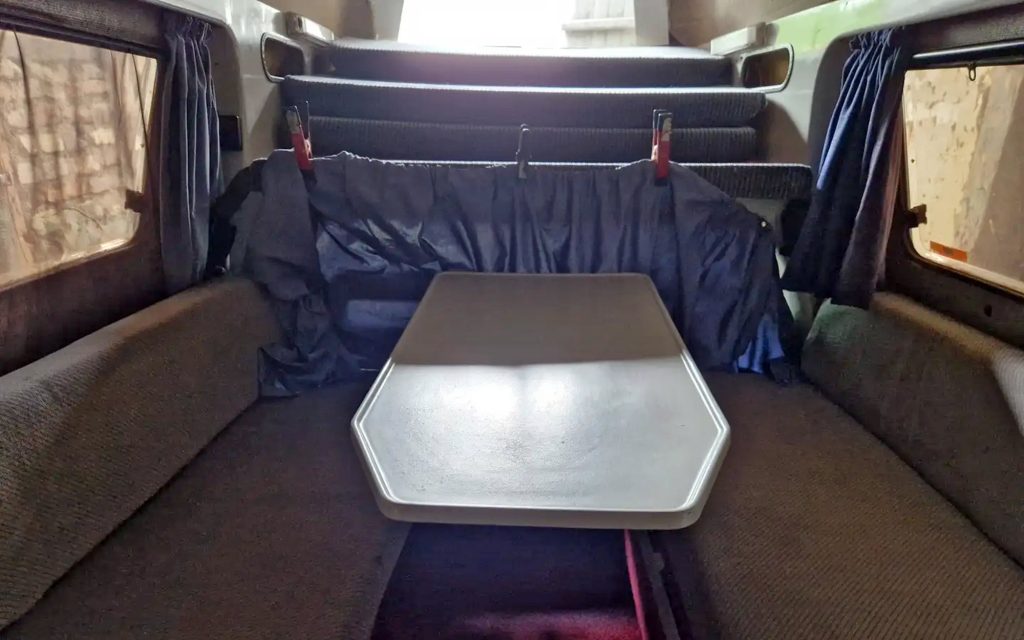
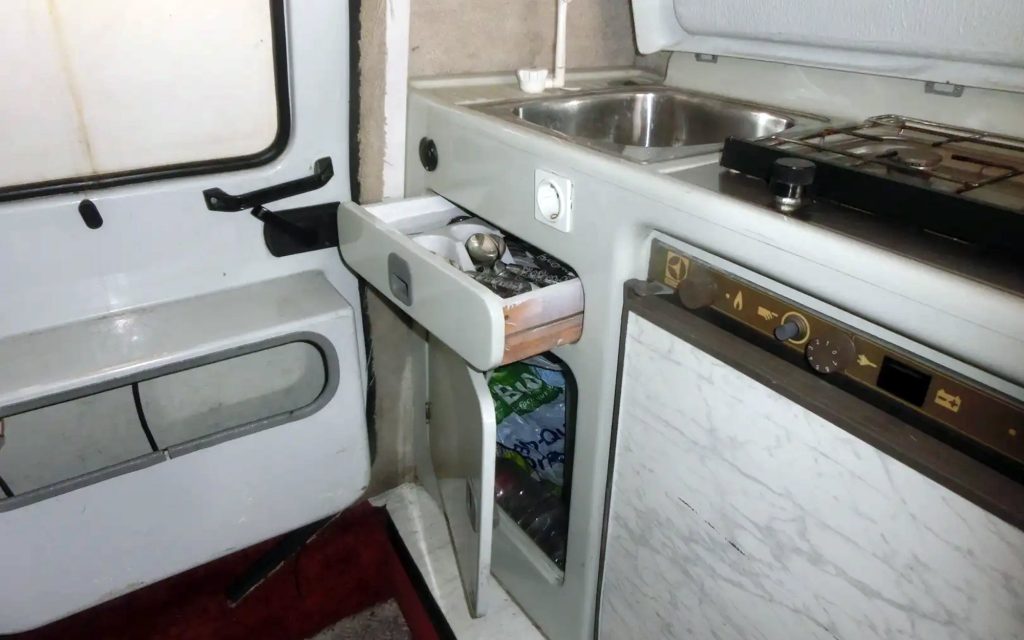
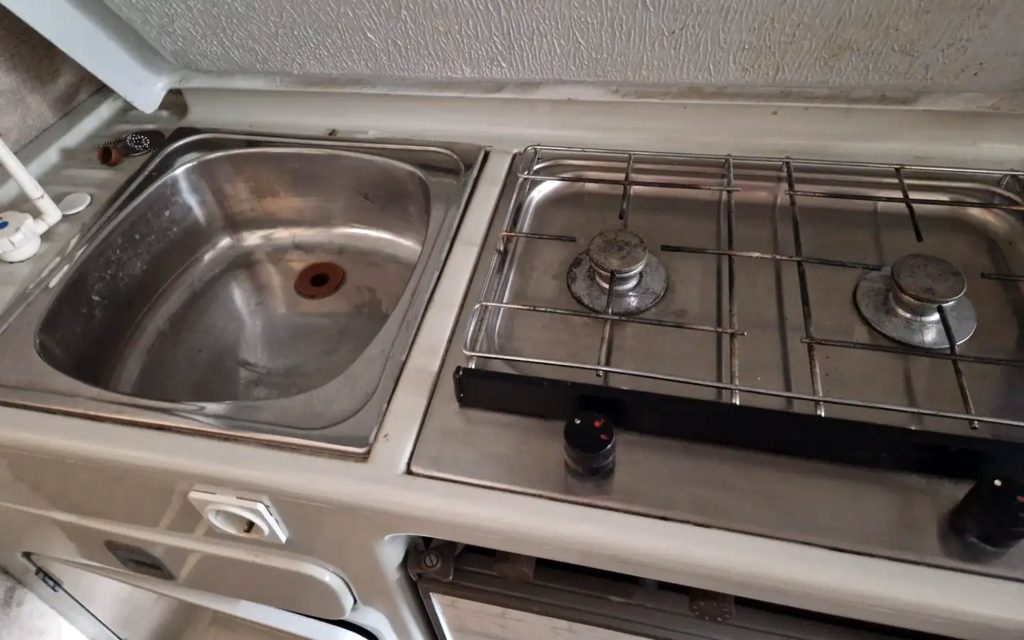
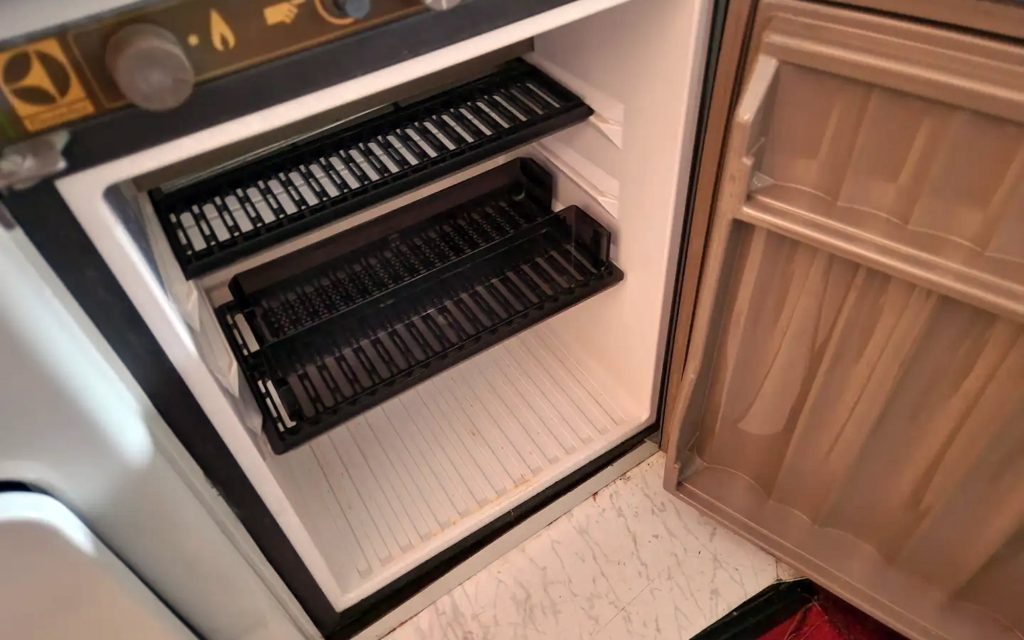
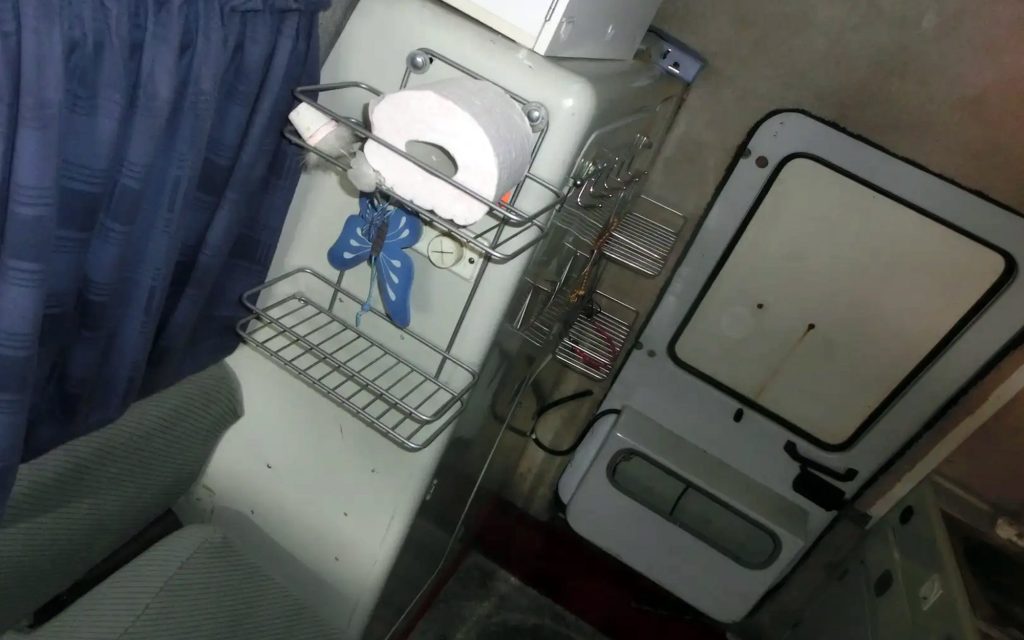
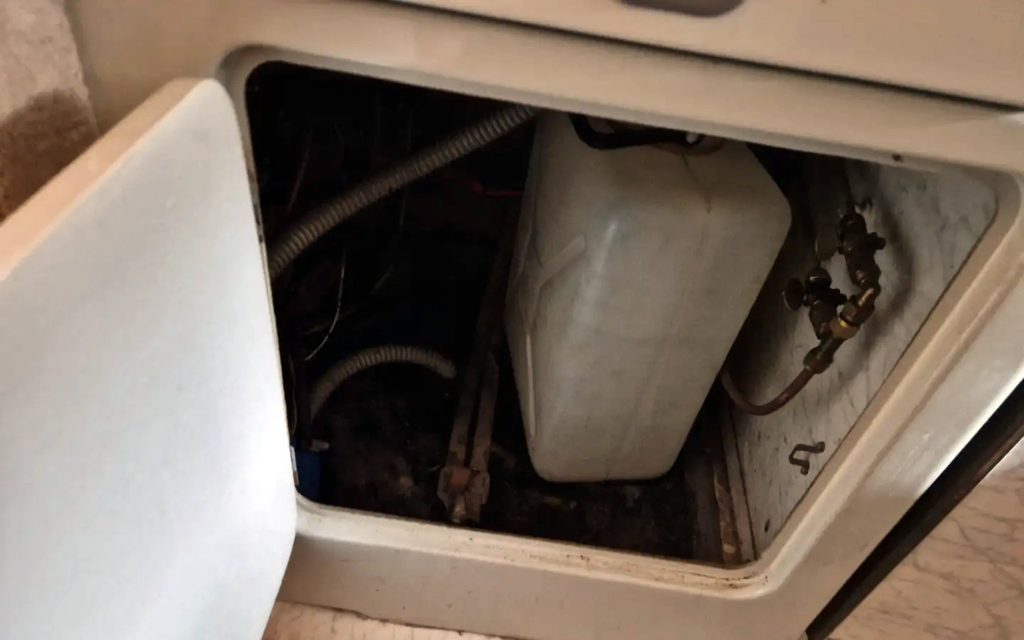
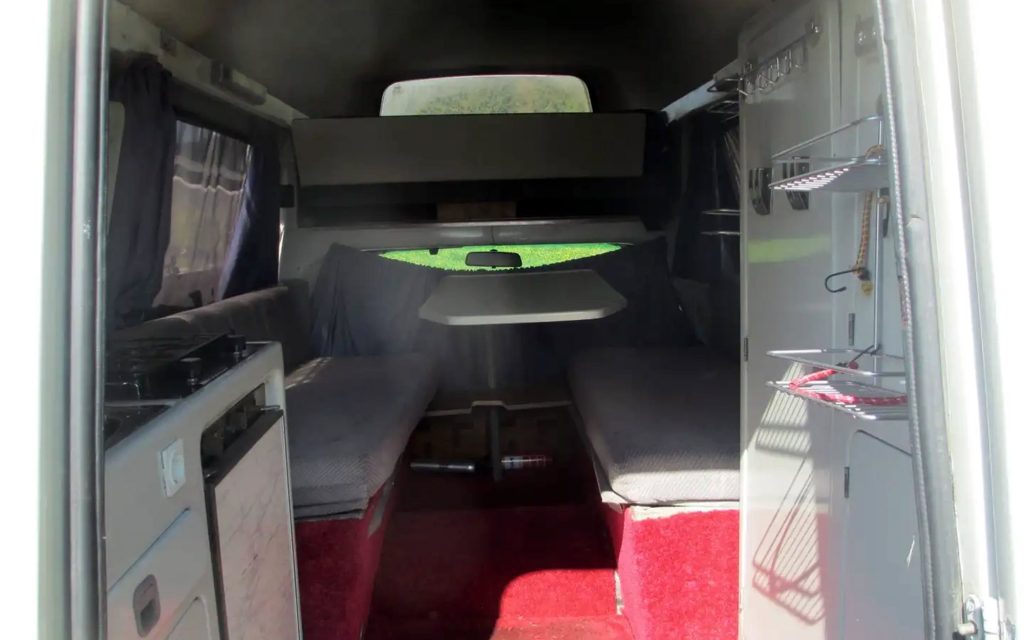
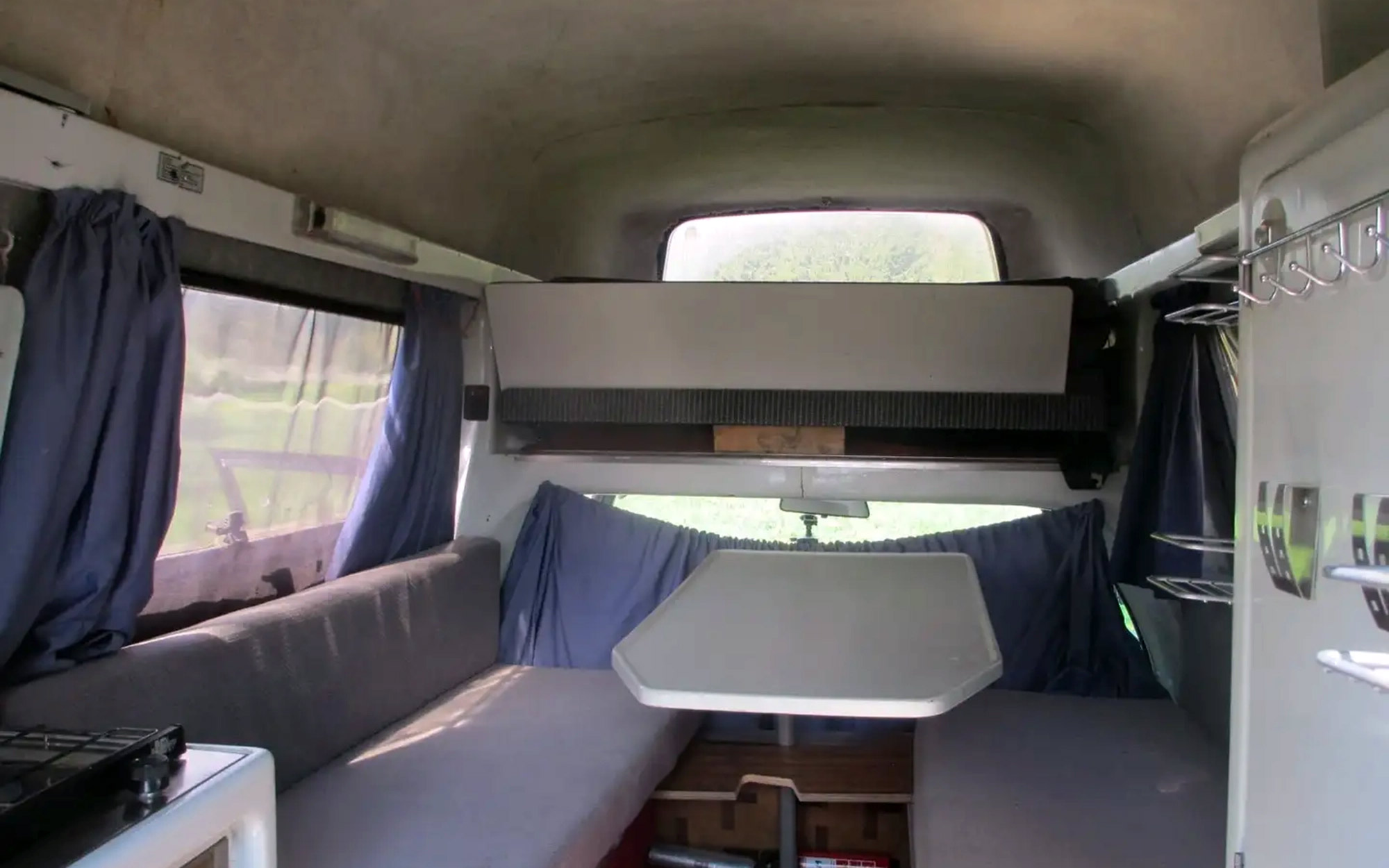
As a point of reference, this is very likely the same car first covered in 2024 over on the Audi Club North America blog, when it indicated 175,000 km (108,739 miles) on the odometer. Today, it reads 295,110 km (183,435 miles). The interior appears more tired now, though none of these photos look particularly recent and most were seen in that earlier ad (note; our header image is an AI-generated image of what this RV would look like at an Alpine camp site). Even still, to the buyer seeking to find a specimen in a world with notoriously scarce supply, that’s hardly disqualifying. Any RV with this kind of mileage would realistically be a candidate for a full interior refresh anyway. Taken as a whole, it remains a fascinating artifact from a kitschier, more experimental chapter of Audi’s history, and a reminder that even the most buttoned-down German sedans once went on to have a very unique existence.
PHOTO GALLERY