

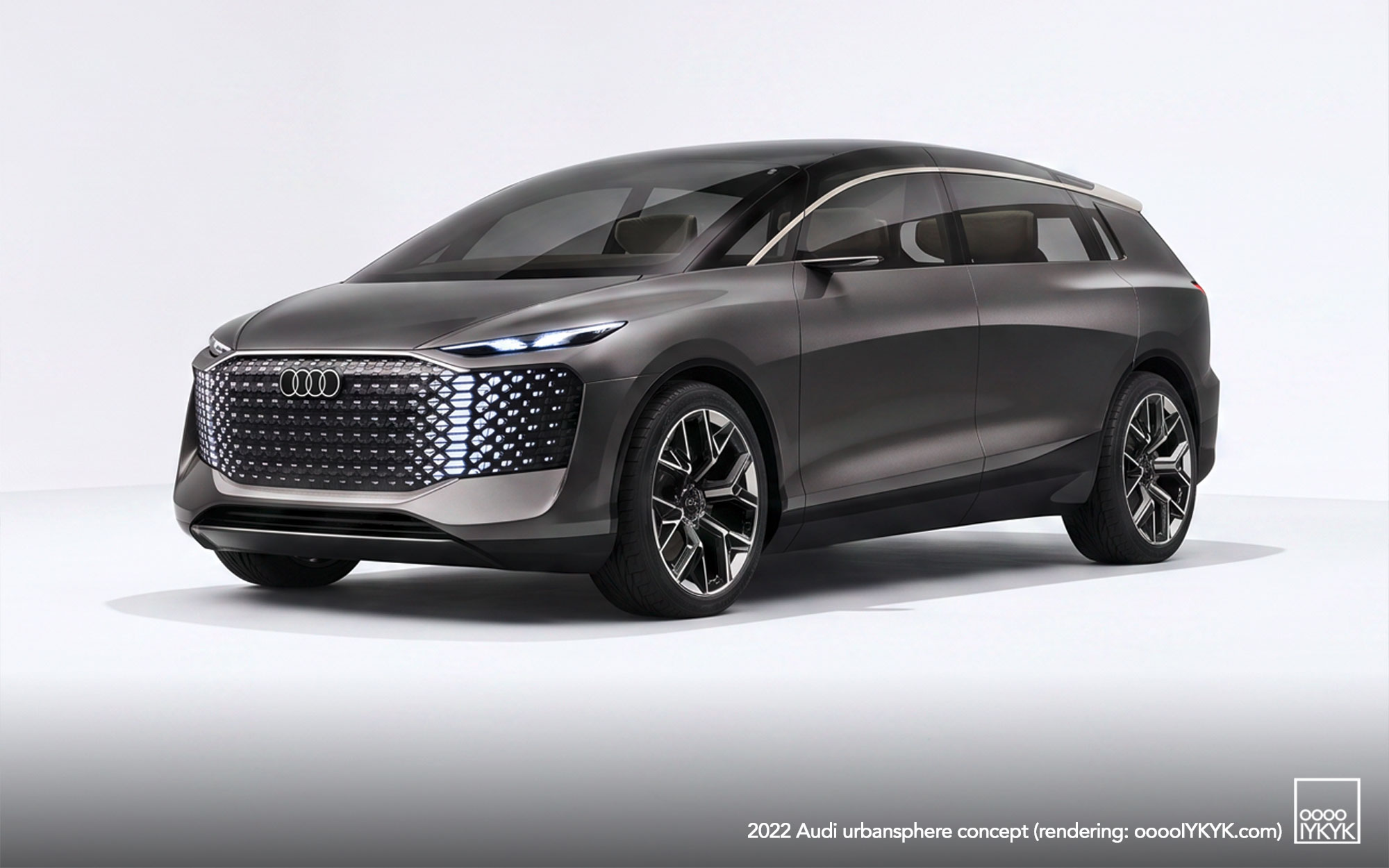

What: Audi urbansphere concept
Era: Audi modern era
Manufacturer: Audi AG (Ingolstadt, Germany)
Model Family: sphere concept series
Type: Concept car
Year: 2022
Debuted: April 19, 2022
Development: Audi Design Beijing / Audi Design Ingolstadt
Body Style: Four-door luxury crossover / space concept
Layout: Dual-motor electric quattro all-wheel drive
Platform: Premium Platform Electric (PPE)
Power: 295 kW (401 PS)
Torque: 690 Nm
Battery: Approx. 120 kWh
Electrical Architecture: 800 volt
Maximum Charging Rate: 270 kW
Range: Up to 750 km / 466 miles WLTP
Length: 5,510 mm
Width: 2,010 mm
Height: 1,780 mm
Wheelbase: 3,400 mm
Wheels: 24 inches
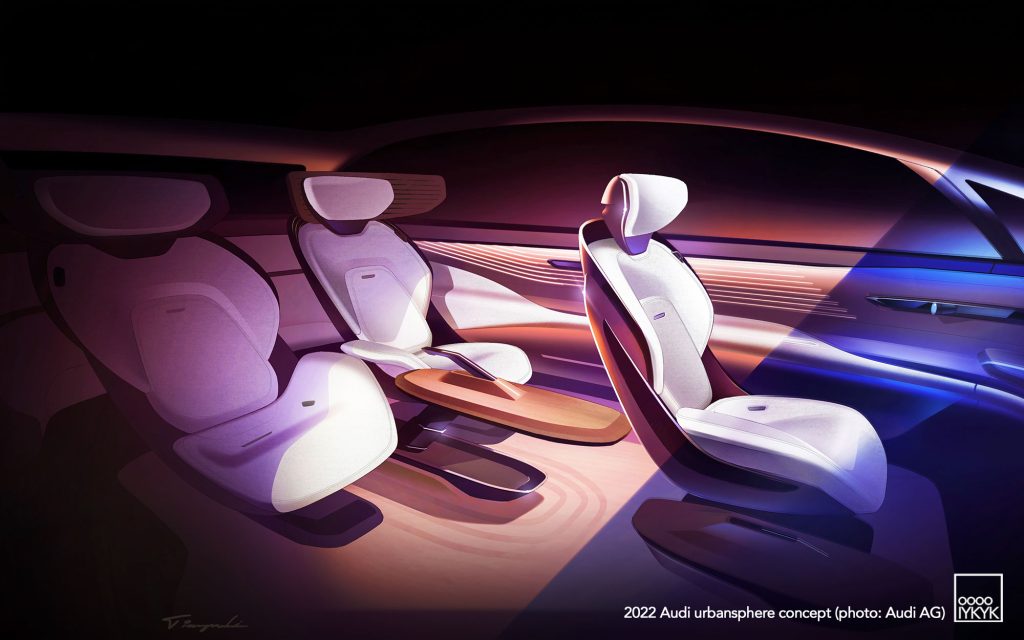
Seating: Four individual seats
Maximum Backrest Recline: 60 degrees
Autonomous Driving: Level 4 concept
OVERVIEW
The Audi urbansphere concept was revealed on April 19, 2022 as the third member of Audi’s sphere family of concept vehicles, following the skysphere and grandsphere. Conceived primarily around the demands of China’s densely populated megacities, the urbansphere was Audi’s largest concept car to date and placed interior space rather than conventional vehicle architecture at the center of its development.
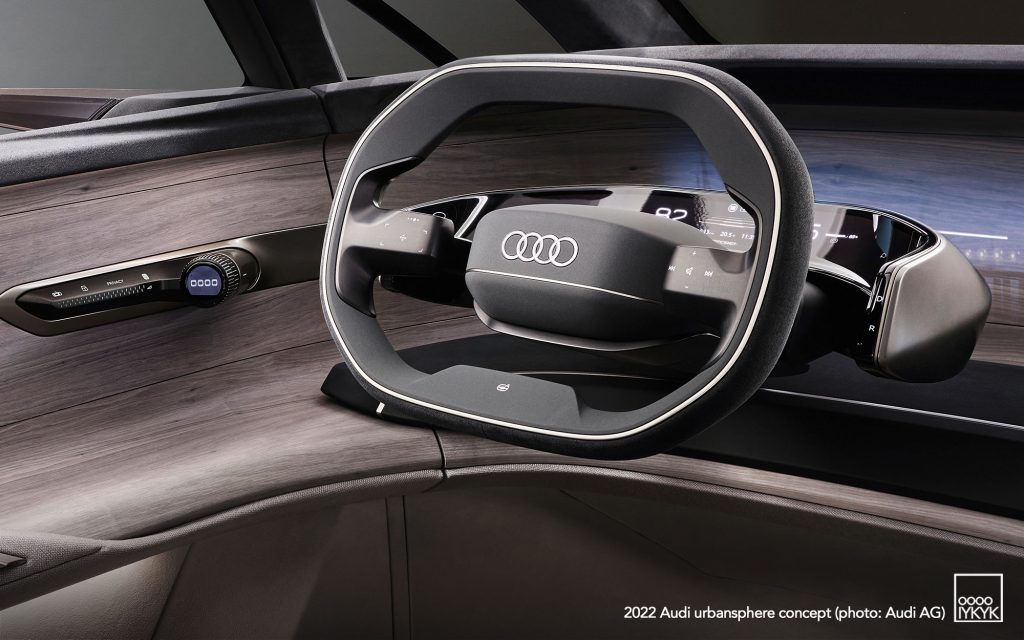
Unlike a conventional large luxury vehicle, the urbansphere was designed systematically from the inside out. Its four-seat cabin was conceived as a lounge, mobile office and private space for occupants spending significant amounts of time in urban traffic. Level 4 automated driving formed a fundamental part of that vision, allowing the steering wheel, pedals and conventional displays to disappear when they were not required.
The concept was also significant for Audi’s development process. Audi’s Beijing and Ingolstadt design studios collaborated on the vehicle, while potential customers in China participated directly through a “co-creation” process intended to incorporate their preferences and experiences into the design.
SPHERE CONCEPT SERIES
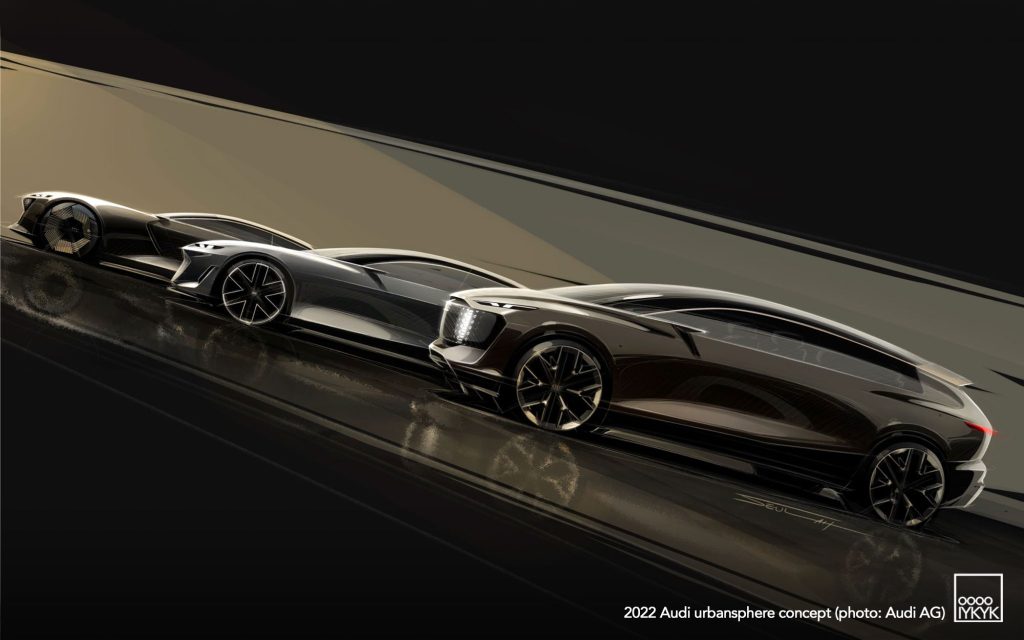
The urbansphere was the third of Audi’s sphere concepts, a series developed to explore future premium mobility around highly automated electric vehicles.
Audi introduced the skysphere roadster in August 2021, followed by the grandsphere luxury saloon at the 2021 IAA. All three were developed around the potential for Level 4 automated driving, allowing the interior to assume a larger role as a living and experiential space rather than simply a driver’s compartment.
The series would later be completed by the activesphere concept in January 2023.
INTERIOR ARCHITECTURE
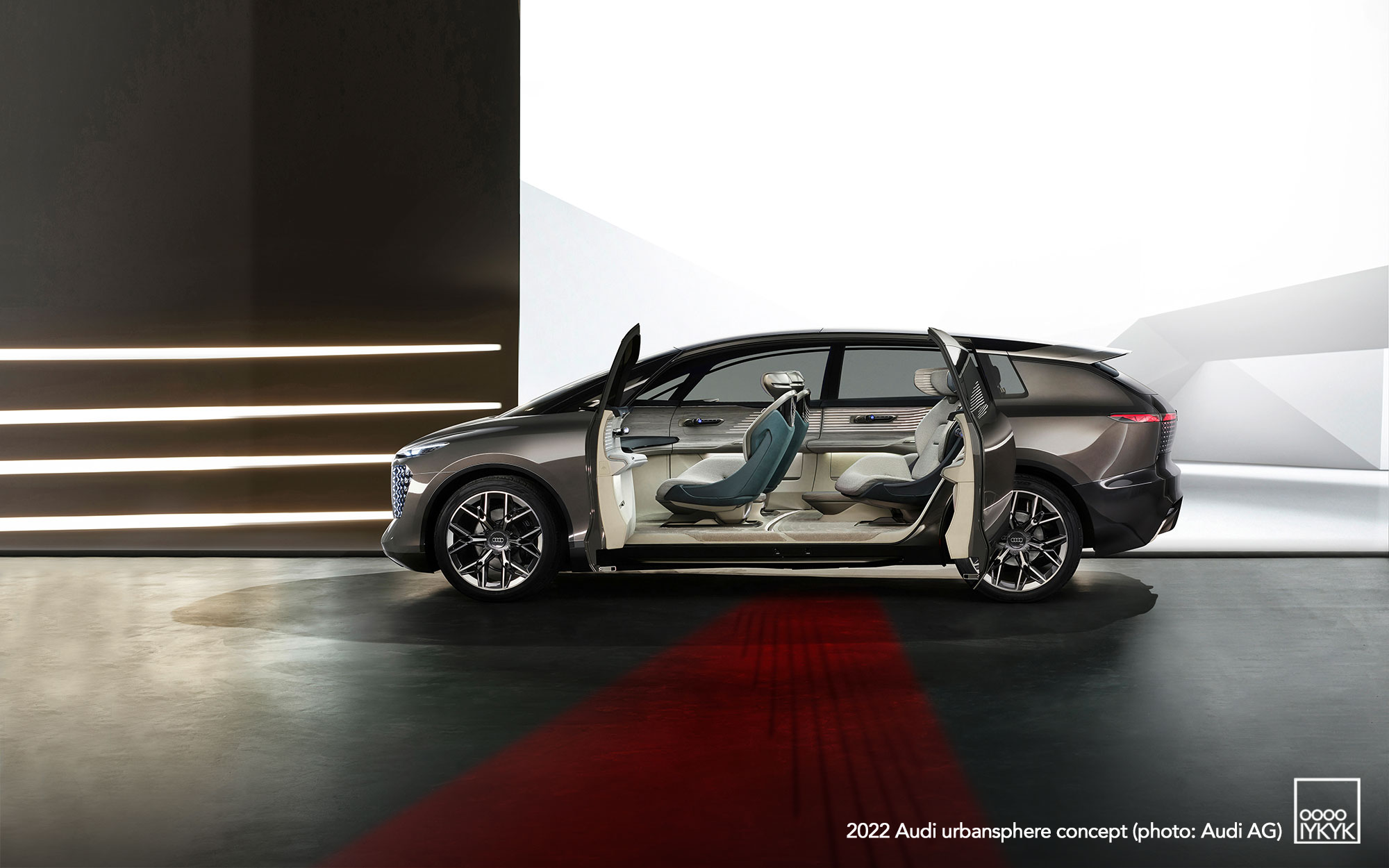
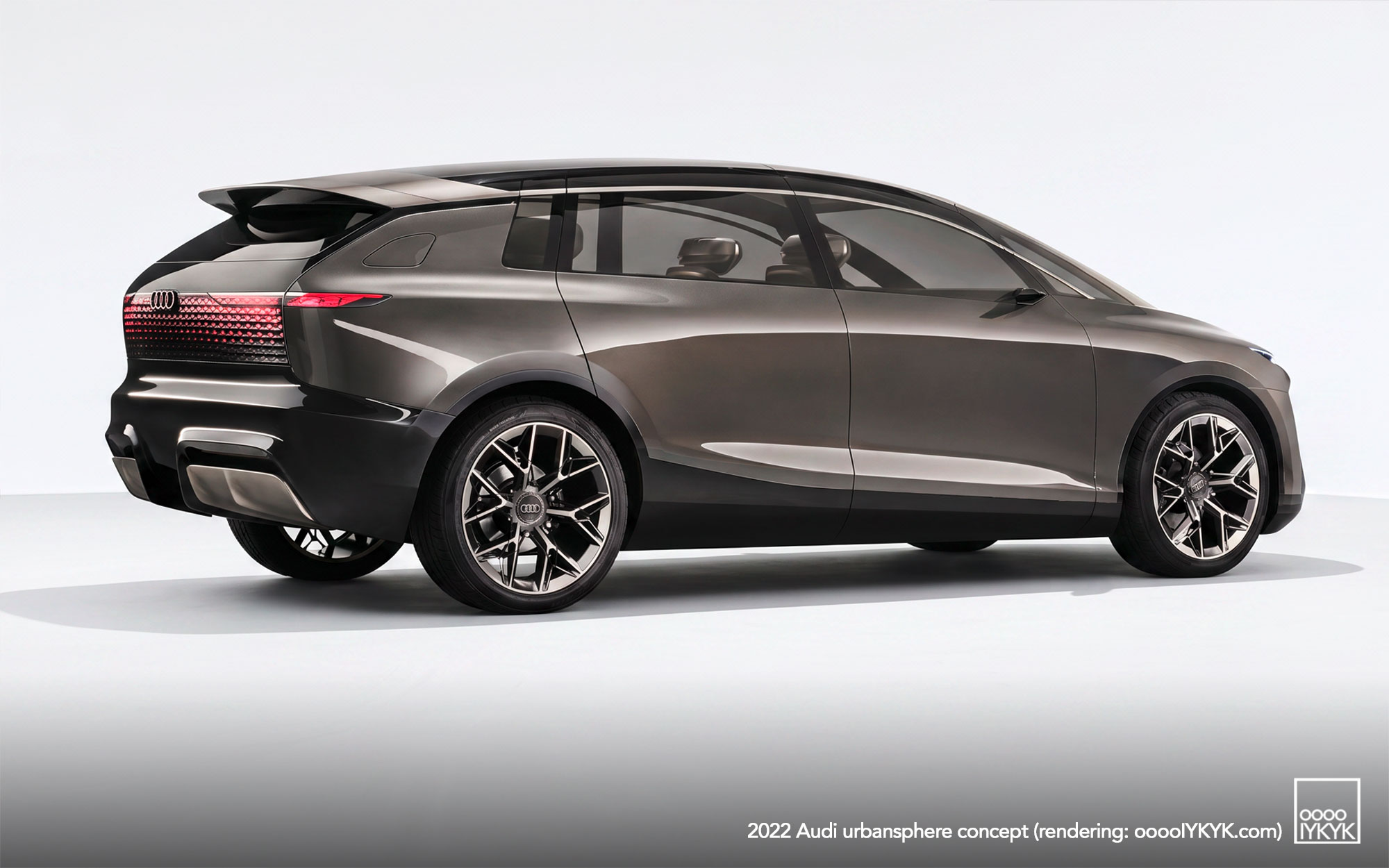
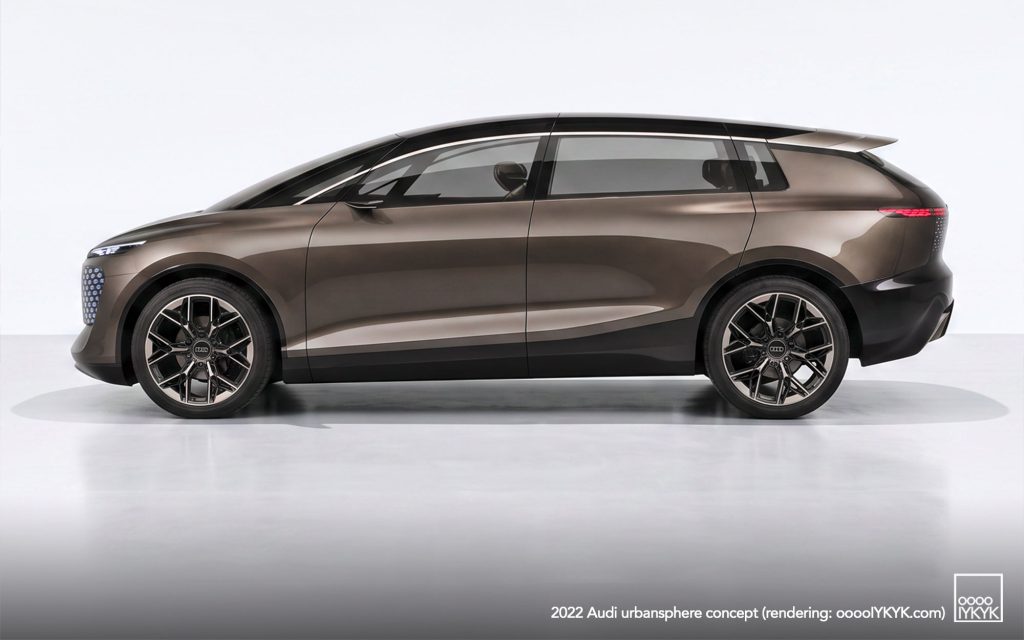
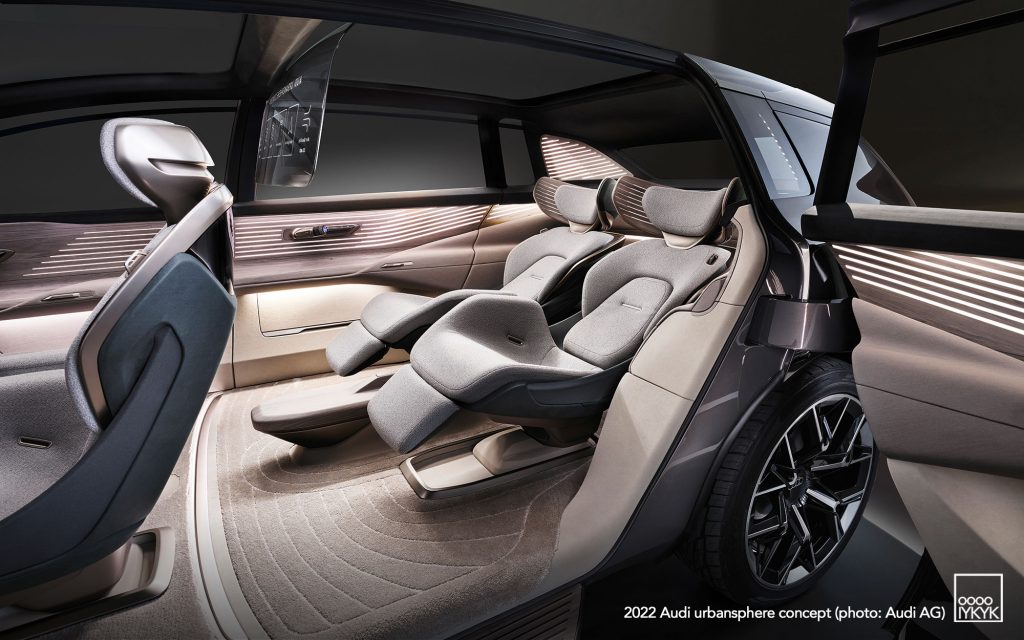
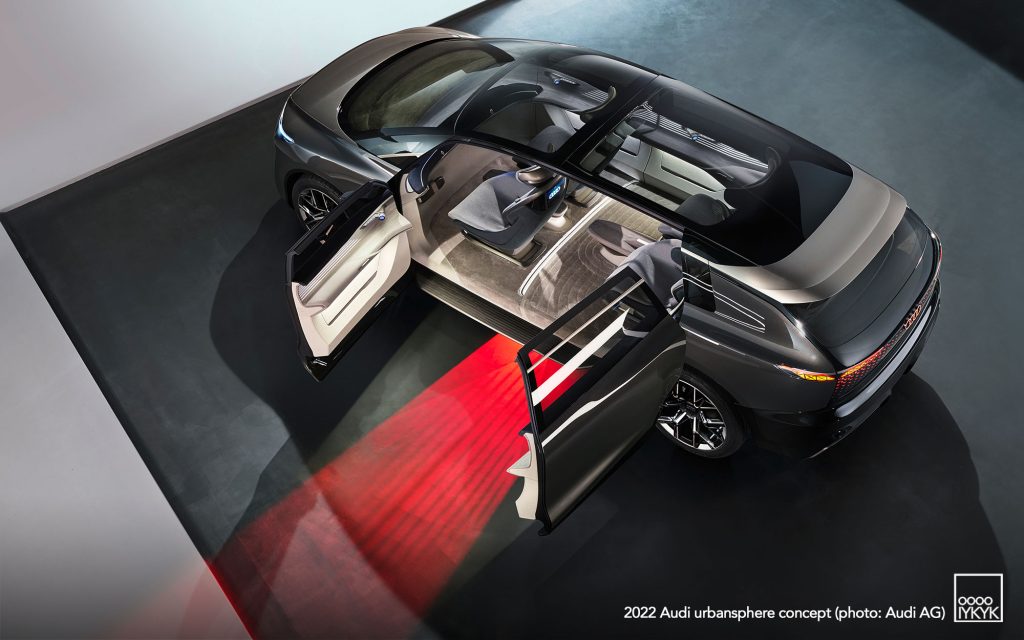
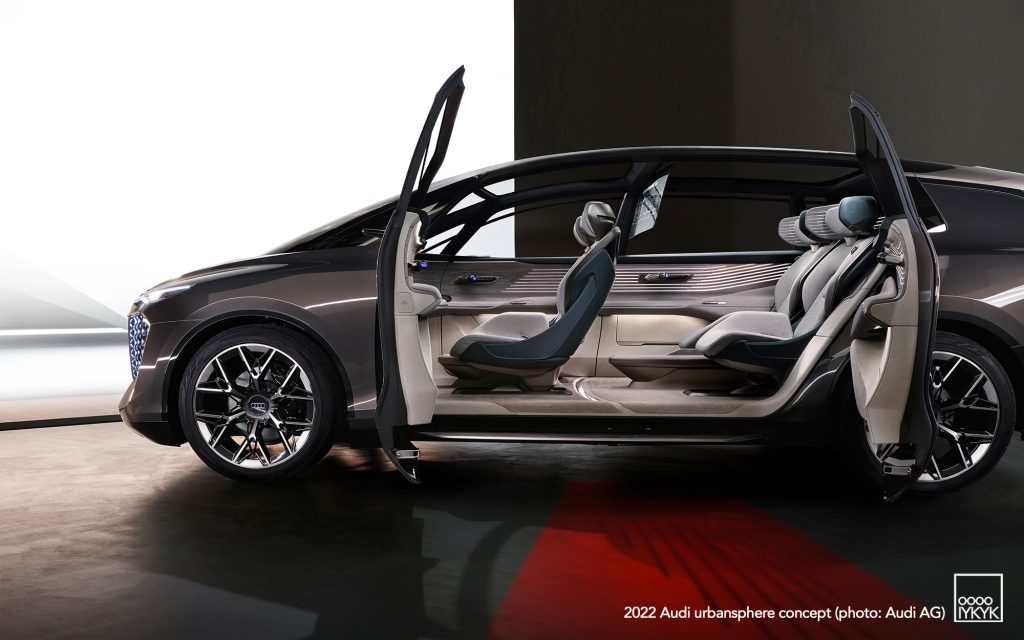
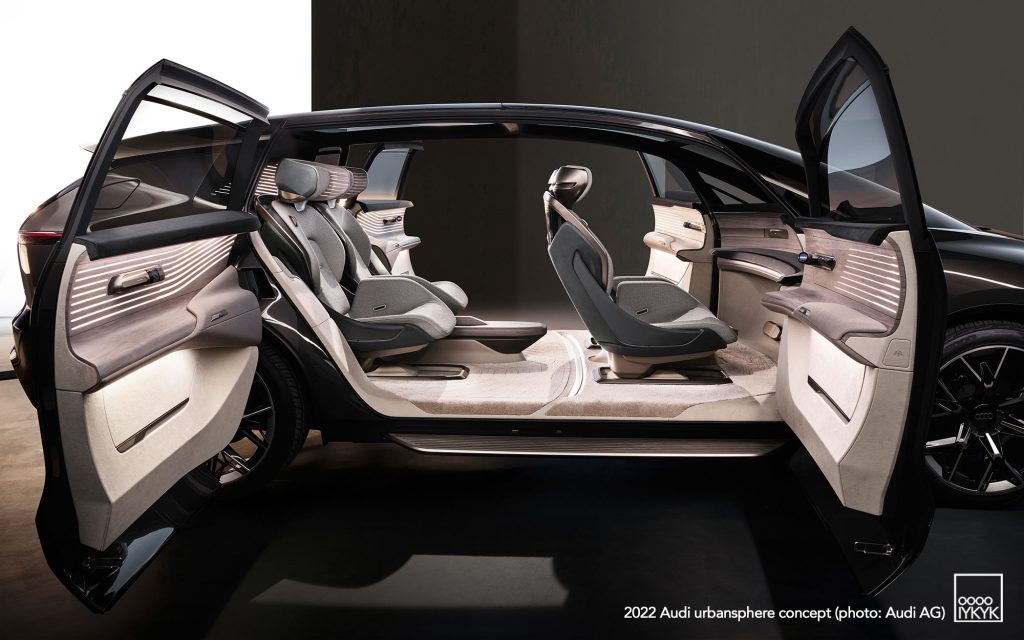
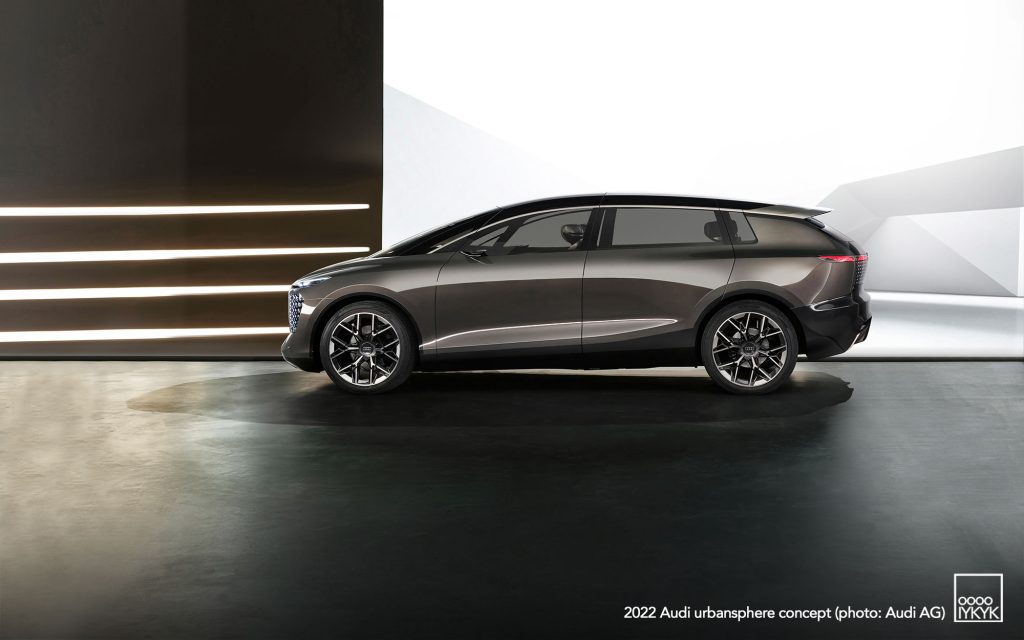
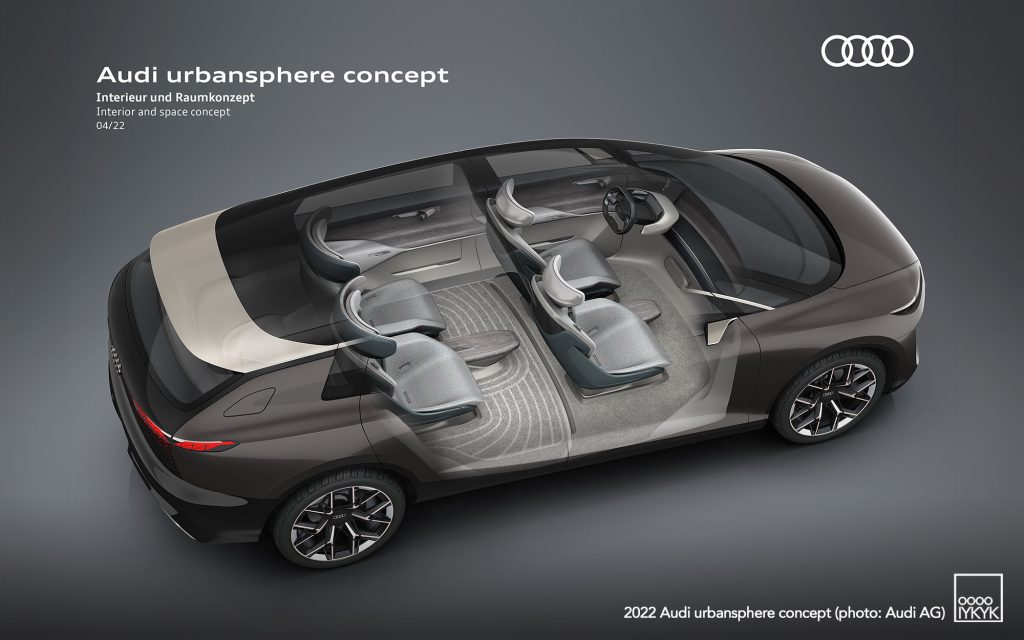
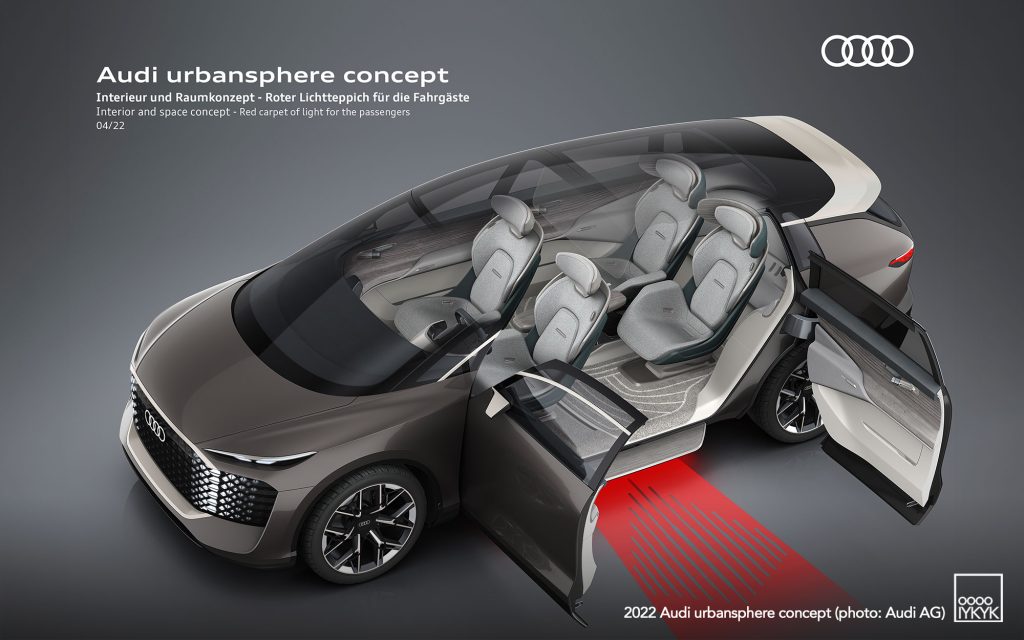
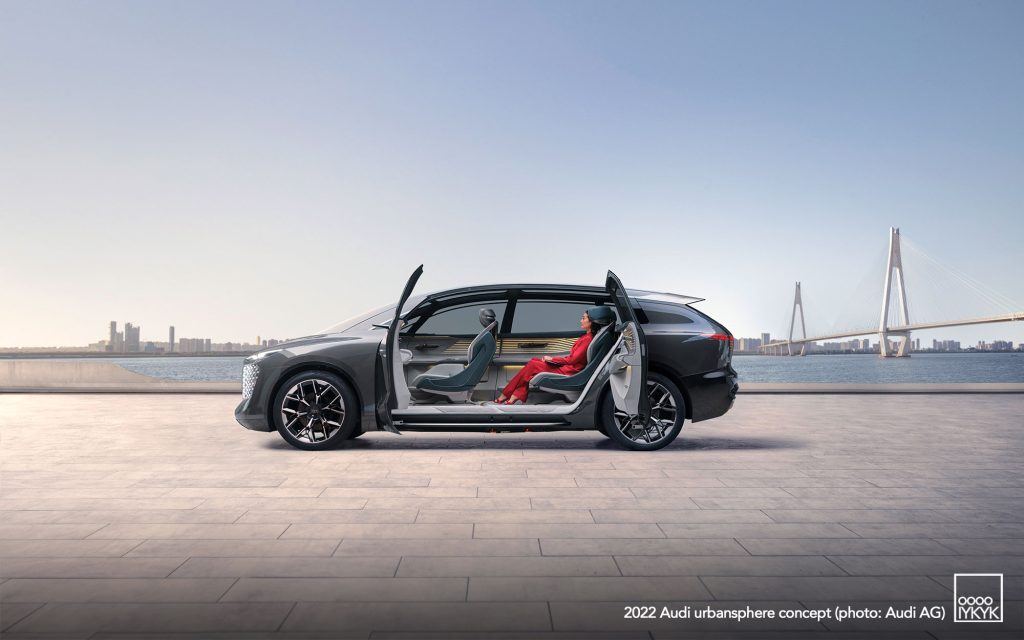
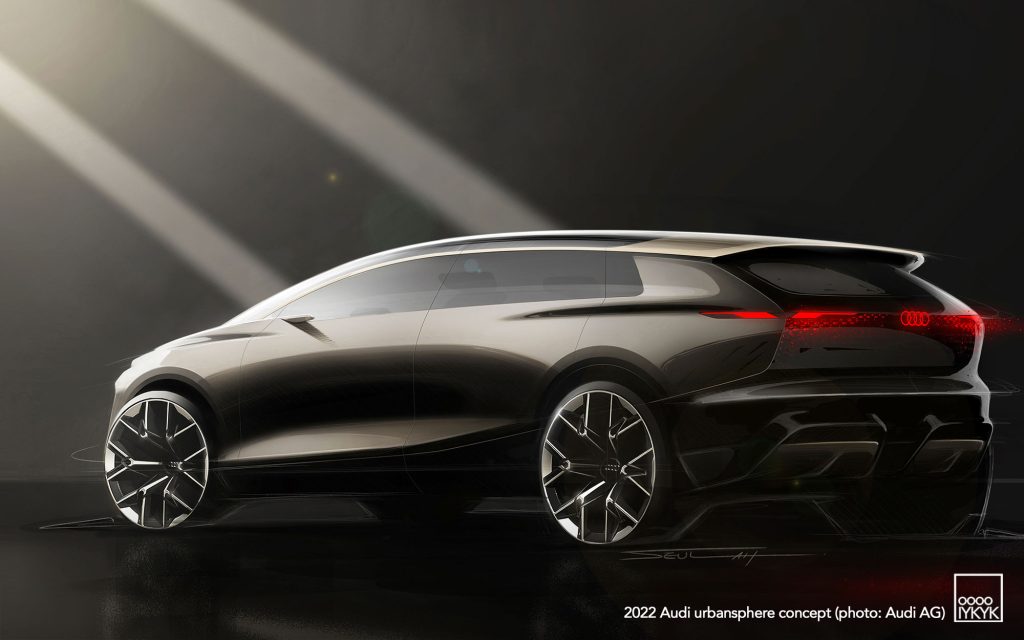
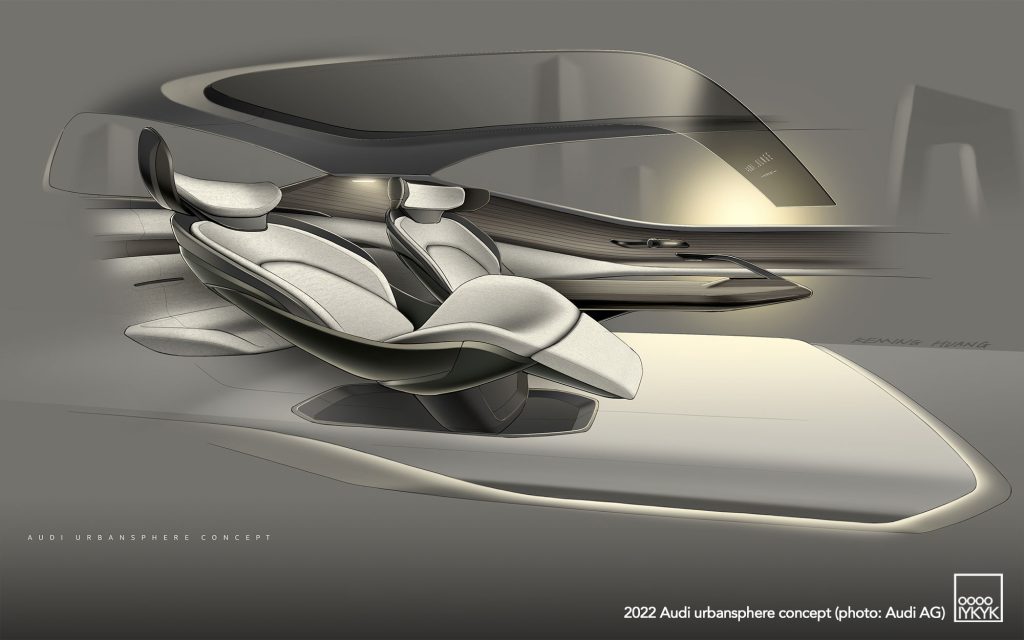
At 5,510 mm long, 2,010 mm wide and 1,780 mm tall, the urbansphere was enormous even by luxury-car standards. More important to its design brief, however, was its 3,400 mm wheelbase, which Audi used to create what was then the largest interior of any Audi concept.
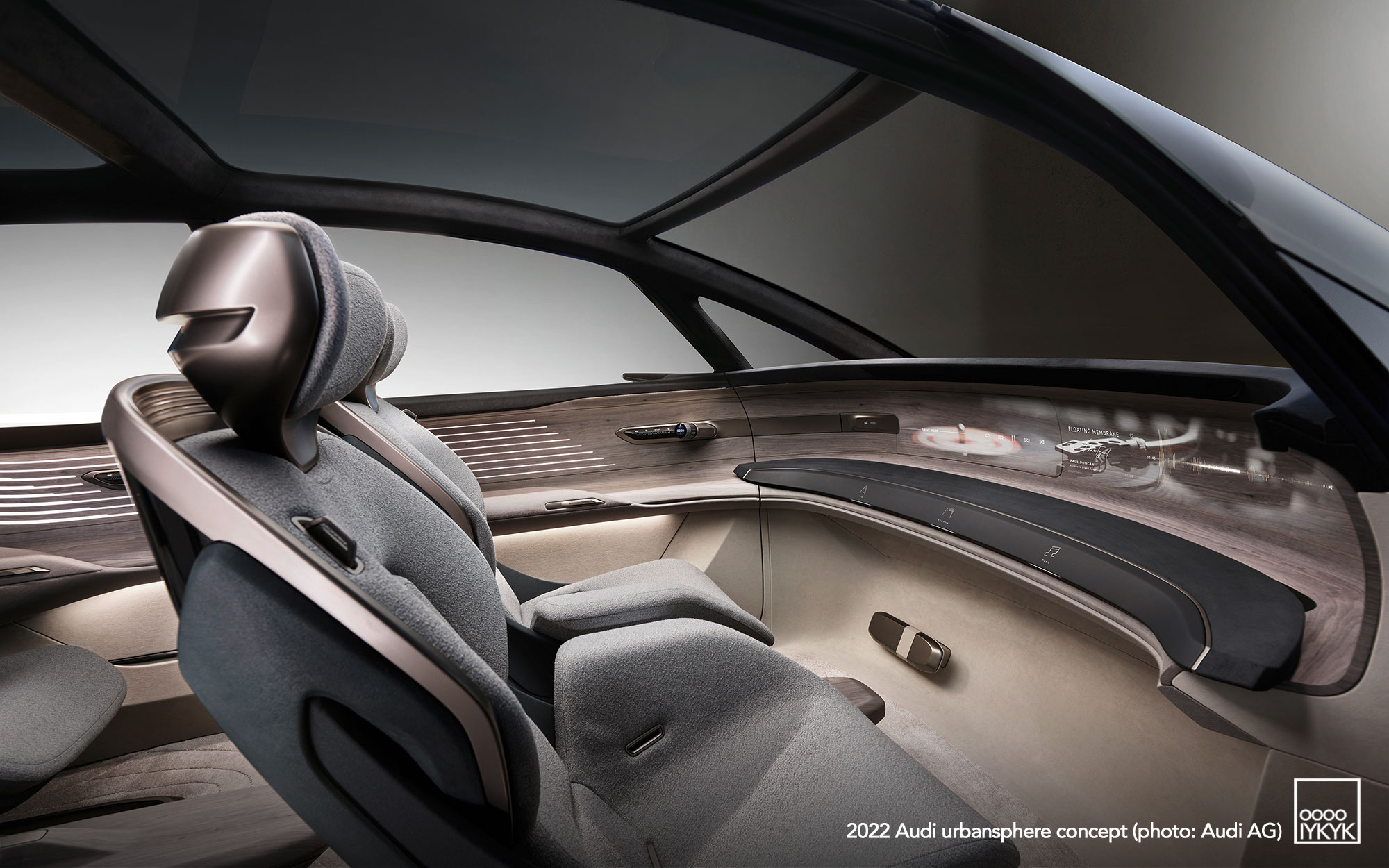
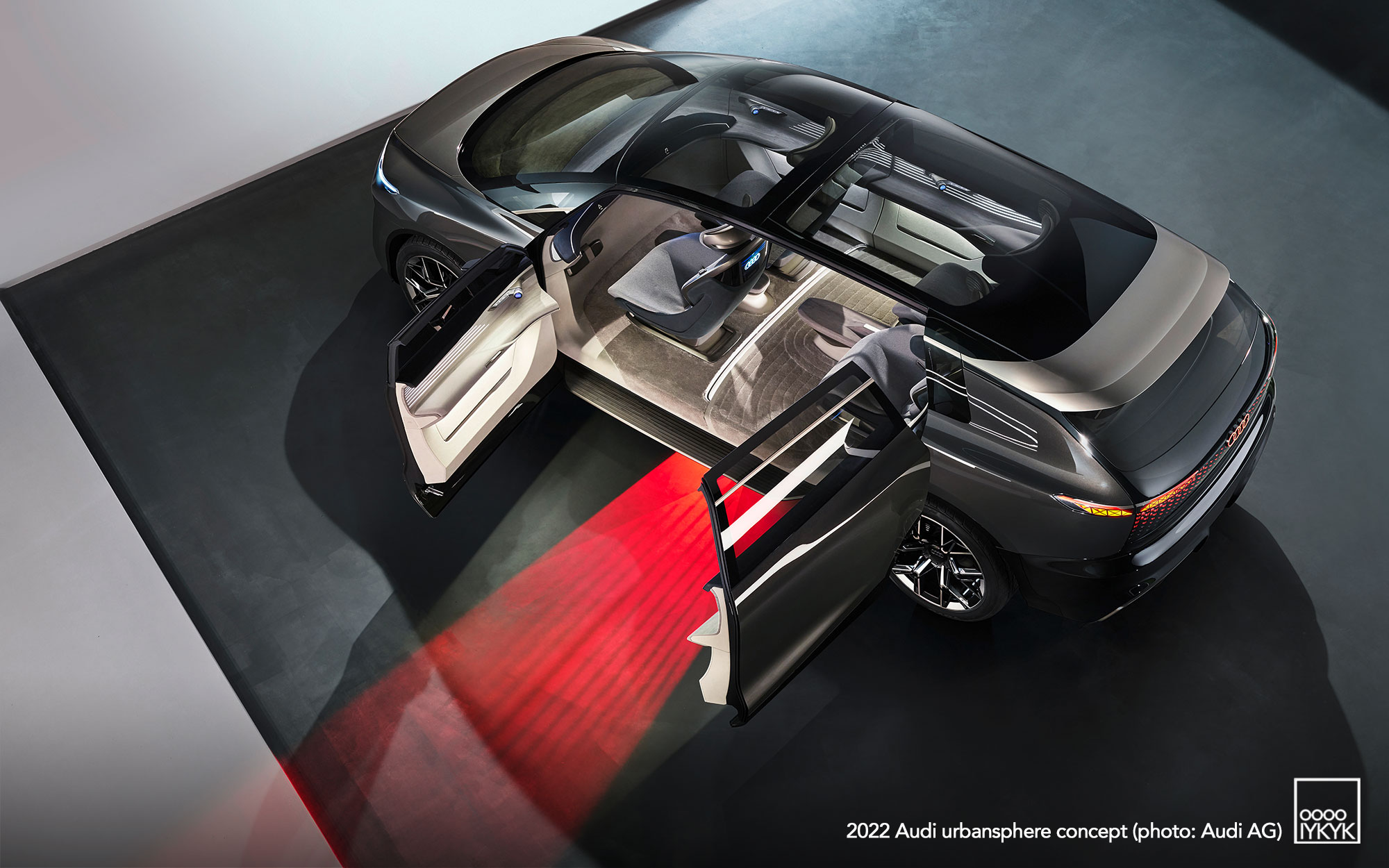
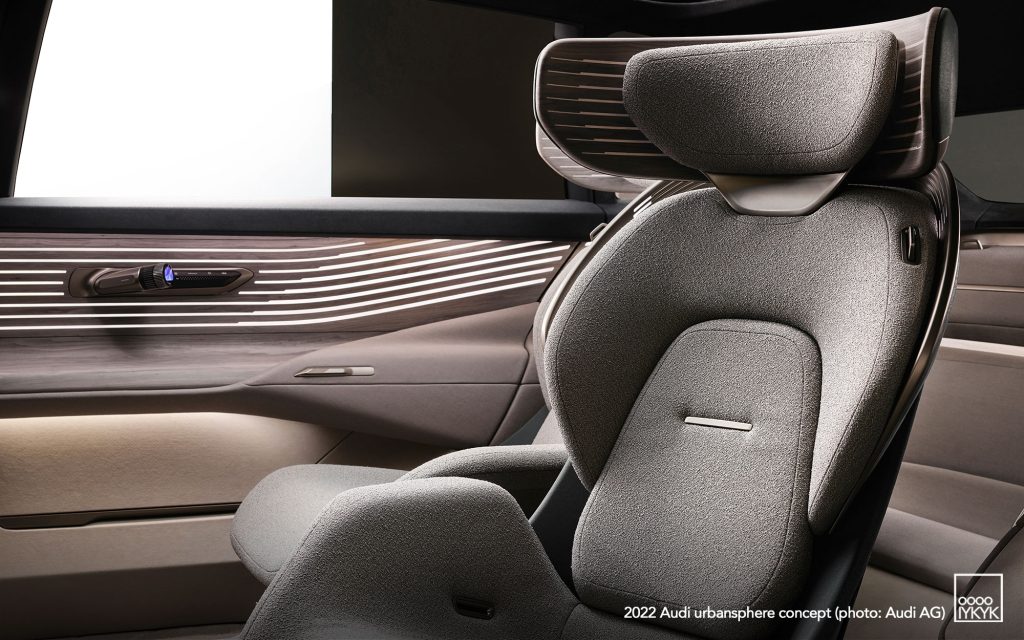
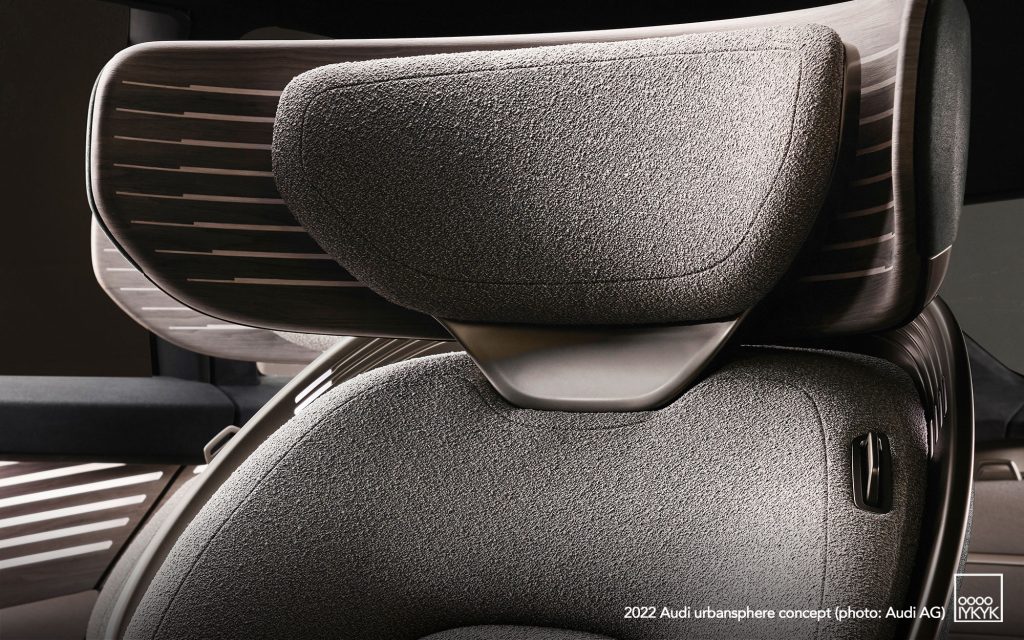
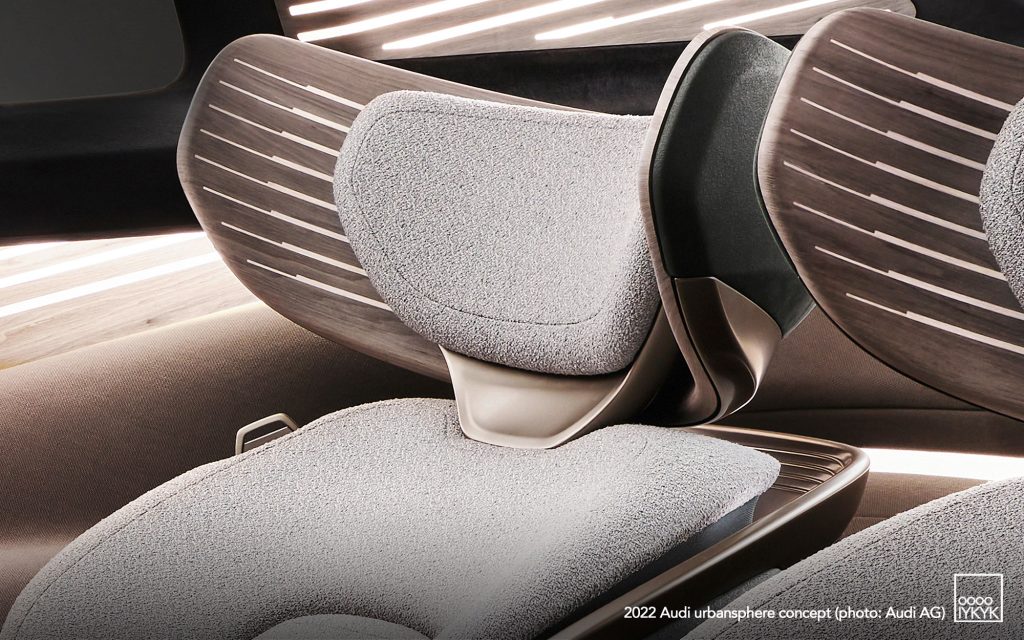
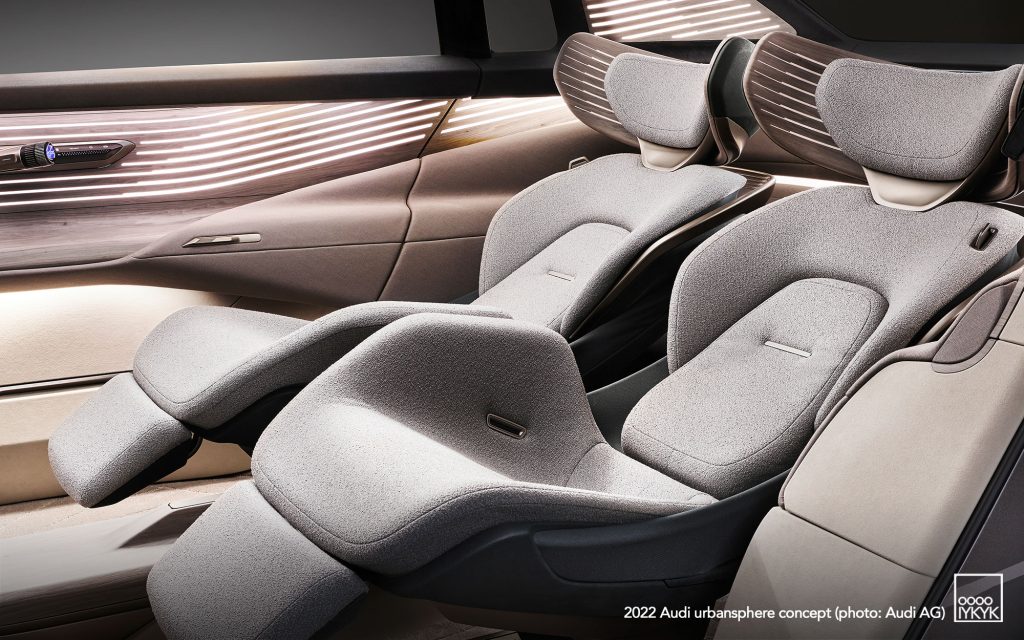
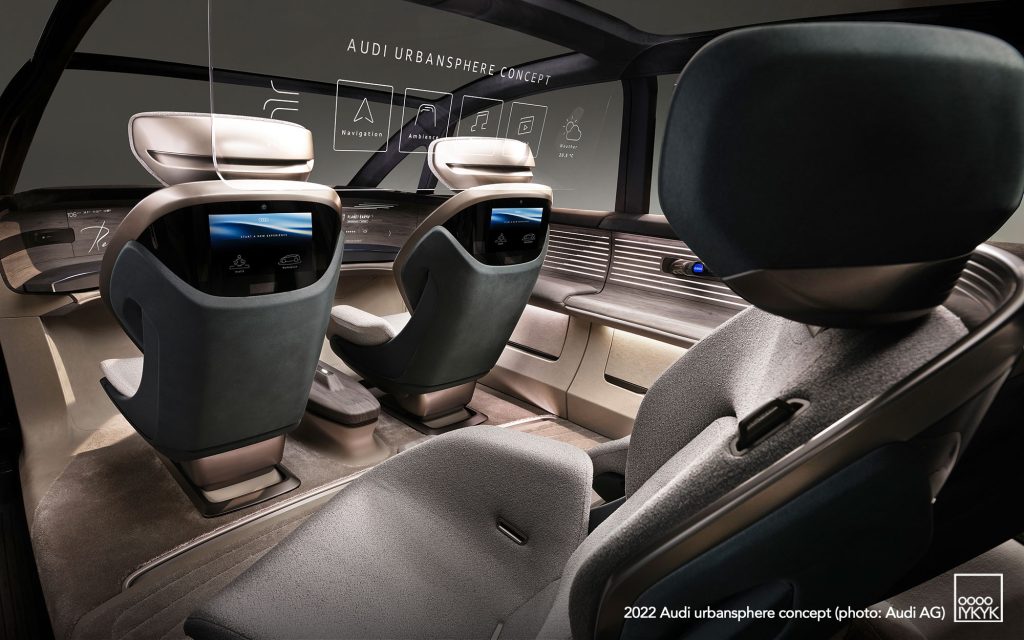
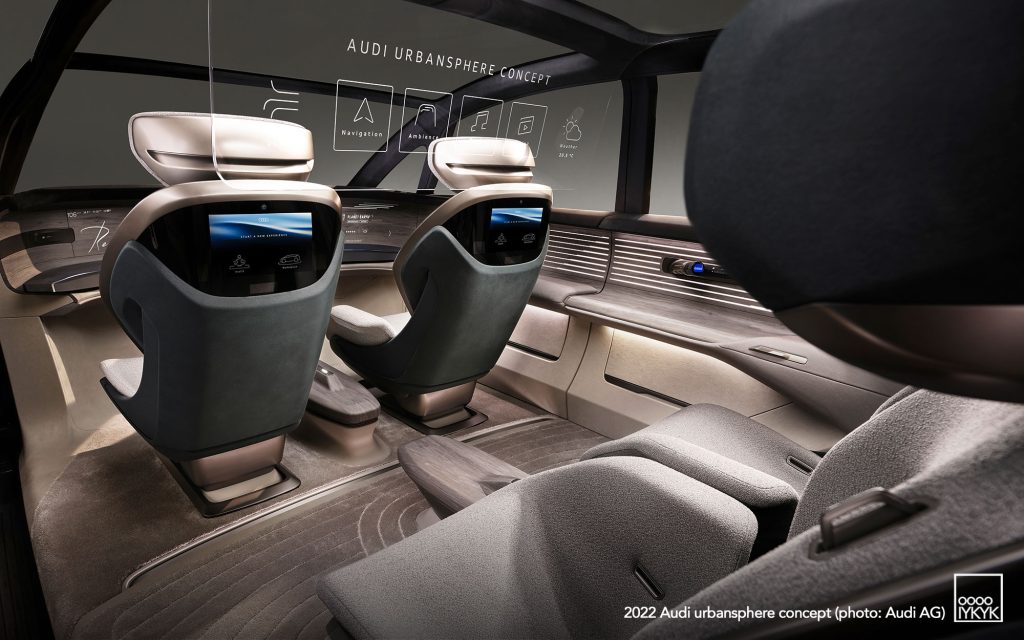
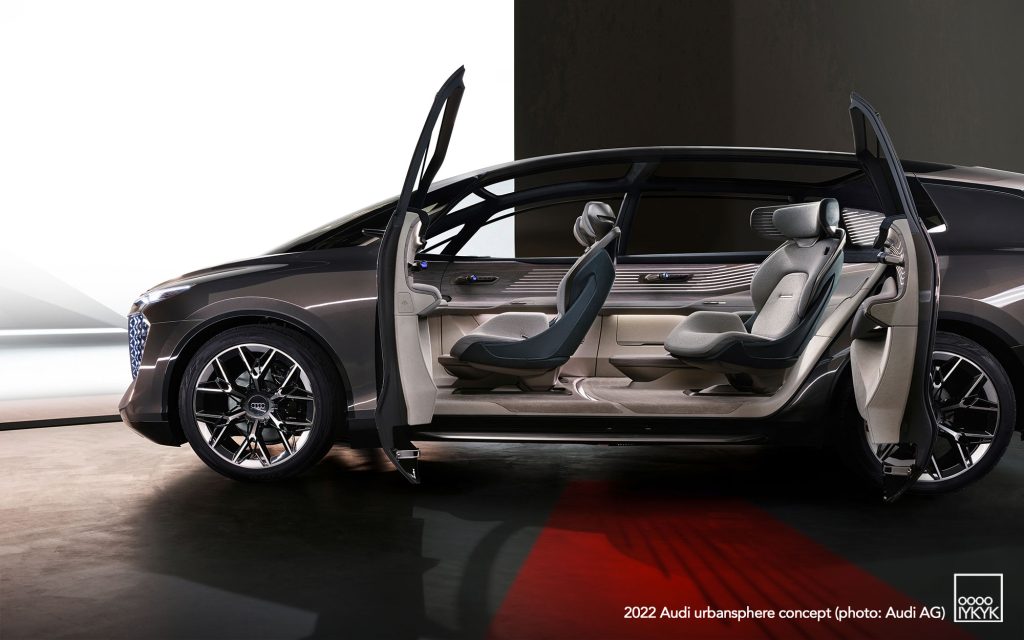
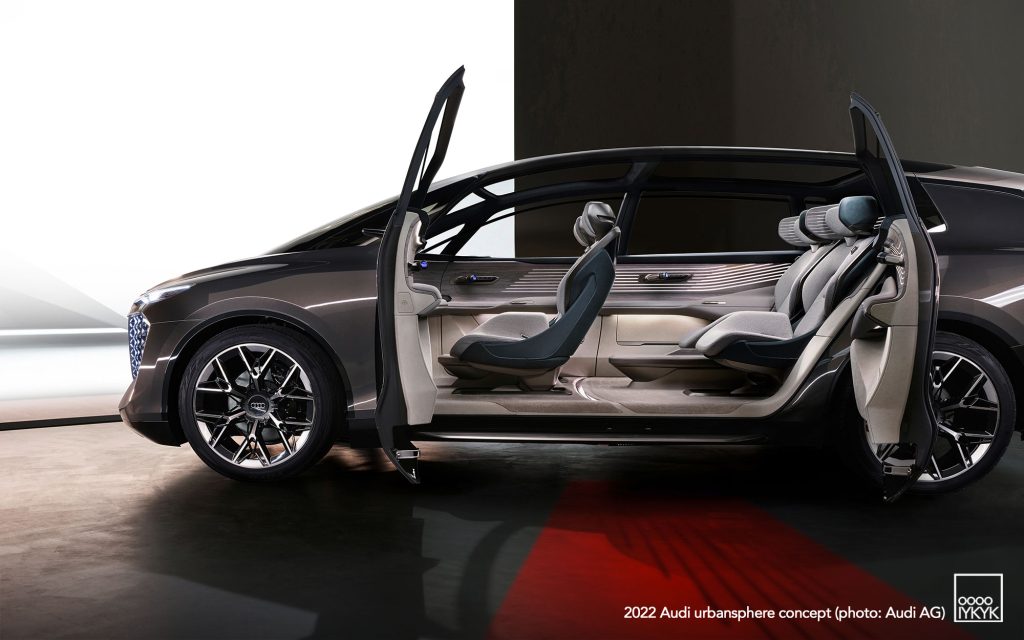
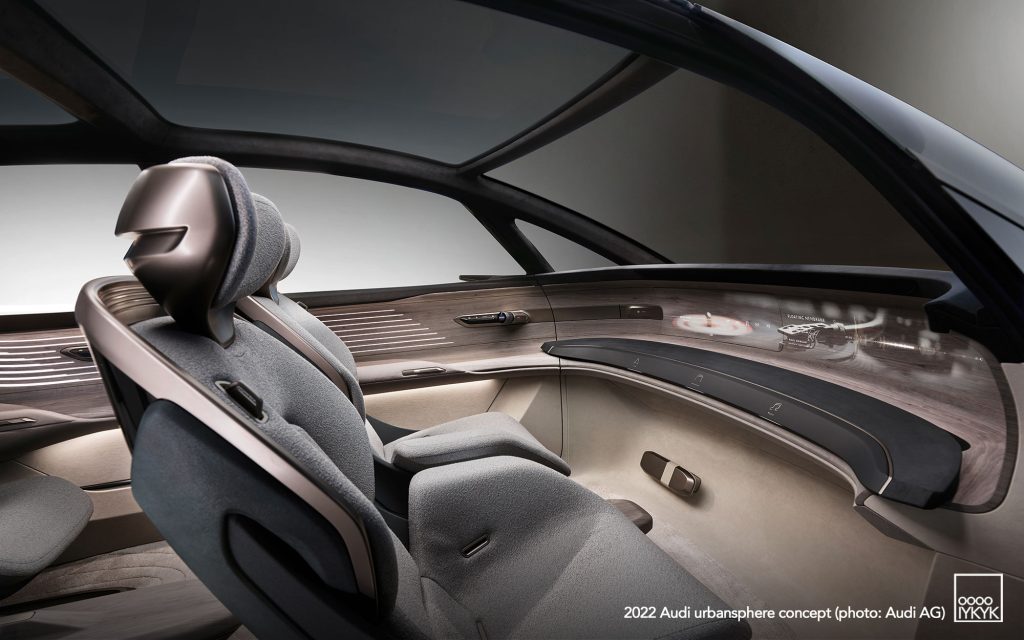
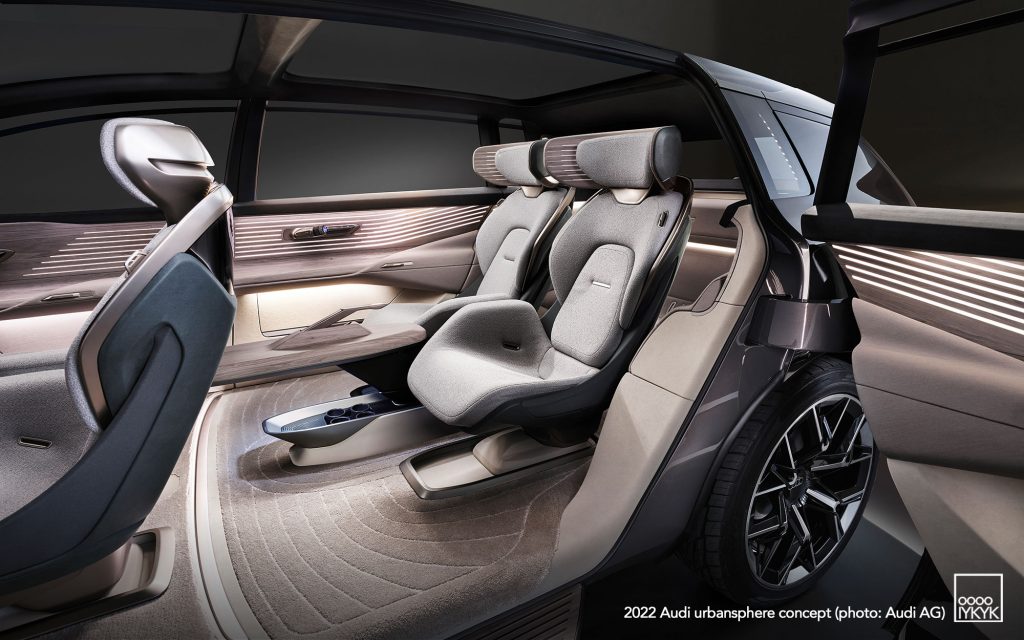
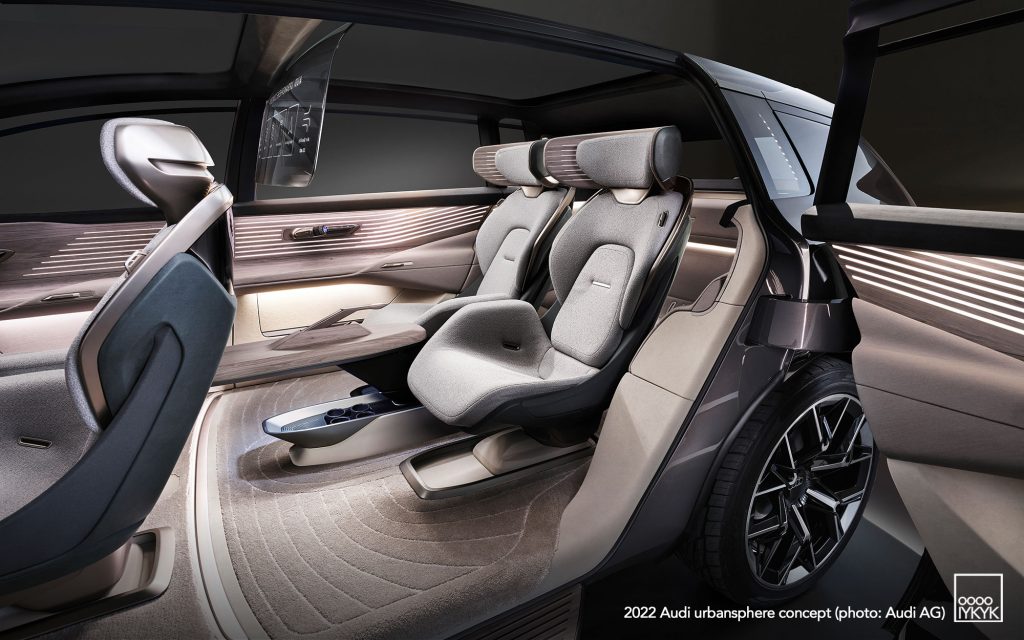
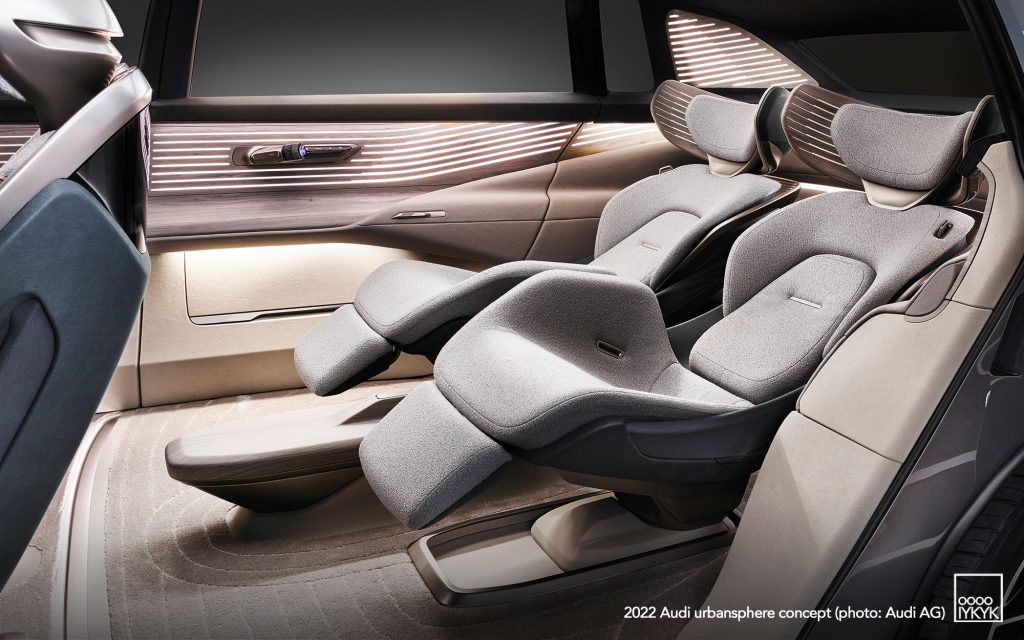
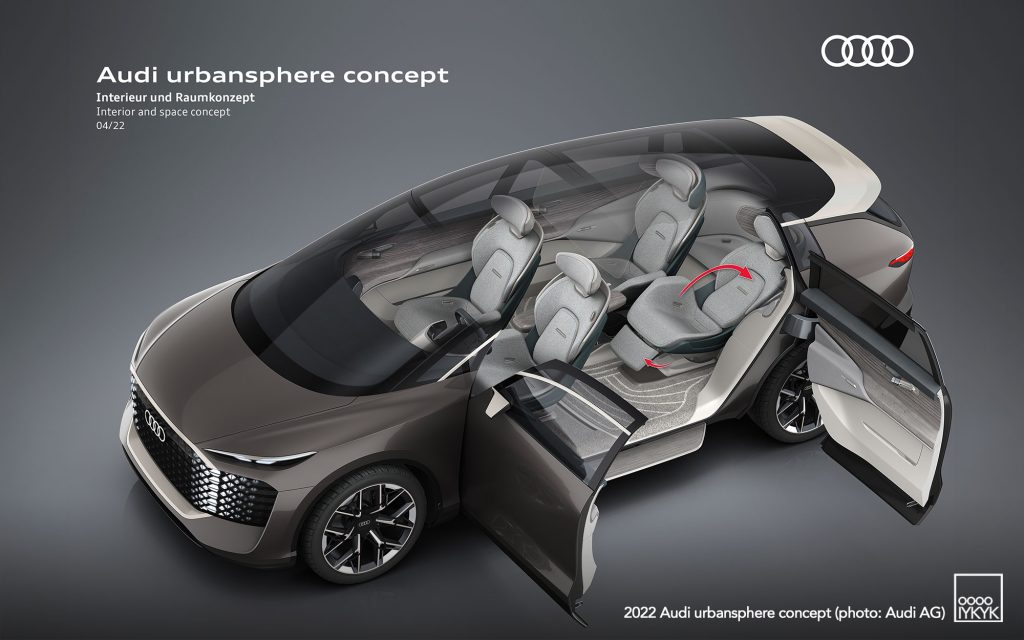
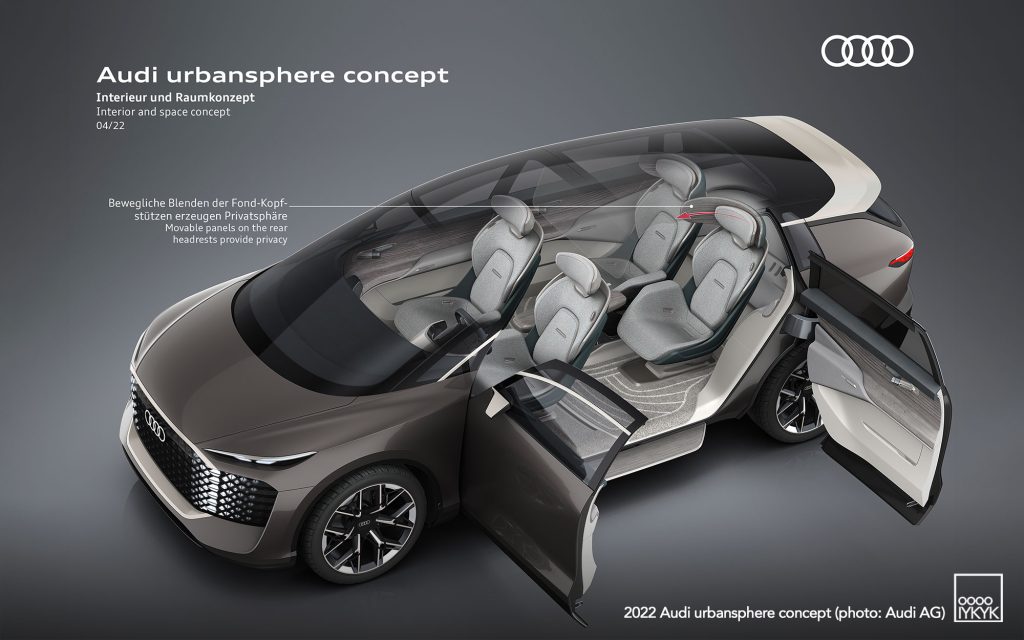
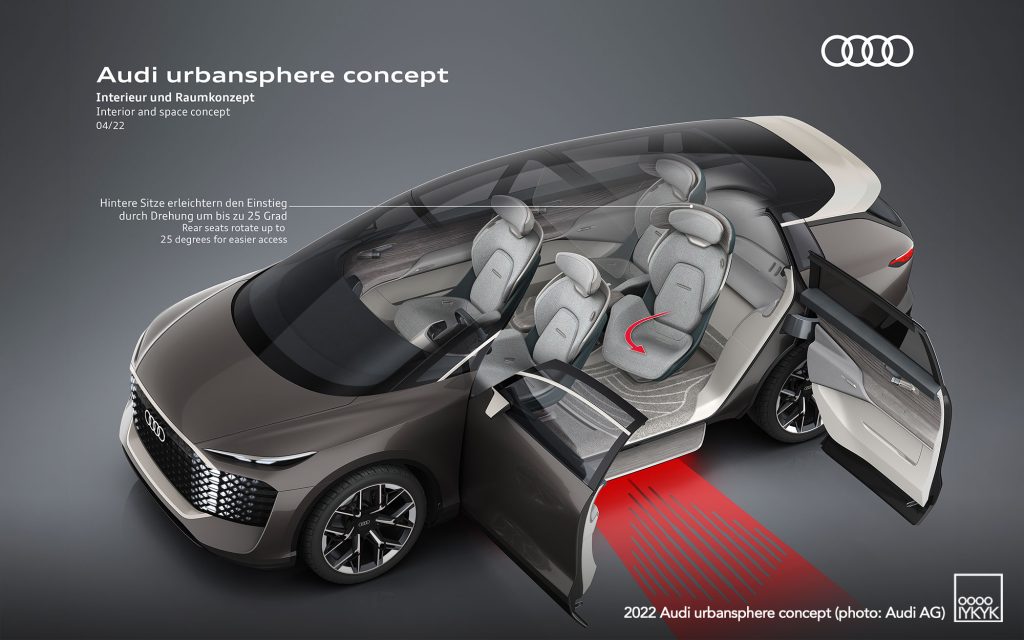
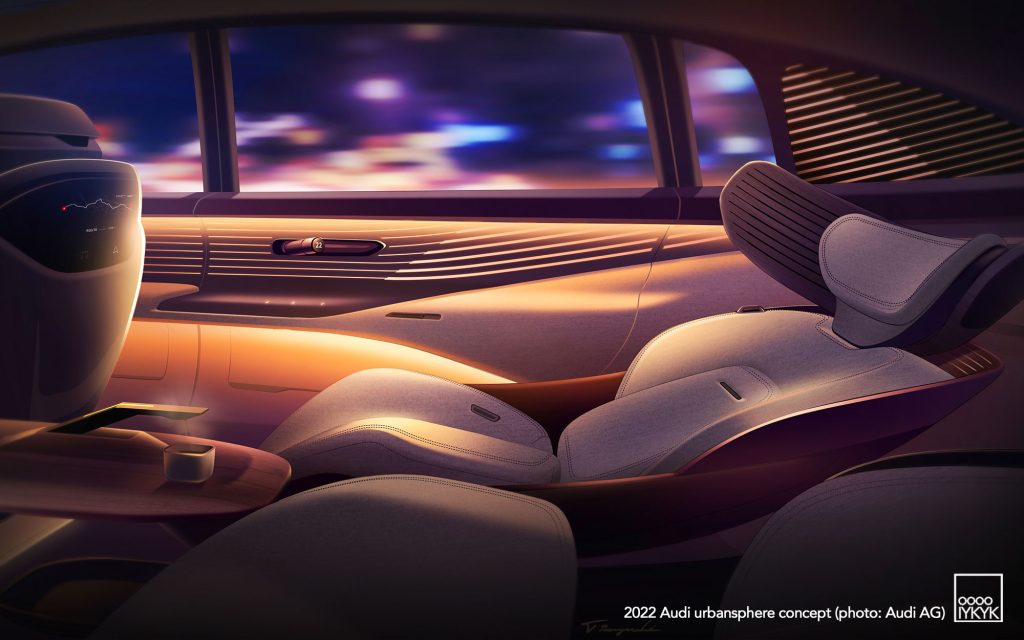
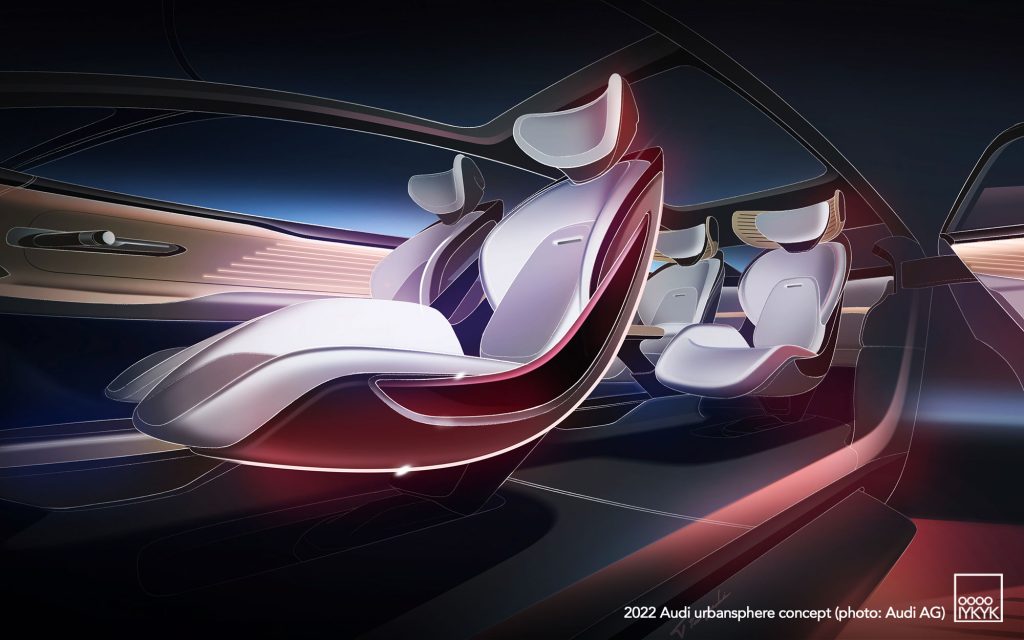
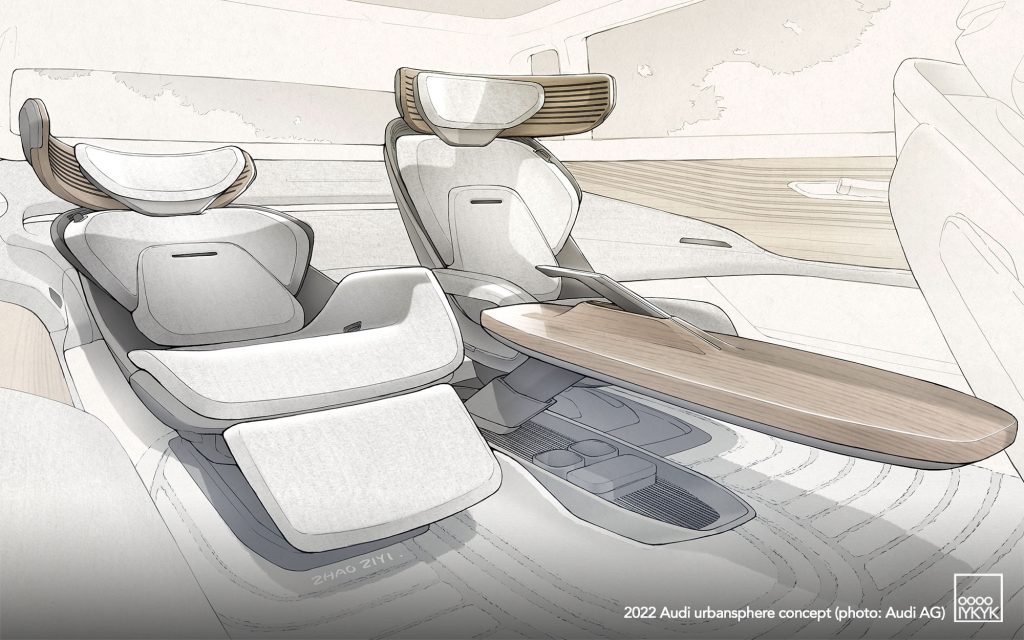
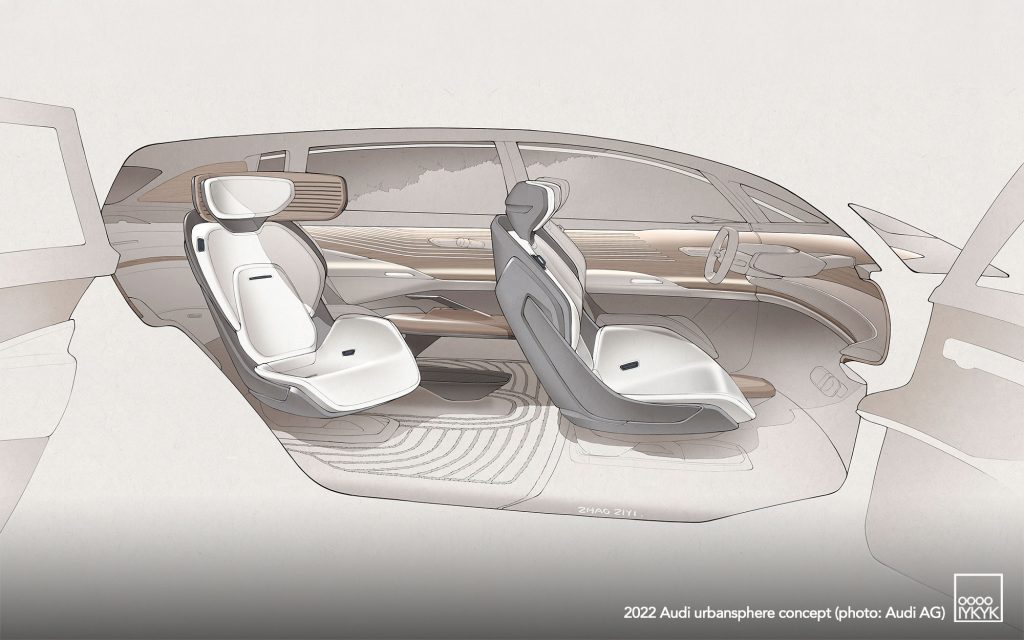
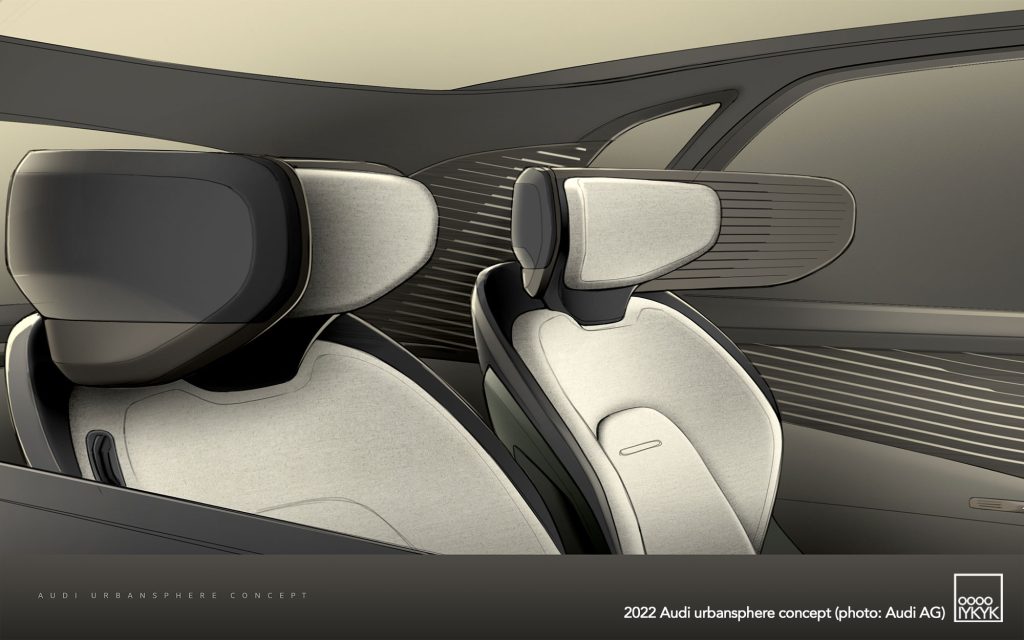
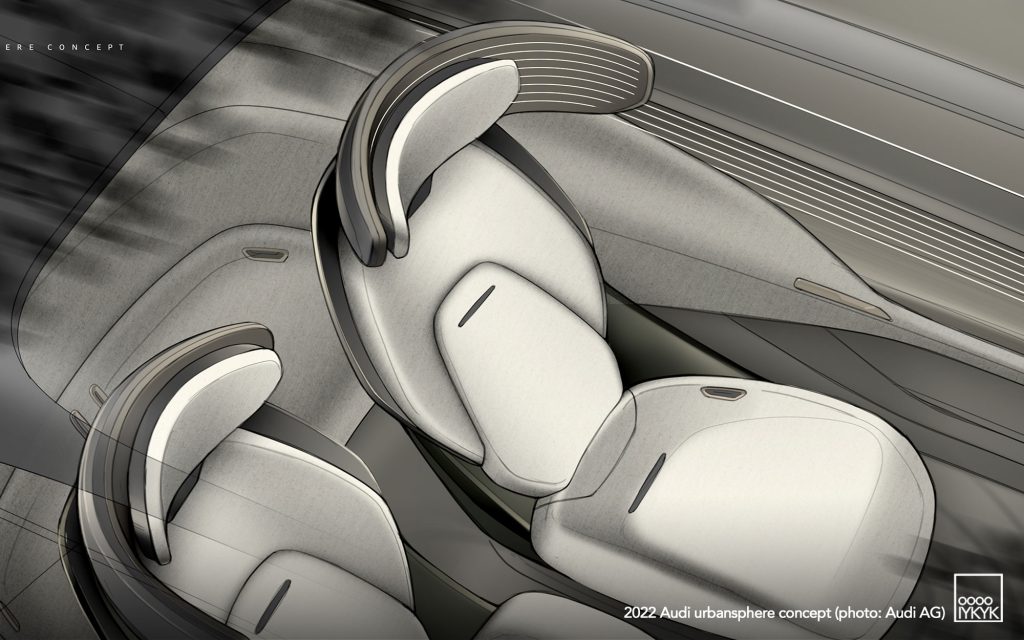
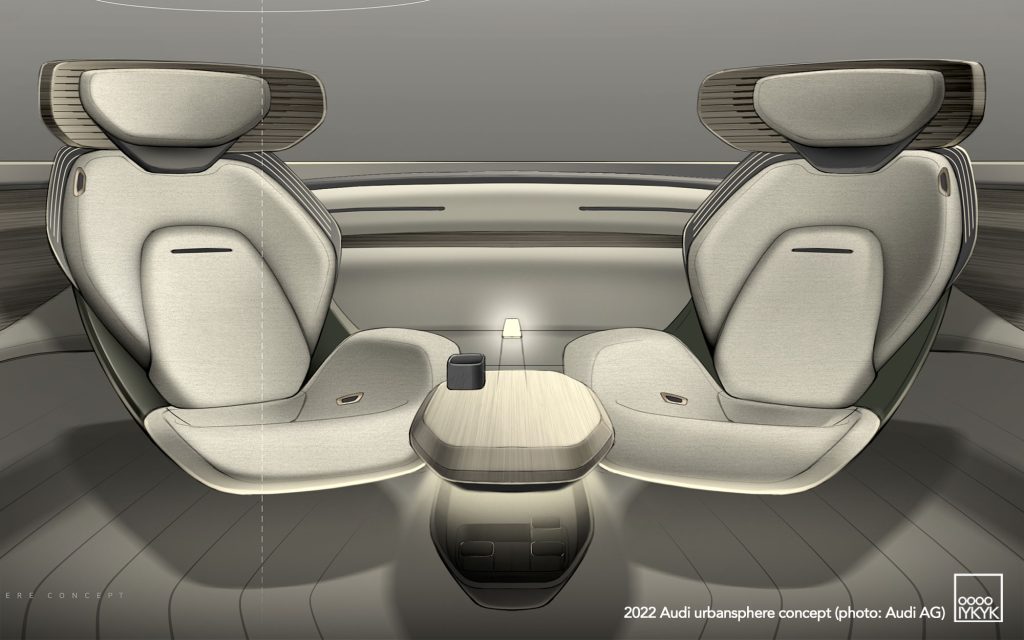
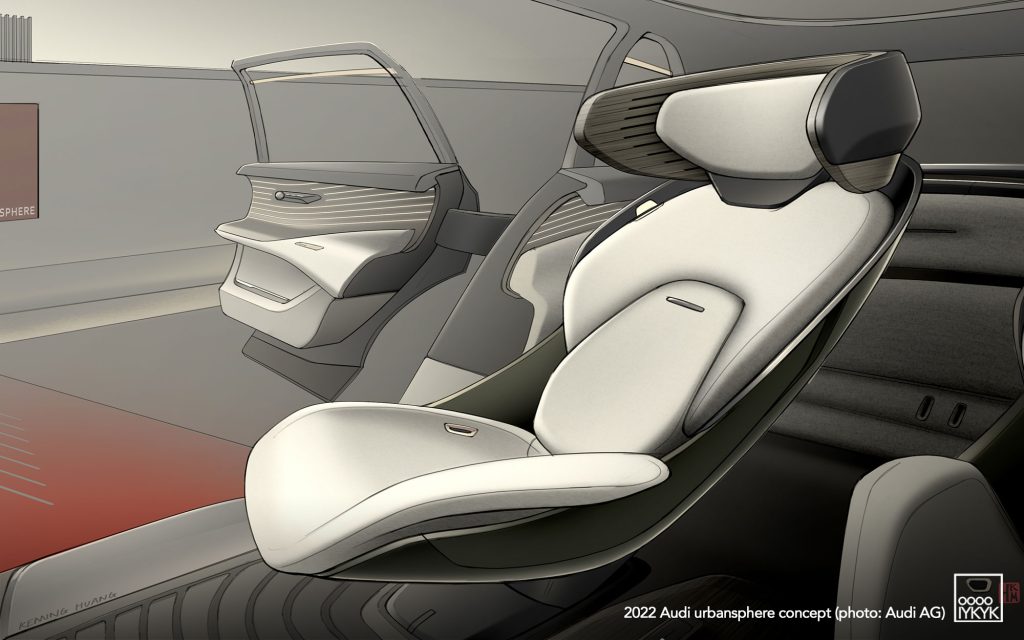
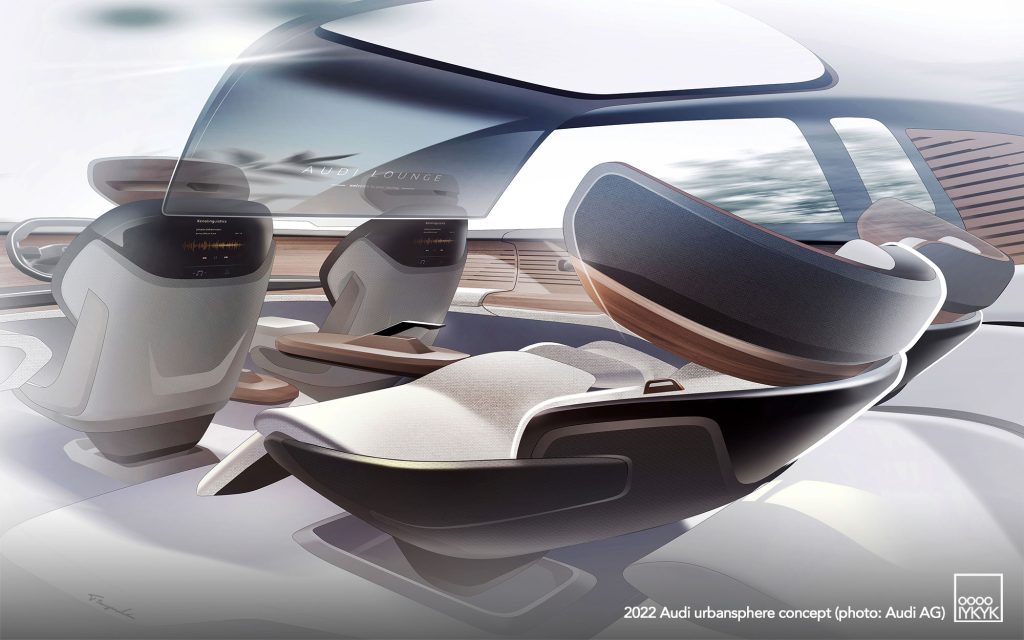
Four individual seats are arranged in two rows. The rear seats offer extensive adjustment and can recline by as much as 60 degrees in Relax and Entertain modes while simultaneously extending their leg rests. The seats can also swivel toward one another for conversation, while headrest-mounted privacy screens and individual sound zones allow passengers to withdraw into their own spaces.
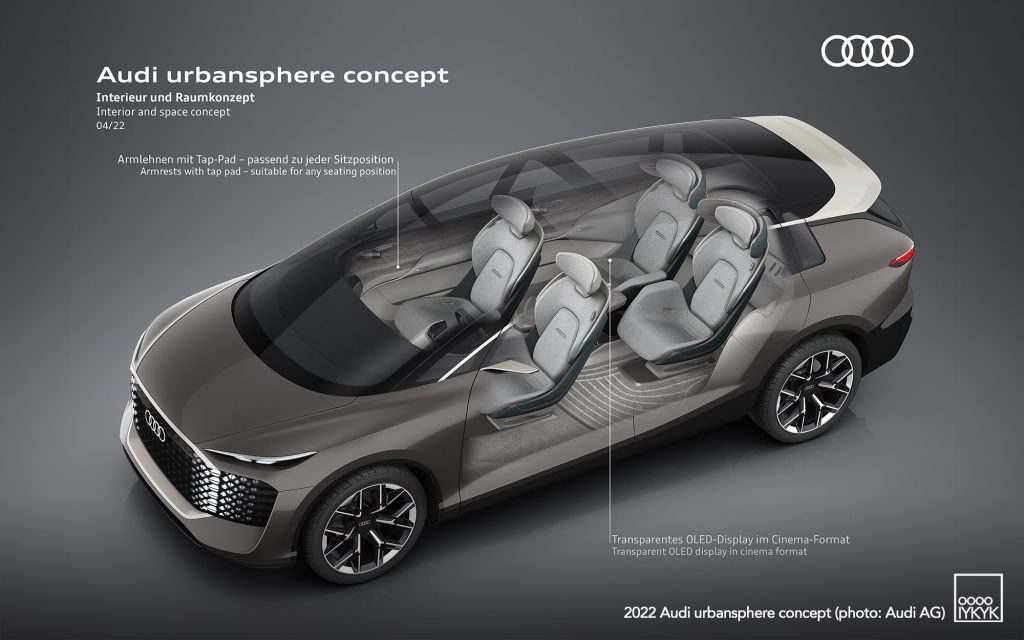
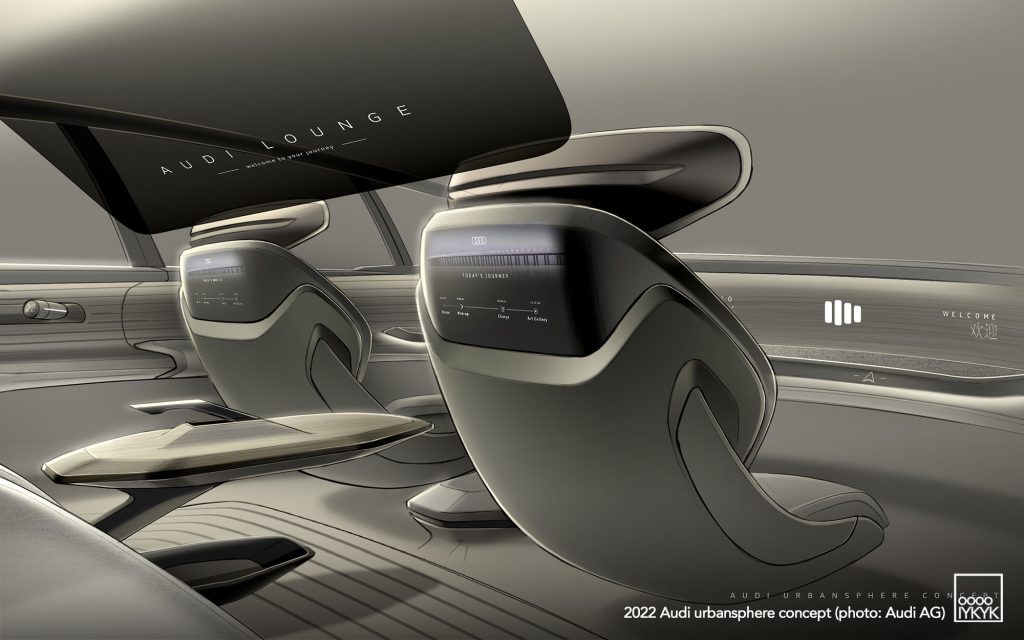
A transparent OLED display can descend vertically from the roof between the two seating rows, creating a full-width shared screen for video conferences, entertainment or split-screen content. When unused, its transparent construction maintains sightlines through the cabin.
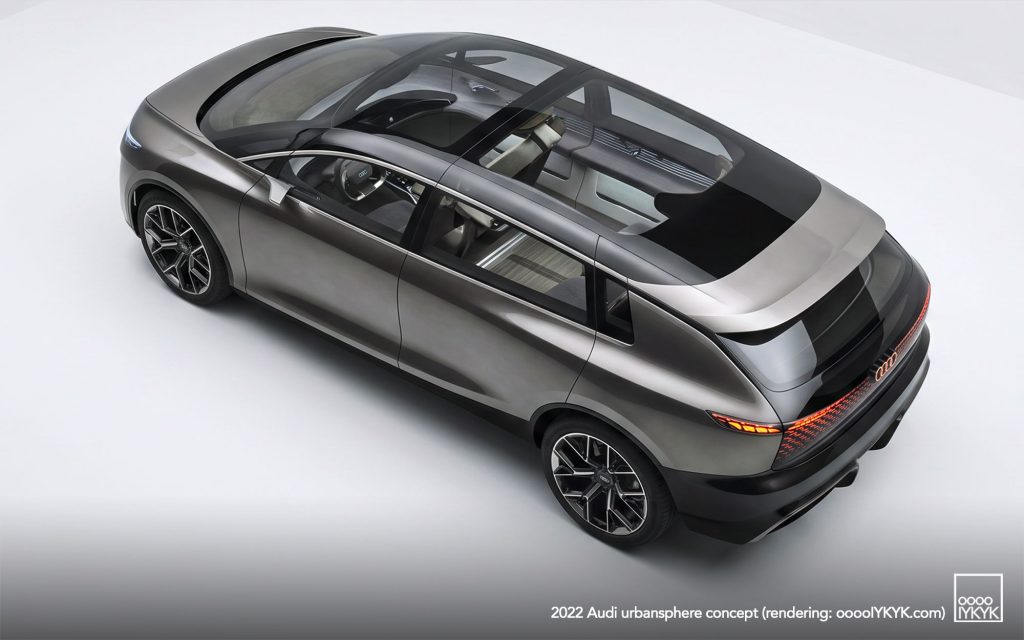
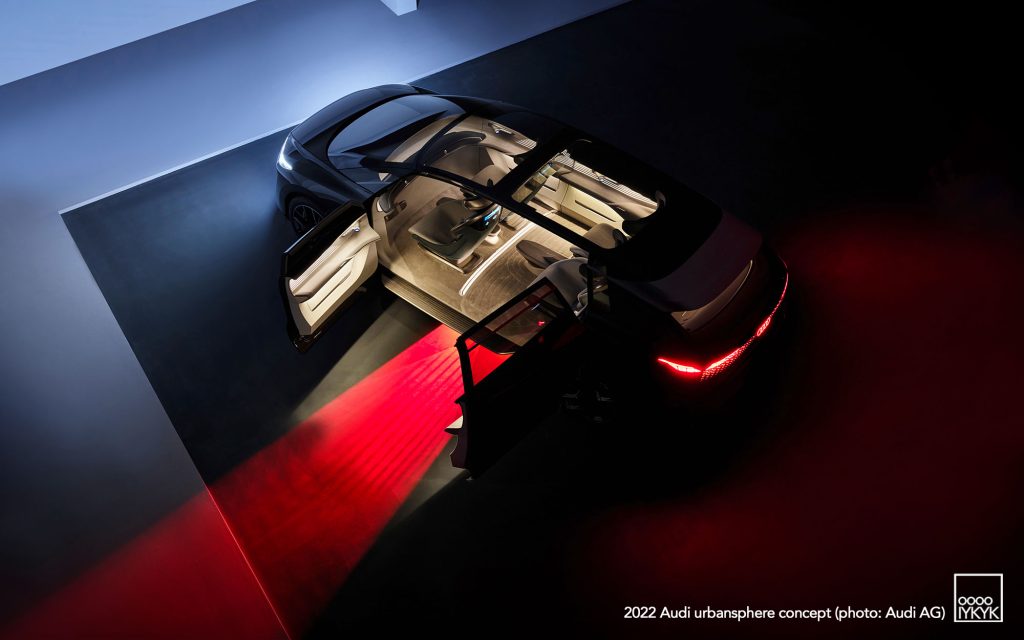
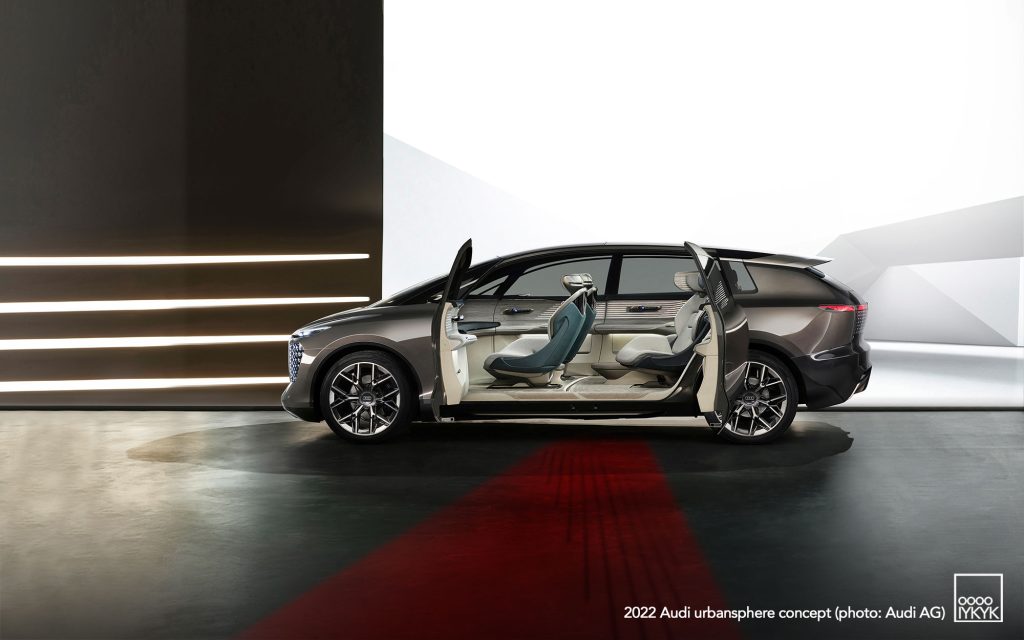
Counter-hinged front and rear doors and the elimination of the B-pillars create a large uninterrupted opening into the passenger compartment. The seats can rotate outward to assist entry, accompanied by a projected red carpet of light.
INTERFACE AND DIGITAL EXPERIENCE
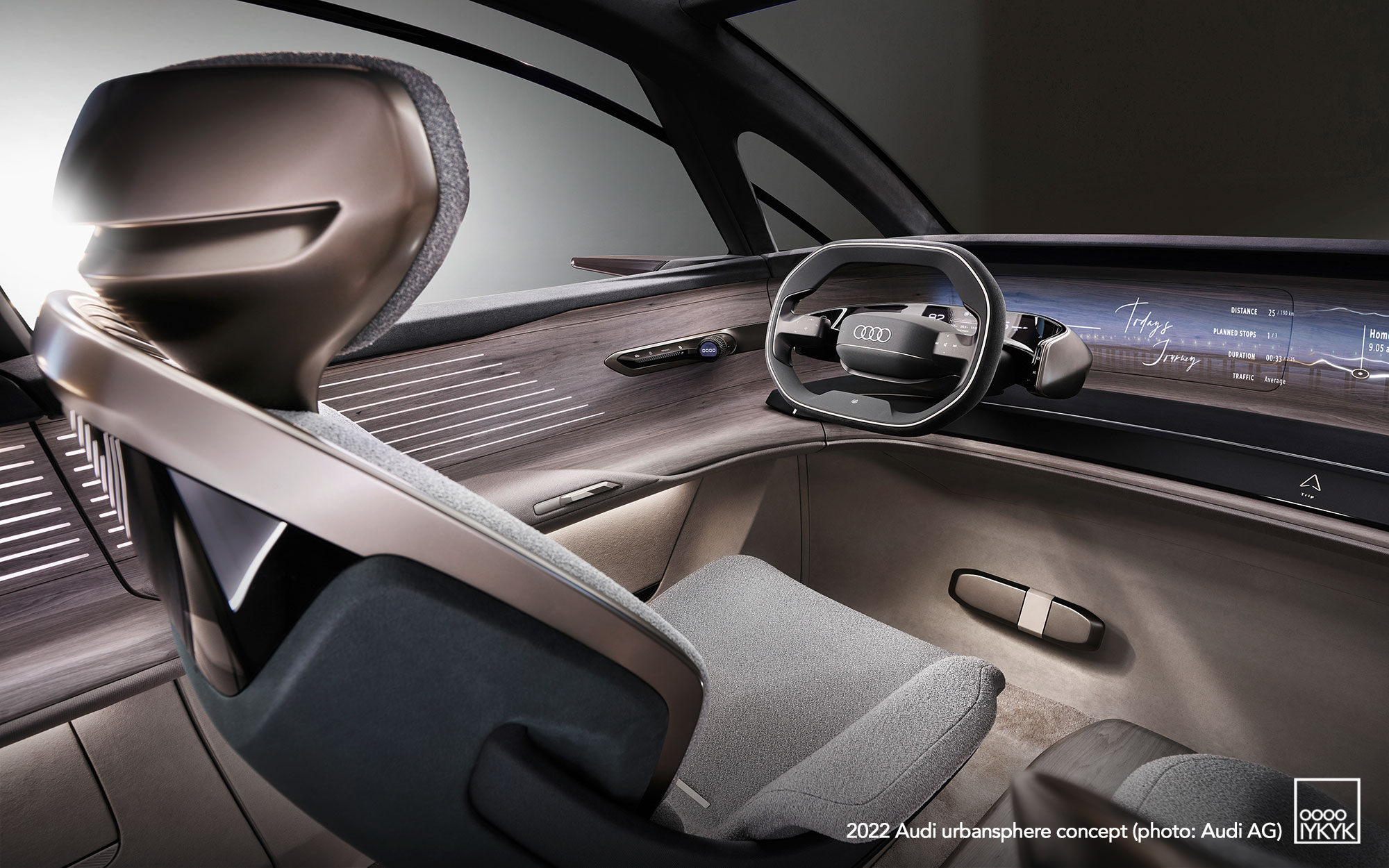
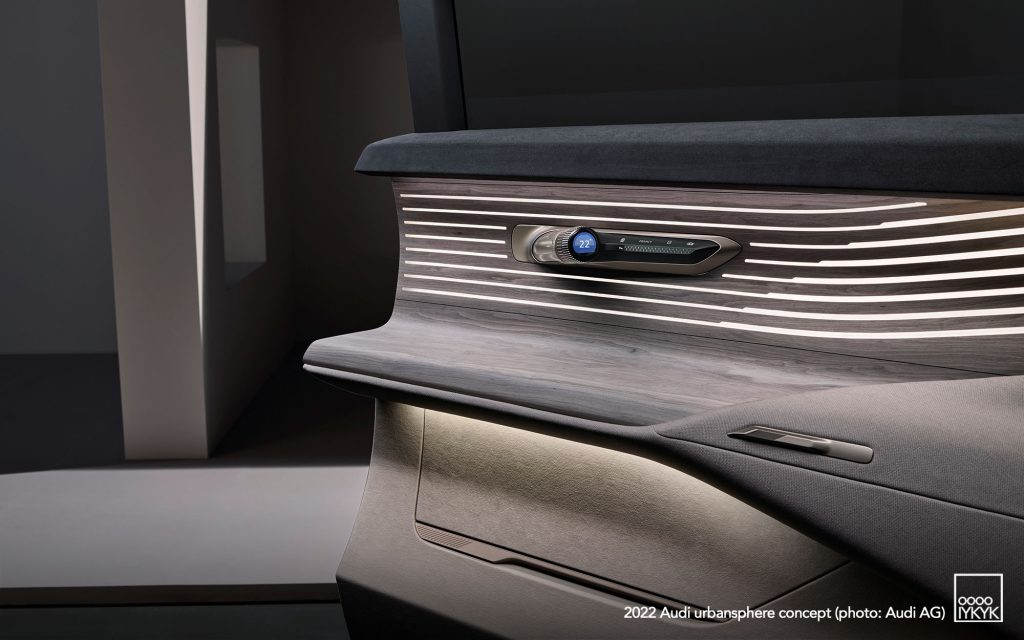
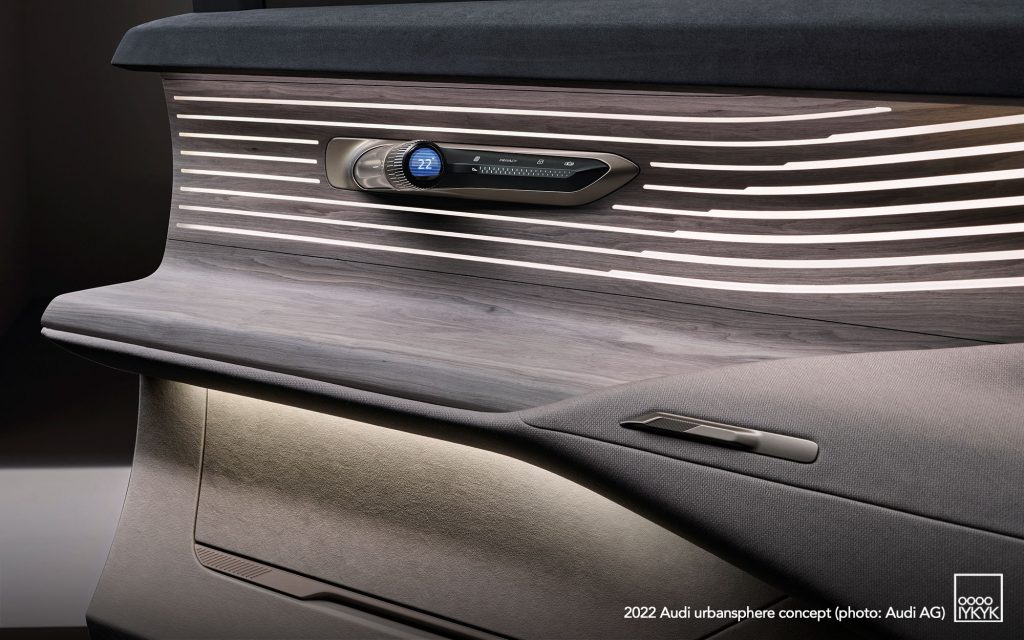
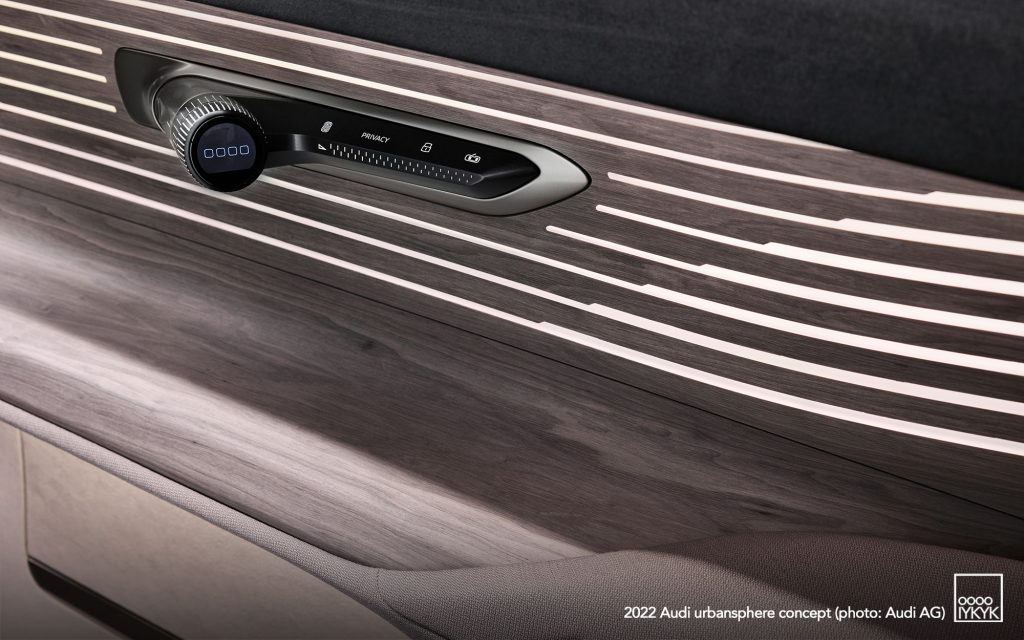
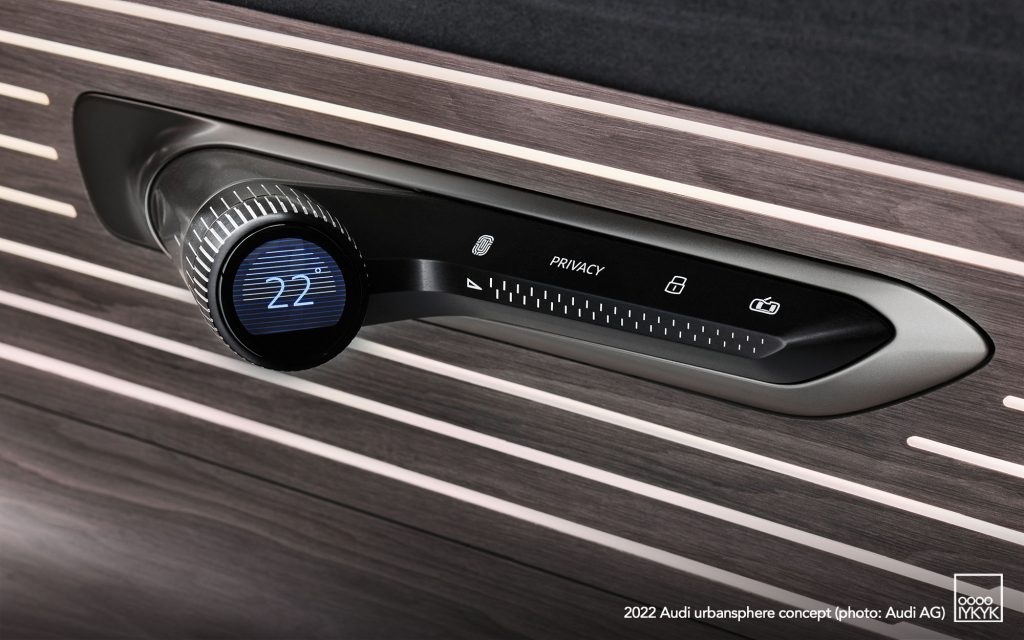
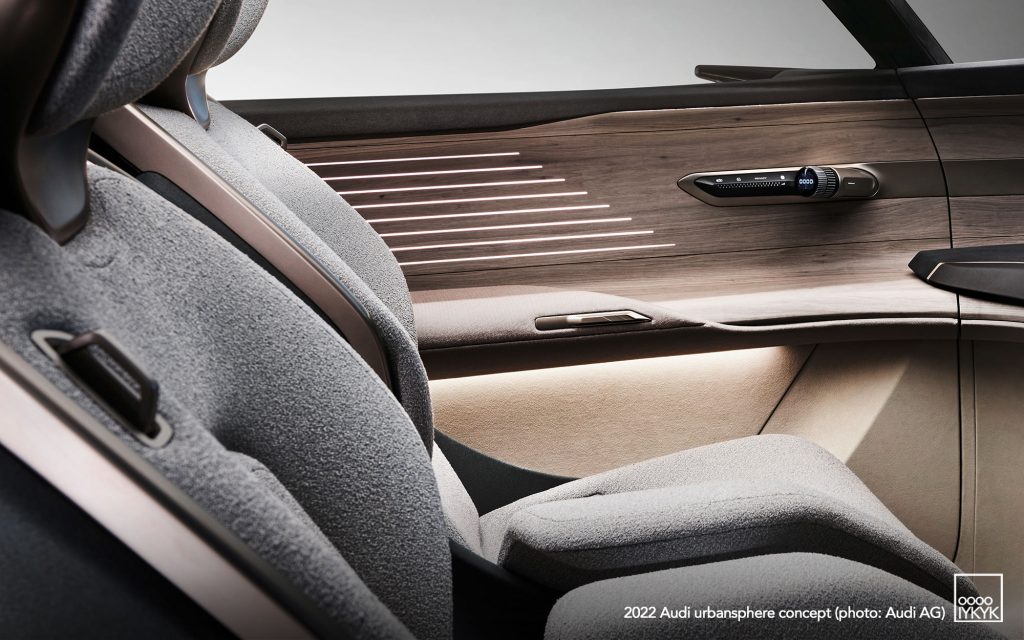
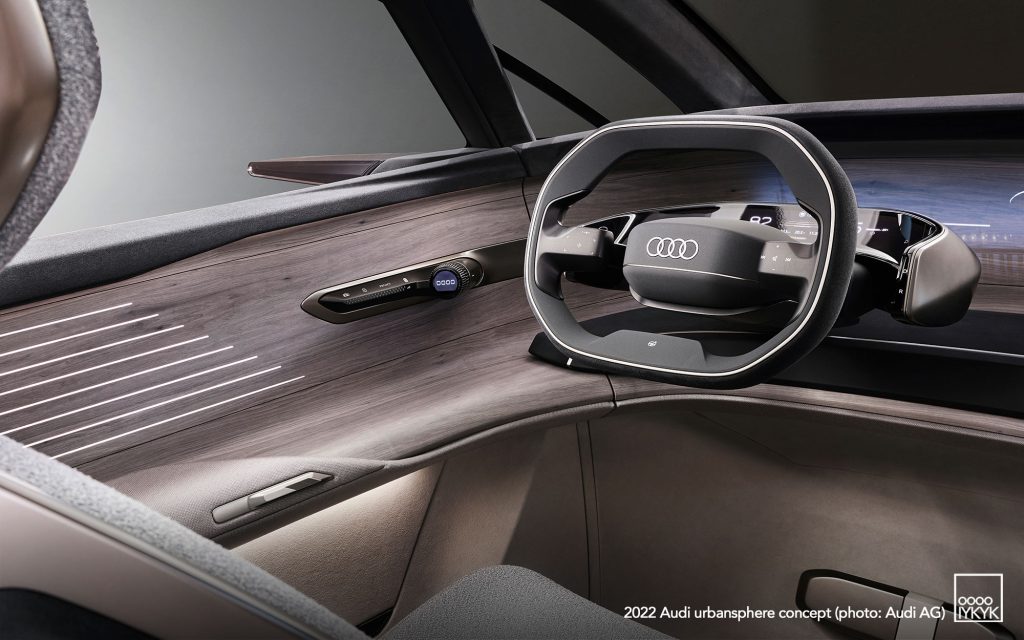
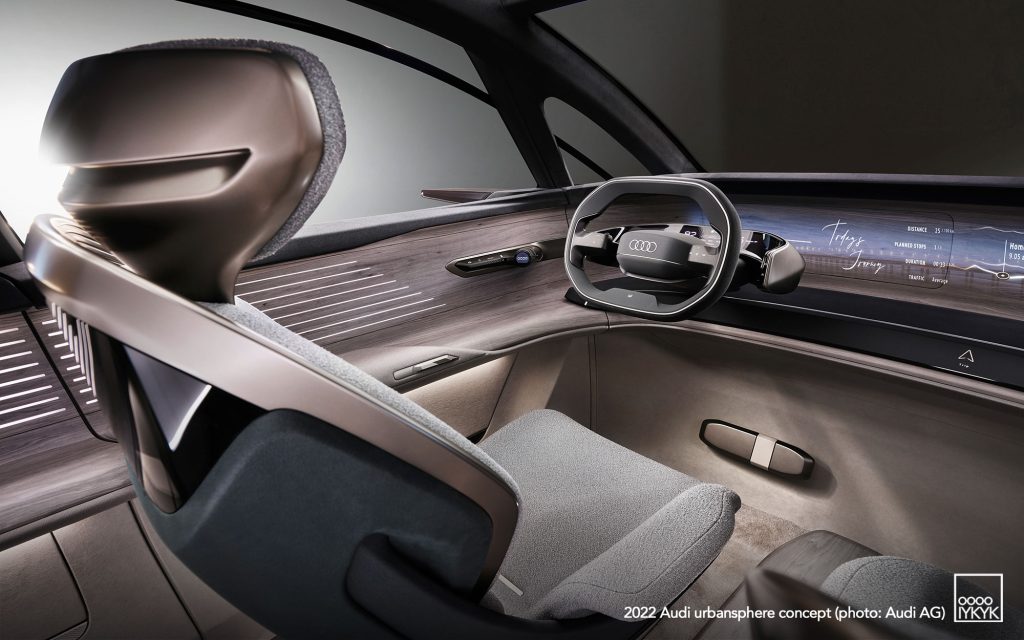
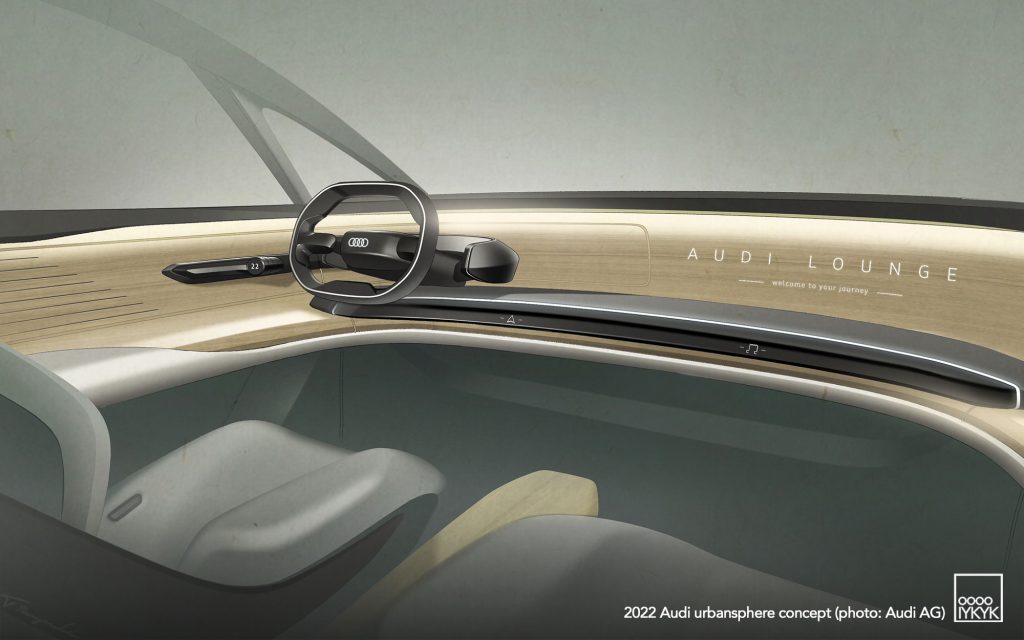
Audi deliberately minimized visible displays in the urbansphere. When inactive, the cabin presents occupants with largely uninterrupted surfaces of wood, wool and textile rather than a conventional instrument panel filled with screens.
Once activated, information is projected onto wooden surfaces beneath the windshield. The display configuration changes depending on whether the vehicle is being driven manually or operating autonomously.
The concept also introduced Audi’s MMI touchless response system. Physical controls could be operated conventionally when an occupant was sitting upright, while eye tracking and gesture recognition allowed the same functions to be controlled without reaching forward when the seat was reclined. Voice and touch inputs were also incorporated, with the system designed to learn individual preferences and commonly used functions.
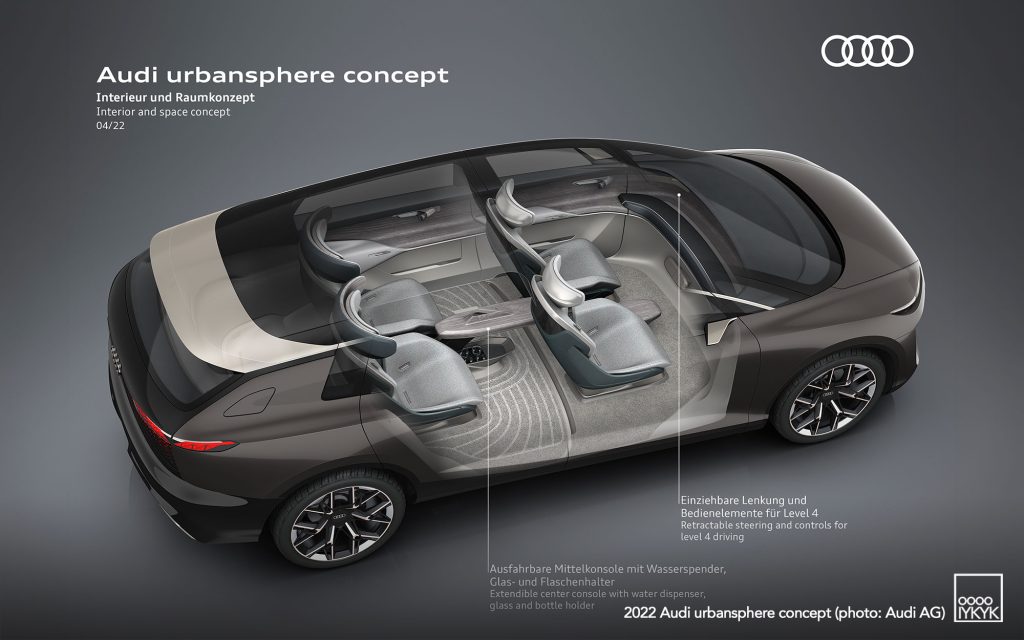
During Level 4 automated operation, the steering wheel, pedals and conventional dashboard could retract from view, further transforming the cabin from a driving environment into a lounge or workspace.
WELLNESS AND PERSONALIZATION
The urbansphere’s cabin was intended to function as more than an entertainment space. Audi incorporated concepts developed through its Chinese customer co-creation program, including a stress-detection system using facial scans and voice analysis.
Depending on the passenger’s detected state, the vehicle could suggest individualized relaxation options, including meditation programs delivered through personal displays and the private sound zones integrated into the headrests.
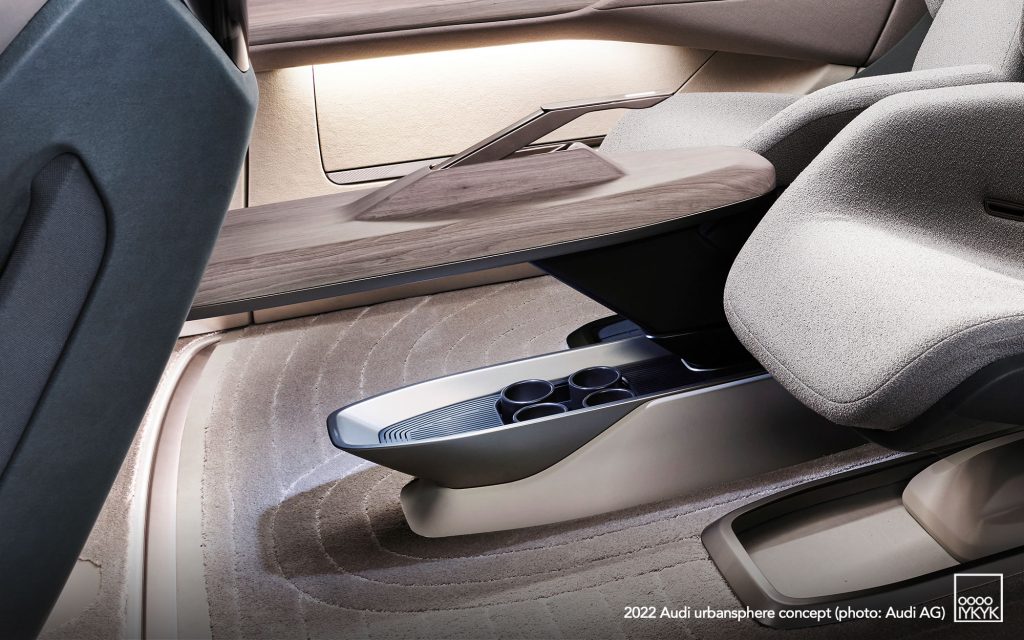
A center console positioned between the rear seats could rise from its normally lowered position and incorporated a water dispenser and glasses.
MATERIALS AND SUSTAINABILITY
Audi used the urbansphere to explore more sustainable luxury materials. Hornbeam veneer was sourced from trees grown near the processing location and was produced without chemicals. Seat padding used ECONYL recycled polyamide, itself capable of being recycled again without loss of quality.
Bamboo viscose fabric was used for the armrests and rear cabin areas, while the different materials were installed separately where possible to improve their potential for eventual recycling.
EXTERIOR DESIGN
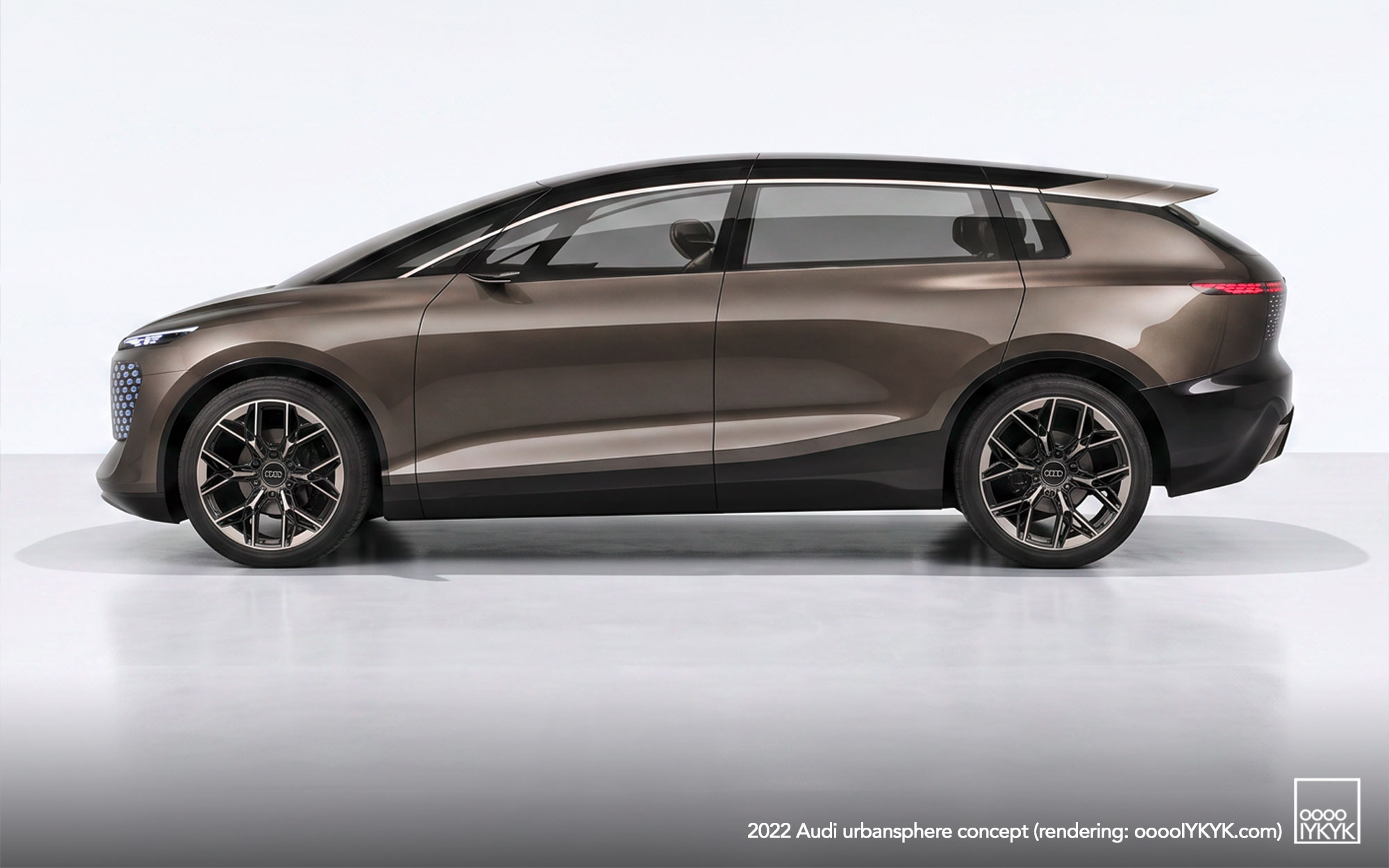
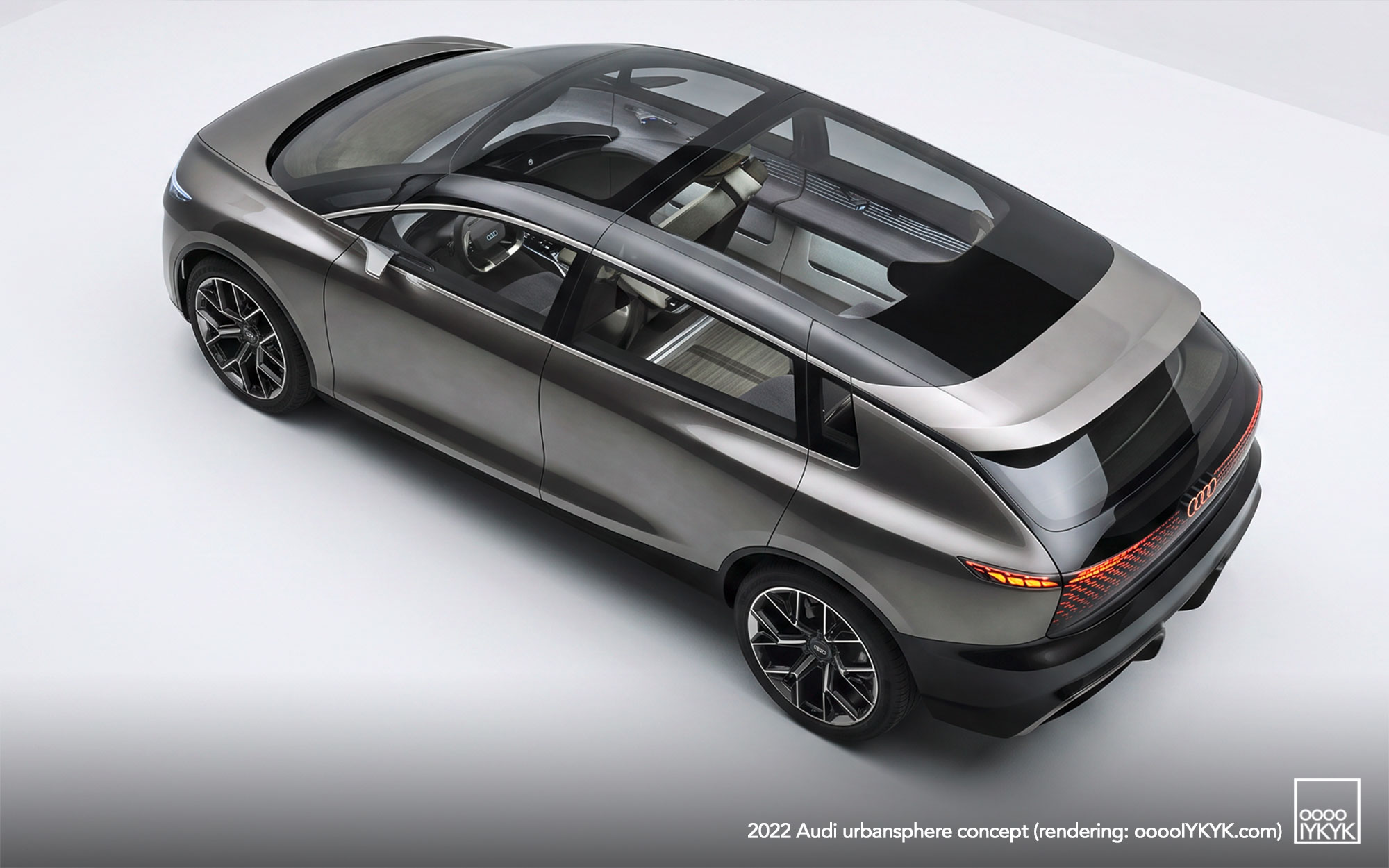
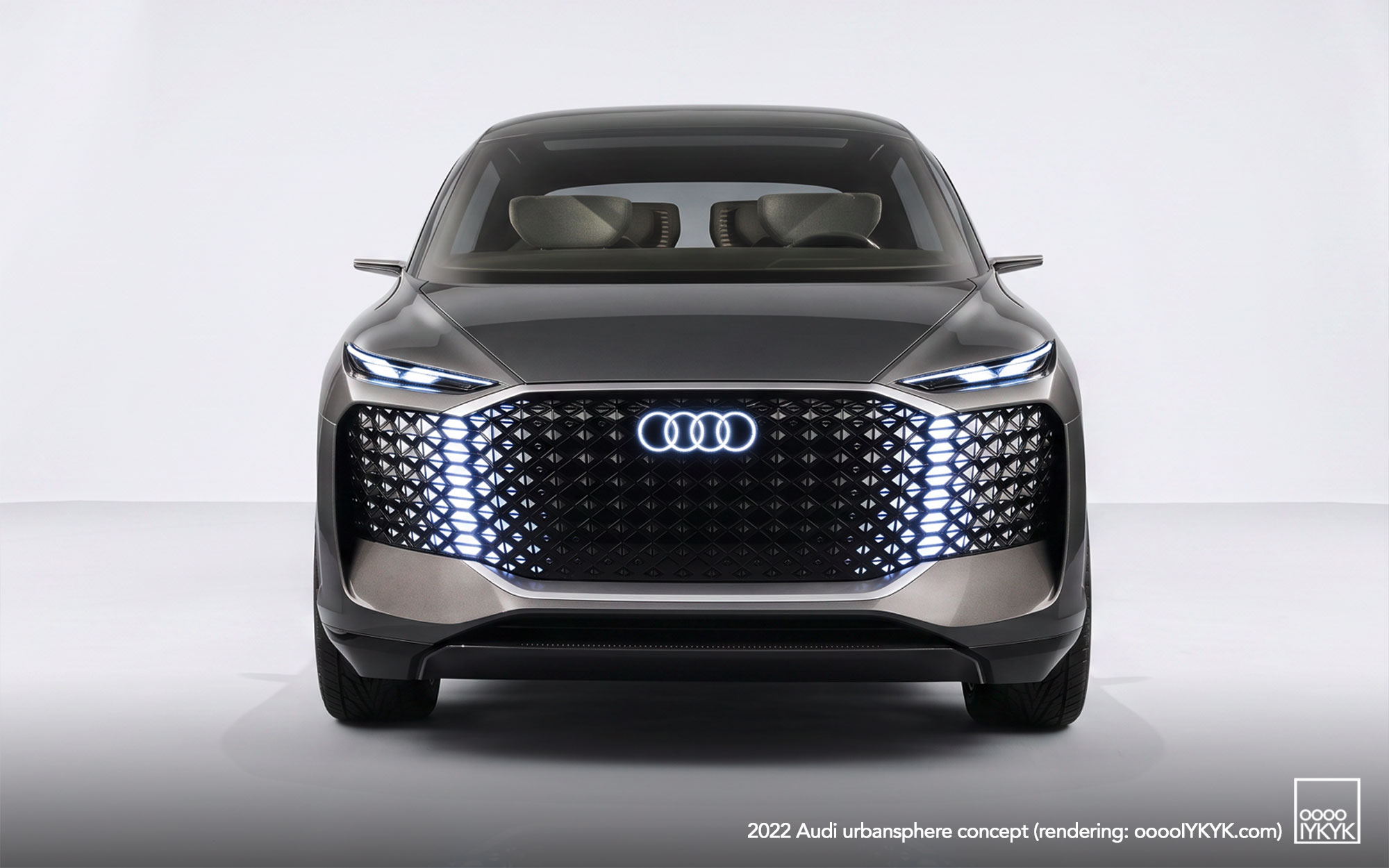
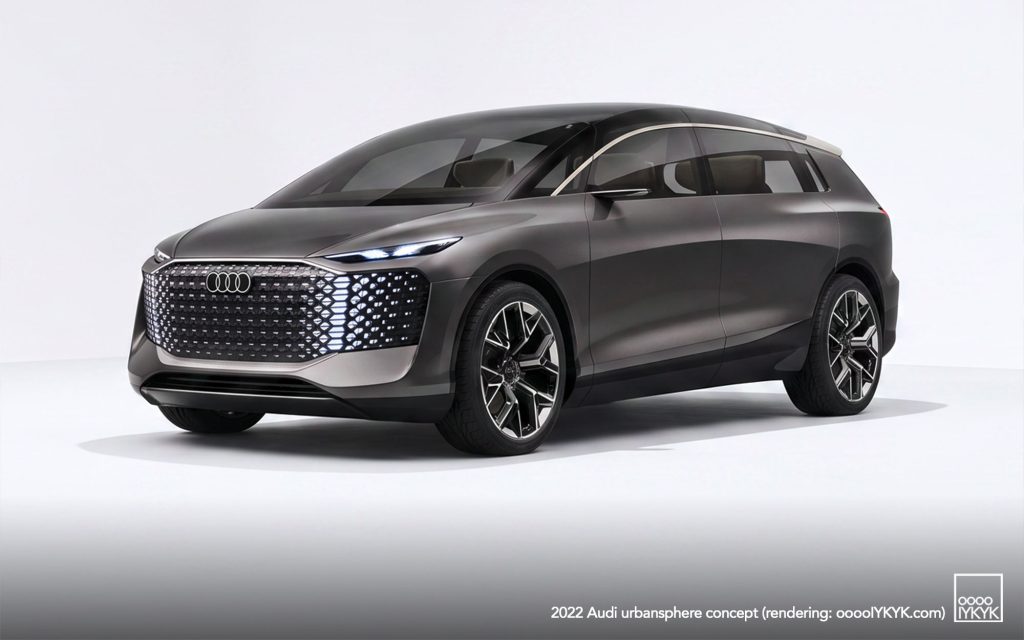
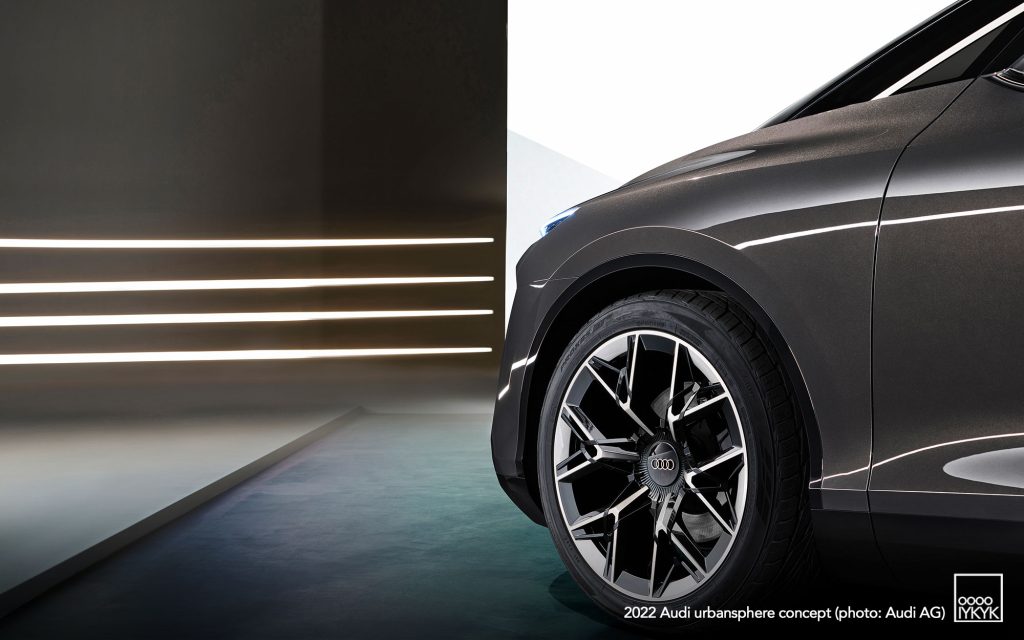
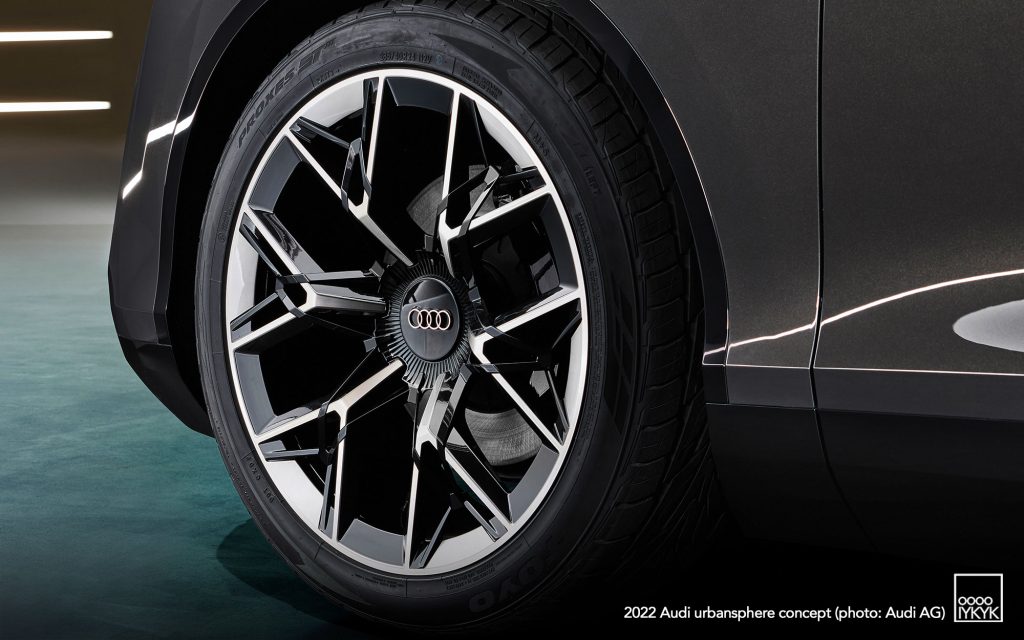
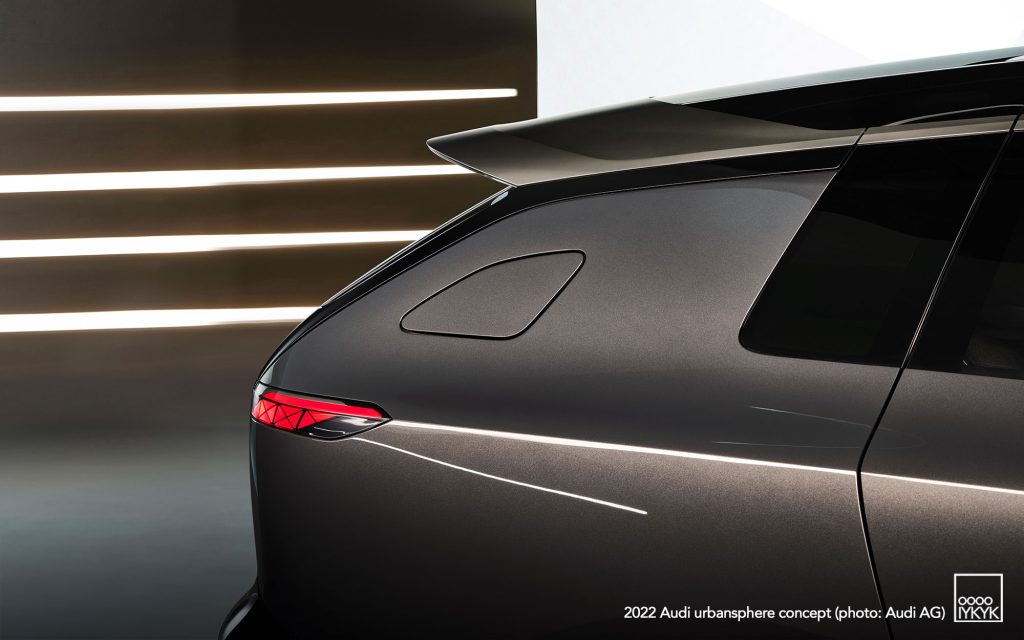
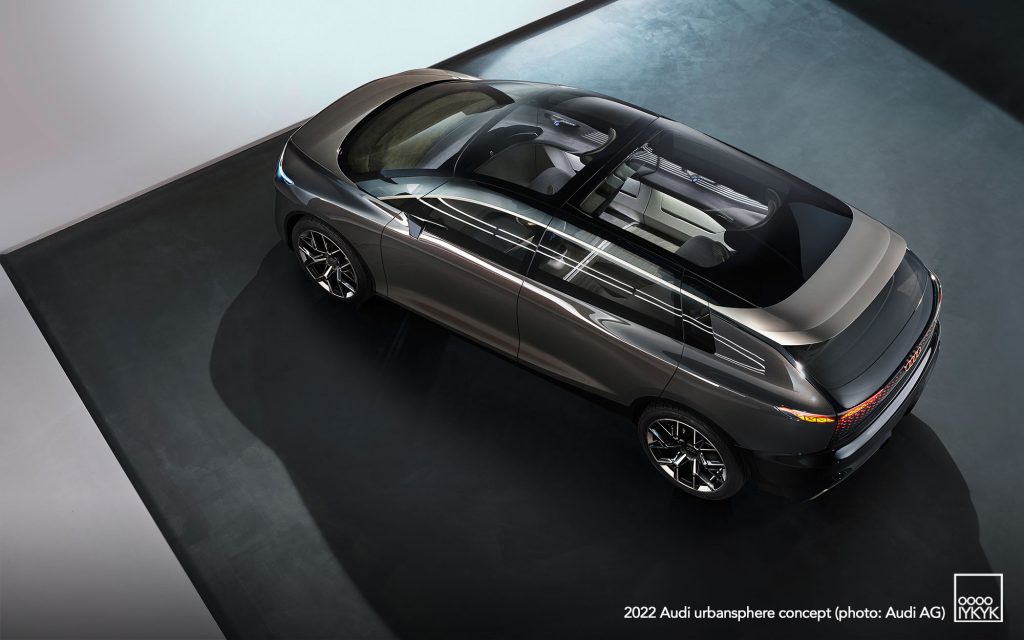
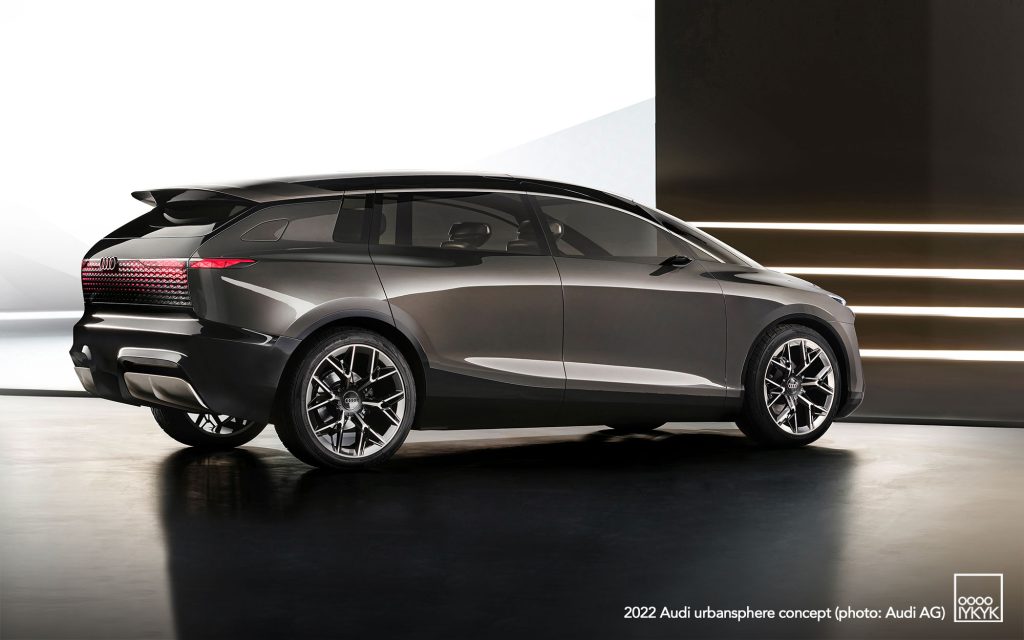
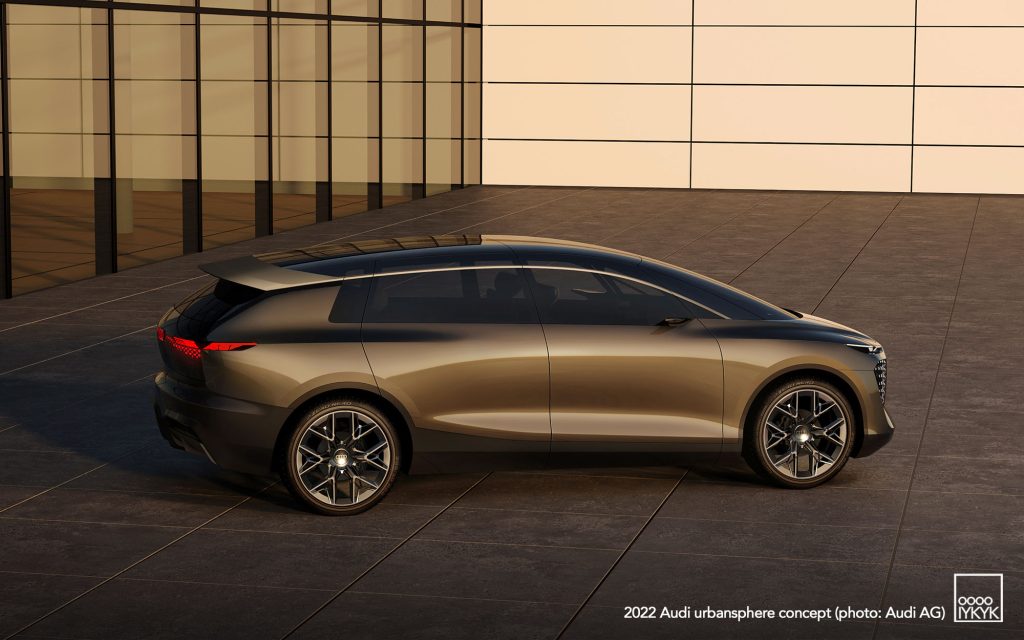
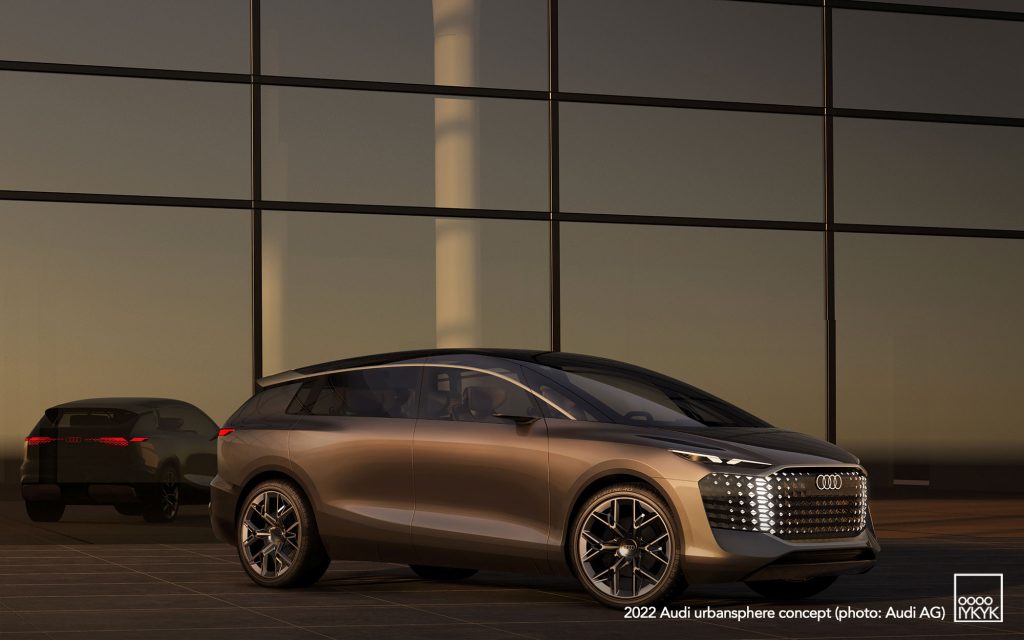
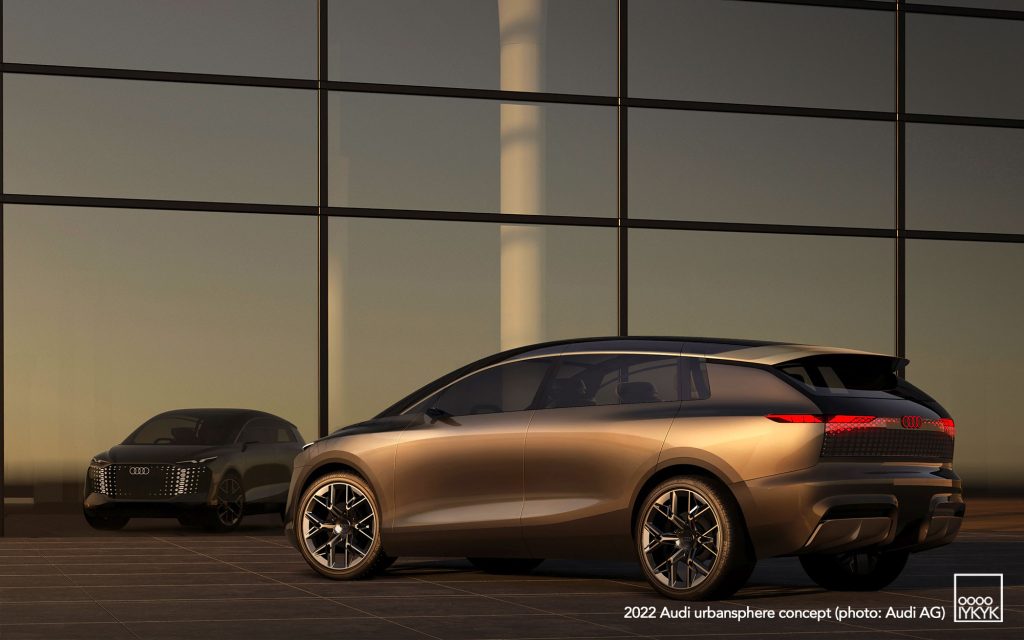
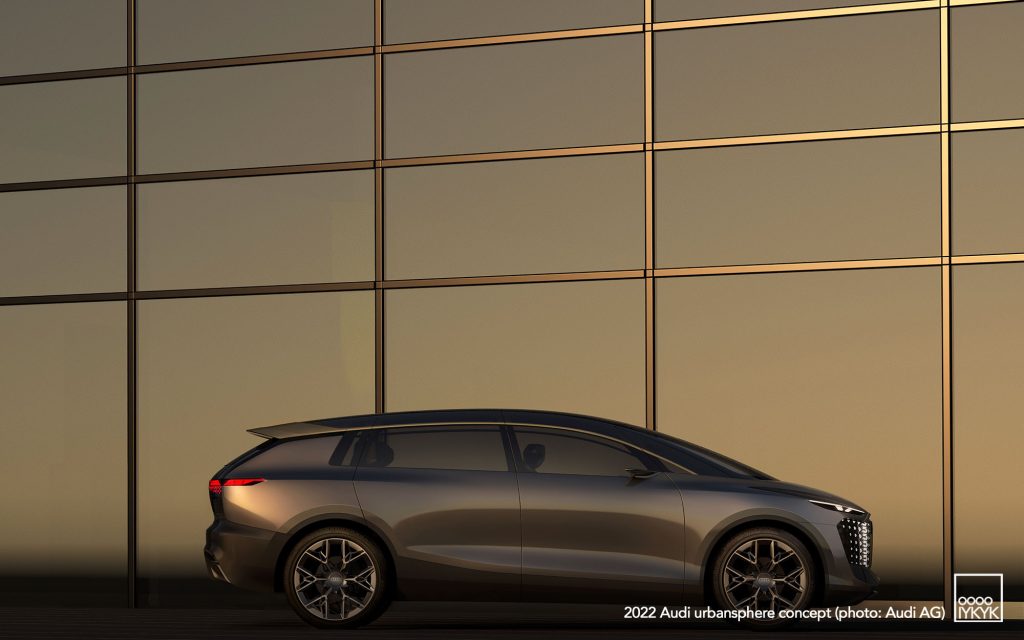
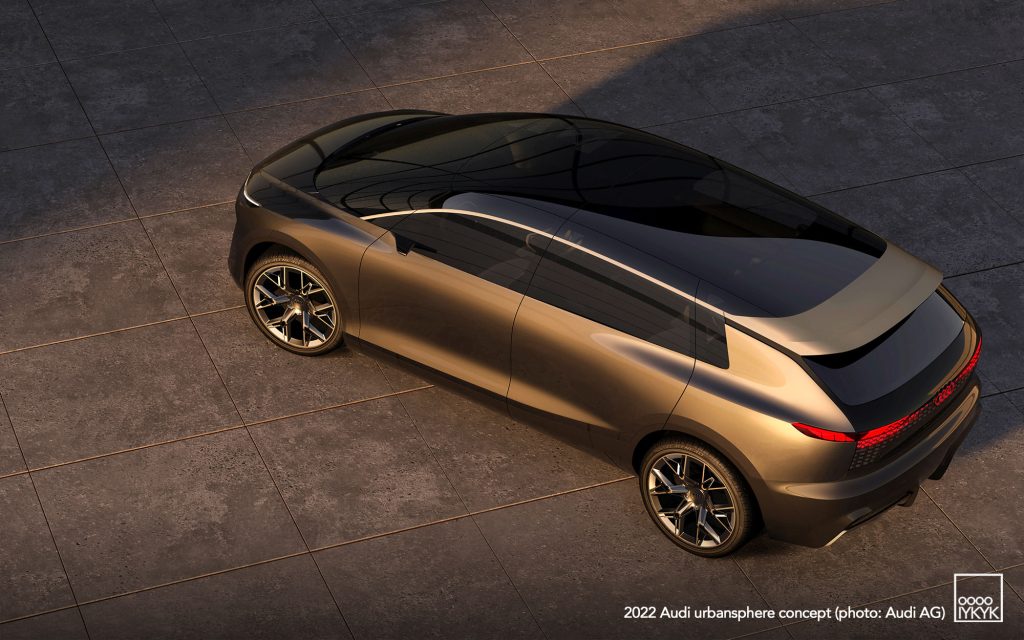
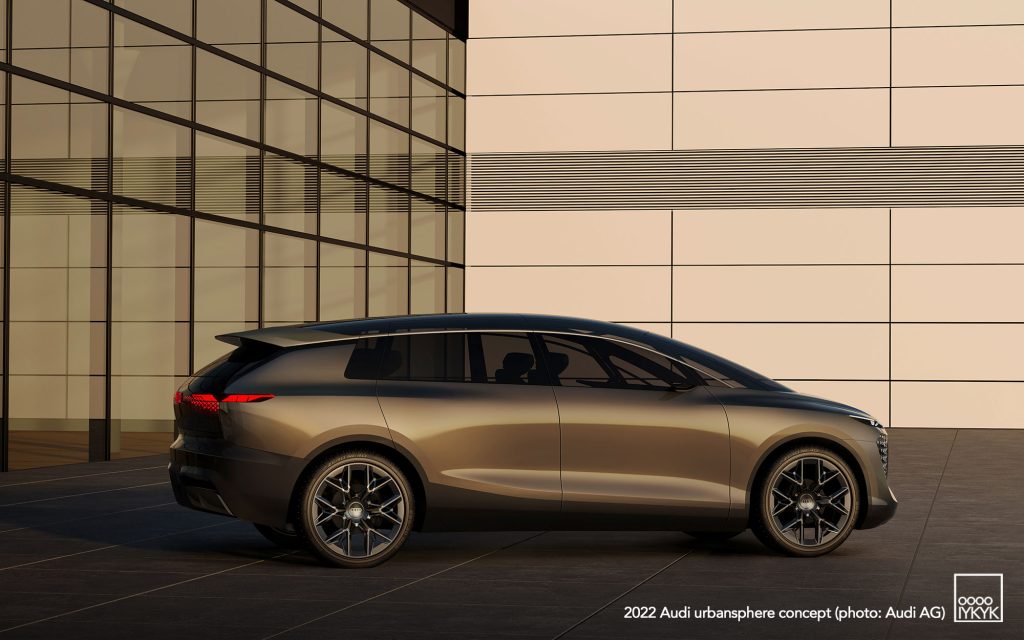
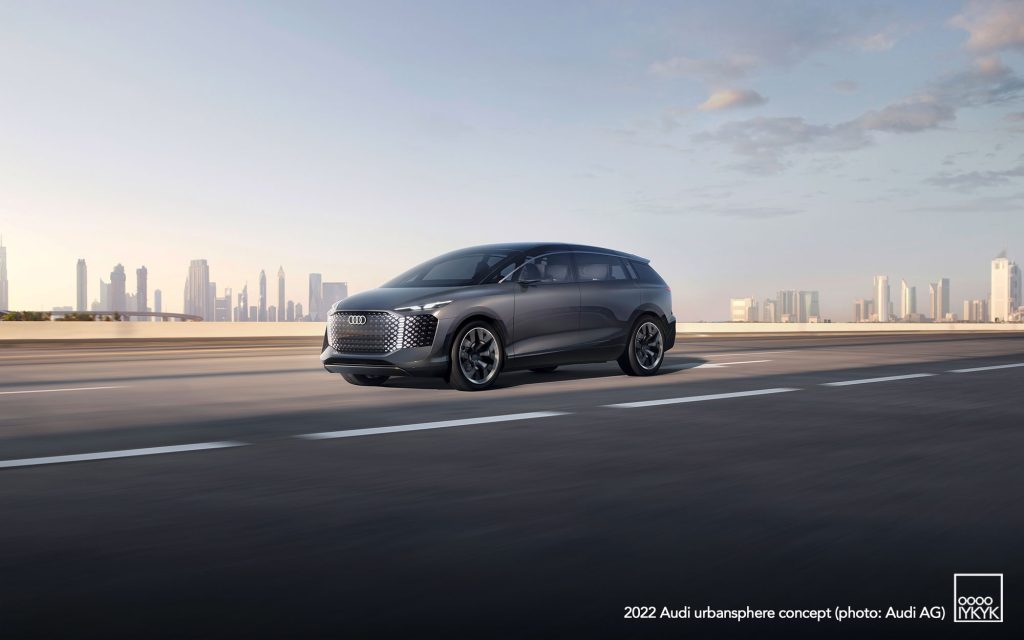
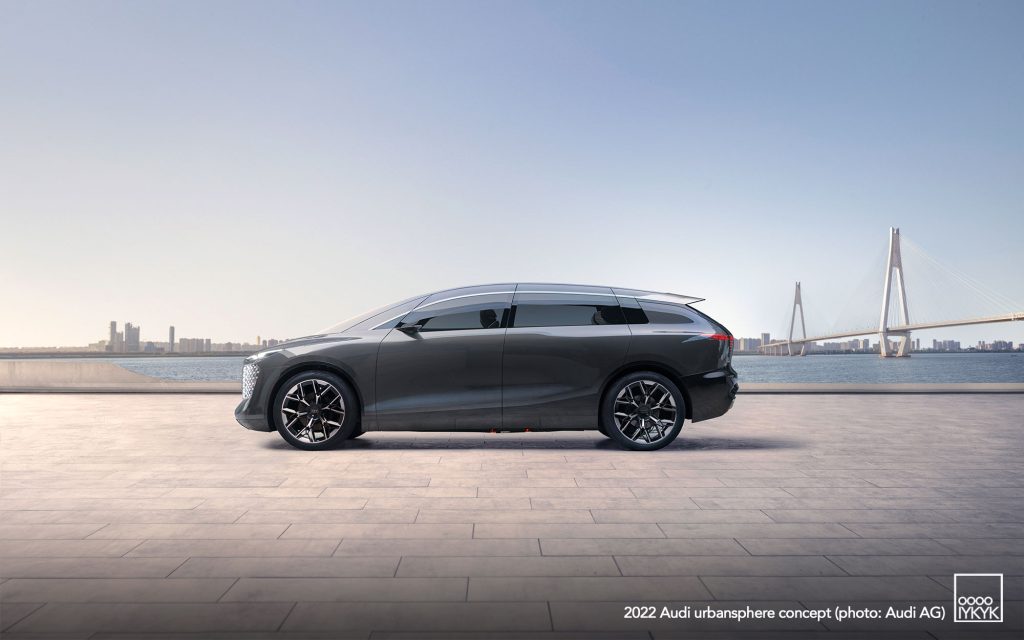
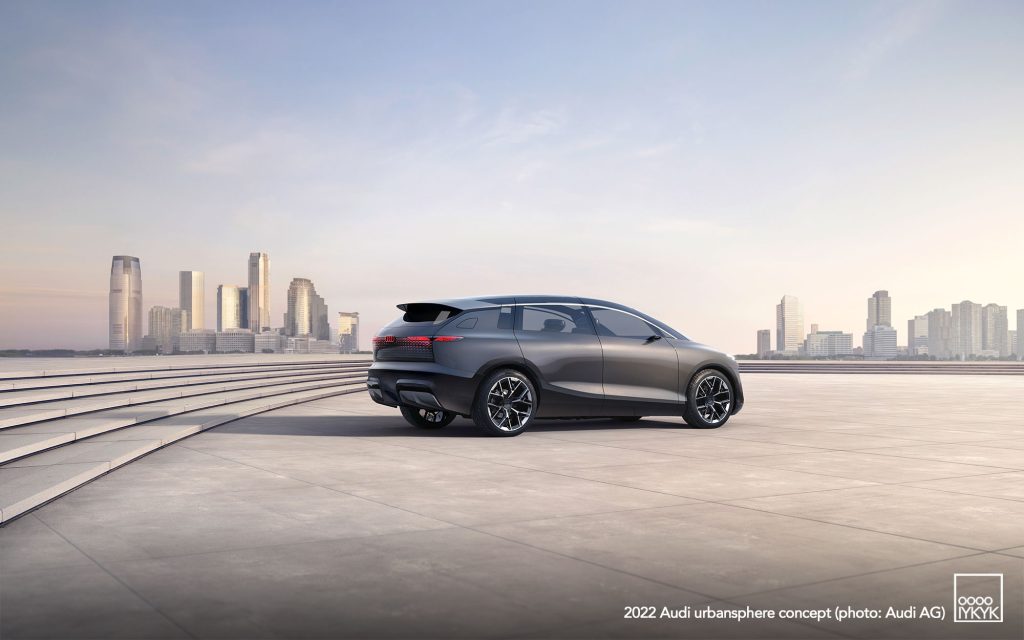
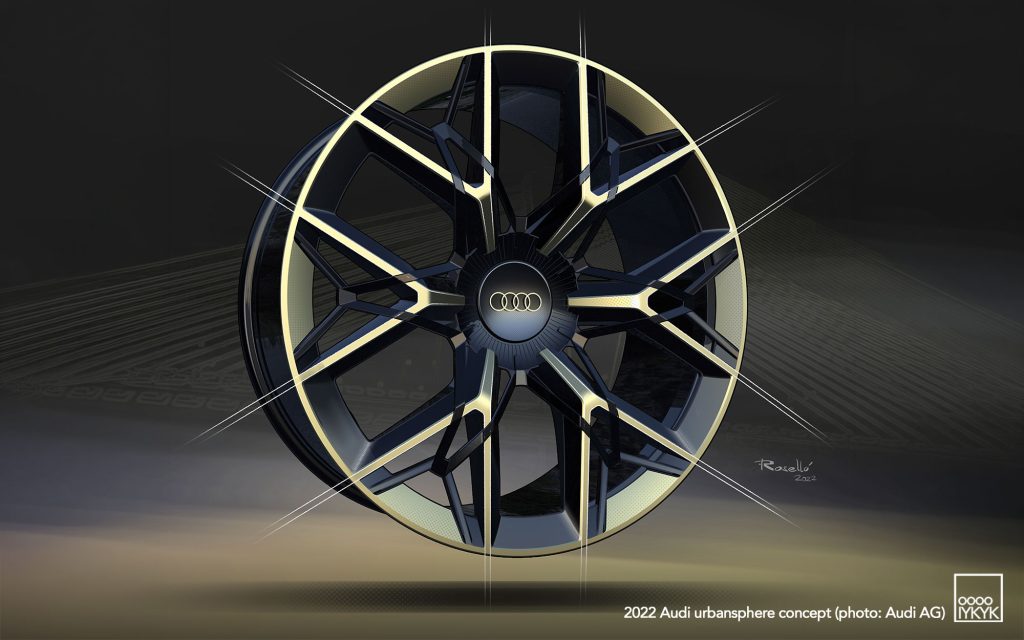
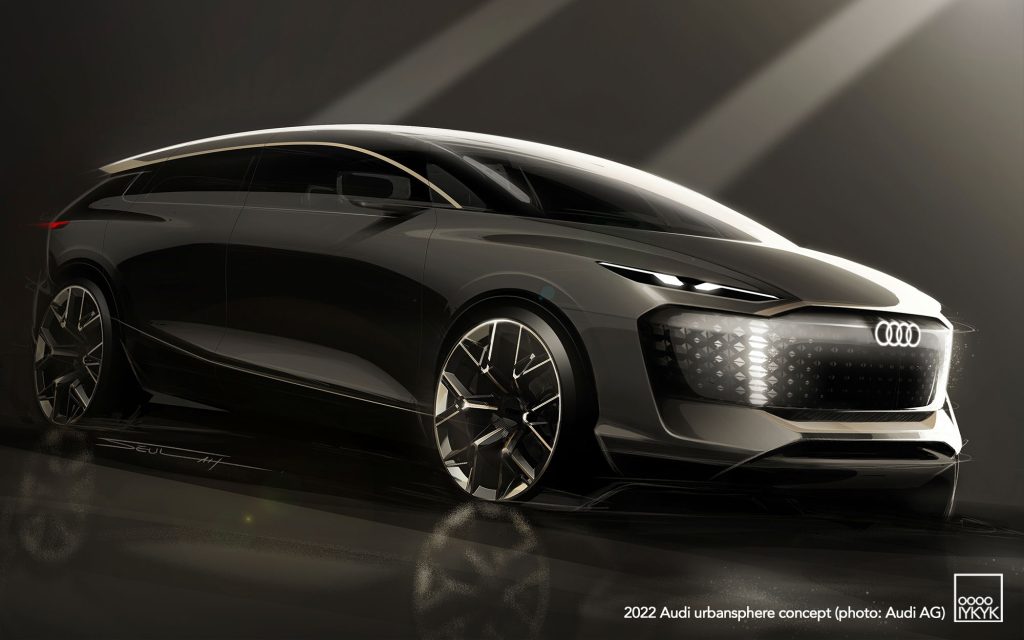
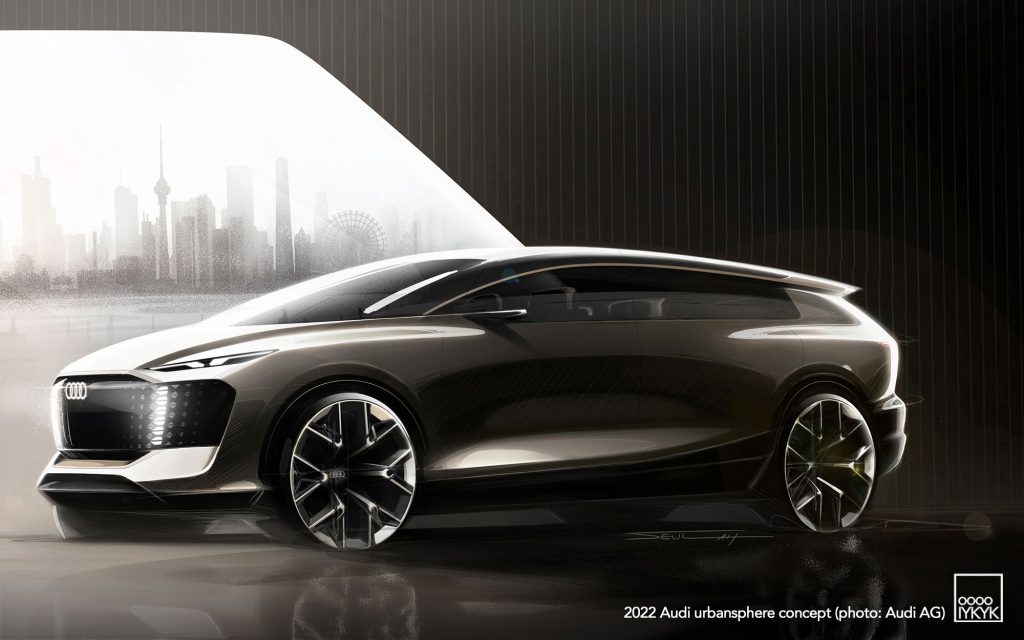
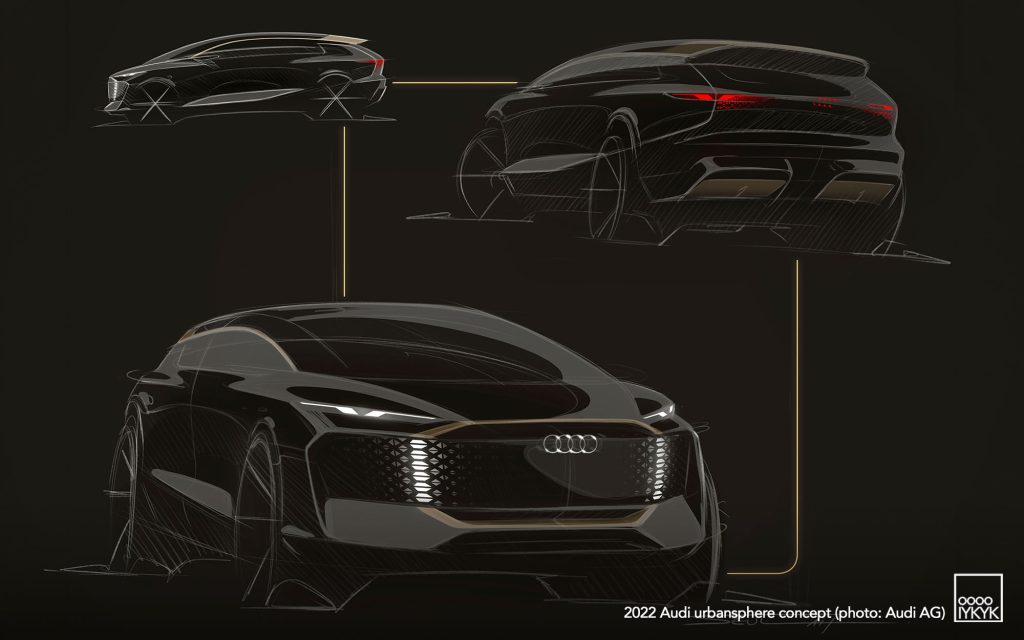
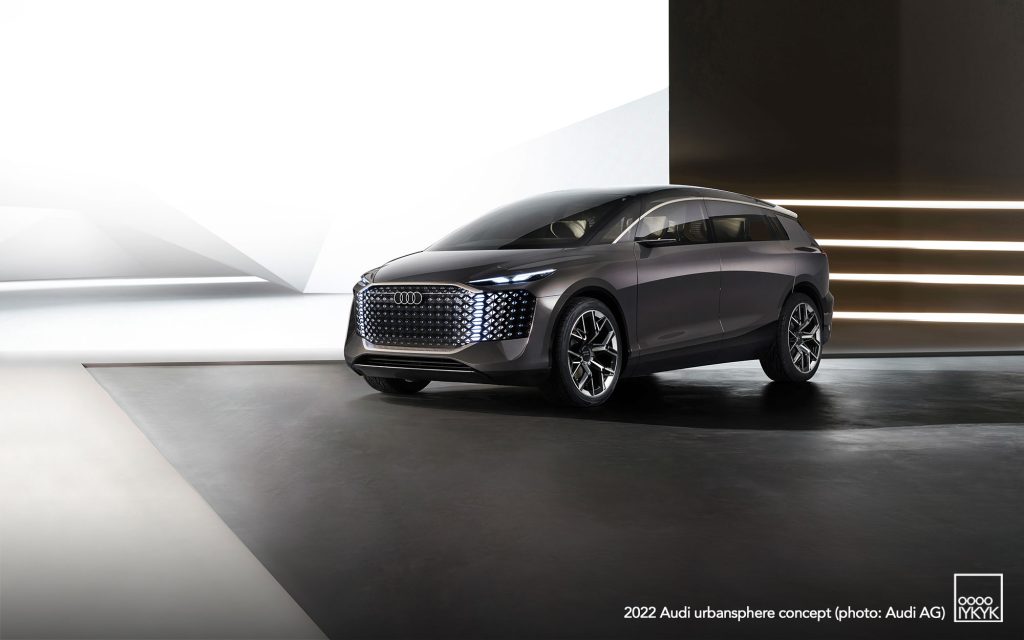
Despite its 5.51-meter length and nearly 1.8-meter height, Audi avoided defining the urbansphere as a conventional SUV, van or luxury saloon. Its exterior instead combined the proportions enabled by its electric architecture with a long, sweeping roofline, short overhangs and large 24-inch wheels.
The six-double-spoke wheel design referenced the 1991 Audi Avus quattro concept, while Audi also cited its Bauhaus-influenced design tradition and functional motorsport wheel designs as inspiration.
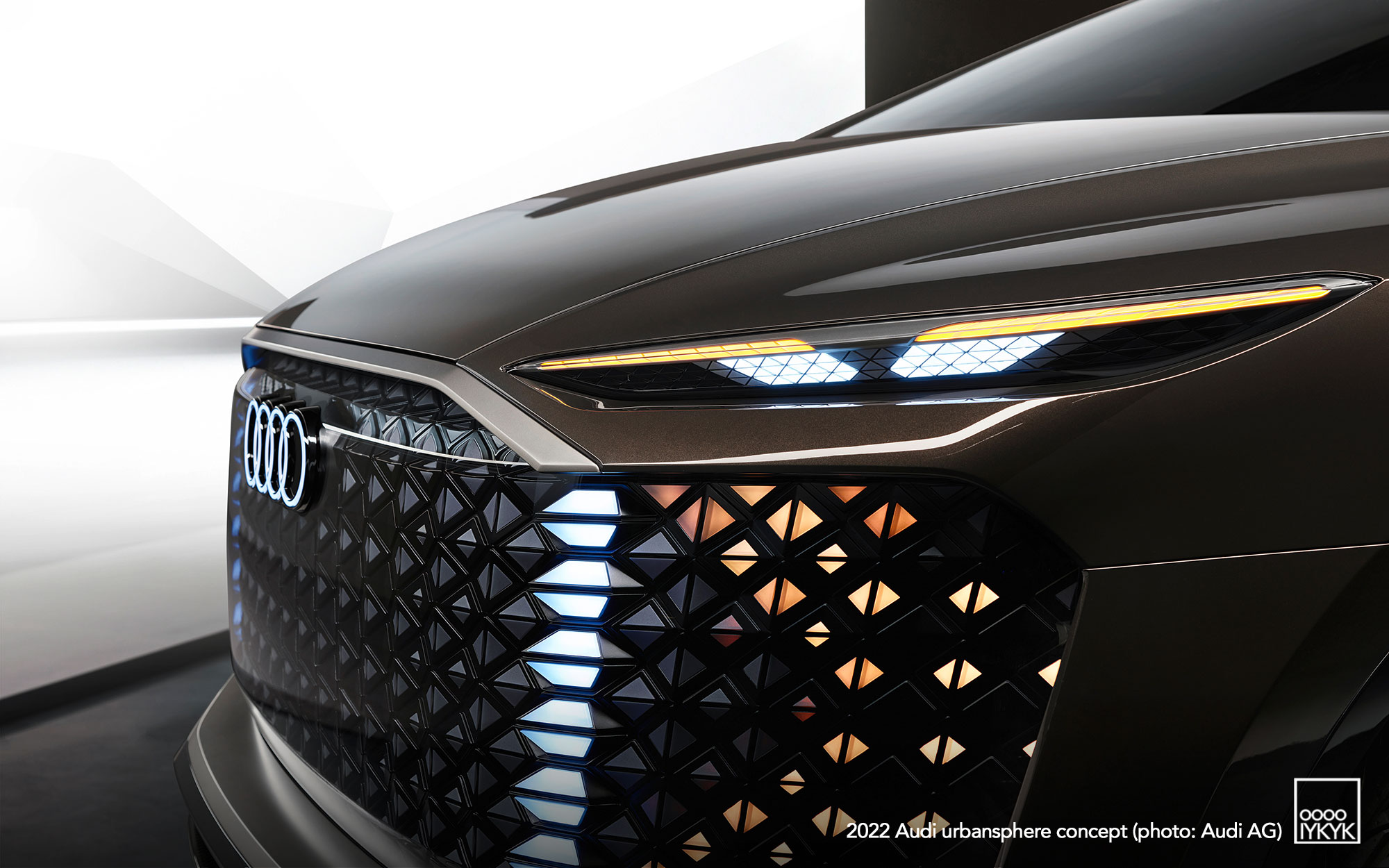
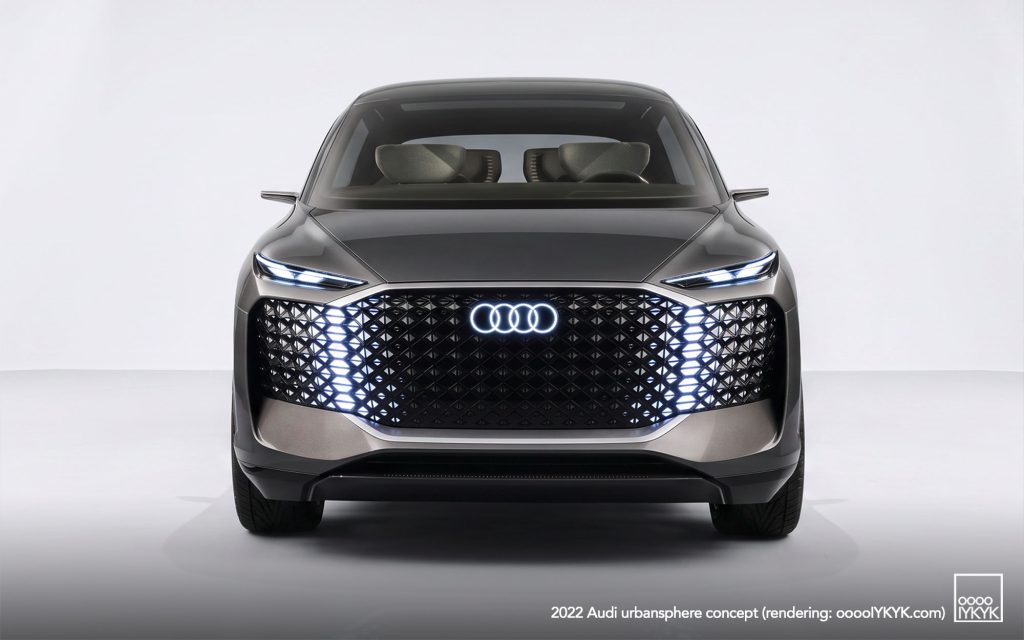
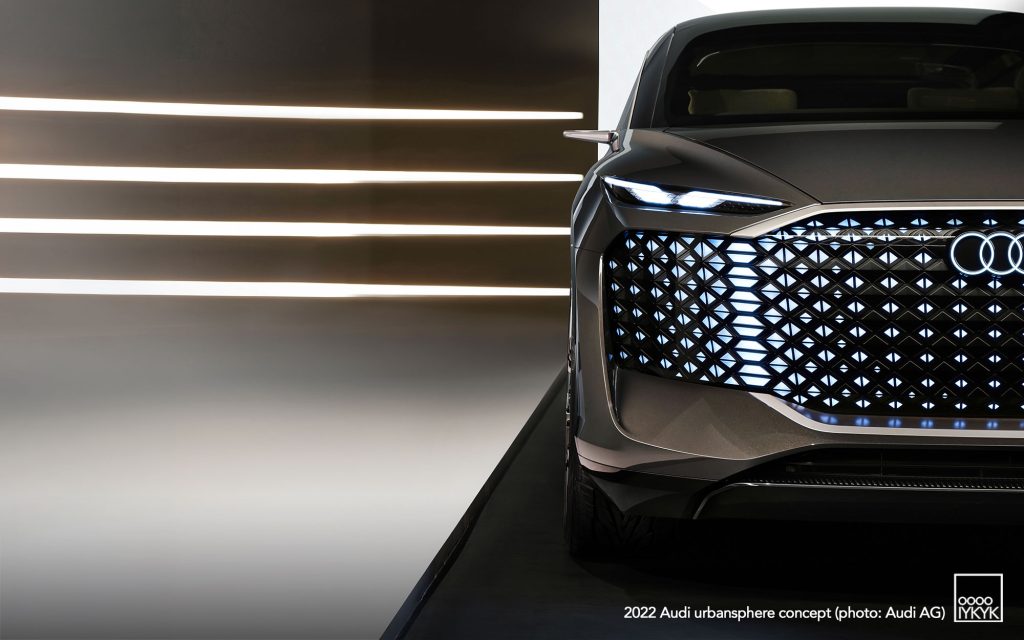
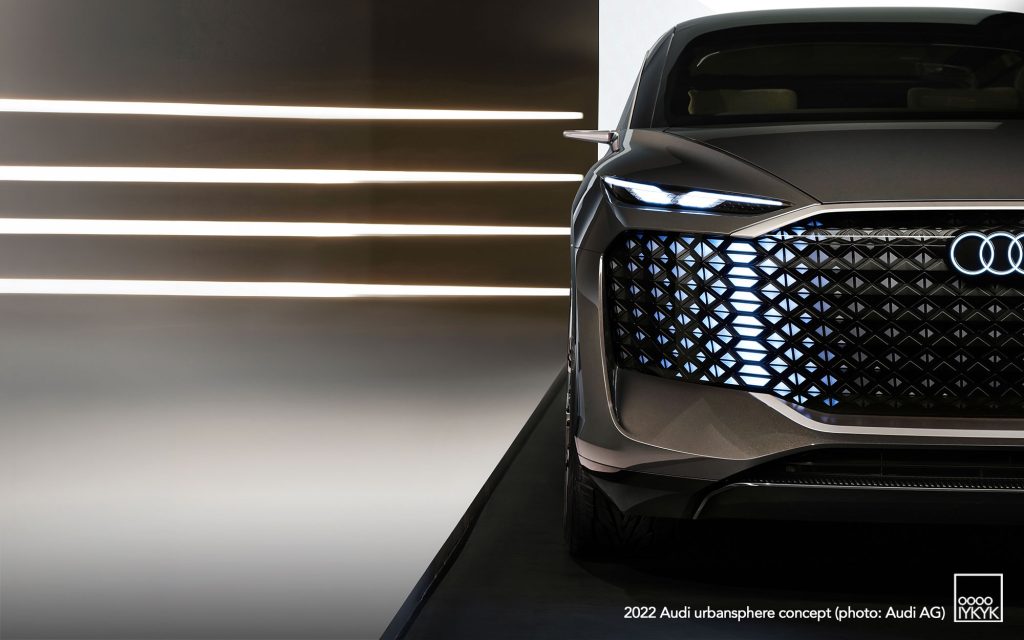
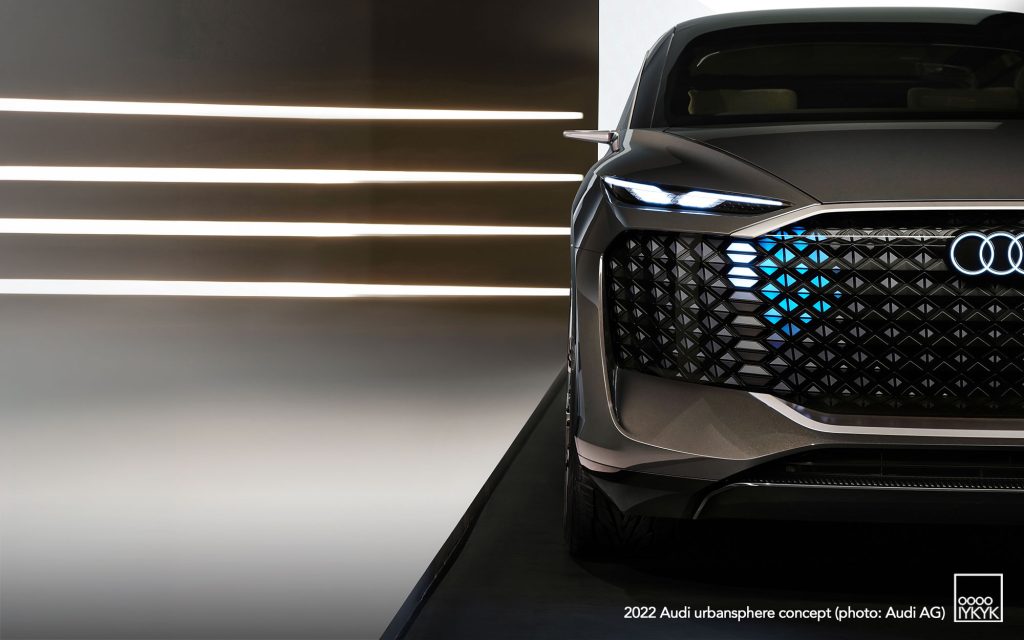
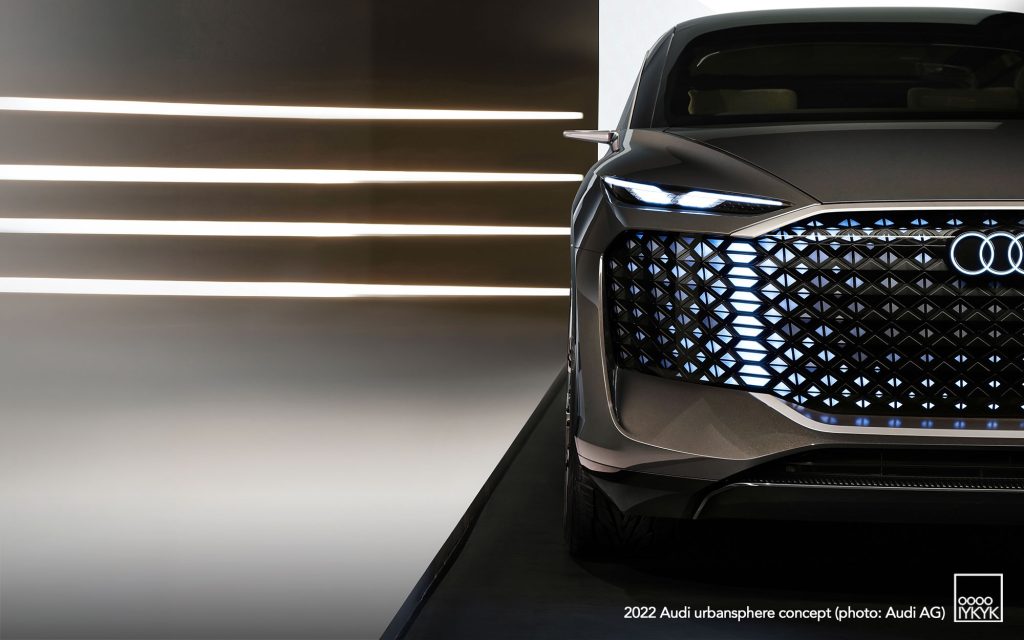
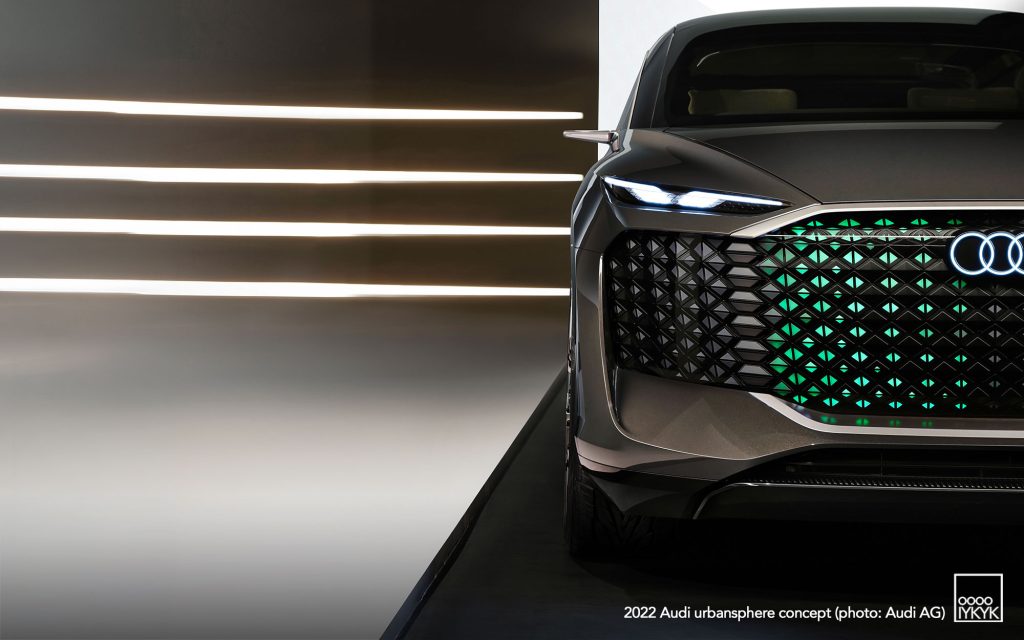
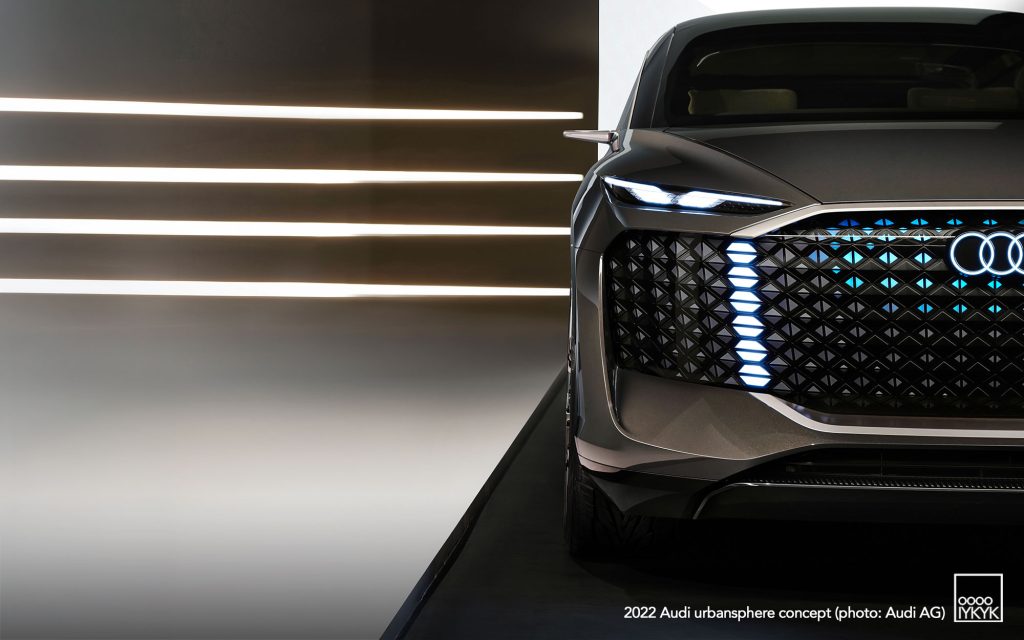
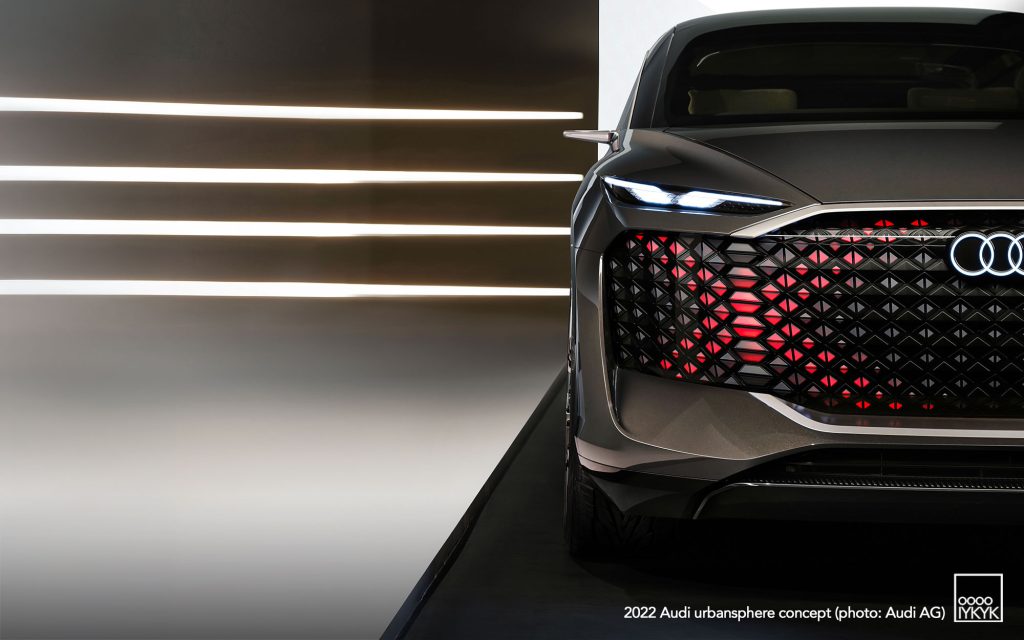
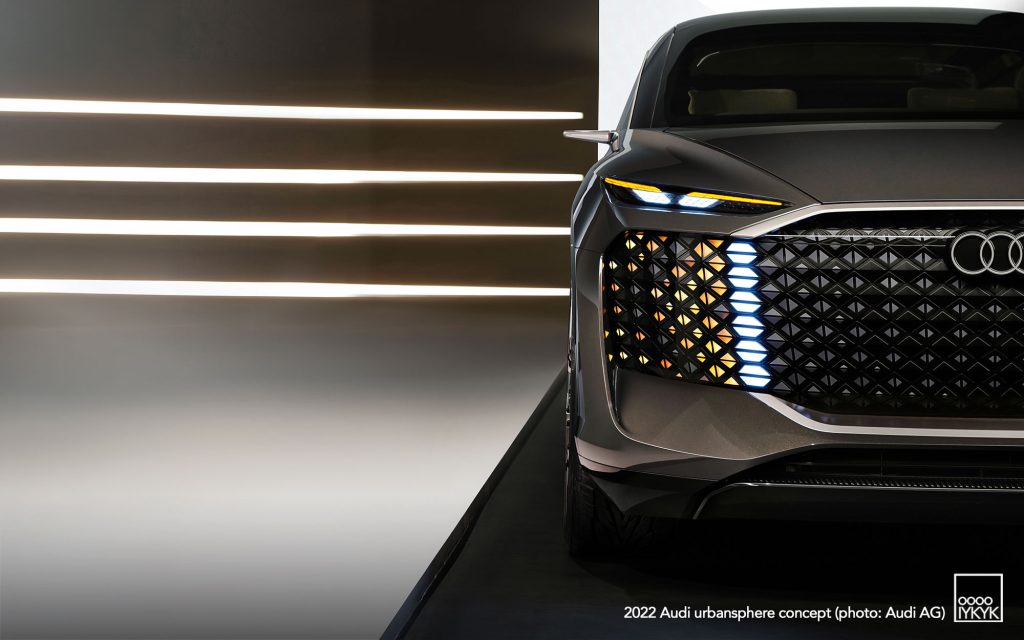
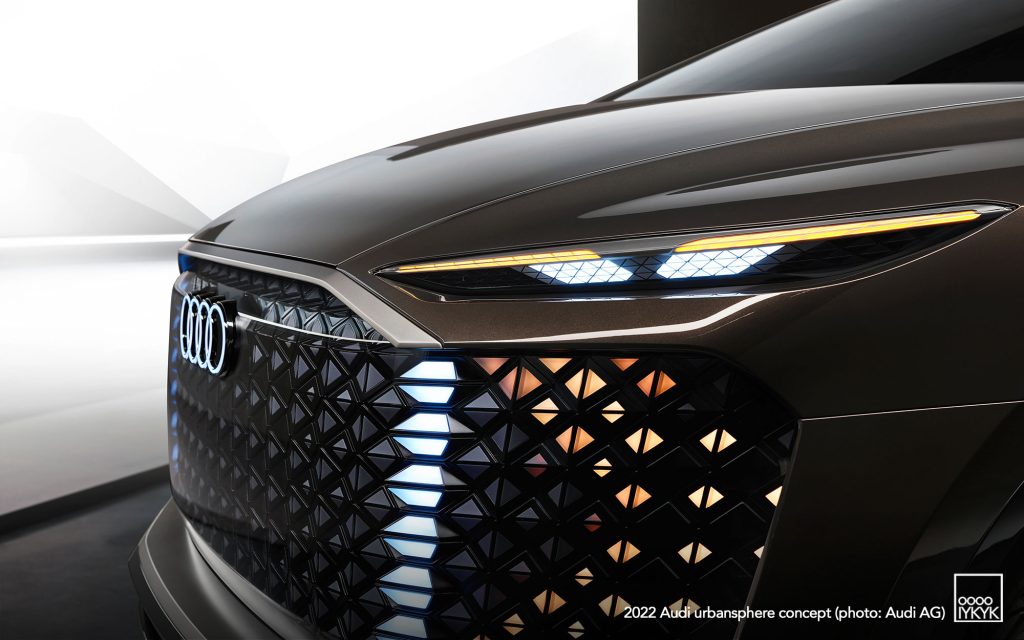
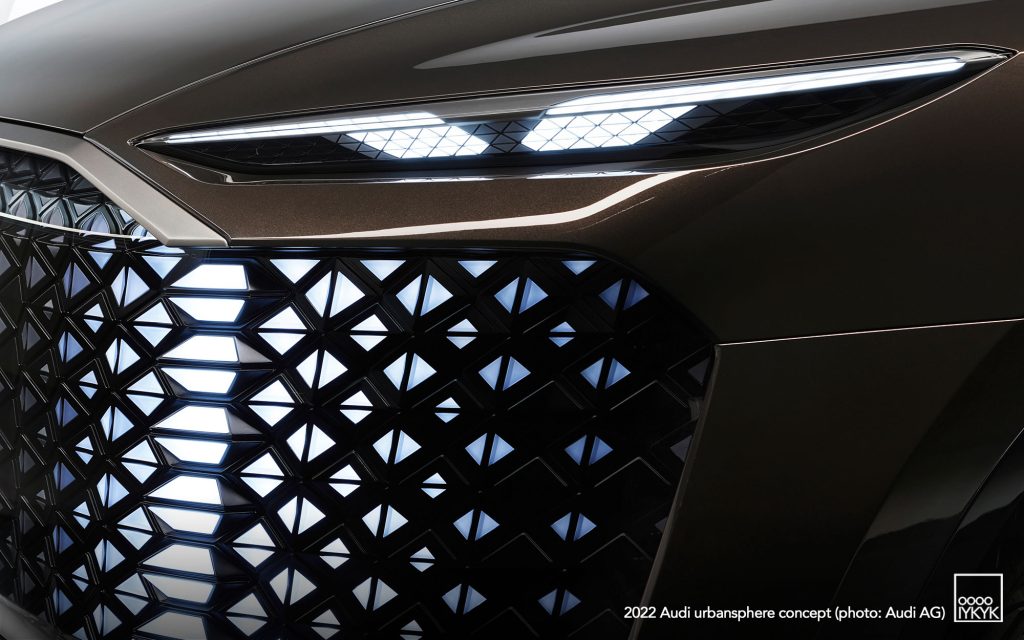
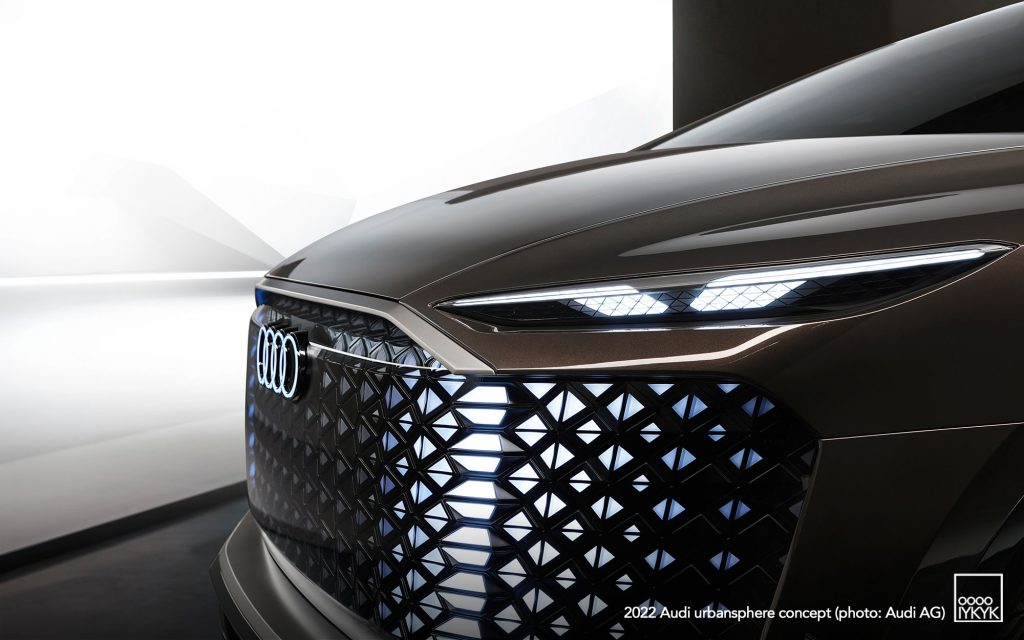
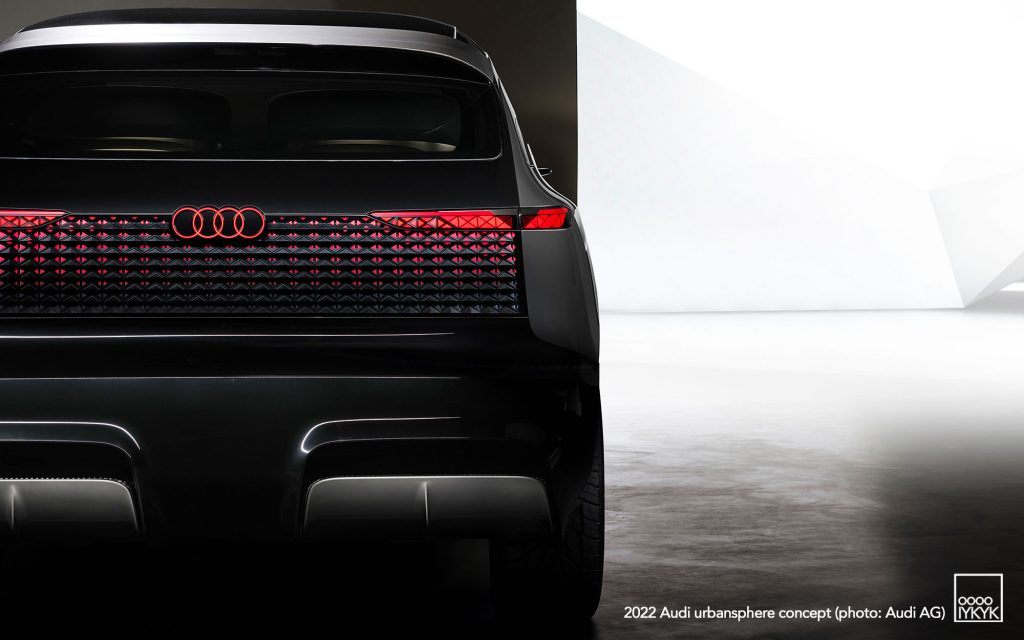
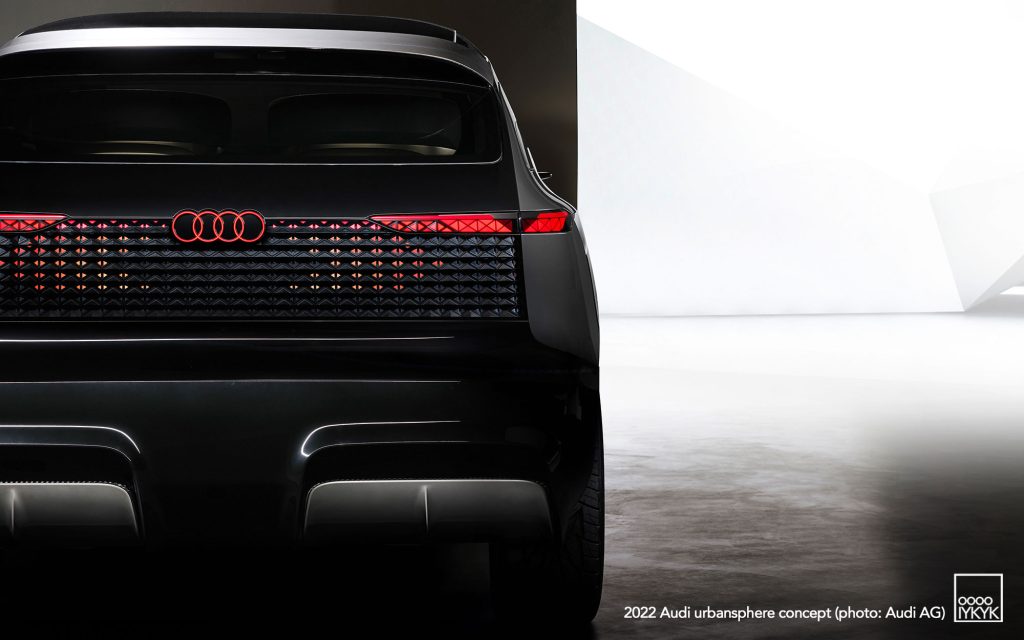
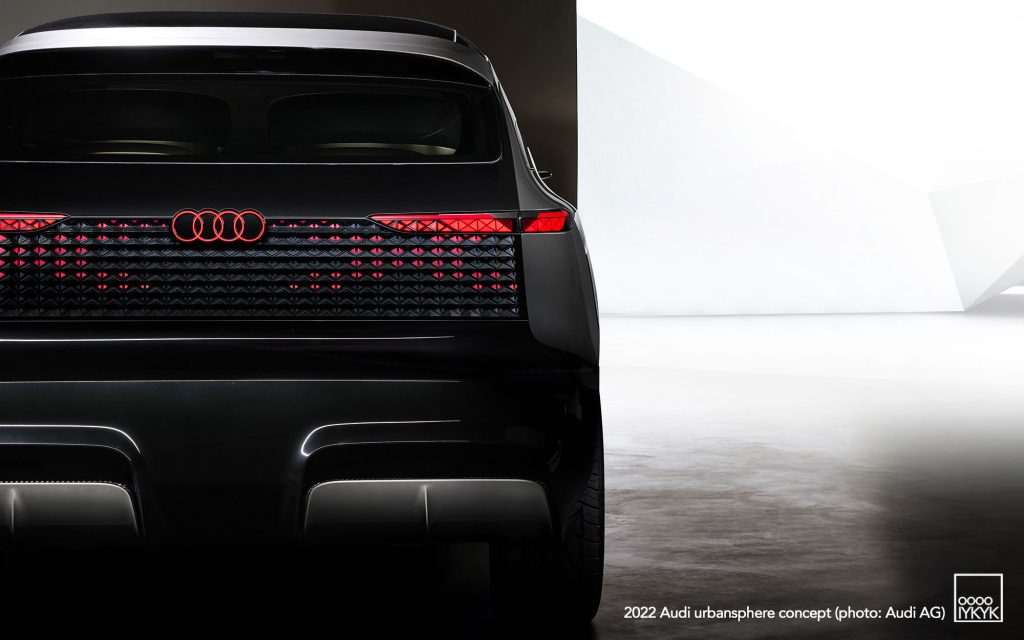
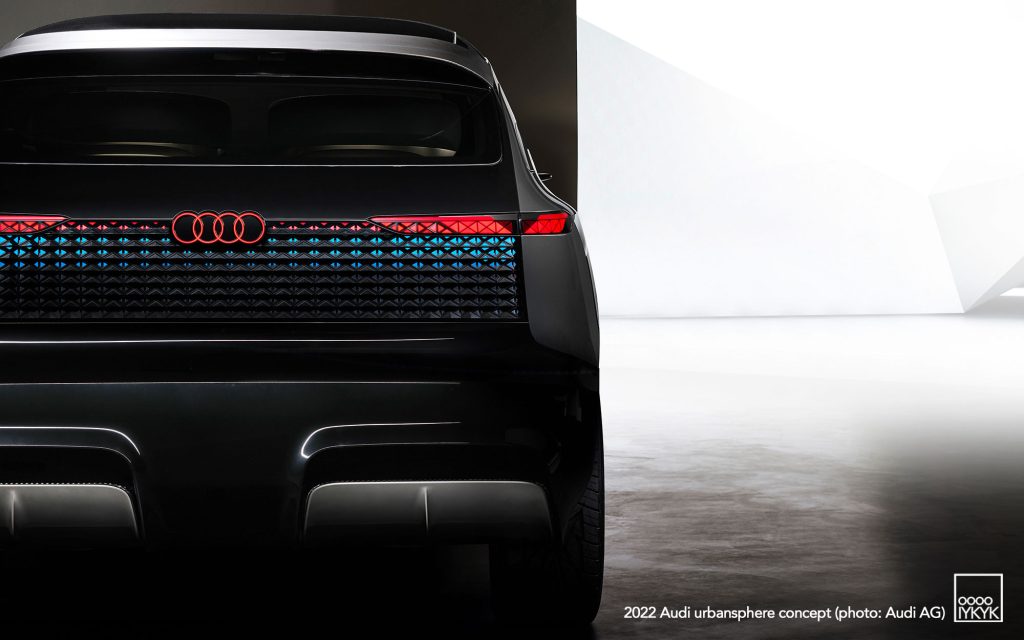
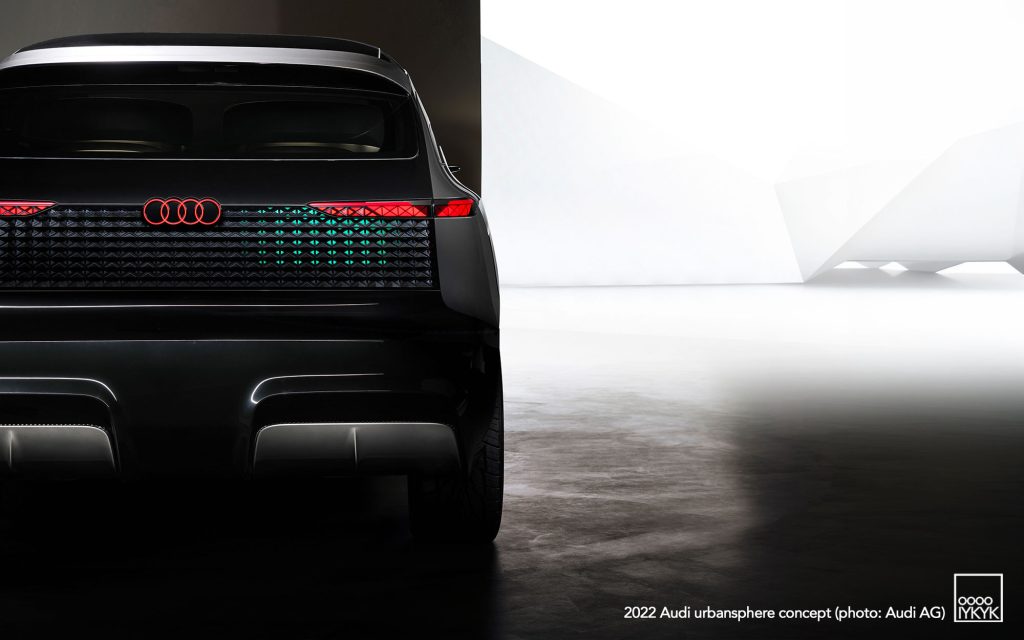
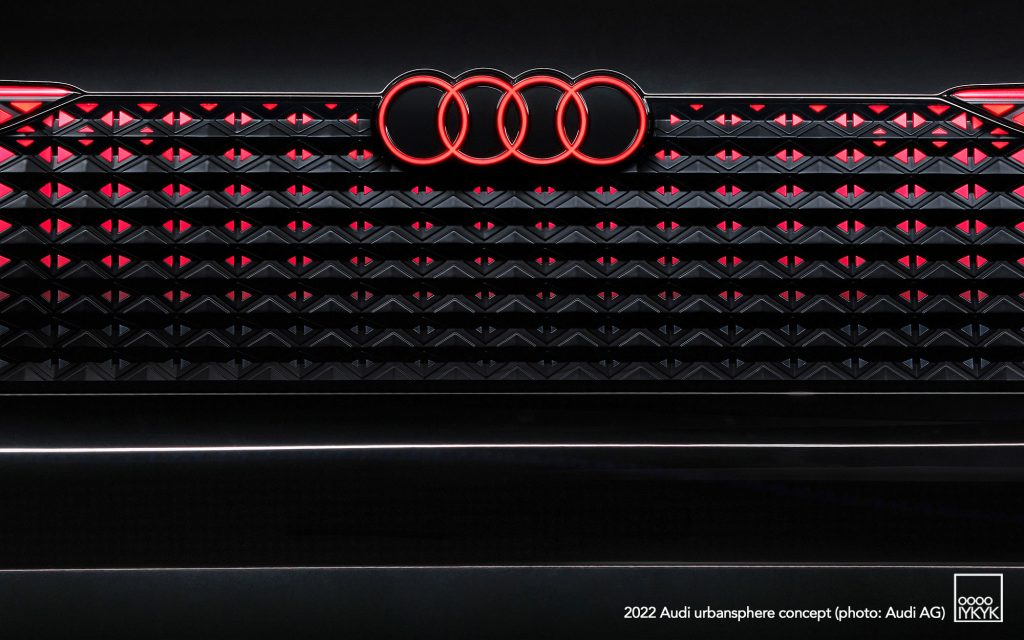
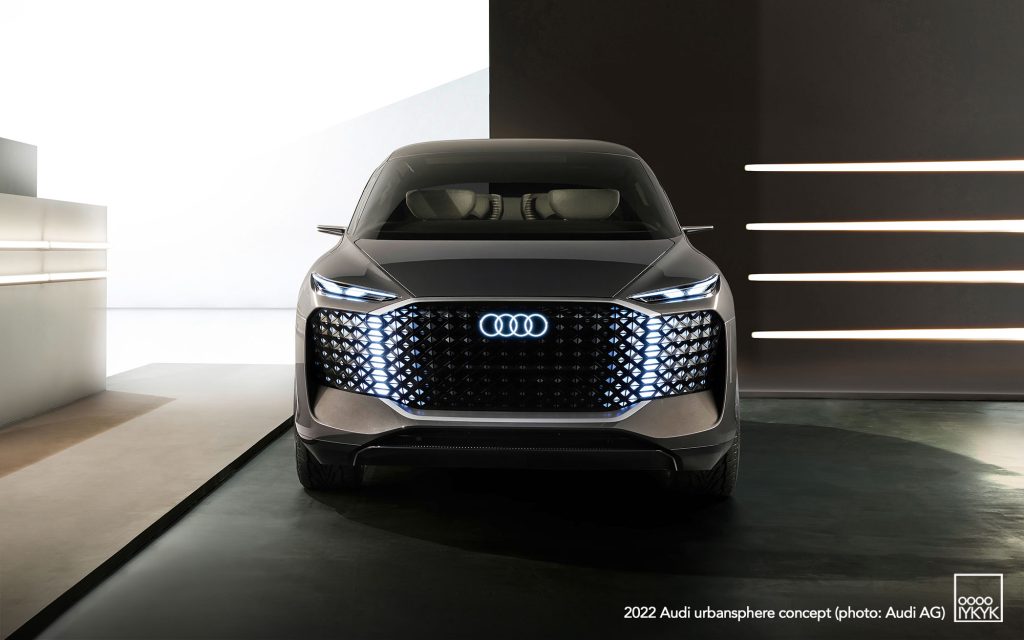
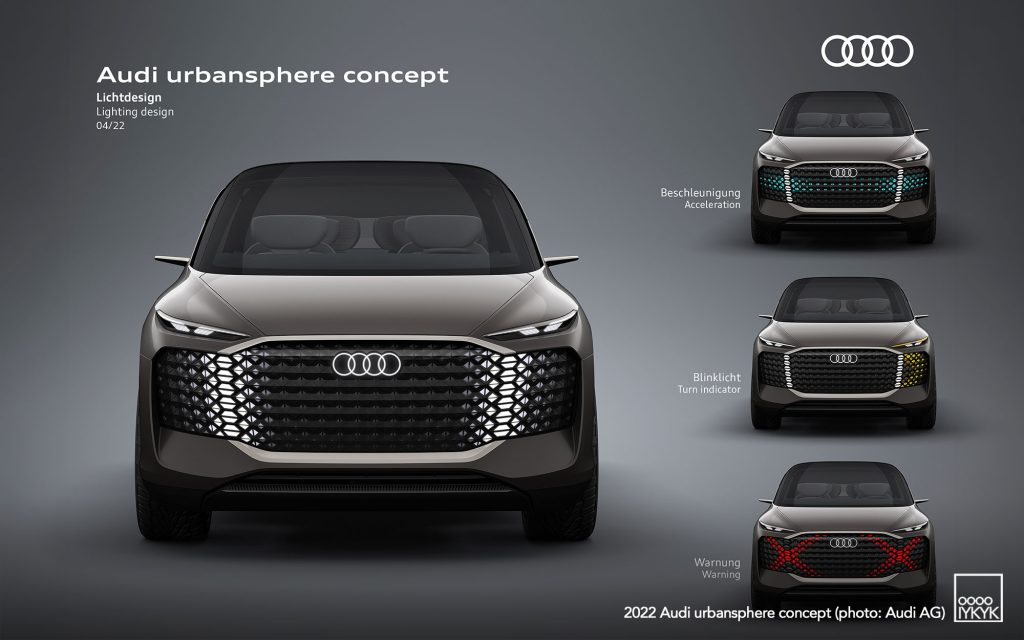
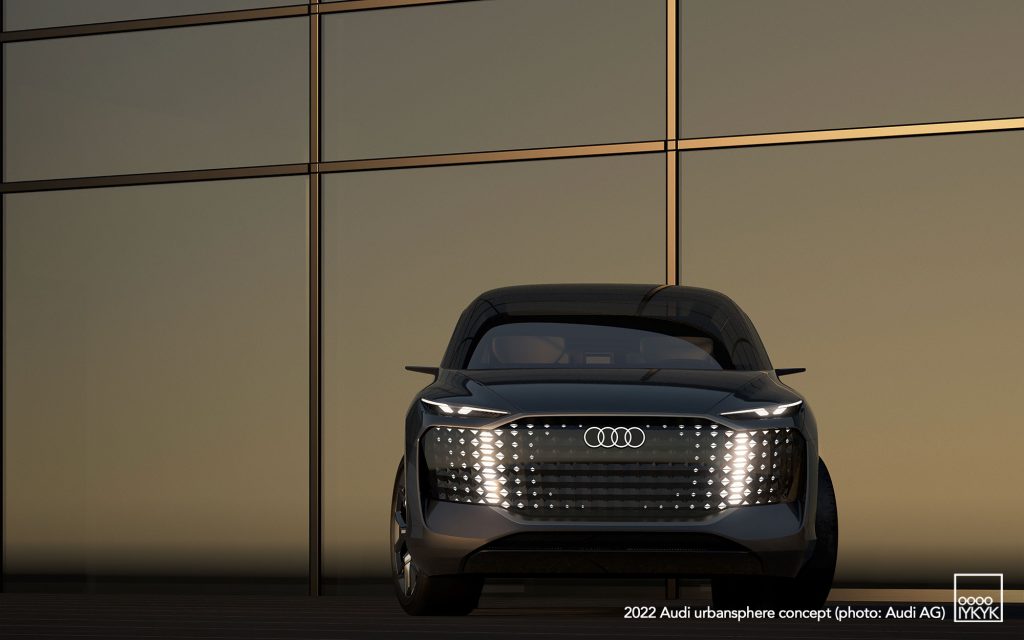
The front was dominated by a large octagonal interpretation of Audi’s Singleframe. No longer required primarily as an air intake, the Singleframe became a digital lighting surface behind a tinted transparent panel.
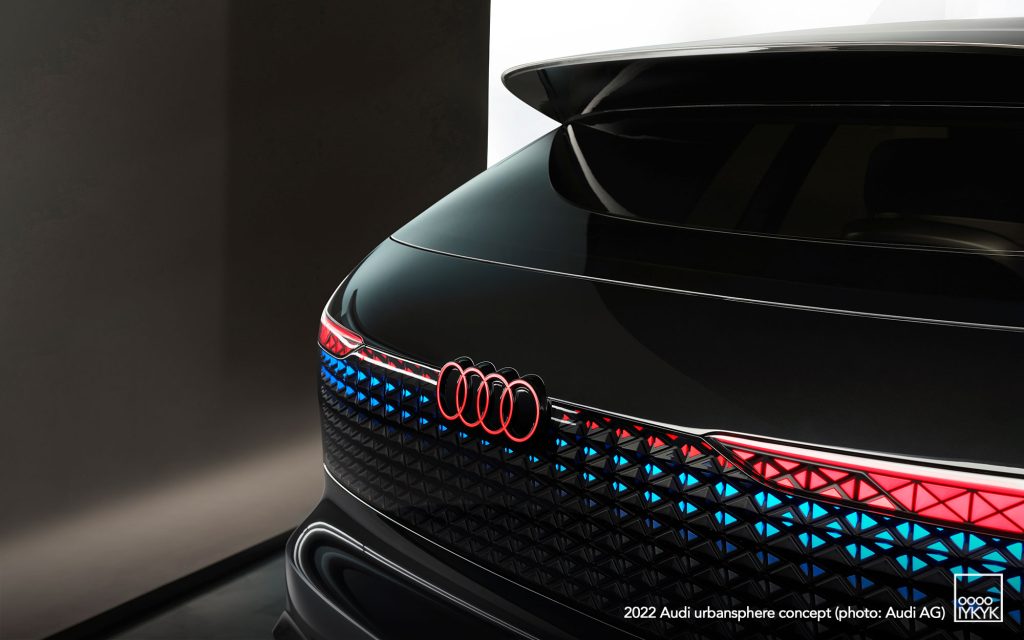
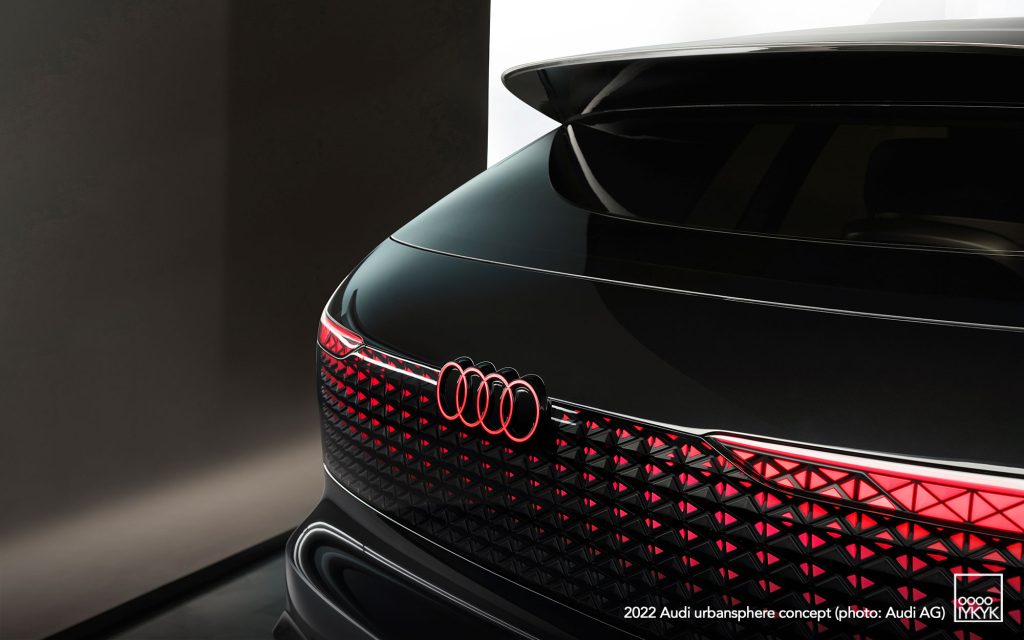
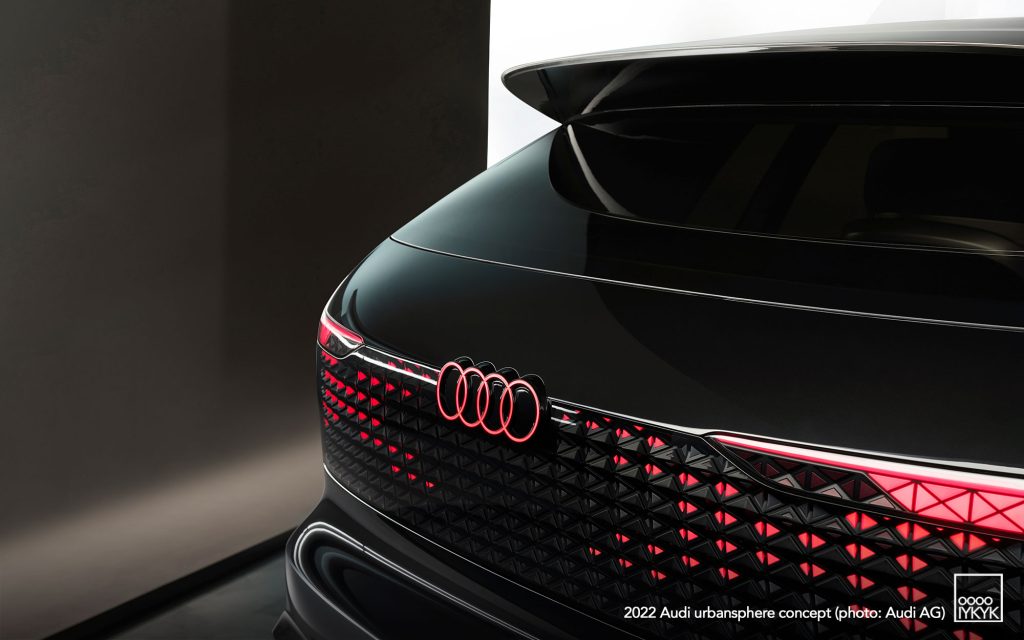
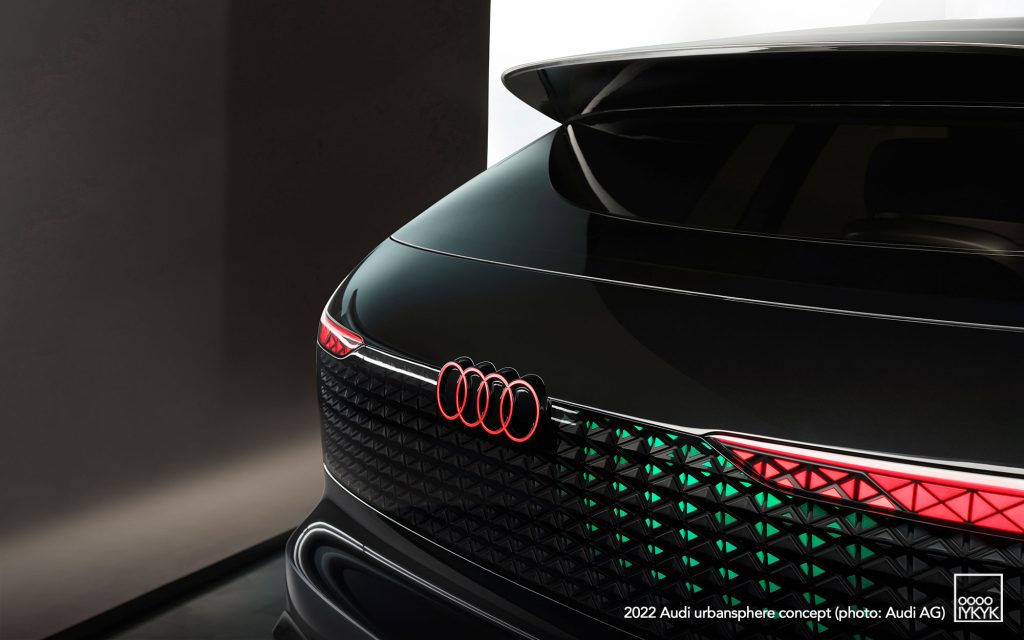
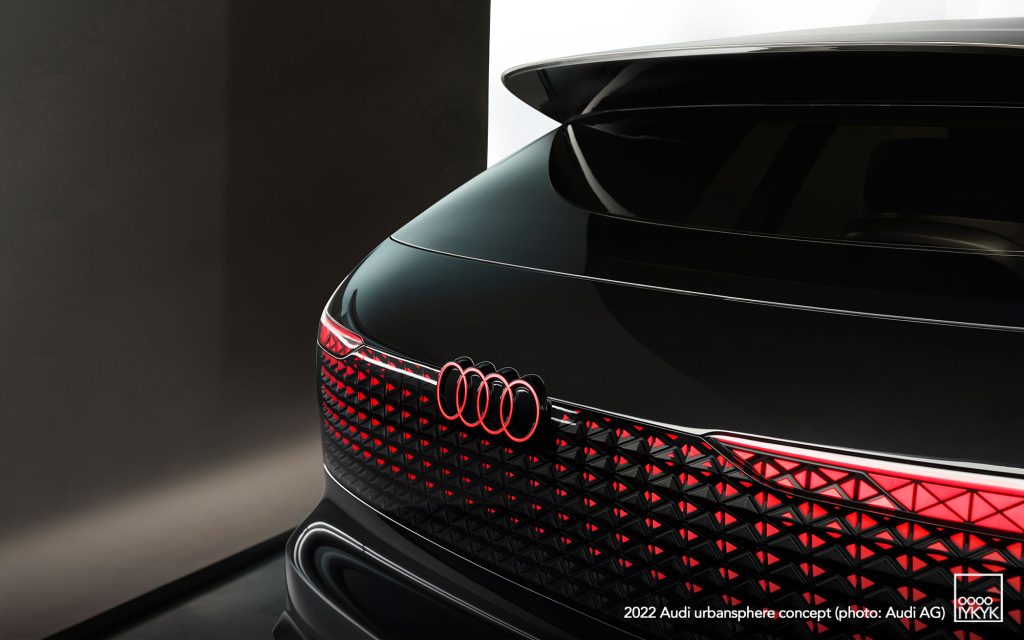
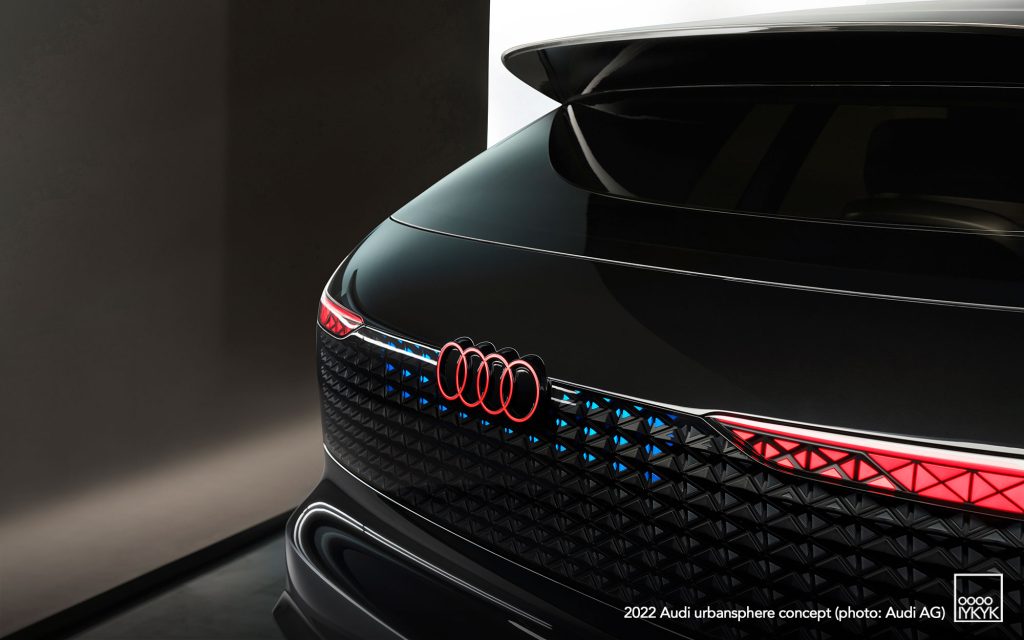
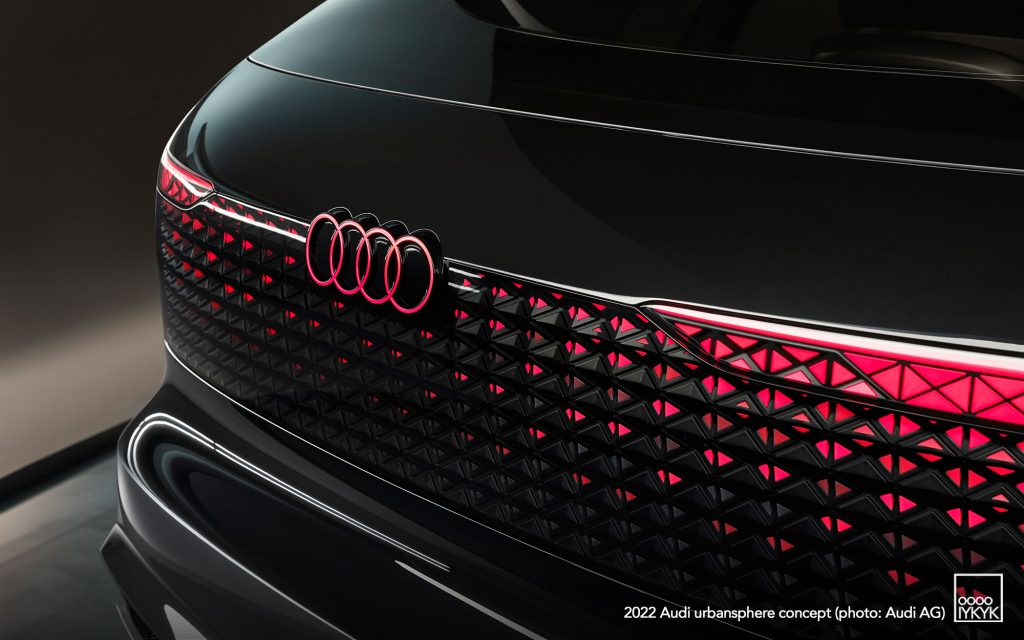
Audi called this the Audi Light Canvas. Individually controlled LED elements could display dynamic patterns and communicate information to other road users, while the lighting units flanking it formed what Audi termed Audi Eyes. Their appearance could change according to traffic conditions, surroundings or passenger preferences.
PPE PLATFORM
The urbansphere was based on Audi and Porsche’s Premium Platform Electric (PPE), an architecture designed specifically for battery-electric vehicles.
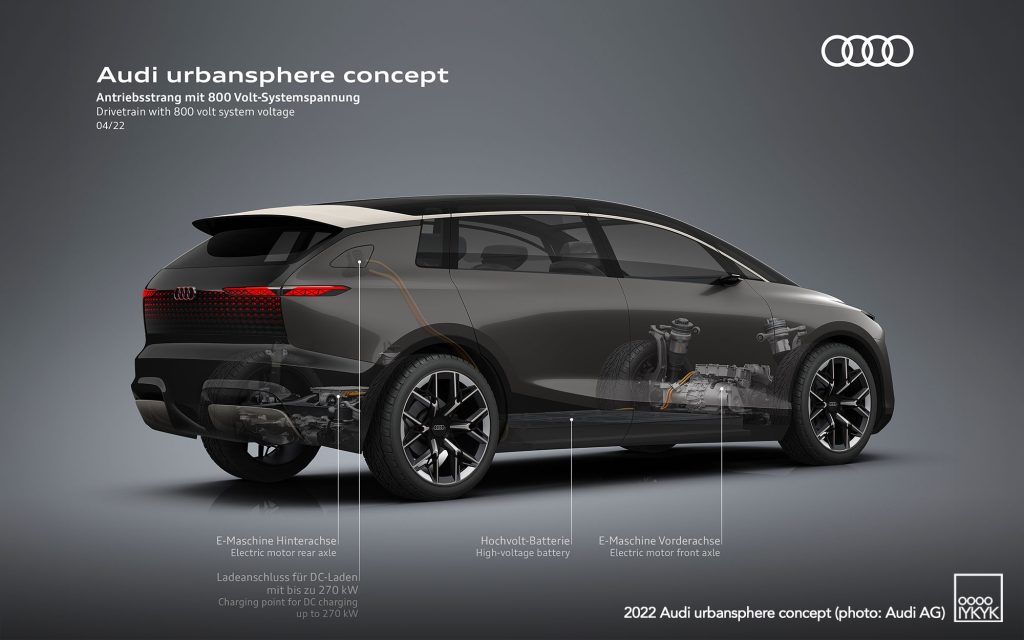
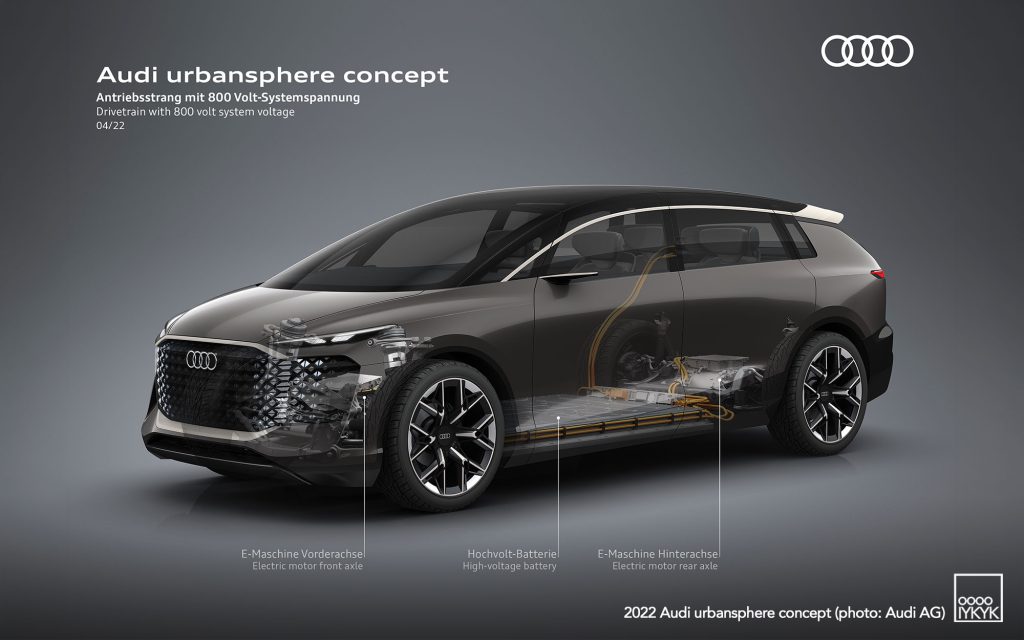
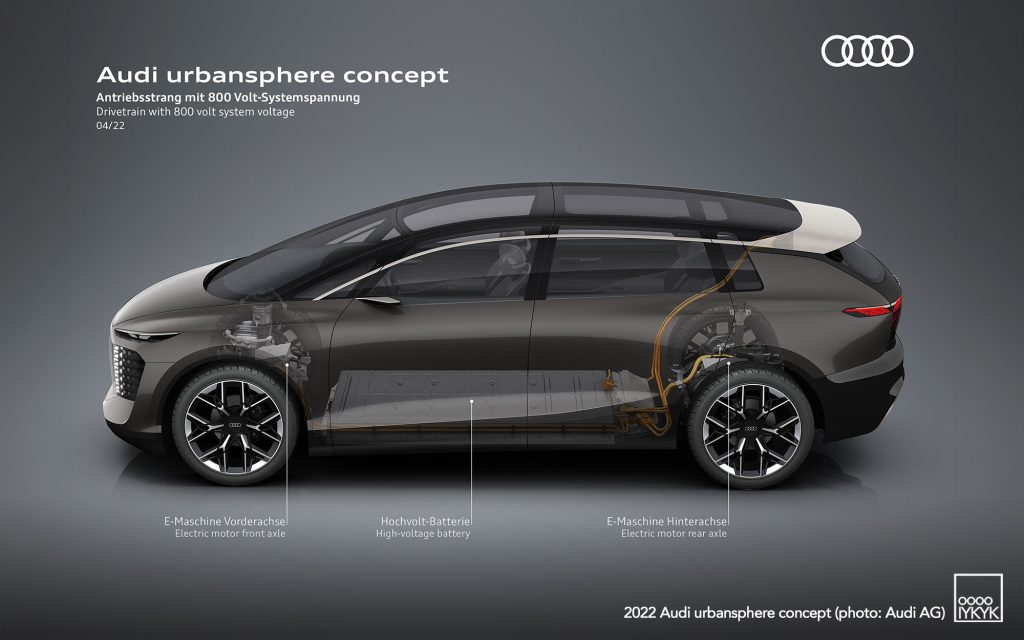
Its approximately 120-kWh battery was packaged beneath the passenger compartment between the axles. The flat battery installation and absence of a transmission tunnel helped enable the concept’s exceptionally long passenger compartment and 3,400-mm wheelbase.
Two electric motors, one at each axle, produced a combined 295 kW (401 PS) and 690 Nm of torque. Electronic control provided quattro all-wheel drive when required, while the front motor could be disconnected under suitable conditions to reduce friction and energy consumption.
CHARGING AND RANGE
The PPE architecture used an 800-volt electrical system capable of DC fast charging at up to 270 kW.
Audi stated that approximately 10 minutes of charging could add more than 300 km (186 miles) of range, while charging the battery from five to 80 percent could be completed in less than 25 minutes.
With its battery capacity of more than 120 kWh, Audi projected a maximum WLTP range of up to 750 km (466 miles).
CHASSIS AND SUSPENSION
The urbansphere used a five-link front axle optimized for electric vehicles and a lightweight aluminum multi-link rear axle.
Rear-wheel steering was used to improve maneuverability despite the exceptionally long 3,400-mm wheelbase. Audi adaptive air suspension combined a single-chamber air spring system with semi-active damper control, with the chassis configured primarily around passenger comfort rather than sporting performance.
AUDI LIGHT UMBRELLA
One of the urbansphere’s more unusual features was developed specifically as a reference to China. The Audi Light Umbrella was a removable illuminated umbrella inspired by traditional Chinese umbrellas.
Its reflective inner surface created glare-free illumination, while sensors and artificial intelligence could activate a flashing light pattern to make its user more visible when crossing a road or encountering another potentially hazardous situation. Audi also designed the umbrella to provide even facial illumination for photographs and selfies.
SIGNIFICANCE
The Audi urbansphere represented the most space-focused interpretation of the sphere concept philosophy and a particularly direct exploration of Audi’s thinking around the Chinese premium market.
Rather than adapting an established luxury-car format to electric propulsion, Audi used PPE packaging and the prospect of Level 4 automated driving to reconsider the automobile around its occupants. Its 3.4-meter wheelbase, retractable driving controls, four-seat lounge layout and minimal reliance on conventional displays reflected a concept in which the interior was intended to become the vehicle’s defining feature.
The urbansphere was also an early public demonstration of the flexibility Audi envisioned for PPE. While the concept’s extreme dimensions and autonomous-driving vision were speculative, its 800-volt architecture, approximately 120-kWh battery, dual-motor electric quattro system and highly integrated EV packaging previewed technologies and principles intended for future Audi production vehicles.
RELATED
Concept Cars: Audi skysphere concept · Audi grandsphere concept · Audi activesphere concept · Audi Avus quattro
Technology: Premium Platform Electric (PPE) · Level 4 automated driving · Audi adaptive air suspension · quattro
Design: Audi sphere concept series · Audi Light Canvas · Audi Eyes
Markets: China · Beijing · Ingolstadt
PHOTO GALLERY
SOURCES
Primary Source: Audi AG, “Audi urbansphere concept – progressive premium for the urban sphere,” April 19, 2022.
Additional Audi Sources: Audi MediaCenter technical and design materials accompanying the Audi urbansphere concept introduction.
RESEARCH NOTES
- Audi officially presented the urbansphere concept on April 19, 2022 as the third member of its sphere concept series, following the skysphere and grandsphere.
- The concept was developed jointly by Audi’s design studios in Beijing and Ingolstadt, with potential customers in China participating in the development process through Audi’s co-creation approach.
- The supplied Audi material confirms the concept’s 3.40-meter wheelbase, approximately 120-kWh battery, PPE architecture and Level 4 automated-driving concept.
- Audi describes the rear seats as capable of reclining by as much as 60 degrees in Relax and Entertain modes.
- The urbansphere was a design and technology study rather than a production-intent model, although its PPE electrical architecture and associated EV technologies were relevant to Audi’s subsequent production development.
- The supplied launch material does not document the concept’s current location. The vehicle is believed to remain within Audi’s historic/concept collection, likely under the care of Audi Tradition, but this should be treated as unconfirmed until supported by a later Audi source or documented public appearance.
- Additional public appearances, transportation records or Audi Tradition references should be added to the archive as they are identified.
ARCHIVE STATUS
Entry Status: Active
Vehicle Status: Believed preserved
Production Status: Concept only / not produced
Known Examples: One known concept vehicle
Current Custodian: Believed Audi AG / Audi Tradition collection — unconfirmed
Current Location: Not confirmed
Last Known Public Appearance: Research pending
Documentation Level: Strong primary-source documentation for original specification and 2022 introduction; later vehicle history requires further research
Last Updated: August 2026