

What: Audi activesphere concept
Type: concept car / show car
Debut: January 26, 2023
Design Studio: Audi Design Studio Malibu
Design Lead: Gael Buzyn
Series: Audi sphere concept series
Related Concepts: skysphere concept, grandsphere concept, urbansphere concept
Platform: Premium Platform Electric (PPE)
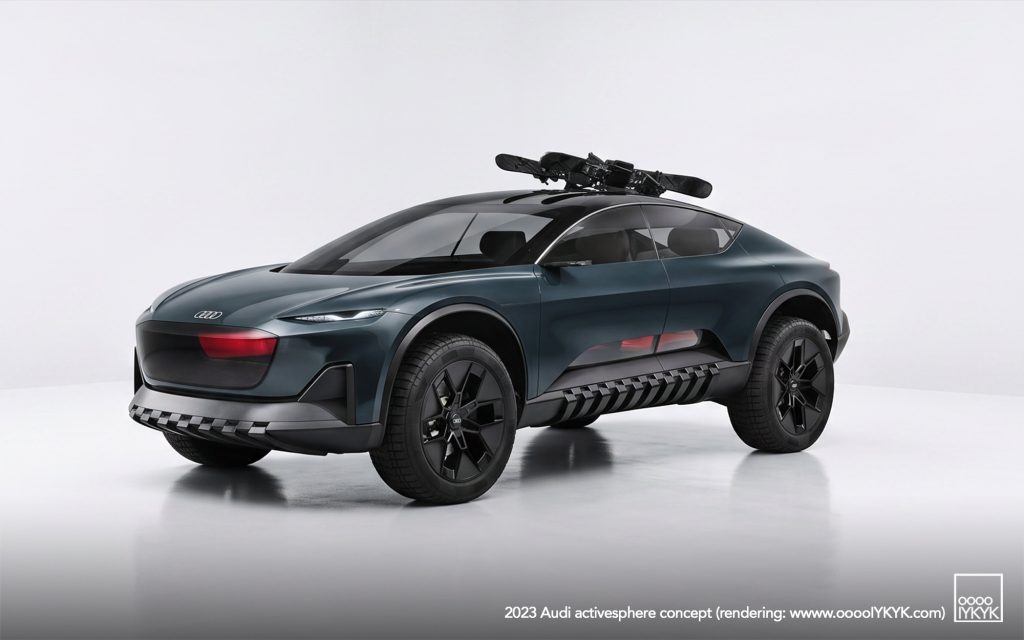
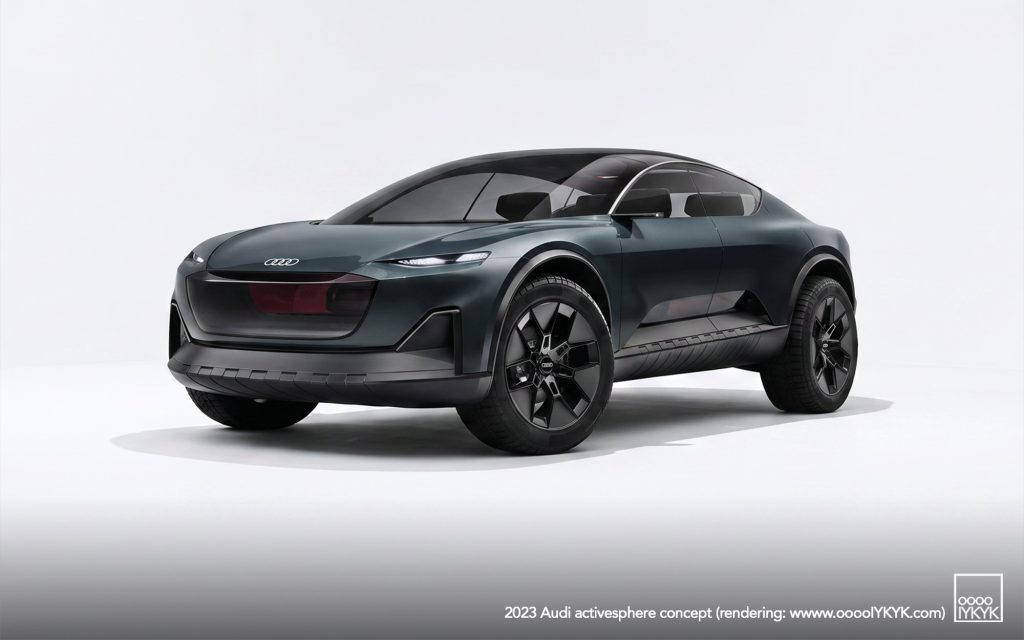
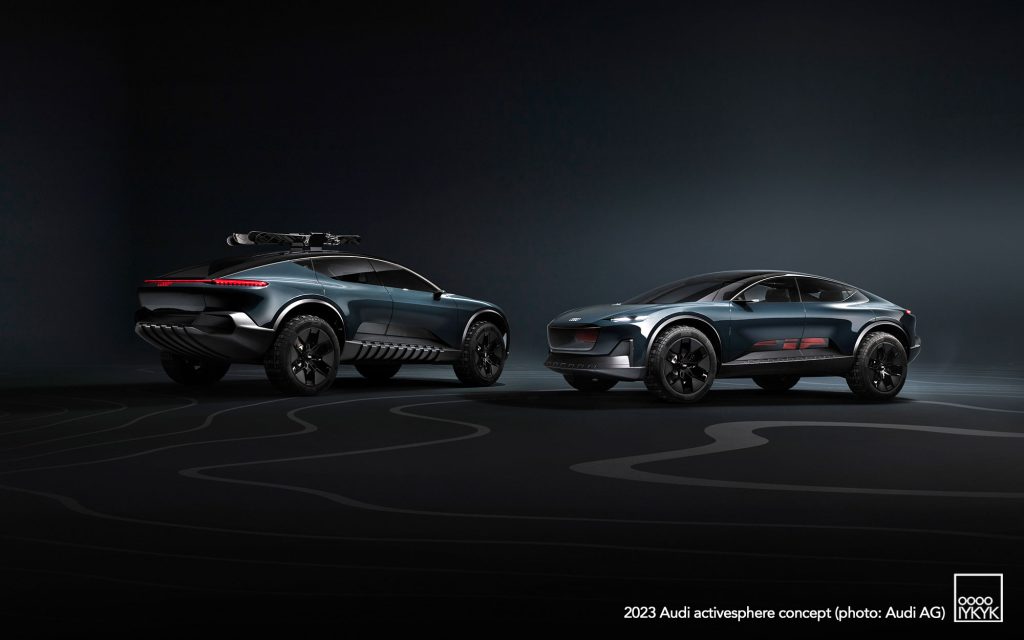
Body Style: Four-door crossover coupé / active Sportback
Drive: Electric quattro all-wheel drive
Power: 325 kW (442 hp)
Torque: 720 Nm (531 lb-ft)
Battery: Approximately 100 kWh
Electrical Architecture: 800 volts
Maximum Charging Rate: 270 kW
Range: More than 600 km (373 miles)
Length: 4.98 m (196.1 in)
Width: 2.07 m (81.5 in)
Height: 1.60 m (63.0 in)
Wheelbase: 2.97 m (116.9 in)
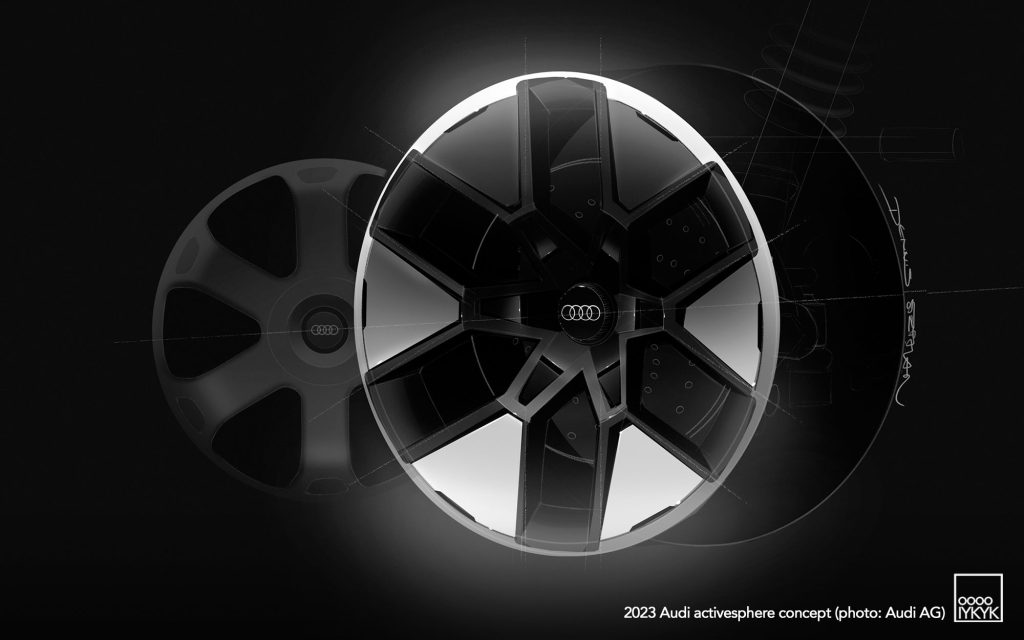
Wheels: 22 inches
Tires: 285/55
Standard Ground Clearance: 208 mm (8.2 in)
Ground Clearance Adjustment: +40/-40 mm
Approach Angle: 18.9 degrees
Departure Angle: 28.1 degrees
OVERVIEW
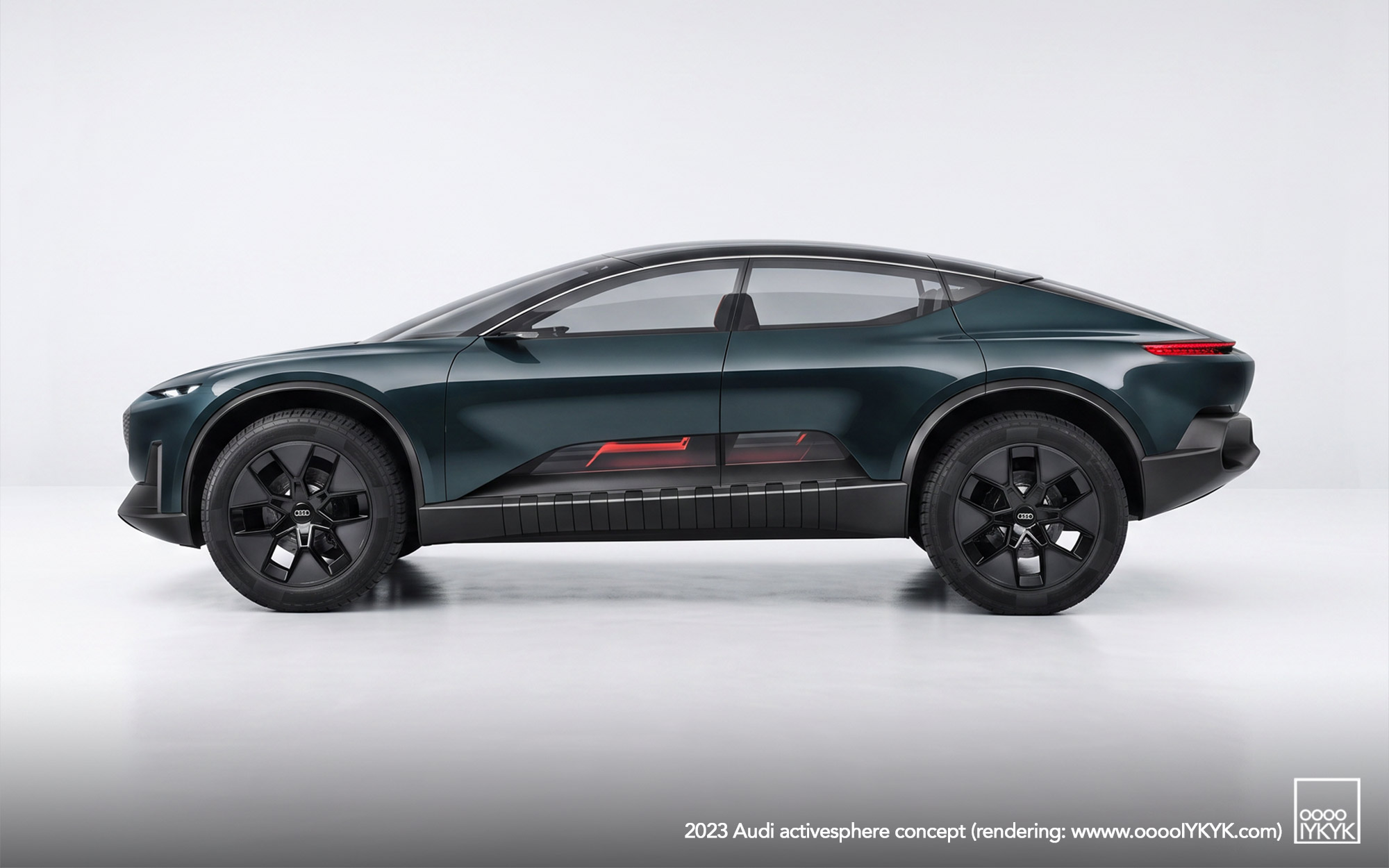
The Audi activesphere concept was the fourth and final member of Audi’s sphere series of concept vehicles, following the skysphere in 2021 and the grandsphere and urbansphere in 2022. Revealed on January 26, 2023, the activesphere combined elements of a luxury Sportback, crossover, allroad and pickup with a battery-electric quattro drivetrain based on the Premium Platform Electric architecture.
Conceived and designed at the Audi Design Studio in Malibu, California under studio manager Gael Buzyn, the activesphere was intended to explore a more active interpretation of Audi’s future luxury vehicle philosophy. Buzyn described the concept as a new type of crossover combining the elegance of an Audi Sportback with SUV practicality and genuine off-road capability.
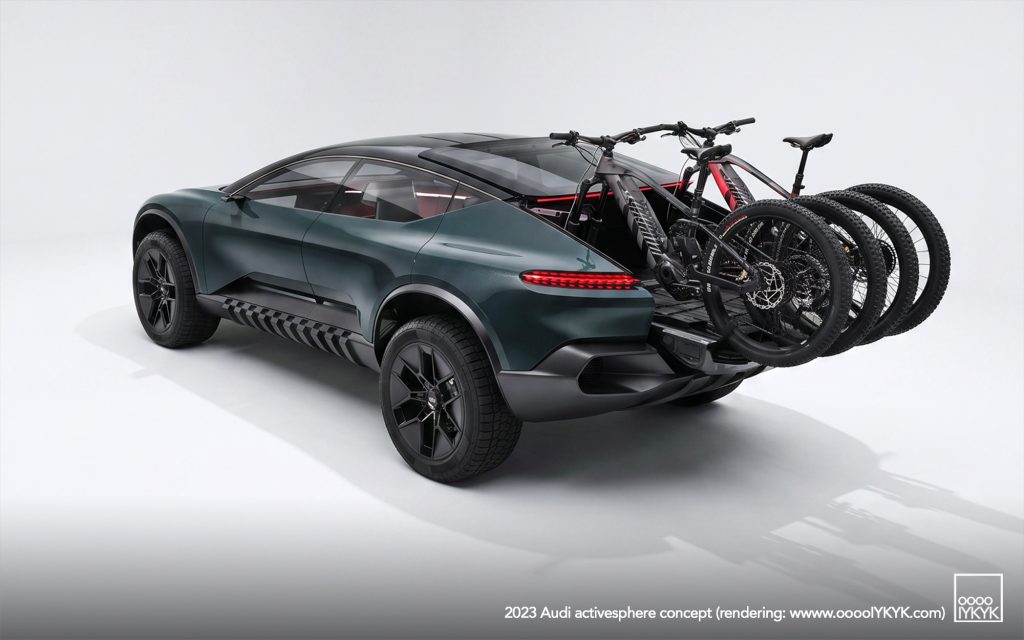
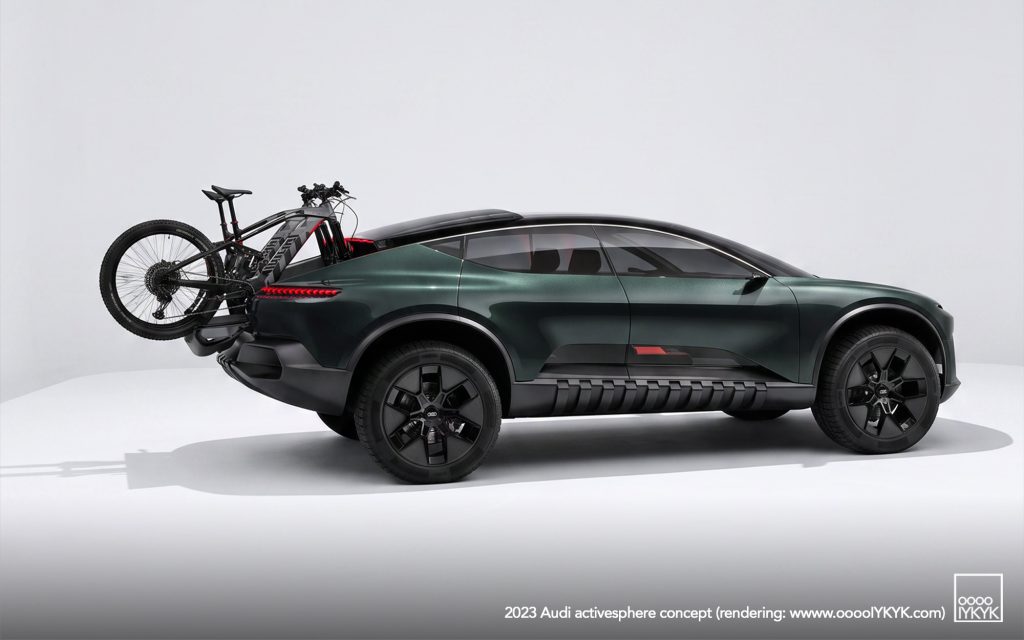
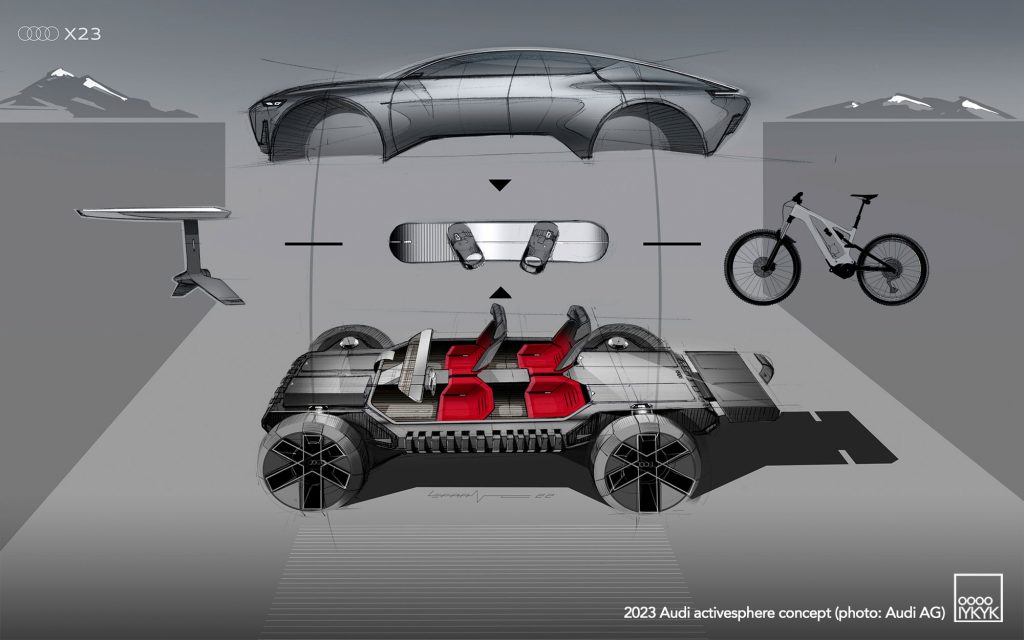
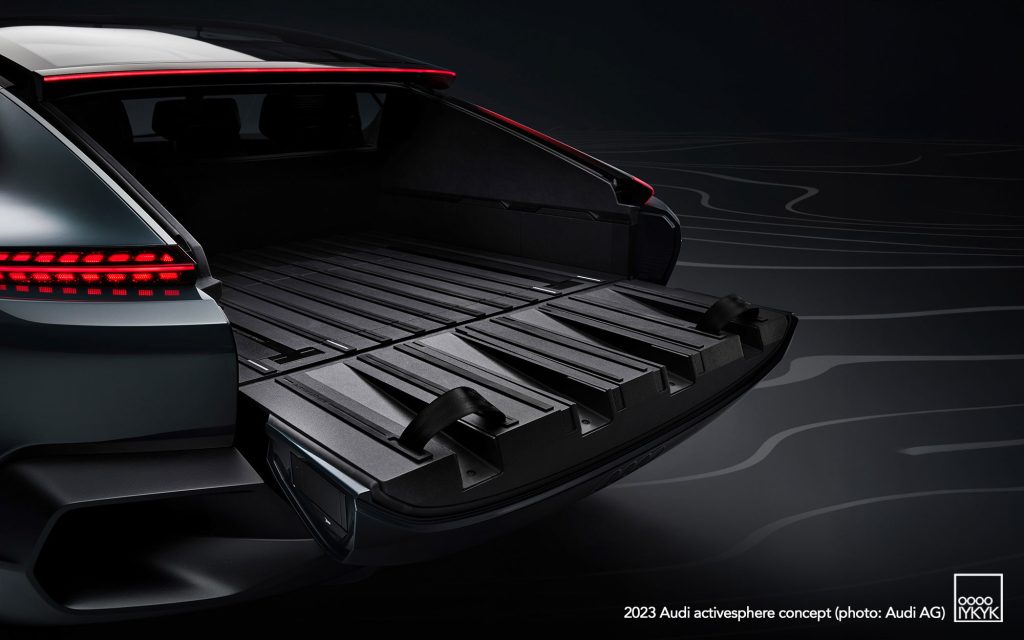
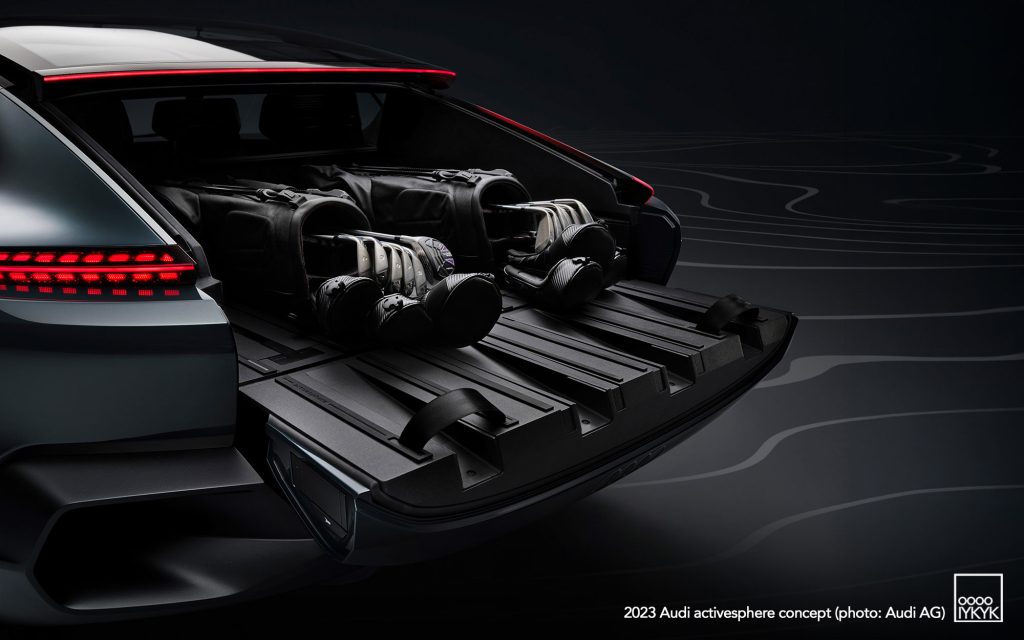
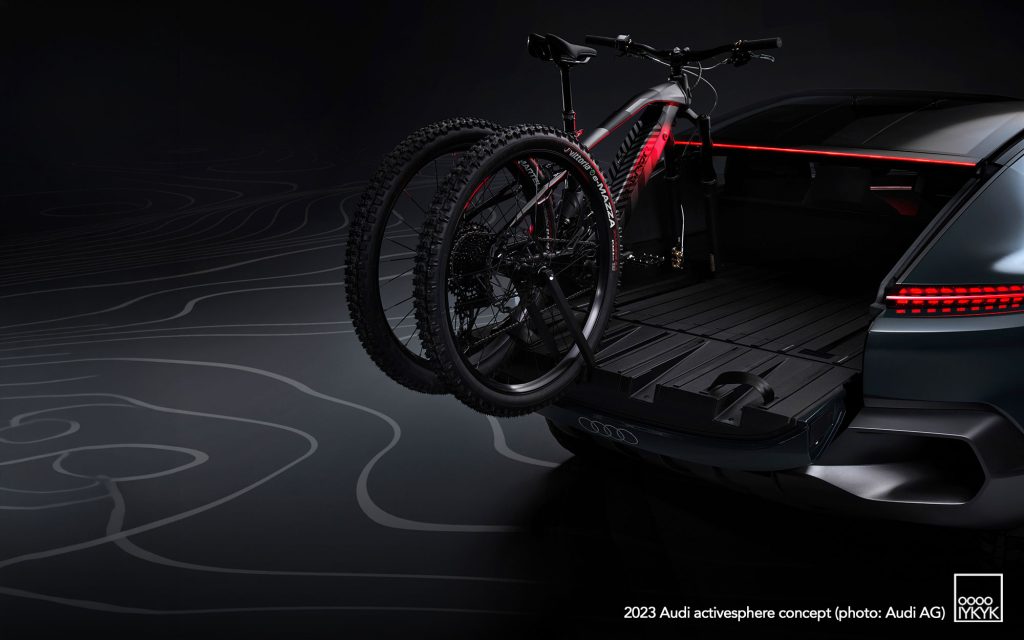
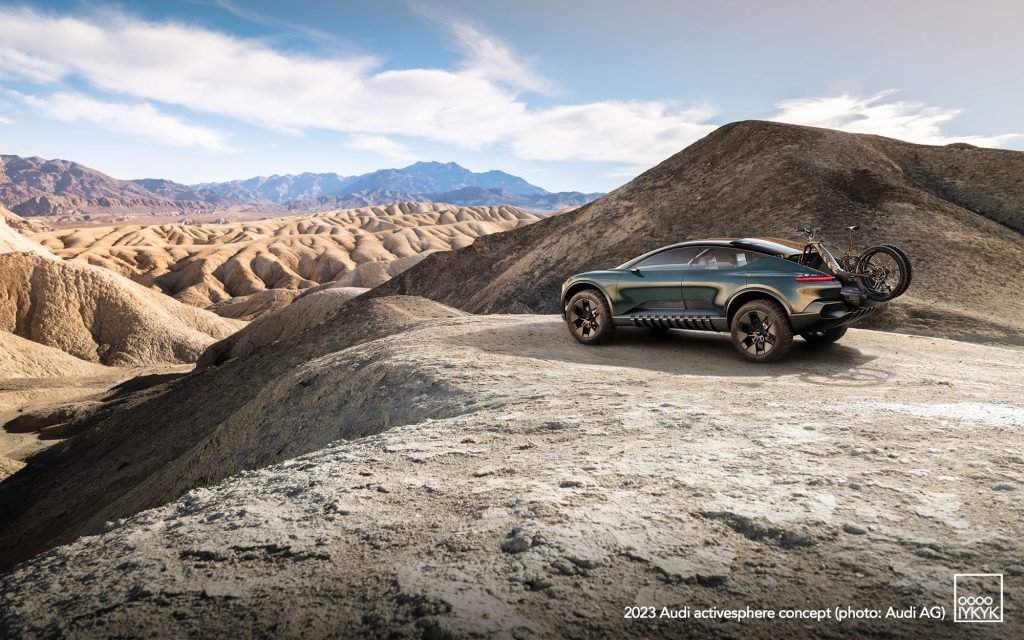
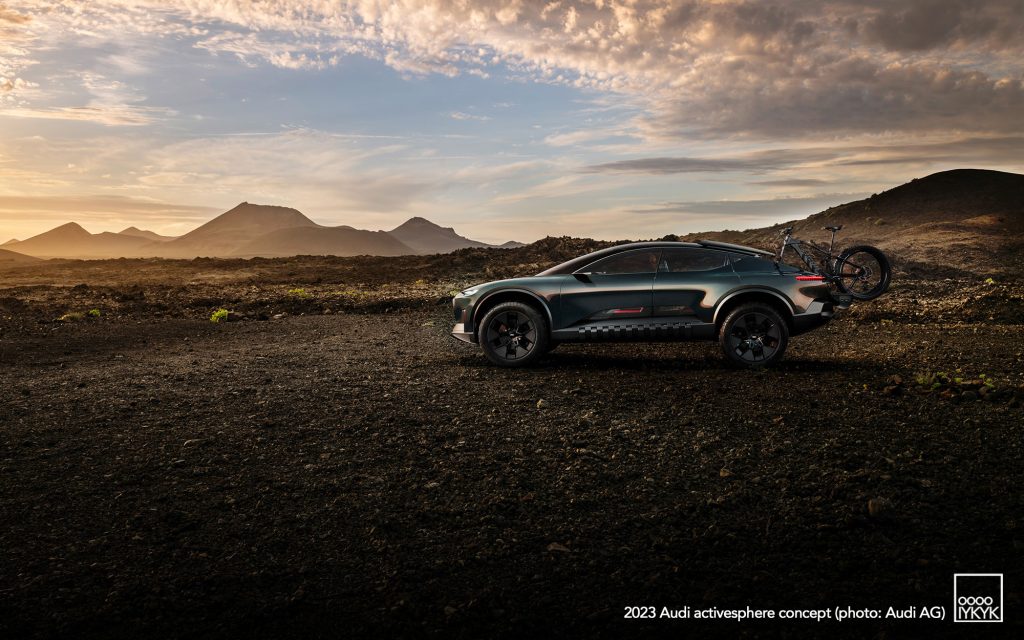
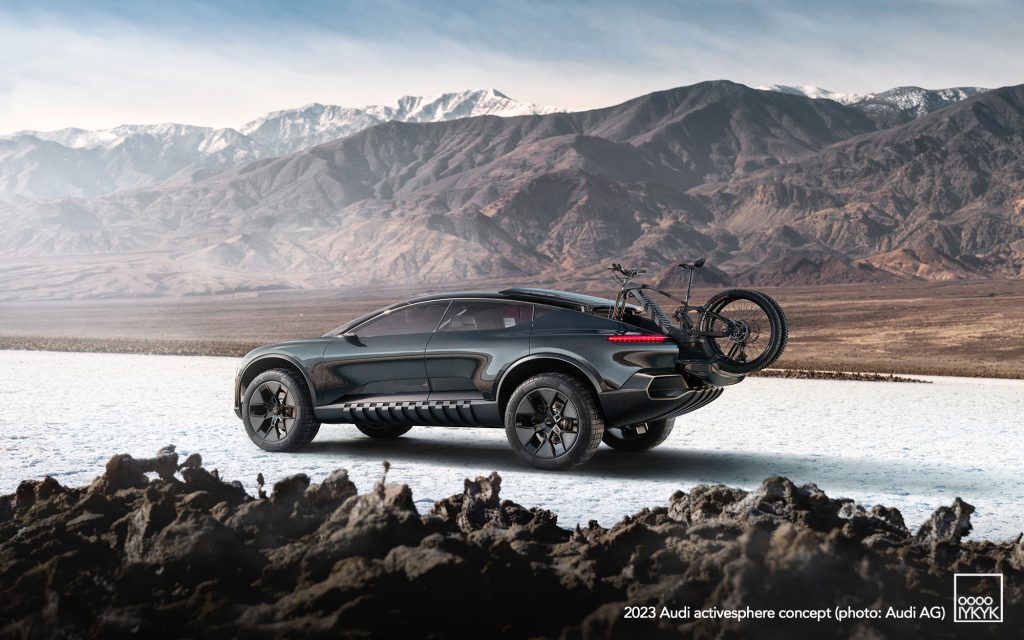
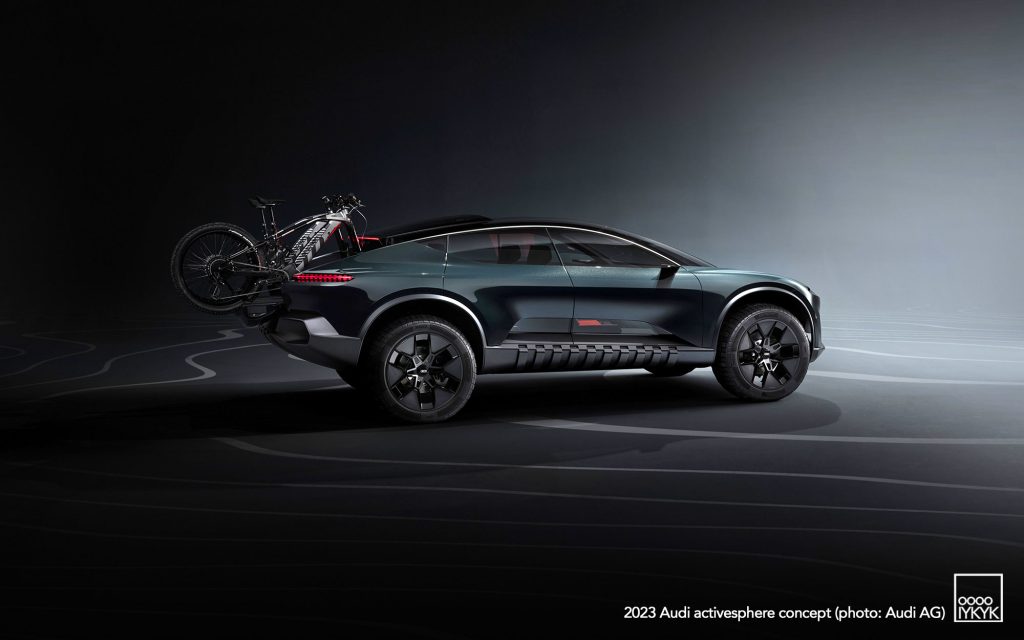
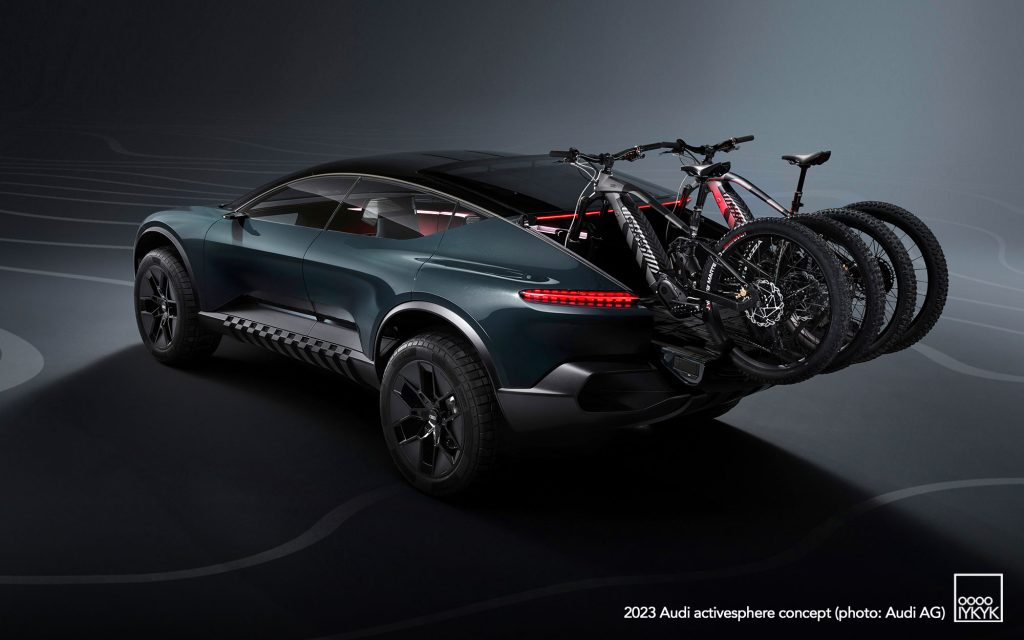
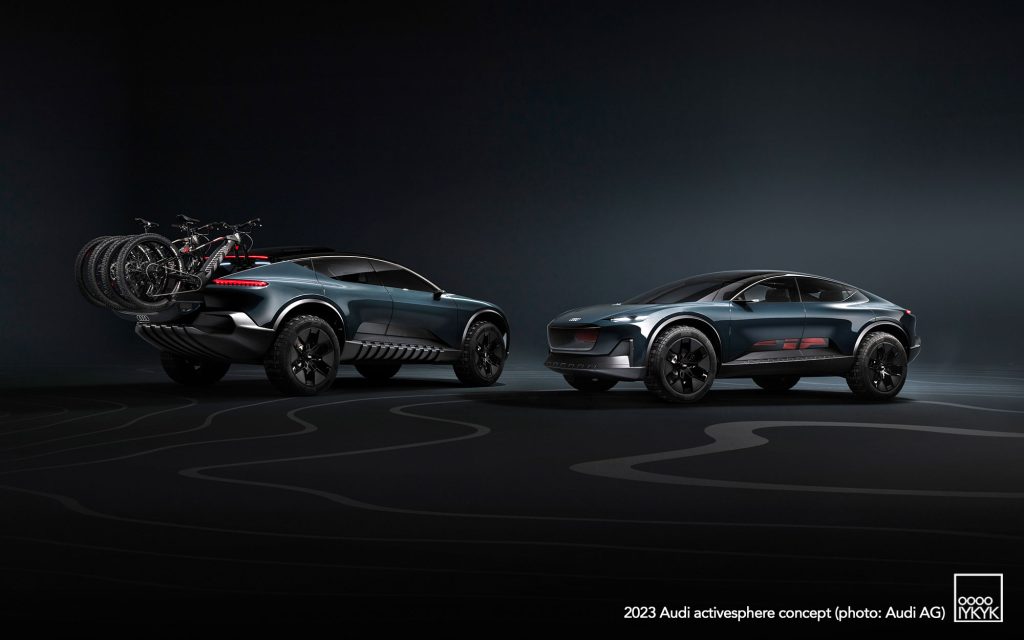
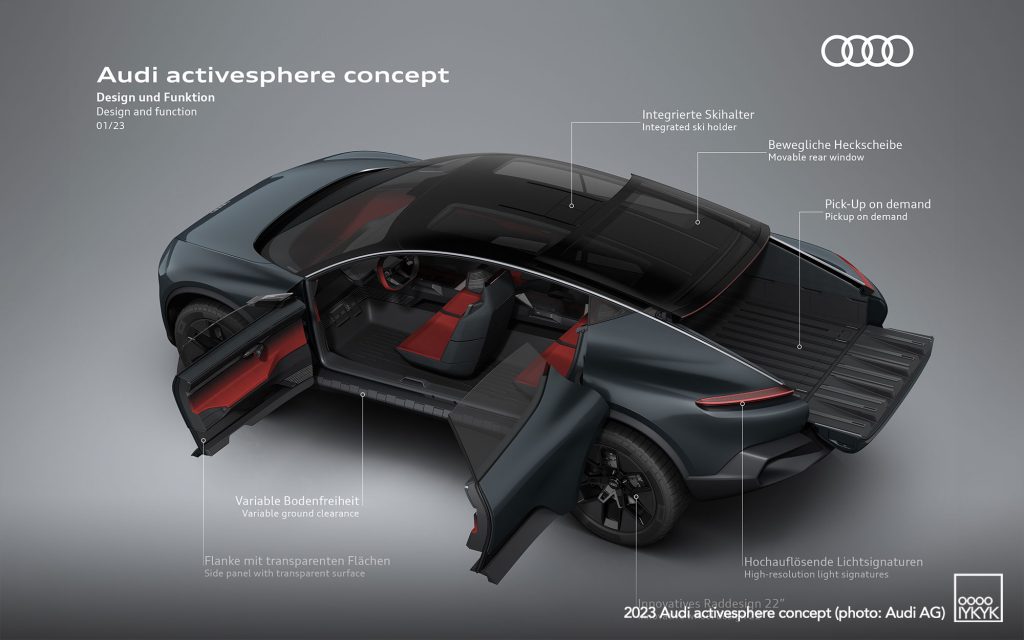
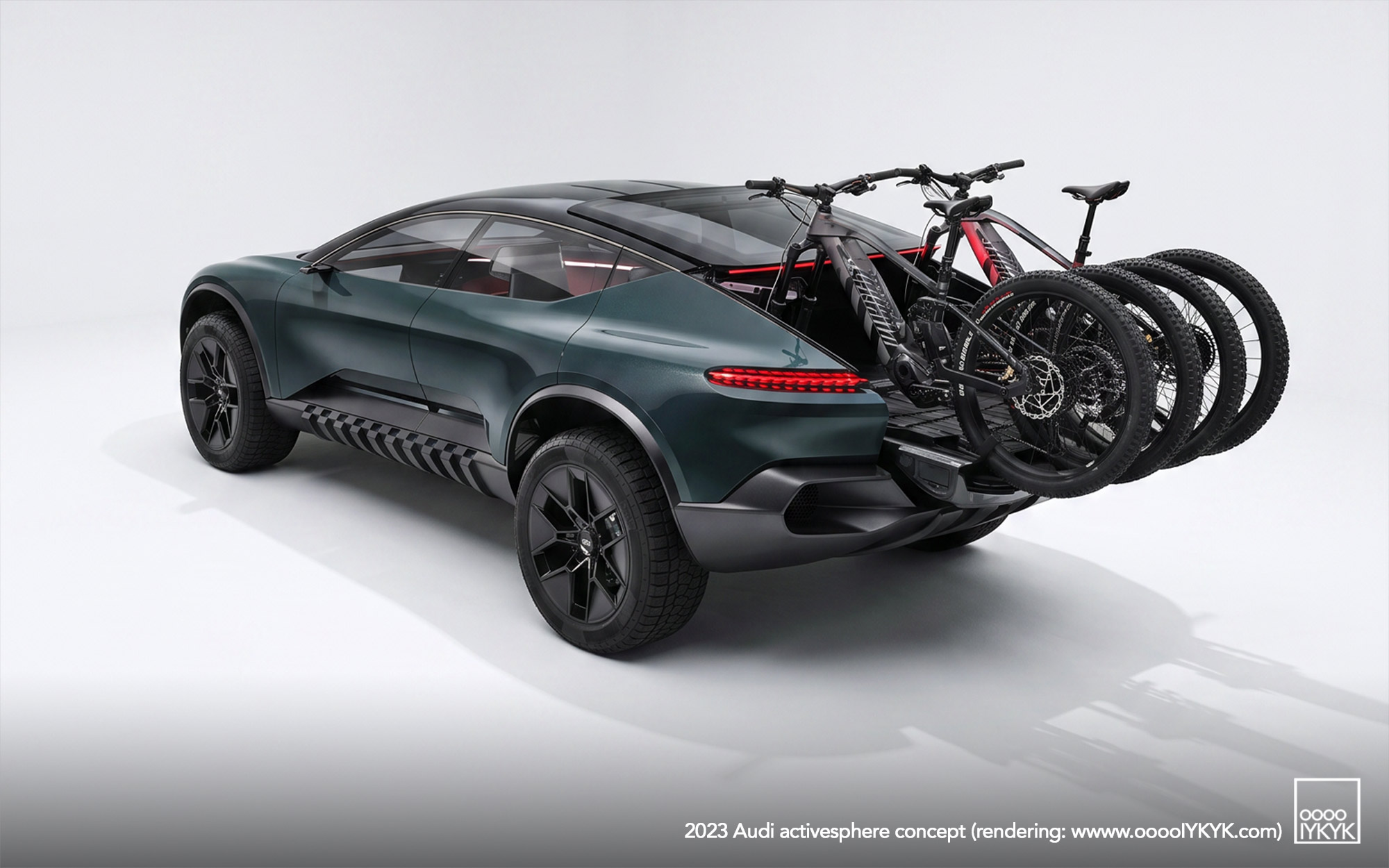
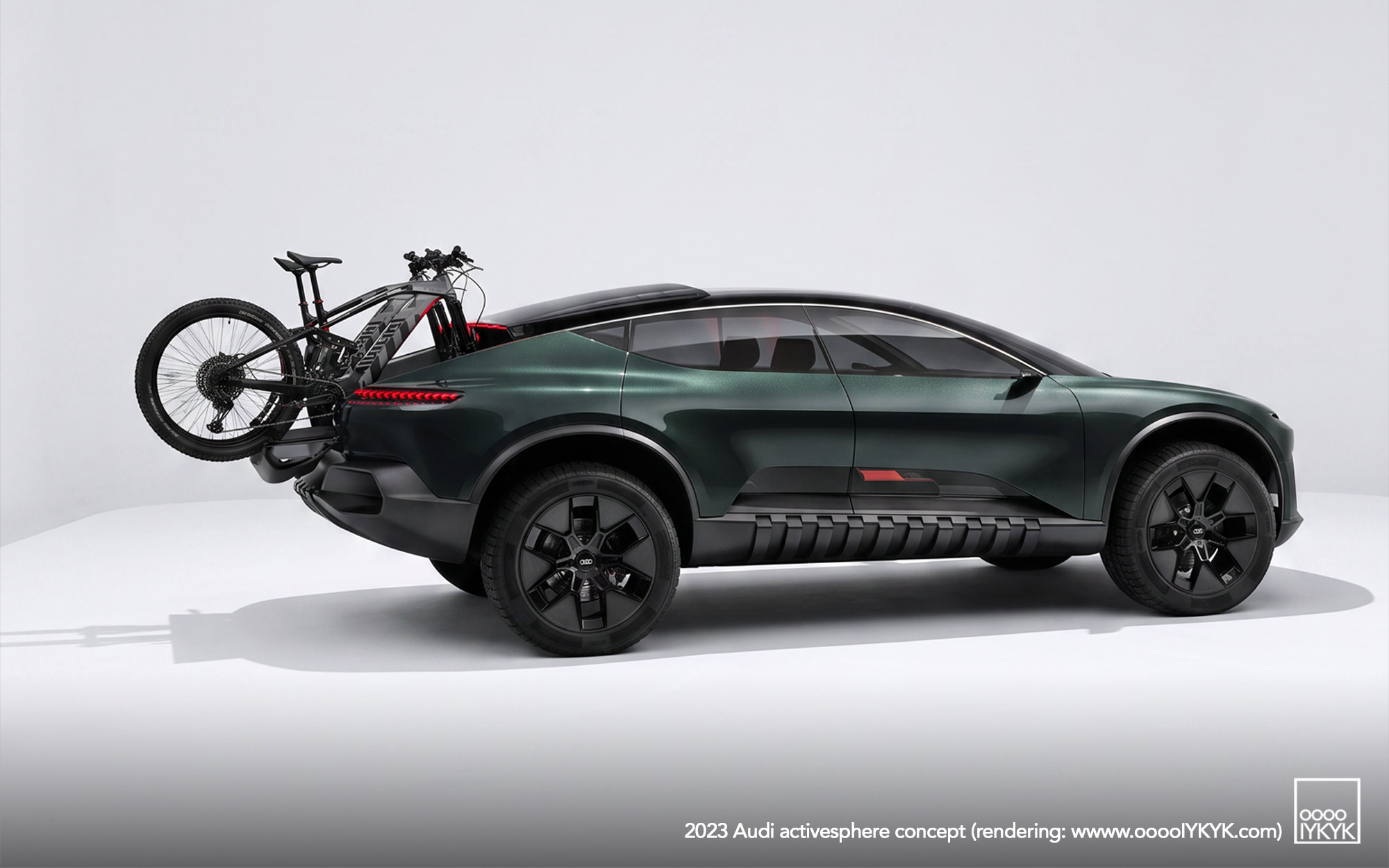
Central to the concept was its ability to change configuration. In its normal form, the activesphere presented as a four-door crossover coupé. At the push of a button, its Sportback rear could transform into an open cargo bed Audi called the “active back,” with sufficient room to carry two e-bikes.
EXTERIOR DESIGN
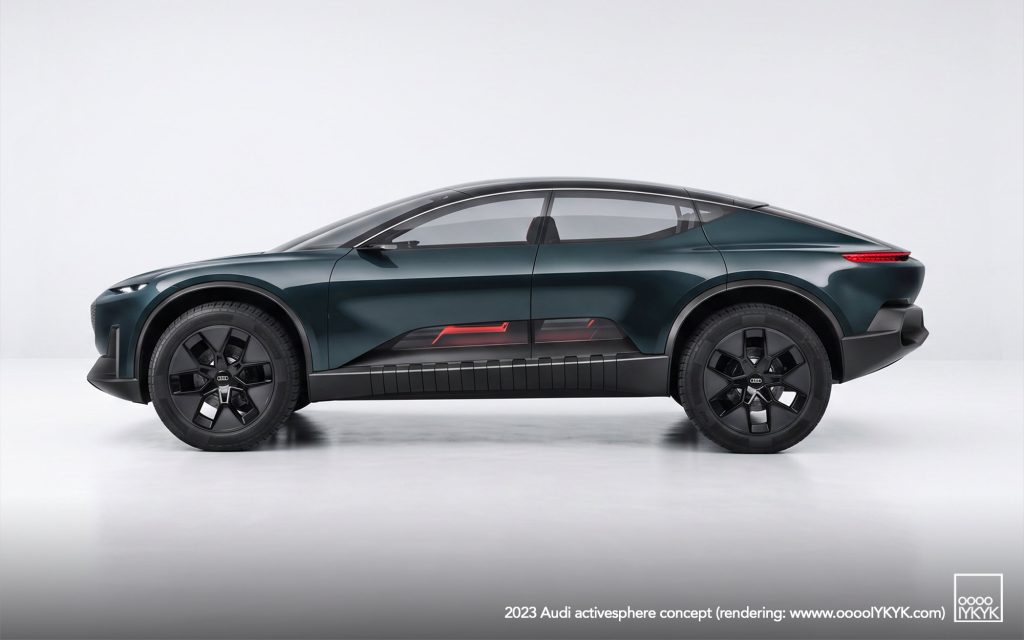
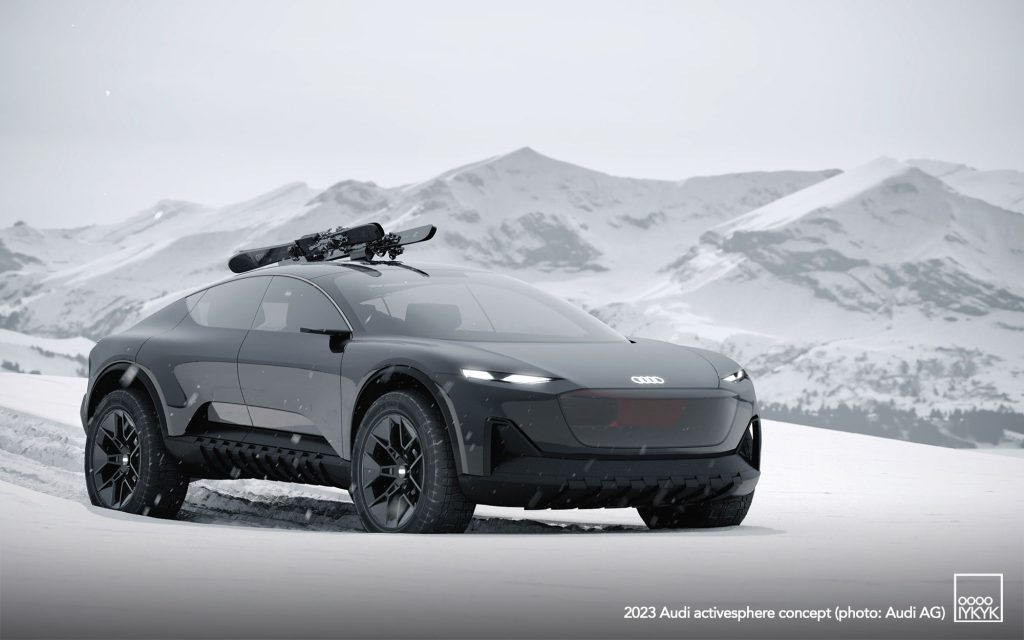
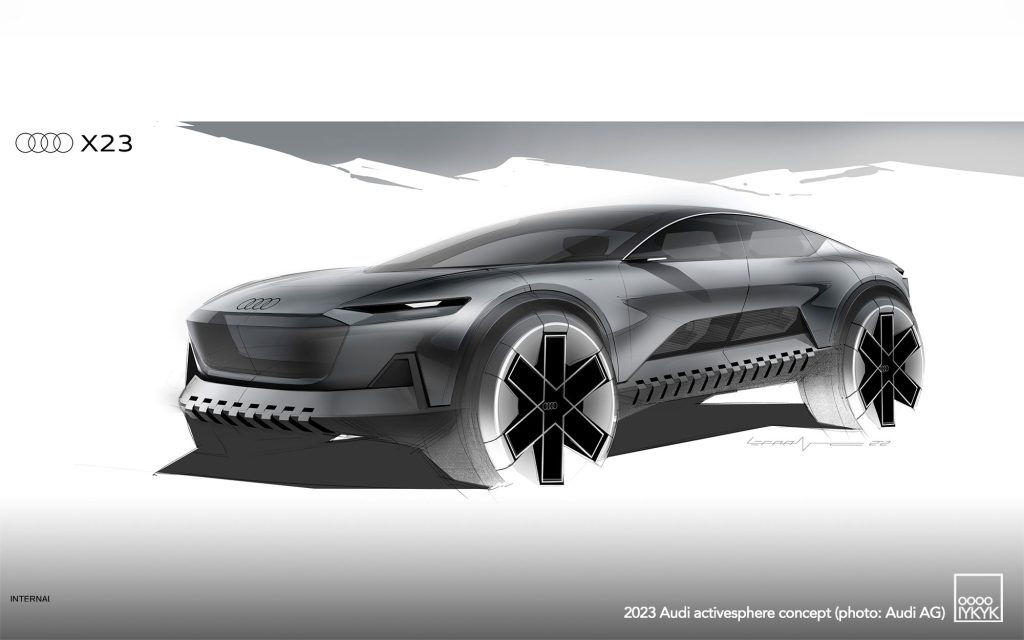
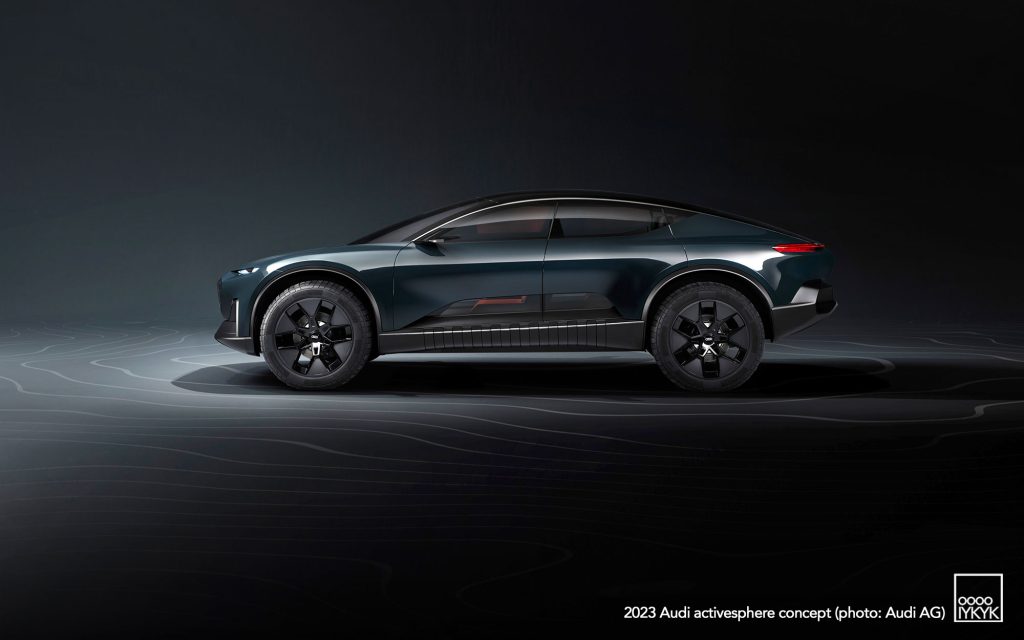
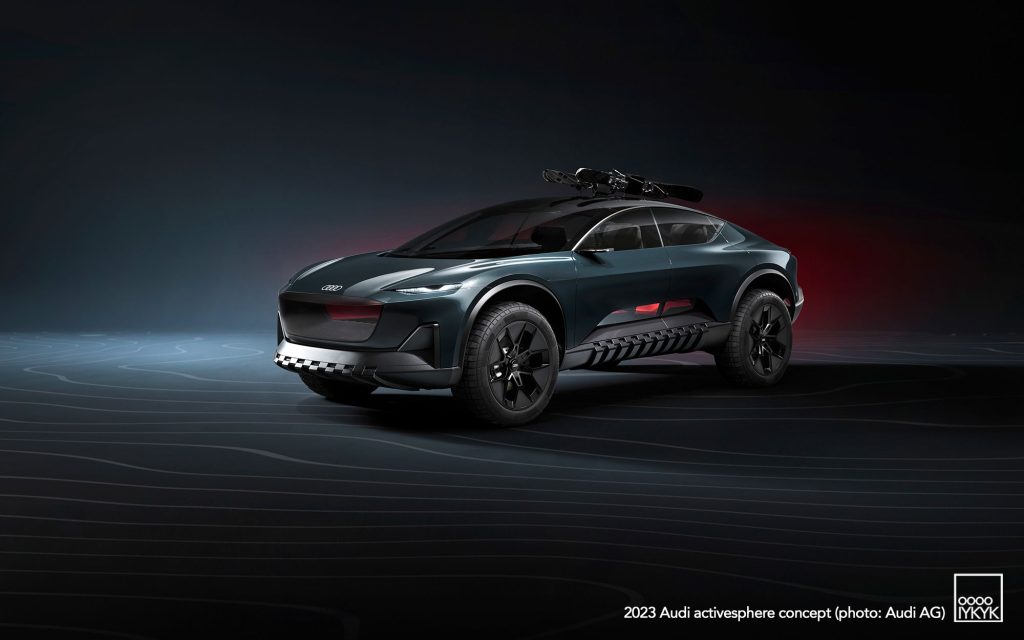
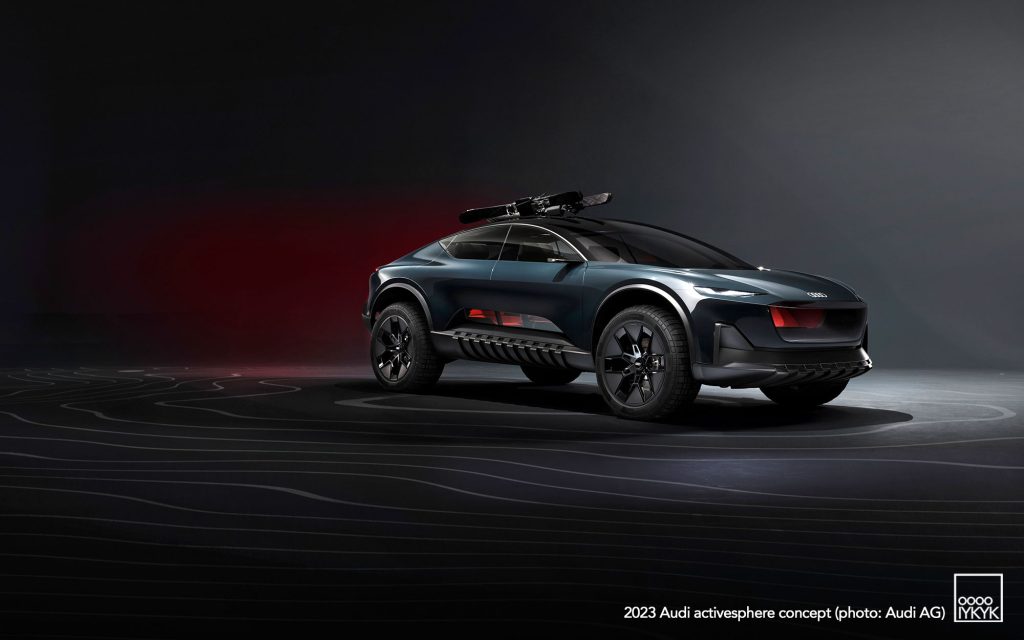
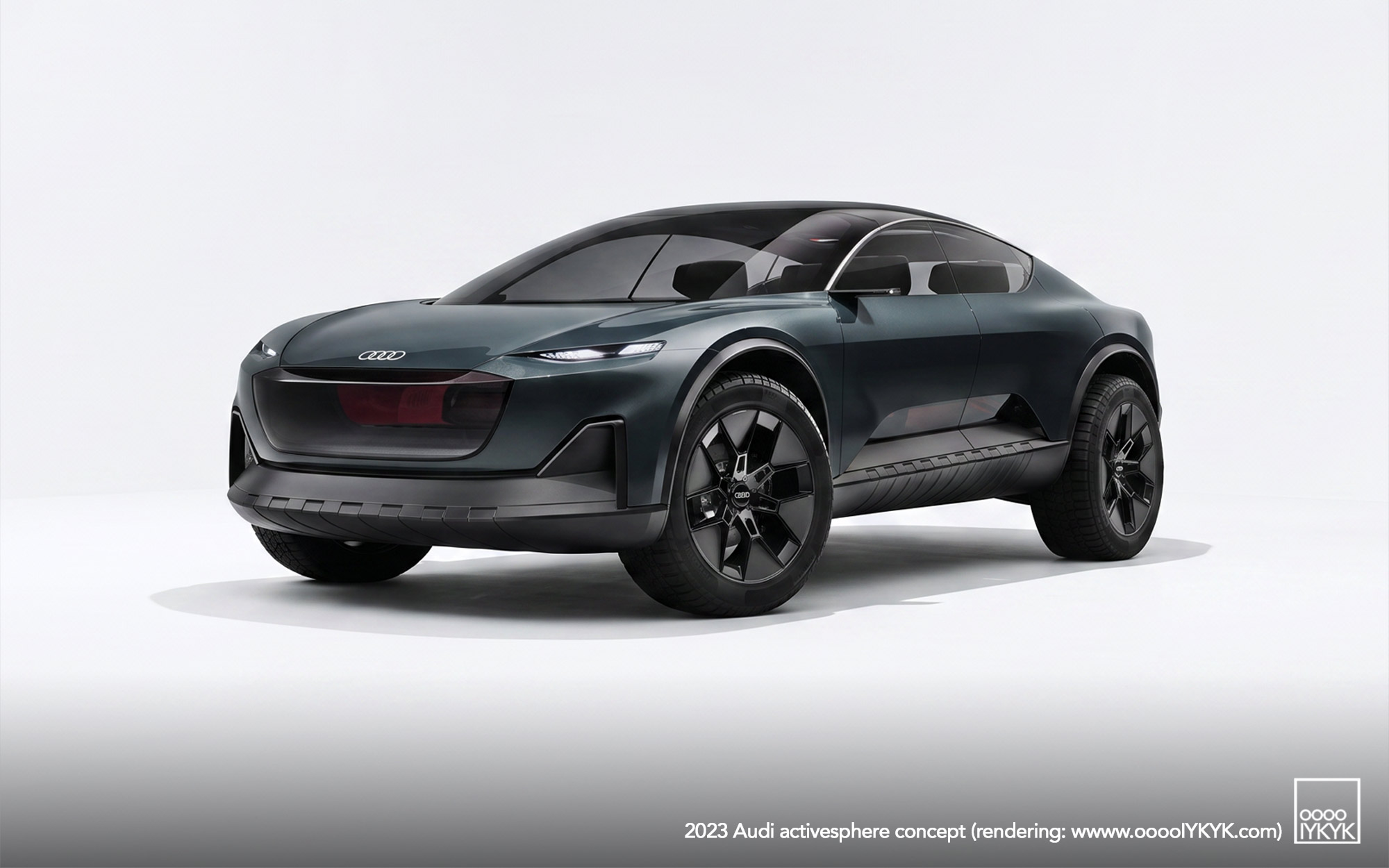
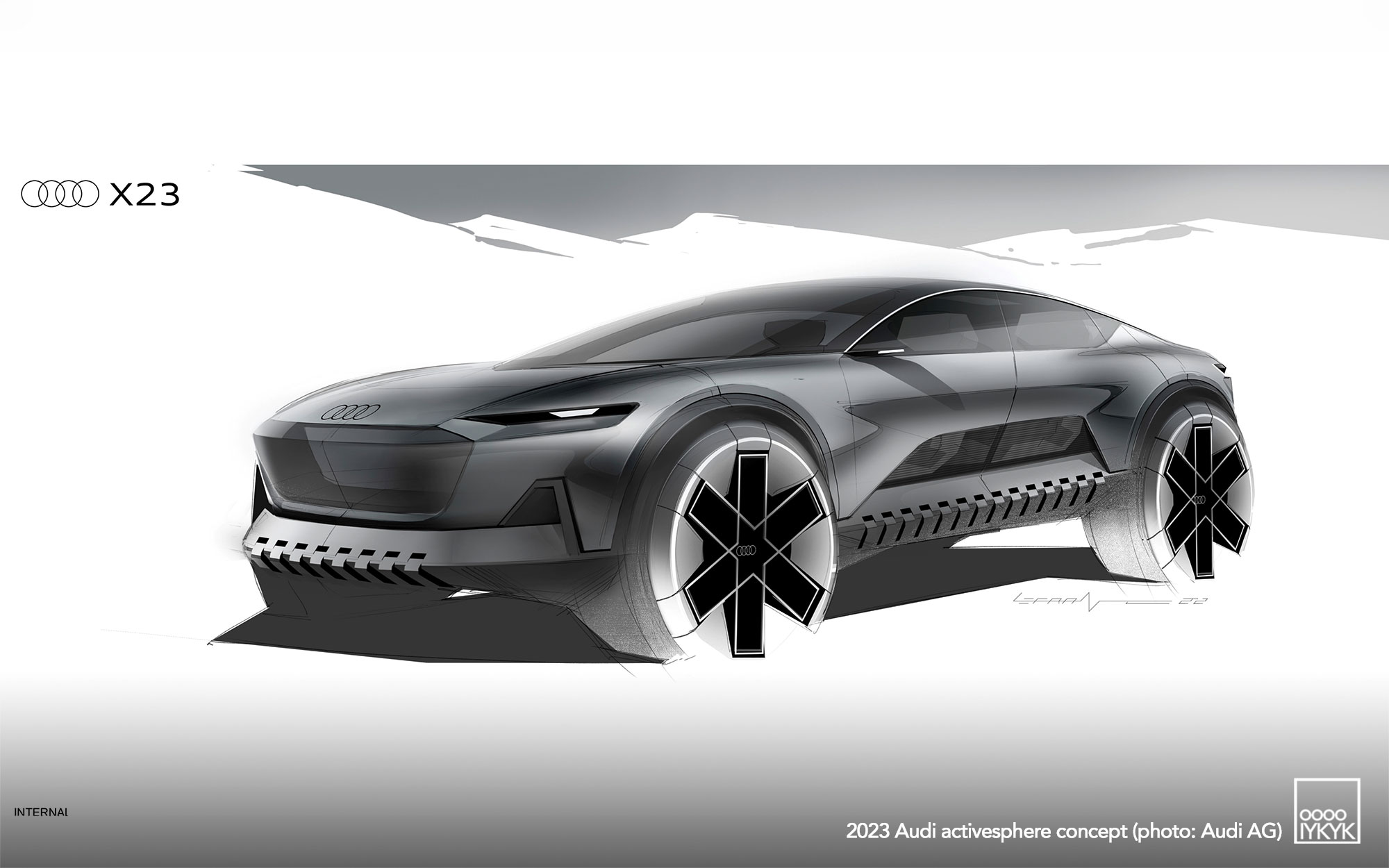
At 4.98 meters long, 2.07 meters wide and 1.60 meters high, the activesphere occupied the premium segment, though its 2.97-meter wheelbase and short front and rear overhangs emphasized the packaging possibilities of its electric architecture.
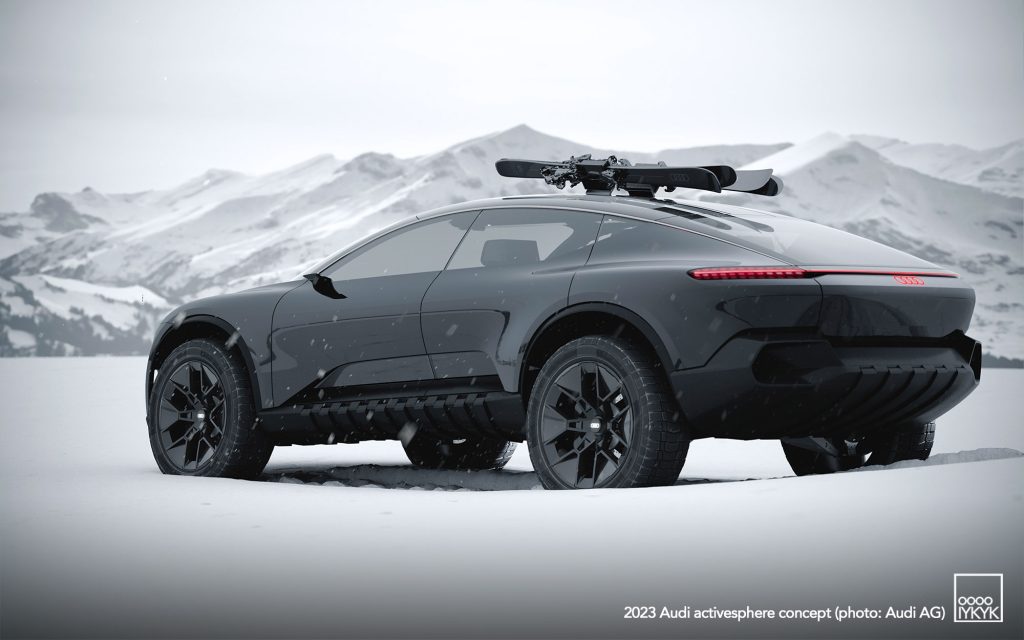
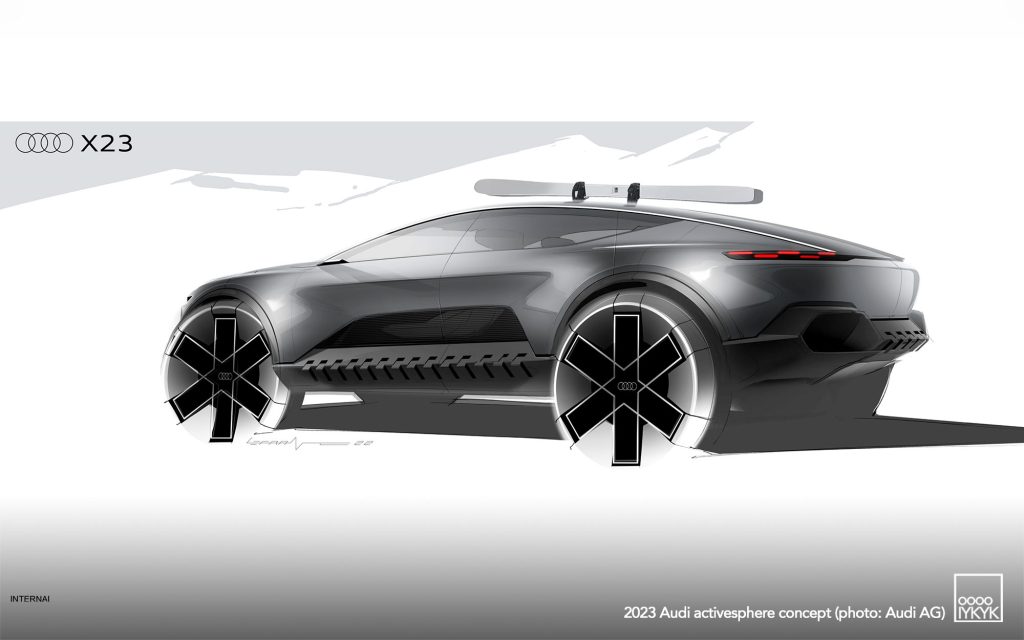
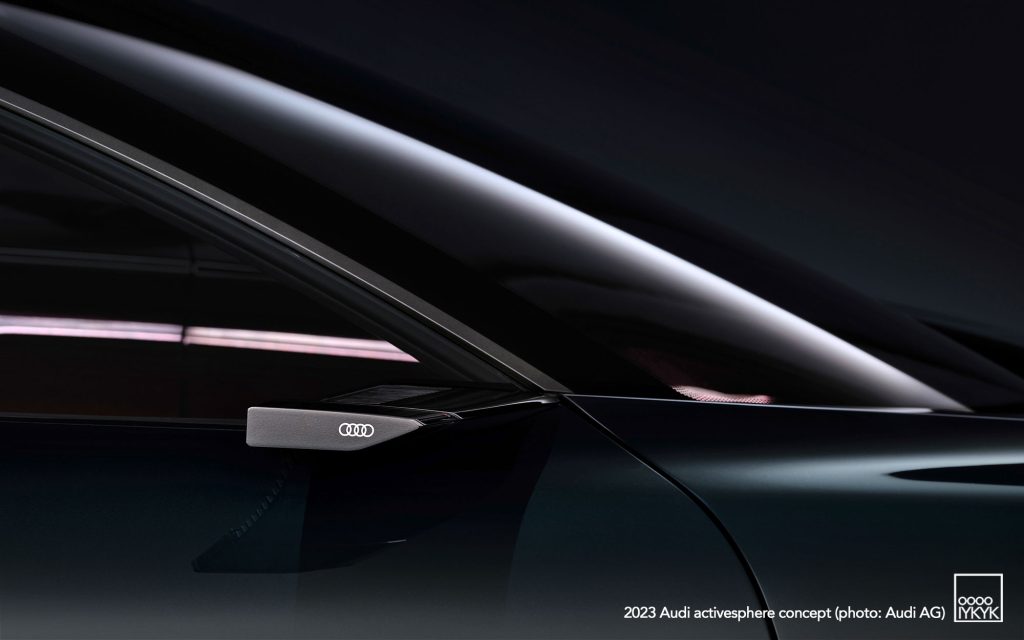
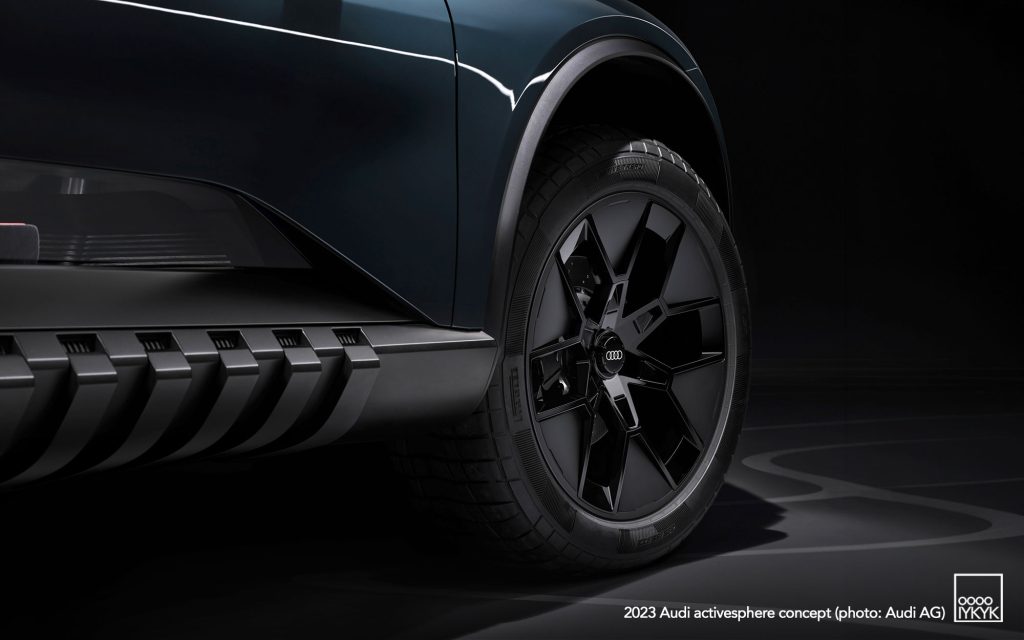
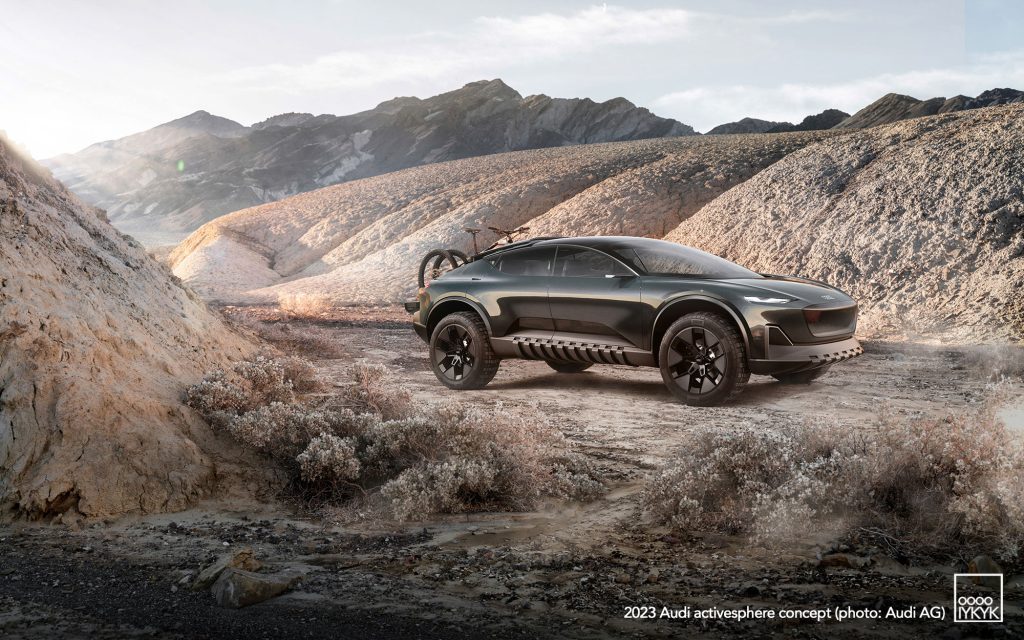
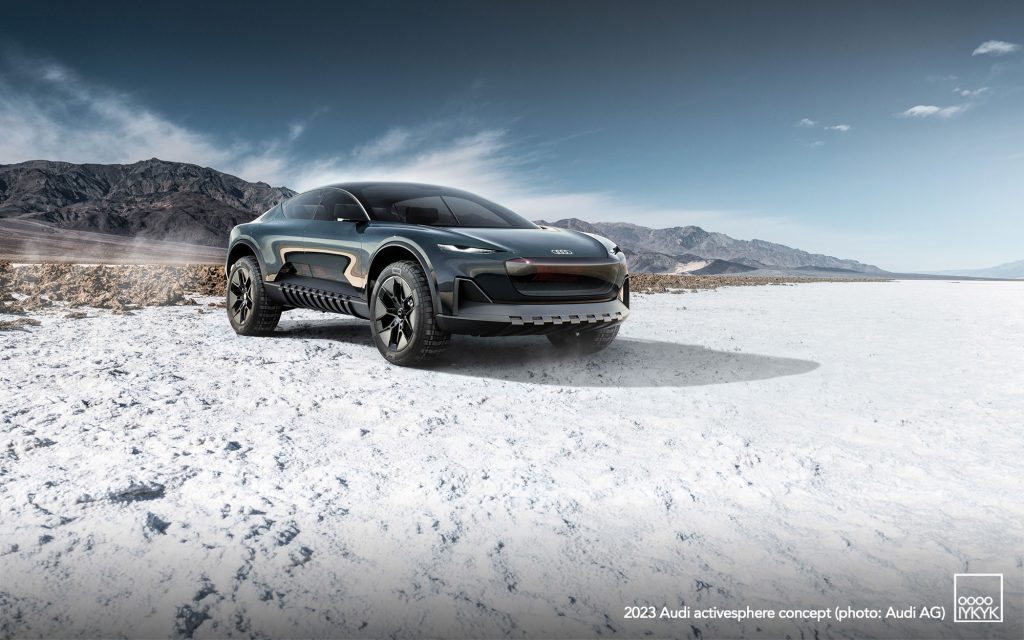
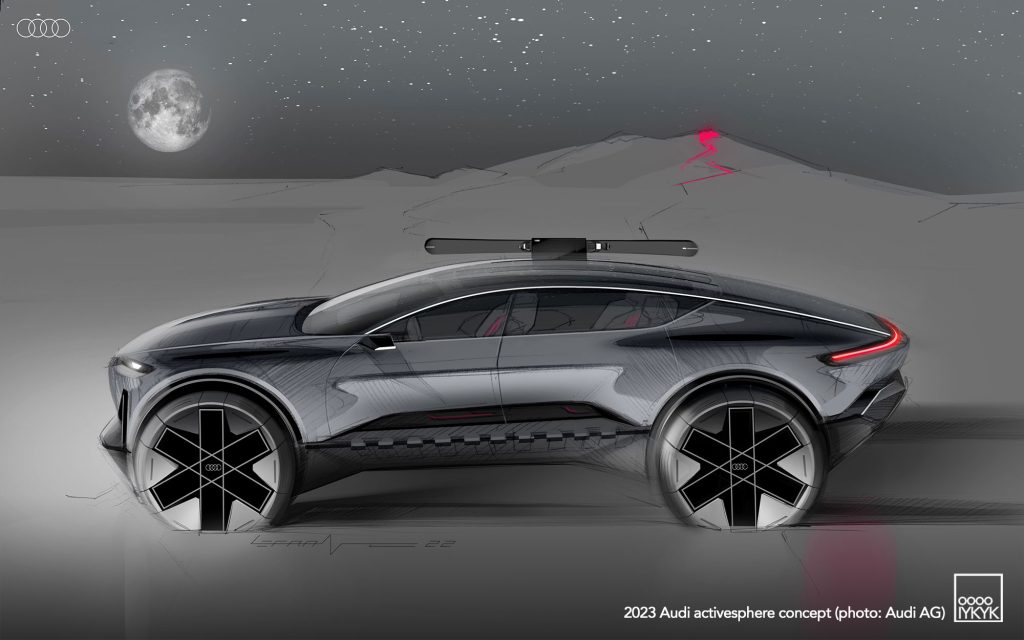
The proportions combined a low passenger compartment and arcing roofline with substantial ground clearance and 22-inch wheels. Large 285/55 tires reinforced the off-road intent, while the wheels incorporated movable aerodynamic elements. These opened for additional ventilation off-road and closed to reduce aerodynamic drag during road driving. Camera-based exterior mirrors were used for the same reason.
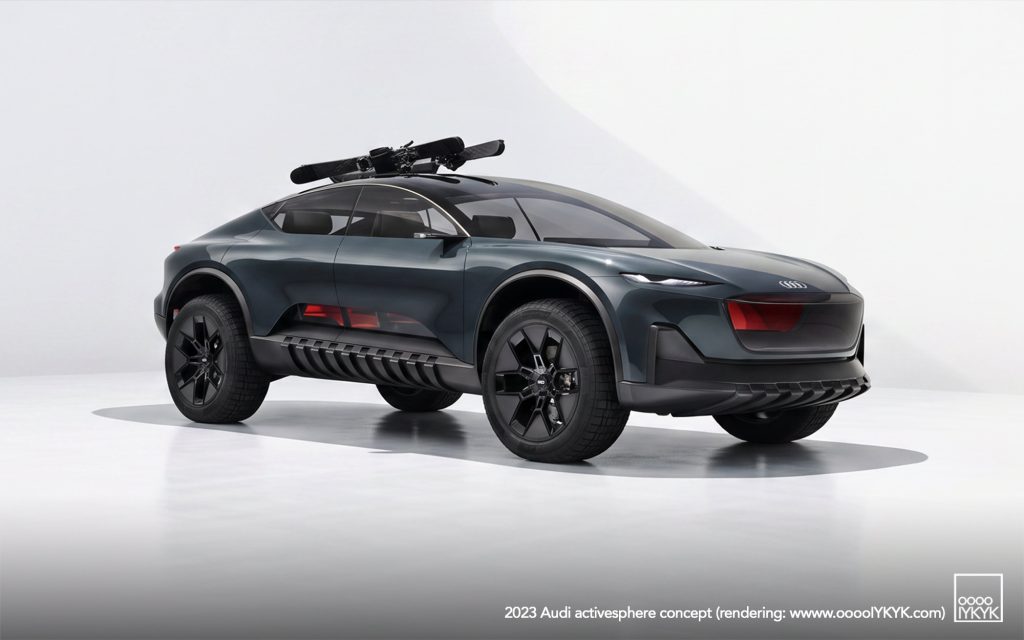
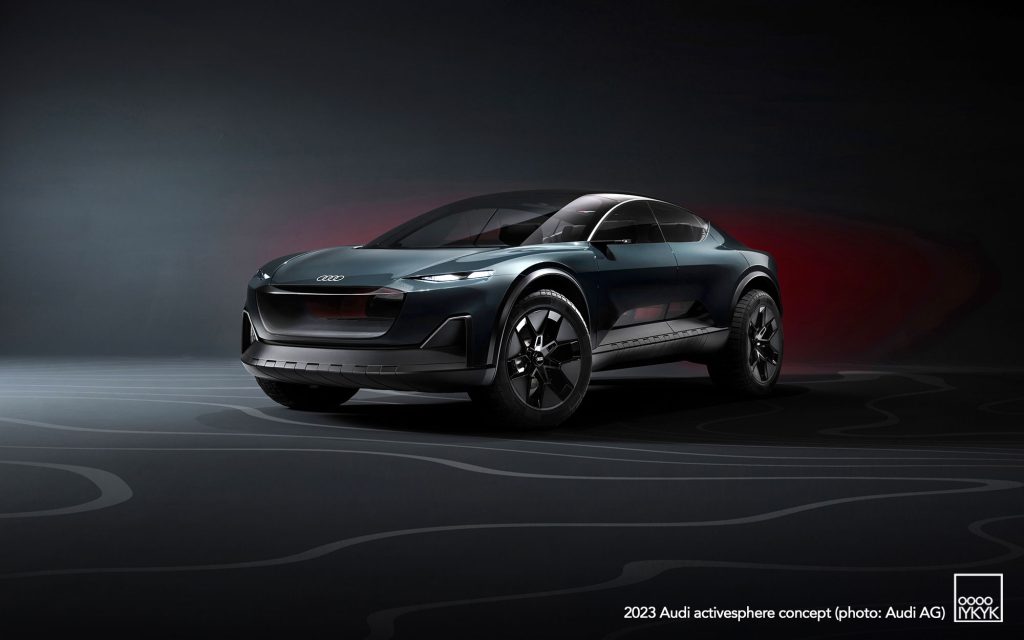
Glass played an unusually prominent role in the exterior. Audi rendered the Singleframe as transparent glazing, providing occupants with a view through the front luggage compartment toward the road. Additional glass sections were incorporated into the lower doors, tailgate and roof.
The narrow lighting units incorporated the “Audi eye” digital light signature first introduced on the grandsphere. Micro-LED technology allowed the activesphere to display different lighting signatures depending on whether the car was configured for on-road or off-road driving.
ACTIVE SPORTBACK
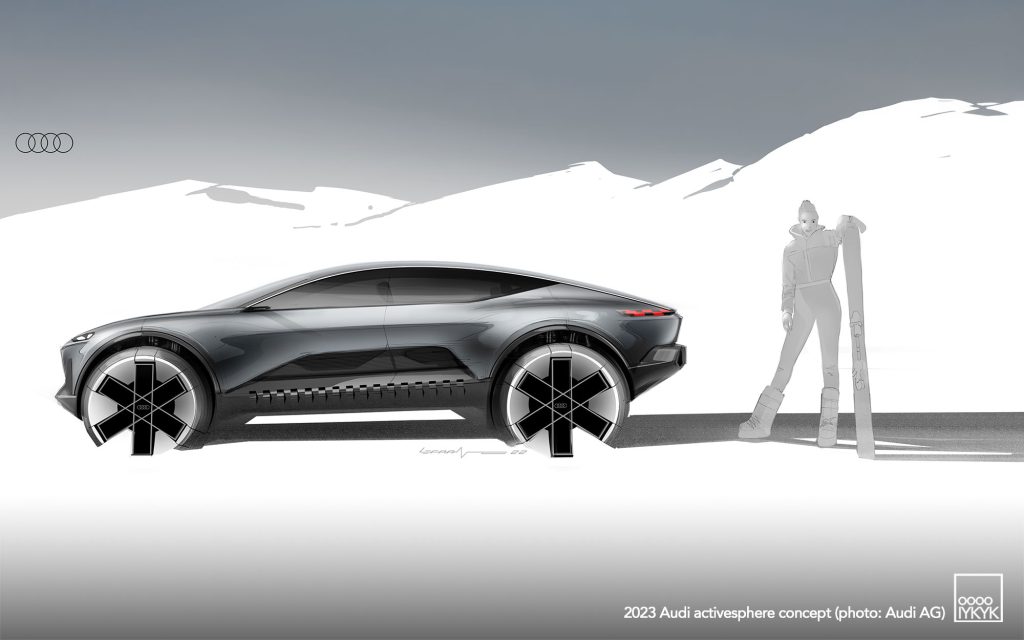
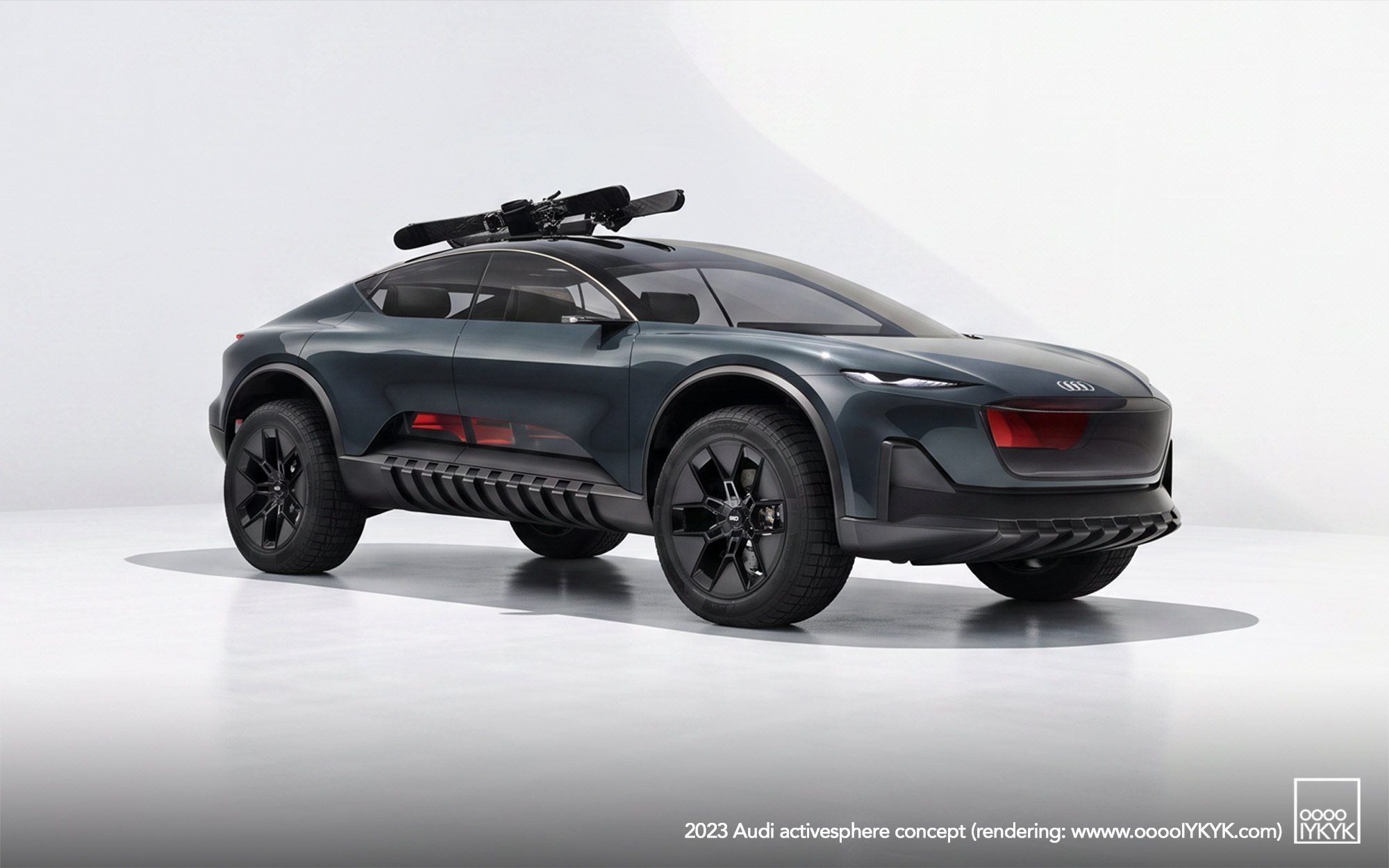
Audi described the activesphere as its first combination of a Sportback body with the design and technical characteristics of an allroad, creating what the company termed an “active Sportback.”
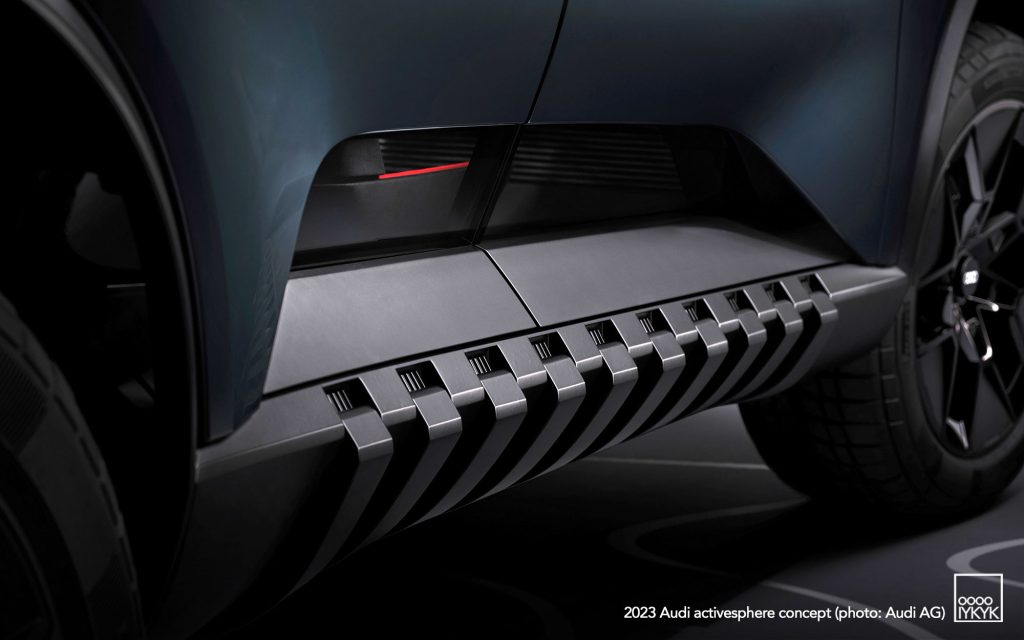
Its adaptive air suspension provided a standard ground clearance of 208 mm. For off-road driving, the body could be raised by 40 mm, while road mode could lower it by the same amount to improve aerodynamics and reduce the center of gravity. Approach and departure angles measured 18.9 and 28.1 degrees respectively.
Audi explicitly connected the idea to the allroad lineage introduced in 2000, which had similarly combined variable air suspension and additional underbody protection with an Avant body. The activesphere translated that philosophy into a crossover Sportback format.
Arctic Teal high-gloss sections at the front, rear and lower sides contrasted with matte surfaces around the lower body. When the suspension entered its raised position, metal elements with vertical studs deployed to visually emphasize the change into off-road mode.
ACTIVE BACK
The defining feature of the activesphere was its transformable rear body.
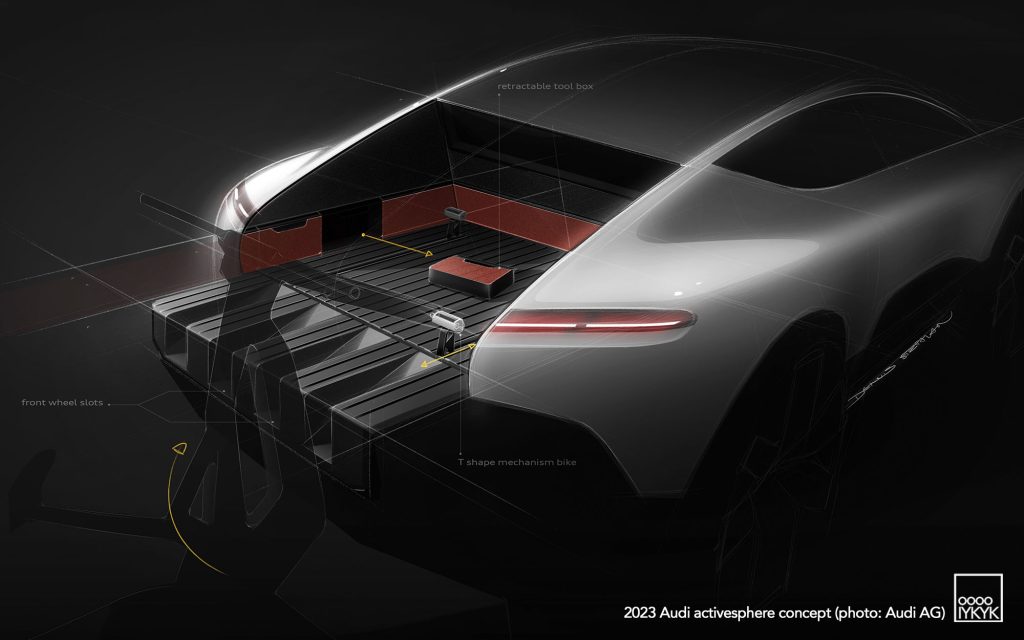
In normal configuration, the car retained an uninterrupted Sportback silhouette. When additional carrying capacity was required, the transparent rear window moved upward until nearly flush with the roof. Simultaneously, the lower vertical section of the rear folded horizontally to create an open cargo bed.
Audi called the resulting configuration the “active back.”
The C-pillars remained fixed to preserve the basic silhouette, while a powered bulkhead deployed behind the rear seats to isolate the passenger compartment from the open cargo area. Integrated mounts provided space for two e-bikes.
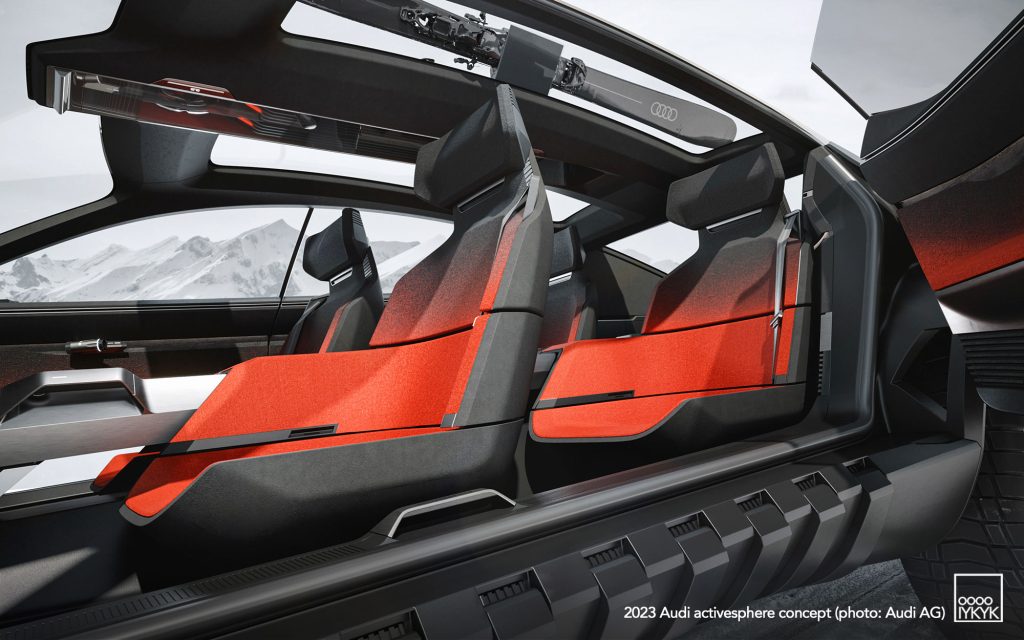
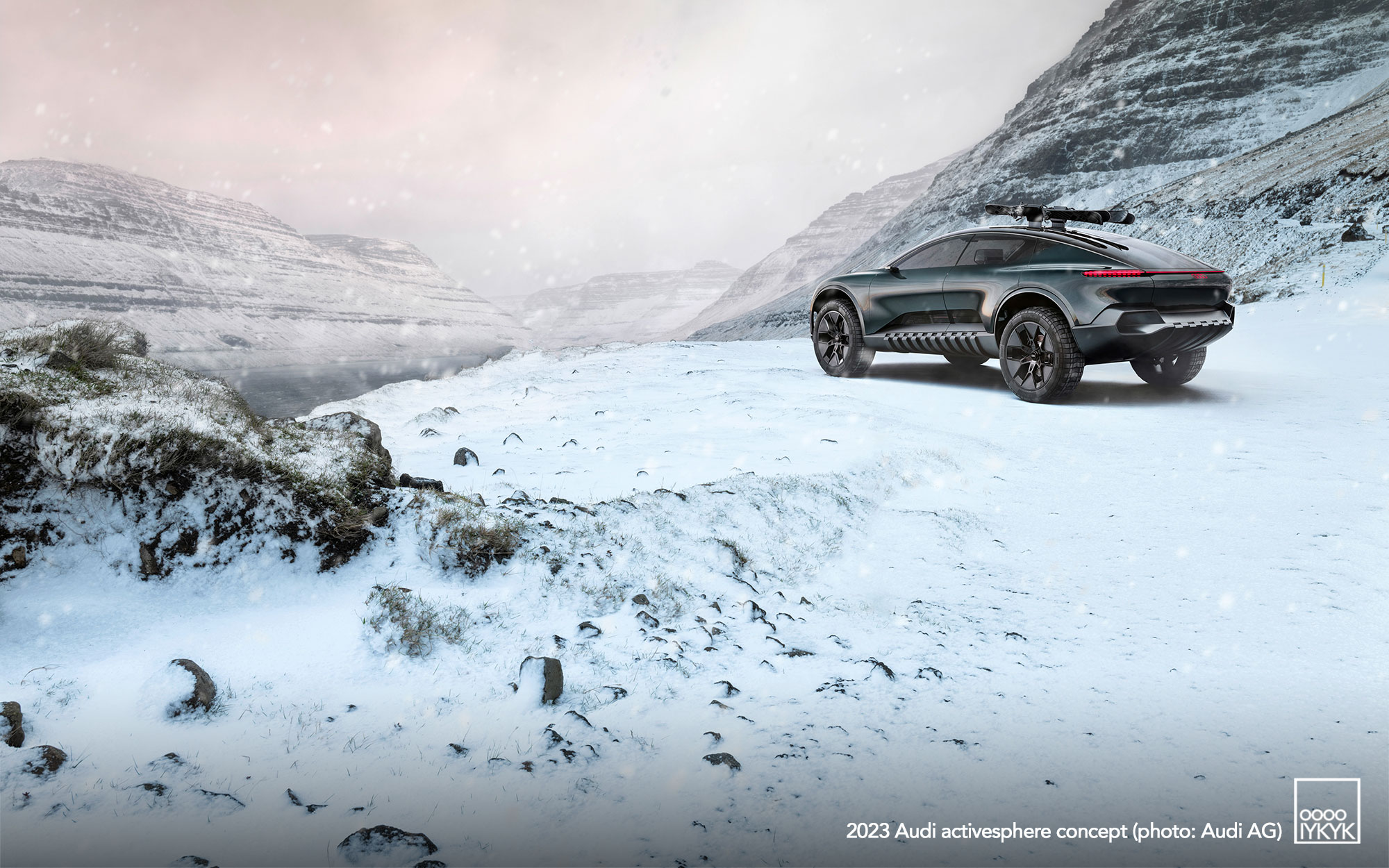
A separate ski rack was concealed within the center of the roof. Normally flush with the roof structure, it could extend when required to carry skis.
INTERIOR
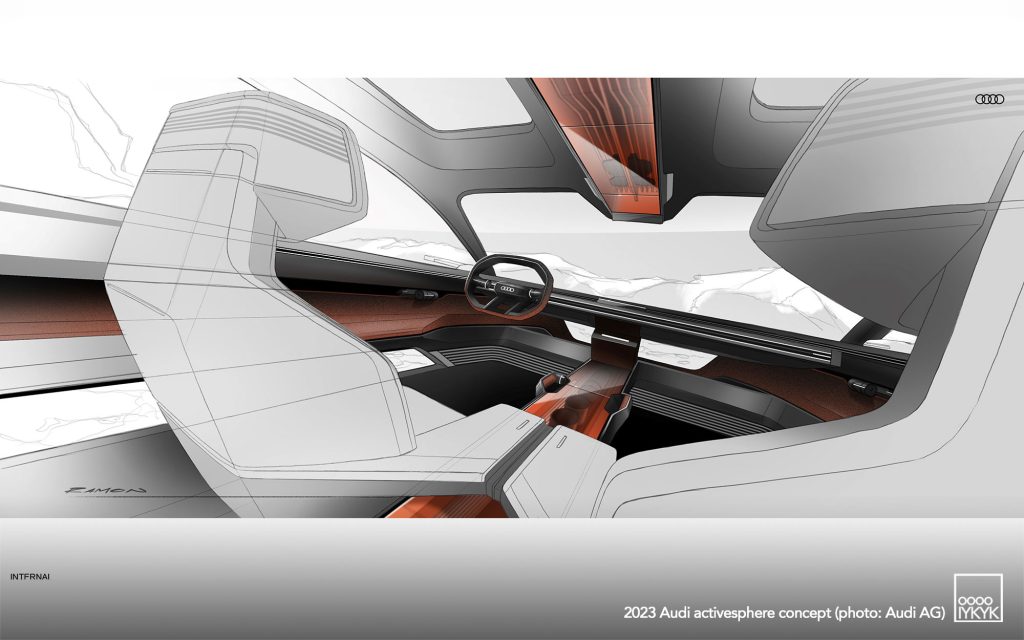
As with the other sphere concepts, Audi developed the activesphere from the inside outward.
The “sphere” name referred specifically to the occupants’ living and experience space. Audi’s design process prioritized the interior and the requirements of its occupants before establishing the package, proportions and exterior form of the vehicle.
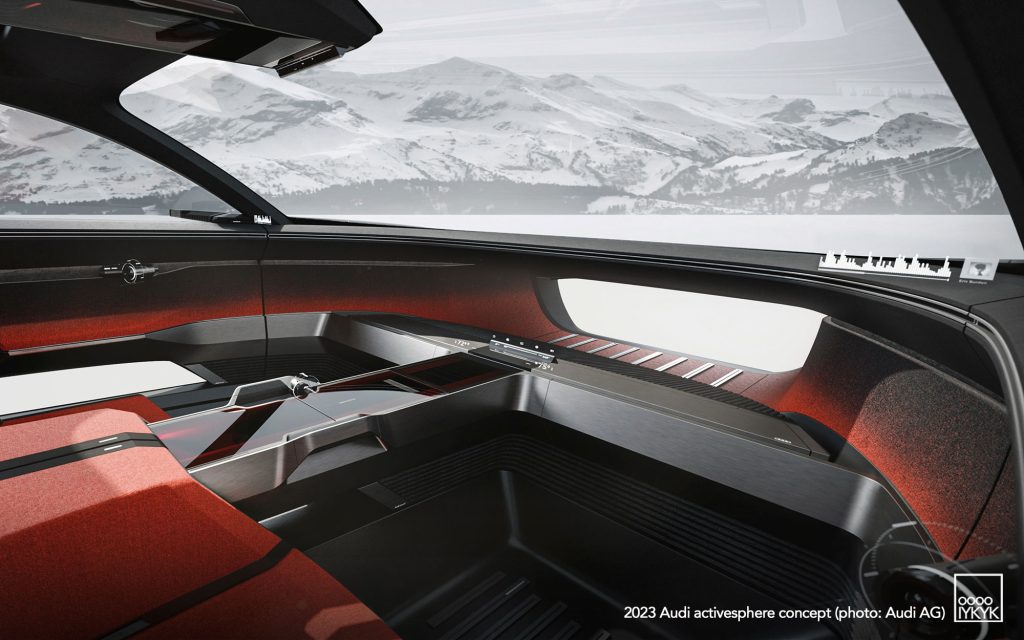
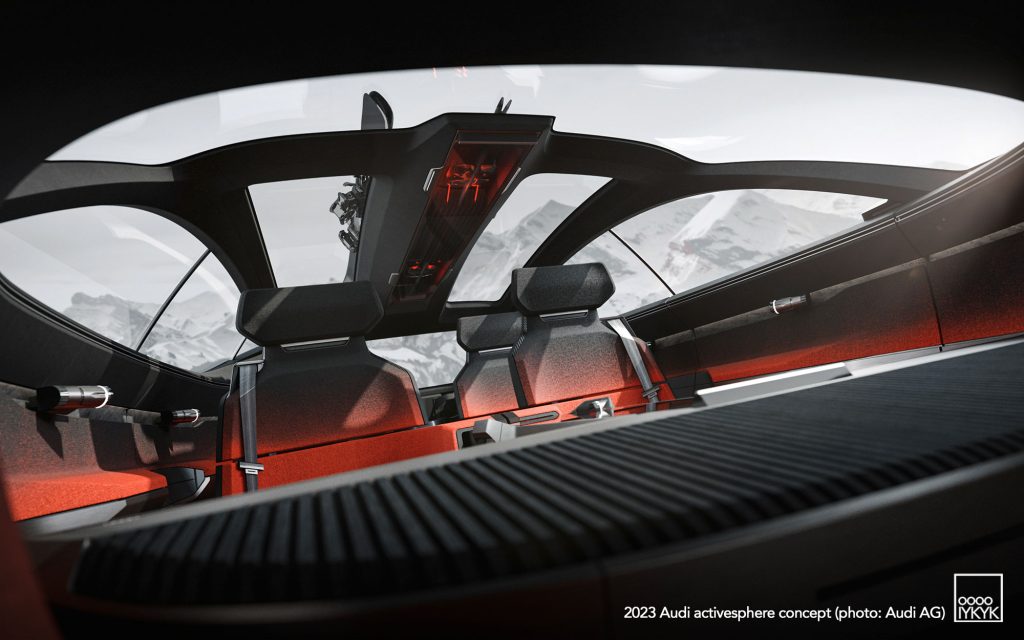
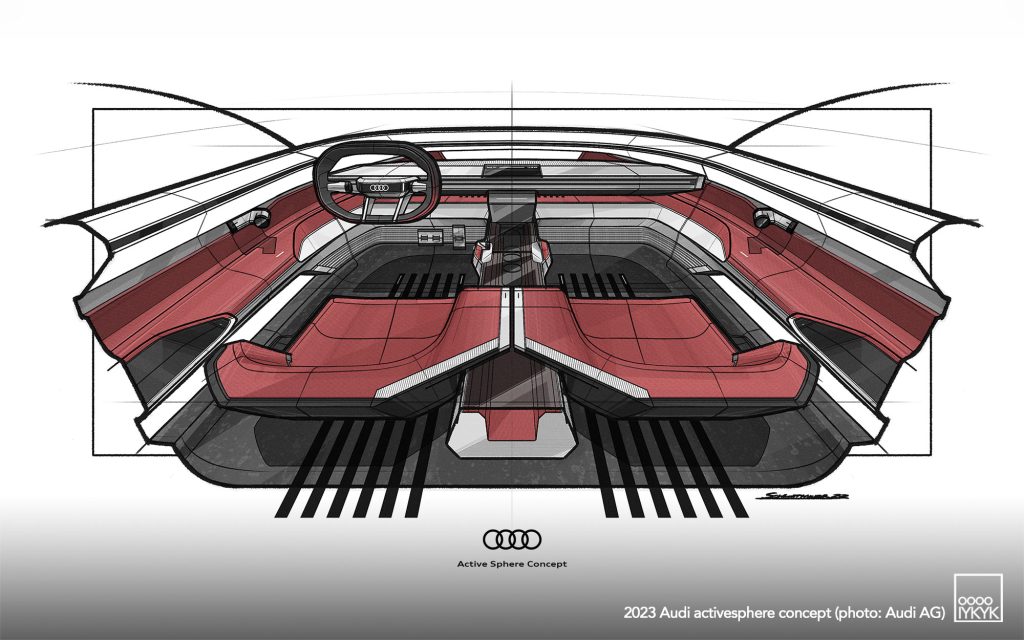
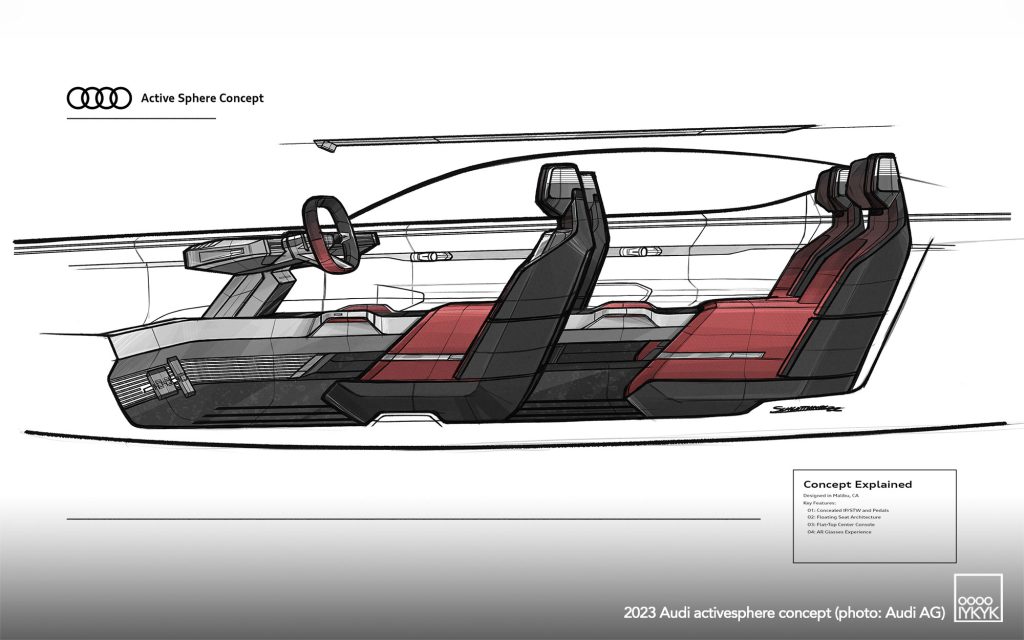
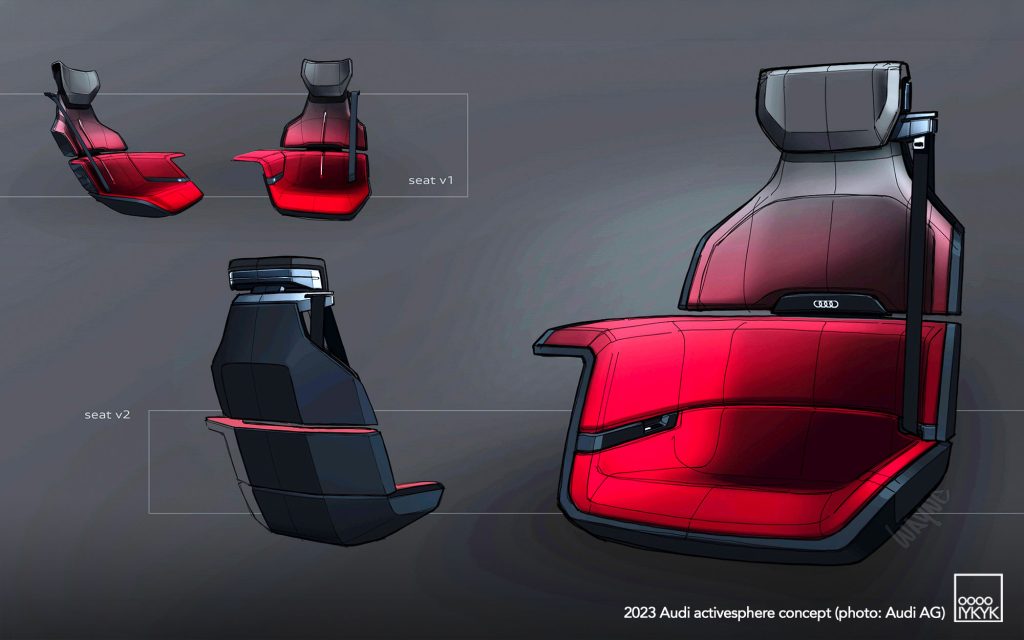
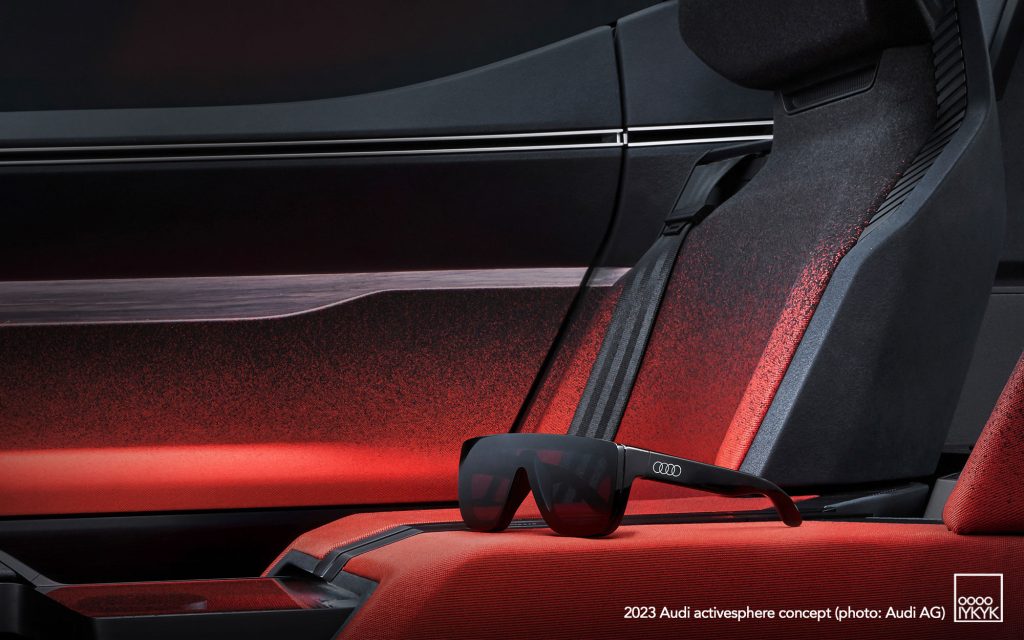
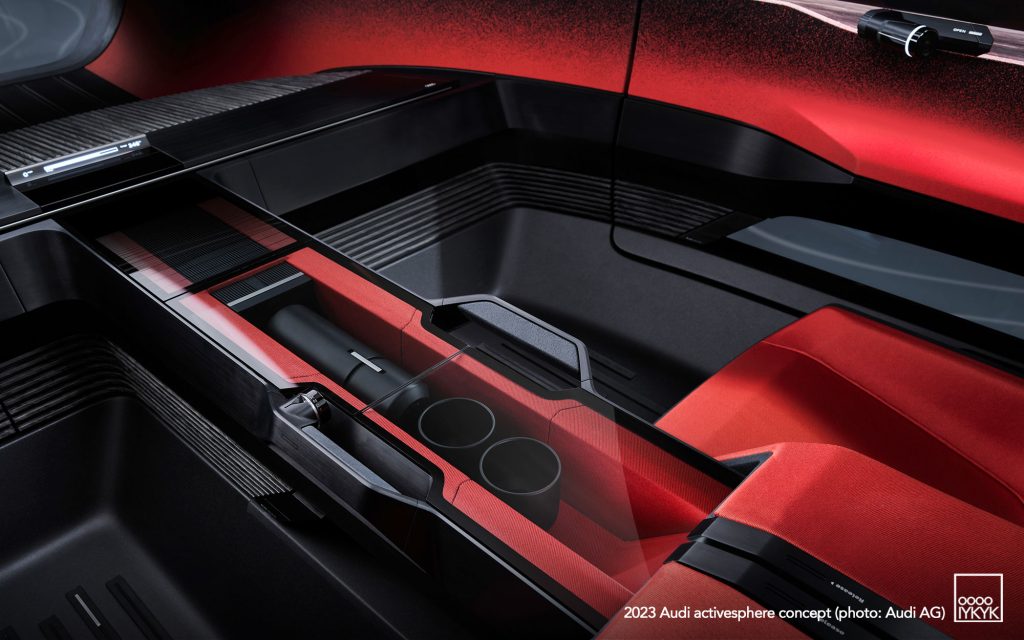
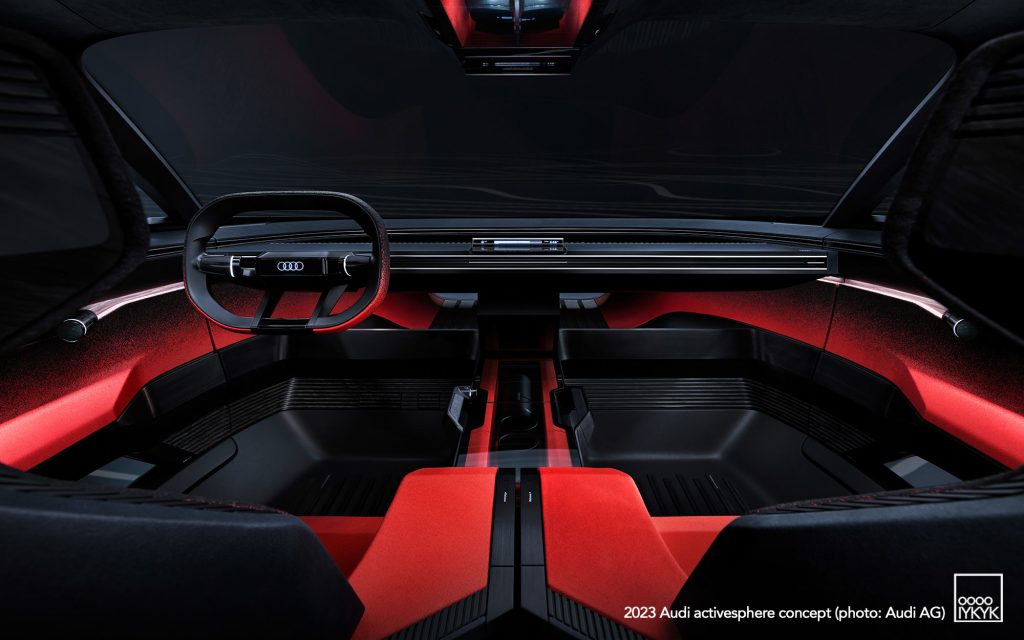
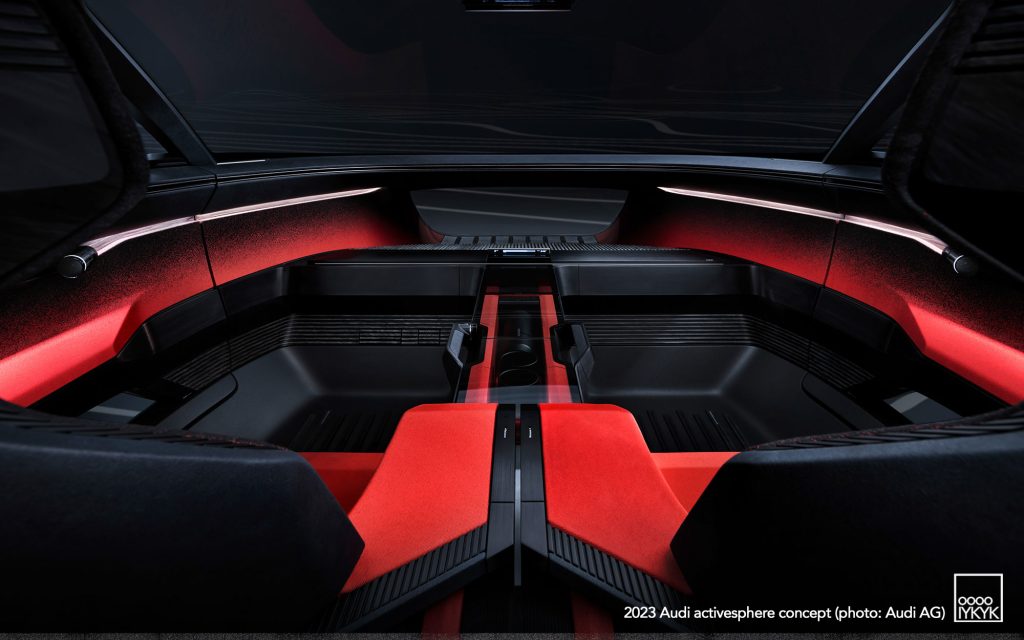
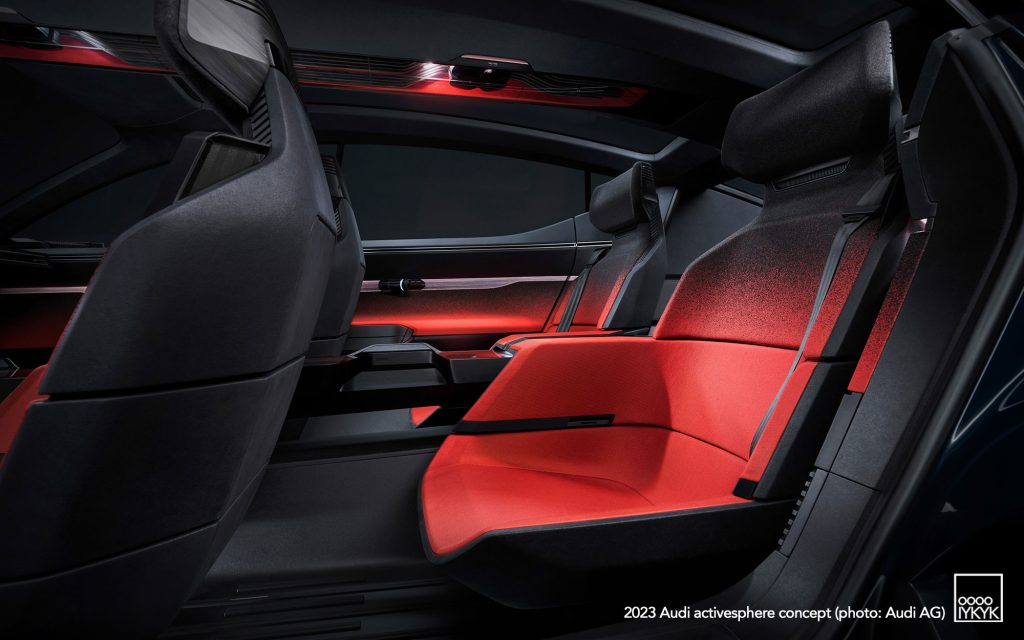
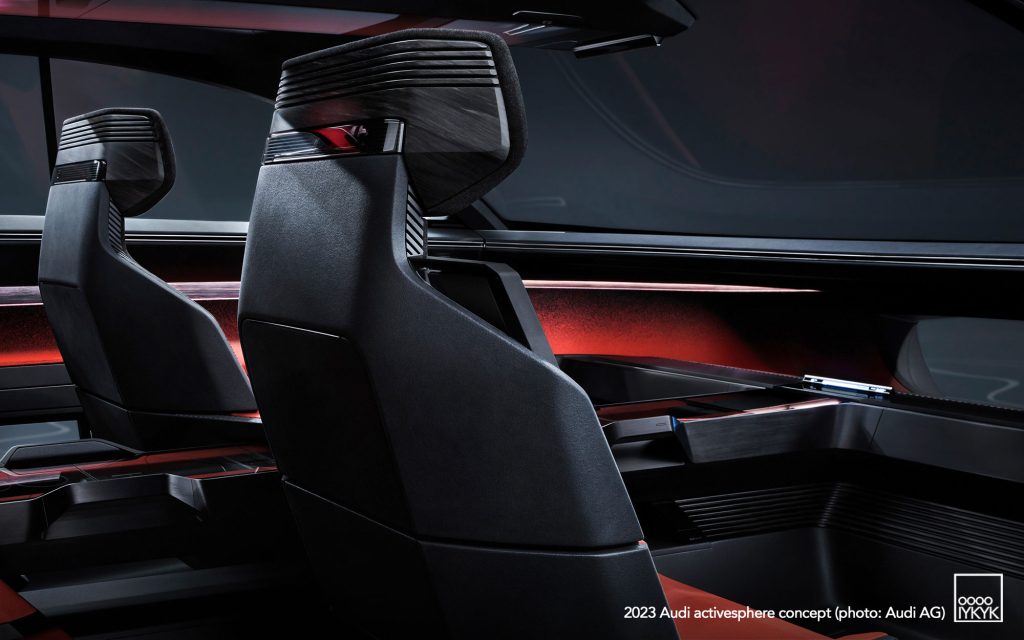
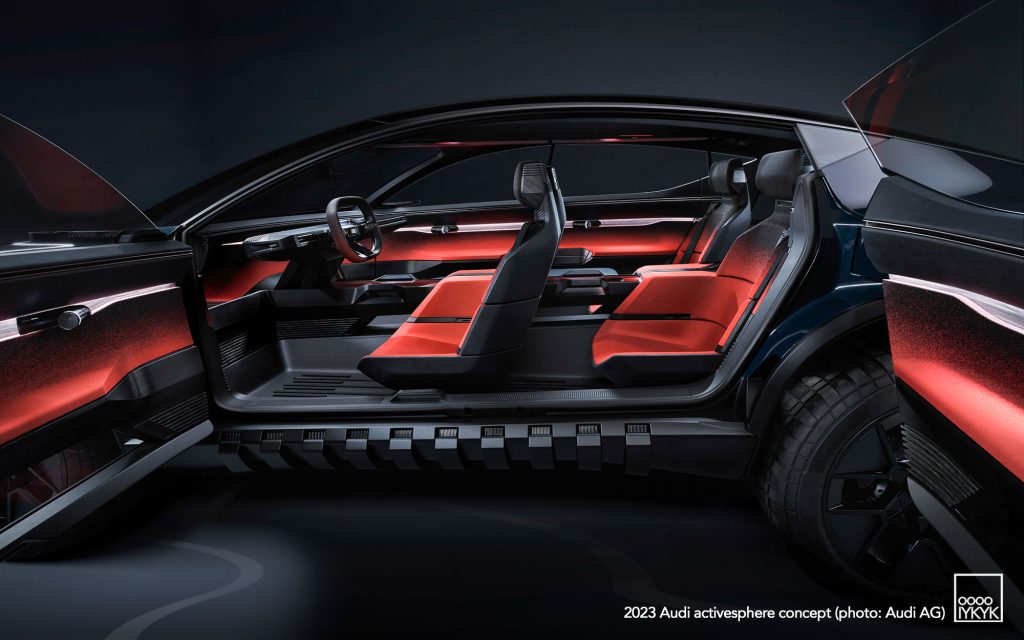
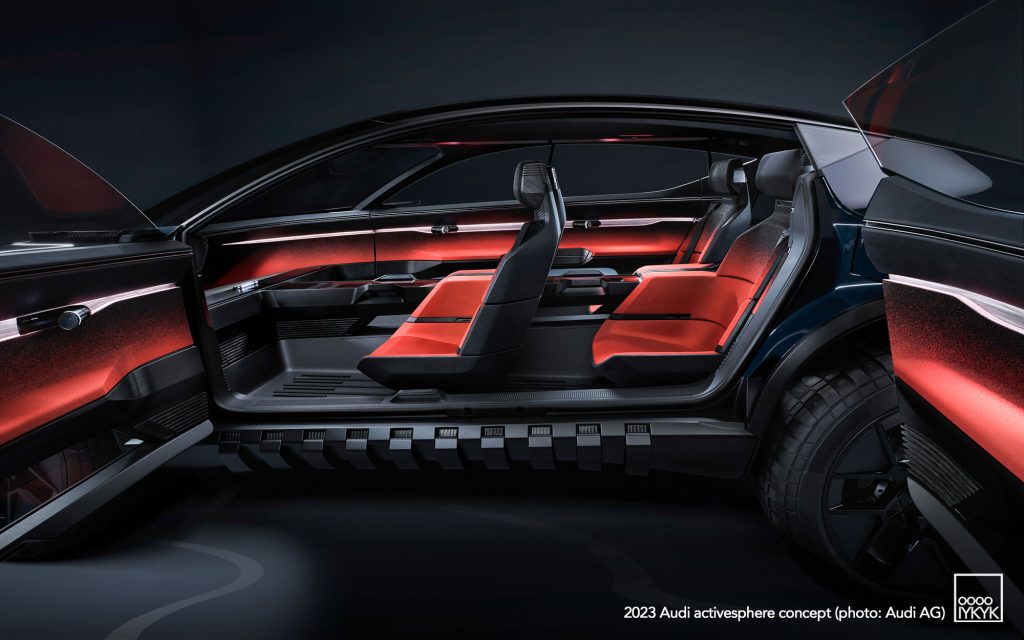
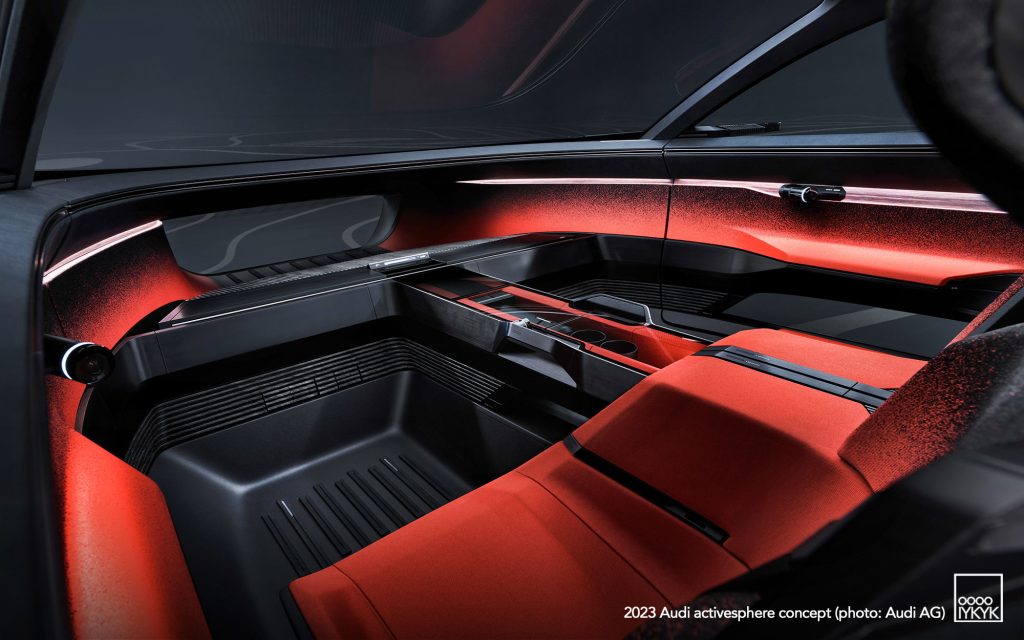
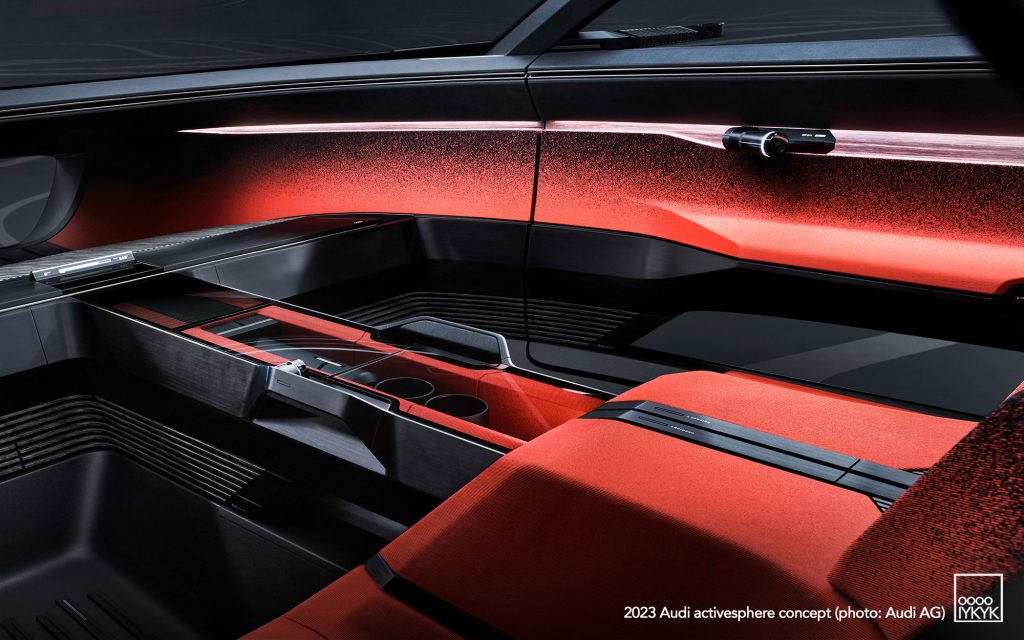
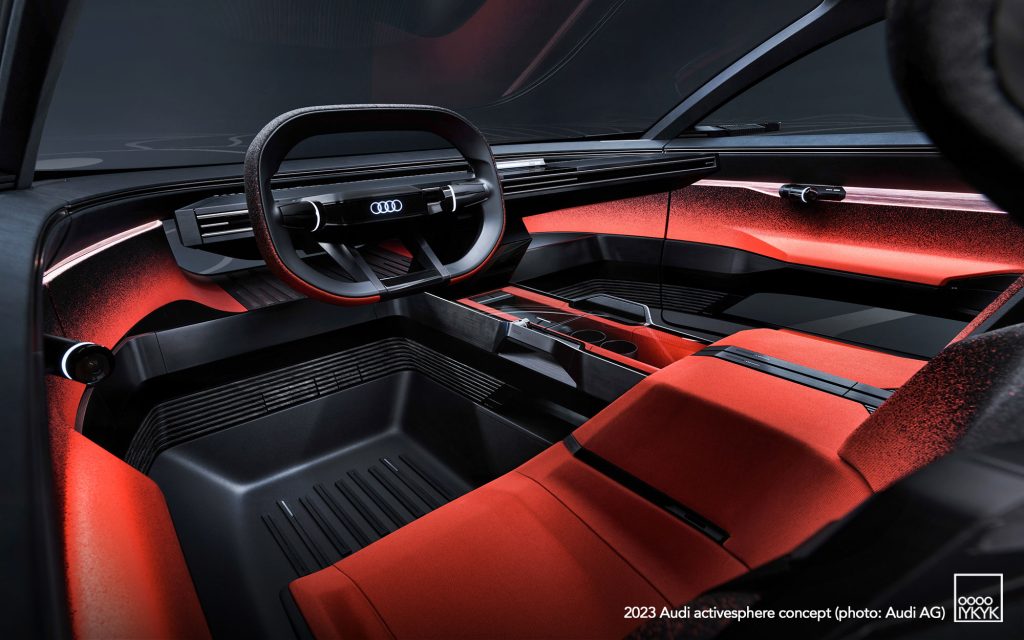
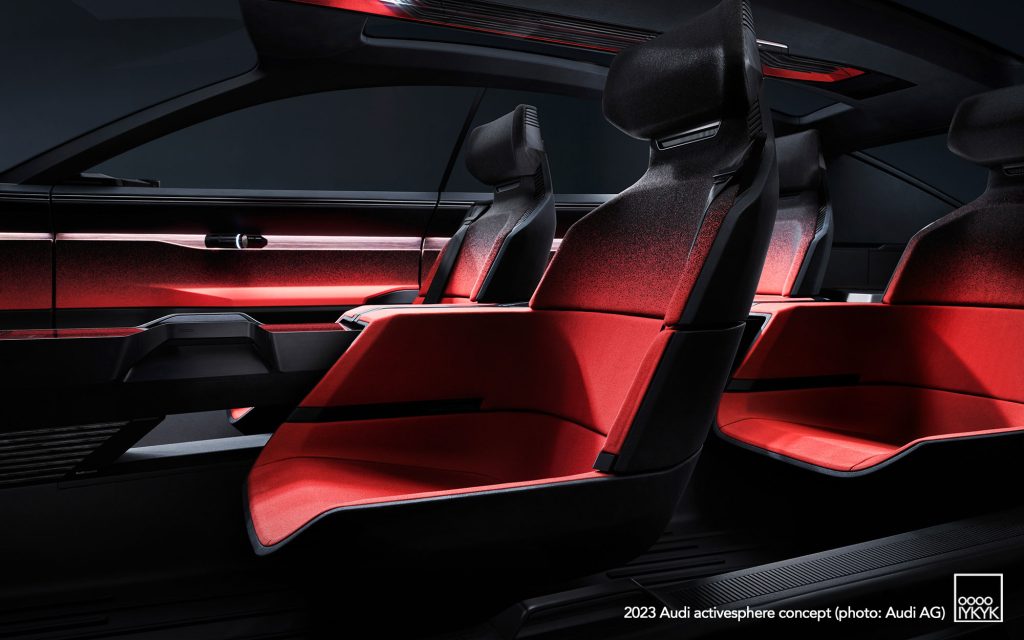
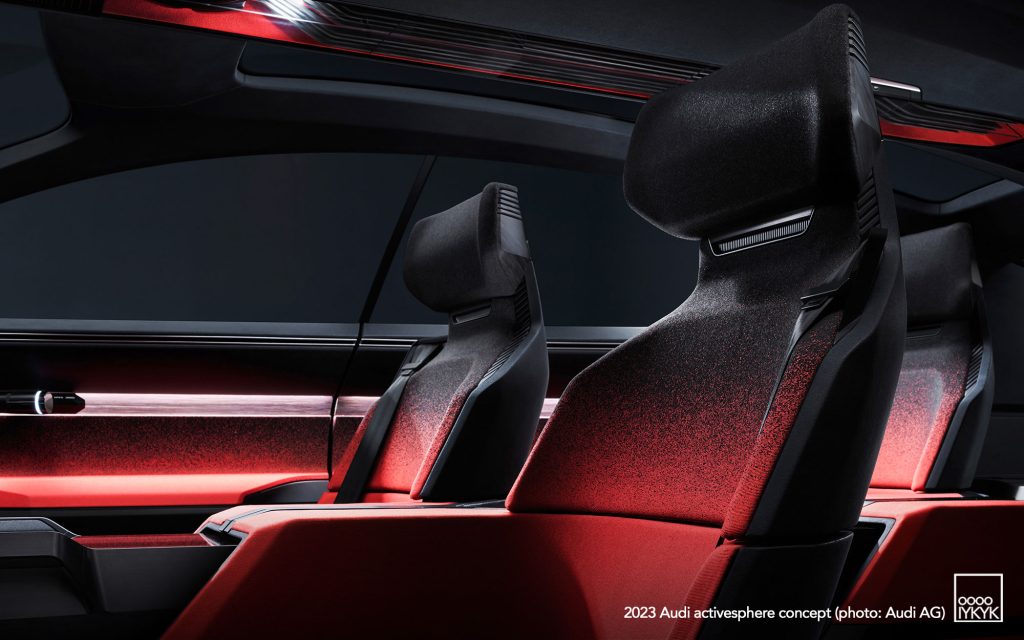
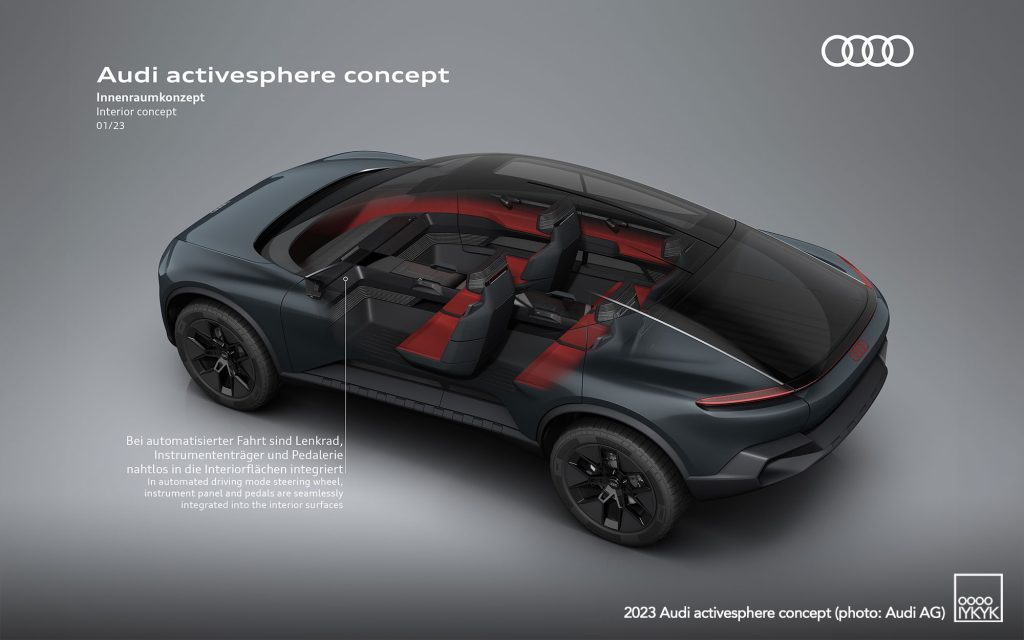
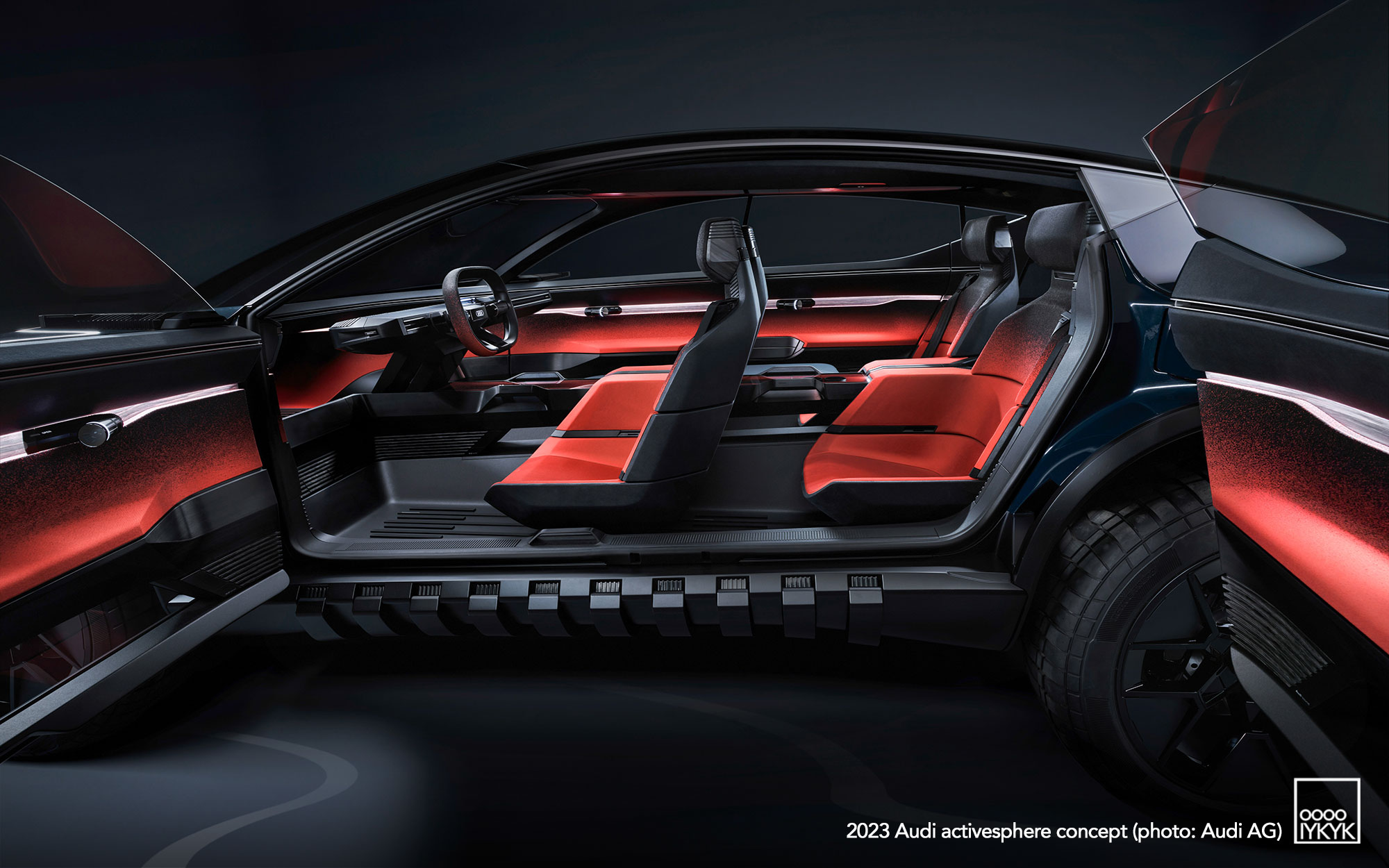
Four individual seats appeared suspended from the full-length center console, with seat, backrest and shoulder areas visually separated into individual shells. Lava Red upholstery provided the dominant interior color against black, anthracite and dark gray surroundings.
Like the grandsphere, the activesphere eliminated the B-pillars and used front and rear doors hinged in opposite directions, creating a completely open side aperture when entering the vehicle.
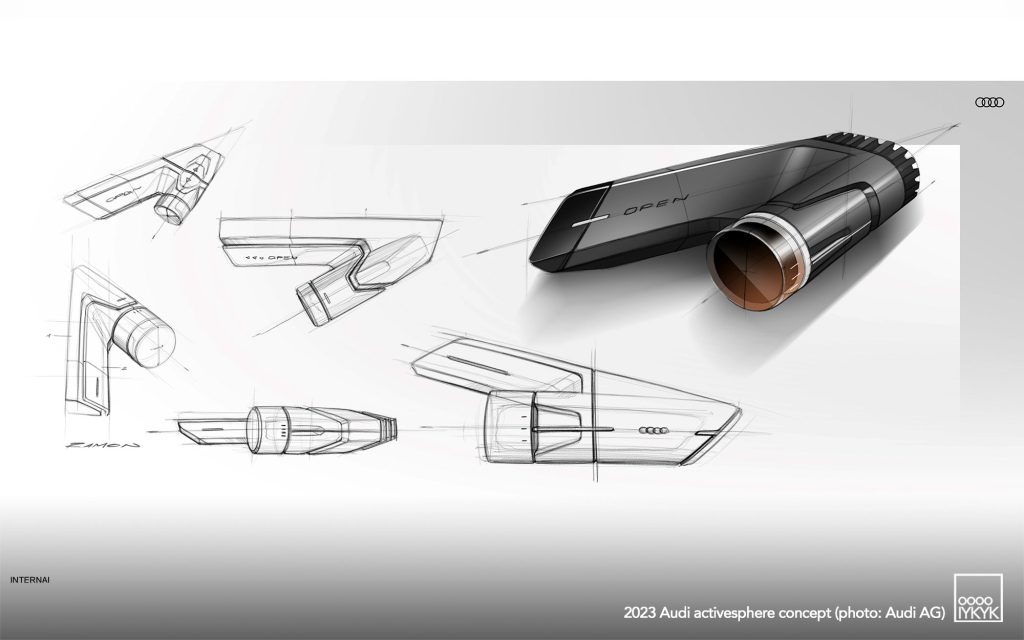
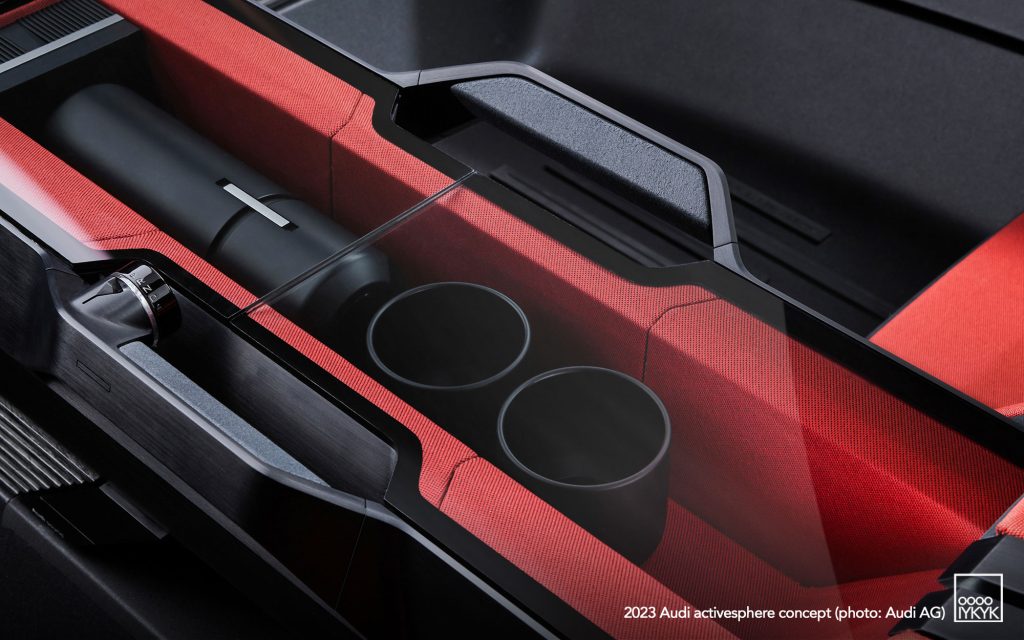
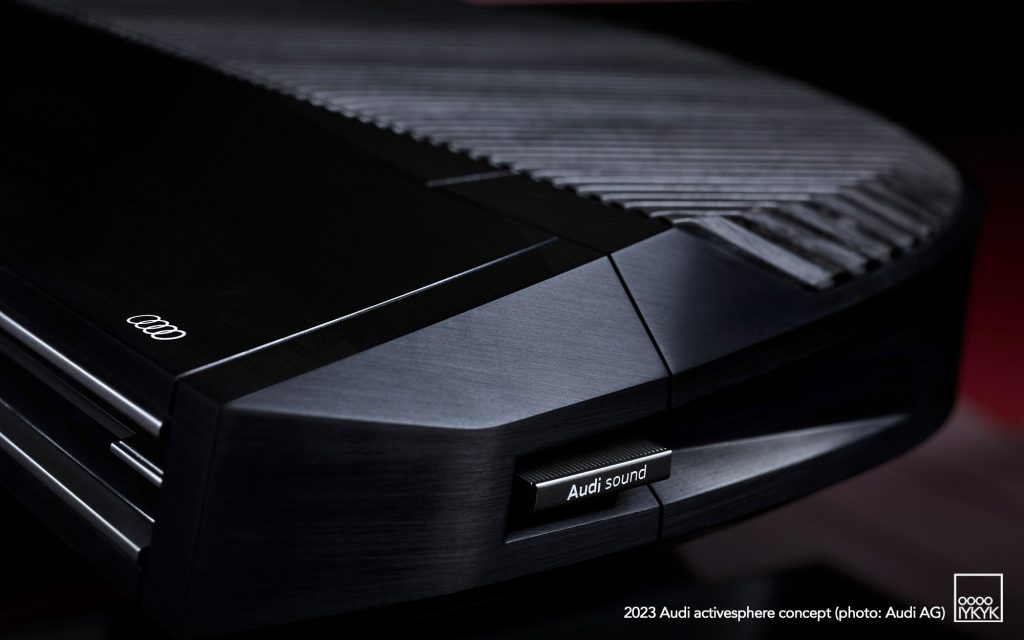
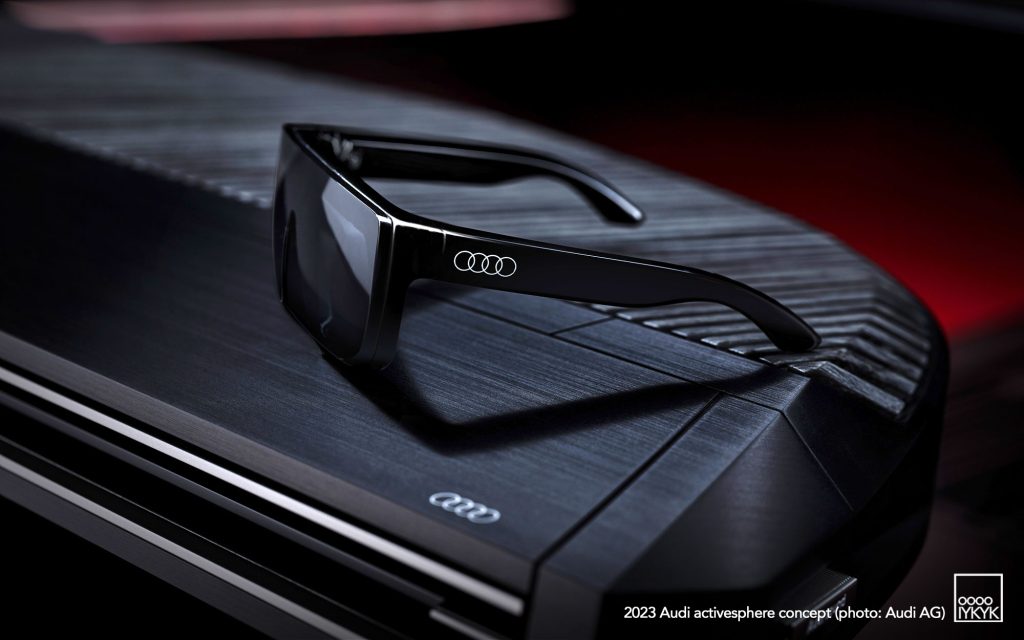
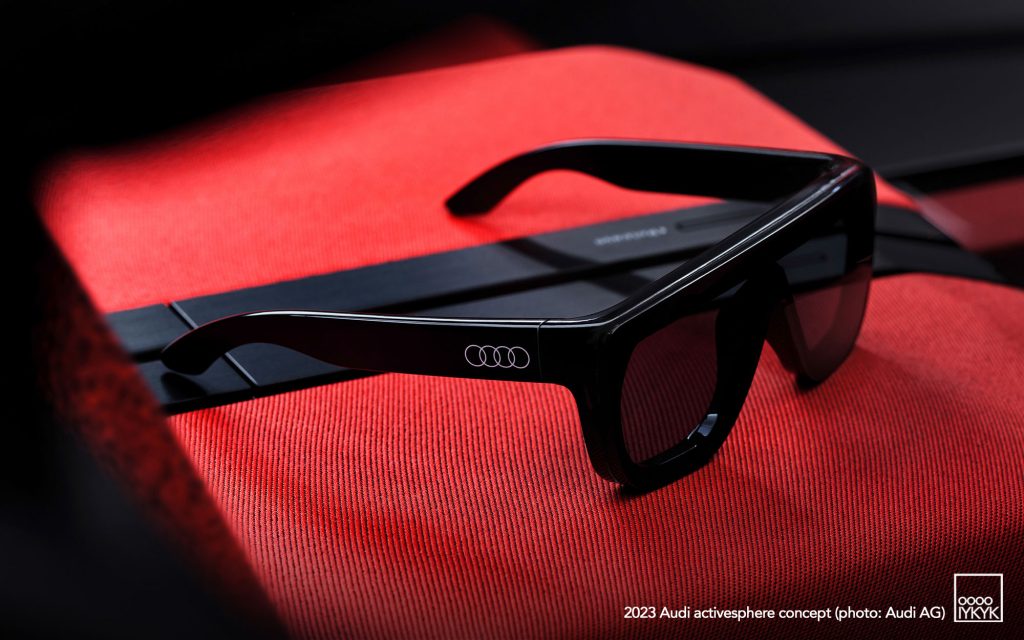
The center console incorporated storage as well as a heated or refrigerated onboard bar. A corresponding overhead console housed four mixed-reality headsets for the car’s Audi dimensions interface.
AUTONOMOUS DRIVING
The activesphere was designed to accommodate both conventional driver control and autonomous operation.
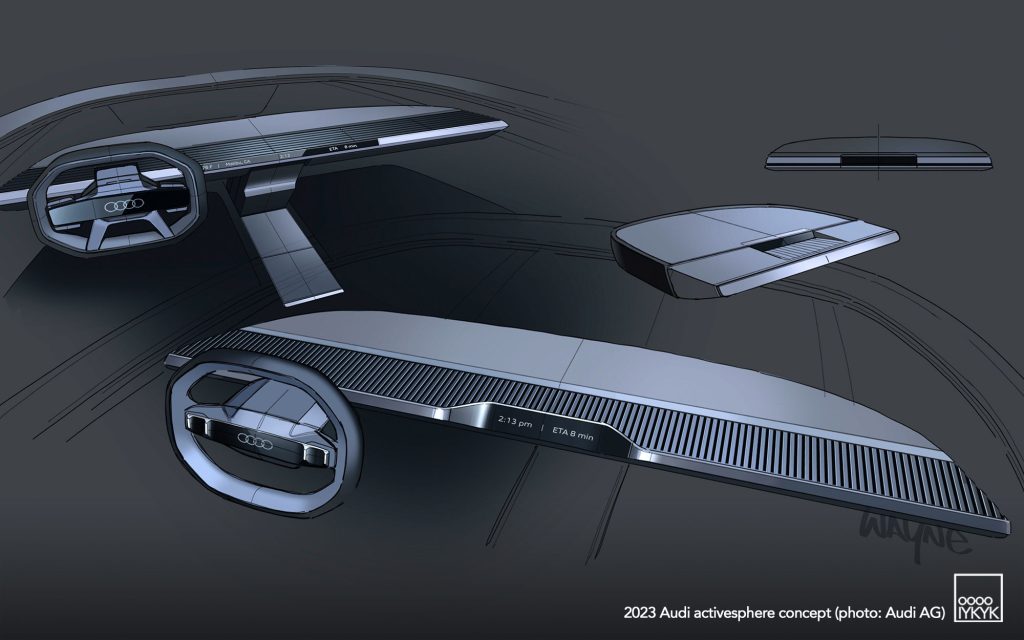
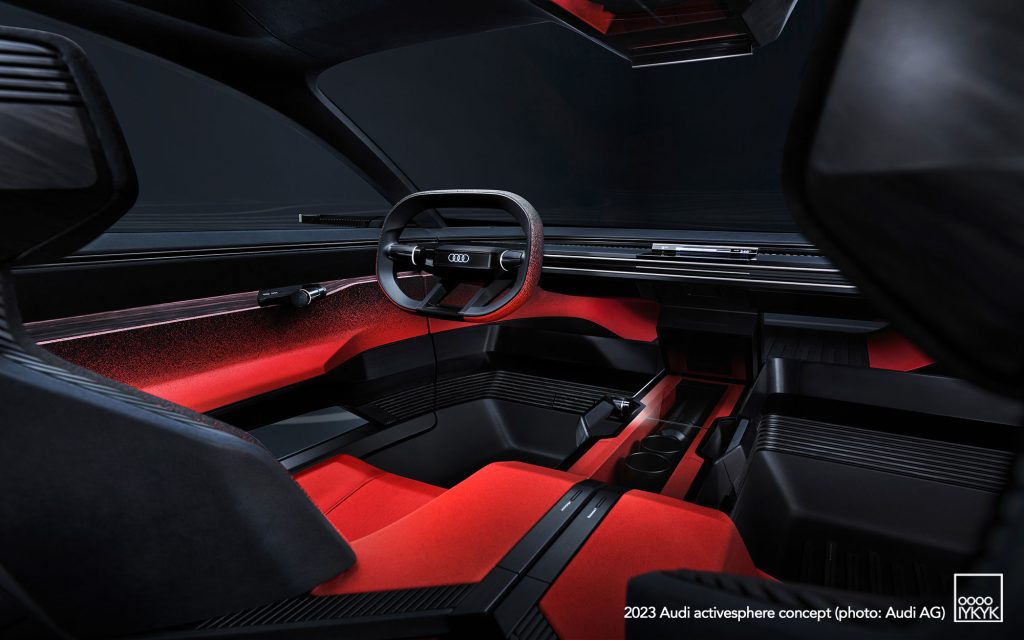
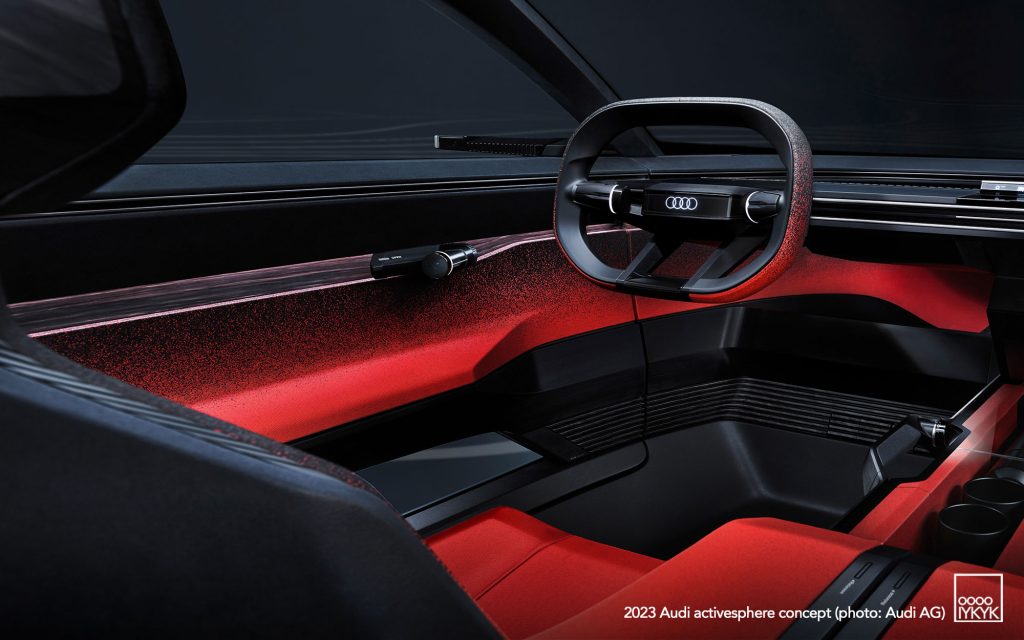
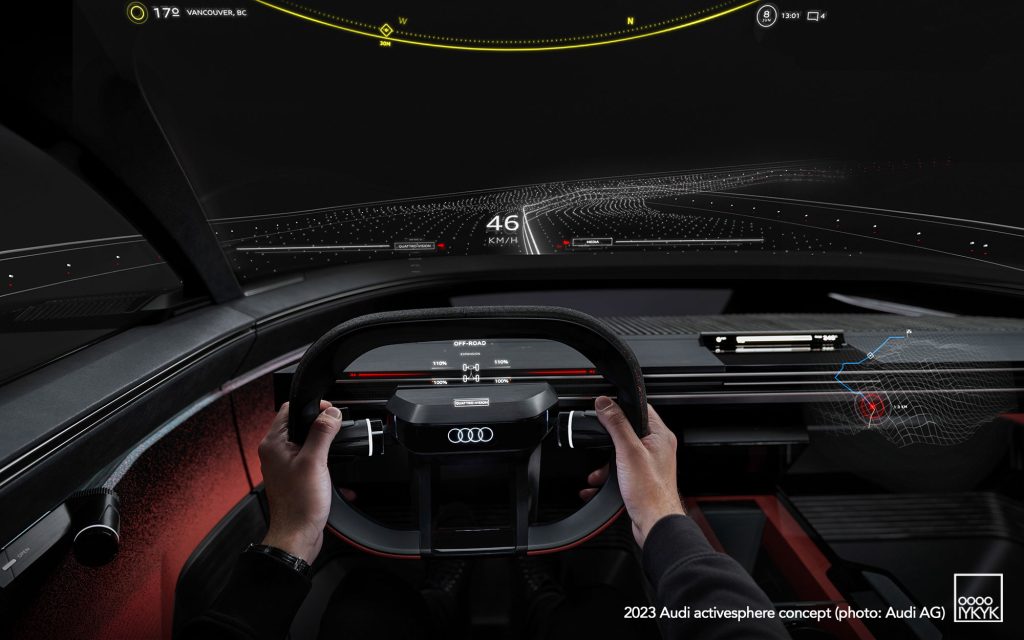
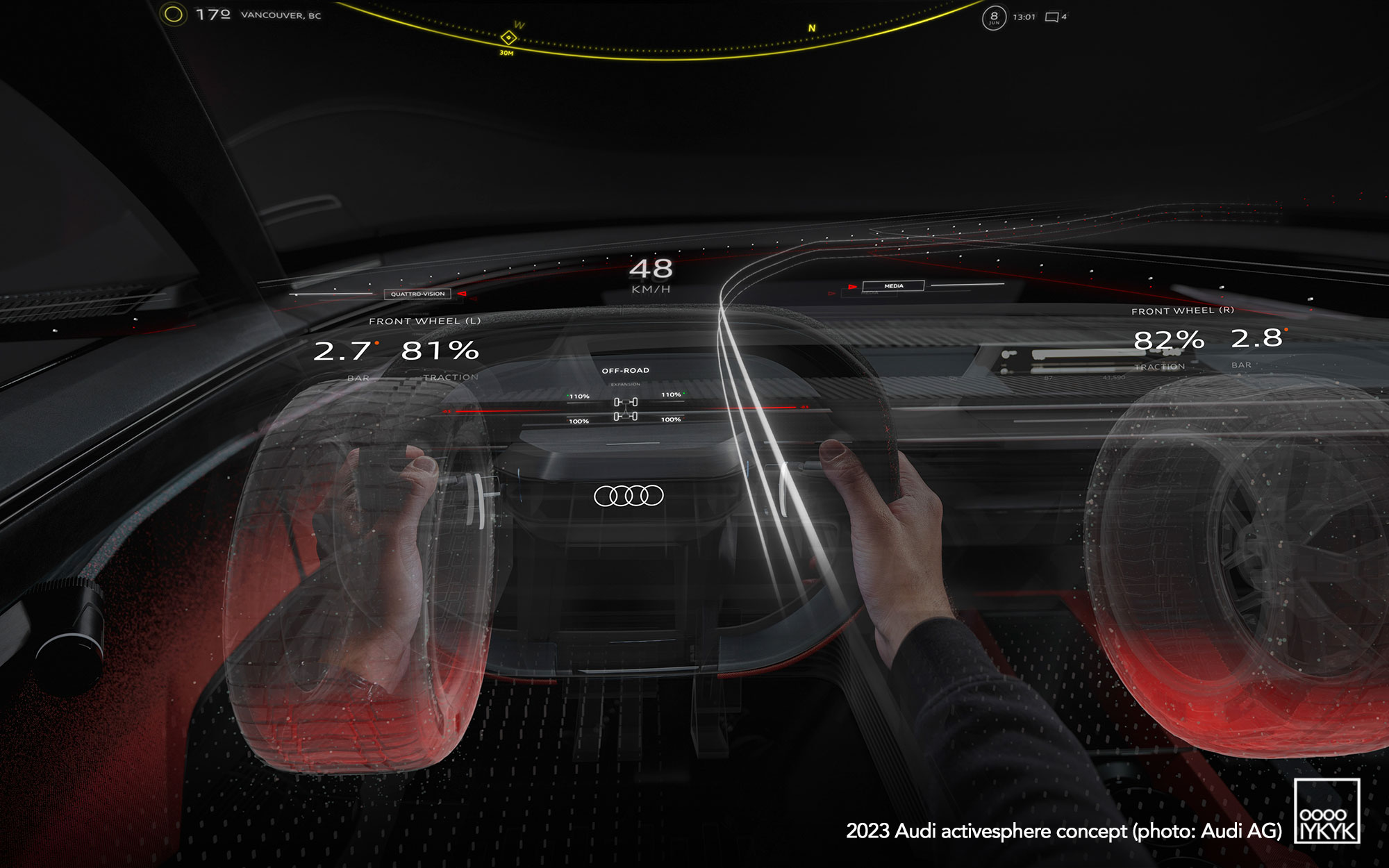
In autonomous mode, the steering wheel, pedals and dashboard withdrew from view, opening the area ahead of the front occupants. Combined with the transparent Singleframe, this created an unusually unobstructed view through the front of the vehicle.
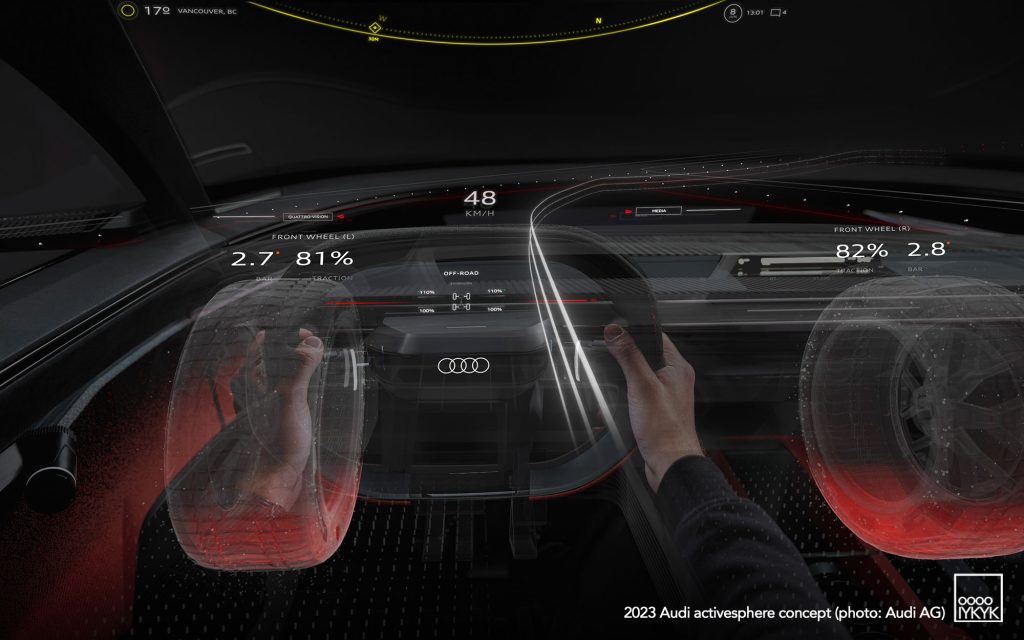
When the driver chose to take control, the dashboard and steering wheel pivoted outward from beneath the windshield and could be adjusted to suit the individual driver. Conventional driving controls therefore remained available rather than being eliminated entirely.
AUDI DIMENSIONS
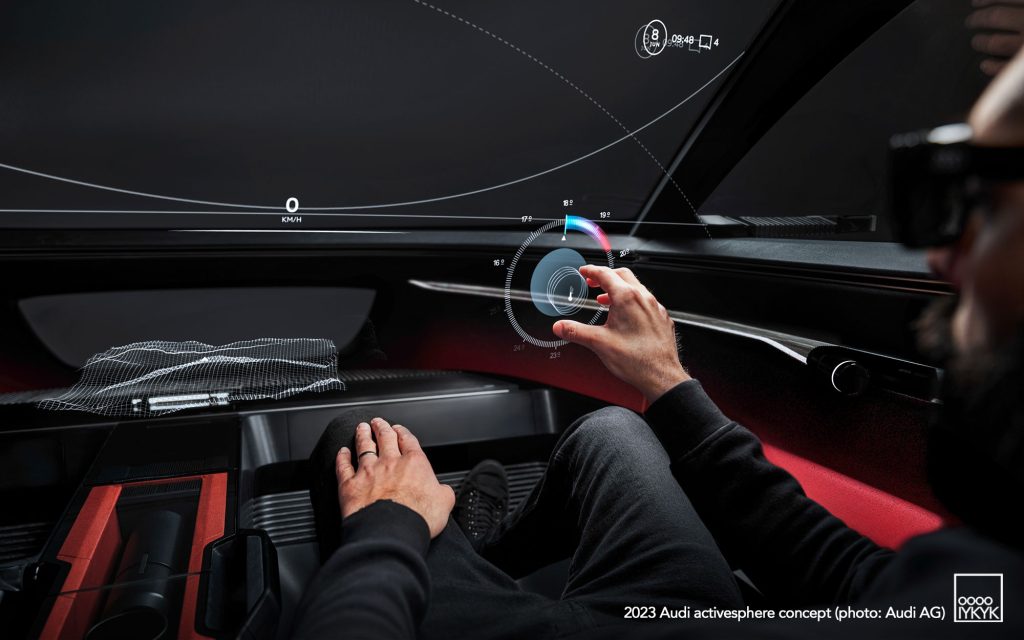
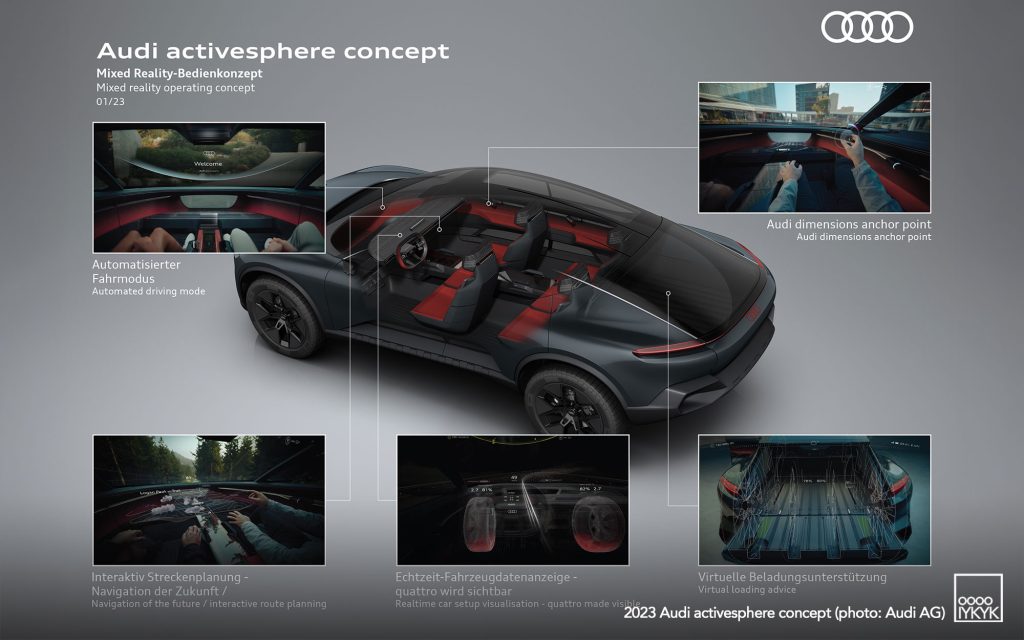
The activesphere’s most experimental technology was its “Audi dimensions” mixed-reality interface.
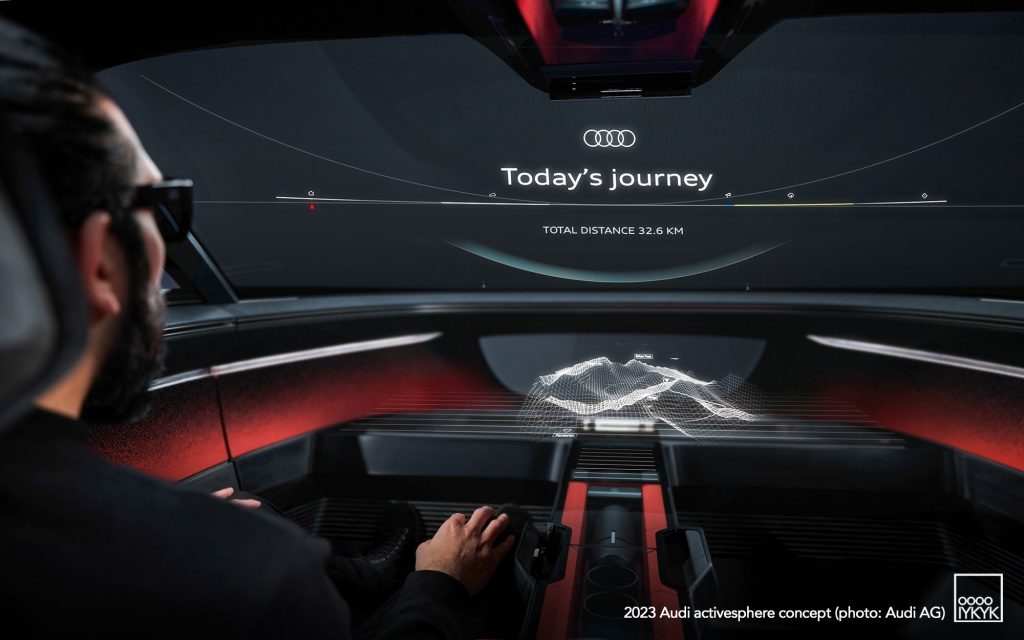
Instead of filling the interior with conventional screens, Audi proposed individual mixed-reality headsets for all four occupants. The system combined views of the physical environment with three-dimensional digital information and controls positioned spatially around the interior.
Virtual controls appeared only when required. Looking at an item could indicate interest and reveal additional information, while hand gestures could then manipulate the virtual interface. Controls could move toward an occupant according to seating position rather than requiring the user to reach toward a fixed dashboard display.
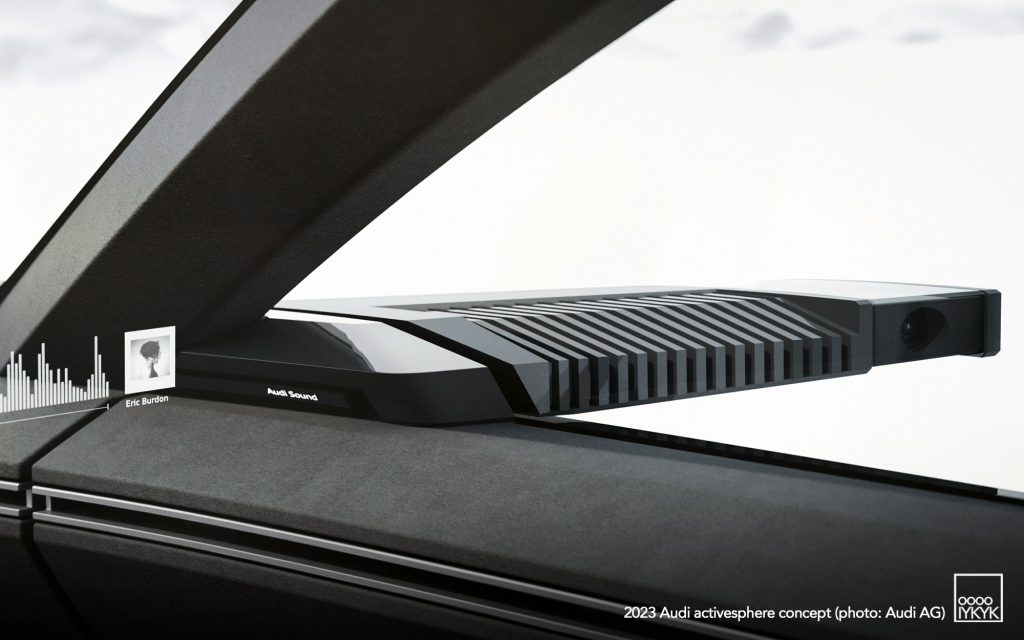
Audi also positioned digital controls in relation to the physical components they operated. Climate controls, for example, could appear virtually in front of an air vent while audio controls appeared above the corresponding speaker.
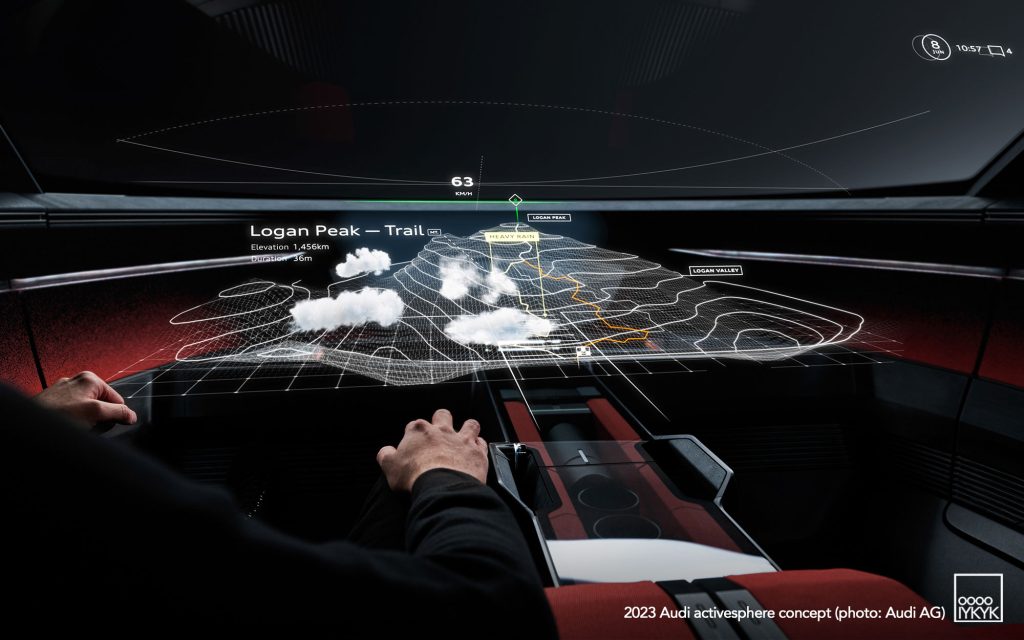
In off-road mode, the system could project high-resolution three-dimensional topographic information onto the driver’s view of the actual landscape. Navigation, road-condition warnings and other information could similarly be integrated with the real environment.
PPE PLATFORM
Beneath its experimental body and interior, the activesphere previewed technology considerably closer to production.
The concept was based on Premium Platform Electric, the dedicated battery-electric architecture developed under Audi leadership together with Porsche. The activesphere followed the grandsphere and urbansphere in demonstrating potential applications of PPE.
An approximately 100-kWh battery was positioned between the axles. Electric motors at both the front and rear provided electric quattro all-wheel drive, producing a combined 325 kW (442 hp) and 720 Nm (531 lb-ft). Five-link suspension was fitted at each axle together with adaptive air suspension and adaptive dampers.
CHARGING AND RANGE
The activesphere used an 800-volt electrical architecture capable of DC fast charging at up to 270 kW.
Audi claimed approximately 10 minutes of charging could add more than 300 kilometers (186 miles) of range. Charging the approximately 100-kWh battery from five to 80 percent required less than 25 minutes.
Projected driving range was more than 600 kilometers, or approximately 373 miles.
SIGNIFICANCE
The activesphere represented the conclusion of Audi’s four-part sphere concept program and combined several longstanding Audi themes with the company’s early-2020s vision for electric, automated luxury vehicles.
Unlike the more road- and urban-focused grandsphere and urbansphere, the activesphere drew deliberately from Audi’s allroad heritage and the established combination of quattro, adjustable suspension and practical body configurations. It then combined those ideas with a Sportback silhouette and the transformable active back.
At the same time, the concept previewed two very different levels of future Audi technology. Its PPE architecture, 800-volt charging system and dual-motor electric drivetrain represented technologies intended for series production. Audi dimensions, retractable driving controls, autonomous operation and the transforming pickup-style rear body were more speculative explorations.
The activesphere was also distinctly American in its origins. Designed at Audi’s Malibu studio near the Pacific Coast Highway, it combined European Sportback proportions with the recreational and outdoor-use characteristics more commonly associated with crossovers and pickups.
As the fourth and final sphere concept, the activesphere brought together many of the ideas explored separately by the earlier cars: electric propulsion, autonomous driving, interiors designed around occupants rather than conventional controls and new approaches to digital interaction.
It added another distinctly Audi element to that formula: the ability to leave the pavement.
RELATED
Concept Cars: Audi skysphere concept (2021), Audi grandsphere concept (2021), Audi urbansphere concept (2022)
Production Technology: Premium Platform Electric (PPE), 800-volt electrical architecture, electric quattro
Heritage: Audi allroad quattro
Design: Audi Design Studio Malibu, Gael Buzyn
PHOTO GALLERY